Interview with Sakai, chef at pile
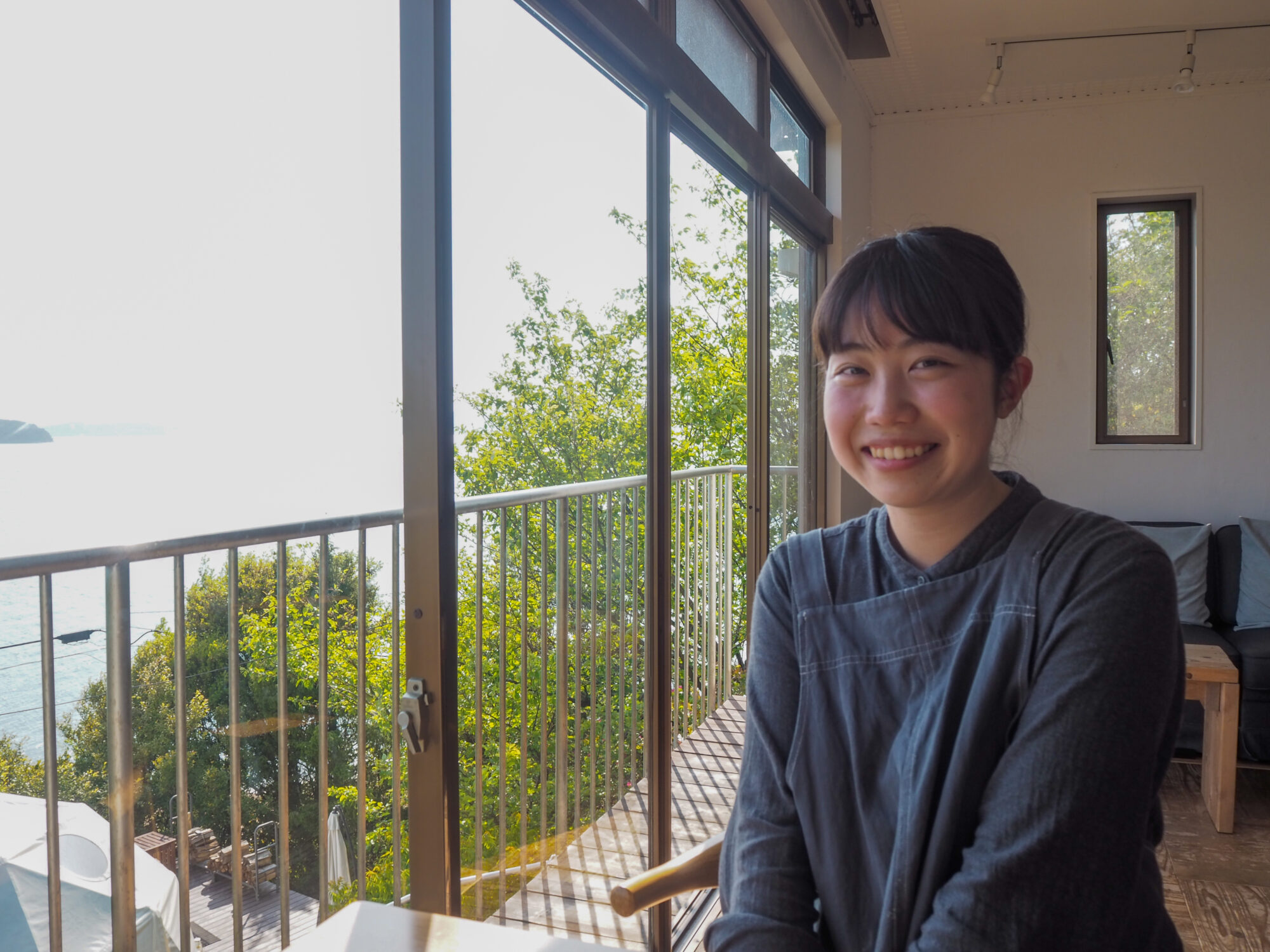
We spoke with Kaede Sakai, who works in the food and beverage division of ITONAMI Co., Ltd. and is also the chef at pile, about how pile came to open and the thoughts behind each menu item.
I wanted to focus on local ingredients more than ever
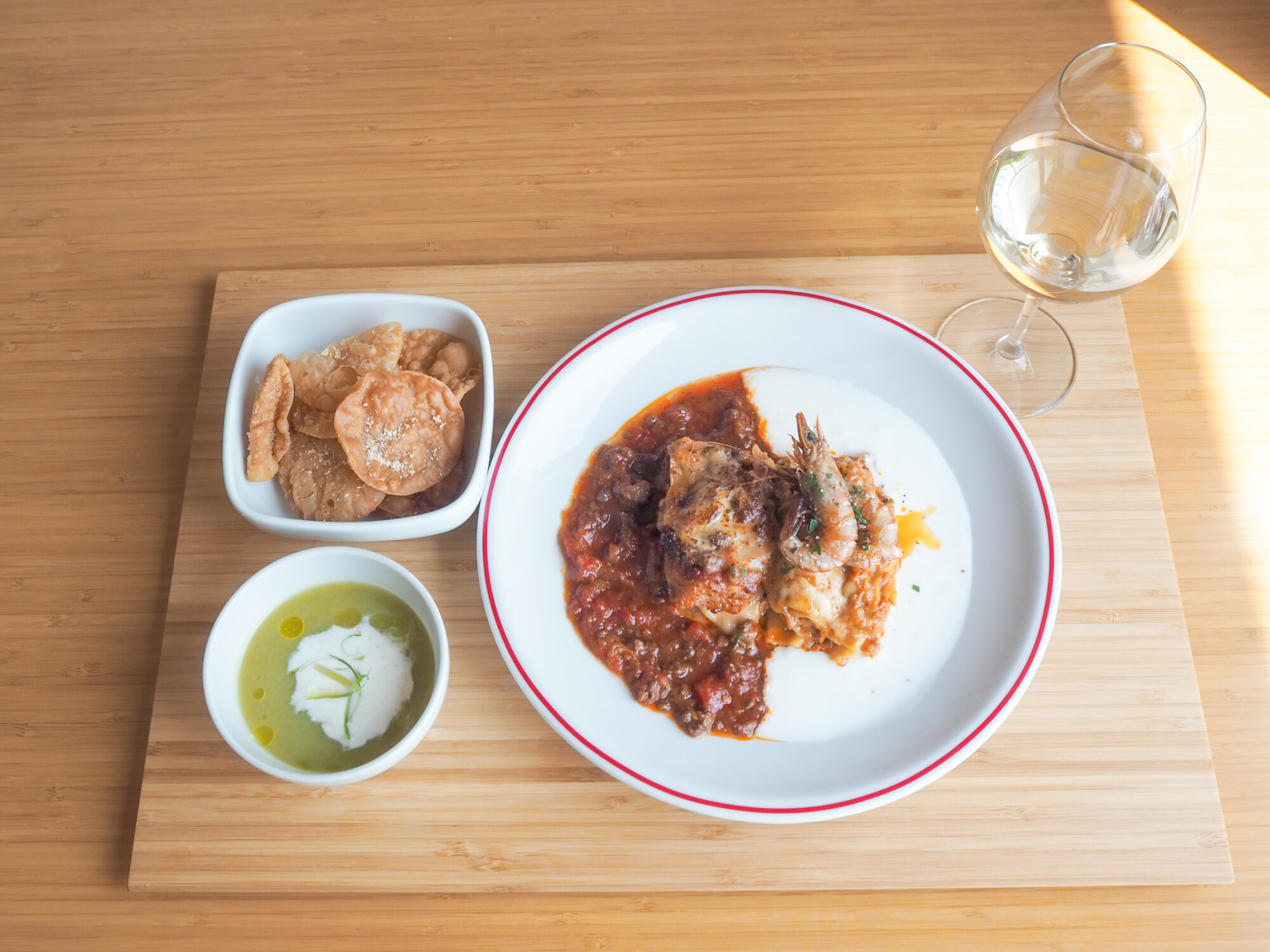
Your previous cafe had many fans. Why did you decide to open a restaurant?
Sakai (surname only)
“I wanted customers to enjoy food that focused more on local ingredients,” and “I wanted them to spend more time relaxing than before while looking out at the sea.” With these thoughts in mind, we changed the format and opened as a restaurant.
I joined ITONAMI as an employee about a year ago (around 2022).
I had worked in food at vocational school and at my first job after graduating, so I was entrusted with the food and beverage division.
At first, though, there was no plan to turn the cafe into a restaurant, so we started by offering dinner.
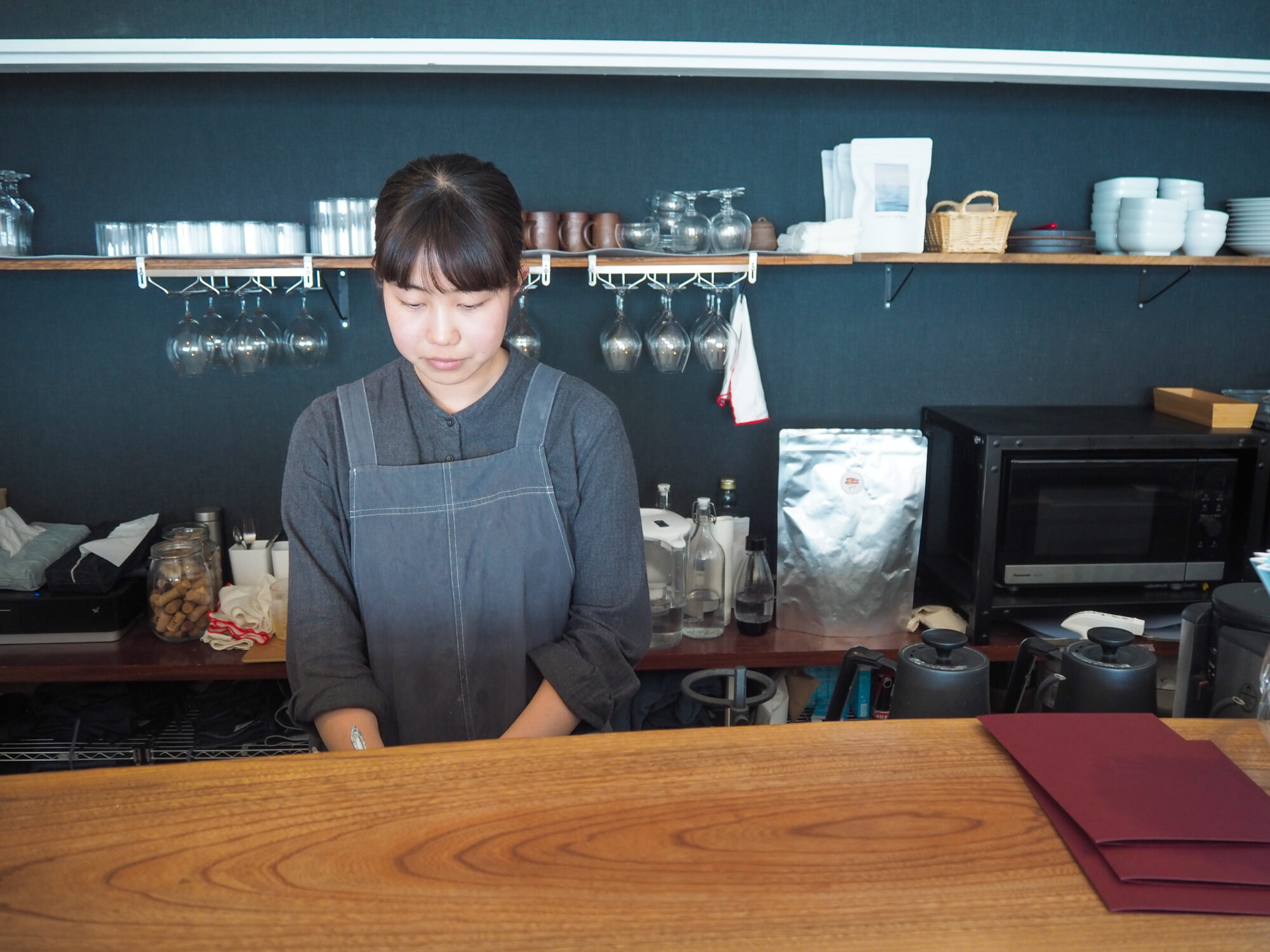
Our main dinner dish is lasagna.
Customers liked it, and I also thought it suited float, so I began considering whether we could offer lasagna at lunch, too.
The curry we served when we operated as a cafe was popular, but I wanted to create a menu that would make better use of ingredients from the Seto Inland Sea region.
We turned the cafe into a restaurant and chose lasagna as the main dish.
It’s unusual for a restaurant to serve lasagna as its main dish, isn’t it?
Sakai
I think it’s especially unusual in Okayama.
Actually, lasagna was also popular at the restaurant where I worked before.
I had the chance to make it when I was in vocational school, too, and somehow I’ve kept making lasagna ever since...
When I was thinking about the main dish for dinner, I suggested that we try making lasagna at float, too.
The ingredients we use come from producers our staff have met
So lasagna was one of your specialties.
Sakai
There was another reason I suggested lasagna.
I wanted to create a menu using the wheat from Ichimonji Udon.
Ichimonji Udon is a shop in Osafune-cho, Setouchi City that grows its own wheat and also runs an udon restaurant.
At pile, we use a variety called “Fukuhonoka” from Ichimonji Udon.
We first met the people at Ichimonji Udon during a camper van trip in 2018, when the two Denim Brothers, who also represent ITONAMI, were traveling.

So we had a connection even before float was created.
I’d heard Shimada say, “Someday, I want to use wheat from Ichimonji Udon,” so I thought lasagna would be a good way to make use of it.
It’s wonderful that a menu can come from connections between people.
Sakai
And it’s not just Ichimonji Udon.
The “Toyofuku beef” used in our beef lasagna, and the “asparagus” used in the seasonal potage we’re currently serving.
Even the ice cream “KIKI NATURAL ICECREAM” (Kiki Natural Ice Cream) served for dessert and our natural wine.
Most of the ingredients used at pile are produced by people the Denim Brothers met during their camper van trip, or by producers and vendors our staff have connections with.
We cook ingredients grown by producers we’ve met over the years, people who put their hearts into what they do, and serve them with the aim of expressing them in a new way.
The concept is “accumulation”
Why did you name it “pile”?
Sakai
In English, “pile” means “accumulation” or “to pile up.”
When I talk with producers and vendors, I feel the time, thoughts, and skills they have built up here in the Setouchi region are being passed down from generation to generation.
And by cooking ingredients that have been passed down, we, too, add our own time and thoughts.
We want to tell our customers about the producers and this land, and add even more meaning to it.
That’s why we named it “pile.”
You can see it clearly when you look at a cross-section of lasagna: it’s made up of layers.
Each layer also brings to mind the geological strata of Ojigadake Hill, just behind pile.
In many ways, I think “pile” is a name that suits a restaurant in this place.
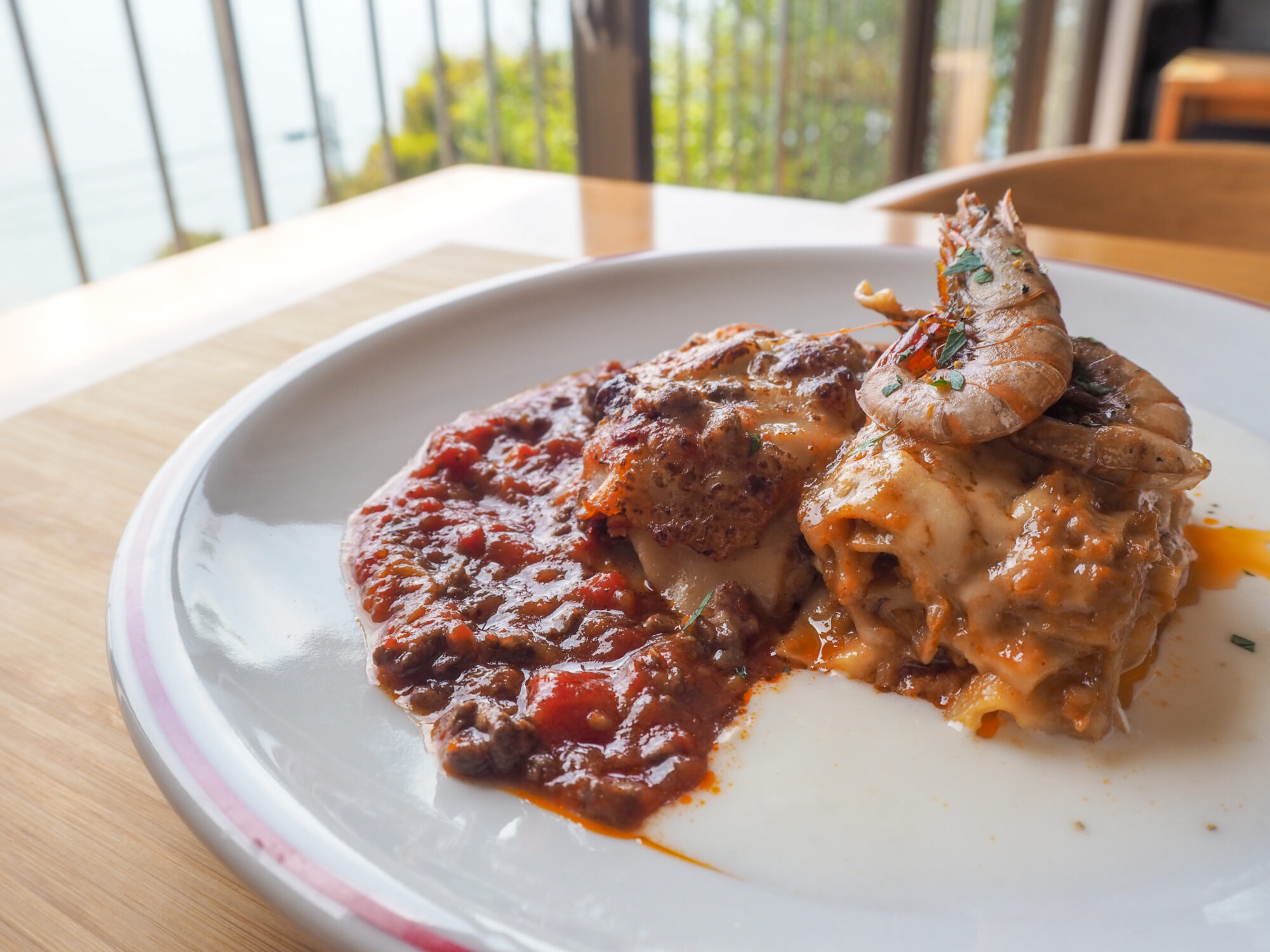
Seeing the faces of producers sparks conversations with customers
What stands out in your memory about opening pile?
Sakai
We received more feedback from customers than we did when we ran the cafe.
We had more opportunities to receive questions like “Where are the ingredients from?” and “How do you make this?”
To be honest, I was a little anxious when we renovated the cafe and turned it into a restaurant...
So I’m happy to have received such a positive response.
In everyday life, you don’t often know who produced your food.
With products like Nagi beef, where the production method is set for each brand, ingredients from multiple producers are shipped together.
I think it’s probably new to customers, and gives them a lot to discover.
I’m happy that I can talk about the producers.
And using ingredients when you can see the faces of the producers makes cooking enjoyable, too.
Was anything particularly difficult about opening?
Sakai
The side dish that was hardest to make was the pile chips.
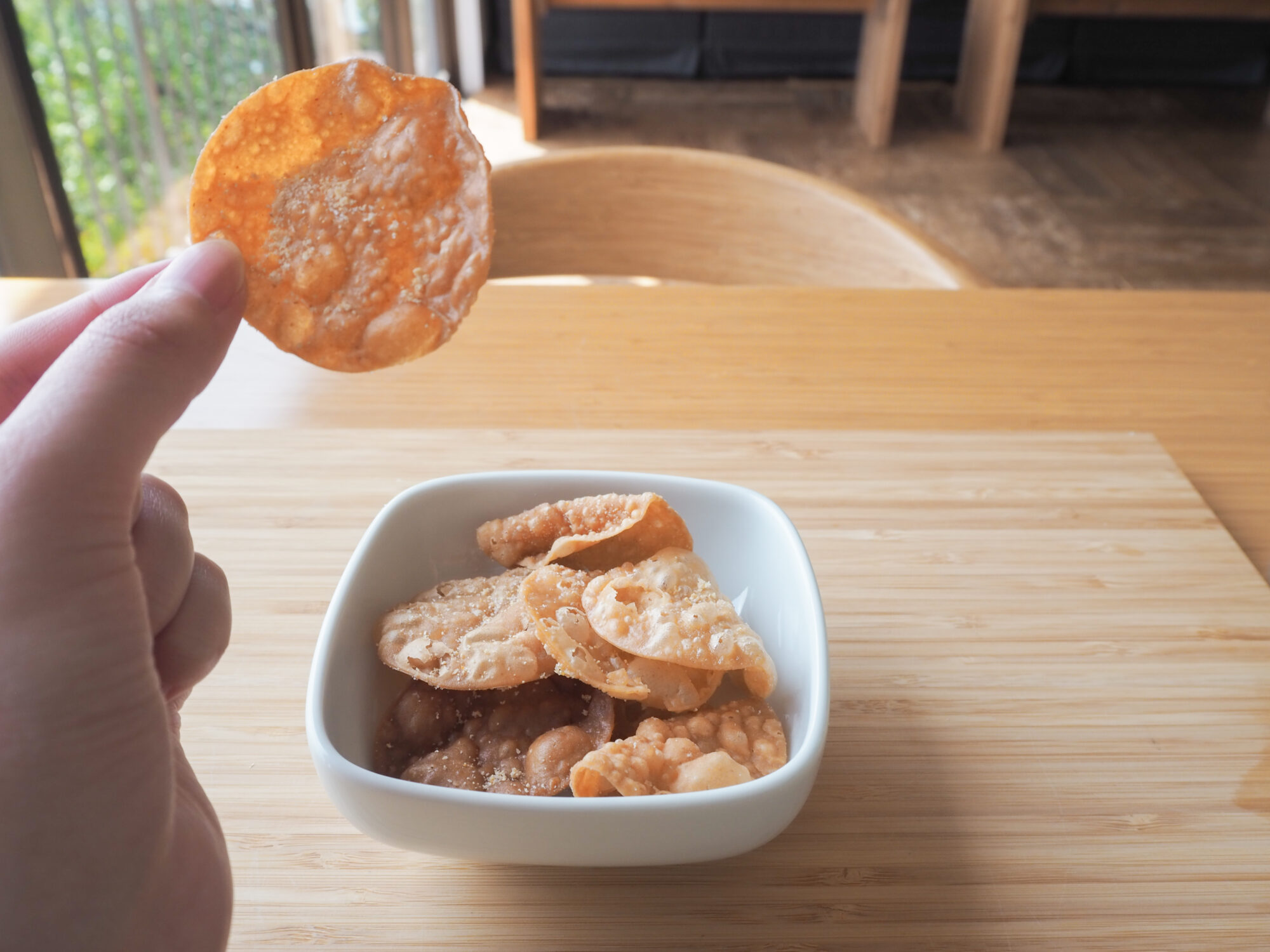
Pile chips are made with only wheat and water.
At first, I struggled with whether to add egg, and the way they puffed up varied greatly depending on the ratio of wheat to water and how thin the dough was, so I made many test batches.
In the end, I think I made the ideal chips: thin and light, yet puffed up just the right amount.
By the way, the wheat for the pile chips is also “Fukuhonoka” from Ichimonji Udon, the same as for the lasagna.
They’re great as a snack with wine, or dipped in the lasagna sauce.
Above all, I think you can taste the natural flavor of Fukuhonoka, so I hope you’ll give them a try.
We want you to feel glad you had “a moment like this” in your day
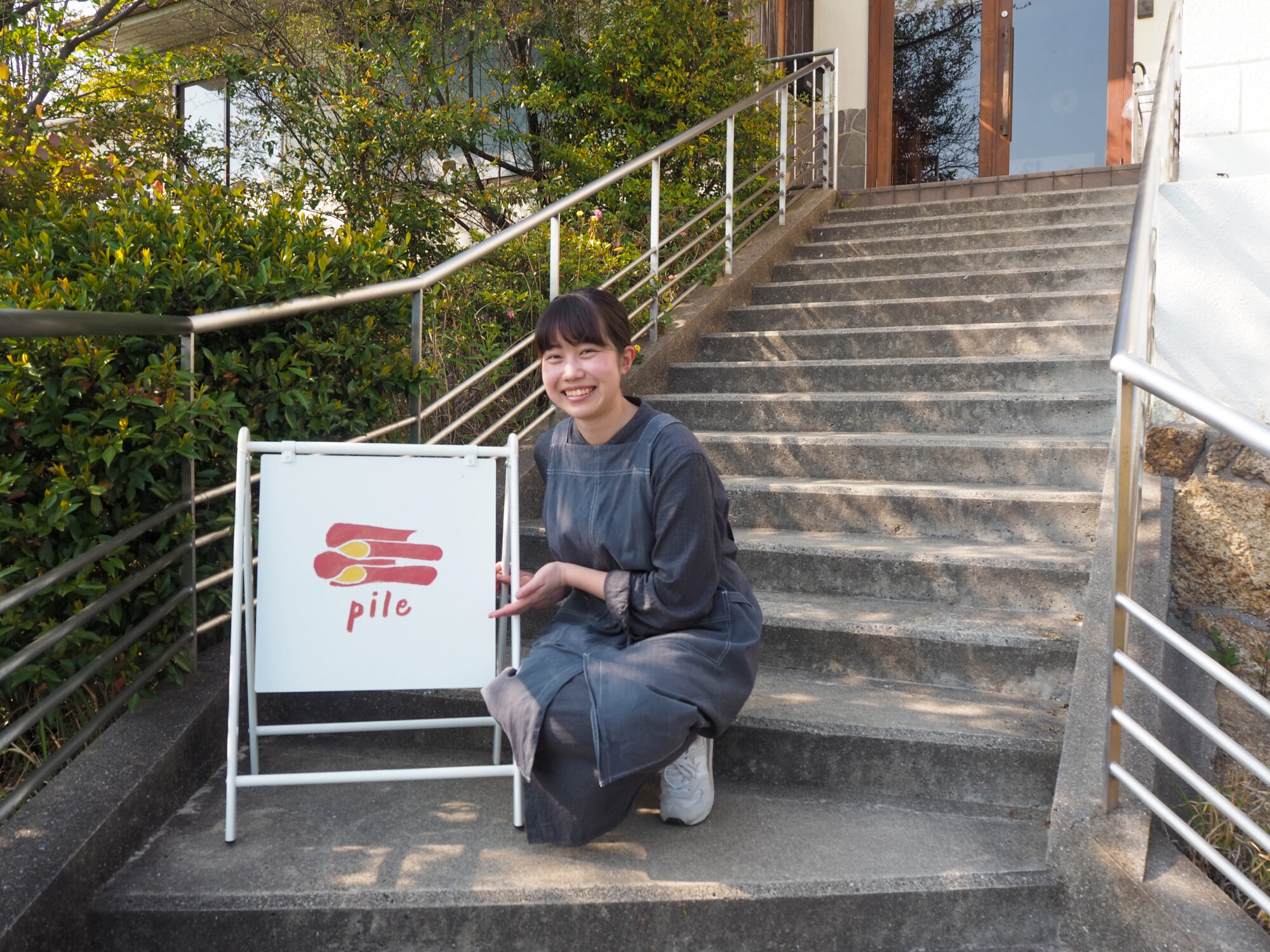
How would you like customers to enjoy their time at pile?
Sakai
Customers take the time to come to pile.
They have to take a bus or drive, and walk up the slope to the entrance.
So from the moment they sit down, I hope they can relax and enjoy the view of the Seto Inland Sea and their meal.
I hope they can spend a moment at pile that makes them think, “I’m glad I had a moment like this” during their day.
They can simply come for lunch, or stay at float; I think there are many ways to enjoy it.
And I’d be happy if, during their time to refresh, they could feel the thoughts of producers passed down through generations in the Setouchi region and the flavors of the ingredients.
From the Writer
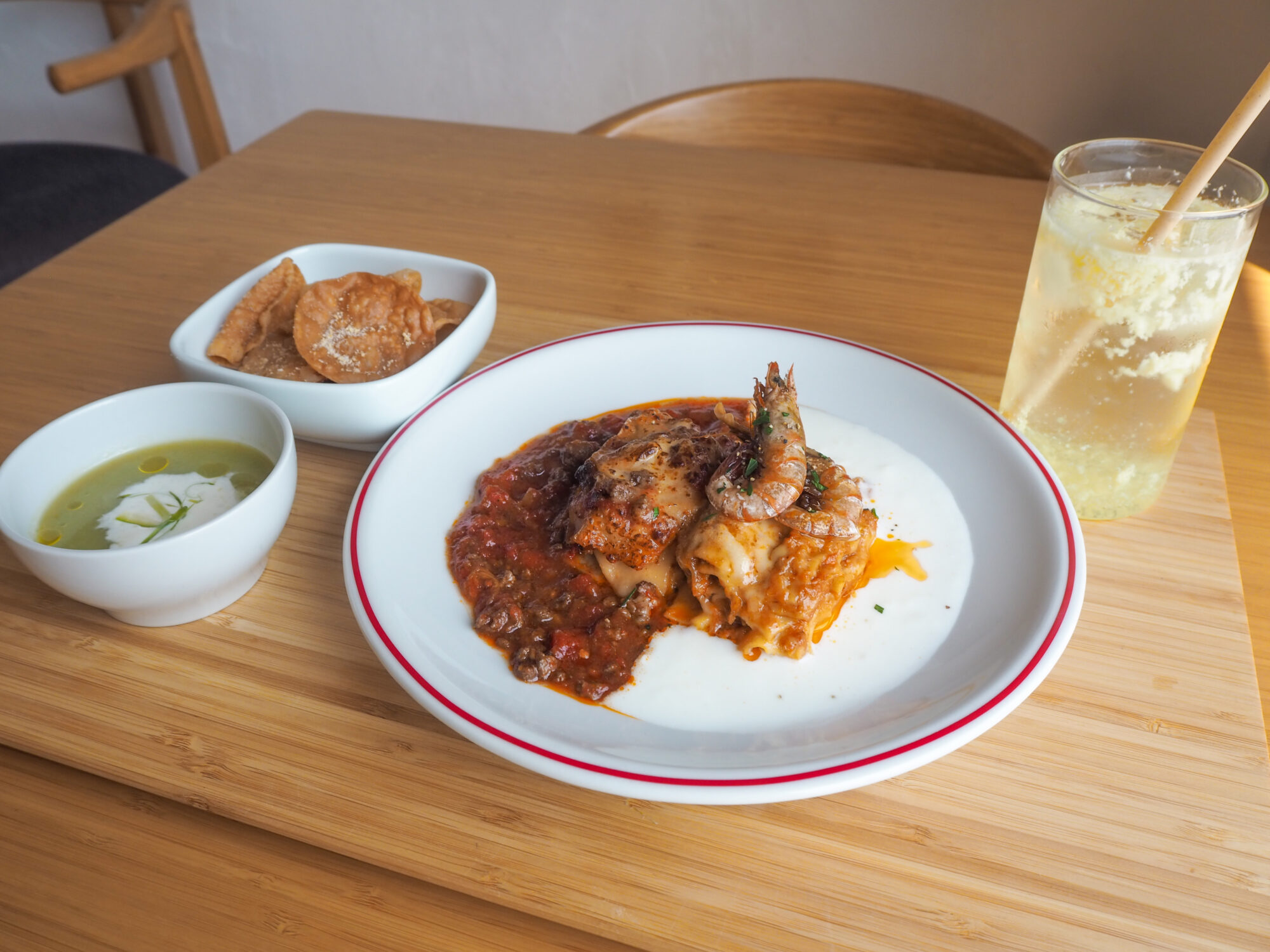
When you sit down at pile, the view overlooking the Seto Inland Sea makes you want to take a deep breath.
As you gaze at the gentle ripples, you’ll find lasagna in front of you, packed with the thoughts of many different producers.
Eating lasagna with a knife and fork will give you a chance to spend time at a more leisurely pace.
If you’re curious about “what ingredients are used,” just ask a staff member.
I felt that one of pile’s charms is that you can enjoy conversations unique to the Setouchi region through food.
Homemade Lasagna and Natural Wine “pile” Information

| Name | Homemade Lasagna and Natural Wine “pile” |
|---|---|
| Address | 1421-26 Kojima Karakoto-cho, Kurashiki City |
| Contact | 086-477-7620 |
| Parking | Available Free municipal parking for about 40 cars is available at the bottom of the hill |
| Hours | 11:30 a.m.–9:00 p.m. (last order at 8:30 p.m.) |
| Closed | Wednesday and Thursday DENIM HOSTEL float is open every day |
| Payment methods |
|
| Reservations | Accepted Via Instagram DM or phone |
| Seating | Tables: 12 |
| Smoking | Entirely non-smoking (outdoor smoking area available) |
| Restroom | Western-style toilet |
| Website | pile | Pile |



What would you like to know about Kurashiki?
Enter a word to search articles on this site