At the front of the station, which serves as the starting point of Kurashiki Chuo-dori extending south from JR Kurashiki Station, a shop with a rare style for this area has opened. It is a standing bar called Tachinomi ura, which has no chairs and only offers standing drinking. Located about a minute's walk from the station, it is a convenient place for both locals and tourists.
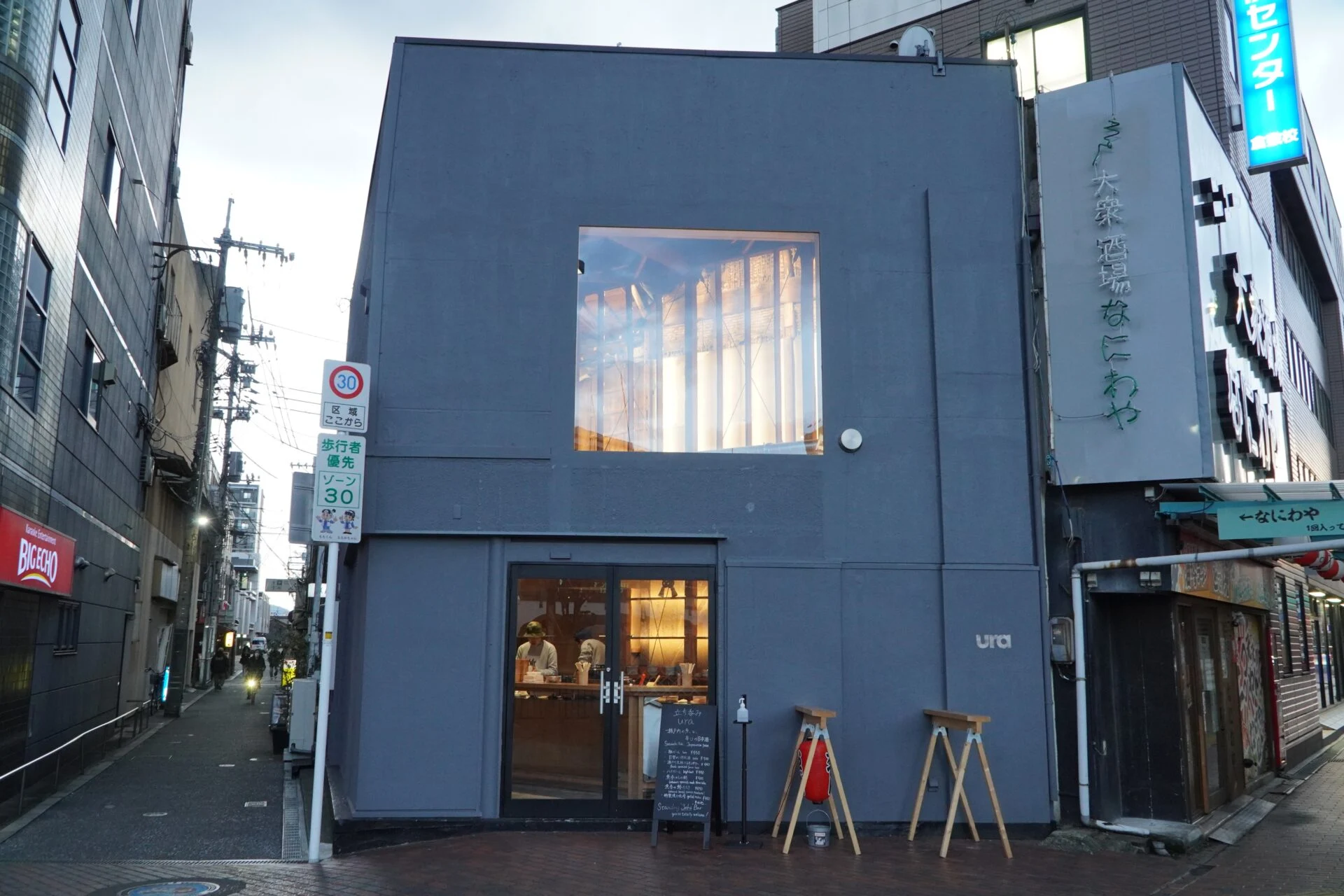
When you look at the shop from the outside, you feel a certain strangeness. The shape of the building and the exposed earthen walls visible through the windows. There is no noren (shop curtain), and you only realize it is a restaurant when you see the menu sign next to the door.
The shop's appearance, which makes you wonder what kind of place it is, is because it cherishes the architect's intentions who designed the building.
We covered this standing bar, which was born from a chance encounter and has become a place for interaction.
A standing bar worth noting for its building
Tachinomi ura (hereafter, ura) is located just to the right after passing in front of the west building from the south exit of JR Kurashiki Station and descending the pedestrian bridge. It is situated in a prime location that can be considered the face of Kurashiki.
By the way, the pronunciation of ura means "ogre," and while you might think it refers to "Onra," which is familiar in Okayama, it actually refers to "裏" (ura, meaning "back" or "behind"). The reason for calling it "back" despite being in the front of Kurashiki will be introduced in the later interview.
Since it is a restaurant, I would like to talk about the menu, but first, let's focus on the building. There are doors and large windows with dark-colored walls. You will surely feel a sense of discomfort when you see what is visible through the windows: exposed earthen walls.
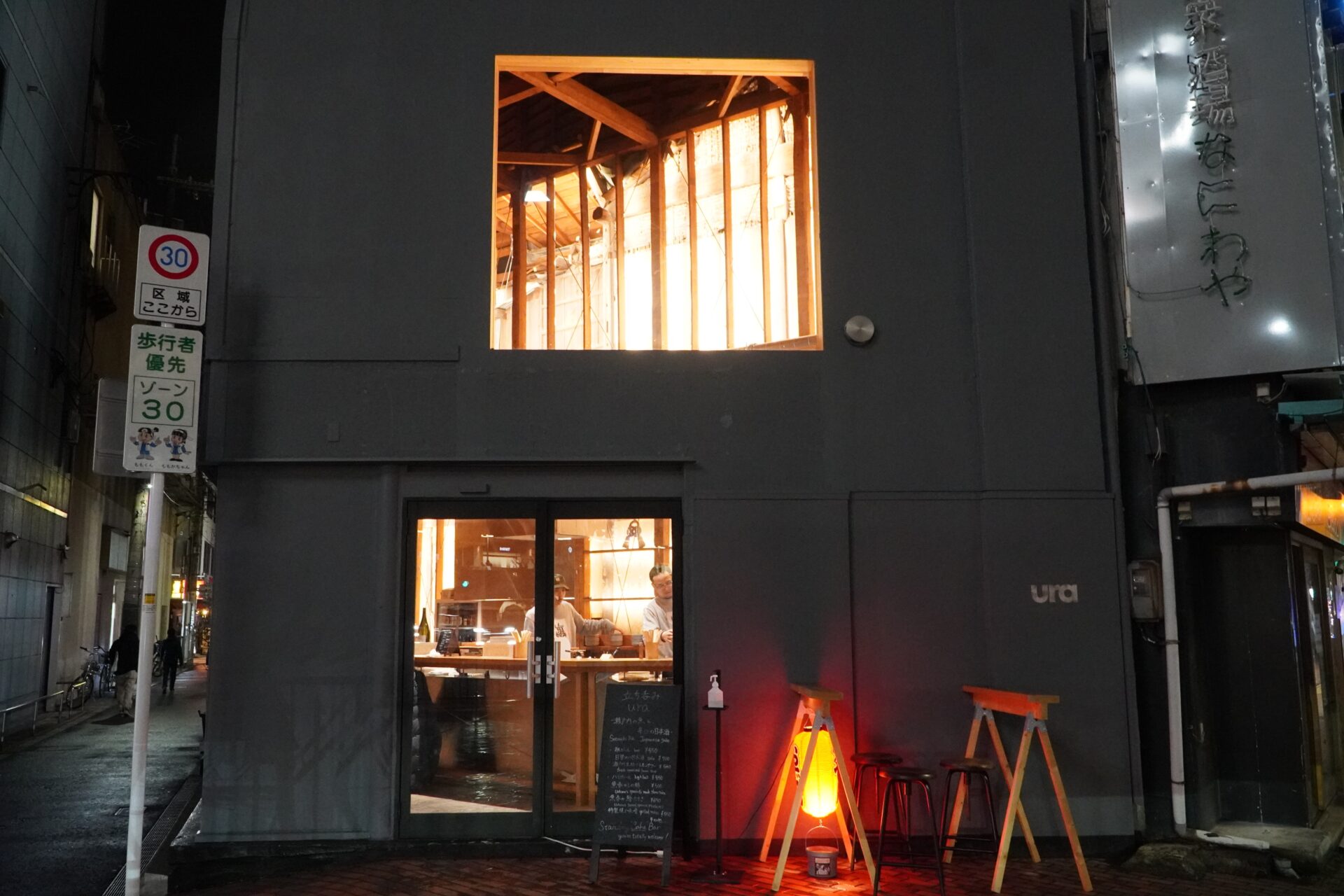
The windows have special processing that prevents them from reflecting light at night, allowing a clear view inside. When you get closer, you can also see the bamboo structure, making you feel as if you are looking outside while being inside the building. Yes, the wall visible from the window is actually the outer wall of the neighboring building.
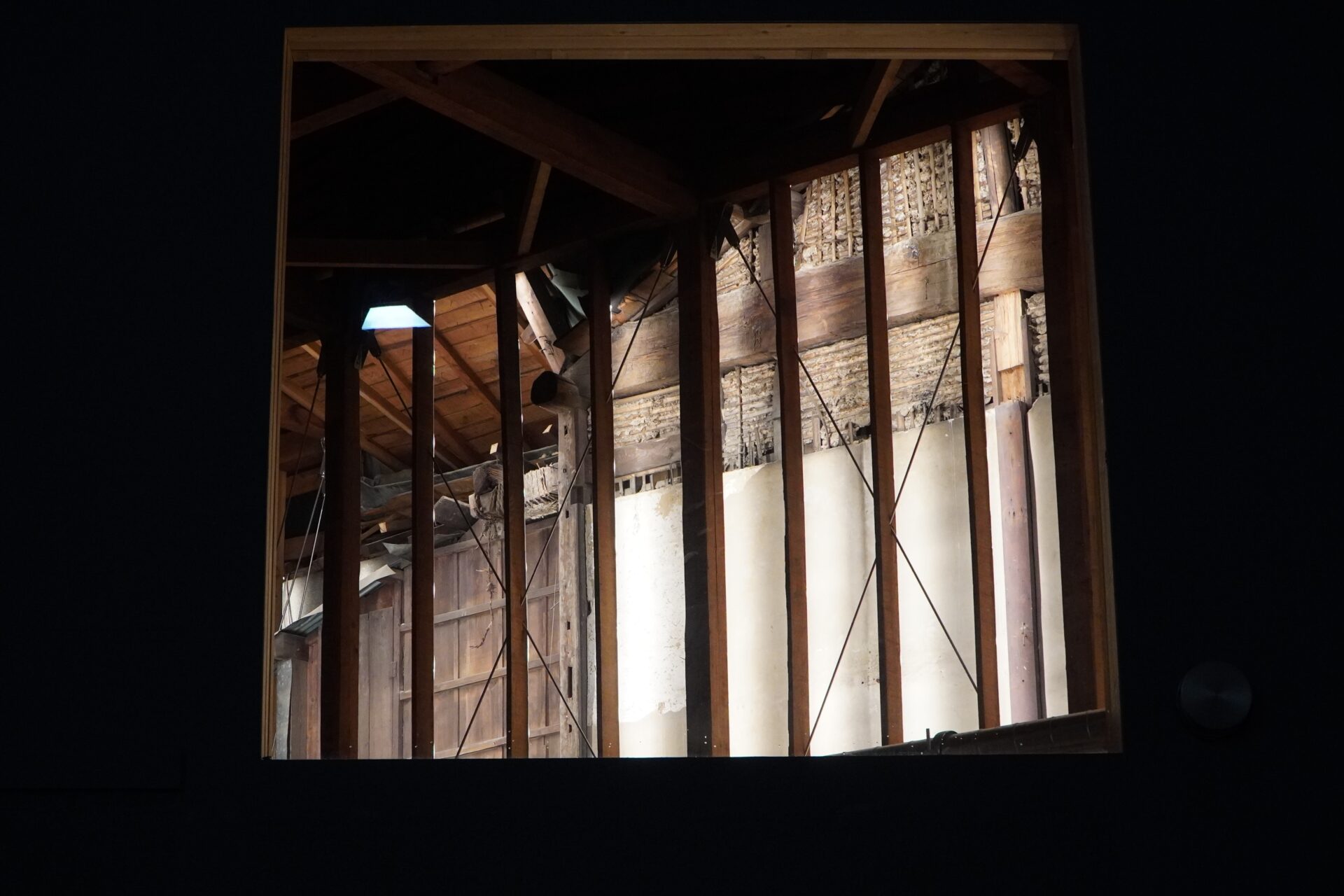
Ura is a building that was created by the neighboring extension, and it was intentionally designed to expose this outer wall during the renovation of the shop. Upon entering the shop and looking at the ceiling, you will feel even more strange. It looks like you are in a construction site.
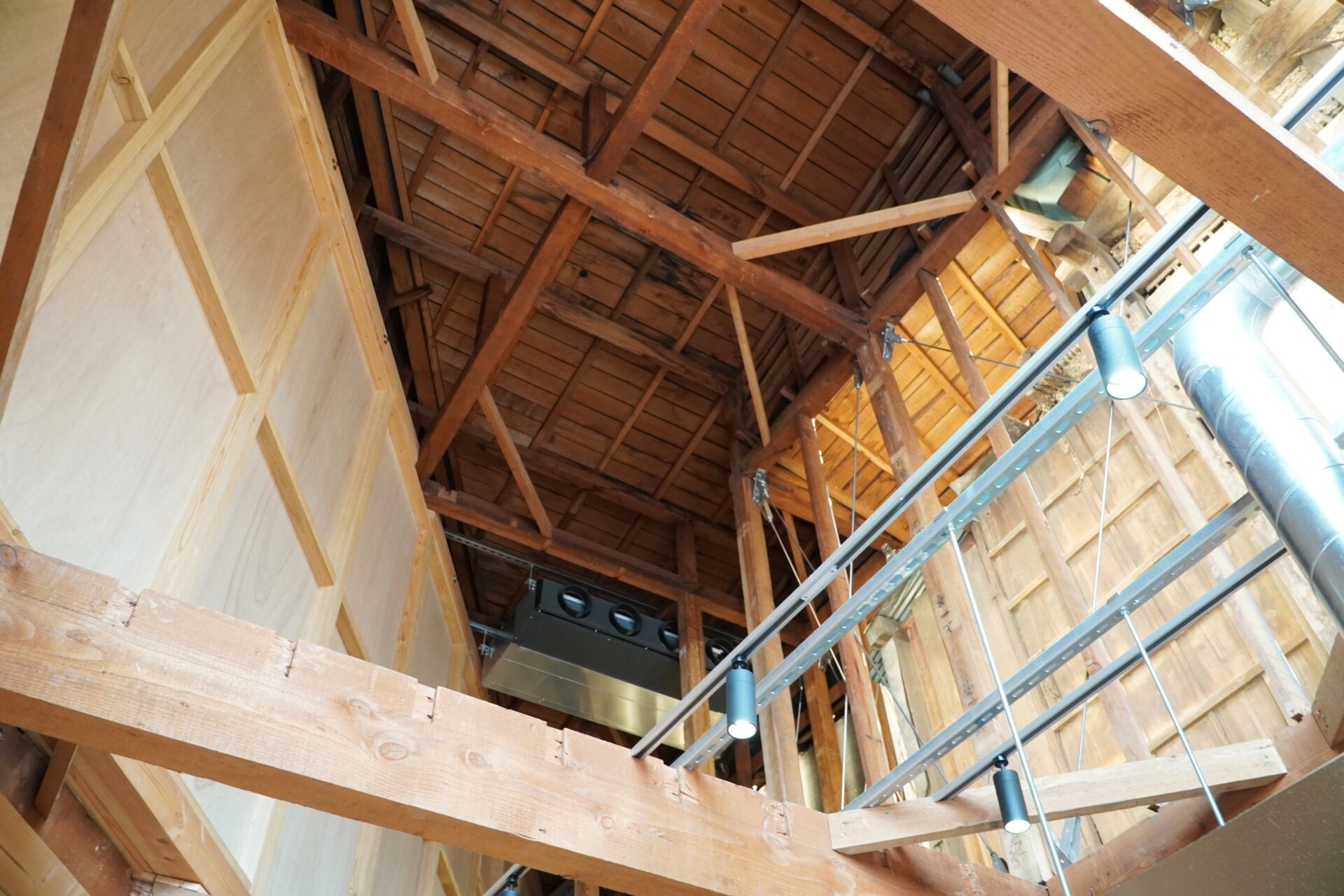
The complexly arranged pillars, exposed walls, and ceiling are not under construction; they are the finished product, renovated by architect Nagasaka Jo of Schemata Architecture. Nagasaka has been working on architecture that utilizes the materials of buildings and land based on the concept of "half-architecture."
The protrusions created by the extension remain as they are. You can also see the characters left on the pillars, and you can certainly feel the history of the building.
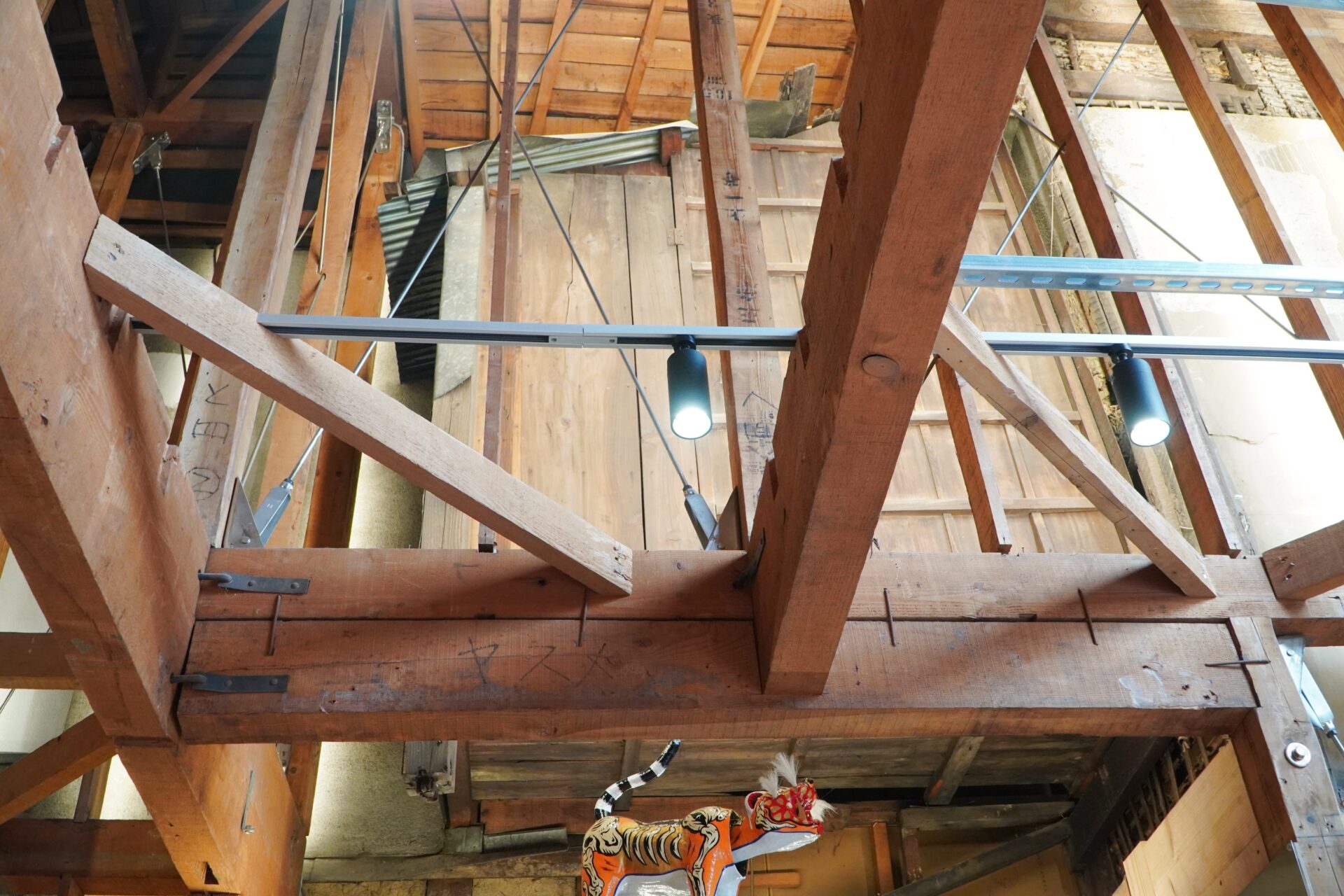
Inside the shop, the counter is set up along the strangely shaped building. Since it is a standing bar, there are no chairs.
Dishes made with local ingredients
Ura is operated by Kurabiz Co., Ltd., which also runs a sister shop, Cafe & Bar KAG, offering hamburgers and chicken over rice.
At ura, you can enjoy dishes made with plenty of local ingredients and local sake.
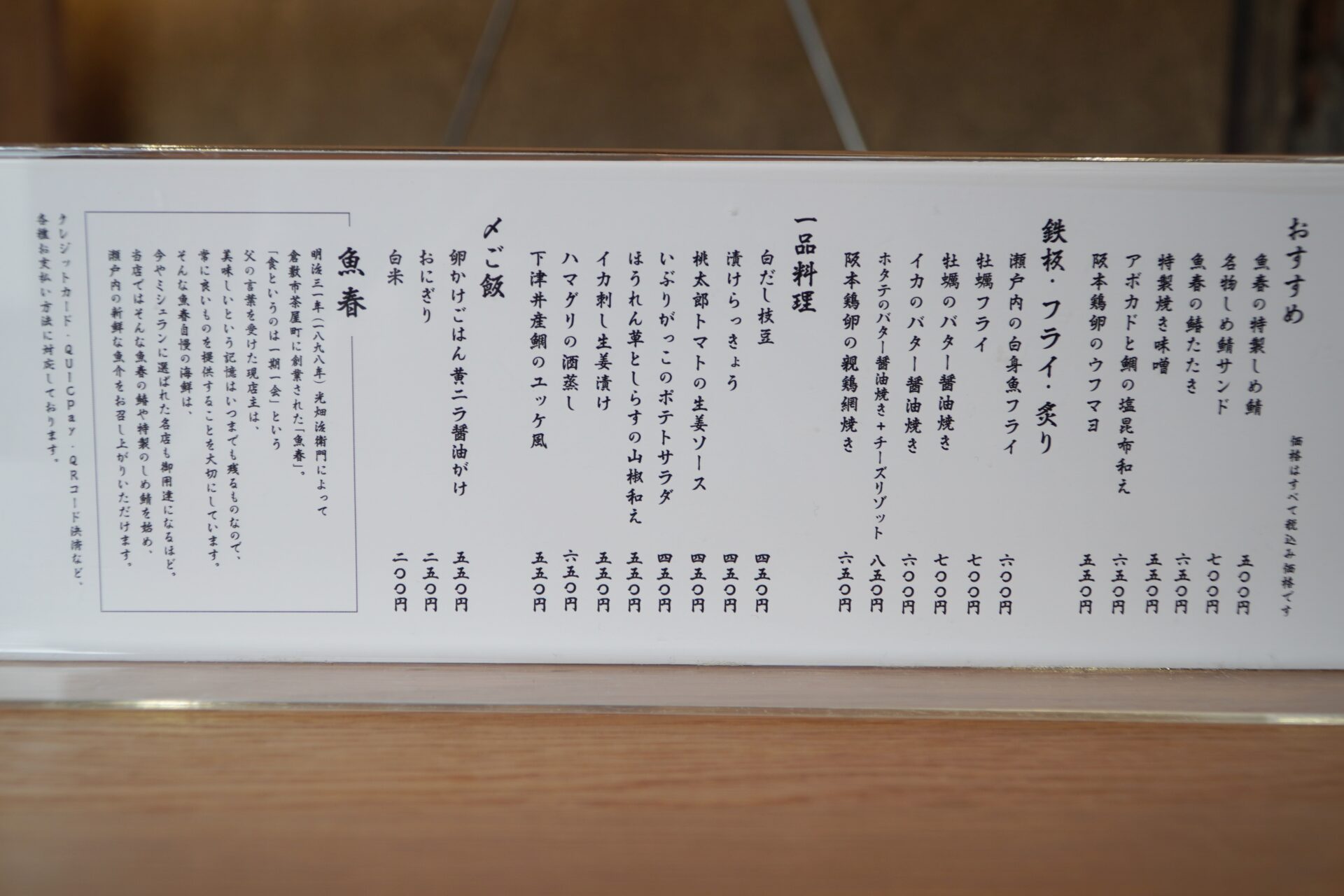
Fish from Uoharu
Located in Chayamachi, Kurashiki City, established in 1898, the long-established fish shop Uoharu provides the fish used in the menu.
About 45 years ago, the Spanish mackerel (sawara) was poorly handled outside Okayama and could not be eaten raw.
Uoharu traveled to various fishing ports to teach fishermen how to properly handle and transport sawara with ice. They created a system where if they could send all the sawara from various places to Okayama, they would buy them back at a higher price.
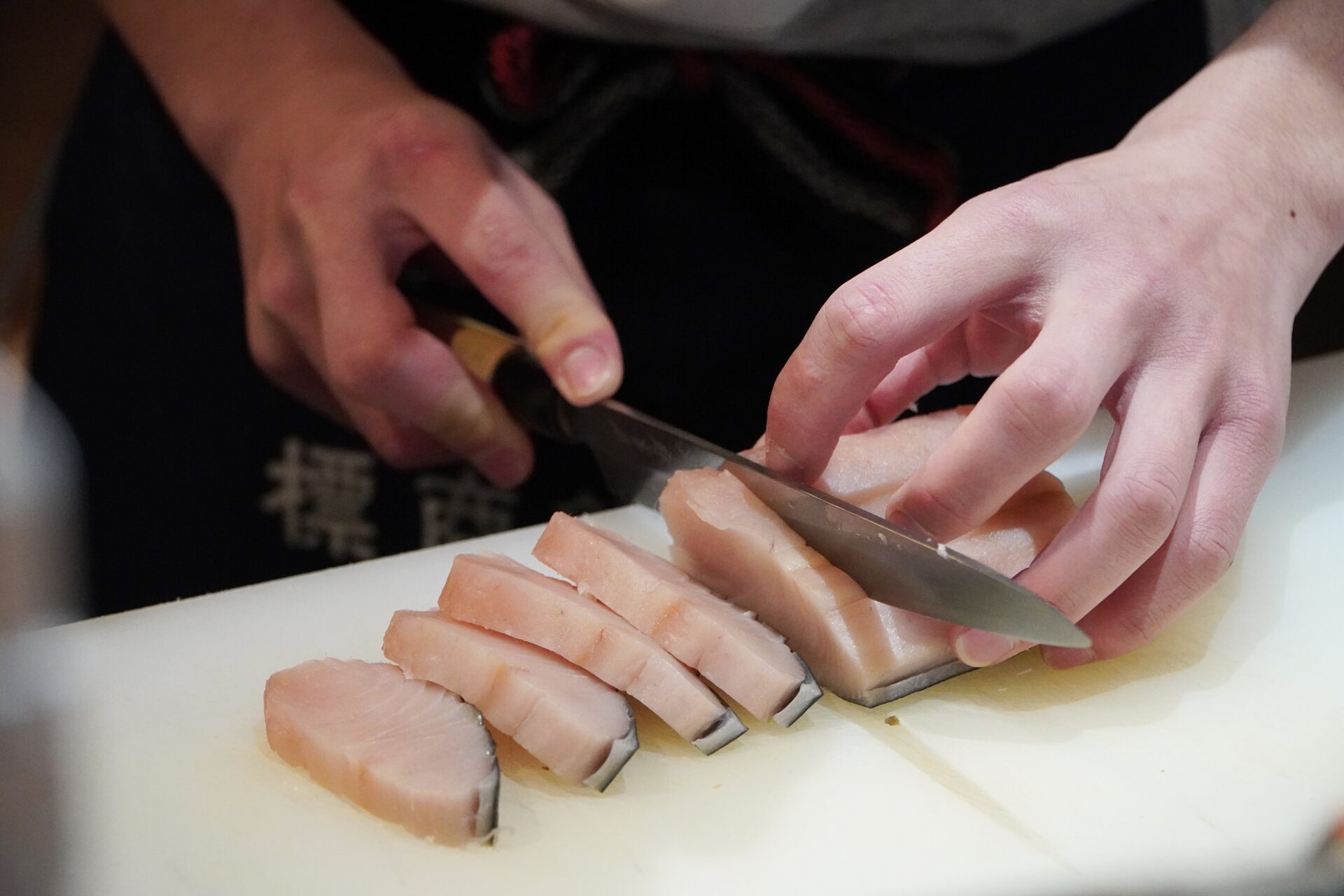
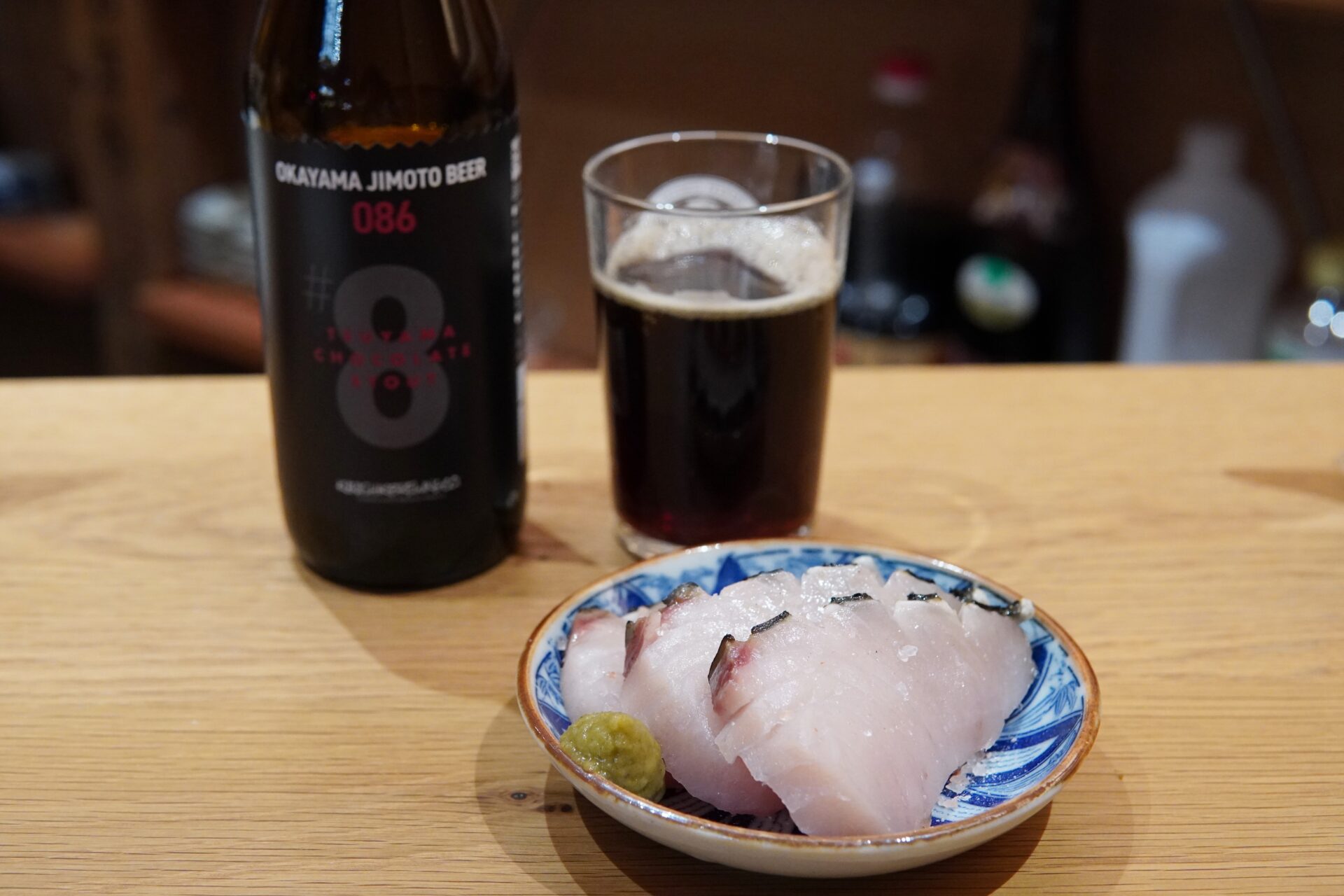
The "Sawara Tataki from Uoharu" is seared with a burner after ordering.
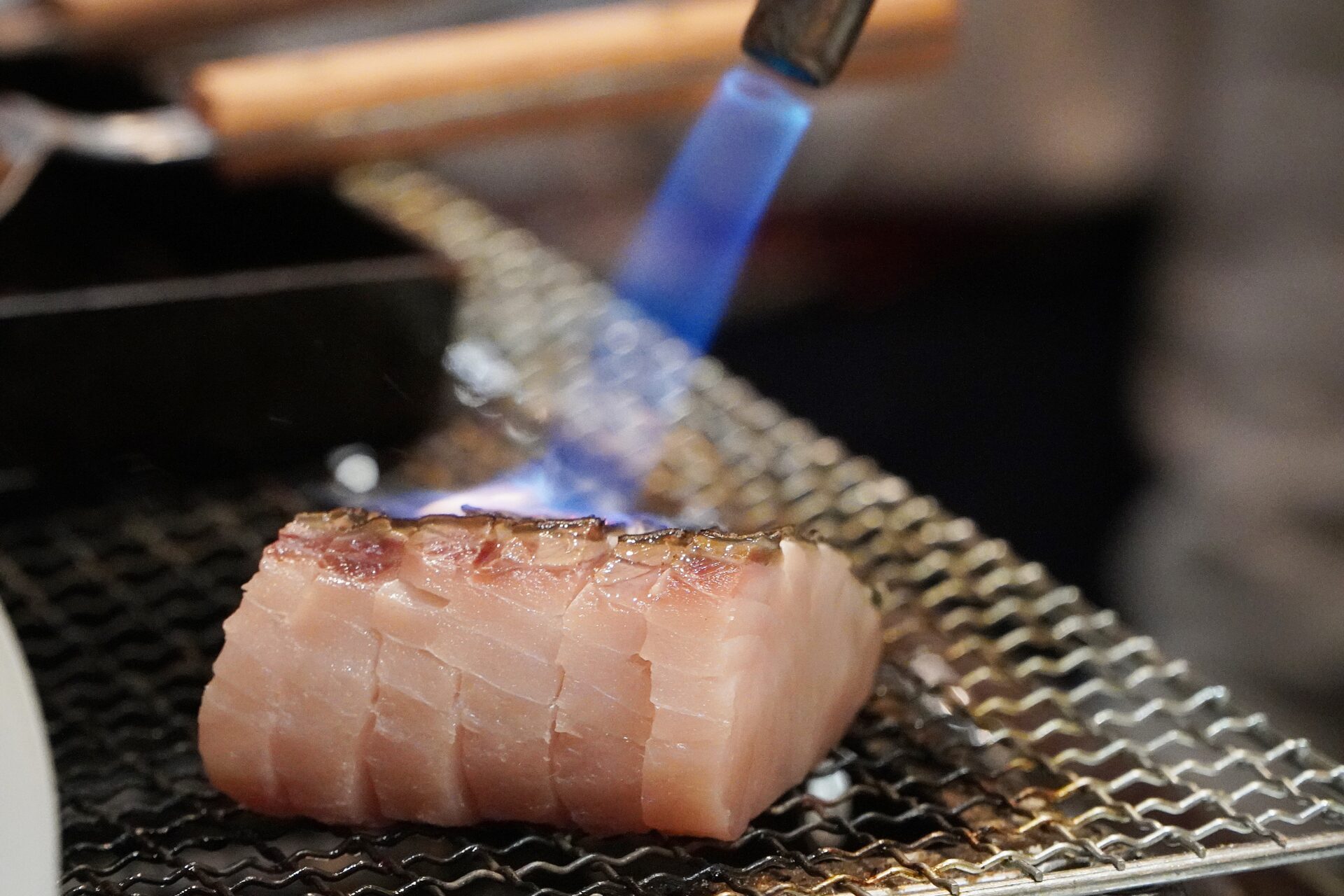
The sawara, written with the character for "fish" and "spring," is often thought to be best in spring, but in fact, it becomes fatty and delicious in winter. The thick slices were enjoyed not with soy sauce, but with yuzu pepper or rock salt.
Being able to eat it with salt that enhances the flavor without masking it is proof of its freshness. The sawara was so tender that it felt like it would melt in my mouth, and I savored the rich flavor slowly.
Like sawara, the marinated mackerel is also recommended. If you want to fully enjoy the mackerel, order the "Special Marinated Mackerel from Uoharu." The marinated mackerel prepared by Uoharu is firm from the vinegar but, like sawara, remains tender. It pairs well with both rice and sake.
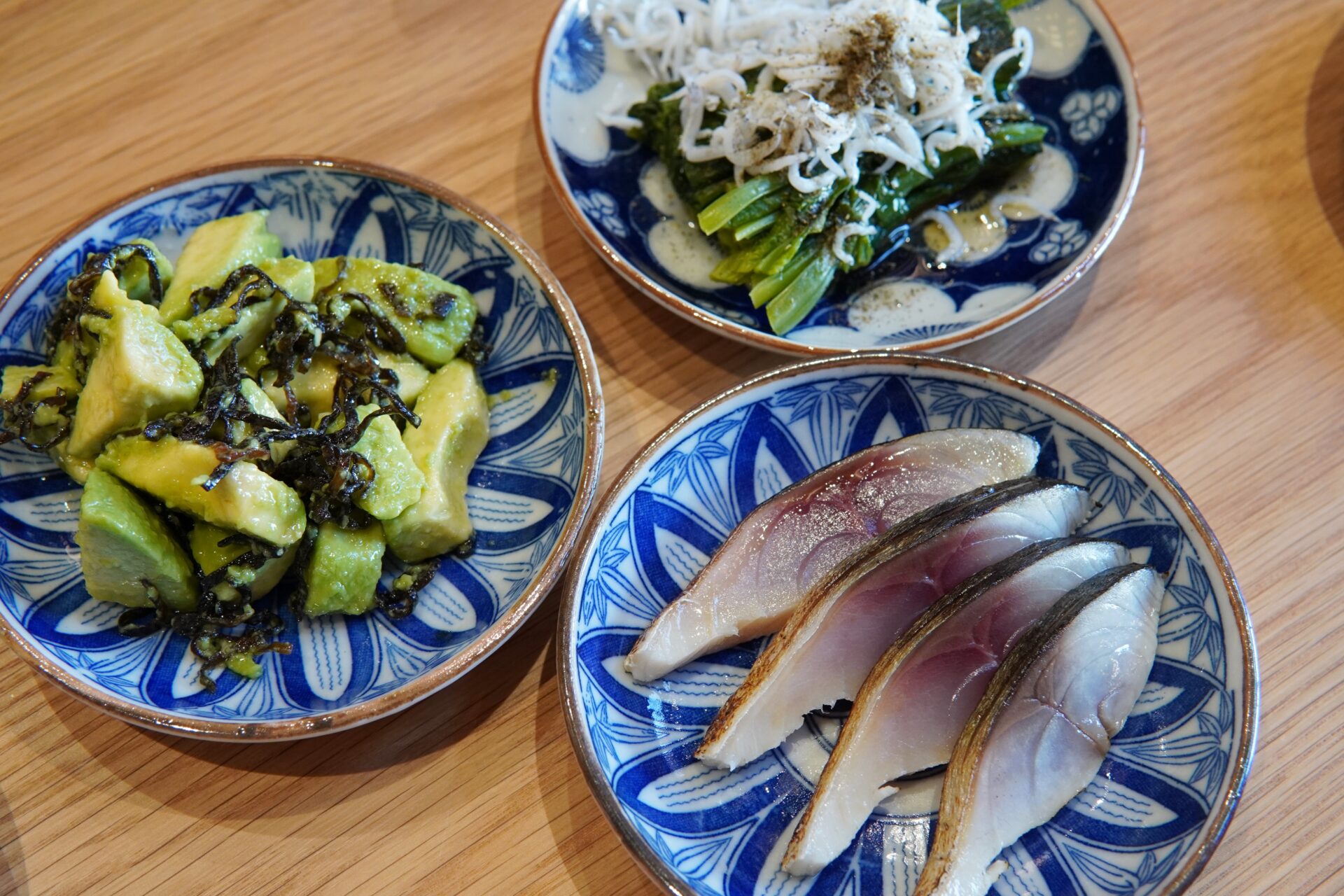
I was so impressed that I wanted to savor the taste in my mouth for a long time.
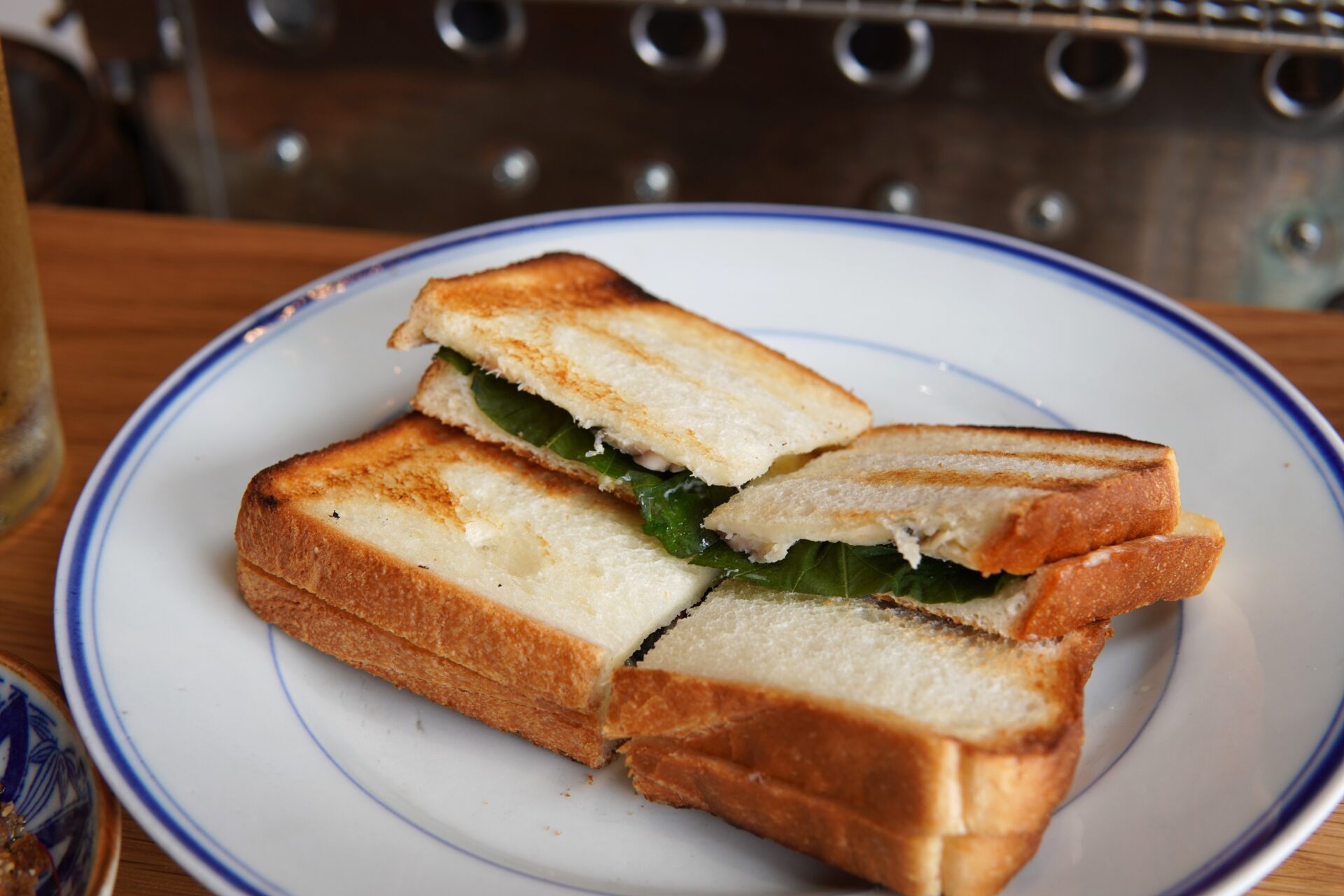
There is also a variation of marinated mackerel, which is the "Famous Marinated Mackerel Sandwich." It is a dish that shocks you by showing that marinated mackerel can go well with bread.
The fish menu also includes fried options. On the day I visited, the "Fried White Fish from Setouchi" was black sea bream from Okayama Prefecture. The type of fish changes daily. I enjoyed it with rock salt and tartar sauce.
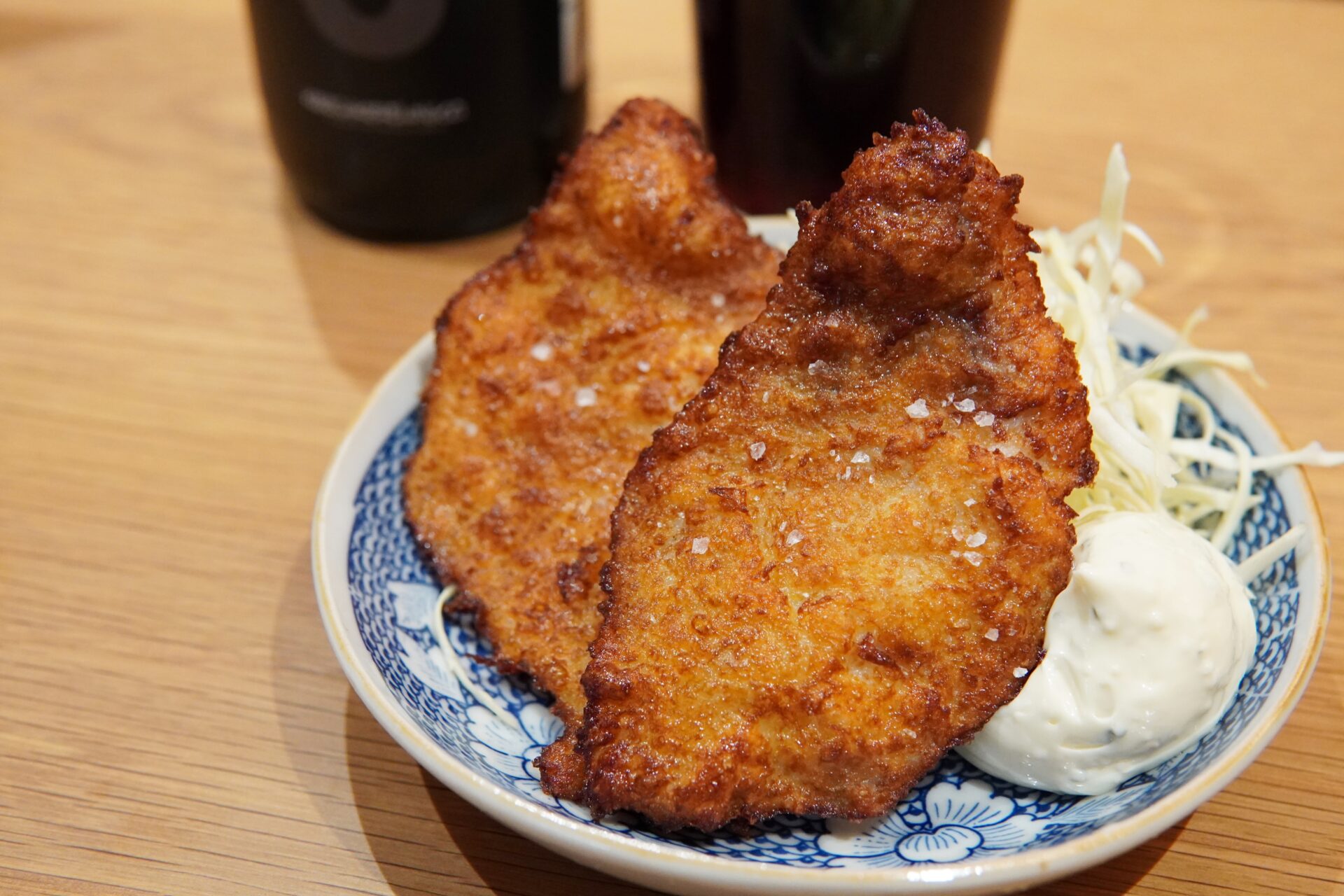
The surface is crispy, while the inside is surprisingly fluffy. This was also a highly satisfying menu item.
Sakamoto Eggs
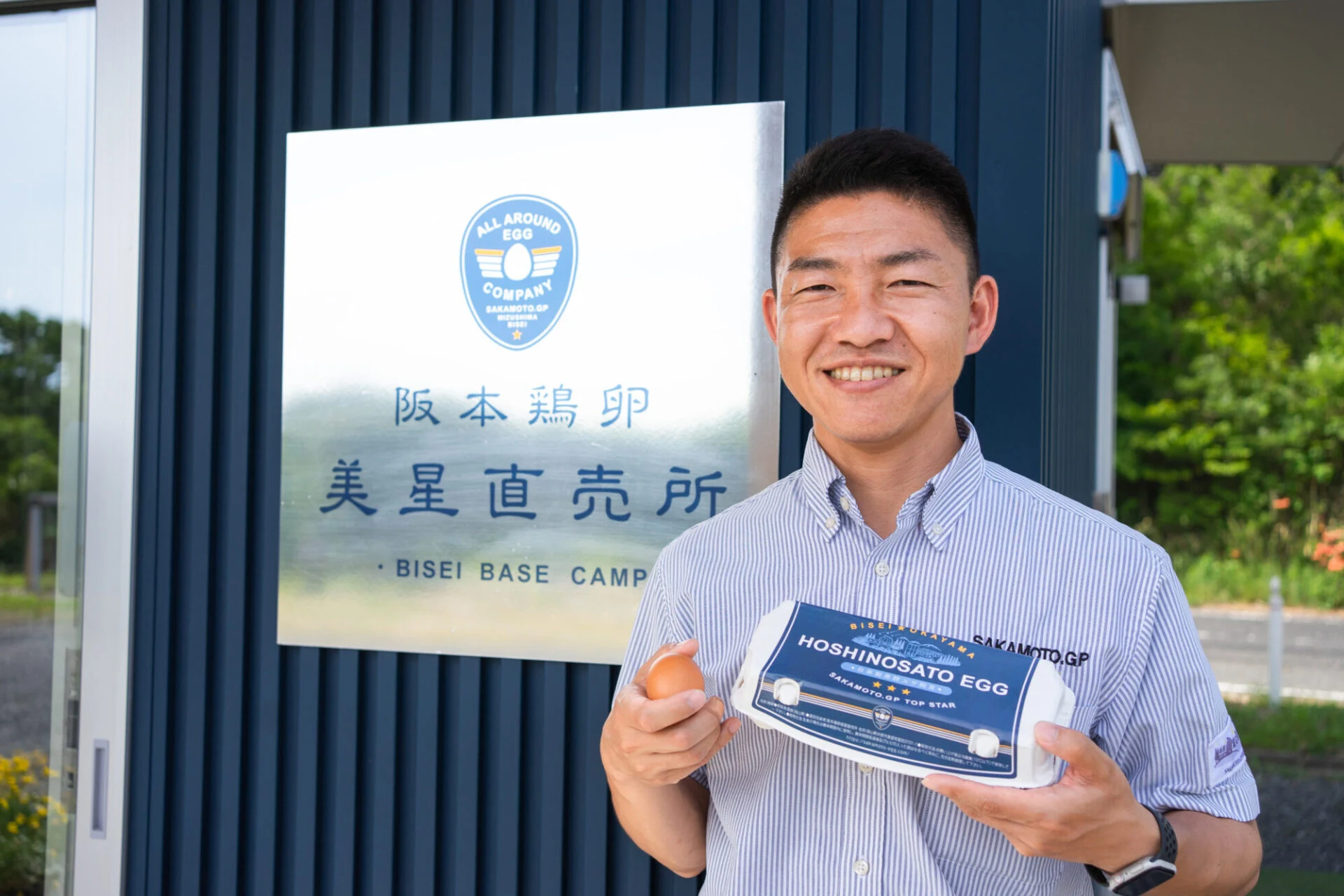
Founded in 1966, Sakamoto Eggs, located in Mizushima, Kurashiki City, will also be introduced.
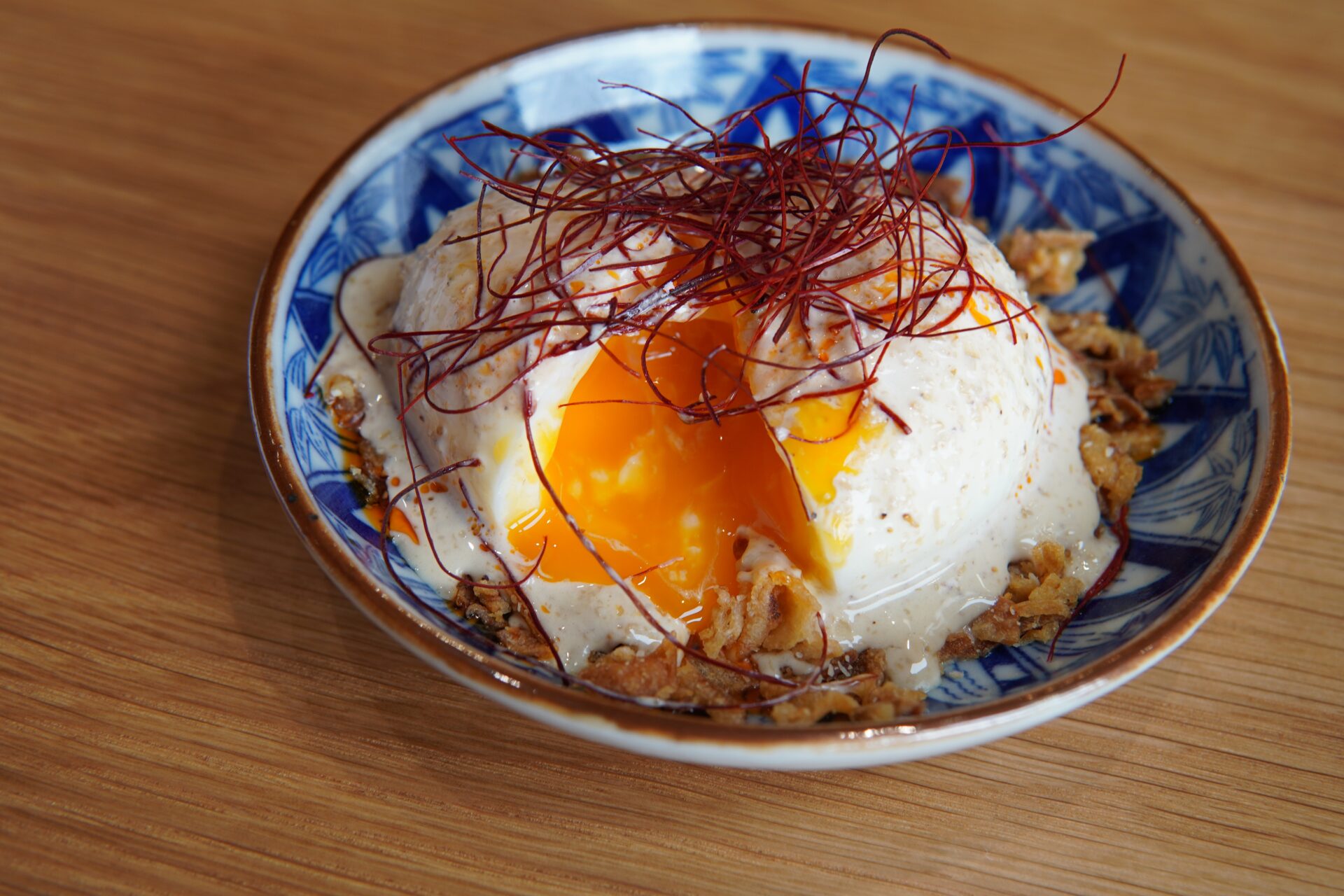
If you want to taste the egg itself, try the "Sakamoto Eggs Ufumayo." Ufumayo is an abbreviation of the French dish "Oeuf Mayonnaise," meaning egg and mayonnaise.
When I had Ufumayo, it was listed on the menu as "Sakamoto Eggs Sesame Ufumayo," topped with a sesame-flavored sauce. It had a slightly Chinese flavor.
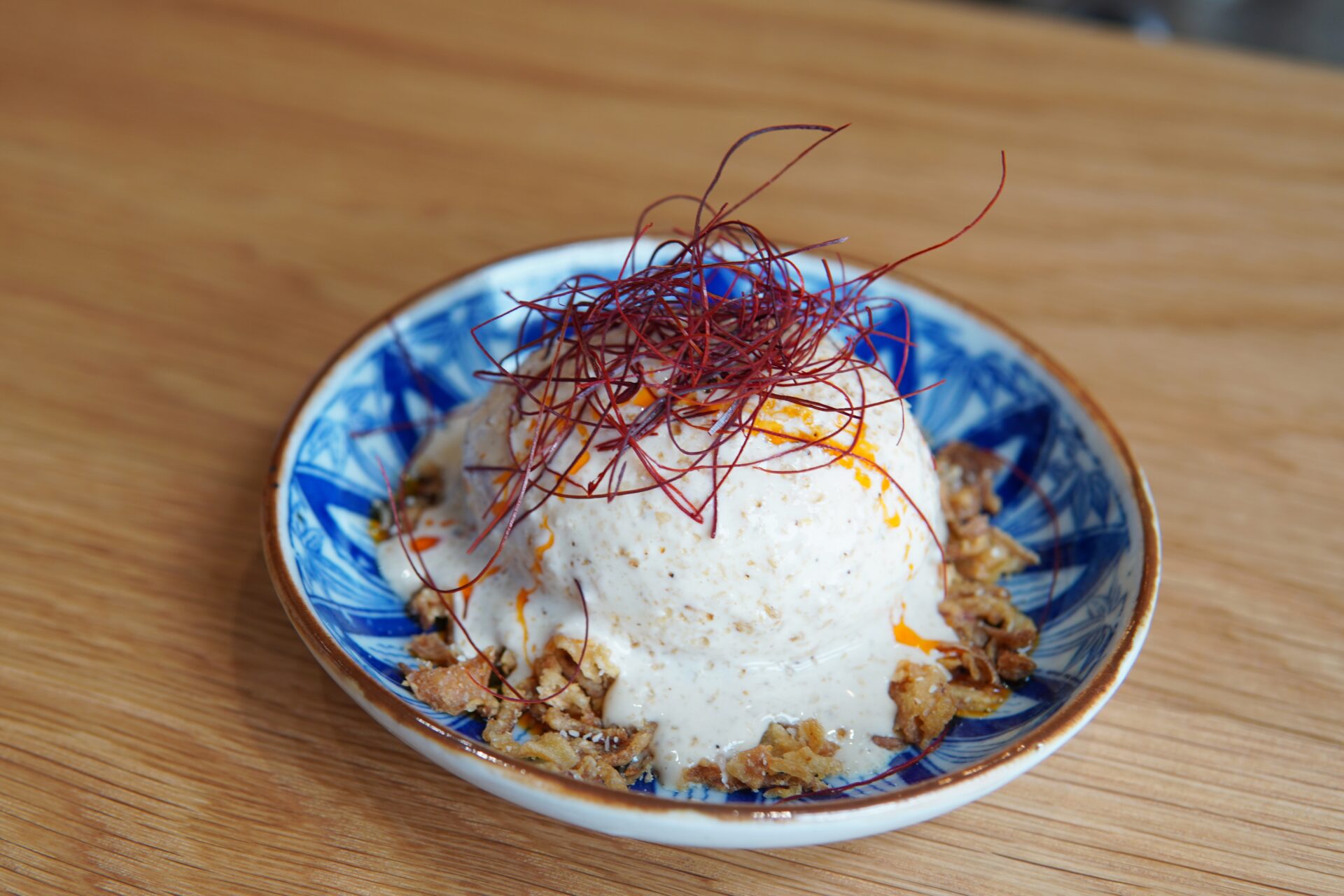
The egg is in a runny soft-boiled state. It is a dish that egg lovers cannot resist.
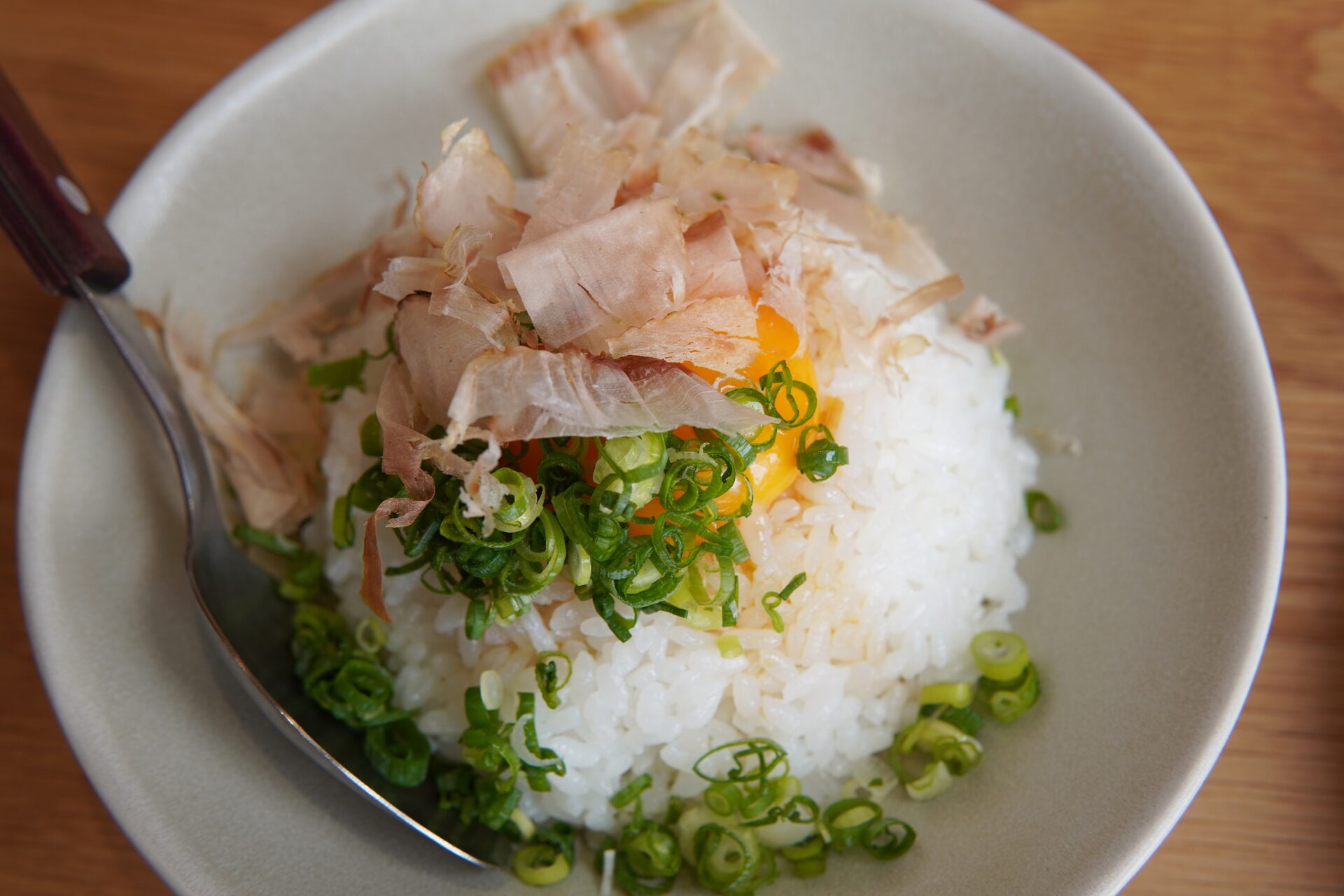
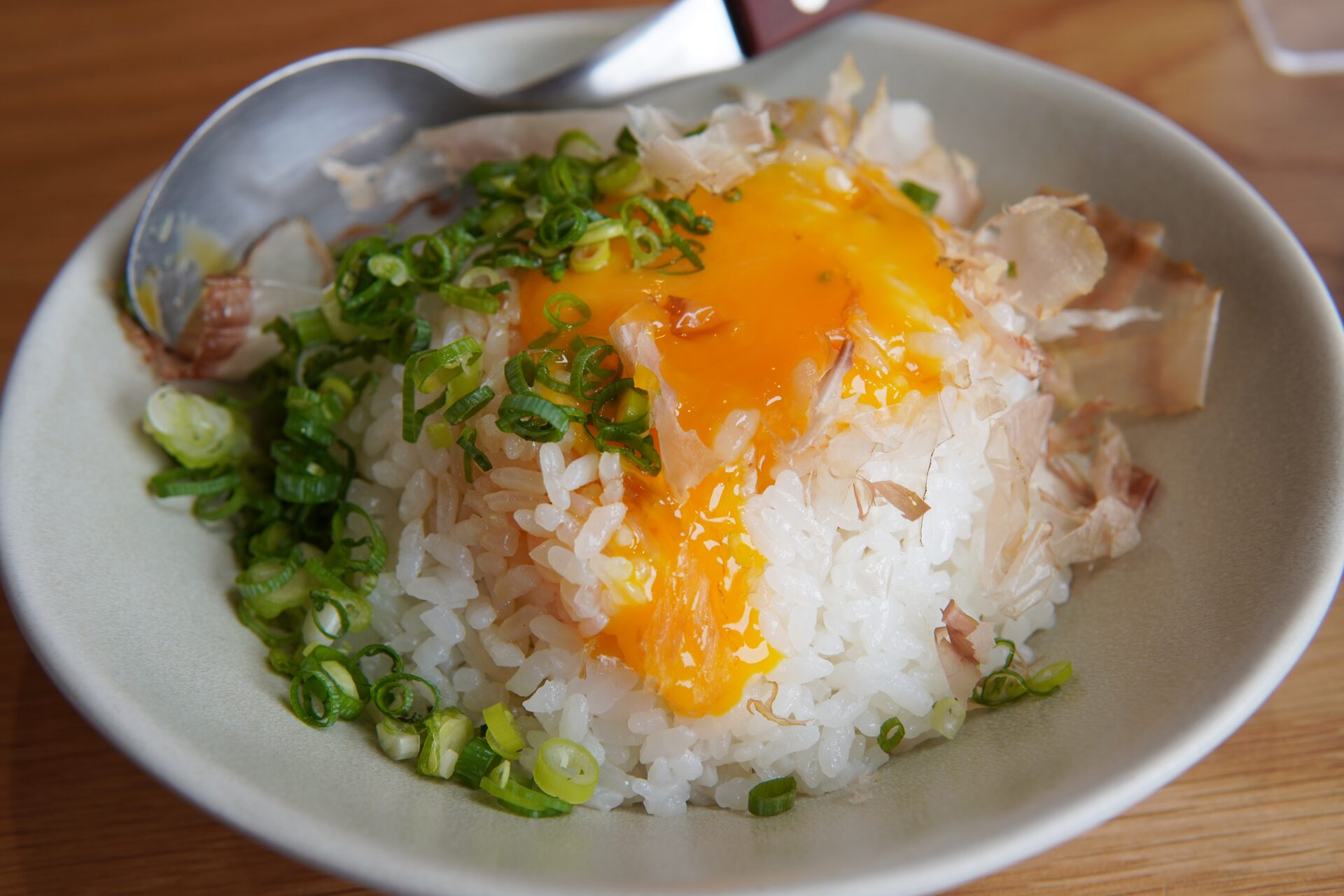
There is also a Japanese soul food, tamago kake gohan (rice with raw egg). It is topped with plenty of bonito flakes and green onions, called "Tamago Kake Gohan with Yellow Chives Soy Sauce." Using yellow chives soy sauce in the soy sauce shows a love for Okayama. The aroma of bonito, green onions, and yellow chives stimulates the brain. I was convinced it would be delicious even before eating it.
Since it is only the egg yolk, the egg clings to the rice. I thought it would be a finishing dish, but it is a sinful dish that whets the appetite.
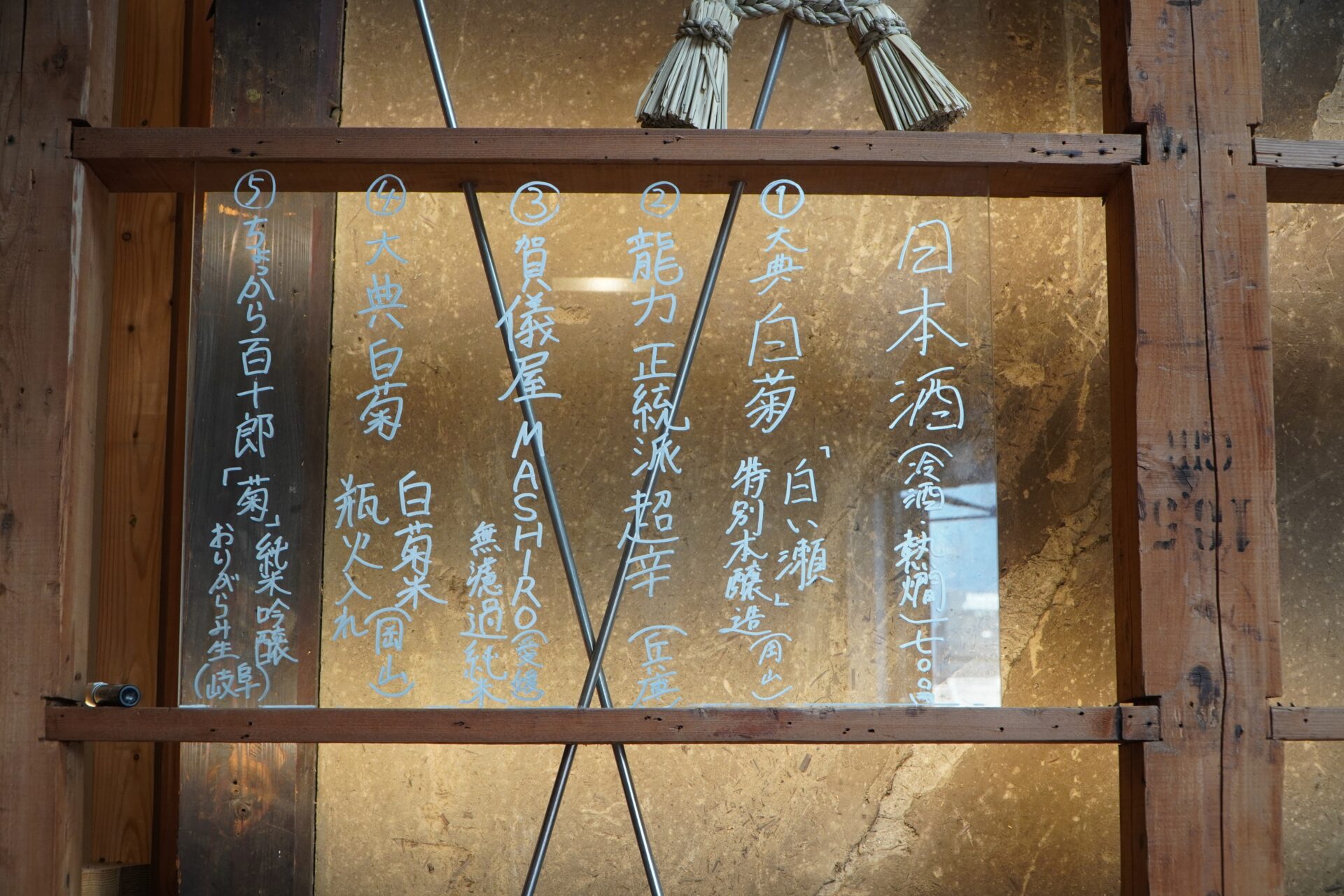
Okayama Sake
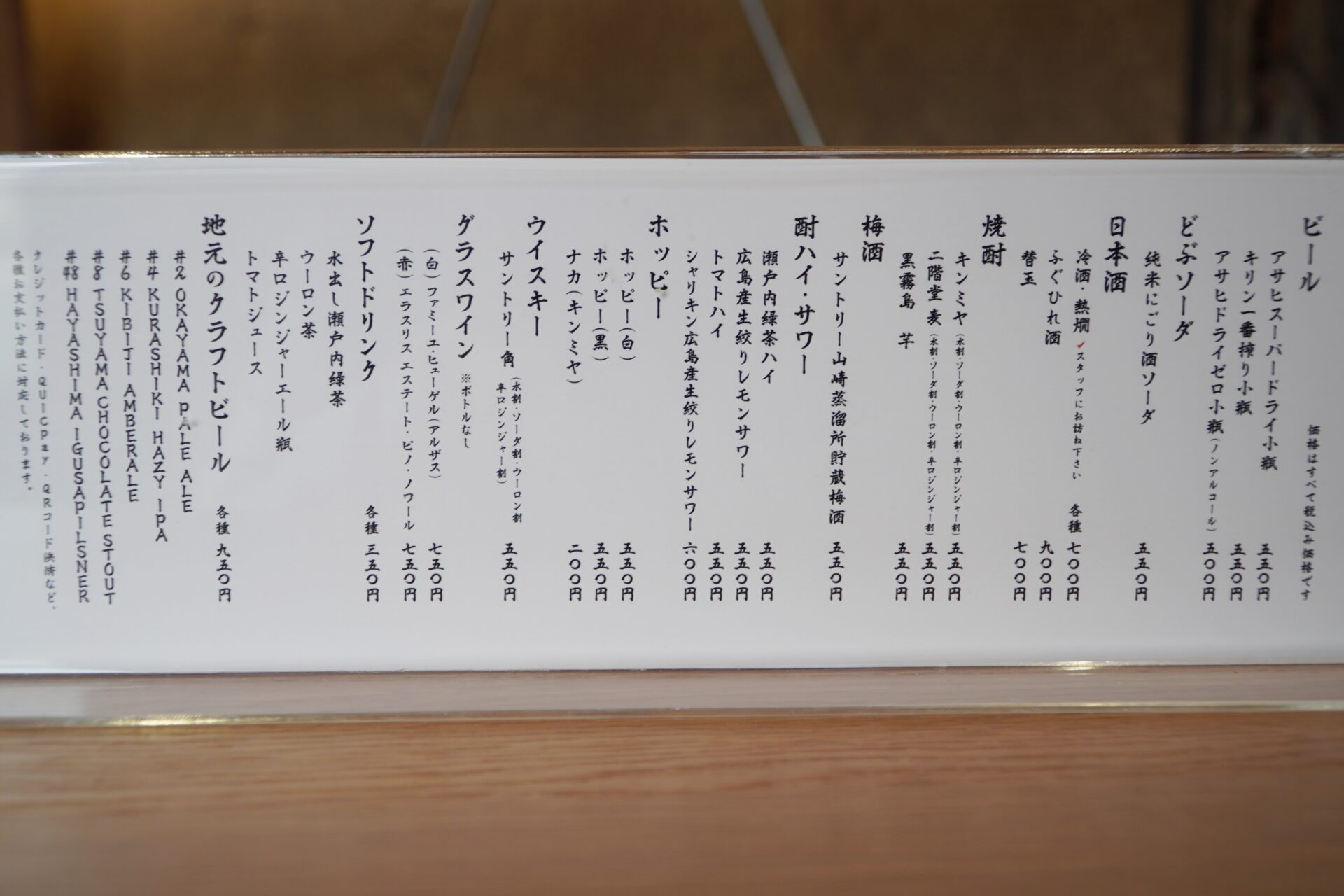
Okayama's local sake is also available. The menu changes daily, so be sure to ask the staff. The sake is written on the menu board on the wall.
Notably, Okayama craft beer is also available. It is brewed under the brand "OKAYAMA JIMOTO BEER 086" in Hayashima Town, Okayama Prefecture. The lineup includes the following five:
- #2 OKAYAMA PALE ALE
- #4 KURASHIKI HAZY IPA
- #6 KIBIJI AMBER ALE
- #8 TSUYAMA CHOCOLATE STOUT
- #48 HAYASHIMA IGUSA PILSNER
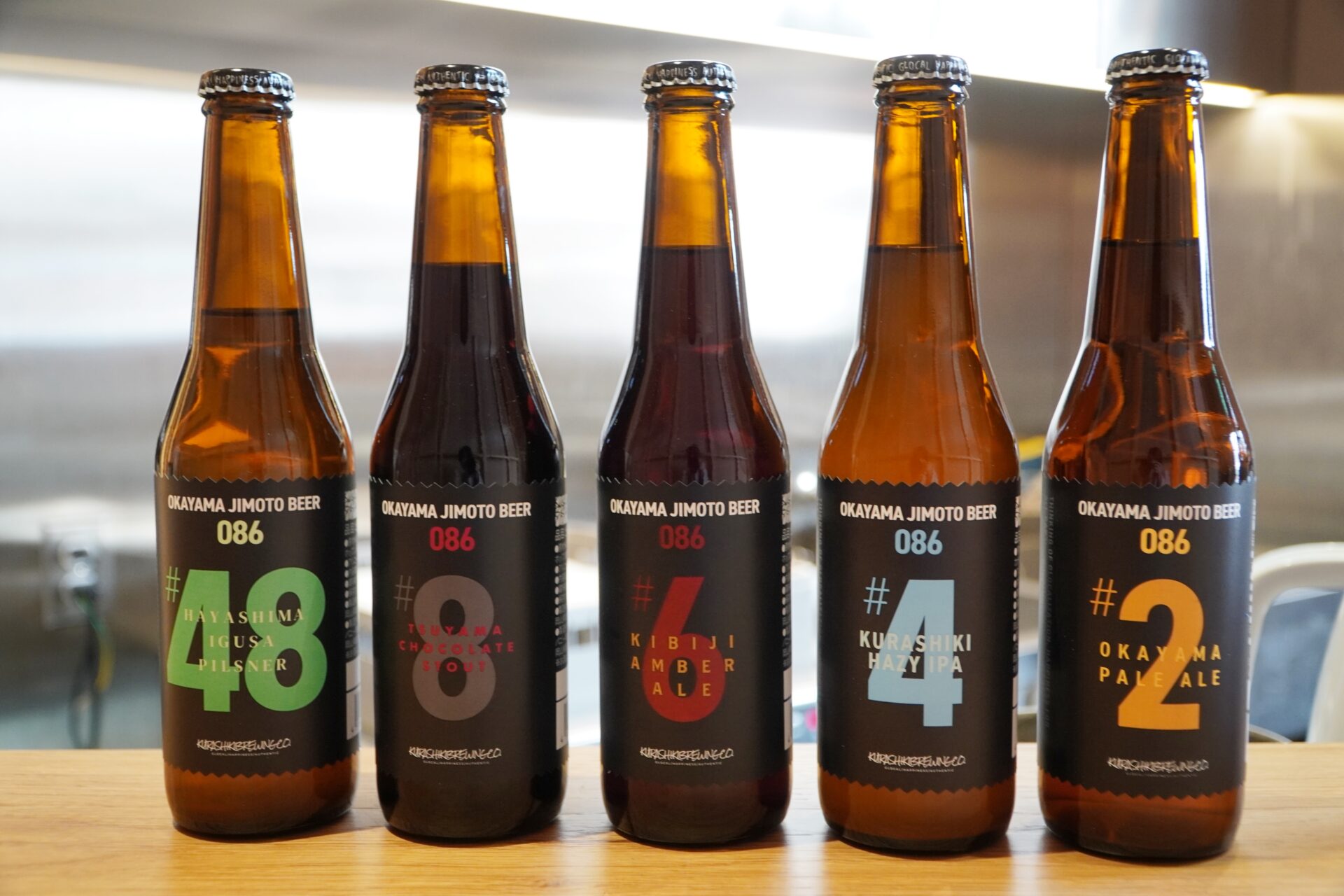
The brand name "086" is the area code for Okayama, and the numbers on the label represent the first digits of phone numbers in various locations within the prefecture. I had the "#8 TSUYAMA CHOCOLATE STOUT."
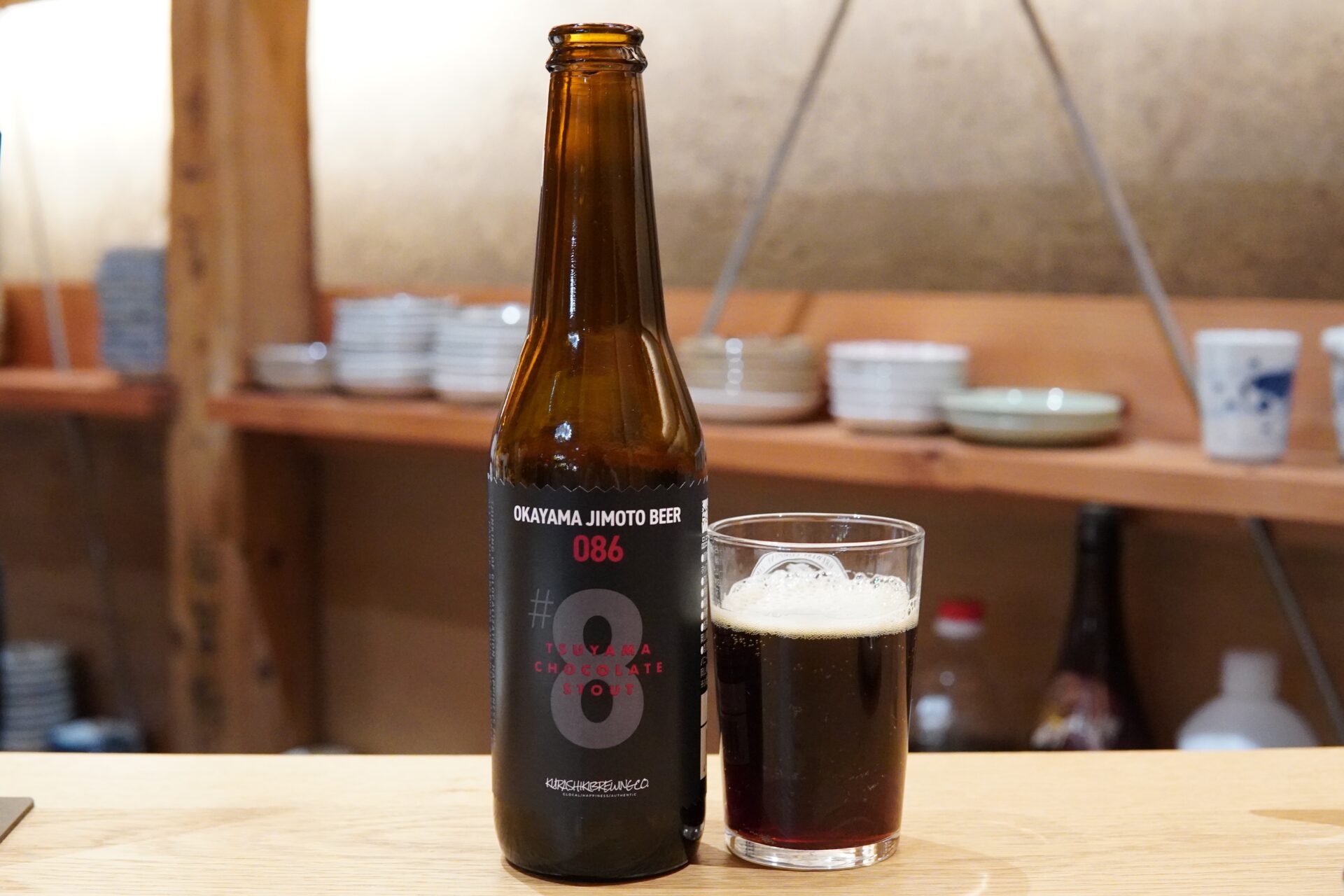
This stout beer was created with Tsuyama in mind. It is not sweet and has an aroma reminiscent of dark chocolate. It is fruitier than it looks and pairs perfectly with food.
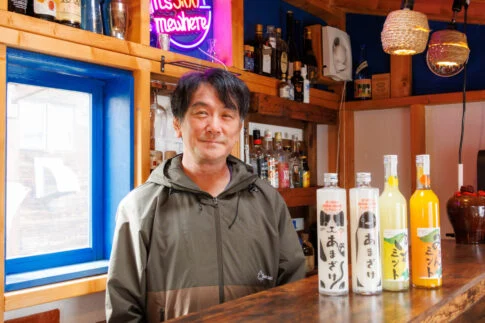
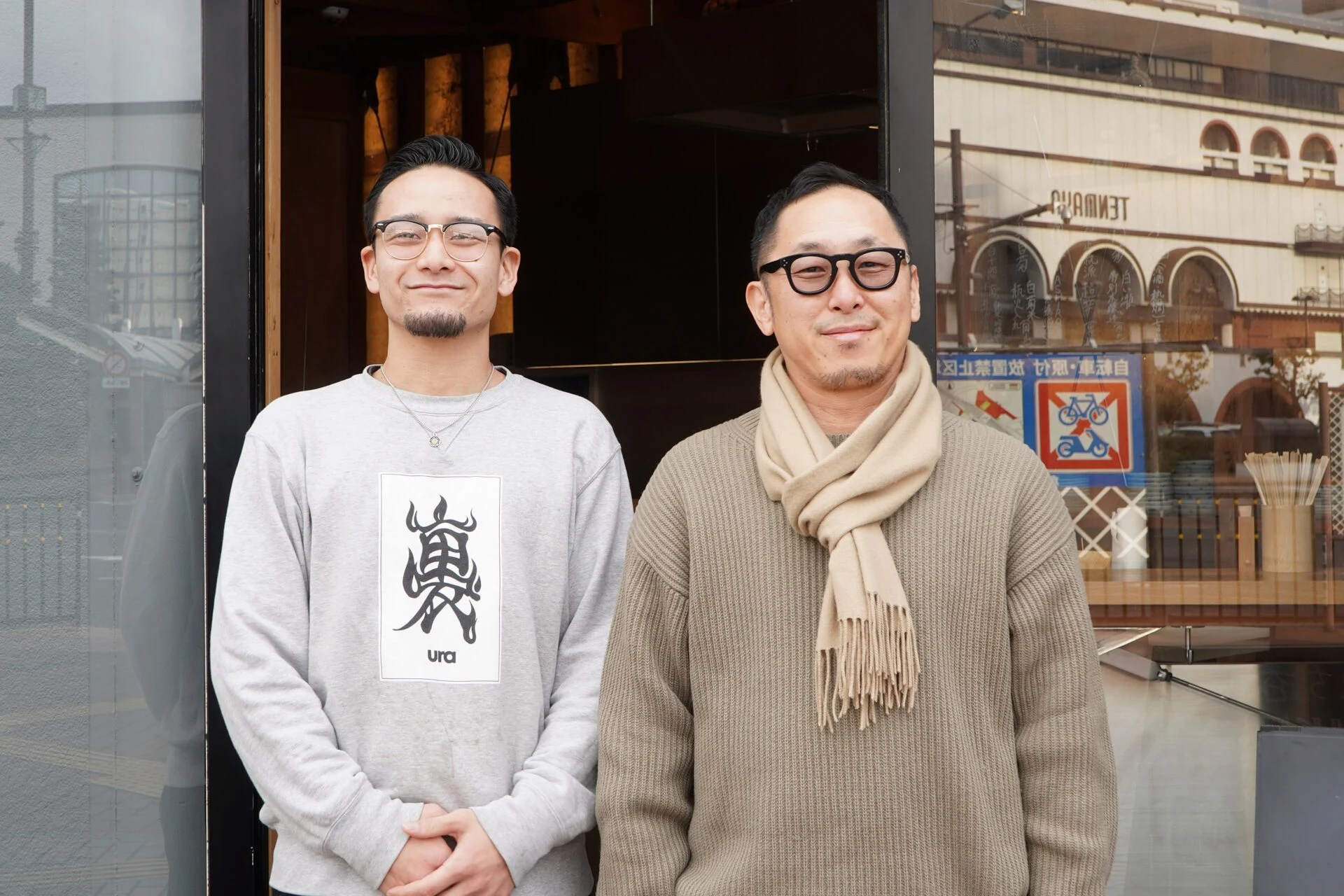
As a building, "Tachinomi Ura" is also interesting, using plenty of Okayama-produced ingredients. I spoke with the president, Akiba Yuichi, and the manager, Tagawa Hidetora.
Data on Tachinomi Ura
| Name | Tachinomi Ura |
|---|---|
| Address | 3-1-16 Achi, Kurashiki City, Okayama Prefecture |
| Contact | 080-2921-0222 |
| Parking | None |
| Business Hours | 6 PM to 12 AM: Tuesday to Friday 12 PM to 12 AM: Saturday 12 PM to 7 PM: Sunday |
| Regular Holiday | Monday |
| Payment Methods |
|
| Reservation | Not accepted |
| Seating | About 15 inside, about 4 outside |
| Smoking | Completely non-smoking (smoking area outside) |
| Toilet | Western-style toilet |
| Website | Tachinomi Ura |