
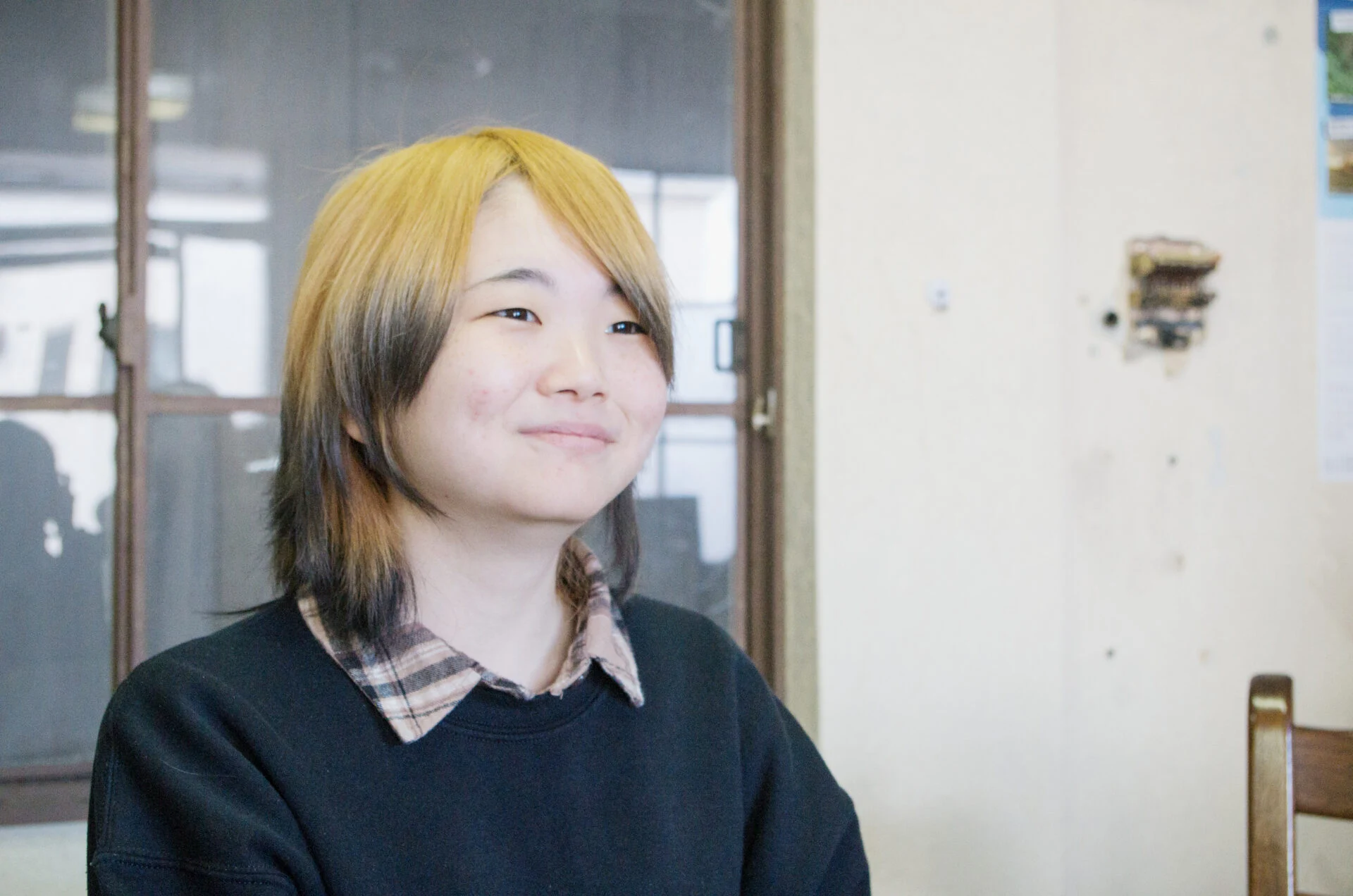
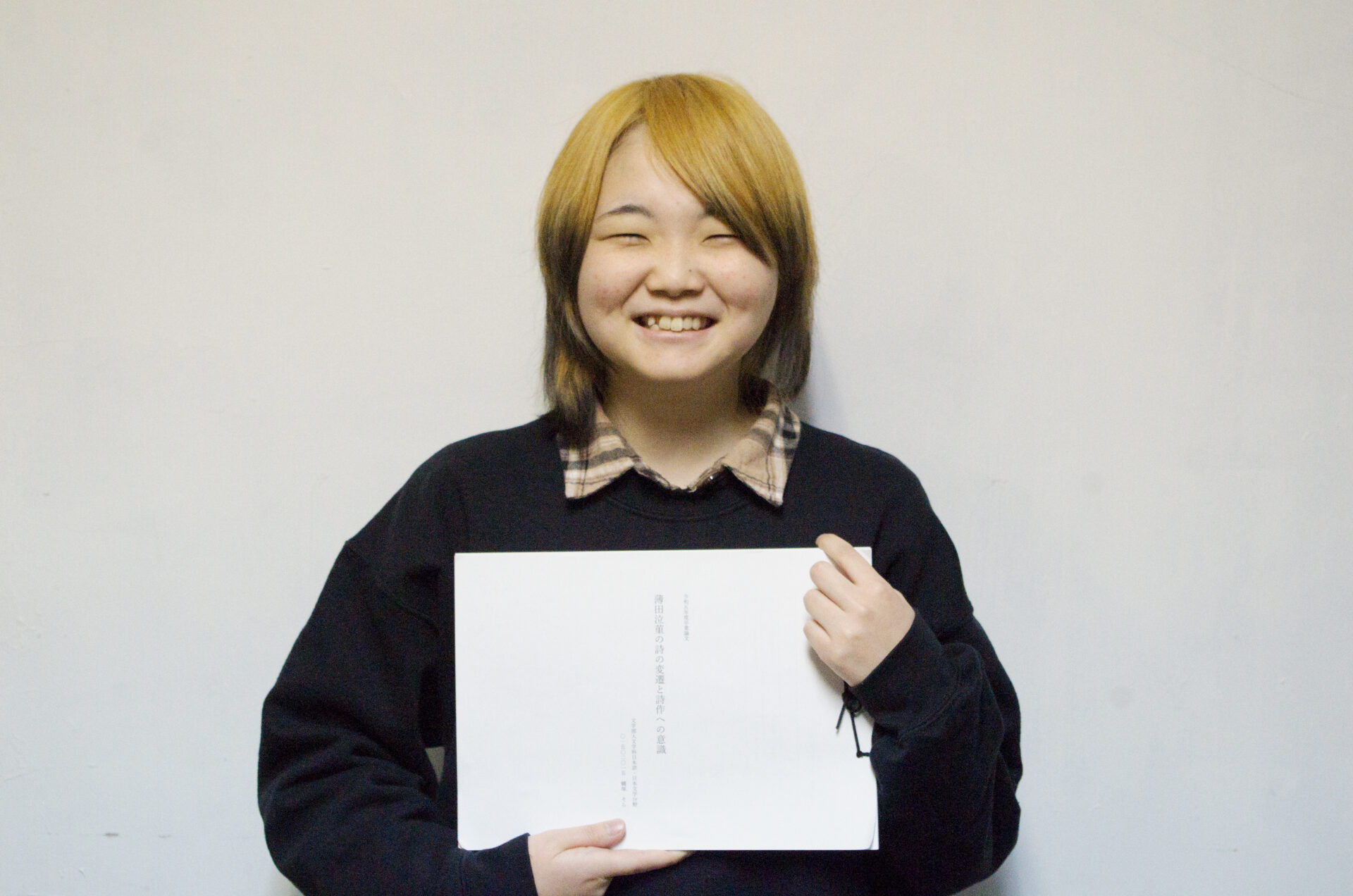
The presenter of the graduation thesis, Arizuka Sora, is from Tsurajima-cho, Kurashiki City.
In elementary school, she encountered the poetry of the poet Susukida Kyukin, who is also from Tsurajima-cho, and developed an interest in it. She conducted research from high school to university, culminating in her graduation thesis completed in January 2024 (the 6th year of Reiwa).
Due to her connection with the regional activities of Mizushima Park Management Lab (hereafter referred to as "MPM Lab."), a graduation thesis presentation event was planned and will be held on March 9, 2024 (the 6th year of Reiwa).

We will introduce the graduation thesis presentation by Arizuka, who was also active as a university student writer at Kurashiki Tocotoco.
Introduction of the presenter, Arizuka Sora
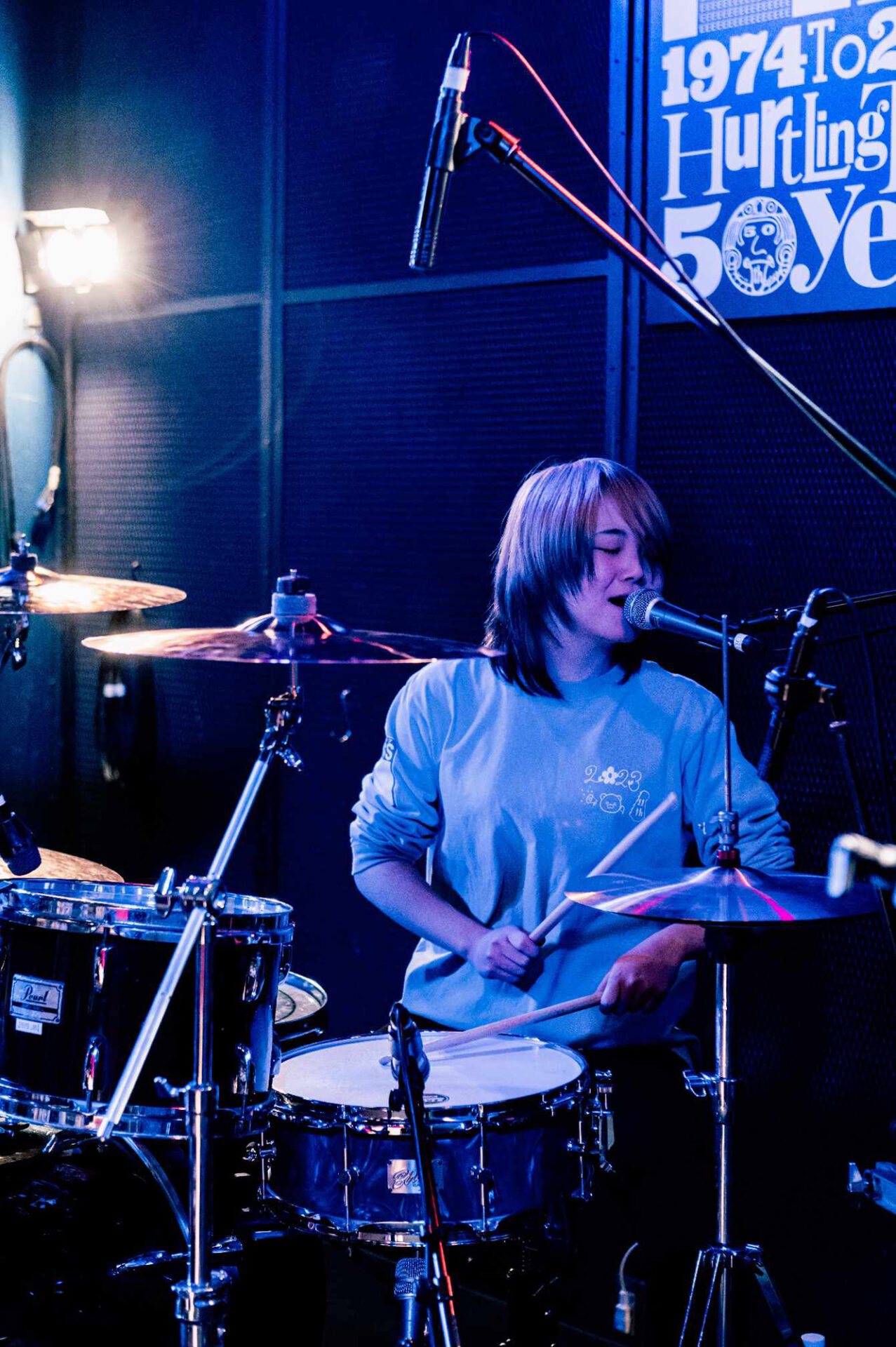
Let me introduce the presenter, Arizuka Sora.
[Presenter Profile]
She loves literature and music. The COVID-19 pandemic began at the same time as her university entrance exams. Although her university life started without being able to attend campus, she ventured into the community and participated in various initiatives, contributing to regional revitalization events in Mizushima. In addition, during her time at university, she was active in band activities (as a drummer) and as a student writer. After graduation, she plans to work in her hometown. As a next-generation "local person" who will support the future of the community, further achievements are expected.
From the graduation thesis presentation flyer "The Transition of Susukida Kyukin's Poetry and His Consciousness of Poetry Creation"
Who is Susukida Kyukin?
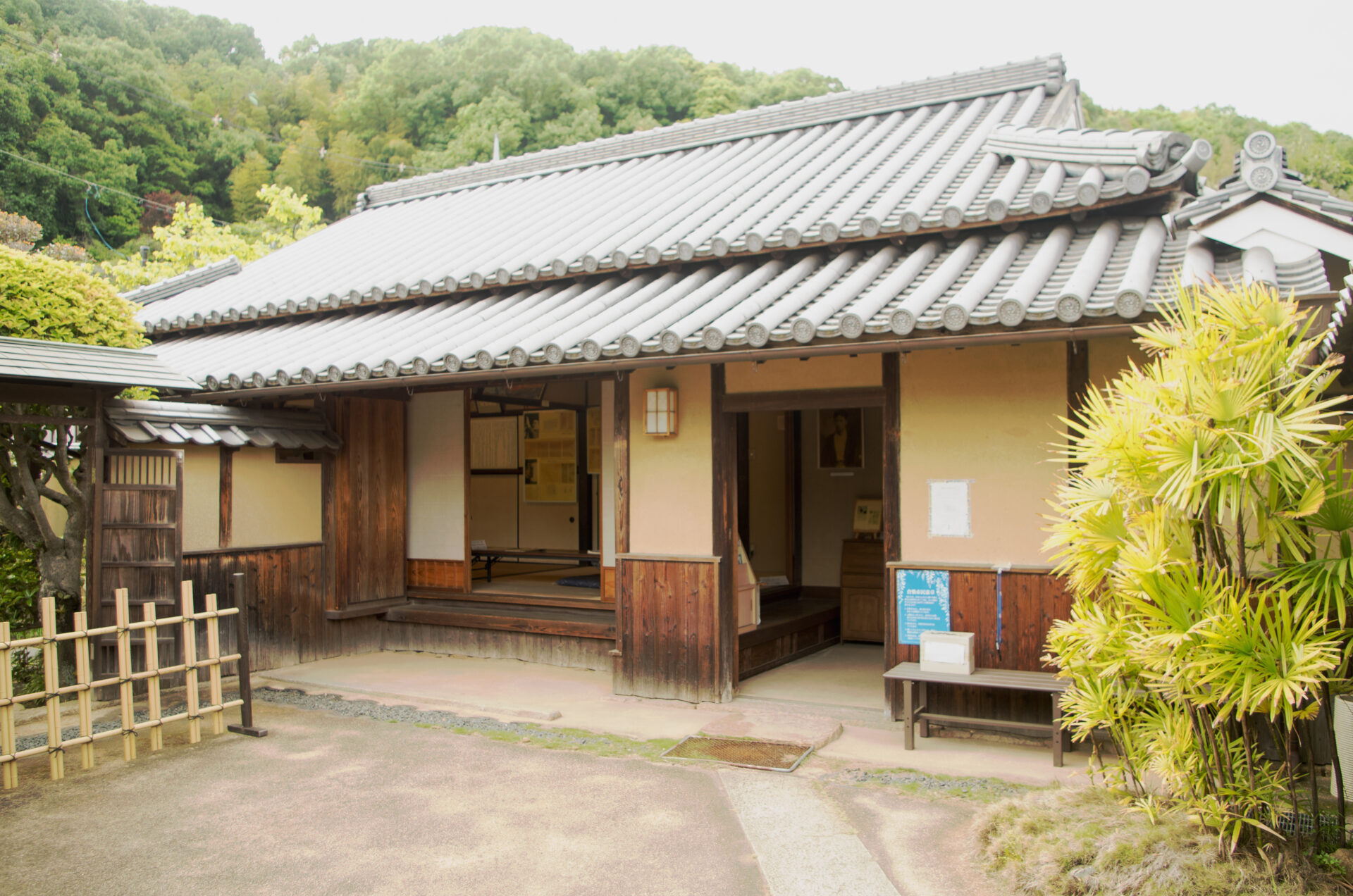
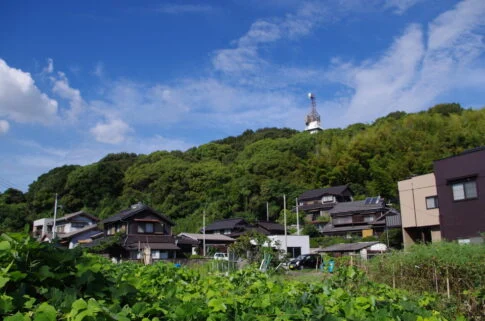
Susukida Kyukin, whom Arizuka chose as the subject of her graduation thesis, is a poet, editor, and essayist from Oe Tsurajima Village, Asakuchi County, Okayama Prefecture (now Tsurajima-cho, Kurashiki City).
According to the Kurashiki City website, he is introduced as follows:
Born on May 19, 1877, as the eldest son of father Atsutaro and mother Ritsu.
Cultural Promotion Division, Kurashiki City - Cultural Figures Related to Kurashiki
The Susukida family has a long history of literary inclination, and Kyukin was a very talented boy who loved reading, submitting poetry and prose to magazines since his time at Tsurajima Higher Elementary School.
At the age of 17, he moved to Tokyo in 1894. While studying at a Chinese literature school, he read a wide range of books at Ueno Library, learning independently. This foundation would later shape Kyukin's literature.
At the age of 20, in 1897, he published 13 poems titled "Hanamitsuzoukan" in the literary magazine "Shinchogetsukan," receiving high praise. This was the first time he used the pen name Kyukin.
In 1899, at the age of 22, he published his first poetry collection "Boteikishuu," and subsequently published "Yukuharu" in 1901 and "Shiratama Hime" in 1905, as well as the poetry collection "Nijugo Gen," which included the poem "Kousonju ni Tachite," reaching the pinnacle of the Meiji poetry world as a leading figure after Tomura Shimazaki.
The poem "Aa Yamato ni Shiaramashikaba," published in the autumn of 1905, is considered one of the greatest poems and was beloved by many young people.
His poetry collection "Hakuyokyu," published in 1906, is a comprehensive collection of Kyukin's works at the peak of his maturity. After this, he gradually shifted his activities from poetry to prose, but his development of new-style poetry (classical fixed-form poetry) is a significant achievement.
In August 1912, he joined the Osaka Mainichi Shimbun. His essays "Chawa," serialized in the Mainichi Shimbun from 1916, were well-received, leading to the publication of the essay collections "Chawa" in 1916, "Ato no Chawa" in 1918, and "Shin Chawa" in 1919.
Kyukin, who was knowledgeable and eloquent, captivated many readers with his works.
During this time, he actively discovered emerging writers such as Ryunosuke Akutagawa and Kan Kikuchi, contributing to the development of the literary world.
In 1923, he left the Mainichi Shimbun due to health issues. Despite continuing his creative activities while battling a serious illness (Parkinson's disease), his condition gradually worsened, and in 1945, he returned to the home where he spent his sensitive youth, passing away at the age of 68.
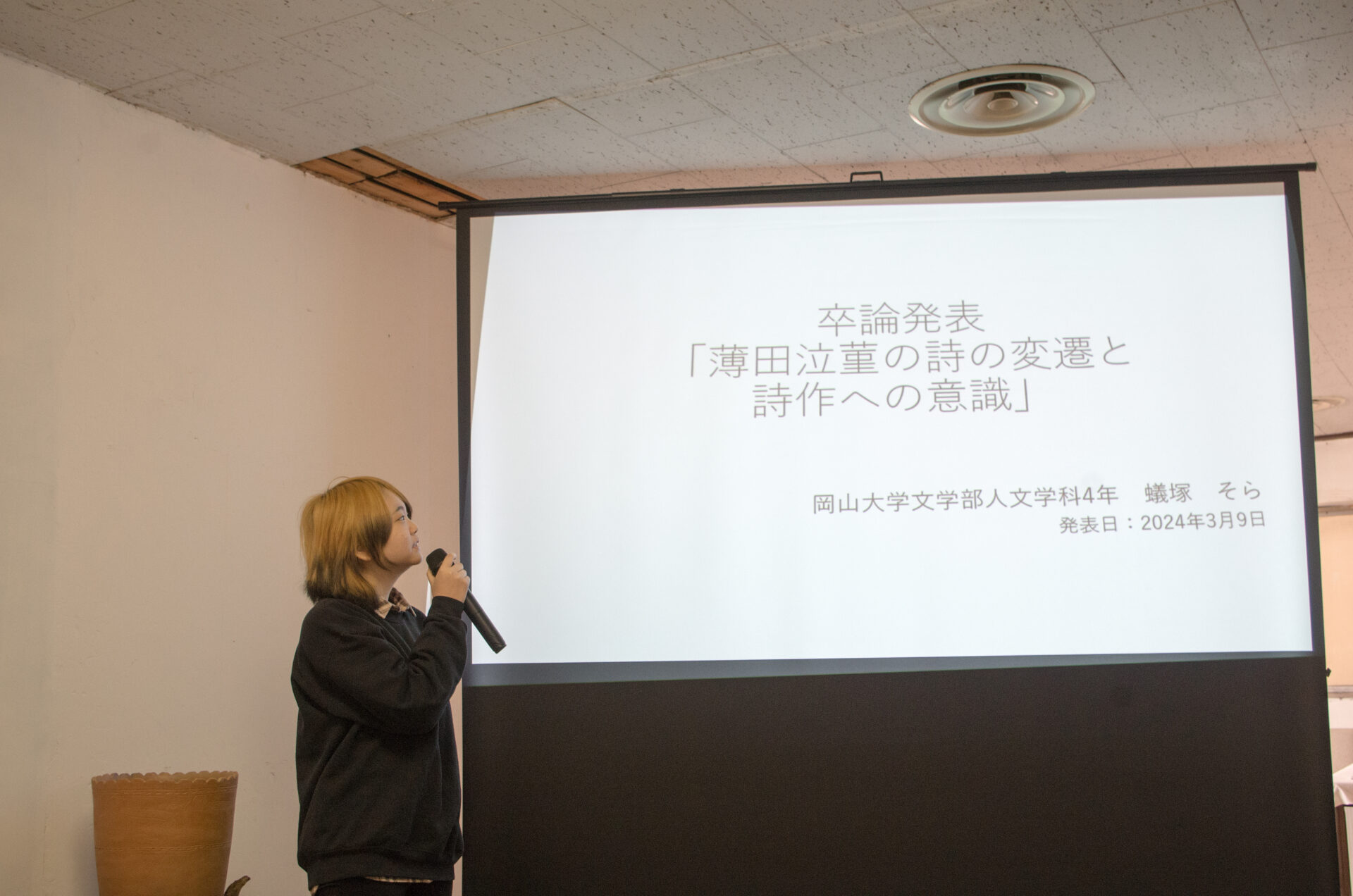
Graduation thesis presentation - The Transition of Susukida Kyukin's Poetry and His Consciousness of Poetry Creation
The graduation thesis presentation begins with a greeting from Furukawa Akira, the representative director of MPM Lab., who has a close relationship with Arizuka.
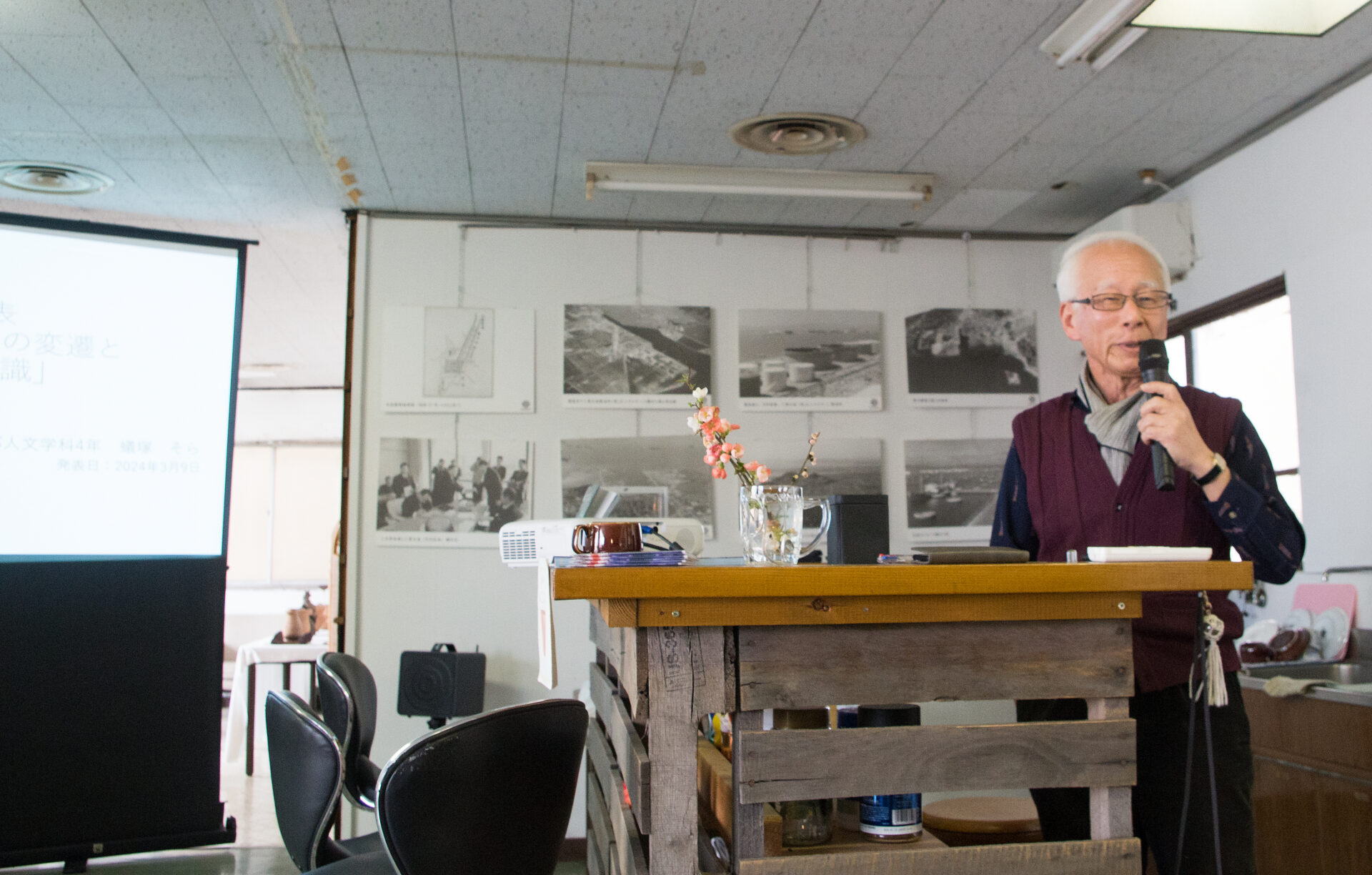
The theme of the graduation thesis is "The Transition of Susukida Kyukin's Poetry and His Consciousness of Poetry Creation".
Inspired by a literary critique of Susukida Kyukin that she wrote in her third year of high school, Arizuka decided to study Kyukin's poetry. She pursued her studies at Okayama University, where she later studied under a teacher who specializes in Susukida Kyukin.
Due to the lack of prior research on Susukida Kyukin's poetry, she faced challenges in finalizing her theme, but she managed to compile her findings through trial and error until the last moment.
Four representative works selected for the thesis
In her thesis, she selected four poetry collections, including "Hakuyokyu," which is regarded as the culmination of Kyukin's poetic achievements.
Poetic forms (such as XX style) and various attempts can be seen.
| Poetry Collection | Overview of Works (Poetic Forms, etc.) |
|---|---|
| Boteikishuu | ・Shichigo style ・Jieku style (14 lines, 86 style) |
| Yukuharu | ・Attempt at new poetic forms ・Kyukin's eight-line poems, etc. |
| Nijugo Gen | ・Longer poems ・Shichigo style |
| Hakuyokyu | ・Diverse poetic forms ・Alternating 5-7-5 and 7-5-7, ・Alternating 7-5-7 and 5-7-5, etc. |
Susukida Kyukin was a popular poet of his time
Susukida Kyukin was popular both in the literary world and society.
- In the literary world, Kambara Ariake, Yosano Tekkan, and Maeda Ringai published poems influenced by "Kousonju ni Tachite" (included in Nijugo Gen).
- In society, the first edition of "Boteikishuu" sold out in less than two months and was published in three editions. The first edition of "Yukuharu" sold out on the day of release and was published in four editions. Notably, the popularity of "Kousonju ni Tachite" had a significant impact on the literary world.
Here, we will introduce some representative examples of his popularity.
Popularity in the Literary World
In particular, regarding "Kousonju ni Tachite," included in Kyukin's Nijugo Gen, we will introduce "Takareshi Shirakaba no Uta," influenced by Yosano Tekkan.
It is noted that the similarity in poetic expression, as well as the depictions of Nakiyama, Akagiyama, and war, indicate the influence of Kyukin's poetry.
In early August (the 38th year of the Meiji era), I again visited Akagiyama and encountered a violent storm. After the storm, I saw an old white birch tree fallen by the lakeside, which deeply moved me. Upon returning, I composed this poem.
Popularity in Society
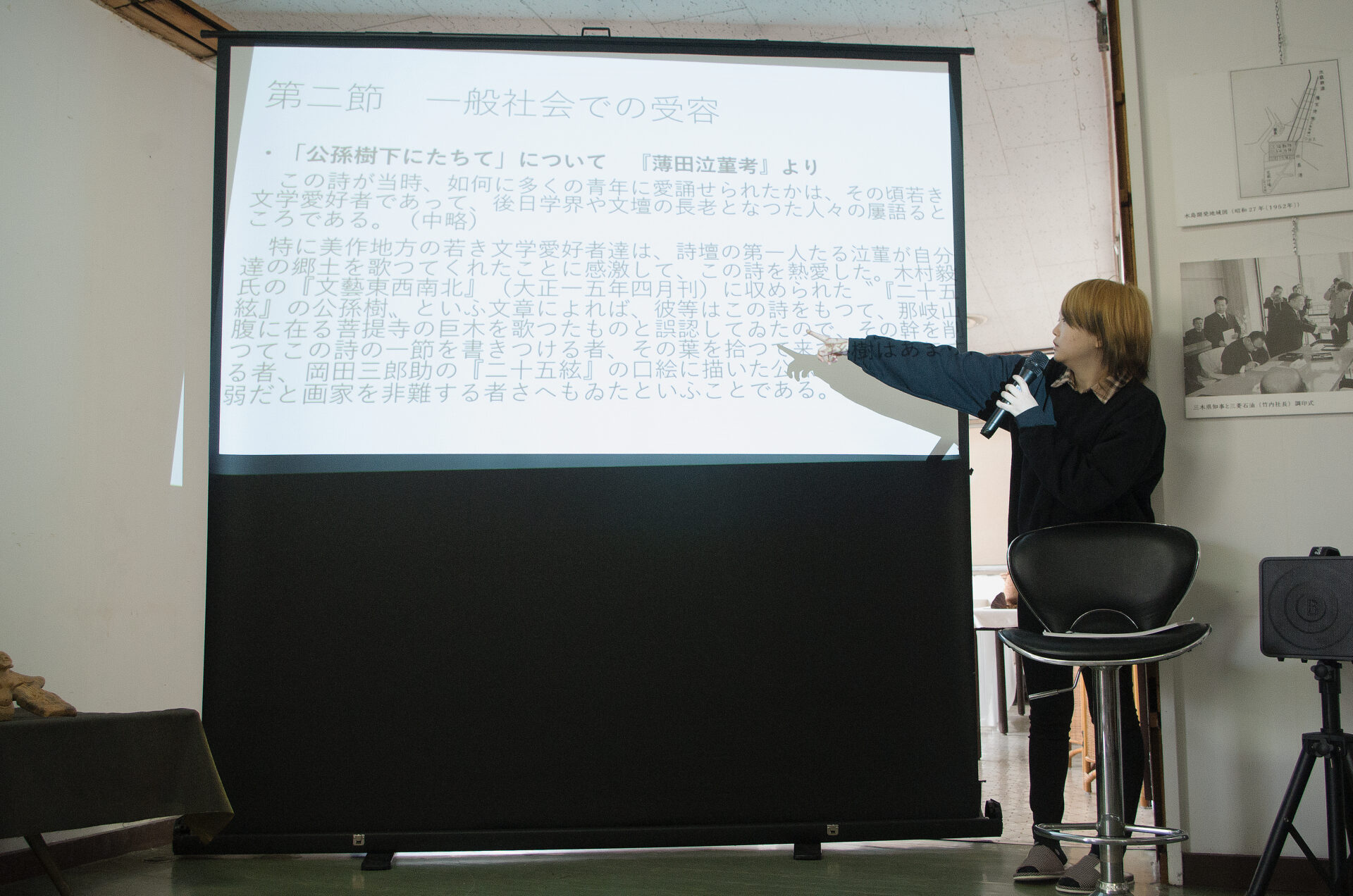
Additionally, we will introduce the reception (popularity) of "Kousonju ni Tachite" in general society.
The fact that Susukida Kyukin, a leading figure from his hometown, sang about their region moved many people, leading to records of actions such as "carving a verse of this poem on the trunk of a giant tree at the temple of Naki Mountain" and "collecting its leaves to use as bookmarks in poetry collections."
This is one of the episodes that gives a glimpse into the fervor for poetry that is unimaginable in modern times.
Did Kyukin's poetry really "decline"? - On Kyukin's poetry after "Hakuyokyu"
Previous research has evaluated that Susukida Kyukin's poetry declined after "Hakuyokyu". In response, Arizuka raised the question, "Did it really decline?", and summarized the subsequent poetry and essays of Kyukin.
Kyukin's Passion for Poetry Creation
The following are examples of Susukida Kyukin's poetry after "Hakuyokyu".
| Work Title and Publication Year | Publisher | Content |
|---|---|---|
| Jujigaito 1908 (Meiji 41) - 1909 (Meiji 42) | 18 poems | |
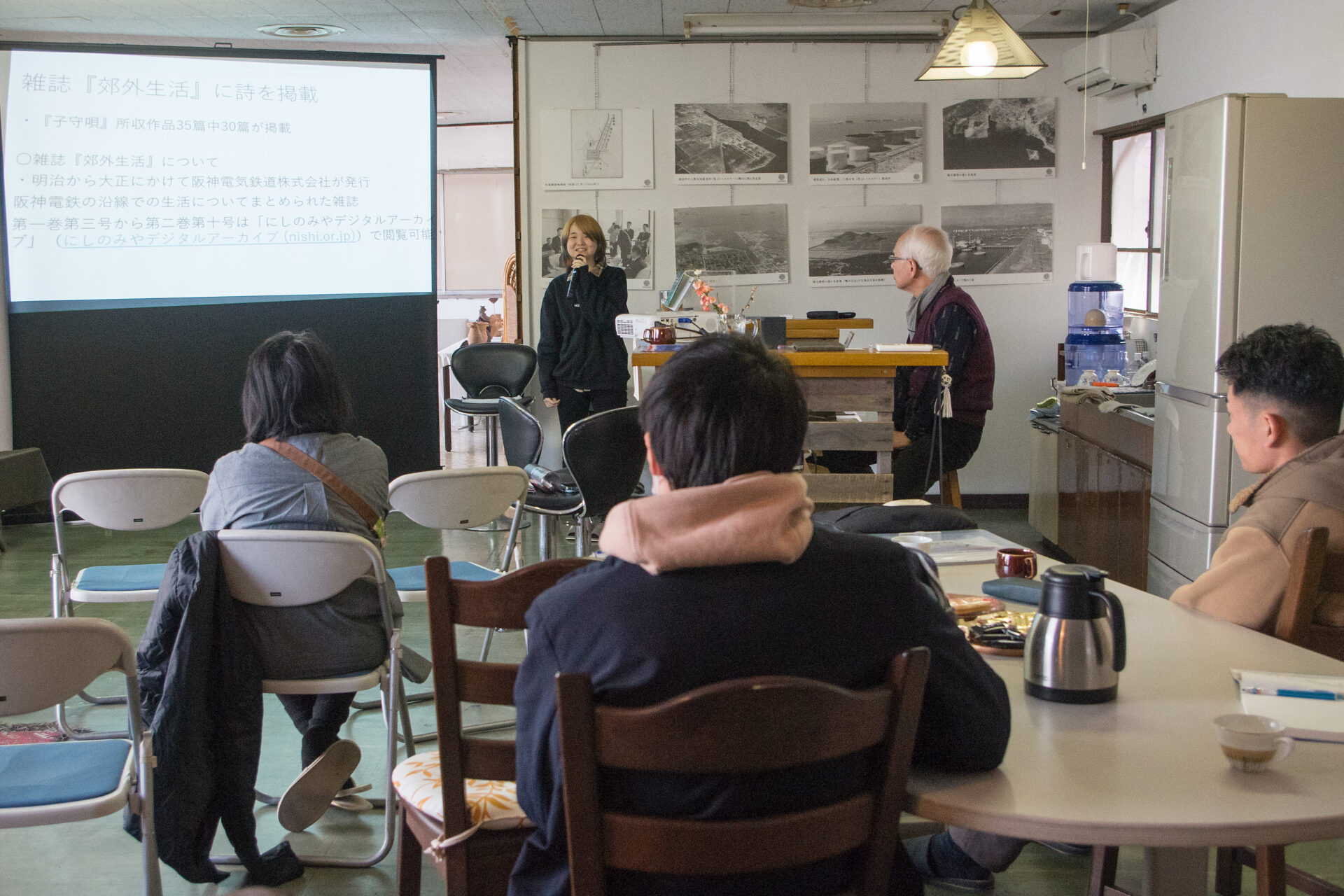
| Poetry Collection "Komoriuta" 1917 (Taisho 6) | Toyamabou | Childlike themes Mainly Shichigo style Some published in the magazine "Suburban Life" |
Additionally, two materials illustrate that Susukida Kyukin poured his heart and soul into poetry creation.
Actions and thoughts such as "sinking the poetry collection in the stormy gorge to dedicate it to the water deity," "the work of poetry must be done alone," and "I can perish" reflect an extraordinary (almost insane) determination.
I believe it was in the late spring of the following year, the 35th year of the Meiji era. I dedicated the volume of "Yukuharu" to the water deity of the stormy gorge, hiring a boat to float it in the depths of the Hozu River. I sank the poetry collection deep into the water, weighted down by stones tied to the strings of a koto.
(From "Complete Works of Susukida Kyukin," Volume 2, "Afterword")
(Omitted)
Looking back, I was completely alone on my journey to the land of poetry, with no companions at all. I thought that the work of poetry must be done alone.
At the time of the publication of "Hakuyokyu," around the 39th year of the Meiji era, Kyukin wrote in a letter to Yosano Tekkan, "I would be willing to perish for the revival of ancient words." This shows that even in the year he got married, he had such passion for poetry creation.
(From graduation thesis materials)
Conclusion
From the above, Arizuka has considered and summarized the following points.
In previous research, it has been stated that Susukida Kyukin's poetry, which is said to have "declined" after the 40s of the Meiji era, raises the question of whether it truly declined. Based on descriptions of the publication status of his poetry works and Kyukin's consciousness towards poetry creation, it can be inferred that he did not actually decline but rather continued to create poetry while changing his style.
From the graduation thesis presentation
Questions from everyone to Arizuka Sora
We spoke with presenter Arizuka Sora about the motivations behind her research on Susukida Kyukin. Here, we will also summarize the questions from participants during the graduation thesis presentation.
What was the trigger for you to encounter Nakagami Yuusuke?
Arizuka (no honorifics)
At the Kurashiki City Tsurajima Higashi Elementary School I attended, every year, children from nearby elementary and junior high schools gathered for an event to recite Nakagami Yuusuke's poems, and we also recited his poems at the cultural festival, which was the trigger for my interest.
So there was an environment where you could feel close to Nakagami Yuusuke's poetry. What do you find appealing about Nakagami Yuusuke's poetry?
Arizuka
I love the sound and rhythm of Nakagami's poetry. I really feel that there is a resonance in the words that you don't feel in contemporary poetry.
I think the content is difficult, but it's not just about focusing on the content; you can enjoy it from various angles. That's one of its charms.
Do you have a favorite poem among Nakagami Yuusuke's works?
Arizuka
The first time I read Nakagami's poetry was when I was in elementary school. The poems included in "Lullaby" that I read at that time are still some of my favorites. Among the shorter poems, I like "Good Morning."
As for longer poems, I can't remember which collection it was in, but I remember reading "Love's Heart" in the complete works when I was in high school, and I thought it was such a beautiful poem.
Was there anything difficult in your research this time?
Arizuka
Although Nakagami Yuusuke began writing essays in his later years and there are many prior studies, there is currently a lack of prior research on his poetry that I introduced today. This may be because Nakagami's symbolic poetry is difficult to understand.
At the beginning of my research, I considered selecting poems that caught my interest and summarizing them through in-depth study, but I struggled until the last minute.
Previous studies have mostly captured the tendencies of poems by collection, and I couldn't find any that developed arguments throughout Nakagami's entire poetic career.
I think it was good that in this graduation thesis, I was able to confirm the tendencies and characteristics of the poems in chronological order and summarize the whole.
I think this leads to a discussion about the social status of poets at that time, but how do you view Nakagami Yuusuke's position at that time?
Arizuka
I haven't reached the point of interpreting prior research that discusses the position of poets at that time, but looking at Nakagami's movements, I think he did not hold a high-status profession.
For example, it may not be a matter of social status, but there are records of Nakagami being worried by his family when he returned home, saying he was "writing poetry without having a job."
While his position may be different, I feel that his main target audience was "literature lovers." Nakagami's debut was originally triggered by a poem he submitted to the literary magazine "Shincho Monthly" that was published in the new poetry section.
I read that the magazine editor Goto Chuugai praised the beauty of Nakagami's poetry and handwriting, which led to his debut. Therefore, I imagine he thought, "It's not about appealing to everyone, but rather about resonating with those it touches."
Please tell us about the social contribution of literature.
Arizuka
I think the social contribution of literature, especially in modern times, is not that significant.
Regarding this era, it seems more like writing novels or literature is done for "self-expression" rather than wanting to be of help to someone, and it feels like it became popular after being published.
If we think about it in contemporary terms, reading someone else's writing has significance as an "experience of seeing a world you have never seen before." Therefore, I believe there is something that brings something to society.
The question of social contribution is difficult, but personally, I think it is one of the "tools to know diverse perspectives beyond oneself."
Conclusion
At the graduation thesis presentation, Sora Arizuka's mentor, Mr. Hiramatsu, who invited him to the literary club when he was a first-year high school student, also attended.
Mr. Hiramatsu fondly recalled that he suggested to Arizuka, who was in the photography club at the time, "Why not try writing a literary critique on Nakagami Yuusuke's poetry?"
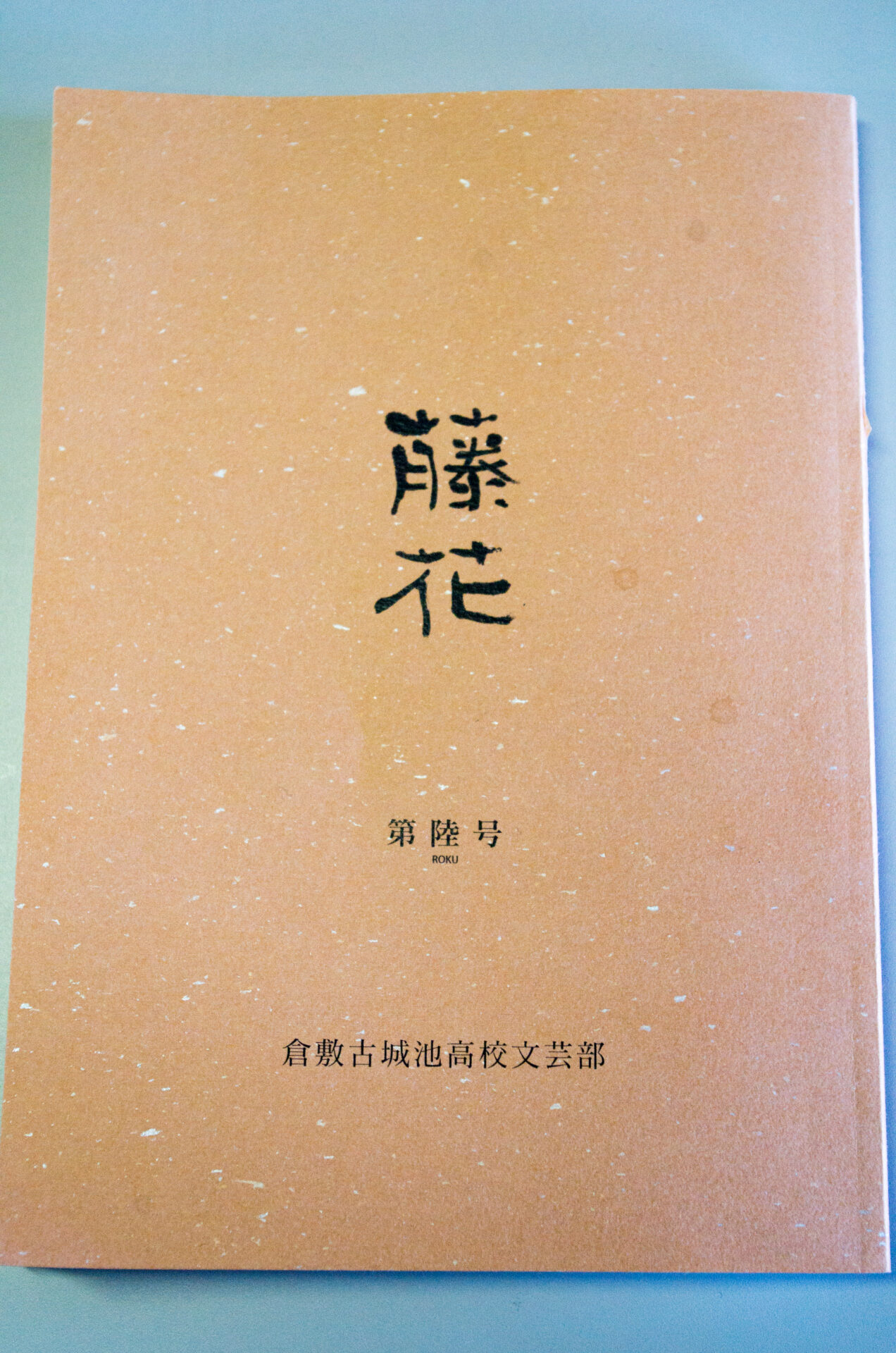
At that time, Sora Arizuka was described as a "literature lover" and a "bundle of curiosity" who found everything interesting," and Mr. Hiramatsu's fond memories of Arizuka during high school were impressive.
The presenter, Sora Arizuka, graduated from the Department of Humanities at Okayama University in March 2024 and started working at a company in Kurashiki City in April. He is currently active as a member of society.
Sora Arizuka, who encountered Nakagami Yuusuke in elementary school, has been involved in research on Nakagami Yuusuke throughout high school and university, and I look forward to seeing his work continue and be presented again in the future. I would also be happy if this article sparks interest in the local poet Nakagami Yuusuke.

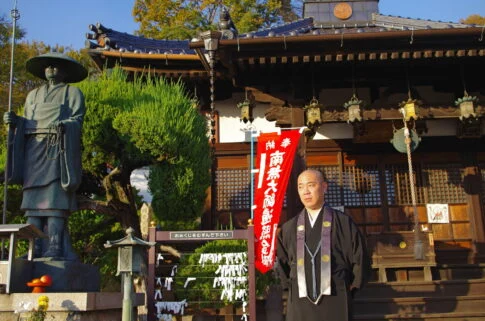













The opening poem "Kousonju ni Tachite" was created in October of the 34th year of the Meiji era when I traveled to Tsuyama in the Chugoku region to visit someone who had taken care of me in my youth, and during that time, I saw a large ginkgo tree standing in the wind nearby.