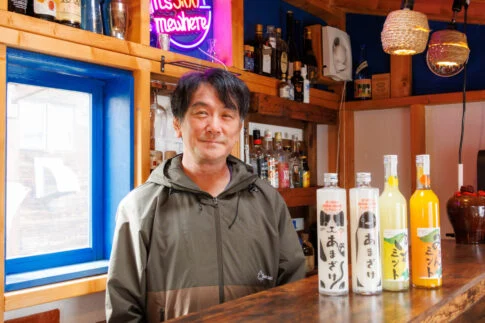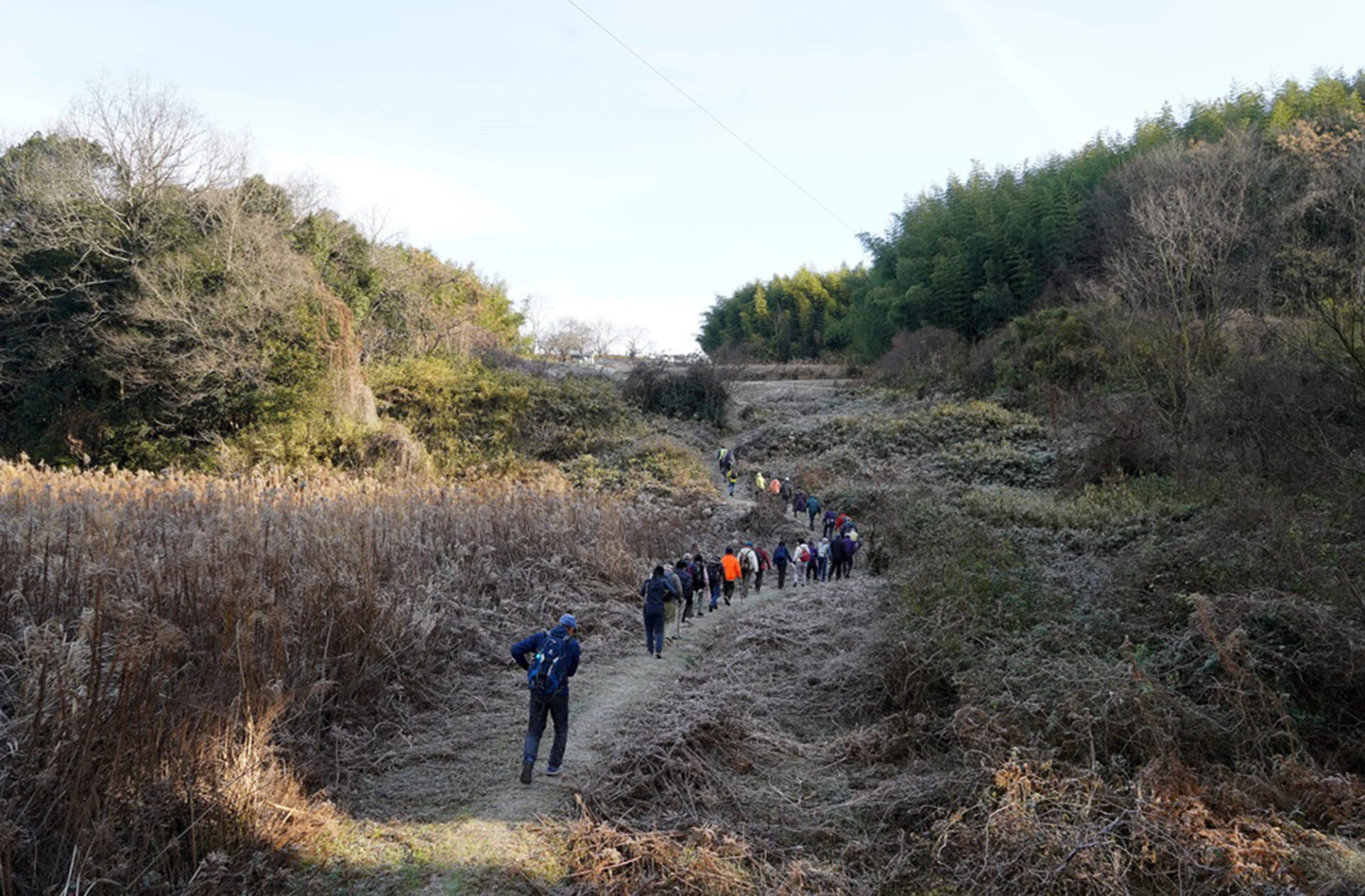
Interview with Kaneko Haruhiko of the Bichu Totomichi Trail Promotion Council
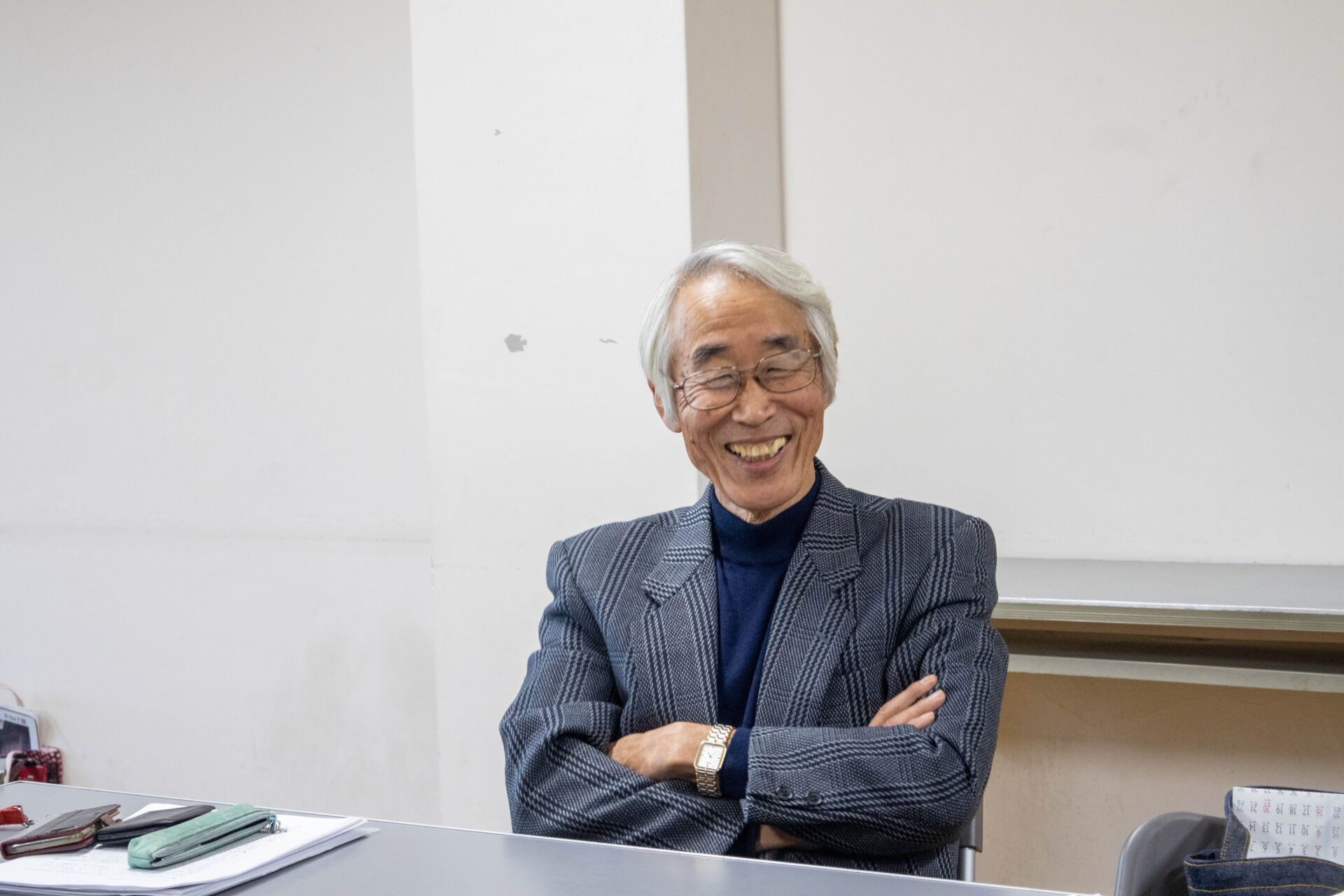
Investigation of the "Totomichi"
When did you first learn about the Totomichi?
Kaneko
Around June 2016, I suppose.
At that time, I was receiving support from the Bichu Prefectural Office and was involved in creating tours for foreign visitors to Japan.
When I visited the Bichu Prefectural Office, someone from the Takahashi River Basin School mentioned, "We found out that there is a road called the Totomichi that transported fish from Kasaoka to Fukiya. However, we do not know the route from Naruki to the south. Do you know the route from Naruki to the south?" That was the trigger for my investigation.
What made you want to investigate the Totomichi?
Kaneko
The moment I heard about the Totomichi, I felt the urge to investigate it.
Having known nothing about the Totomichi, I asked an acquaintance, "Do you know about the Totomichi?"
He replied, "I know that the Totomichi existed, but I don't know where the road is. However, I know someone who is knowledgeable about the Totomichi."
The person he introduced me to was Professor Moriyama Takashi and Professor Shiota Hiroyuki. I was surprised when they told me, "We have been investigating the Totomichi since 2006."
Moreover, they had published a research report on the Totomichi in the Takahashi River Basin Federation Journal "Takahashi River" issued in 2007. That made me learn more about the Totomichi and sparked my interest further.
The Takahashi River Basin Federation Journal "Takahashi River" is published once a year.
Identification of the Totomichi Route
How did you identify the route?
Kaneko
At first, Professor Moriyama introduced me to local historians in various places.
When I went to talk to the historians he introduced, they would further introduce me to other historians they knew. I repeated these encounters.
In December 2016, by connecting various pieces of information, I began to vaguely understand where the Totomichi had passed.
However, there were three locations that remained unclear.
What were those three locations?
Kaneko
They were from Takahashi City Naruki to Takahashi City Uji, from Yakage Town Unai to Ibara City Biseicho Keno, and around Kasaoka City Nagasako.
Were you able to identify the three unclear locations?
Kaneko
The route from Unai to Keno has been identified.
The other two locations are still not clear. Since they all look similar from any direction, there are various opinions, and we are currently using a provisional route that seems acceptable among them.
Exploring the route between Unai and Keno was challenging, but I was fortunate to have unexpected coincidences.
In January 2017, based on Shiota's memory that "there was a signpost in Keno around 2007," I searched around Keno.
I was exhausted and about to end my search due to the lack of results when I happened to ask a farmer who was working in a field in Keno, "I am looking for the Totomichi; wasn't there a signpost around here?"
Then, the farmer pointed to a thicket of bamboo grass that stretched for about 100 meters on the slope and replied, "It was around there."
I thought I wouldn't find any signpost, but as I cleared the bamboo, a dirt path about 2 ken (approximately 4 meters) wide began to emerge, revealing the "fateful signpost" that had been buried at the bottom of the thicket.
The fateful signpost was a rectangular stone pillar. It had been tilted by a thin tree that had grown later and was about to roll down the slope below.
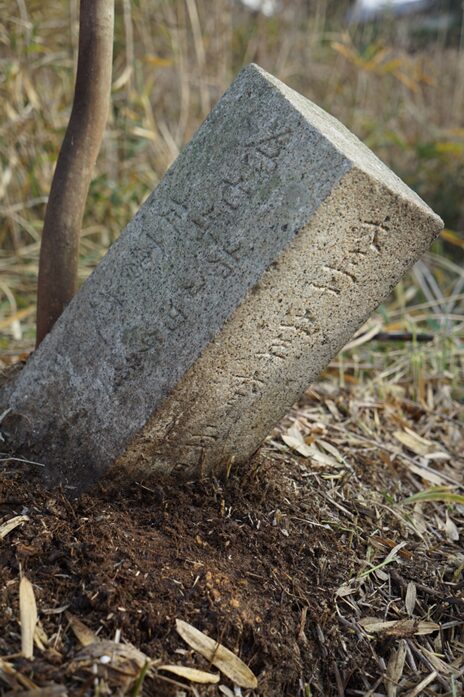
(Photo provided by the Bichu Totomichi Trail Promotion Council)
On the northeast side of the signpost, it was inscribed, "Right: Oda Yakage, For the deceased cow, Left: Old Road."
Looking south from the location of the signpost, there were roads branching to the left and right.
The signpost has the left road inscribed as the Old Road (Totomichi). Looking to the left, it led towards a steep forest that was very difficult to enter. If you proceed to the right, it connects to a paved road that can accommodate vehicles.
The right paved road was a new road completed and opened in 1926. The road that had been used until then was the old road, which was the Totomichi.
The signpost was "irrefutable evidence," and I remember being very moved. In the evening, beside the field, we all celebrated our unexpected great discovery with three cheers.
After that, we maintained the slope leading down to Yakage through the forest, and the Totomichi in the Keno area was identified.
Experience walking the Totomichi at the Totomichi Walk Event
Please tell us why you started the Totomichi Walk Event.
Kaneko
Once we developed the Totomichi, I felt the desire to "have people walk this road."
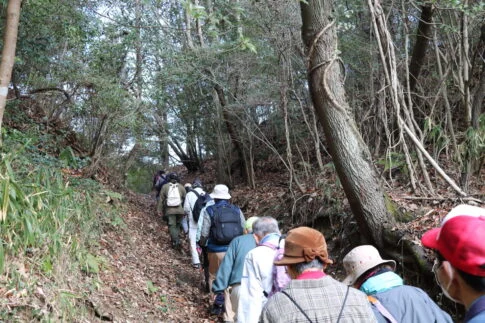
The first walk event was on January 14, 2018. When we called for participants, we received many applications, and I felt a sense of accomplishment.
The Totomichi can be difficult to navigate, and even if we set up signposts, they can be removed or lost, so by walking together with us as guides, we can ensure safety.
As of December 2024, we have held 23 events with 648 participants.
Have you faced any difficulties in holding the Totomichi Walk Event?
Kaneko
We do not have qualifications as travel agents.
Therefore, we first have participants become members. We reserve buses as a council.
However, while the council thinks of them as members, participants see themselves as customers. There are discrepancies between the two. On the day of the event, a participant who felt like a customer was absent without notice, and the council had to cover the bus fare.
However, the Totomichi Walk Event is positioned as a public relations activity. I think, "Even if it means the council will have to bear the costs for a while, we will continue."
Ideally, everyone should be able to walk while searching for the road using signposts and maps.
The Future of the Totomichi
I heard you are creating IT signposts. What are they like?
Kaneko
What we call IT signposts are those that, when you scan the two-dimensional barcode attached to the signpost, your current location is displayed on Google Maps, and you can see the road you should proceed on.
Using the information we have walked so far, a member who retired from an electronics company created them for us.
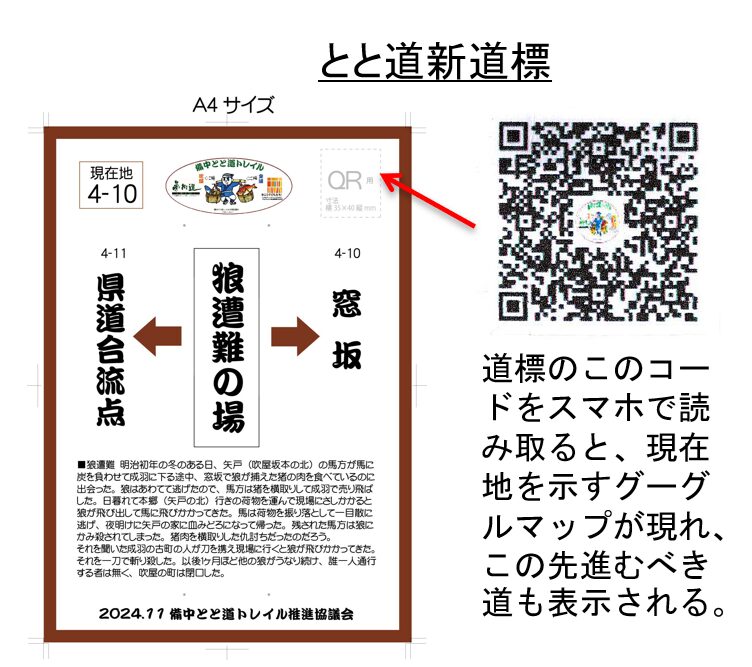
Thanks to the IT signposts, by scanning the two-dimensional barcode, the road is displayed, so you can know your position and direction. When walking individually, the worry of getting lost has decreased.
Totomichi Guidebook
When you think of the Totomichi, it gives the impression of a well-crafted guidebook. Were there any particular points you focused on when creating the guidebook? Also, were there any memorable experiences in gathering materials?
Kaneko
When I created the first guidebook in 2018, it was a handmade booklet bound with tape.
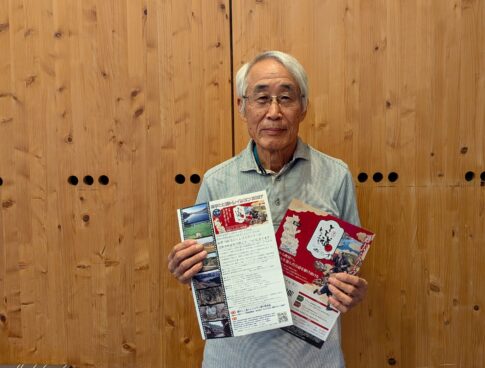
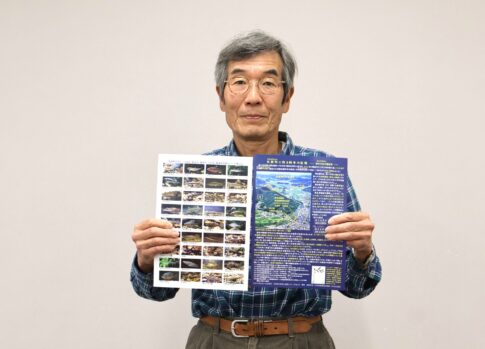
In January 2024, we published the "Totomichi Chronicles," which delves a bit deeper into the history, culture, and nature along the Totomichi, and in June, we released a revised edition of the guidebook.
The goal was to make it so that one could walk the Totomichi without a guide just by reading this, but it has proven to be quite difficult. In any case, the sales of these booklets have now become the only source of funding for the association.
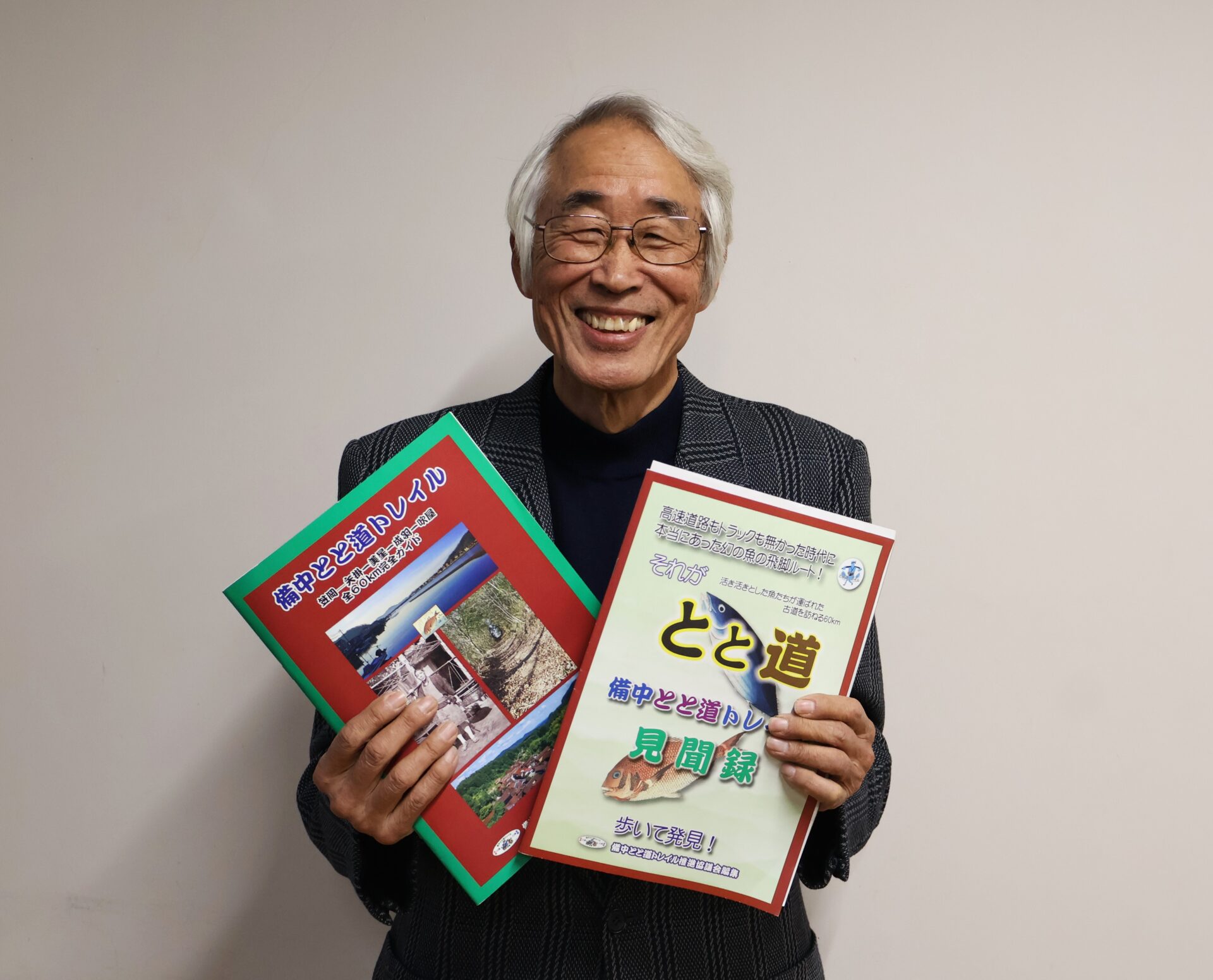
When creating the "Totomichi Chronicles," many local historians sent in manuscripts saying, "I want to include this." Since I was the editor-in-chief, it was quite a challenge.
Staring at the computer screen all day made my eyes tired, and it was physically exhausting work, but mentally it was very interesting.
In my younger days, I loved mountain climbing. I even climbed peaks over 6,000 meters in the Himalayas. In mountaineering, planning, climbing, and recording are essential.
From that experience, I felt strongly that the records of the Totomichi must be properly compiled to be complete.
The "Totomichi Guidebook" and "Totomichi Chronicles" are reports of six years of extensive mountaineering activities.
Dream Highway Renaissance
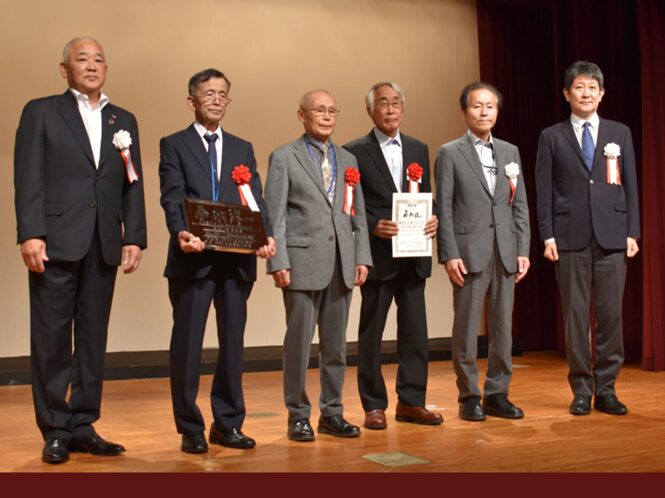
Did you have any expectations when applying for the Dream Highway Renaissance?
Kaneko
Initially, I wanted to "find the road ourselves," but as I continued my research, my feelings changed to "I want to preserve the Totomichi."
However, we are all elderly, and it is unlikely that we can continue our activities for long, so we need to be recognized in some way to maintain the Totomichi.
At that time, someone from the Chugoku Regional Development Bureau of the Ministry of Land, Infrastructure, Transport and Tourism informed me about the Dream Highway Renaissance system. I was very happy to learn about it.
With the official certification in winter 2024, I feel that we can now preserve the Totomichi.
The Dream Highway Renaissance certifies roads in the Chugoku region that convey history and culture as "Dream Highway Renaissance Certified Areas." Utilizing the rich history, culture, and nature of the Chugoku region, it aims to promote unique regional development, collaboration, and exchange led by the community, thereby revitalizing the region. Along with regional development, it aims to create a new "highway culture" that is not just about moving towards a destination but enjoying the journey.
Japan UNESCO Association Federation Project Future Heritage "Let's Leave it for the Children 100 Years from Now"
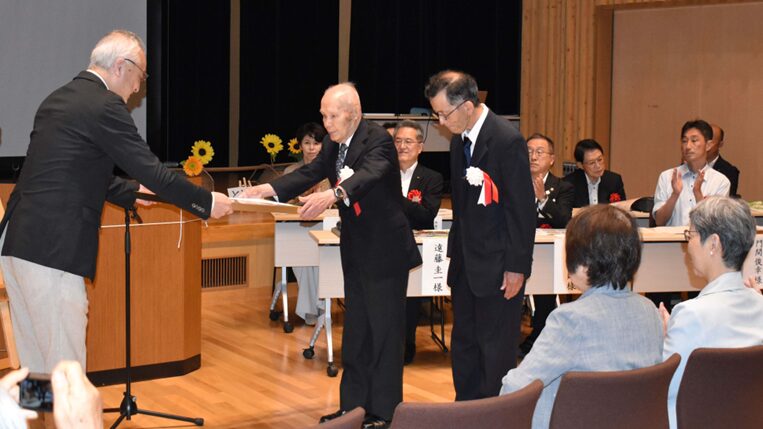
What did you think when you heard that you were registered in the Japan UNESCO Association Federation Project Future Heritage 2023?
Kaneko
With the certification from the Ministry of Land, Infrastructure, Transport and Tourism's Dream Highway Renaissance and the Japan UNESCO Association Federation Project Future Heritage 2023, I think the "Totomichi" has become somewhat recognized in the world.
While borrowing the names of the Dream Highway Renaissance and the Japan UNESCO Association Federation Project Future Heritage, I would like to continue the public relations activities for the "Totomichi."
The Japan UNESCO Association Federation assigns a catchphrase to each future heritage, and for the Totomichi, it is "Let's Leave it for the Children 100 Years from Now."
When we started our investigation in 2016, the members promised to "continue for ten years," but I was shocked when the Japan UNESCO Association Federation said it would be for 100 years.
However, thinking within such a grand schedule is more rewarding and has greatly inspired me.
The Future Heritage Movement aims to convey the "treasures" of the region to future children,
and it shines a light on and supports the "people" and "activities" that continue the steady efforts to pass them on into the future.
Japan UNESCO Association Federation Project Future Heritage Homepage
Conclusion
Through my work at the library, I have come to want to deepen my understanding of local history. I learned that the local historians involved with the Bichu Totomichi Trail Council write and edit books that serve as references when researching local history.
Upon discovering that well-known local historians from Kasaoka City, located to the south of Bichu, and those from Takahashi City, located to the north of Bichu, are doing innovative things, I wondered, "What has captivated the local historians?"
Through the interview, I feel that I have caught a glimpse of the answer.
Next, I want to walk the Totomichi multiple times, verify it with my own eyes, and make further discoveries.
Data of the Bichu Totomichi Trail Promotion Council
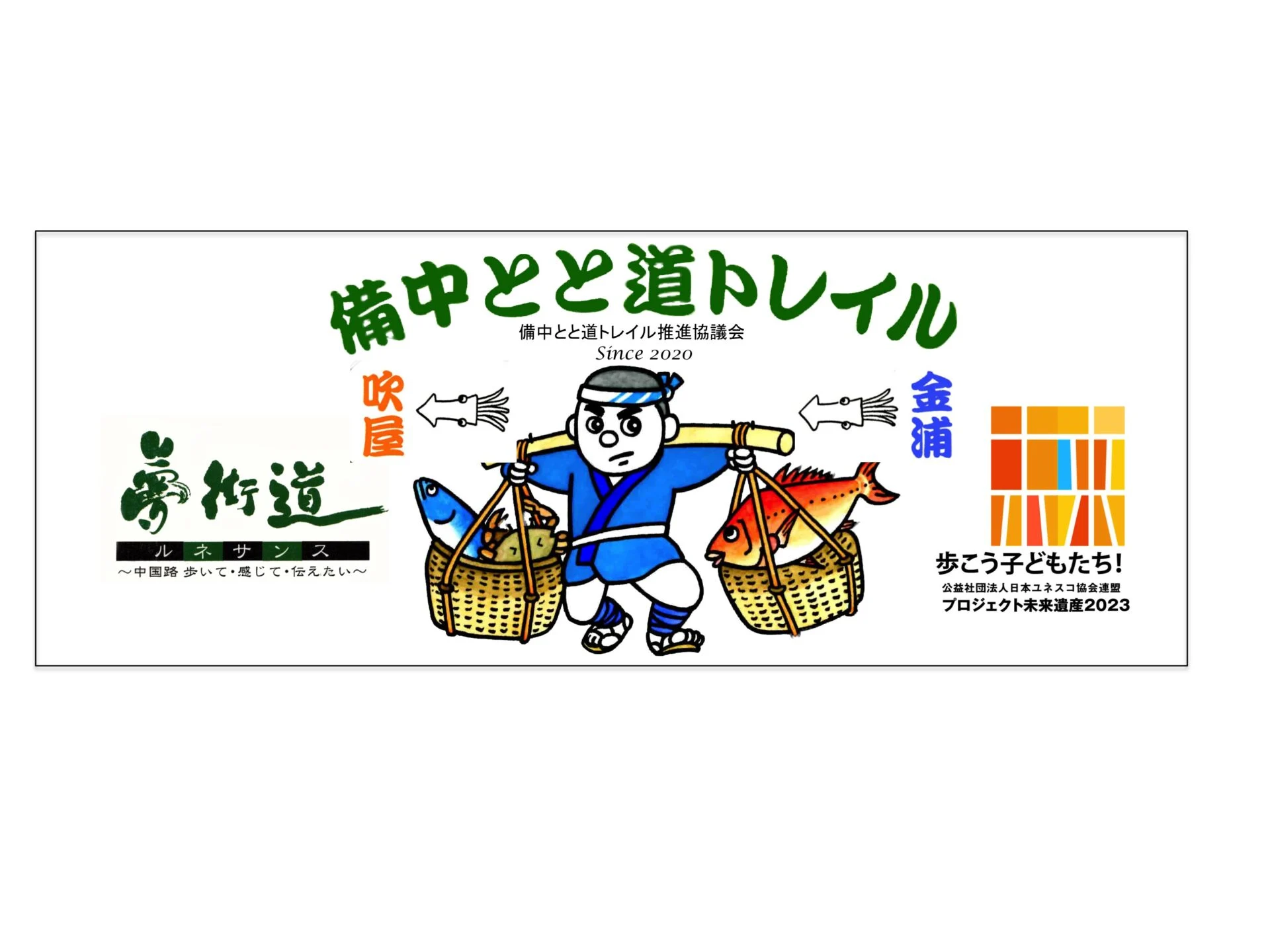
| Name | Bichu Totomichi Trail Promotion Council |
|---|---|
| Address | 1208-1 Naka, Yakage Town, Okayama Prefecture |
| Contact | 080-3390-6935 (Secretary General's phone) |
| Homepage | Totomichi |