
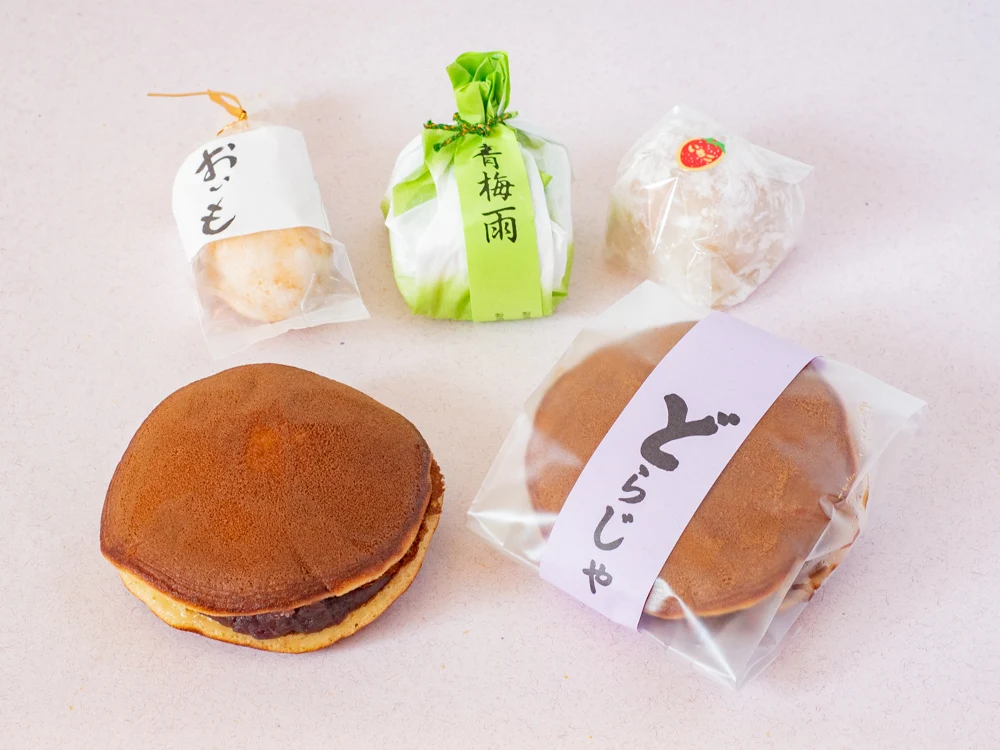
Isn't there an opportunity to buy wagashi (Japanese sweets) for guests, as souvenirs when visiting, or as snacks at home?
Wagashi shops often have unique offerings that are rooted in the local community.
In Mabi, Kurashiki City, there is a beloved wagashi shop.
The shop's name is Hashimoto.
It is a popular shop known for its signature dorayaki and seasonal limited products.
However, Hashimoto was affected by the "July 2018 Heavy Rain" and became unable to operate.
Overcoming the crisis of closure, it reopened in December 2020.
Many customers who had been waiting for the reopening visited.
Let's explore the commitment and charm of Hashimoto's products, the history of the shop, and the circumstances from the disaster to the reopening.
The only wagashi specialty shop in Mabi that revived from the "July 2018 Heavy Rain Disaster"
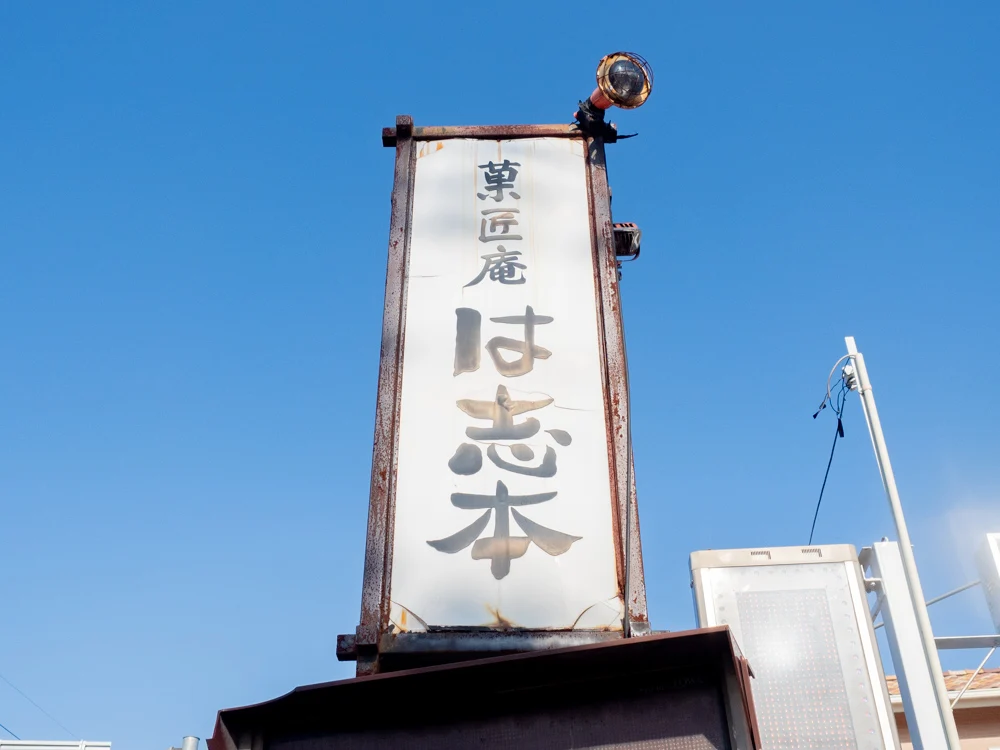
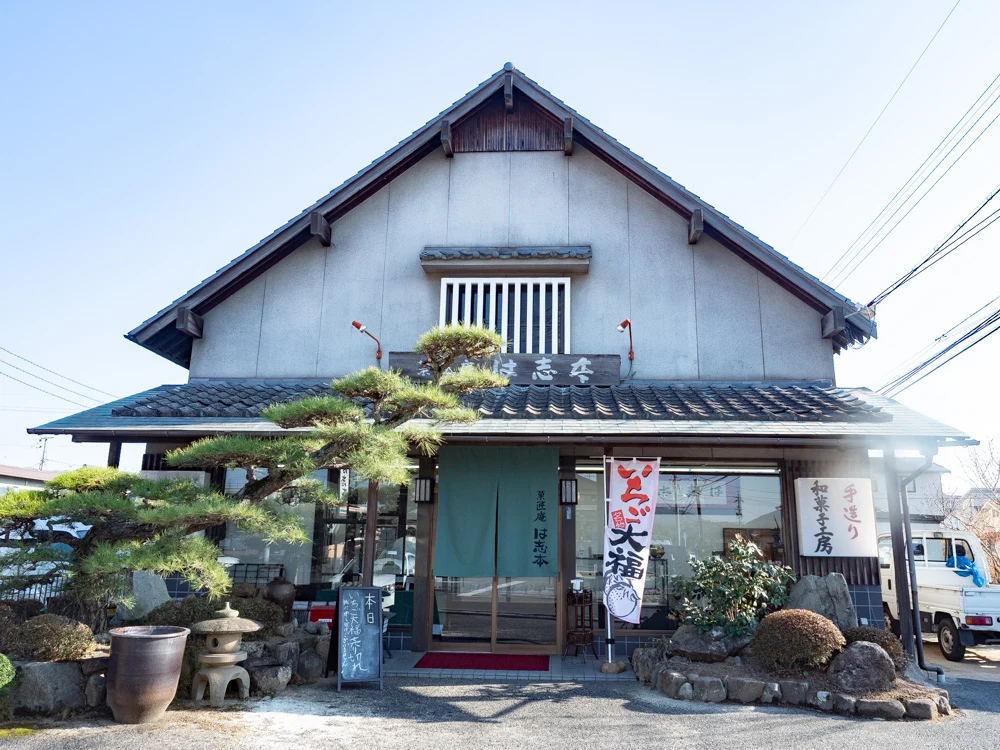
Hashimoto is a wagashi shop located along National Route 486 in Kawabe, Mabi-cho.
As the only wagashi specialty shop in Mabi-cho, it is frequented by people from the surrounding area.
Hashimoto opened in 1981 in the Arai district of Mabi-cho as "Kyogashi-dokoro Hashimoto."
Later, in 1986, it moved to its current location and became "Kashouan Hashimoto."
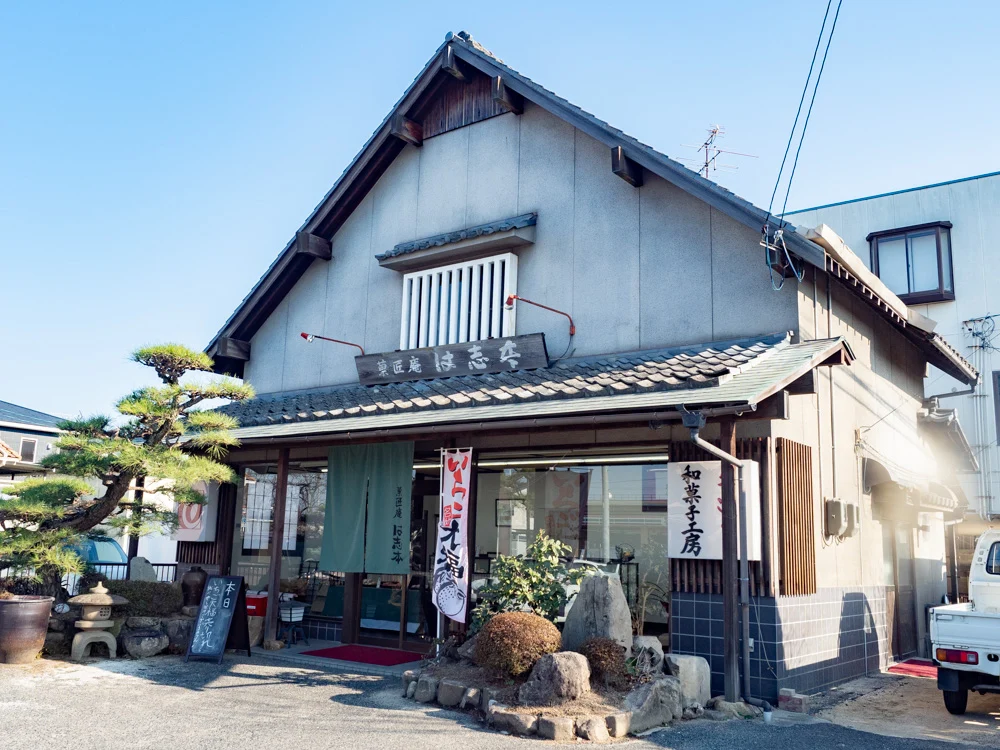
However, it was affected by the "July 2018 Heavy Rain Disaster."
The store suffered extensive damage, raising concerns about its reopening.
However, after about two and a half years, it reopened in December 2020.
On the reopening day, many customers who had been eagerly waiting for the opening visited, creating a lively atmosphere.
Hashimoto's products
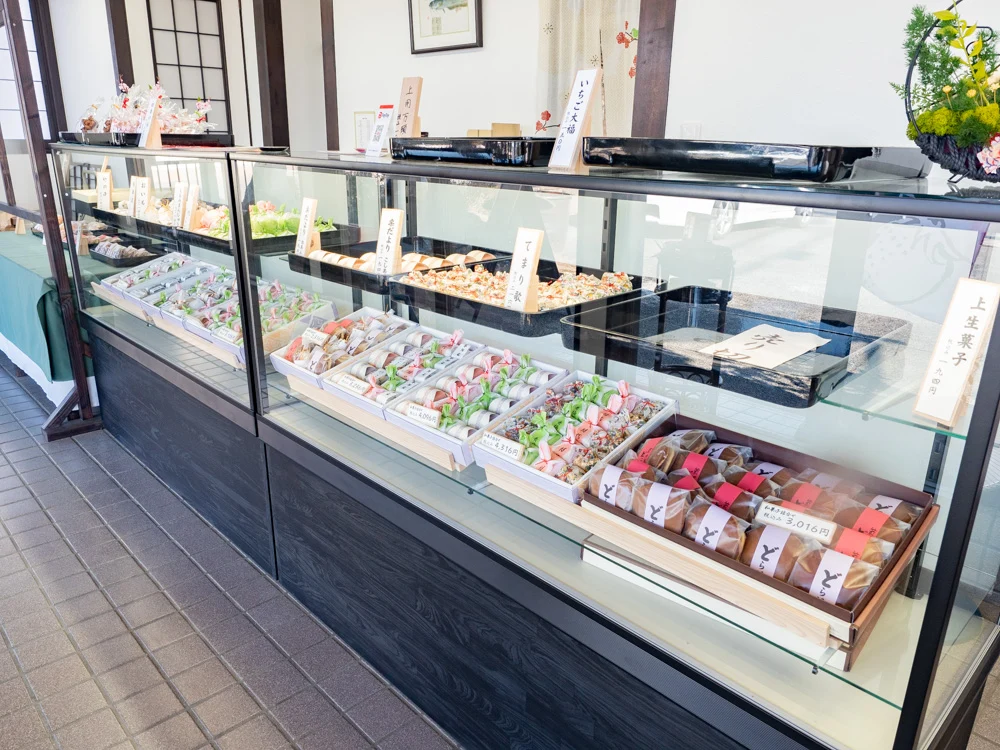
The products handled by Hashimoto are diverse. The representative products are as follows.
Prices include tax. Information as of May 2023
| Product Name | Price (including tax) |
|---|---|
| Kotohiki Rock | 110 yen |
| Walnut | 150 yen |
| Aoume Tsuyu | 200 yen |
| Bamboo Shoot | 110 yen |
| Tsukishiro | 200 yen |
| Chestnut Delight | 200 yen |
| Dora Choco | Currently not for sale |
| Doraja | 150 yen |
| Temari Uta | 220 yen |
| Moon of Mabi | 150 yen |
| Warabi Mochi | 200 yen |
The most popular item is the signature dorayaki, "Doraja," which has been a specialty since the establishment.
There is also a derivative product called "Yataji's Dora Choco."
In addition, jōyō manju and castella are also popular standard wagashi.
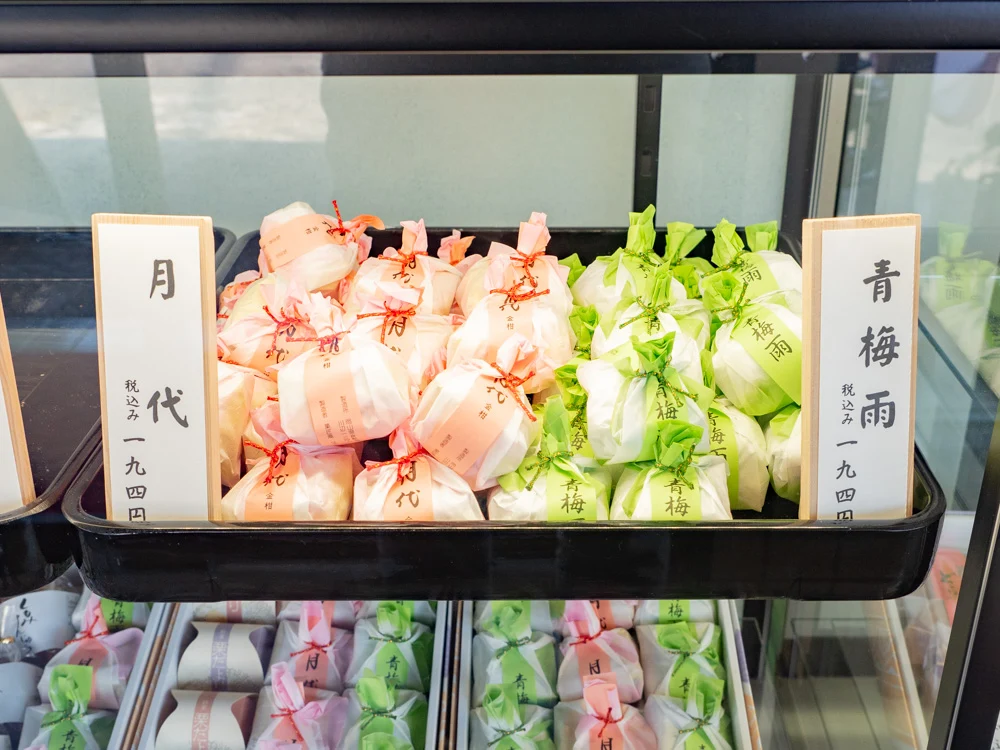
※This photo was taken in March 2021, so the current prices may differ
There are also sweets inspired by local Mabi-cho, such as Kotohiki Rock, Bamboo Shoot, and Moon of Mabi.
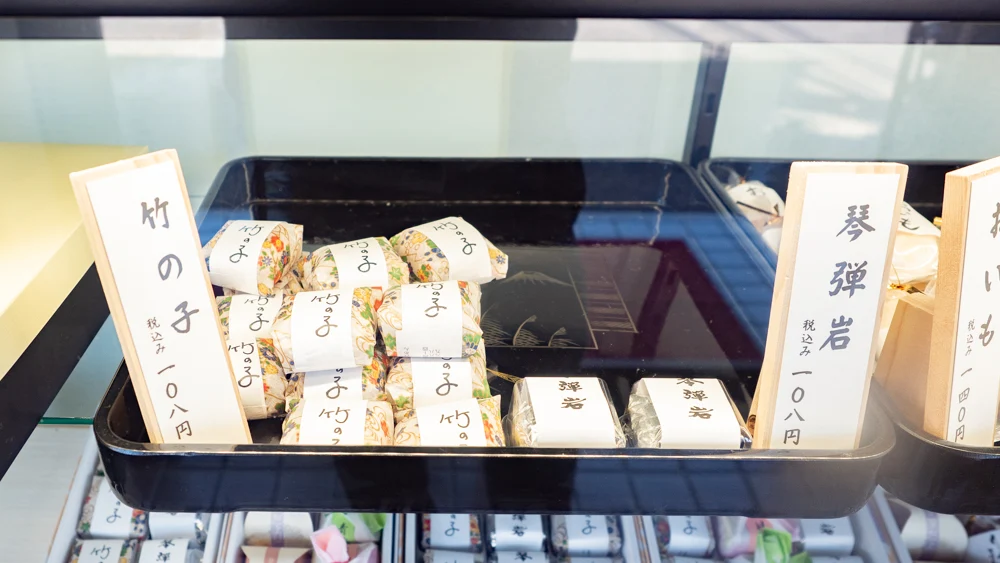
※This photo was taken in March 2021, so the current prices may differ
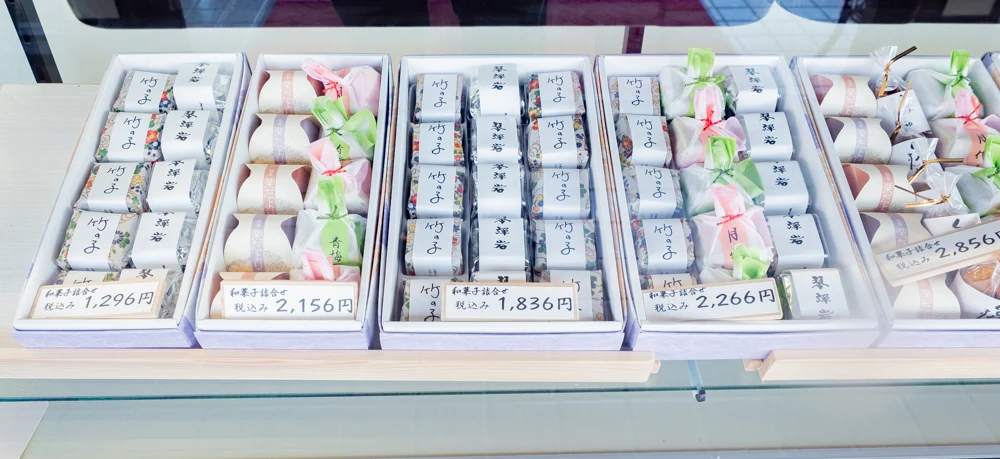
※This photo was taken in March 2021, so the current prices may differ
Another representative product of Hashimoto is Warabi Mochi.
When you think of warabi mochi, you might have the impression that it is a summer limited product.
At Hashimoto, warabi mochi is sold as a seasonal product in summer and is popular.
However, in fact, warabi mochi is not limited to summer; it is a year-round product.
You can buy warabi mochi even in seasons other than summer.
Warabi mochi is one of Hashimoto's signature products, alongside dorayaki.
Seasonal limited products are also popular
Hashimoto also offers seasonal limited products.
All seasonal limited products are popular items at the shop.
| Product | Sales Period |
|---|---|
| Ichigo Daifuku | Mid-December to Late March |
| Sakura Mochi | Late February to Mid-April |
| Ohagi | From the beginning of spring and autumn equinox to around the equinox |
| Chimaki | Mid-April to Early May (until Golden Week) |
| Kashiwa Mochi | Mid-April to Late May |
| Wakayayu (Ayugata Chofu) | June to Late October |
The sales periods are approximate and may change depending on the situation.
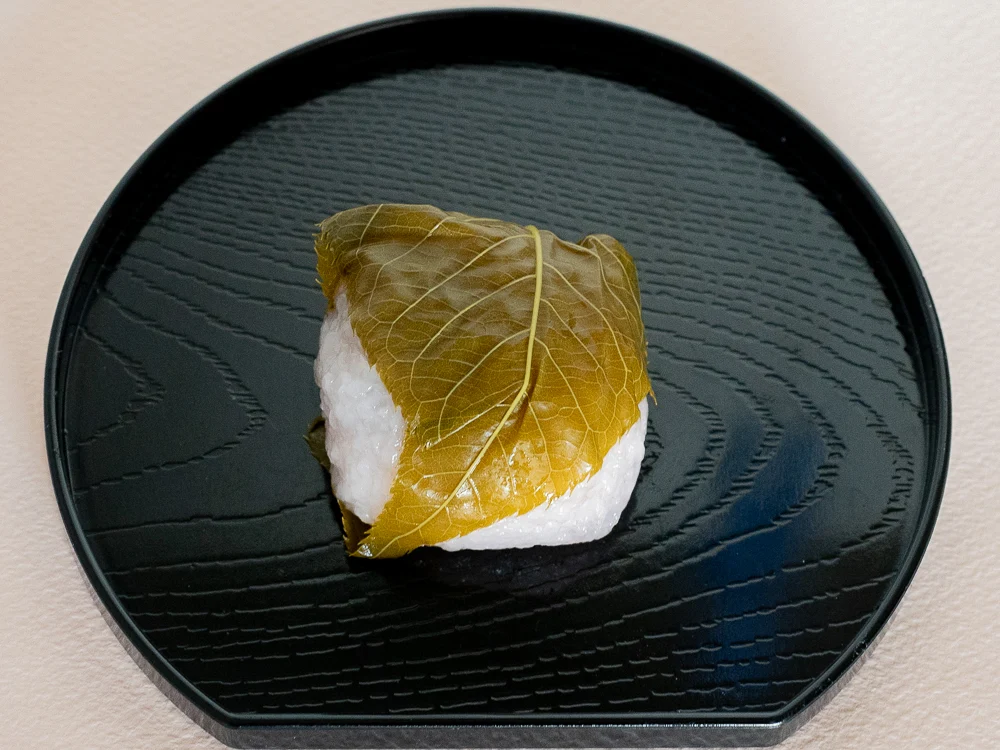
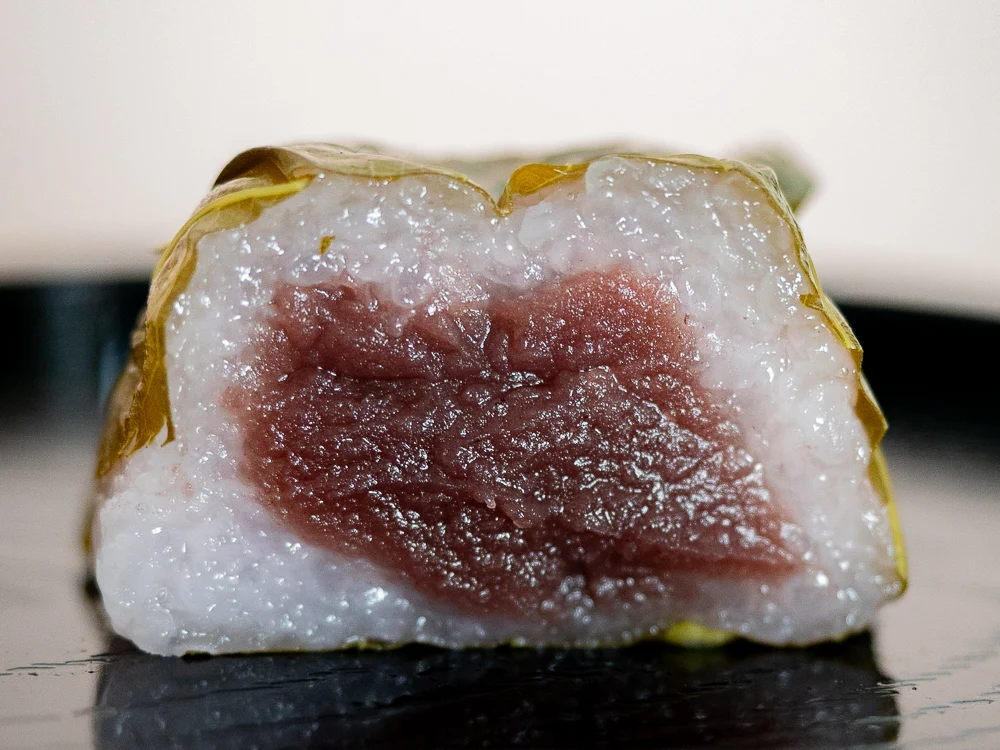
Introducing representative products!
Among the many products of Hashimoto, here are some representative ones.
“Doraja” is the dorayaki that has been a signature product since the establishment
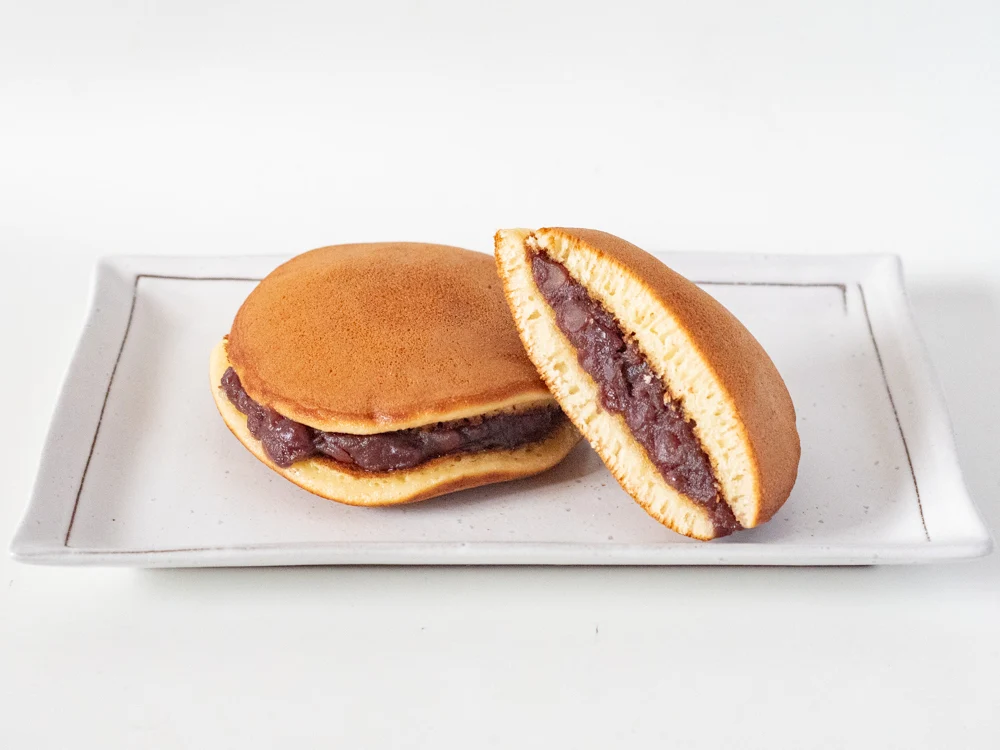
The popular product "Doraja," which has been a signature item since the establishment, is a type of dorayaki.
Before being affected by the July 2018 Heavy Rain, it was sold simply as "dorayaki" without a special product name.
Since the reopening in December 2020, it has been called "Doraja."
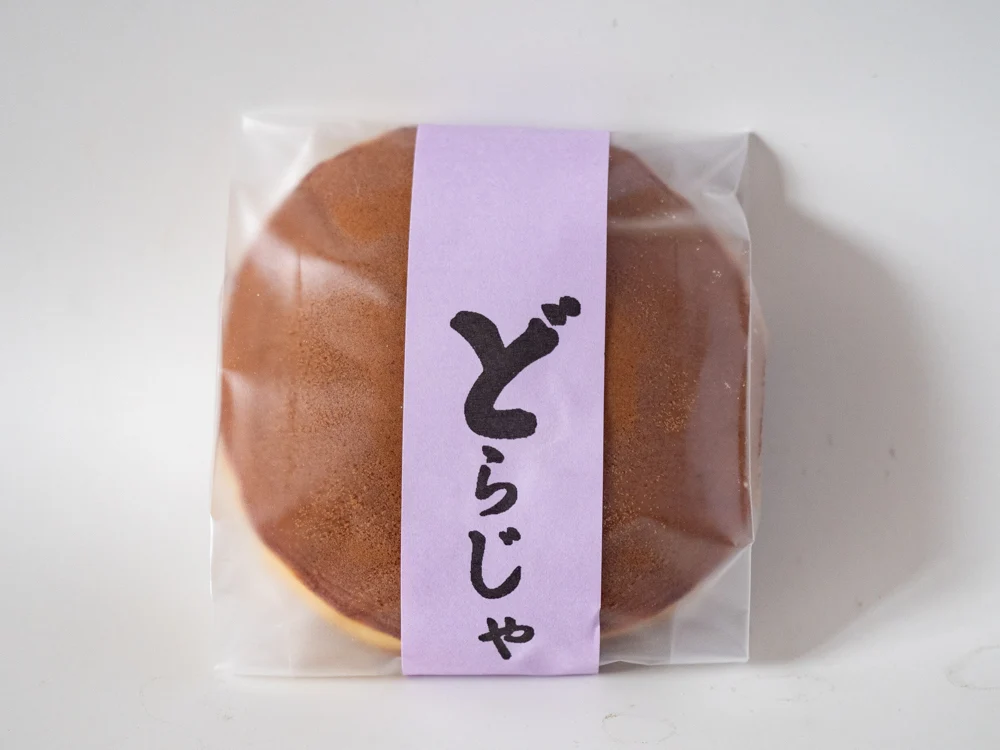
As a signature product, the owner, Mr. Hashimoto, thought of giving it a slightly unique name.
Inspired by the Okayama dialect phrase "〜ja!" from the local comedian Chidori, it became "Dorayaki ja."
It was then shortened to "Doraja."
The size of Doraja is approximately 8.5 centimeters in diameter and about 2.5 centimeters thick.
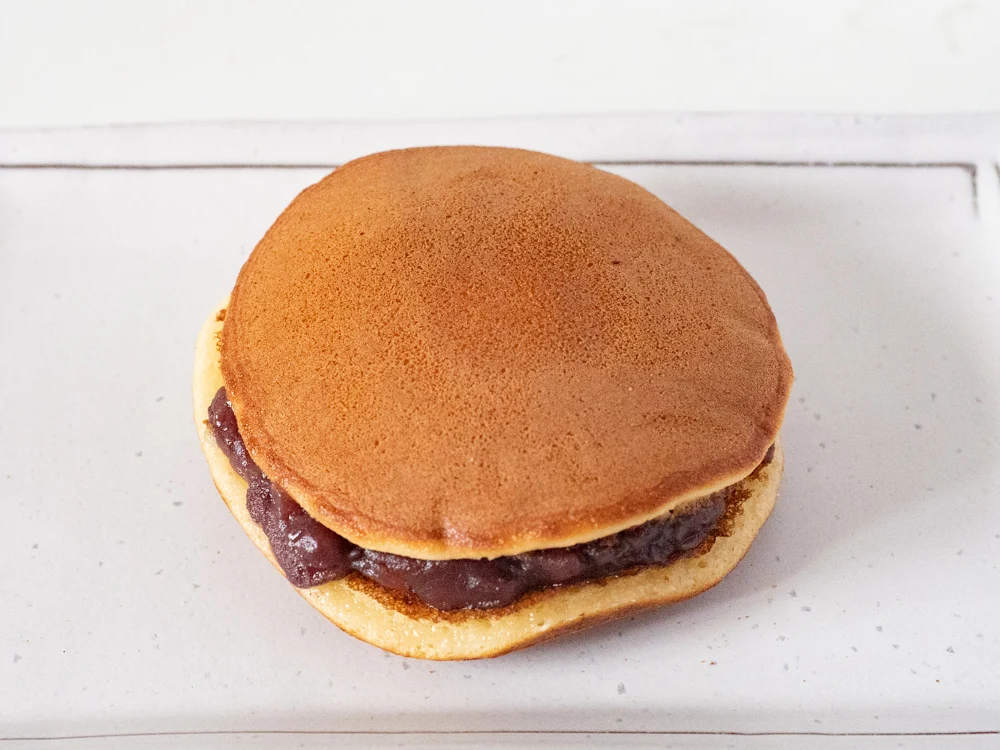
The surface of the dough is dark brown, while the underside is yellow.
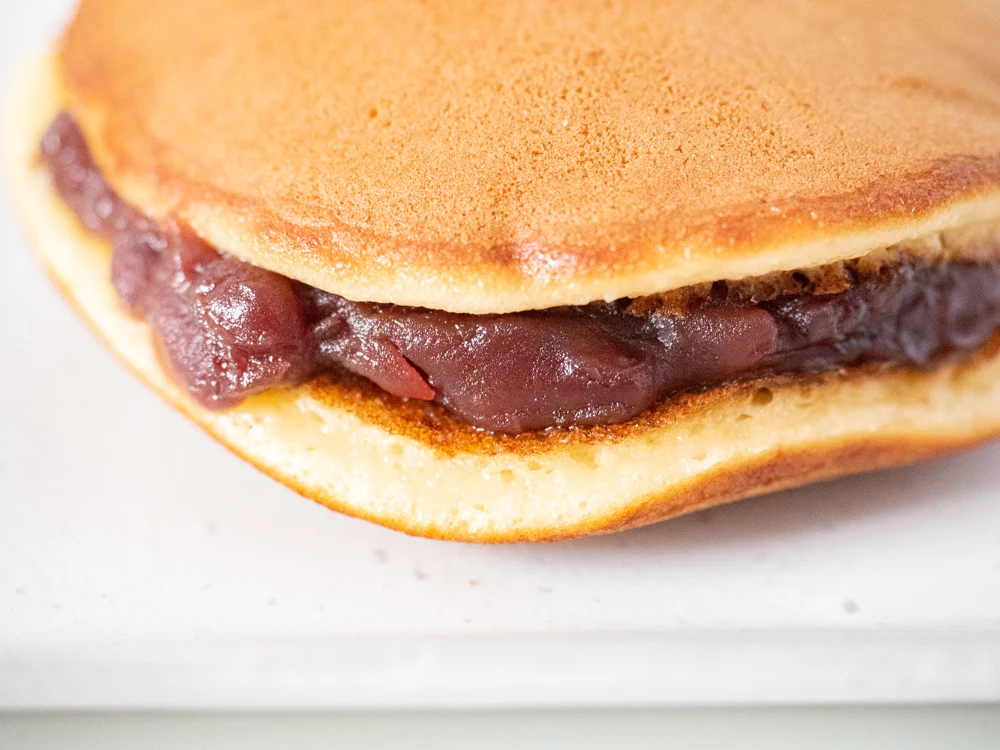

Hokkaido azuki beans are used and cooked in-house.
The sweetness is also adjusted with a unique blend.
The dough is hand-baked one by one in the shop.
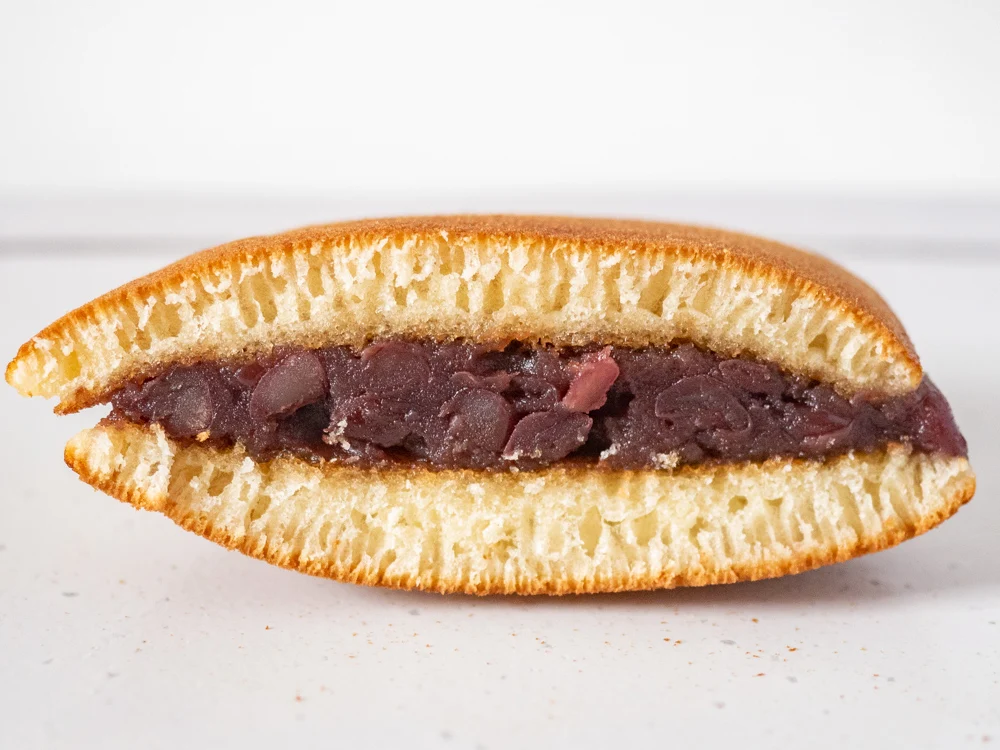
I believe the fluffy texture and flavor of the dough, the sweetness of the sweet red bean paste, and the crunchy texture of the azuki beans create a perfect balance in this dorayaki.
“Ichigo Daifuku” is a seasonal limited popular product made with Kiyone strawberries
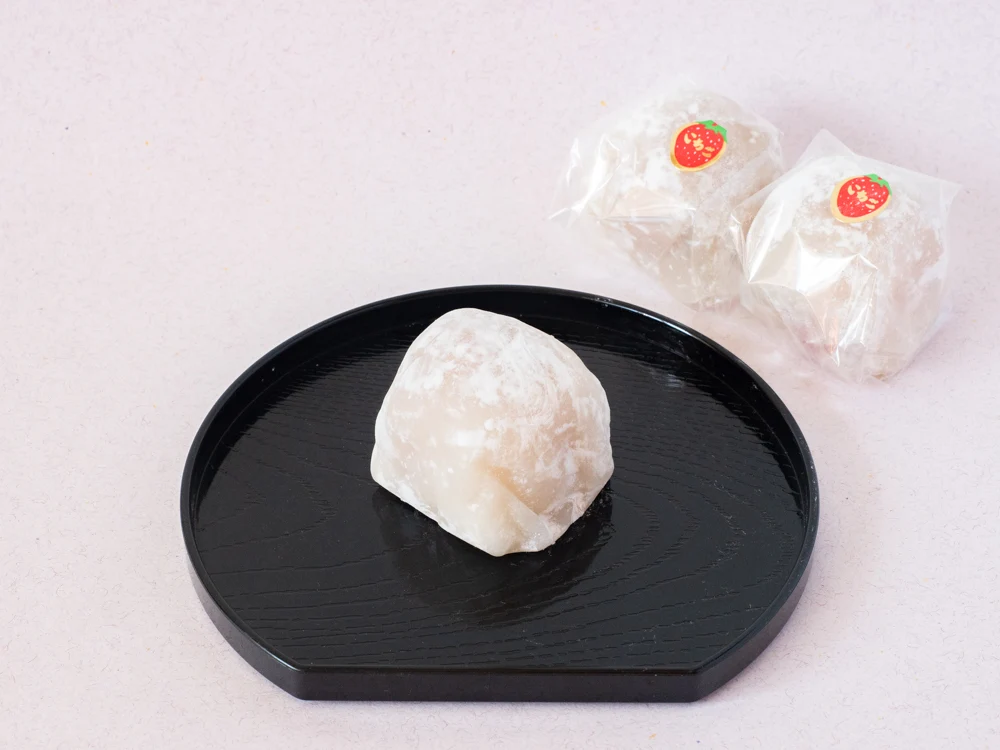
The Strawberry Daifuku is a seasonal product available from mid-December to late March.
During the sales period, it is a very popular product that sells a lot.
They reportedly make about 120 pieces a day, and it is almost sold out every day.
Sometimes it sells out in the morning if they are quick.
The highlight of Hashimoto's Strawberry Daifuku is the strawberries.
Our strawberries are strawberries from Kiyone in Soja!
Every morning, I go directly to purchase fresh strawberries.
It seems they started using them through a connection introduced by a customer from a strawberry farm in Kiyone.
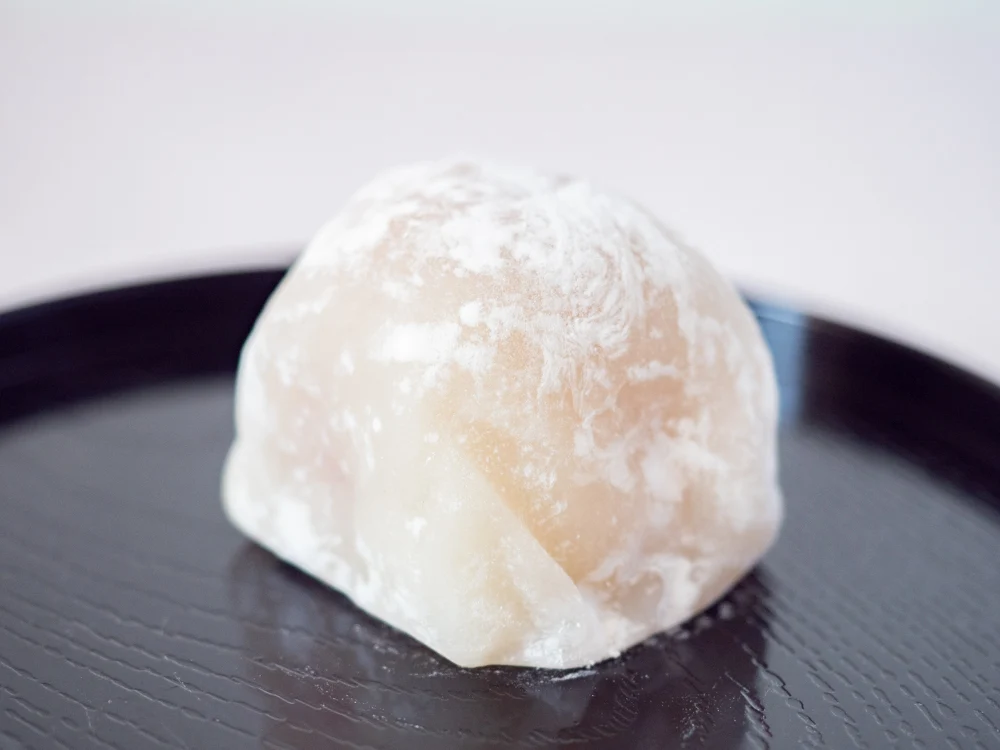
When you eat it, the gyuhi (mochi) has a subtle sweetness.
Inside the gyuhi, there is white bean paste.
It has a smooth texture and a light, elegant sweetness.
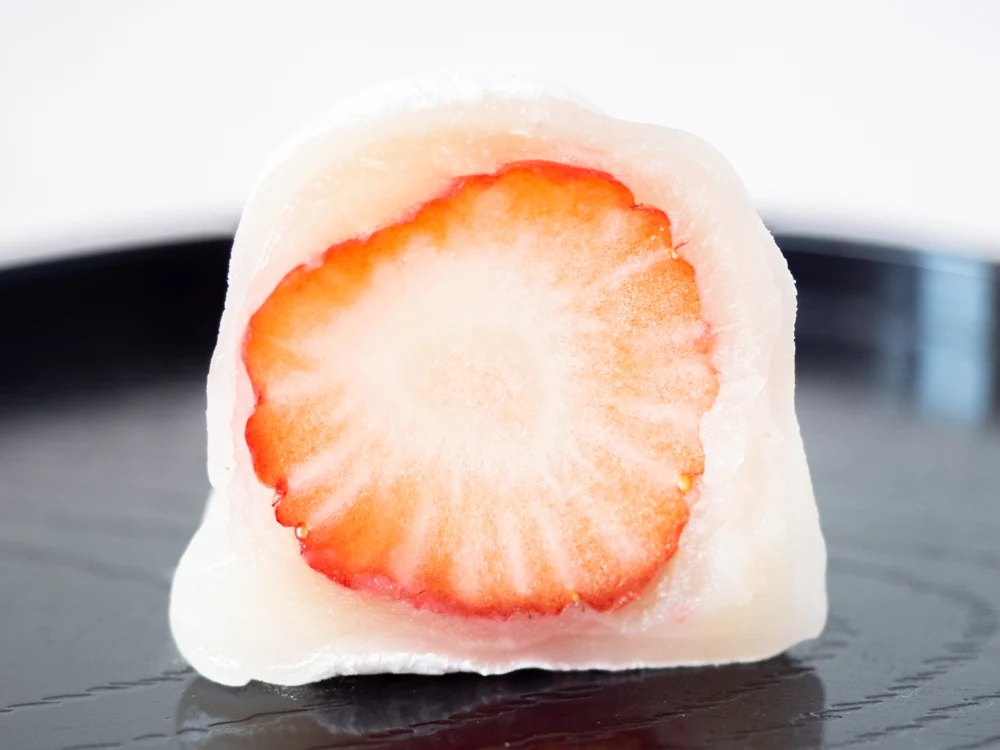
The strawberries have a sweet and refreshing acidity that spreads throughout your mouth.
And the juicy fruit juice bursts out.
It is very fruity.
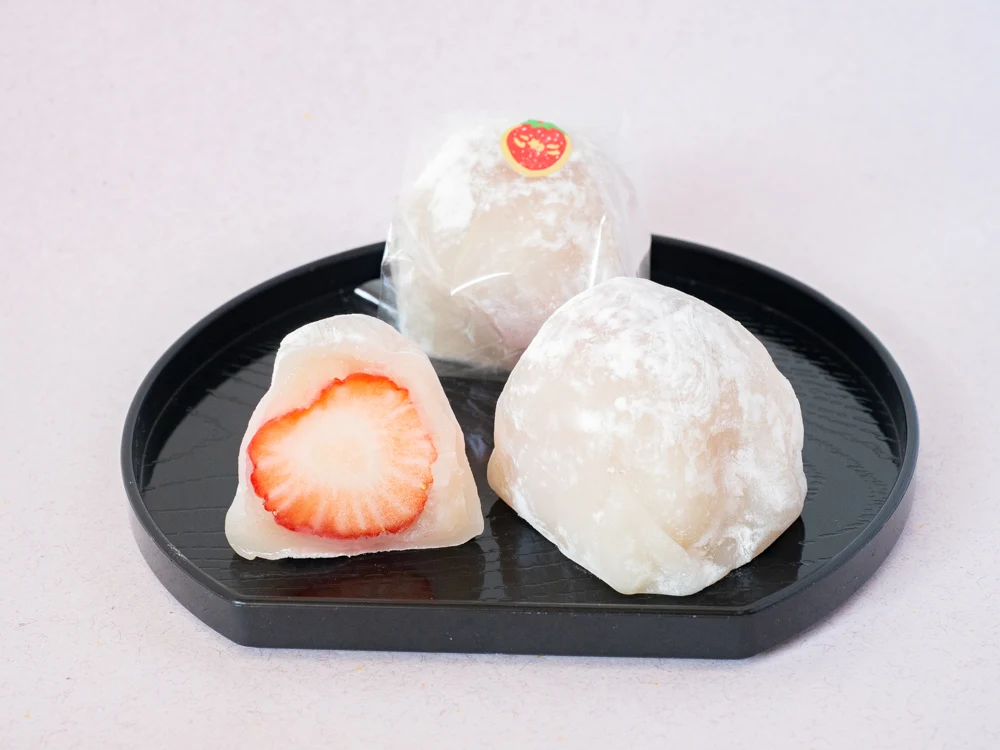
Hashimoto's Strawberry Daifuku has a perfect balance of the fruity flavor of strawberries, the elegant sweetness of white bean paste, and the texture of gyuhi.
It has a very addictive taste, and it's easy to understand why it sells out.
The "Oimo" is a unique jōyo manju with sweet potato paste and cinnamon flavor
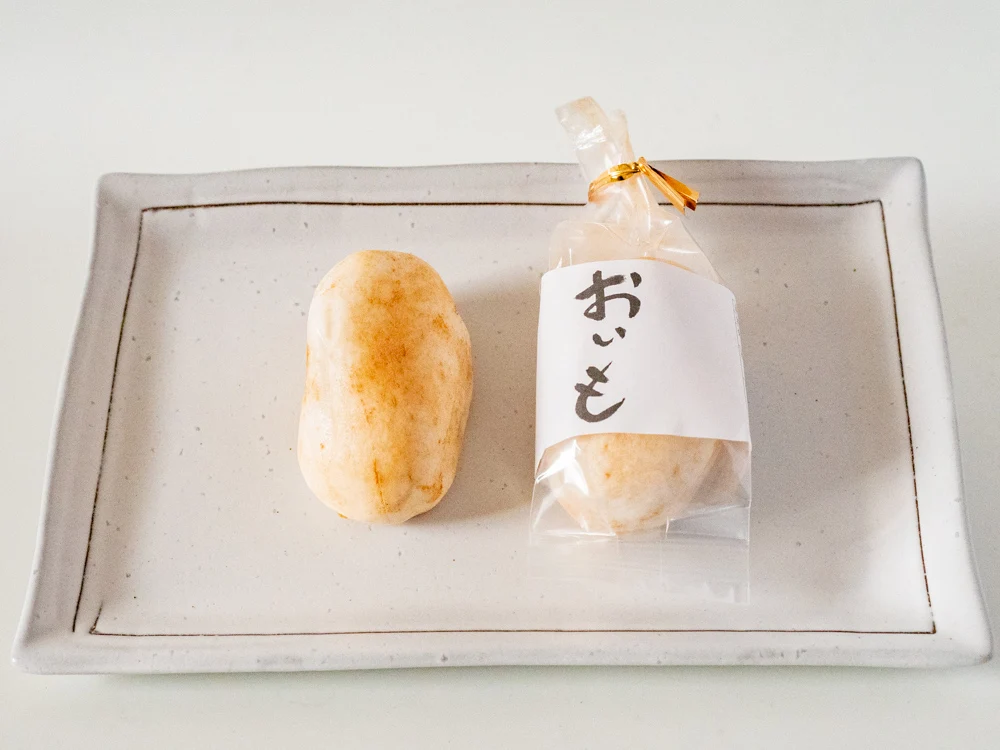
The Oimo is a product unique to Hashimoto.
It is a type of jōyo manju that uses yam (shōyo) in the dough.
Inside, there is plenty of yellow sweet potato paste!
The Oimo is oval-shaped, measuring about 4.5 centimeters in width, 6.5 centimeters in length, and about 3 centimeters in height.
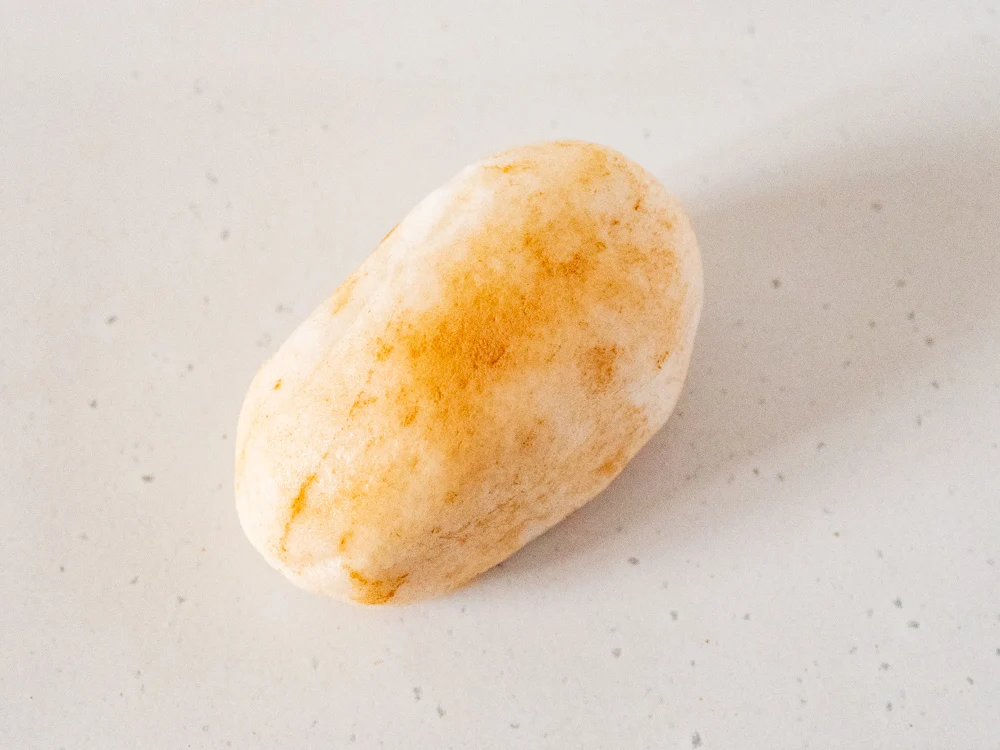
When you pick up the confection, it feels fluffy and slightly elastic.
And a pleasant aroma, likely cinnamon, wafts through.
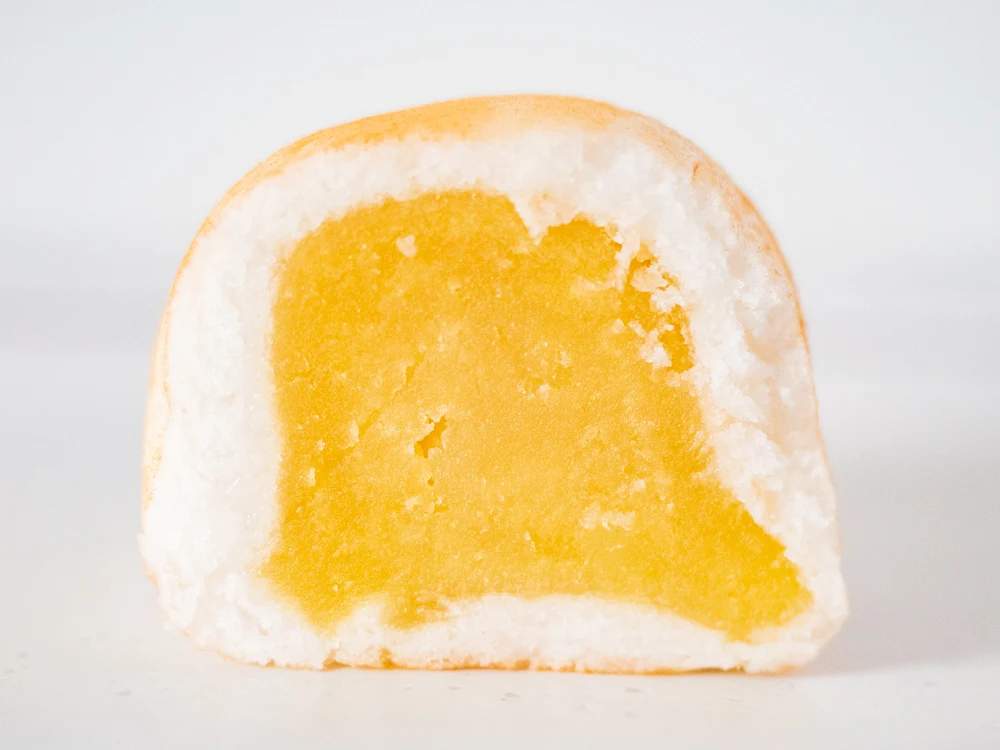
When you eat it, the thin yet fluffy and chewy texture of the dough combines with the sticky texture of the sweet potato paste inside.
The sweetness is moderate, while the flavor of the sweet potato is rich.
And the cinnamon aroma matches the taste of the sweet potato, making it delicious.
"Yataji's Dora Choco" is a dorayaki filled with sweet red bean paste and chocolate
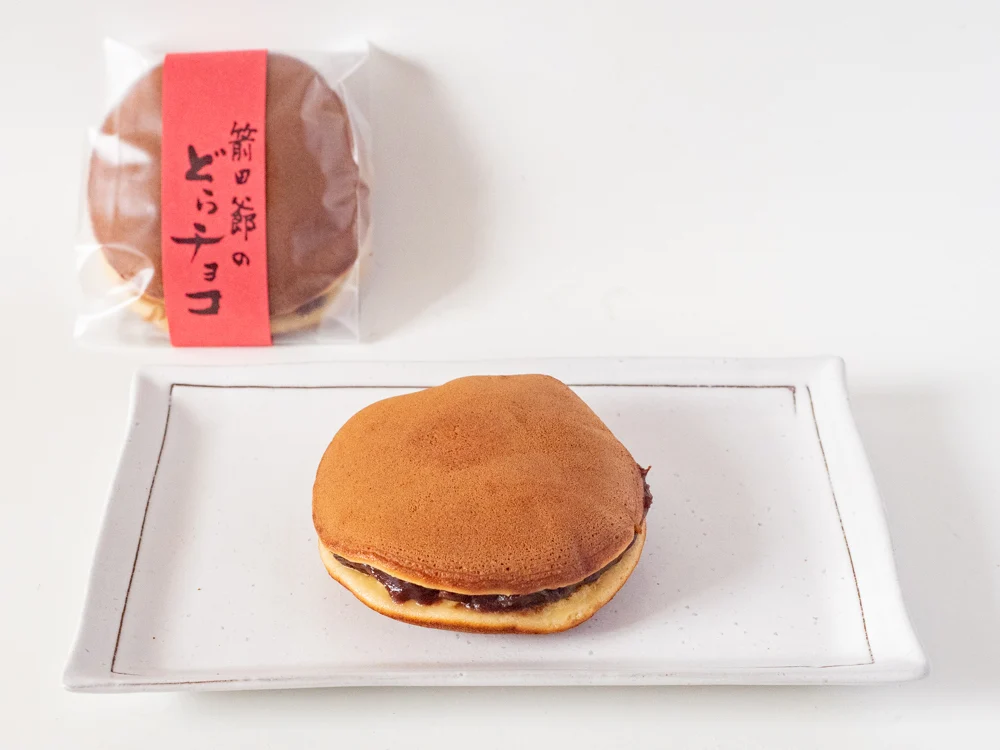
The Yataji's Dora Choco is a dorayaki that is a derivative product of doraja.
It was created after Hashimoto moved to Kawabe in Mabi.
The dough and size are the same as doraja.
When cooking the adzuki beans to make sweet red bean paste, chocolate is added to the paste.
When you try it, the chocolate-filled paste has the texture of sweet red bean paste, with a slight adzuki flavor remaining.
However, the taste is chocolate.
It is a very mysterious and delicious dorayaki.
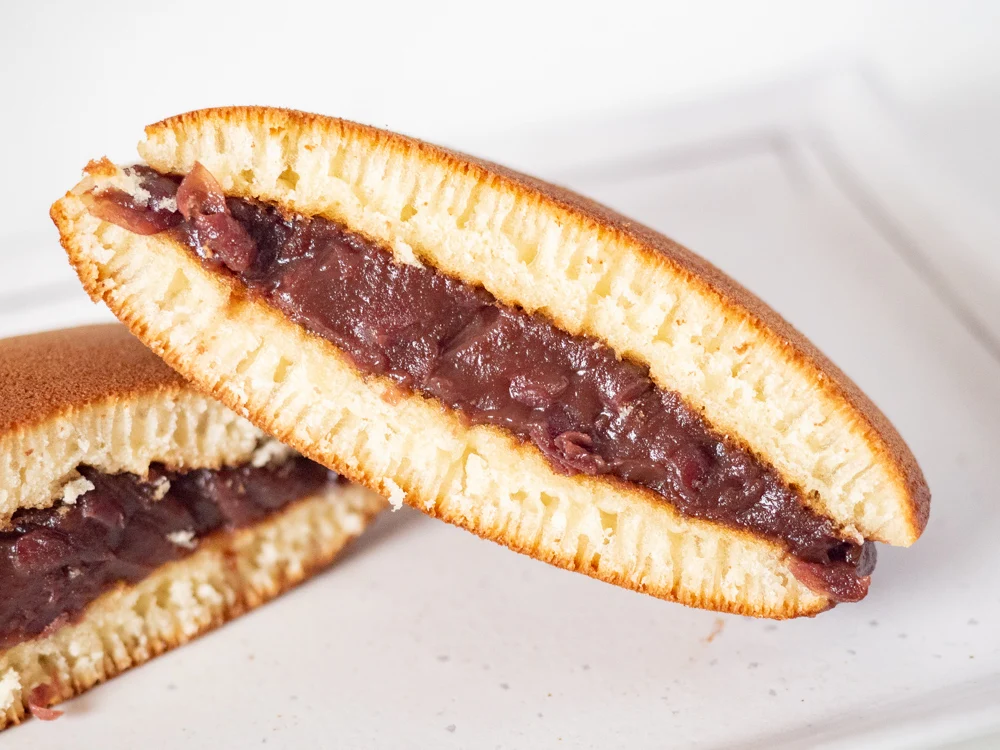
The crunchy texture of the adzuki beans and the flavor of the paste, combined with the sticky texture, sweetness, and flavor of the chocolate, surprisingly match perfectly.
Before eating, I had the impression that the chocolate would be too sweet, but when I actually ate it, the sweetness was surprisingly refreshing.
The name "Yataji" refers to the mentor of the current owner, who was once a confectioner at Hashimoto.
It seems that the idea for the dorachoco came from the mentor's comment that "a dorayaki with chocolate would be interesting."
In gratitude to my brother's mentor who gave me the hint, I added "Yataji" to the name.
The mentor was from Yata in Mabi, hence Yataji.
Dora Choco is a Japanese sweet with a rather addictive taste.
"Seibaiu" is a product that has been available since the founding, with a whole ume inside
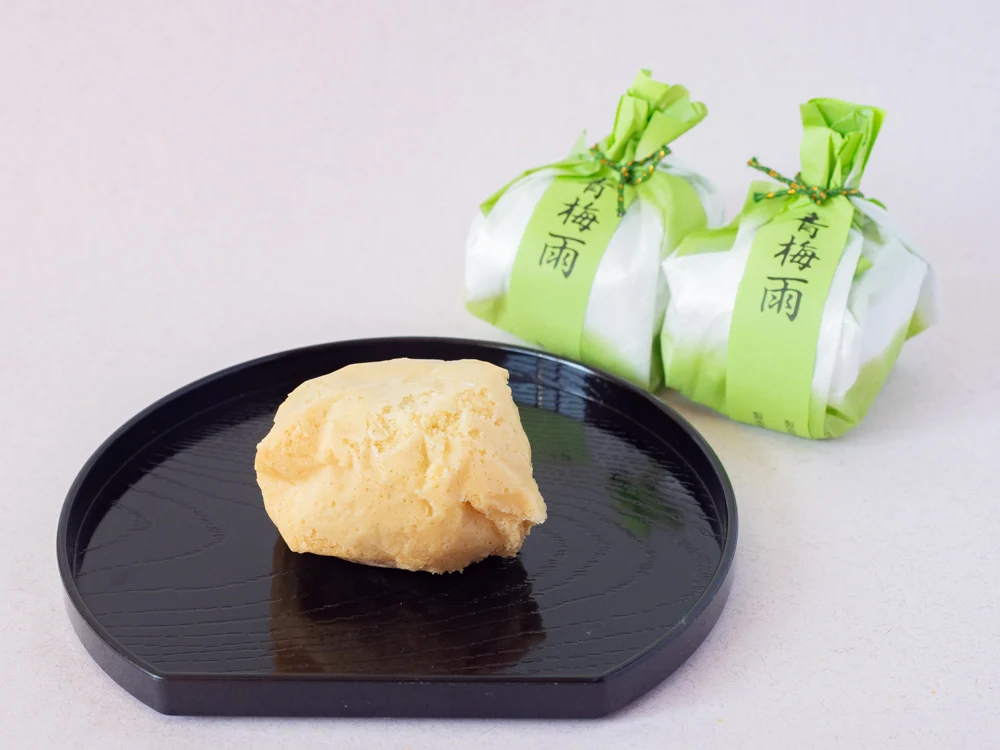
The Seibaiu has been a popular product since the founding.
As the name suggests, it contains a whole ume.
It is square-shaped, measuring about 4.5 centimeters on each side and about 2.5 centimeters in height, with a unique appearance that resembles a rocky surface.
The dough is a light beige color, with a crumbly texture, but at the same time, it has a moist mouthfeel.
Inside the dough, there is white bean paste.
And you can see a large ume wrapped in the white bean paste.
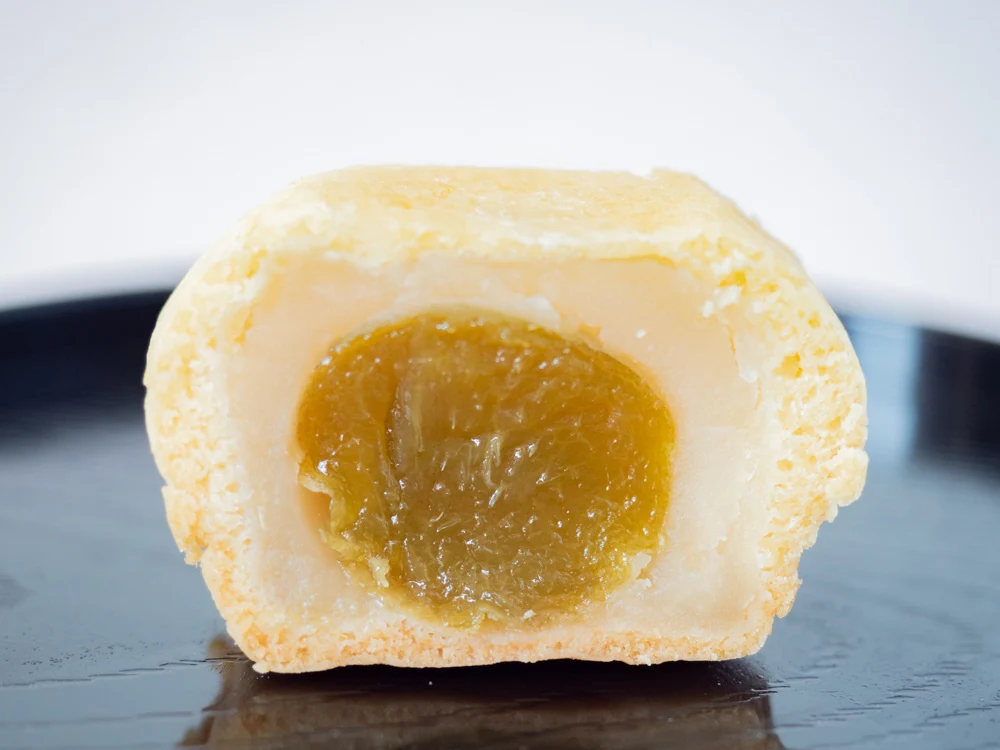
The white bean paste has a light and modest sweetness.
And the sticky texture and refreshing acidity of the ume, along with a hint of sweetness, spread out.
The aftertaste is fruity and refreshing.
Please note that there is a ume seed inside, so be careful when eating.
Hashimoto, a confectionery shop, suffered significant damage from heavy rain disasters, but after about two and a half years, they managed to reopen.
We interviewed the owner, Hashimoto Kengo.
Data of Kashoan Hashimoto
| Name | Kashoan Hashimoto |
|---|---|
| Address | 134-4 Kawabe, Mabi-cho, Kurashiki City, Okayama Prefecture |
| Contact | 086-454-8688 |
| Parking | Available About 4 cars |
| Business Hours | 10:00 AM - 6:00 PM |
| Regular Holidays | Irregular holidays |
| Payment Methods |
|
| Website | Kashoan Hashimoto |
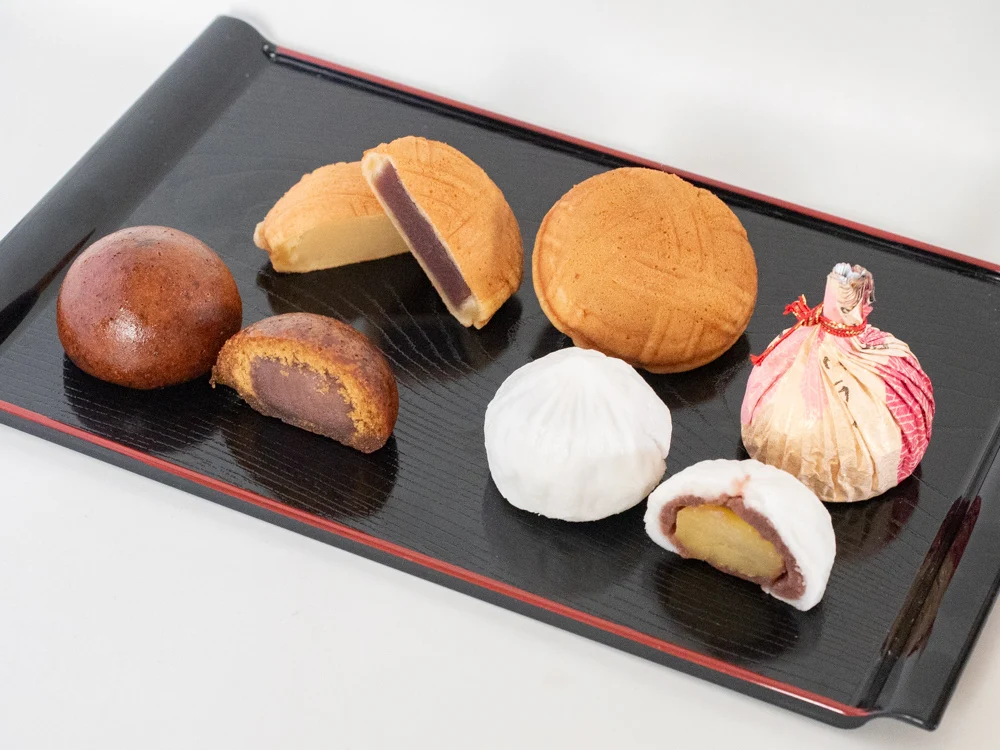









If you need an assortment, please feel free to ask.