
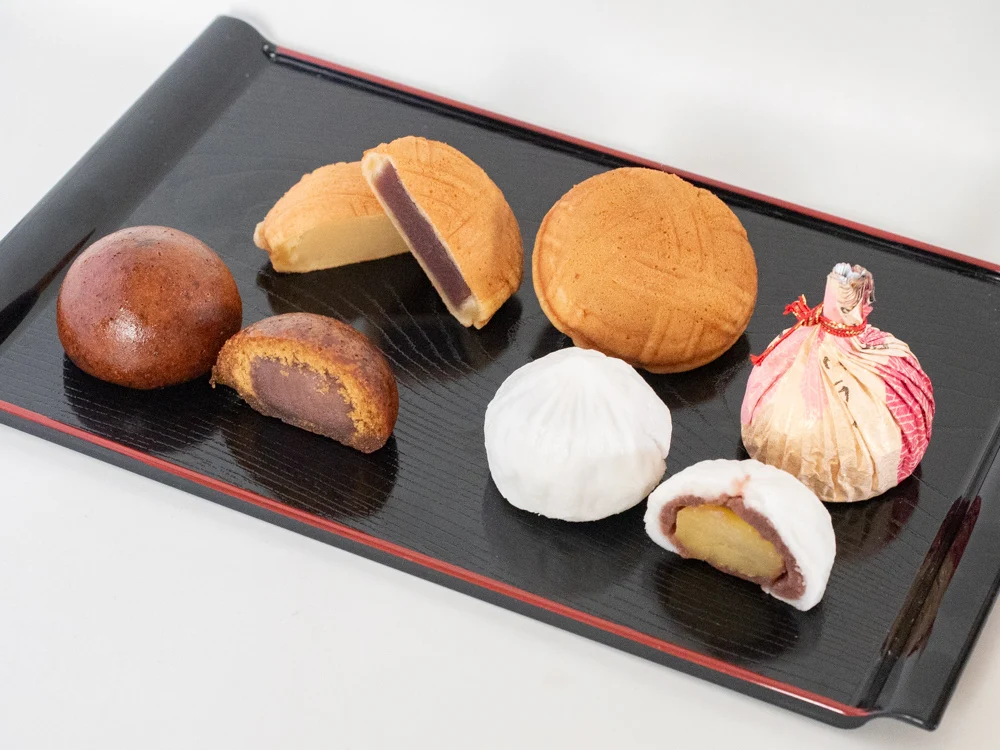
What comes to mind when you think of Kurashiki's famous sweets?
For classic options, there are "Murasuzume" and "Fujito Manju".
However, there are many other recommended sweets as well.
One of them is "Ryo-kan Temari".
It is a steamed bun that is loved in the Tamashima area of western Kurashiki City.
The manufacturer and seller of Ryo-kan Temari is "Kashidokoro Hirai".
In fact, it was founded as a rice cake shop in 1912, and has a history of over 100 years.
Kashidokoro Hirai produces many unique and delicious sweets rooted in the local area, including its flagship product Ryo-kan Temari, as well as "Koge Man", "An Temari", and "Kurashiki Koban".
Let's explore the charm and history of Kashidokoro Hirai and the sweets it creates.
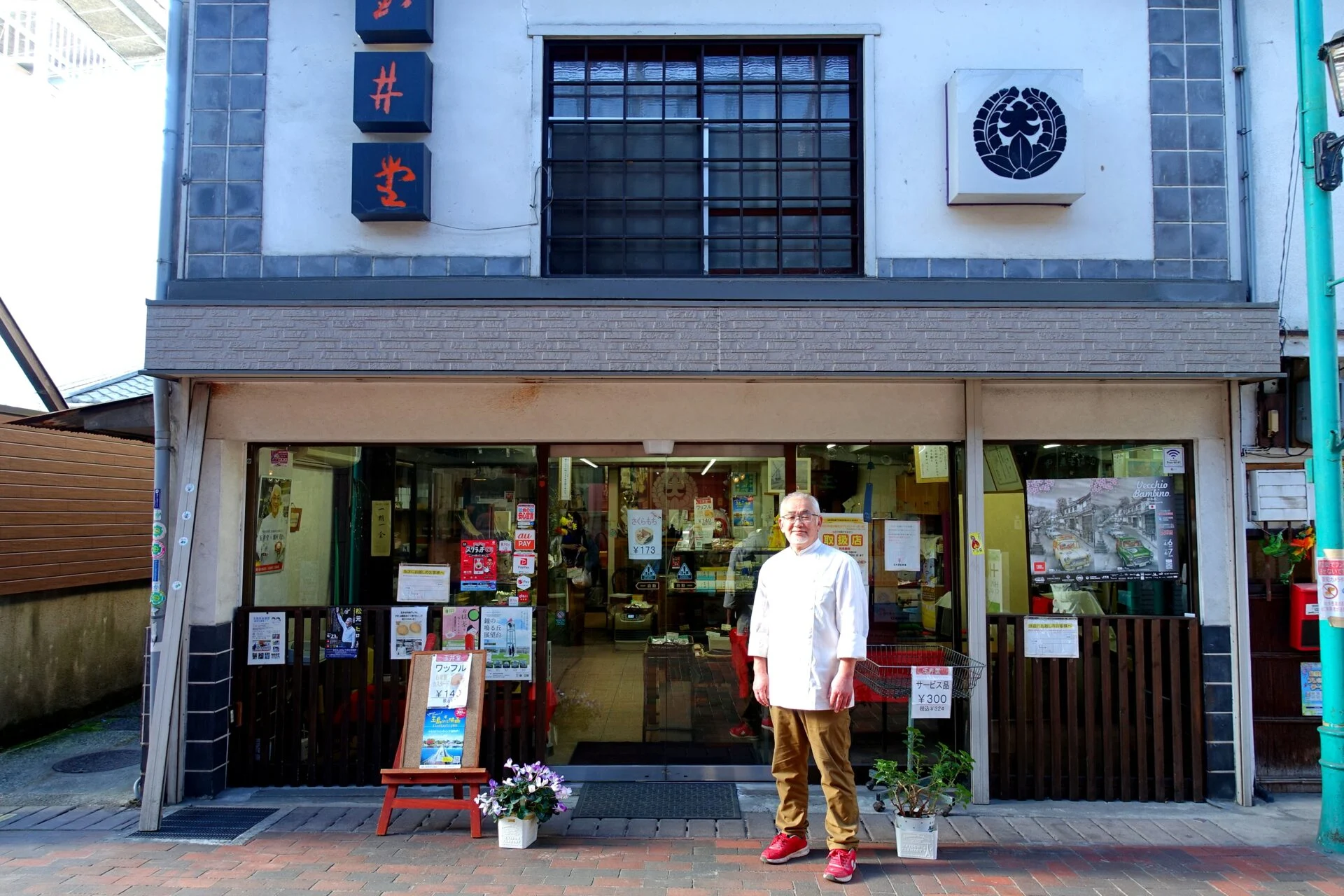
Kashidokoro Hirai is a Japanese and Western confectionery shop founded in 1912 in Tamashima
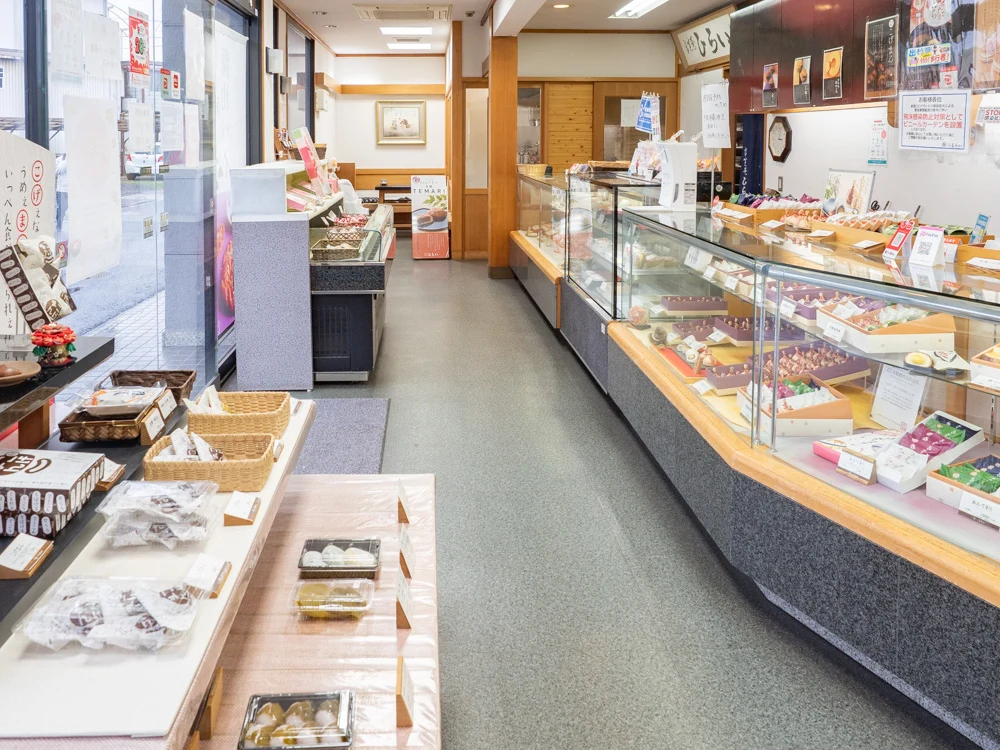
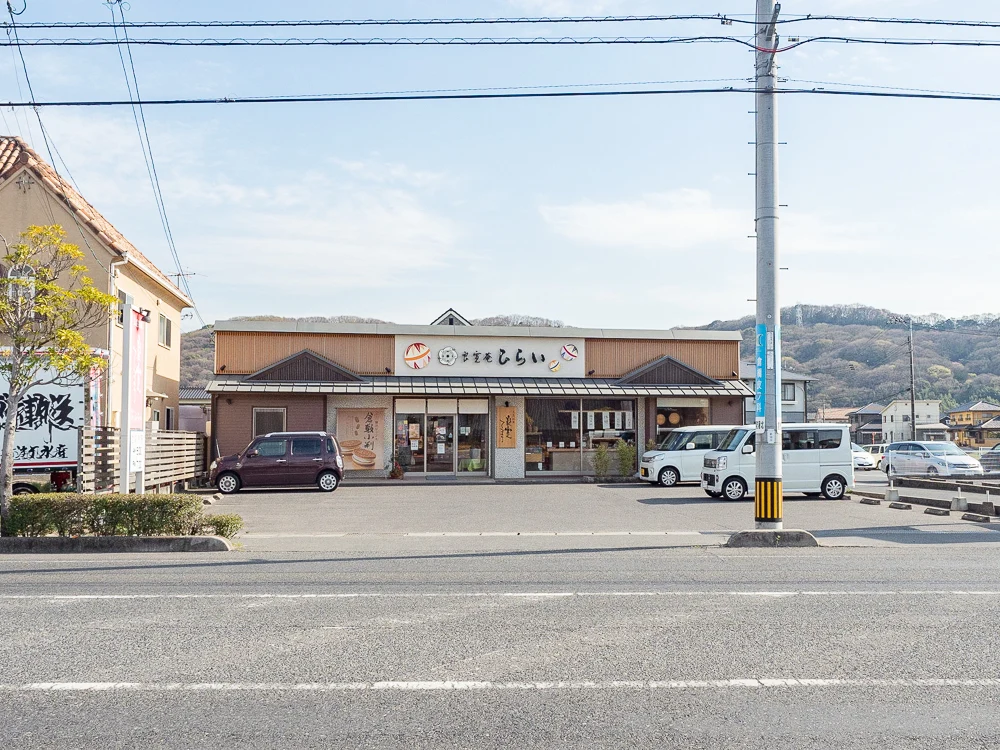
Kashidokoro Hirai is a Japanese and Western confectionery shop located in the Tamashima area of western Kurashiki City.
It was actually founded in 1912.
It has a history of over 100 years.
Originally, Kashidokoro Hirai was engaged in the production and sale of rice cakes.
Later, in the Heisei era, it began to focus on making Japanese sweets as well.
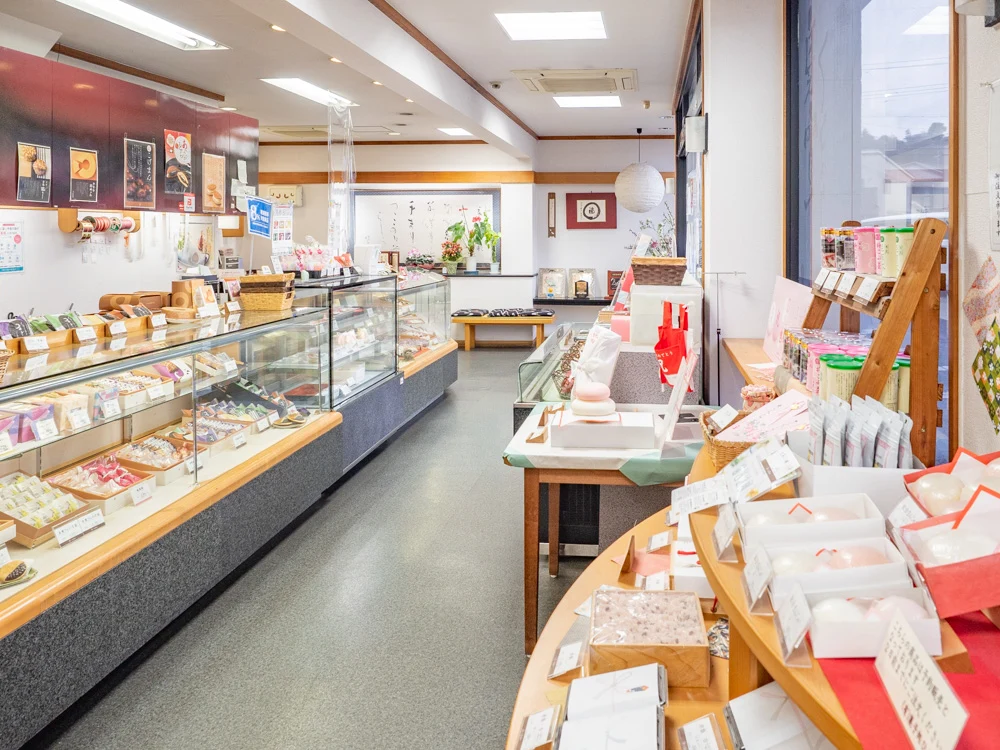
Kashidokoro Hirai's flagship product, "Ryo-kan Temari", is cherished as a sweet from Tamashima.
Now, it is popular not only in Tamashima but also as one of the representative sweets of Kurashiki City.
Additionally, new products such as "Koge Man" and "An Temari" have also been introduced.
These are also popular products from Kashidokoro Hirai.
Currently, the production and sale of rice cakes are still ongoing.
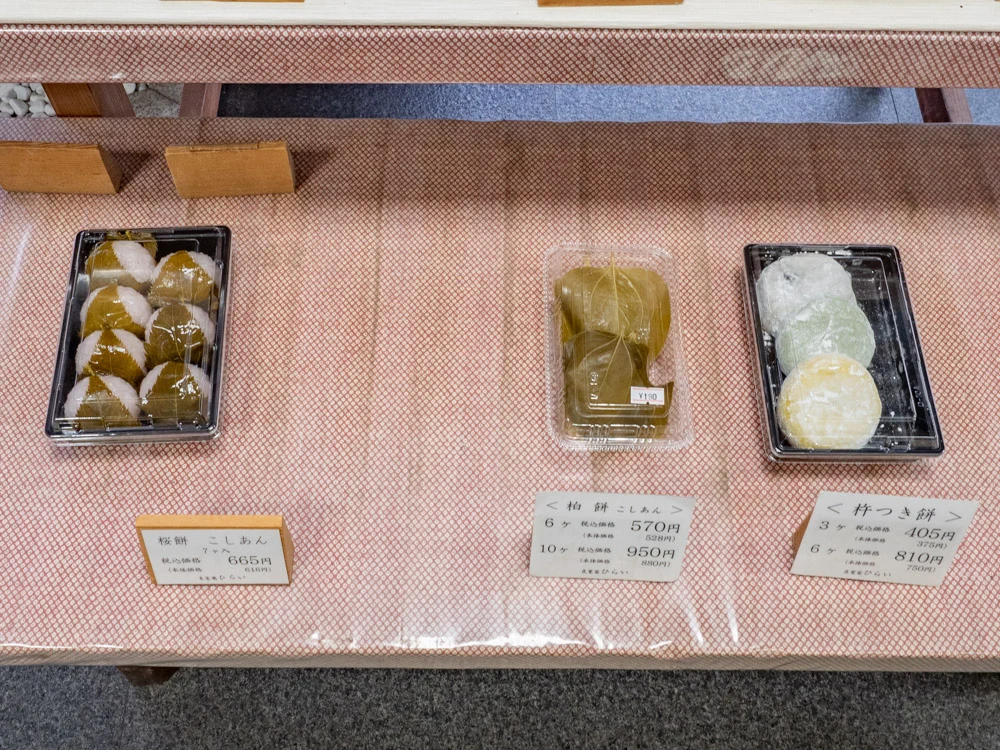
In addition to the store, Kashidokoro Hirai's rice cakes can also be purchased at supermarkets inside and outside the city.
Store Introduction
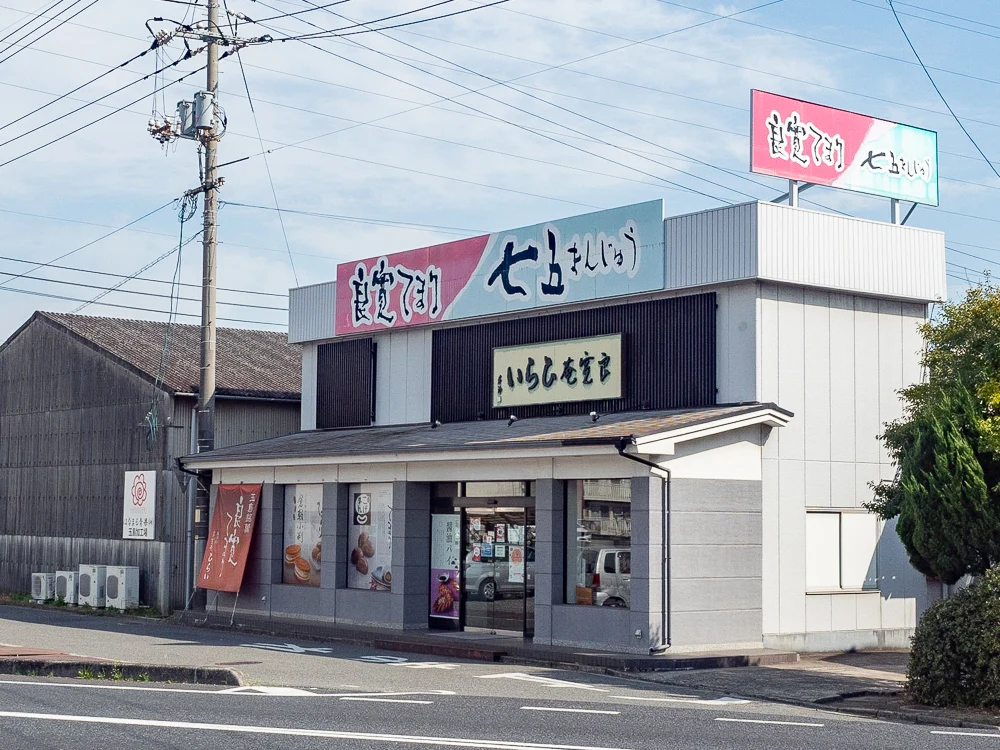
In addition to the main store in Tamashima, Kashidokoro Hirai also has a Sasaoki Store (Sasaoki-ten) in Kurashiki City.
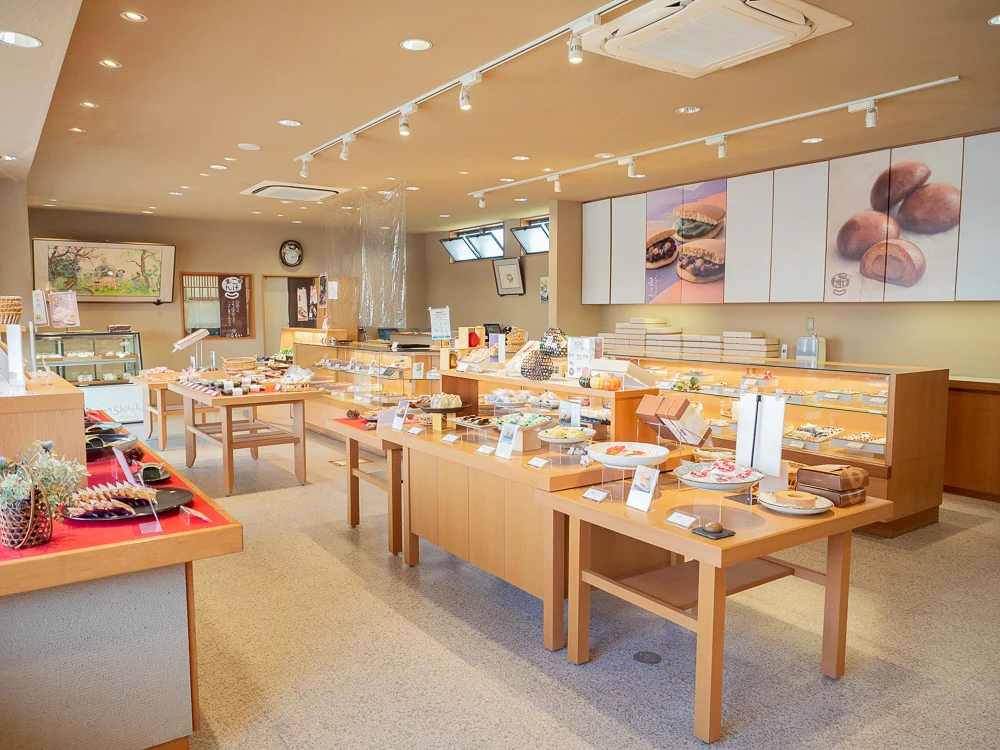
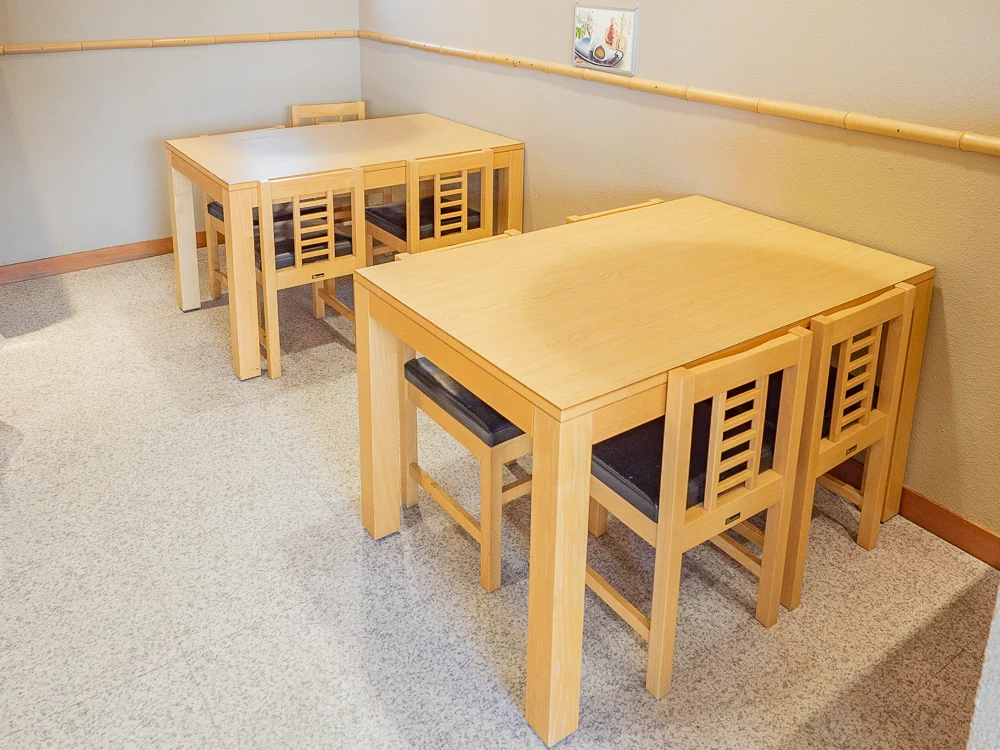
| Address | 1-7 Nishiyosui, Sasaoki, Kurashiki City, Okayama Prefecture |
|---|---|
| Parking | Available (9 cars) |
| Phone Number | 086-421-2190 |
| Business Hours | 9:00 AM - 7:00 PM |
| Regular Holidays | Irregular |
Additionally, there is a Senoo Store (Senoo-ten) in Okayama City.
Furthermore, they are also sold at some supermarkets and department stores.
For details about each store and retailers, please visit the official website of Kashidokoro Hirai.
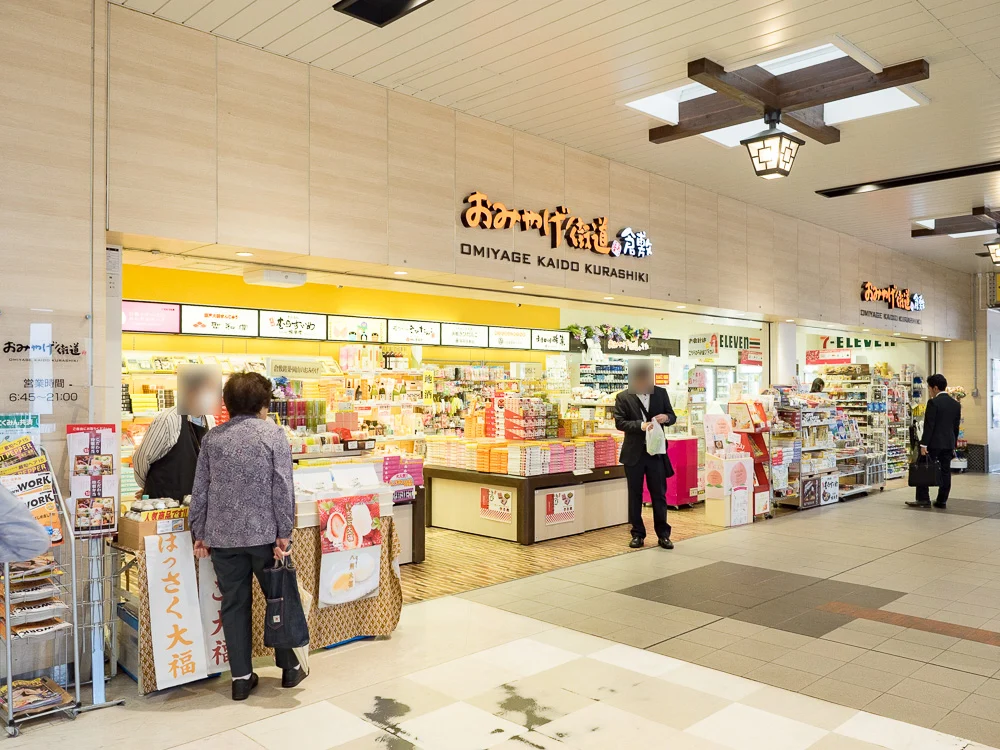
They also offer online sales.
However, please note that some products may not be available online.
Main Products and Popular Items
Prices include tax. Information as of April 2023
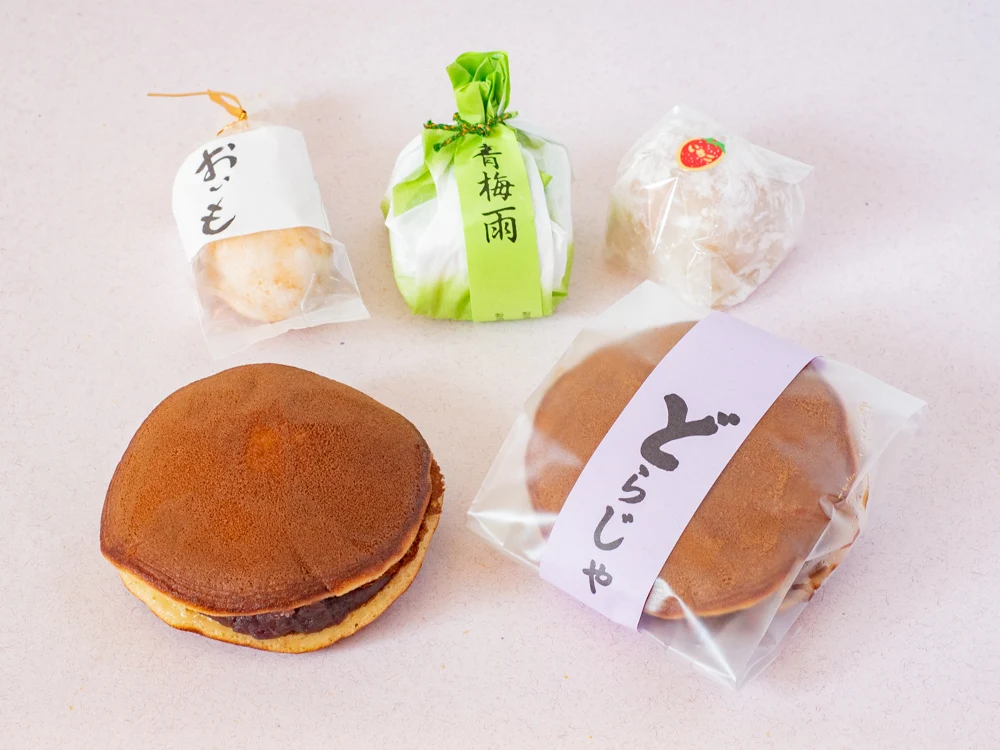
At Kashidokoro Hirai, in addition to the flagship products "Ryo-kan Temari", "Koge Man", and "An Temari", many Japanese and Western sweets are sold.
They are available for individual sale, in boxes, and as assortments.
Note that boxed items require an additional box fee.
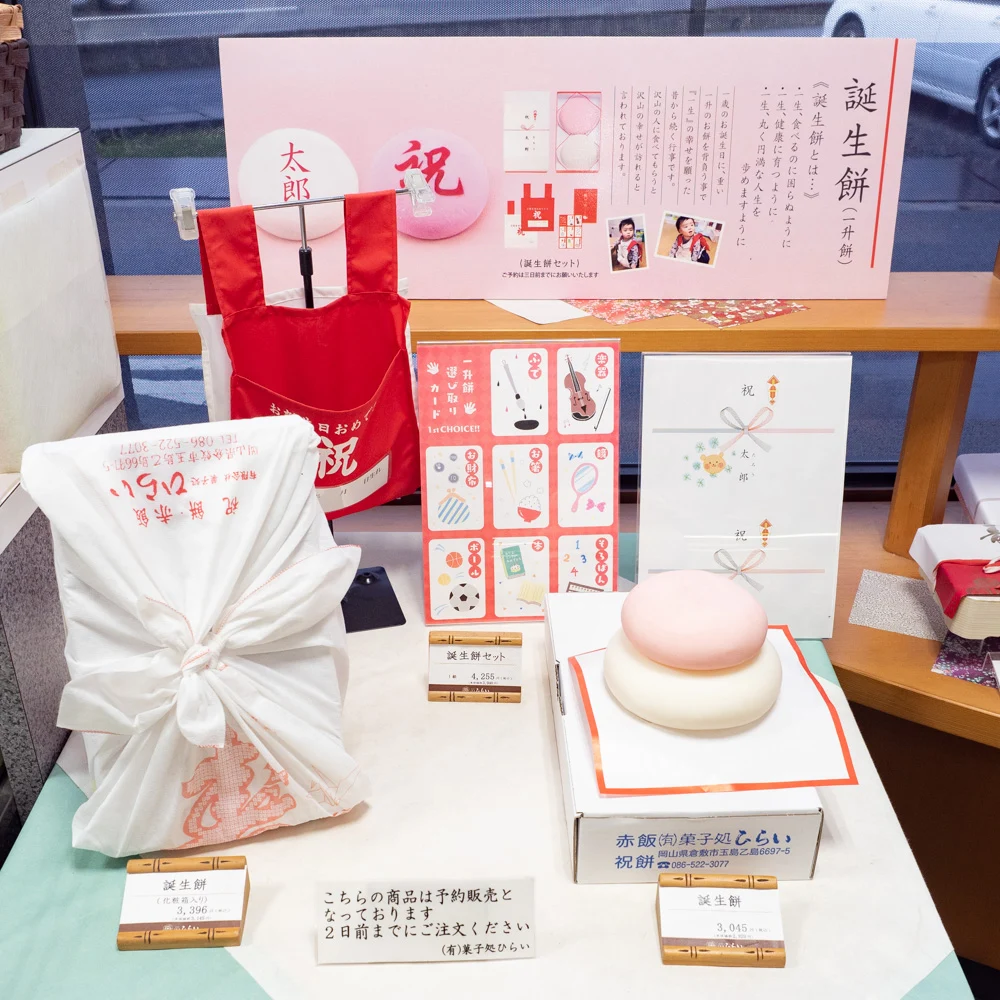
There is also a tradition of "Birthday Mochi" (Issho Mochi) for when a child turns one year old.
The boxed Birthday Mochi has been discontinued.
As of April 2023, the prices are as follows:
Birthday Mochi Set: 4,950 yen
Birthday Mochi: 3,228 yen
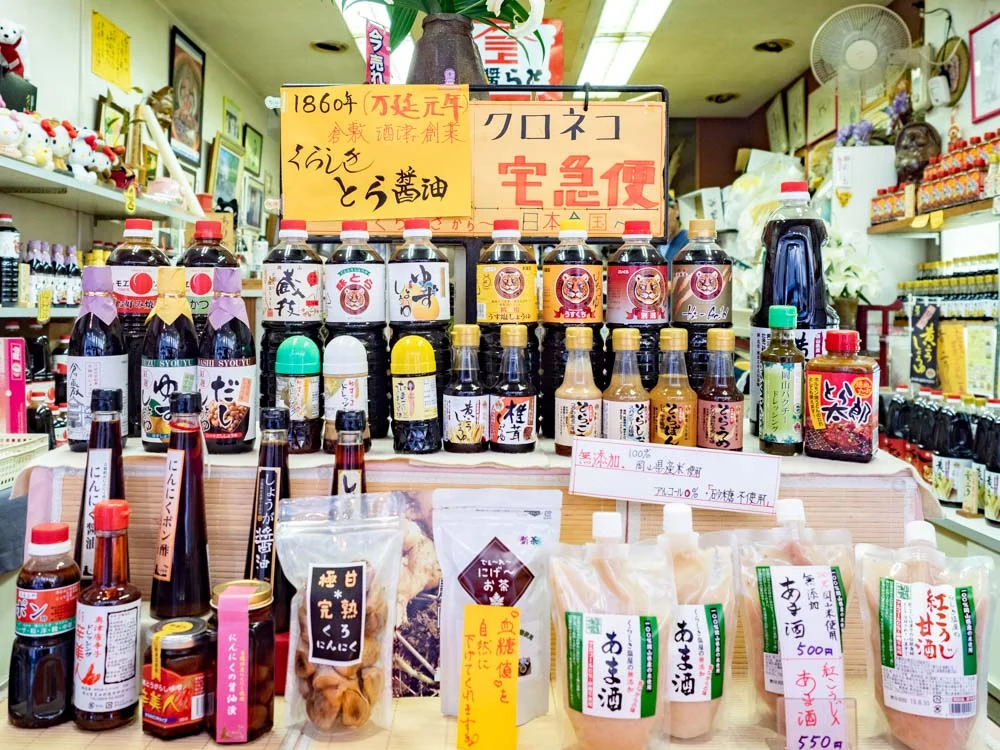
Additionally, a collaboration product with Teshimaya, a long-established store known for its sauce, has been released.
The "Tama-no-Ura Soy Sauce Pie" (124 yen each) is a soy sauce-flavored pie made using Teshimaya's soy sauce "Mi-ro".
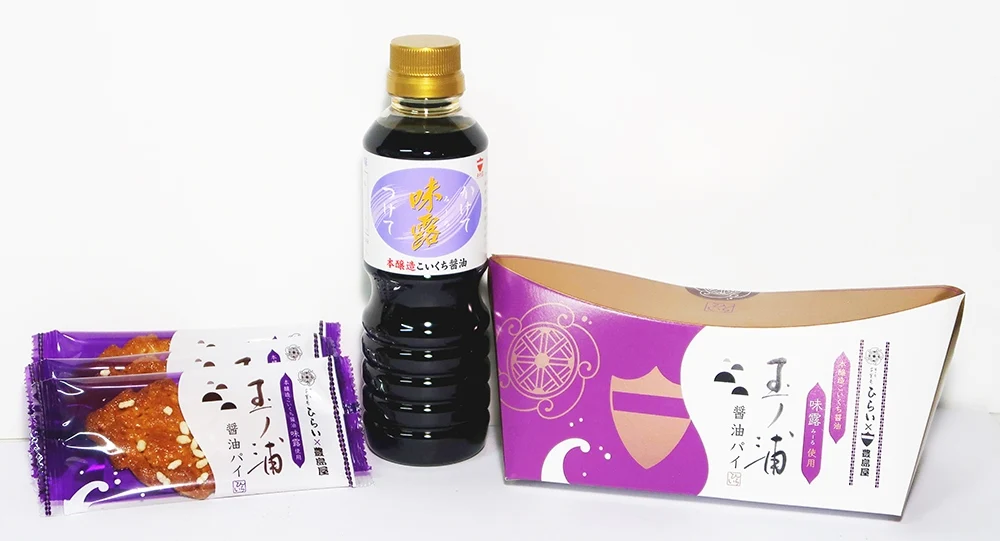
It features a light, crispy texture with a sweet buttery aroma and a refined, sweet, and savory flavor of soy sauce.
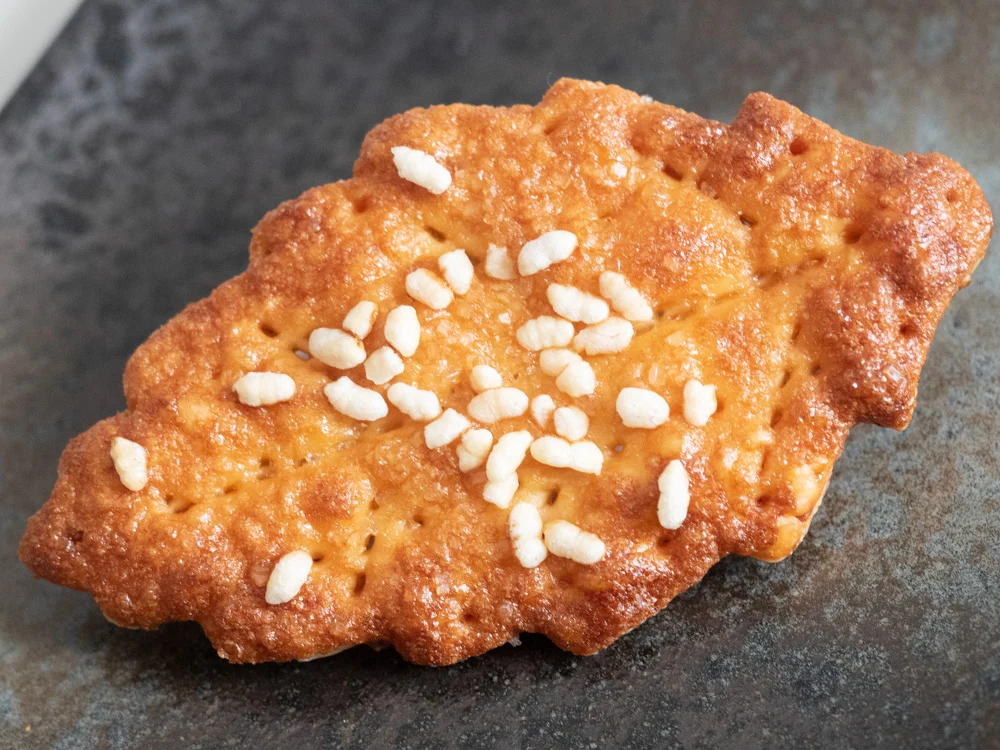
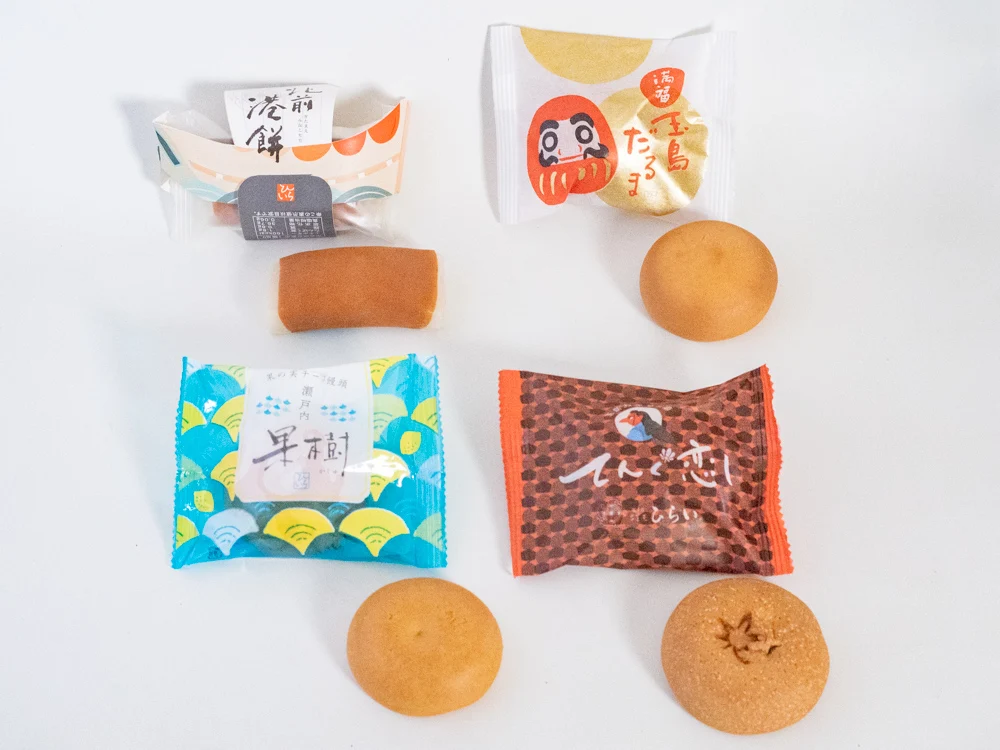
In addition, in line with the renewal of "Sunst" inside Okayama Station in 2020, four types of sweets related to Okayama were released.
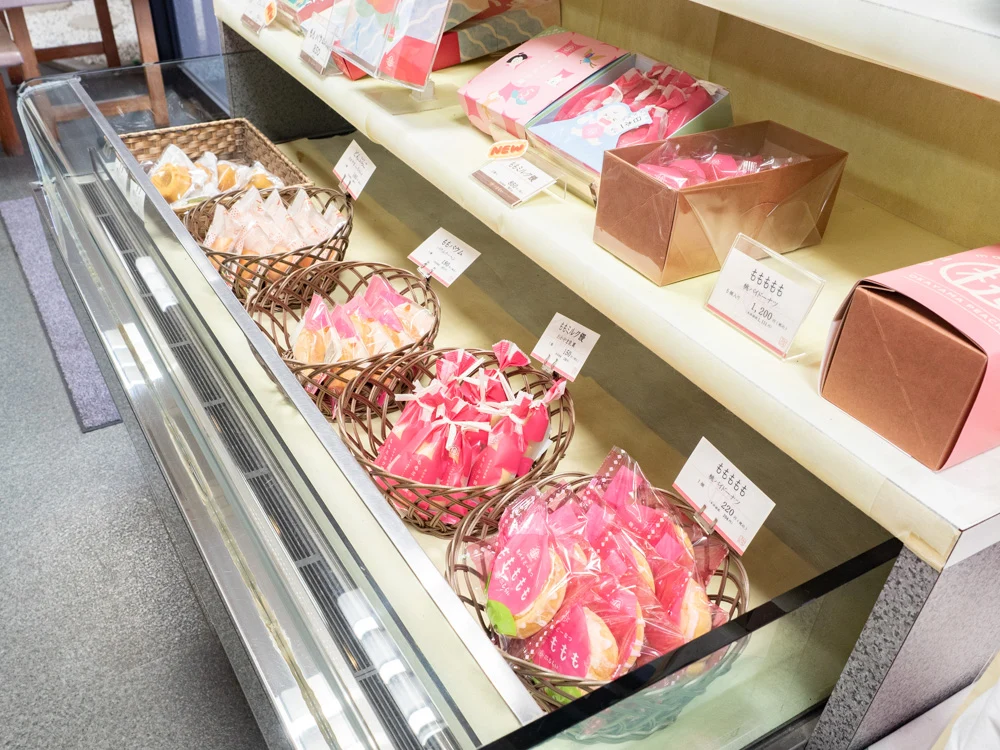
Among these, "Peach Baum" won an award at the "Setouchi Souvenir Grand Prix".
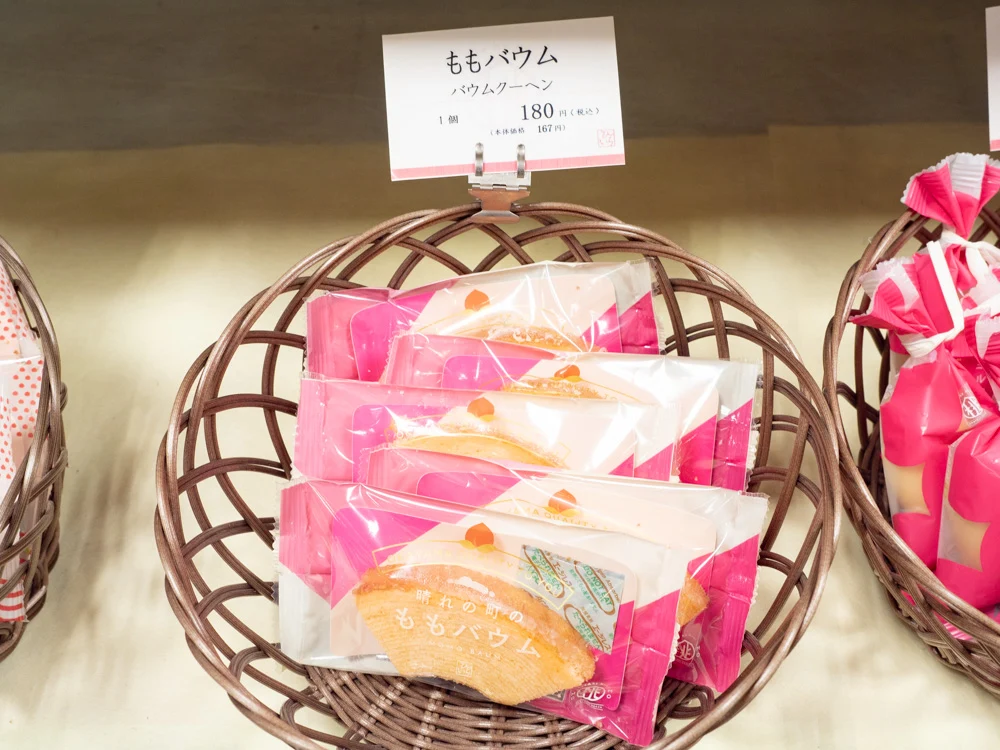
Let's introduce some representative and popular items from the many products of Kashidokoro Hirai.
"Ryo-kan Temari" is a luxurious chestnut-filled bun, perfect for gifts
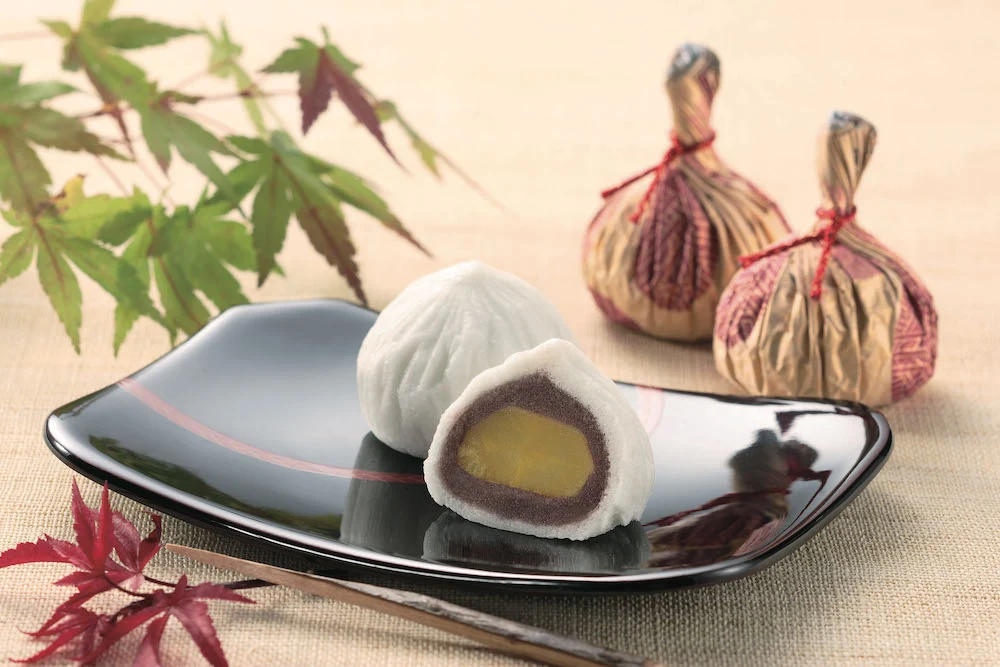
Hirai Confectionery's representative sweet, the Tamashima specialty "Ryoan Temari" (270 yen each).
Ryoan Temari is a steamed bun inspired by the story of Ryoan, who trained at Entsu-ji Temple, playing with children using hand balls (temari).
Ryoan Temari won the "Grand Prize" in the confectionery category at the 2nd Okayama Prefecture Creative Souvenir Contest held in 1994.
Furthermore, it also received the "Minister's Honor Award" at the 22nd National Confectionery Expo held the same year.
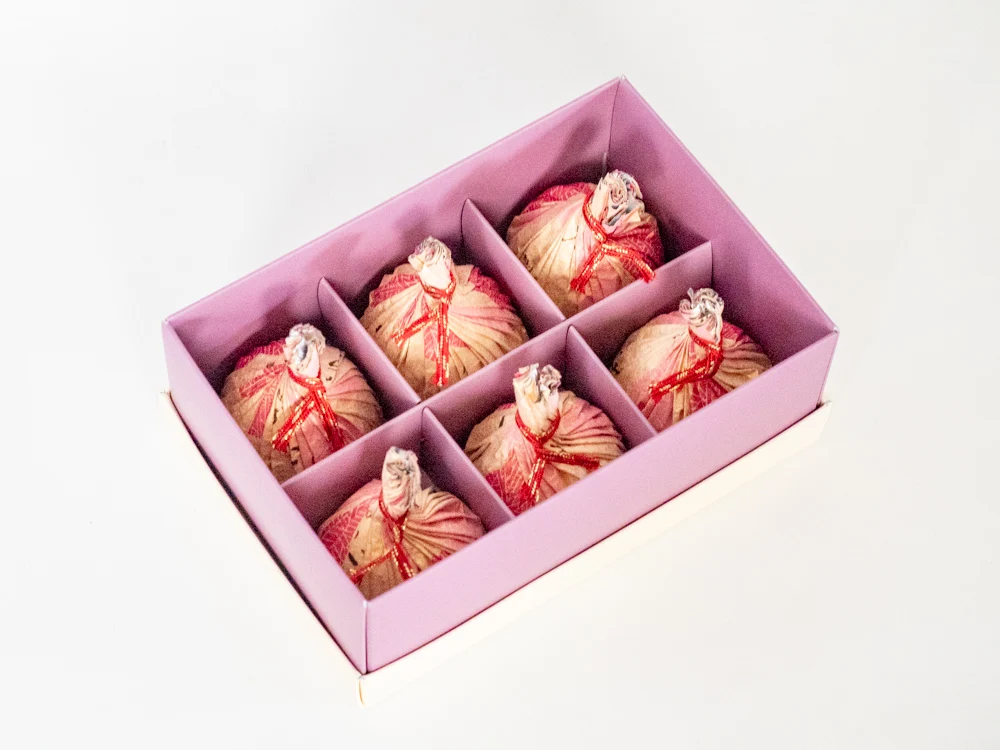
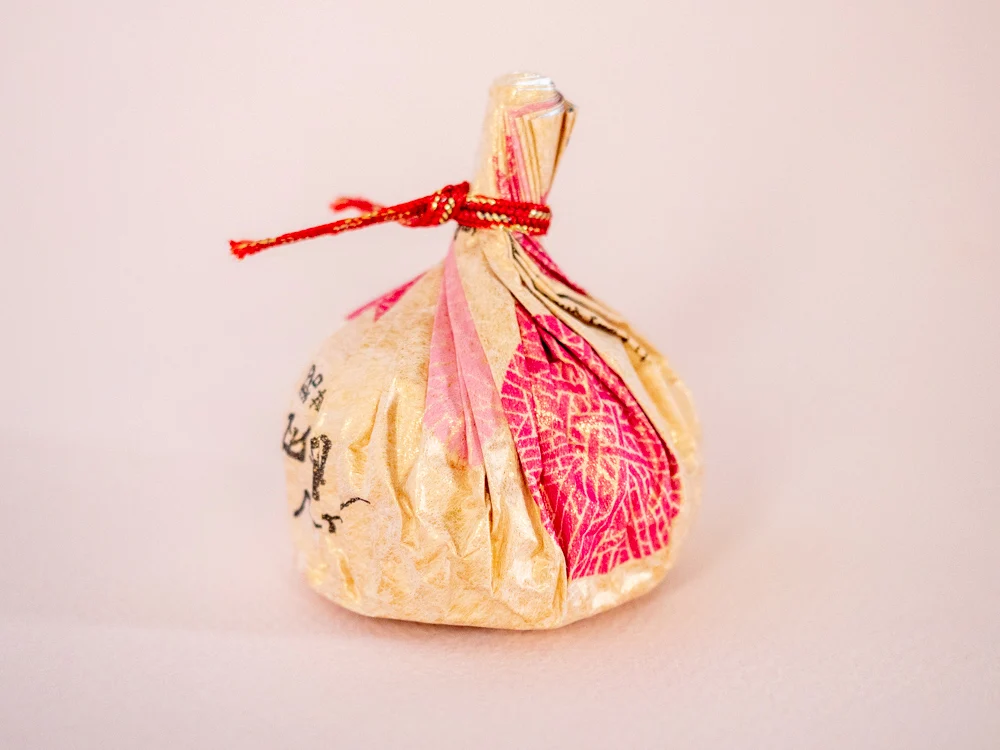
Ryoan Temari is a chestnut-filled jōyo manju (steamed bun).
Jōyo manju is a type of steamed bun made with yam (tsukuneimo) in the dough, considered a high-class category of steamed buns, often written as "jōyo manju."
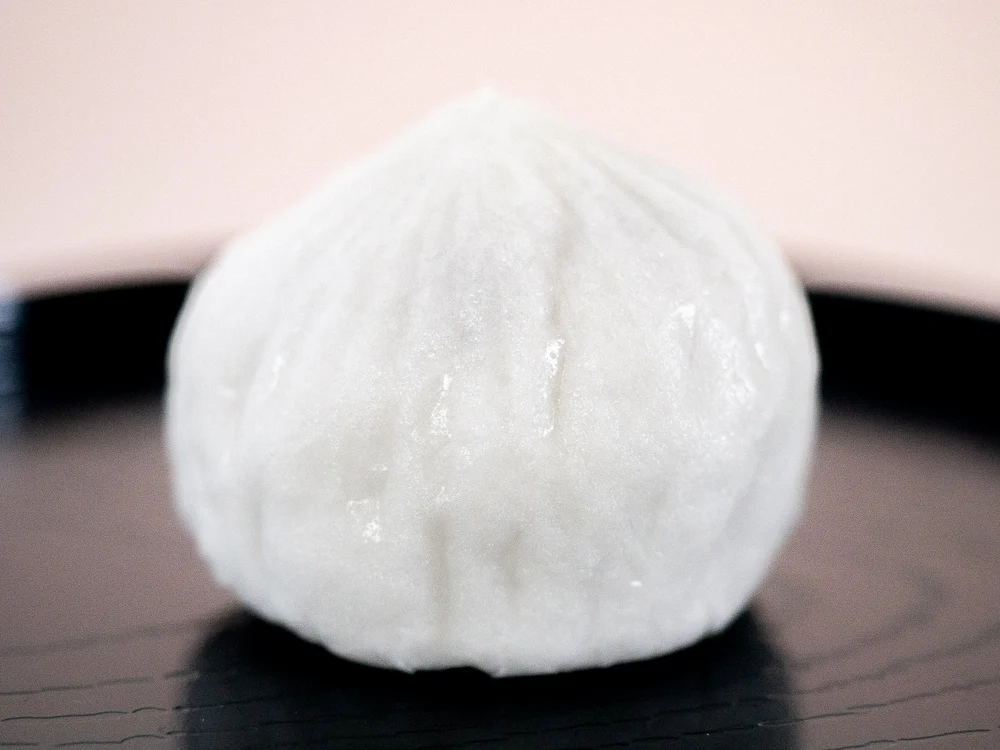
Inside the dough, there is smooth red bean paste (anko), with a whole piece of sweet chestnut wrapped inside.

The chestnut in Ryoan Temari is cooked in a method called "gokunan."
The texture is fluffy and soft!
The adzuki beans are from Hokkaido.
The know-how of making the bean paste, cultivated since the days of the mochi shop, has evolved for wagashi (Japanese sweets).
The dough has a plump texture, with the smoothness of the red bean paste and a refined, subtle sweetness.
You can enjoy the fluffy yet moist texture of the chestnut, along with its unique flavor and sweetness.
Ryoan Temari is a steamed bun that allows you to enjoy a good balance of dough, red bean paste, and chestnut.
"Koge Man" is appealing for its fragrant dough and texture, and the refined sweetness of the bean paste
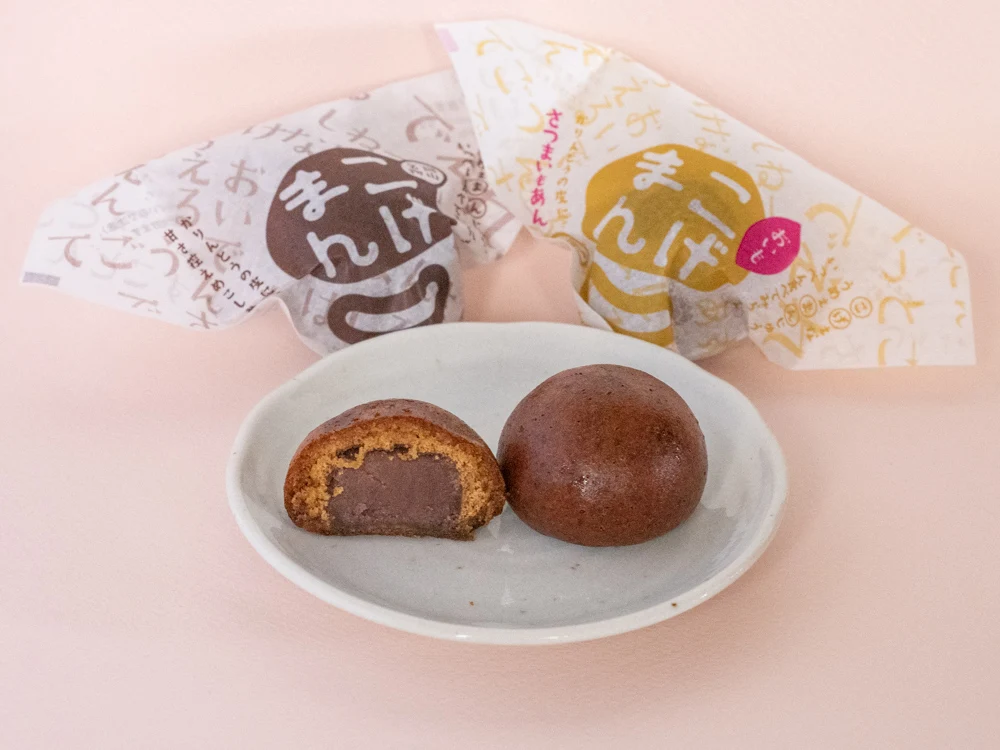
"Koge Man" (125 yen each) is a type of karinto manju.
In the early 2000s, karinto manju became popular nationwide.
At that time, Hirai Confectionery also started manufacturing and selling karinto manju.
Hirai Confectionery's karinto manju was said to be very delicious and well-received.
Since they had created such a delicious steamed bun, they wanted to make it a product that people would enjoy even after the trend ended, and thus the name "Koge Man" was born.
While thinking of a name rooted in the local area, the previous generation, after eating the karinto manju, said in Okayama dialect, "Koge na mitame no manju ga umeen ka to omountara, angee umeen (I thought this manju with such an appearance wouldn't be good, but it's surprisingly delicious)."
Taking that as a hint, they decided on the name "Koge Man," which is related to Okayama dialect.
"Koge na ume manju, ippen tabete mirare (This delicious manju, you should try it once)" was shortened to "Koge Man."
Additionally, it also plays on the meaning of "koge" (burnt) brown manju.
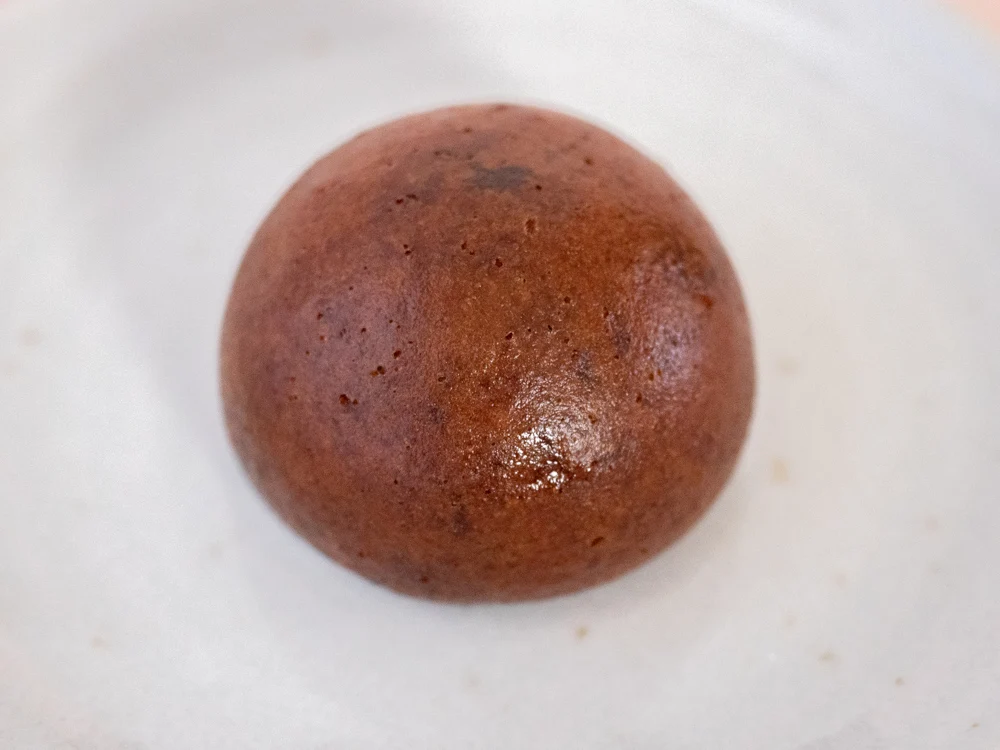
The surface of the dough is a dark brown color, shiny as the name "Koge Man" suggests.
The dough is mixed with brown sugar, and inside is red bean paste.
It is then deep-fried in rice oil until crispy.
We are particular about the ingredients!
The adzuki beans are from Hokkaido, the brown sugar is from Okinawa, and the flour is from Okayama!
The surface is firm, and when you eat it, it is crispy.
Meanwhile, the inside is fluffy.
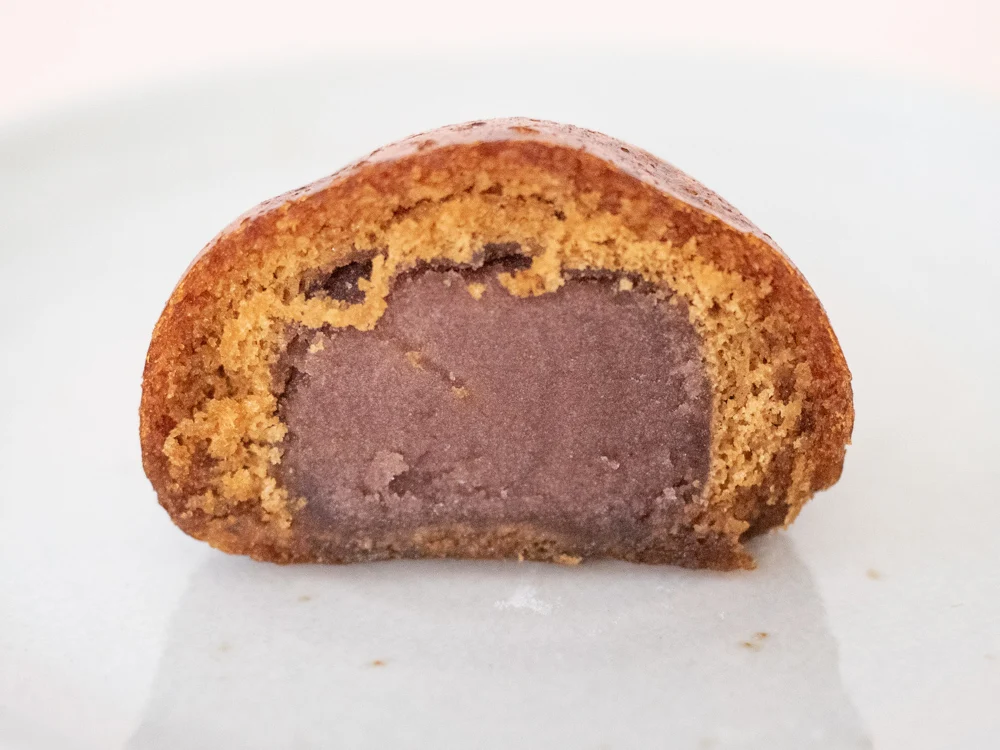
The red bean paste is very fine and has a smooth texture.
It has a refined and subtle sweetness, leaving a refreshing aftertaste.
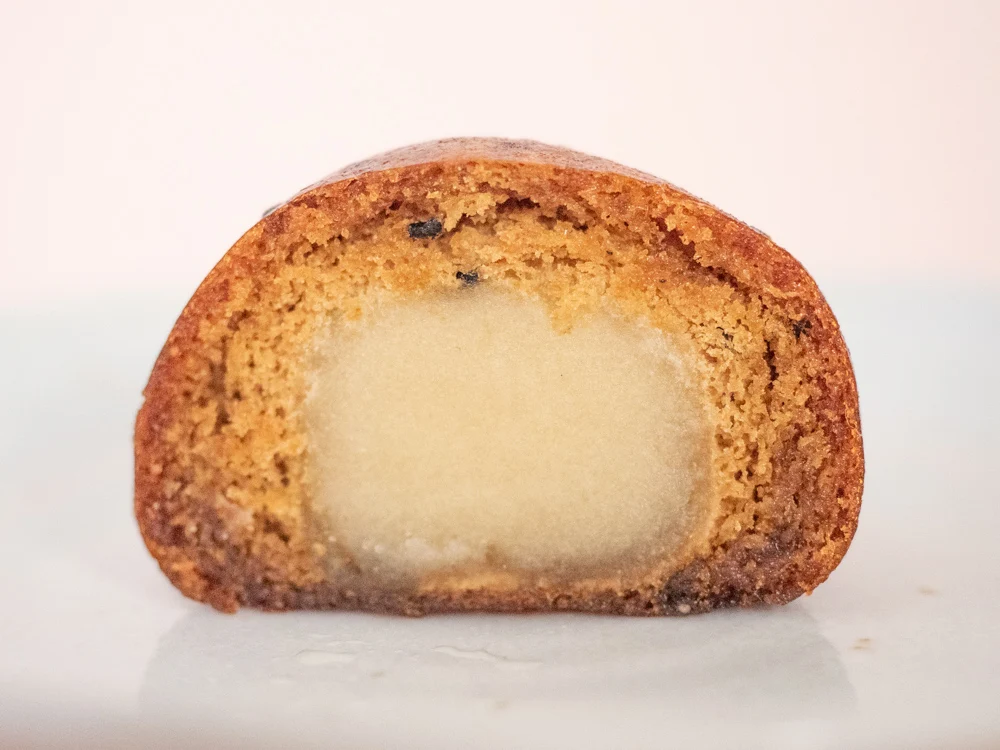
It has a slightly sticky texture, reminiscent of sweet potatoes.
It has the sweetness and flavor unique to sweet potatoes, but the sweetness is not overpowering, making it easy to eat.
The sweet potatoes used are domestically produced.
It is delicious even at room temperature, but Hirai Confectionery recommends eating it baked in an oven toaster for 2-3 minutes.
When you actually try it, the dough becomes crispy like it was just fried, and the inside is fluffy, offering a different deliciousness compared to room temperature.
Eating it partially thawed after freezing is also recommended!
Partially thawed, it has a unique taste like an ice treat.
"An Temari" features a chewy castella dough with four types of filling
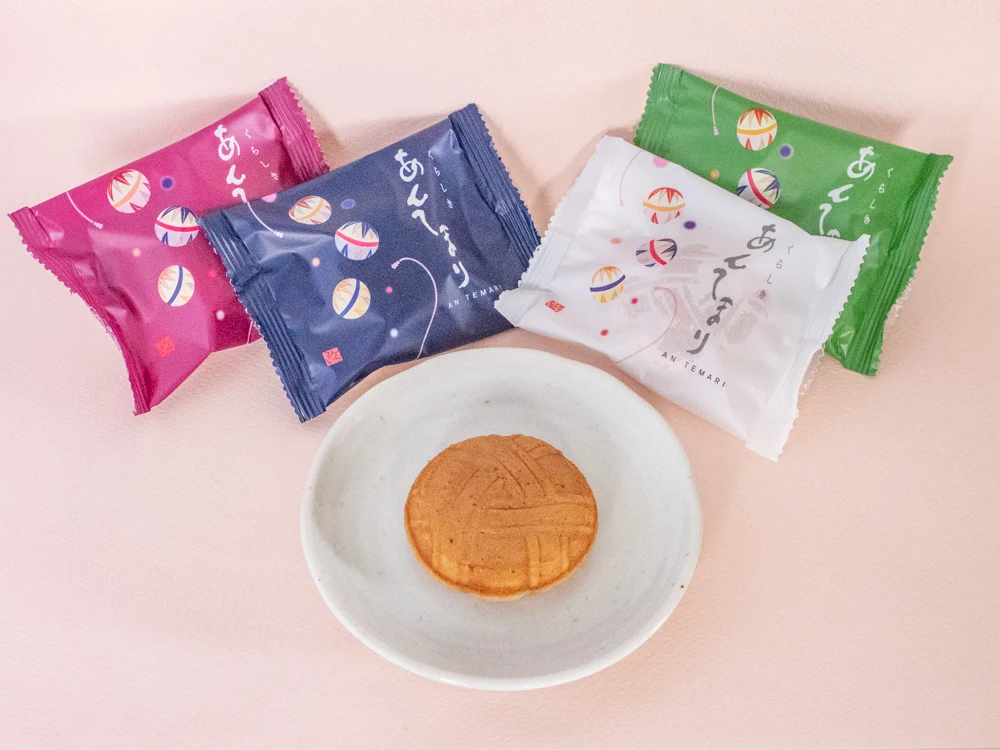
"An Temari" (111 yen each) is a new sensation in steamed buns.
The dough is about the size of the top of a 350-milliliter can, with a thickness of about 2 centimeters.
An Temari was inspired by "Nama Momiji Manju" and arranged to be something unique to Tamashima.
Since Tamashima is known for Ryoan's hand balls, it became a hand ball-shaped steamed bun.
An Temari is also particular about its ingredients.
The wheat is from Okayama, the eggs are from Bisei-cho, and the adzuki beans are from Hokkaido!
An Temari has a unique dough.
Although it is castella dough, it has a chewy texture like that of dumplings.
It has a very mysterious taste.
Inside, there is plenty of filling.
There are a total of four types of filling.
- Smooth red bean paste
- Sweet potato paste
- Blueberry paste
- Matcha paste
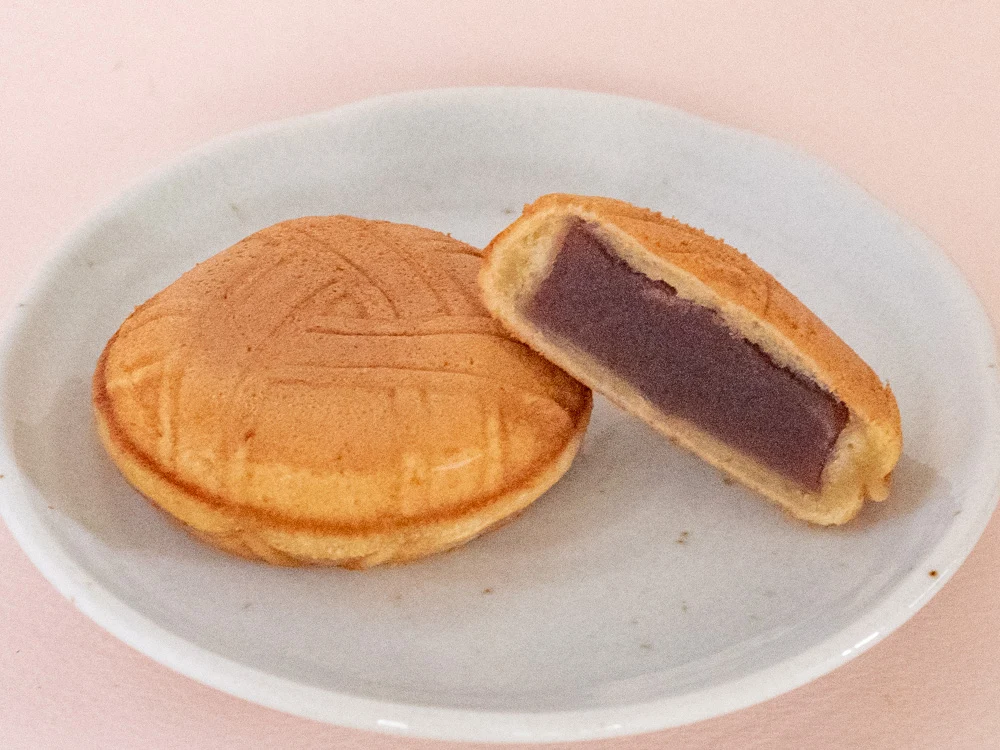
The smooth red bean paste has a fine and silky texture.
It has a refined and subtle sweetness that is not too sweet.
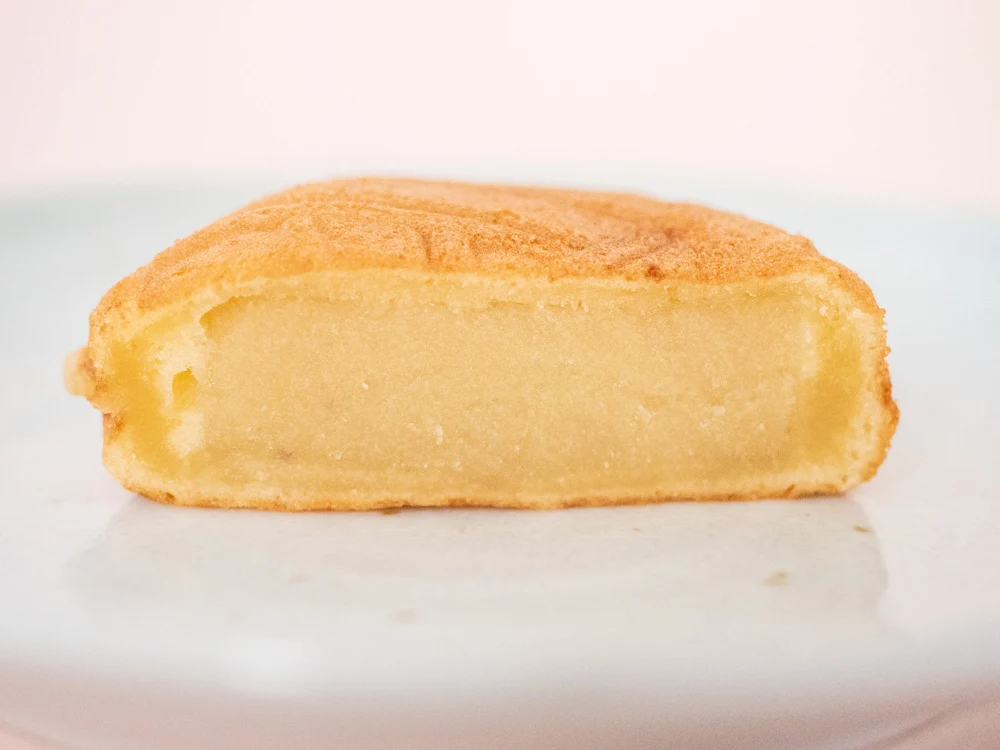
It has a slightly sticky texture.
It has a sweetness and flavor reminiscent of baked sweet potatoes, but the sweetness is not overpowering, leaving a refreshing aftertaste.
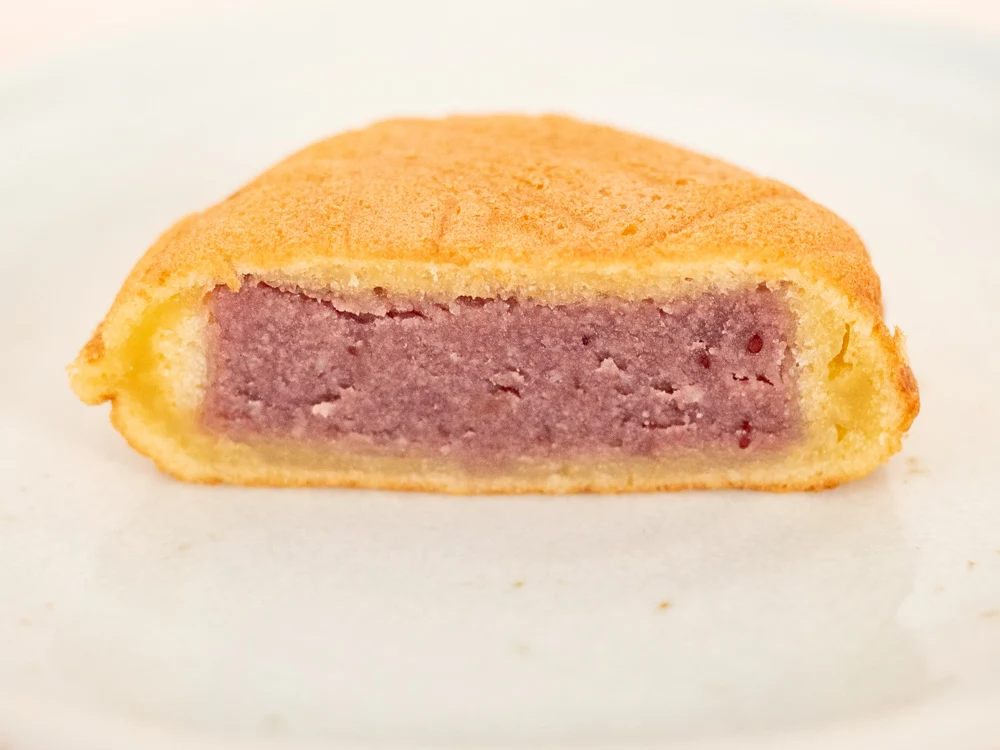
Using blueberries is a rare choice, but when searching for fruits from Okayama Prefecture that would match An Temari, they arrived at Okayama blueberries.
The paste is a light purple color, and although it has the texture of red bean paste, it has a refreshing sweet and sour flavor, reminiscent of eating blueberries, making it fruity.
It has a mysterious taste.
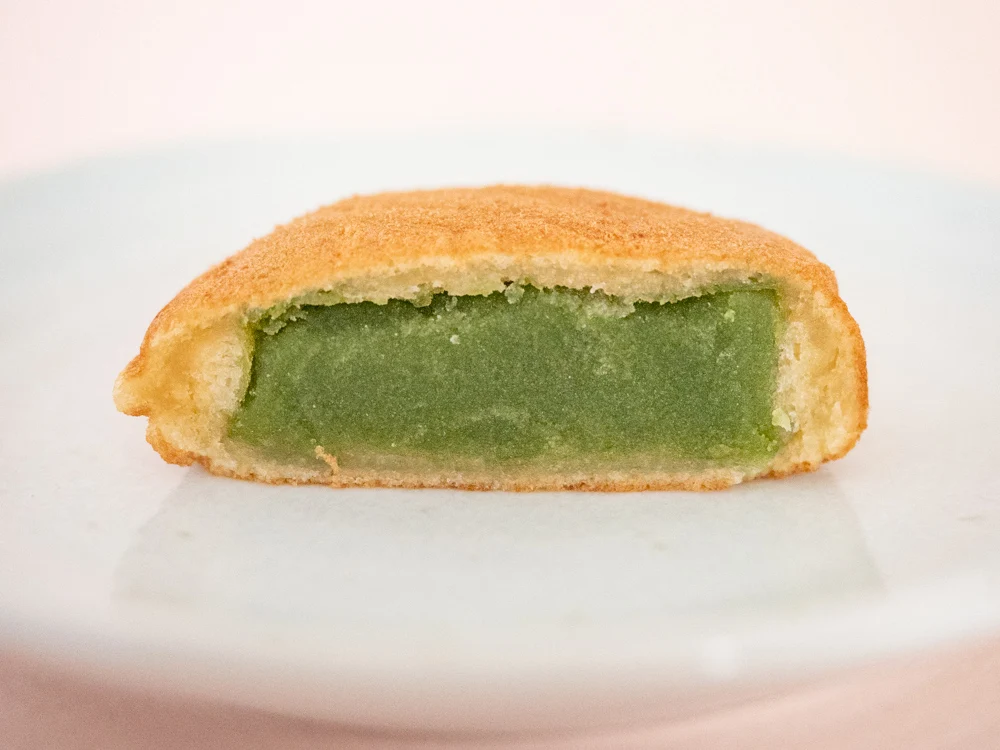
The deep green matcha paste has a smooth texture similar to that of red bean paste.
Within its refined sweetness, the flavor and slight bitterness of matcha spread out.
"Kurashiki Koban" is a waffle with proud dough and plenty of cream
Hirai Confectionery also makes Western sweets.
Among the Western sweets, a recommendation is "Kurashiki Koban" (181 yen each).
Kurashiki Koban is a waffle.
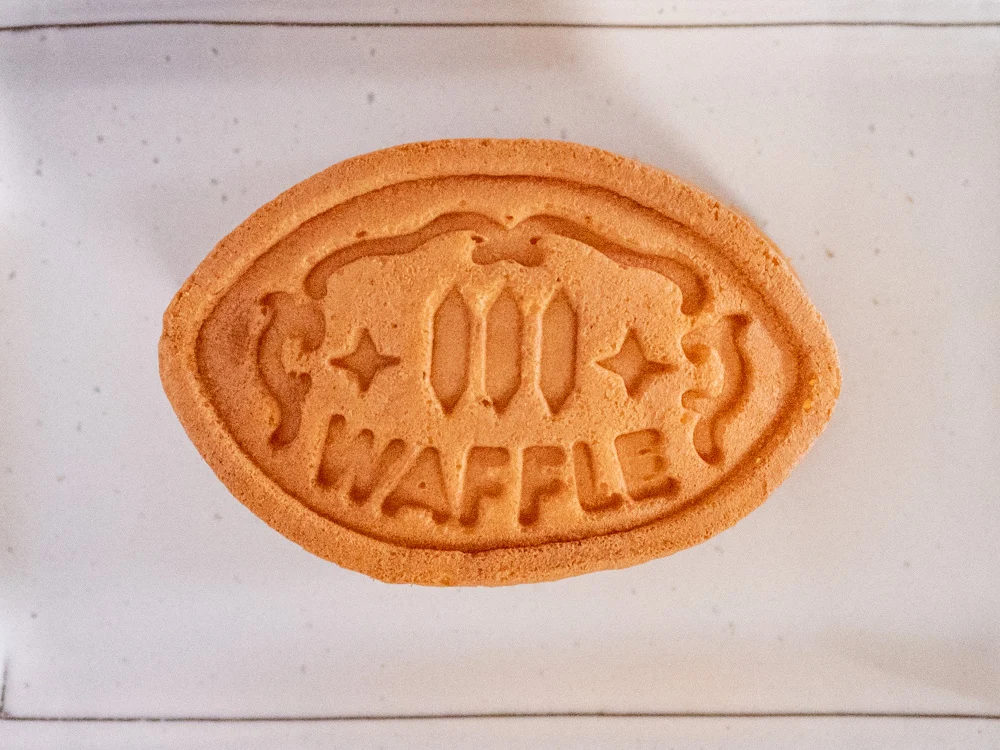
When you think of Kurashiki, you think of the Bikan Historical Area.
The Bikan Historical Area is inspired by the koban, as it was once home to many wealthy merchants.
Kurashiki koban is proud of its fluffy texture!
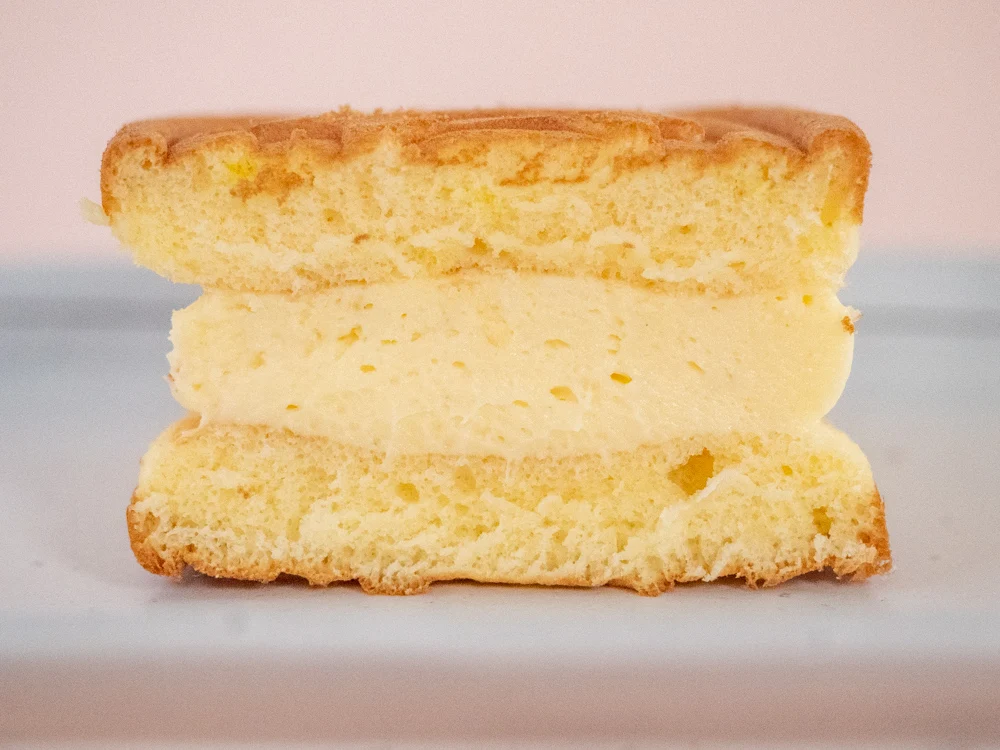
Kurashiki koban comes in five types of cream.
- Custard
- Strawberry
- Matcha
- Chocolate
- Coffee
Kurashiki koban is designed to be enjoyed by small children and people of all ages.
Since the first year of the Taisho era, Hirai has been making rice cakes and sweets, becoming rooted in the local community.
Hirai Confectionery Co., Ltd. CEO Hirai Tsuyoshi was interviewed.
Data of Hirai Confectionery (Main Store)
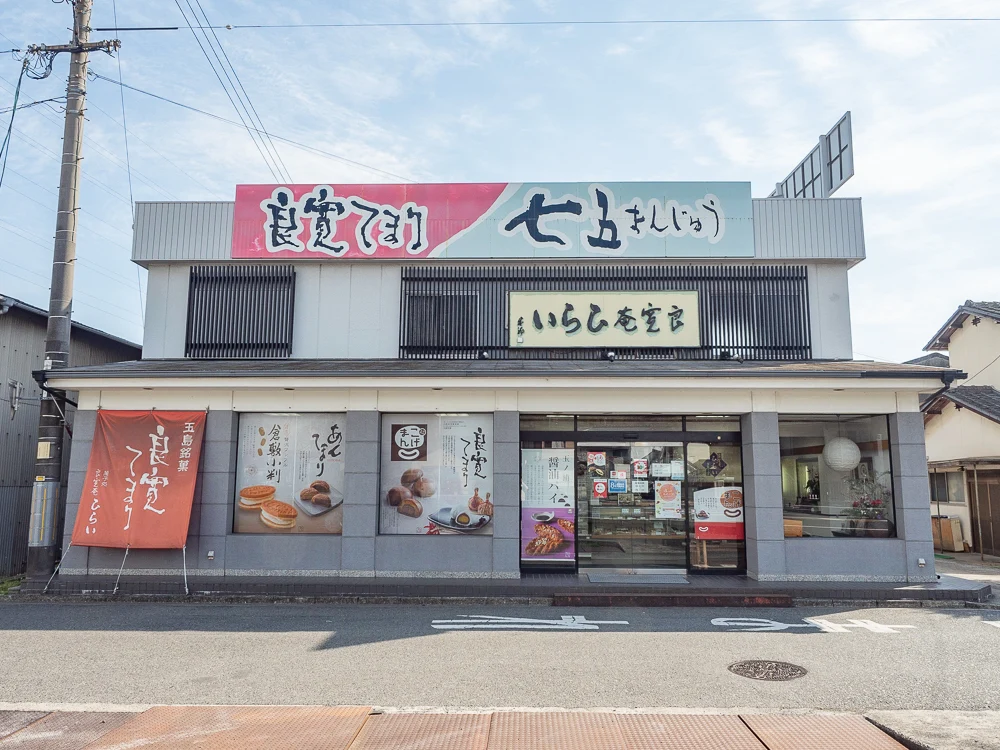
| Name | Hirai Confectionery (Main Store) |
|---|---|
| Address | 6697-5 Otsushima, Tamashima, Kurashiki City, Okayama Prefecture |
| Contact | 086-522-3077 |
| Parking | Available About 8 cars |
| Business Hours | 8:30 AM - 6:30 PM |
| Closed | None Closed only on New Year's Day |
| Payment Methods |
*PiTaPa transportation electronic money is not accepted |
| Website | Kurashiki's long-established Japanese sweets shop "Hirai Confectionery" for gifts |







Ryoan Temari is a refined and high-quality product.
It is recommended as a gift!