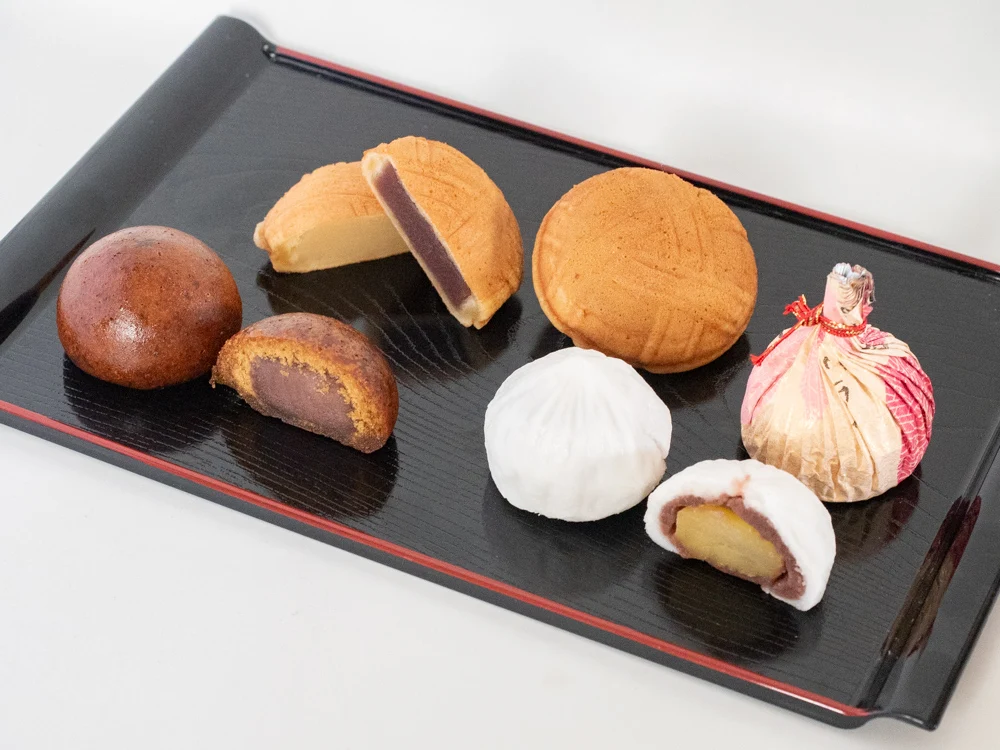
Interview with Hirai Tsuyoshi, head of Kashidokoro Hirai

Kashidokoro Hirai has continued making mochi and sweets since 1912 and is deeply rooted in the local community.
We interviewed Hirai Tsuyoshi, president and CEO of Yugen Gaisha Kashidokoro Hirai, about the shop’s history and the stories behind the development of its products.
This article covers the interview conducted during our initial visit in May 2021.
Founded in 1912, it began as a mochi shop

I’d like to hear about the company’s origins and history.
Hirai (surname only hereafter)
Our company’s history goes back to 1912.
At first, it was a shop that made and sold mochi.
It was called Hirai Mochi Shoten.
It was in a different location from today, right beside Haguro Shrine in central Tamashima.
Later, due to a road construction project, the shop was relocated to the entrance of Tomimichi Shopping Street, also in central Tamashima.
Eventually, we began supplying products to supermarkets and other stores, and moved again to our current location to open a larger shop.
That was around the mid-1970s.
The beloved local sweet Ryokan Temari was born from customer feedback

When did you start making Japanese sweets?
Hirai
It was in the early 1990s. The impetus was a customer saying, “It would be nice to have Japanese sweets that make good gifts, in addition to mochi.”
So my predecessor (now the chairman) decided to try making Japanese sweets.
But making mochi and making Japanese sweets such as manju require different know-how and skills.
We use bean paste in mochi, too.
But even when it’s the same bean paste, there are many differences between mochi and Japanese sweets.
So we brought a Japanese-sweets specialist into the company to teach us.
Ryokan Temari was created using the Japanese-sweets-making skills we had newly acquired.
We decided that since we were making a product, it should be rooted in the local community and become a signature sweet of Tamashima.
After all, it had originally come about in response to customer feedback.
When you think of Tamashima, you naturally think of Ryokan.
There is a story that Ryokan often played ball with children.
We created Ryokan Temari in reference to that story.
Since the idea came from customers asking for something “to take as a gift,” we wanted to make a Japanese sweet that would be perfect for gifting.
So we made Ryokan Temari using Joyo Manju, a premium type of manju.
When we launched Ryokan Temari, it won the Grand Prize in the confectionery category of the 1994 Okayama Prefecture Original Souvenir Contest!
It also won the Minister’s Award of Excellence at the National Confectionery Exposition.
Winning an award for Ryokan Temari led to a full-fledged focus on Japanese sweets

Was Ryokan Temari what prompted you to start focusing on Japanese sweets?
Hirai
That’s right.
After Ryokan Temari won an award, my predecessor decided to focus more on Japanese sweets.
The same year it won the award, we changed the company name from Hirai Mochi Shoten to “Kashidokoro Hirai.”
We also redesigned the packaging for Ryokan Temari in-house, giving it a more refined, premium look inspired by a temari ball.
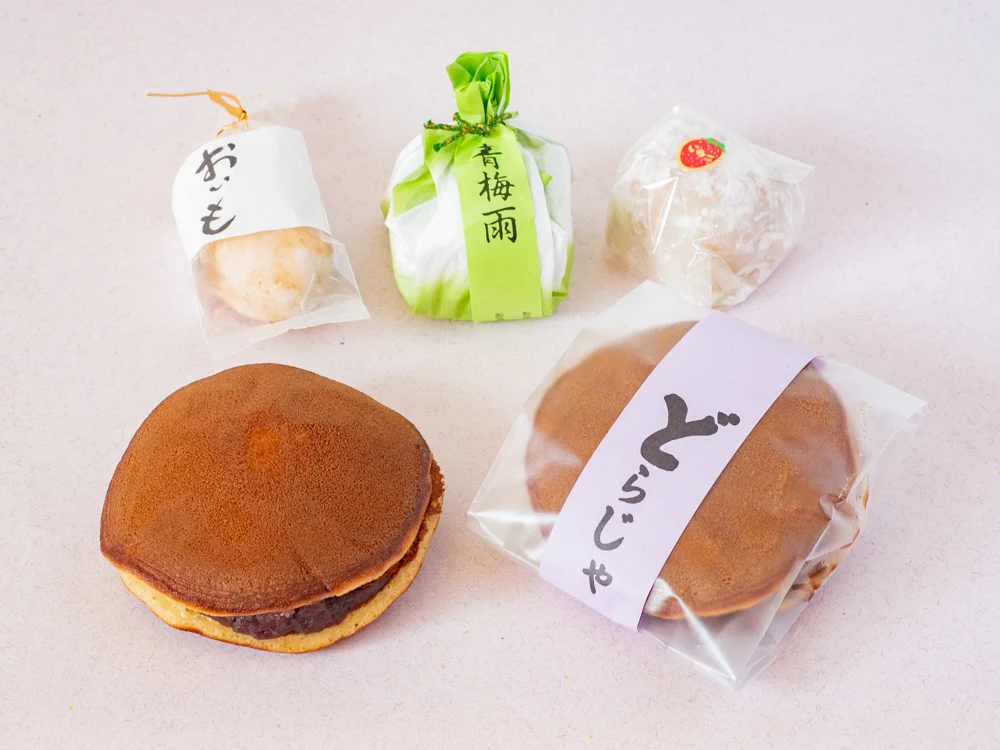
We made a variety of Japanese sweets inspired by our local area of Tamashima, as well as Kurashiki and Okayama Prefecture.
We also make Western-style sweets, alongside Japanese sweets and mochi.
In the course of this, popular products such as Kogeman and An-temari were born.
What kinds of customers do you get?

Hirai
Most of our customers are local.
Many people buy our sweets as small gifts, but plenty of customers also come in to buy them to eat at home.
Since the main store is close to the Tamashima area of the Mizushima industrial zone, many people visiting on business trips come to buy souvenirs.
Conversely, many people who work in the industrial zone come to buy gifts to take with them when they travel elsewhere on business.
Entering the world of Japanese sweets after graduating from school

How did you, as the head of Hirai, come to enter the world of Japanese sweets?
Hirai
My predecessor was my father.
So, from elementary school onward, I helped make mochi during busy periods.
Given that background, taking over the company felt like a natural progression, and I had no particular objections.
The company started making Japanese sweets when I was in high school.
So after graduating from high school, I went to a school specializing in Japanese sweets.
After graduating from the Japanese-sweets school, I worked for about two years as an apprentice at a shop in Akashi, Hyogo Prefecture, and then joined Hirai.
By the way, my younger brother runs a Western-style confectionery shop called “Marie Gateau” just south of the main store.
Future plans

Could you tell us about your future plans and anything you’d like to try?
Hirai
One thing I’d like to do is open a few more stores, mainly within Okayama Prefecture.
I might also like to renovate the main store.
And then there’s developing new products.
I’d like to try making fruit daifuku.
It would also be interesting to create something like an orchard and use the fruit grown there in our sweets.
Take home locally rooted sweets from Kashidokoro Hirai

Kashidokoro Hirai began making mochi in Tamashima in 1912 and today offers everything from mochi and Japanese sweets to Western-style sweets.
It has been loved in Tamashima for more than 100 years.
Every product reflects a love for the local area, making it hard to resist picking one up.
Kashidokoro Hirai’s sweets are highly recommended as souvenirs from a sightseeing trip or business trip, or as a treat at home.
Kashidokoro Hirai (main store) details
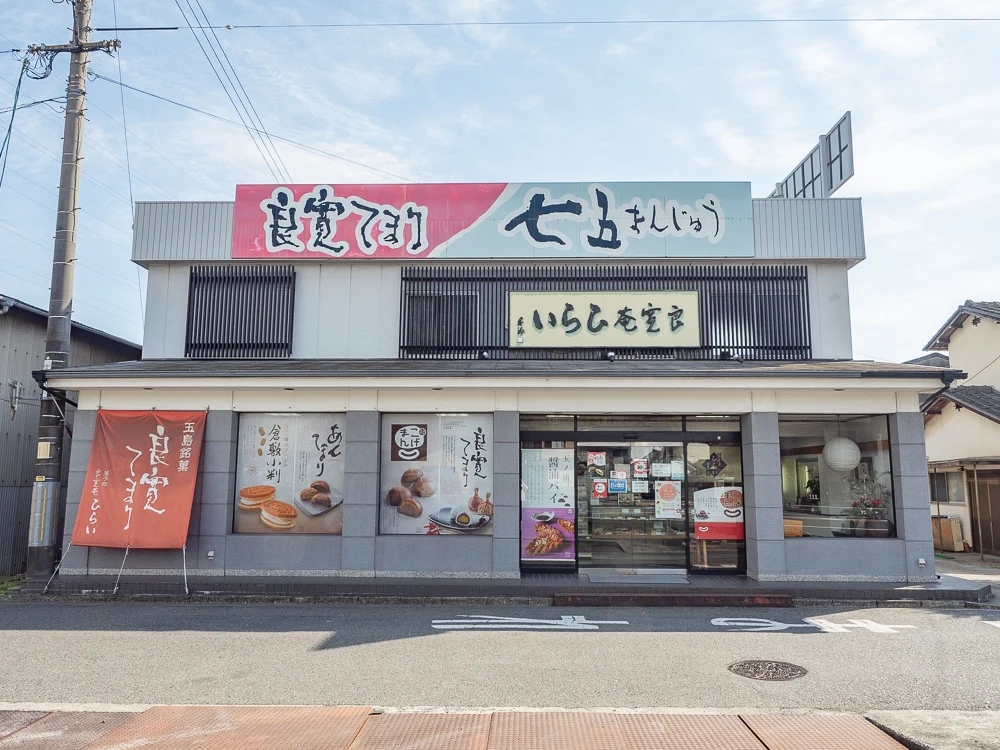
| Name | Kashidokoro Hirai (main store) |
|---|---|
| Address | 6697-5 Otoshima, Tamashima, Kurashiki City, Okayama Prefecture |
| Contact | 086-522-3077 |
| Parking | Available About 8 spaces |
| Hours | 8:30 a.m.–6:30 p.m. |
| Closed | Open daily Closed only on New Year’s Day |
| Payment methods |
※PiTaPa, a transit e-money card, is not accepted |
| Website | “Kashidokoro Hirai,” a long-established Japanese confectionery shop in Okayama and Kurashiki—gifts |

What would you like to know about Kurashiki?
Enter a word to search articles on this site