

What kind of sauce do you have in your kitchen?
The sauce that has been in my home since I was a child is “Tate Sauce.”
As its name suggests, it is a sauce with a shield mark.
I also clearly remember the staff at a nearby shop wearing aprons with the Tate Sauce mark.
So, when I think of sauce, I think of Tate Sauce.
Tate Sauce is made by a company called “Teshimaya,” located in Tamashima, in the western part of Kurashiki City.
Teshimaya is a long-established company founded in the mid-Edo period, and it began making sauce relatively early in the Chugoku region.
In its home area around Okayama Prefecture, Tate Sauce is a familiar brand.
It is loved not only in households but also by many restaurants.
Among fans of spicy food and sauce, the company is famous nationwide as the maker of “Super Extra-Hot Sauce.”
It has been featured in many mass media outlets and attracted attention.
Here we introduce Teshimaya, the company behind Tate Sauce and one of Kurashiki City’s most long-established businesses.
The information presented was current when this article was published in October 2024. Please note that it may differ from current information.
Teshimaya is a long-established sauce and seasoning maker known for Tate Sauce

Teshimaya is located in Tamashima, in the western part of Kurashiki City.
It is in Tamashima Chuo-cho, the central urban area of Tamashima.
Teshimaya has a long history—an astonishing approximately 300 years since its founding!
Its main business is making various sauces under the Tate Sauce brand, as well as seasonings and processed foods such as soup bases, sauces, soy sauce, and vinegar.
It makes products for both commercial and household use, with about 65% for commercial use and about 35% for household use.
As of 2024, Yutaka Ono serves as its representative director.
Founded in the mid-Edo period; its name comes from the founding family’s ancestral home
Teshimaya’s history goes back to the mid-Edo period.
In 1720, it was founded as a wholesaler dealing in cotton, marine products, and other goods.

The present-day central area of Tamashima was created by reclaiming land from the sea to build a port for the Bitchu-Matsuyama Domain.
Teshimaya began doing business in Tamashima, a port town that was a major logistics hub.
It was founded at what is now Toori-machi Shopping Street.
The trade name Teshimaya comes from the fact that the founding Ono family moved here from Toshima District in Musashi Province.
Toshima District covered an area from central to northern Tokyo’s 23 special wards today.
Although Toshima in Musashi and Tokyo is read “Toshima,” Teshimaya is read “Teshimaya.”
Began making sauce in 1933
Founded as a wholesaler dealing in cotton, marine products, and other goods, Teshimaya eventually began brewing soy sauce as well.
In 1890, it changed its business to specialize in soy sauce brewing.
In 1914, it also began brewing vinegar.

In 1930, it built a vinegar-brewing factory at the site where Teshimaya is located today.
Then, it began making sauce in 1933.
Then, in 1948, “Teshimaya Co., Ltd.” was established.
The Tate Sauce brand name comes from a poem by a late-Edo-period scholar of Japanese classics
▼Teshimaya is known for Tate Sauce, with its shield mark.

The Tate Sauce brand has been used since the company began making sauce in 1933.
The name “Tate” and the shield mark come from the following poem by Shigetane Suzuki, a scholar of Japanese classics active at the end of the Edo period.
I shall die as the emperor’s shield; my heart is always filled with joy.
The name and mark “Tate” embody the wish to “protect our tradition and flavor with strength and steadfastness, like a shield.”
Some products, such as vinegar and soy sauce, also use the “Yamate” brand.
This combines Teshimaya’s initial, “te,” with “yama” (mountain), chosen as a lucky symbol.
Teshimaya’s building has a historic atmosphere
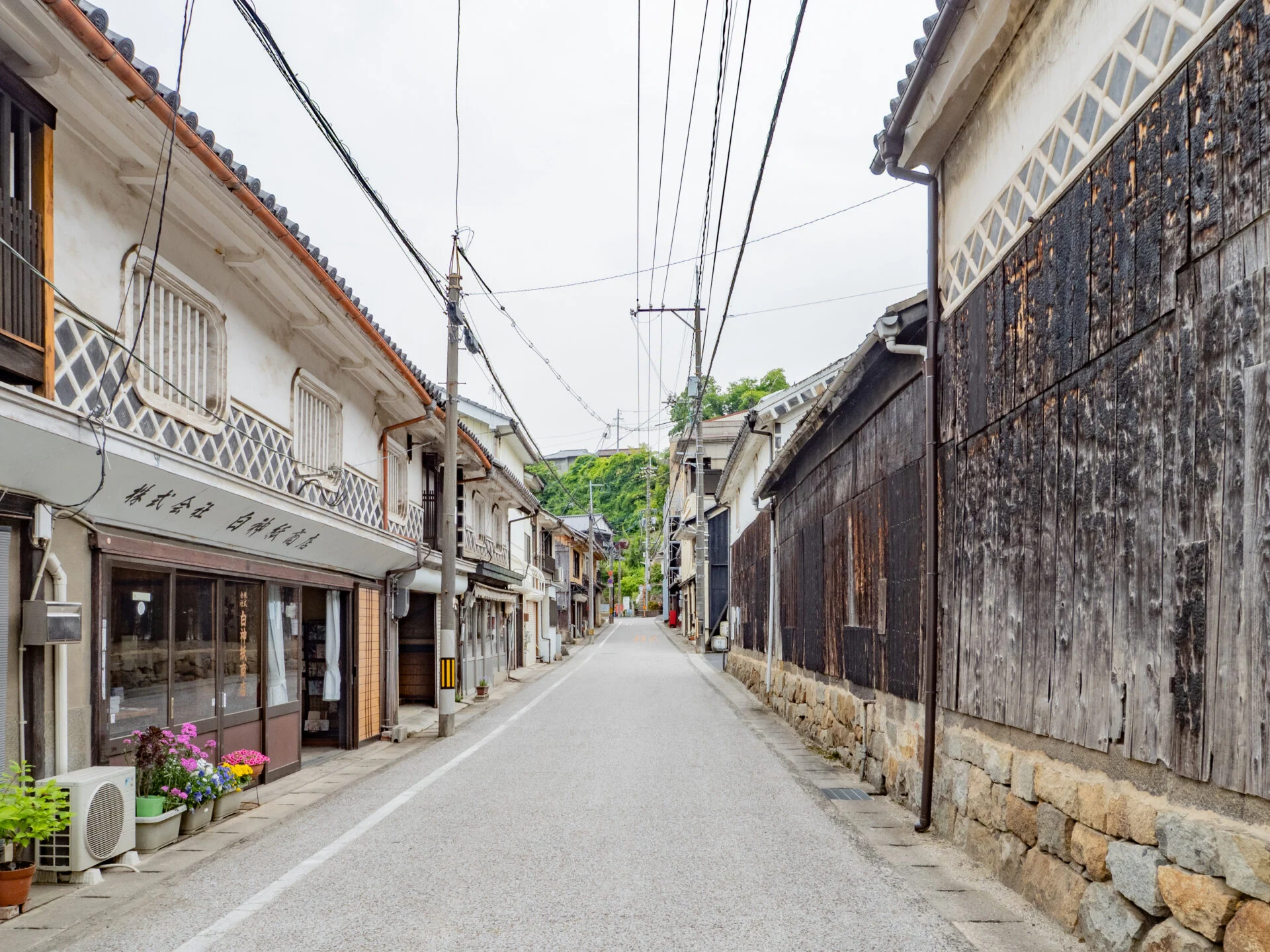
Much of central Tamashima has old streetscapes that retain the atmosphere of the mid-Showa period.
As a result, it has served as a filming location for movies such as Always: Sunset on Third Street.
▼Teshimaya’s building also has a historic feel.

Teshimaya’s building dates from when it began making sauce in 1933.
I felt that it was appealing that not only the flavor and company, but also the building, have been passed down to the present day.
Teshimaya’s household products are available online
Teshimaya’s household products are available at supermarkets and food retailers in Okayama Prefecture.
Some shops outside the prefecture also carry them, and they are sold at Tottori-Okayama Shimbashikan, a joint antenna shop for Okayama and Tottori prefectures in Shimbashi, Tokyo.
You can also buy them at Teshimaya’s head office.
Only cash is accepted for purchases at the head office.
Teshimaya also has an official online shop, where you can also shop online.
Please give it a try.
Some commercial-use products are also sold through the online shop.
Recommended and popular Teshimaya products
Teshimaya offers a great many products.
There are about 50 varieties for household use alone.
▼Here are some of Teshimaya’s main household products.


Here are some recommended and popular products from Teshimaya’s household range.
Prices include consumption tax. Product names, sizes, and prices are as of October 2024.
“Super Extra-Hot Sauce” draws attention from spicy-food fans and sauce lovers nationwide!
▼Tate Sauce is familiar in its home area around Okayama Prefecture, but the product that made its name known nationwide is “Super Extra-Hot Sauce.”

If people outside Okayama Prefecture know Tate Sauce, they probably think of this Super Extra-Hot Sauce.
Super Extra-Hot Sauce became popular among spicy-food fans and sauce lovers.
It was featured in various media, and the name Tate Sauce quickly spread nationwide.
Of course, Super Extra-Hot Sauce is one of the most popular products in Teshimaya’s household range.
In 2018, sales of Super Extra-Hot Sauce totaled approximately 48,000 bottles annually, calculated as 360-milliliter bottles.
▼Doesn’t the label of Super Extra-Hot Sauce look like it means business when it comes to heat?

Super Extra-Hot Sauce is a rich sauce made with plenty of chili pepper extract and black pepper.
It contains 100 times the capsaicin, the spicy compound found in chili peppers, compared with Teshimaya’s other sauces.
This is the addictive flavor that appeals to spicy-food fans and sauce lovers.
What’s more, Super Extra-Hot Sauce isn’t just spicy.
▼One of Tate Sauce’s standard sauces, called “Okonomi DRY,” is the base for Super Extra-Hot Sauce.

Okonomi DRY has a fruity flavor with a good balance of sweetness, heat, and acidity, and is made with plenty of carefully selected vegetables and fruit.
It’s not just the heat—the deep, mellow flavor is another highlight of Super Extra-Hot Sauce!
▼Super Extra-Hot Sauce is quite thick and sticky.

I tried it with just a little on takoyaki, and thanks to its thickness, even a small amount stayed nicely on top.
It was sweeter than I expected, with a moderate acidity and, despite using only a little, a sharp, prickly heat.
But as I kept eating the takoyaki, I was surprised that I didn’t really notice the heat.
That said, be careful not to use too much!
According to President Ohno, Super Spicy Sauce is a sauce that brings out the best in curry rice.
Drizzle Super Spicy Sauce over finished curry rice in “two lines,” and even a failed attempt will taste like hotel food!
Give it a try!
A wide range of classic sauces, from Worcestershire to okonomiyaki and tonkatsu sauces
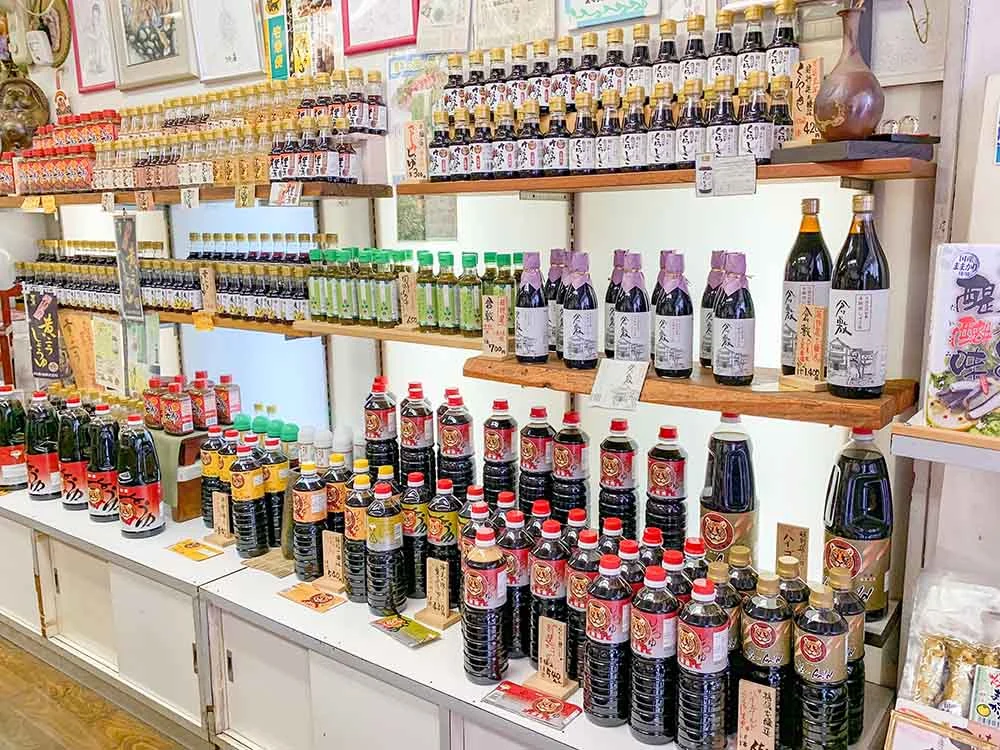
▼Some of the classic sauces Teshimaya has been making for many years.

The lineup includes “Worcestershire,” a Worcestershire sauce; “Soft,” a medium-thick sauce; and rich sauces for different uses, such as “Tonkatsu,” “Okonomiyaki,” “Okonomi DRY,” and “Yakisoba.”
I still remember that when I was little, we had Tate Sauce Worcestershire, tonkatsu sauce, okonomiyaki sauce, and other sauces at home.
What’s more, the label designs are almost unchanged.
I think these retro labels are another appealing feature of Tate Sauce.
Teshimaya’s Tate Sauce remains a popular staple in the local area.
▼During the interview, I bought three varieties for home: Worcestershire, Soft, and Okonomi DRY.

▼The Worcestershire sauce is a thin, runny sauce with no thickness.

Its sweetness and acidity gradually spread across your palate.
The balance of “sweetness, heat, and acidity” makes it a great choice as a kushikatsu dipping sauce too!
▼Soft Sauce is a thicker type.

Soft Sauce is what is commonly called a medium-thick sauce.
It is slightly less thick than rich sauce.
Even so, it had a good, substantial thickness.
It is notably sweet and tastes delicious on its own, too.
My child happily licked and savored the Soft Sauce on its own.
▼As mentioned earlier, Okonomi DRY is the sauce used as the base for Super Spicy Sauce.

Okonomi DRY Sauce is a type of rich sauce, so it is quite thick.
It is sweet yet fruity, leaving a refreshing aftertaste.
Like Soft Sauce, it tastes delicious on its own, too.
“Ryotei Dashi” is an all-purpose seasoning that works in a variety of dishes
▼Teshimaya’s next most popular product after Super Spicy Sauce is “Ryotei Dashi.”

It was originally a product called “Kake Jiman,” a commercial soup base for udon restaurants.
President Ohno once attended his child’s sports day, where he was asked to serve udon.
He made the broth by mixing one part Kake Jiman with ten parts hot water, then served the udon.
Many parents told him, “It’s delicious, so we’d like you to sell it for home use, too,” and it was turned into a product.
In 1991, it went on sale under the name “Ryotei Dashi,” with the slogan “Easy, convenient, and fun.”
It quickly became a popular product.
▼During the interview, President Ohno made udon broth with Ryotei Dashi, and let me taste it.

▼Even before drinking it, I could smell the lovely aroma of the dashi.

When I tasted it, the rich dashi flavor spread through my mouth. It had a deep taste and seemed suitable for all kinds of dishes, not just udon broth.
In fact, Ryotei Dashi is perfect for dishes such as these:
| Dish | Ratio |
|---|---|
| Udon | 11-fold dilution (1 part Ryotei Dashi : 10 parts water or hot water) |
| Yose-nabe | 13-fold dilution (1 part Ryotei Dashi : 12 parts water or hot water) |
| Oden | 13-fold dilution (1 part Ryotei Dashi : 12 parts water or hot water) |
| Takikomi gohan | 13-fold dilution (1 part Ryotei Dashi : 12 parts water or hot water) |
| Rice porridge | 13-fold dilution (1 part Ryotei Dashi : 12 parts water or hot water) |
| Chawanmushi | 13-fold dilution (1 part Ryotei Dashi : 12 parts water or hot water) |
It seems like it would work well in many other dishes, too.
“Bokkee Umakara Shoyu” is also popular with fans of spicy food
▼“Bokkee Umakara Shoyu” is like a soy sauce version of Super Spicy Sauce.

Bokkee Umakara Shoyu was released in 2007.
It contains capsaicin, the spicy component of chili peppers.
“Bokkee” means “incredible” in the Okayama dialect (Bicchu dialect).
▼Look closely and you can see finely chopped chili peppers in the soy sauce.

I tried adding just a little Bokkee Umakara Shoyu to rice with raw egg and tofu.
Even a small amount gives the soy sauce a sweet-and-savory flavor, along with a mild chili heat.
It really makes the flavors of a dish pop!
It is also recommended as a dipping soy sauce for pickles and grilled fish.
Bokkee Umakara Shoyu is hugely popular with middle-aged and older people!
Maybe it’s because it has a little kick.
Of course, be careful not to use too much Bokkee Umakara Shoyu, either.
“Horumon-yaki Sauce” can be used in a wide range of dishes beyond horumon udon
▼“Horumon-yaki Sauce” is a sauce for horumon udon, a local dish from places such as Tsuyama City in Okayama Prefecture.

It was launched when Tsuyama’s horumon udon began attracting attention as a local specialty.
That is why it is called “Horumon-yaki Sauce,” but in fact, it is a very handy “yakiniku sauce.”
One feature of Teshimaya’s Horumon-yaki Sauce is that it can be used in a wide range of dishes beyond horumon udon.
It also tastes great in pork rice bowls, stir-fried meat and vegetables, fried rice, and more.
It goes well with all kinds of ingredients, including beef, pork, chicken, seafood, and vegetables.
- Yakiniku
- Stir-fried vegetables
- Grilled seafood
- Fresh vegetables
- Fried rice
▼Horumon-yaki Sauce is made with a well-balanced blend of honjozo soy sauce, mirin, sake, and miso.

The key ingredients are the generous amount of apple and the chicken broth used as a secret ingredient.
As a result, I found Horumon-yaki Sauce to have a mellow flavor that is easy to enjoy.
I tried it on a fresh vegetable salad, and it worked surprisingly well!
Horumon-yaki Sauce was released in 2009.
“Salt Sauce” is spicy with coarsely ground black pepper
▼As its name suggests, “Salt Sauce” is a salt-flavored sauce.
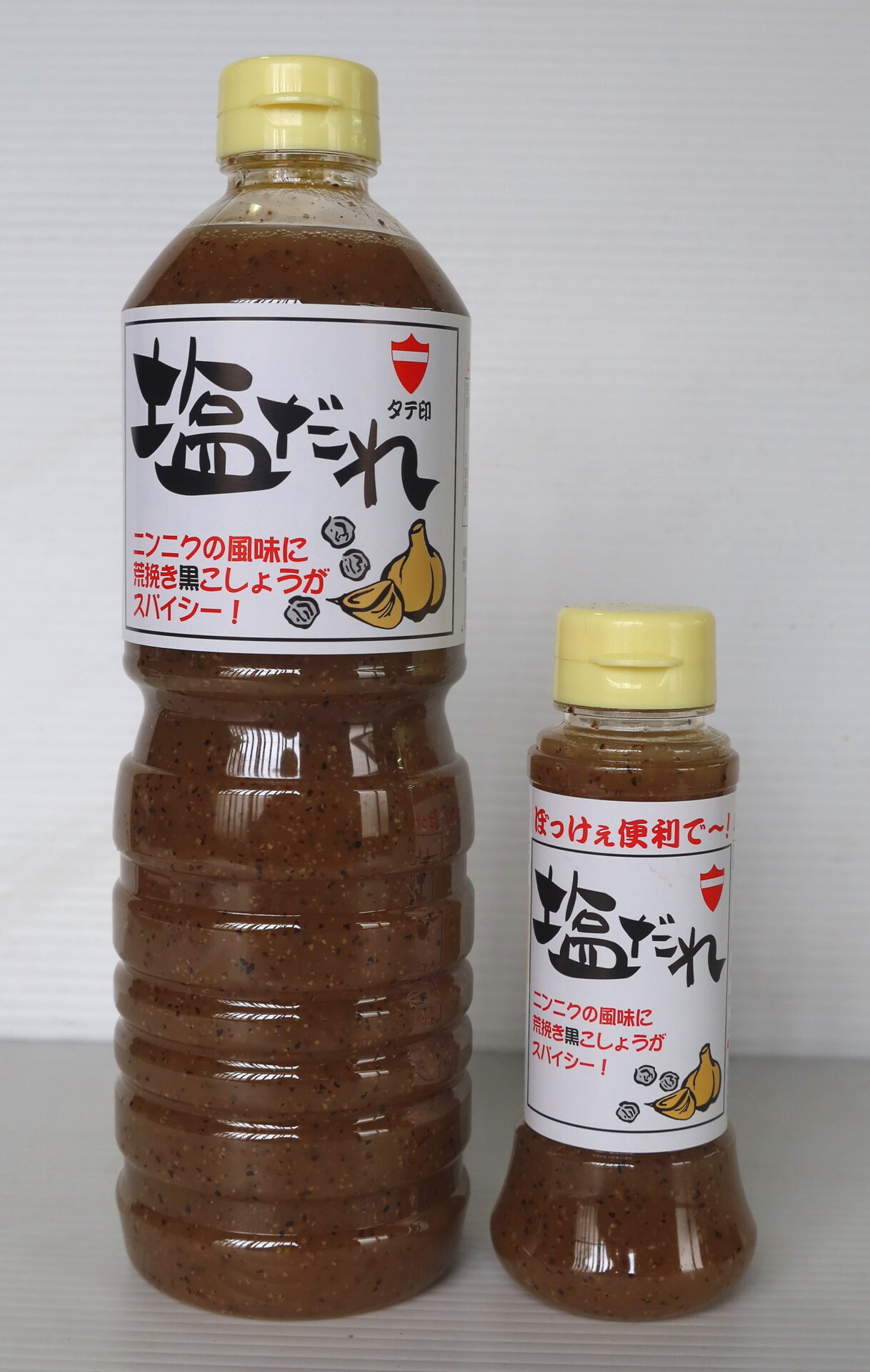
Salt Sauce was released in 2002.
▼With one taste, the refreshing saltiness spread through my mouth, along with the spicy flavor of coarsely ground black pepper.

The moment you taste it, you can tell it would be delicious for grilling meat.
The salt sauce is made with a well-balanced blend of salt, coarsely ground black pepper, and garlic.
It works well in a wide range of dishes, including meat, seafood, and vegetables.
It’s also excellent with spaghetti or barbecue!
It also seems like it would go well with yakitori and other dishes.
I think it would be delicious in a salted kalbi rice bowl or salted yakisoba, too.
Collaborations with Other Companies, Too!
Teshimaya’s products have been loved locally for many years.
As a result, products made in collaboration with other companies have also appeared.
Here are some of those collaborative products.
“Tamanoura Soy Sauce Pie” is a collaboration between Hirai and Teshimaya’s “Miro” soy sauce
▼“Tamanoura Soy Sauce Pie” is a collaboration between Hirai, a Japanese confectionery shop in Tamashima, and Teshimaya’s “Miro” soy sauce.
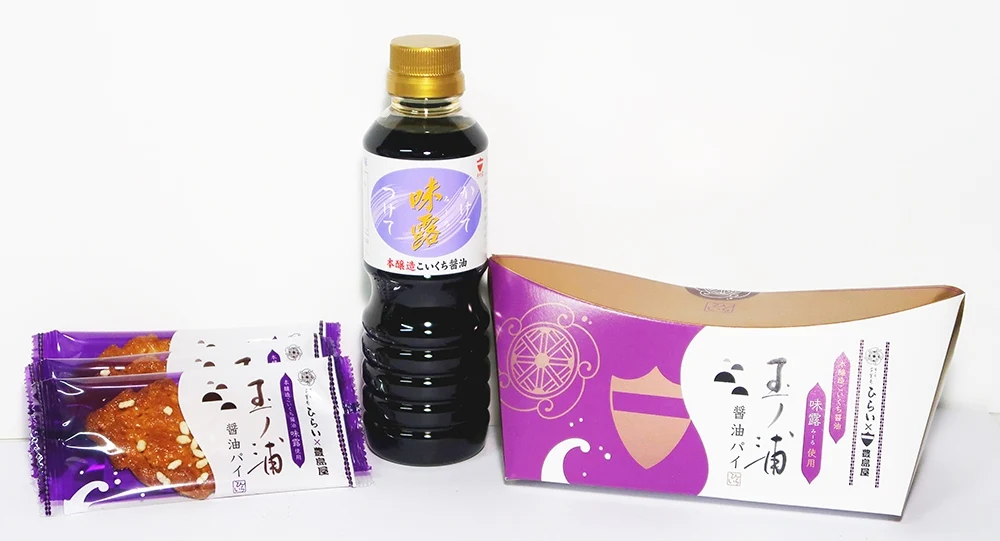
Hirai is known as the maker of the Tamashima specialty Ryokan Temari.
Miro is a naturally brewed dark soy sauce, popular for its deep umami and rich aroma.
▼The Tamanoura Soy Sauce Pie also comes in stylish packaging that gives an elegant impression.

▼It is leaf-shaped, with rice crackers on the surface.
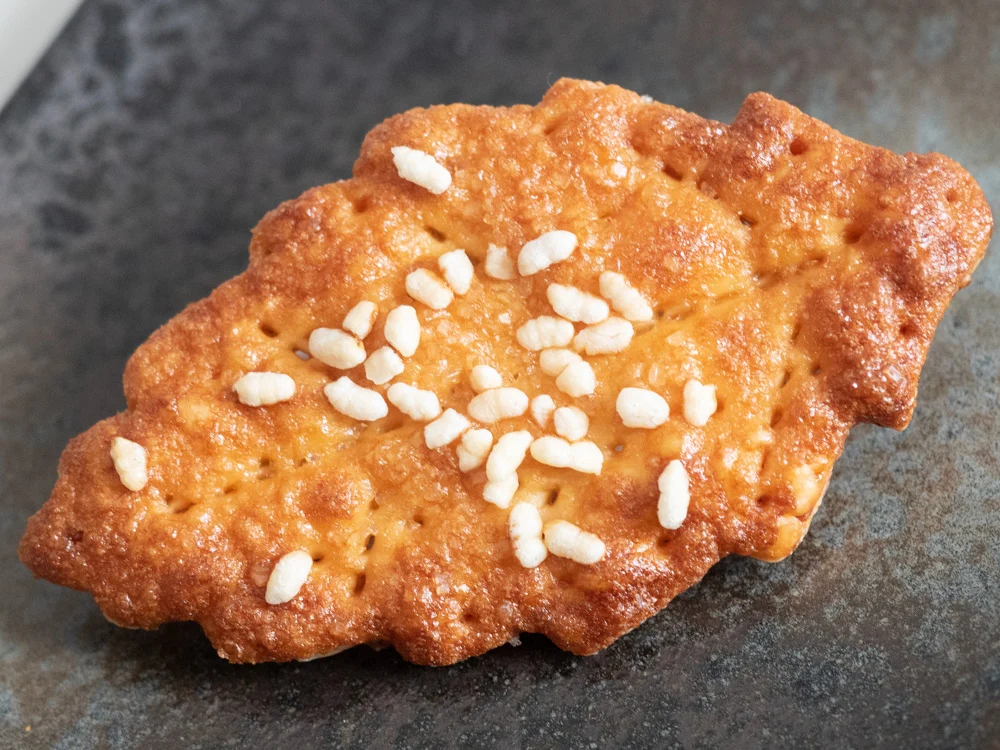
▼Here’s what the underside looks like.

It has the light, crisp texture characteristic of pie.
Along with the buttery aroma of the sweet pastry, it has an elegant, sweet and savory flavor from the soy sauce.
This is really delicious!
Incidentally, “Tamanoura” in the product name was the name of Tamashima when it was still sea, before land reclamation in the Edo period.
The name Tamanoura also appears in the Man'yoshu.
“Yokozuna Ichiban, Salt Sauce Flavor” and “Okaki Rice Crackers, Salt Sauce Flavor” are collaborations between Hanada Foods and Teshimaya’s salt sauce
▼“Yokozuna Ichiban, Salt Sauce Flavor” and “Okaki Rice Crackers, Salt Sauce Flavor” are collaborations between Hanada Foods and Teshimaya’s salt sauce.

Hanada Foods, like Teshimaya, is a company in Tamashima that makes confectionery and soft drinks in plastic bottles.
Hanada Foods’ popular Yokozuna Ichiban and okaki rice crackers are made with the flavor of Teshimaya’s salt sauce.
Enjoy the distinctive spicy flavor of the salt sauce.
Teshimaya is a long-established company with a history of about 300 years since its founding and about 80 years since it began making Tate Sauce.
While beloved locally, it has also attracted nationwide attention with products such as its ultra-spicy sauce.
We interviewed Teshimaya’s representative director and president, Ohno Yutaka.
Teshimaya Information

| Organization | Teshimaya |
|---|---|
| Industry | Food manufacturing and sales (sauce, vinegar, soy sauce, other seasonings, chili pepper extract) |
| Representative | Ohno Yutaka |
| Established | Established: August 1, 1948; founded: 1720 |
| Address | 1-7-8 Tamashima Chuo-cho, Kurashiki City, Okayama Prefecture |
| Contact | 086-522-2148 |
| Website | Teshimaya in Tamashima, Kurashiki City — Tate Sauce / Ultra-Spicy Sauce / Okonomiyaki Sauce / Restaurant Dashi / Soy Sauce, Sauce and Vinegar Brewer |


What would you like to know about Kurashiki?
Enter a word to search articles on this site






































Its sauce production, which began in the early Showa period, makes it one of the oldest in the Chugoku and Shikoku regions!
It has a history of more than 80 years making sauce alone.