"Paper" is essential in daily life.
Nowadays, it is easy to purchase paper made in paper mills, but before industrialization, handmade washi (Japanese paper) was produced in various regions of Japan.
In the Kamigou area of Niimi City, located in the valley of the Chugoku Mountains, the history of Okubichu Kōjiro washi remains.
At the "Yume Suki Park Paper Museum" (hereafter referred to as the Paper Museum), which is symbolized by the largest parent-child-grandchild waterwheel in Japan, you can experience making original handmade washi while learning about the history of Okubichu Kōjiro washi.
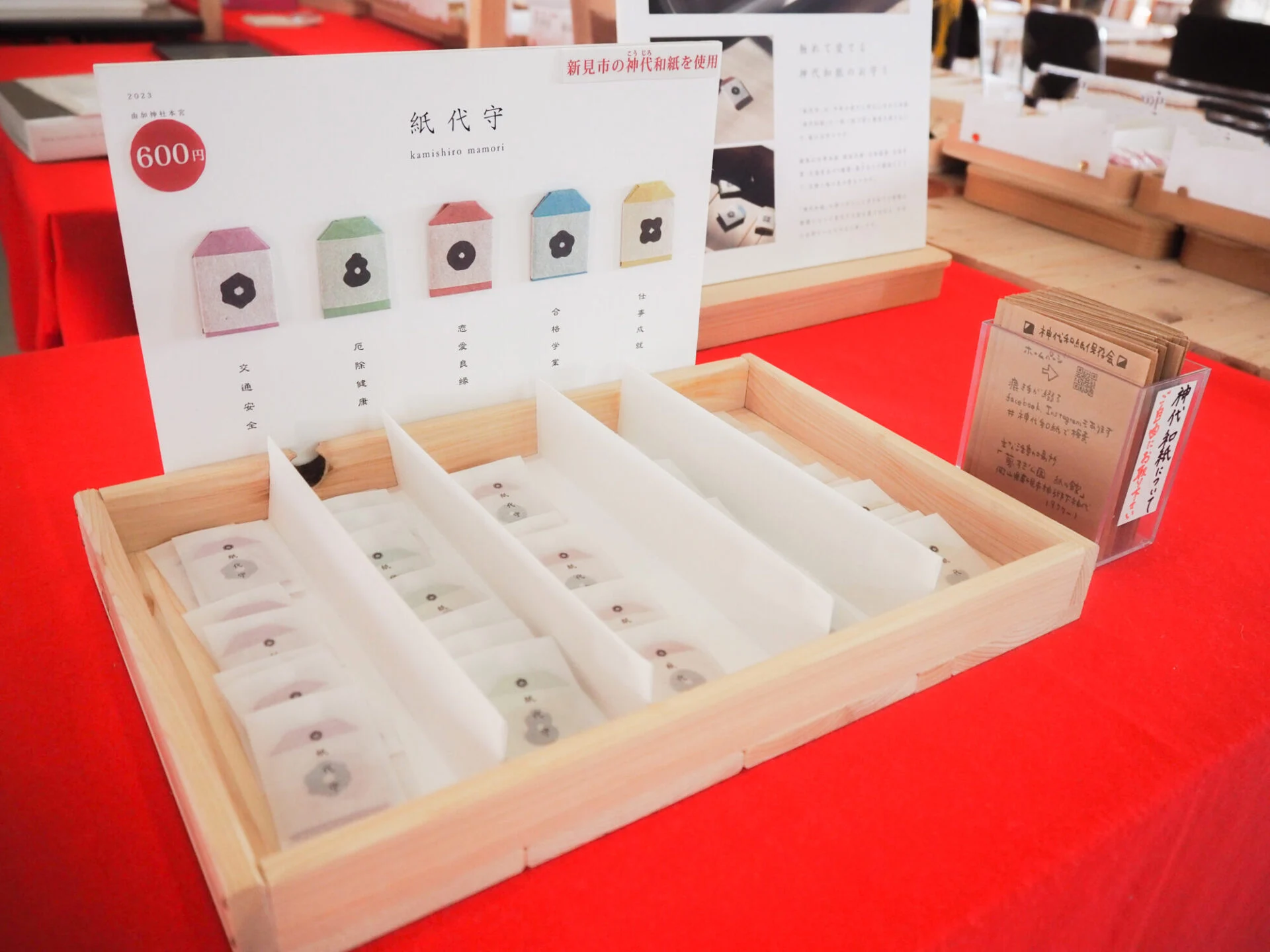
I also heard from a member of the "Kōjiro Washi Preservation Society," who is working to revive and pass on the techniques of washi making that had once been lost.
Yume Suki Park Paper Museum and Okubichu Kōjiro Washi
Relaxation Spot: Yume Suki Park
Yume Suki Park is located along the Kōjiro River in the Kamigou area of Niimi City.
The waterwheels, with diameters of 13.6 meters, 6 meters, and 4.5 meters, are called the "Parent-Child-Grandchild Waterwheels," and they are the largest in Japan as a set of three.
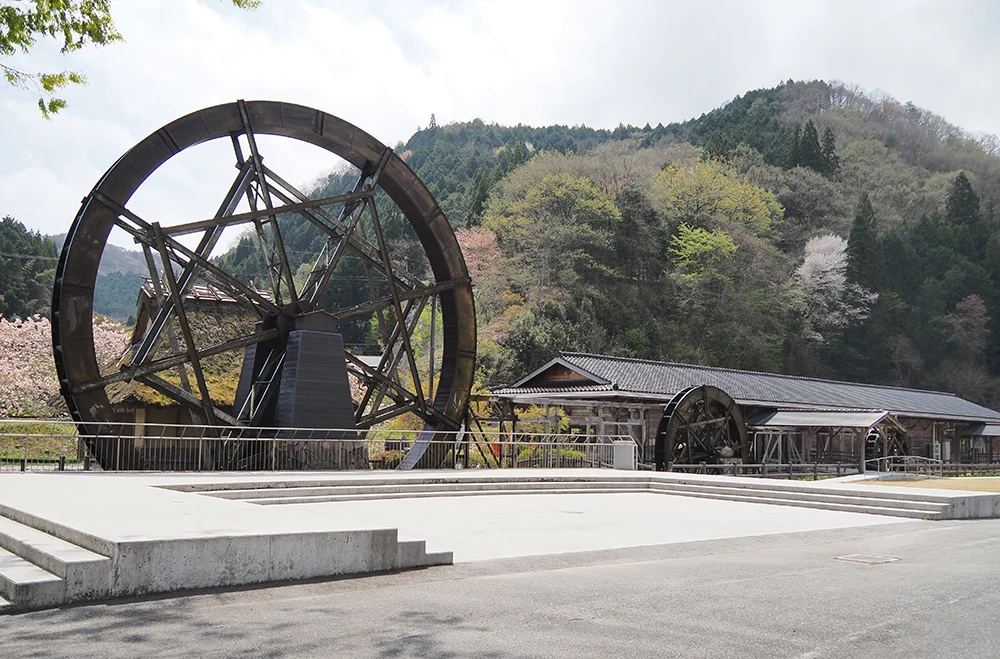
The park is well-maintained for playing by the river and in the open spaces, making it a perfect place to enjoy nature on holidays.
The waterwheel, which was restored and had been used as a power source for rice milling and flour milling until the mid Showa period, was opened in 1991 to convey the history of Okubichu Kōjiro washi and to contribute to regional revitalization.
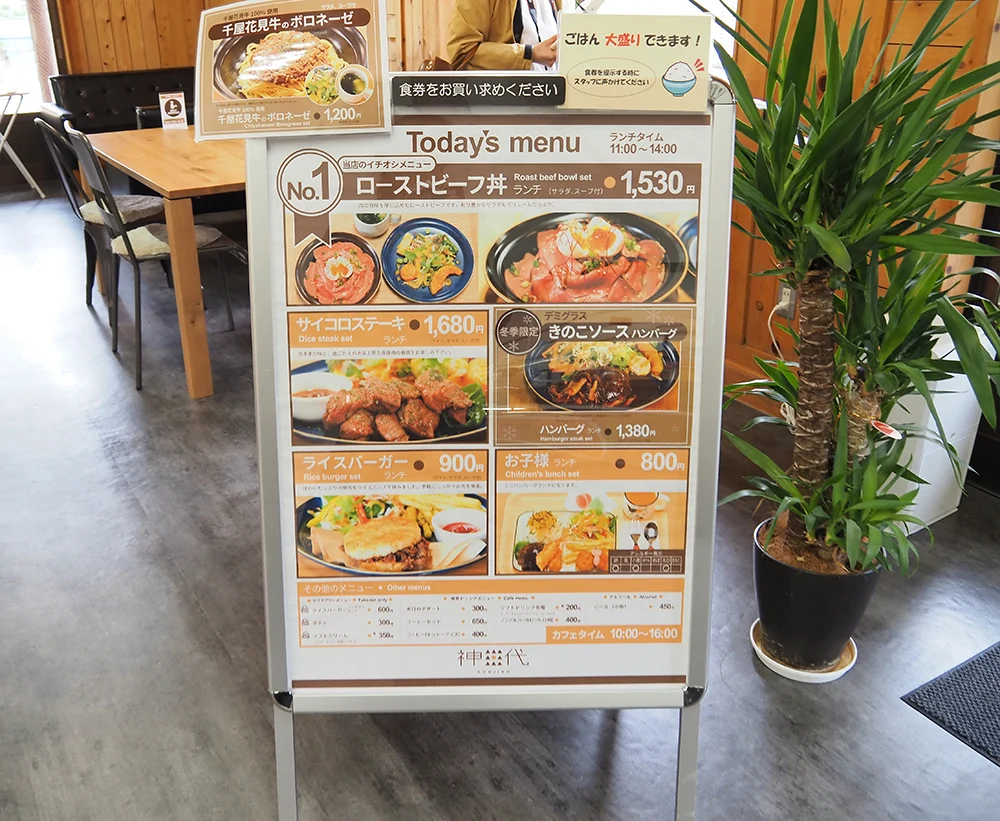
Inside the museum, there is a "Paper Museum" where you can experience washi making, and a restaurant called "Kitchen Kōjiro," which opened in July 2020.
The facility is operated by Irori Company, which raises its own brand of beef called "Chiya Hanami Beef" on a ranch, and the restaurant offers a variety of delicious wagyu dishes.
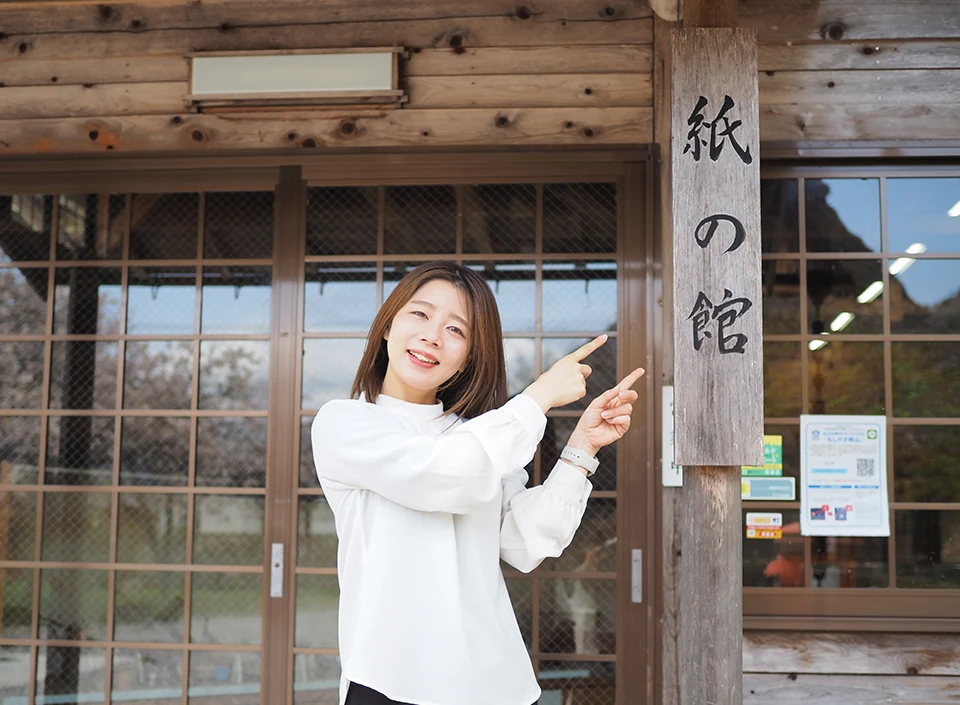
This time, I experienced washi making at the Paper Museum with Itsuka Nakai, who lives in Niimi City.
About Okubichu Kōjiro Washi
Inside the Paper Museum, there are various machines and tools for making washi lined up.
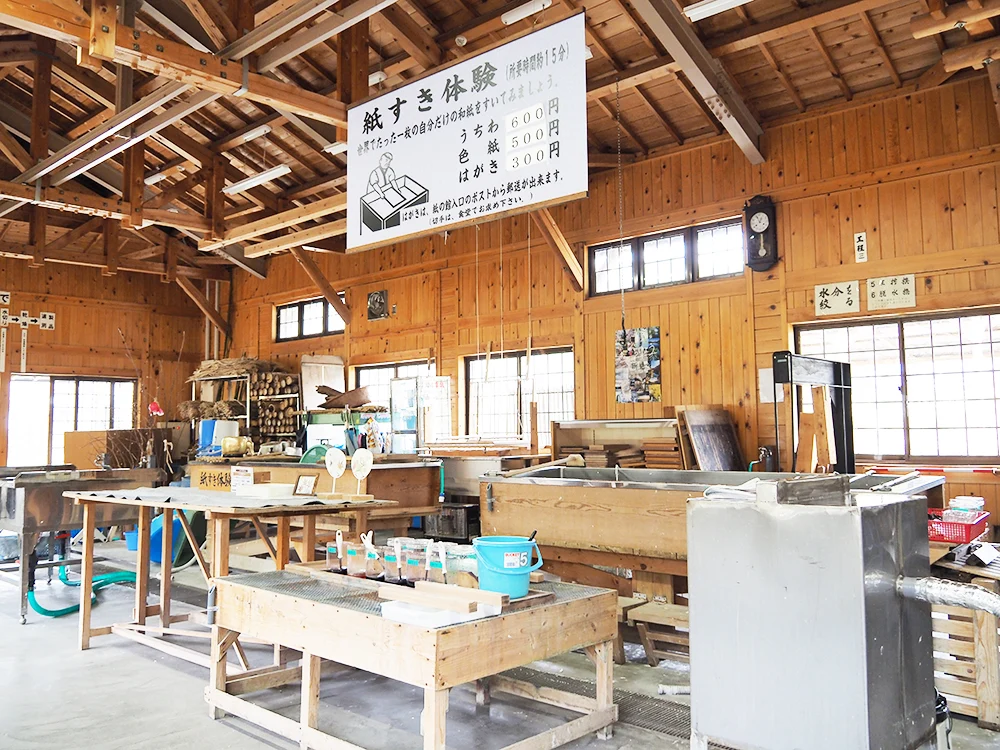
There are also many exhibits related to Okubichu Kōjiro washi.
In the past, the raw materials were collected from nearby mountains.
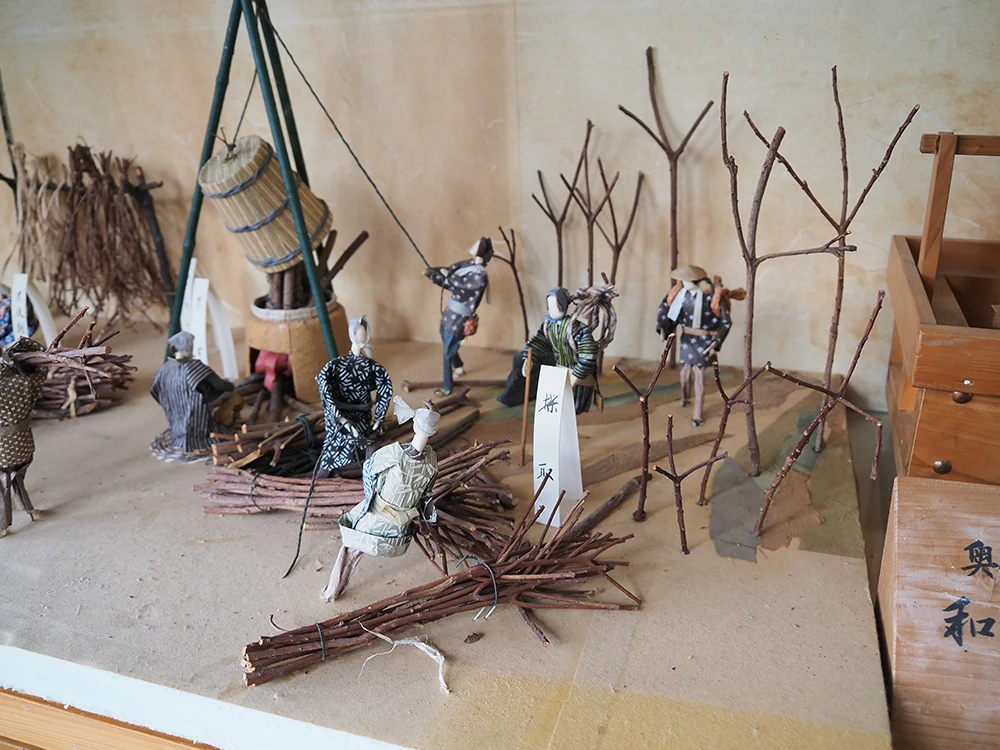
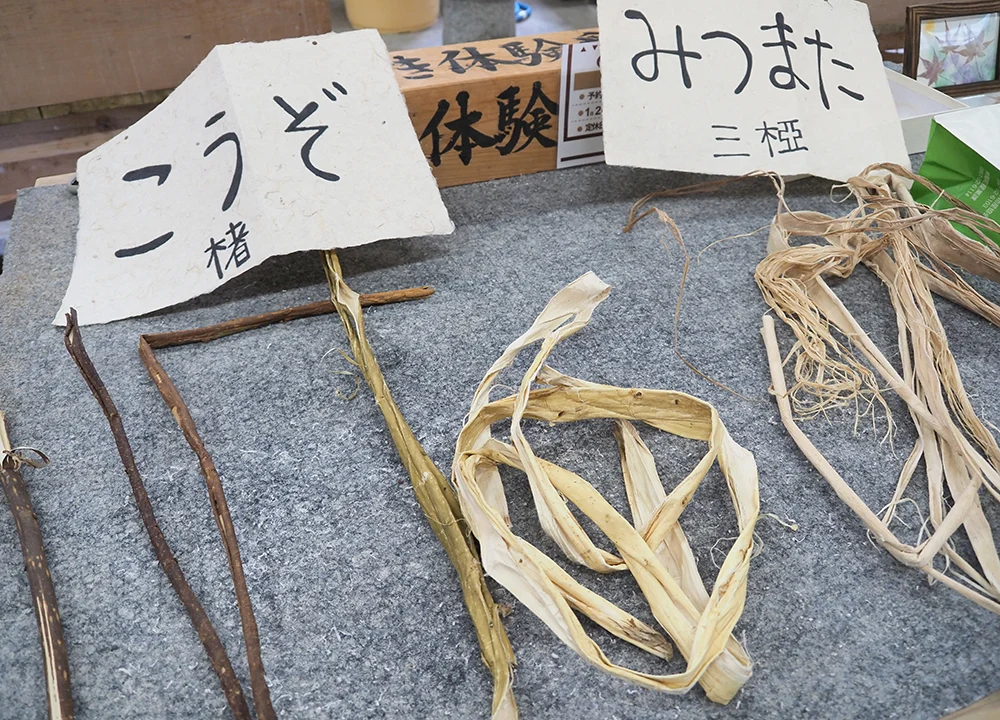
In Okayama Prefecture, there are many washi production areas that use only mitsumata (Edgeworthia), while Okubichu Kōjiro washi is characterized by primarily using kozo (Paper Mulberry) along with mitsumata.
Both mitsumata and kozo are deciduous shrubs known for their strong fibers, with mitsumata having fine fibers.
On the other hand, kozo has thicker fibers, which can create unexpected bleeding when a brush is applied to the finished paper.
Okubichu Kōjiro washi has a history of being used for items like paper umbrellas and shoji (sliding doors) due to its durability.
Both kozo and mitsumata do not become paper on their own. They go through many processes before reaching the stage of washi making.
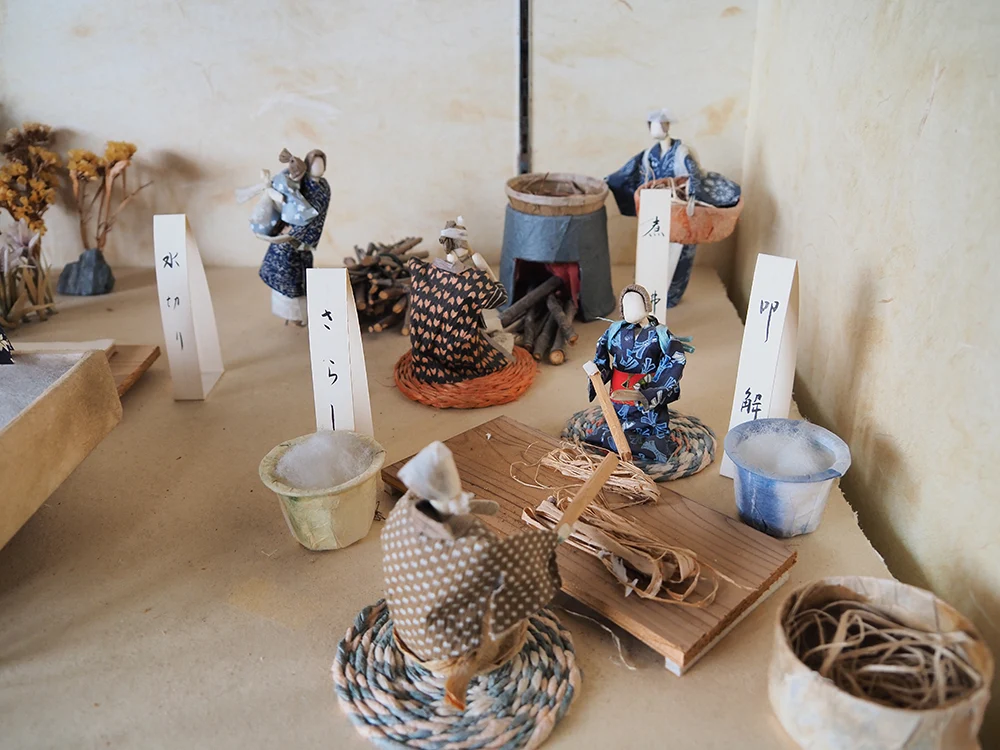
- Steam and peel the bark
- Soak in water to soften
- Cook until soft, "Shajuku"
- Remove impurities, "Chiriyori"
- Bleach
- Rinse in water
- Break down into fibers, "Kōkai"
- Mix with tororo-aoi, which acts as a binder
Additionally, there are processes for extracting mucus from the roots of tororo-aoi.
It is said that tororo-aoi loses its stickiness quickly in high temperatures.
Therefore, traditional washi making is done from November to March, during the cold season.
In winter in Niimi, snow accumulates and it is very cold, and washi making was done with bare hands in the cold water during that time.
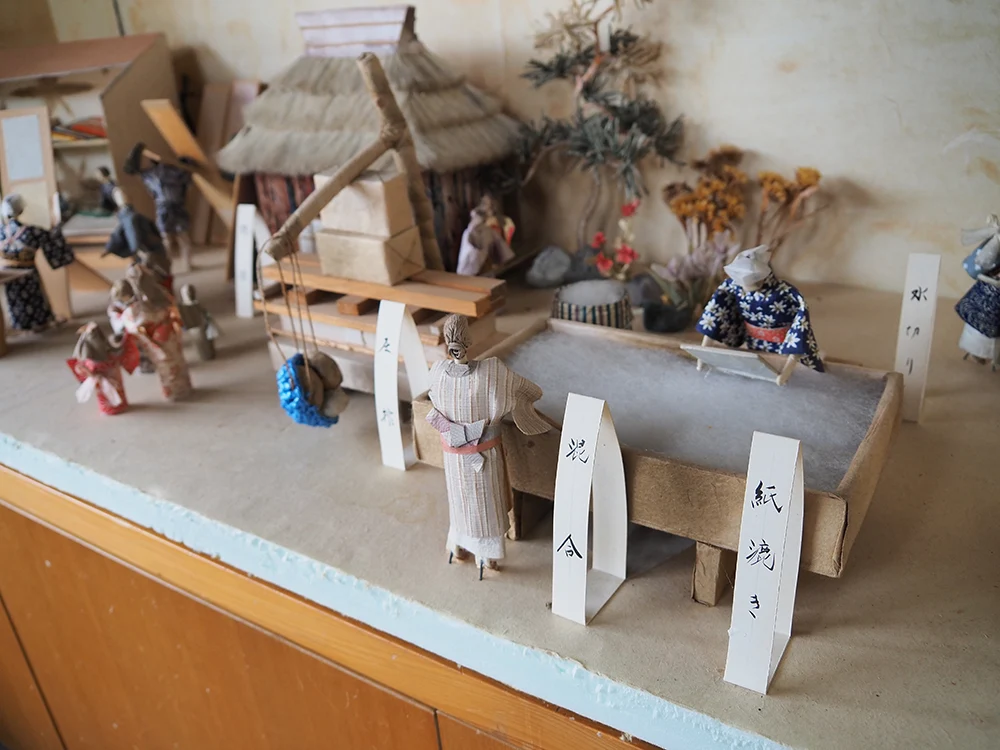
The materials used for the washi making experience at the Paper Museum do not include kozo, only mitsumata, making it easier for children to create paper of uniform thickness.
Additionally, instead of tororo-aoi, a chemical binder is used, allowing for washi making experiences to be conducted year-round.
Washi Making Experience Menu
The washi making experience is available for two or more people; for one person, two or more courses are accepted.
Reservations should be made in advance. Changes to the experience content can be made on the day.
- 1-15 people: 1,500 yen (tax included, additional material costs required)
- 16 or more people: 2,500 yen (tax included, additional material costs required)
- Uchiwa (tax 600 yen)
- Ishigami (tax 500 yen)
- Postcard (tax 300 yen)
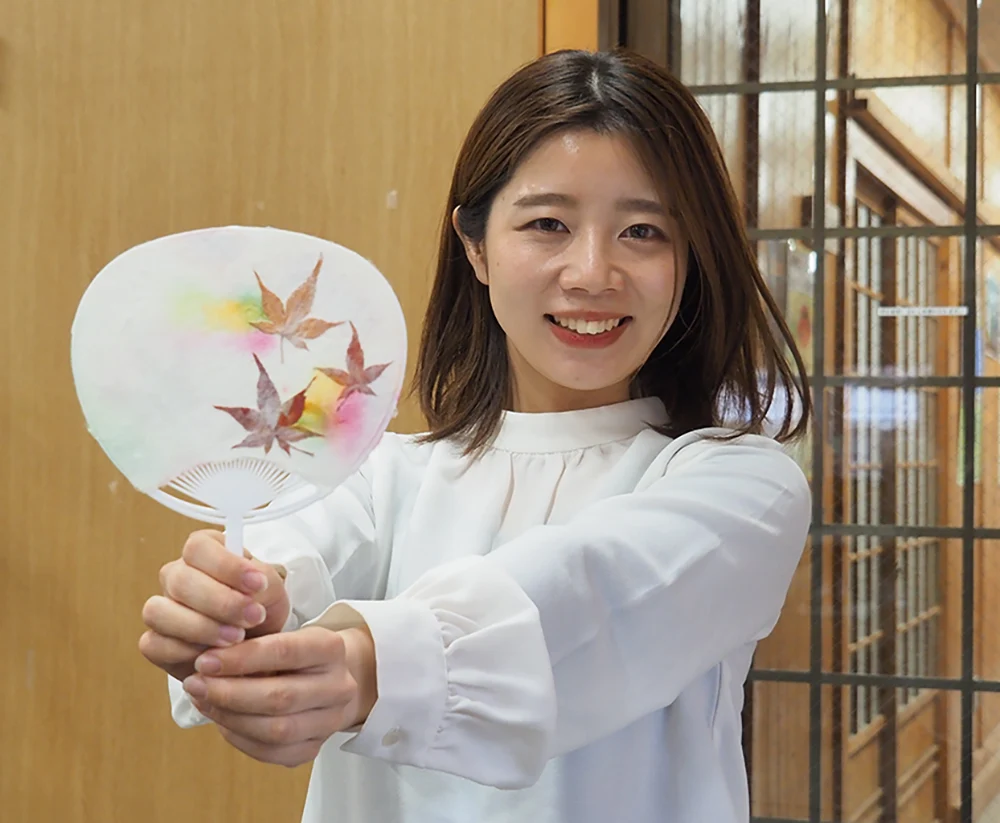
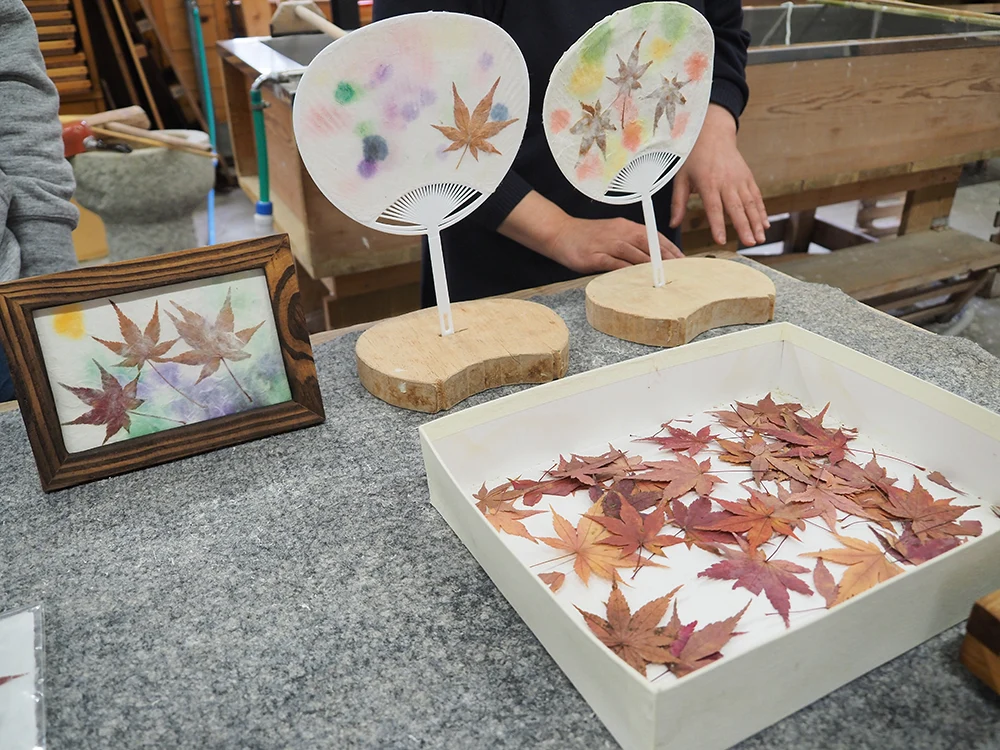
You can also decorate and color each piece with maple leaves, creating a one-of-a-kind finish.
Washi Making Experience
With the guidance of Kiyoka Chuta from Irori Company, which operates the Paper Museum, I made an uchiwa and a postcard using handmade washi.
The experience involves the following steps:
- Washi making
- Decoration and coloring
- Drying with machines
- Shaping
- Completion
1. Washi Making
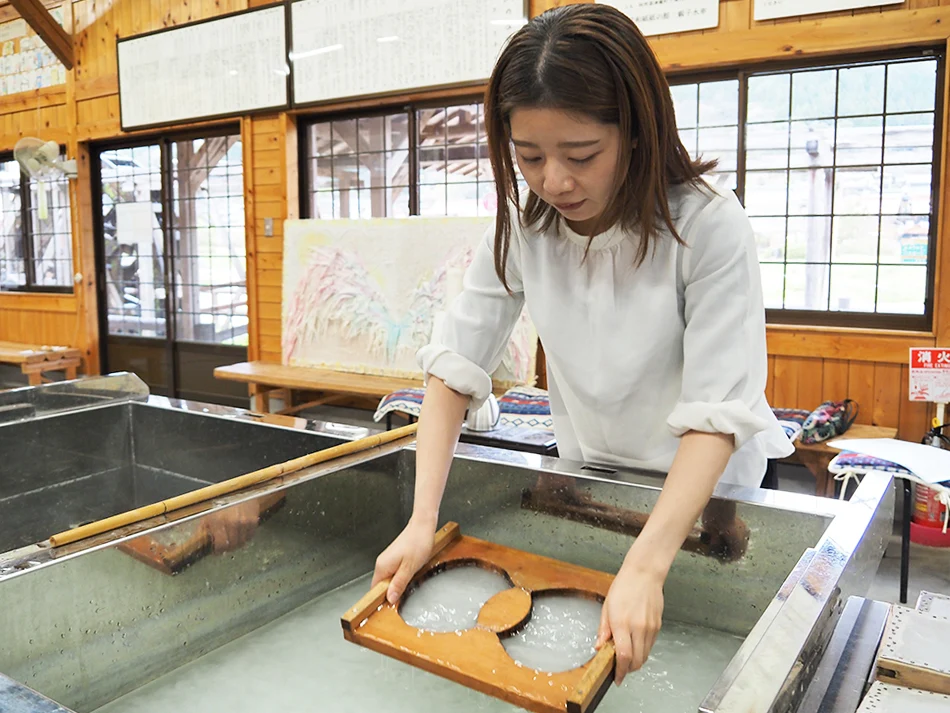
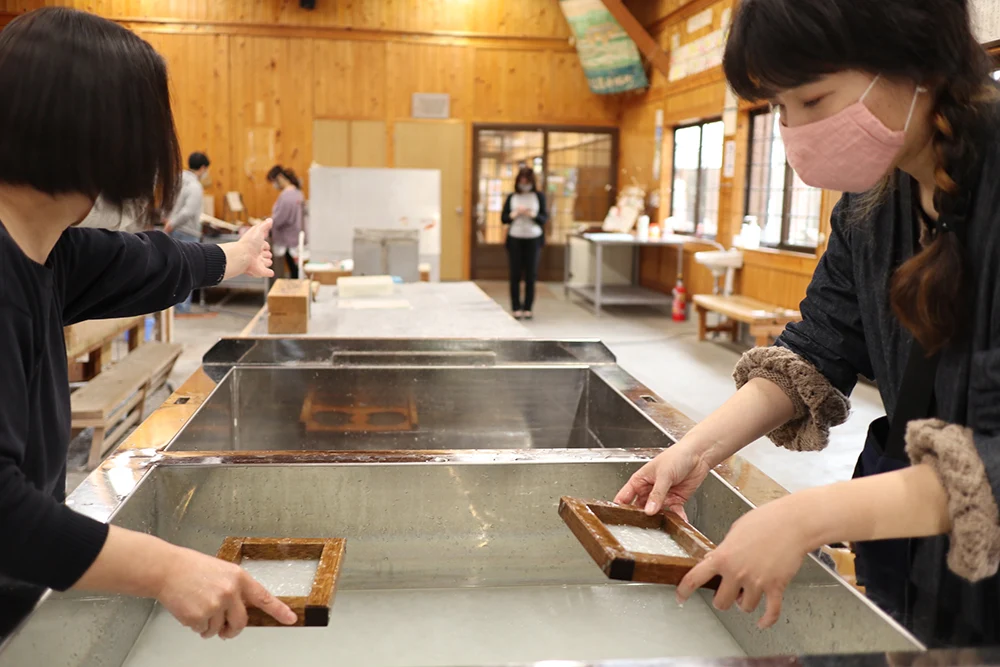
The Paper Museum has wooden frames prepared for making uchiwa, ishigami, and postcards.
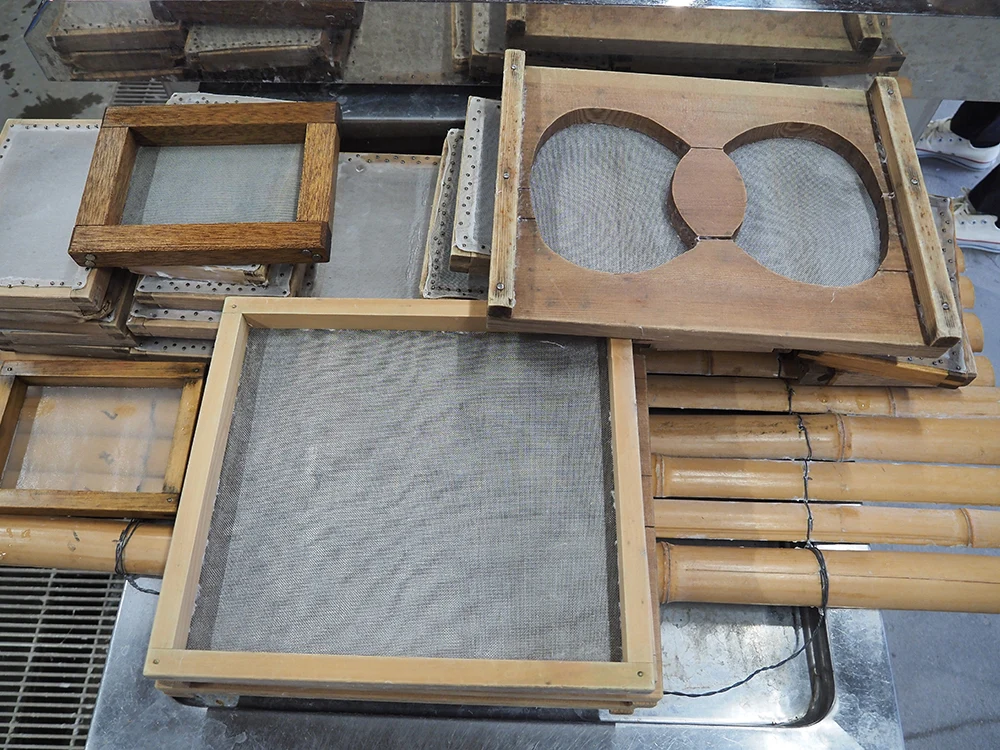
For uchiwa, two pieces of paper can be made at once to adhere to the front and back.
The wooden frame is dipped into a thick liquid mixed with mitsumata fibers, scooping it up to ensure an even thickness.
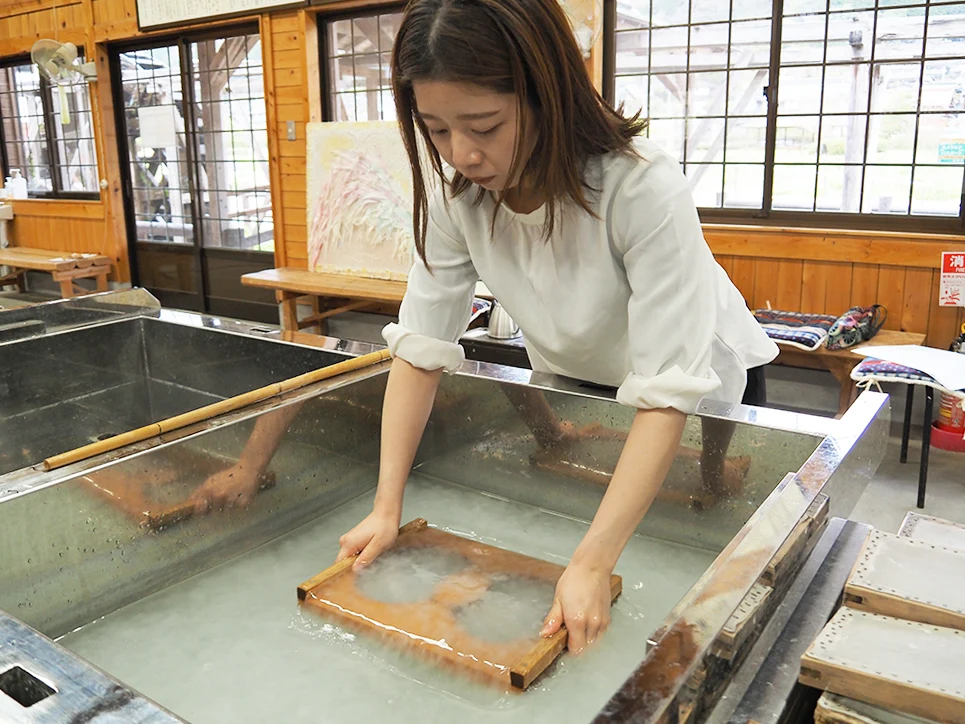
For uchiwa, the top is scooped lightly for a thinner finish, while for postcards, the bottom is scooped generously for a thicker finish, which is the trick to making them well.
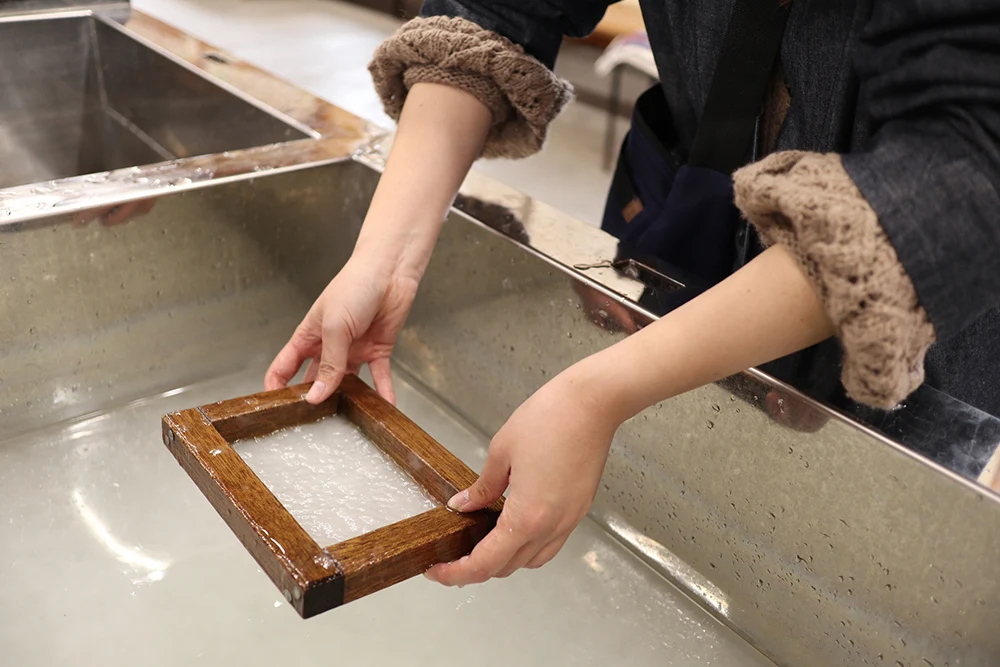
The water feels cool and thick, which is pleasant.
Move the wooden frame up and down, left and right, to ensure the thickness is uniform.
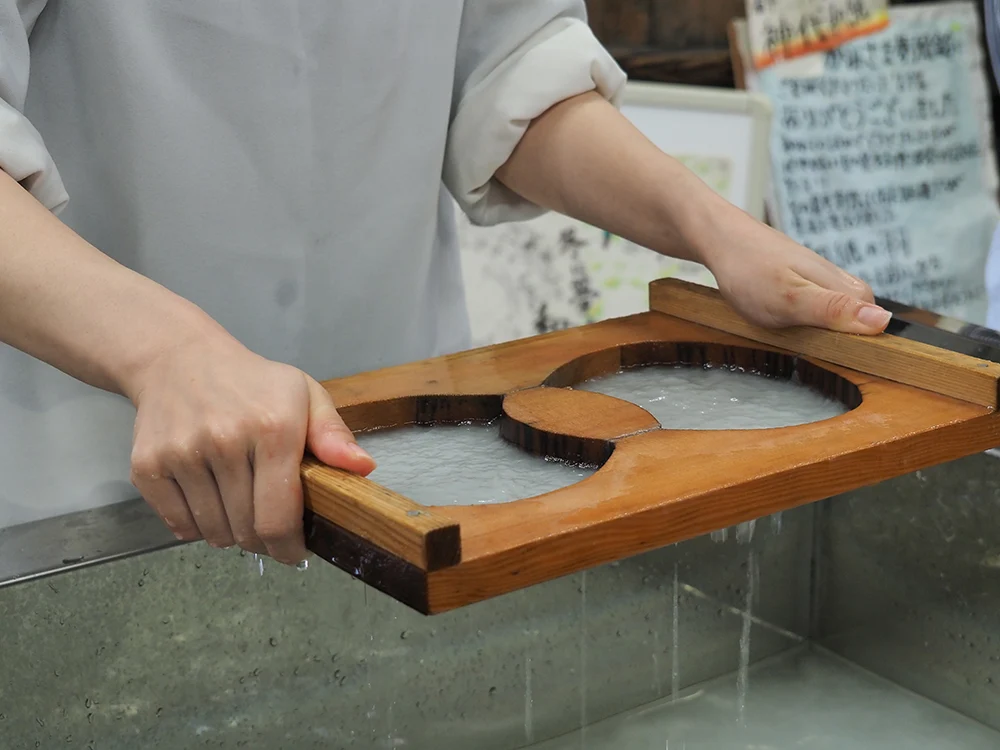
This is an important process that determines the finish of the paper, but there's no need to be nervous. At this stage, you can redo it as many times as you like.
2. Decoration and Coloring
Next, while referring to the samples, decorate with pressed maple leaves.
Choose your favorites from various sizes and colors of maple leaves.
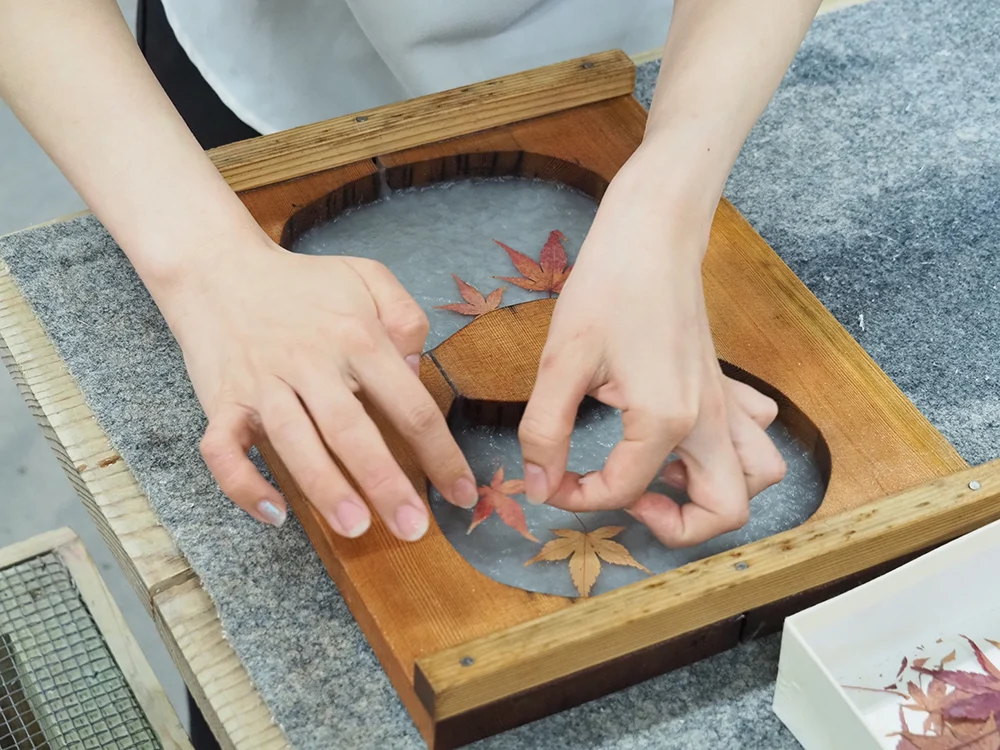
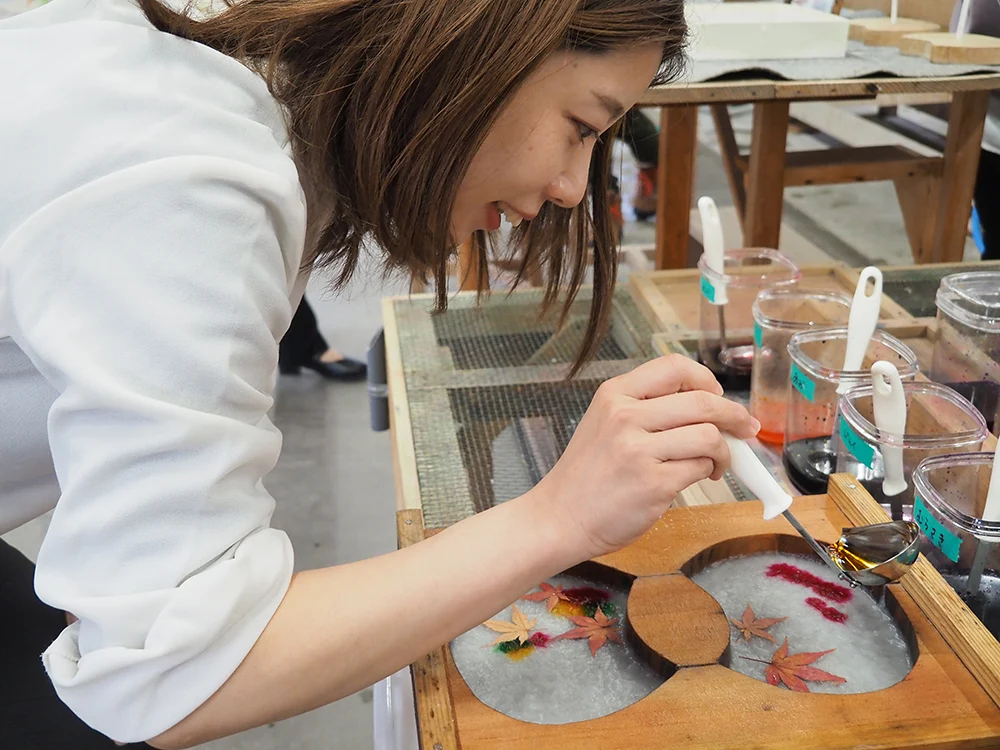
Then, scoop liquid dye with a ladle and color it. This is where your originality comes out.
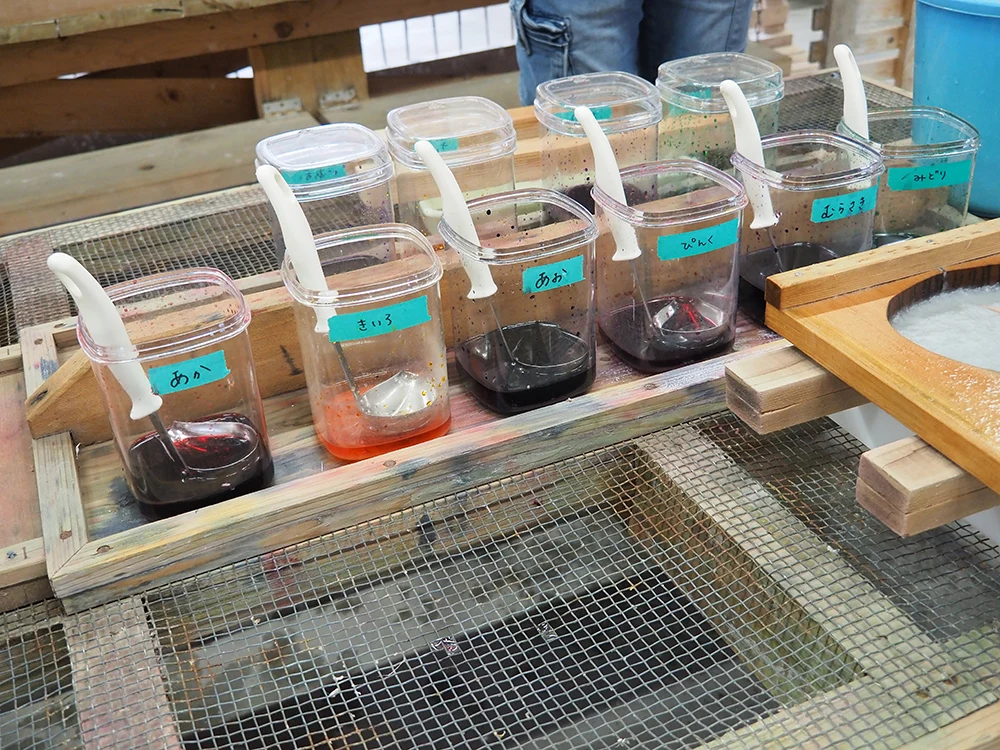
You can choose colors from red, yellow, blue, pink, purple, and green. You can use as many colors as you like.
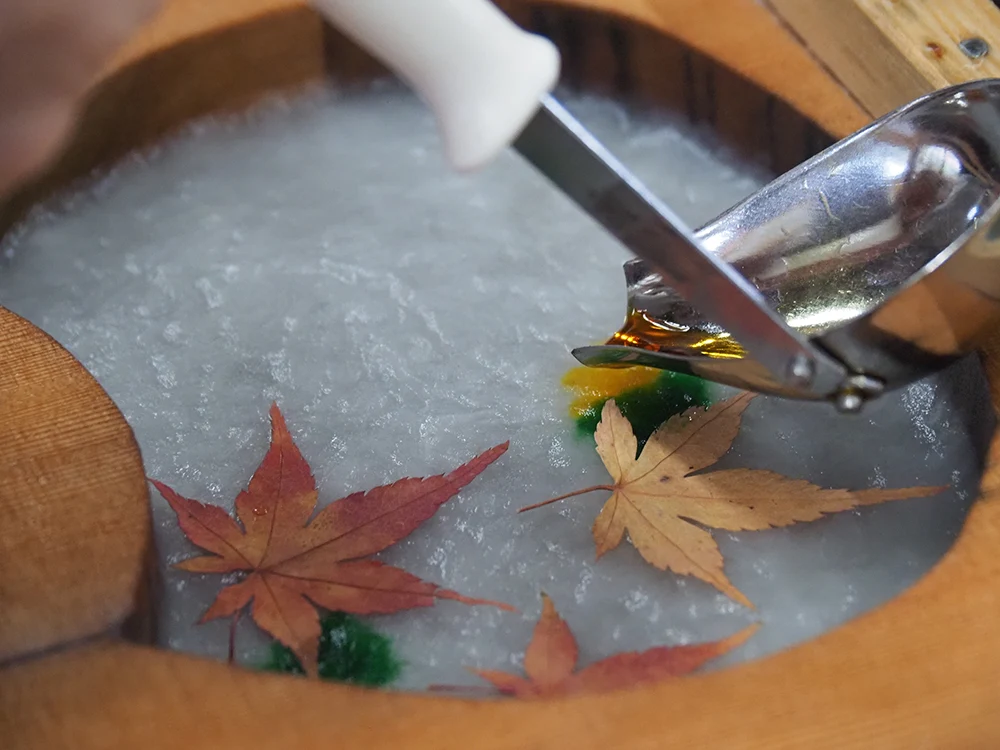
Nakaishi chose pink, yellow, and green for coloring. There was an unexpected incident where the color fell in an unintended area, but it turned out well in the end.
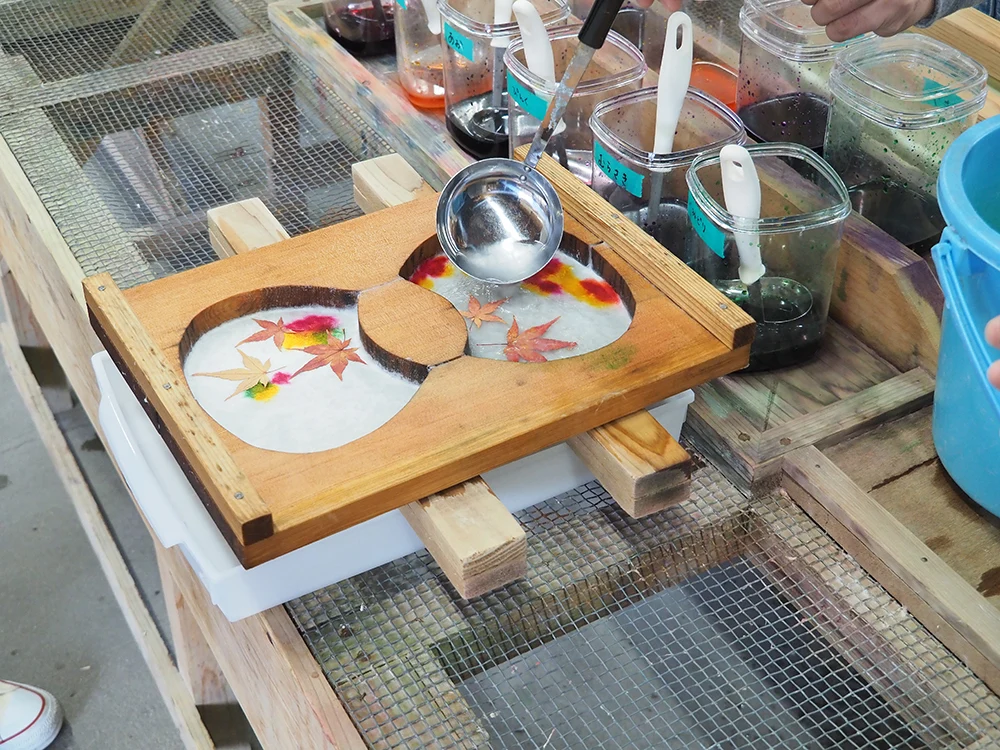
Once the coloring is done, to prevent the maple leaves from floating, coat the surface lightly with a liquid mixed with fibers.
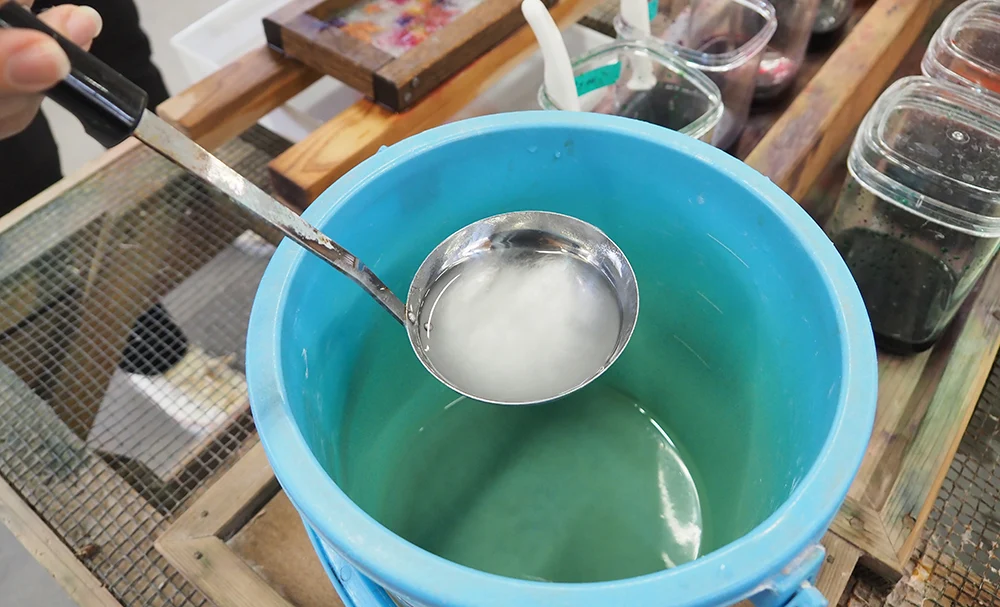
This task was done by Chuda.
3. Drying with Machines
Finally, we will dry it. We used two machines for drying.
First, there is a machine that sucks moisture from below when the wooden frame is placed.
Move it slowly to dry the entire surface.
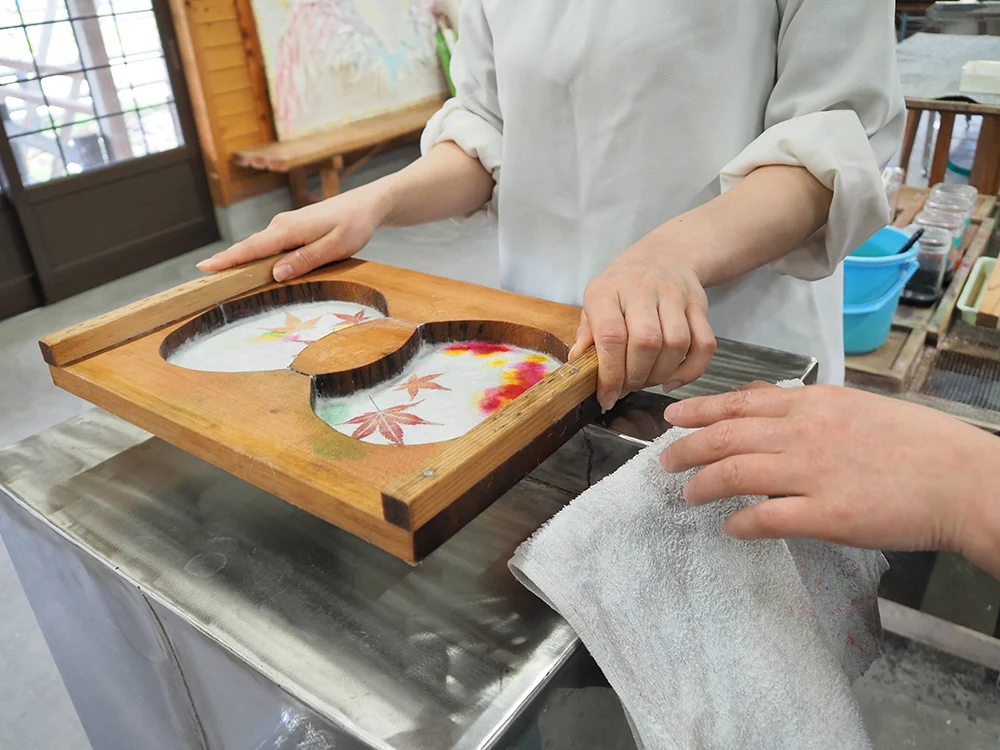
Since it is still half-dry, let's carefully remove it from the mold.
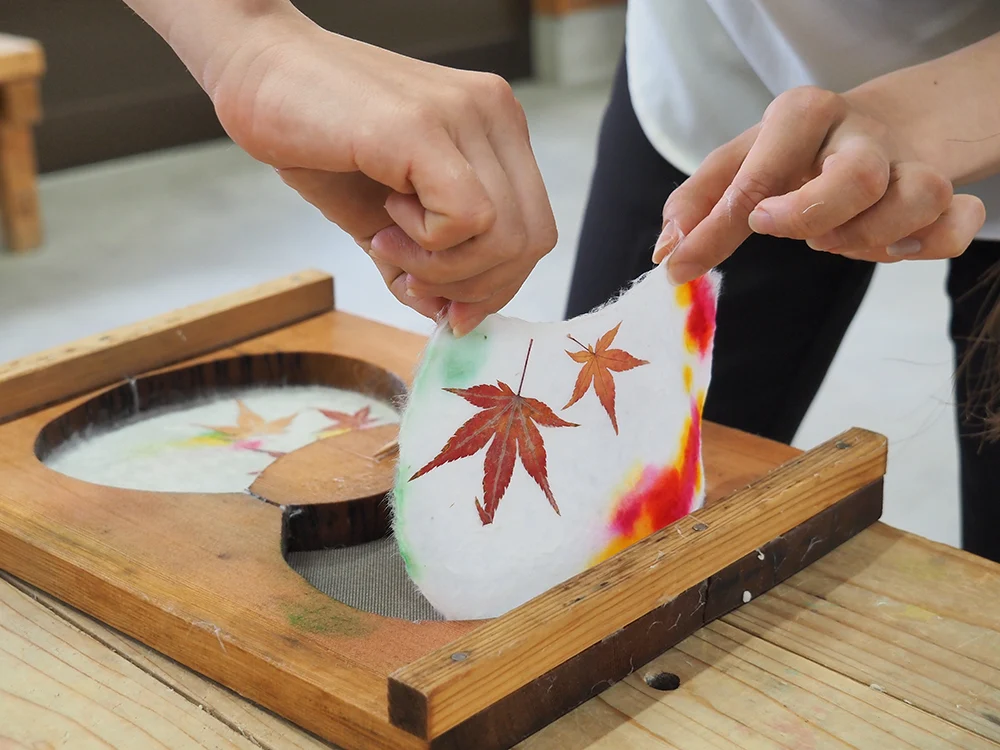
It was a tense moment, worrying that the damp washi might tear.
The next machine is a flat iron plate. It has a heater, so be careful as it gets hot to the touch.
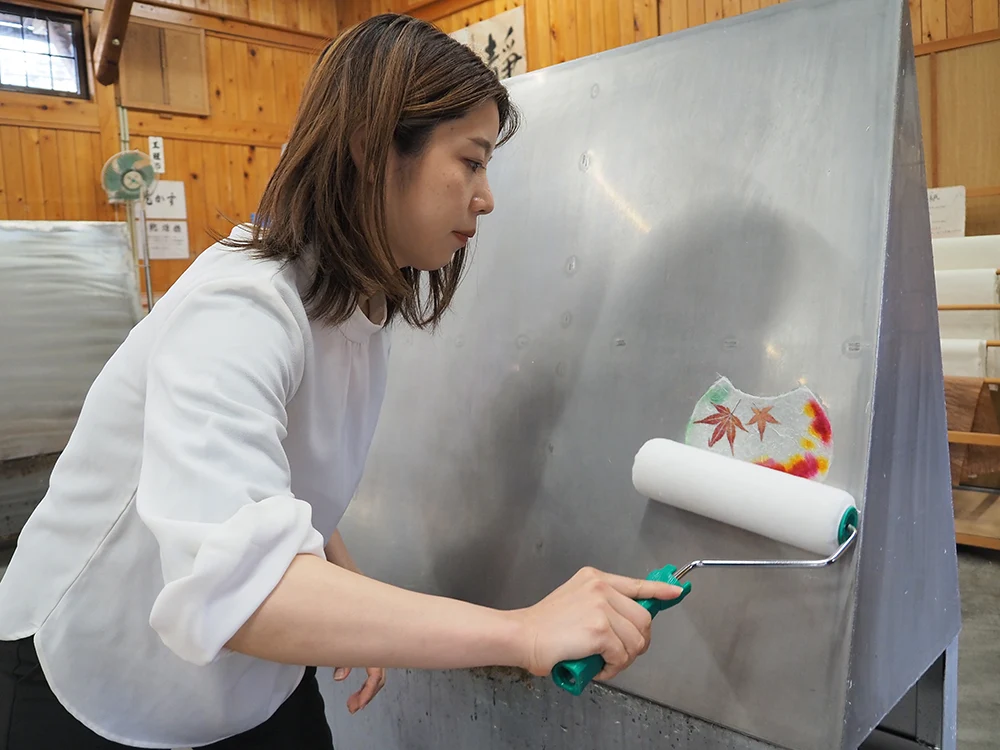
Be careful to attach it neatly to avoid wrinkles.
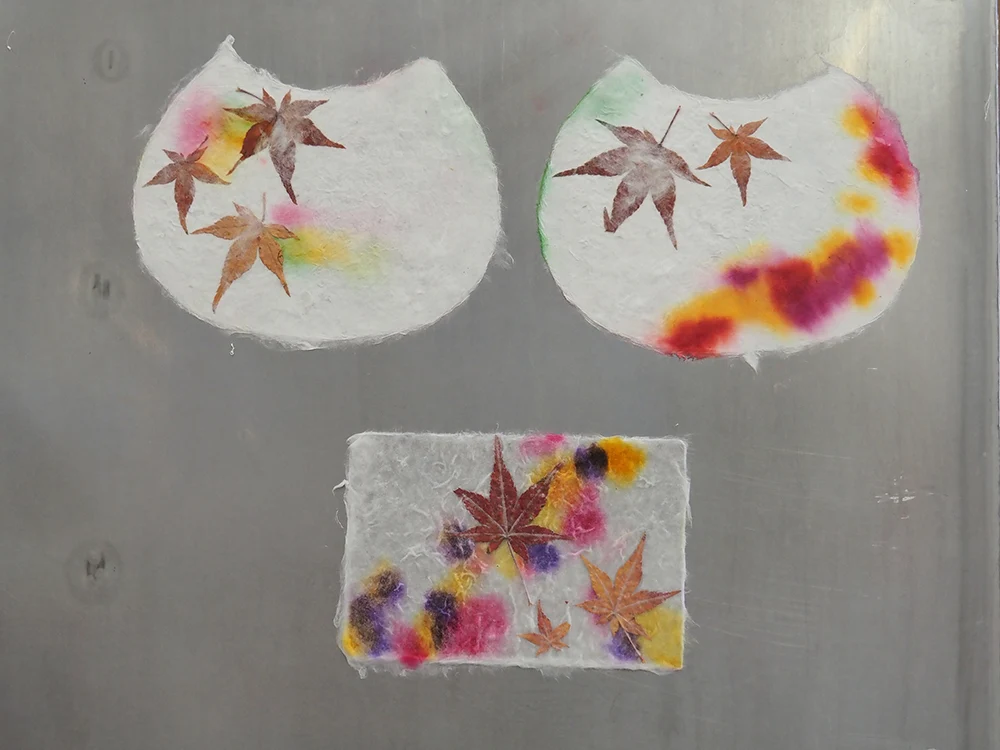
Depending on the temperature and humidity, it will dry thoroughly in about 5 to 10 minutes.
4. Shaping
Once it is completely dry, use a bamboo stick to gently peel it off.
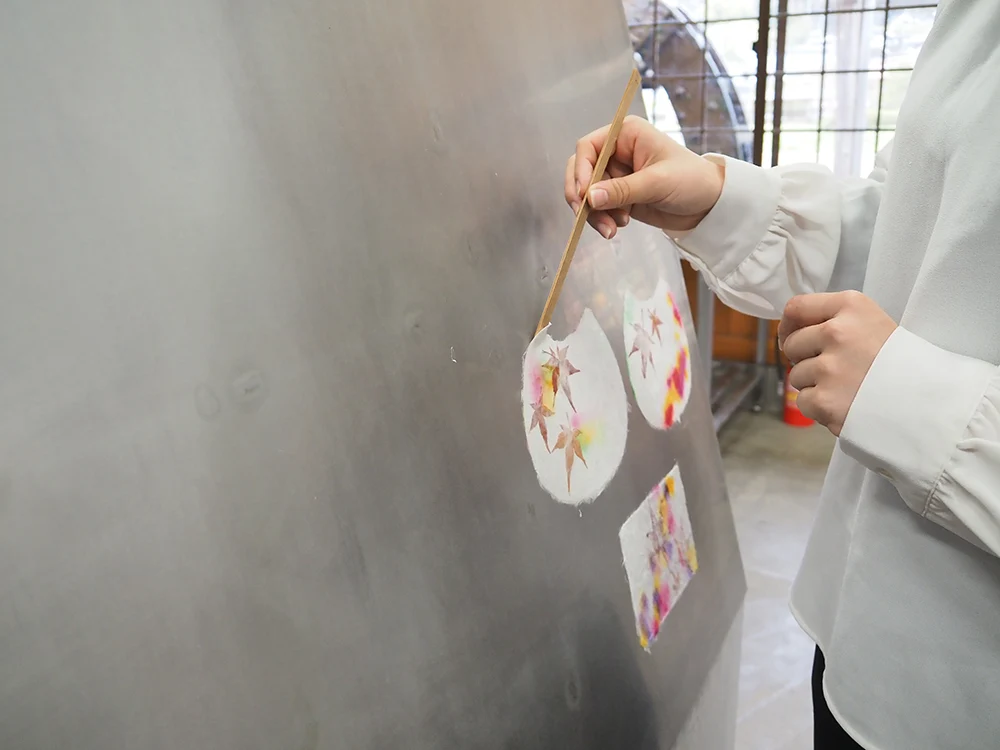
Since it sticks tightly, peel it off gently while pulling.
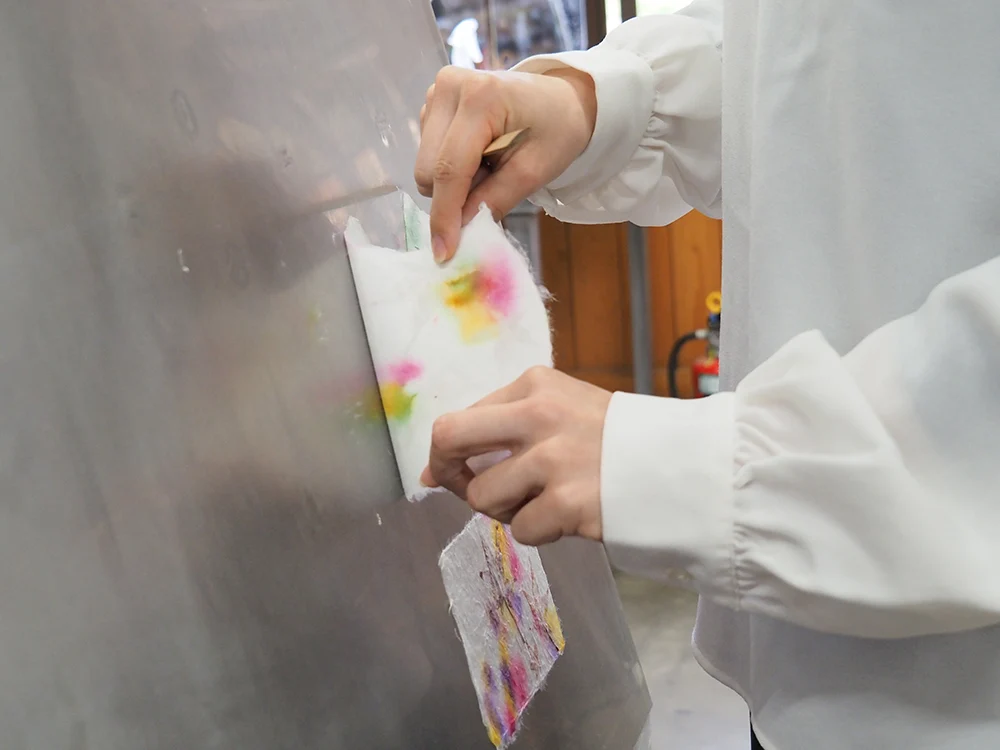
The rough texture of the washi is impressive!
For the fan, glue washi on both sides of the ribs.
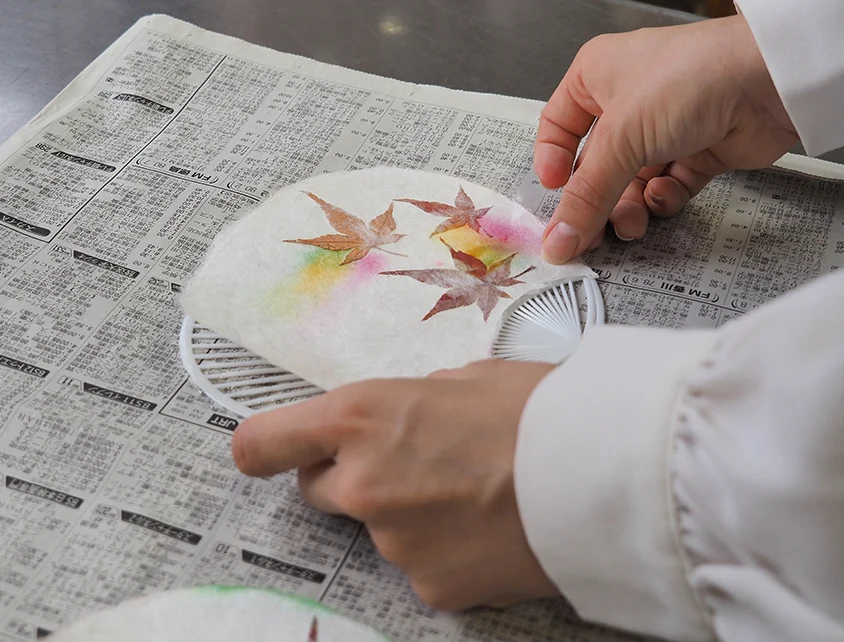
Finally, use scissors to shape it.
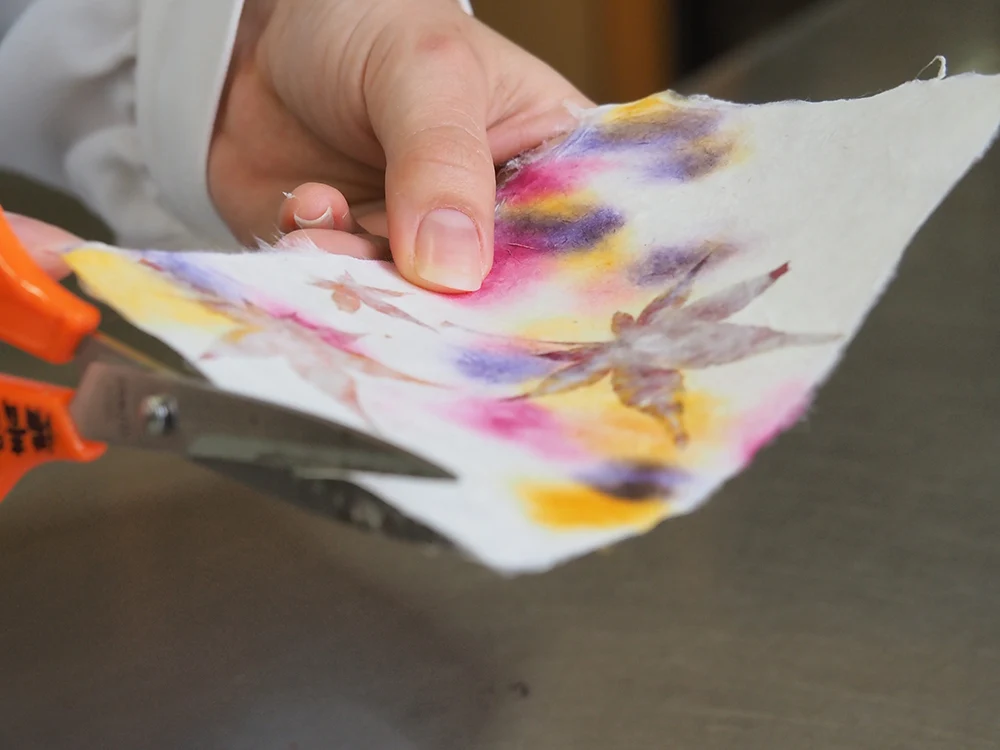
You can leave the fluffy edges of the postcard, and it gives a stylish hand-made feel.
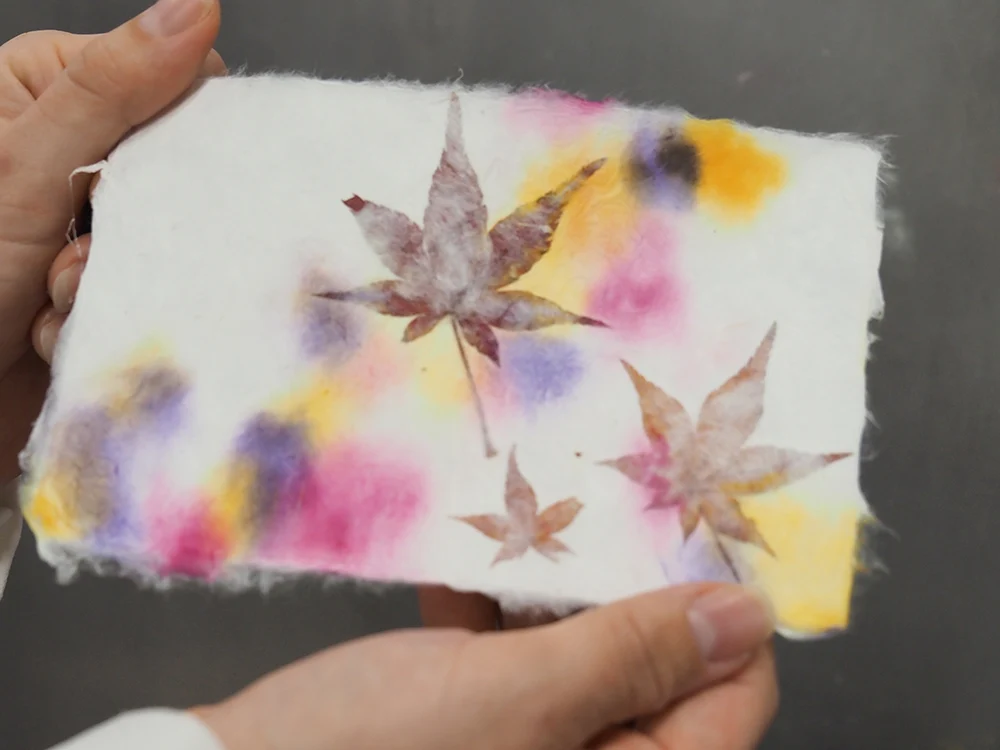
I pondered what to do, but this time I decided to trim the edges a bit for the finish.
5. Completion
An original fan and postcard made from hand-made washi have been completed.
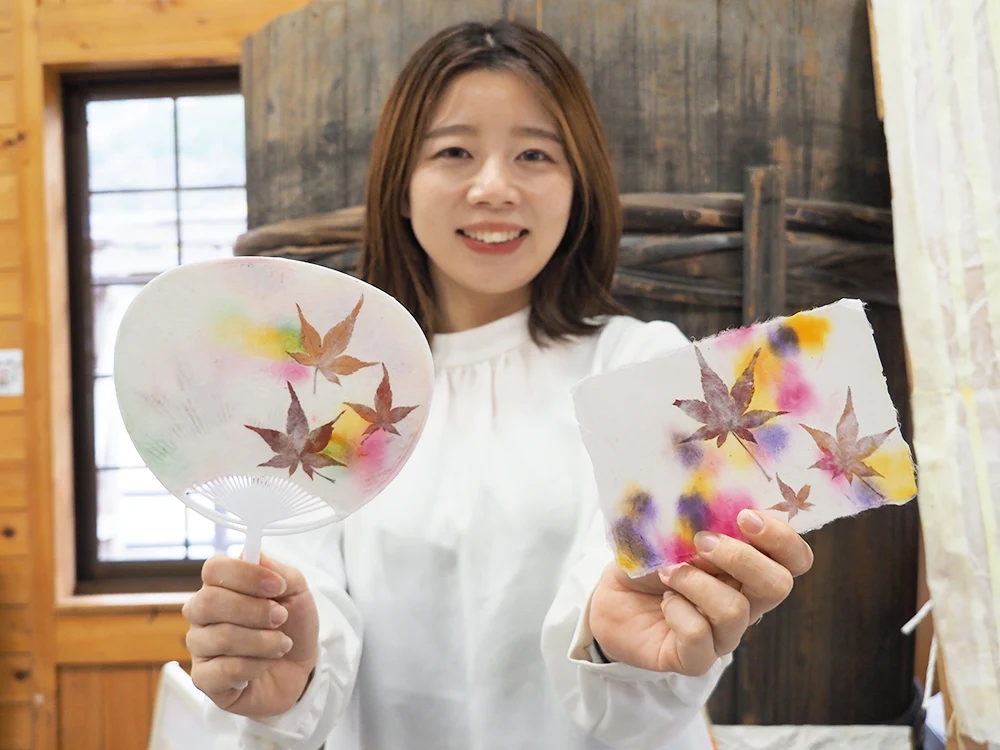
Even as a beginner, with guidance on the tips, I was able to challenge it more easily than I expected.
When making washi, please pay attention to whether the thickness is uniform.
When I asked Nakaishi, who experienced this as a model, about the points of decoration and coloring, she said, "Since it's spring, I finished it in soft colors. It was difficult to blend the colors as I imagined."
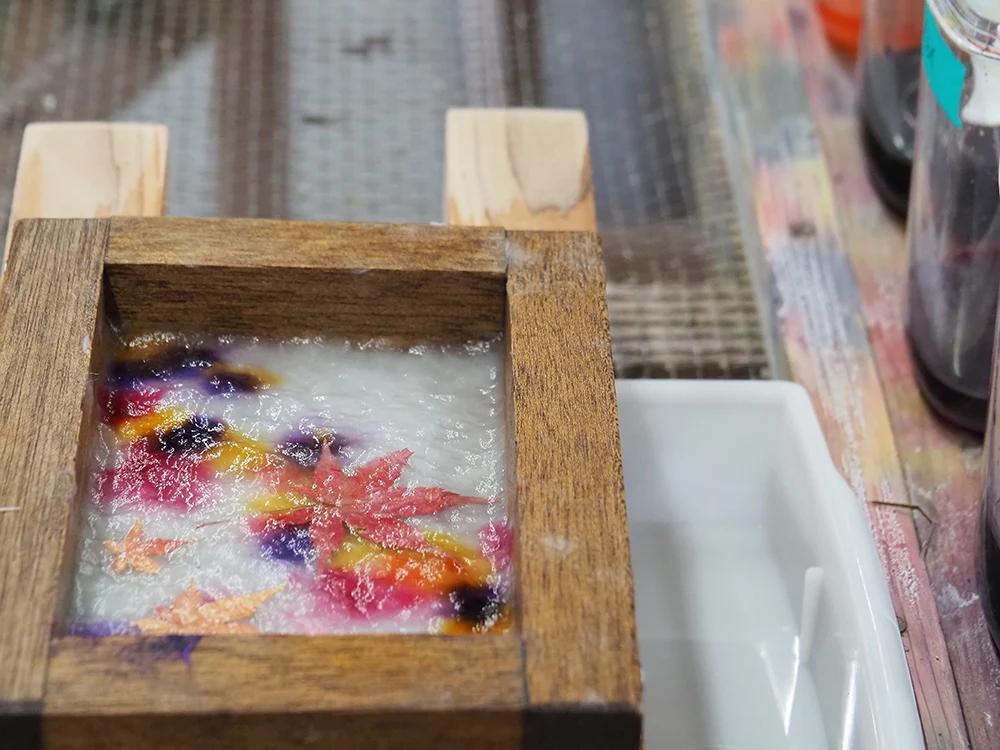
The time spent imagining what colors to use and how it will turn out is also enjoyable.
The Paper Museum has a postbox, and you can also send postcards.
The experience I had this time was a paper-making experience that even beginners can finish well.
Unlike the experience version, making washi in its true form requires skill, as it takes time to master the technique, saying, "In the first year, you can only make a few sheets of washi."
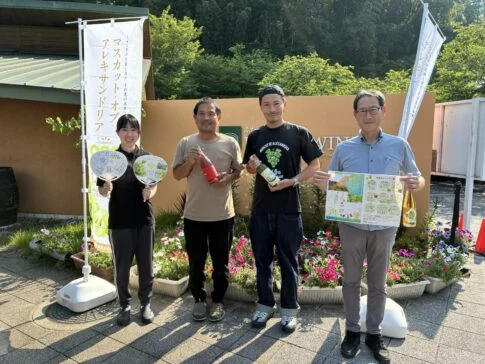
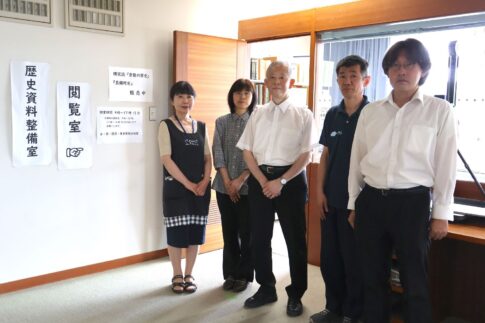
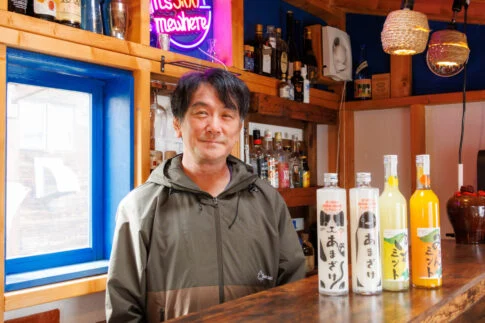
I spoke with Nakada Sarasa and Tsuchiya Shunsuke from the Kaminoyakata Washi Preservation Society, which is reviving and inheriting the washi-making tradition in the Kamigou area.
Yume Suki Park Paper Museum Data
| Name | Yume Suki Park Paper Museum |
|---|---|
| Location | 1977-1 Kamiyoshi Shimo, Niimi City, Okayama Prefecture |
| Contact | 0867-92-6577 |
| Parking | Available |
| Business Hours | 9:00 AM - 5:00 PM (Paper-making experience until 4:30 PM) |
| Regular Holiday | Wednesday |
| Usage Fee (including tax) | ◆ Experience Fee (per group) ・1-15 people: 1,500 yen (tax included, materials fee required) ・16 or more people: 2,500 yen (tax included, materials fee required) ◆ Materials Fee (per piece) ・Uchiwa (tax 600 yen) ・Shikishi (tax 500 yen) ・Postcard (tax 300 yen) |
| Payment Method |
|
| Reservation Availability | Yes Experience requires advance reservation. Accepting from 2 people. For 1 person, accepting from 2 or more courses. Changes to the experience content can be made on the day. |
| Toilet | Western-style toilet |
| Website | Yume Suki Park | Niimi City Tourist Association |