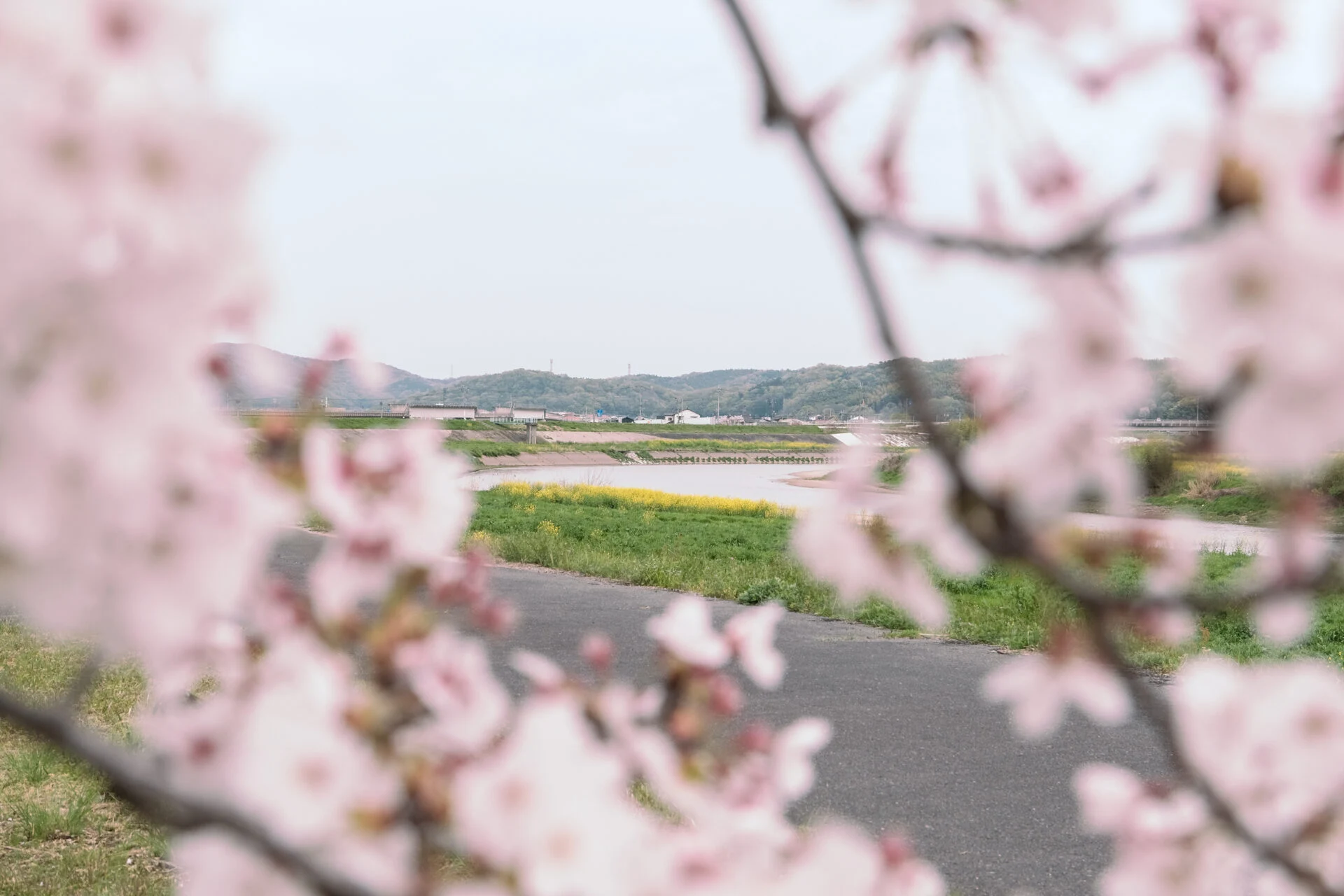
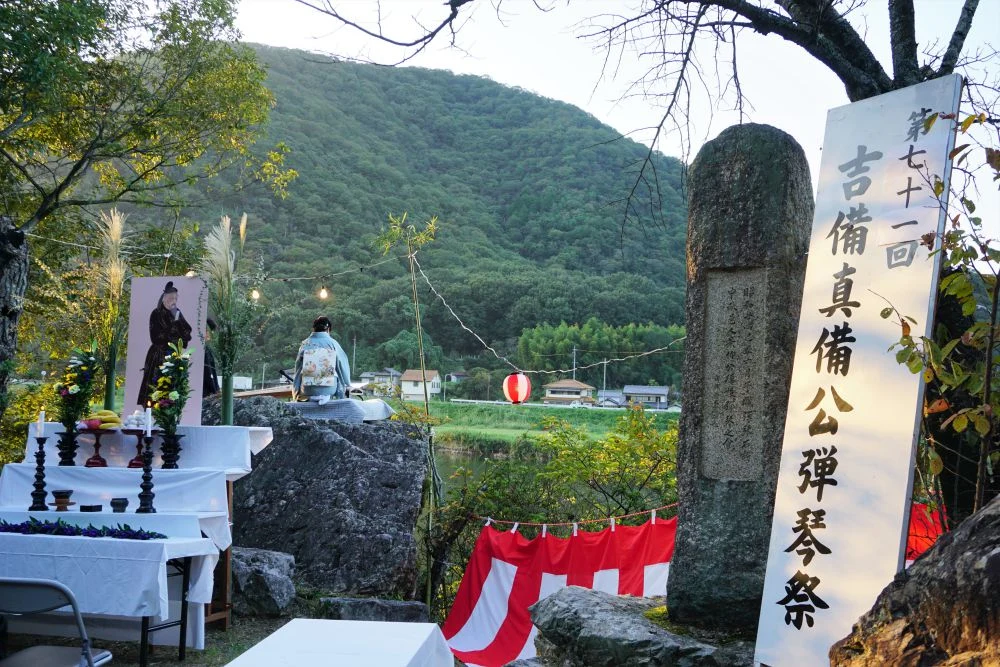
The great person who inspired the name of Mabi, Kibi no Makibi, is said to have returned to his hometown in his later years and played the koto on a huge rock overlooking the Oda River on the night of the mid-autumn full moon.
The name of that rock is Koto-hiki Iwa.
In memory of Kibi no Makibi, a festival called Dankin-sai is held every year on the Saturday closest to the mid-autumn full moon around "Koto-hiki Iwa."
Due to the heavy rain in July 2018, the festival was canceled in 2018, but in 2019, it was held at the request of the residents of the Kuresu area in Mabi.
We will introduce the elegant festival held in a place where you can overlook the calm Oda River.
About the Dankin-sai of Kibi no Makibi
The Dankin-sai is a traditional event held in the Kuresu area to commemorate Kibi no Makibi around the mid-autumn full moon.
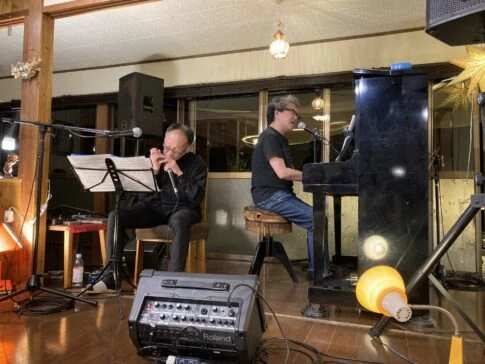
Since 1949, it has been held almost every year, and on Koto-hiki Iwa, where it is said that Kibi no Makibi played the koto in his later years, the koto and shakuhachi are performed.
Along the nearby river, the Kibi no Makibi Taiko is showcased, and stalls run mainly by local residents line the festival.
The 71st Dankin-sai of Kibi no Makibi
The 71st Dankin-sai of Kibi no Makibi was held on September 14, 2019, the Saturday following the mid-autumn full moon.
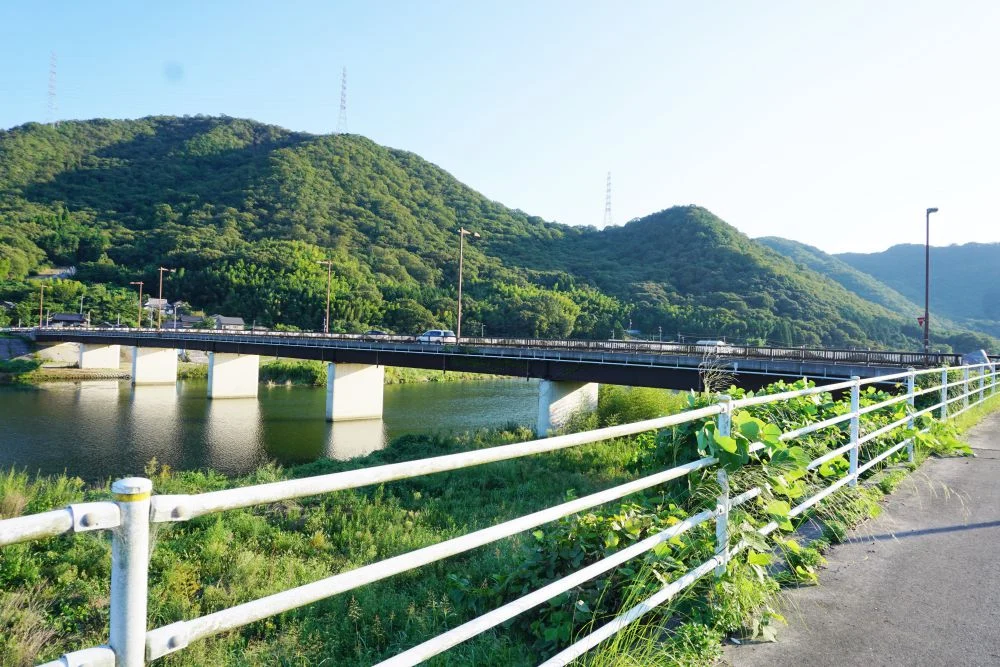
The location was on the west side of Mabi, within the Kuresu and Sarukake areas of Kurashiki City, at Koto-hiki Iwa and its surroundings along the Oda River.
On this day, we were blessed with clear skies without a single cloud, and as night fell, the full moon was also visible.
The festival at Koto-hiki Iwa
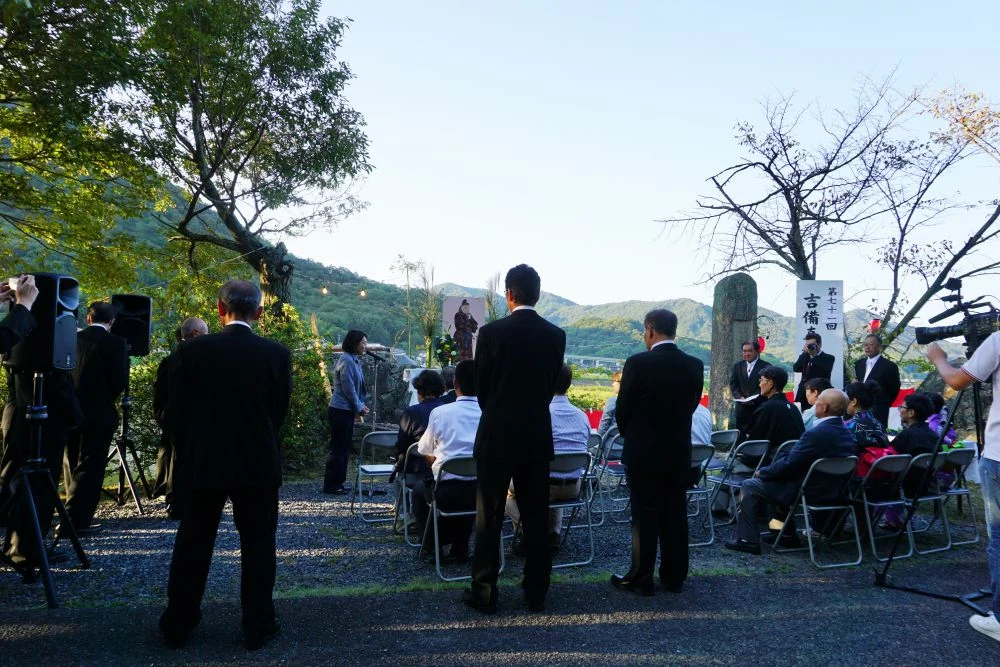
Starting at 5 PM, greetings were given by the chairperson of the Dankin-sai executive committee and Kurashiki City Mayor Kaori Ito.
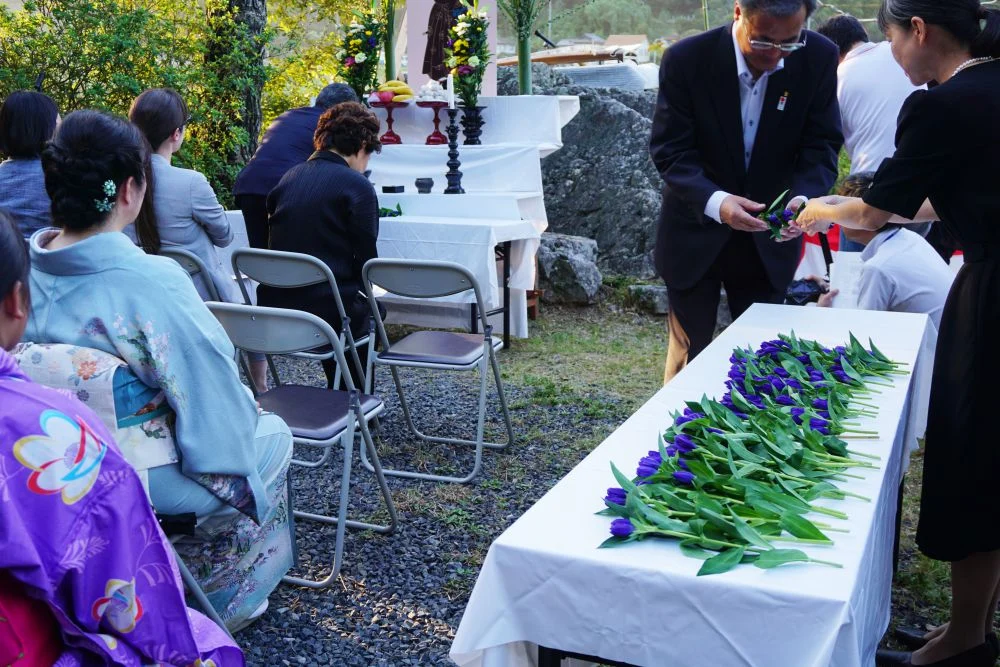
Flowers were offered at the altar dedicated to Kibi no Makibi.
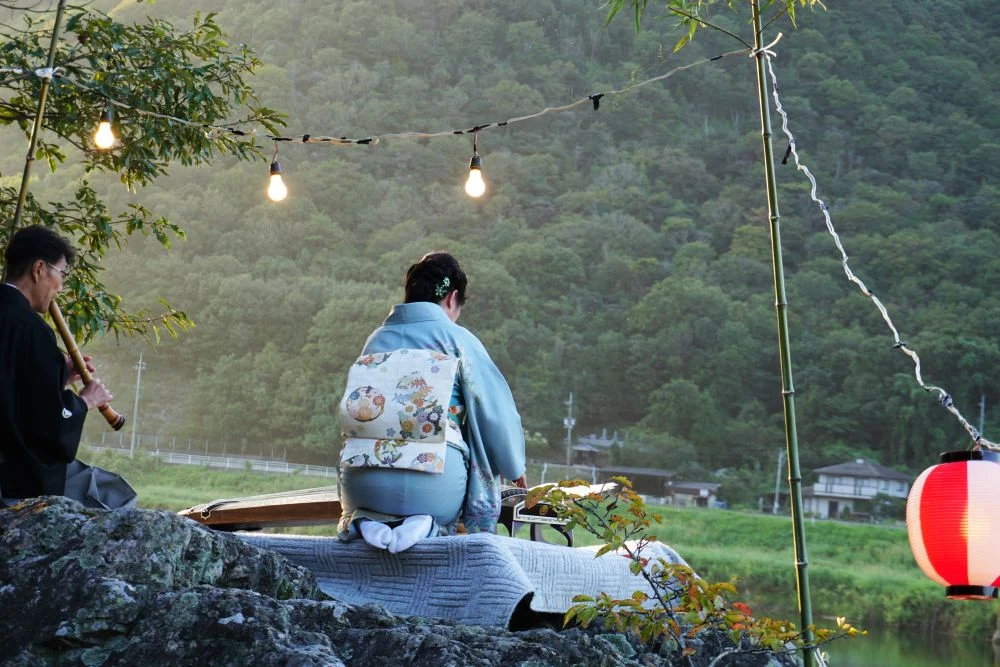
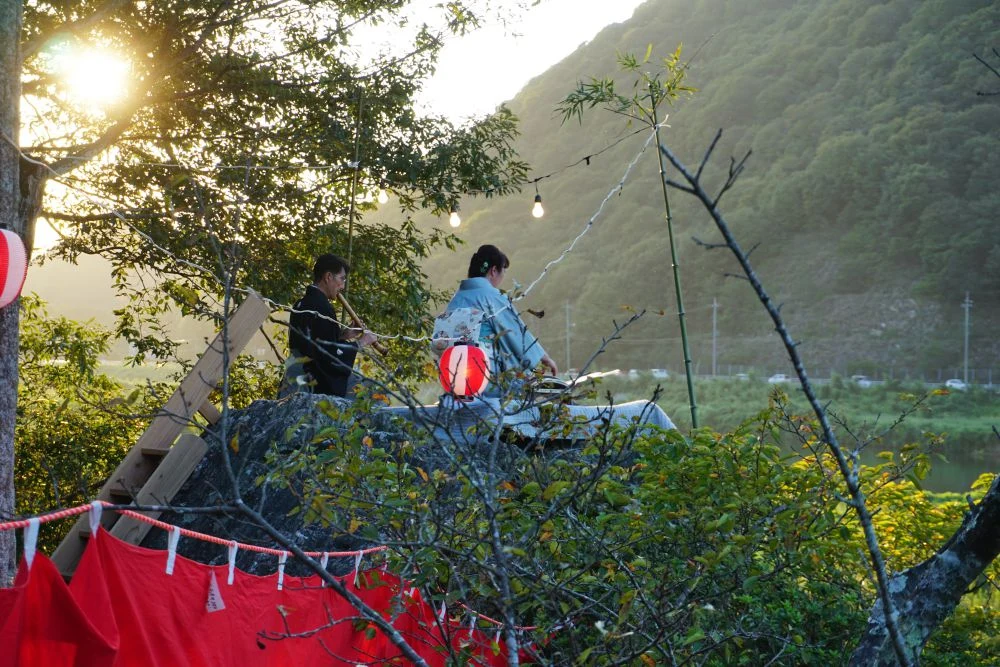
Then, the performance of the koto and shakuhachi began on Koto-hiki Iwa.
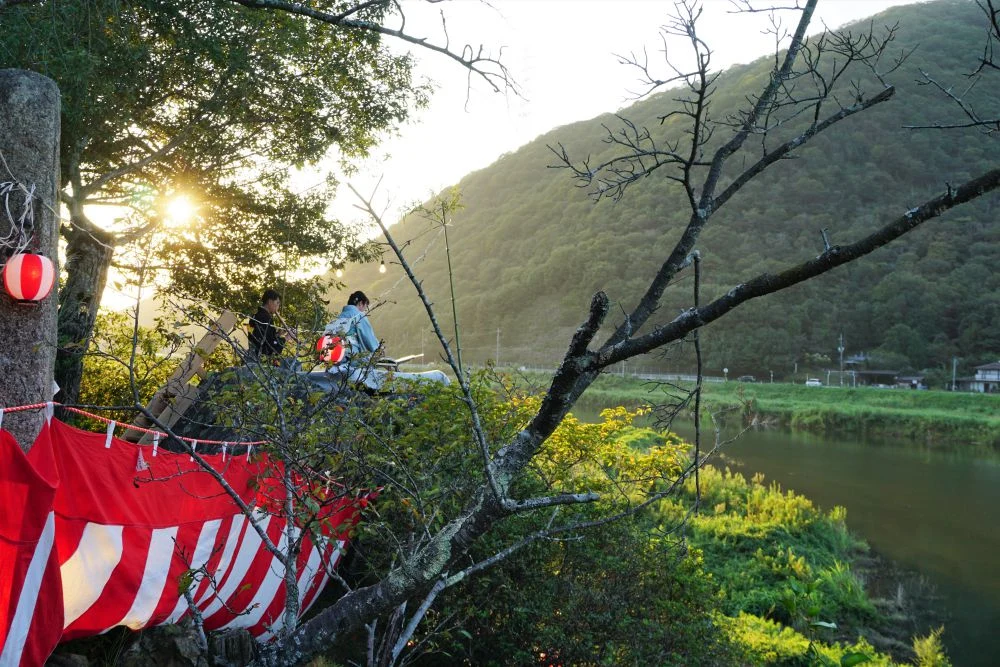
As the sun set behind the mountains and the calm Oda River came into view, listening to the gentle sounds of the koto and shakuhachi made one feel as if they had slipped back in time to a distant past.
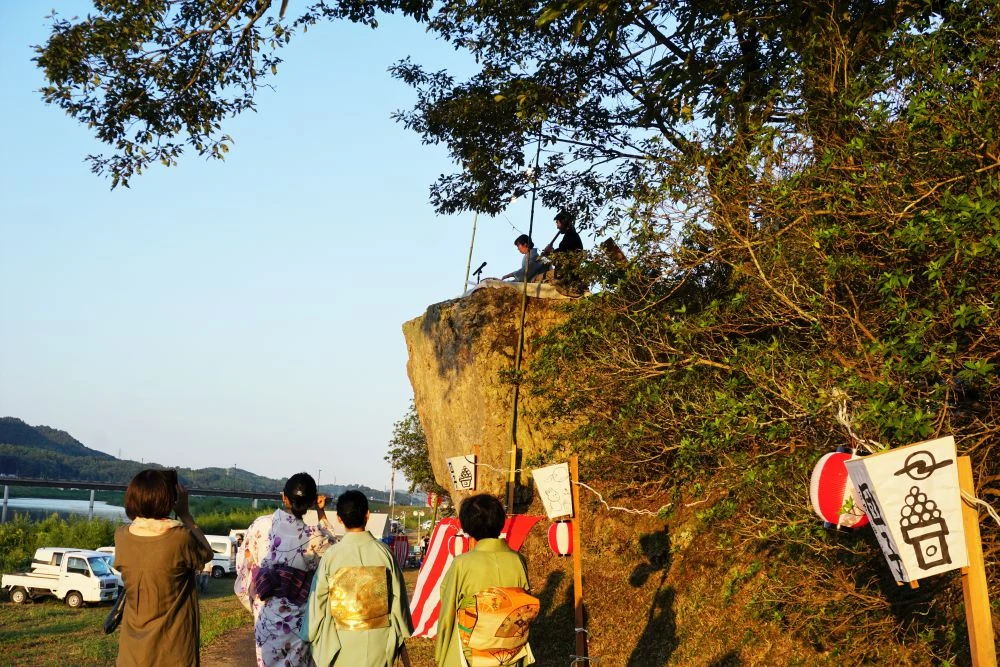
The elegant melodies captivated the local residents, and in the end, applause erupted.
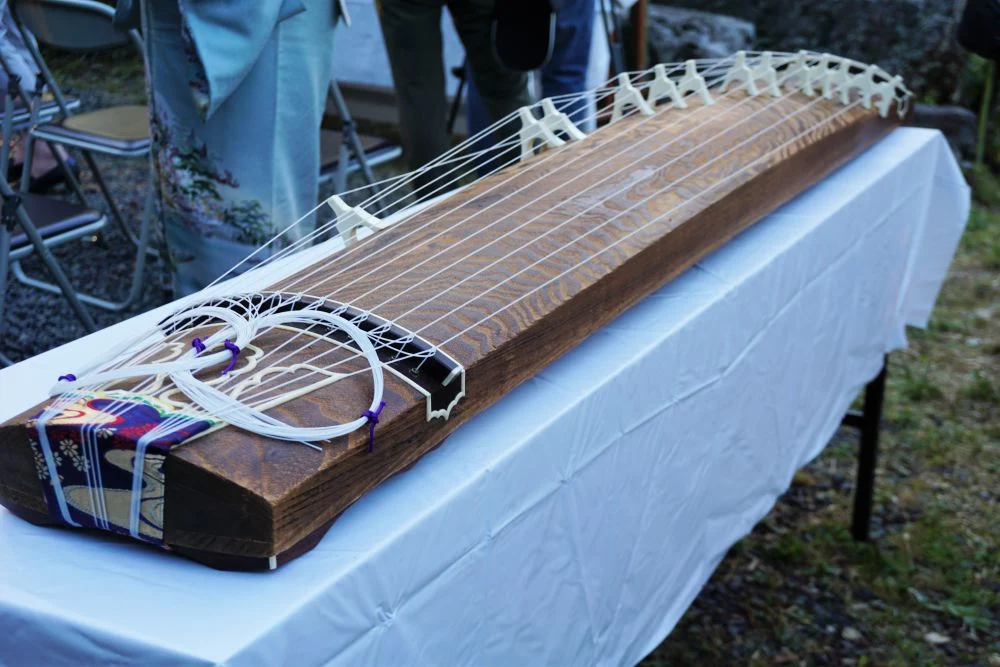
The koto is said to have been brought back to Japan from Tang (China) by envoys to the Tang Dynasty about 1,300 years ago during the Nara period.
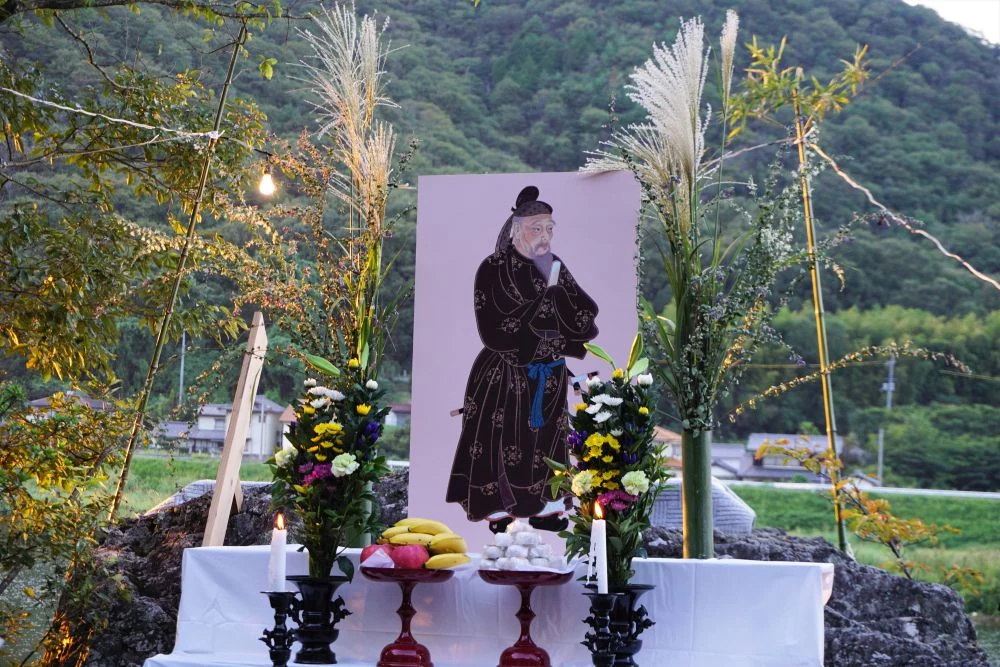
What thoughts did Kibi no Makibi have while performing? It is very intriguing.
The stalls and stage around Koto-hiki Iwa
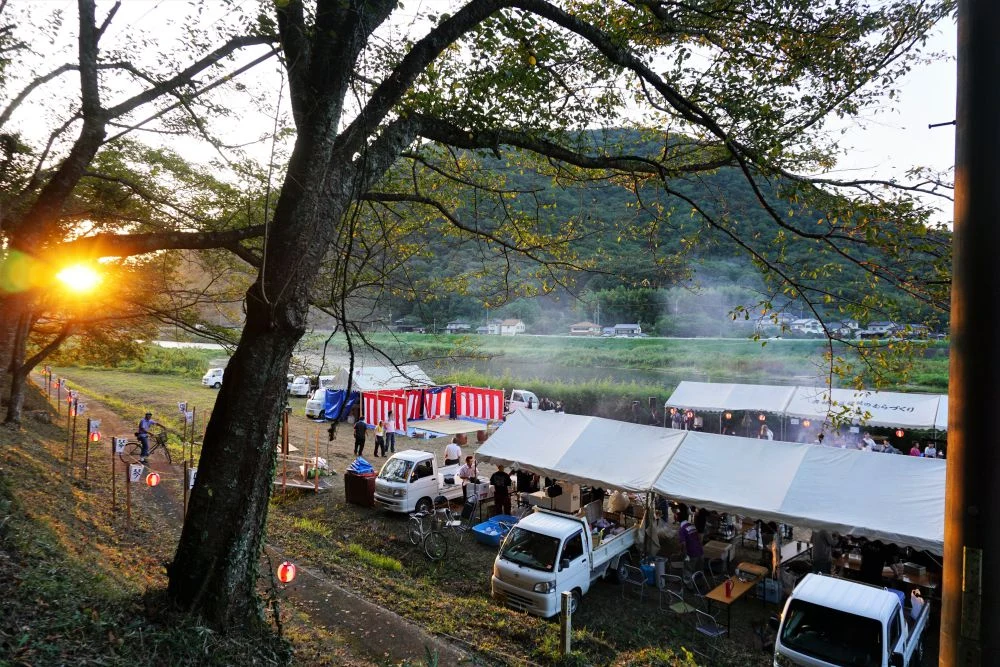
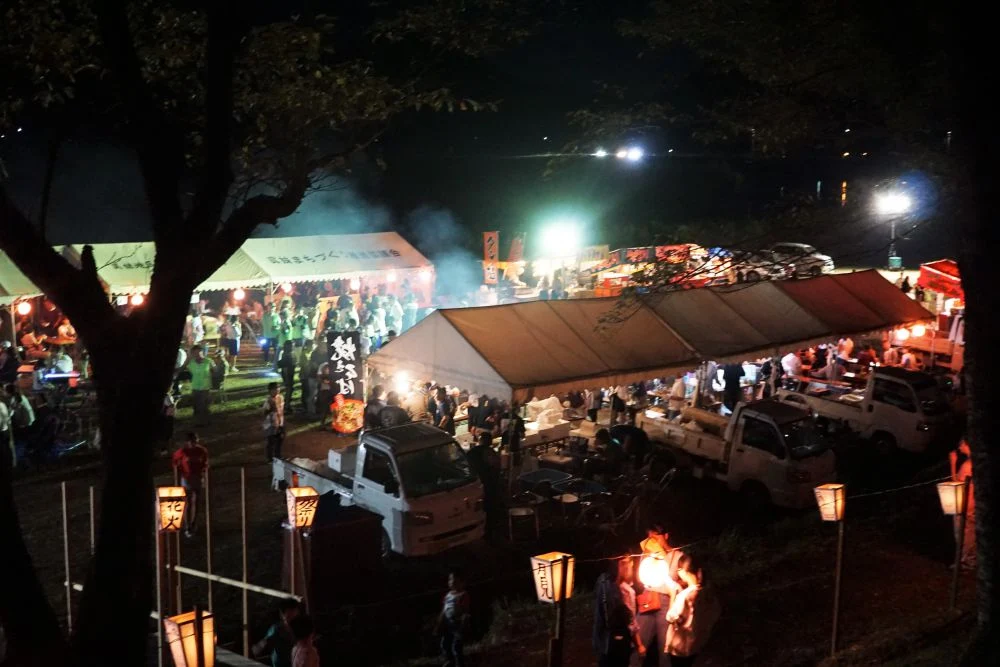
Near Koto-hiki Iwa, stalls lined the riverside, and various performances were showcased on stage.
As the sun set, more and more people began to gather.
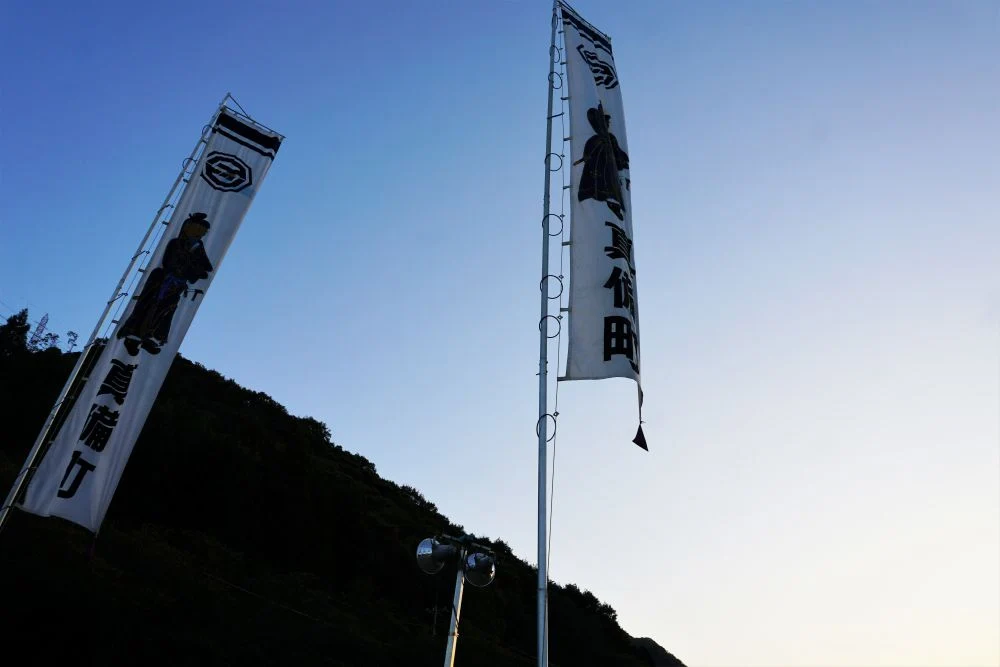
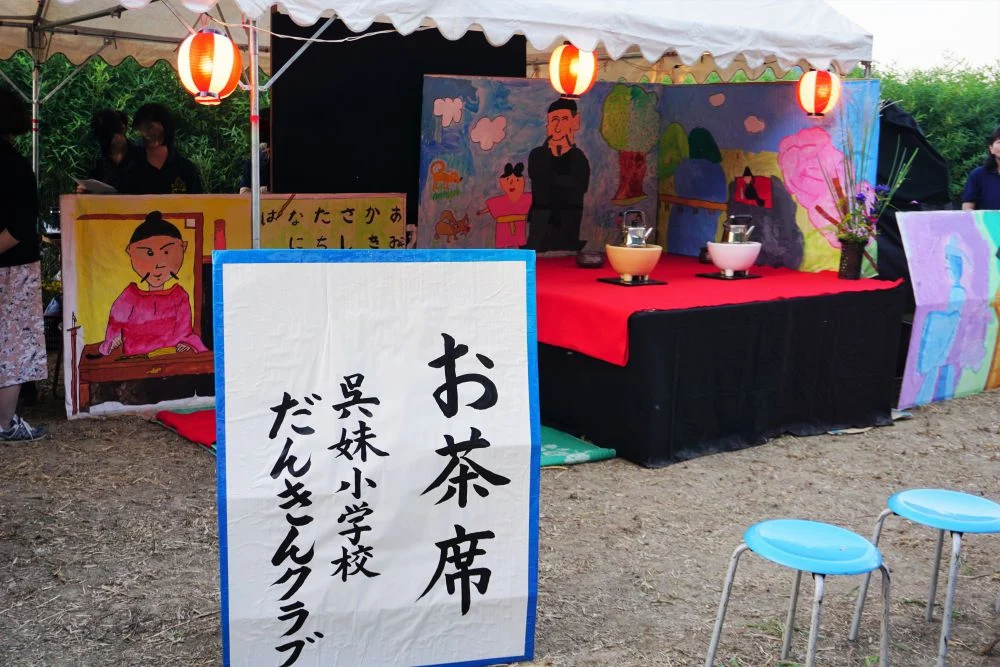
At the 71st Dankin-sai of Kibi no Makibi, free tea was served to the first 50 people.
Elementary school students dressed in yukata prepared matcha and offered heartfelt hospitality to the attendees.
It was very moving to see the tea culture being passed down to the younger generation.
Kibi no Makibi Taiko
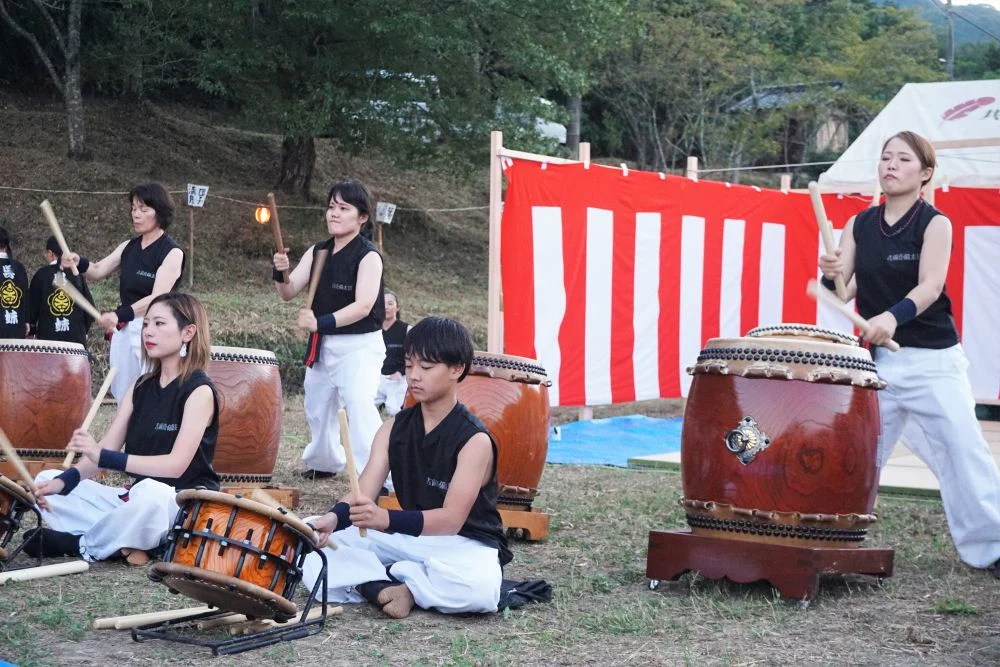
From around 6 PM, the performance of Kibi no Makibi Taiko began.
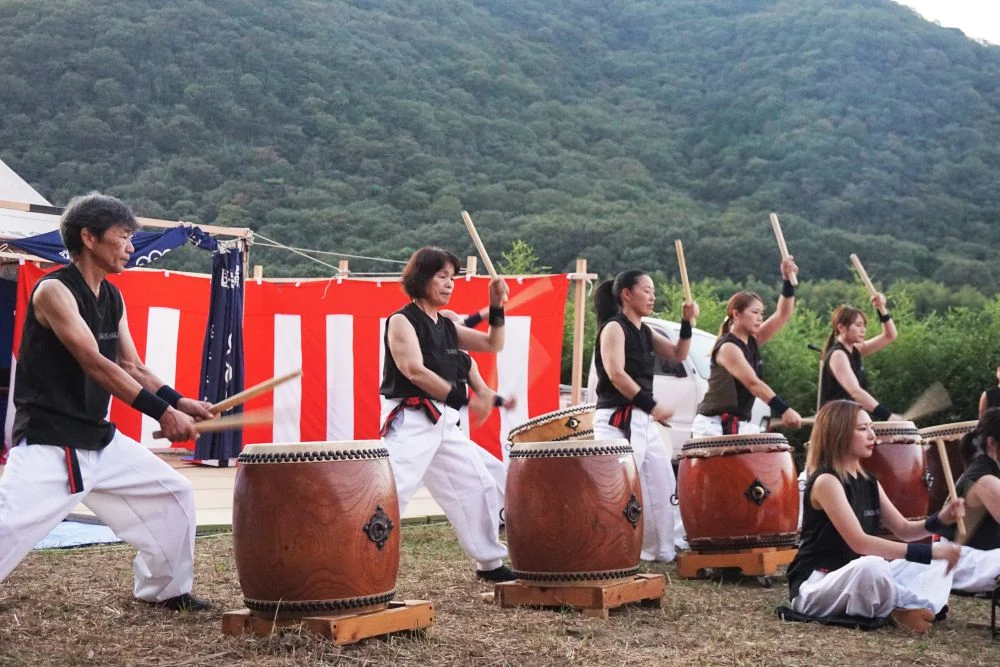
The powerful and rhythmic performance was by the taiko group "Kibi no Makibi Taiko" from the Mabi area.
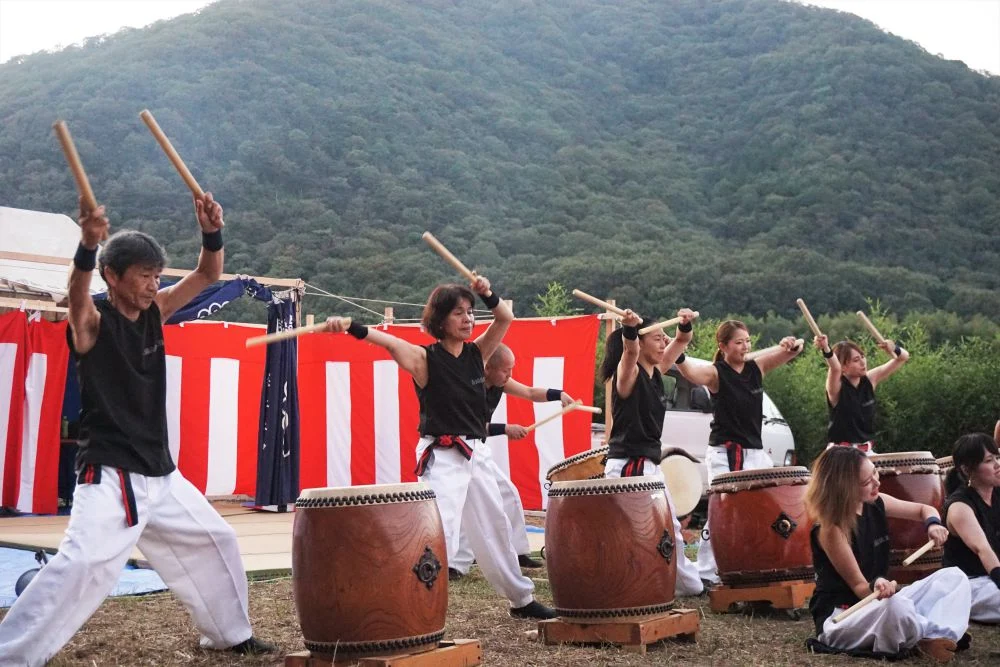
The shouts of "Ha!" and the performers waving their hands while holding the bachi, along with the fast-paced drumming, created a performance that left no time to catch one's breath.
Soran-bushi by Kuresu Elementary School students
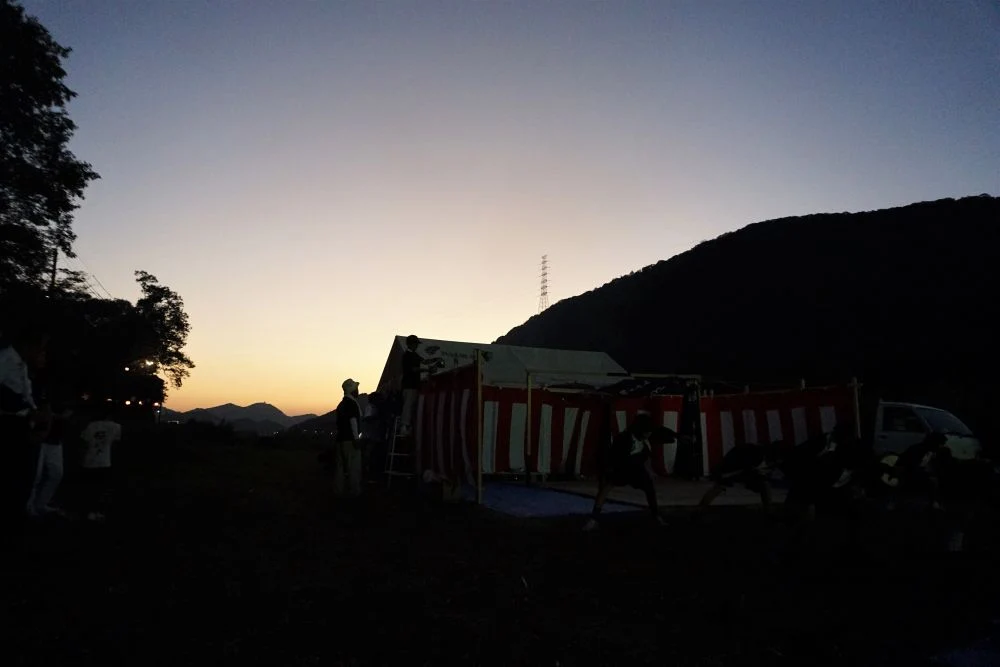
The bright venue began to darken as the sun nearly set.
The red lanterns were lit.
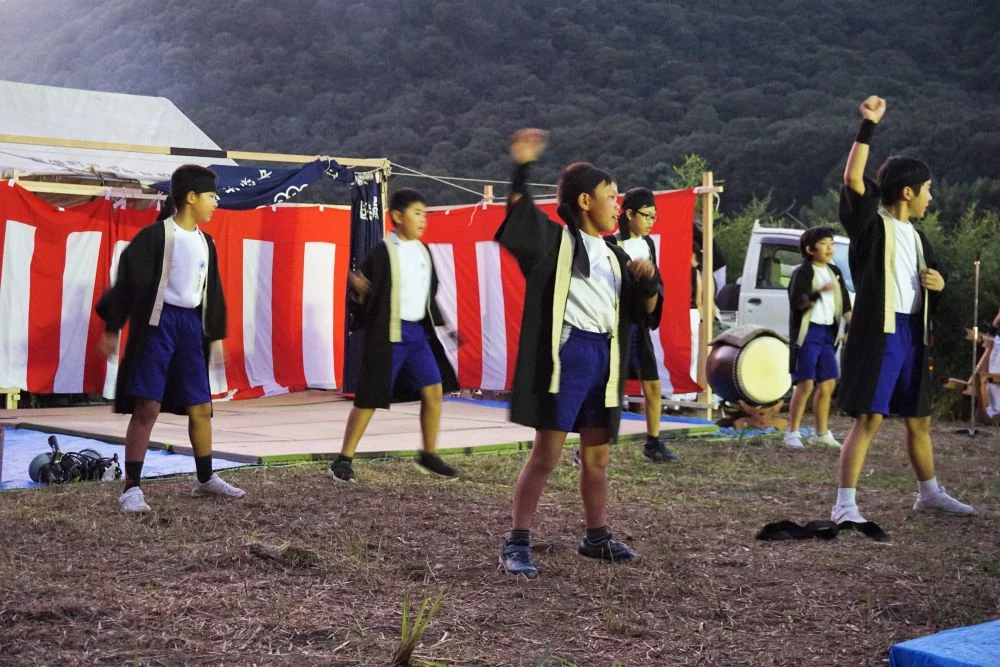
The traditional Soran-bushi was performed by boys from Kuremai Elementary School.
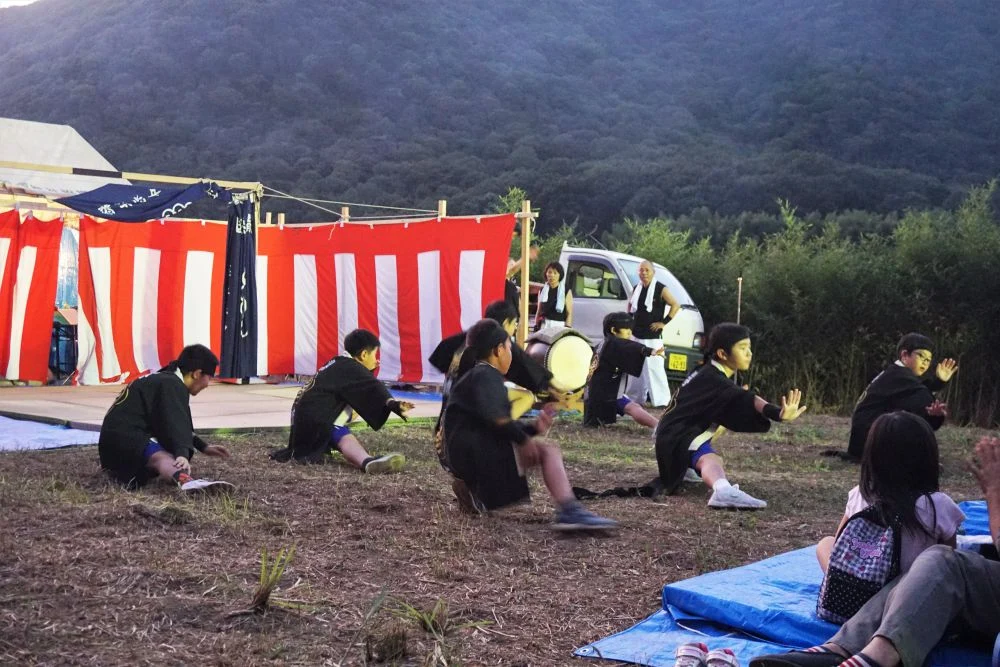
They danced energetically, striking poses as if to lower their bodies and looking up to the sky.
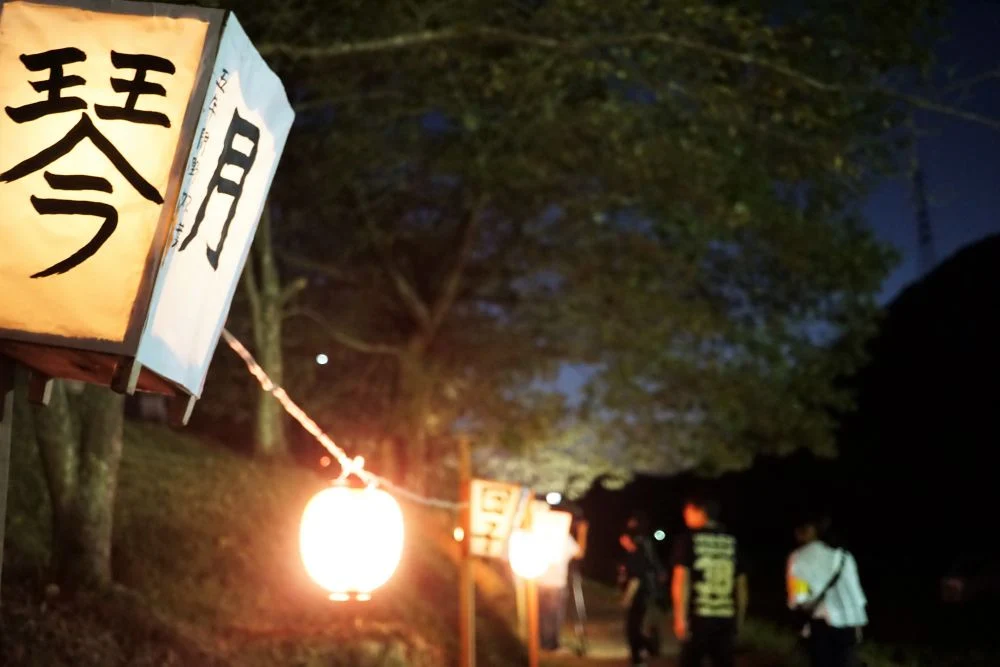
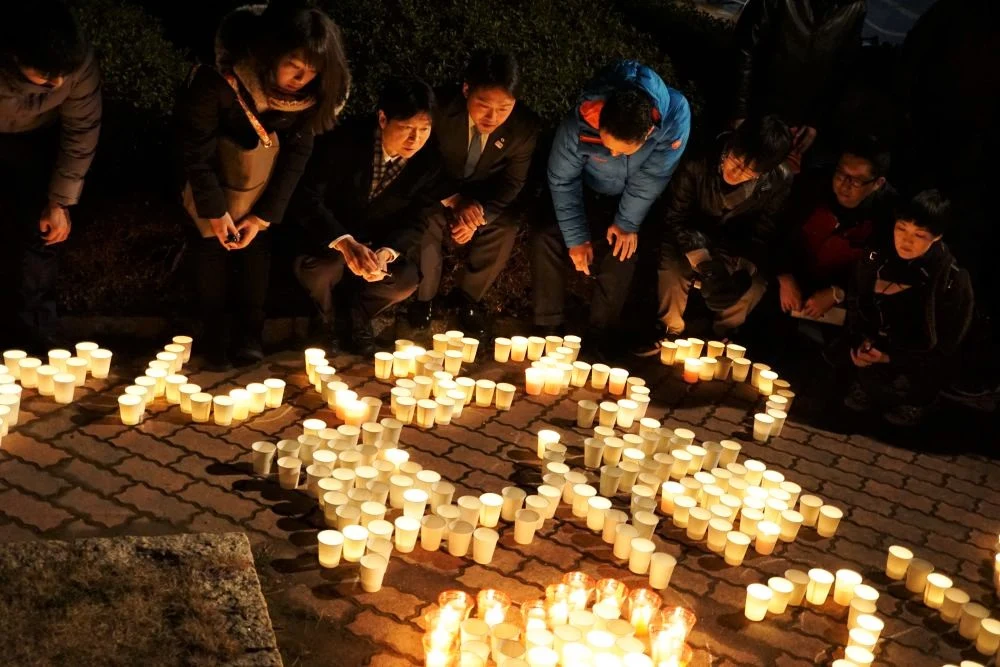
The andon (paper lanterns) made by elementary school students, set up around the venue, were also lit.
Parents were seen walking around, searching for their child's andon, saying, "Which one did my child make?".
Food Stall Scene
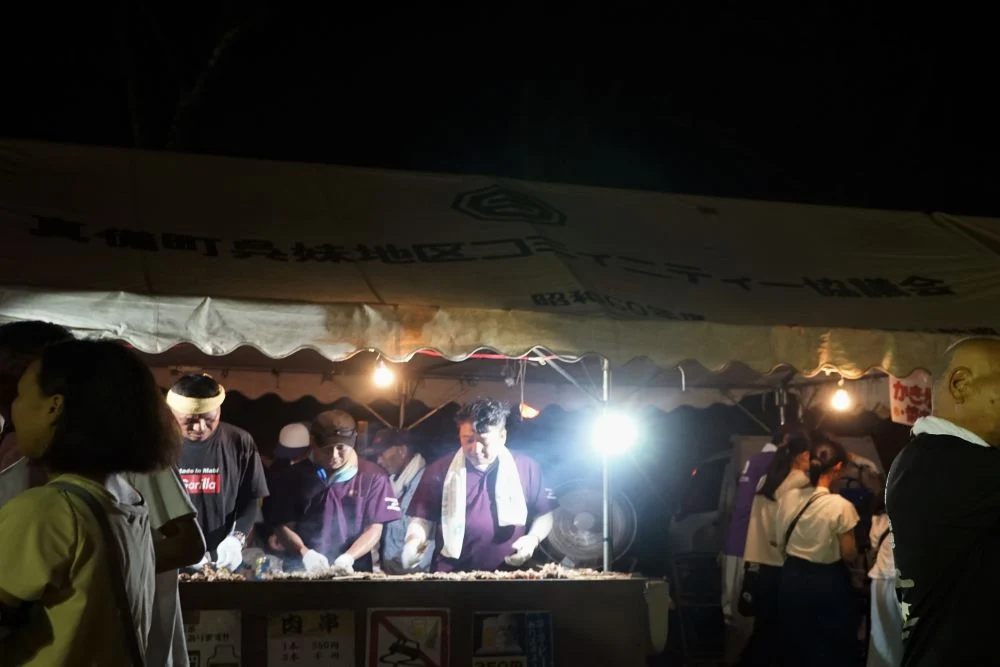
I took a look at the food stalls run by volunteers from the Kuremai area.
Smoke billowed up, and the aroma of sauce filled the air, creating a line of participants.
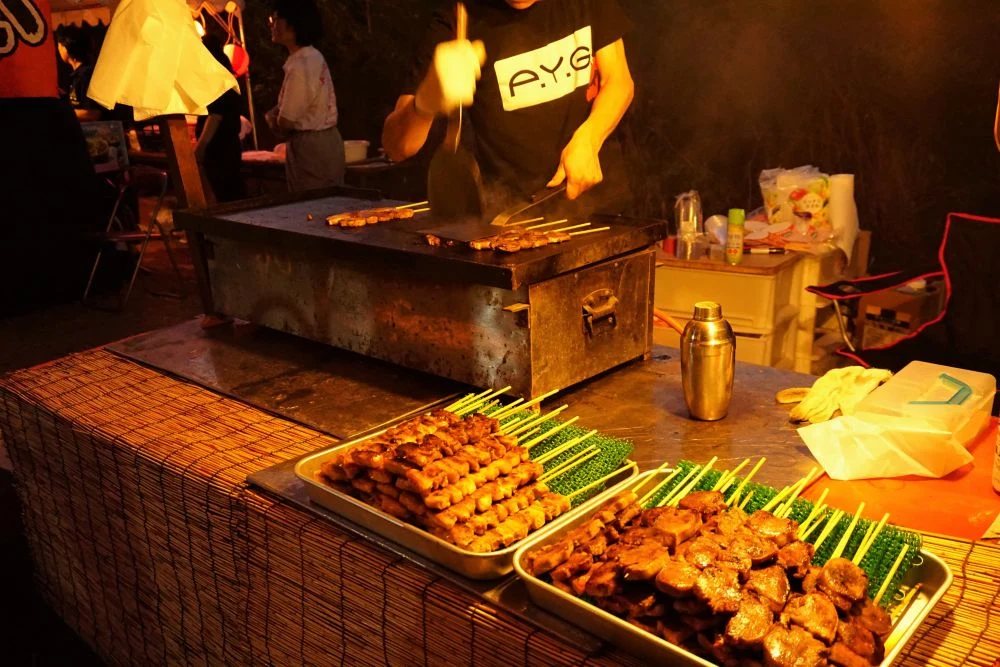
Stalls lined up selling yakitori, kakigori, crepes, yakisoba, and Bukkake udon.
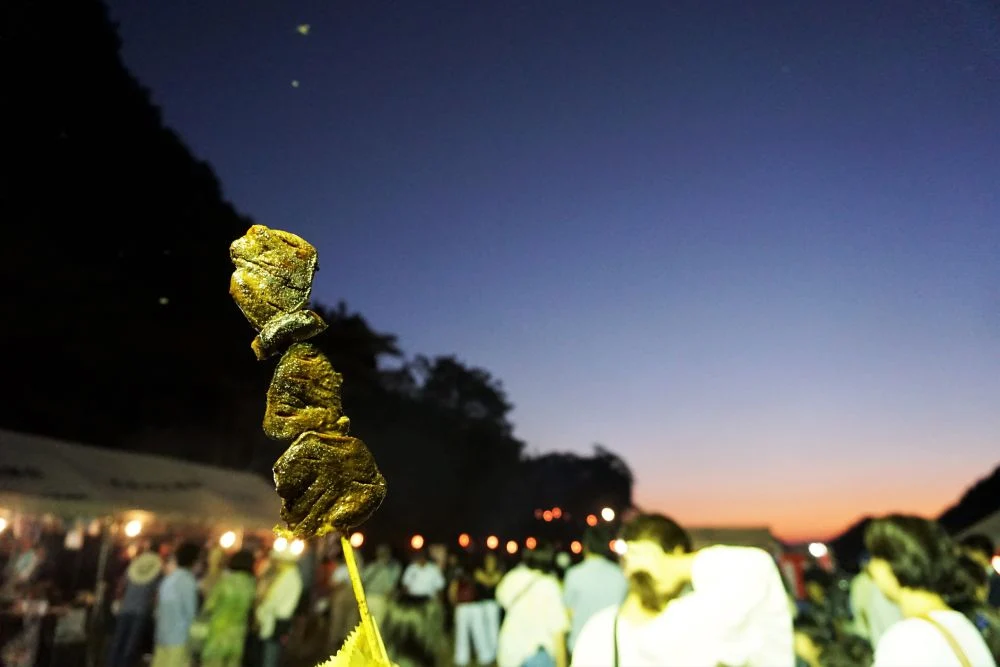
While gazing at the beautiful sky with a gradient from blue to red, I enjoyed a beef tongue skewer.
Koto Performance
The koto performance began before 7 PM.
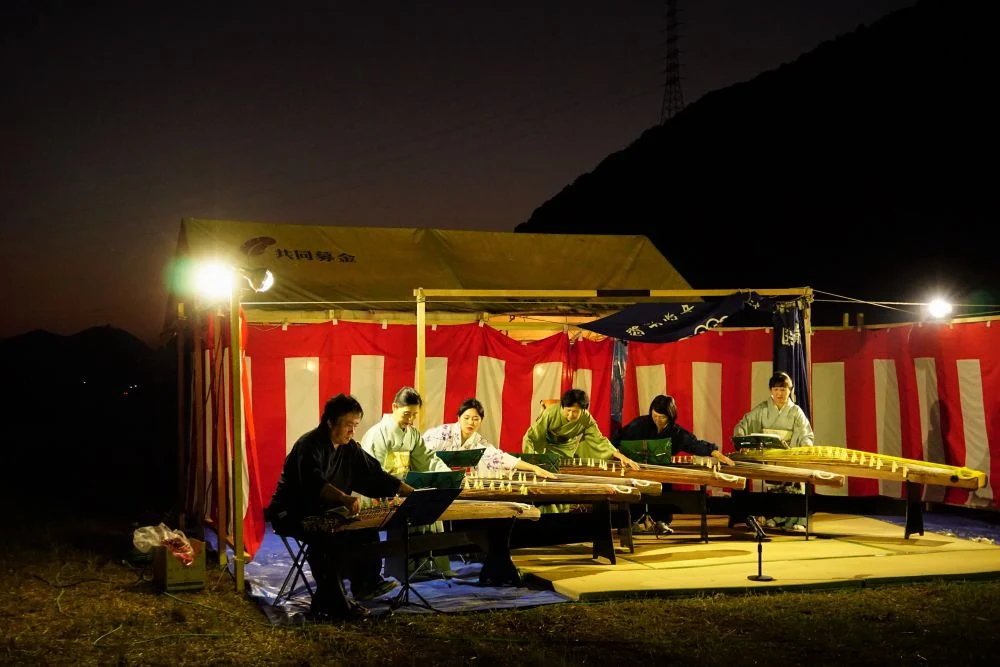
Along the Oda River, the beautiful sounds of the koto and the cicadas harmonized, and I couldn't help but sigh at the beauty of hearing traditional Japanese instruments in nature.
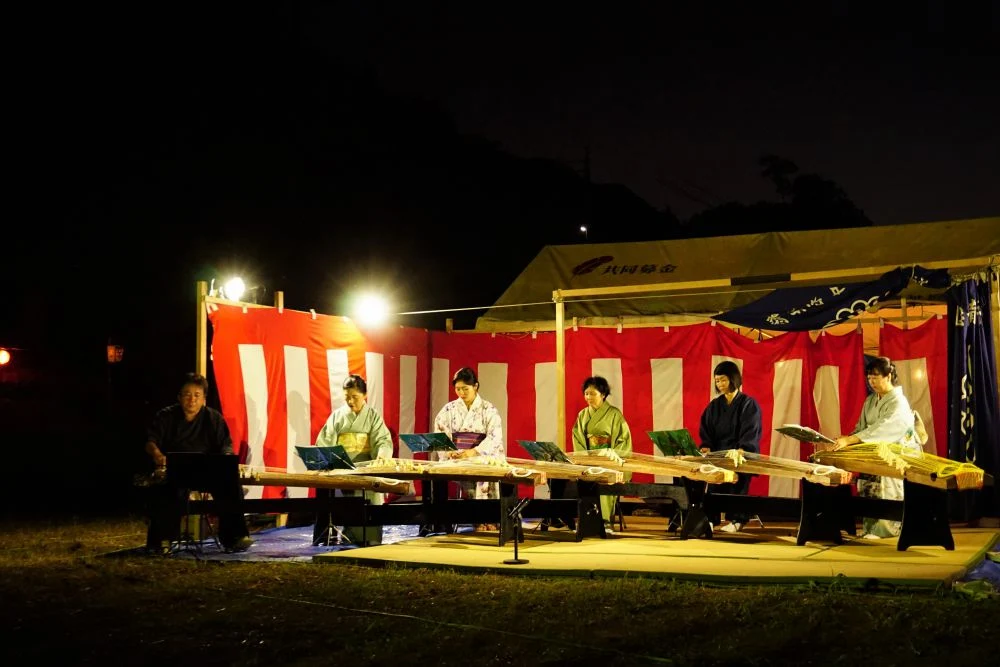
The performer mentioned, "I think opportunities to touch traditional Japanese instruments have decreased, but I hope that through events like this, people can learn a little about the beauty of these instruments."
Kagura Scene
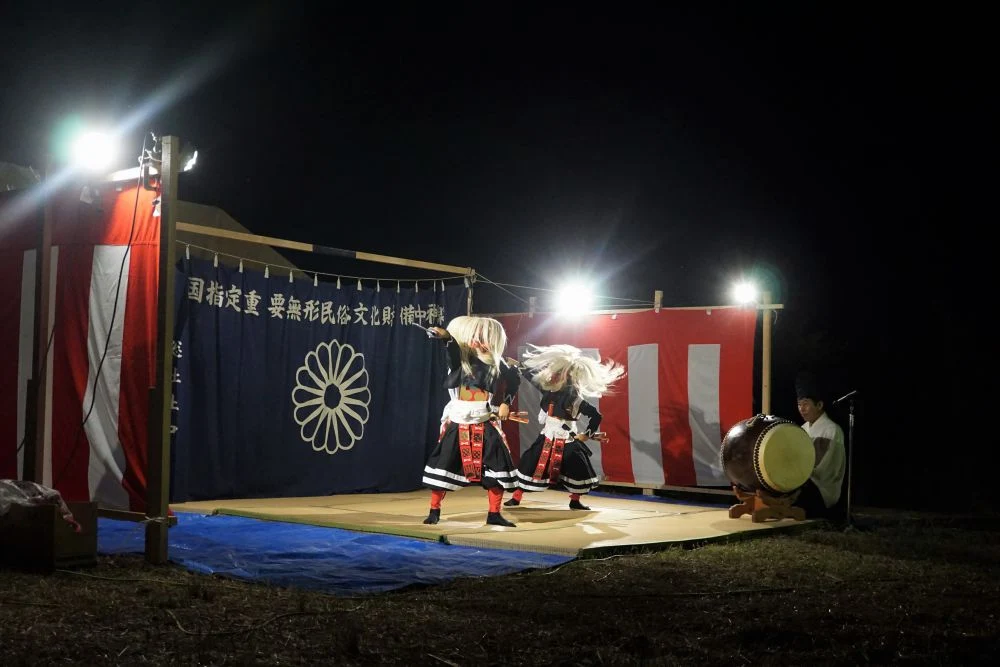
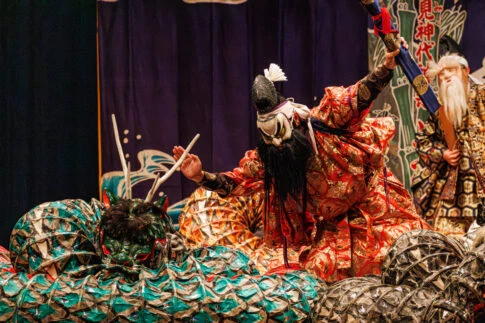
Finally, the Kagura performance by the Soja group was presented.
Kagura is a traditional culture that has been passed down for a long time, performed to calm the local deities and to wish for the abundant harvest and good health of the local people and their relatives.
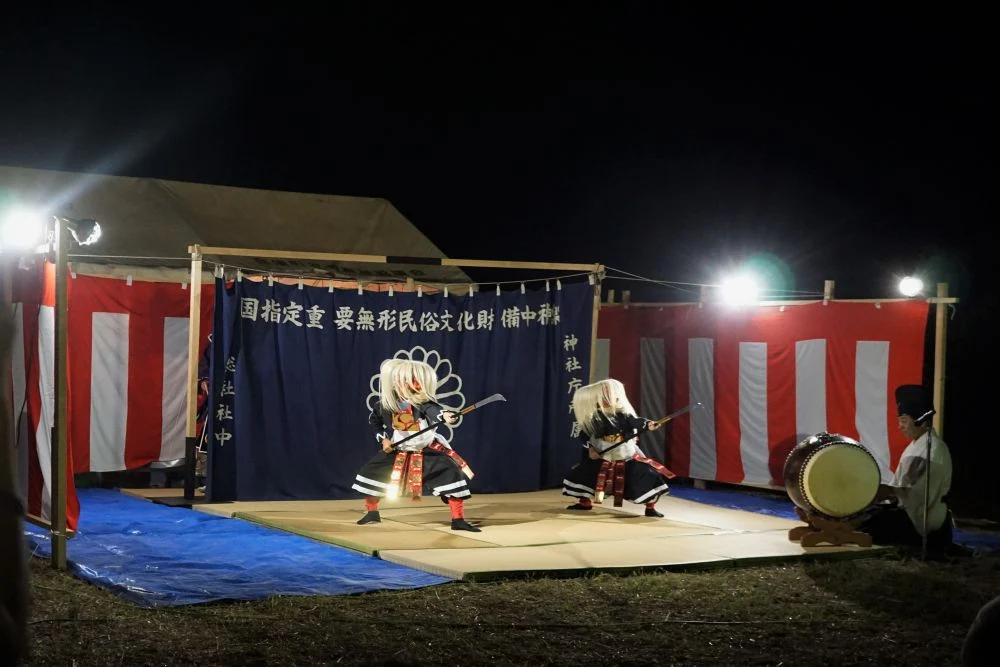
Surprisingly, these two are brothers in the third and fifth grades!
Although they have only been practicing Kagura for about seven months, their movements were perfectly in sync with the drum, which was astonishing.
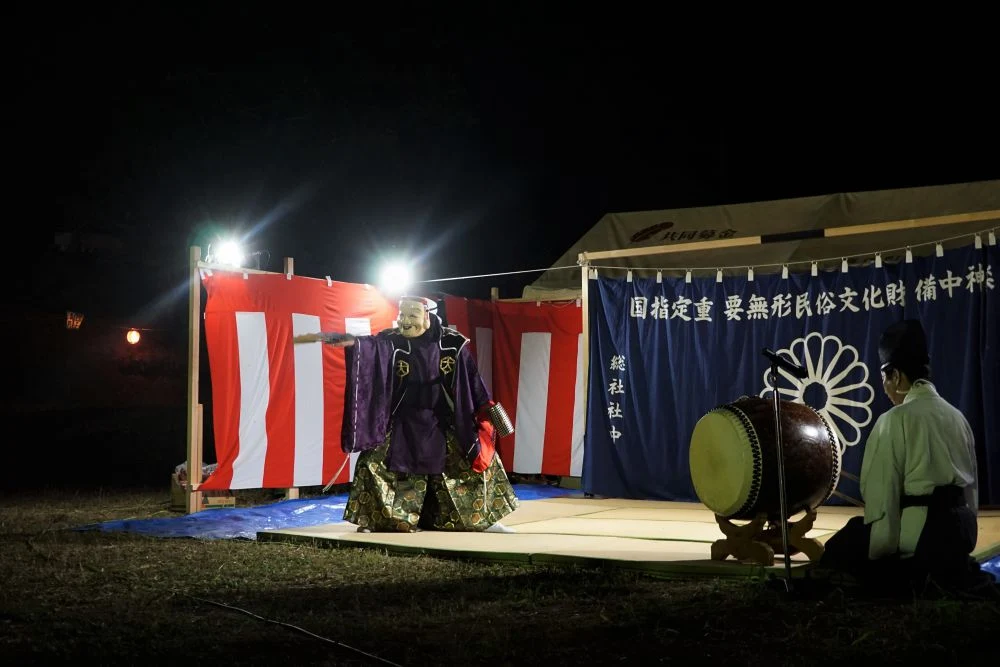
And then, the dance of Okuninushi no Mikoto began.
Dressed in a splendid costume, Okuninushi no Mikoto appeared holding a fan and a small mallet.
Finally, the time everyone had been waiting for arrived, the time to scatter the sweets known as "Fuku no Tane" (Seeds of Fortune).

Both adults and children gathered near the stage, reaching out their hands to grab the sweets!
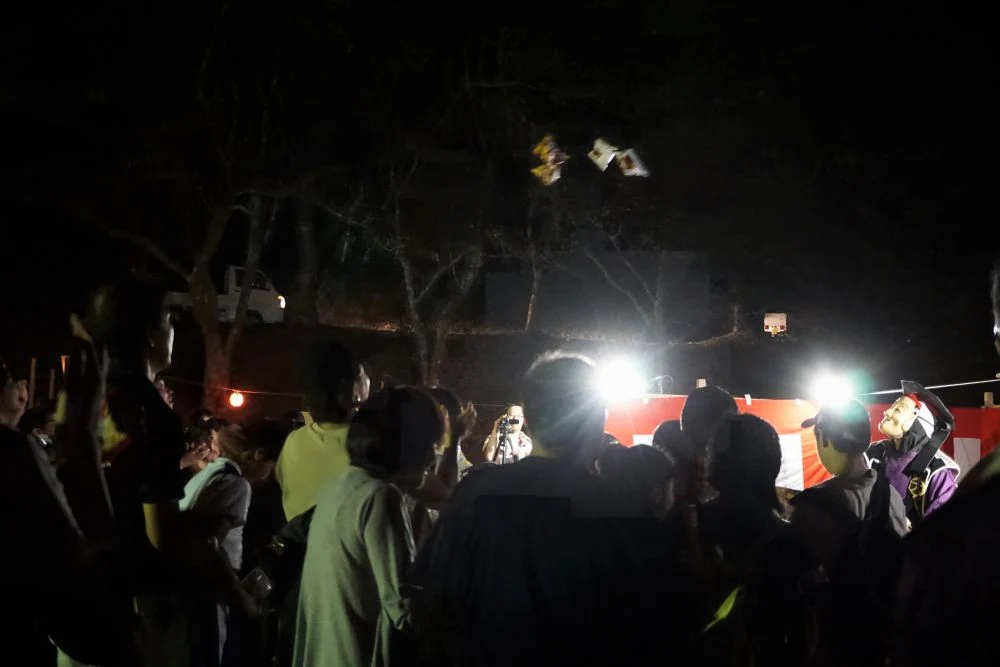
Voices of "I got one!" and "Yay!" echoed everywhere, creating a very lively atmosphere.
Conclusion
It was a night where I could enjoy the beauty of the autumn sky while gazing at the rich natural scenery of Mabi.
This was my first visit for coverage, and the view of the Oda River from Koto-dan Rock was beautiful no matter where I looked, and I was healed by the sounds of the koto and shakuhachi, losing track of time.
The effects of the July 2018 heavy rain disaster still linger throughout Mabi, and the recovery is still ongoing.
However, there were people who said, "I will return to Mabi again this year," and smiling reunions were also seen.
Participating in Mabi's annual event, I was able to touch upon traditional culture and had a day full of learning.
While giving thanks for the beauty of the autumn full moon, I pray for the gradual return of vitality to Mabi.

Data of the 71st Bukkake udon Festival of Kibi no Makibi
| Name | 71st Bukkake udon Festival of Kibi no Makibi |
|---|---|
| Date | September 14, 2019 |
| Location | Within Mabi-cho, Kurashiki City, near Koto-dan Rock along the Oda River |