Interview with Hideki Tano, Director and Sales Manager of Kikkodo

We spoke with Hideki Tano, a director and sales manager at Kikkodo Co., Ltd., about the history of Kikkodo and Murasuzume, what makes them special, and the company's connection to Kurashiki.
This interview was conducted during our initial visit in February 2020.
Murasuzume was created by the founder, who wanted to make a local specialty for Kurashiki

What inspired the creation of Kurashiki's famous sweet, Murasuzume?
Tano (honorifics omitted)
Murasuzume was created by Daikichi Yoshimoto, the founder of Kikkodo.
In the early Meiji period, he began making sweets with the desire to “create a local specialty for Kurashiki!”
After much trial and error, Murasuzume was born, inspired by the woven sedge hats worn by people performing dances to pray for a good harvest, and the color of rice ears.
Actually, the name “Murasuzume” was not coined by the founder. It was named by the Kurashiki town mayor at the time, Fuichi Hayashi.
When he opened the confectionery in 1877, he apparently asked Mayor Hayashi to name the sweet. Hayashi was an accomplished businessman who ran Hayashi Yakuhin (now Evarus), among other ventures.
Mayor Hayashi named the sweet “Murasuzume” (群雀, “flock of sparrows”) because the woven hats worn in the harvest-prayer dance looked like sparrows.
At the time, I think it was a new and distinctive sweet unlike any other.
The name Kikkodo comes from tachibana, the origin of Japanese sweets

Where does the name Kikkodo come from?
Tano
Actually, the name Kikkodo was also given to us by Fuichi Hayashi, the Kurashiki town mayor.
In ancient Japan, sweets were fruits.
In particular, tachibana (Japanese citrus) had a very fragrant aroma, and because its fruit, flowers, or leaves were available throughout the four seasons, it was used as a sweet.
Tachibana could be considered the origin of sweets.
So the shop was named “Kikkodo,” meaning “a shop fragrant with tachibana, the origin of sweets”.
Kikkodo's Murasuzume is especially particular about its chunky red bean paste

What makes Kikkodo's Murasuzume special?
Tano
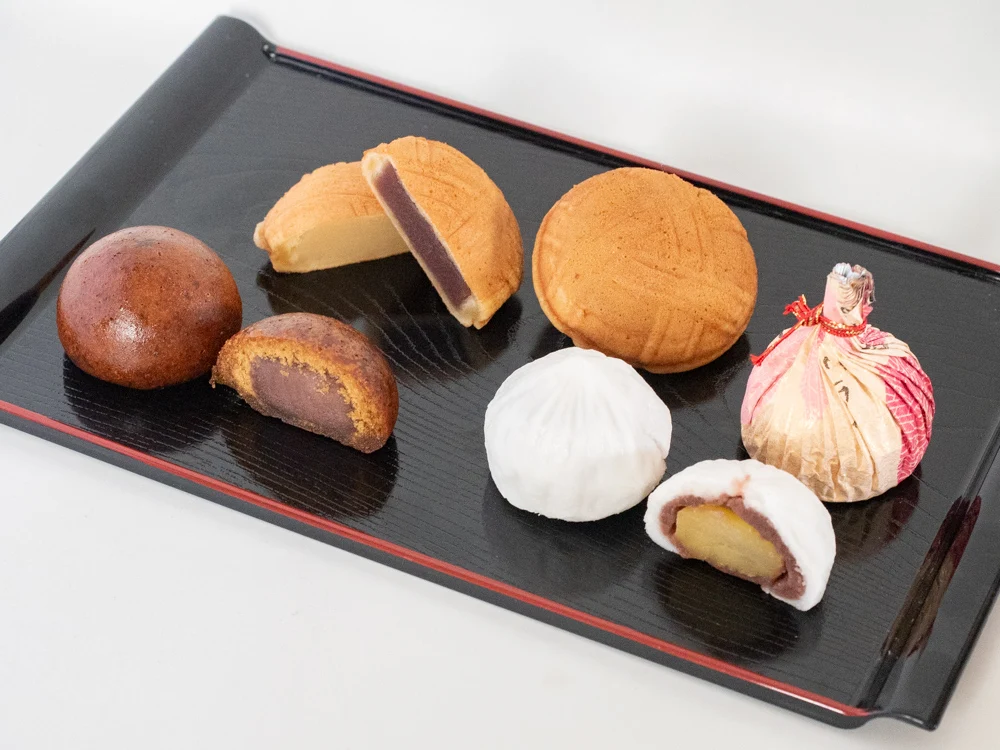
The batter is important too, of course, but the most important thing is the chunky red bean paste. The azuki beans are from Hokkaido.
We also value the harmony between the “anko” and the texture of the azuki bean skins in the filling. It has a distinctive flavor, with just the right amount of texture from the beans.
People also say the sweetness is just right—not too sweet.
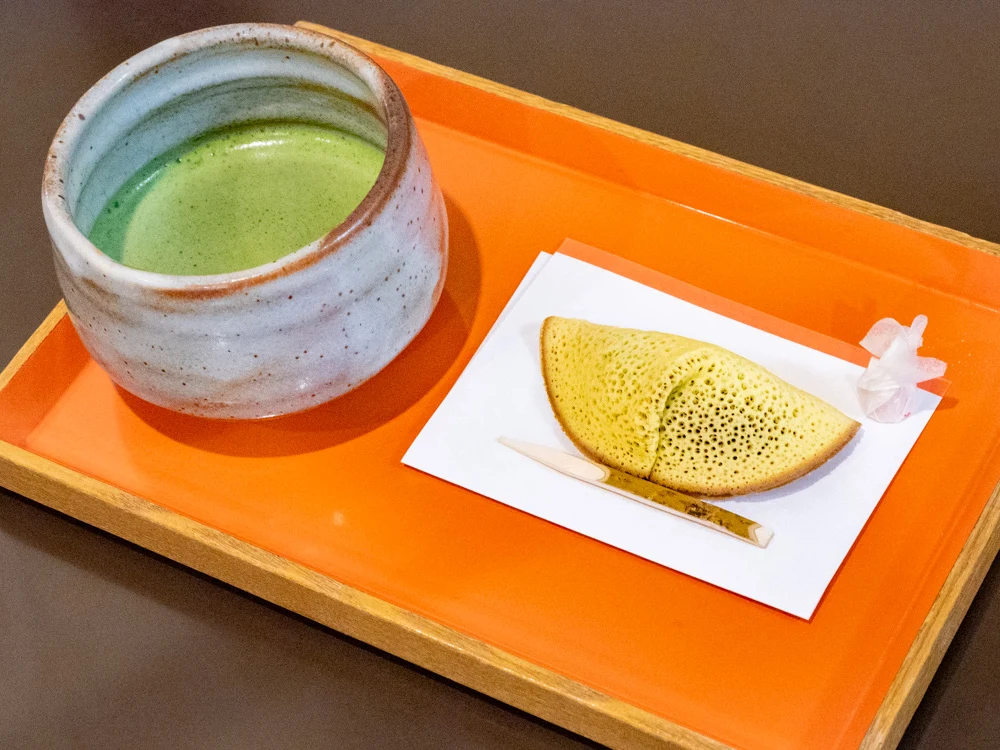
As for the batter, Murasuzume has distinctive little air bubbles on its surface.
These were, of course, devised by Kikkodo's founder.
They give it a uniquely light, fluffy texture. We also take care in preparing the batter to create these bubbles.
People also say that Kikkodo's Murasuzume has the most beautiful shape.
Baumkuchen was among the first products made in Kurashiki for wedding gifts

About Kikkodo being the first to sell baumkuchen in Kurashiki
Tano
Kikkodo began making Western-style sweets around 1963.
At the time, there were still very few Western-style confectionery shops nationwide, with only a handful in Okayama Prefecture.
Baumkuchen had made its way to Japan, but it was still quite rare for shops to sell it.
Then, in 1965, we became the first in Kurashiki to begin making and selling baumkuchen.
We began selling baumkuchen for weddings. Before long, word of mouth spread its popularity.
Today, it is one of Kikkodo's signature Western-style sweets.
The hands-on baking experience is a big hit with children and international visitors

About the Murasuzume hands-on baking experience
Tano
Originally, at the Bikan Historical Area Store, a craftsman baked Murasuzume by hand near the window so people walking along the street could watch. Eventually, customers and employees began suggesting that it would be fun to offer a hands-on baking experience.
So we started offering the experience around the late 2000s.
It's very popular with children, and the shop gets busy with them during long school holidays such as spring and summer break.
Visitors from overseas are also very interested, and it's popular with them.
Adults enjoy it too, of course.

How is Kikkodo connected to the Kurashiki community, and what are your plans for the future?
Tano
Kikkodo's founder created Murasuzume with the desire to “make a local specialty for Kurashiki.”
Murasuzume came to be loved by the local community and has become one of Kurashiki's signature specialties.
We want to continue preserving this traditional flavor, loved by local people and visitors to Kurashiki.
We also want to make the traditional flavors of Kurashiki known to more people, making the most of the Bikan Historical Area's character as a tourist destination.
We are very grateful that customers even order from Kikkodo by name from far away.
From the Writer

The founder's wish to create a local specialty for Kurashiki lives on, and Murasuzume has grown into a famous sweet representing Kurashiki and a classic Kurashiki souvenir.
I didn't know that a sweet considered an everyday treat by locals had such a story behind it.
Murasuzume is not merely a tourist souvenir; it is truly cherished by the Kurashiki community.
I hope more people will get to know it.
I also didn't know much about Kikkodo's products besides Murasuzume, so I was surprised to hear that Kikkodo made the first baumkuchen in Kurashiki.
The Pyrenees Kurashiki Baumkuchen has an irresistible sweet, fragrant buttery aroma.
Be sure to try Kurashiki Baumkuchen too.
Kikkodo Co., Ltd. (Bikan Historical Area Store) Information
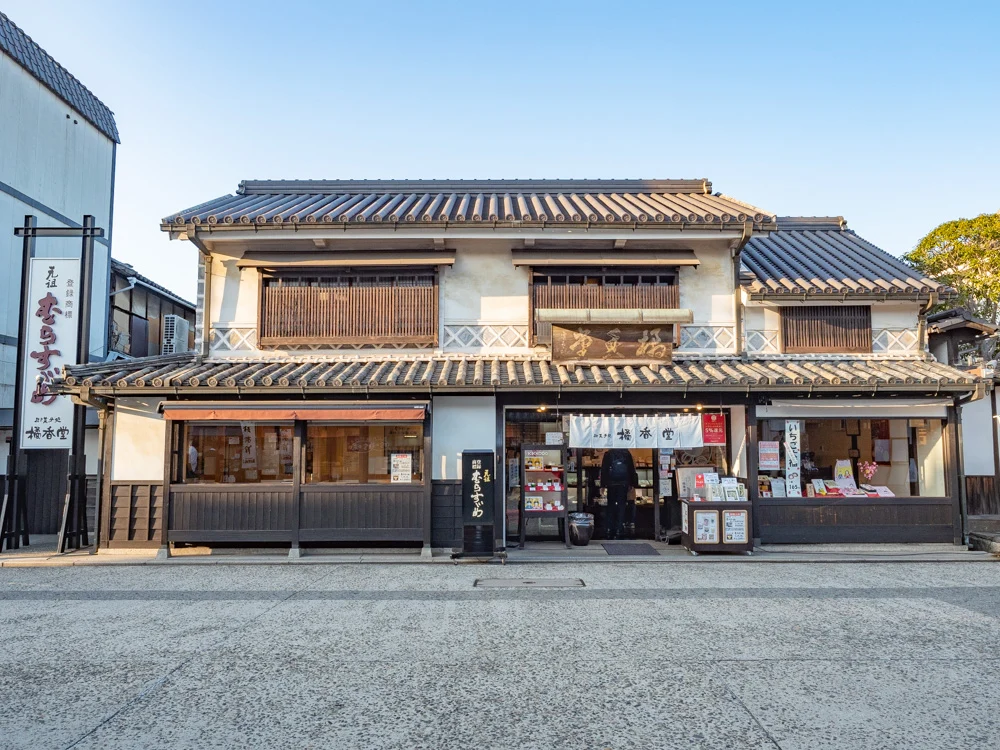
| Name | Kikkodo Co., Ltd. (Bikan Historical Area Store) |
|---|---|
| Address | 2-22-13 Achi, Kurashiki City, Okayama Prefecture |
| Contact | 086-424-5725 |
| Parking | None |
| Hours | 9:30 a.m.–6:00 p.m. ・Cafe: 10:00 a.m.–5:30 p.m., last order at 5:00 p.m. ・Hands-on baking experience: 10:00 a.m.–4:00 p.m. |
| Closed | New Year's Day |
| Payment methods |
|
| Website | Kikkodo |

What would you like to know about Kurashiki?
Enter a search term to find articles on this site