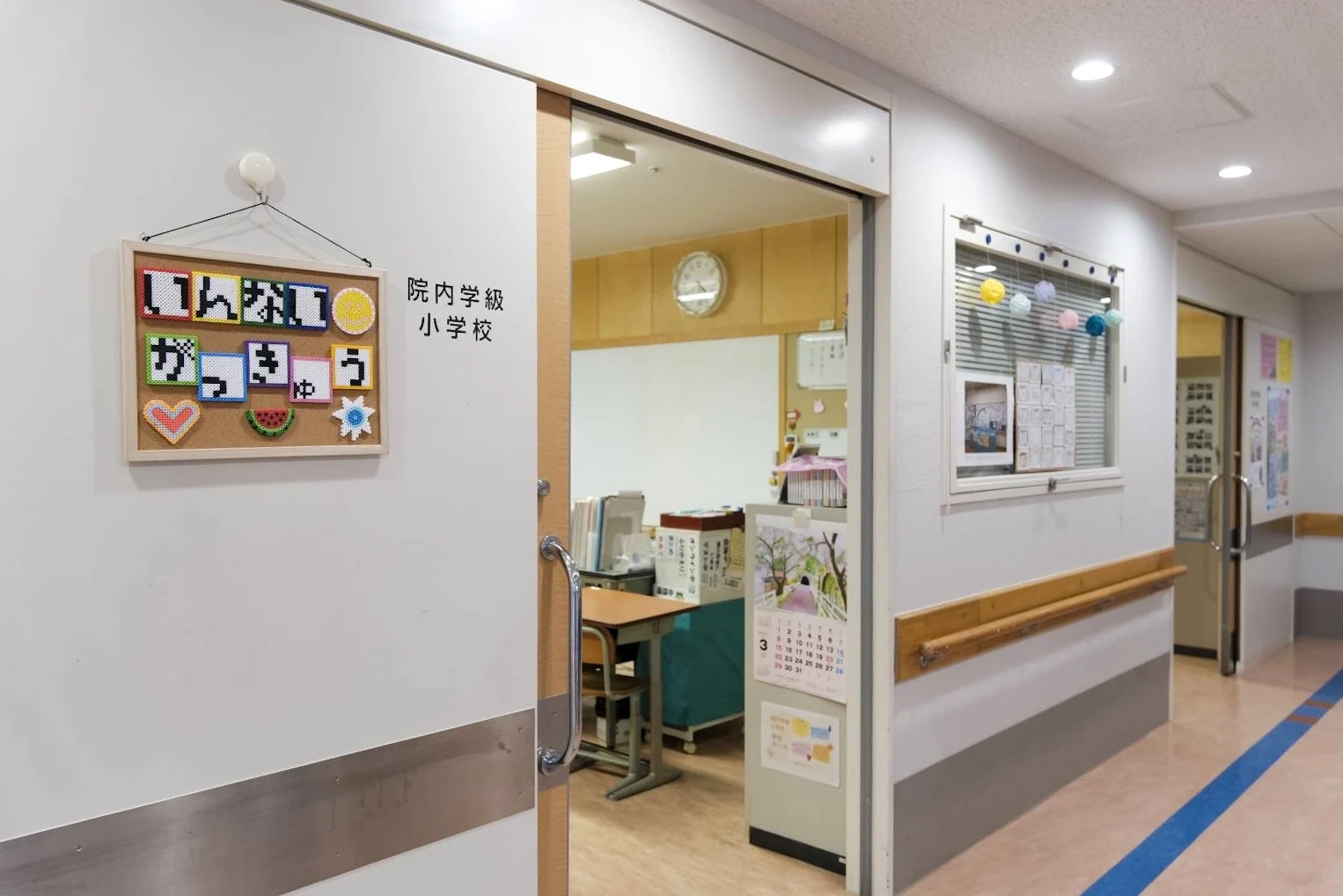
Interview with the Homeroom Teacher of the In-Hospital Class at Kurashiki Central Hospital
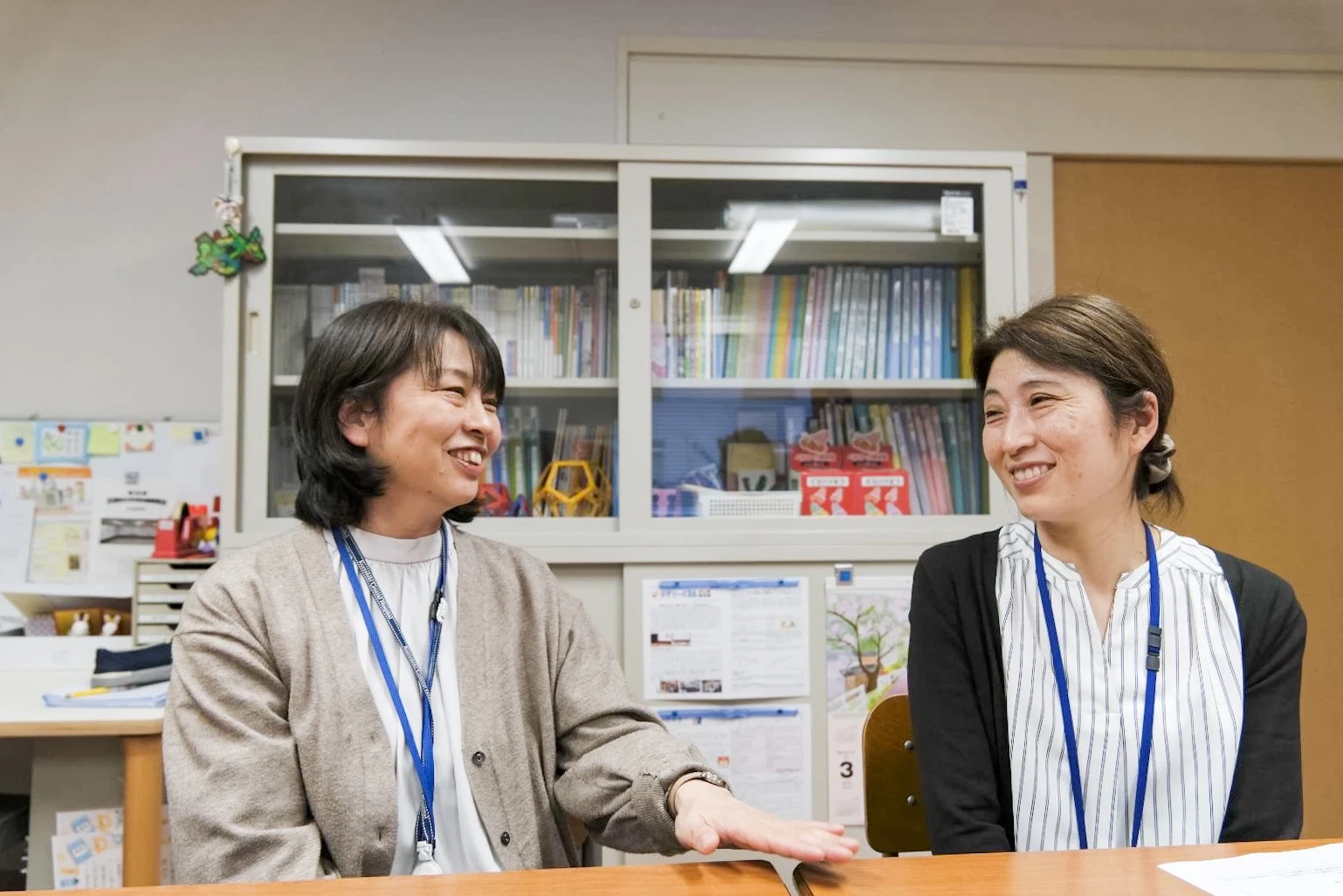
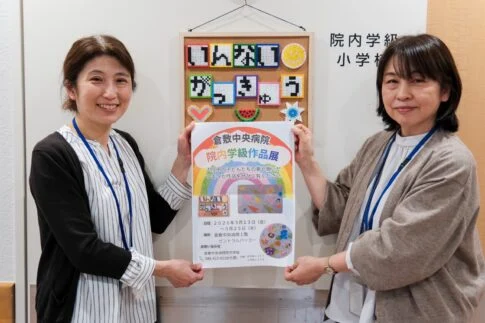
We spoke with Teacher Mayumi Suwa from Kurashiki-Higashi Elementary School and Teacher Yumiko Yamaguchi from Kurashiki East Junior High School, who are serving as homeroom teachers for the in-hospital class at Kurashiki Central Hospital in the 2025 academic year.
What is the purpose of establishing the in-hospital class?
Suwa (no honorifics)
The purpose is to ensure learning so that children's education does not stop.
When children are hospitalized, they spend a lot of time in their hospital rooms, right?
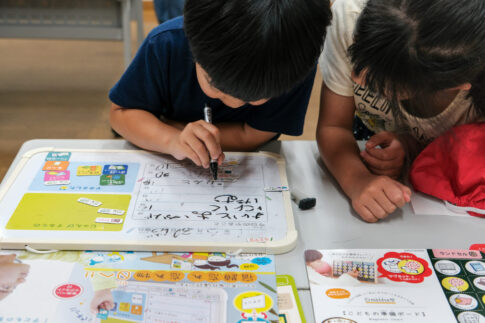
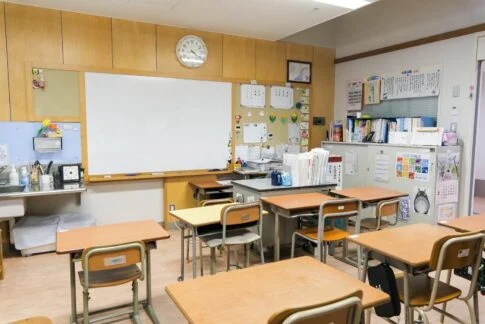
Even for those children, during school hours, they come to the in-hospital class to study together, play games during breaks, and sometimes participate in cooking classes and events, enjoying their time together.
Yamaguchi (no honorifics)
In junior high school, we also conduct regular exams. We receive exam questions from each student's school and conduct them. Since the exam periods differ by school, we flexibly conduct regular exams according to each student's exam schedule.
What might be difficult alone can be overcome when friends are also doing their best, right? That applies to studying as well.
The learning content and grade levels vary among the students, but the presence of friends seems to provide a positive motivation to tackle everything.
How long do the children stay enrolled?
Suwa
Since the hospitalization period varies for each child, I can't say exactly how long, but most children return to their original schools in less than a month.
Even while hospitalized, depending on the treatment, some children may not be able to attend the in-hospital class for several days, so we sometimes visit them at their bedside after school.
In the 2025 academic year, there has never been a time when there were zero enrolled students in the in-hospital class at Kurashiki Central Hospital. However, when there are temporarily no children in either class, we operate in a flexible manner so that we can join the class with more students.
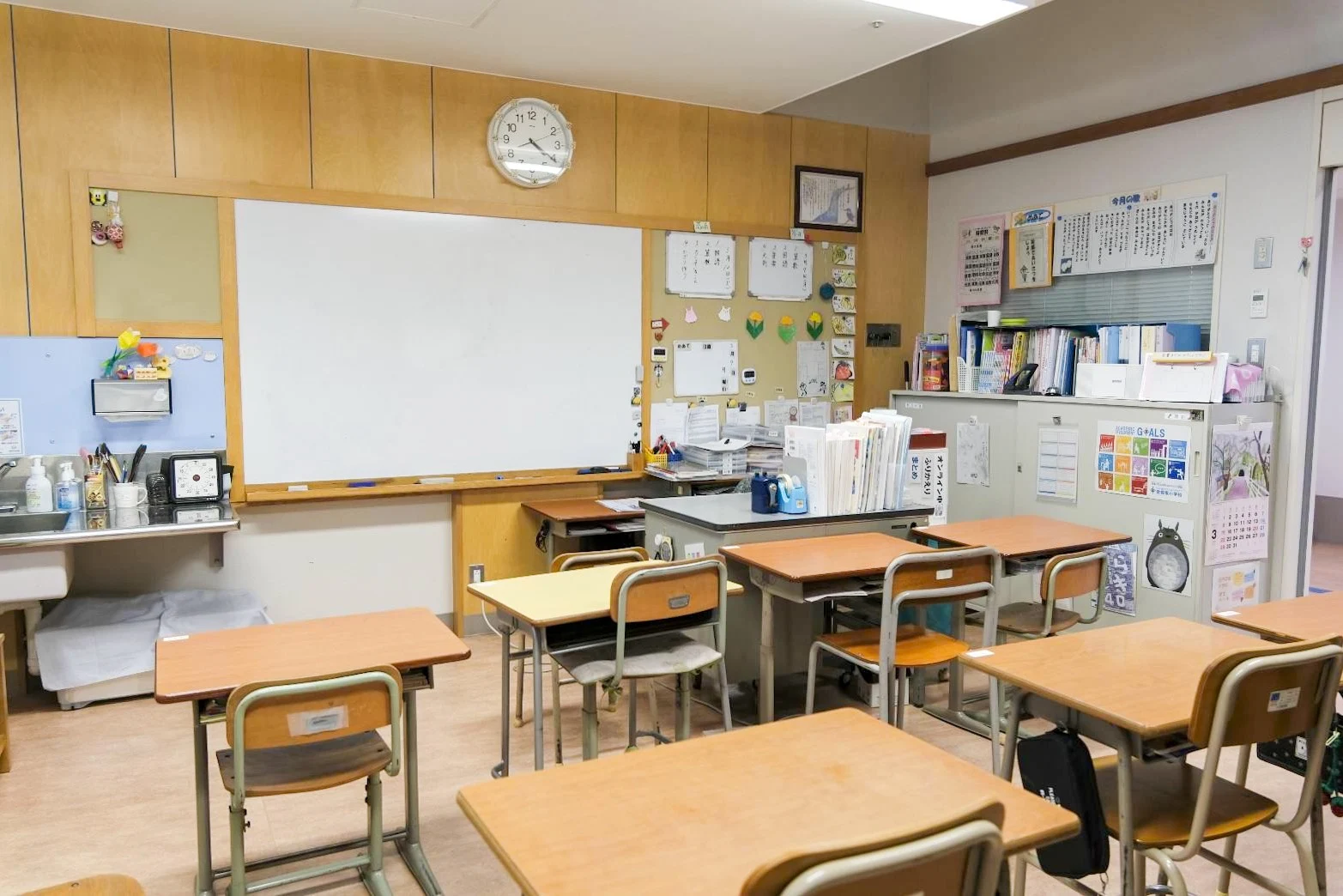
During the 4-hour class, do the children stay in the classroom the whole time?
Suwa
Since the children are hospitalized for treatment purposes, their schedule is prioritized for treatment. Therefore, it is common for them to leave class for treatment, tests, rehabilitation, or shower time.
We receive the schedule for the day in the morning from the ward, and it is our daily routine to create individual schedules based on that. However, there are events like "farewell parties" where we want as many students as possible to participate, so we consult with the hospital to secure the schedule for those times.
Kurashiki Central Hospital also hosts many events organized by the pediatrics department, which the children enjoy. Additionally, some events in the in-hospital class are conducted based on the children's ideas. Such times allow hospitalized patients to return to being children of their age, and we value those moments, as do the hospital staff.
Yamaguchi
The time available for children to learn is shorter compared to regular schools. Even so, I am always impressed by how focused the children are on their studies and play.
Even with difficult treatments, they look forward to their time in the in-hospital class.
For children attending regular schools, long breaks like summer or winter vacations are eagerly awaited periods. However, for children in the in-hospital class, it seems to be a "boring period without school."
We strive to ensure that they can spend time here where they can return to being children in between treatments.
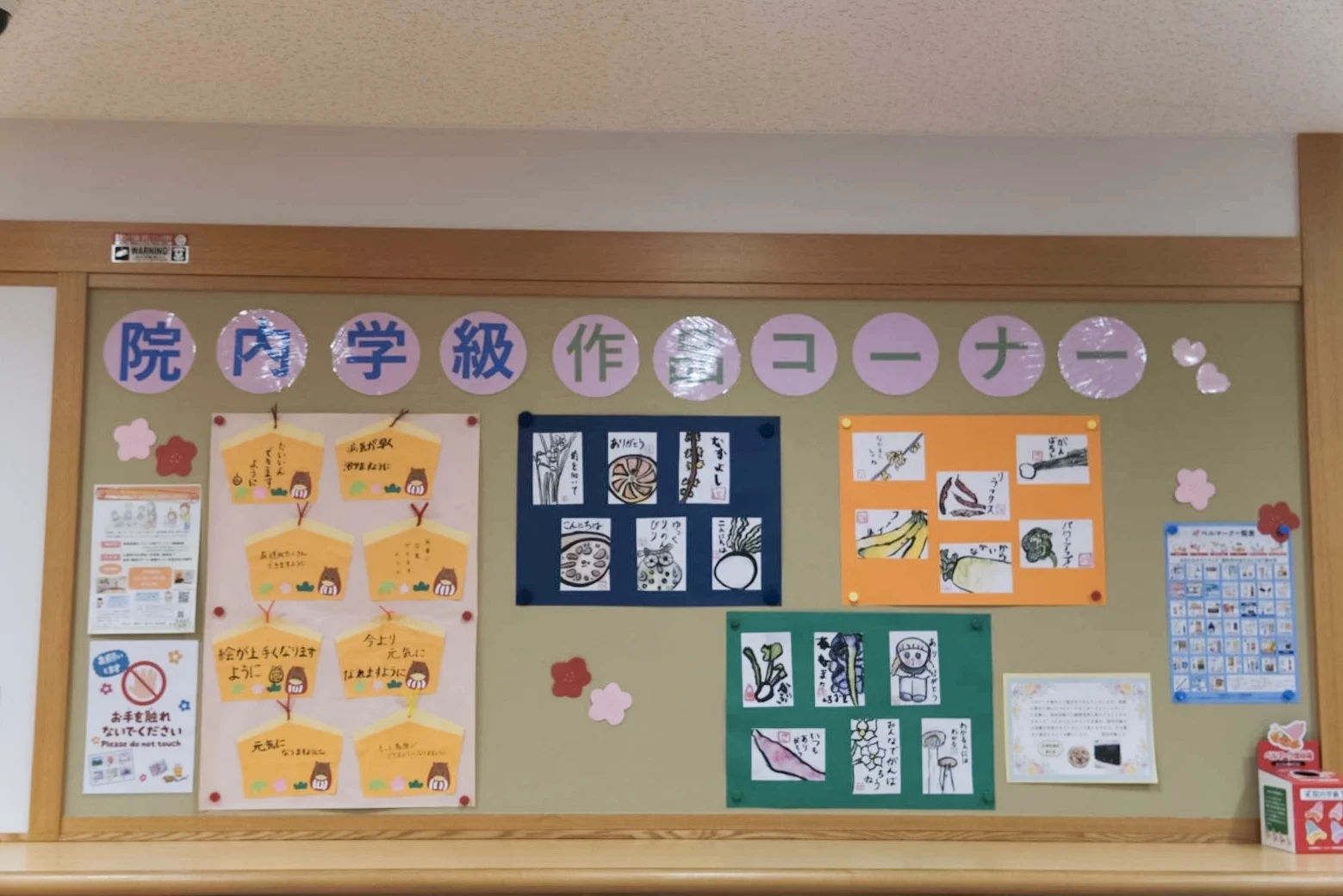
There are also unique educational activities in the in-hospital class, right?
Suwa
The children undergo very challenging treatments every day. They also carry various anxieties about being unable to attend their enrolled schools and interruptions in their learning due to treatment.
The time spent in the in-hospital class is seen as a time when they can be a student, not just a patient, and forget the hardships, even if just a little.
To ensure that their memories of hospitalization are not solely filled with pain and anxiety, we incorporate many activities that can only be experienced because they attend the in-hospital class, as we want the children to take home happy memories.
Especially in the pediatrics ward, where it is difficult for the general public to enter, we actively incorporate activities that allow interaction with adults from outside the hospital, such as museum staff, university professors, and volunteers.
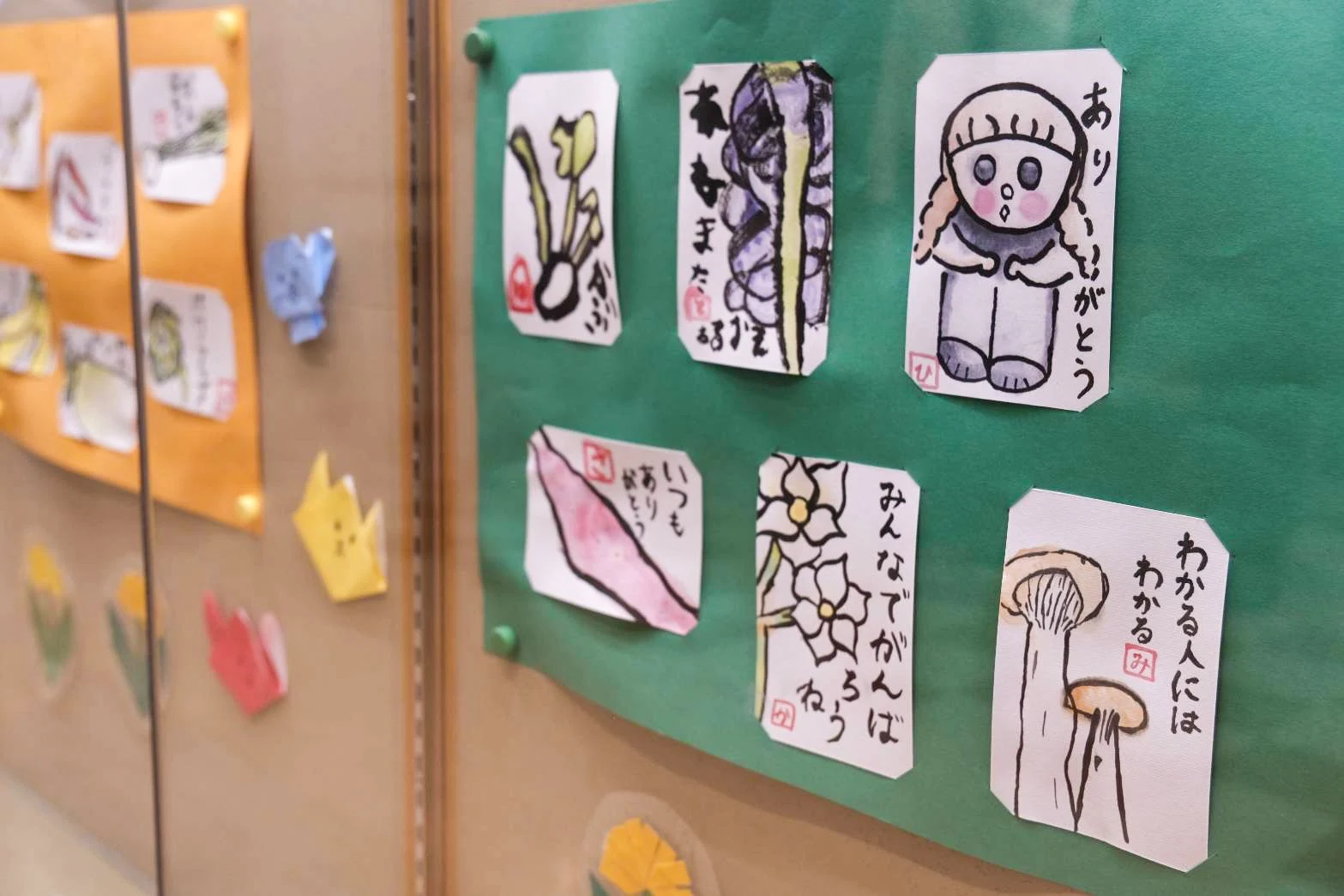
Yamaguchi
Some of the volunteers are graduates of the in-hospital class.
For both the children and their parents, opportunities to meet adults who have gone through long-term hospitalization are rare. Graduates who come as volunteers serve as valuable role models for them.
It is a great hope for them to see that they can become healthy high school students or adults after long-term hospitalization, and we are truly grateful for their presence.
Including volunteers, various people such as ward staff and public relations personnel are involved in the in-hospital class. They regularly display the children's works in the hospital and hold a special exhibition at Central Parlor at the end of the year, and they also share the children's activities on YouTube and SNS, for which we are grateful.
While there are limitations on the children's activities, it is also a unique experience of the in-hospital class to feel the supportive environment from the entire hospital for the children's efforts.
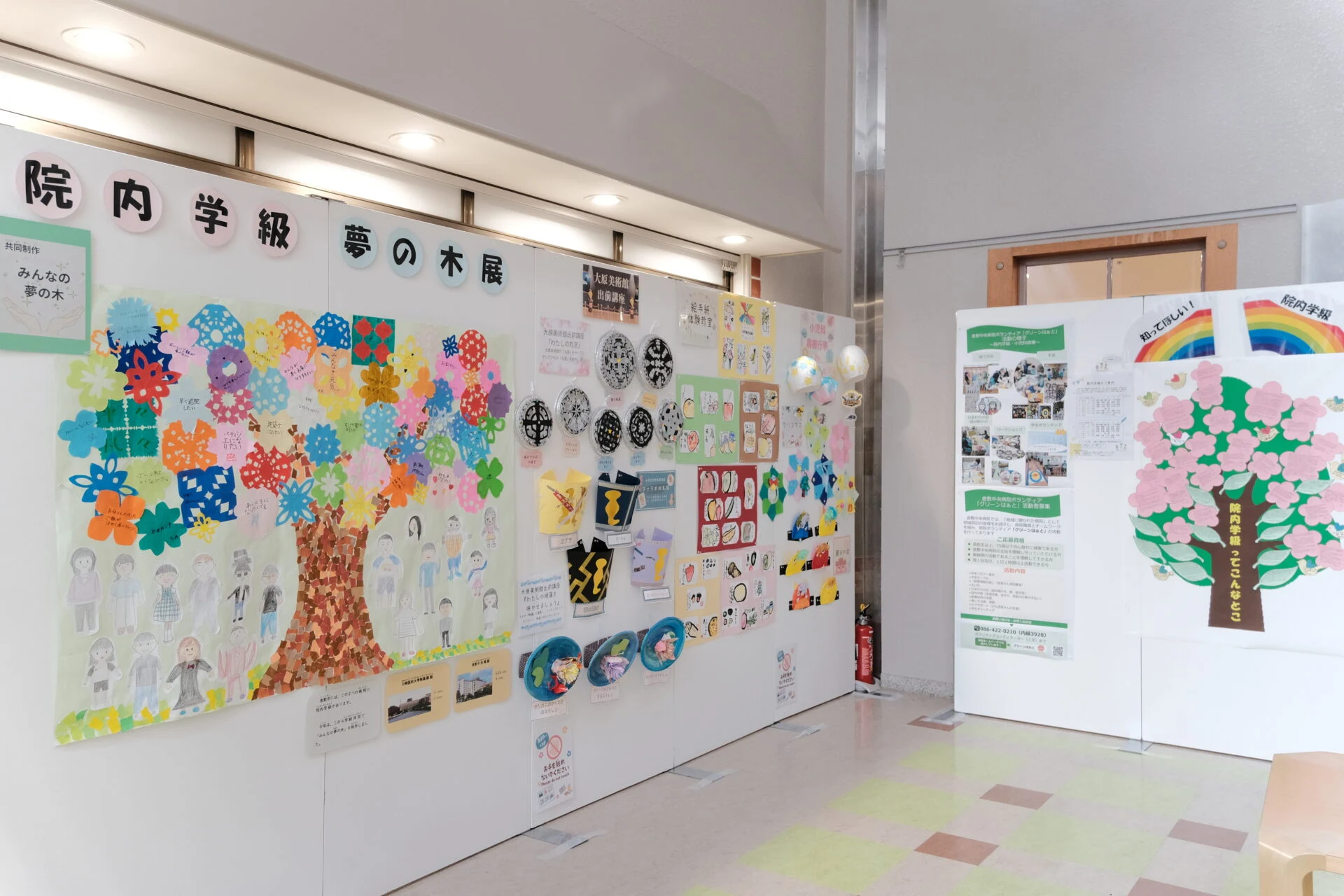
Are there any challenges in being in charge of the in-hospital class?
Yamaguchi
The grades of the enrolled children differ, and the textbooks and materials they use are also different, as well as the timing of regular exams. It is challenging to respond flexibly to all of that.
Additionally, the in-hospital class requires information exchange with hospital staff such as nurses and meetings with the children's enrolled schools, so the number of meetings is generally higher compared to regular schools.
All of this is necessary support for the children to learn alongside their treatment and to smoothly return to their original schools, so we take it seriously.
Suwa
Since treatment schedules and health conditions vary daily, the schedule for the day is not confirmed until the morning of that day, which feels different from the education experienced in regular schools.
Moreover, since the learning content and pace differ for each child, learning tends to become self-directed. We try to create opportunities for each child to become the "main character" by ensuring that they have time to say, "I was able to study carefully with the teacher" or "I was praised by the teacher and friends," while accommodating their individual paces.
This may be a necessary time even outside the in-hospital class, but many of the children here feel anxious about whether they can keep up when they return to their enrolled schools, so we are also conscious of providing mental support.
If you have any memorable episodes while being in charge of the in-hospital class, please share.
Yamaguchi
Every morning, when the children come to the in-hospital class from the ward, I see them visiting each other's rooms and inviting one another to come to class, and I am reminded of how significant the presence of friends is when I see children inspired by their friends' efforts to engage in learning.
While the learning itself is mainly self-directed, having friends sitting next to them who are working hard, playing during breaks, and sharing their true feelings like "I want to eat sushi" is undoubtedly a source of encouragement for them.
Suwa
There was a child who started an activity to encourage patients and staff around the hospital. The entire hospital was energized by the energy he provided.
He was a child with a particularly strong bond with his enrolled school, and his classmates participated in school events like overnight learning by wearing bandanas in his place, and he frequently progressed in his studies online with his classmates.
That is why he had a very strong desire to "get better and be discharged," and he understood the strength of being supported, which is why he was able to create an atmosphere where everyone could feel uplifted together.
When he is present, both the children in the in-hospital class and the hospital staff feel brighter.
Hospital life can be tough and filled with anxiety, but even amidst that, their efforts to enjoy their daily lives give us energy and courage.
What kind of place do you hope the in-hospital class will become in the future?
Yamaguchi
To enroll in the in-hospital class, a transfer procedure from the enrolled school is required.
However, depending on the school, some children may not be able to transfer and end up being withdrawn, or their attendance number may become the last one after returning, so there are children who find it difficult to transfer to the in-hospital class due to the system.
While the use of ICT in education has become widespread and online learning support has improved, I believe the greatest benefit of the in-hospital class is the opportunity to spend time with friends, forgetting that they are patients and returning to being children.
There is still a need for system improvements so that all children who need the in-hospital class can learn with their friends at the necessary timing.
Suwa
I want many people to know that there are children working hard in the in-hospital class.
Since illness and injury can happen to anyone, I hope that as more people learn about the existence of the "in-hospital class" system, children who need it can receive support.
Conclusion
The efforts of the in-hospital class are often featured in TV dramas and documentary programs, but the fact that there are many people supporting the in-hospital class in Kurashiki City and that the children are living positively is still not widely known.
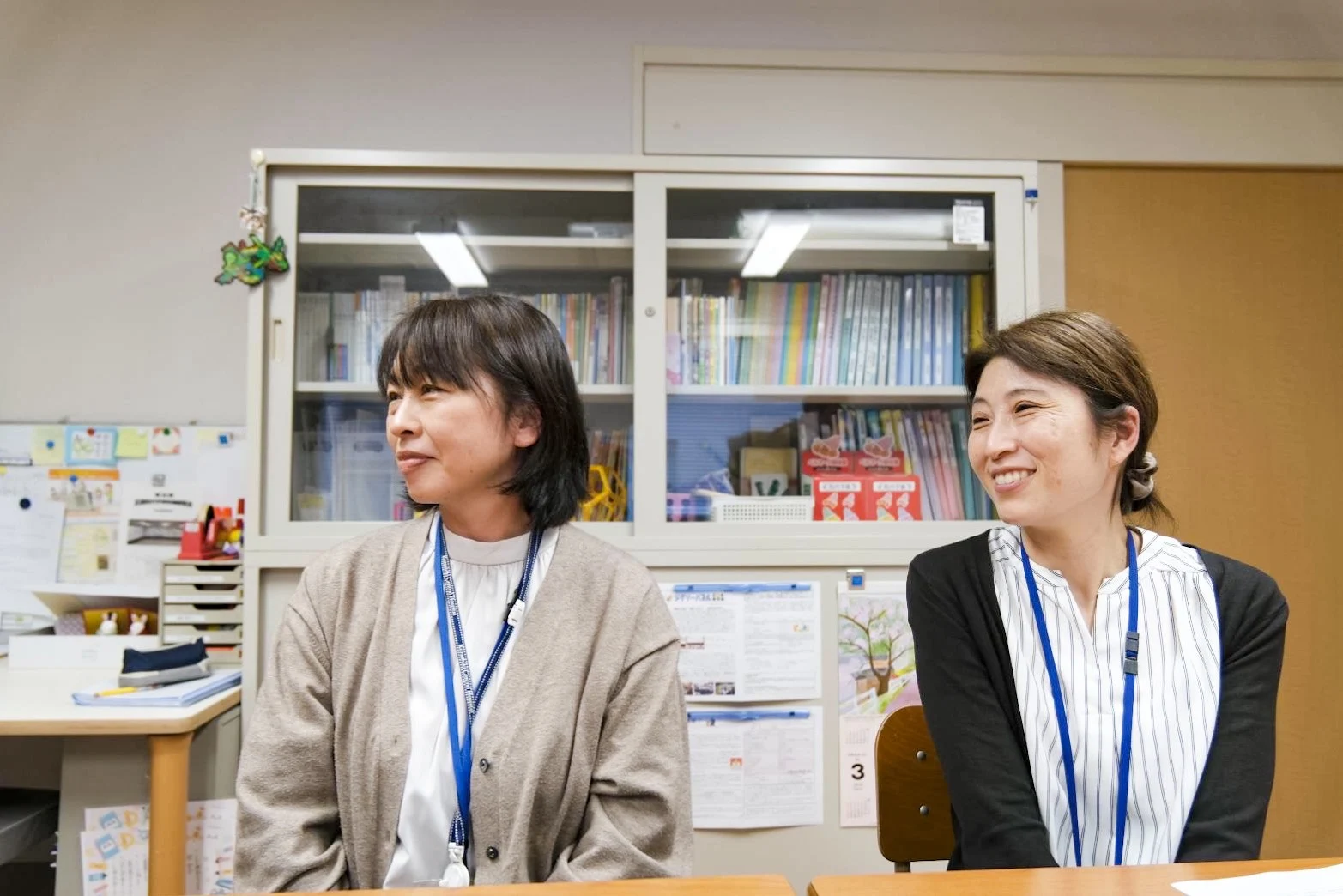
In the interview, both Teacher Suwa and Teacher Yamaguchi repeatedly mentioned that the presence of friends who spend time together in the in-hospital class is extremely significant for the children.
Even while hospitalized, the in-hospital class allows children to engage in play and learning as individual children. I hope it continues to be a place that reaches as many children as possible who need it.
Volunteers for the in-hospital class can also include general individuals who are not graduates. If you are interested, please feel free to contact the volunteer coordinator at Kurashiki Central Hospital.
Articles Related to Kurashiki Central Hospital
Data on Kurashiki Central Hospital In-Hospital Class
| Name | Kurashiki Central Hospital In-Hospital Class |
|---|---|
| Address | 1-1 Miwa, Kurashiki City, Okayama Prefecture |
| Contact | 086-422-0210 |
| Website | Kurashiki Central Hospital In-Hospital Class |