Interview
We interviewed Ryo Shiraiwa, a member of the Sales Support Team at Kurashiki Kokusai Hotel.
This interview was conducted during our initial visit in October 2021.

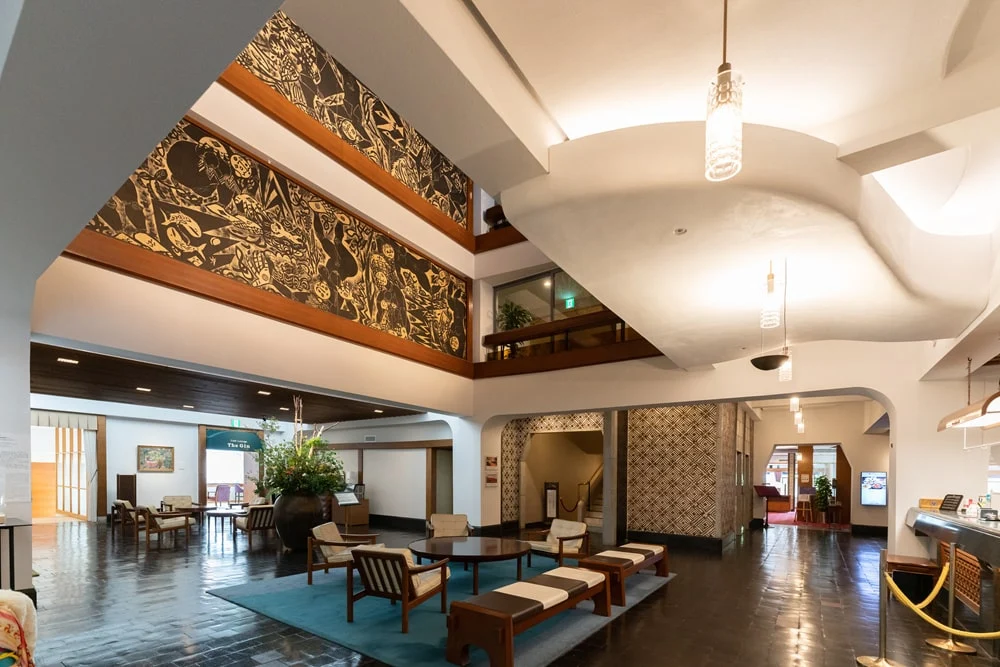
There are a lot of artworks throughout the hotel.
Shiraiwa
Yes, and you can see them up close.
Works by Kojima Torajiro, who collected the works that formed the foundation of the Ohara Museum of Art collection, and works by his great-grandson, Shintaro Kojima, are displayed in the same lobby.

By coincidence, the works were created exactly 100 years apart.

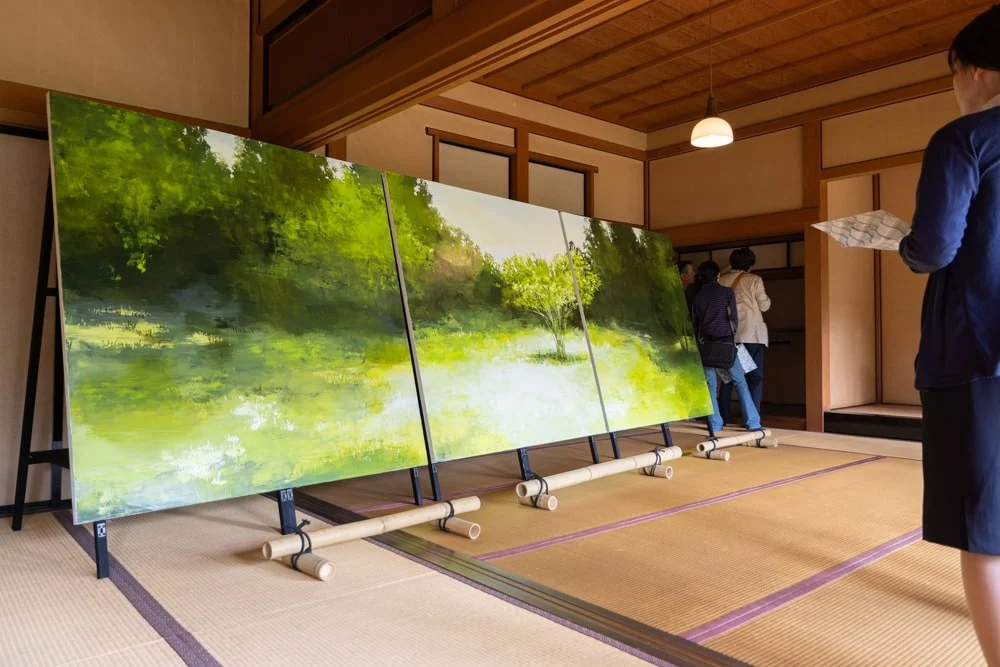
Since the 2019 renovation, “Guardian god – Takahashigawa” by Takako Hojo has been displayed at the entrance.
It is an oil painting created for Kurashiki Kokusai Hotel, depicting the Takahashi River, which flows through Kurashiki City.
Takako Hojo was an invited artist in the Ohara Museum of Art’s Artist-in-Residence Program, which supports artists in creating work during their stay.
Her work was also featured in the article “Spring 2019 Special Opening of Yurin-so Villa: The Green Palace’s Beautiful Greenery.”

In the guest room areas, there are also ceramic panel works by Kenji Funaki, who studied under Bernard Leach, and works by his son Shinji Funaki.

Does the hotel have a close connection with the Ohara Museum of Art?
Shiraiwa
Kurashiki Kokusai Hotel and the Ohara Museum of Art are separate organizations, but they are connected through the Ohara family, and we still have a close relationship today.
We collaborate in various ways, such as creating special lunches themed around works in the Ohara Museum of Art and having Kurashiki Kokusai Hotel handle weddings at the museum.
In September 2021, we offered a Monet Morning Plan.
After viewing works such as Monet’s “Water Lilies” on a private morning tour of the Ohara Museum of Art led by a special guide, guests could enjoy a special breakfast at the hotel featuring recipes recreated from the cookbook “Monet’s Table.”
We also sell advance tickets to the Ohara Museum of Art to hotel guests for 1,300 yen instead of the regular price of 1,500 yen.
We also carry some museum merchandise.

Do you do anything to introduce guests to Kurashiki’s industries?
Shiraiwa
The textile industry laid the economic foundations of Kurashiki.
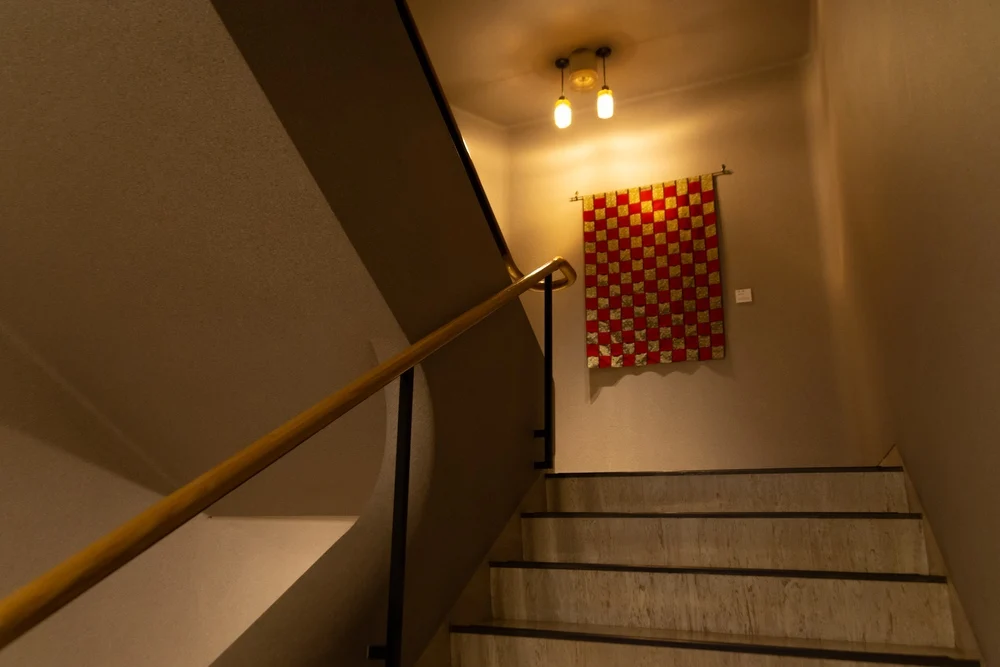
Tapestries made from representative products of the industry—canvas, tatami edging, Sanada cords, and denim—are displayed on the landings of each staircase.
They both pay tribute to these textile products and express our company’s commitment to living alongside the local community.

What do you focus on to earn your guests’ trust?
Shiraiwa
We strive to provide service that helps our guests relax.
We work hard to hone our skills so that we can maintain a high standard of hospitality.
We also bring in an outside instructor twice a month to help our service staff improve their English conversation skills.
There isn’t much demand right now (September 2021) because of the COVID-19 pandemic, but we’re continuing the lessons anyway.
The company provides support for obtaining qualifications, so there’s an atmosphere where people can study other subjects besides English conversation if they want to.
What is your favorite part of the hotel building?
Shiraiwa
The hotel’s hexagonal logo is incorporated in various places.

On the stairs, at the restaurant entrance, and elsewhere.

I didn’t notice it at first, but guests who are interested in architecture pointed it out to me.
In 2019, the hotel closed its entire premises for the first time since opening to carry out work to extend the building’s lifespan. What kind of work was done?
Shiraiwa
The work was done to help us achieve our goal of being “a hotel that lasts 100 years.”
The main work was seismic reinforcement.
We also replaced much of the aging piping, among other things that aren’t visible from the outside.
Also, switching from centralized to individual air conditioning means guests can now adjust the temperature of their air conditioners themselves.
There were also parts that we “could have replaced, but deliberately chose to preserve.”
In Europe, buildings that are hundreds of years old are still standing and in use.
We hope guests can enjoy this historic building without it feeling too old-fashioned.

Apart from the building, is there anything that has remained unchanged since the hotel opened?
Shiraiwa
Some items on the restaurant’s regular menu have remained unchanged, too.
History is not something you can create with money.

The hotel must be facing difficult circumstances due to the COVID-19 pandemic. What measures are you taking?
Shiraiwa
We are taking thorough precautions, including disinfection and ventilation, to ensure that the infection does not spread within the hotel.
We have also prepared boxed meals for takeout and delivery at the restaurant.
Delivery is available only in the Kurashiki area and for orders of five or more, but people use the service for events and other occasions.
Business is extremely difficult, but we have a tradition built by those who came before us, and we want to keep it alive.
All our staff are working hard to ensure that every guest who visits us is truly satisfied.
Stay at a Hotel That Walks Alongside Kurashiki

With an international outlook, Kurashiki Kokusai Hotel has become part of the local community and shares what makes it special.
The hotel welcomes guests under the slogan, “Heartfelt hospitality as we walk alongside Kurashiki.”
A hotel is the gateway to sightseeing.
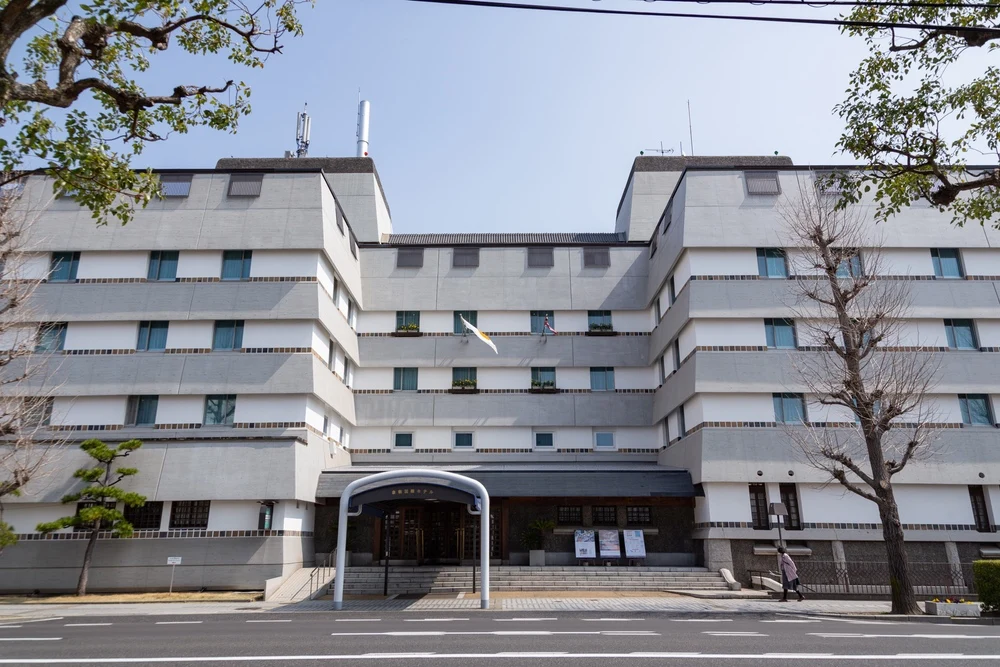
Having a trusted, distinguished hotel at the entrance to the Bikan Historical Area made me feel that, as a local resident, I could say “Come to Kurashiki” with even greater confidence.
In the lobby, several paintings welcome you alongside gentle background music.
Even just walking up the stairs, I was captivated by the beauty of the curves in this fine example of architecture.
Stay in a guest room where you can feel the warmth of wood, or savor French cuisine.
Spend a truly enriching time at Kurashiki Kokusai Hotel.

What would you like to know about Kurashiki?
Enter a word to search articles on this site