Have you ever seen a map depicting Kurashiki’s streets from above at JR Kurashiki Station or in the Bikan Historical Area?
This is called a “bird’s-eye view map” (chokan ezu).
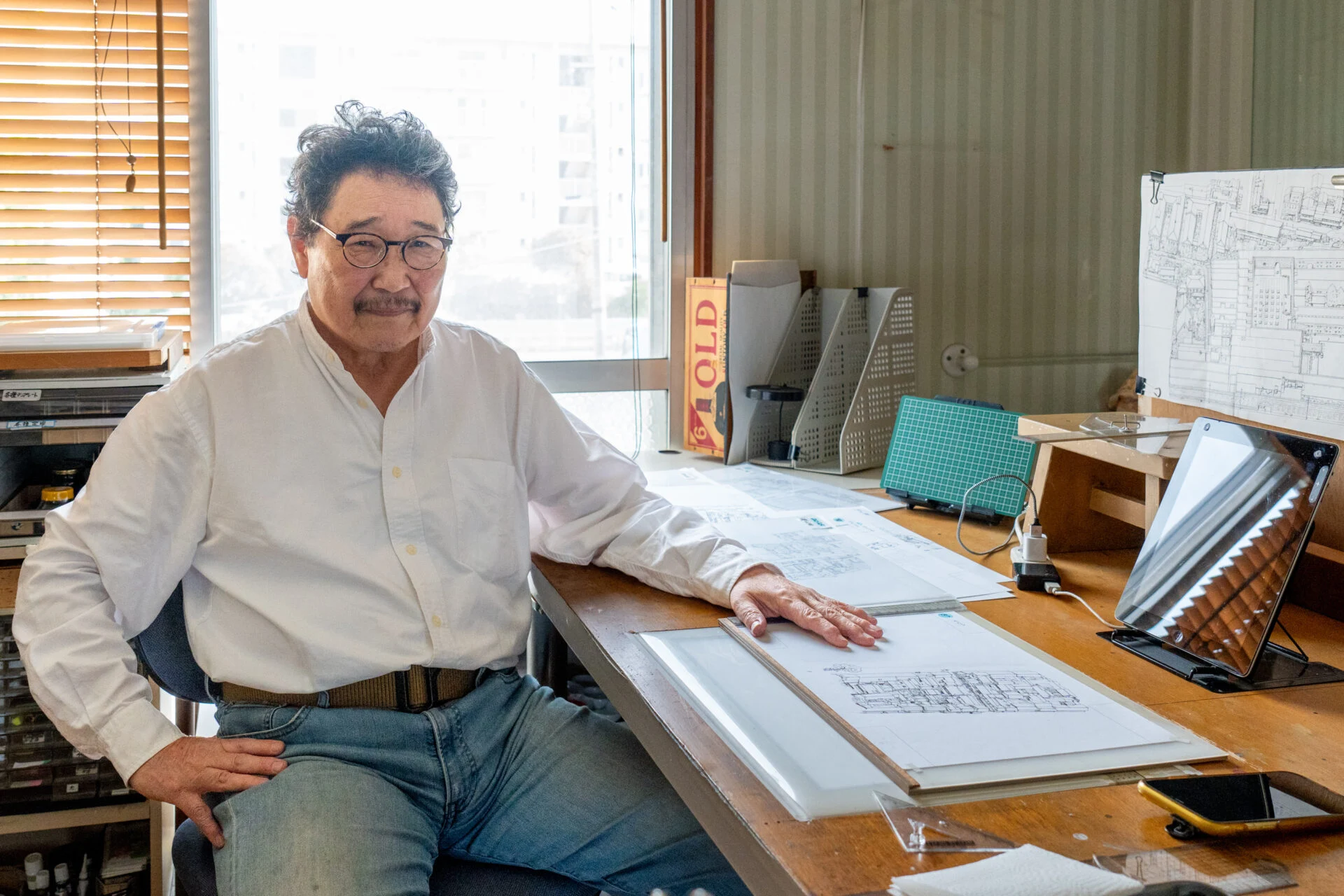
The artist is Chokanzu Eshi Okamoto Naoki.
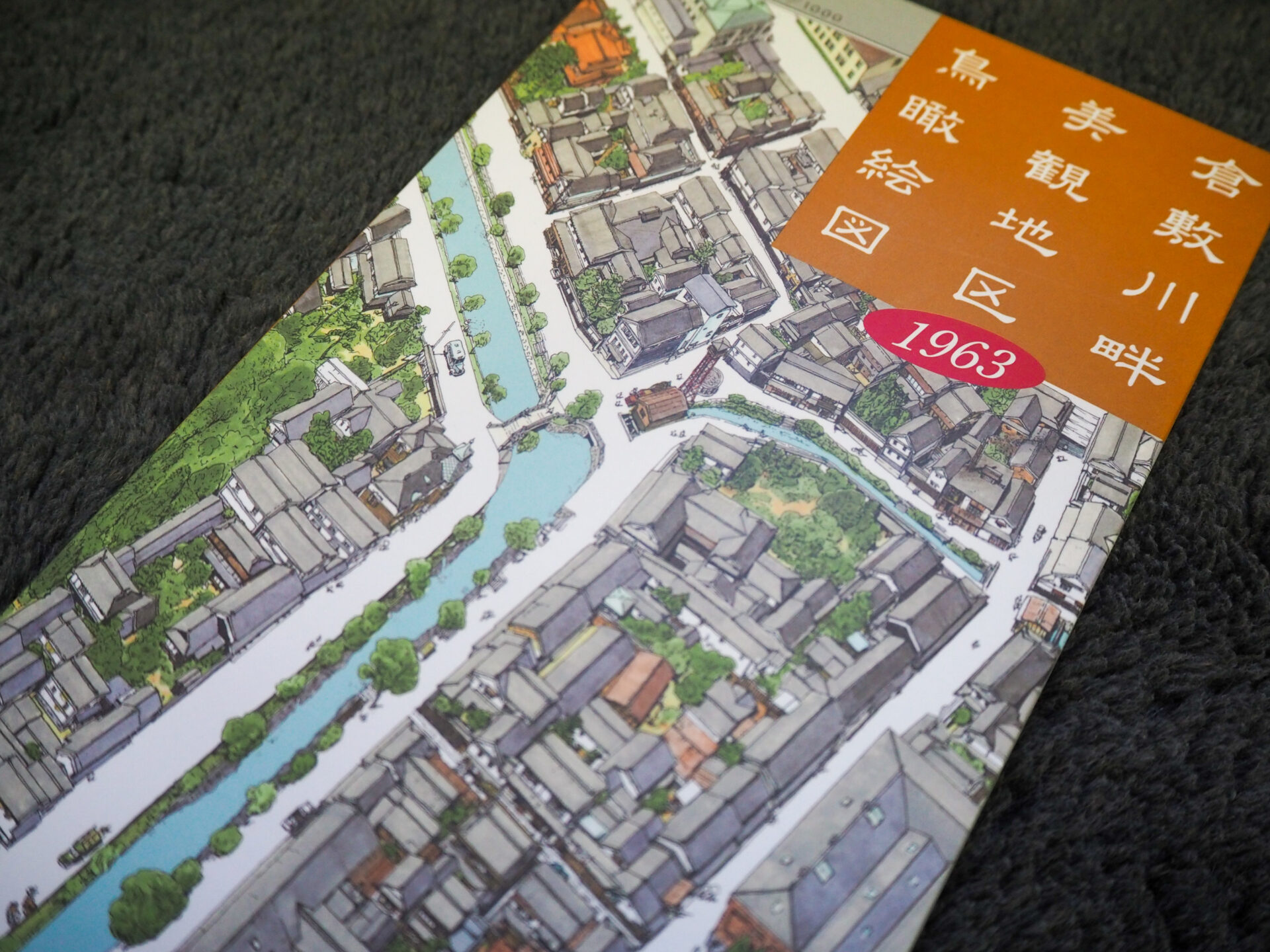
Okamoto has created bird’s-eye view maps of Kurashiki in the 2005 and 1963 editions.
And now, he is working on the 2025 edition of the Kurashiki bird’s-eye view map.
Curious about how it was made, I headed to Okamoto’s studio.
The information presented was current when this article was published in November 2023. Please note that it may differ from current information.
What is the bird’s-eye view map Okamoto draws?
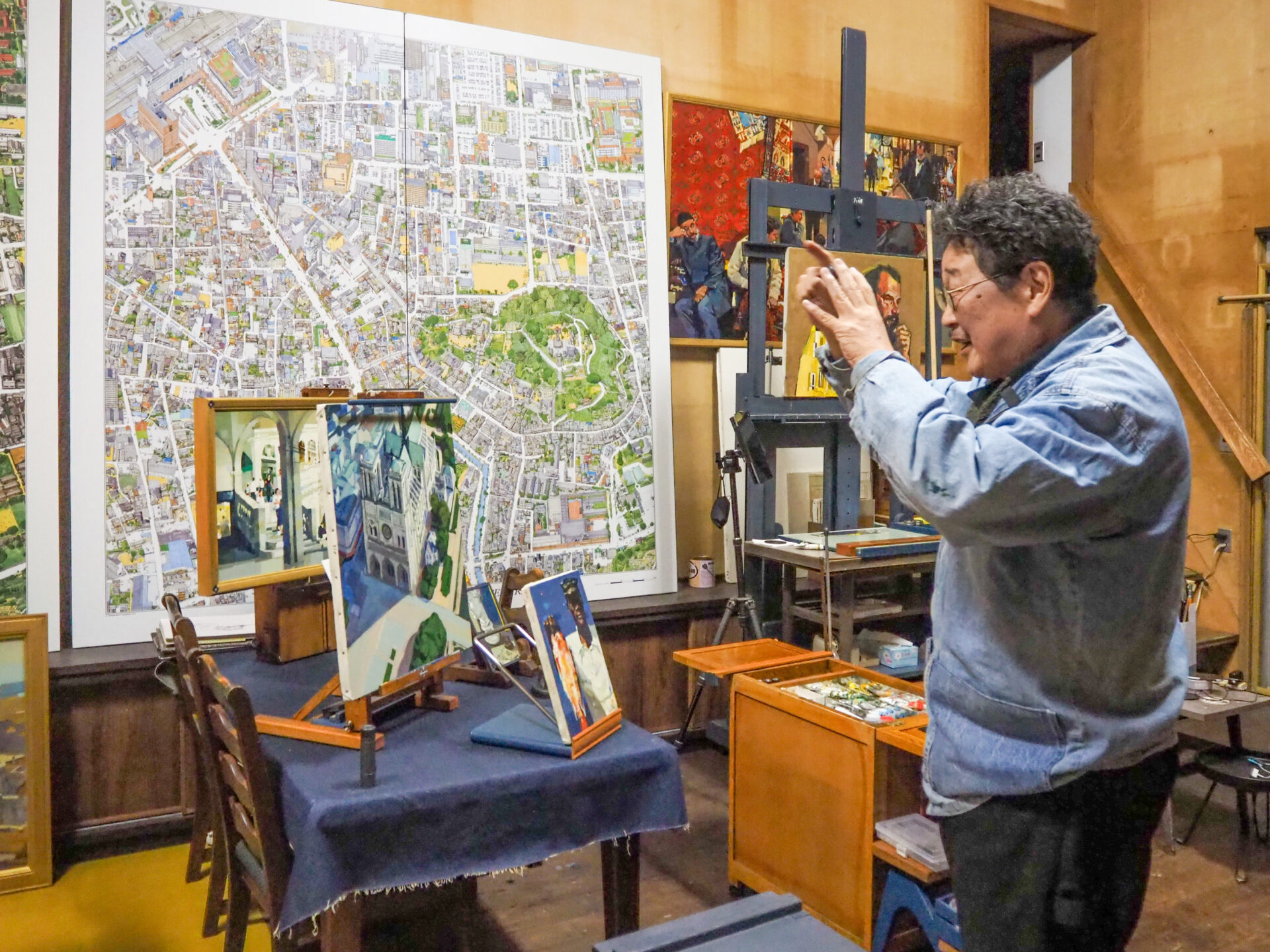
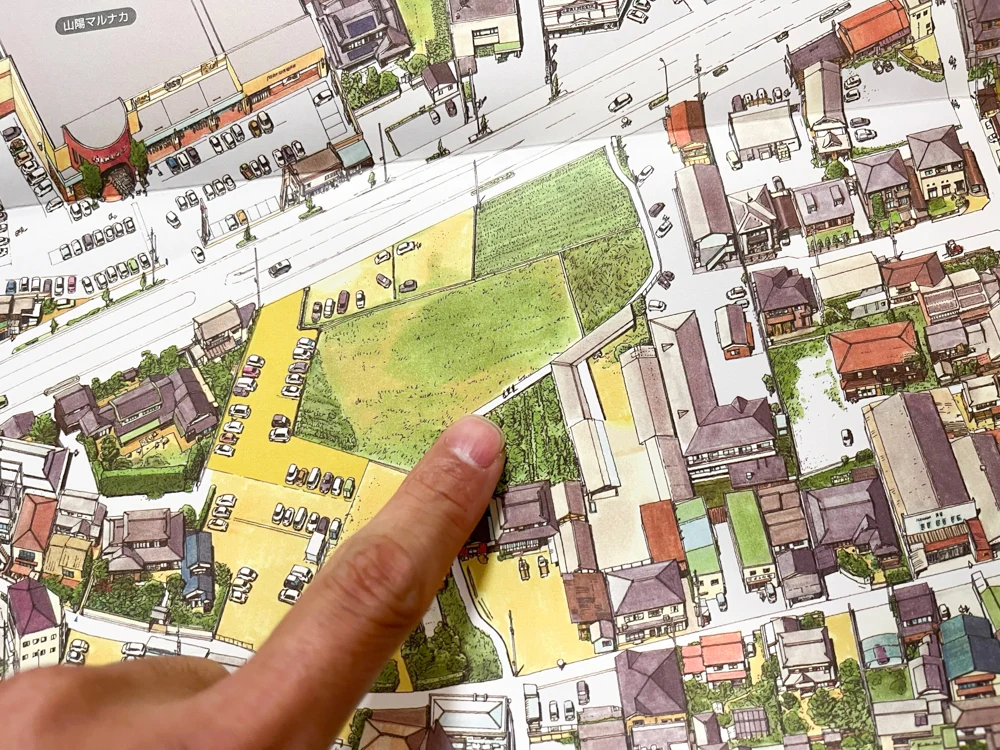
A bird’s-eye view map is a map drawn as if looking down at a town from above, from the perspective of a bird in flight.
Bird’s-eye view maps are generally drawn at a scale of around 1:2,500, but Okamoto draws his at a scale of 1:500.
As Okamoto puts it, it is “a scale that just barely lets me depict everyday life.”
Look closely at Okamoto’s bird’s-eye view maps and you can see people and vehicles depicted.
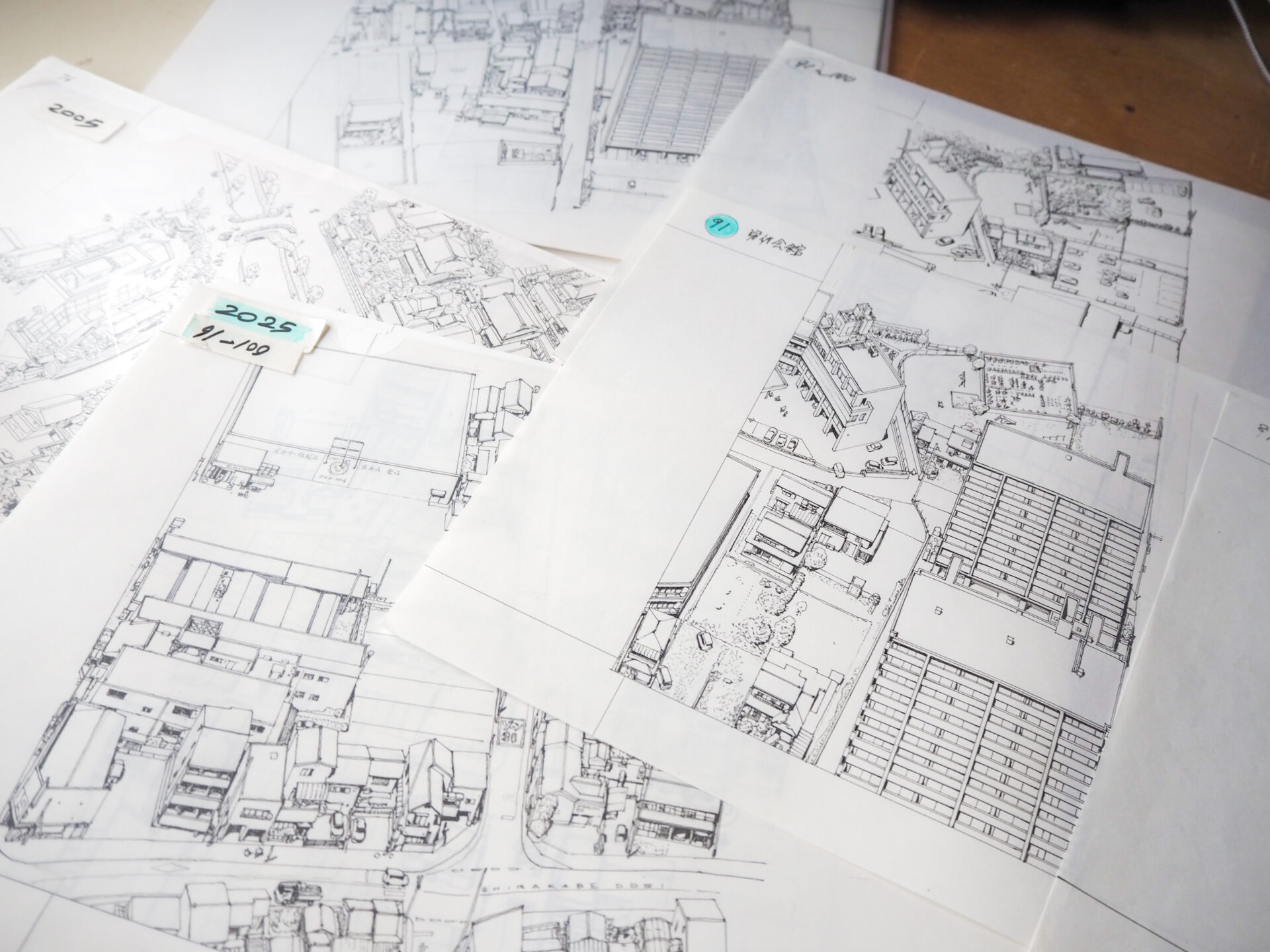
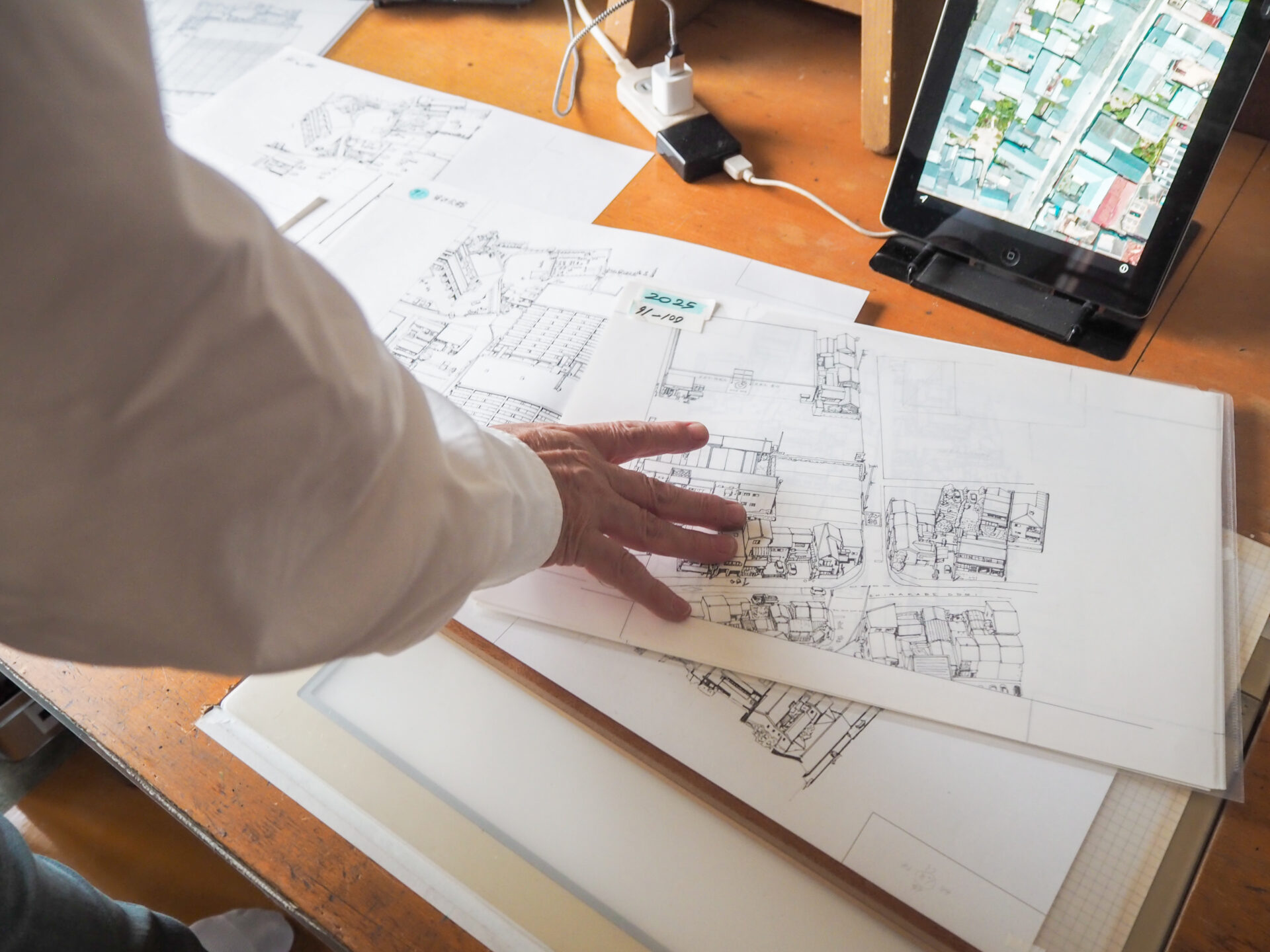
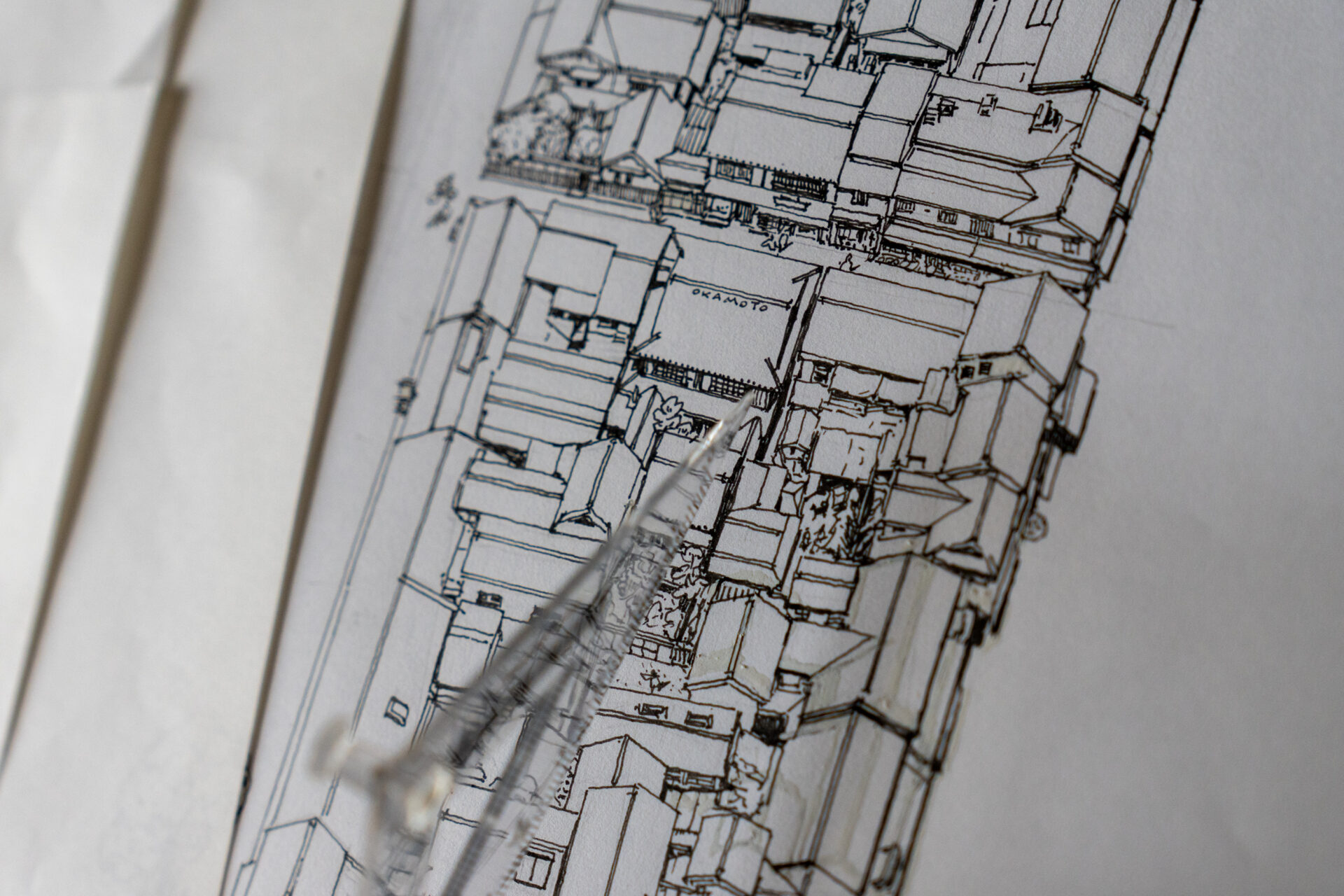
Okamoto’s approach is to divide the whole map into about 100 sheets and draw them one by one.
He then colors them in and joins the 100 sheets together to complete what is essentially a full-size bird’s-eye view map.
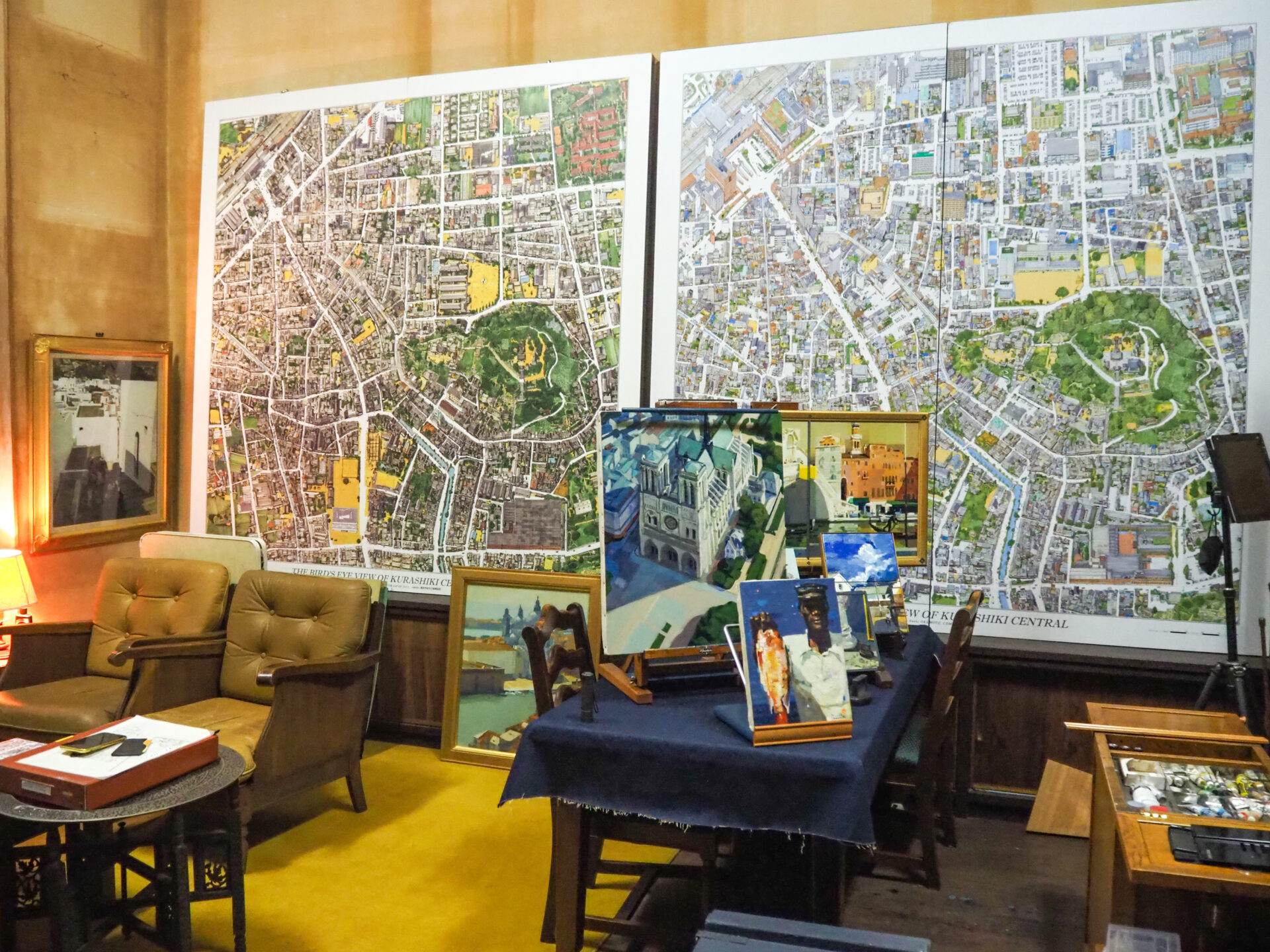
Another distinctive feature is that Okamoto draws his bird’s-eye view maps using a technique called “axonometric projection.”
Because he determines the drawing size based on the actual dimensions of buildings, the maps faithfully depict the real streetscape.
In addition to Kurashiki, Okamoto has created bird’s-eye view maps of the area around his alma mater, Konko Gakuen Junior and Senior High School, and of Okayama City.
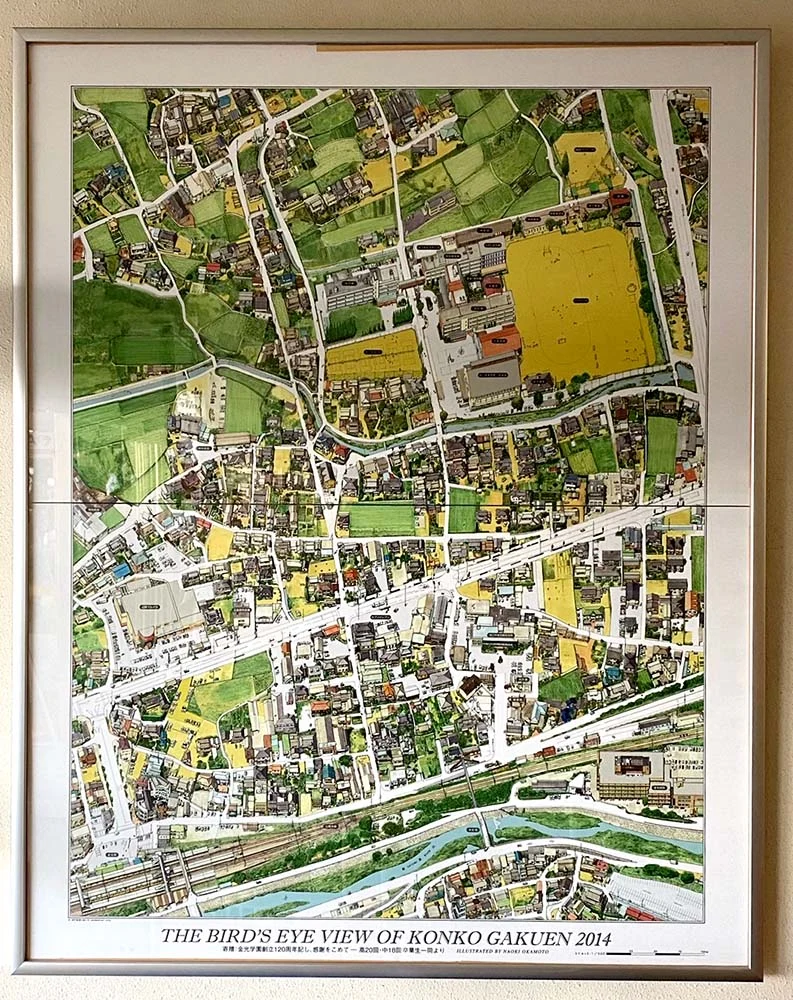
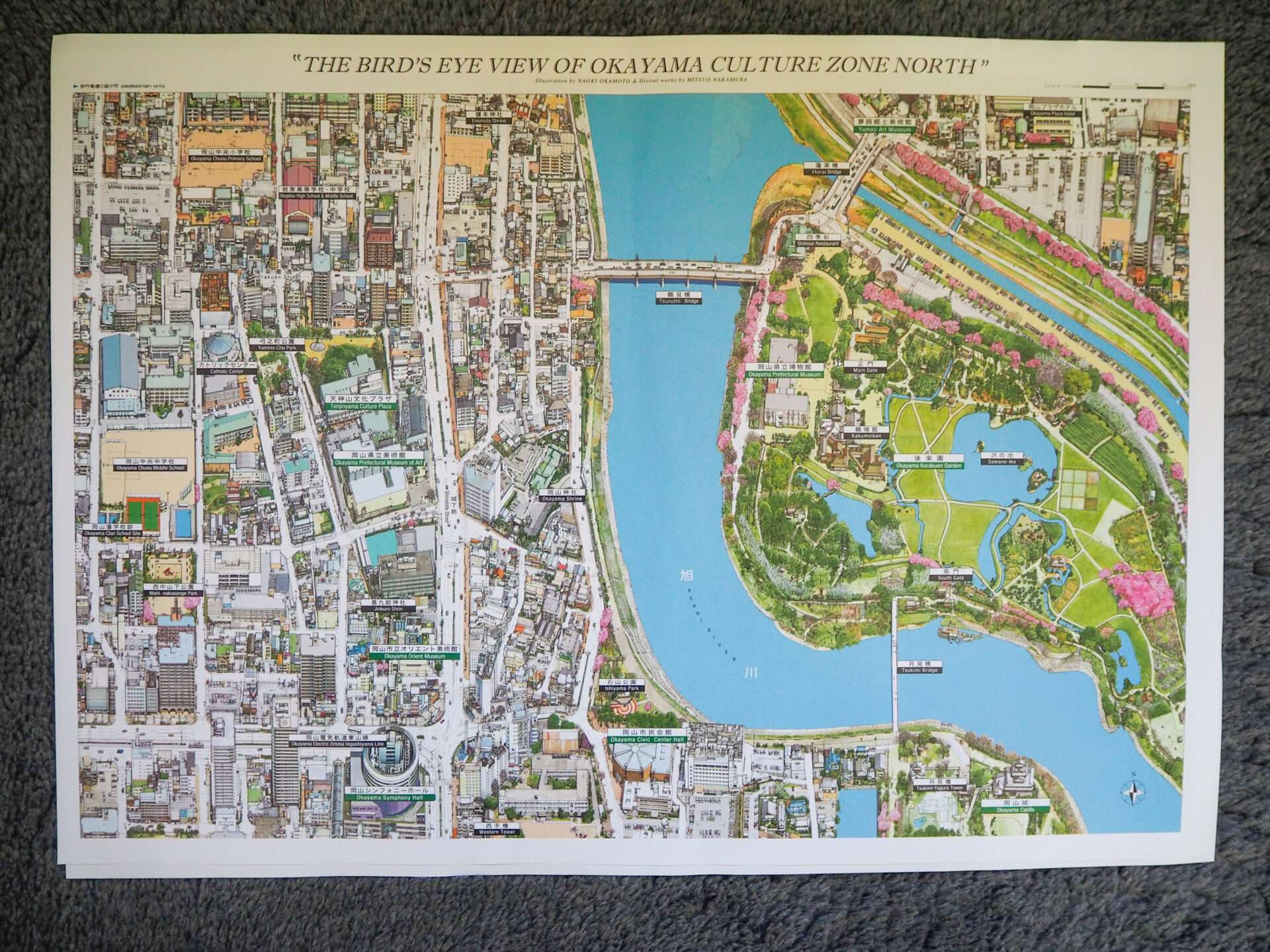
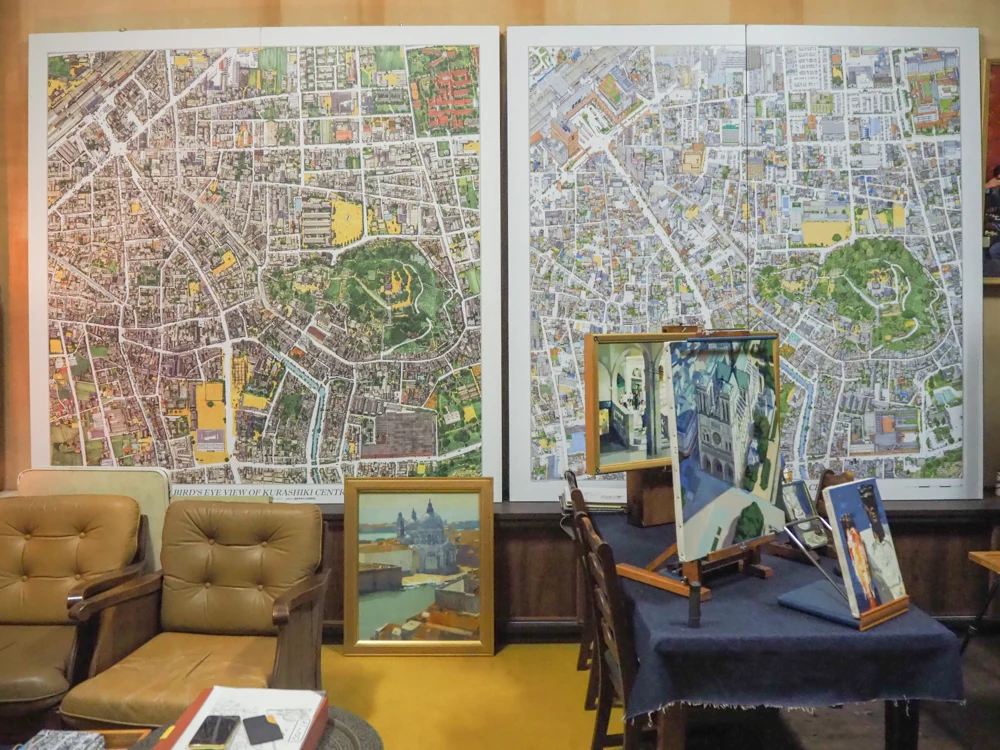
And the one he is working on now is the 2025 edition of the Kurashiki bird’s-eye view map.
At Okamoto’s studio, we talked about his thoughts on the project and how his process differs from the previous editions.
I want to see how the town has changed
I think that during our last interview, you said you “might” make a 2025 edition of the Kurashiki bird’s-eye view map. So you’ve finally started working on it.
Okamoto (surname only)
I simply want to see it for myself.
I just want to put it alongside the 2005 and 1963 editions and see how much the town has changed. That’s all.
It’s been about 20 years since I made the 2005 edition of the Kurashiki bird’s-eye view map.
Are you walking around yourself, observing and creating the map again this time?
Okamoto
Of course. Whether it’s a public facility or someone’s home, I look at it from different angles and take photos.
I stare at things so intently that people often get suspicious (laughs).
Sometimes people ask, “What are you doing?” So I tell them, “I’m drawing something called the Kurashiki bird’s-eye view map…” and explain.
Then they’re surprised and say, “You’re the one drawing it!”
It makes me happy when people react as if they know about the Kurashiki bird’s-eye view map.
After 20 years, I’ve developed an eye for observation
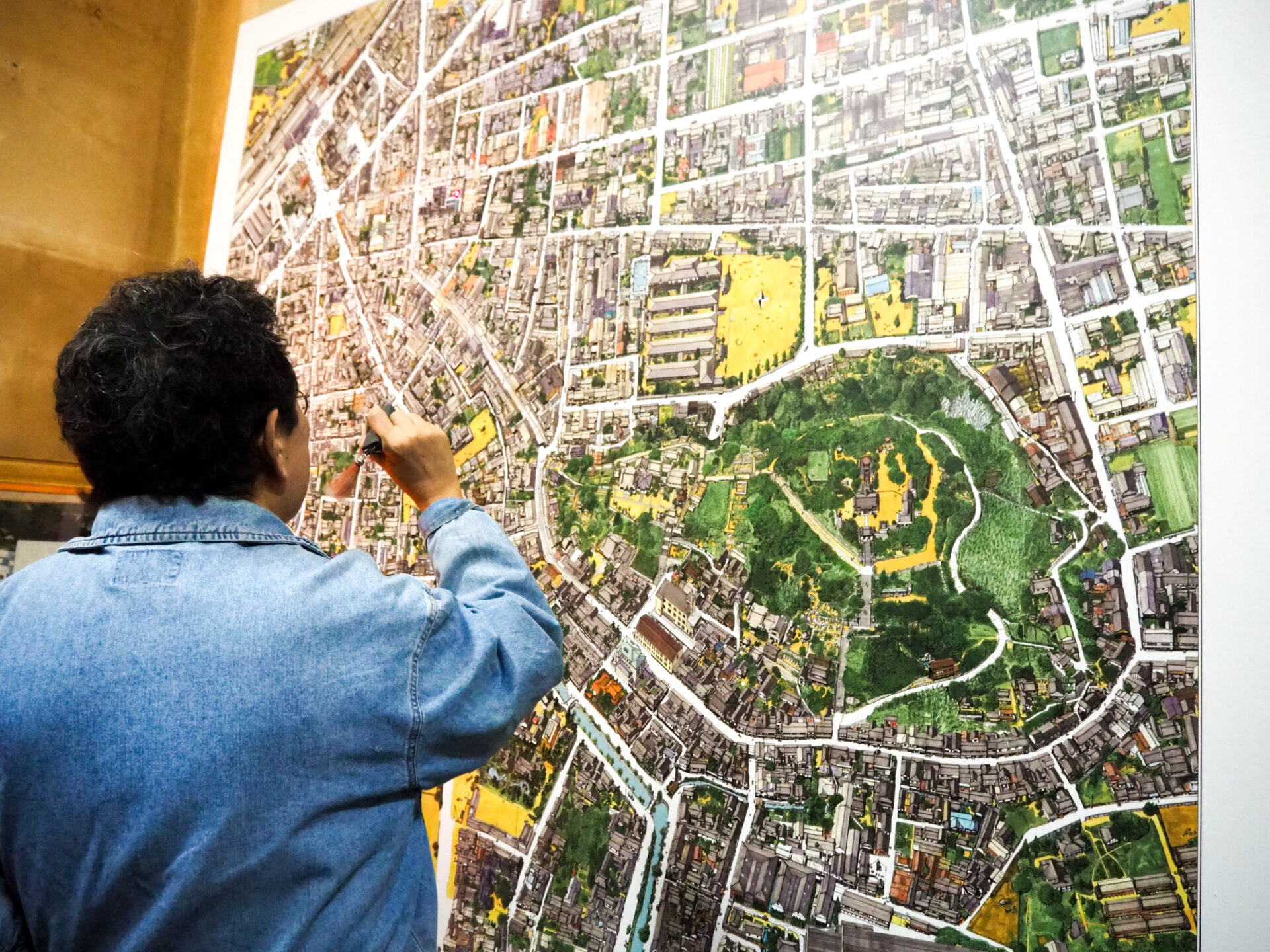
Do you notice changes in the town when you’re walking around?
Okamoto
The number of apartment buildings has increased dramatically. It’s hard to believe so many could be built in just 20 years.
Another major change is the opening of Achi Terrace Kurashiki.
Of course, the town has changed, but another change is that my powers of observation and drawing techniques are completely different from what they were in 2005.
This is your fifth bird’s-eye view map, right?
Okamoto
I think experience has honed my eye and skills.
When I was making the 2005 edition of the Kurashiki bird’s-eye view map, it was my first time working in Kurashiki, and there was a lot I didn’t know, so I made it thinking, “Maybe something like this.”
Looking at it now, the size and angles are all wrong.
That’s why I’m starting the 2025 edition from scratch.
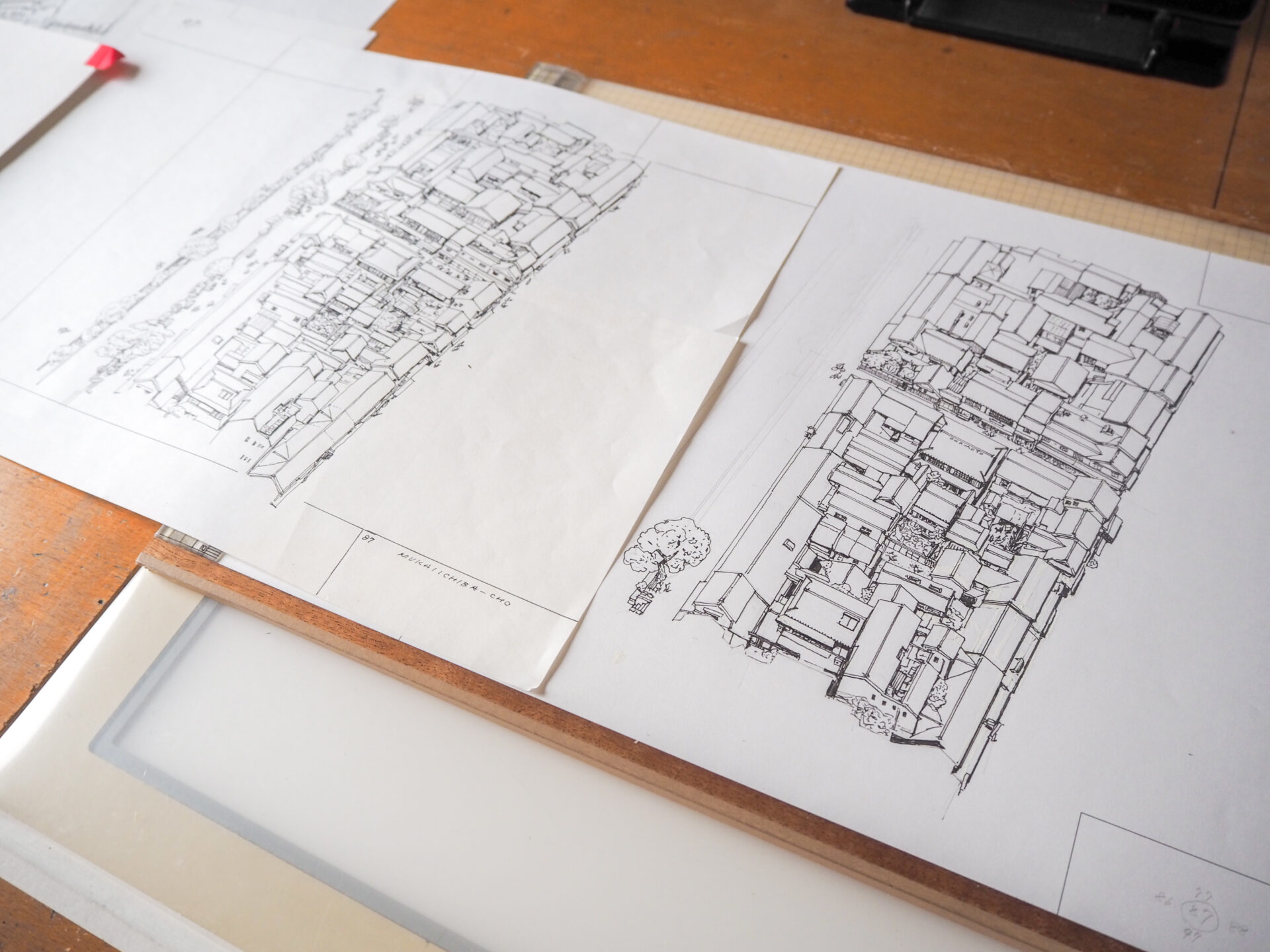
From scratch? I thought you were making it by drawing over the 2005 edition.
Okamoto
It feels better to me to redo everything from scratch, and it gives me a clean slate.
Even buildings that haven’t changed since the 2005 edition can turn out to be a different size when I look at them now, or at a different angle.
Even if they haven’t actually changed, I think there will be subtle differences when they’re rendered in the Kurashiki bird’s-eye view map.
People looking at it might not notice much, though.
Walking around town while also relying on digital tools
Have there been other changes to your process since 2005?
Okamoto
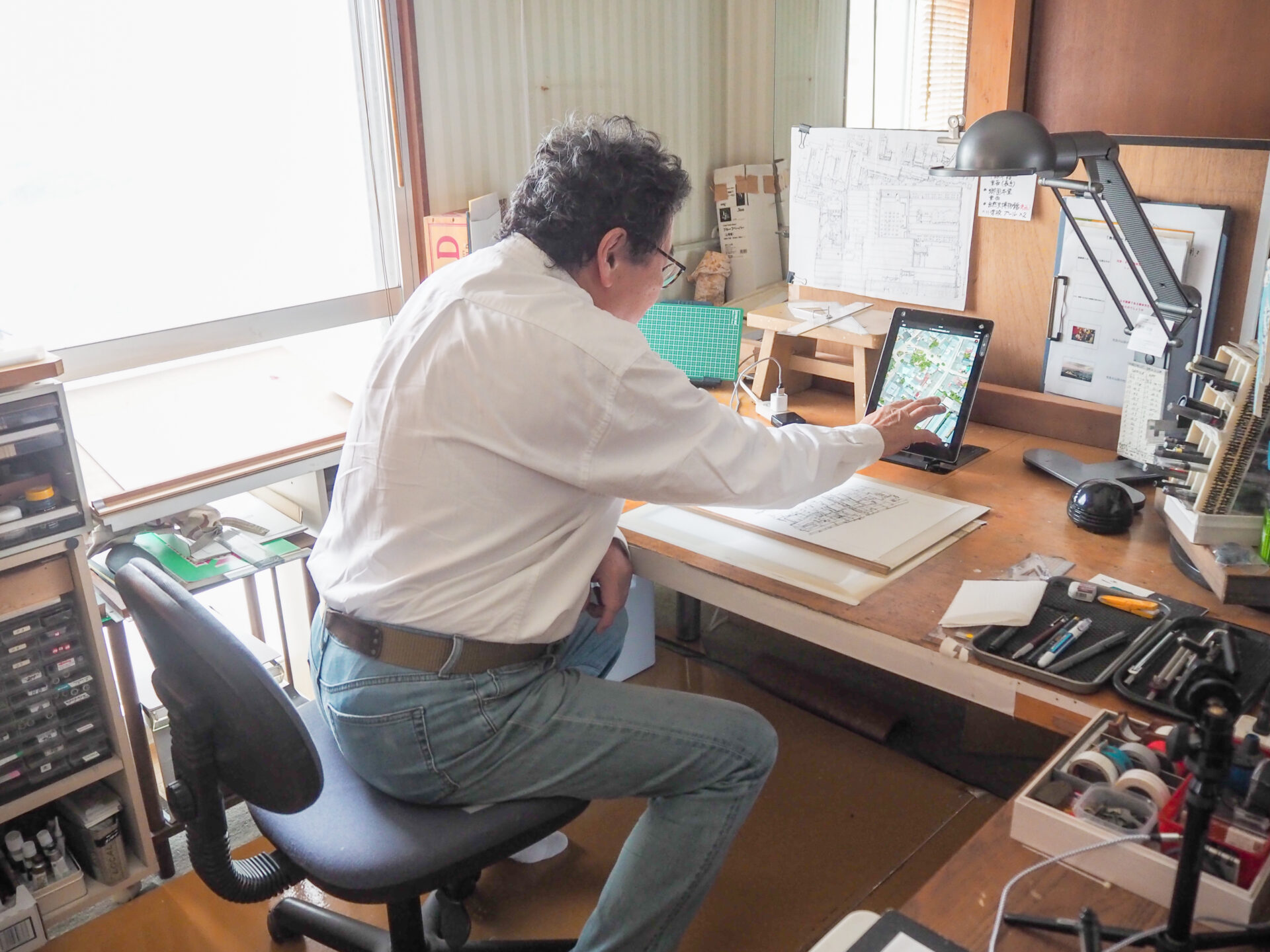
I’ve changed how I take photos and how I review them.
When making the 2005 edition, I sketched the town and its buildings or photographed them with a camera. I took the film to a photo lab to be developed and printed, then reviewed the photos.
I kept the photos in albums, so managing them was also time-consuming.
Now, I use just one smartphone to take photos and review them.
For me, that’s a huge leap in “going digital.”
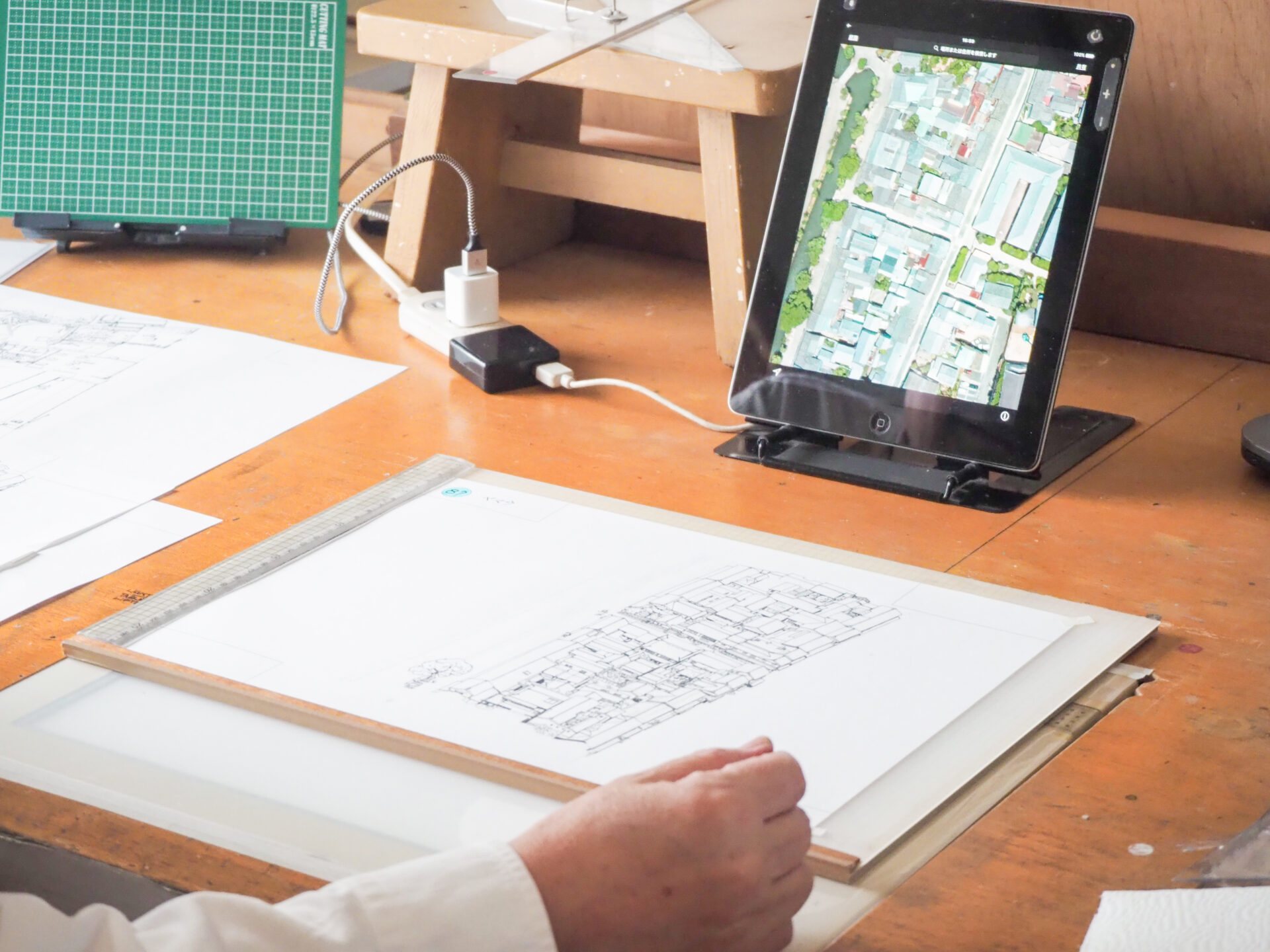
Another change is that I now refer to digital maps as well.
Of course, I still walk around town in person, but I rely on digital maps when I want to check something.
It seems like digital maps would provide more accurate information.
Okamoto
Actually, not necessarily.
Digital images are made by combining footage taken by several cameras into a single image, right?
So there are subtle differences from the actual size and angles.
It’s important to do both: walk around town and observe it carefully, and rely on digital tools.
Details only I would know
Were there any particular challenges unique to the 2025 edition?
Okamoto
First, I have to correct my own assumptions.
Since I’ve already drawn the 2005 and 1963 editions, I find myself thinking, “This building is this size.”
But as I’ve mentioned, the sizes and angles I remembered from back then are often different from reality.
It takes quite a while to correct those subtle differences.
Sometimes I think, “I spent three days fixing this part, and I’ve made no progress at all.”
It’s frustrating not being able to make smooth progress.
On the other hand, what part of drawing the 2025 edition do you find “especially enjoyable”?
Okamoto
I’ve left only the house where I was born as it was in the Showa era.
In an earlier interview, I said that there’s a student-era version of me in the bird’s-eye view map of Konko Gakuen Junior and Senior High School, but you wouldn’t notice this little detail in the new one unless someone pointed it out, would you?
It’s fun to draw when there are little details like that.
Finally, could you tell us how you feel about completing it?
Okamoto
So far, I’ve finished 20 of the 100 sheets (as of September 2023).
I still have 80 more to draw, then color, and then join all 100 sheets together, so there’s a long way to go.
But I’m looking forward to seeing how the town changes.
I’ll work hard on it, so please look forward to it.
From the Writer
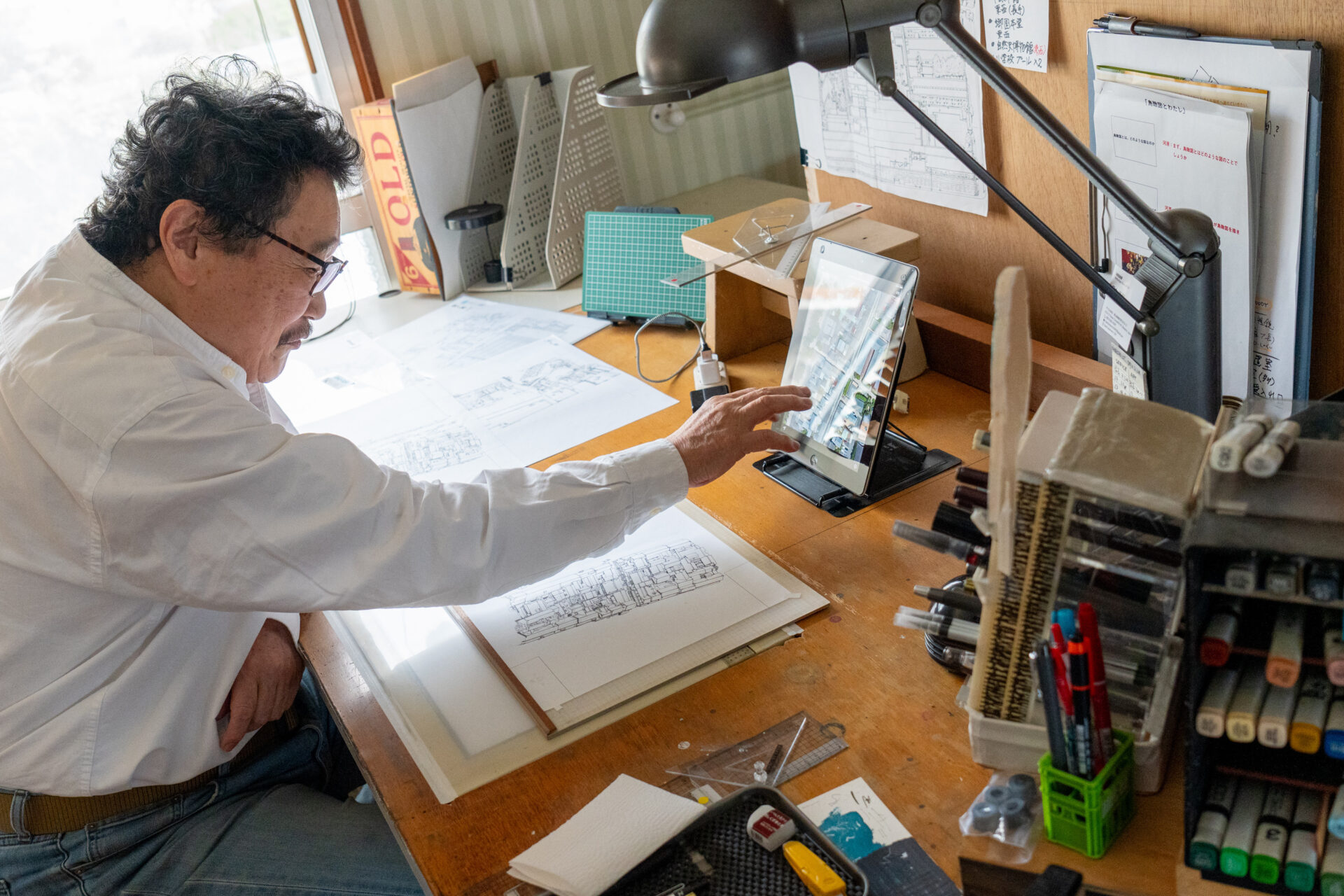
Okamoto said, “Compared with 20 years ago, I’ve developed a better eye for things.”
When I heard him say, “That’s why I’m starting over from scratch,” I couldn’t help thinking, “That’s an enormous undertaking.”
Although Okamoto himself said, “It’s hard work,” what stayed with me was how charming his expression was.
I felt that he must have looked so happy even while working on a project that takes so long because he is creating his work by following his own curiosity—his desire to see how the town changes.
I’m already looking forward to seeing how the 2025 edition of the Kurashiki bird’s-eye view map takes shape.
Articles about Okamoto Naoki



What would you like to know about Kurashiki?
Enter a word to search articles on this site