Have you ever thought, while looking at the streets of Kurashiki, "This is a place where traces of the past remain"?
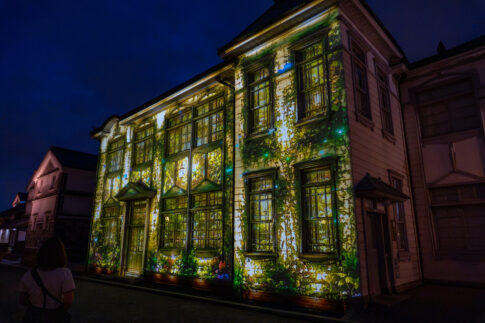
In particular, the Bikan Historical Area is home to many historical buildings, and there has been an increase in facilities that have renovated their interiors while keeping the buildings intact.
That said, it is easy to imagine that the scenery from decades ago has not remained unchanged.
For local residents who have lived in Kurashiki for a long time, they might feel, "It has changed quite a bit compared to when I was a student."
One person who has witnessed the changes in the streets of Kurashiki is Okamoto Naoki, a bird's-eye view illustrator.
Okamoto has depicted the town of Kurashiki from above in both the 2005 version and the 1963 version, preserving the state of the town at that time.
Now, Okamoto's bird's-eye view illustrations can be seen in various places around Kurashiki.
I was curious about the motivation behind his desire to draw and the production process.
I visited Okamoto's studio and was able to hear his story.
Who is Okamoto Naoki? A painter from Kurashiki City

Okamoto is a painter and illustrator from Kurashiki City.
He spent his childhood and high school years in Kurashiki, and later studied painting, including oil painting, in the United States and France.
After returning to Japan, he lived in Yokohama while expanding his activities based in the Kanto region.
He officially started his activities as a bird's-eye view illustrator in 2002 (Heisei 14) when he returned to Kurashiki.
In an effort to preserve the streets of his hometown, he took four and a half years to create the bird's-eye view illustration of the central urban area of Kurashiki, known as the "2005 version."
After that, he spent another four years creating the "1963 version" of the bird's-eye view illustration of the same area.
Currently, he continues his artistic activities while working as a teacher at four painting classes.
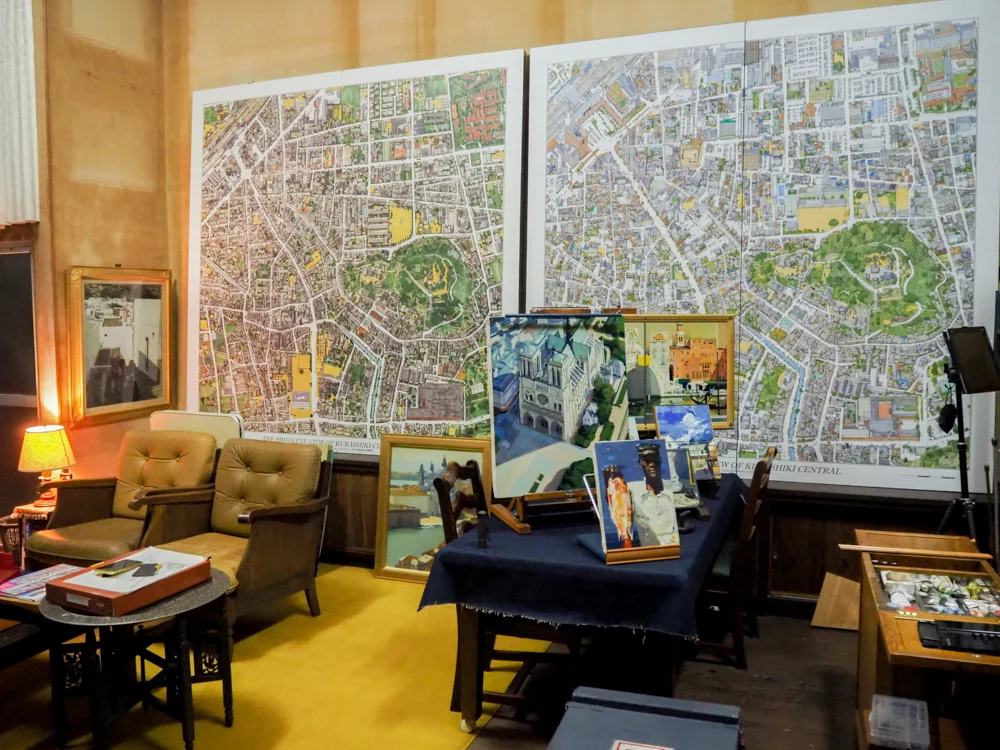
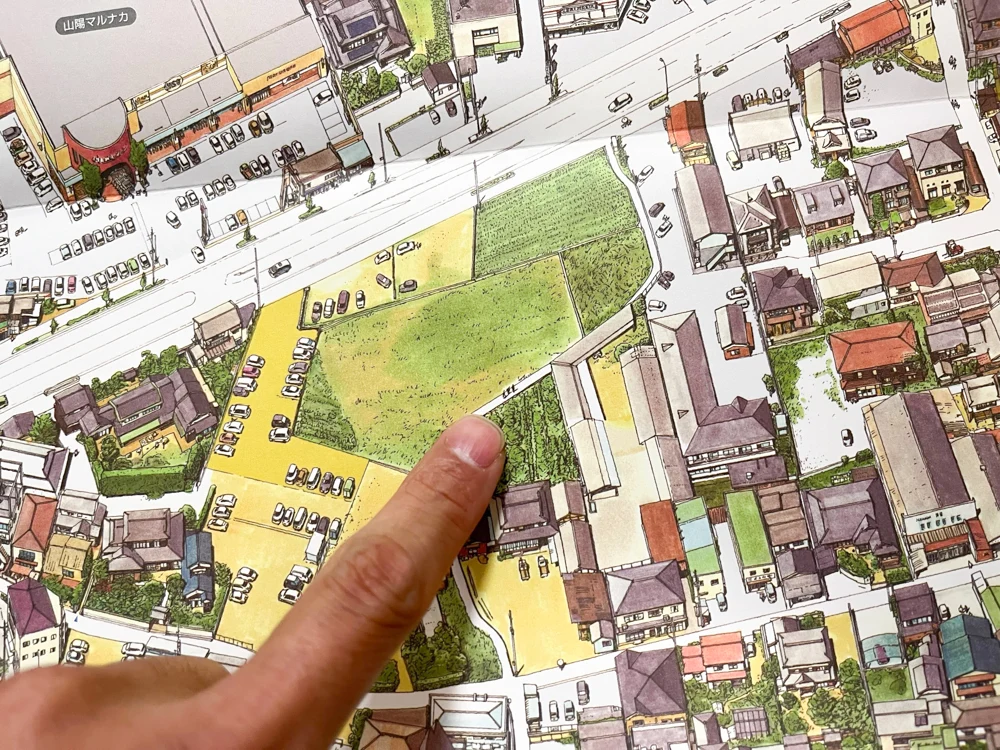
The bird's-eye view illustrations seen around the town come in various sizes, but the so-called "real" ones are the original-sized works shown in the photo.
The "original-sized bird's-eye view illustration," which is an impressive 2 meters square, is located in Okamoto's workshop.
In the past, he has exhibited at events such as the Kurashiki City Kurashiki Monogatari-kan and the 50th anniversary party of the Kurashiki International Hotel.
While opportunities to see the original size are rare, smaller versions of the bird's-eye view illustrations can be purchased at Hayashi Genjuro Pharmacy Museum and Kurashiki City Kurashiki Monogatari-kan.
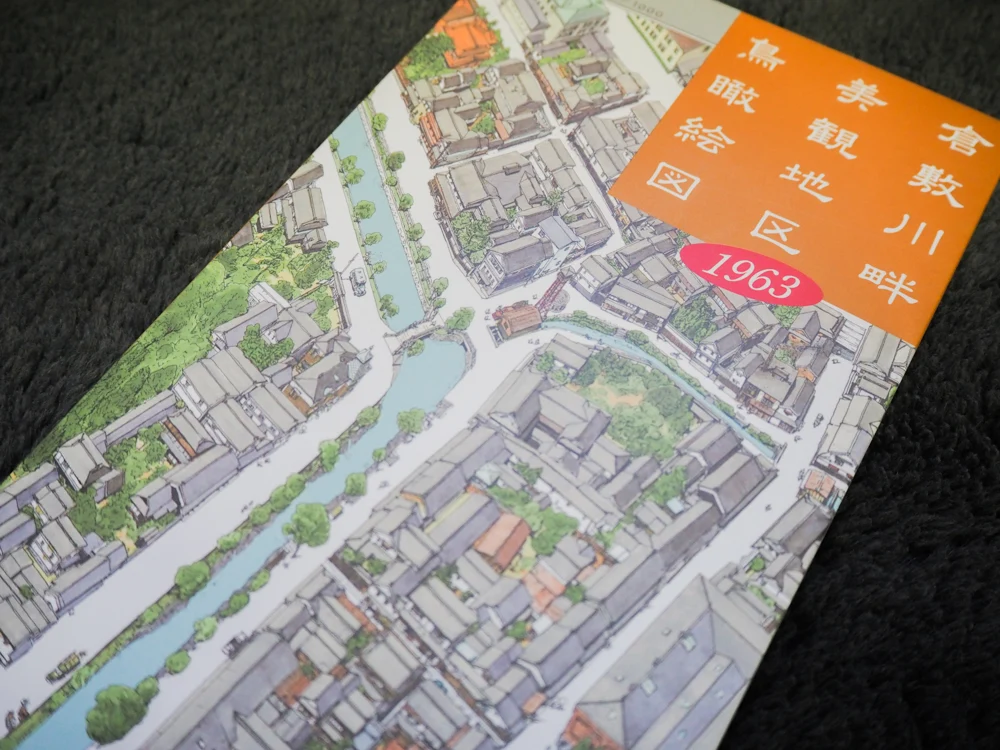
Comparing the 1963 version and the 2005 version reveals the changes in the town over time.
Generations can engage in lively conversations while reminiscing about the streets of Kurashiki.
Additionally, comparing the bird's-eye view illustrations with the current streets allows for a deeper appreciation of Kurashiki's history, which is highly recommended.
Okamoto has also created bird's-eye view illustrations around his alma mater, Kinkō Gakuen Junior and Senior High School, and in Okayama City.
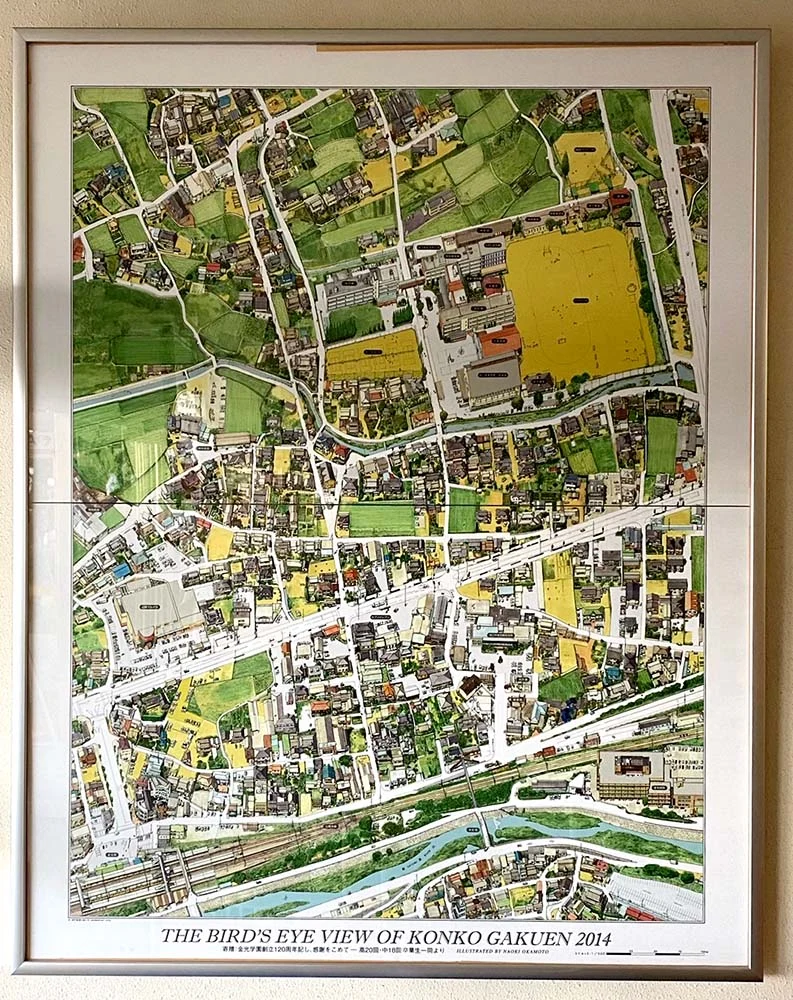
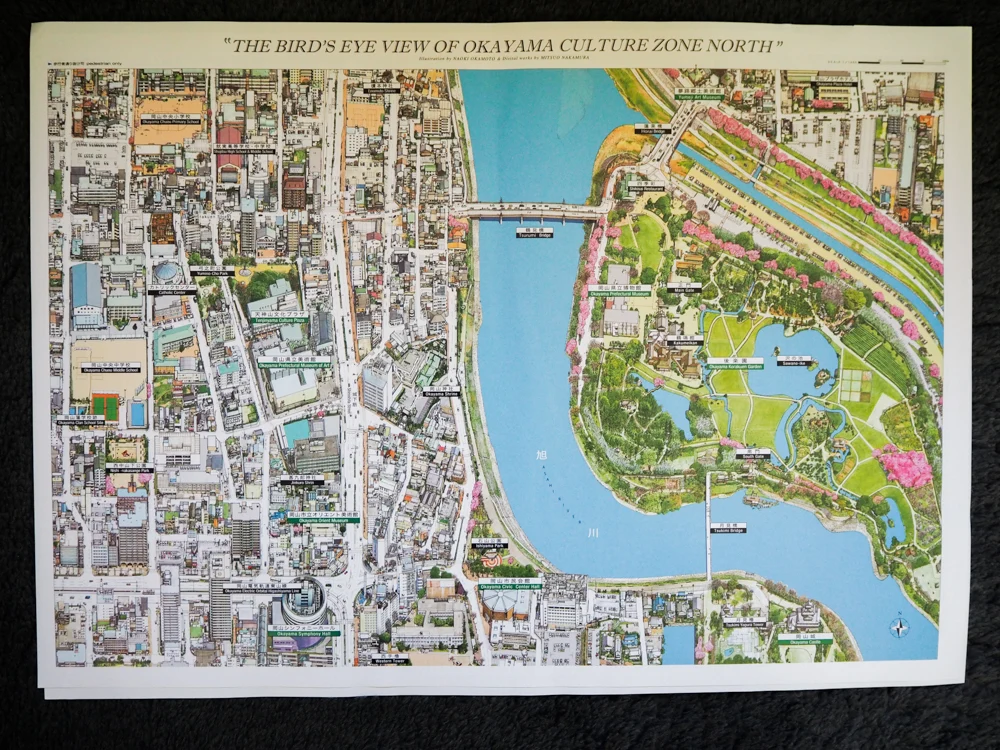
So why did Okamoto start drawing bird's-eye view illustrations?
Does he have a unique way of creating bird's-eye view illustrations?
I interviewed Okamoto about his "strong commitment to bird's-eye view illustrations."
The changing Kurashiki. The method chosen to preserve the "now" of the town: "Bird's-eye view illustrations"
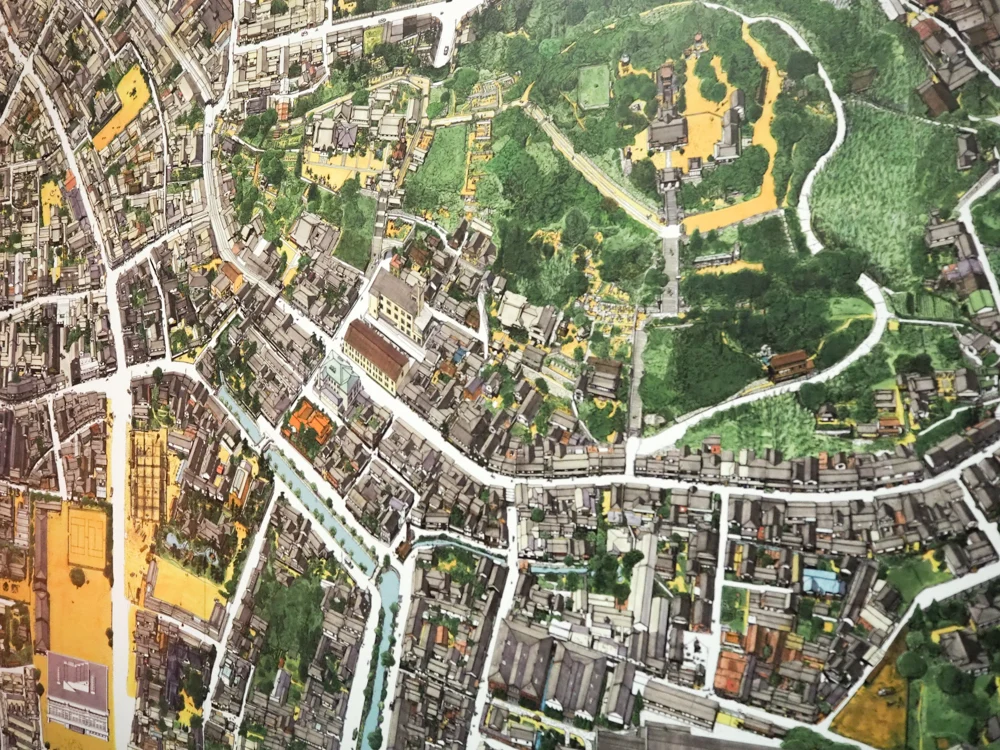
The thought of wanting to preserve the streets of Kurashiki came to Okamoto in 2002 when he returned to Kurashiki from Yokohama.
While actually walking through the town of Kurashiki, he thought, "Wow, Kurashiki has changed more than I expected..."
"I was taking photos and sketching while looking at the town, which has changed quite a bit compared to when I lived there. I thought, Is there a way to see the changes in the town at a glance? and then it hit me, 'Let's do a bird's-eye view illustration!'"
The keyword "bird's-eye view illustration" suddenly came to him because he had previously worked on one.
When Okamoto lived in Yokohama, he had been commissioned by a real estate company in Tokyo to create a bird's-eye view illustration.
Looking back on that time, Okamoto said, "I remember observing every corner to draw the bird's-eye view illustration."
"When you walk, you really get to know the town. Walking while taking photos and then drawing from those photos helps you remember the streets. It was really interesting to develop a fondness for the town."
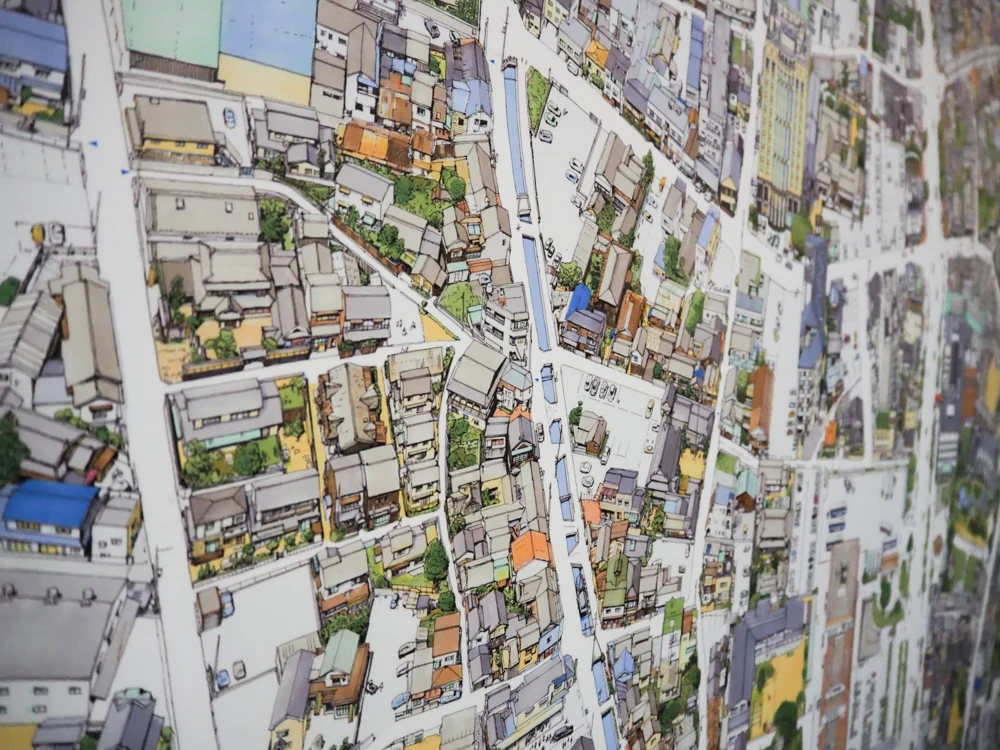
Additionally, Okamoto's bird's-eye view illustrations are drawn using a technique called axonometric projection.
This technique allows for a drawing that not only has the real dimensions of buildings but also enables one to deduce the size of the buildings from the illustration.
Although this technique takes time to complete, Okamoto found his experience in Tokyo to be "fun during the production process."
He mentioned that it was natural for him to want to preserve the streets of Kurashiki in a bird's-eye view illustration.
Okamoto's commitment: "Scale is 1/500"
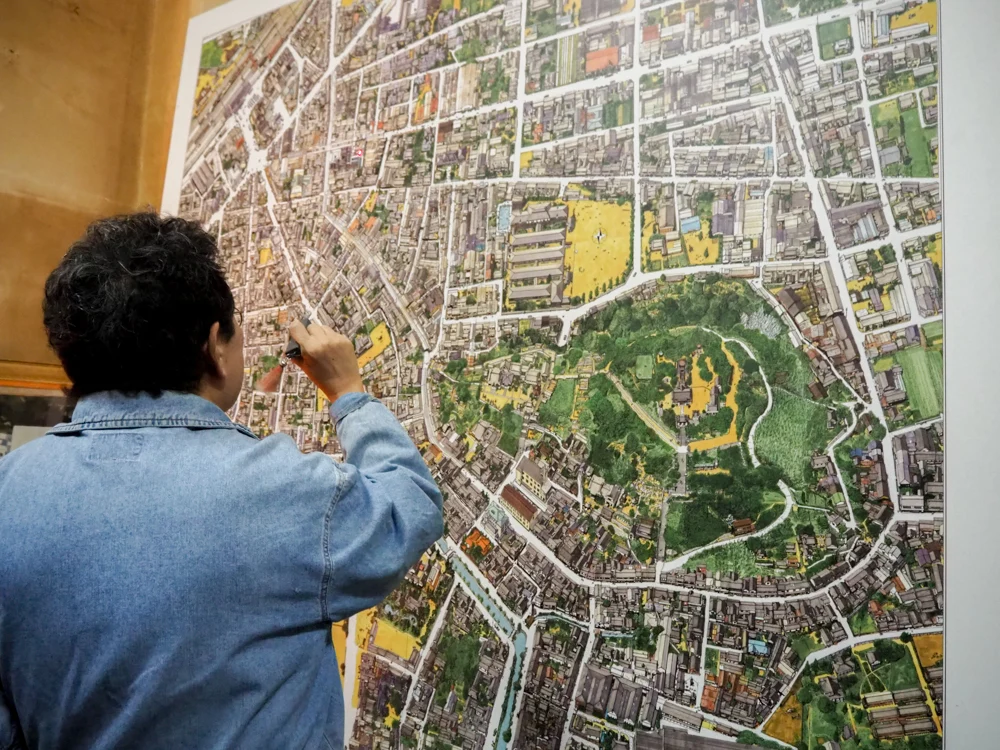
The most common scale for bird's-eye view illustrations is around 1/2500.
In contrast, Okamoto draws at a scale of 1/500.
According to Okamoto, he is probably the only one drawing bird's-eye view illustrations at a scale of 1/500.
He deliberately chooses to draw at 1/500, as the size has significant meaning.
"The reason I insist on 1/500 is that, as you can see in the original size, it allows for life to be depicted. You can see an odd lady over there! or a cat on the roof!. At 1/500, you can just barely depict life."
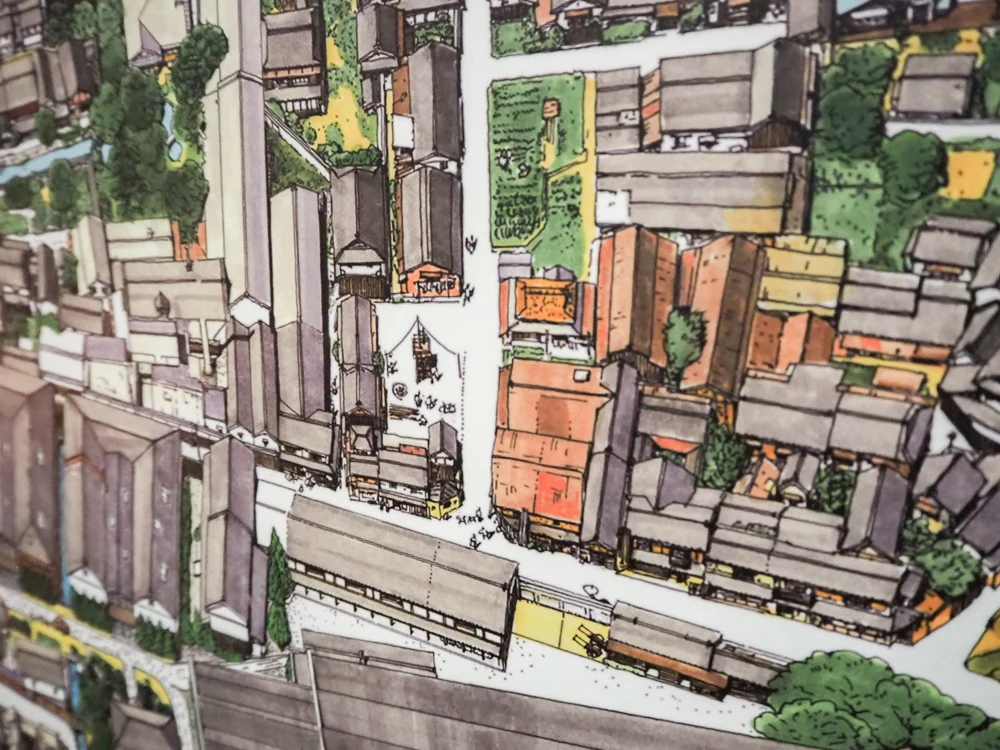
Not only the scale of the buildings but also the way people live is depicted.
That is why I believe you can feel the realness of life at that time from Okamoto's bird's-eye view illustrations.
Okamoto also shared stories about the production of bird's-eye view illustrations outside of Kurashiki.
"In the bird's-eye view illustration of Kinkō Gakuen, I'm walking too. With two friends. We actually went to school together back then."
Okamoto's playful smile left a lasting impression on me.
Okamoto's unique bird's-eye view illustration production process
However, at a scale of 1/500, the size exceeds 2 meters square.
How does he create them?
"The trick is that I divide the 1/500 size into 100 pieces. I draw the original illustration piece by piece."
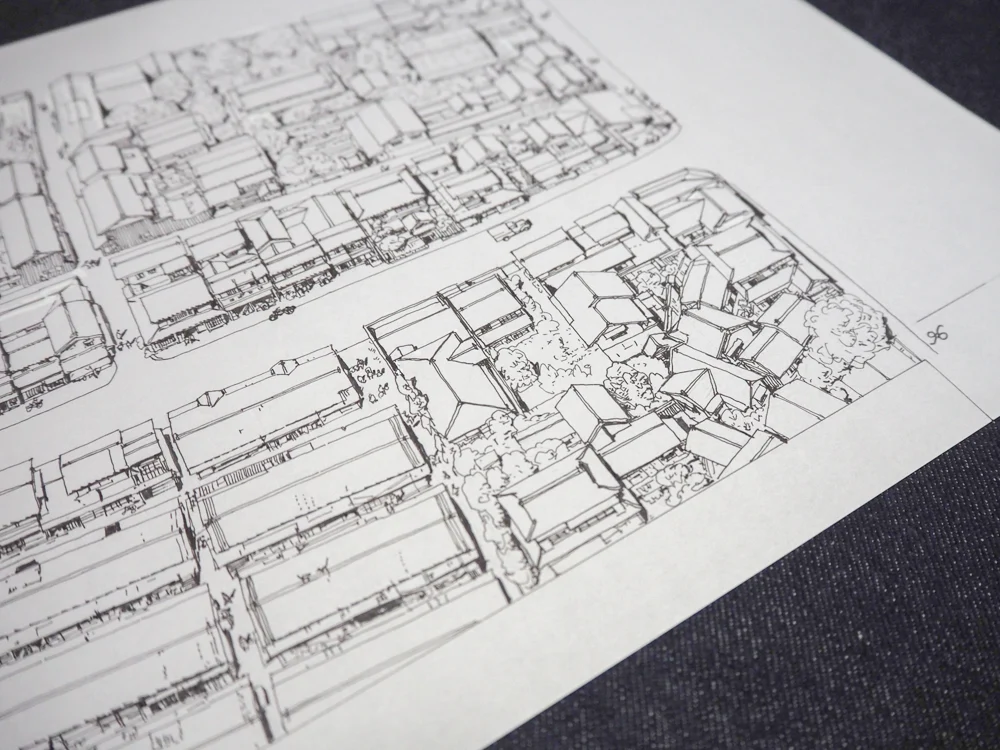
"I assign a sequential number from 1 to 100, so if I draw 100 original illustrations, I can create the original-sized bird's-eye view illustration."
Okamoto casually mentioned this, but drawing 100 pieces is something that can only be done if you truly love it.
It is understandable that he spent four and a half years coloring and completing it to original size.
It is a daunting task, but Okamoto spoke about it with enthusiasm.
"Dividing the bird's-eye view illustration into sections like this is my invention. As far as I know, it is the first method in the world for drawing bird's-eye view illustrations."
Once the sketch is complete, he finally adds color.
When I asked about the colors, he mentioned that there are areas where he specifies colors on the computer and fills them in with solid color, as well as areas that are hand-painted.
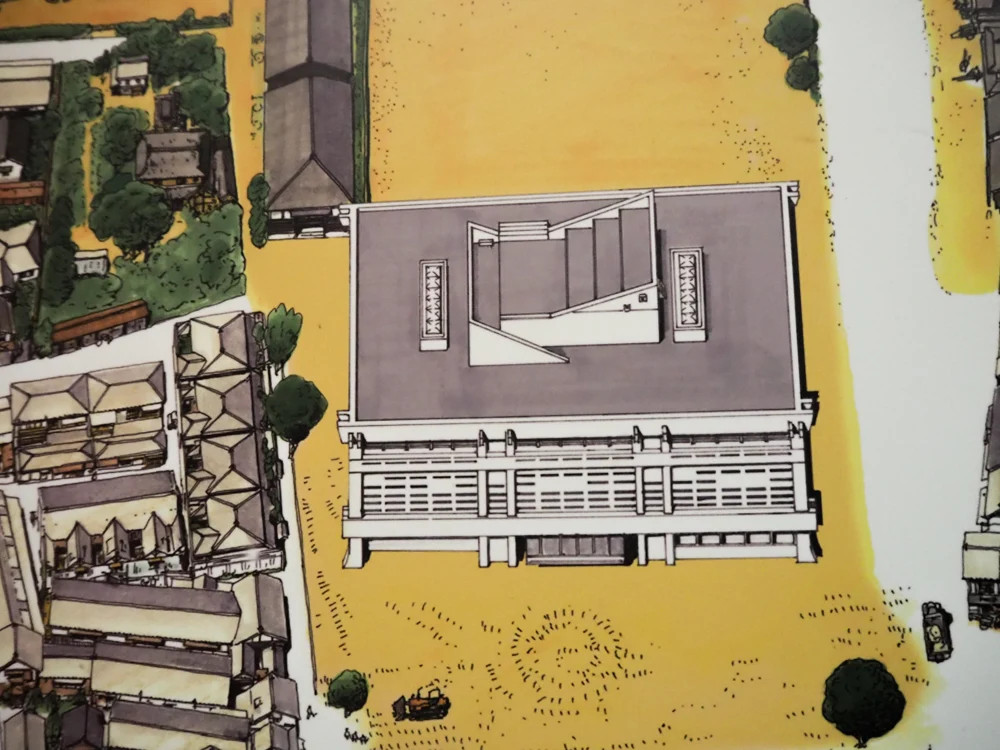
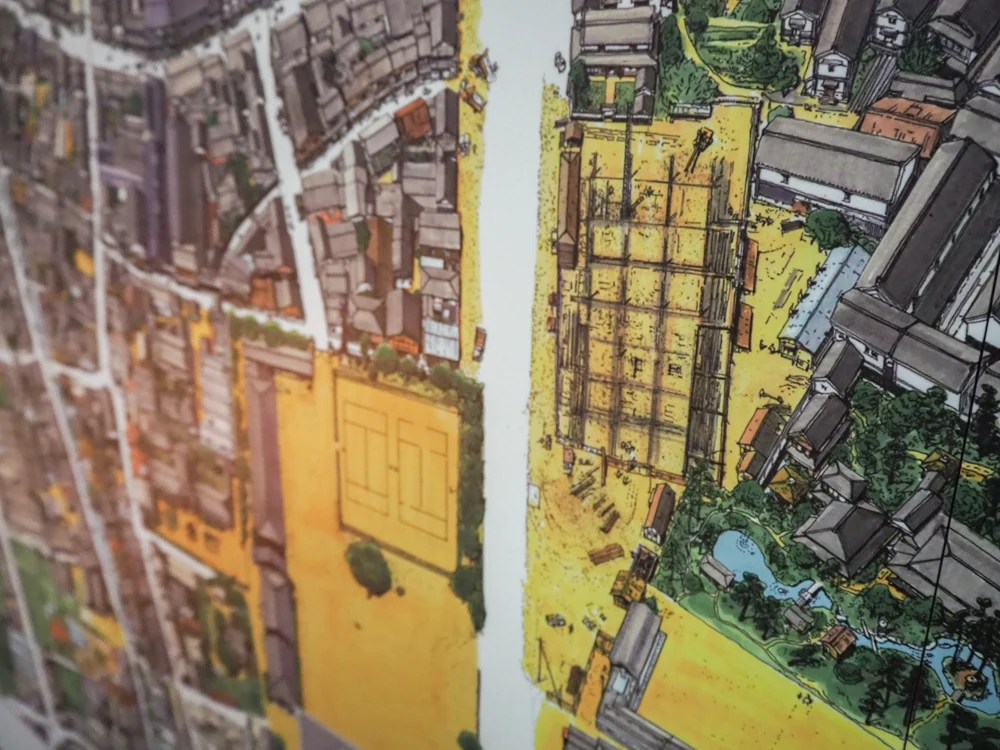
What is used for hand-drawing is, surprisingly, Copic markers and colored pencils!
“For the rooftop of the new building, I have my students specify colors and fill them in. On the other hand, the old buildings look better with colored pencils. They are easier to gradate.”
Knowing that each of the 100 original drawings is colored individually and hand-painted makes me want to take a closer look at the bird's-eye view illustrations.
The colored original drawings will ultimately be scanned into a computer by Mr. Okamoto's students, and the 100 pieces will be connected together.
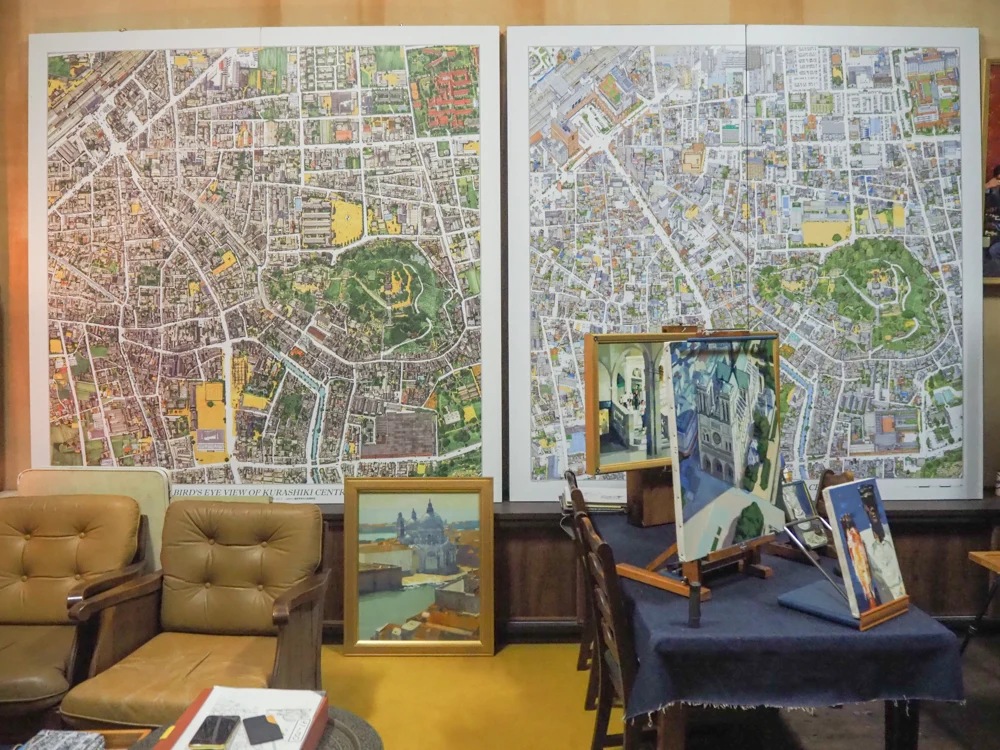
And finally, it becomes a bird's-eye view illustration in its original size.
There are still many things I want to do. Things I want to draw in the future
Mr. Okamoto has been working on a single bird's-eye view illustration for several years.
He shared many of his preferences regarding size and drawing methods.
When I asked if there was anything he wanted to draw in the future, he responded with strong words, despite a hint of shyness.
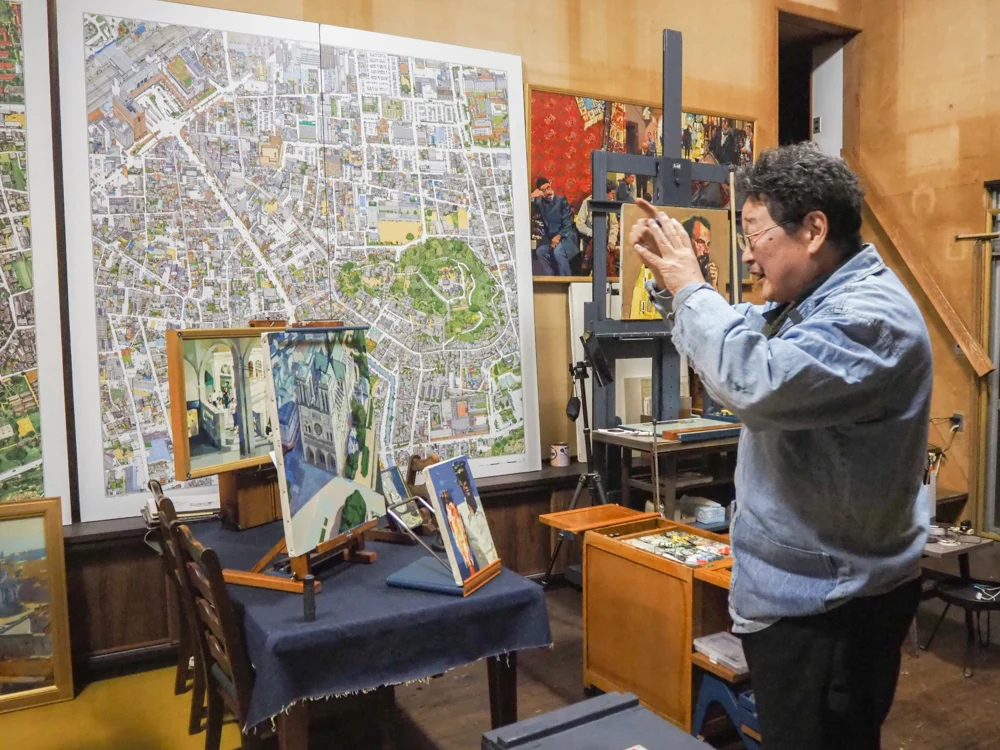
“Well, I think I want to draw Bingo. I have drawn Bizen and Bitchu so if I draw Bingo, I will have a complete set of bird's-eye view illustrations for this entire region, right?”
To be honest, I also wanted to draw Paris. I lived there for five and a half years, and the streets are wide, so I could fit all the famous museums like the Louvre into one illustration.
Also, what is more realistic is the current Kurashiki. The redevelopment in front of JR Kurashiki Station has progressed, and it has changed quite a bit in the last few years. I definitely want to do Kurashiki.”
In conclusion
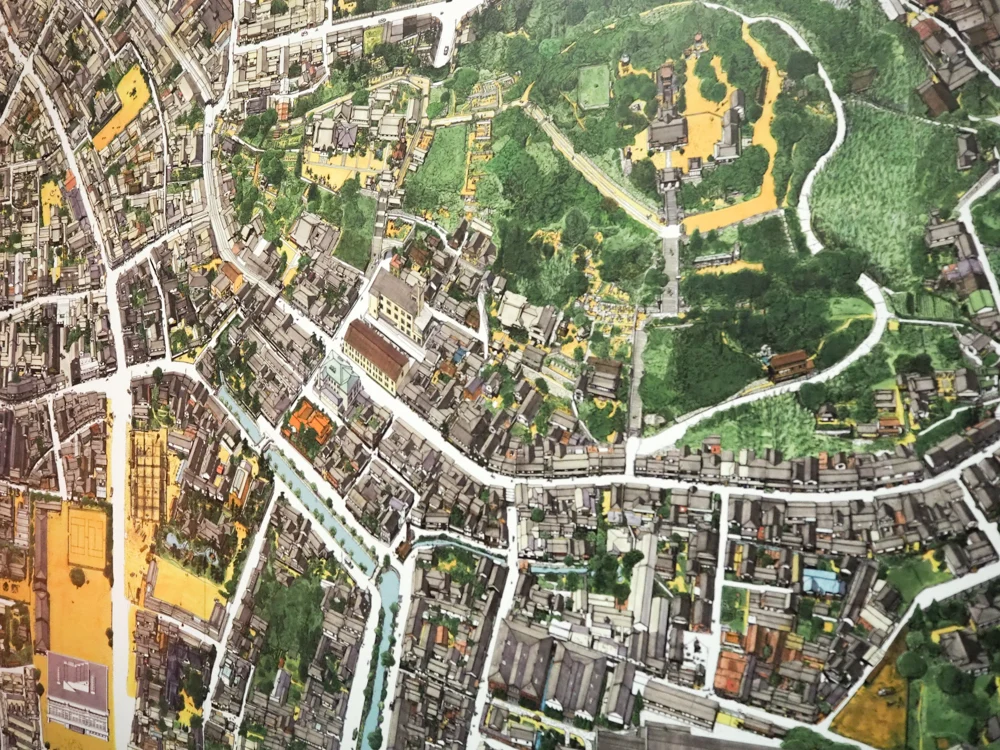
“Bird's-eye view illustrations are called 'bird's eye,' but actually, they are drawn from a 'bug's eye' perspective.”
This statement made by Mr. Okamoto during the interview was also impressive.
While bird's-eye view illustrations are indeed drawn from an aerial perspective like a bird's eye, the opposite viewpoint is essential when actually drawing.
He walks around the town for hours, observing the streets from corner to corner while capturing the “now.”
I believe Mr. Okamoto's perspective is fully reflected in the bird's-eye view illustrations, and I want to enjoy looking at them over and over again.
After seeing the bird's-eye view illustrations, walking around Kurashiki will allow you to enjoy the townscape from a different perspective.
Thinking that there may come a day when we can see bird's-eye view illustrations from the 2020s, I am very much looking forward to it.
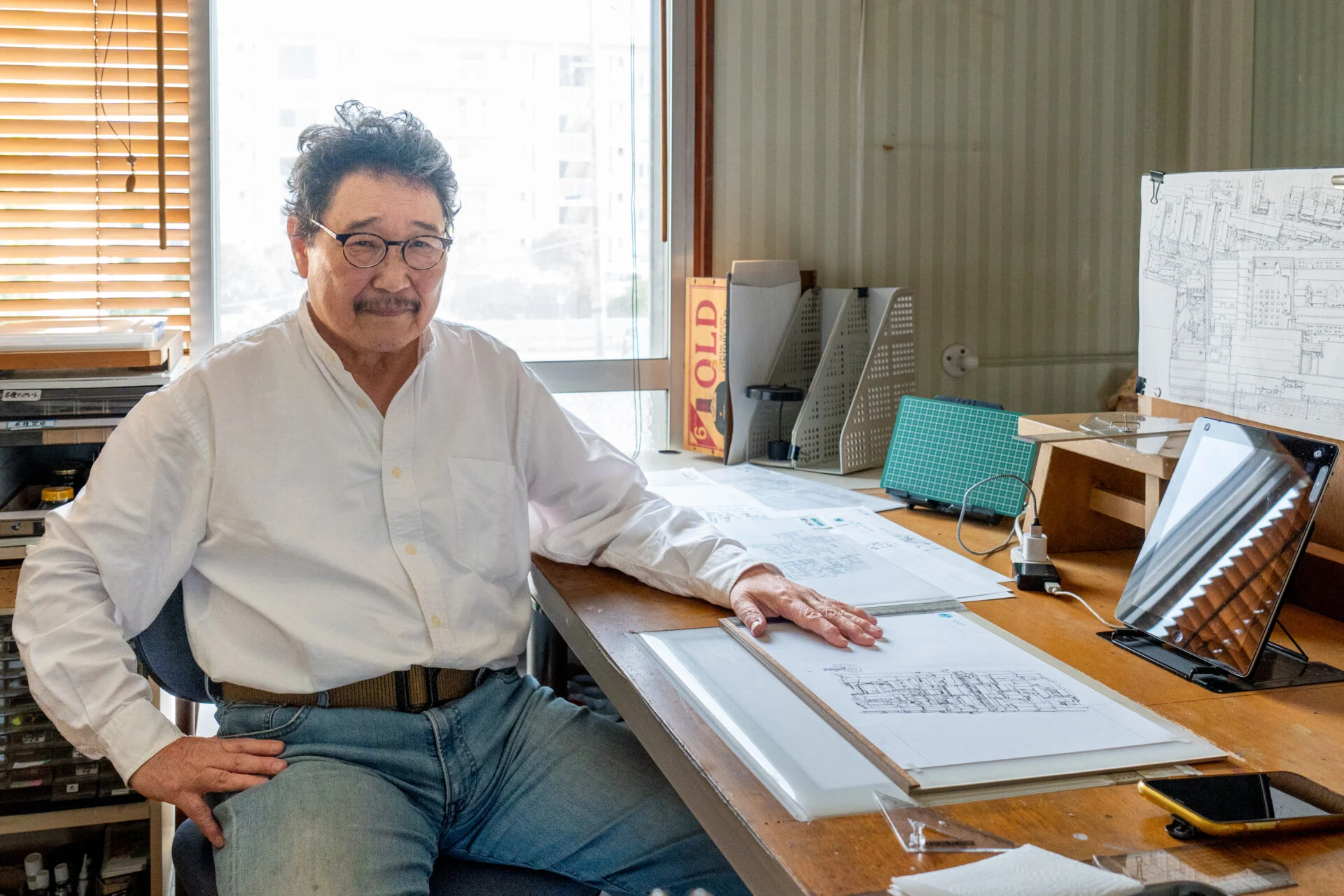
Articles about Naoki Okamoto