Interview with Physical Therapist Ryo Yamamoto and Certified Health Exercise Instructor Ayuko Tanaka
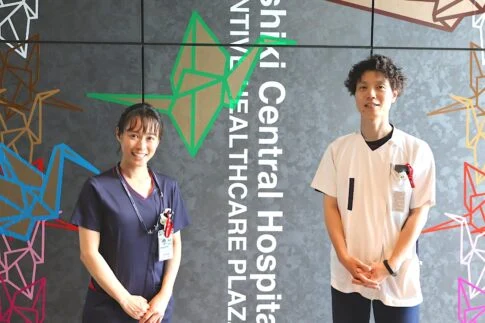
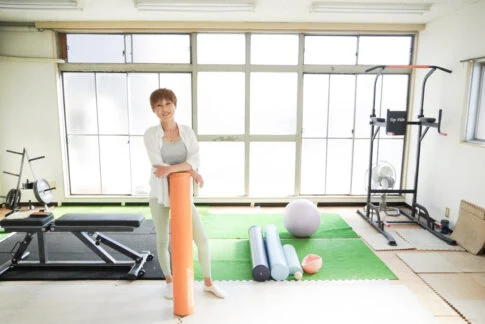
We spoke with Ryo Yamamoto, the dedicated physical therapist at the Preventive Medicine Plaza, and Ayuko Tanaka, a certified health exercise instructor, about the exercise classes.
What led you to work in preventive medicine?
What led you to become involved in preventive medicine?
Yamamoto (titles omitted)
I originally worked in the Rehabilitation Department at Kurashiki Central Hospital, where I was responsible for rehabilitation for patients in the acute phase after surgery and in intensive care units.
As I treated patients, I often saw cases where people with unhealthy lifestyles or a tendency toward metabolic syndrome became seriously ill and were slow to recover.
So I wondered whether, as a physical therapist, I could help prevent illness by supporting people in building healthy bodies from an early age.
In 2019, when the health screening facility was renovated as the Preventive Medicine Plaza, I was asked to contribute as a medical professional, and I have been working in preventive medicine ever since.
At what age should people start taking preventive measures?
Yamamoto
This includes my own opinion, but growth peaks have passed by the time people reach their 30s. It may seem early, but I think it is good to start thinking about prevention in your 30s.
For example, one test for locomotive syndrome (a condition in which mobility declines due to the weakening of bones, joints, muscles, and other parts of the body) asks whether you can “stand up on one leg from a chair 40 cm high without using your hands.”
Surprisingly, many people in their 30s cannot do this.
In recent years, more people have been working desk jobs, which tends to reduce the amount of exercise they get and their muscle mass. It is important to develop exercise habits as early as possible.
Tips for keeping up with exercise
What are some tips for keeping up with exercise?
Yamamoto
The key is to set a low bar.
For example, I think few people can suddenly stick to “walking for 30 minutes every day,” but “doing squats every day while brushing your teeth” sounds manageable.
Linking exercise to a daily routine you already do regularly is the key to keeping it up.
I also recommend exercises you can do right away.
For example, sitting for long periods is said to increase the risk of lower back pain. If you sit for a long time at a desk, simply standing up once every 15 to 30 minutes can help.

Is there anything you keep in mind when teaching the exercise classes?
Yamamoto
I want participants to learn about their own bodies. For example, it is difficult to see your own posture from the side. It can be hard to notice if you have a hunched back or “text neck” (forward head posture).
In the exercise classes, we explain how to check your posture yourself and suggest asking a family member to take a photo when you get home. Looking at a photo of yourself lets you see your posture objectively.
A common posture these days is one where the center of gravity of the upper and lower body is misaligned, the lower back arches, and the stomach sticks out. This posture may feel comfortable, but it can cause lower back pain.
By learning about your body and paying attention to it, you can notice what needs correcting. Then, if you receive our advice in the exercise class, you should be able to apply it more personally.
That is why we try to help people learn about their bodies through the exercise classes.

About the health exercises
Could you tell us about the health exercises you teach?
Tanaka (titles omitted)
These classes involve full-body exercise incorporating stretching and strength training, so the exercises are simple and anyone can do them. We also include brain training, and sometimes move our bodies while exercising our minds. We do not stick too rigidly to a set format and change the content depending on the day.
For example, we change the exercises according to the season.
During hot weather, sweating is important for regulating body temperature and preventing heatstroke. So we sometimes include active exercises to help people develop the habit of sweating.
Also, when fruit is in season, we might say, “Eating fruit raises your blood sugar, doesn’t it?” At the beginning of the year, we might ask, “Did you eat a lot of mochi?” We then do exercises that work the large muscles in the legs and increase calorie expenditure.
Is there anything you keep in mind when teaching the health exercises?
Tanaka
Because exercising without a clear purpose is less likely to be effective, I explain the benefits in detail.
- It helps prevent lifestyle-related diseases
- It is effective for people with lower back pain
- It helps strengthen these muscles
We explain things this way so that everyone can find something that applies to them.
I think that when people think, “That applies to me,” it helps them keep going.
We also say things like, “You can do this exercise at home, too,” and “These muscles weaken quickly if you don’t use them, so let’s keep working on them together.” We try to help participants remember and do the exercises from class at home as well.

Are there any memorable stories from teaching the health exercise classes?
Tanaka
One person who attends the exercise class told me, “I used to fall a lot, but since I started coming to the class, I hardly ever fall anymore.”
Also, when someone who could barely do squats becomes able to do them steadily and repeatedly, I feel rewarded, thinking that they have gained strength and developed an exercise habit.
I am also happy to see participants exchanging with one another. Many of the people in today’s class were in their 80s, and I think it is truly impressive when someone in their 80s can stand on one leg without wobbling.
I learn from all the participants that it is important to build up exercise day by day.
A message for those considering participating

What would you say to people who are thinking about participating?
Tanaka
If you are unsure whether to come, please visit us at least once. The exercises are not strenuous, so even first-time participants can join with confidence.
If you find any of the exercises difficult, we will give you plenty of support. Please come and try it at least once. Moving your body is fun.
Yamamoto
We would like people of all kinds to join us, including those who have trouble keeping up with exercise and those who find it difficult to continue on their own. We believe we offer useful exercise classes, so please come along.
We would especially like men to participate, too. Men’s menopause has also become a topic of discussion recently. I think exercise can also help ease menopausal symptoms.
We would be delighted if you could develop an exercise habit through the classes and help prevent illness. We look forward to welcoming you.
From the Writer
In this interview, we learned in detail about the exercise classes at the Preventive Medicine Plaza and tips for making exercise a habit.
As someone who tends to stay home and does not get enough exercise, this was hard to hear, but listening to the instructors reminded me once again of the importance of health and exercise. I feel a sense of urgency, wondering what I will be like in one year or five years if I do not exercise.
I was also struck by how lively the participants looked and how happily they spoke when I talked with them.
If you have trouble developing an exercise habit or are concerned that you should be exercising, why not try an exercise class at the Preventive Medicine Plaza to help you stay healthy for many years to come?
Articles about Kurashiki Central Hospital
Plaza Exercise Class Information

| Name | Plaza Exercise Classes |
|---|---|
| Days and times | Monday: 11:00 a.m.–11:45 a.m. Friday: 1:30 p.m.–2:15 p.m. |
| Location | 1-11-11 Tsurugata, Kurashiki City, Okayama Prefecture |
| Fee (tax included) | One set of five tickets: 3,000 yen (tax included) Valid for six months from the month of purchase |
| Website | Kurashiki Central Hospital Preventive Medicine Plaza Exercise Classes |



What would you like to know about Kurashiki?
Enter a word to search articles on this site