
On October 24, 2020 (Saturday), the Ohara House Katalyzer hosted the "RESAS Workshop: Community Exploration Edition".
Although they hold different positions, the following individuals gathered under the keyword "Community Exploration".
- Mr. Yuya Uno from the Cabinet Office's Headquarters for Creating Towns, People, and Jobs, who created the Regional Economic Analysis System (RESAS)
- Mr. Hiroshi Sakanoue from the Takahashi River Basin School, involved in community revitalization projects
- Ms. Mayumi Naohara from the Akaiwa City General Policy Department, working in the administrative field
This article will report on the "RESAS Workshop: Community Exploration Edition".
Overview of the RESAS Workshop: Community Exploration Edition
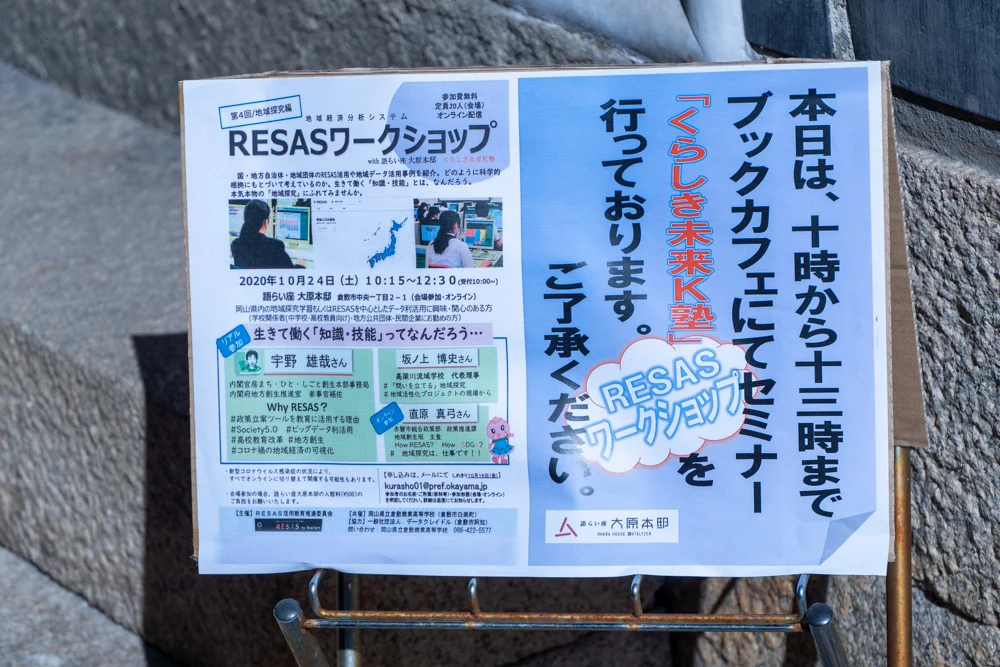
The "RESAS Workshop" is a series of five workshops aimed at deepening the understanding of the current and future perspectives of the community, involving school officials as well as private companies and government officials who handle data in their work.
The Community Exploration Edition was held as the fourth session, following the flow outlined below.
| Content | Speakers |
|---|---|
| About RESAS Educational Utilization | Ms. Yoshimi Kawasaki |
| RESAS in Society 5.0 | Mr. Yuya Uno |
| Considering "Thinking Based on Evidence" From the field of community revitalization. | Mr. Hiroshi Sakanoue |
| Community Exploration is Work | Ms. Mayumi Naohara (online) |
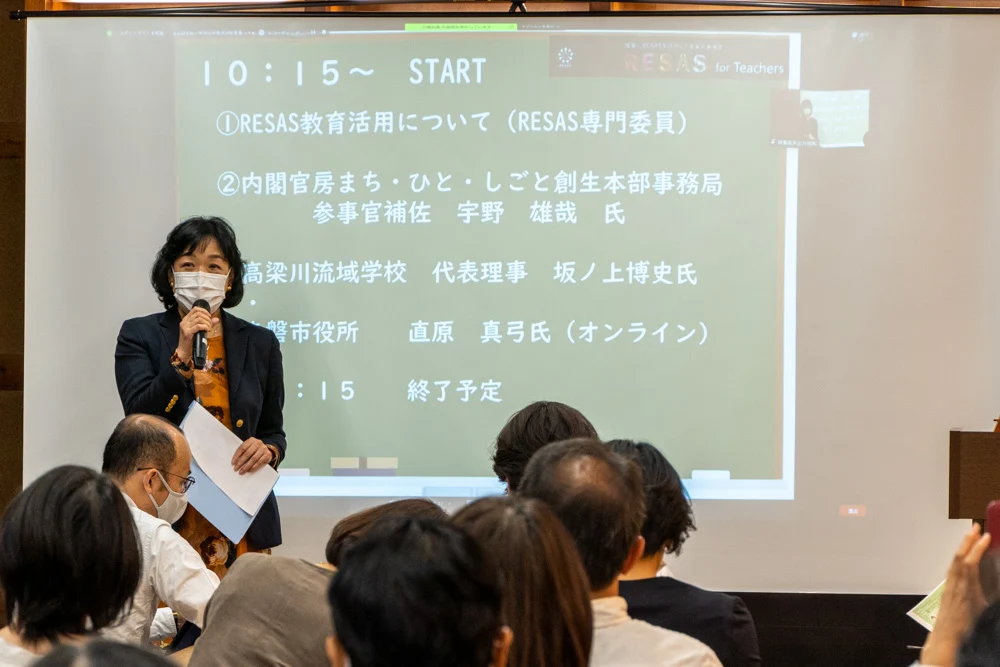
The first and second sessions were held at Okayama Prefectural Kurashiki Commercial High School, but this time, the Ohara House Katalyzer served as the venue, and the workshop began with a greeting from the director, Ms. Yoko Yamashita.
For details on the second and third sessions, please see the following articles.
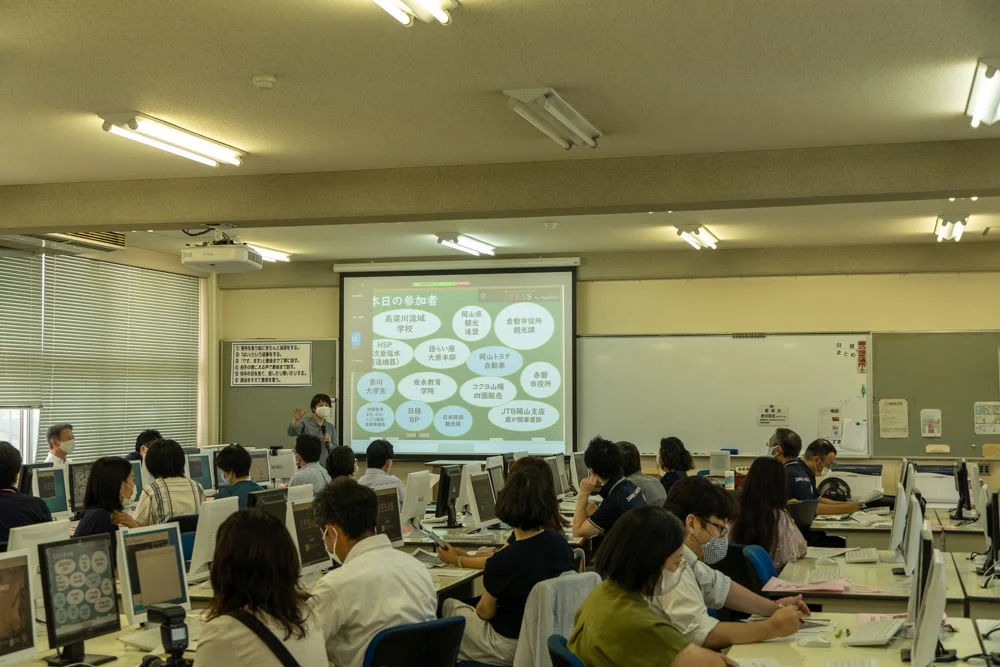
About RESAS Educational Utilization (Ms. Yoshimi Kawasaki)
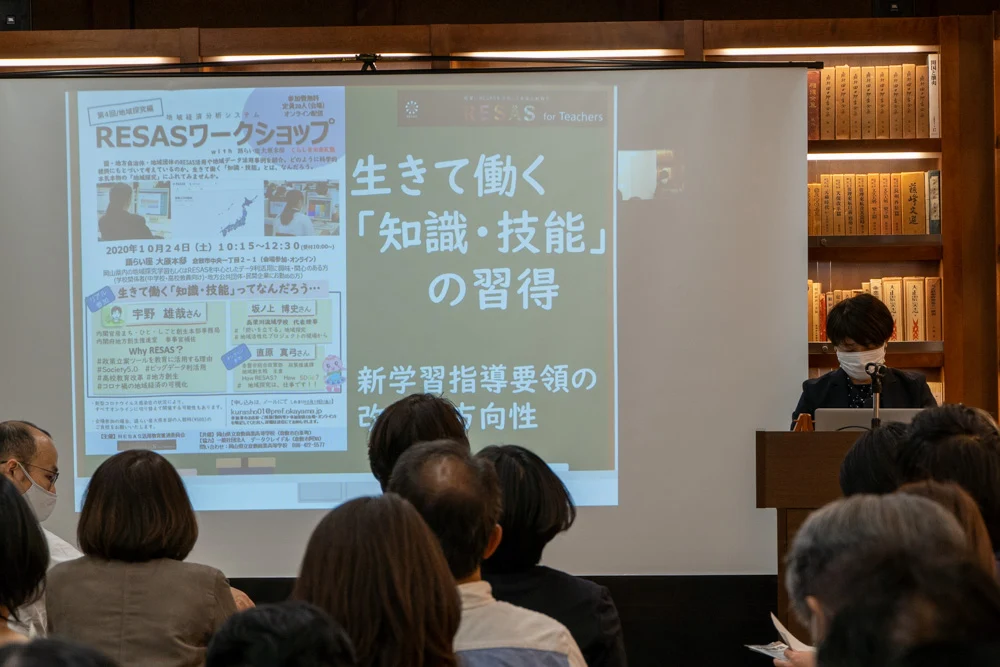
In the first 30 minutes, Ms. Yoshimi Kawasaki, a teacher in the commercial department at Okayama Prefectural Kurashiki Commercial High School and a RESAS specialist, introduced the relationship between RESAS educational utilization and the new curriculum guidelines starting in 2022.
The Regional Economic Analysis System (RESAS) is big data that supports various initiatives for regional revitalization from an informational perspective.
It is not originally a "teaching material".
So why can RESAS be utilized in education?
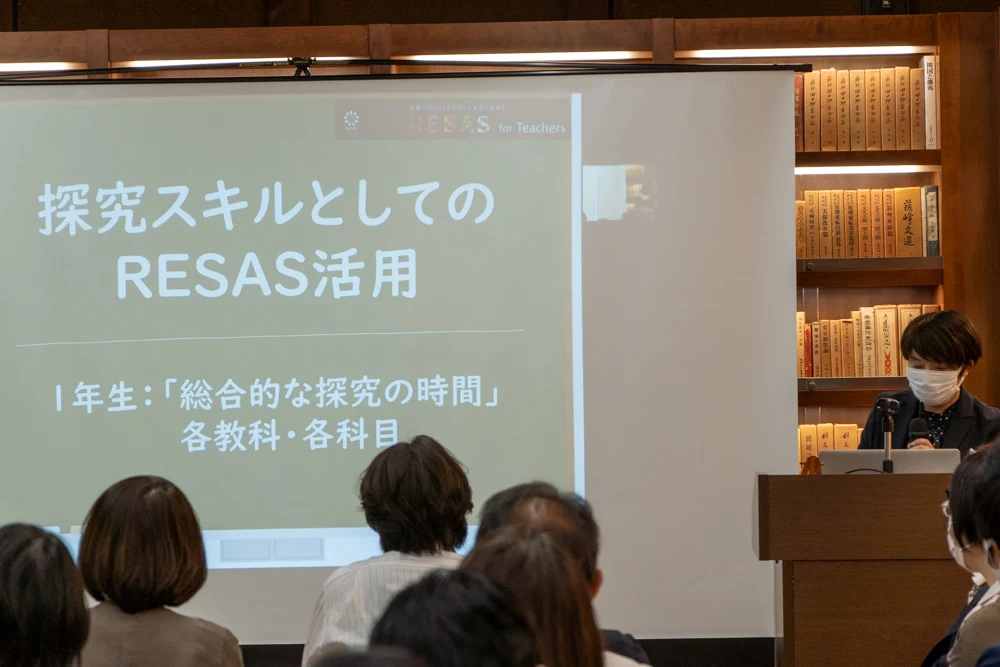
Ms. Kawasaki believes that utilizing RESAS leads to the development of "inquiry skills".
In the new curriculum guidelines, the "Comprehensive Learning Time" in high schools will change to "Comprehensive Inquiry Time" starting in 2022.
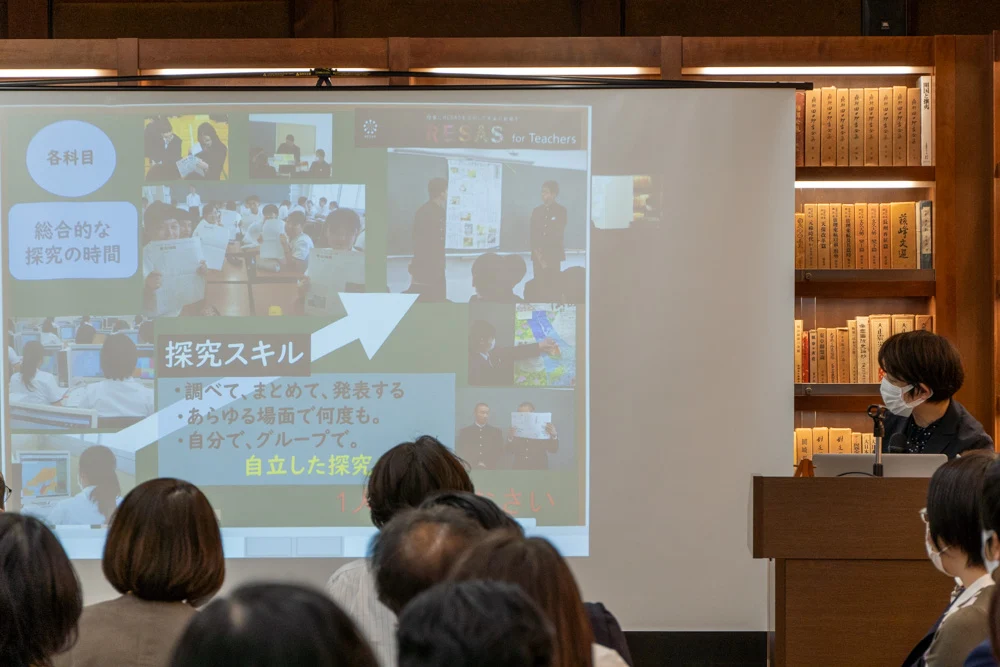
Inquiry skills are considered to include the following:
- Research, summarize, and present
- Repeatedly in various situations
- Independently and in groups. Conducting independent inquiries
When these are conducted with the theme of the "community" where we live, "RESAS", which is one of the objective data created by the government, becomes a well-suited tool.
For example, when considering local industrial and population issues, researching, interpreting data, and summarizing it is "inquiry itself".
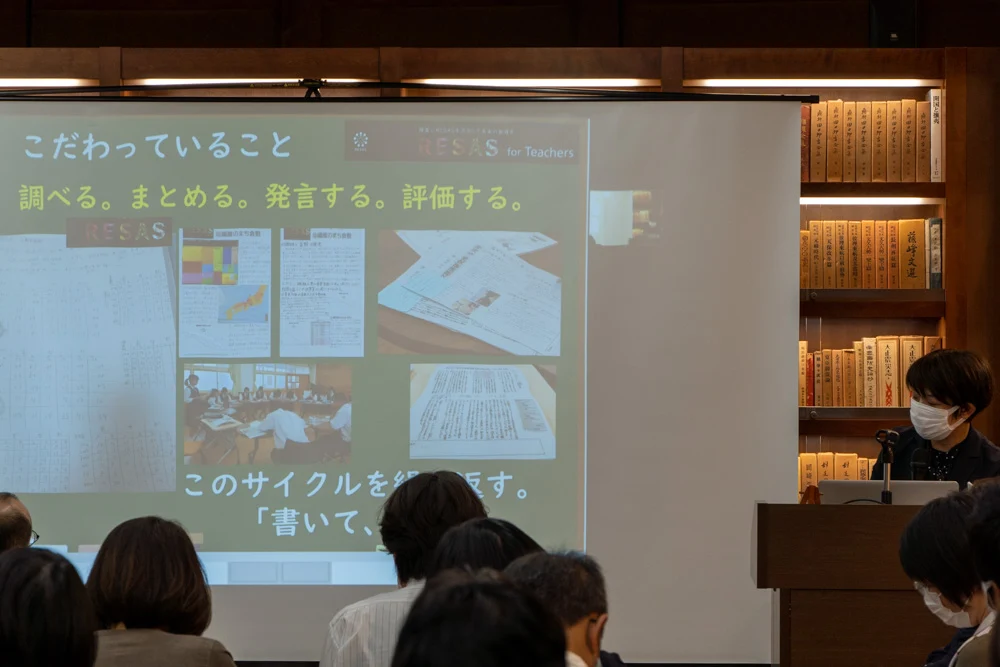
Research. Summarize. Speak. Evaluate.
By repeating this cycle, Ms. Kawasaki believes that inquiry skills can be enhanced.
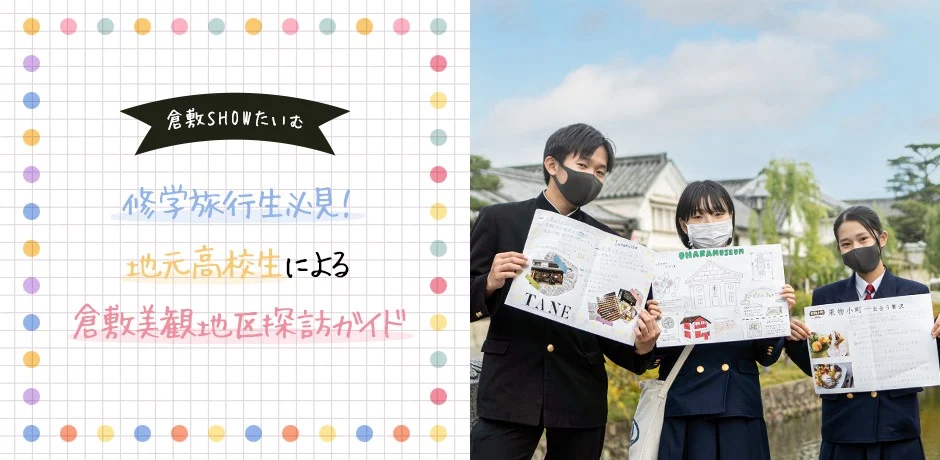
As an example, as part of the project research class "Community Exploration Course" that Ms. Kawasaki teaches, content was created for students of the same generation who come to the Bikan Historical Area on school trips, with technical guidance from Kurashiki Tocotoco.
RESAS in Society 5.0 (Mr. Yuya Uno)
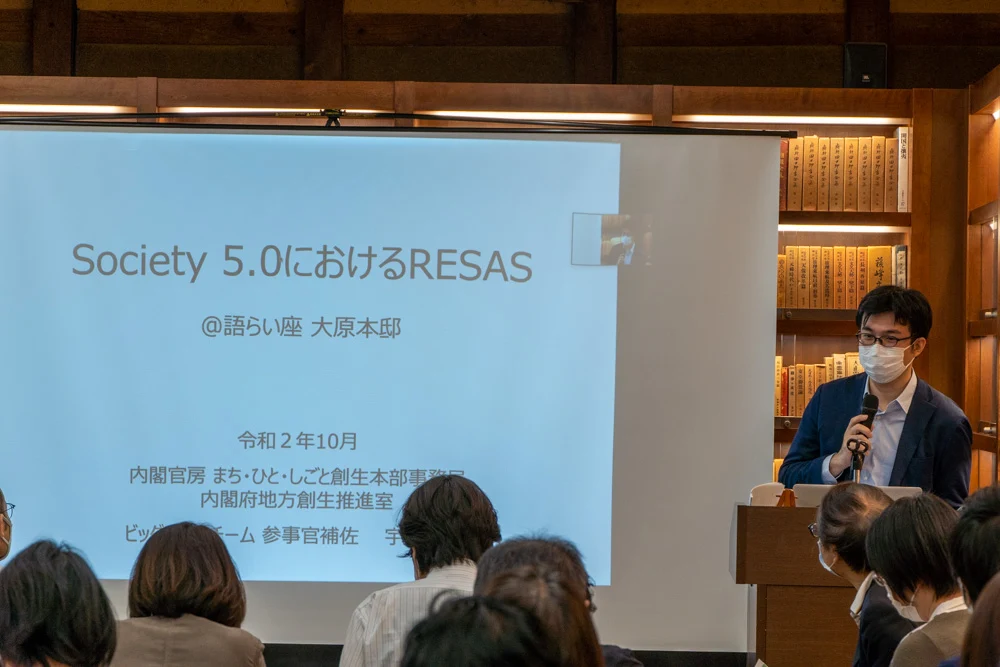
Next, Mr. Yuya Uno from the Cabinet Office's Headquarters for Creating Towns, People, and Jobs took the stage.
The "Cabinet Office's Headquarters for Creating Towns, People, and Jobs" is an organization that promotes policy planning through data analysis, including RESAS.
Mr. Uno introduced the importance of "data literacy" as a subject that reads and utilizes data in Society 5.0, along with the educational utilization of RESAS.
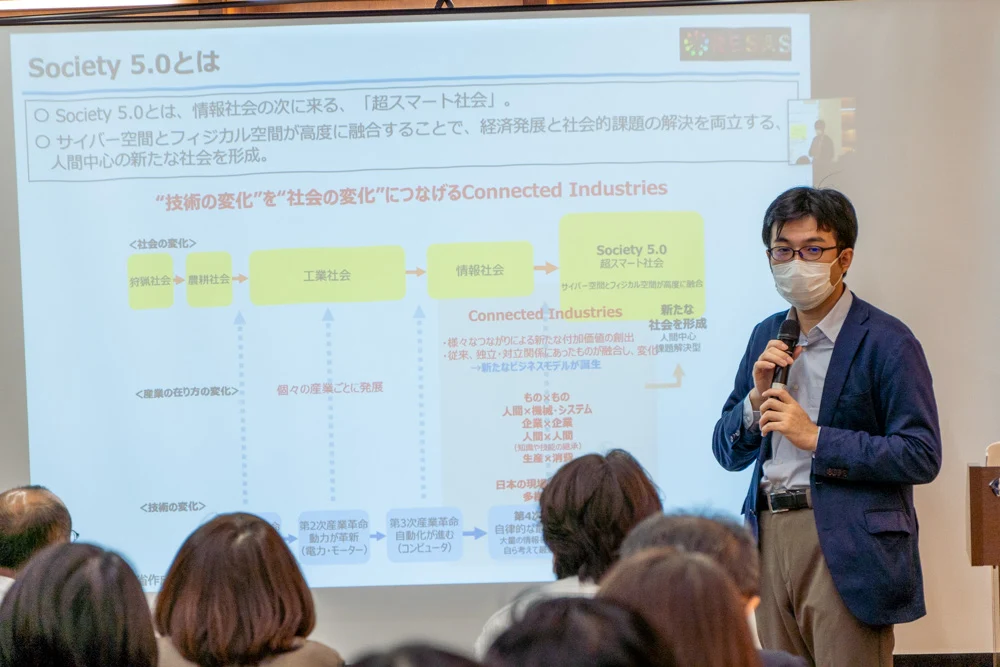
What is Society 5.0?
A human-centered society that balances economic development and the resolution of social issues through a system that highly integrates cyber space (virtual space) and physical space (real space).
Source: Cabinet Office "Society 5.0"
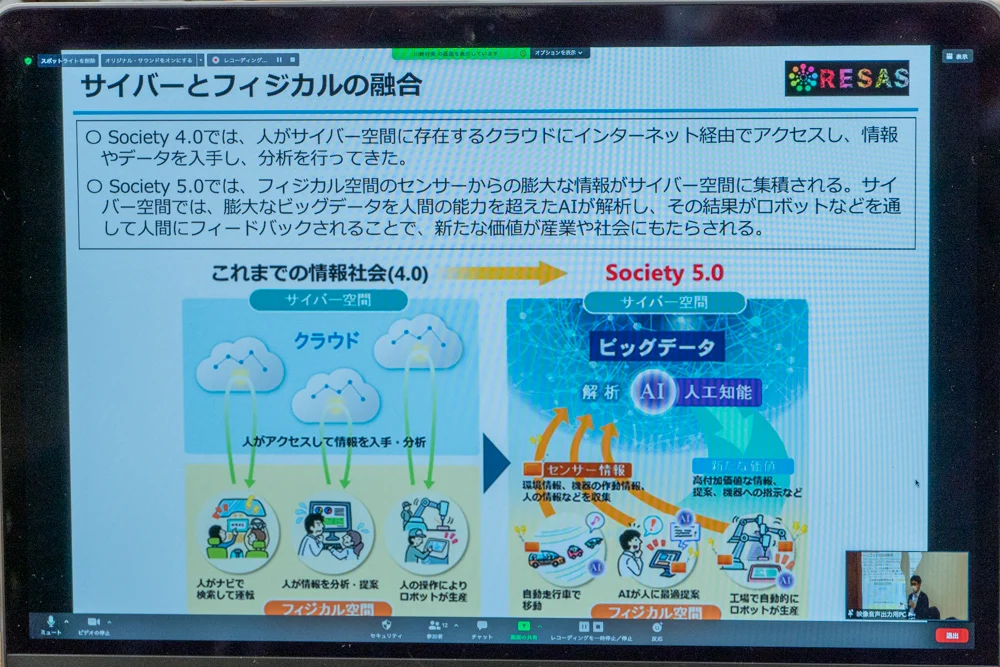
A vast amount of knowledge is now gathered in cyber space.
Thinking of internet searches makes it easy to understand.
Anyone can easily search for the information they need without having to remember every detail.
This is the previous information society.
Furthermore, now we often hear terms like "big data" and "AI", as AI can analyze vast amounts of data and derive results.
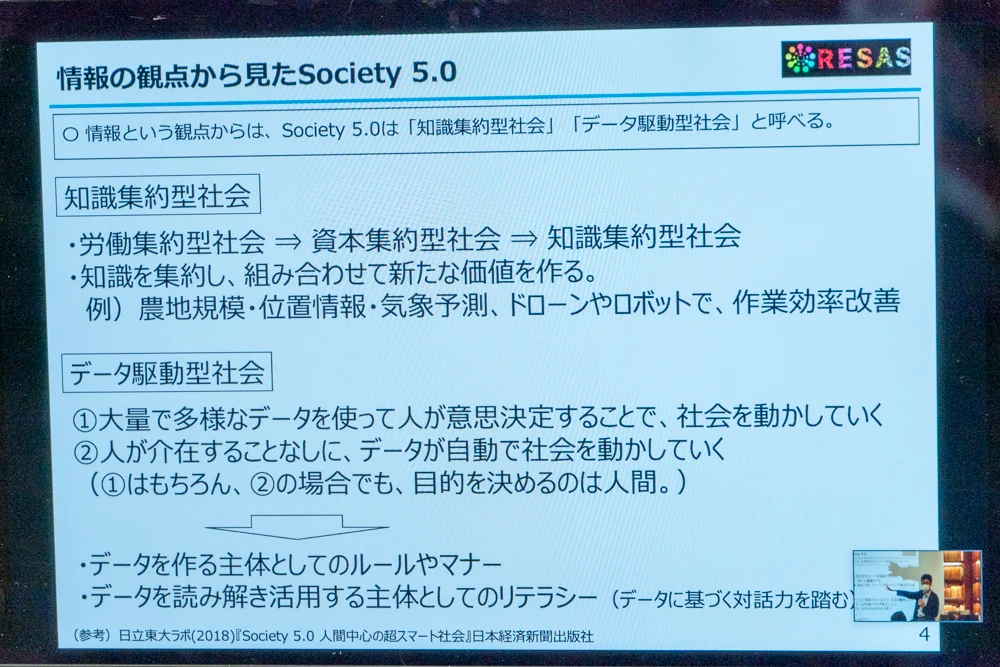
So, do humans need to do nothing?
Humans need to set "goals" and corresponding skills are required.
- Etiquette as a subject that creates data
- Literacy as a subject that reads and utilizes data
In other words, "data literacy" is important in the Society 5.0 era, as Mr. Uno stated.
For future human resources, acquiring "data literacy" will be crucial, and this is where "RESAS" can be helpful.
It does not mean that "only RESAS" is available, but in the field of education, RESAS is understood to be "optimal".
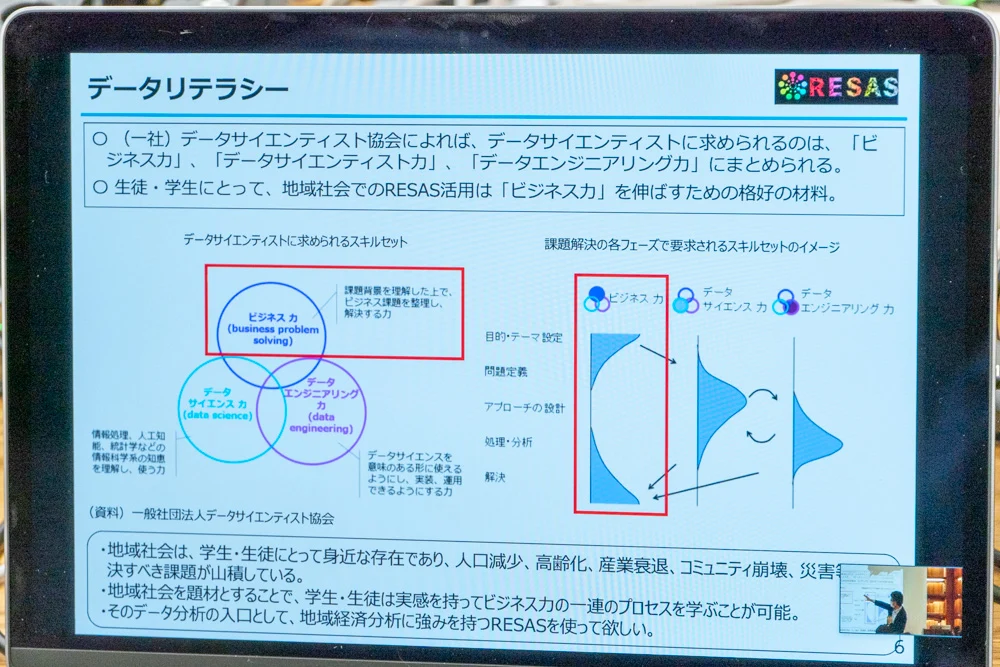
The reason is that RESAS is the "Regional Economic Analysis System", and the local community is a familiar entity for students.
The local community, which faces numerous challenges such as population decline and aging, becomes the optimal material to genuinely enhance "business capabilities".
For this reason, it is hoped that RESAS will be utilized as an entry point for data analysis.
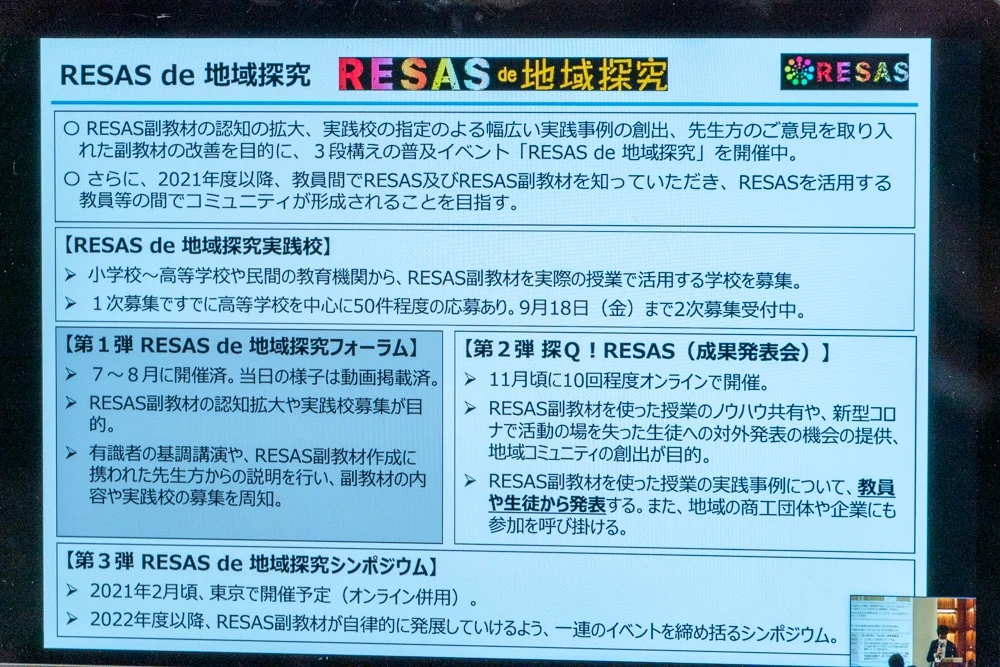
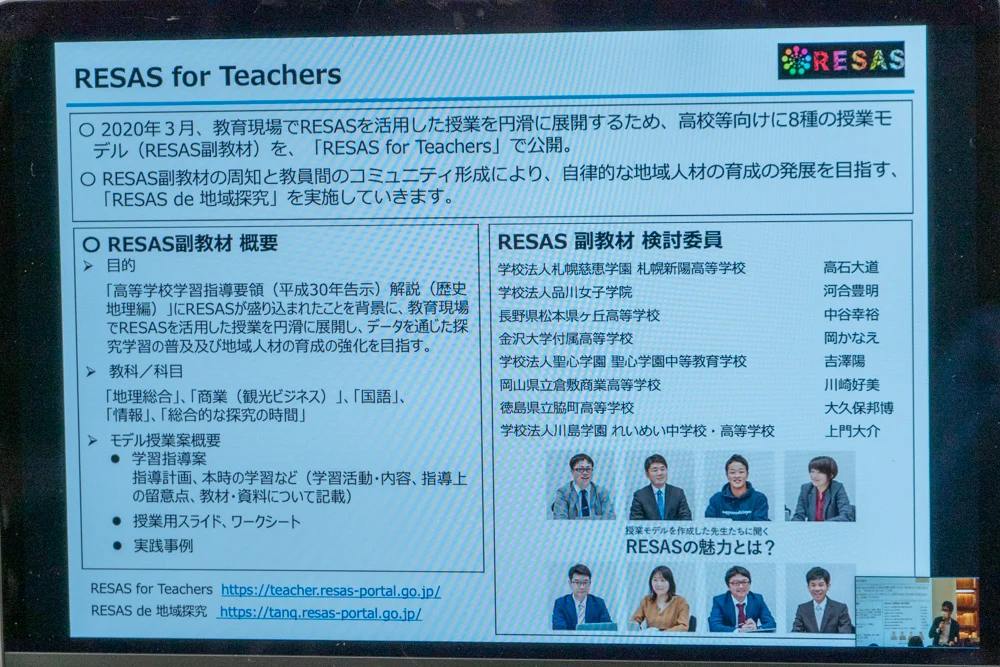
In addition, an event called "RESAS de Regional Exploration" is being held to expand recognition of the RESAS supplementary materials.
About "V-RESAS"
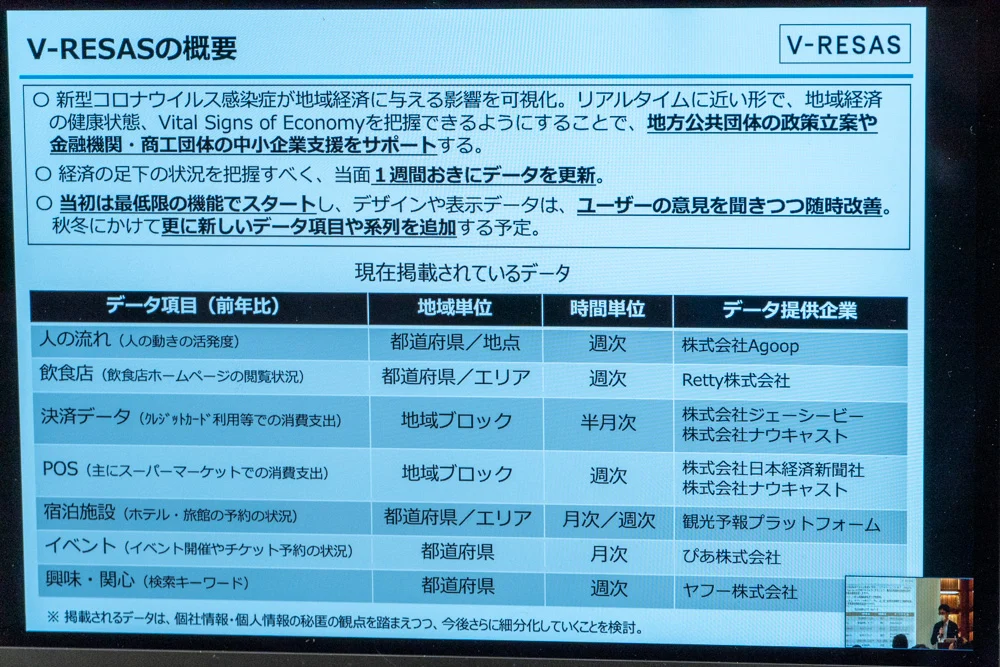
The last introduction was about a system called "V-RESAS".
The "V" in V-RESAS stands for Vital Signs of Economy, and it was released in June 2020 with the aim of visualizing the impact of the COVID-19 pandemic on the local economy.
In fact, "RESAS" has a weakness in that its data is updated only about once a year, which lacks real-time capability.
V-RESAS updates data every week for the time being, allowing for quicker access to newer data.
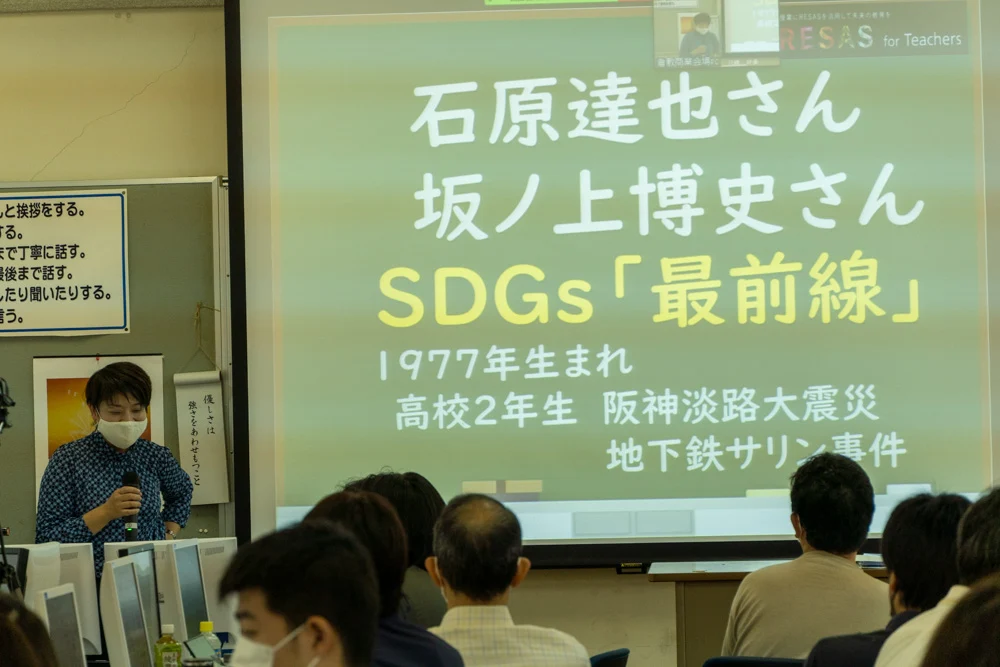
Thinking Based on Evidence (Hiroshi Sakanoue)
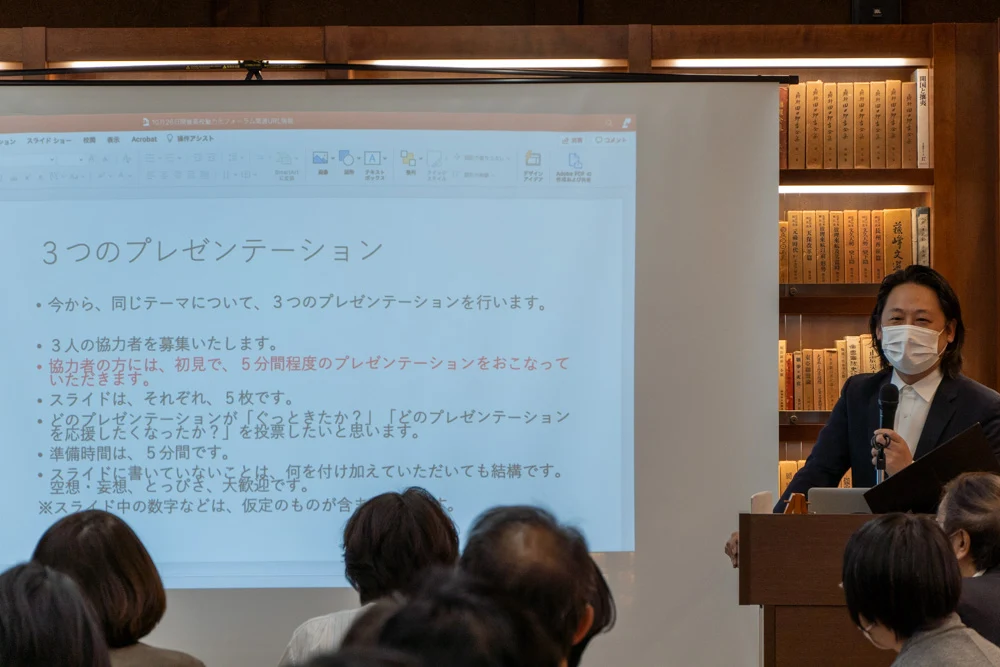
Next, Hiroshi Sakanoue from the Takahashi River Basin School, a general incorporated association, gave a lecture.
This lecture was similar to a workshop.
Three presentations on the same theme, created through three different approaches, were assigned to three individuals to present on the spot.
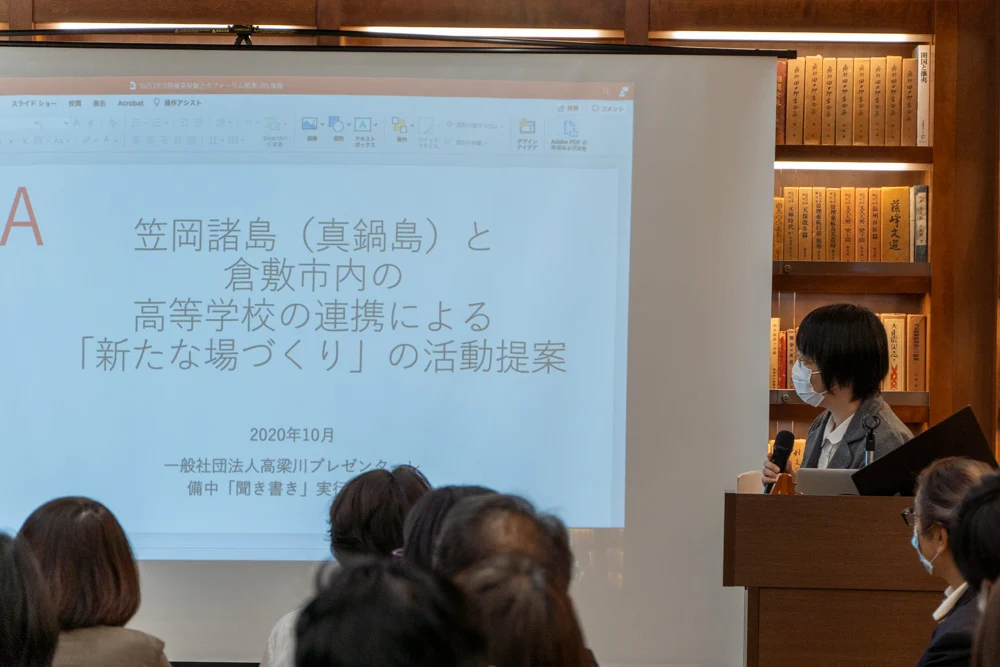
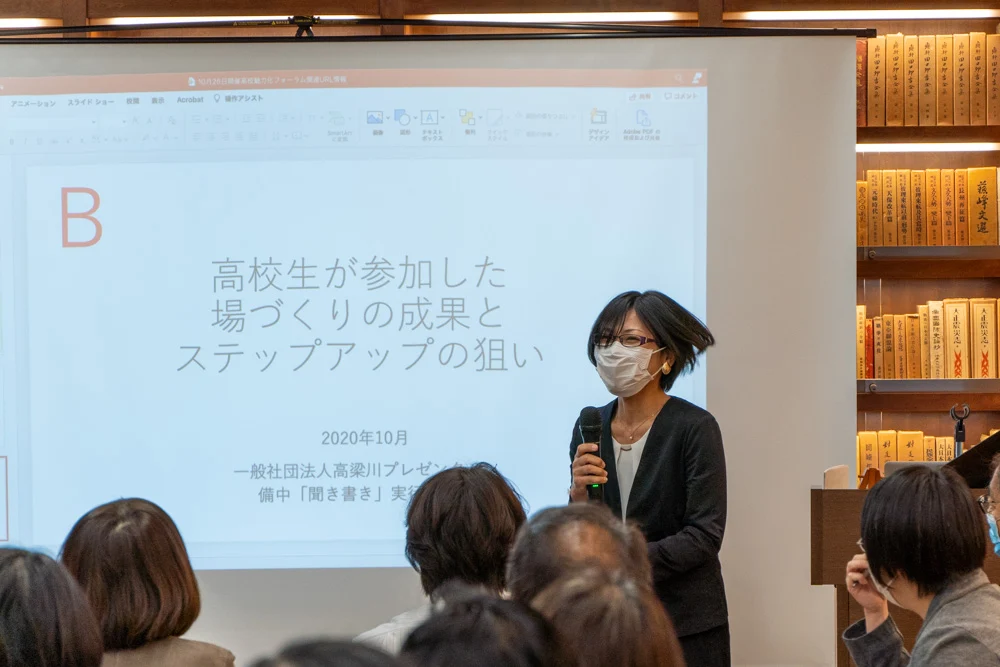
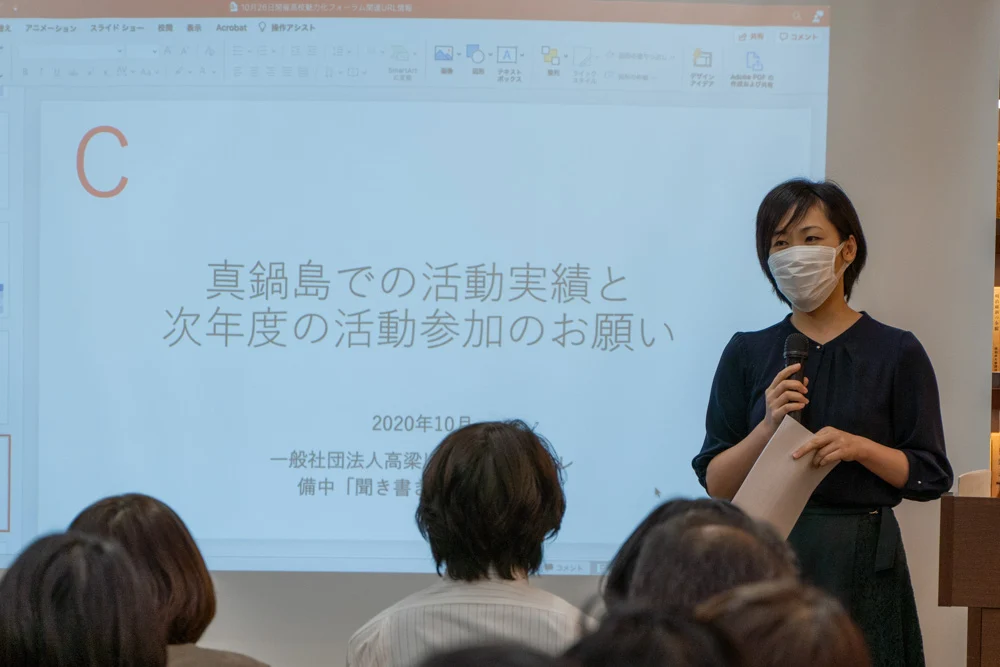
Participants in the RESAS workshop are primarily educators.
Since all three were "teachers," they spoke well, incorporating gestures, even when asked to speak suddenly.
However, what is important here is not the way of speaking, but the way of presenting data.
The conclusion is the same: to solicit the necessary budget and donations, but the approaches were completely different.
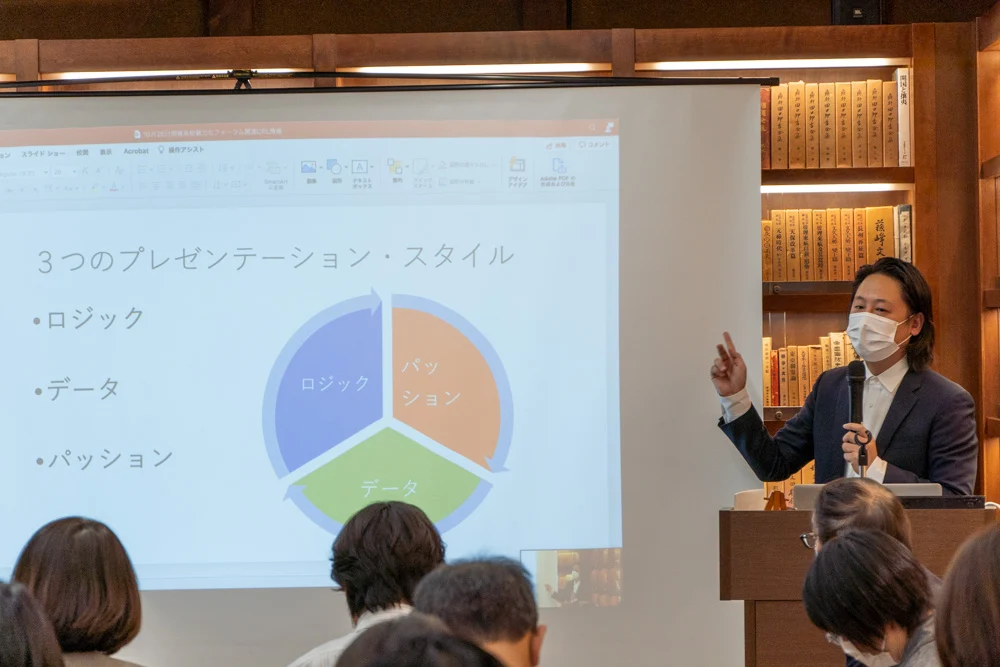
Sakanoue introduced the three patterns of presentation.
The characteristics of each are as follows.
- "Logic" is a method of explanation based on theory and reasoning.
- "Data" is a method that uses objective numbers.
- "Passion" is about expressing thoughts and enthusiasm.
While the presenters have their strengths and weaknesses, the way it is conveyed also differs depending on the audience, so there is no good or bad method.
Understanding the characteristics and creatively combining them is important for thinking and trying things out on your own, he stated.
Regional Exploration is Work (Mayumi Jikihara)
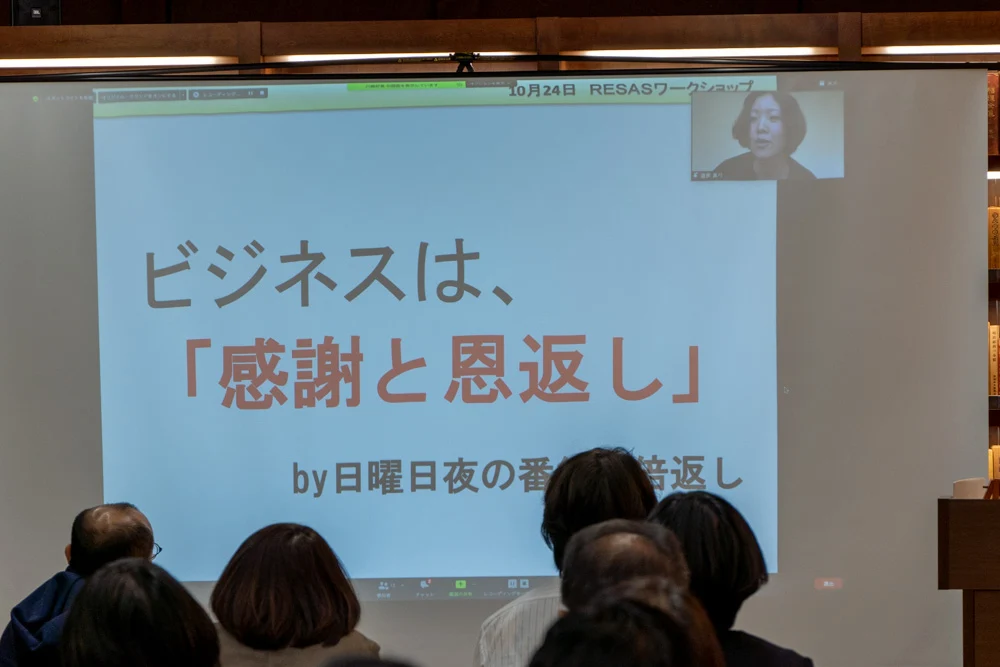
The final speaker was Mayumi Jikihara from the General Policy Department of Akaiwa City.
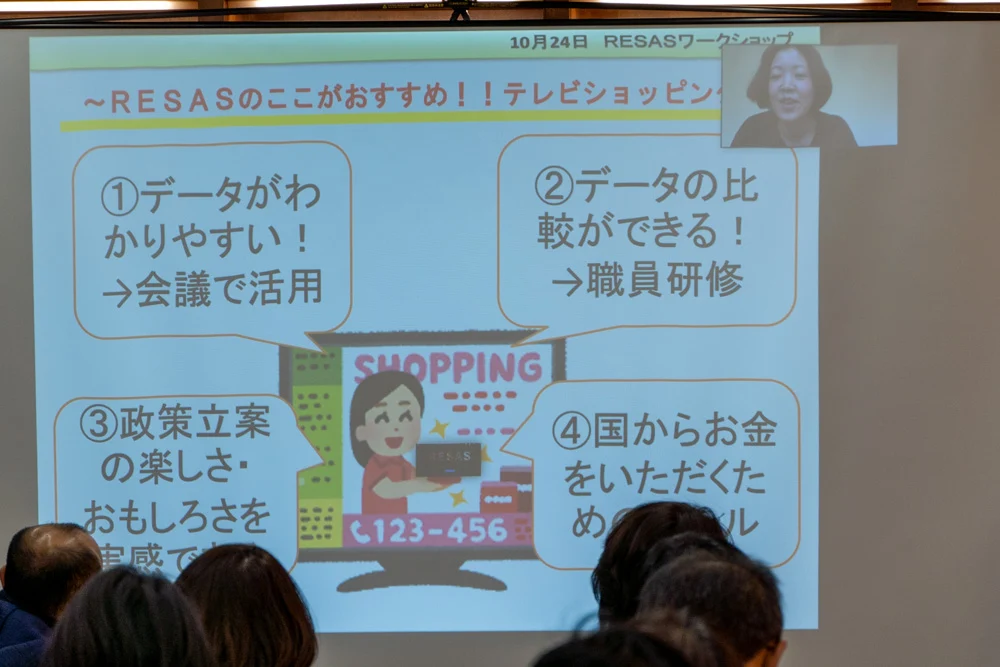
She introduced examples of using RESAS in local government settings as follows.
- The data is easy to understand, so it is used in "meetings."
- Data comparison is possible, making it ideal for "staff training."
- It allows for experiencing the fun and interest of policy-making.
- It is a tool for receiving funds from the national government.
What stood out particularly was the introduction of it as "a tool for receiving funds from the national government."
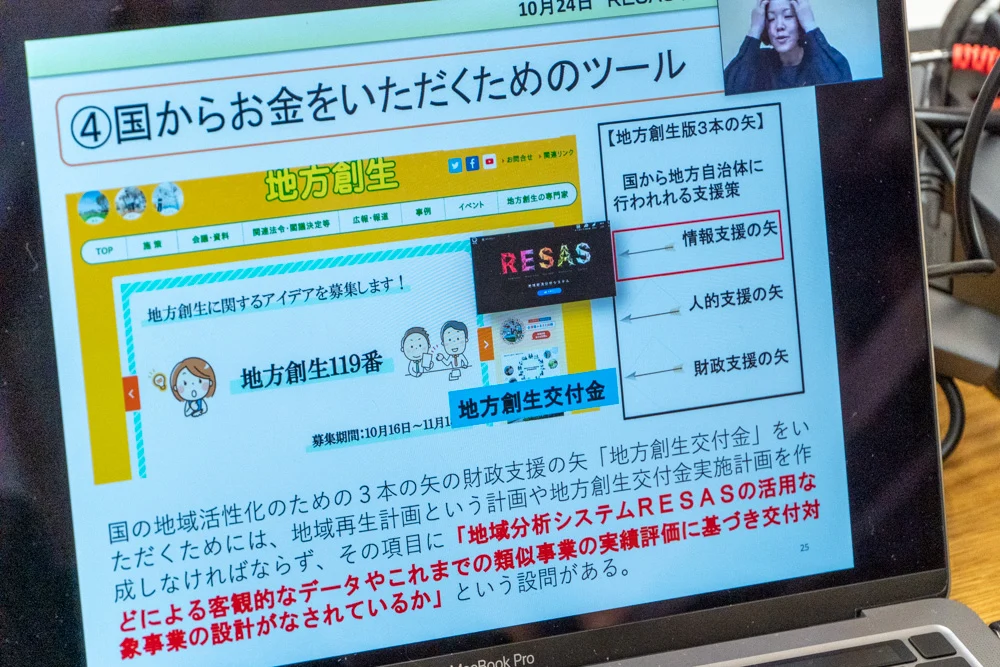
This is important not only for government but also for proposals in general companies, where it is crucial to present supporting data in numerical form.
RESAS, which is "objective data" created by the government, seems to be particularly useful in local government settings.
Conclusion
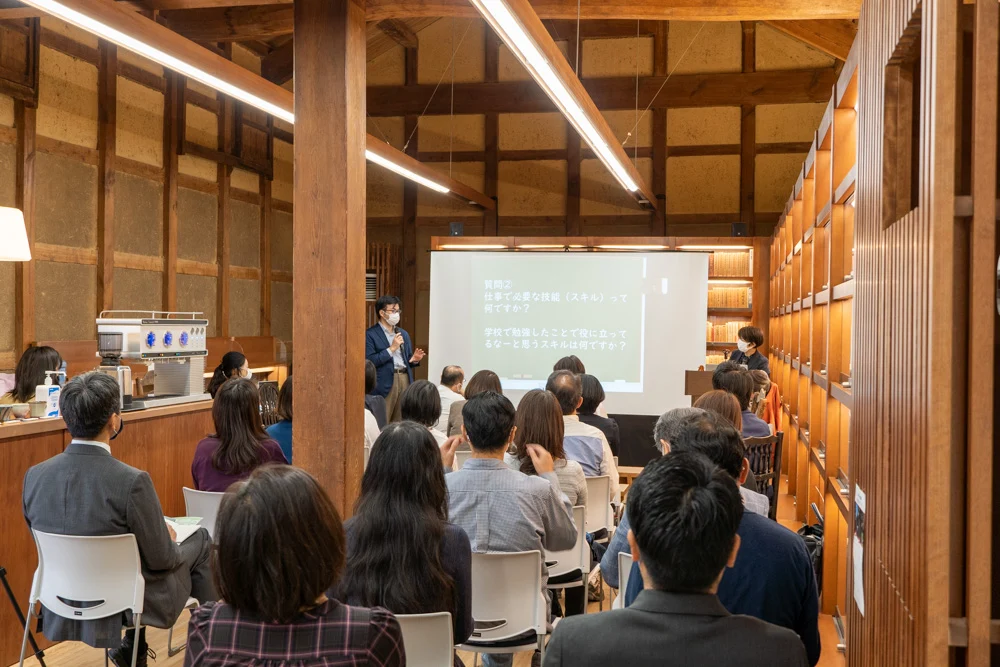
After listening to the talks of four individuals at the "RESAS Workshop: Regional Exploration Edition," I felt the following three points.
- The data itself has no special meaning.
- The interpretation and utilization methods differ depending on the "person (organization)."
- It is important to think for ourselves and develop skills to utilize the data.
Education, national politics, local government, community activities... Although the fields differ, each is engaged in their daily work while "exploring."
As a system engineer who has worked for a long time, I have had many opportunities to meet people involved with data at the forefront of business.
The data itself will continue to increase over time. However, simply accumulating it has no meaning.
It is about finding problems or seeking information necessary for new businesses from that data...
Even when looking at the same data, what angle to take is crucial. In other words, the "perspective" is important, and that is where the individuality of people and organizations comes into play.
The message to convey to students may be that "exploration" continues even into adulthood.
From July 10, 2021, the 2021 RESAS Educational Utilization Workshop will be held.
▼ For more details, please check the official page.
RESAS Educational Utilization Workshop: Explore Q! RESAS Online Seminar
▼ The application form is as follows.
Application Form
Data from the RESAS Workshop: Regional Exploration Edition
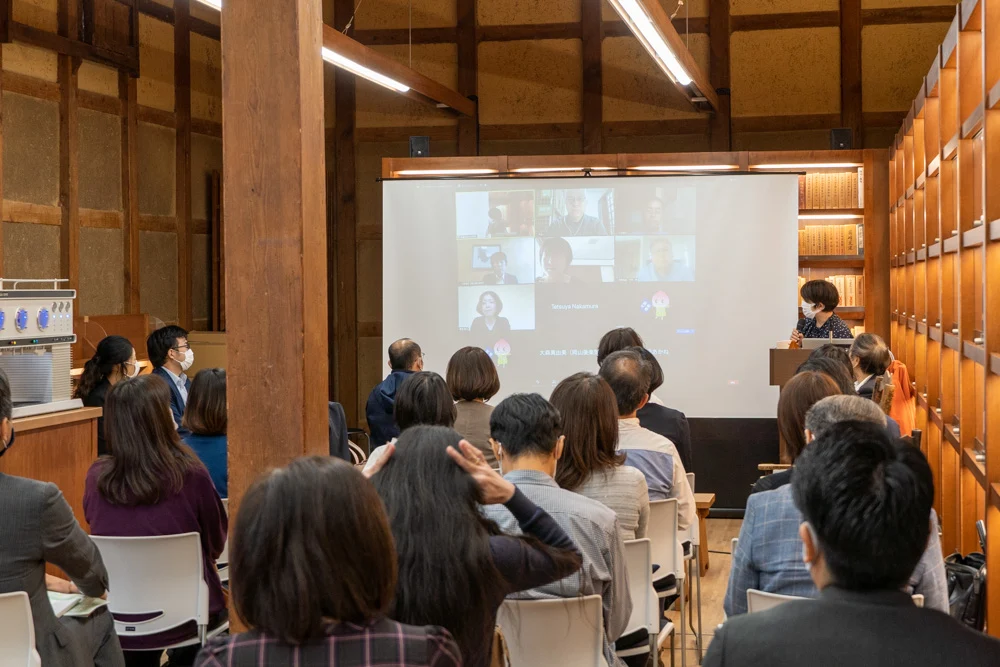
| Name | RESAS Workshop: Regional Exploration Edition |
|---|---|
| Date | October 24, 2020 (Saturday) 10:15 AM - 12:30 PM |
| Location | 1-2 Chuo, Kurashiki City, Okayama Prefecture |
| Participation Fee (Tax Included) | Free |

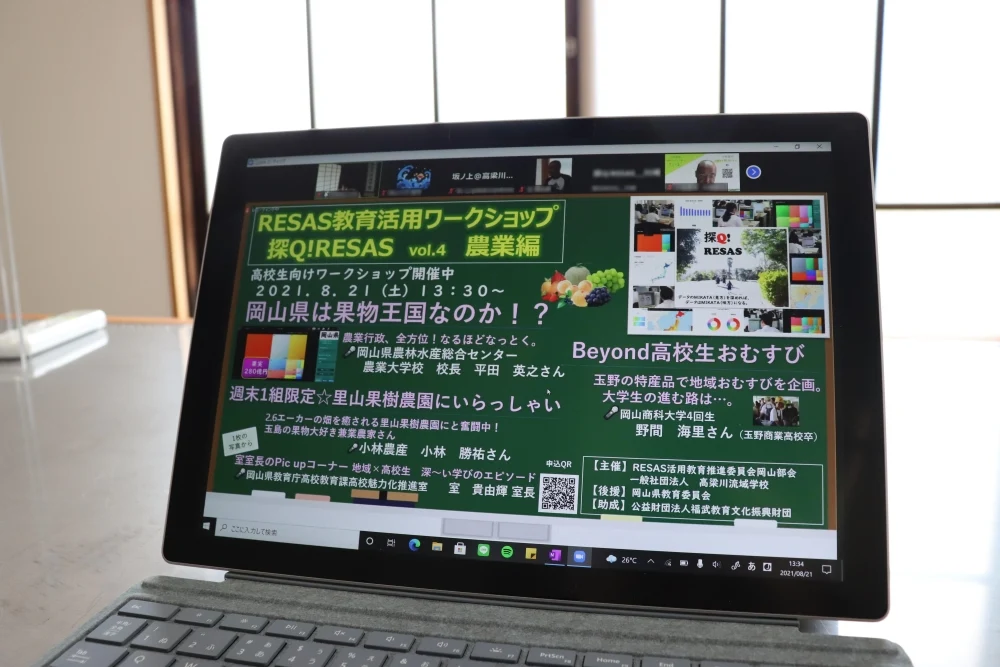



From July 10, 2021, the 2021 RESAS Educational Utilization Workshop will be held.
▼ For more details, please check the official page.
RESAS Educational Utilization Workshop TanQ! RESAS Online Seminar
▼ The application form is as follows.
Application Form