Interview with shop owner Shibata Yuki

It’s been a few days since you started operating at the temporary shop. Have things settled down a little?
Shibata
As you can see, we’re operating in a tent, so things are difficult, for example, when the wind is strong. We also use fire, so honestly, it’s been quite a struggle.
Still,
it’s better than just sitting around
I think, and even in this situation, we “have to keep living,” so we’re taking things one step at a time.
Thanks to everyone, the media have covered us, and I think it’s been valuable to share that we’re working toward reopening.
Honestly, even if we’re in the news now and lots of customers come, we can’t serve them adequately in a shop like this.
Also, not just me but our neighbors will be dealing with things like demolishing their homes, so I don’t think we can keep operating here for long.
The situation during the disaster

Your home, which you’re now using as a temporary shop, looks very new… I imagine you had many thoughts and feelings during the disaster. Could you tell us what happened at the time, as much as you’re comfortable sharing?
Shibata
The shop was affected, of course, but this home, which was only about a year old, and my parents’ home nearby were also affected.
Fortunately, all three members of my family—my wife and our junior-high- and elementary-school-aged children—are safe.
There was an explosion at the Asahi Aluminum Industry factory in Soja late at night on July 7, right?
At the time (around 1 a.m. on July 7), the water wasn’t too bad yet, but we thought, “This is dangerous; let’s get out,” so we drove to a relative’s home on relatively high ground and took shelter there.
That’s how we escaped the danger.
Honestly, though, I never imagined we’d be hit by flooding…
Life now

Could you tell us about your life now?
Shibata
After the disaster, rather than going to an evacuation center, we took shelter at my wife’s parents’ home in Tsubue (Tsubue, Kurashiki City, Okayama Prefecture).
I go back to Mabi to sort out the house and take care of other things.
Volunteers from the disaster volunteer center came twice and helped us clear mud and remove household belongings.
I was surprised that people had come not only from Okayama but from all over Japan.

I know because I mainly handled reception at the disaster volunteer center, but especially on weekends, more than 1,000 people came at peak times. There were so many people from all over that there were relatively few from within Okayama Prefecture.
Shibata
Really?
If this hadn’t happened, people probably wouldn’t have visited Mabi. I’m truly grateful.
Right now, our top priority is demolishing the nearby family home and rebuilding it.
My wife and children are still living at my wife’s parents’ home.
I’m staying in government-provided temporary housing because of the shop.
I can’t prepare ingredients from early in the morning at my wife’s parents’ home…
On the other hand, the temporary housing is an apartment, and it isn’t set up for cooking.
It’s cramped to begin with, and even though it’s an apartment, there are other residents, so I can’t make a lot of noise early in the morning.
It’s difficult either way.
But we “have to keep living,” don’t we?
I think all I can do is keep doing whatever I can, even if it’s just a little.
The future of the shop

You’re currently operating a temporary shop in part of your home. Have you made any plans for the future, including for the shop?
Shibata
The original shop was rented.
The owner was also affected by the disaster, and their home has to come first, so I think it’ll be a long time before we can operate at the original shop again—or perhaps it won’t be possible at all.
So I’m considering whether we can operate properly near our home, where the temporary shop is now.
I’ve heard of something called a Super House (modular unit building), and I’m looking into whether we could use one as a shop.
That said, there’s also the issue of funding.
Publicly funded demolition is available through the end of this fiscal year (March 2019), and I have to think about our home as well as the shop.
After the disaster, I realized how precious the ordinary things in “everyday life” had been.
I haven’t even been able to do something as ordinary as “walk the dog” since July 7.
We have a dog that we kept as a pet, but my older sister is looking after it now.
People are helping with the shop too, and thanks to the support of so many people, we’re managing to get by.
I want to get back to “everyday life” soon.
To make that happen, for now,
I want to show everyone that I’m doing my best
I think.
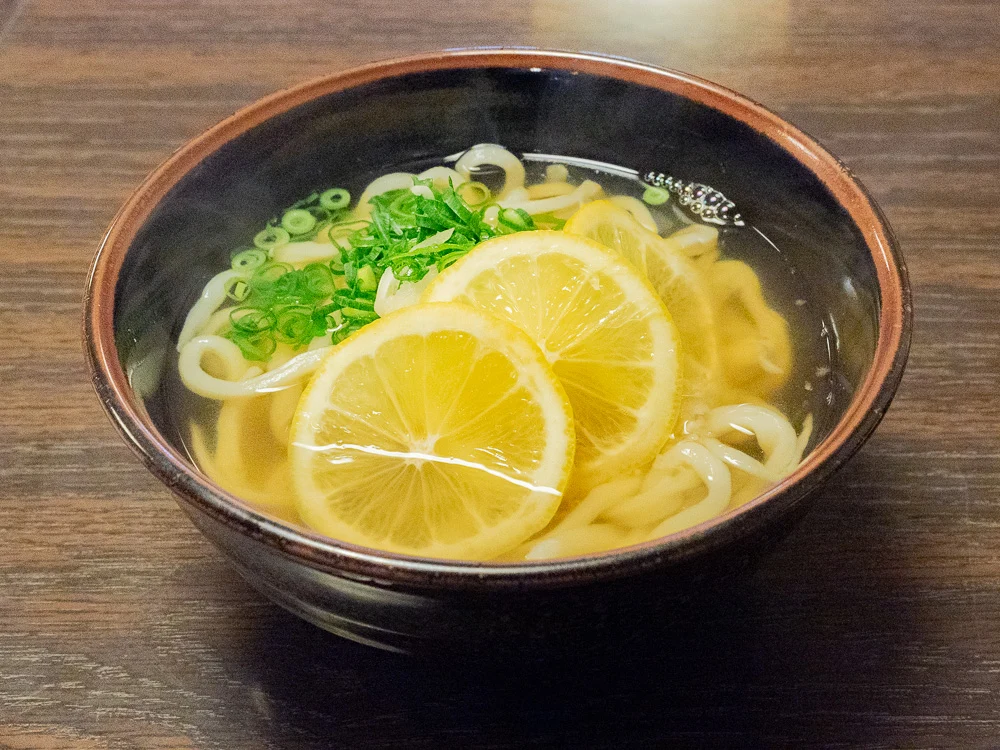
Saruya Hand-Made Udon [Temporary Shop] Information
| Name | Saruya Hand-Made Udon [Temporary Shop] |
|---|---|
| Address | In front of Kibinomakibi Station on the Ibara Line |
| Parking | None |
| Hours | 11:00 a.m.–3:00 p.m. *Closes when the noodles run out |
| Closed | Irregular holidays |
| Payment methods |
|
| Reservations | Not accepted |
| Seating | Number of tables: 4 *Seats up to around 20 people |
| Website | Official Saruya Instagram |


What would you like to know about Kurashiki?
Enter a word to search articles on this site