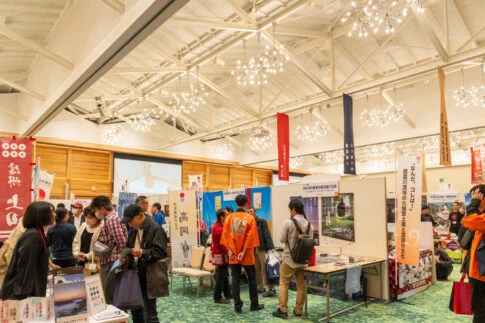
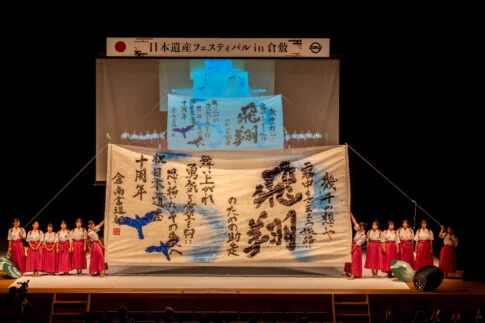
The “Japan Heritage Festival in Kurashiki” is scheduled to be held on October 25 and 26, 2025.
In preparation for the festival, an outreach lecture was held for students at Okayama Prefectural Kurashiki Commercial High School to build momentum, promote local understanding, and pass on culture to the next generation.
Here is an introduction to the “Japan Heritage × Suinkyo” outreach lecture, which featured a lecture on Japan Heritage and Suinkyo, as well as experiences as Kurashiki Japan Heritage Ambassadors and Suinkyo.
The information presented was current when the article was published in June 2025. Please note that it may differ from current information.
About the “Japan Heritage × Suinkyo” outreach lecture

The “Japan Heritage × Suinkyo” outreach lecture was held on Thursday, May 22, 2025, for students participating in the “Kurasho Tsumugu Project” at Okayama Prefectural Kurashiki Commercial High School.
Kurasho Tsumugu Project
A volunteer project in which students learn about Kurashiki’s textile industry and textile products, and promote the various textile products made in Kurashiki both inside and outside the school.
The lecture covered the following topics:
- Lecture by Kurashiki City Japan Heritage Promotion Office staff: “What is Japan Heritage?”
- Lecture by the Kurashiki Suinkyo Preservation Society: “What is Suinkyo?”
- Kurashiki Japan Heritage Ambassador and Suinkyo experience
Around 20 students attended. They learned about Japan Heritage and wrapped up the day with an enjoyable Suinkyo experience.
Lecture by Kurashiki City Japan Heritage Promotion Office staff: “What is Japan Heritage?”

The program began with a lecture about Japan Heritage in Kurashiki City by Fujiwara Noriyoshi of the Kurashiki City Japan Heritage Promotion Office.
Kurashiki City has been recognized for the following three Japan Heritage stories:
- A Kurashiki story beginning with a single cotton flower: A textile town woven from Japanese and Western influences
- A different world entwined with the dreams of men who overcame the stormy seas: Ports of call and shipowner settlements along the Kitamaebune route
- Okayama, Birthplace of the Legend of Momotaro: A tale of demon-slaying inspired by the heritage of ancient Kibi
First, the students watched animations to learn an overview of the three stories.

The lecture then focused on “A Kurashiki story beginning with a single cotton flower.”

“A Kurashiki story beginning with a single cotton flower” begins with land that was once under the sea being reclaimed, and salt-tolerant cotton cultivation taking root.
Cotton trading then flourished, and the Kitamaebune ports of call—Tamashima and Shimotsui—developed.
Merchants who prospered through the cotton trade contributed to the town’s development, and from the Meiji era onward, the spinning and textile industries became central.
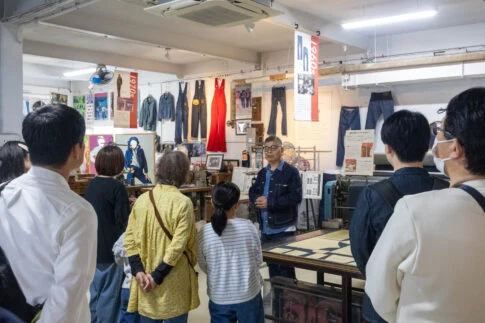
Fujiwara explained that even today, Kurashiki City continues to produce a wide range of products, including canvas, school uniforms, and jeans, as a “textile town,” particularly in Kojima.
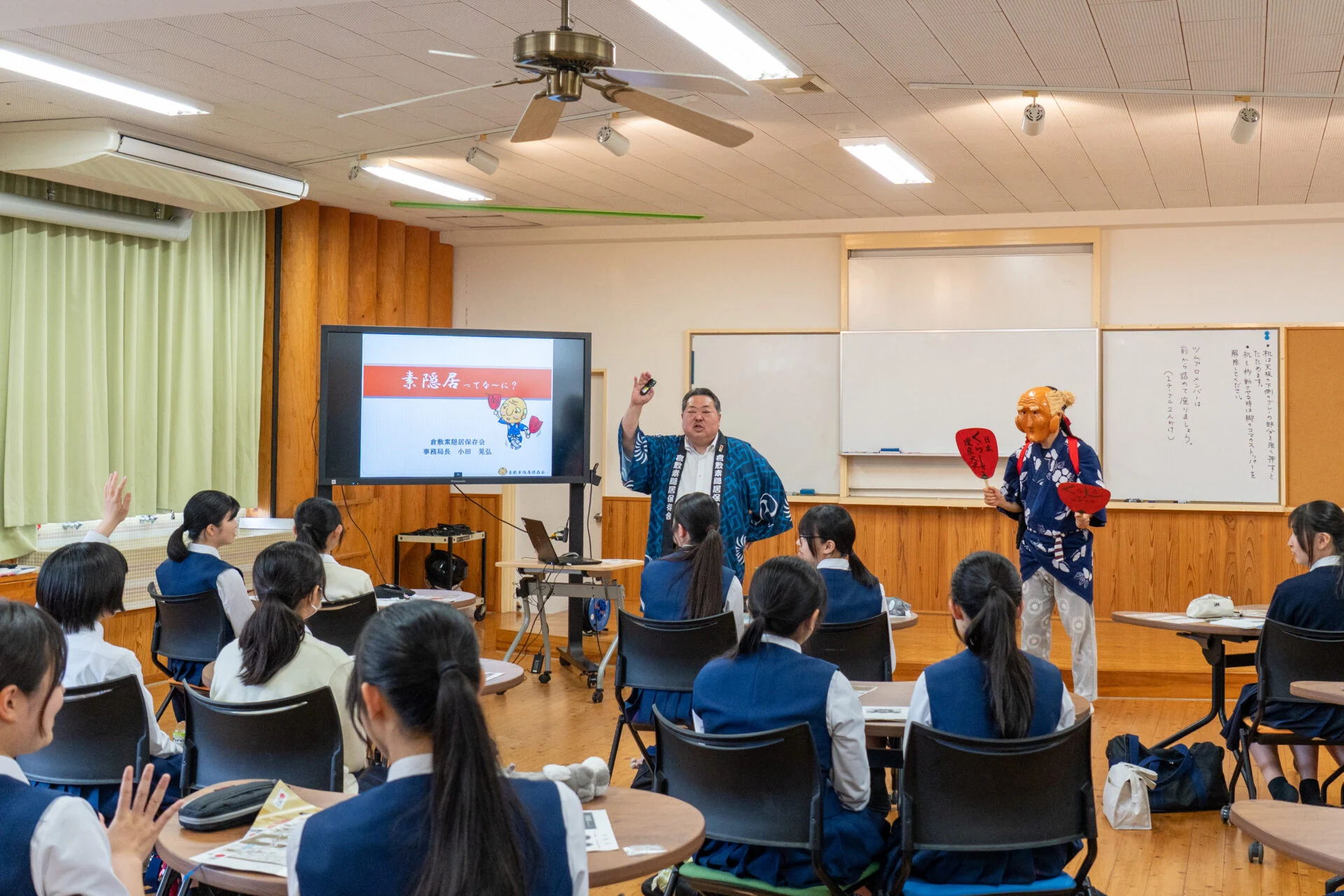
Lecture by the Kurashiki Suinkyo Preservation Society: “What is Suinkyo?”

Next was a lecture about Suinkyo by Oda Akihiro, secretary-general of the Kurashiki Suinkyo Preservation Society, and Ando Toshiharu, a board member.
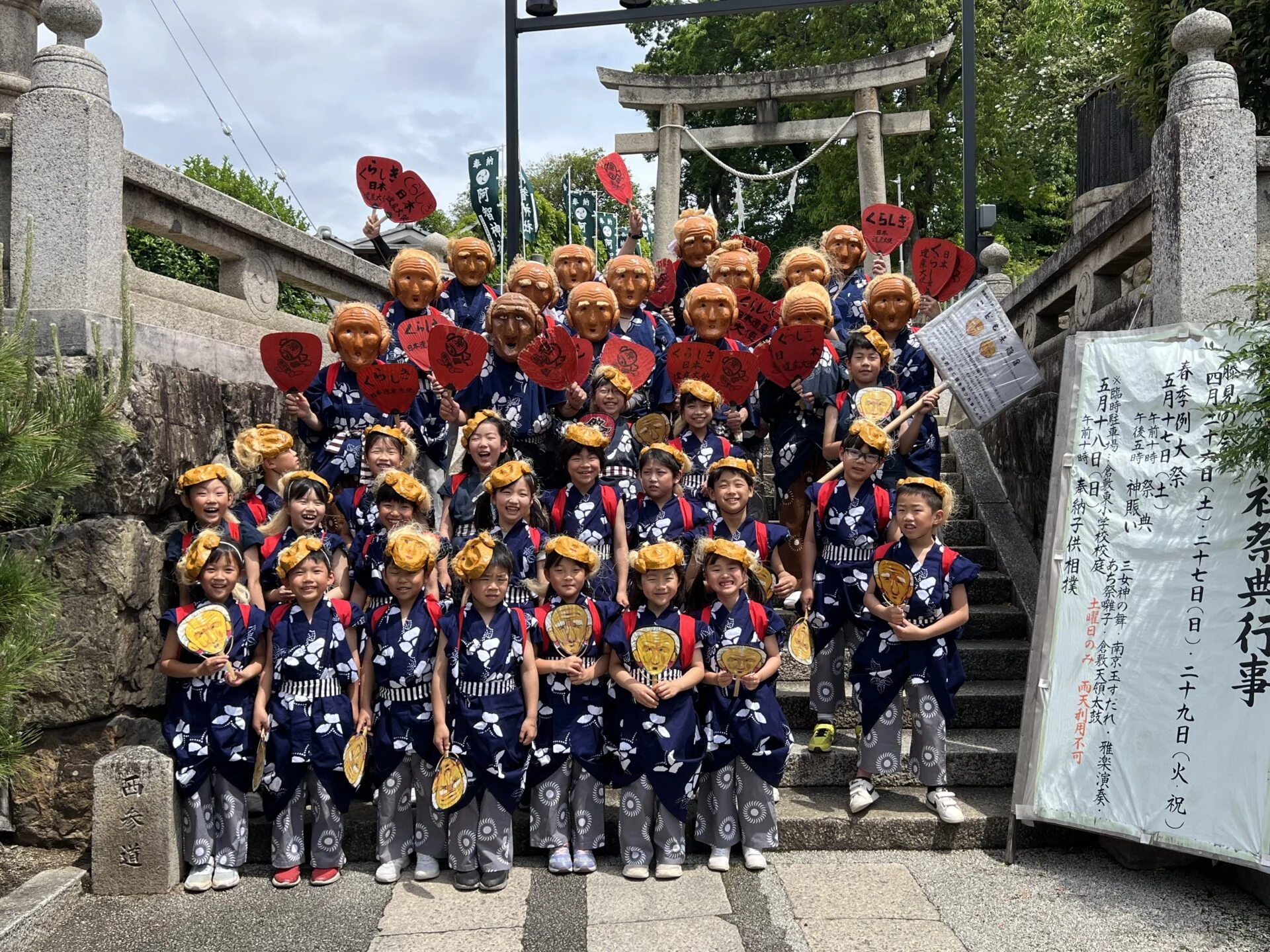
At festivals and other events, Suinkyo appear as “ordinary old men and women” wearing large masks.

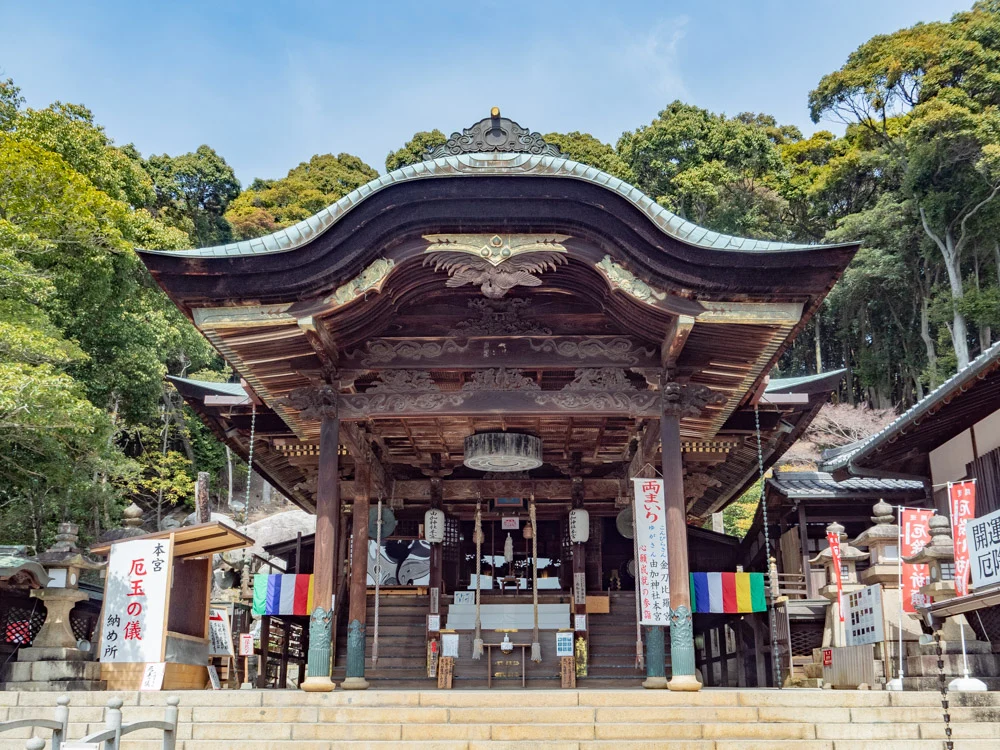
Suinkyo originated as attendants to the lion dancers during the sacred procession of Myoken-gu (now Achi Shrine) in the Edo period.

Later, they began protecting children who gathered at festivals by tapping them with fans. This led to the saying that being tapped would help children “grow up healthy and wise” and “bring good fortune.”
The Suinkyo masks, distinguished by their large ears, are made of washi paper.

Rain—and even summer sweat—seems to be a major concern, so the masks are carefully dried after every use.
Kurashiki Japan Heritage Ambassador and Suinkyo experience
Afterward, the students took part in a Suinkyo experience, putting on Suinkyo masks and costumes.

At first, the Kurasho students were shy.
But little by little, they began putting on the masks, and then wearing both the costumes and masks.


And finally, they were enthusiastically hitting with the fans.


From the Writer
Members of the Kurashiki Suinkyo Preservation Society spoke about the “rewards” of being a Suinkyo as follows:
- You can hit people without getting scolded; in fact, they bow to you and thank you.
- You feel like an idol, taking photos with many tourists and enjoying direct exchange with people.

The Kurasho students who experienced being Suinkyo this time also seemed to feel those “rewards” as they hit their friends.
At the “Japan Heritage Festival in Kurashiki,” Suinkyo are expected to play a major role as Kurashiki Japan Heritage Ambassadors.
I’m looking forward to seeing whether Kurasho students take part as Suinkyo.
Articles about Kurashiki City’s Japan Heritage
“Japan Heritage × Suinkyo” Outreach Lecture Information
| Name | “Japan Heritage × Suinkyo” Outreach Lecture |
|---|---|
| Held | May 22, 2025 (Thursday) 1:30 a.m.–3:15 p.m. |
| Location | Okayama Prefectural Kurashiki Commercial High School, Ioto Classroom |




What would you like to know about Kurashiki?
Enter a search term to find articles on this site