Have you ever read the explanatory texts of artworks at a museum and felt that "the words are difficult and I don't really understand"?
You may have thought, "If it were easier to understand, I could enjoy it even more," due to the use of specialized terms and stiff expressions.
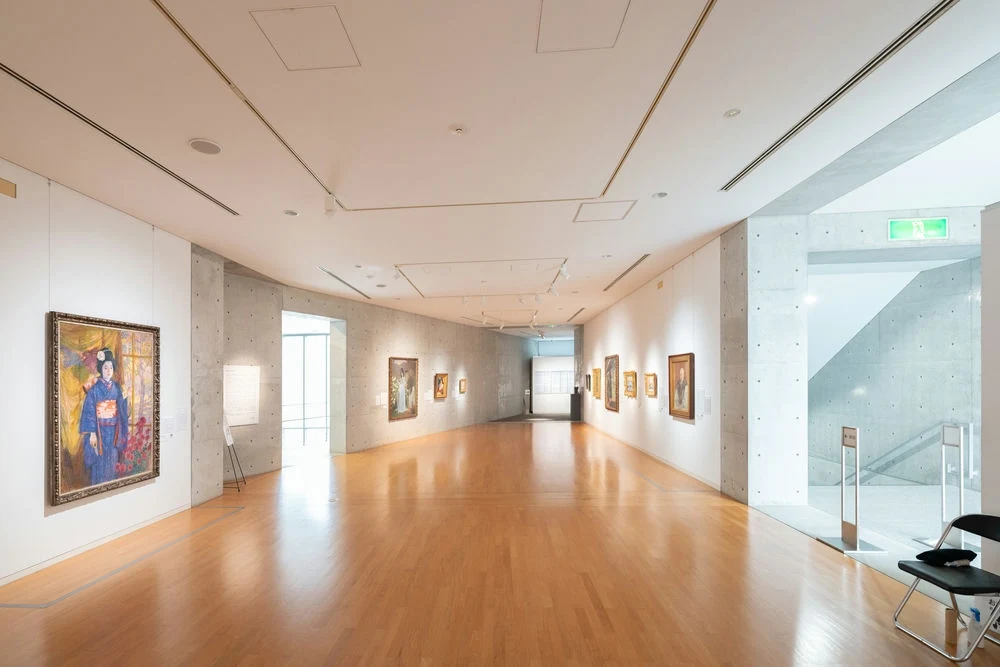
At the Hayashibara Museum of Art in Okayama City, in response to such voices, a project exhibition titled "The Beginning of Art Appreciation - Allies in Viewing" will be held from June 28, 2025, where all explanatory texts for the artworks will be presented in easy Japanese.
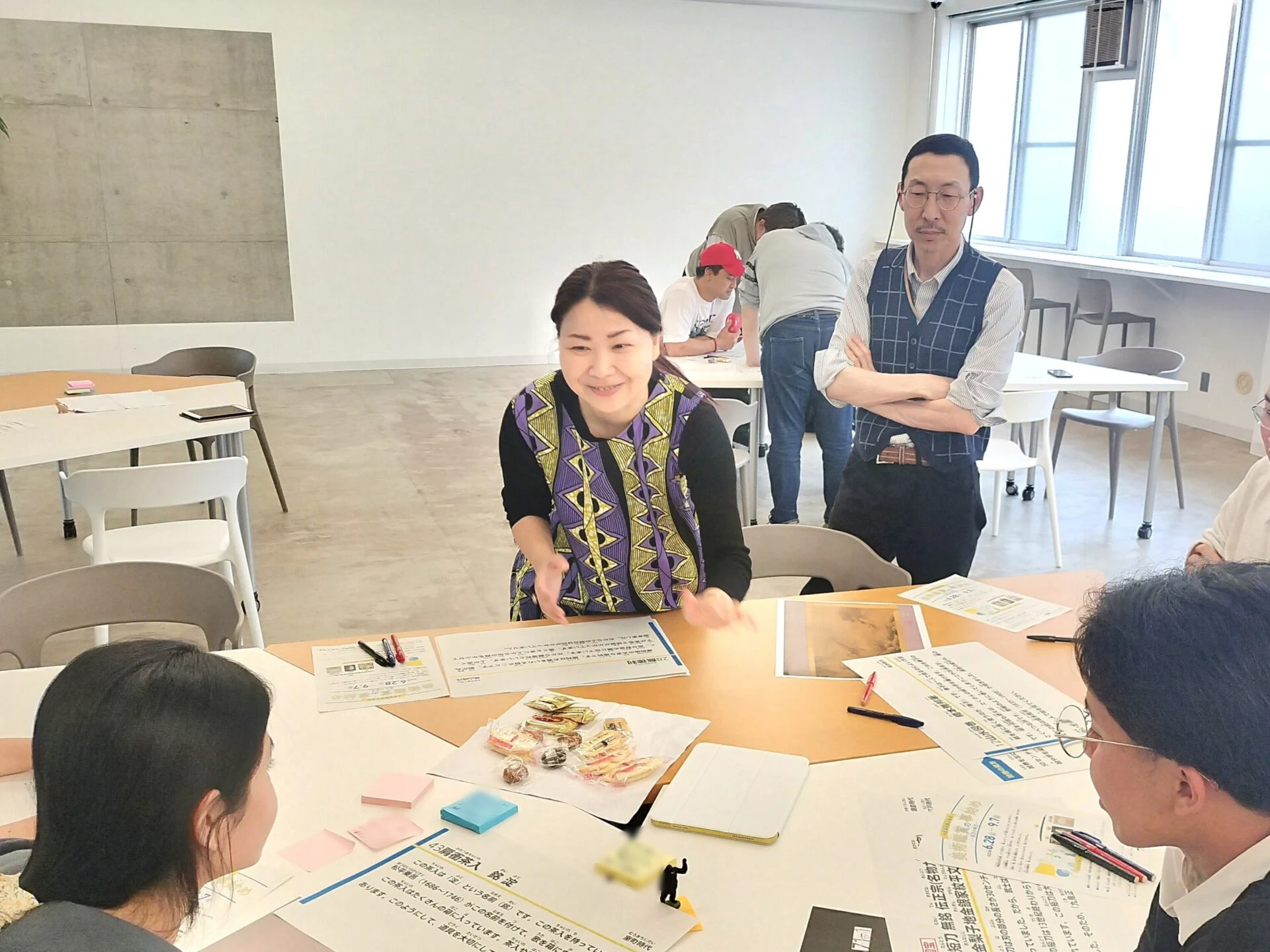
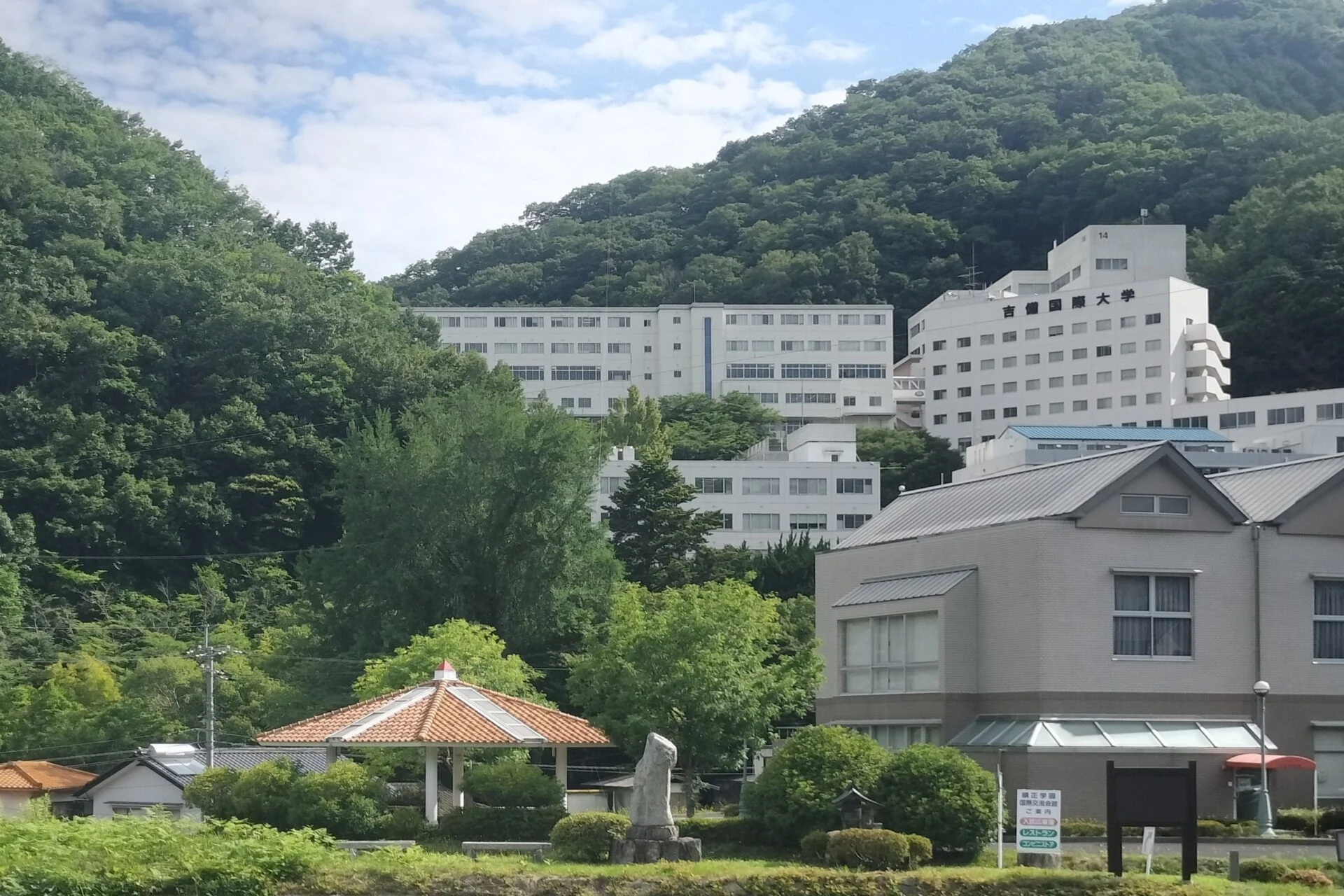
A preparatory workshop was held on May 28, 2025, at the Kibi International University Student Hall "Cube" in Takahashi City.
Here is an introduction to the workshop.
Project Exhibition at Hayashibara Museum of Art "The Beginning of Art Appreciation - Allies in Viewing"
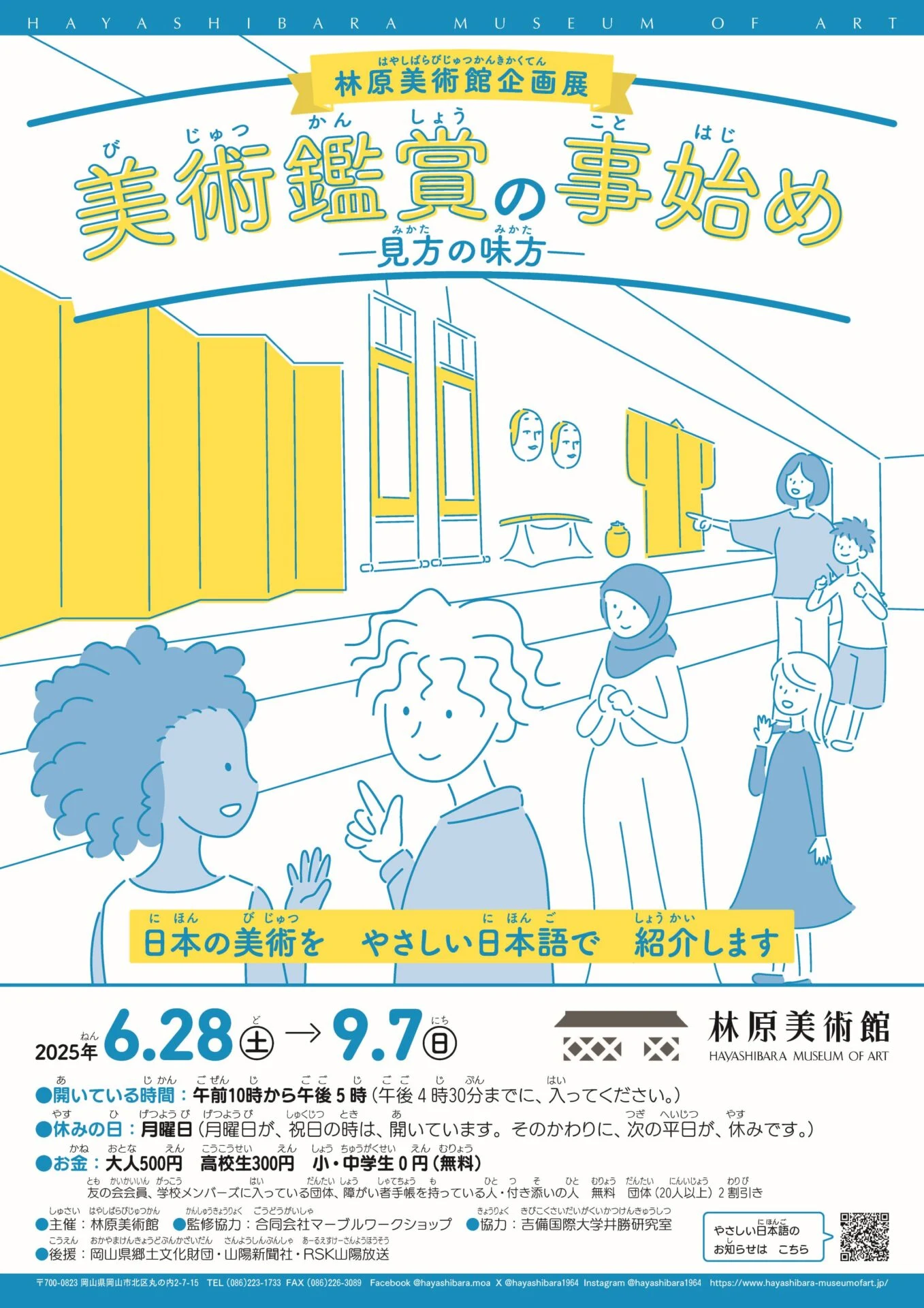
The Hayashibara Museum of Art will hold a project exhibition titled "The Beginning of Art Appreciation - Allies in Viewing" from June 28 (Saturday) to September 7 (Sunday), 2025, introducing the "highlights" and "ways to enjoy" each artwork in an easy manner through its diverse collection, including swords, calligraphy, Bizen pottery, and Noh masks.
In this exhibition, the explanatory texts will be written in "easy Japanese," making it accessible for those unfamiliar with the language and for children.
Background and Purpose of the Project Exhibition
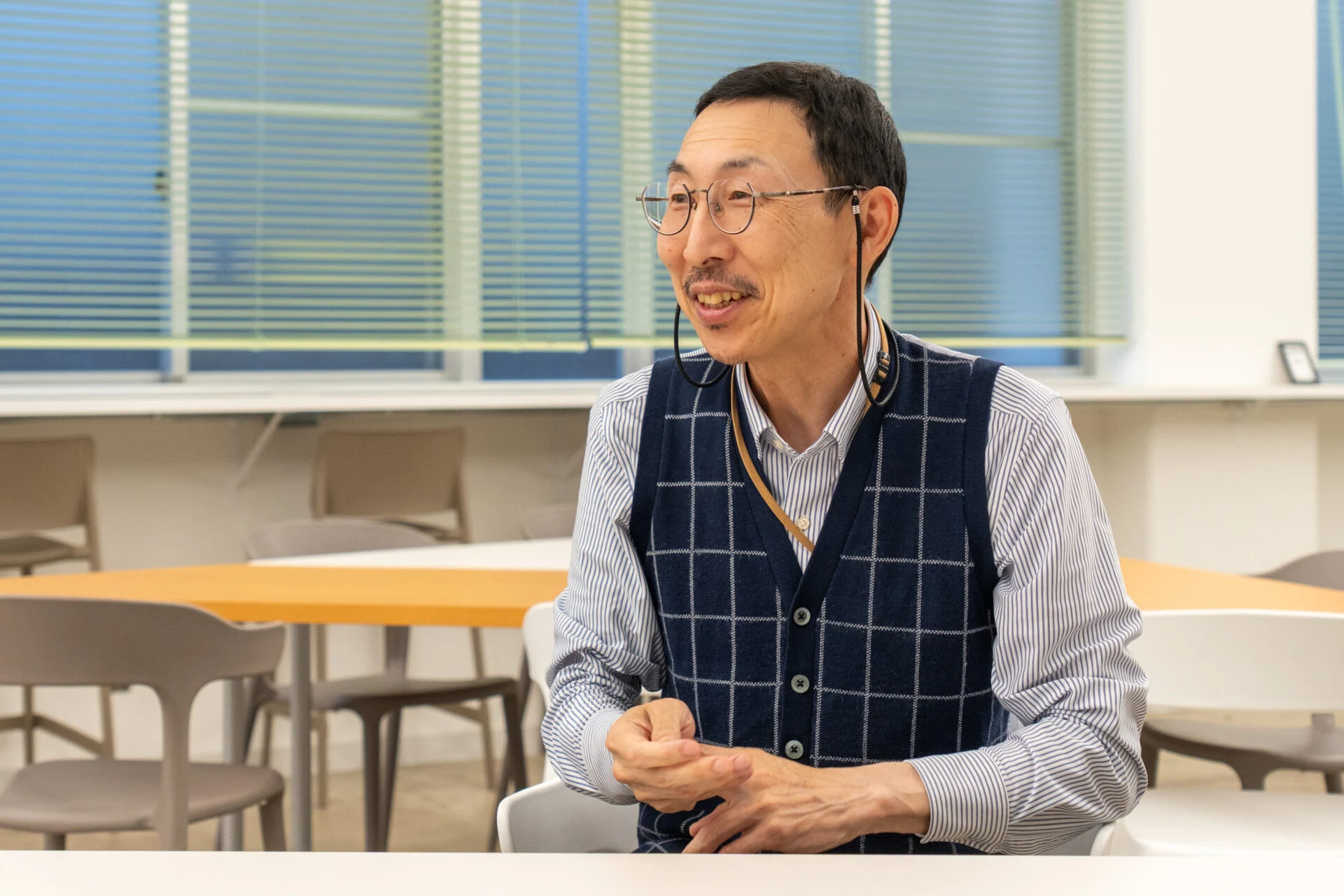
First, I asked the curator of the Hayashibara Museum of Art, Hashimoto Ryo, about the purpose of this project exhibition.
"Actually, while I am in a position to write captions, I sometimes feel that there are many specialized terms that make it 'difficult to read,'" said Hashimoto.
Because of the specialized knowledge, he was also aware that such words could be a hurdle for those encountering them for the first time.
"I think that customers might feel the same way," he realized, which became the starting point for creating this exhibition.
- What is beautiful about the sword?
- What are the highlights of this work?
He aims to present these points without cramming too much information, suggesting, "First, please look at the blade pattern," and "Enjoy the changes in shape," from a perspective that anyone can understand. This is the goal of creating captions, according to Hashimoto.
For this reason, Hashimoto has been working on improving captions to make them enjoyable for people unfamiliar with Japanese art. Through this effort, he encountered the concept of easy Japanese.
Starting with the project exhibition "Using, Mending, and Communicating - SDGs from Ancient Times" held from September to November 2023, he began incorporating "easy Japanese" into several exhibitions. Since then, he has been practicing while observing the reactions of visitors.
And the Hayashibara Museum of Art decided to take on the challenge of unifying all explanatory texts in this project exhibition to "easy Japanese."
However, writing in an "easy" manner is by no means easy.
"Writing in a specialized manner is actually much easier," Hashimoto said. Even though there is a lot of information to convey, narrowing it down to one point and writing it short, accurately, and in a way that anyone can understand emphasizes the difficulty of meeting all three criteria simultaneously.
With this background, a workshop was held at Kibi International University.
International Students and Japanese Students Collaborate! Evaluating the "Ease" of Captions
At Kibi International University, international students engage in activities that deepen their understanding of Japanese culture while using the Japanese they have learned in class to interact with local people. Based on this educational philosophy, they have been focusing on various activities that value cross-cultural experiences and connections with the community.
As part of this initiative, they checked and evaluated whether the explanatory captions created by the Hayashibara Museum of Art were accurately conveyed to international students.
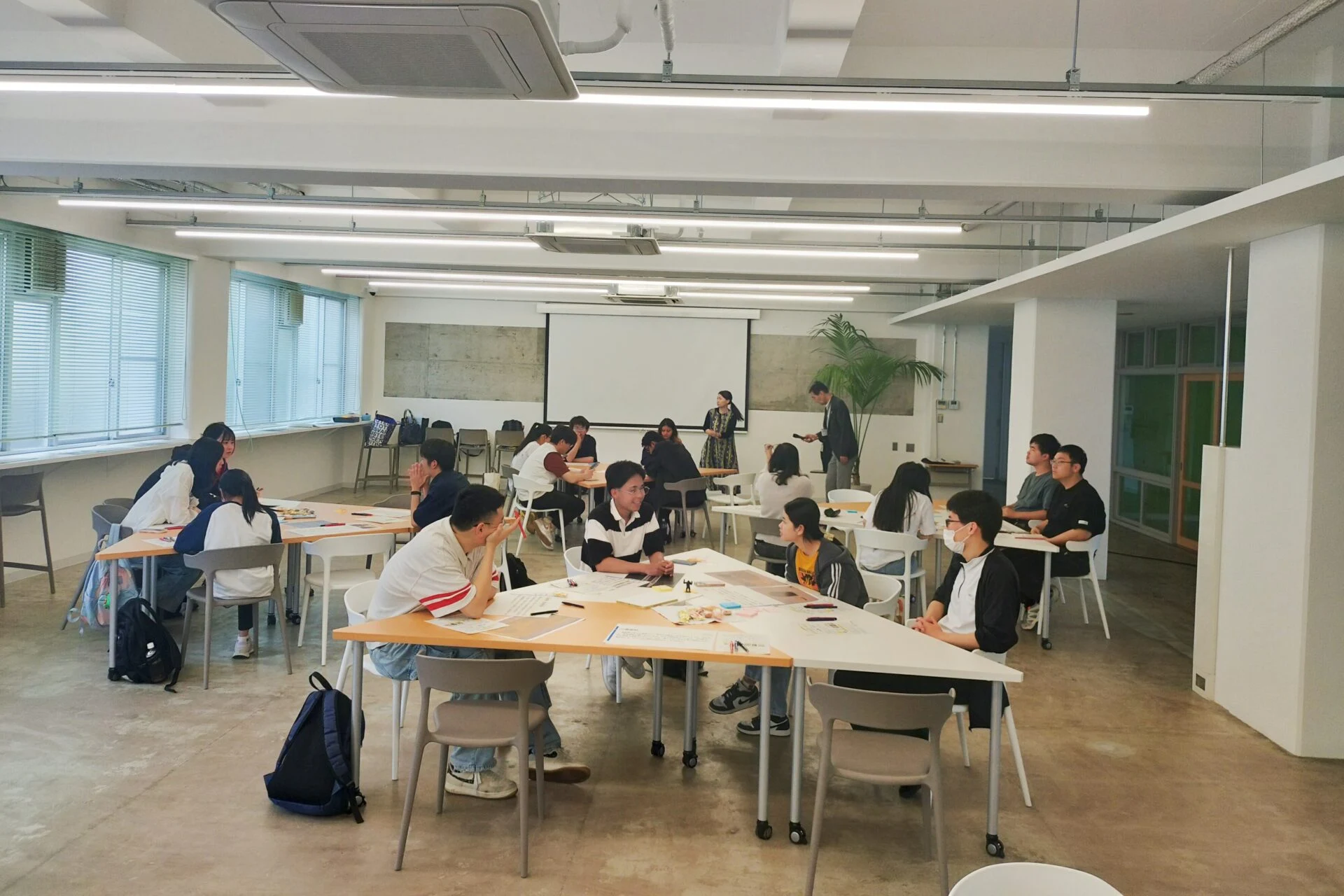
On this day, 18 international students from six countries—China, Indonesia, Vietnam, Cambodia, Sri Lanka, and Nepal—participated in the workshop along with Japanese students.
Students from different language and cultural backgrounds collaborated to think about the difficulties of the Japanese language, ways to convey information, and the role of museums.
Aiming for a Museum Everyone Can Enjoy
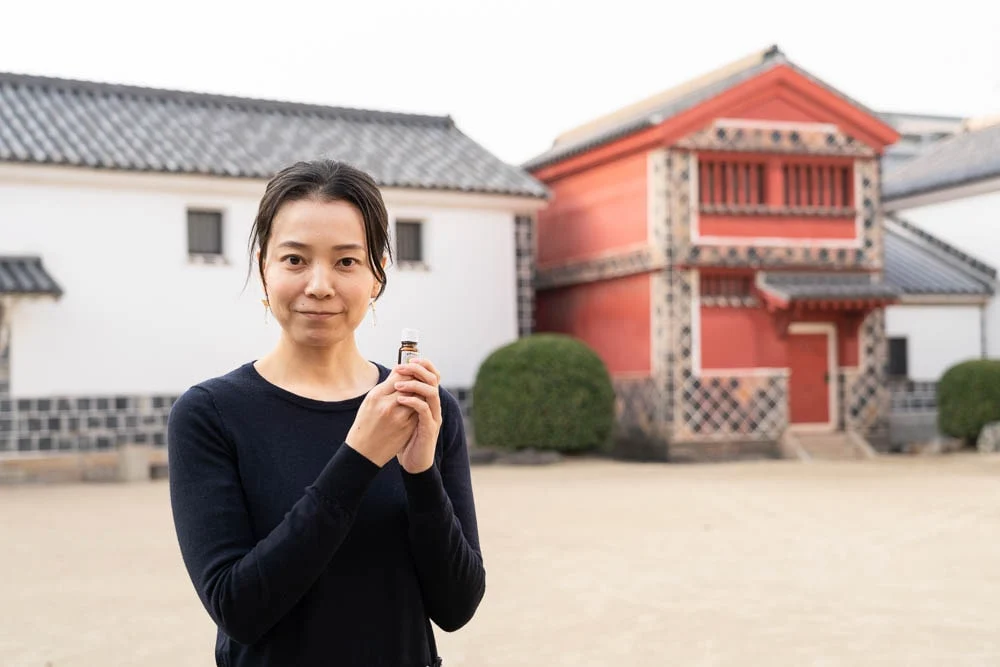
Assisting with the "easy Japanese" initiative for the project exhibition at the Hayashibara Museum of Art is Takao Hiromi, representative of Marble Workshop LLC.
While volunteering in Japanese language classes, she continues to promote the importance of "easy Japanese" in museums across the country.
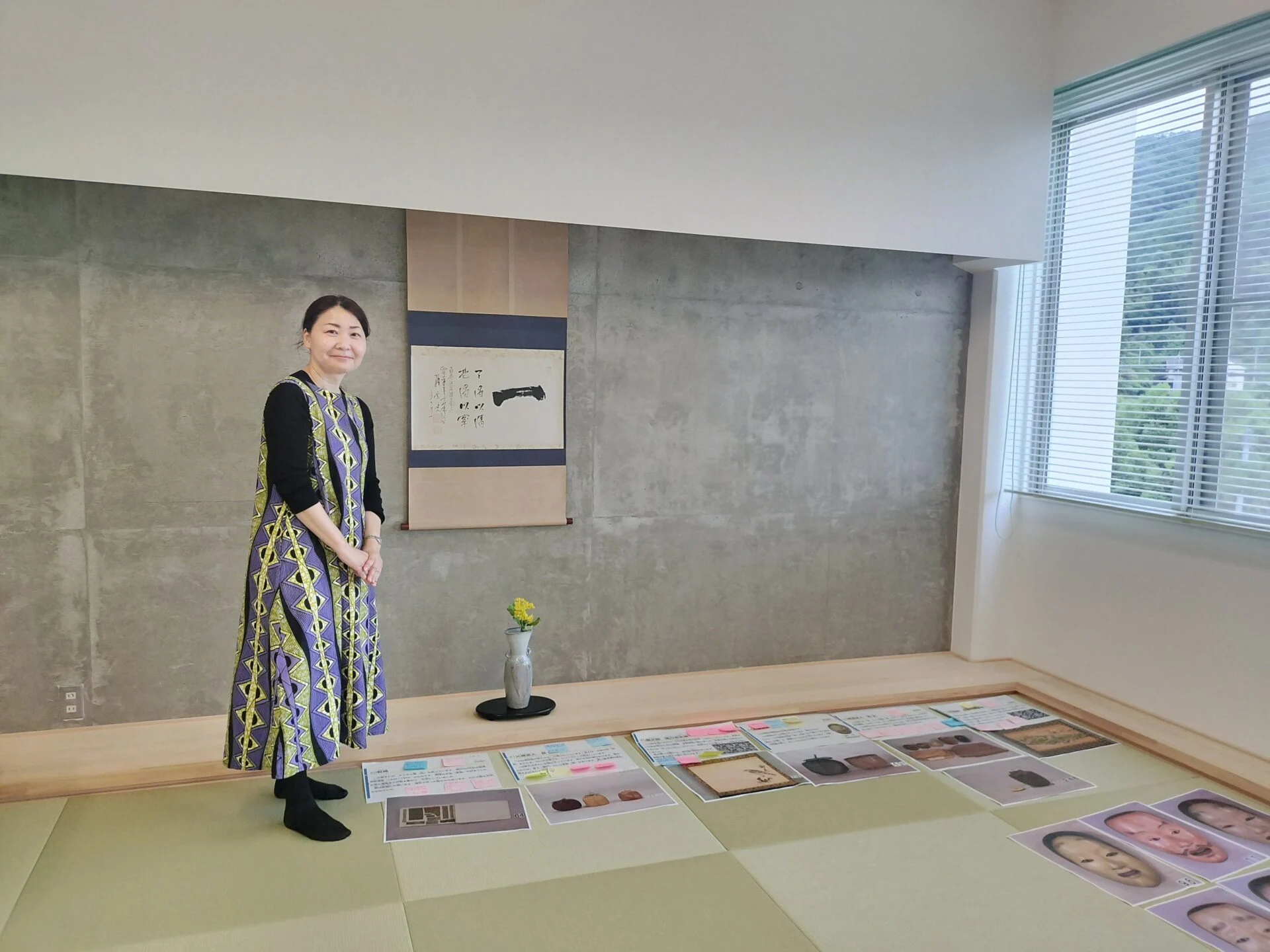
"By collaborating with international students at Kibi International University, we aim to create texts that are easy to understand and enjoyable for those who are not native Japanese speakers and those who may not have much interest in art," Takao said.
For Takao, the attempt to evaluate the explanatory texts based on the real opinions of international students before the exhibition is open to the public was a new challenge.
The workshop, conducted through trial and error, proceeded as follows:
- First, read the original explanatory text.
- Use sticky notes to freely write down "what is difficult to understand" and "what caught your interest."
For parts of the text that felt difficult overall, draw a red line and number them to provide explanations. - Share insights among all participants.
What kind of exchanges took place? Let's take a look at the workshop.
Overview of the Workshop Venue
At the venue, explanatory texts and photos of the artworks prepared by Hashimoto from the Hayashibara Museum of Art were laid out.
After that, Hashimoto and Takao visited each table to provide clear explanations about the photos and explanatory texts of the artworks as follows:
- Makimono (巻物)
A long piece of paper that is drawn continuously to connect stories or landscapes. - Byobu (屏風)
A folding screen that was also used as a room divider or privacy screen. - Real Scene vs. Imagination
The difference between a landscape seen in reality, like Mt. Fuji, and a world imagined based on Chinese classics. - Monogatari-e (物語絵)
Paintings that depict the scenery or props seen by characters, allowing the story to be imagined from them.
In this way, they took about 10 minutes for each artwork to observe and discuss in groups.
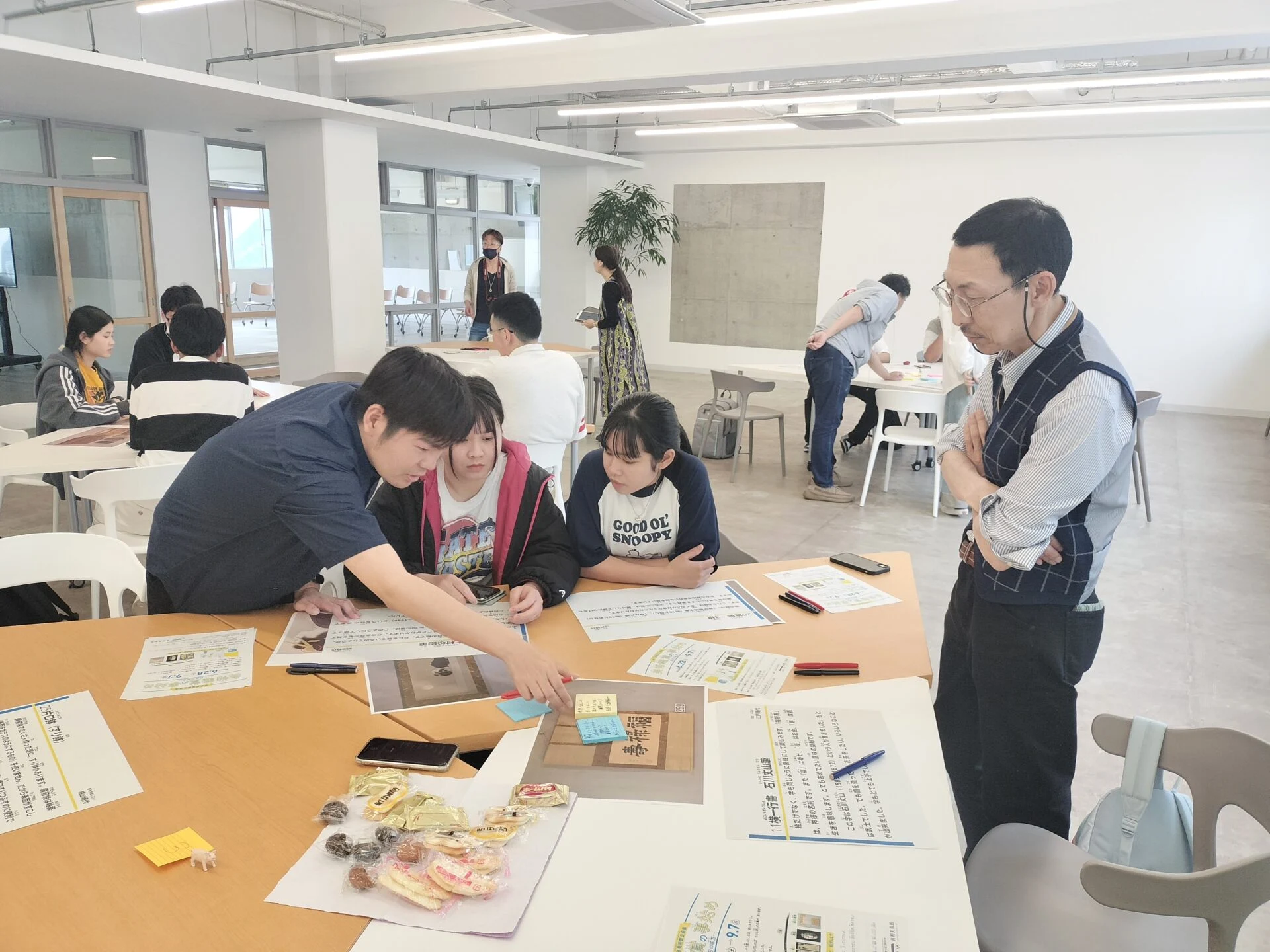
While reading the explanatory texts, Japanese students were carefully explaining to the international students the parts they did not understand one by one.
Some activities involved closely observing the expressions and differences of Noh masks, trying to read emotions and roles from them.
On the tables, there were also several photos of Noh masks, and participants seemed to be comparing them and expanding their imaginations while holding the explanatory texts.
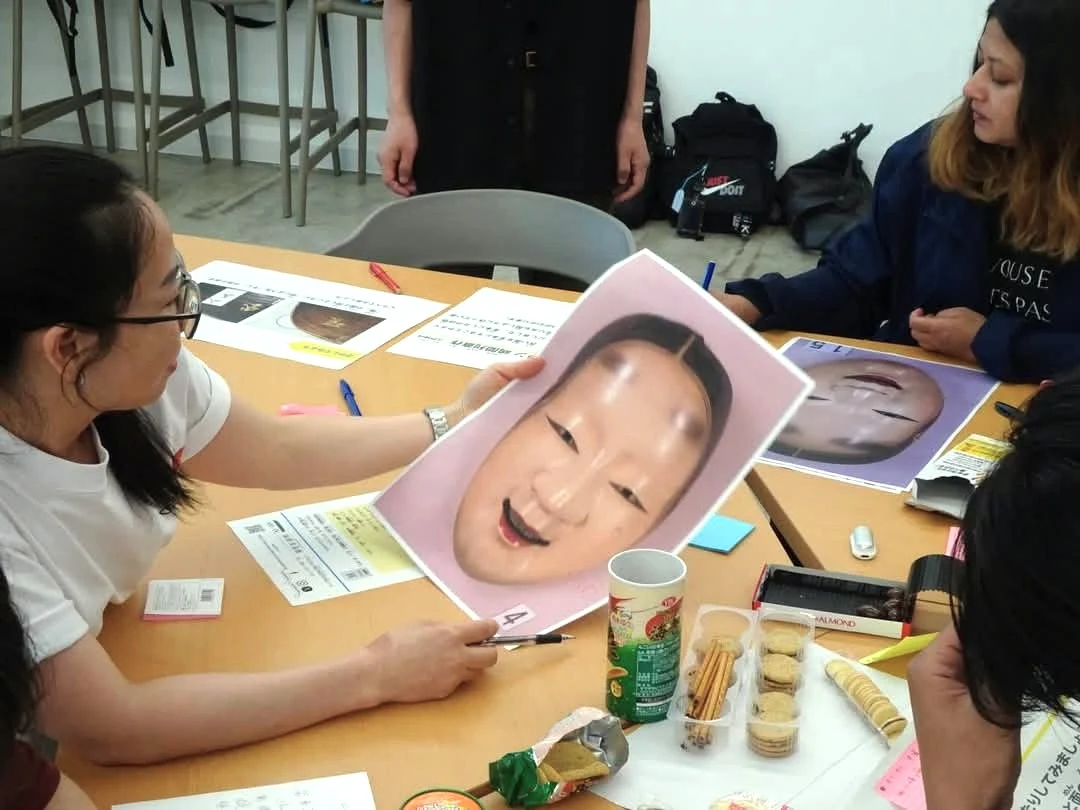
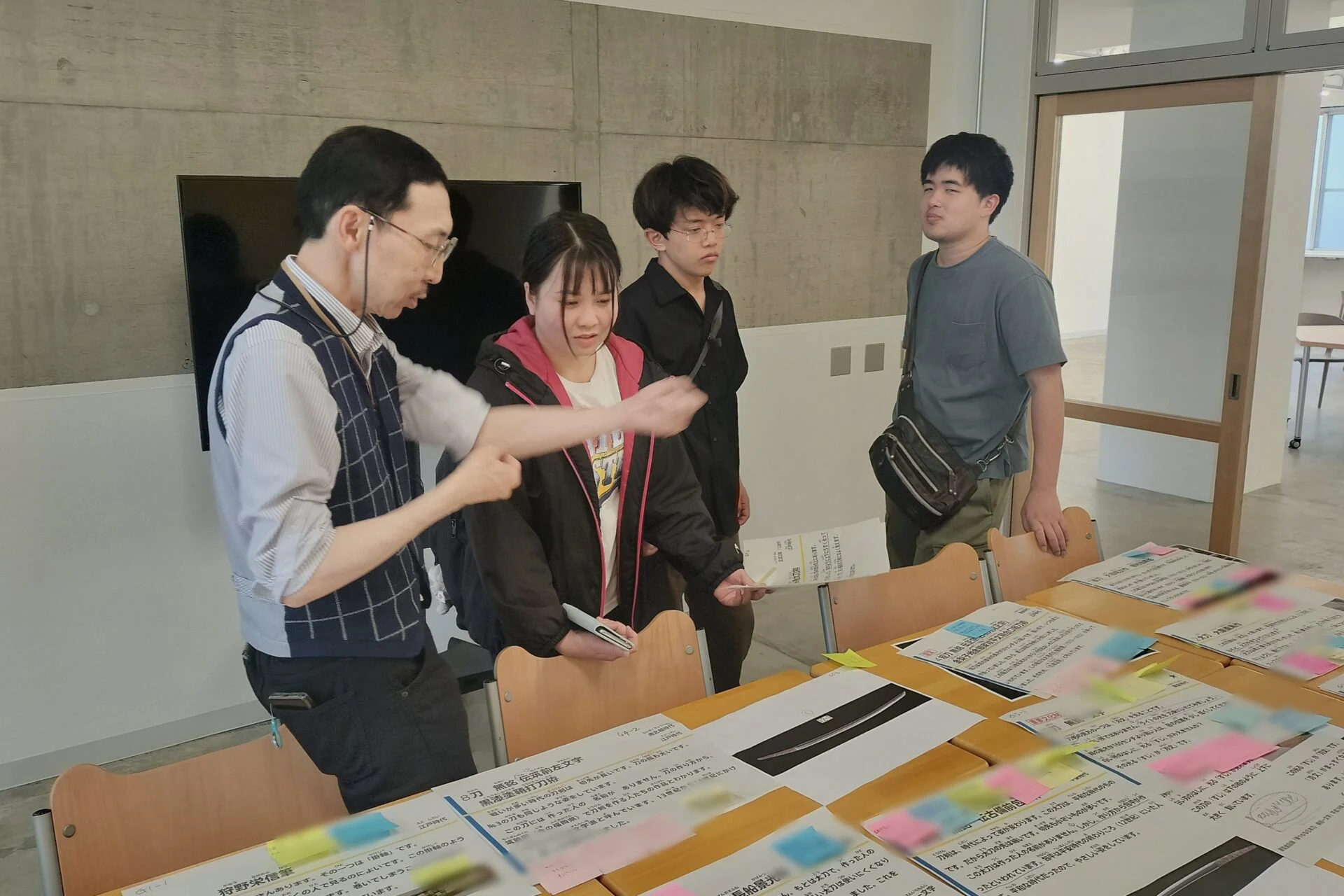
International students were keenly listening to the background of the artworks from the explanatory text, as well as the characteristics of various periods in Japan.
This time, with the cooperation of the international students, the results were compiled into explanatory texts in "easy Japanese" and reflected in the exhibition, which is a rare initiative nationwide.
From the participating international students, the following voices were heard, and many expressions of surprise and discovery were observed.
- I don't understand the meaning of this word.
- The way this vessel is wrapped in straw is the same as in my country!
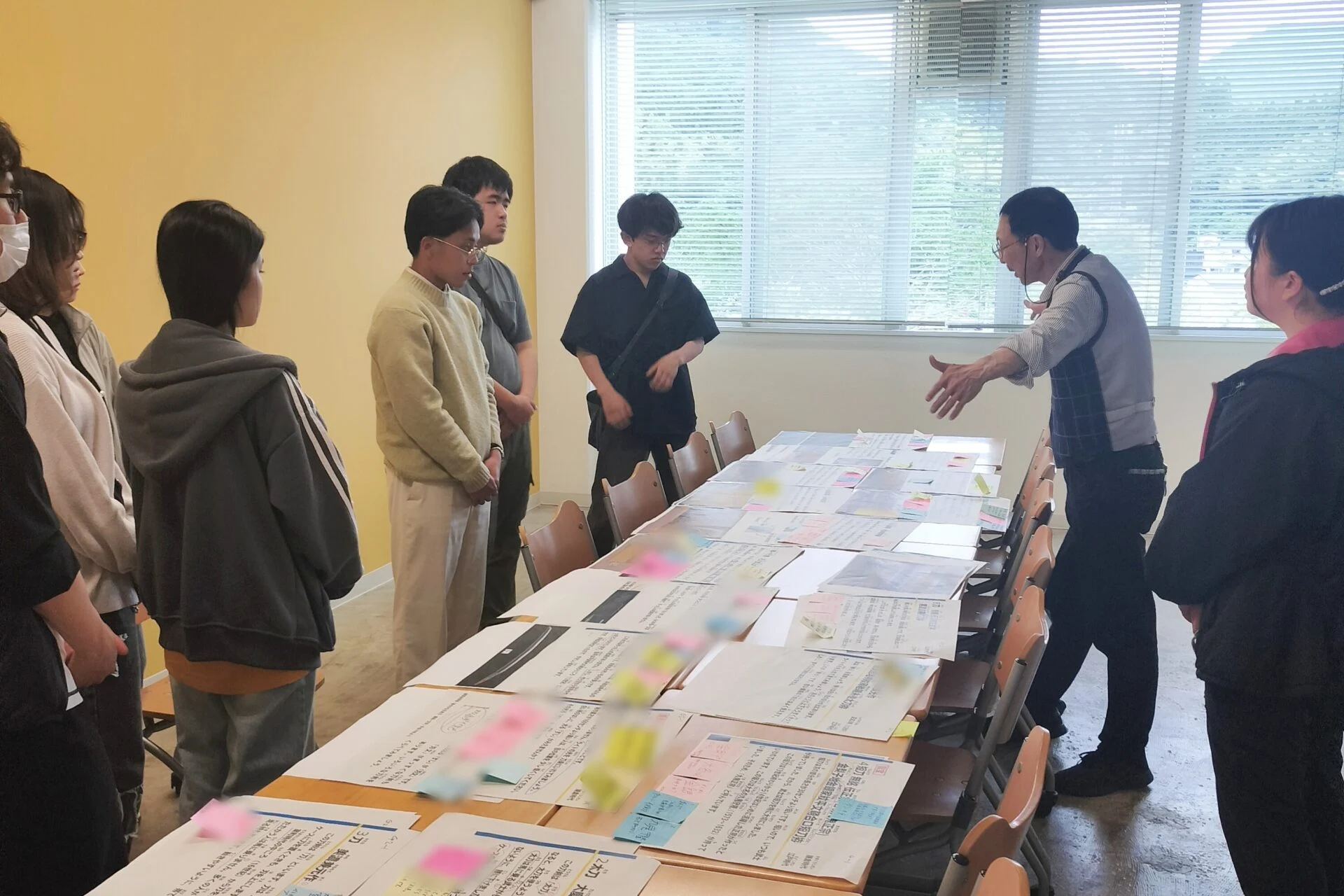
Mr. Hashimoto and Mr. Takao also walked around the venue, engaging in cheerful conversations with the participants, creating a lively and warm atmosphere throughout the event.
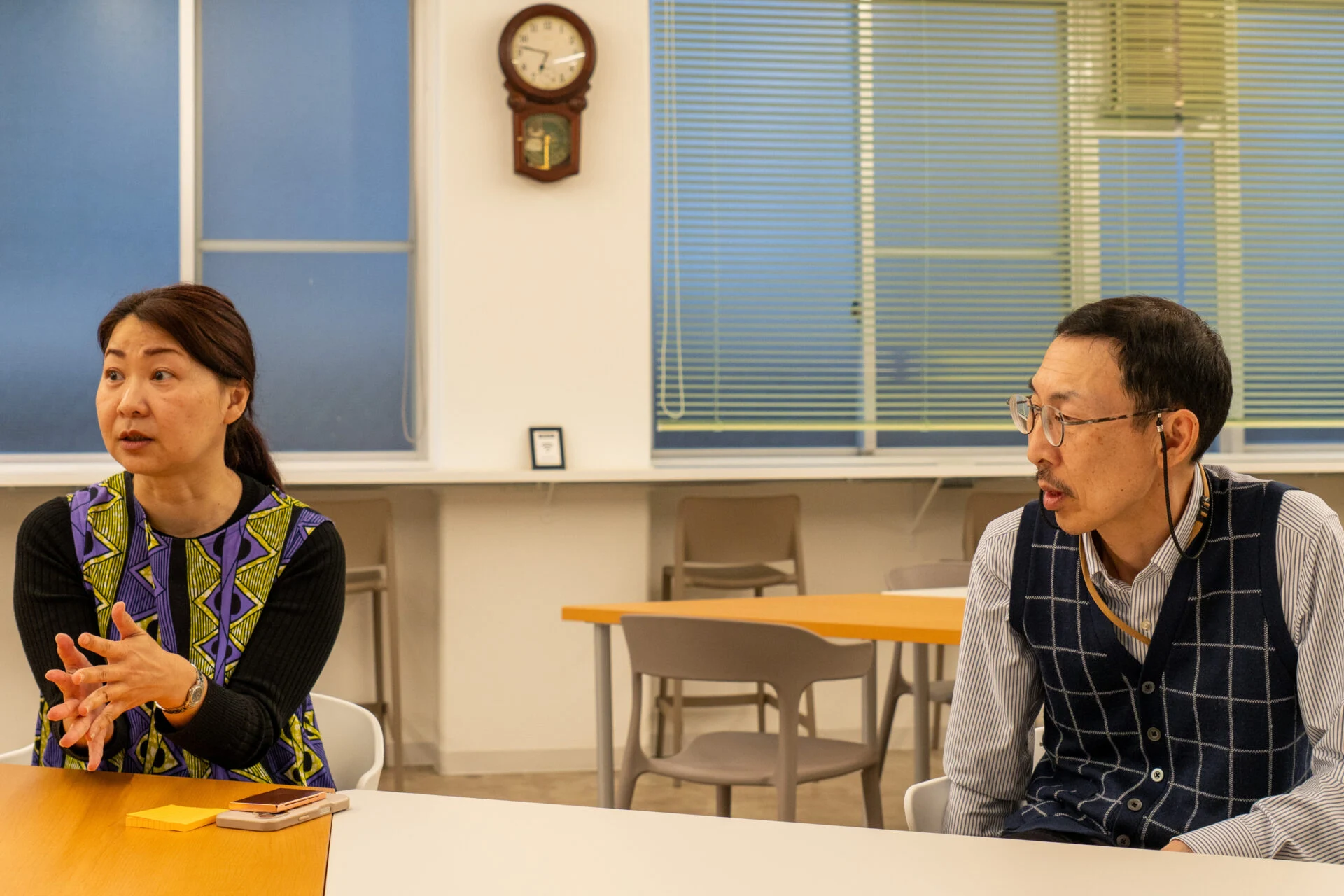
After the workshop, a feedback session was held regarding this initiative.
“Words like ‘embroidery’ can be explained verbally, but it becomes difficult when written down. However, that’s precisely where new expressions can emerge.”
From simple questions and opinions, Mr. Hashimoto himself gained many insights.
We spoke with Ms. Takao, who has been working nationwide to promote “easy Japanese.”
Marble Workshop LLC Data
| Name | Marble Workshop LLC |
|---|---|
| Address | 3-13-33 Chuo-cho, Tamashima, Kurashiki City, Okayama Prefecture |
| Contact | None |
| Website | Marble Workshop LLC |