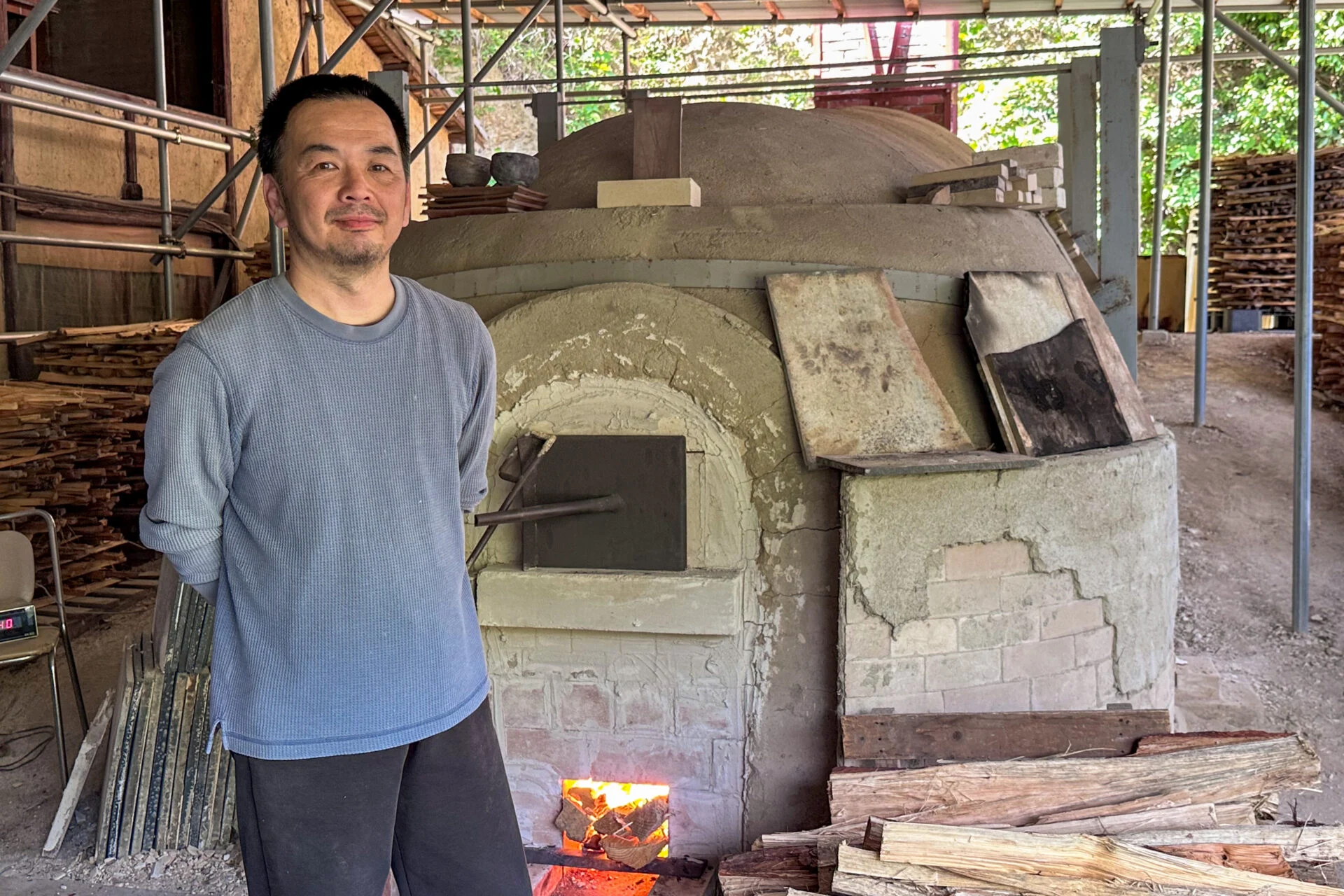
Interview with Tsuneki Naomame
I spoke with Tsuneki Naomame about her move to Asakuchi City and her commitment to Bizen pottery.
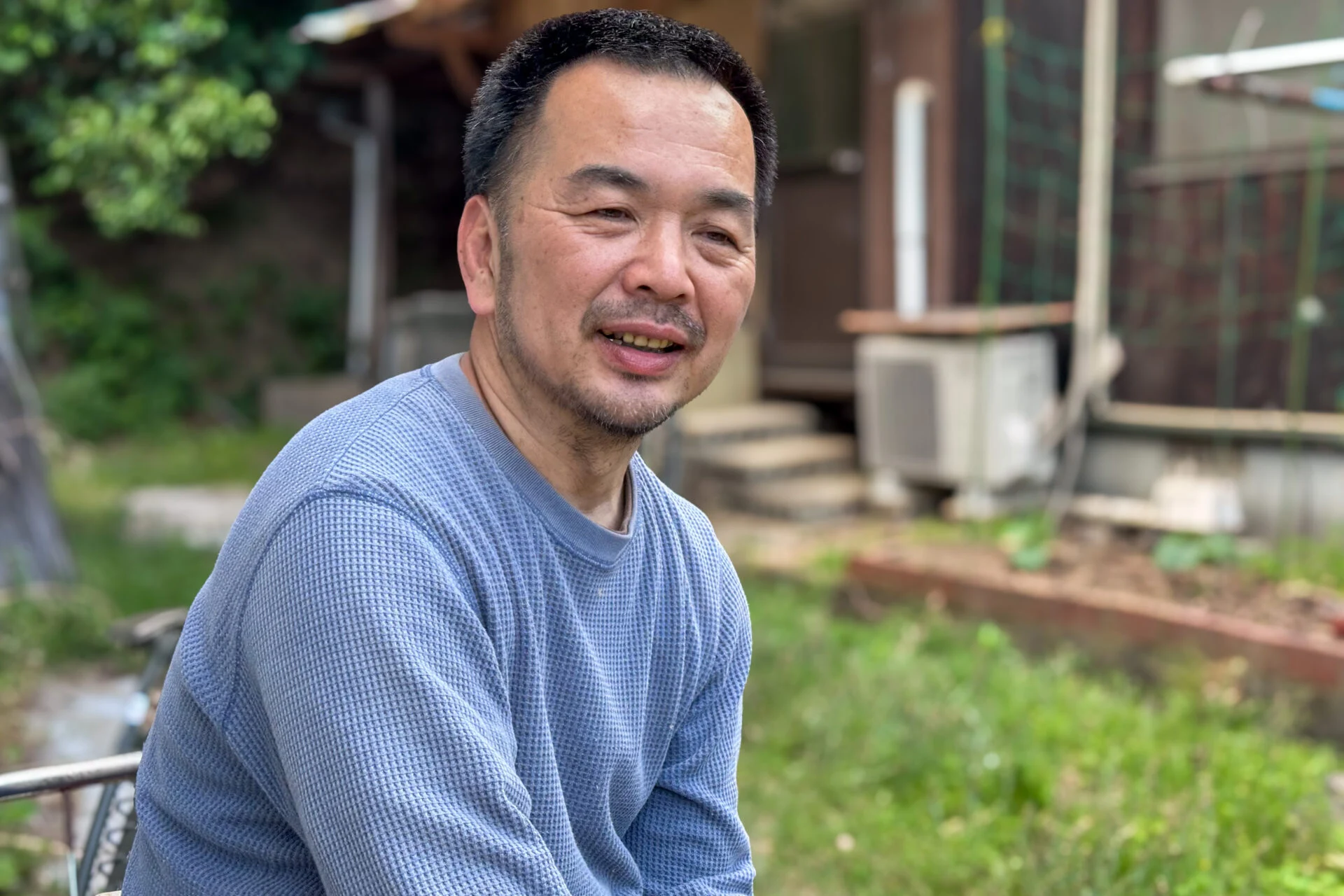
Please tell us about your reasons for moving from Furano City, Hokkaido to Asakuchi City, Okayama Prefecture.
Tsuneki (honorifics omitted)
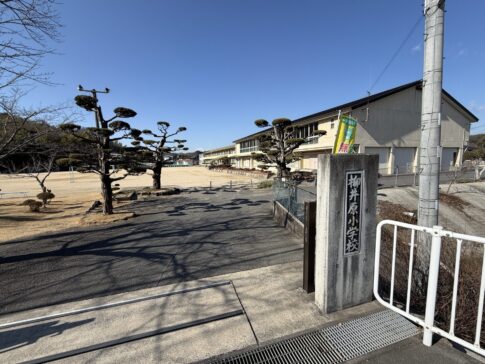
Since 2001, I had been using the old Yamabe Second Elementary School in the Yamabe area of Furano City as my studio. However, due to the policies of the city that owns the building and various circumstances, I began to consider leaving in 2015.
The unstable situation of "I don't know if I can fire the kiln next year" became the decisive factor for considering a move.
Regarding the place to move to, I was considering moving to Okayama Prefecture, which is my hometown, from the very beginning. Additionally, since "if the clay freezes, it will hinder my pottery activities," I hoped for a warm region with little concern for freezing throughout the year. Therefore, I narrowed down my search for properties to locations not far from Kurashiki City (where my parents live) and on the Setouchi side of the southern part of the prefecture, including Asakuchi City, which has less snow.
While searching for properties, I happened to find an 11LDK old folk house in Asakuchi City that perfectly met the conditions for advancing my pottery activities. At that time, I was still living in Furano, so I contacted my parents in Kurashiki and asked them to go for a viewing. Later, I received a large number of photos from my parents.
Looking at the photos, I saw that in addition to the main house with 11LDK, there were two barns, and there was enough space between the barns and the main house for a car to maneuver. I realized that I could set up a noborigama (climbing kiln) in this space, and with 11 rooms, I could also create a studio in the main house. Of course, since I could live in this place, I was able to complete my residence, studio, and exhibition space all in one location.
After that, I also viewed the site myself and moved to the current location in 2016, and in 2017, I built a noborigama, continuing my pottery activities from my Furano days.
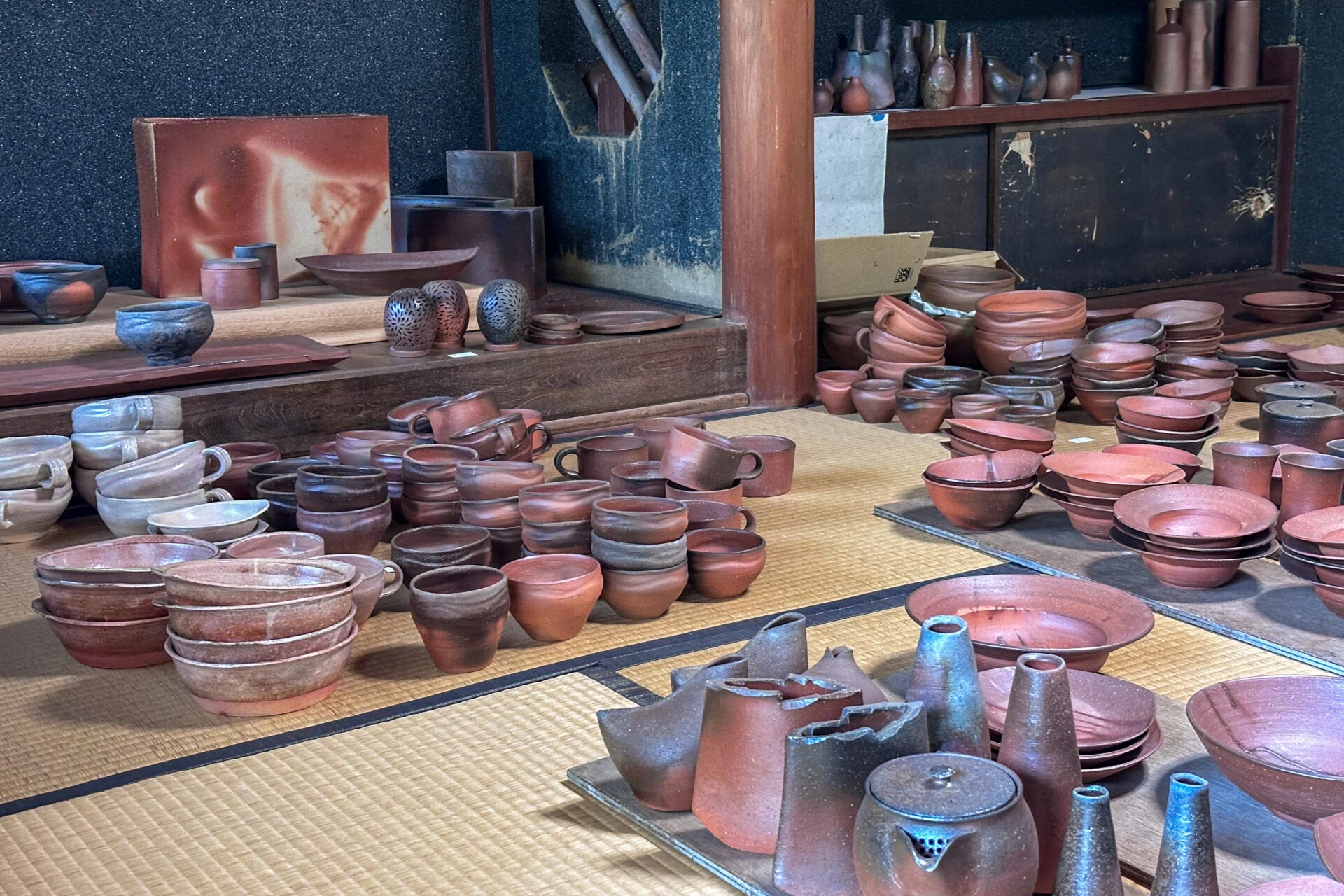
Please tell us about your commitment to the "noborigama" and its charm.
Tsuneki
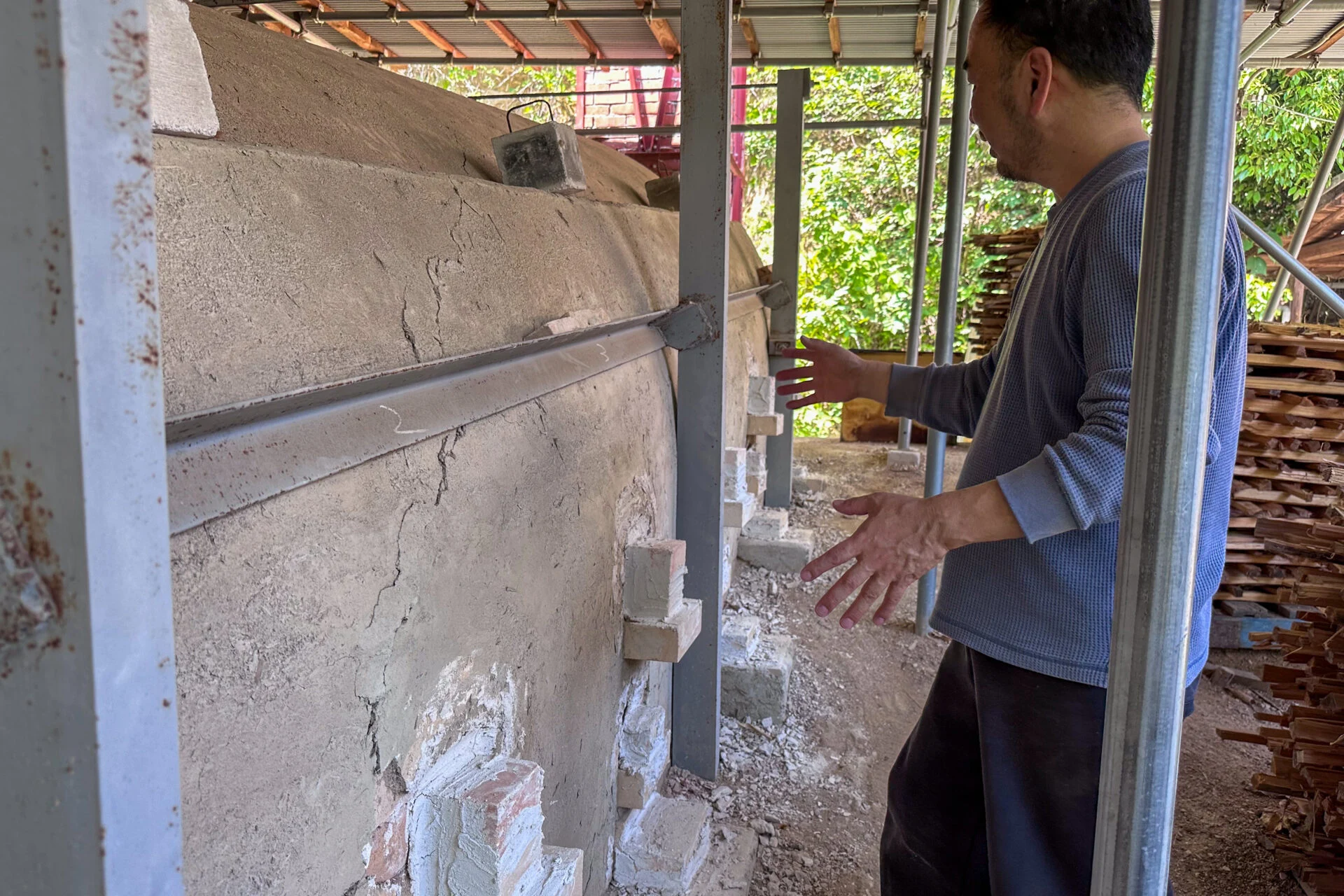
The noborigama differs in structure from the climbing kilns commonly used for Bizen pottery.
While climbing kilns are divided into several small rooms, the noborigama has a tunnel-like structure that is a single tube up to the chimney.
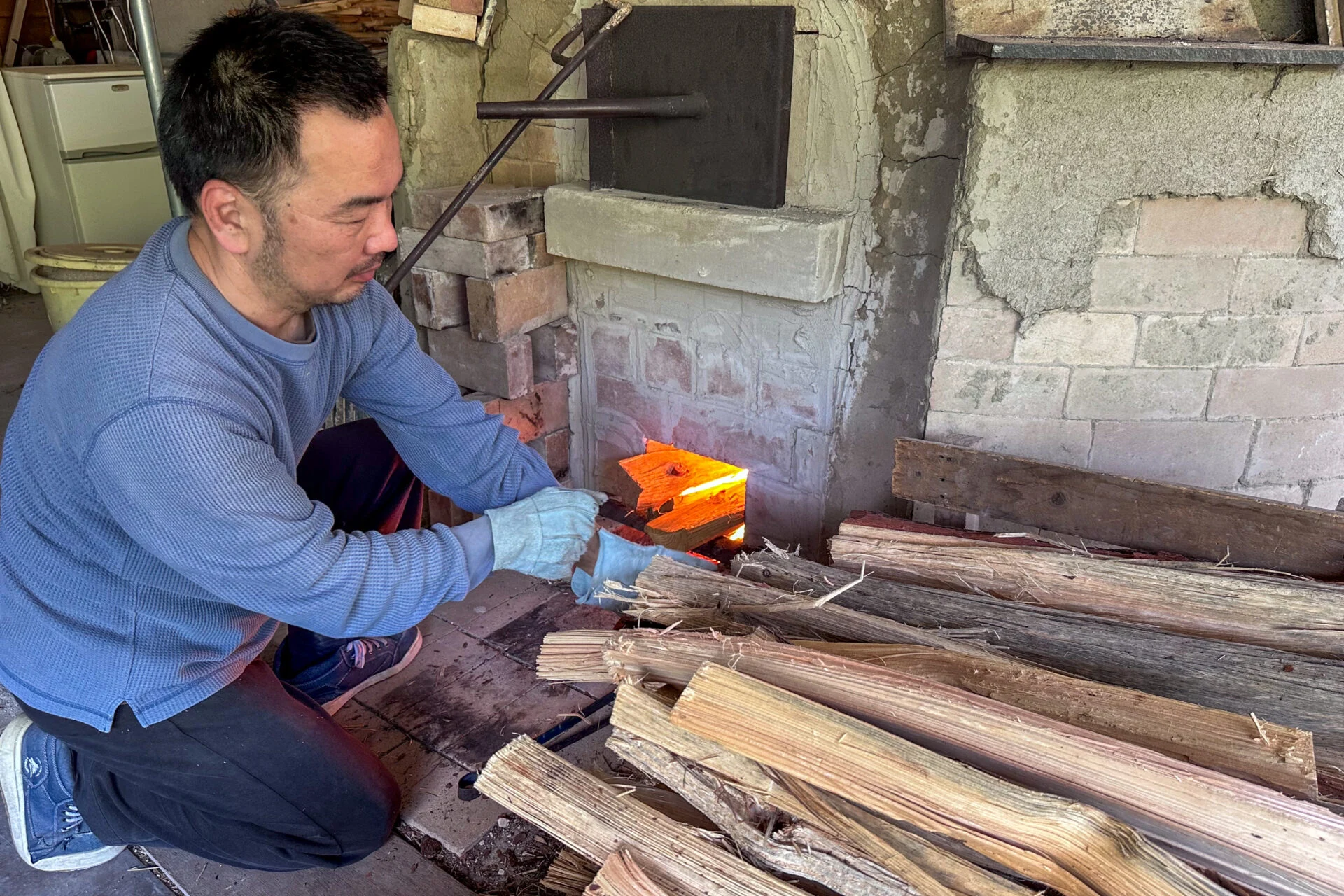
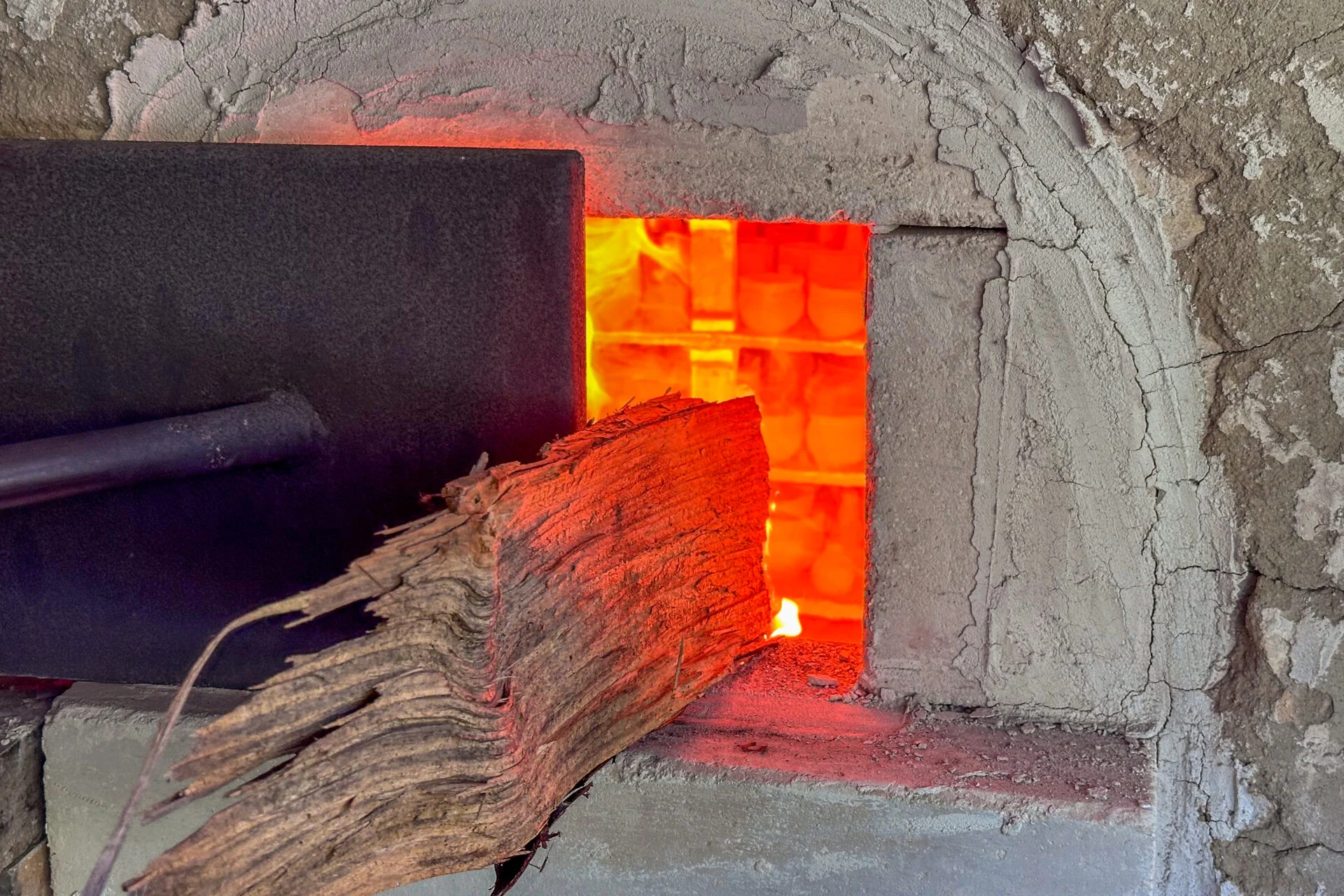
In the noborigama, flames and smoke flow like a river from the mouth of the kiln to the chimney. Because of this, areas that receive strong smoke (the mouth side) become darker in color, while areas that receive less smoke (the chimney side) become lighter, creating a natural color contrast, which is its greatest charm.
In traditional climbing kilns, to ensure that smoke is absorbed well, they tend to have heavy colors like dark brown or gray.
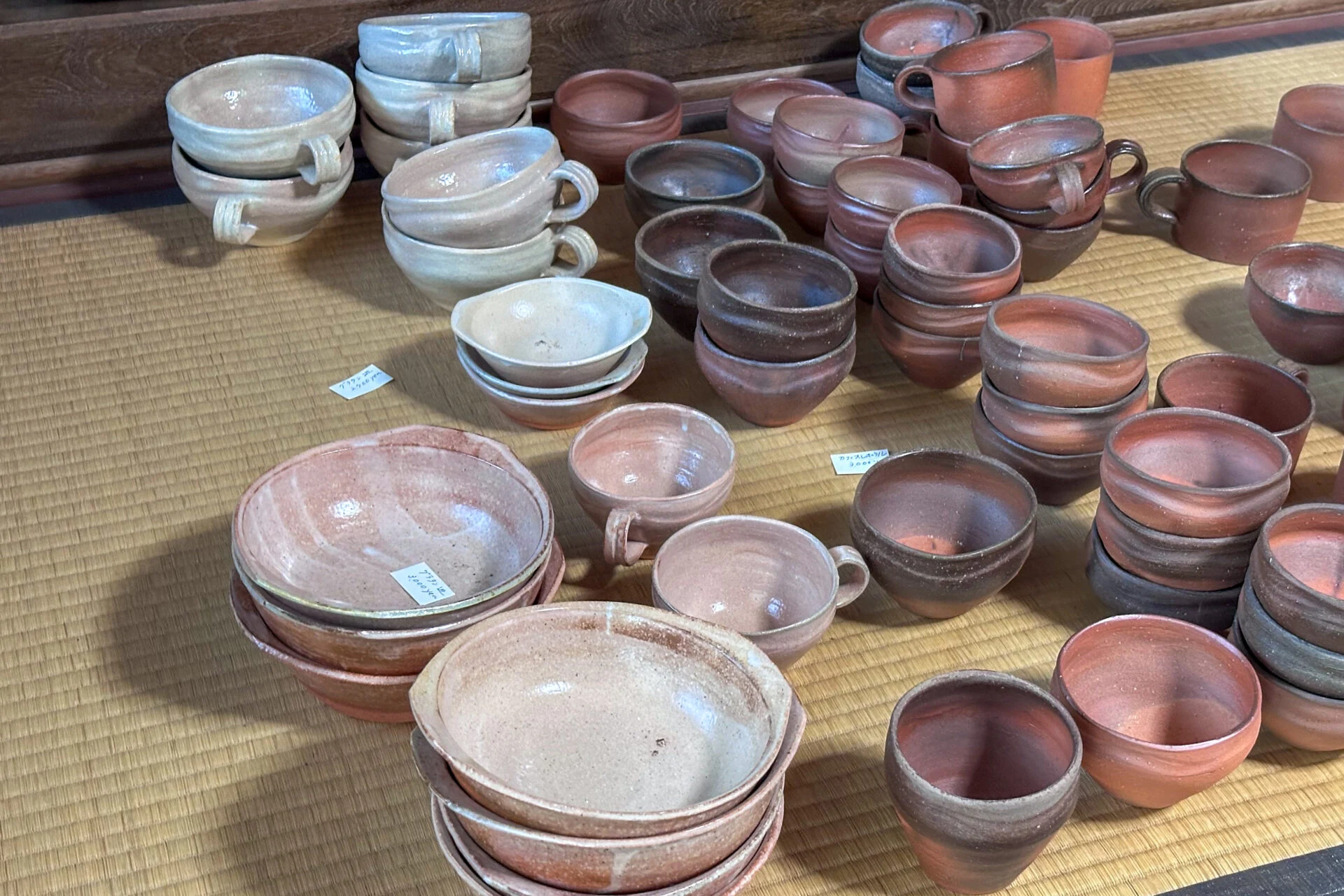
I believe that while these are good for flower vases and such, their subdued colors are not very suitable for tableware. By suppressing the smoke and firing at a slightly lower temperature, a contrast of subdued brown and orange is created, resulting in tableware that enhances the food.
Additionally, while climbing kilns require many people to operate, the noborigama can be fired with just myself and one other person, which is also an advantage. During my time in Furano, my wife's uncle, who was interested in kiln firing, helped me with the firing.
Considering the arrangement of the pieces is also an important element when working with the noborigama. The pieces placed in front act as a "filter," creating shadows and complex patterns on the pieces behind them.
On the final day of firing, I add firewood in order from the six horizontal holes and send in flames to adjust the overall firing of the kiln.
I hear that you also make "gratin dishes" in addition to Bizen pottery. What kind of product is that?
Tsuneki
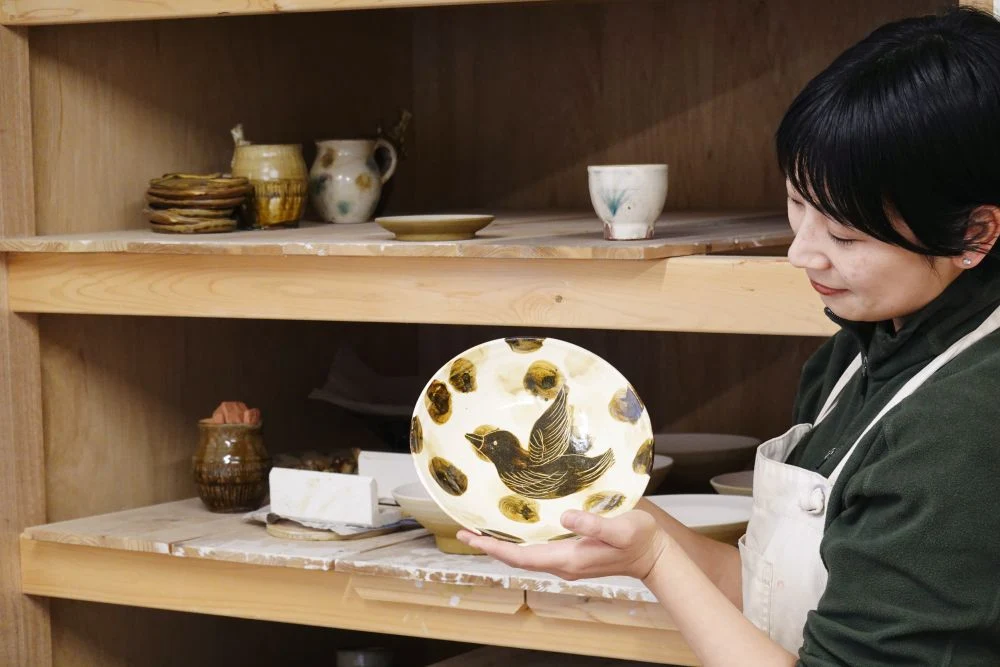
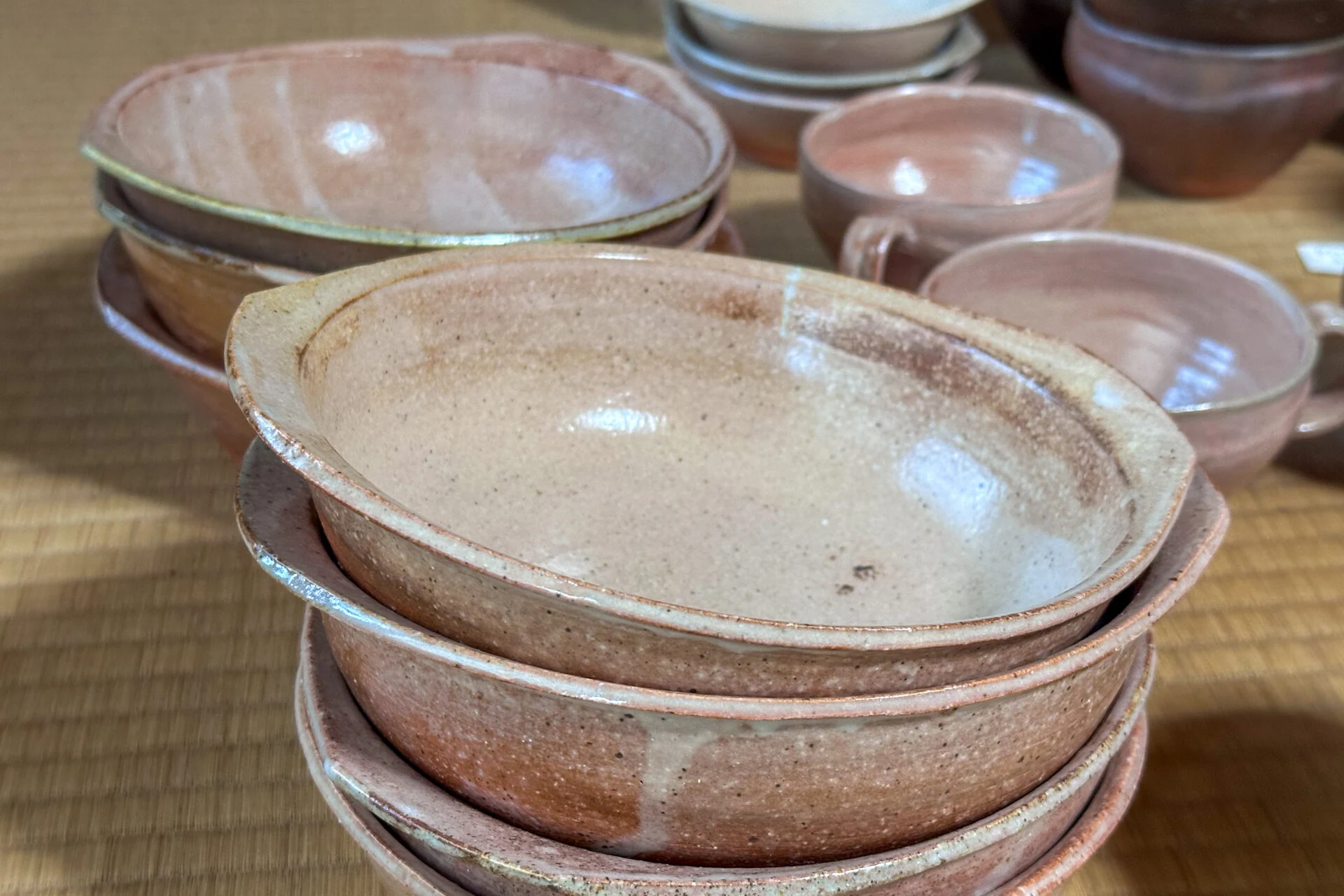
The gratin dish was created in response to a customer's request during my time in Furano, asking, "Can Bizen pottery be put on the fire?"
Regular Bizen pottery tends to shrink significantly when fired, resulting in high density, which can cause it to crack under rapid heating. However, the gratin dish is made from a different type of clay, "clay for earthenware pots."
While typical gratin dishes are evenly fired in electric or gas kilns, this gratin dish is fired using firewood in the noborigama, which is a distinctive feature.
As firewood ash randomly falls onto the dish, a unique gradient of colors is created. This is a significant charm, as it allows for the enjoyment of changes unique to firewood kilns, unlike regular pottery that requires reproducibility as an "industrial product."
In Okayama Prefecture, the idea of mixing different clays with Bizen pottery is not common, but it became a hit product precisely because I was in the free environment of Hokkaido.
I understand that you also create many animal works.
Tsuneki
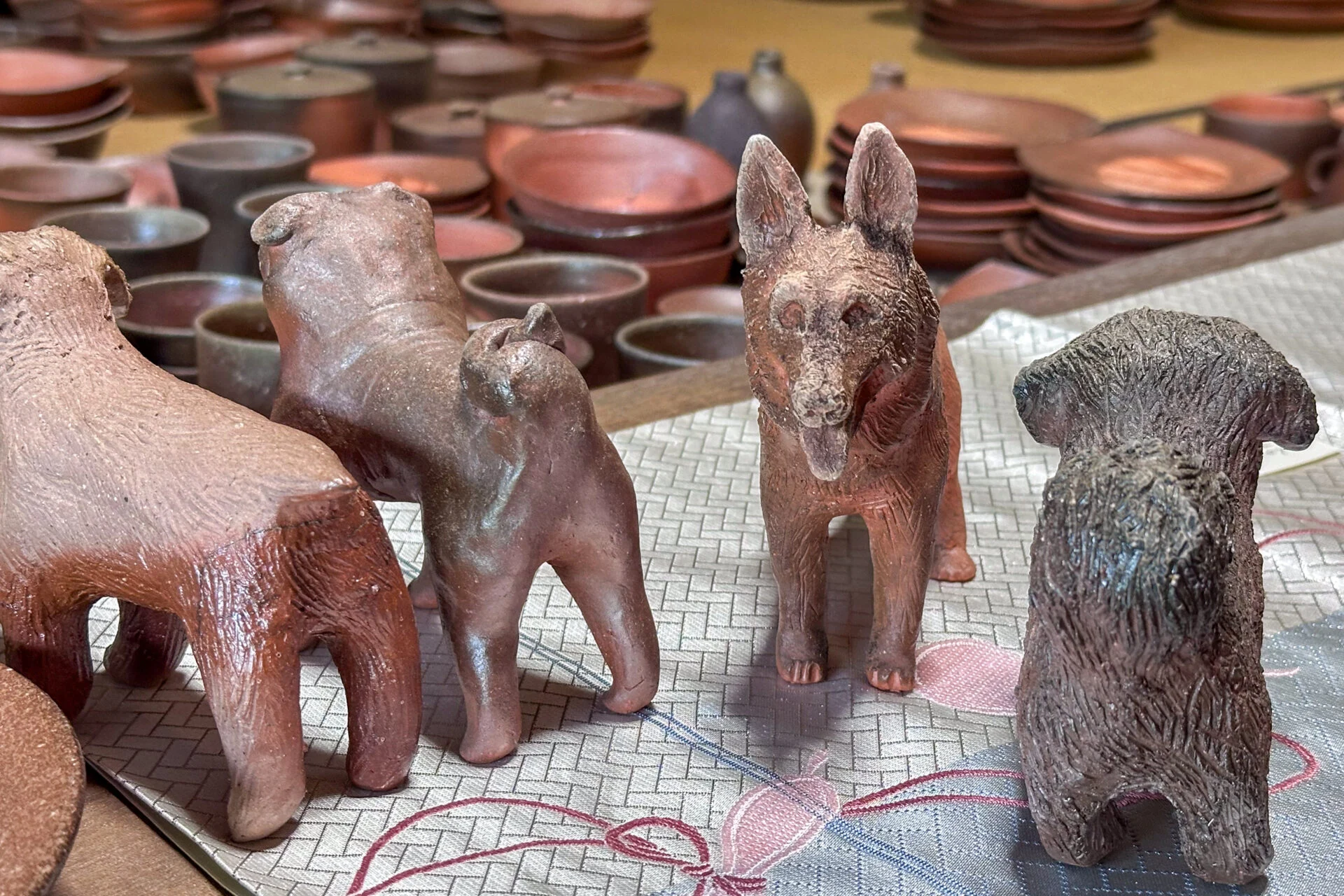
Since I have a dog, I initially only made dogs.
Later, as I responded to requests from customers at events, I expanded to include the zodiac series, zoo series, and livestock series.
For dogs, I accept custom orders to create pieces that resemble their beloved pets by having customers send me photos of their dogs. By the way, I plan to bring requested works to the solo exhibition in Tokyo scheduled for June 2026.
Finally, please give a message to the readers.
I perceive my pottery activities not as "the pottery artist's teacher," but rather as an extension of a "variety store." While Bizen pottery may seem a bit highbrow, what I aim for is tableware that feels a little enjoyable to use in daily life.
Bizen pottery becomes polished and gains luster with repeated use and washing, and the color contrast becomes clearer over time. Please enjoy the changes in the tableware as you use it in your daily life.
I invite you to feel free to visit my studio in Asakuchi City. I look forward to the opportunity to talk directly with everyone and for you to actually touch the tableware.
Since I may be away, please contact me in advance if you plan to visit the studio.
If my tableware can make your daily dining table a little richer, there is no greater joy for me.
Conclusion
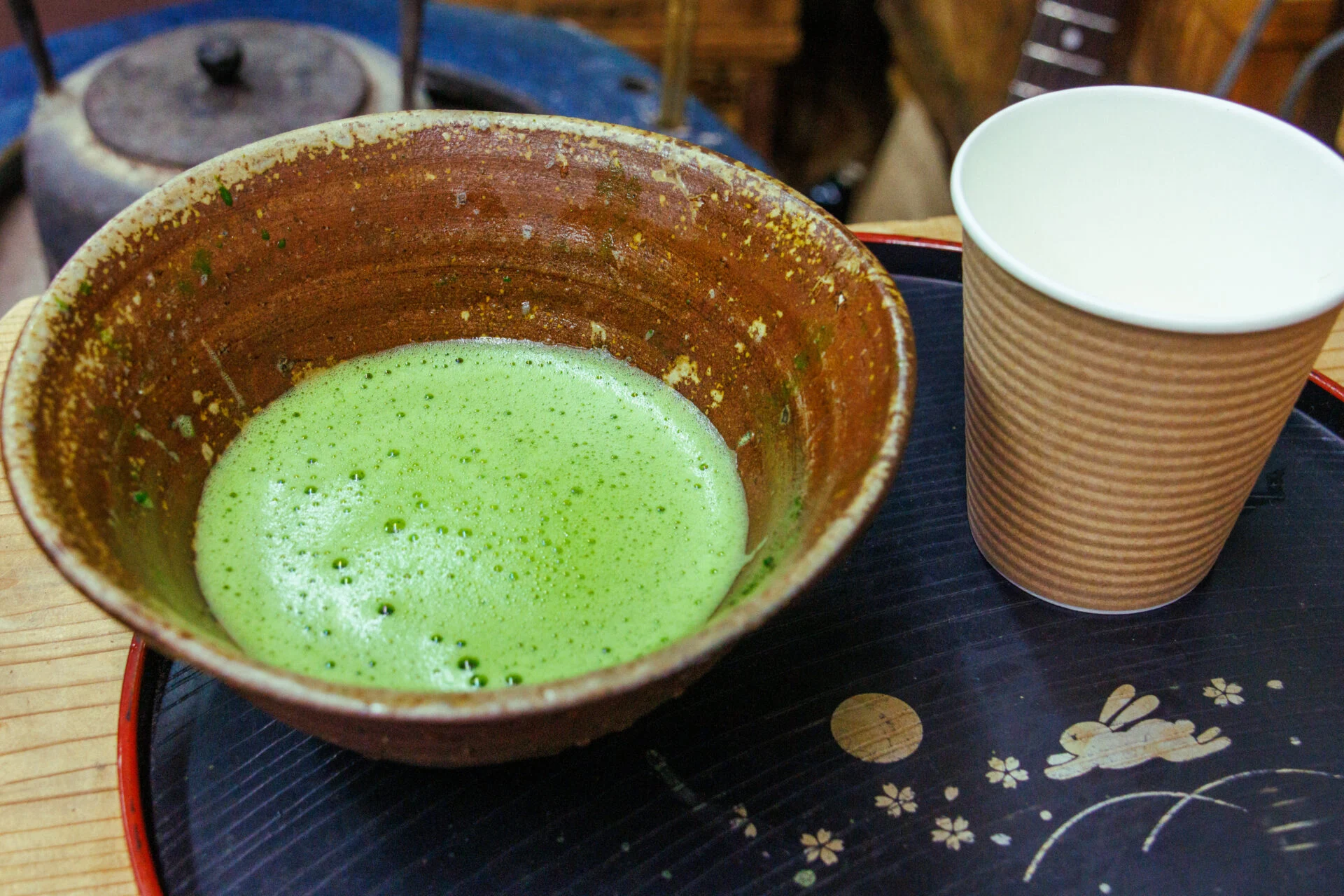
I learned from the previously interviewed "Tsuneki Chaho" that there is a Bizen pottery artist active in Asakuchi City, and meeting Tsuneki at the "Umi no Ichi" held in April 2026 led to this interview.
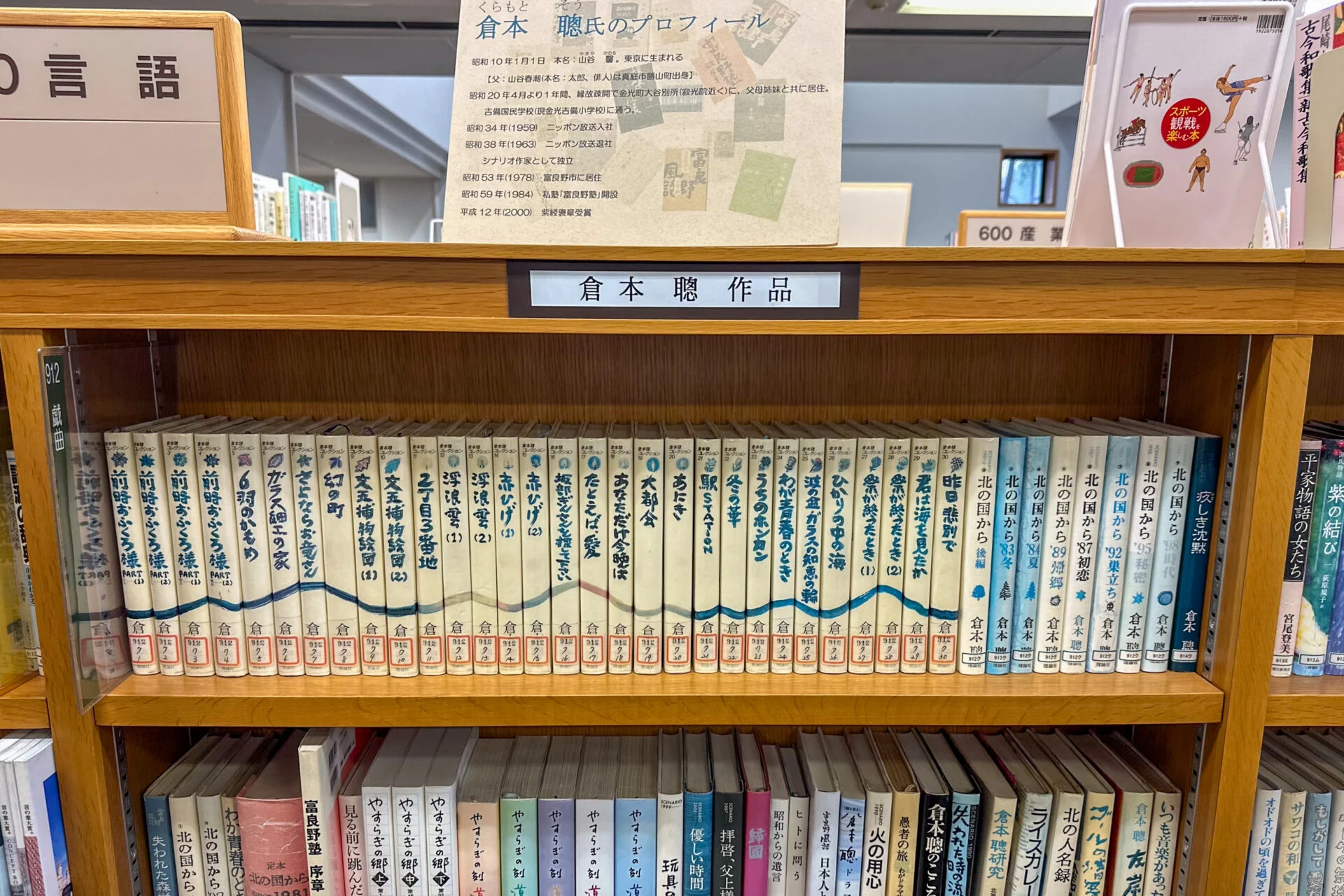
Additionally, Asakuchi City, where Tsuneki currently bases her activities, is the place where Kuramoto So, the scriptwriter of the famous drama "Kita no Kuni kara," was evacuated during the war.
During my student days, I also had the experience of staying long-term in Furano City while working part-time at a melon farm in the Yamabe area. Although my industry is different from curry shops, I felt a sense of sympathy with Tsuneki's story, and it was a valuable experience to hear such a local story through the interview.
The independence in Furano City, guided by what seems like coincidence, and the move to Asakuchi City. I hope to continue adding fun and color to the lives of users through everyday Bizen pottery that embodies the "beauty of utility" nurtured in the northern land.
Data on Pottery Artist Tsuneki Naomame
| Name | Pottery Artist Tsuneki Naomame |
|---|---|
| Address | 849-2 Jitōjō, Kamogata-cho, Asakuchi City |
| Contact | TEL/Fax: 0865-44-3309 Mobile: 090-9758-6162 |
| Parking | Available |
| Business Hours | Since I may be away, please contact me in advance when visiting |
| Regular Holidays | Irregular holidays |
| Payment Methods |
|
| Website | Pottery Artist Tsuneki Naomame |