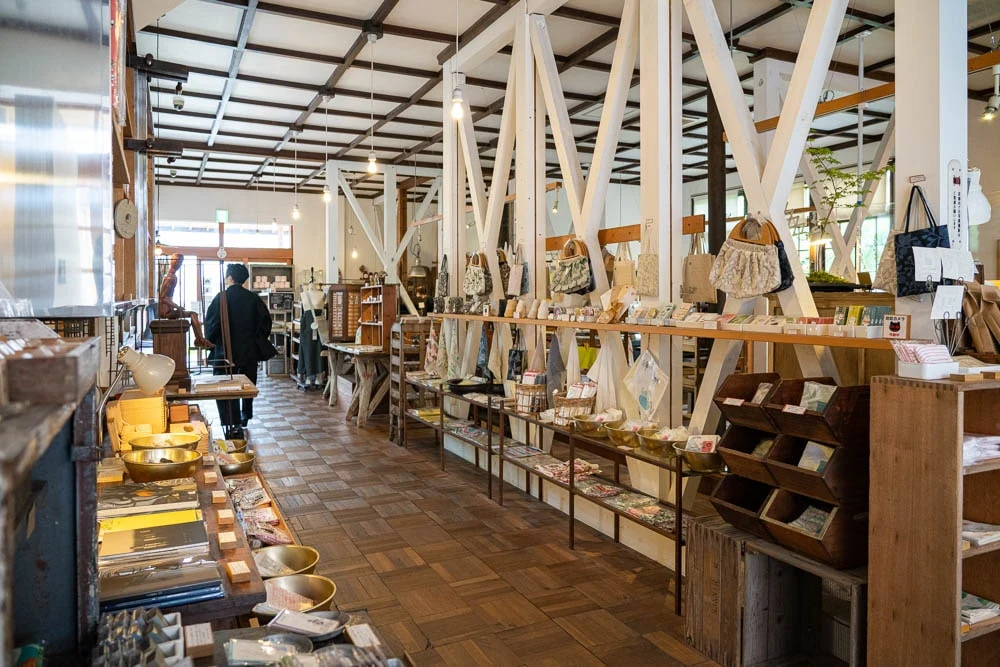
The household goods you love can enrich your life.
Your time at home can become more enjoyable with a favorite dish, or using a cute dishcloth can make you feel a little more positive about chores you dislike.
I love household goods, and until a few years ago I worked for a manufacturer that also sold them.
For me, one of the household-goods brands I’ve admired for years is Kurashiki Isho Keikakushitsu.
Here’s a look at Kurashiki Isho Atiburanti, the only directly operated store of Kurashiki Isho Keikakushitsu, filled with household goods you’ll grow attached to.
As of July 2021, the store is operating on reduced hours.
Hours: 11 a.m.–4 p.m.
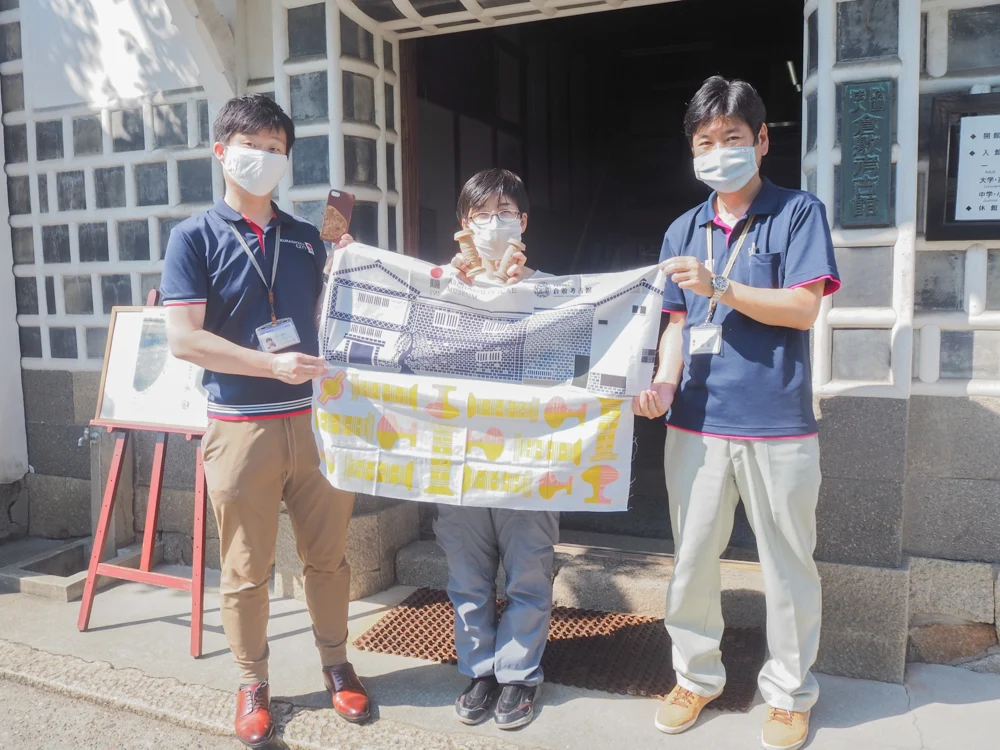
This article was photographed with special permission.
The information presented was current when this article was published in July 2021. Please note that it may differ from current information.
About Kurashiki Isho Atiburanti

Kurashiki Isho Atiburanti is the first and only directly operated store nationwide for household-goods makers Kurashiki Isho Keikakushitsu and Kurashiki Isho Bunshitsu.
Based in Kurashiki City, Kurashiki Isho Keikakushitsu plans and sells original items in collaboration with artists and small-factory artisans from across Japan.
Its products are sold wholesale to household-goods stores around Japan, so you may have picked one up without realizing it was made by Kurashiki Isho Keikakushitsu.

Kurashiki Isho Atiburanti is on the first floor of the main building of Hayashi Genjuro Shoten, a design marketplace for clothing, food, and living.
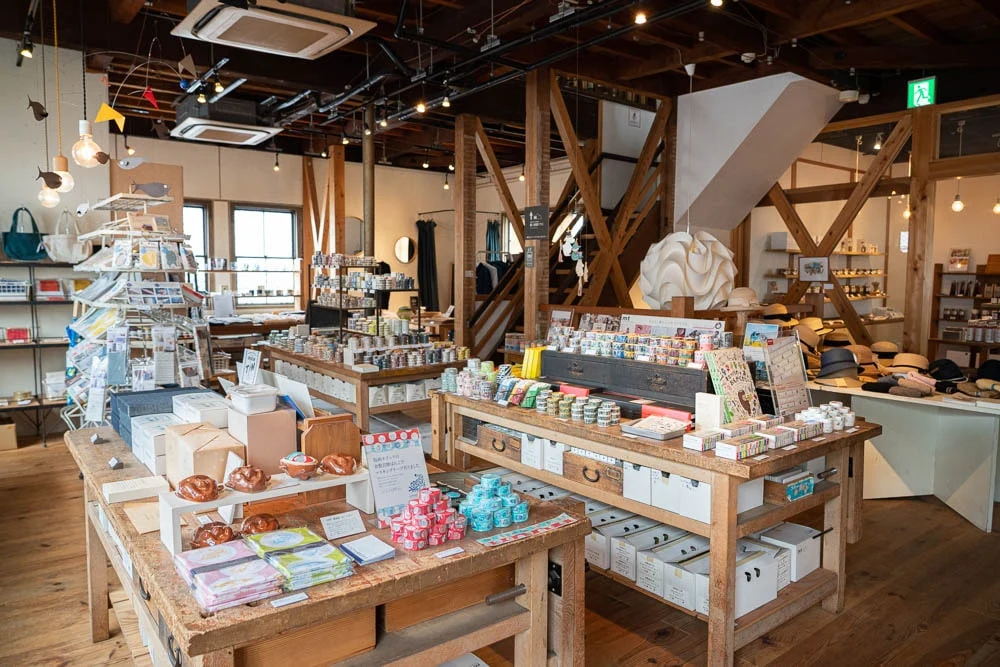
Hayashi Genjuro Shoten is a former pharmacy renovated to offer ideas for “a rich lifestyle.”
Kurashiki Isho Atiburanti, its flagship, has a calm appearance that blends naturally into the historic building.

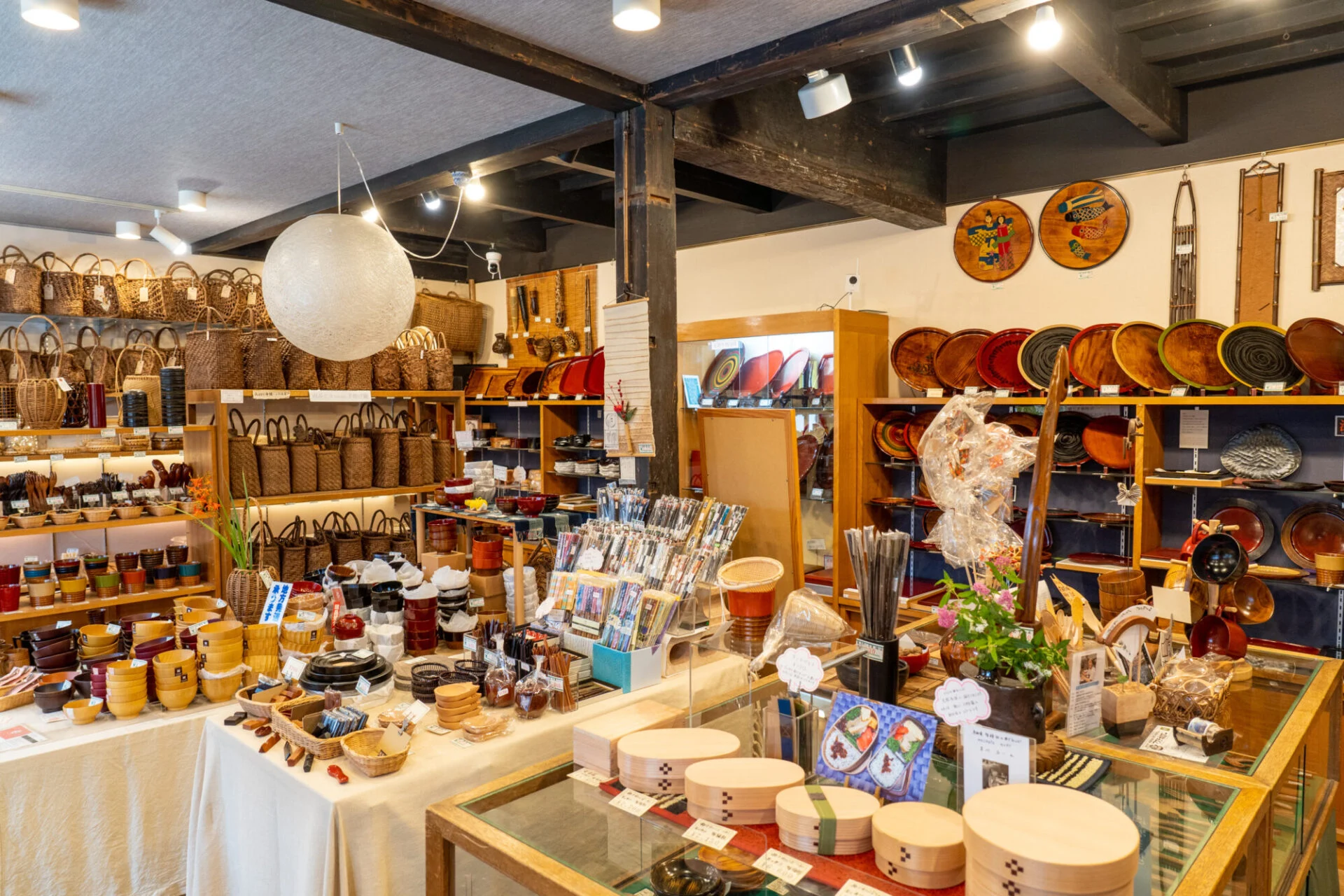
About 3,000 products are on display, most of them original items.
The store is made up of three spaces:
- A permanent space selling almost all items from both Kurashiki Isho Keikakushitsu and Kurashiki Isho Bunshitsu
- A gallery space hosting monthly exhibitions
- A workshop space that, from time to time, holds classes led by artists and creators from a range of fields
Features of products from Kurashiki Isho Keikakushitsu

Kurashiki Isho Atiburanti offers distinctive household goods and stationery made throughout Japan.
It creates many tasteful items, from comfortable pieces to humorous ones.
The products are planned by company representative Shinsuke Tanabe.

I first learned about Kurashiki Isho Keikakushitsu when I was a student.
I remember seeing its products featured in several magazines as “favorite household goods” of people I admired.
I was struck by the way the people who used them spoke about the products with such affection.

Kurashiki Isho Keikakushitsu has many fans throughout Japan.
There are many items that inspire affection through a connection with the maker’s passion—items you’ll want to use for years and talk about.
A look at some products from Kurashiki Isho Keikakushitsu
What kinds of items does it offer? Here are a few examples.
Copperplate-transfer plates

Toraneko Bonbon’s “Everyday, Ordinary Western Tableware” series consists of Western-style dishes with the sturdy shape used in restaurants; they feel a little heavy when held.
Being made for commercial use means they are durable and easy to handle.
They have a warm feel without looking clunky, and a timeless shape.
Many patterned plates currently on the market are made by applying glaze and firing the plate, then attaching a transfer sheet and firing it again at a low temperature.
The “Everyday, Ordinary Western Tableware” series by Toraneko Bonbon and katakata’s inban-de plates use a technique called “copperplate transfer.”
The design is printed in pigment on special Japanese paper, which is then moistened and applied by hand to the unglazed ceramic, transferring the design. The piece is then glazed and fired.
The range of colors is limited, but the designs won’t fade even after long use.

Because of the nature of copperplate transfer, if you look closely, you can see uneven coloring where the paper has wrinkled, as well as areas where the design has blurred.
Tanabe says, “I know there are many people who dislike products with scuffs or blurring. But we love the nuances created by the copperplate-transfer technique.”
The copperplate-transfer finish, which isn’t too perfect, felt pleasing to me.
Machine-embroidered bags

These bags are made by an artist who specializes in machine embroidery.
Works originally made as one-of-a-kind pieces have been recreated using machine embroidery.
Machine embroidery can normally reproduce the same design automatically using a program.
But here, the tension is deliberately thrown off by changing the thickness of the upper and lower threads.
The appeal lies in the puckered thread and little knots that form.
Each one has a slightly different look, so be sure to compare them in person at the store.

With ordinary machine embroidery, once the machine is set up, the work is completed without further attention.
But because the thread tension is deliberately thrown off in this series, the machine has to be stopped from time to time to check its progress, adding extra work.
Tanabe explained what makes them special:
“Even when something is made by machine, you can make the finish uneven. In a way, that too is a craftsperson’s skill. It takes extra work, but that technique gives the pieces a character different from ordinary, neatly sewn items.”

There were also hand towels and lunch-box wraps.
Garabo-spun towels

Garabo is a spinning machine invented in Japan in the early Meiji period.
Because it spins thread slowly, its efficiency is said to be less than one-hundredth that of modern spinning machines, and it cannot produce uniform, fine thread.
Thread made with a garabo machine is thick, irregularly bumpy, fuzzy, and loosely spun.
It is very similar to hand-spun thread.
In the days when garabo spinning was a mainstay, the unevenness of the thread was a drawback.
Now that uniform thread is readily available, many people instead find the “texture of garabo” appealing.
Almost all domestic factories that spun thread with garabo machines have now closed, and the factory that supplied Kurashiki Isho Keikakushitsu could no longer make the thread.
So the thread is now made at a factory in Laos that introduced Japanese garabo machines, then knitted into towels by a Japanese company.
These towels are highly absorbent and soft against the skin.
Invoices and office stamps

It may not be the most appropriate choice to feature a receipt when introducing products from a general goods store with so many unique and cute items.
But I think the existence of these kinds of understated items is one of the charms of Kurashiki Isho Planning Office.
On a personal note, one of the things I struggled with when I became a freelancer was finding a carbon-copy receipt for handwritten use.
Surprisingly, I couldn’t find an existing receipt that felt right for me.
There were very ordinary, businesslike ones, overly decorative ones, and girly ones.
I’m sure there’s demand for all of them, but I couldn’t really bring myself to like any of them.
After researching lots of information online, the one that made me think, “This is it,” was a receipt from Kurashiki Isho Planning Office.
It isn’t overly decorative; it’s simple, easy to understand, and has nothing I dislike. It’s carbon-copy and comes with a backing board.
For me, it was the perfect receipt: just right and meeting all my requirements.
Kurashiki Isho offers several types of forms, including different shapes and English- and Japanese-language versions, as well as payment records and reservation forms.

In our daily lives, aren’t there tools that are niche but necessary, and that make us think, “I don’t want to use a product I don’t like”?
I’m very grateful that even for inconspicuous products, you can find tasteful items that make you think, “I’d like to use this.”
How are Kurashiki Isho’s appealing products created?
We spoke with representative Tanabe about the origins and vision of Kurashiki Isho Planning Office and Kurashiki Isho Atiburanti.
Kurashiki Isho Atiburanti Information

| Name | Kurashiki Isho Atiburanti |
|---|---|
| Address | 1st floor, Hayashi Genjuro Shoten, 2-23-10 Achi, Kurashiki City, Okayama Prefecture |
| Contact | 086-441-7710 |
| Parking | None |
| Hours | 10:00 a.m.–6:00 p.m. (10:00 a.m.–5:00 p.m. on weekdays only, December–February) |
| Closed | Monday If Monday is a public holiday, closed Tuesday instead |
| Payment methods |
|
| Website | Kurashiki Isho Atiburanti |

What would you like to know about Kurashiki?
Enter a word to search articles on this site