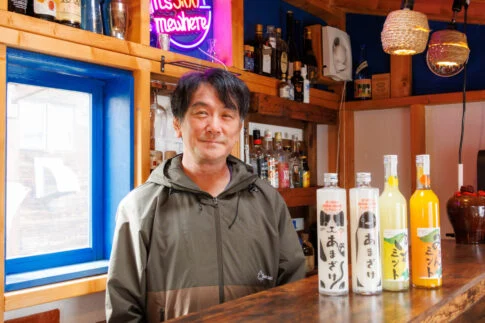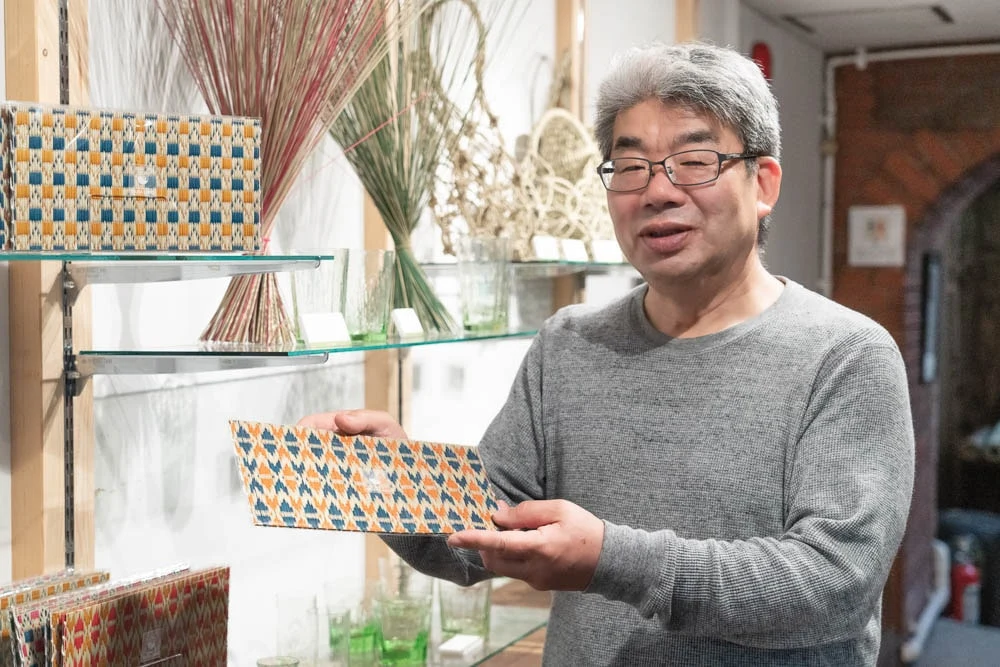
Interview with Kusuto Tomio
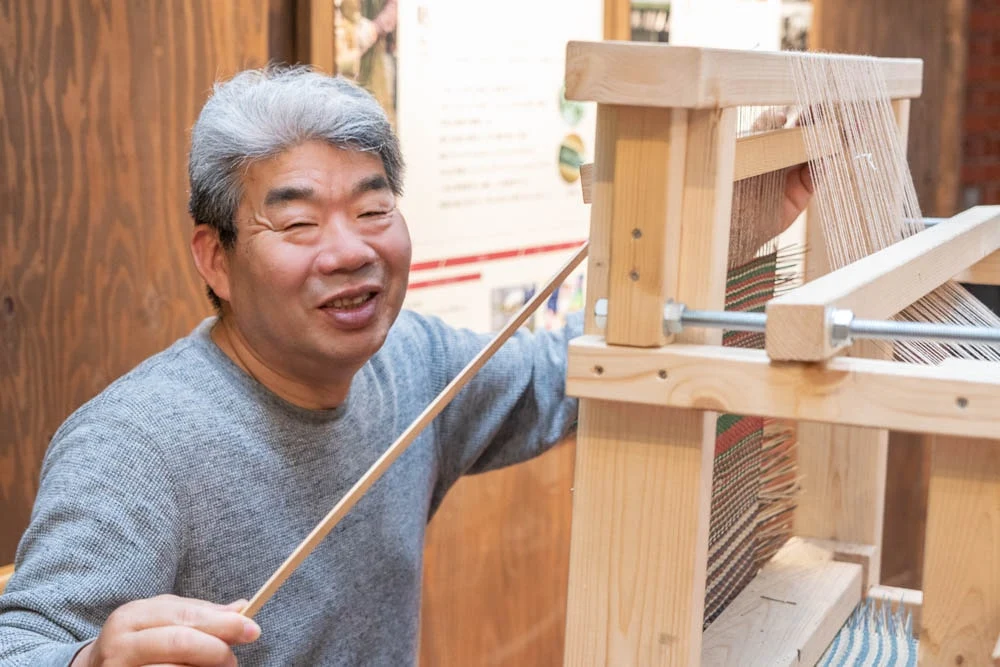
Why did you open an igusa shop?
Kusuto
Igusa was my family's business. We made tatami mats and also dealt in igusa.
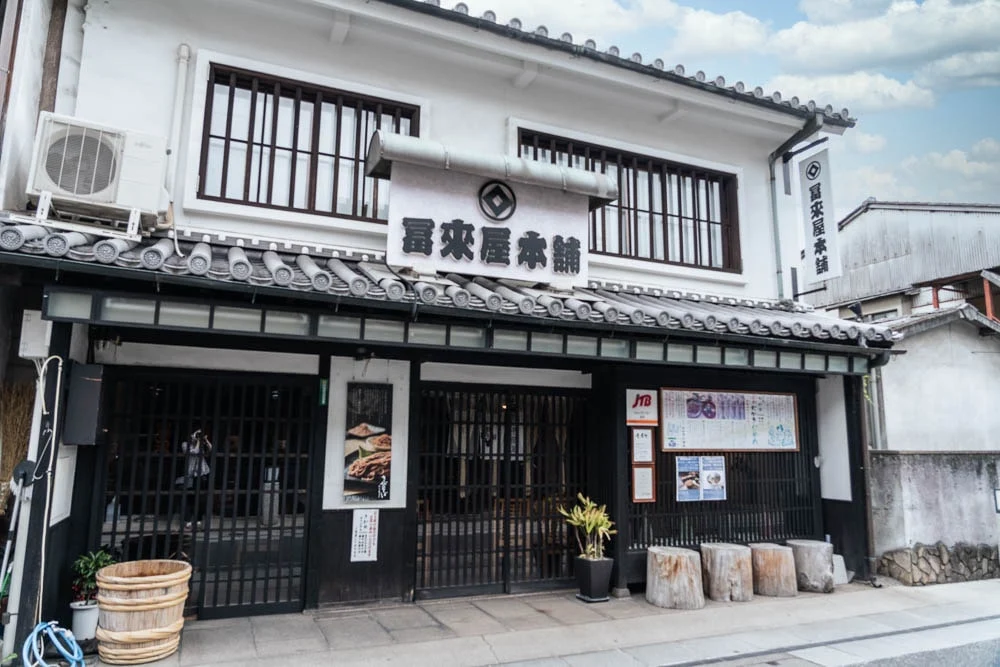
At "Tomikuyahonten," we convey local products.
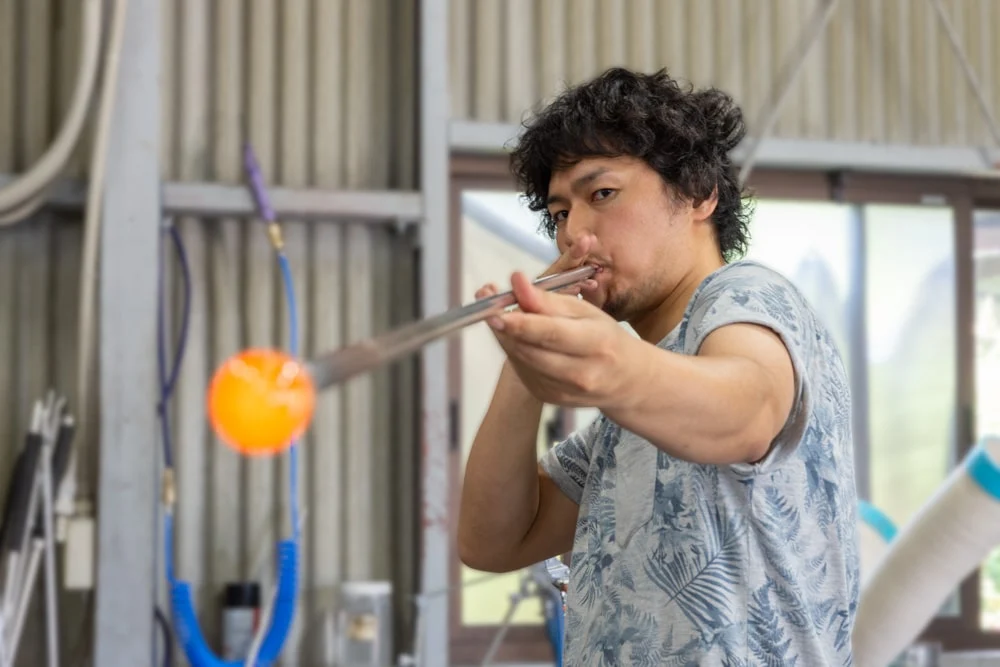
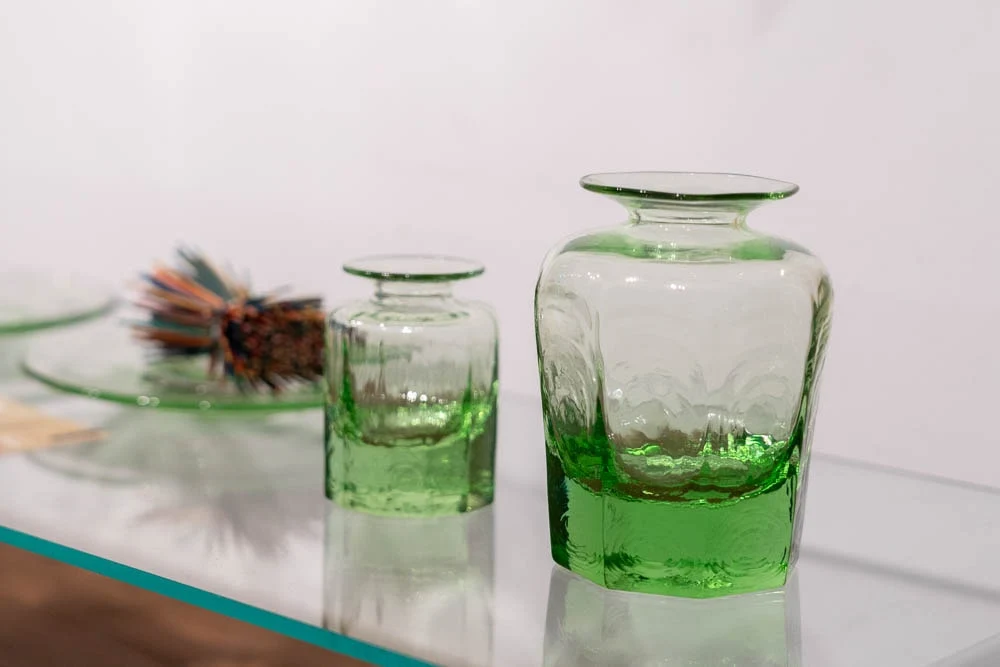
In the autumn of 2019, I learned about IGUSA GLASS and fell in love at first sight. From there, I found out that Toshifumi Imayoshi of "IGUSA LABO" is doing "preserving the old," and I thought it was similar to what we are doing.
I wanted people to know about igusa in Kurashiki and Hayashima again, so I started this.
The production and processing of igusa are rapidly disappearing from Kurashiki, and it is limited even in Japan. We must preserve it.
Currently, the only person cultivating igusa that can be distributed as a product in Kurashiki is Toshifumi Imayoshi of IGUSA LABO.
IGUSA LABO handles everything from the cultivation of igusa to the manufacturing of igusa products. They grow, process, weave, and sell, embodying "one person, six industries."
I want everyone to help promote igusa, that’s what I think.

What was igusa production like in the past?
Kusuto
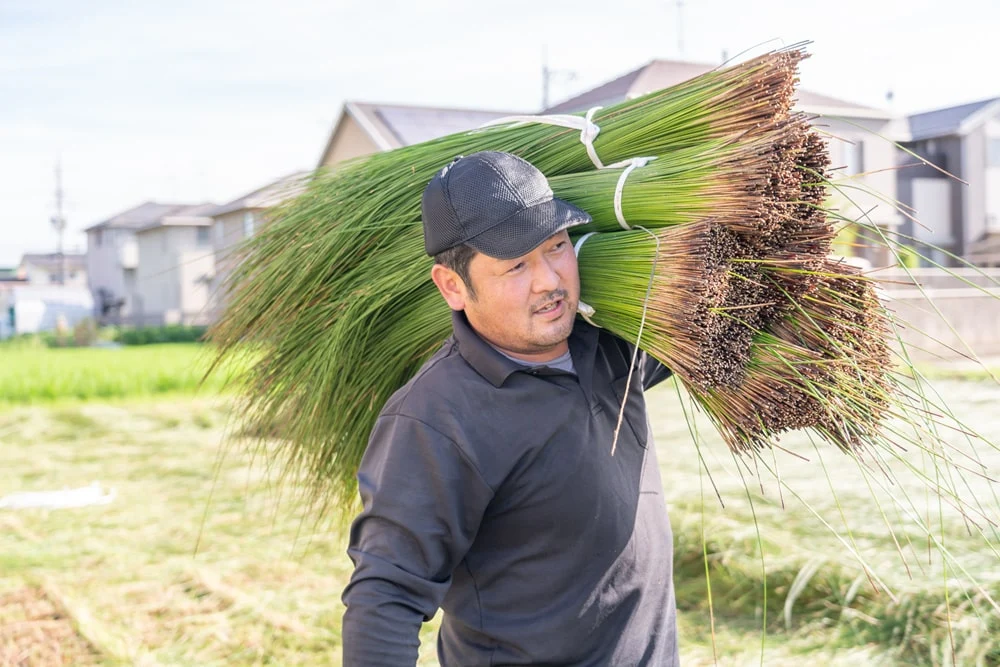
In my hometown, every household was producing igusa. The roads were lined with igusa, to the point where cars couldn't pass.
People from all over the country would come to help with the igusa harvesting. They would stay overnight. We had helpers coming from Kochi Prefecture.
Since we would host the helpers, families that produced igusa had large houses. The many mansions in Hayashima Town were also because they were igusa shops.
They worked from early morning until late at night, and it was lively back then.
There was even an "Igusa Division" at the prefectural office. There was a classification for "Hanaken industry."

It was that active, huh? When did it start to change?
Kusuto
The development of the Mizushima Industrial Complex during the Showa era was one of the triggers.
There were also issues with premature aging of igusa due to exhaust fumes, and difficulties in the work.
Producing igusa is very hard work. You plant it in the dead of winter and harvest it in the height of summer; it’s extremely labor-intensive.
Many parents thought it would be better for their children to work at the industrial complex, which seemed more stable, leading to an increase in businesses closing down.
The rise of igusa from Kyushu and overseas also contributed to the decline. Interestingly, it was people from Kurashiki who taught how to produce igusa to those in Kyushu and abroad.
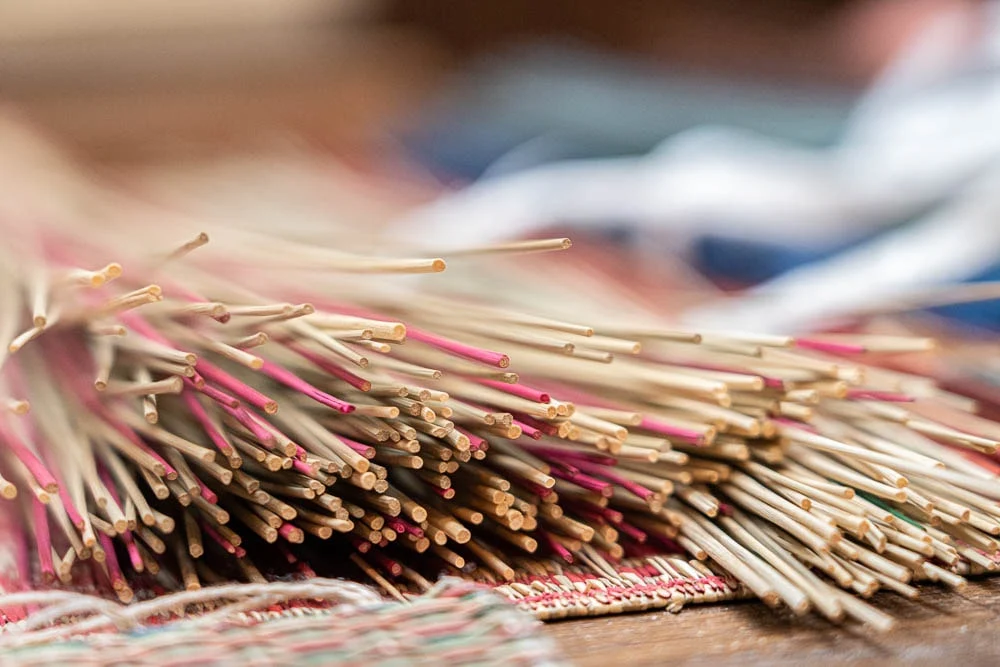
Even so, until around 1980, we were still selling domestically, and until around 2008, new mat exhibitions were being held.
In the Bikan Historical Area, many crafts were sold, but that has decreased now.
By around 2010, only a few shops were producing igusa in Kurashiki. The people who were responsible for production were born in the early Showa era. They are no longer at an age where they can continue such heavy labor for long.
If things continue like this, it will all disappear.
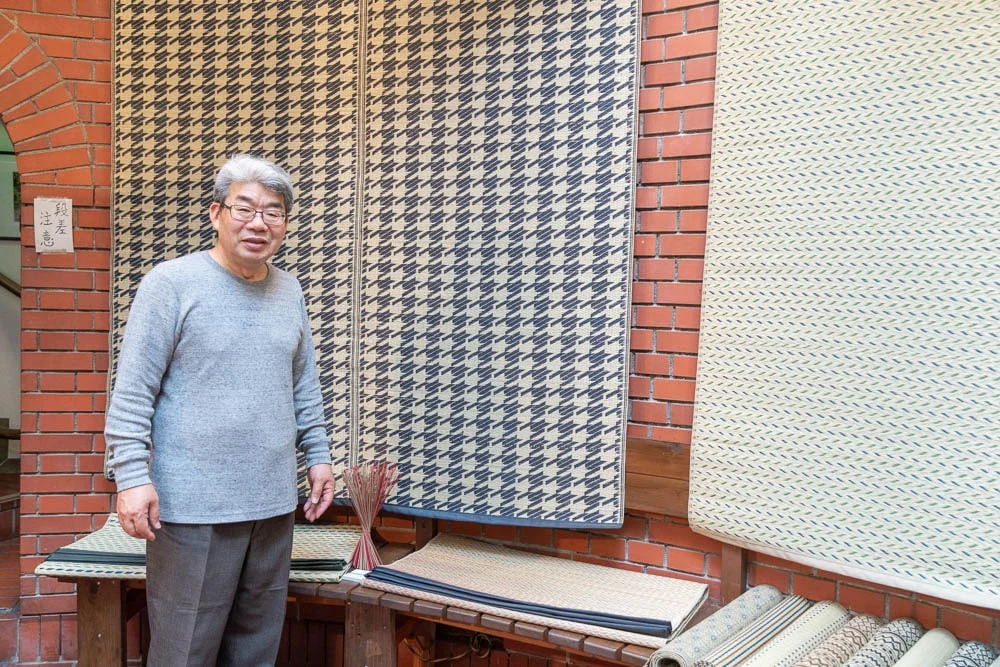
Lifestyle has changed, and opportunities to come into contact with tatami and igusa have decreased, right?
Kusuto
There are increasing numbers of homes without even one Japanese-style room, and even if there is a Japanese-style room, there are cases where synthetic fibers are used.
Igusa absorbs moisture in the summer and releases the moisture it has stored in the winter, helping to regulate the humidity in the room.
However, igusa is weak in sealed spaces, and if there is not good ventilation, it can accumulate too much moisture and develop mold.
But modern homes are highly sealed, and the tatami base is different. In the past, tatami bases were made of straw, but now they are made of polystyrene, so igusa cannot breathe.
It would be good to open the windows and let in the wind.
I believe that if the recognition of the benefits of igusa rises to a certain level, demand will increase compared to now.
Recently, there may be children who have never seen an actual mat. At "Hanaken," we make it possible to see and touch the real thing.

It's great to be able to see, touch, and smell it. Are there any characteristics of Kurashiki igusa?
Kusuto
The "Okayama No. 3" variety produced in Okayama is thick and sturdy, with a rugged feel.
The igusa made by Imayoshi is excellent. The inner sponge is firm. Especially the sleeping mats are top quality. You can only understand it by touching it.
What do you think is the charm of igusa?
Kusuto
Perhaps it’s the ability to "lie down" anywhere.
Even in the dead of winter, it’s not that cold, and it feels pleasant on the skin in any season.
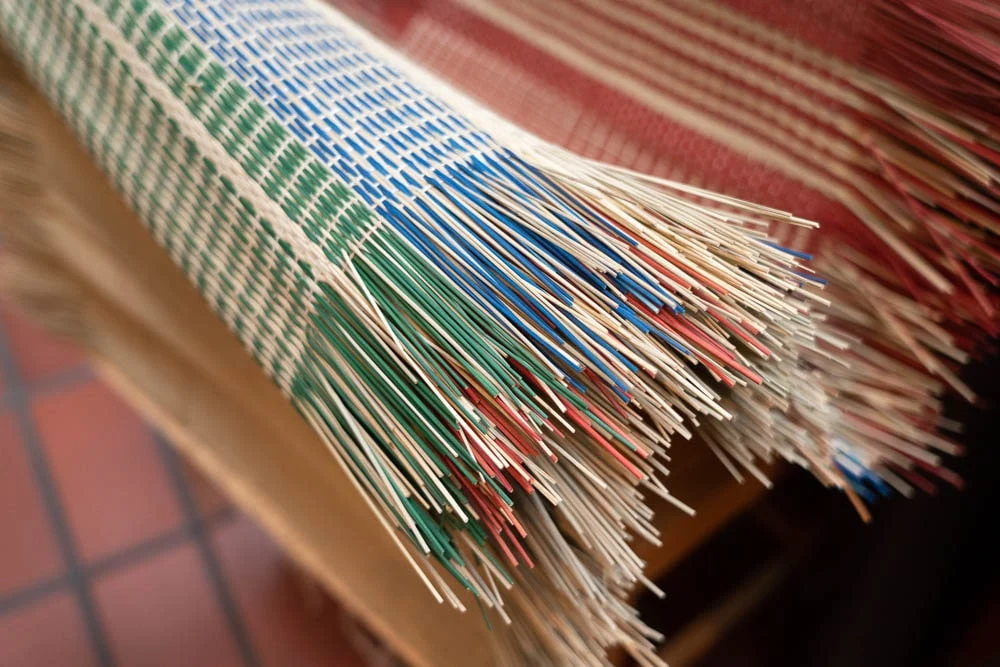
It opened in March 2020, but the impact of the COVID-19 pandemic has been significant, right?
Kusuto
There are no tourists. But I feel that because of this situation, it has been good in a way.
We have been able to take our time to think about what the shop should be like.
If we had been operating, we wouldn’t have had the luxury to think deeply, and we might have ended up being just an ordinary souvenir shop. I see it as a gift of time.
Is there something you want to convey?
Kusuto
I want people to know that Kurashiki was a city of hanagosa.
I think it’s best for children to touch it. That way, it will connect to the future.
Please do try to touch the real thing.
Incorporating Igusa into Daily Life

When you hear "igusa crafts," you might think, "Are they old-fashioned?"
However, many products are being made that feel sharp and modern, fitting into contemporary life.
The store, filled with the scent of igusa, seems to offer relaxation just by being there. I felt nostalgic and refreshed.
"Igusa-ya Hanaken" is a place filled with the desire to preserve culture.
Workshops are also recommended for families!
Please do visit "Igusa-ya Hanaken" and touch igusa.
Data on Igusa-ya Hanaken
| Name | Igusa-ya Hanaken |
|---|---|
| Address | 6-21 Honmachi, Kurashiki City |
| Contact | 086-427-0122 |
| Parking | None |
| Business Hours | 10:00 AM - 7:00 PM |
| Regular Holidays | Monday If Monday is a holiday, the following day |
| Payment Methods |
|
| Website | Igusa-ya Hanaken | Tomikuyahonten |