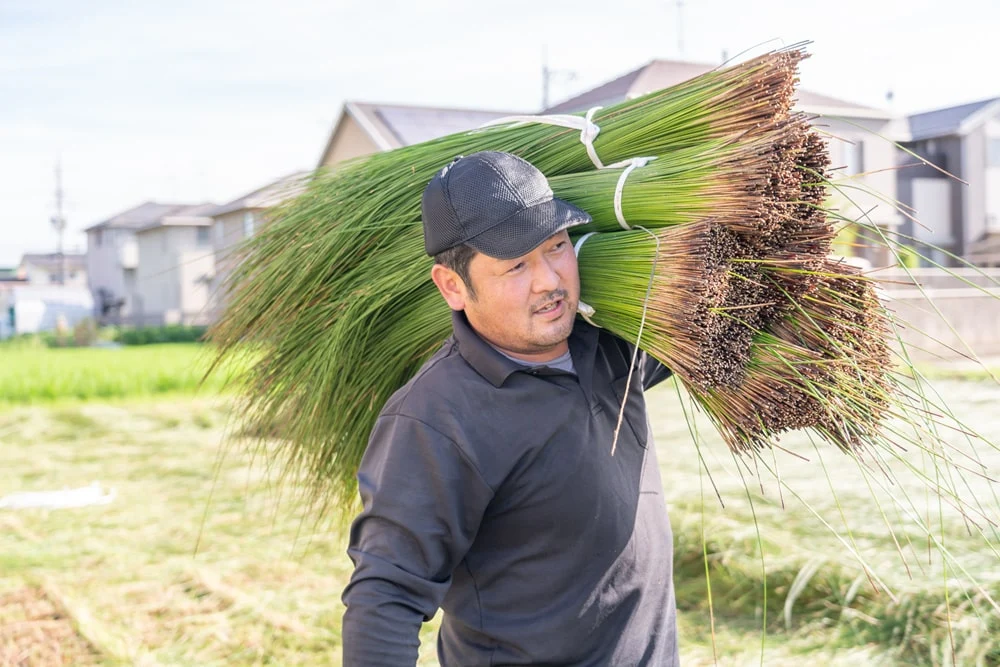
The southern part of Okayama Prefecture was once a major production area for "igusa" (rush grass).
Igusa is a plant used as a material for tatami mats and mats.
In Kurashiki, Mr. Imayoshi Toshifumi is cultivating, dyeing, weaving, and selling igusa nationwide.
He is working hard to carry on the igusa industry in Kurashiki, breaking down the traditional barriers of division of labor.
We thoroughly covered the harvesting, dyeing, and weaving of igusa.
We will introduce the brand "IGUSA LABO" established by Mr. Imayoshi and its activities.
What is IGUSA LABO?
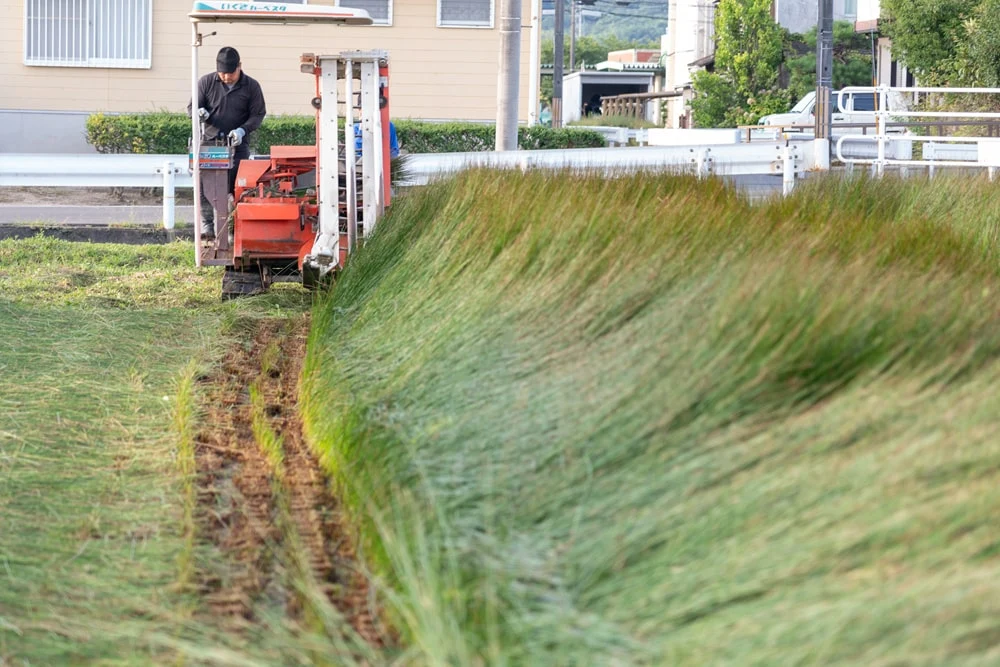
IGUSA LABO is a brand with the theme of "Bringing igusa into everyday life".
Mr. Imayoshi personally cultivates igusa and finishes the final products himself.
Mr. Imayoshi is the fifth generation of "Kurashiki Igusa Imayoshi Shoten," which manufactures igusa products, and the representative of IGUSA LABO.
He believes that "the cultivation and processing techniques related to igusa must not be lost" and creates products with great care.
IGUSA LABO's sleeping mat
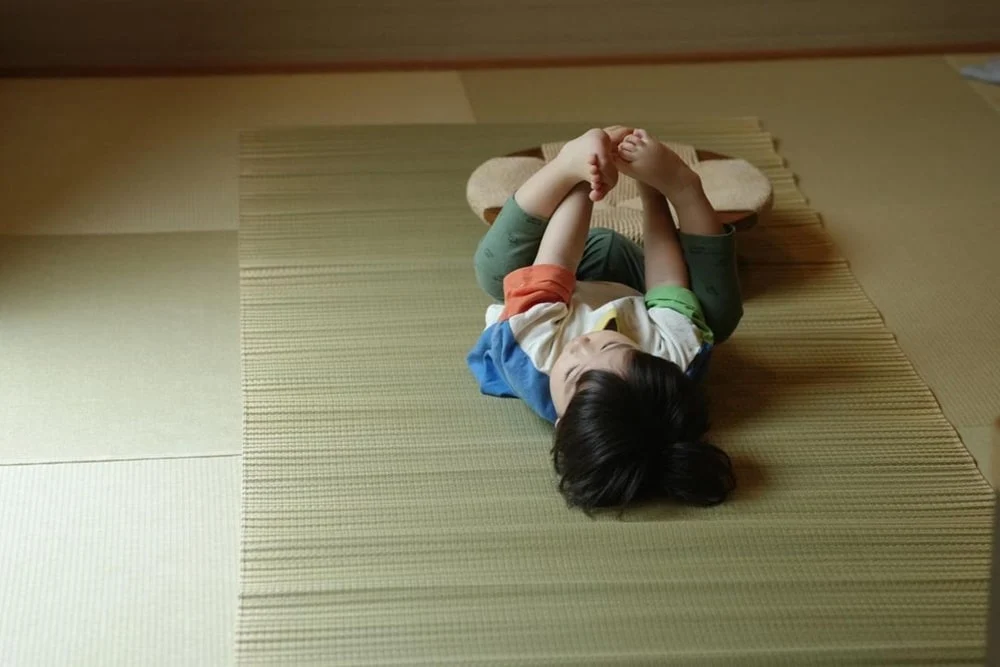
IGUSA LABO's recommended product is the "sleeping mat".
The "sleeping mat" is a woven igusa fabric placed on top of a futon to sleep on.
It has high moisture absorption, making it great for absorbing sweat, and features a refreshing texture.
It is said that the scent of igusa enhances relaxation.
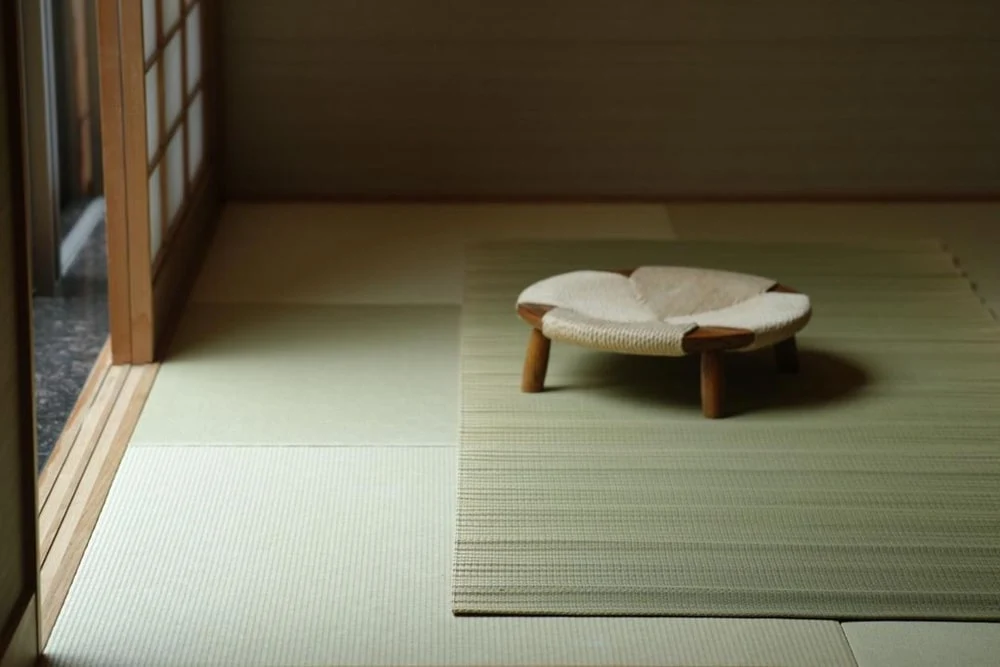
The igusa used in IGUSA LABO's sleeping mat is cultivated in rice fields managed by Mr. Imayoshi, using fertilizers and pesticides that meet food regulations.
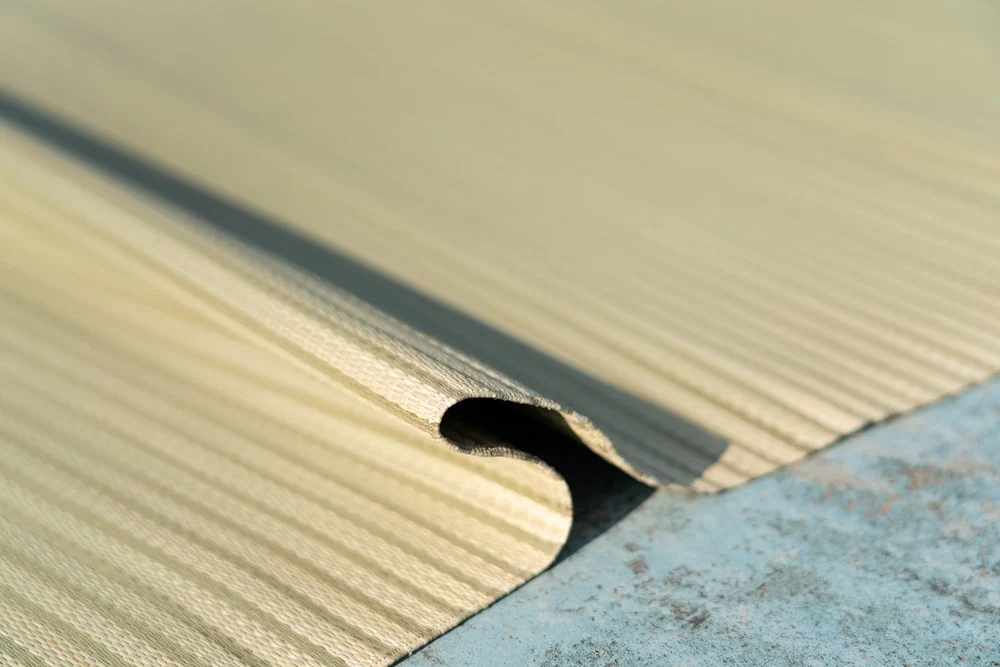
Can you see the striped pattern?
This pattern also utilizes the natural color differences between the base and the tips of the igusa.
Furthermore, they do not perform the process of "doro-zome" (mud dyeing), which is usually applied in igusa processing.
Doro-zome is the process of soaking igusa in mud to enhance color.
It softens discoloration caused by sun exposure and increases the durability of igusa.
However, when doro-zome is done, fine "sen-do" (dyeing soil) powder scatters during the processing stage.
It is said that many igusa producers develop lung diseases due to the damage caused by the dyeing soil.
When doro-zome is performed, a small amount of dyeing soil remains in the product.
Mr. Imayoshi thinks, "I want to use as healthy materials as possible," and at IGUSA LABO, they use non-dyeing soil, meaning only igusa that has not been mud-dyed.
The sleeping mat made from "non-dyeing soil" igusa retains the original texture of igusa, and feels pleasant to the touch.
Additionally, because it is woven using a special loom, it gently conforms to the body.
Since it directly touches the skin in hot seasons, it is safe to use and is a sleeping mat made with a focus on maximizing the benefits of igusa.
How to buy IGUSA LABO products
At Igusa-ya Kaen located in the Bikan Historical Area, you can find a variety of IGUSA LABO products, from sleeping mats and decorative mats to café mats and coasters.
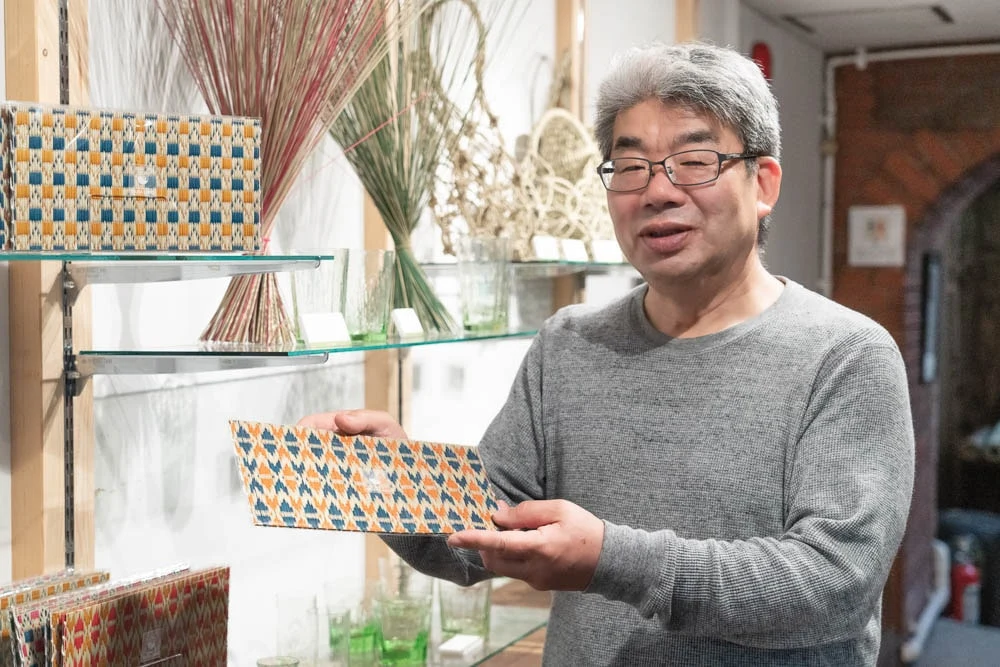
When we interviewed Kaen's manager, Kusudo, he said the following:
"The igusa made by Mr. Imayoshi is great. The inner sponge is firm. Especially the sleeping mat is top quality. You only understand it when you touch it."
Some products are also available at the IGUSA LABO online shop, but please be sure to touch the actual products at "Igusa-ya Kaen."
The history of igusa and mats in Okayama and Kurashiki
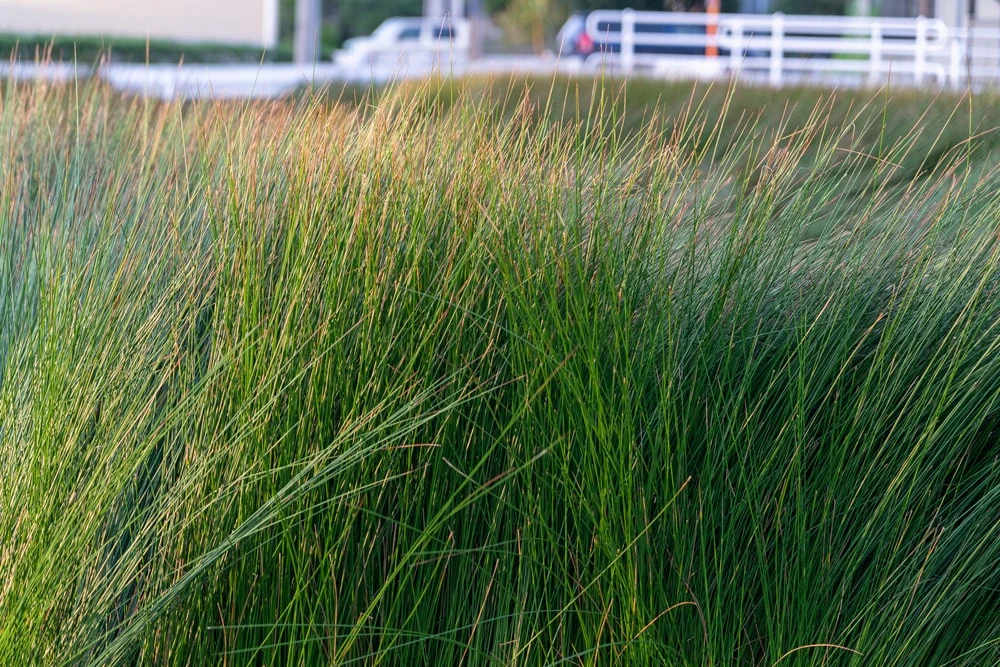
The history of igusa in Kurashiki dates back about 1800 years to the end of the Yayoi period.
There is a legend that "Empress Jingu stopped by a shrine in the Sho district of Kurashiki City, and when she had a mat woven from the beautiful grass growing nearby, she was very pleased," and it is said that this grass was igusa.
Let me briefly introduce the history of Okayama Prefecture and Kurashiki City with igusa and mats.
| Period | Event |
|---|---|
| Yayoi Period | Offering mats to Empress Jingu |
| Nara Period | Recognition of Bizen's igusa weaving techniques by the imperial court |
| Edo Period | Full-scale reclamation in Kurashiki. Cotton and igusa, which can grow in salt-rich land, are widely cultivated. The processed "tatami omote" (tatami mat surface) receives high praise nationwide along with "tatami beri" (tatami border). |
| Meiji Period | Establishment of dyeing techniques for igusa in Kurashiki, development of decorative mats. Became an export item recognized worldwide. |
| From Meiji to early Showa Period | Okayama Prefecture's igusa production volume becomes the highest in Japan. |
| Late Showa Period | Production volume in Okayama Prefecture decreases, peaking in 1964. |
"Hanagoza" refers to mats woven with patterns dyed with igusa.
The decorative mats that were born in Kurashiki grew to become an important export item to overseas by the Meiji period.
As of 2021, the production volume of igusa in Okayama Prefecture is small, but advanced processing techniques are still passed down in Kurashiki.
Observing the harvesting, dyeing, and weaving processes
Igusa is planted around December, harvested in July of the following year, and dried.
After that, the dried igusa is dyed and processed.
We covered the harvesting and drying in July and the dyeing and weaving processes in October.
Harvesting igusa

The work began at 4:30 in the morning.
The morning sun had just peeked out, and the surroundings were still quiet.
In the rice fields located in the Sho district of Kurashiki City, three people, including helpers, proceeded with the harvesting.
They remove the net that was placed to prevent the igusa from falling over and pull out the stakes.
They check the condition of the soil and determine where to harvest by hand and where to use machinery.
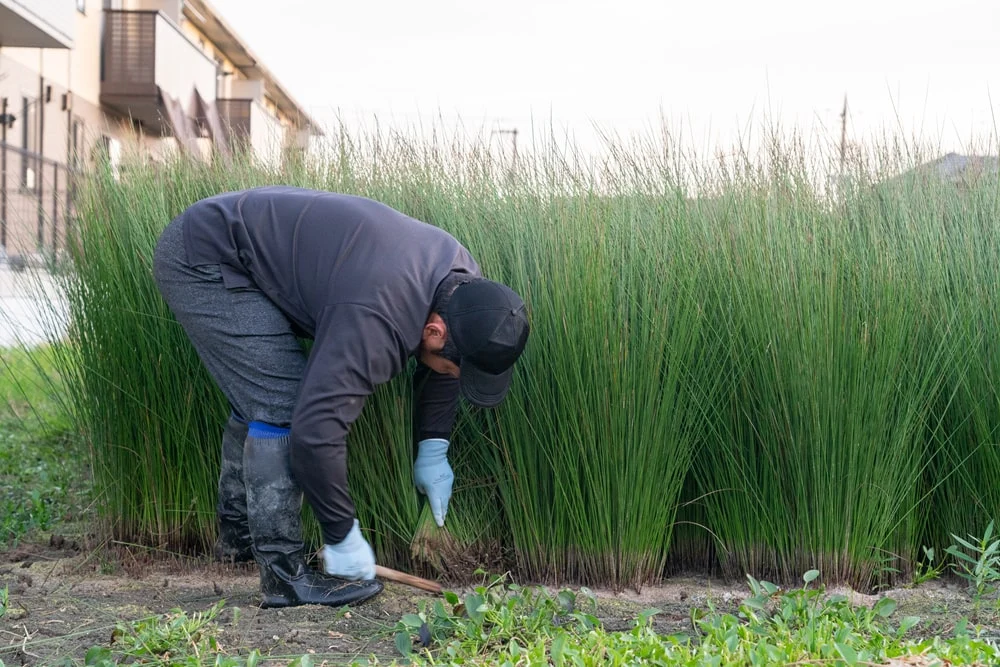
They started harvesting by hand first.
With a crisp sound, they quickly cut the igusa.
To avoid tangling the tips of the igusa, it seems that there is a trick to how the sickle is moved.
From the harvested bundles, they sift out those that do not meet a certain length and any weeds.
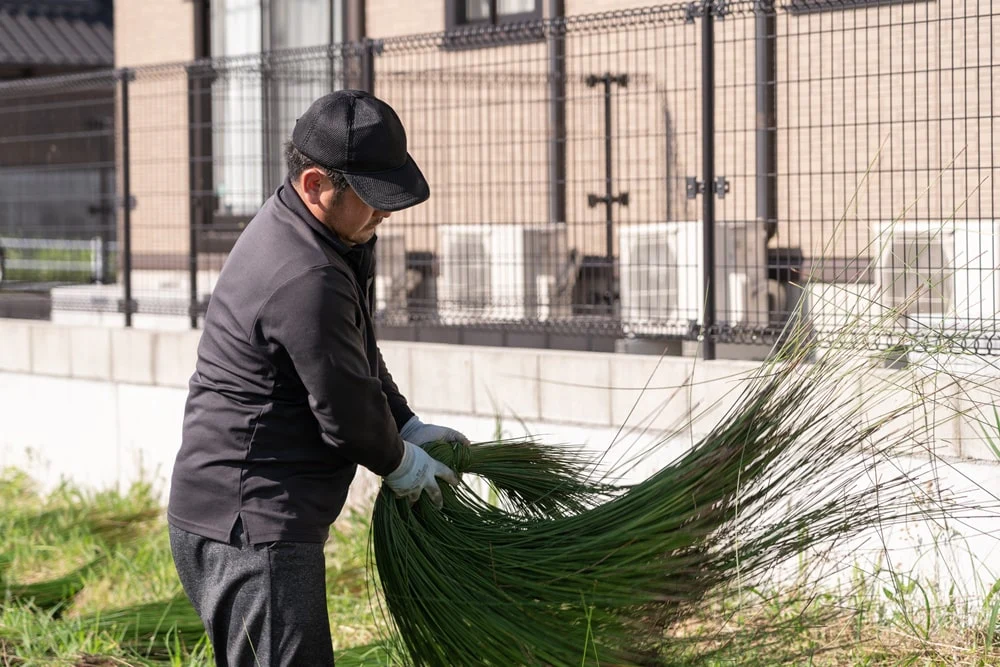
They tie the bundles of igusa together with string.
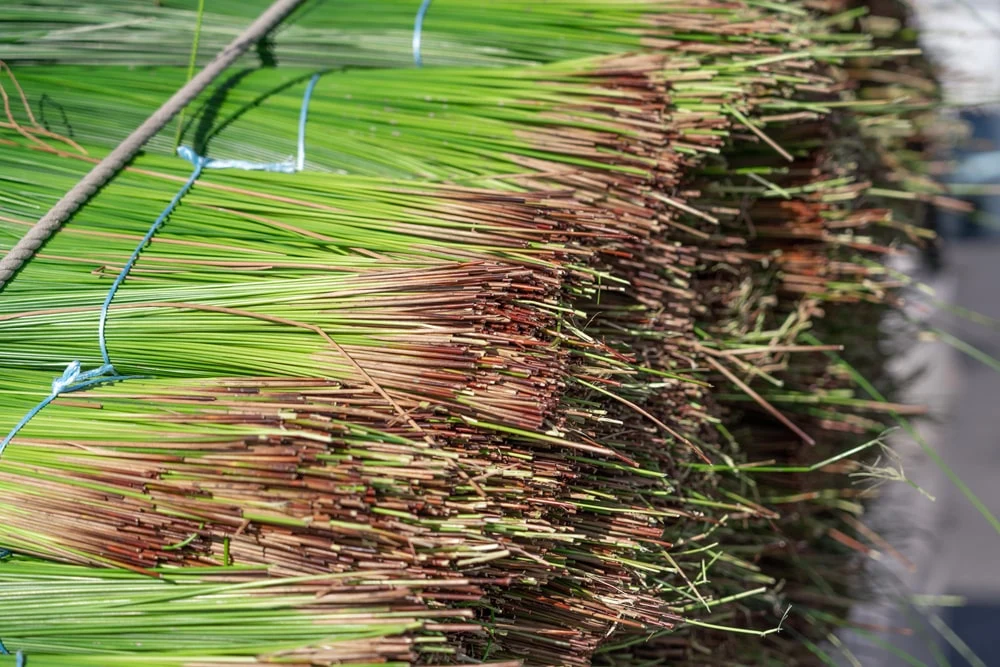
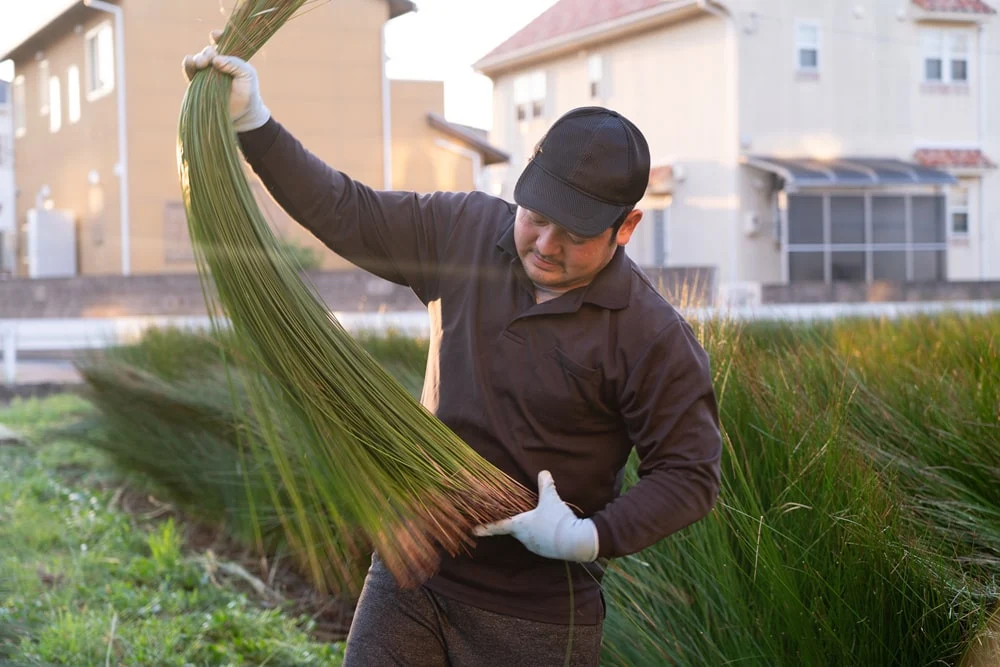
Freshly harvested igusa is a vibrant green.
When touched, it is full of moisture, glossy, and moist.
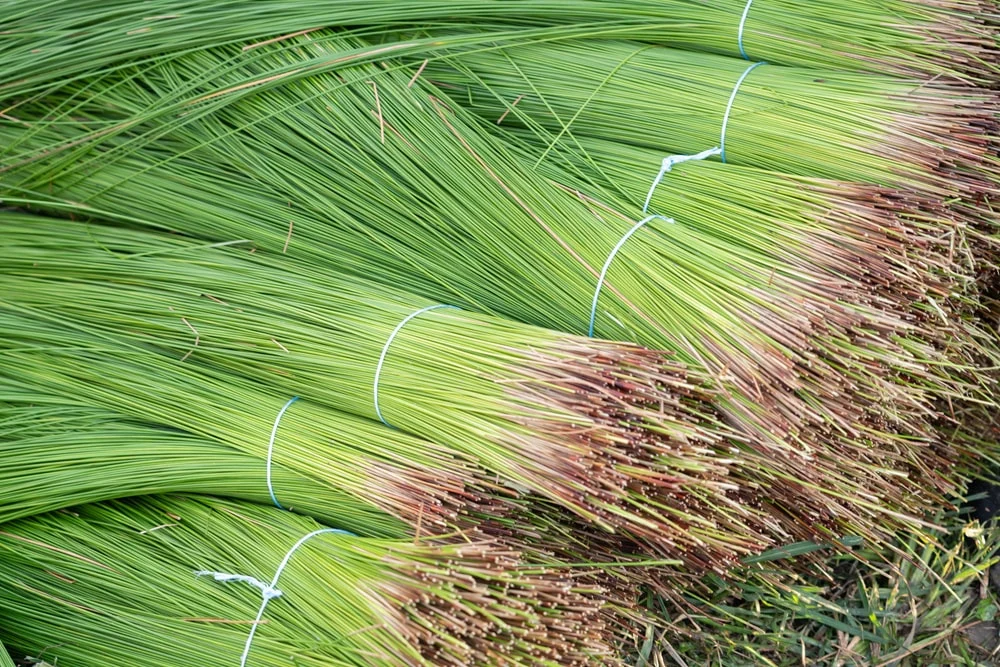
The mechanical harvesting selects the length while harvesting and automatically ties the bundles.
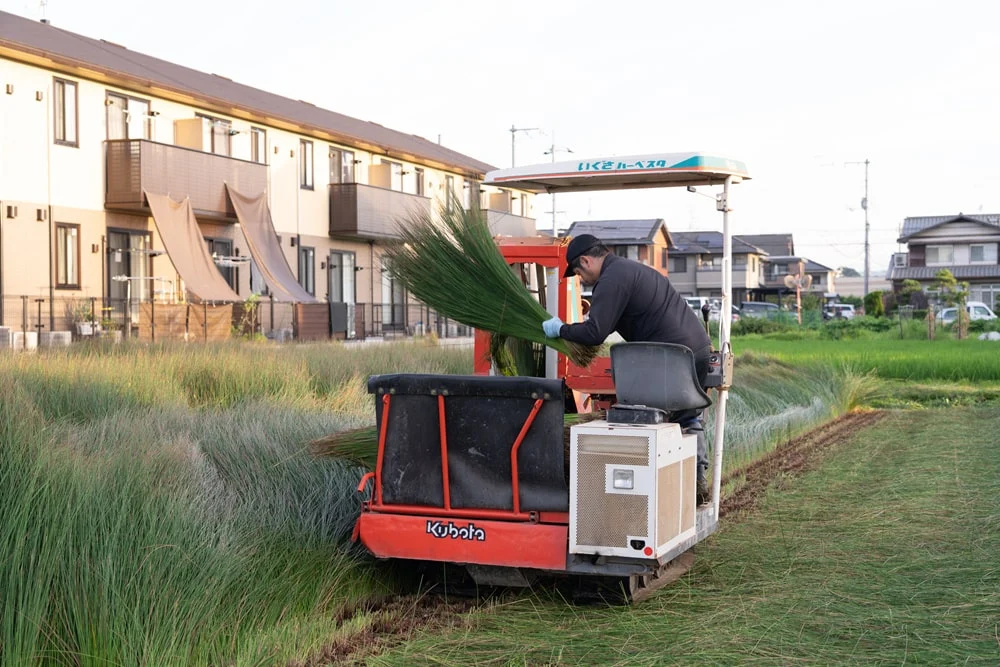
They load the bundles onto a truck and move them to a place with a dryer.
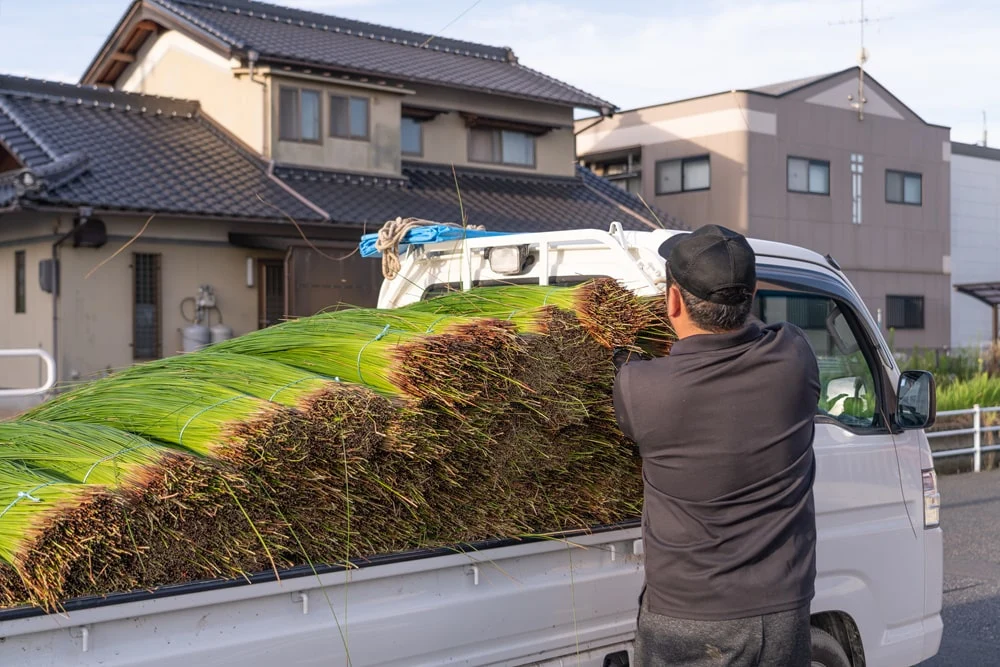
Generally, the mud dyeing process is done before drying.
Since IGUSA LABO does not perform mud dyeing, the harvested igusa goes directly to the dryer.
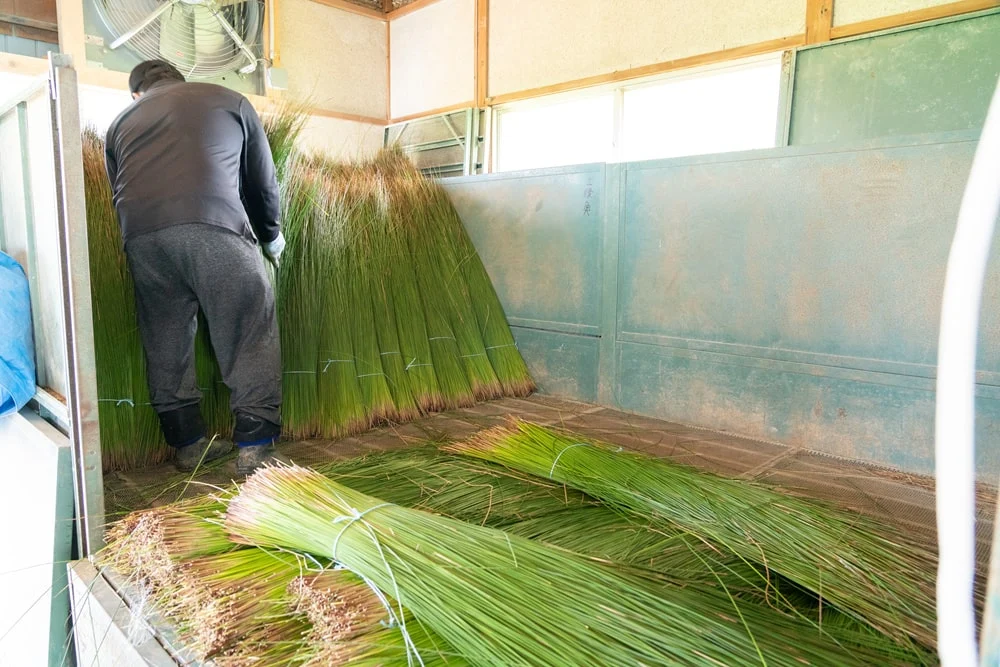
I stood the bundles up firmly so that the wind could pass through and laid them out.
They are dried slowly over time.
Some are dried in the sun.
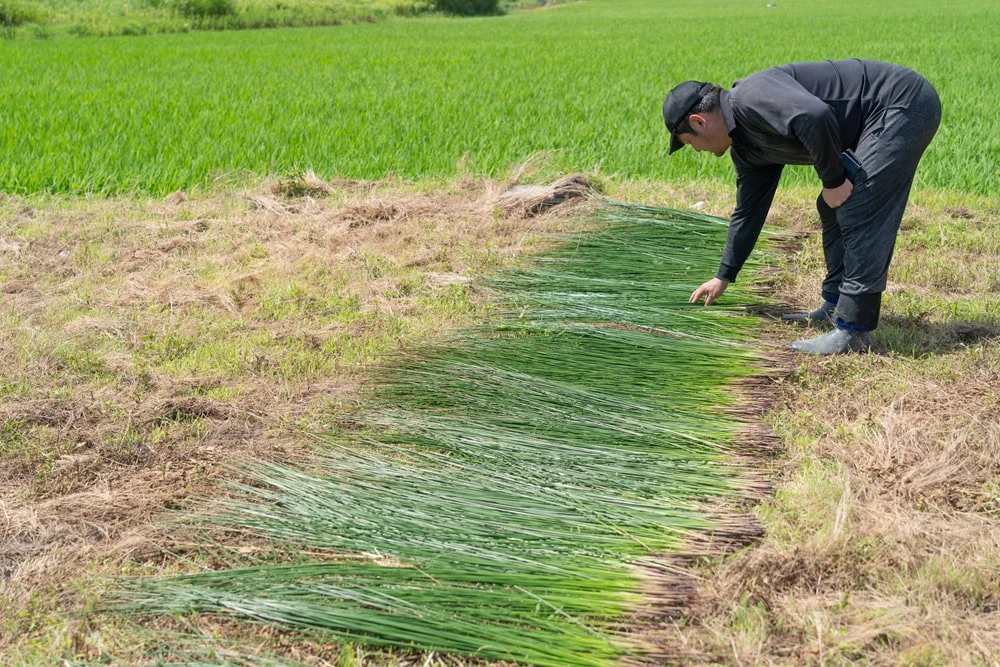
The grass I want to dry turns a greenish beige color like in the photo below and becomes crisp.
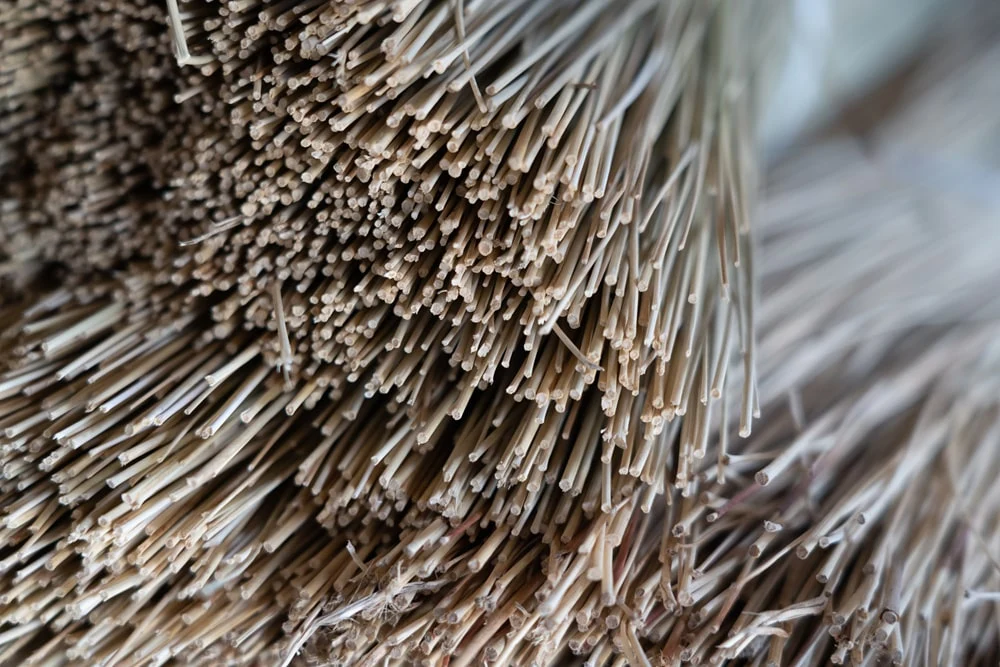
The harvesting and drying of the rush grass began early in the morning.
In the summer rice fields, bending over and carrying the rush grass, Mr. Imayoshi and his team were seriously facing the rush grass while wiping their sweat repeatedly.
Dyeing Rush Grass
In late October, I was shown the dyeing and weaving of rush grass at a workshop located in Nishiachi-cho, Kurashiki City.
On this day, they were dyeing it a light blue color.
The dye itself looked maroon and yellowish green. It was hard to imagine the finished color just by looking at the dye.
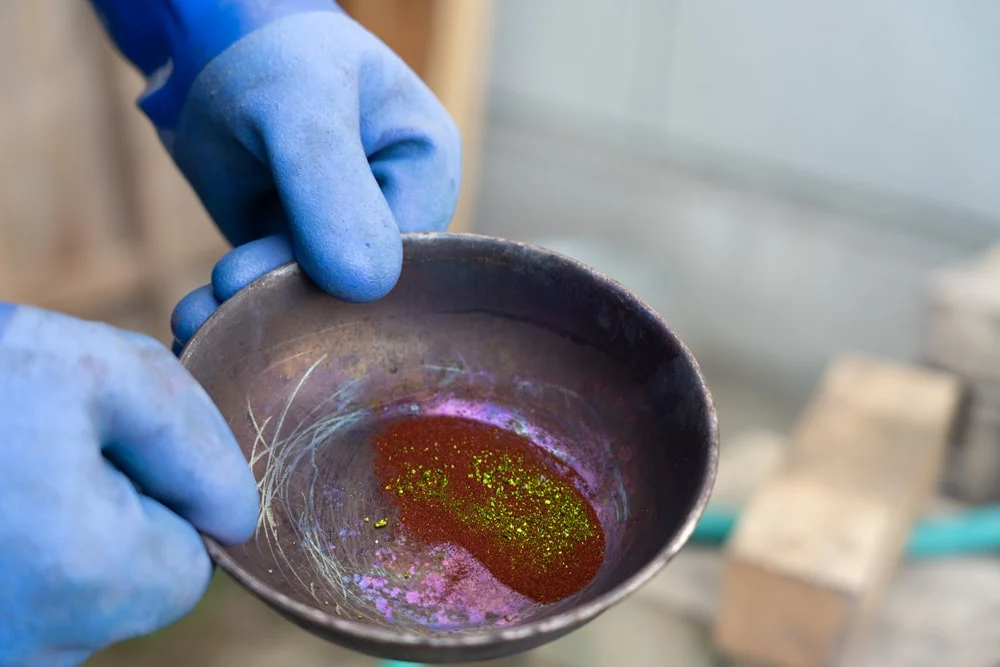
After dissolving the dye at hand, it is put into the kiln and mixed.
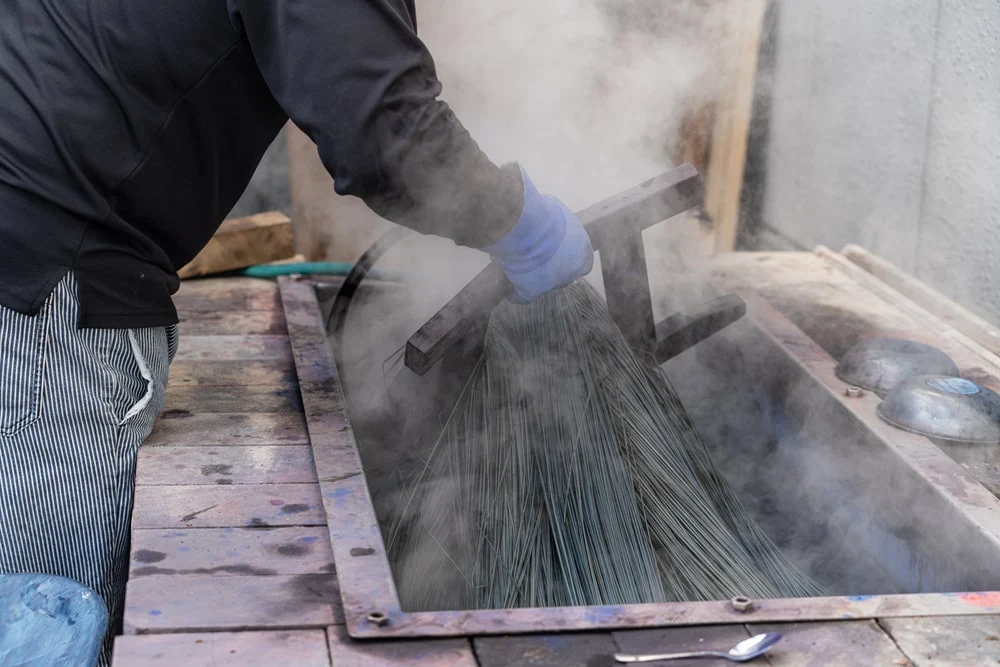
Bundles of dried rush grass are placed in the kiln, and the grass is moved to ensure even dyeing.
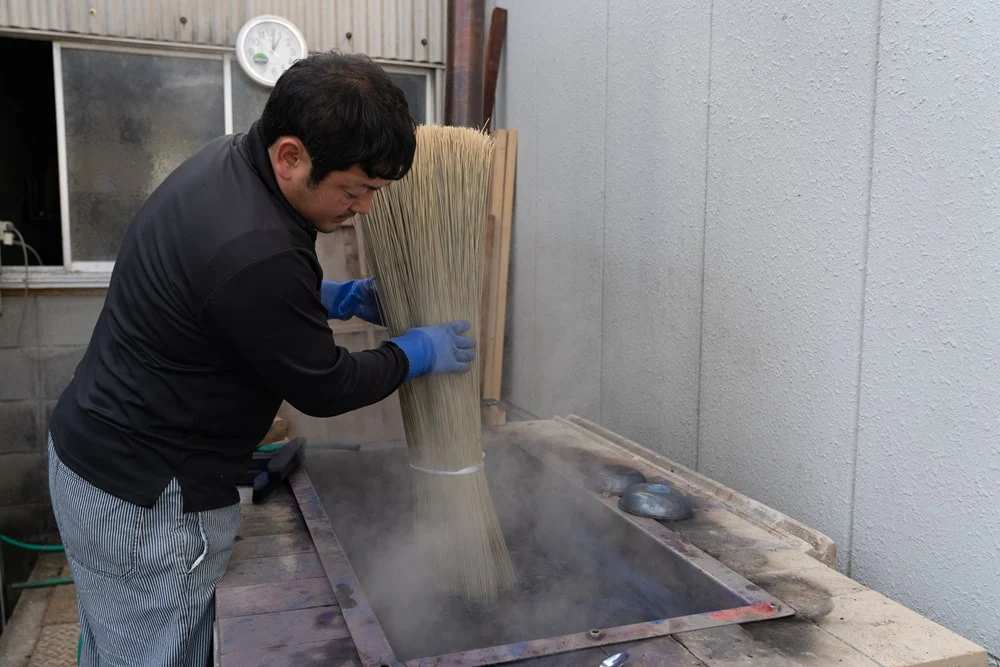
The dyeing process takes place amidst the steam rising up.
It looks very hot.
Once the rush grass is dyed, it is dried in the sun.
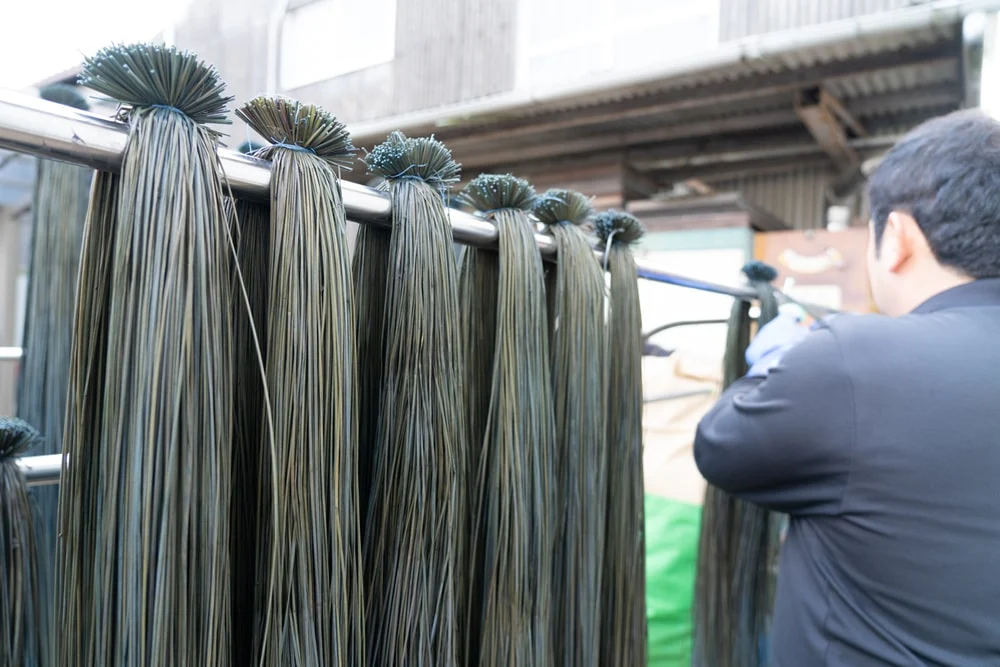
Generally, when dyeing rush grass, it is said to tie the base, but at IGUSA LABO, they tie the tips instead.
The reason is that the tied part will be cut off by several centimeters, so they try to keep as much of the sturdy base as possible for use.
Since they grow and process the rush grass themselves, they may be able to innovate without being bound by conventional methods.
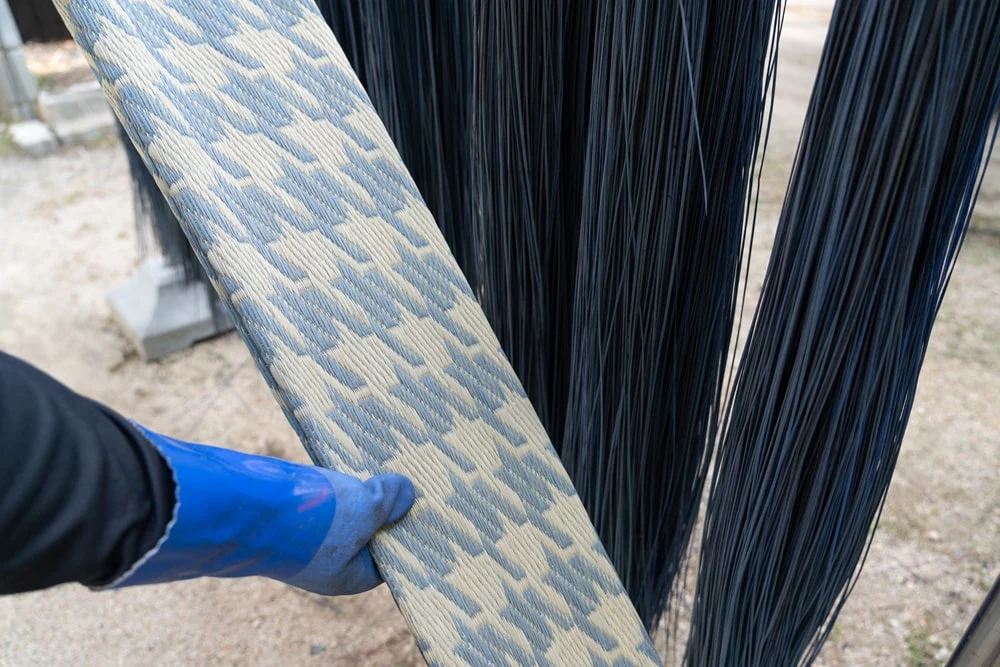
It is said that the color changes significantly between freshly dyed rush grass and dried rush grass.
The rush grass that is freshly dried, shown on the right side of the photo below, is said to turn the blue color of the hand-held tatami mat when dried.
Weaving Tatami Mats
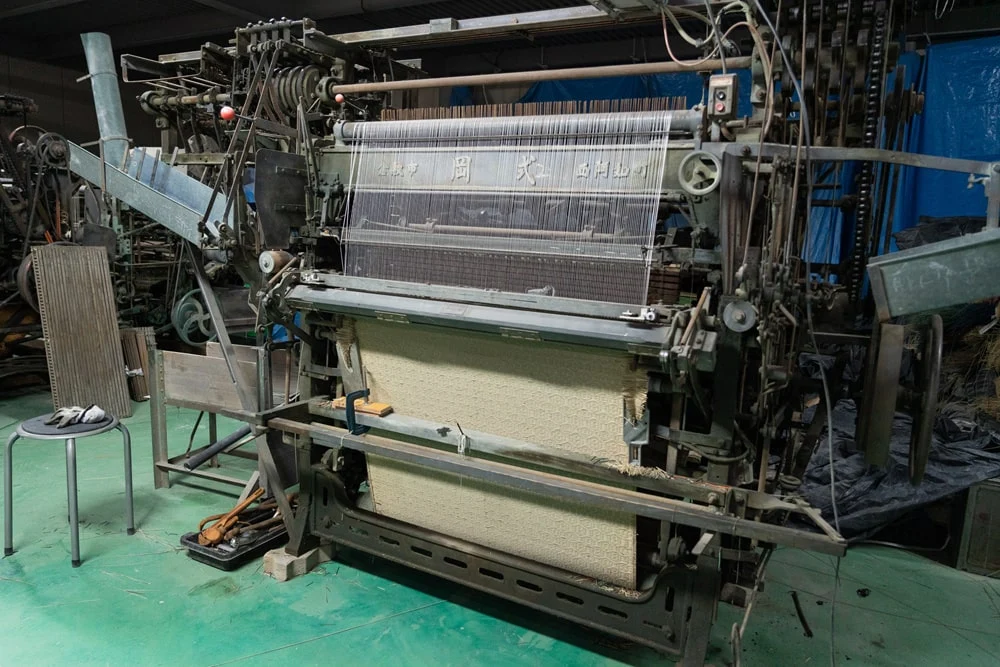
Next, I toured the workshop.
Inside the workshop, there are several weaving machines lined up.
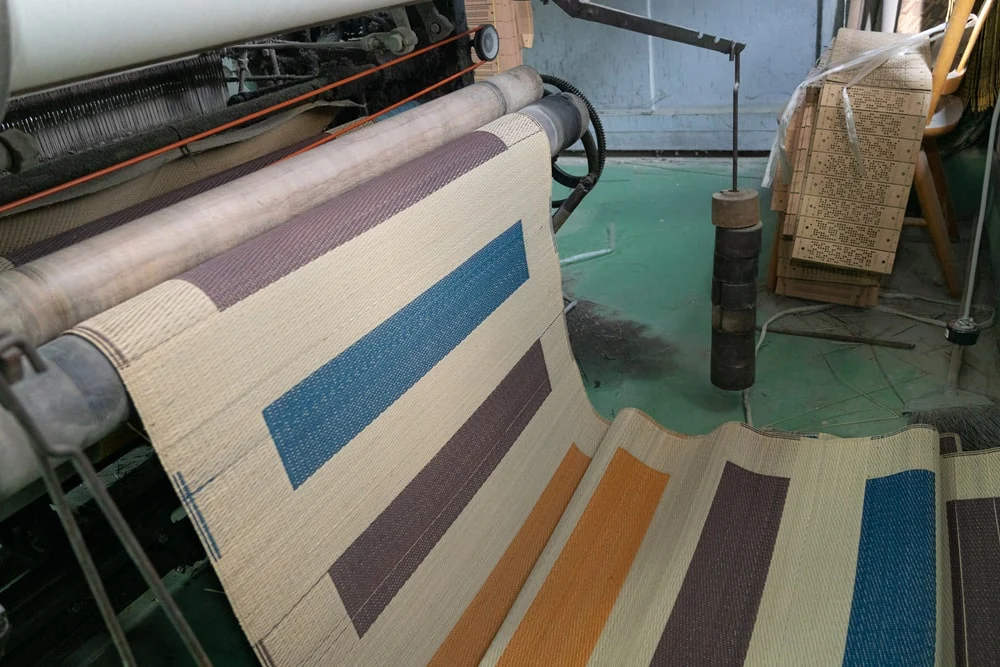
The weaving machine that Mr. Imayoshi uses is of two types: one that uses a board made of wooden blocks for weaving patterns and another that uses perforated cards.
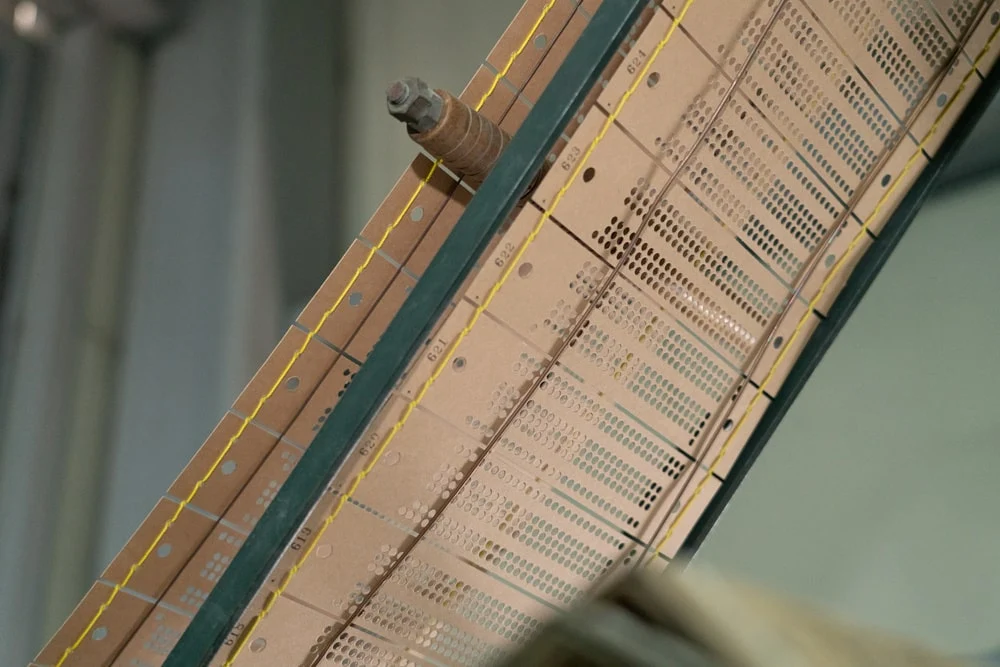
I was shown how to weave tatami mats using the machine that uses cards.
The rush grass is cut to length by color and set in the weaving machine.
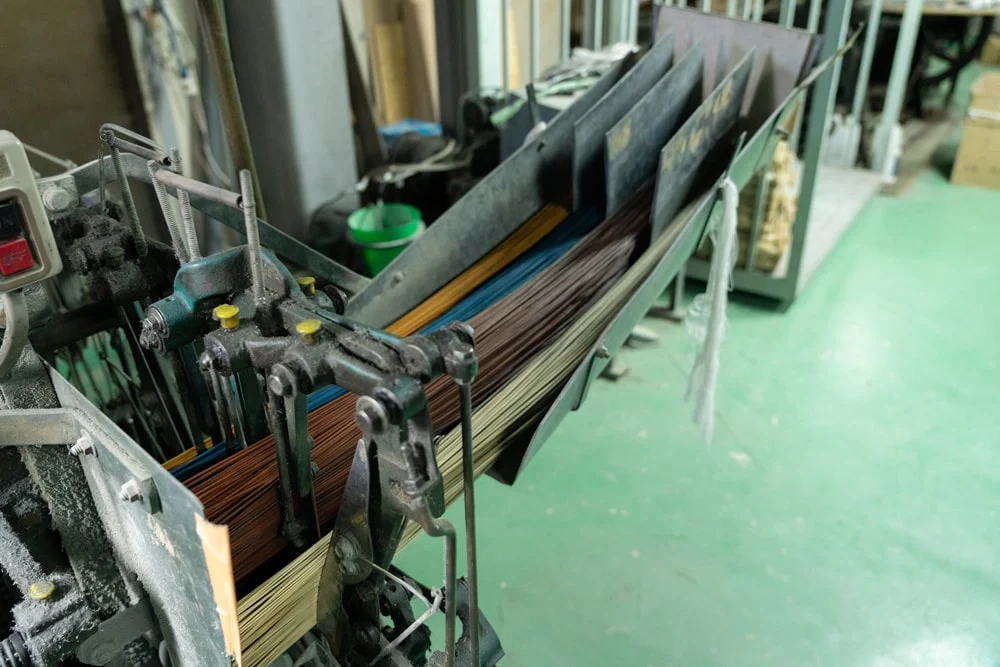
When the switch is turned on, a rhythmic sound echoes, and the tatami mat is gradually woven.
Handling everything from cultivation to processing of rush grass by oneself must be quite a task.
What kind of feelings does Mr. Imayoshi have towards the rush grass?
I spoke with Mr. Imayoshi.
IGUSA LABO Data
| Organization Name | IGUSA LABO |
|---|---|
| Industry | Rush grass cultivation, manufacturing and sales of rush grass products |
| Representative Name | Imayoshi Toshifumi |
| Year Established | May 2018 |
| Address | 1007-33 Nishiachi-cho, Kurashiki City, Okayama Prefecture |
| Contact | 090-9502-4376 |
| Website | IGUSA LABO |