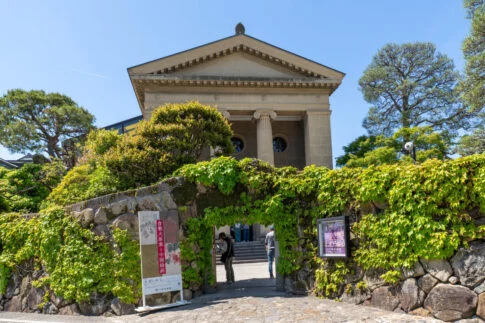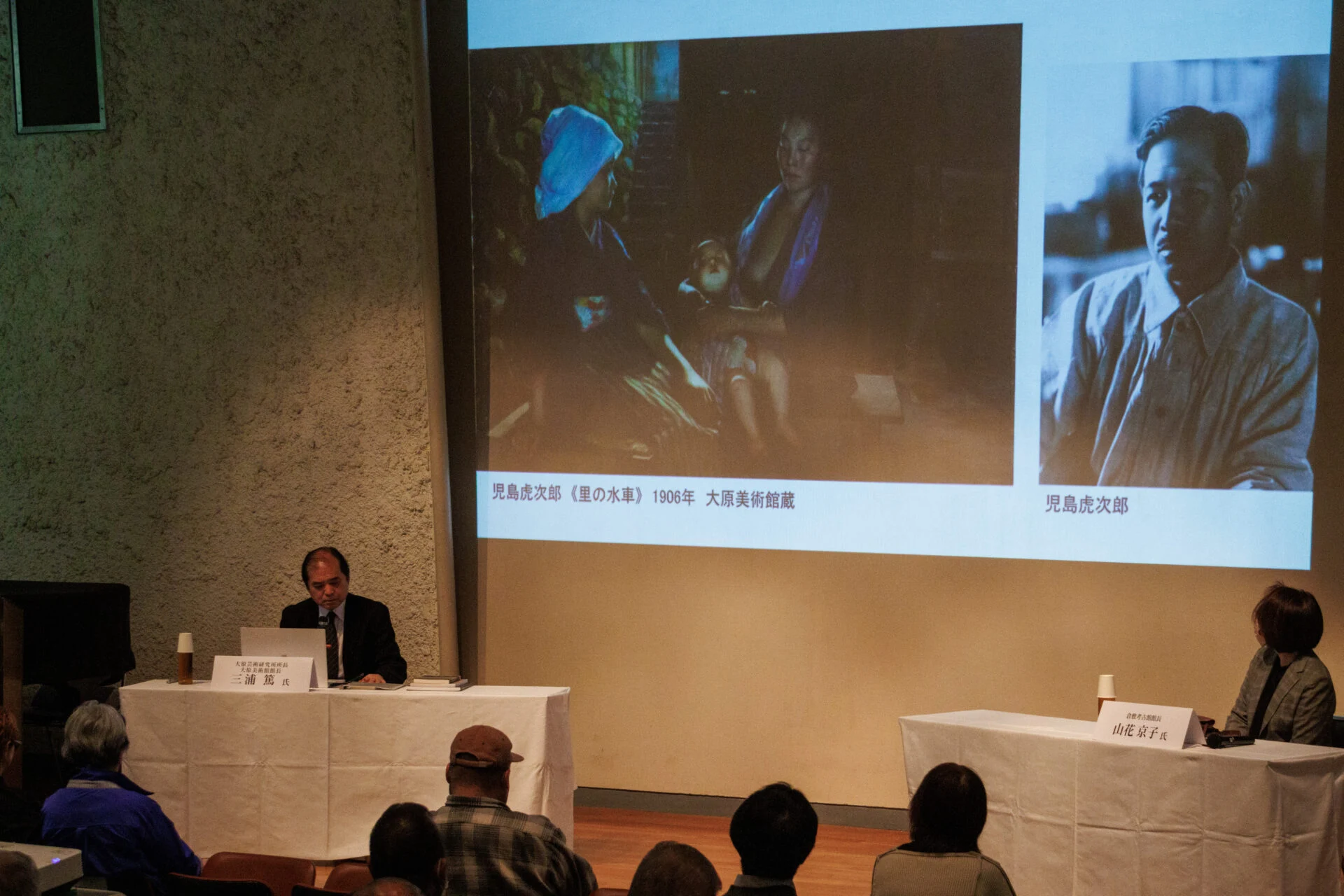
More than 100 years ago, under the patronage of businessman Ohara Magosaburo, painter Kojima Torajiro collected many Western paintings alongside his artistic endeavors, laying the foundation for the present-day Ohara Museum of Art.
A lecture focusing on his little-known footprints was held on March 8, 2026, at the Kurashiki City Art Museum.
In the lecture and discussion, various debates were held on how Torajiro absorbed diverse cultures, not only Western painting but also ancient Egypt (hereinafter referred to as "Egypt") and China, and how he connected them to his own creative and collecting activities.
As a cultural ambassador, we will report on the lecture that touched on the little-known aspects of Torajiro.
About this lecture
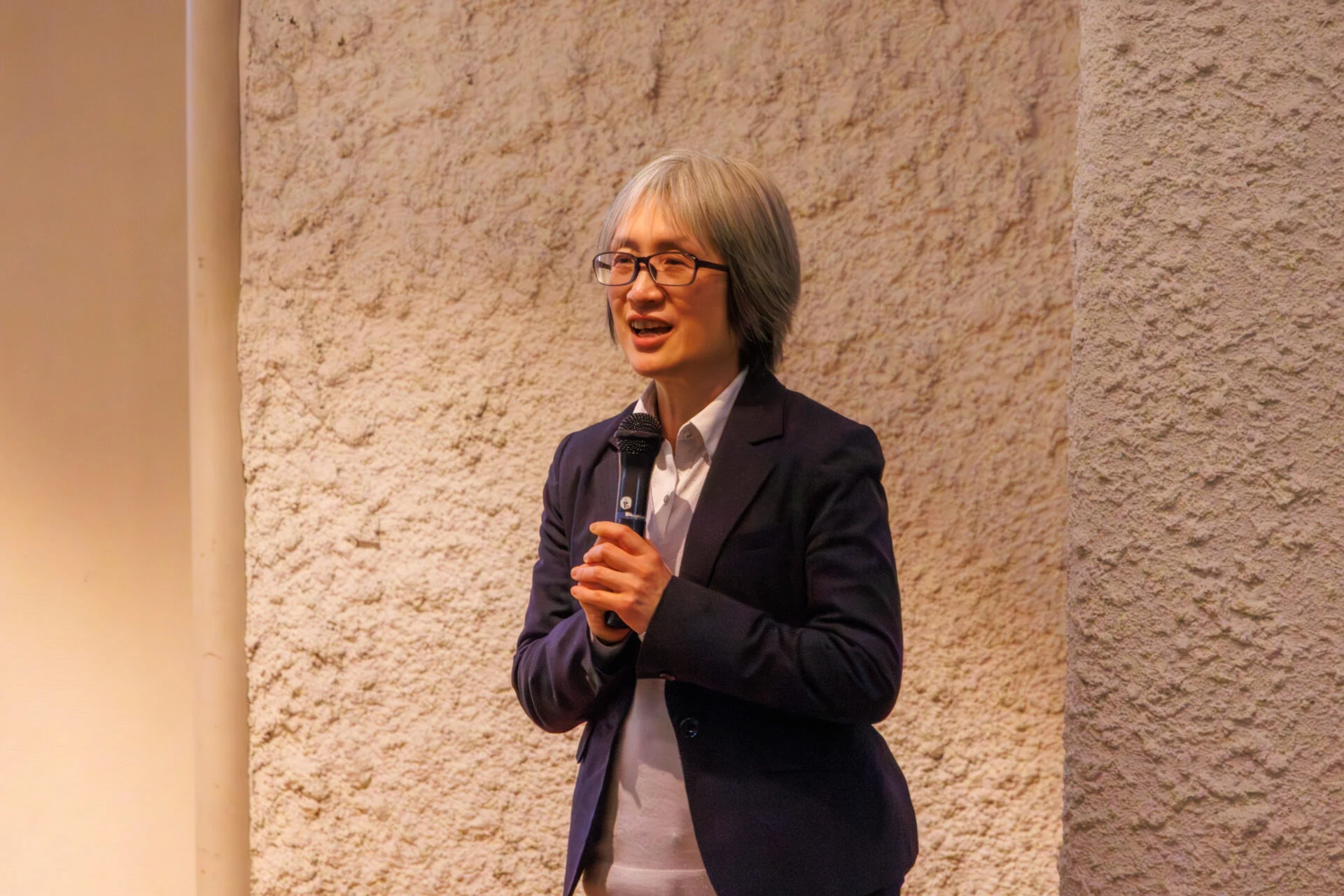
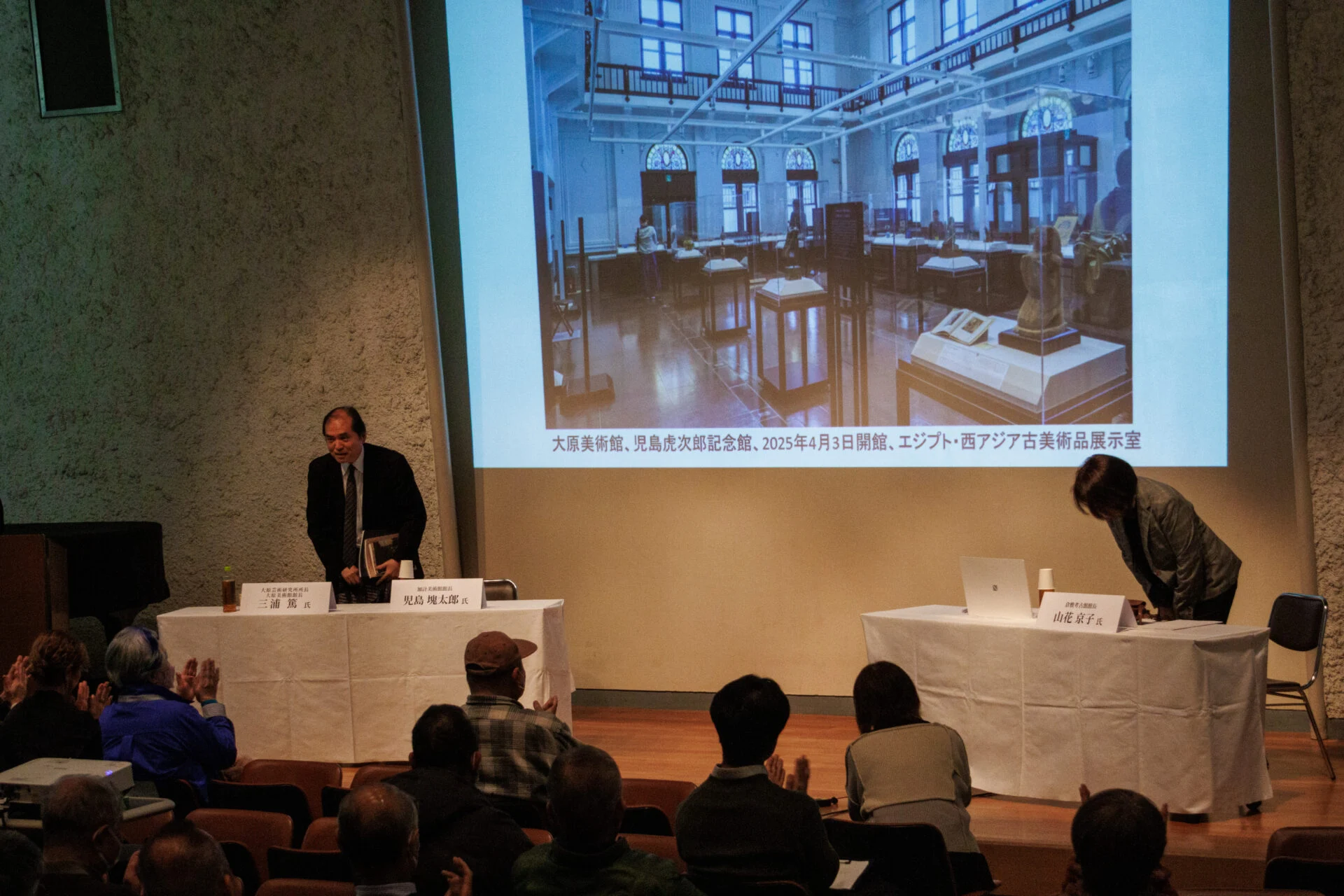
In the first half of the lecture, Miura Atsushi, Director of the Ohara Art Institute and Curator of the Ohara Museum of Art, and Yamahana Kyoko, Director of the Kurashiki Archaeological Museum, who specializes in Egyptian archaeology, introduced the little-known aspects of Kojima Torajiro from their unique perspectives.
In the second half, a discussion included Kojima Torajiro's grandson, Kojima Kaitaro, Director of Kake Museum of Art, where lively debates on Torajiro's rare talents and sensibilities that fused Eastern and Western cultures took place from multiple viewpoints.
The multifaceted nature of Kojima Torajiro and his role as a "cultural border crosser"
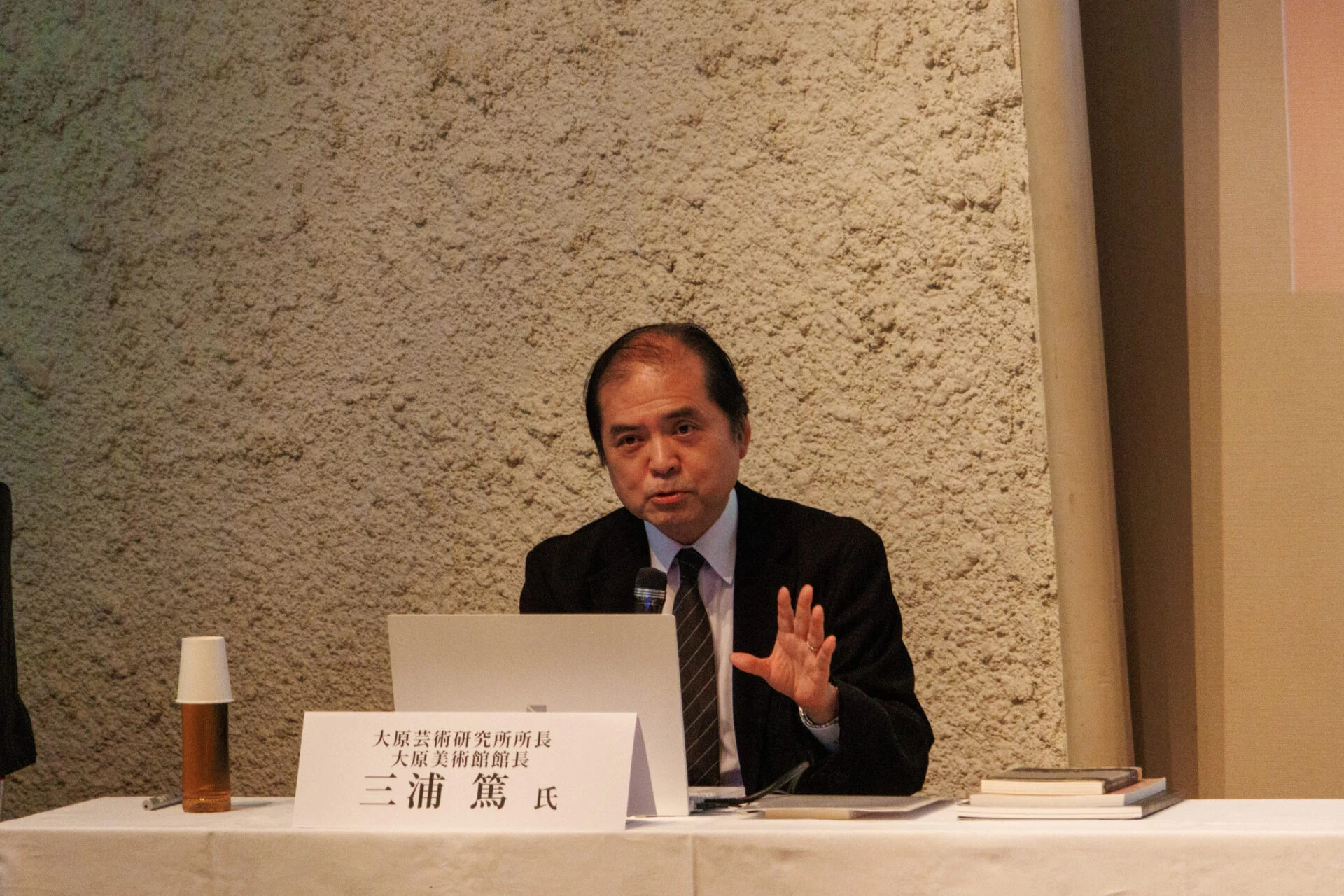
Director Miura redefined Torajiro beyond the framework of merely being a "painter" or a "collector" who built the collection of the Ohara Museum of Art, as a "cultural border crosser."
Torajiro was not only a painter but also had the face of a designer, photographer, and ceramic artist, as a multi-creator in today's terms. He traveled back and forth between the West (Belgium and France) and various places such as China, Korea, and Egypt, incorporating diverse cultures into his creative activities.
Transformation into the "painter of light" through studying abroad and unique expression
Torajiro's painting style dramatically changed from dark tones before studying abroad to bright colors, becoming a "painter of light," influenced by luminism (a light expression close to Neo-Impressionism) during his studies in Europe, particularly in Belgium.
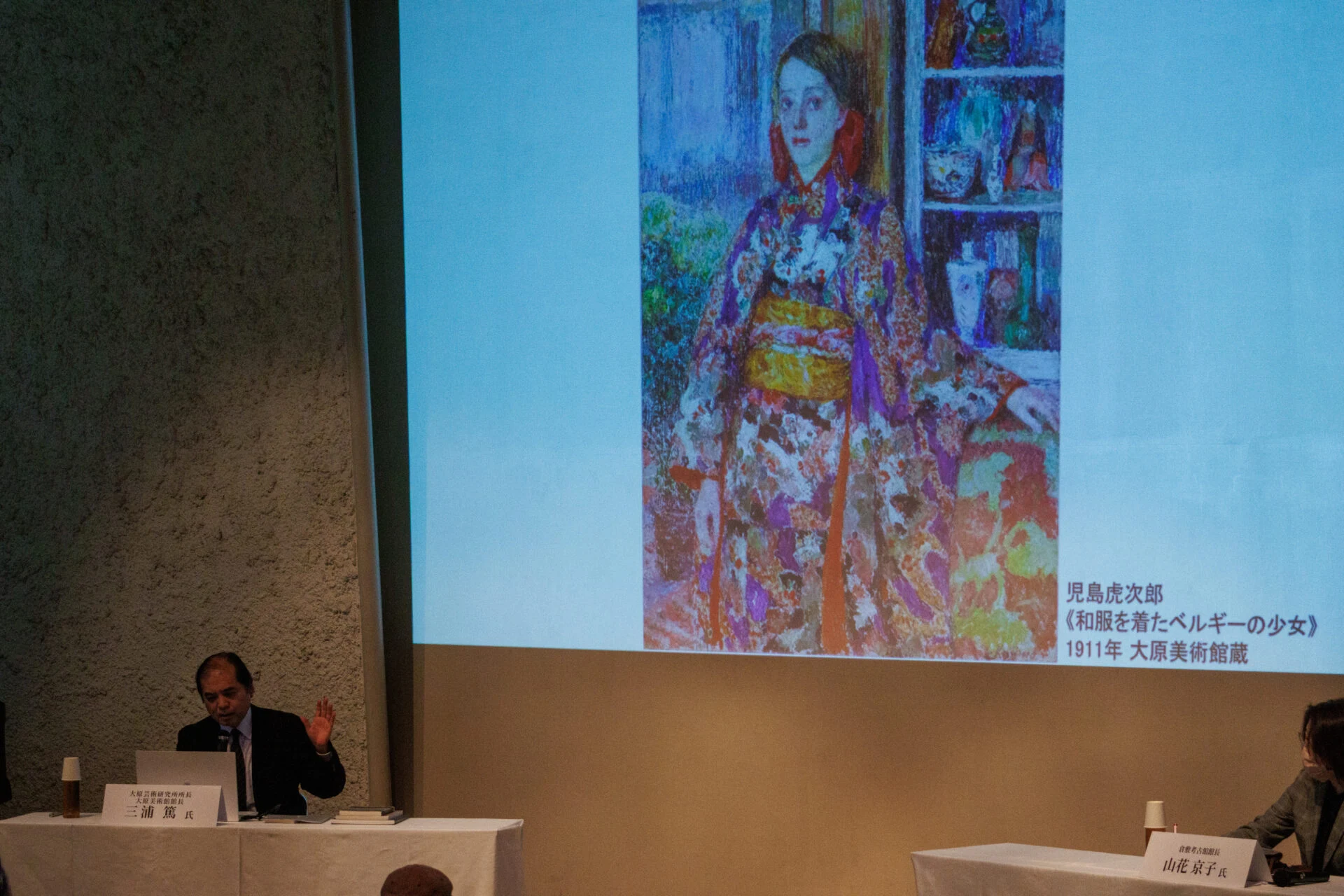
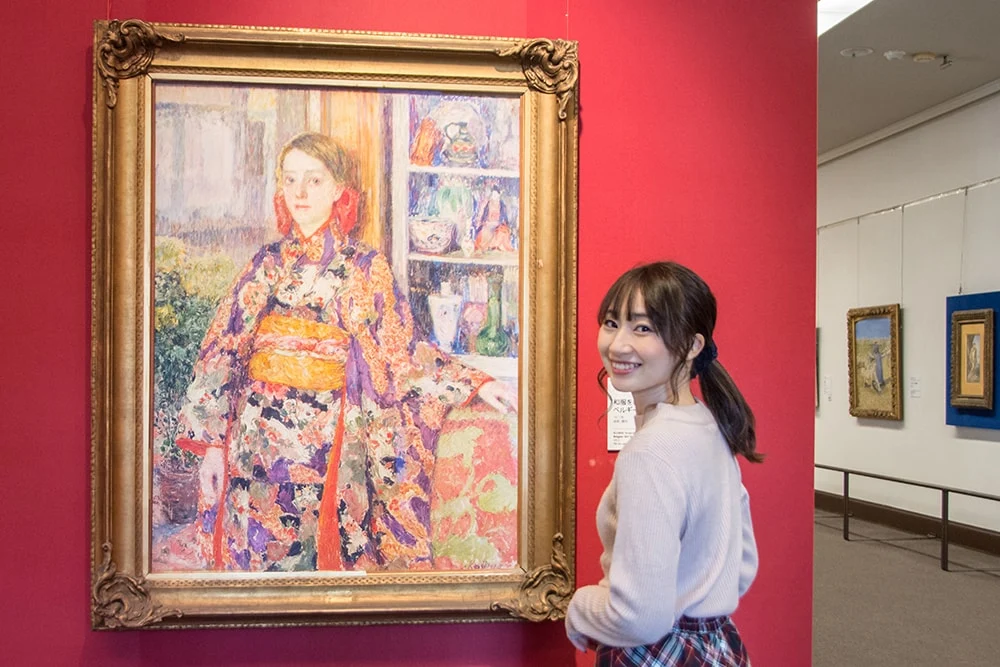
As seen in his representative work "A Belgian Girl in a Kimono," he is said to have had a unique perspective as a Japanese person, not merely imitating the Japonisme that was popular overseas at the time, by combining Western painting techniques with Japanese kimonos.
Japonisme
Refers to the influence of Japanese taste and art that became popular in Europe, mainly centered in France, from the late 19th century to the early 20th century, significantly impacting Impressionist artists.
Additionally, it was mentioned that a special exhibition titled "Journey to Masterpieces from the Ohara Museum of Art - Torajiro's Dream" was held at the Nakanoshima Kosetsu Museum (Osaka City) until March 29, 2026. This special exhibition featured not only the masterpieces collected by Torajiro for the Ohara Museum of Art but also many works painted by Torajiro.
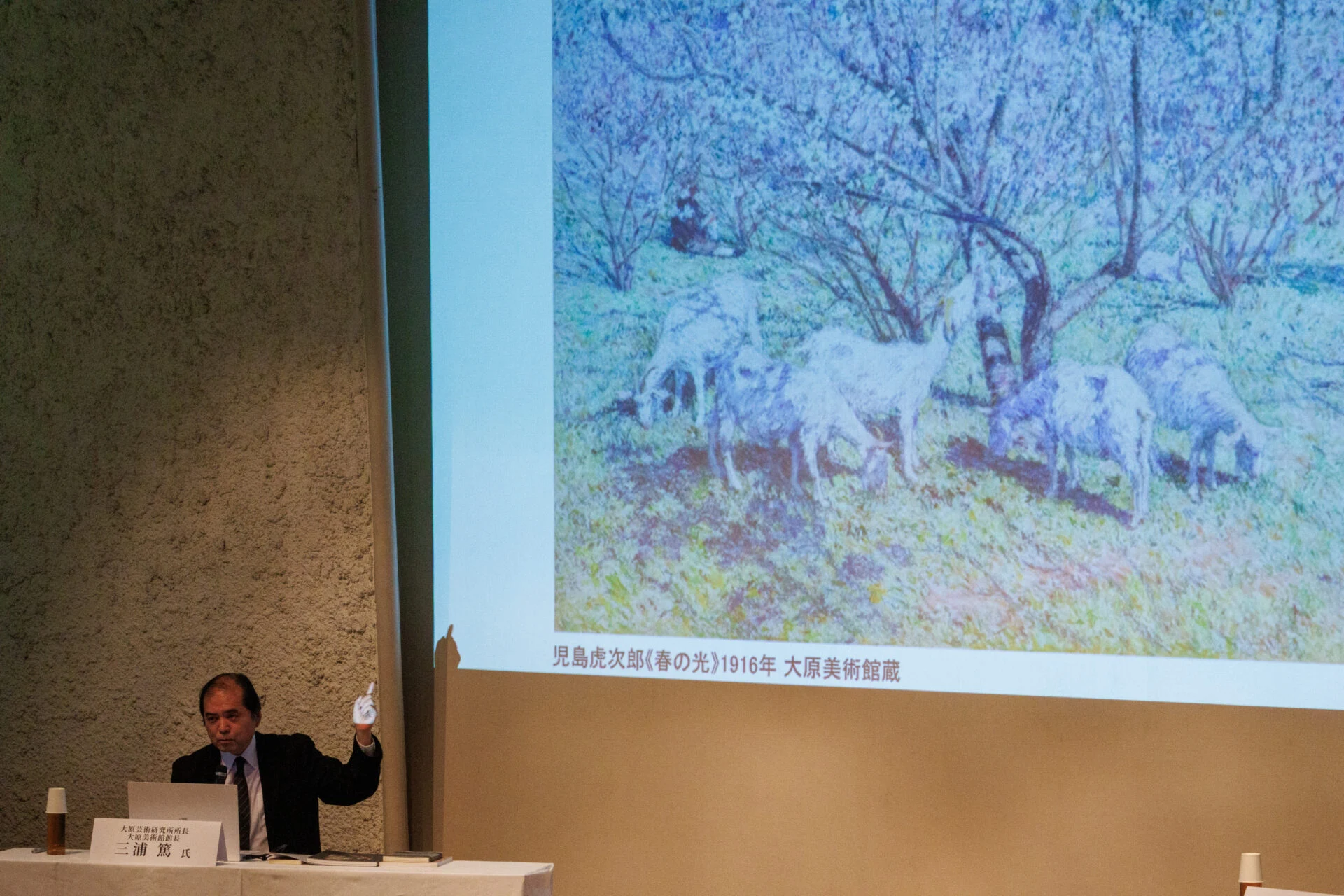
Among them, "Spring Light," which expresses goats and plum blossoms in a bright depiction, was particularly popular among visitors, according to Director Miura.
Deep insights into ancient Oriental civilizations and intricate reproductions
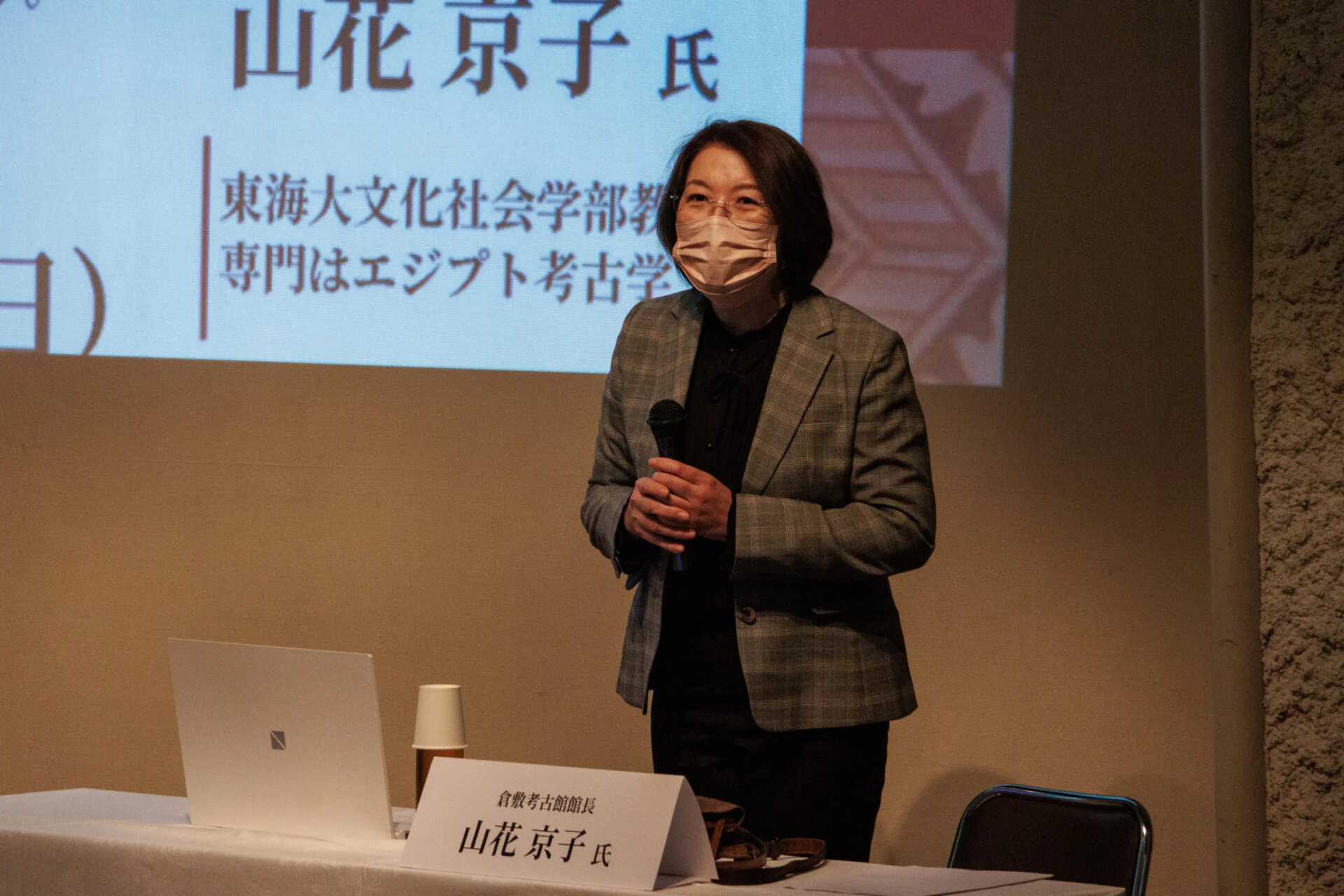
Director Yamahana introduced that Torajiro actively incorporated motifs from ancient Oriental civilizations into his creations even before he actually visited Egypt.
In a kimono designed by Torajiro in 1915, Assyrian reliefs, Roman-style figures, and accurately reproduced Egyptian hieroglyphs are depicted, showcasing Torajiro's extraordinary visual memory and depiction skills.
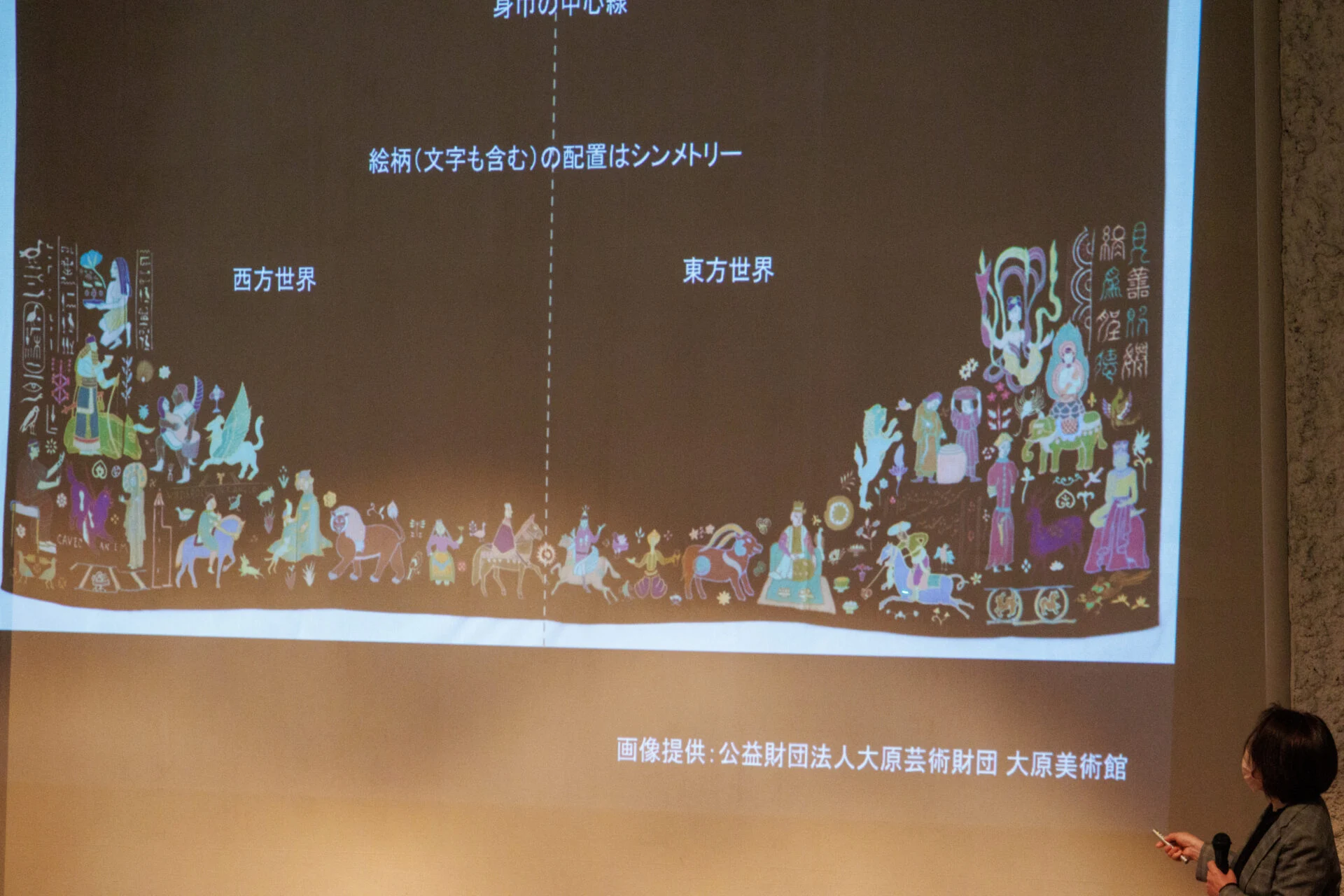
This kimono features a design where "the Western world" and "the Eastern world" are symmetrically depicted around the sun, with the aforementioned motifs designed to evoke images of the West (Egypt, Rome, Mesopotamia).
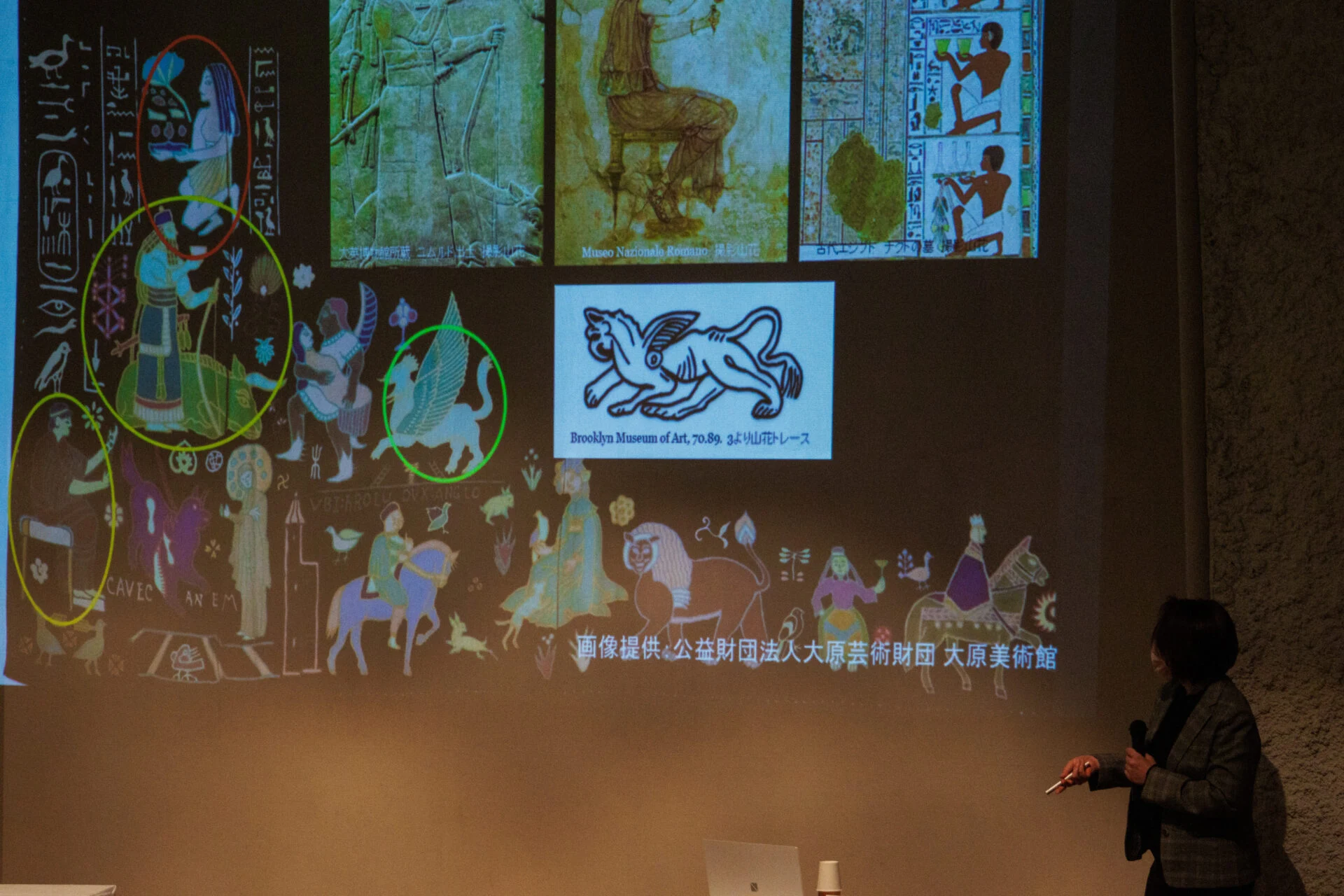
Additionally, motifs from the East include the Garuda (known as Karura in Japan) from Indonesia and water buffalo commonly used in agriculture across Asia.
"Fusion of Eastern and Western civilizations" in architecture and decoration
Torajiro's former atelier "Muison-so" located in Sakatsu, Kurashiki City.
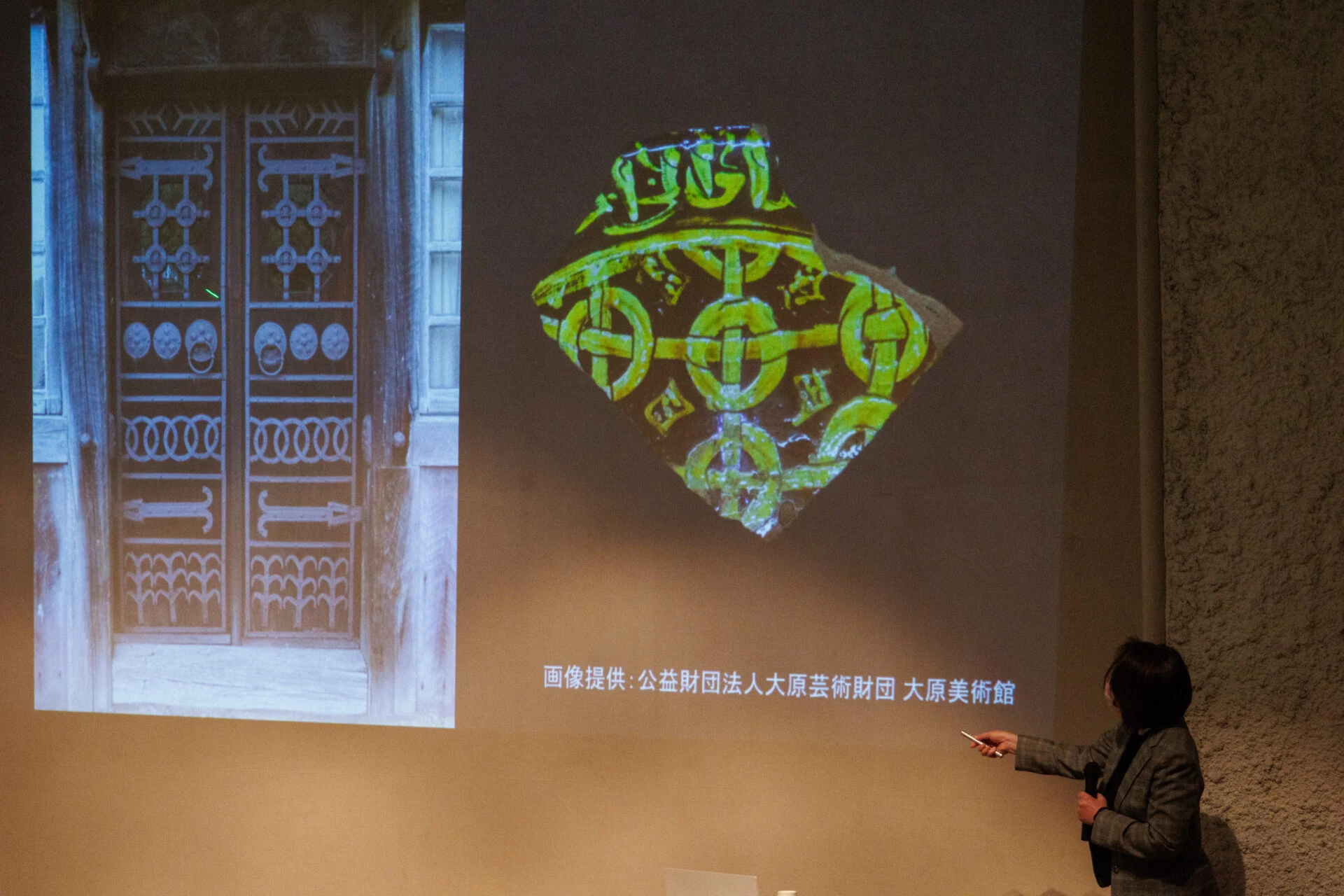
Within it, the Japanese-style building Muidō features a blend of Egyptian-style lions, lotus flowers, Islamic patterns, and Chinese elements.
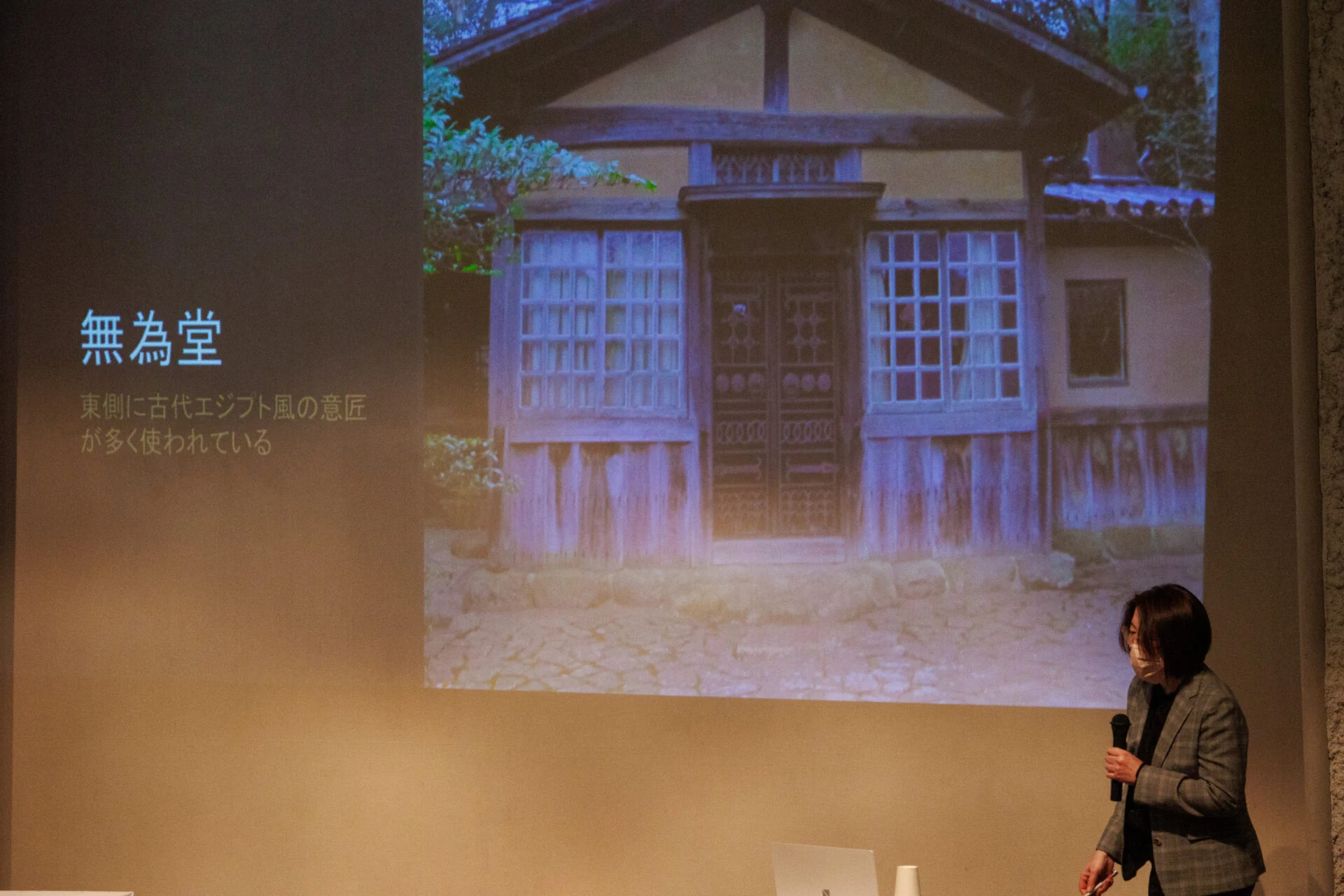
These decorations are not mere imitations; they are arranged with Torajiro's unique sensibility while being conscious of symmetry and continuous patterns, creating works that fuse Eastern and Western civilizations on a Japanese stage, as stated by Director Yamahana.
Back and forth between Eastern and Western cultures and the pursuit of "red"
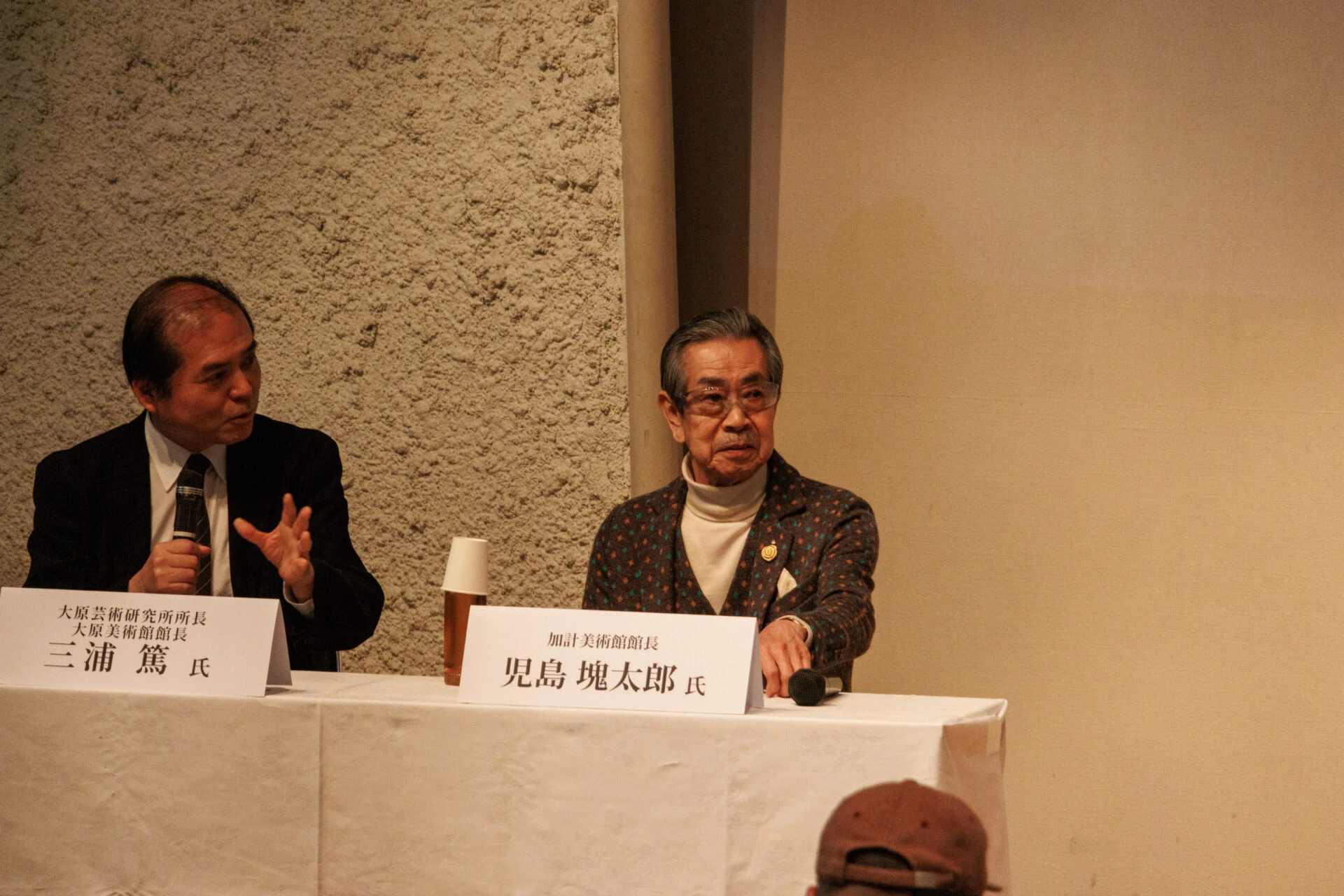
In the discussion involving Kojima Kaitaro, it was introduced that Torajiro not only brought Western culture back to Japan but also reaffirmed the influence of Eastern beauty on the West, engaging in a "back and forth movement" of bringing it back to Japan.
As an example, the influence of Eastern ceramics on Western Art Nouveau artists was cited, and discussions were held by Director Miura and Kojima Kaitaro regarding the actual works that were brought back to Japan.
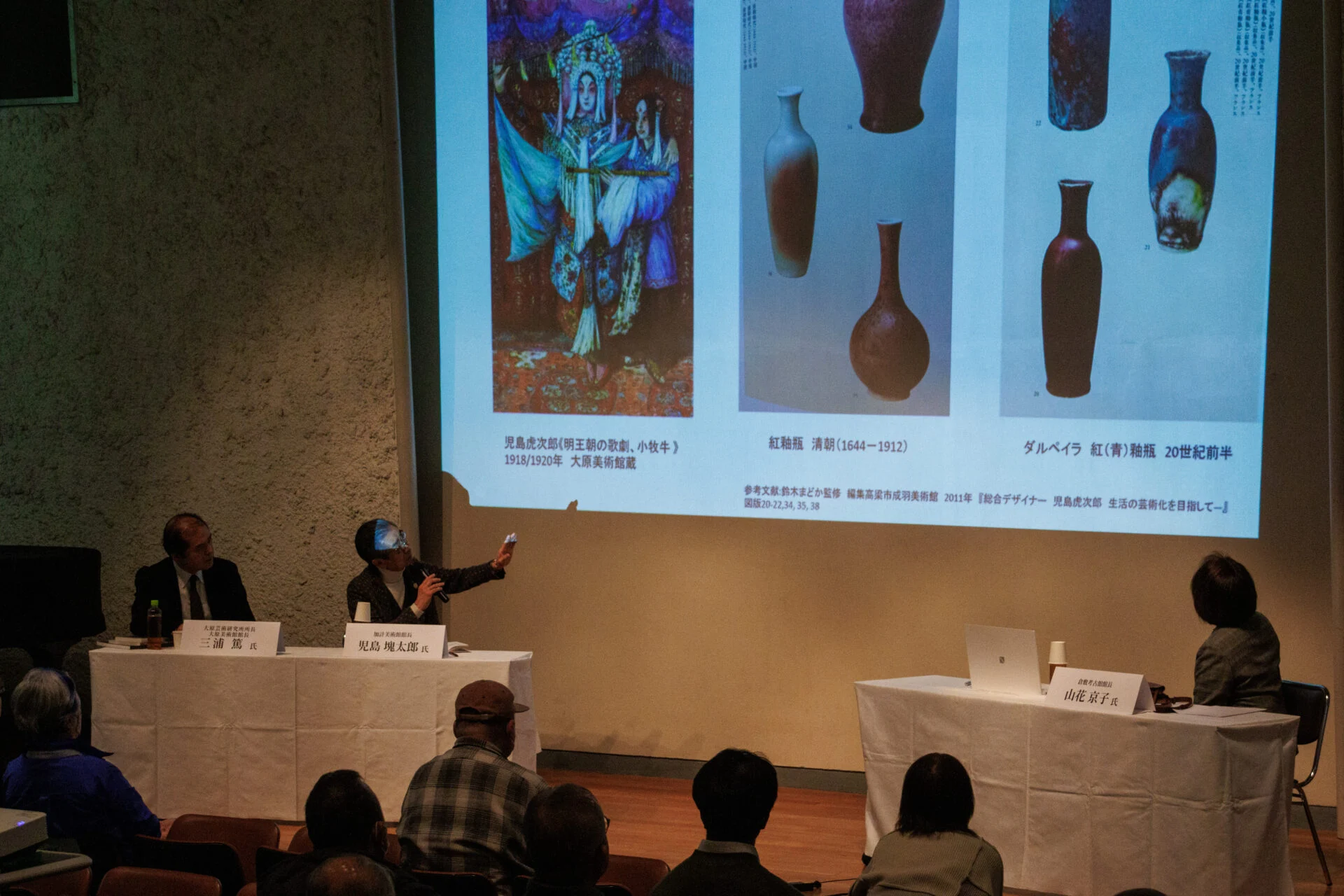
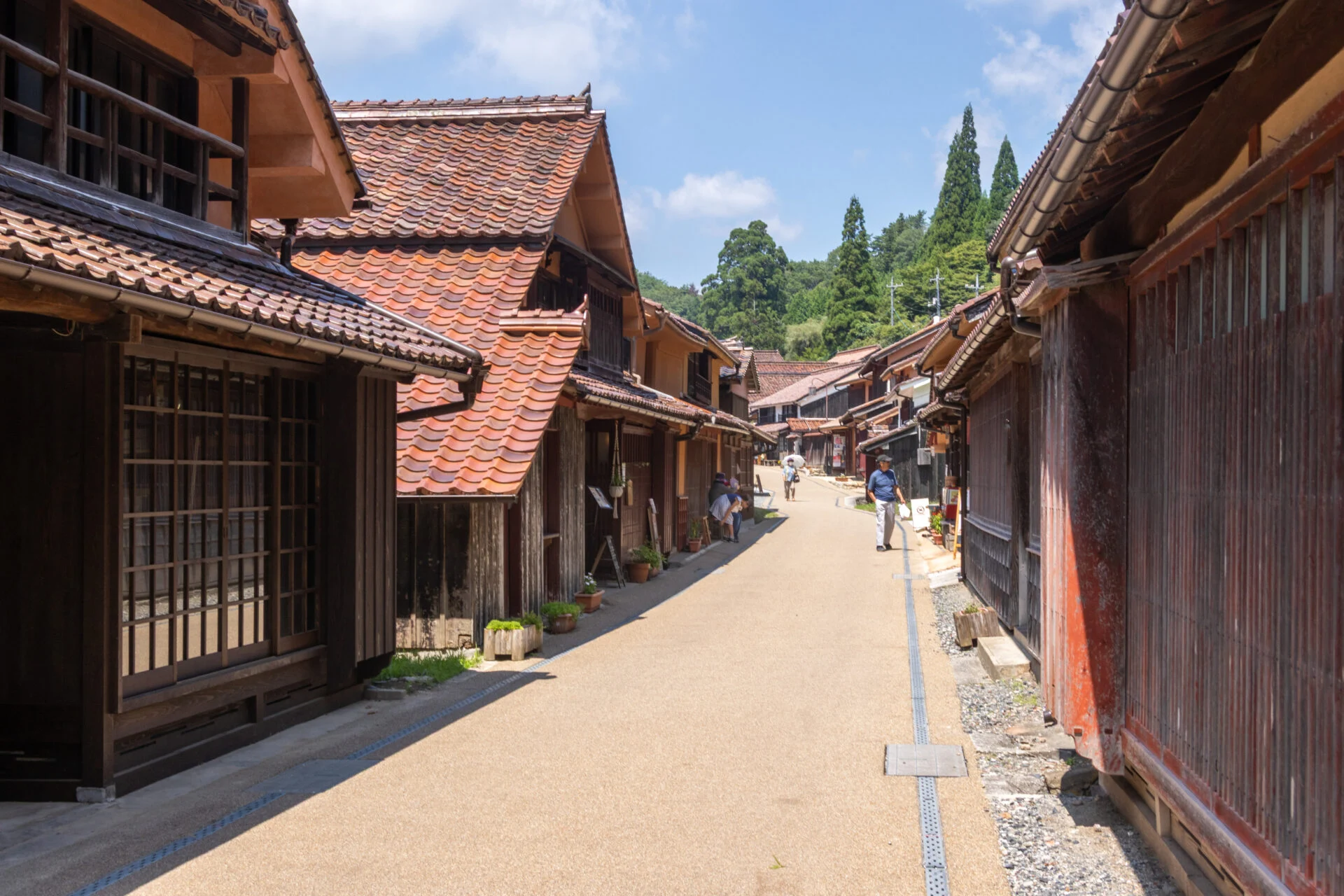
Additionally, there were remarks about the striking "red" that commonly appears in Torajiro's works and collections. Various insights were made regarding the influence of Japan Red and bengara produced in his hometown of Takahashi City, Nariwa-cho, and his deep knowledge of dyeing, exploring the sources of Torajiro's sense of color.
Finally, to elucidate the overall picture of Torajiro, a comprehensive approach by experts in various fields such as Western art, archaeology, and ceramics is essential, and it was shared that his potential is still unexplored and profound.
Conclusion
Through the lecture, I felt that a new face of Torajiro as a well-known Western painter and collector was brought to light.
Among them, what particularly caught my attention was his feelings towards his hometown, Nariwa-cho, Takahashi City.
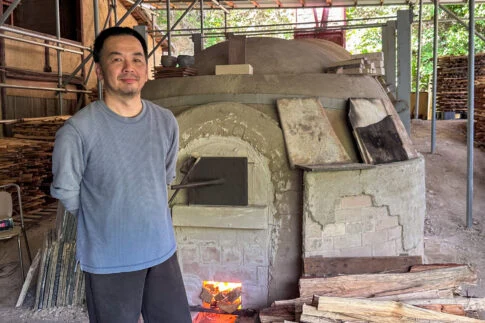
It was very interesting to speculate that the "red" that Torajiro favored might have been influenced by the "Japan Red" produced from the bengara found in Nariwa-cho.
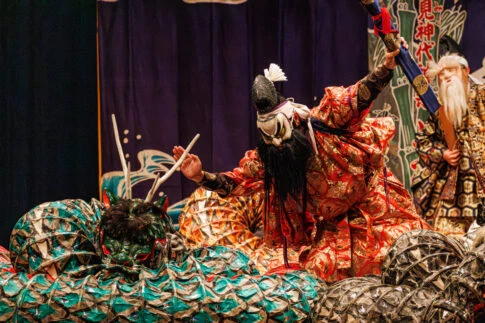
Additionally, regarding the Garuda (Karura) designed on the kimono, I felt a connection to "Sarutahiko no Mikoto," which appears in the local performing art "Bichu Kagura," also originated in Nariwa-cho.
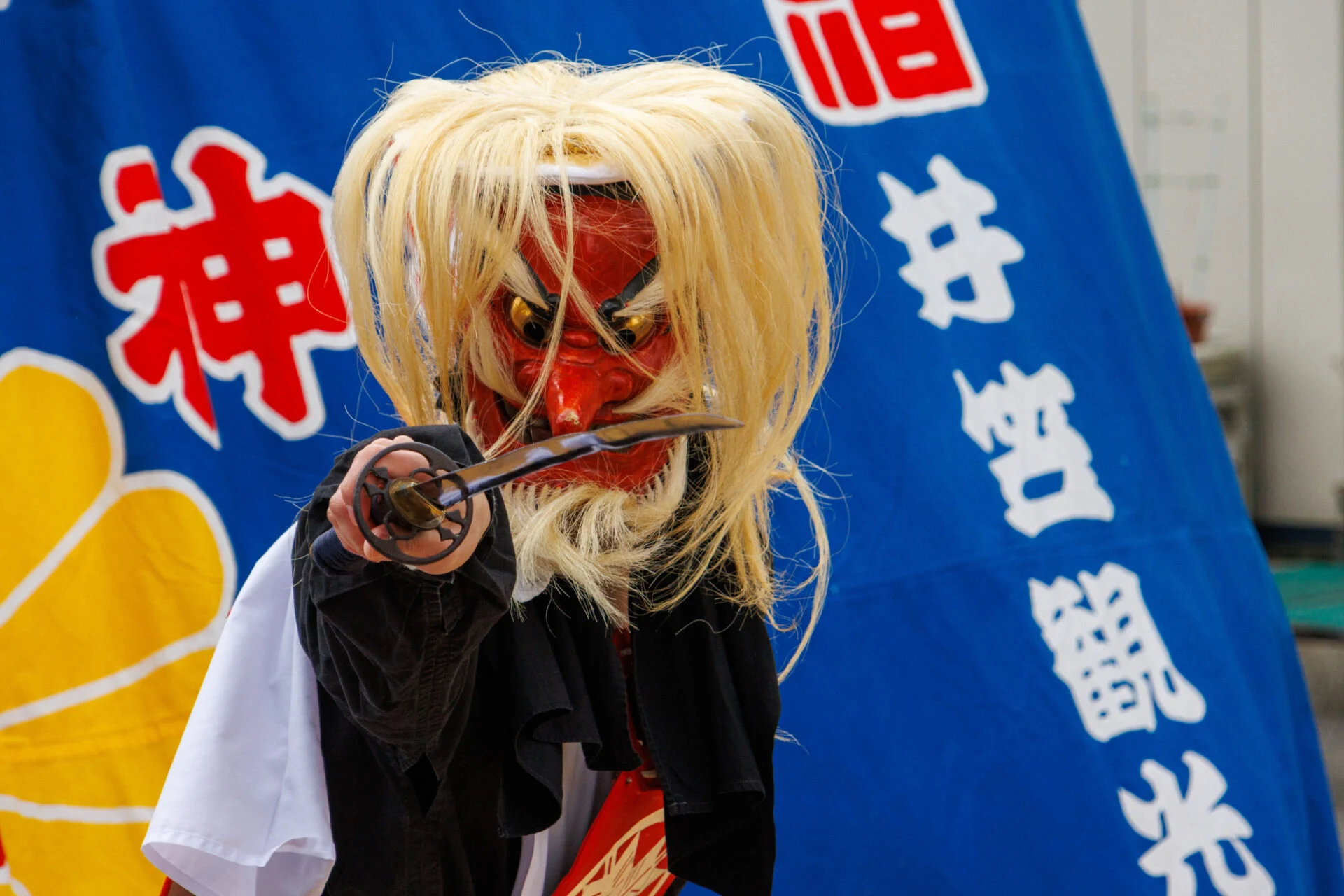
Sarutahiko no Mikoto is a deity characterized by a red mask, said to be the prototype of the tengu, and I imagined while listening to the talk that there might be a connection with Karura, which is said to be the prototype of the crow tengu.
I look forward to the future elucidation of Torajiro's unknown aspects as a cultural cross-border figure from multifaceted perspectives.
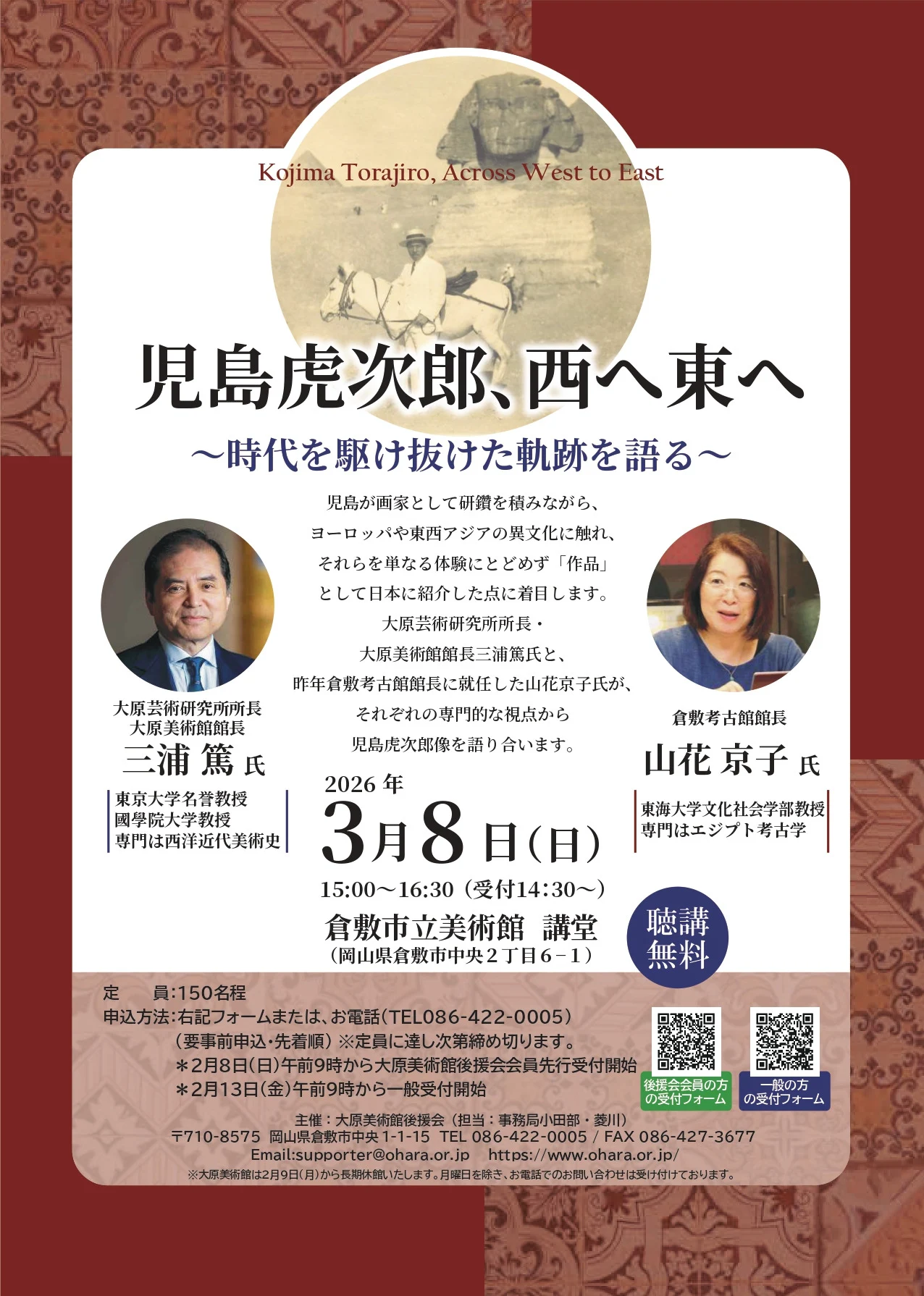
Kojima Torajiro: East and West - A Journey Through Time
| Name | Kojima Torajiro: East and West - A Journey Through Time |
|---|---|
| Date | March 8, 2026 (Sunday) 3:00 PM - 4:30 PM |
| Location | Kurashiki City Art Museum Auditorium |
| Participation Fee (including tax) | Free |