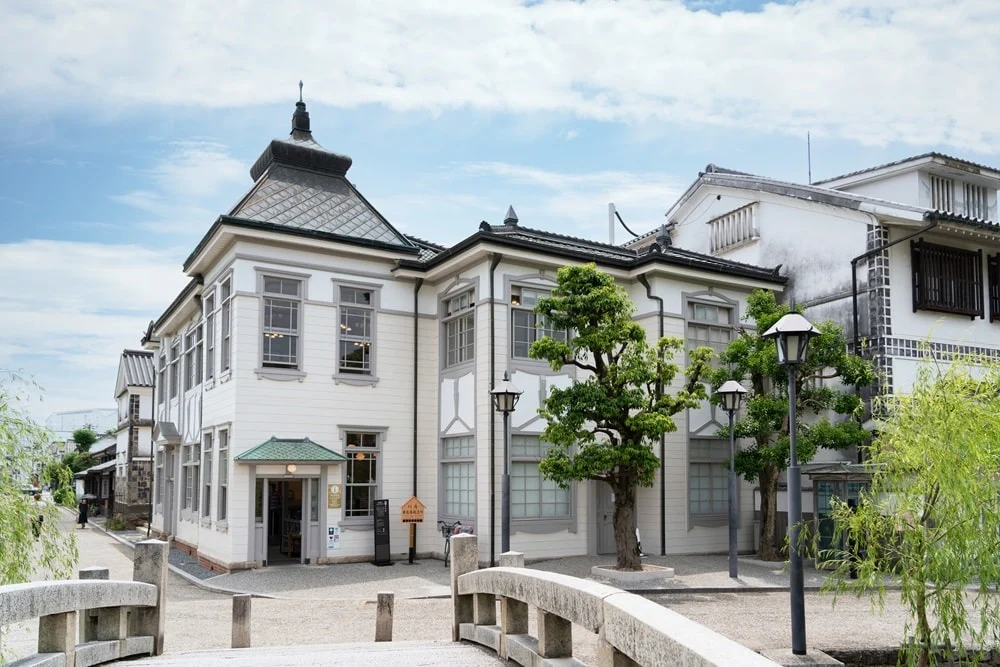
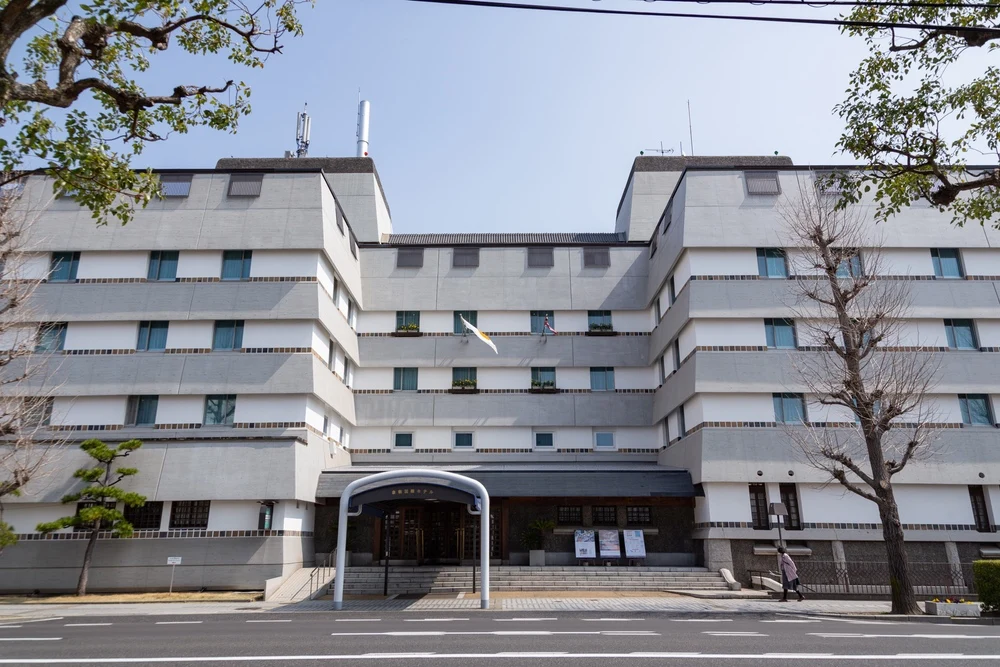
The Kurashikikan (tourist information center), a visitor information facility in Kurashiki City's Bikan Historical Area, reopened on February 16, 2020, after approximately two years of renovation work.
The Kurashikikan, which was completed more than 100 years ago, is a tourist information center that could be called the face of Kurashiki.
The long-awaited renovation is complete, making the building barrier-free and expanding the rest area.
It is now more convenient for families with children, too.
It looks set to be a strong ally for visitors to Kurashiki.
Here is a look at the commemorative ceremony held on the day of the reopening.
The information presented was current when this article was published in February 2020. Please note that it may differ from current information.
What is the Kurashikikan (Tourist Information Center)?

The Kurashikikan (Tourist Information Center) is a facility that serves as both a tourist information center and a free rest area.
The Kurashikikan building was constructed in 1917 as the town office of Kurashiki Town (now Kurashiki City).
After serving various purposes, including as a city office and employment agency, it opened as a tourist information facility in 1971.
In 2016, it was designated an Important Cultural Property by Kurashiki City.
It has also served as a filming location for the live-action film Rurouni Kenshin and the NHK morning drama series Carnation.
Renovation Overview

If you saw the Kurashikikan before the work began, you might think, “It looks almost the same as before the renovation.”
In fact, however, extensive work known as partial dismantling was carried out.
Apparently, only the structural framework of the pillars was left, while all the walls and floors were removed.
The work was carried out with three main objectives:
- Improvements to promote use
- Earthquake-resistance reinforcement
- Preservation and repair

The main renovations were as follows:
- Construction of an elevator annex (11-person capacity, wheelchair accessible)
- Multipurpose restroom (with a universal changing table and facilities for ostomates)
- Conversion of restrooms to Western-style toilets
- Conversion of the second floor into a rest area and hall
- Installation of a nursing room, diaper-changing table, and sink
Renovation work on cultural properties is subject to many restrictions. Care was taken to retain as much of the original materials as possible while ensuring the building met earthquake-resistance standards.

For example, the interior wall timbers were numbered during dismantling, repaired, and then returned to their original locations.

Care was also taken to make electrical equipment as inconspicuous as possible.
The air conditioner is apparently installed behind the vertical lattice in the photo above, but I didn't notice it until it was pointed out to me.

All the lighting has been converted to LEDs.
The lights visible from outside are fixtures installed in 2005, when nighttime landscape lighting was added to the Bikan Historical Area under the direction of world-renowned lighting designer Motoko Ishii.
Only the bulbs were replaced with LEDs.

The second floor was originally used as offices, so ordinary fluorescent lights were apparently used there.
The lighting fixtures have been changed to ones that suit the atmosphere of the building.

The number of Western-style toilets has been increased, and they are now equipped with bidet functions.
They are convenient to access directly from both inside and outside the building.
The Building's History

Completed in 1917, the Kurashikikan building had a history of 103 years as of 2020.
Can you imagine what life was like 103 years ago?
According to memoirs left by Sumiji Hara, who was Kurashiki's honorary town mayor in 1918, the Kurashiki Town Office had a staff of just over ten people.
At first, everyone wore kimono, but in an effort to embrace new ideas, the town office used public funds to provide them with Western-style clothing.

The town also apparently focused on developing its water supply in order to flourish as a cultural city.
There is a story of how people were moved when they were finally able to enjoy a clean bath after the water system was completed.
The Kurashikikan was built in that era.

Preservation and repair work was carried out in 1970 and 1985, followed by exterior wall repainting in 2005.

This was the first major renovation on the scale of partial dismantling since the building was completed.
Commemorative Ceremony
Address by Kurashiki City Mayor Kaori Ito

I would like to express my heartfelt gratitude to everyone in the local community, the experts involved with the preservation districts, and the businesses involved in the construction work for helping us reach this day of reopening.
The Kurashikikan, located right in front of Nakabashi Bridge, is a popular tourist attraction.
We hope visitors will make use of it as a place to learn about tourism and share information, while preserving the atmosphere of Kurashiki's streets.
We will continue working hard so that it can further fulfill its role as part of the cultural properties that make up Japan Heritage.
Congratulatory Speeches

【Congratulatory address by Hideyo Mimura, Vice Chair of the Kurashiki City Council】
I feel that a wonderful facility has been completed.
Kurashikikan is also a historic building designated as an Important Cultural Property by Kurashiki City.
Take a break inside this culturally valuable building, which stands out amid the white-walled streets, and relax as you gaze out over the Bikan Historical Area.
I would be delighted if you could enjoy such a luxurious time.
I hope Kurashikikan will grow into a facility loved and cherished by many people, and that it will bring vitality to all of Kurashiki as the city moves toward recovery.

【Congratulatory address by Minehito Inoue, Chair of the Kurashiki Chamber of Commerce and Industry】
Kurashikikan will serve as an information center for the 3.6 million tourists who visit the Bikan Historical Area each year.
It has sprung anew and been restored in a truly wonderful form.
We, too, want to take good care of Kurashikikan, which will provide information and guidance to visitors, and the Chamber of Commerce and Industry will support it as well.
Ribbon Cutting

Those involved cut the ribbon, and a fanfare rang out.

Preview Tour
Let’s take a look inside the building.

The first floor has a tourist information center, benches, coin lockers, vending machines, and more.
You can also buy tickets for Punting Boat Rides on Kurashiki River here.


The second floor has a rest area, a nursing room, and a diaper-changing table.

The view along Kurashiki River could be seen from the window.

Could the glass be old? The windowpanes have a lovely character.

The benches and tables are made by TEORI, a bamboo furniture brand from Mabi, Kurashiki City.
The straight wood grain is beautiful, and I found it very pleasing.
It’s nice to be able to experience Kurashiki’s fine products in such an understated way.

Masking Tape Gifts from Kurashiki Komachi

Visitors to the reopening ceremony received masking tape, one of Kurashiki’s local specialties.

The pattern, inspired by Kurashiki townhouses, is both chic and cute!

Performance by Students of Kurashiki Sakuyo University

To close, the saxophone quartet “Creation” by students of Kurashiki Sakuyo University performed.
They played a wide-ranging and unique program, from familiar songs such as “Tsugaru Strait—Winter Scene” to original pieces and “The Saxophone Broke,” performed while actually breaking a saxophone. Audience members of all ages enjoyed the performance.
From the Writer

Kurashikikan is one of the iconic buildings in the Bikan Historical Area.
Before the construction work, it showed signs of age, but after about two years of work, it has been transformed into a building that can be used with confidence.
The view from the second-floor windows is lovely, too.
Kurashiki sightseeing will become even more convenient from now on.
Please make use of Kurashikikan when you visit Kurashiki.
Kurashikikan (Tourist Information Center) Renovation Commemorative Ceremony Information

| Name | Kurashikikan (Tourist Information Center) Renovation Commemorative Ceremony |
|---|---|
| Date | Ceremony date and time: February 16, 2020, from 10:00 a.m. Kurashikikan opening hours: 9:00 a.m.–6:00 p.m. |
| Location | 1-4-8 Chuo, Kurashiki City |
| Admission (tax included) | Free |
| Website | Kurashikikan (Tourist Information Center) | Kurashiki Tourism WEB |

What would you like to know about Kurashiki?
Enter a word to search articles on this site