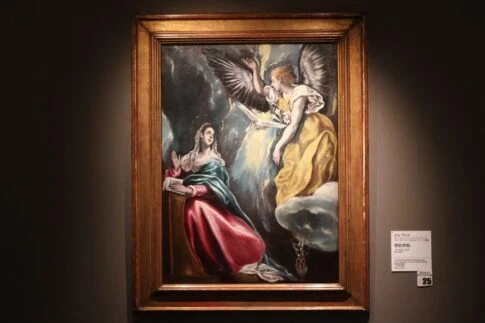
Ohara Museum of Art, a public interest incorporated foundation holds a representative masterpiece, El Greco's Annunciation.
I've heard that some people come from far away just to see this painting. The Annunciation is set to be restored. This restoration is said to be the first in 66 years since 1959.
The Annunciation is a painting created over 400 years ago, purchased in 1922 by the painter Kojima Torajiro with the support of Ohara Magosaburo, and brought back to Japan. Notably, there are only two paintings by El Greco in Japan, making it a very valuable artwork (the other is held by the National Museum of Western Art in Tokyo).
The restoration is being carried out by restorer Eva Martinez, who has been invited from the Prado Museum in Spain. Eva states, "I am working on the restoration with the aim of bringing it as close as possible to the painting as it was when El Greco created it."
On July 30, 2025, a mini-lecture by Eva and an exhibition of restoration tools and work photos will be made public.
We will introduce how the restoration is being carried out, as well as Eva's impressions of El Greco's painting.
How is the Annunciation being restored?
According to Eva, the condition of the painting is basically good.
However, the transparency that is believed to have existed when it was first painted has been lost. There are two main reasons why the painting has changed from its original state.
- Damage due to aging, such as surface dirt and yellowing of the varnish (protective material applied to the surface)
- Excessive retouching from past restorations
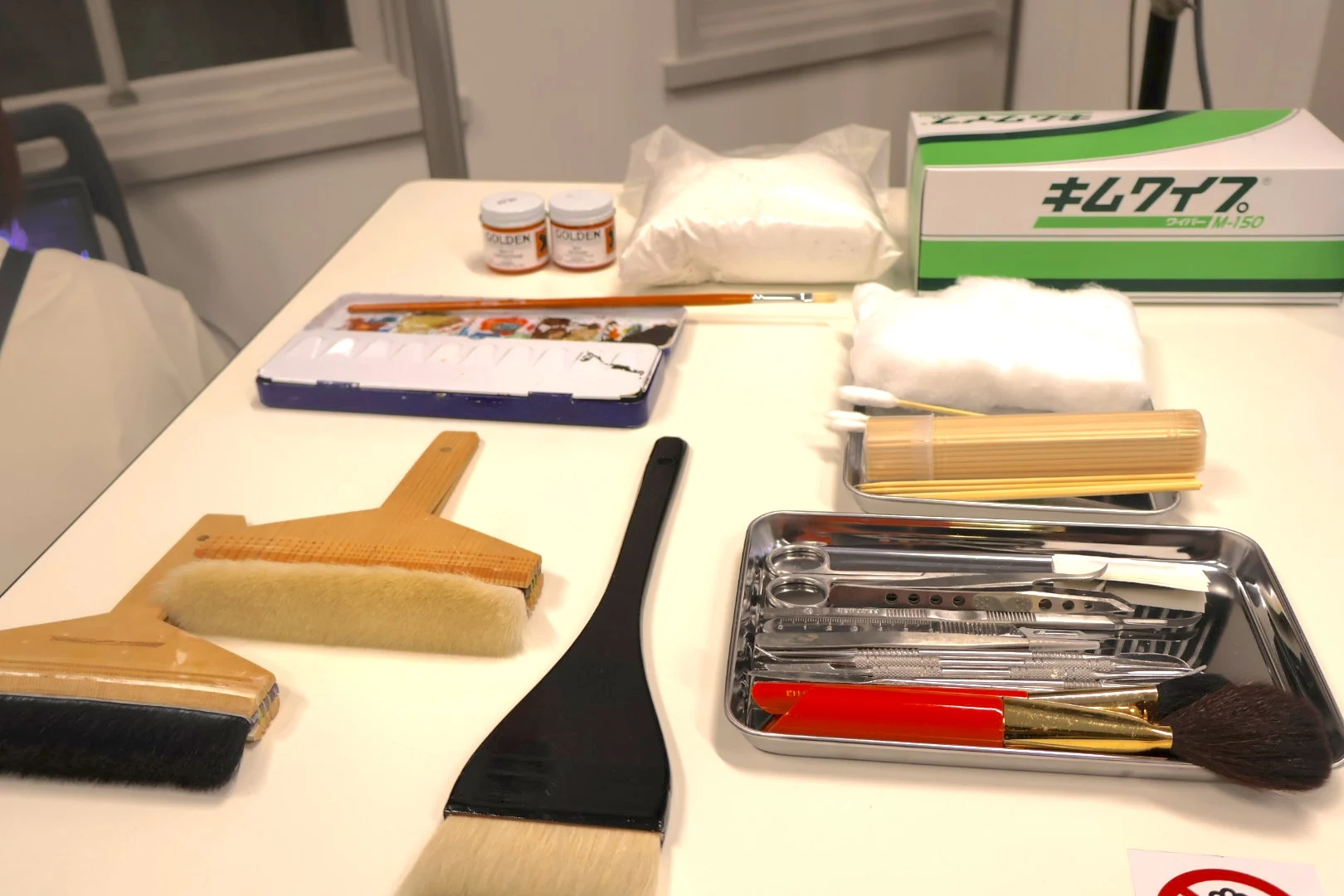
Restoration tools and cotton after dirt removal.
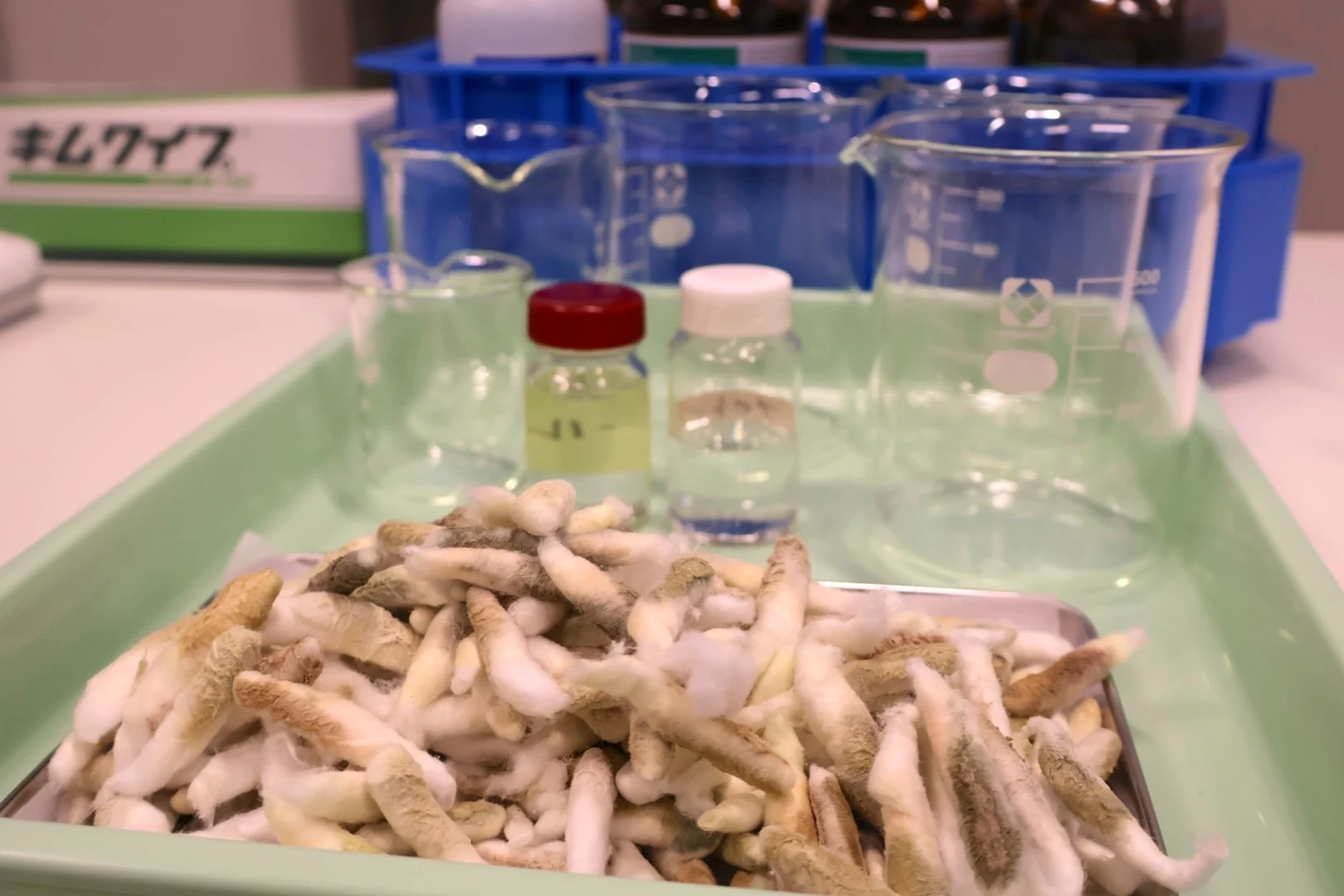
The restoration work to restore the original state of the painting proceeds in four main steps:
- Surface cleaning:
Carefully remove dirt attached to the surface with a water-soluble solvent. - Removal of old varnish and retouching:
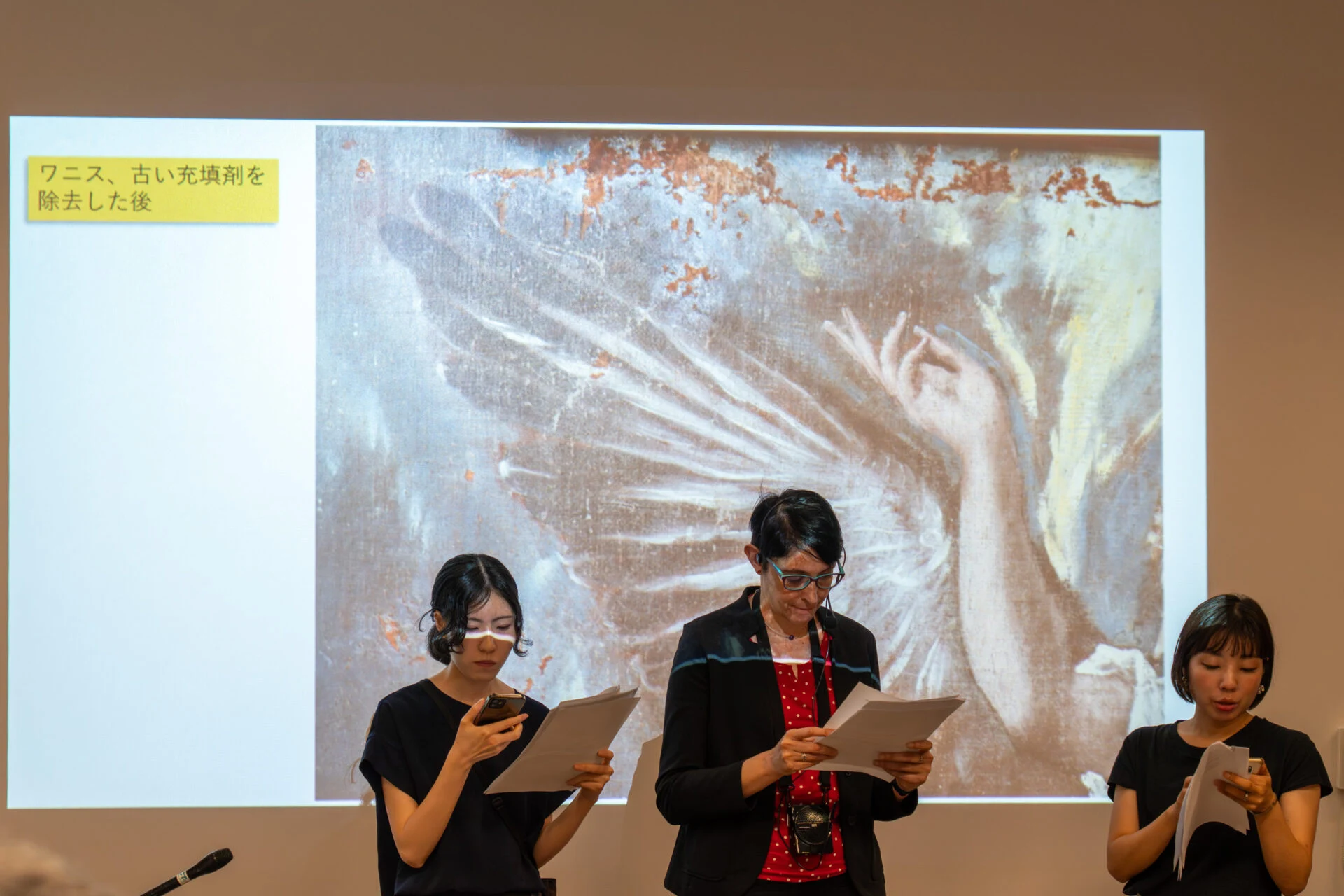
Remove the old varnish that covered the original layers of the artwork and the paint added during past restorations. There were two types of paint used in past restorations, one of which was very strong and difficult to remove, so a special gel-like solvent was used. - Filling missing parts:
Areas where paint has flaked off become recessed. To fill these areas with paint would create a sense of discomfort, so a filler made of plaster and rabbit glue is used to level them. Glue is a natural adhesive that has the advantage of being easy to remove during future restorations. - Retouching:
Color is added to the filled areas using restoration-specific paint to blend with the surrounding colors. This retouching work must be done carefully to avoid affecting the original paint, making it a very delicate task.
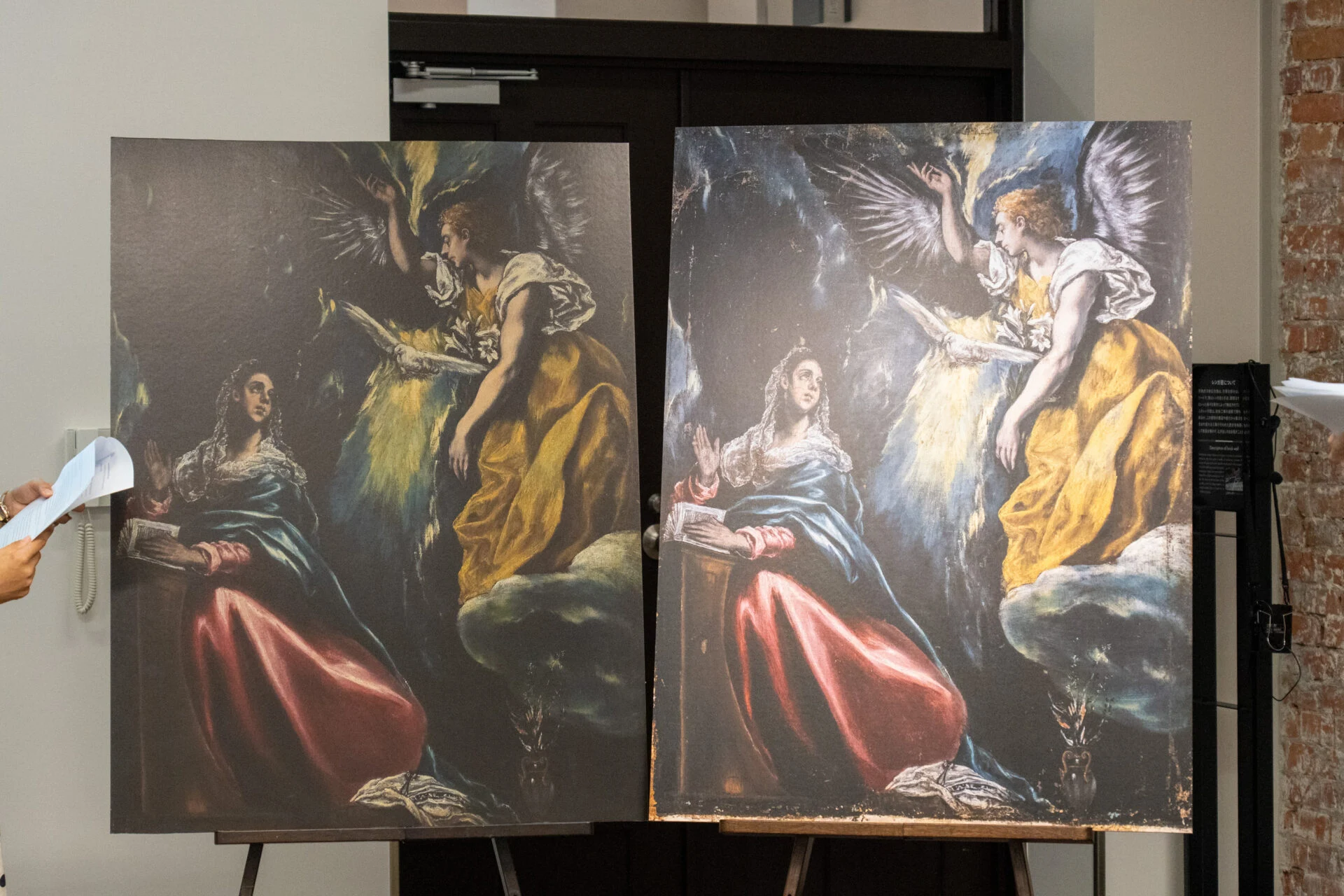
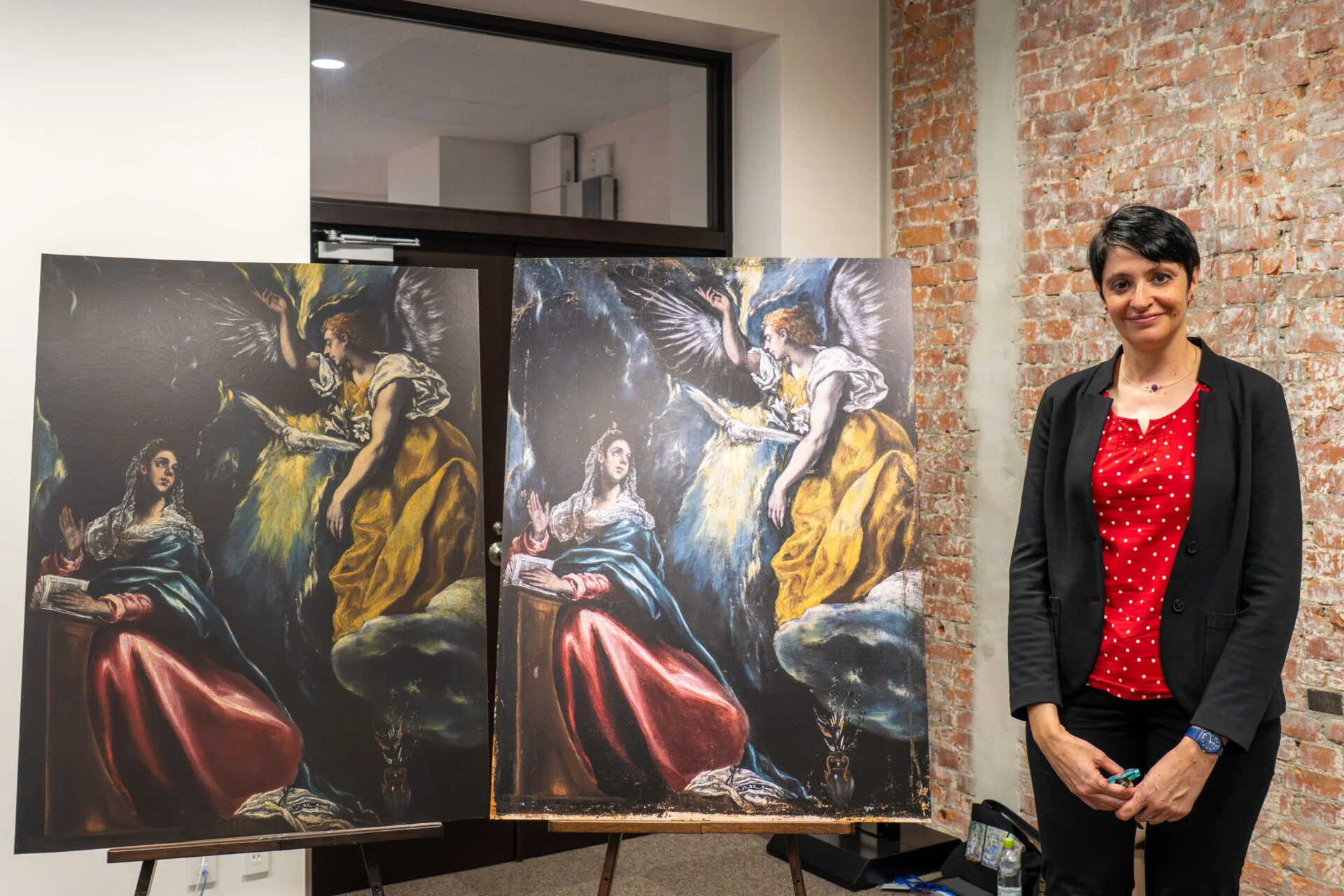
Left is before restoration, right is during restoration (before retouching) of the Annunciation (photo taken on July 26, 2025).
Ohara Museum of Art's Instagram, X, and YouTube have videos uploaded showing Eva's restoration process.
You can experience the world of painting restoration, which is usually not visible, such as the process of removing dirt with a tool resembling a large cotton swab.
The trigger for restoring the Annunciation
There was also an explanation about the trigger for restoring the Annunciation.
When a researcher and curator from Ohara Museum of Art visited the Art Institute of Chicago, they had the opportunity to tour the restoration room. At that time, they witnessed the restoration of a painting by El Greco.
They felt that the colors of the restored El Greco painting were very vivid and noticed the difference compared to the Annunciation they were seeing at Ohara Museum of Art.
The thought that "perhaps the Annunciation originally had different colors" became the initial trigger for considering restoration.
Records indicate that the last restoration was in 1959.
The reason for the restoration was likely to commemorate the 30th anniversary of Ohara Museum of Art the following year, and there are records of other works being commissioned to restorers in Japan, not just the Annunciation.
However, there are no records of the restoration details, so it is unclear what kind of restoration was performed.
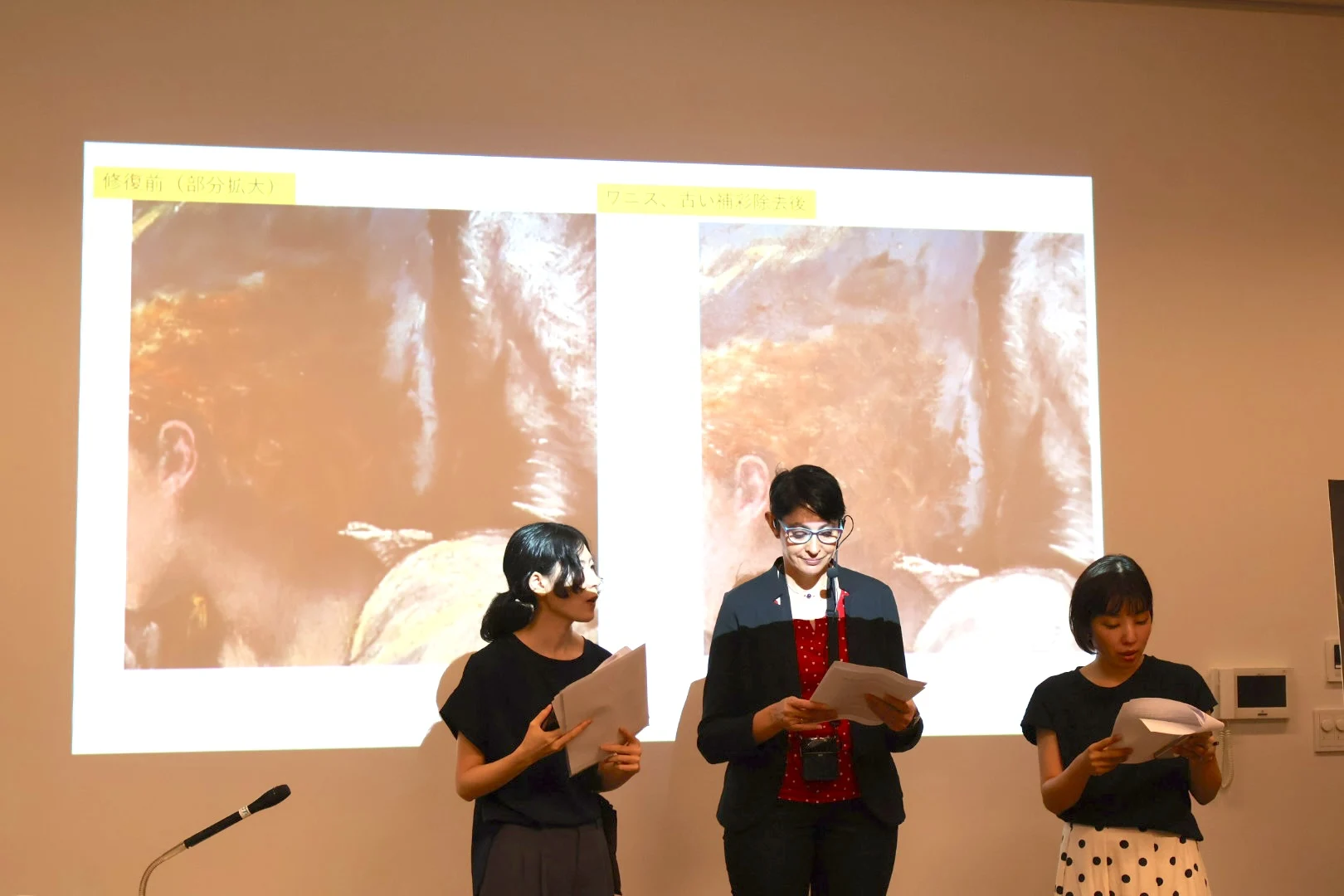
Q&A with Eva Martinez
A Q&A session was held regarding feelings about the restoration.
What was your impression when you first saw the Annunciation?
Eva (no honorifics)
I felt it was a wonderful work in very good condition.
The colors are very vivid, and it is an elegant painting. The depiction of Mary and the angel Gabriel is truly beautiful.
In particular, the way the angel's wings are painted with a swift touch is a remarkable technique of El Greco. The balance of the composition is also very good, conveying a sacred atmosphere.
What is the most important thing when restoring?
Eva
It is important to understand what kind of painting this work is.
We investigate the condition along with related materials to understand the techniques the artist used and what they wanted to express. Based on the information obtained there, understanding the artist's thoughts and the painting is the most important part of the restoration.
Furthermore, we must consider where the goal is and how far to restore. In particular, I pay close attention to the balance of light and shadow and the composition to avoid over-retouching.
What is rewarding about the restoration work?
Eva
I feel a sense of fulfillment in being able to see the most beautiful, truly best condition up close after restoration.
The best condition is one that looks as if there was no damage, like the state when it was first painted.
What are the highlights of the Annunciation?
Eva
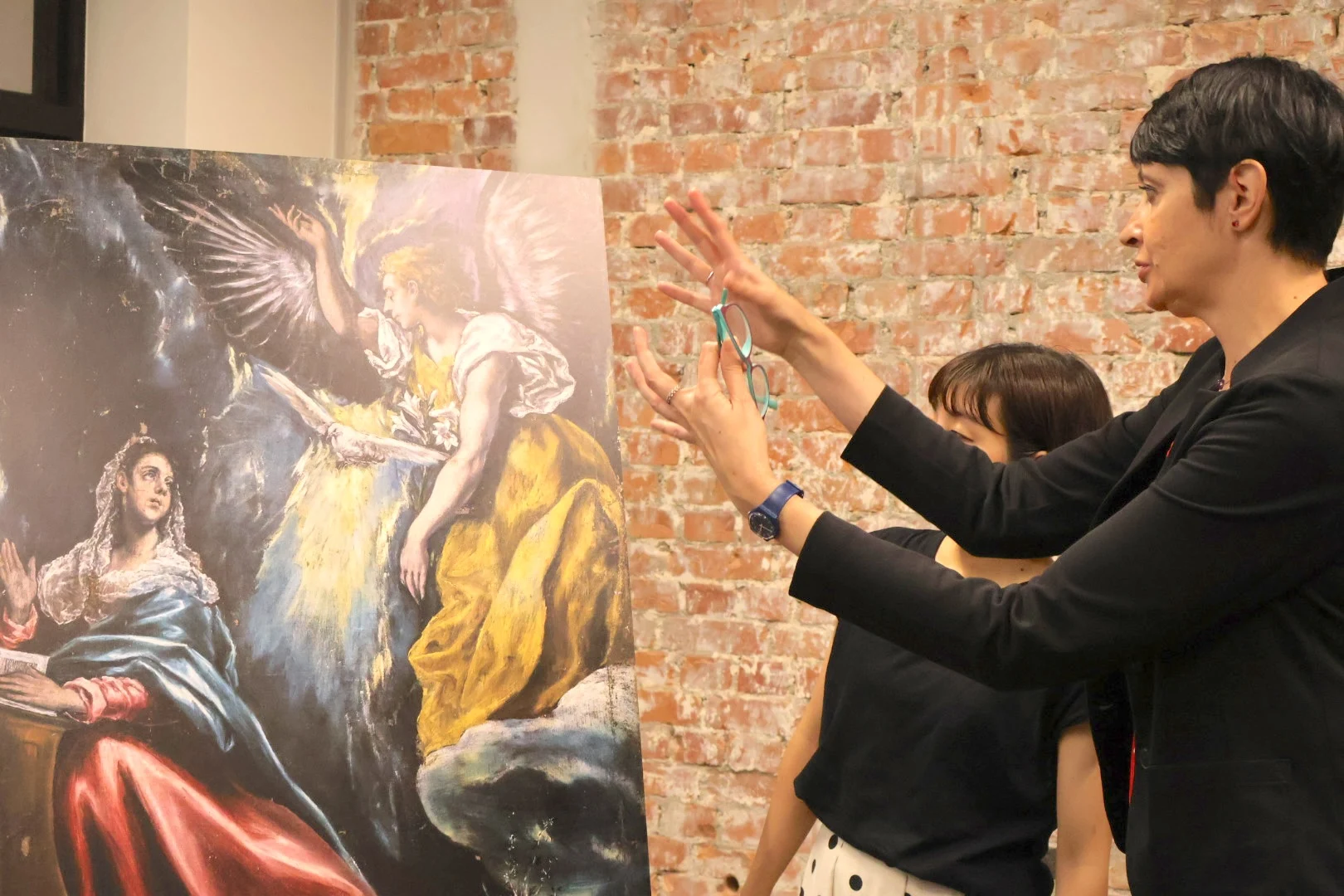
The exchange of glances between Mary and the angel Gabriel, and the conversation conveyed only through their eyes, as well as this wonderful composition, are what I think are the highlights.
Thanks to the restoration, El Greco's lively expression and transparent technique will be revived, allowing everyone to see the Annunciation in a state that is incredibly close to when it was painted.
Scheduled for public display after September
During the interview on July 30, 2025, it was mentioned that the restoration was progressing to the final stage. The final stage of retouching is the most delicate and time-consuming restoration, taking several weeks to complete.
However, even before the final finishing stage, I was surprised by the increased vibrancy of the colors compared to before restoration, and the beauty that seems to shine through. In particular, the wings of the angel Gabriel are impressive, allowing one to feel the texture of the wings and El Greco's brushwork.
The first time I saw the Annunciation at Ohara Museum of Art was when I was in the second grade of elementary school. After about 40 years, I have seen the Annunciation on various occasions, so I am looking forward to seeing how it will turn out.
The restored Annunciation is scheduled to be publicly displayed again at Ohara Museum of Art after September. The public date will be announced on the Ohara Museum of Art's website.
It seems that this autumn will be an opportunity to encounter beautiful masterpieces.
Articles about Ohara Museum of Art
Data of Ohara Museum of Art
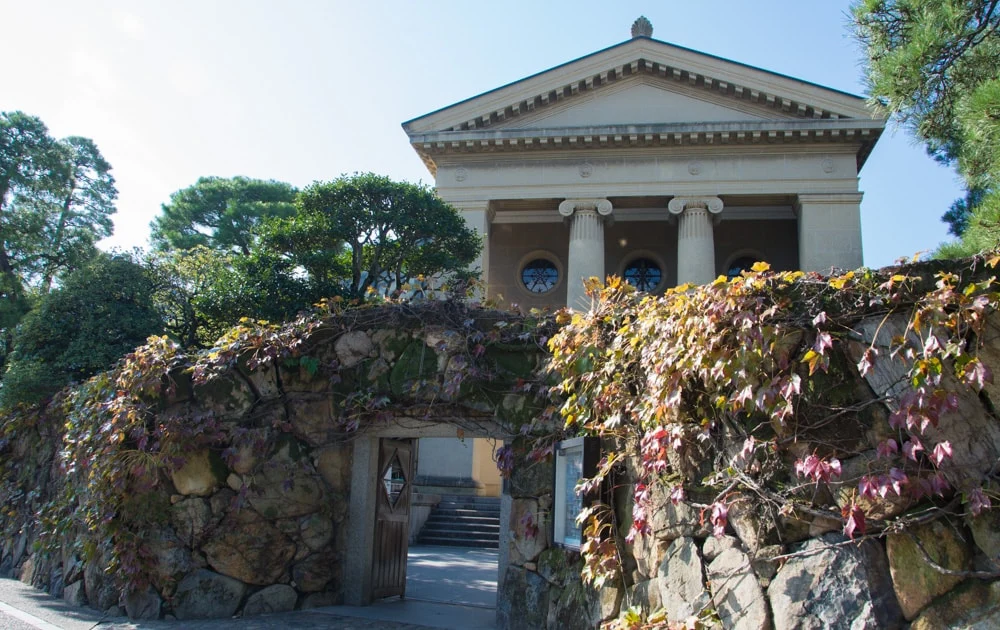
| Name | Ohara Museum of Art |
|---|---|
| Location | 1-1-15 Chuo, Kurashiki City, Okayama Prefecture |
| Contact | 086-422-0005 |
| Parking | None |
| Opening Hours | 【December to February】 9:00 AM - 3:00 PM (Last admission: 2:30 PM) 【March to November】 9:00 AM - 5:00 PM (Last admission: 4:30 PM) |
| Closed Days | Monday Open on public holidays and substitute holidays if they coincide Winter closure and temporary closures may occur |
| Admission Fee (including tax) | 【General】 Adults: 2,000 yen High school, junior high, and elementary school students (under 18 years old): 500 yen |
| Payment Methods |
|
| Reservations | Available No reservation required for individuals |
| Smoking | Completely non-smoking |
| Restrooms | Western-style toilets, barrier-free toilets |
| Childcare | Nursing room, diaper changing table, stroller rental The nursing room is located in the Craft Museum Diaper changing tables are available on the 2nd floor of the main building and in the Craft Museum |
| Barrier-free | Wheelchair rental, ramps, barrier-free toilets, elevators |
| Website | Official Website of Ohara Museum of Art |