It's December, and it's about time for a big cleaning...
Conducting a "big cleaning" as a year-end ritual is a customary event for both households and businesses.
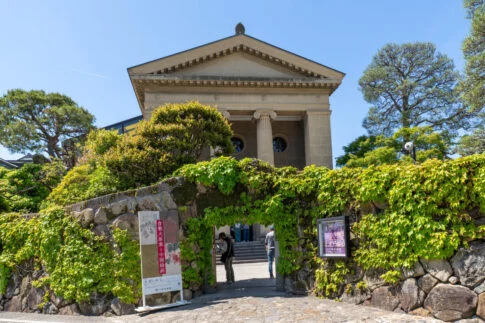
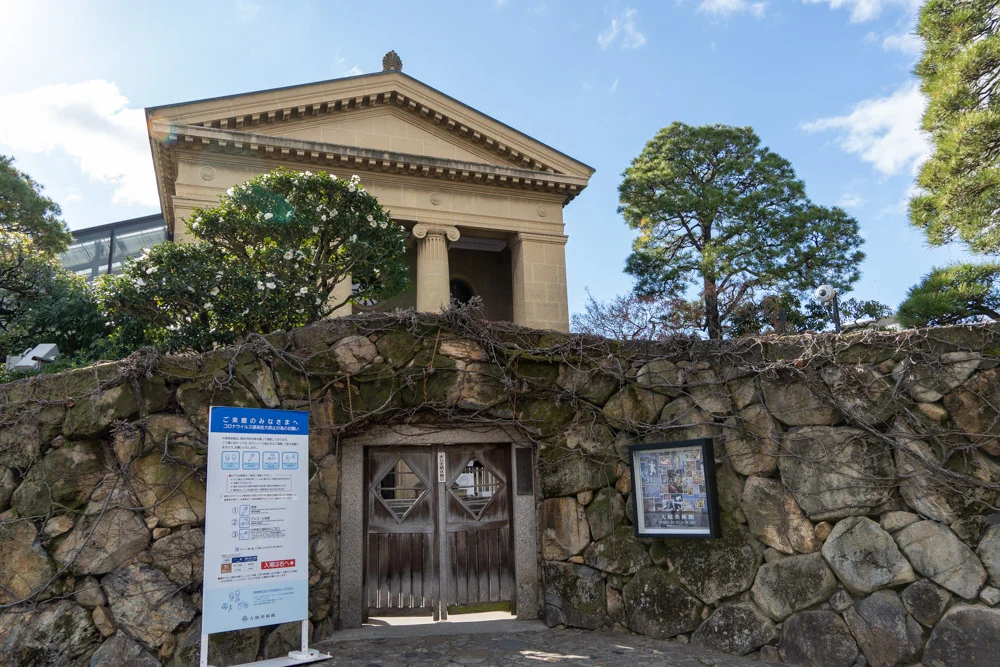
The same goes for cultural facilities such as museums, and the "Ohara Museum of Art" located in the Bikan Historical Area of Kurashiki also held its year-end big cleaning event.
This article reports on the "Ohara Museum of Art Year-End Big Cleaning" that took place on December 13, 2021, with some parts made public.
Photography is generally prohibited inside the Ohara Museum of Art. Permission for photography was granted for this coverage.
What is the Ohara Museum of Art?
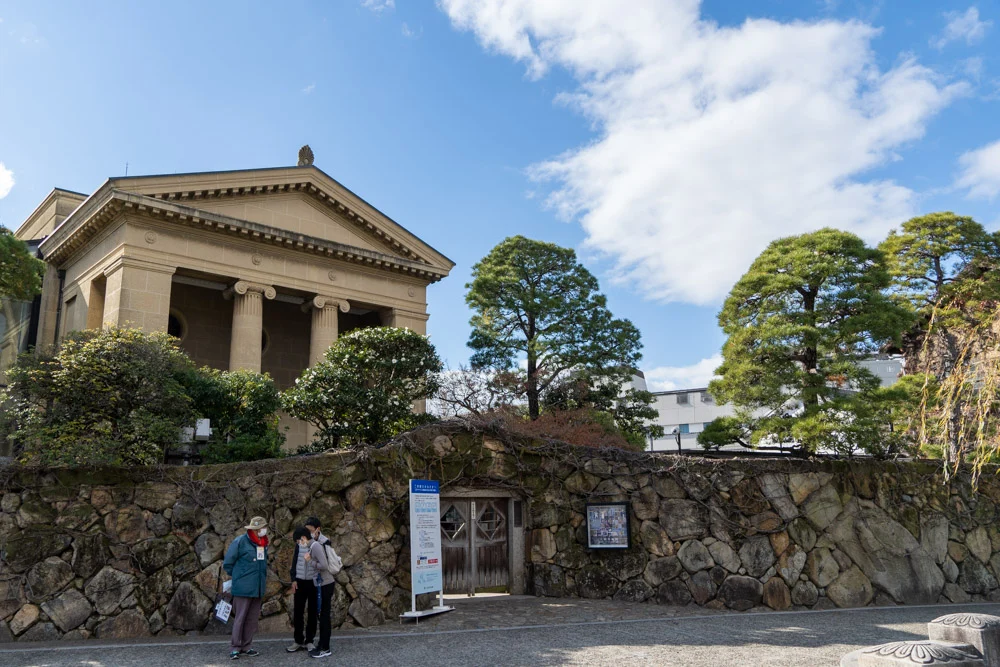
The Ohara Museum of Art, established in 1930, is Japan's first private museum focused on Western art.
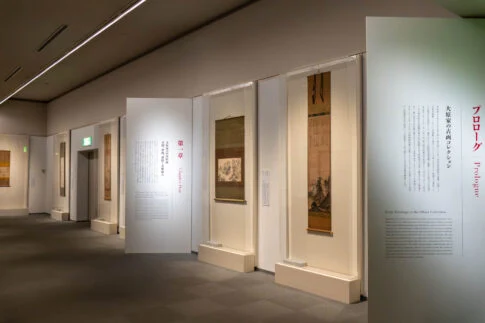
It consists of the main building, a branch, and a crafts and Asian art building, with a collection of approximately 3,000 works.
As of December 2021, due to measures against the spread of COVID-19, the branch that focused on modern and contemporary Japanese art was closed. Some works have been moved to the main building for display.
The big cleaning was conducted in the main building, with only a portion of the paintings being cleaned publicly.
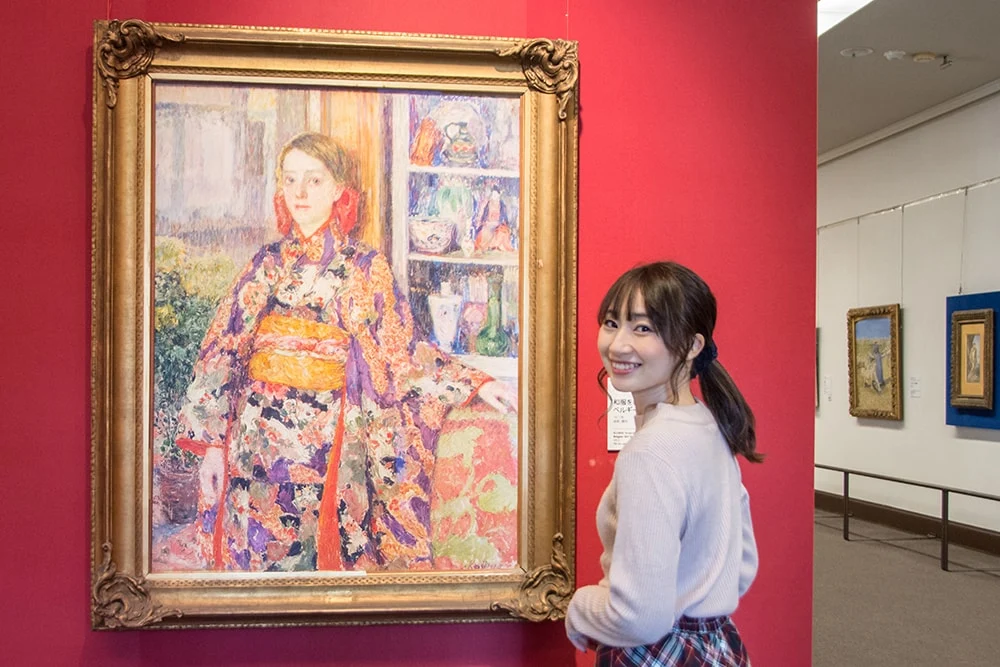
The Process of Cleaning Paintings
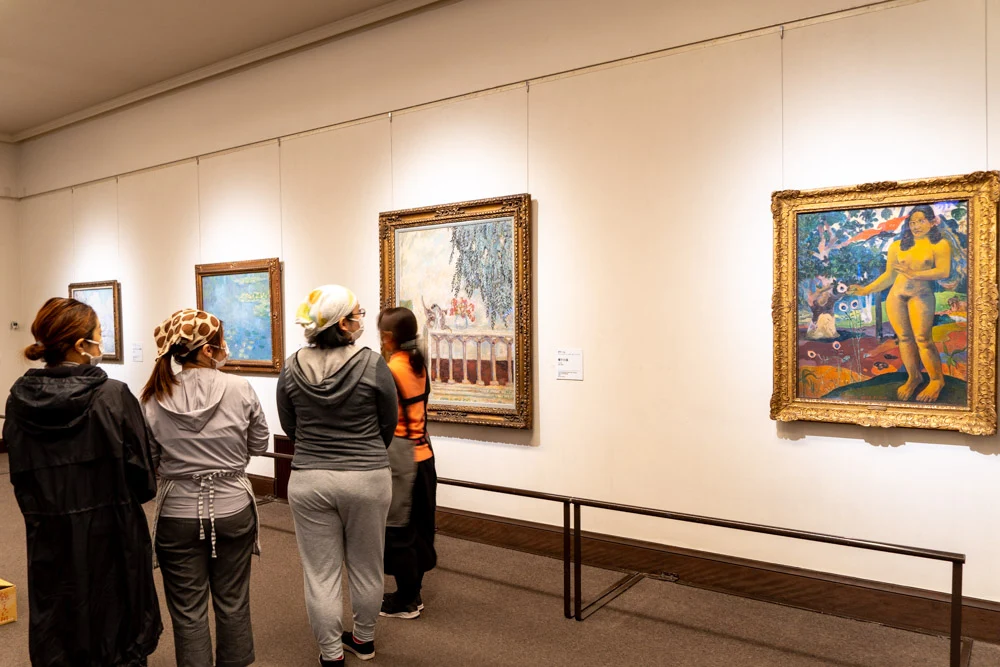
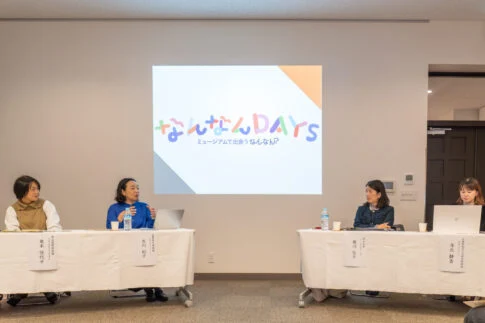
Before starting the work, Takayuki Tsukamoto, the curator in charge of artwork preservation and management, provided explanations to the staff who would be conducting the cleaning.
To avoid damaging the paintings, they checked to ensure that gloves were worn, that no rings or watches were on, that nothing was in their chest pockets, and that nothing was hanging around their necks before starting the cleaning.
The cleaning of the paintings was carried out in the following steps.
- Lowering the paintings to the floor
- Removing dust from the frame with a brush
- Wiping the front acrylic panel
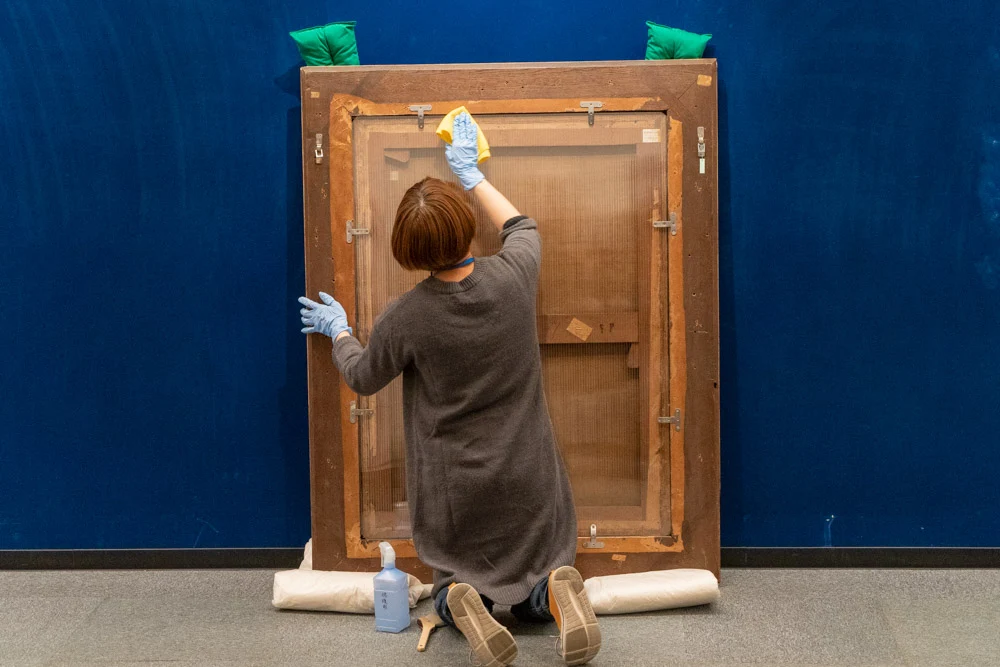
- Removing dust from the back side with a brush
- Wiping the back panel
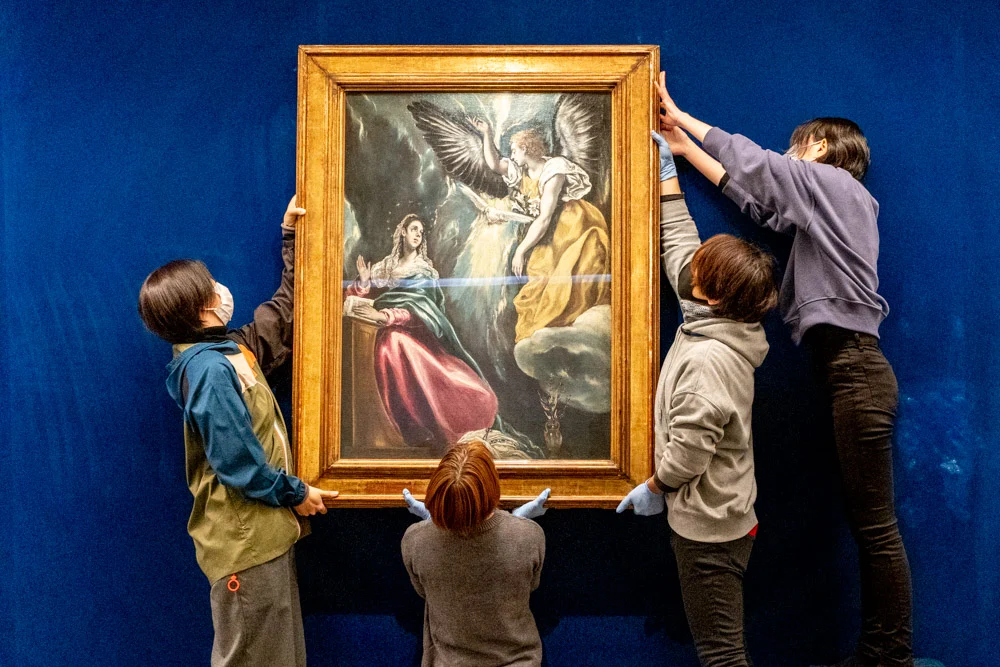
- Returning the paintings to their original position
Among these, only curators perform steps 1 and 6.
There are some exceptions (such as transport companies trained to handle the works), but the rule in the industry is that only curators touch the museum's collection.
Therefore, even when museum staff conduct cleaning, it is done "under the direction of the curator."
First, cleaning was conducted for the following works in the exhibition room on the first floor of the main building.
- Paul Signac's "The Canal at Auvers"
- Claude Monet's "Water Lilies"
- Pierre Bonnard's "Cat on a Railing"
- Paul Gauguin's "The Fragrant Earth"
Lowering the Paintings to the Floor
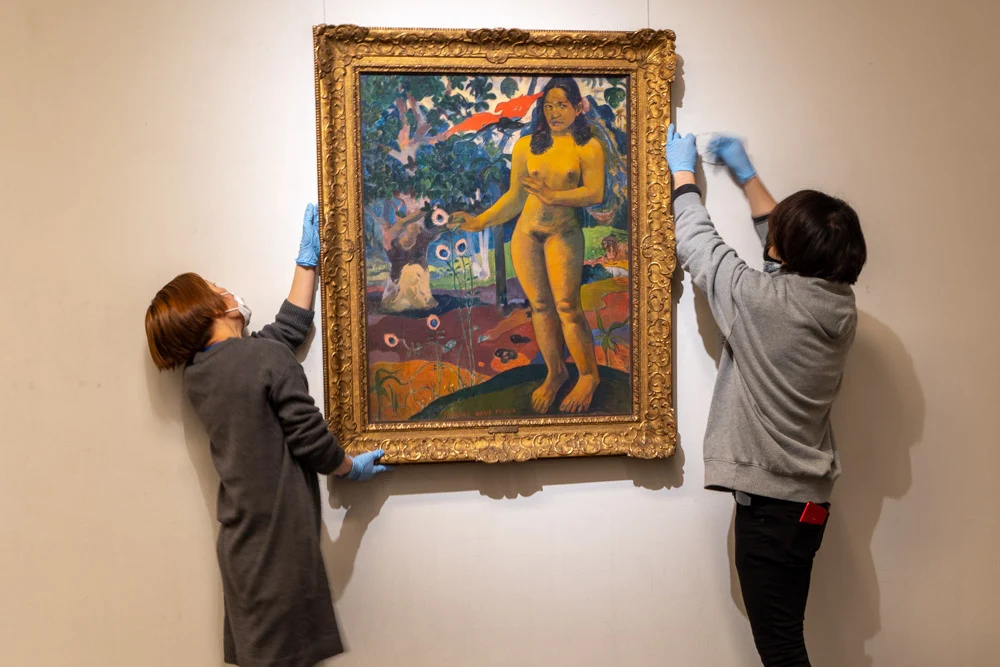
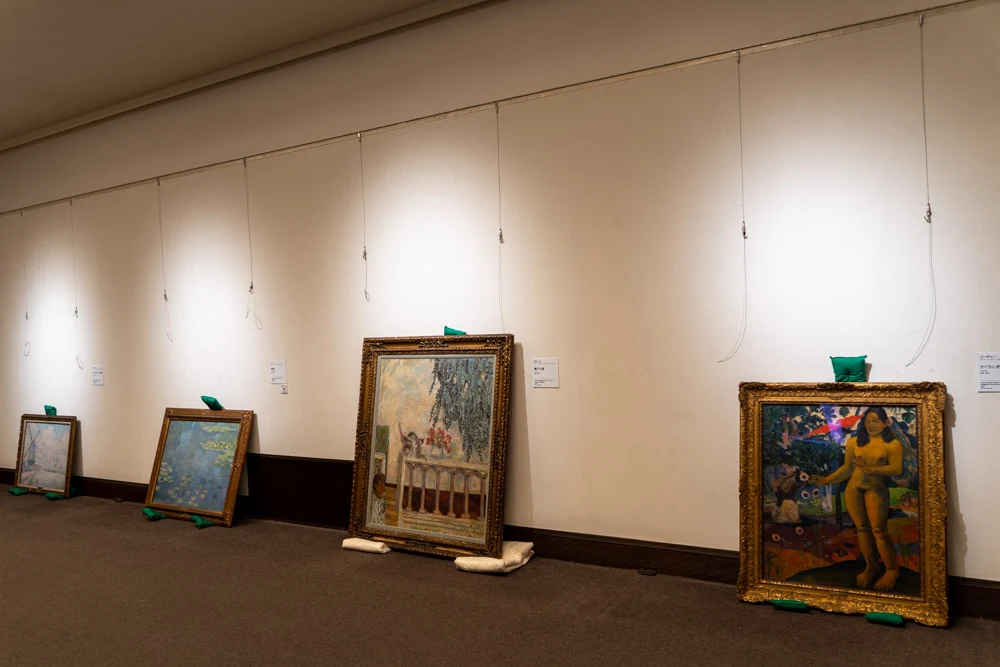
First, the works are lowered to the floor.
The curators handled them carefully.
Removing Dust from the Frame with a Brush
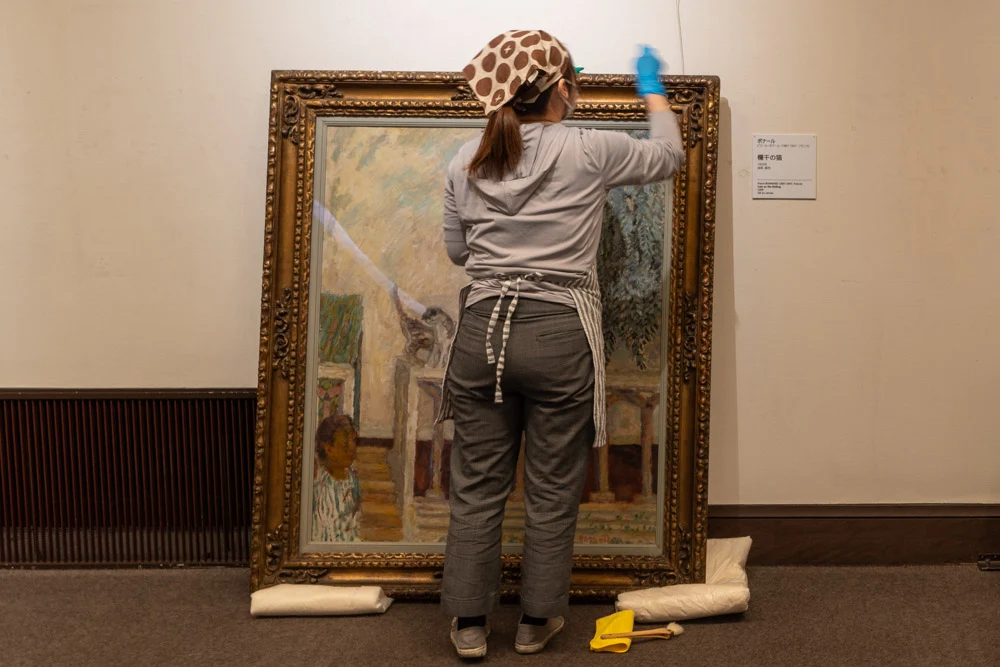
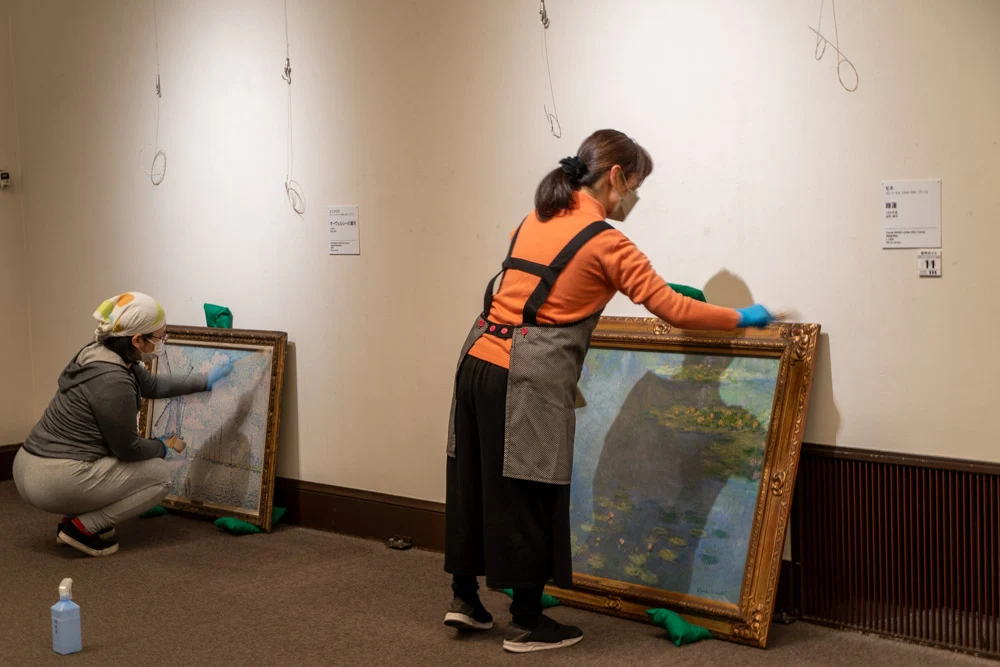
Using a brush, dust is gently removed.
This task was performed by the staff of the Ohara Museum of Art, but there were moments when the curators occasionally provided guidance, creating a slight tension in the atmosphere.
Wiping the Front Acrylic Panel
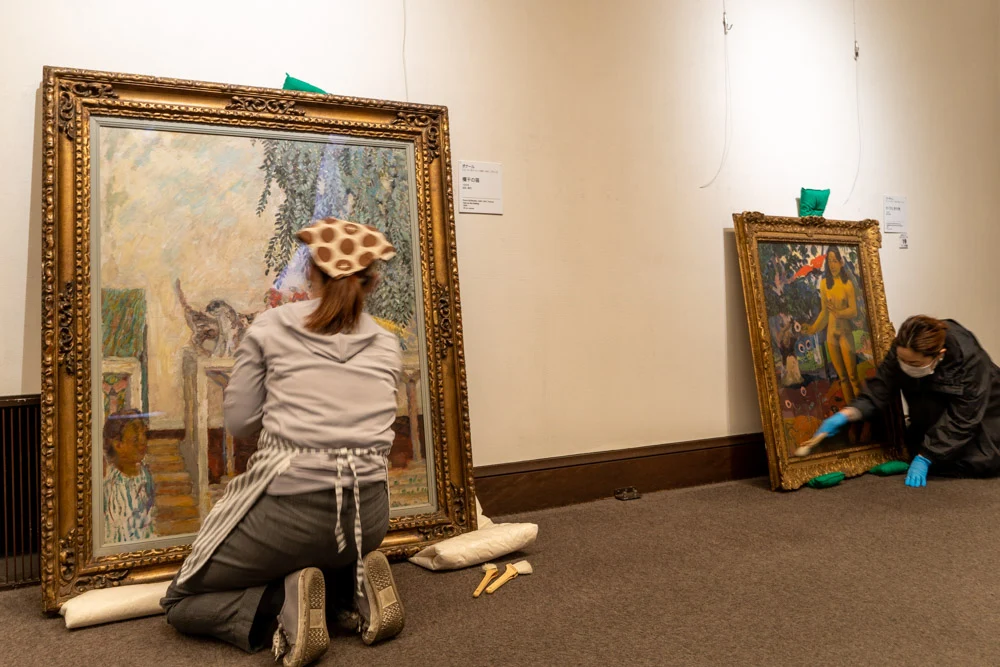
Next, the front acrylic panel is wiped with a soft cloth soaked in a 10% diluted ethanol solution for cleaning.
Cleaning the Back Side
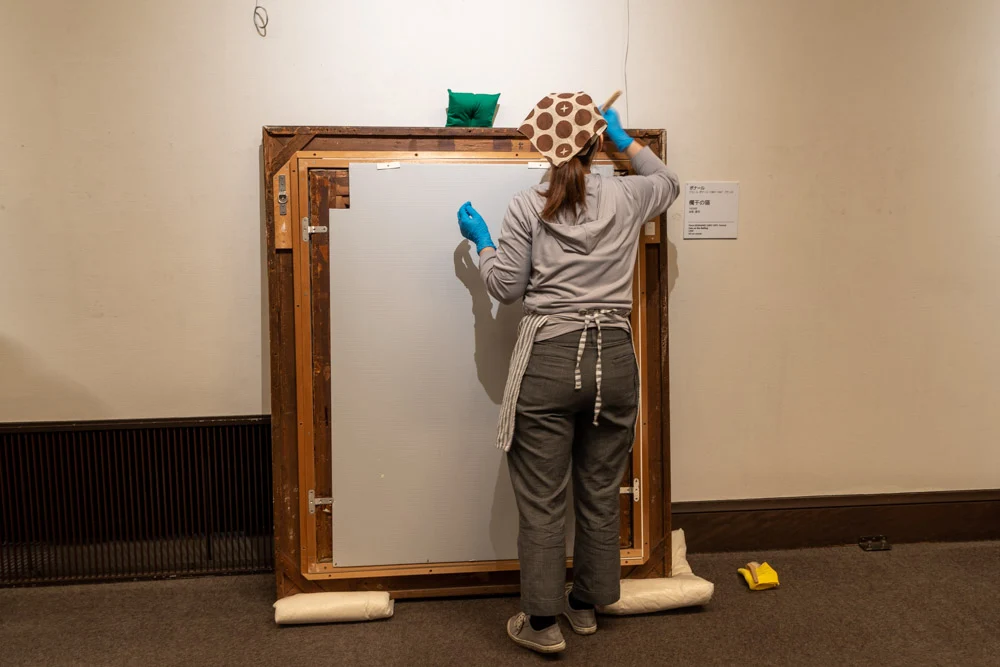
After finishing the cleaning of the front, the back side is also cleaned.
The process is the same as for the front, but seeing the "back of the frame," which is usually not visible, feels refreshing.
Returning the Paintings to Their Original Position
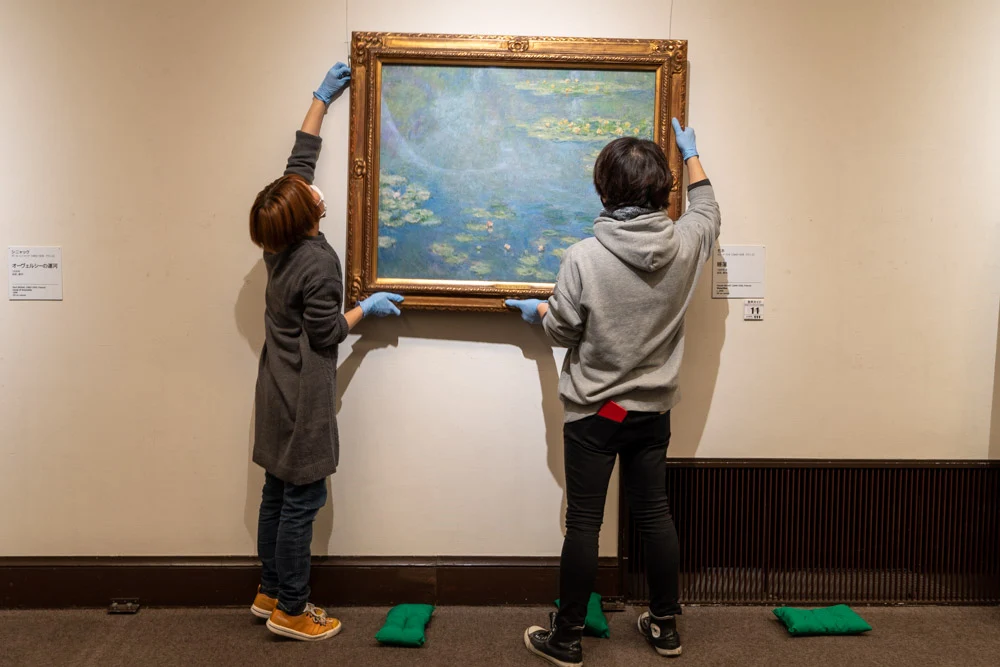
Once the cleaning is finished, the curator returns the works to their original positions.
The entire process took about 10 to 15 minutes.
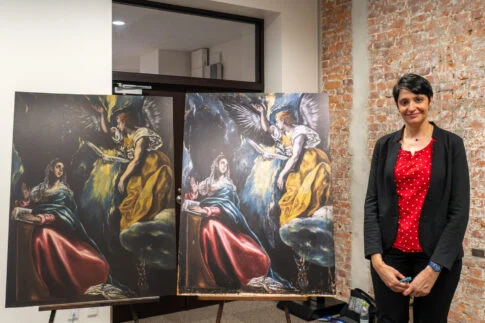
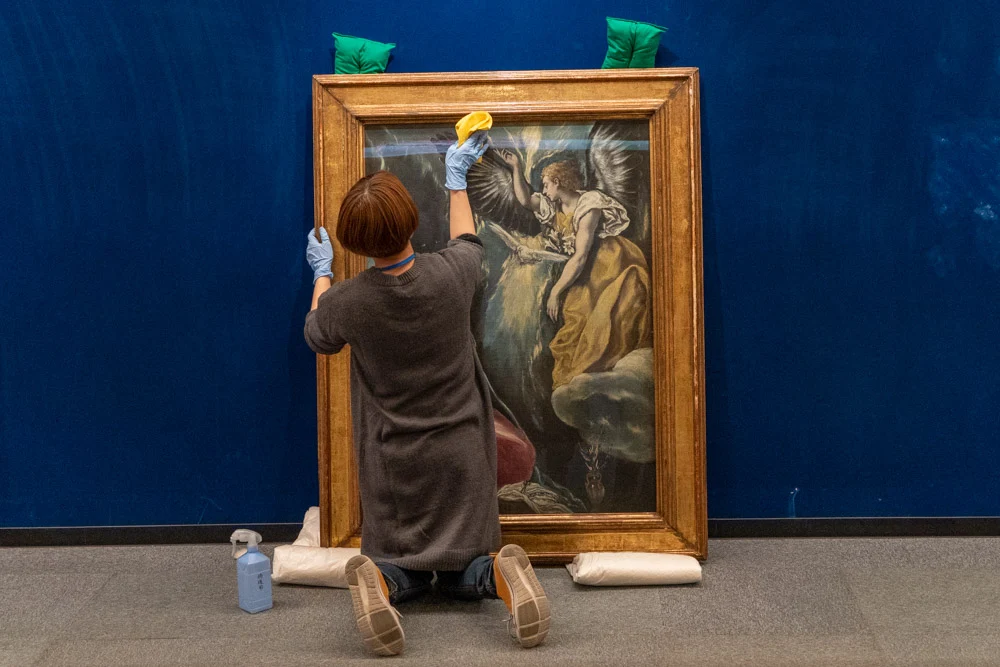
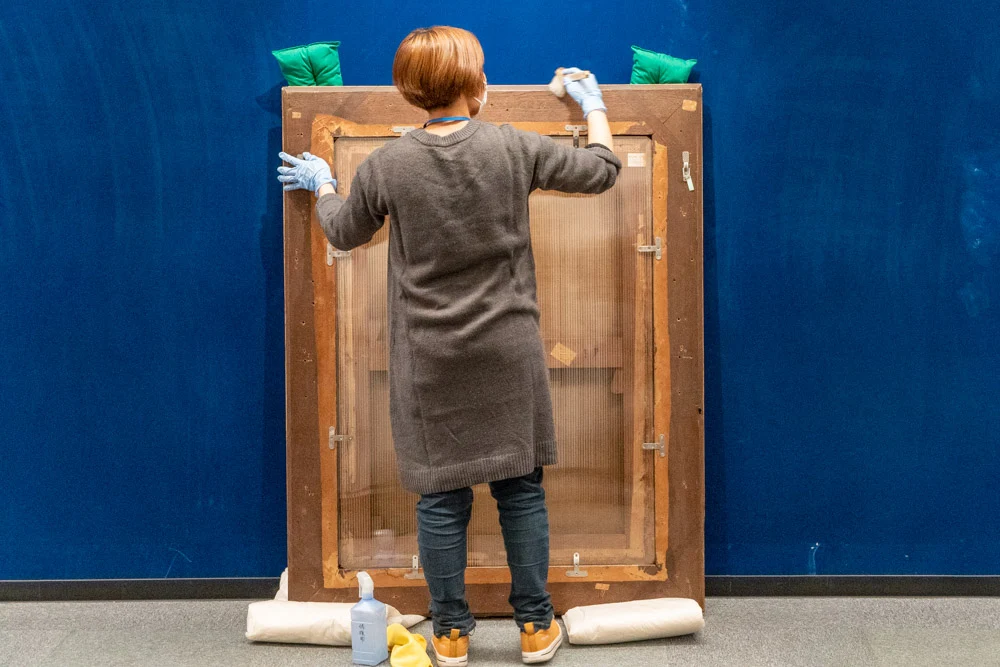
Cleaning El Greco's "Annunciation"
The cleaning of El Greco's "Annunciation" on the second floor of the main building was also made public.
The cleaning process was the same as before.
Reflecting on the Ohara Museum of Art in 2021 (from Deputy Director Morikawa)
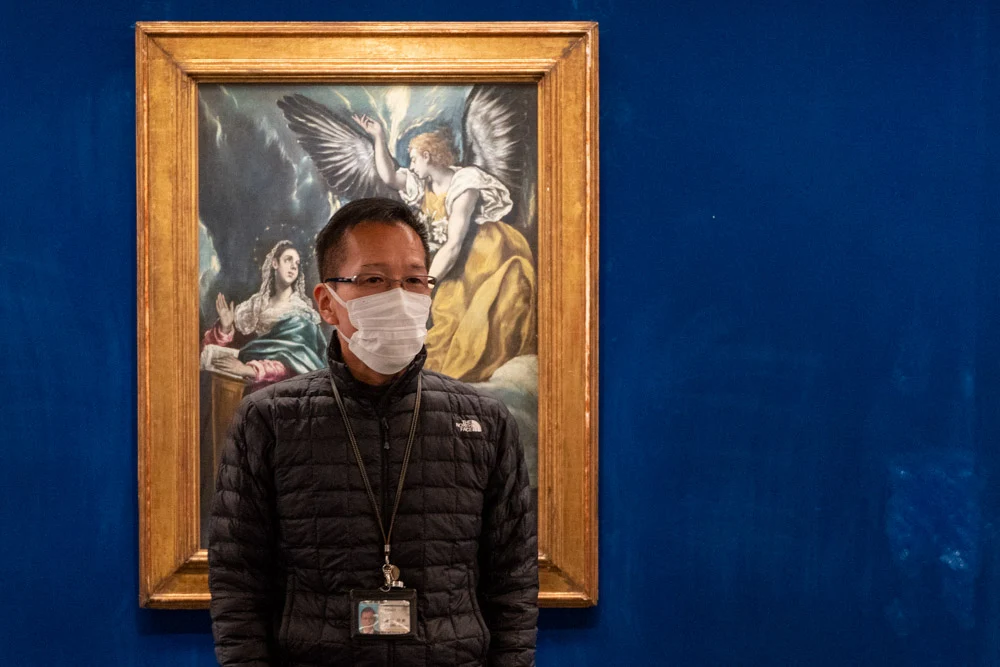
Finally, Deputy Director Masanori Morikawa gave an interview, discussing the conclusion of the year and looking forward to the next year.
Last year (2020) was a thorny path, but this year has also brought its share of ups and downs and hardships.
I hope that next year, the COVID-19 pandemic will subside even a little, and that travel restrictions will ease, allowing us to welcome customers from outside the prefecture.
To see and feel the real works.
This is what we consider our mission, and we hope that through art, everyone can spend a fulfilling time.
Conclusion
Since 2020, the Ohara Museum of Art has been severely impacted financially due to the self-imposed restrictions on going out caused by the COVID-19 pandemic.
During the Q&A session, there was a question asking, "Has the amount of dust decreased due to the decrease in visitor numbers?"
"It is true that last year (2020) saw a significant decrease, but this year (2021), despite the low numbers, we were able to welcome some customers, so I think the dust has increased to some extent."
It was impressive to hear the response that, due to the current reduction in the number of staff coming to work, it is difficult to clean all the works during the big cleaning, but daily cleaning is always being carried out.
Even without people, the museum is alive.
I hope that in 2022, we can welcome more people, and that not only the Ohara Museum of Art but also the Bikan Historical Area in Kurashiki will regain its vibrancy.
Articles about Ohara Museum of Art