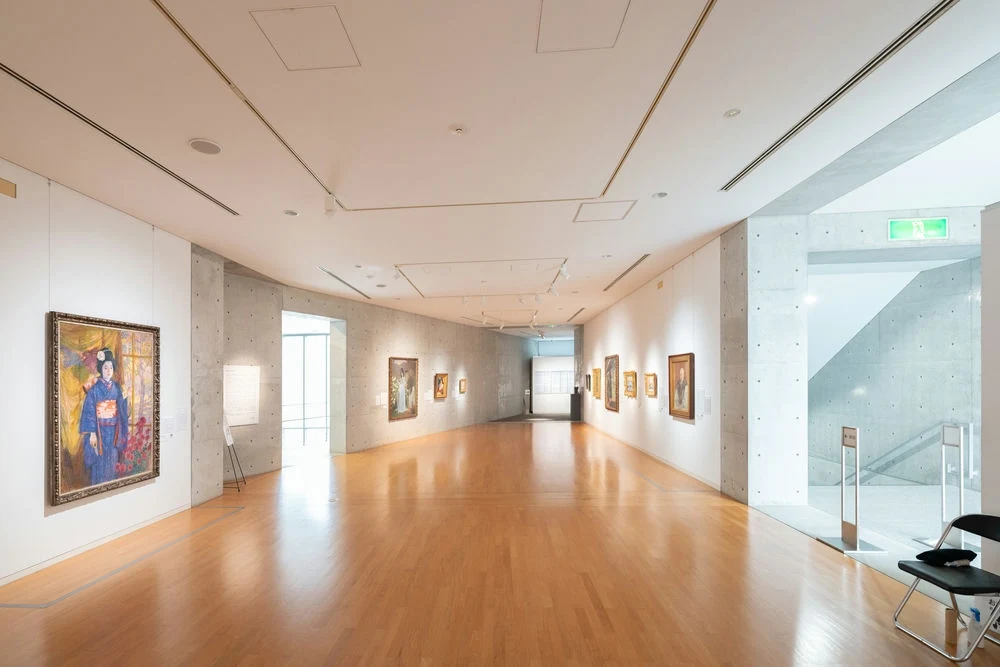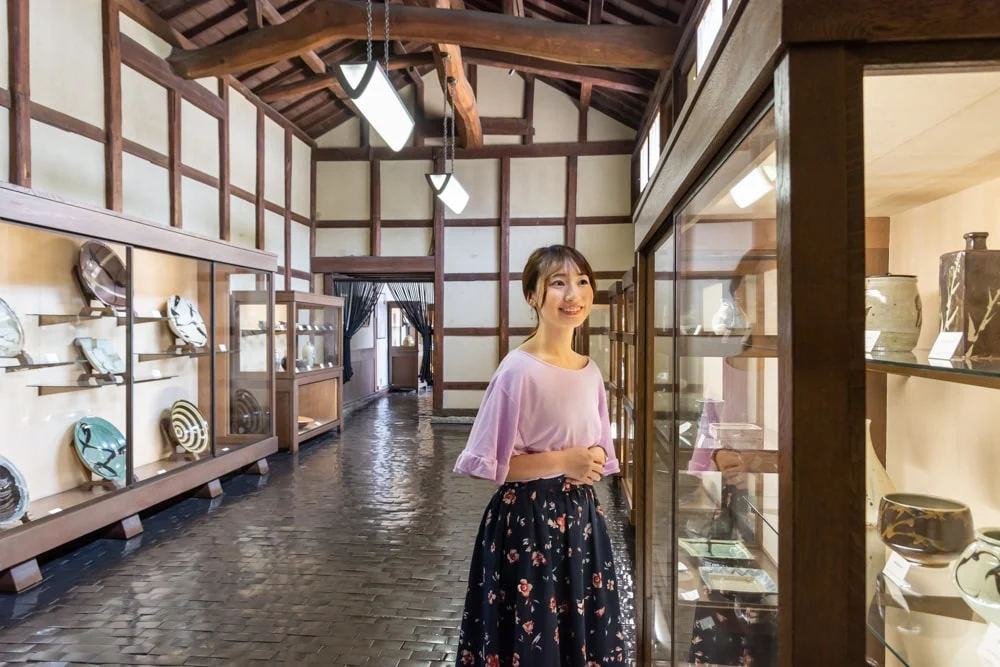
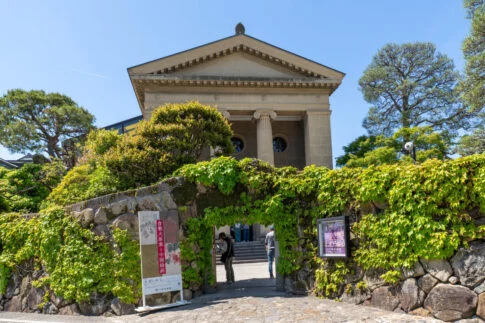
The Ohara Museum of Art has a wide collection of artworks.
You can also see crafts such as ceramics, prints, and dyeing, as well as ancient Oriental art.
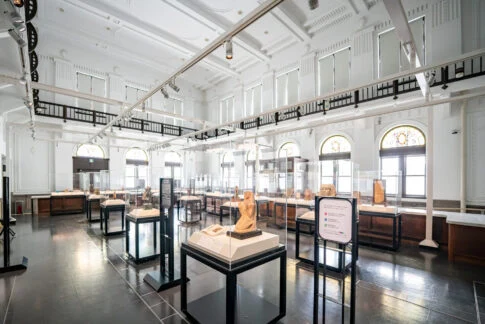
The crafts and ancient art are displayed in the "Crafts and Oriental Hall."
Not only the artworks but also the ingenuity of the building is very interesting, providing enjoyment for the senses of hearing and touch!
A floor that makes sounds, a mysterious handrail, and a door made from construction site scaffolding boards!?
Mr. Okazaki from the Ohara Museum of Art will guide us and introduce the charm of the Crafts and Oriental Hall.
Photography is generally prohibited inside the Ohara Museum of Art. This time, we have received special permission to take photos.
What is the Crafts and Oriental Hall of the Ohara Museum of Art?

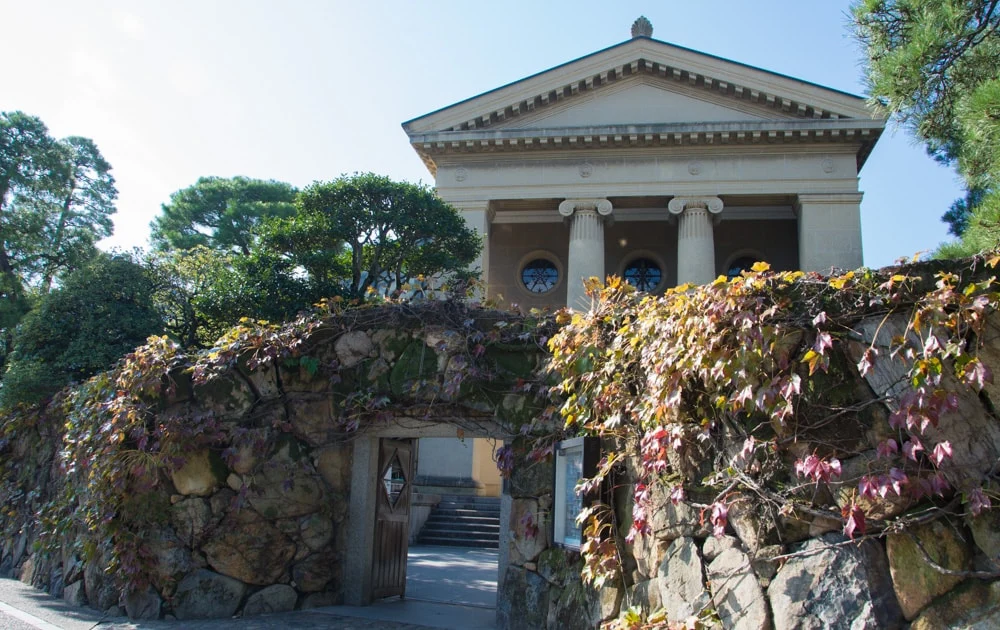
Established in 1930, the Ohara Museum of Art was expanded after the war and is now divided into the main building, sub-branch, and the Crafts and Oriental Hall.
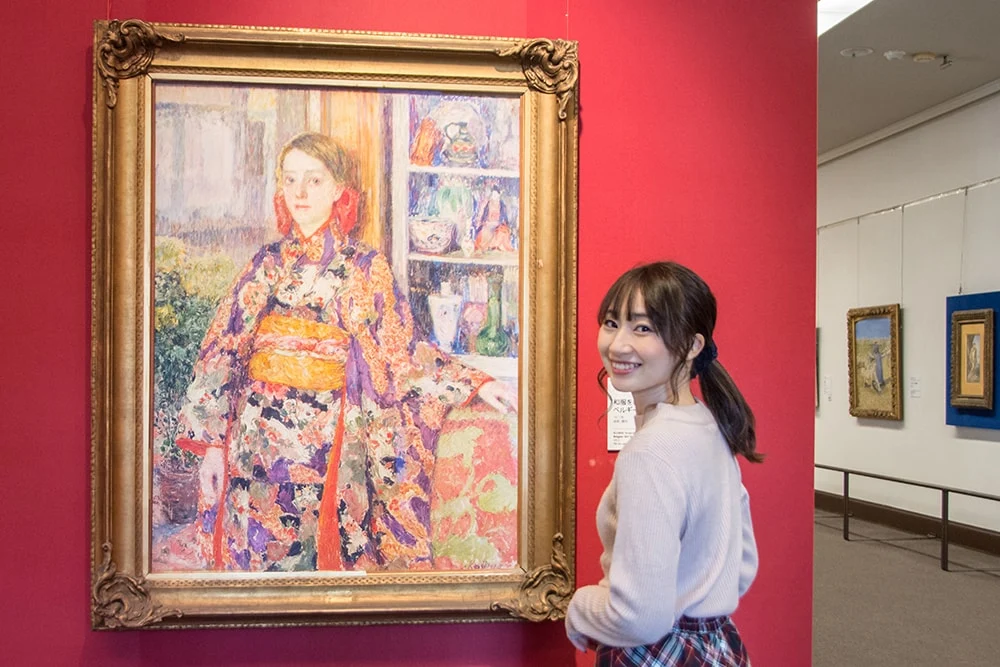
![[Closed] Ohara Museum of Art Sub-branch - A museum that supports challenges to creativity and walks with the present](https://media.kuratoco.com/wp-content/uploads/2019/04/23060108/190215-101r-3.jpg)
The Crafts and Oriental Hall is an exhibition room remodeled from a storehouse that was used for storing rice and cotton.
It displays works by artists who supported the Mingei (folk craft) movement and ancient Oriental art.
About the Crafts Hall
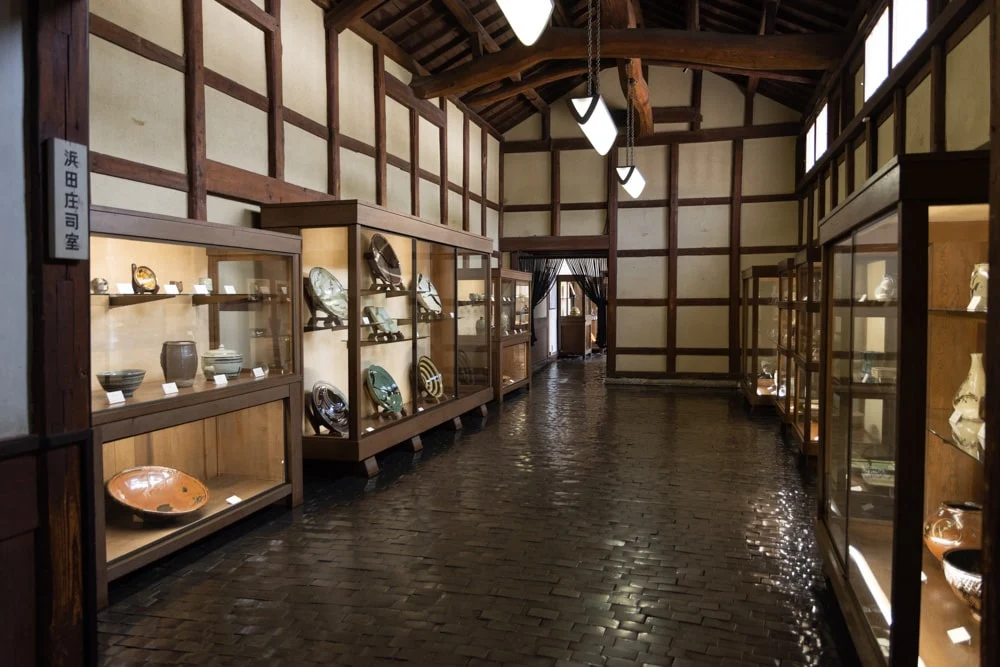
In the Crafts Hall, crafts by the following six artists who supported the Mingei movement are displayed in each room.
| Artist Name | Genre |
|---|---|
| Hamada Shoji | Ceramics |
| Bernard Leach | Ceramics |
| Tomimoto Kenkichi | Ceramics |
| Kawai Kanjiro | Ceramics |
| Munakata Shiko | Woodblock Prints |
| Serizawa Keisuke | Dyeing |
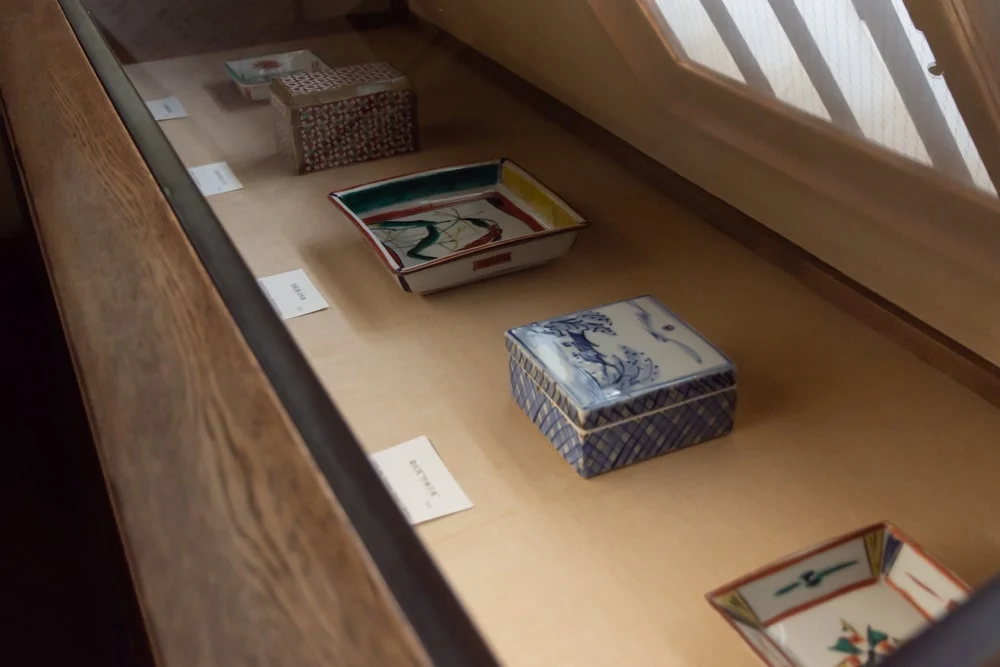
The Mingei movement is an activity that finds beauty in everyday tools.
Ohara Magosaburo, the founder of the Ohara Museum of Art, and his son Soichiro resonated with and supported the Mingei movement.
The Ohara family funded most of the establishment costs of the "Japan Folk Craft Museum" located in Komaba, Tokyo, making them important figures in the Mingei movement.
For more information about the Mingei movement, please refer to the article on the Kurashiki Museum of Folkcraft. You can see folk crafts from around the world at the Kurashiki Museum of Folkcraft, so visiting both will enhance your experience.
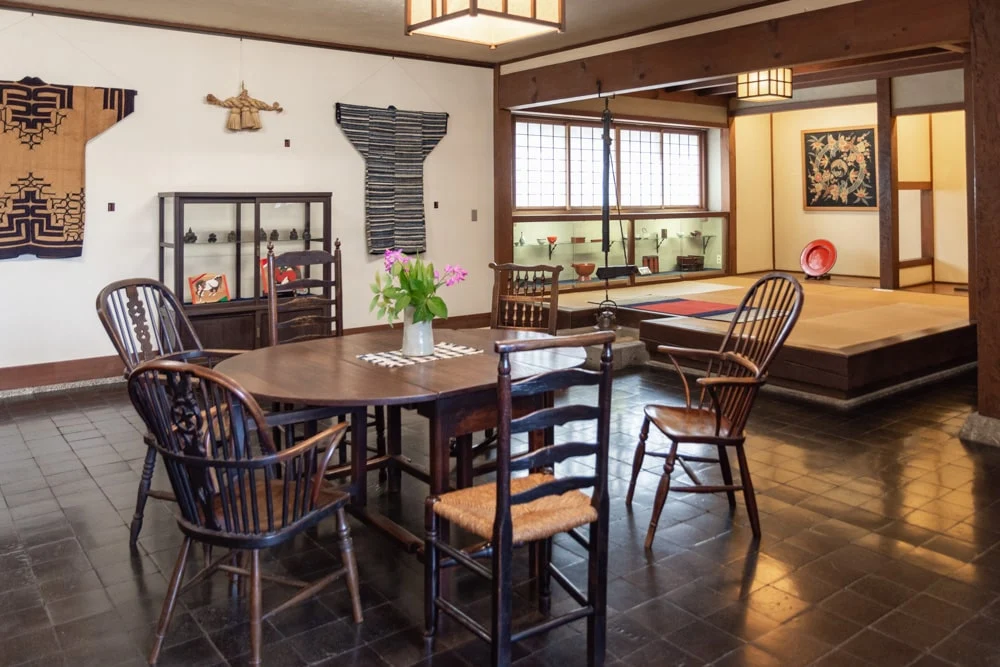
About the Oriental Hall
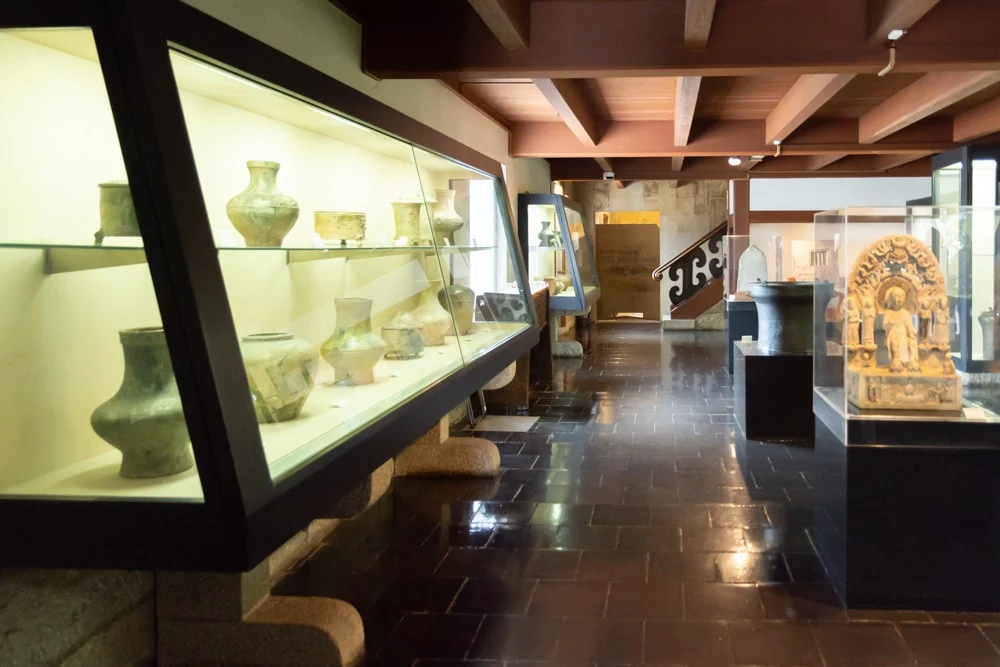
Kojima Torajiro, who collected Western paintings that form the foundation of the Ohara Museum of Art's collection, visited China, the Korean Peninsula, and Egypt, collecting Buddhist statues and ancient art.
In the Oriental Hall, ancient artworks are displayed, focusing on the collection of Kojima Torajiro.
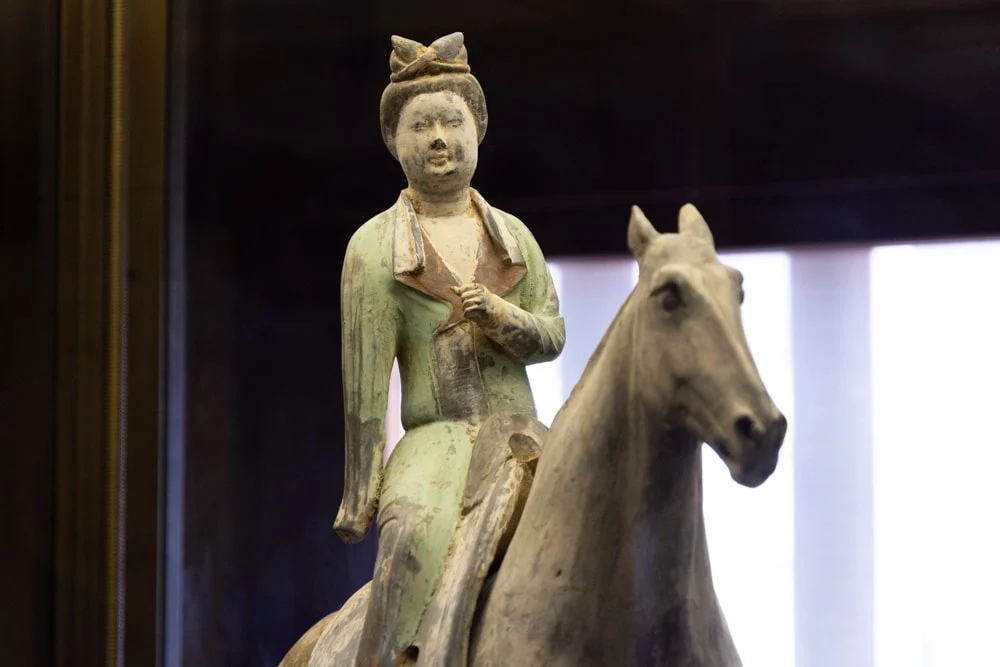
There were many valuable items, including vessels from before the Common Era and large stone Buddha statues.
Focus on the building in the Crafts and Oriental Hall!
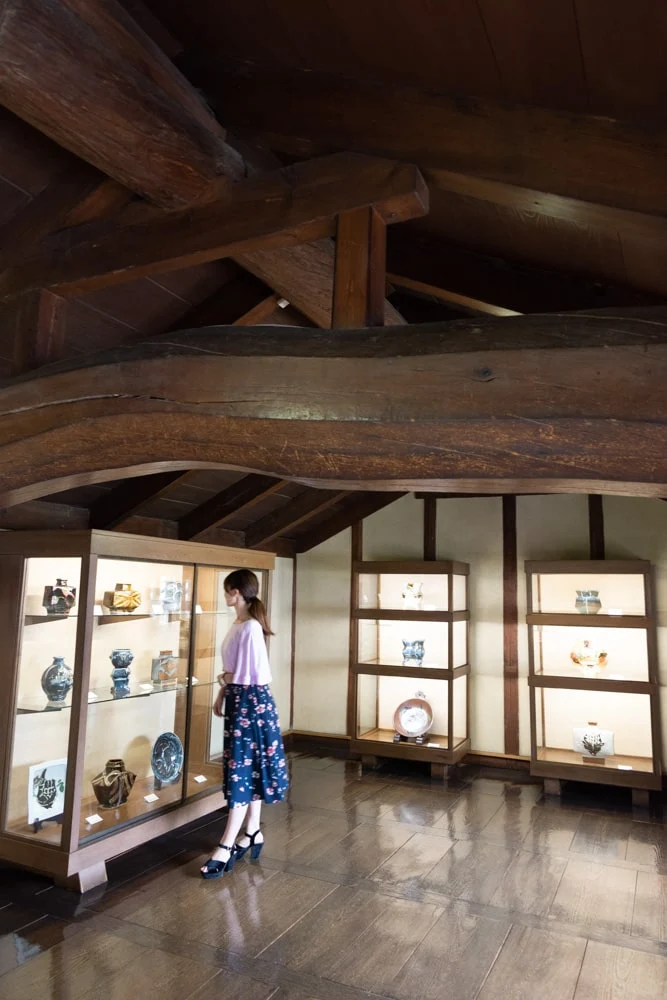
The exterior, interior, and displays of the Crafts and Oriental Hall, as well as the arrangement of the storehouses, were meticulously designed by Serizawa Keisuke, a dyeing craftsman who had a close relationship with Soichiro.
Serizawa was recognized as a holder of an important intangible cultural asset (Living National Treasure) for his technique of "katae-zome," which integrates the processes of design, mold carving, and dyeing that were previously done separately by artisans.
In addition to dyeing, he demonstrated excellent talent.
The Crafts and Oriental Hall features various room designs tailored to the artworks and artists.
The building is full of clever designs, making it very interesting with plenty to see!
Let me introduce some points to pay attention to.
A distinctive namako wall exterior typical of Kurashiki

The Crafts and Oriental Hall is created by remodeling a storehouse.
A red-walled storehouse stands out against the white-walled storehouses, making it stylish!
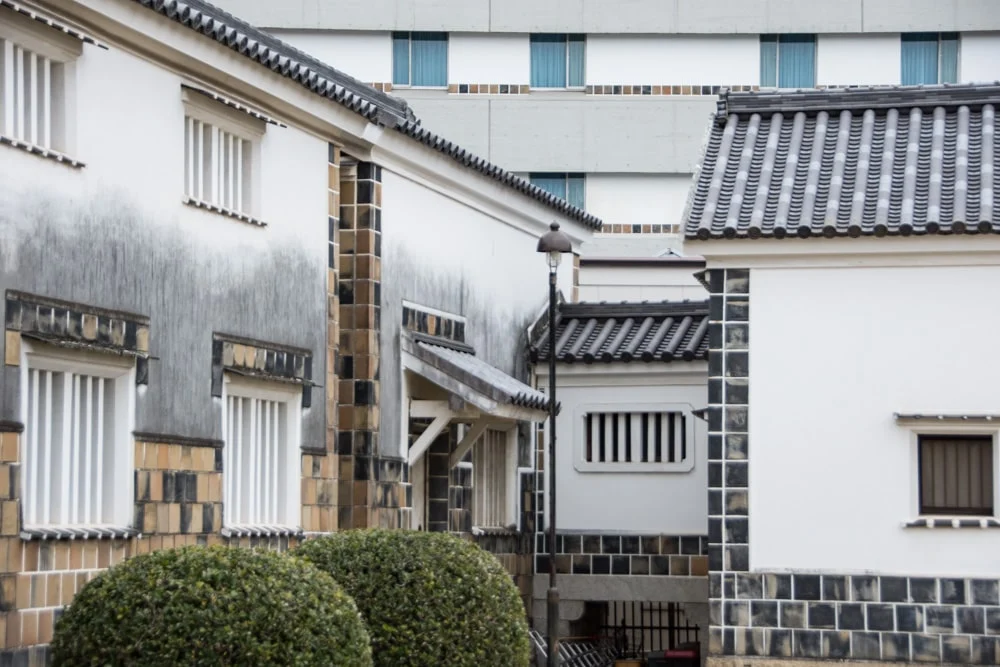
In the background of the traditional Japanese-style building, the Kurashiki International Hotel features a design similar to the namako wall style of the Crafts and Oriental Hall.
The Kurashiki International Hotel was commissioned by Soichiro. It was designed to blend in when viewed from the Ohara Museum of Art side.
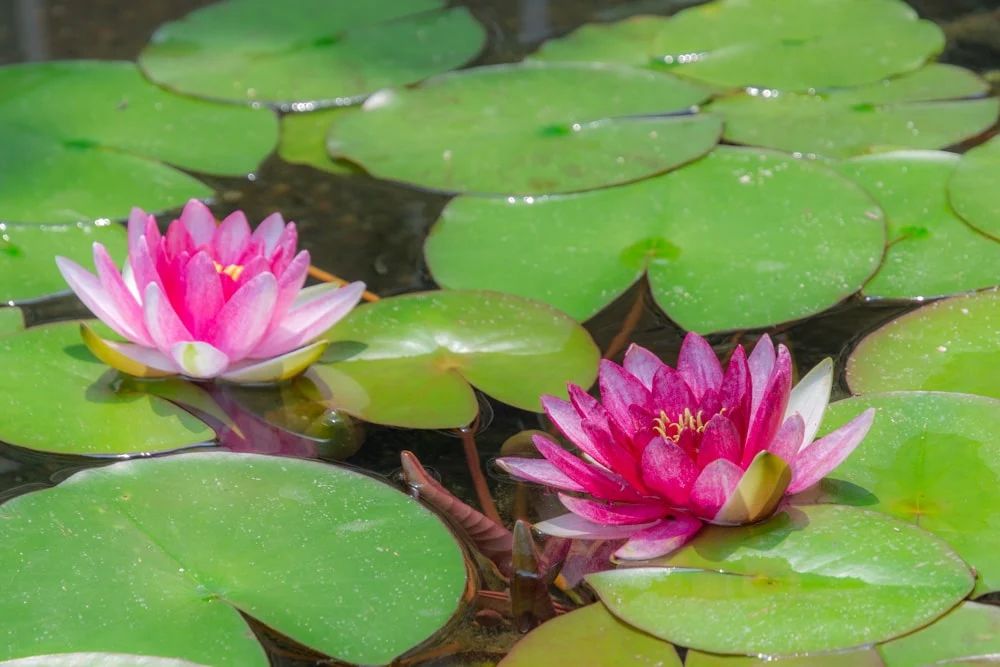
Near the entrance, there are water lilies that were propagated from Monet's atelier, blooming delicate flowers from late spring to early summer.
A floor full of attention to detail
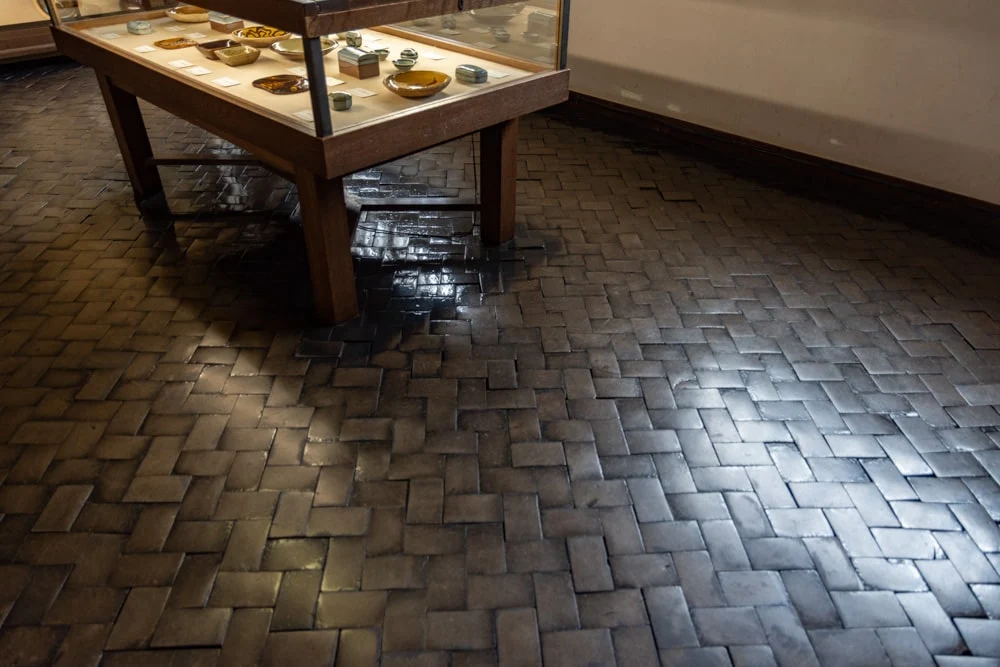
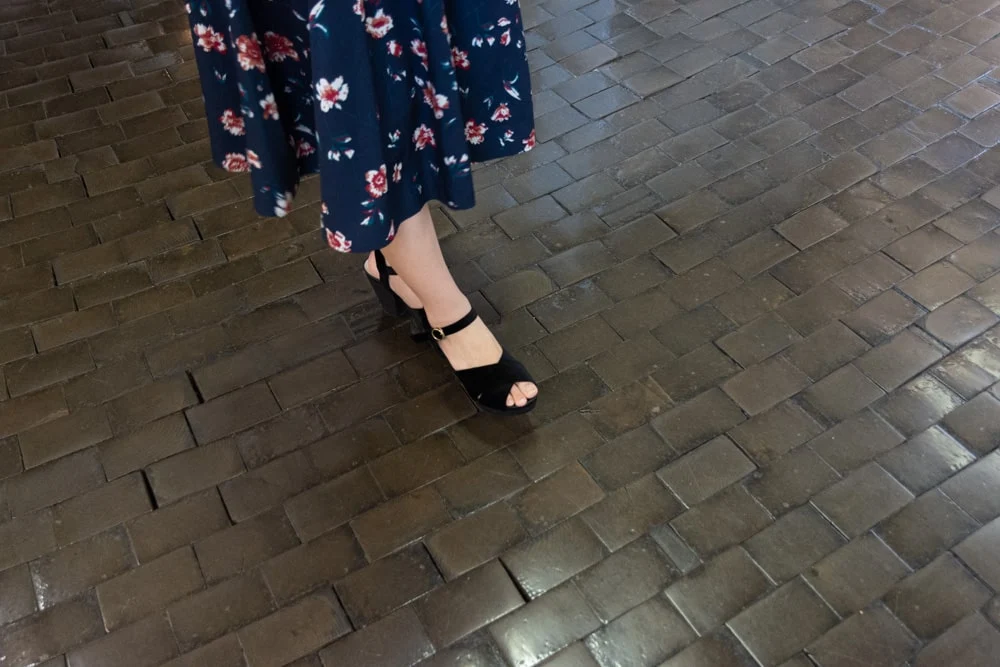
The floor of the rooms of Hamada Shoji, Bernard Leach, Tomimoto Kenkichi, and Kawai Kanjiro on the first floor is paved with wooden bricks.
The arrangement varies by room.
As you walk, you can hear small popping sounds, and the unevenness of the bricks can be felt through the soles of your shoes.
The shine that has developed over many years from the countless people who have walked on it is beautiful.
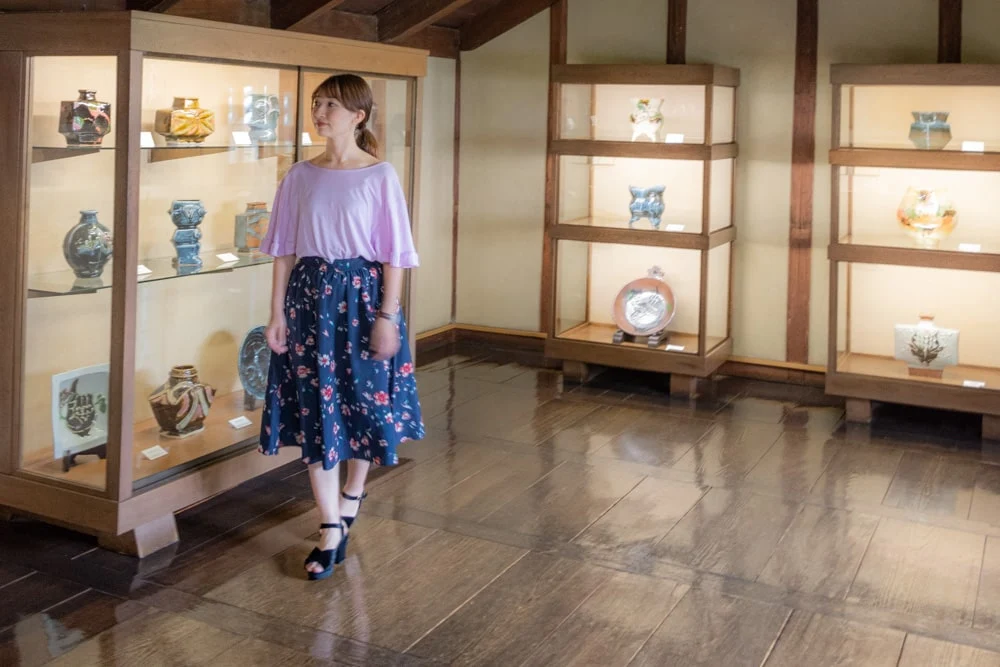
The floor of the second floor of the Kawai Kanjiro room uses a technique called "Korean-style flooring." It is said to be inspired by Korea, which Kawai was interested in.
Since the boards are laid in a way that makes them float, they make a loud "squeaking" sound when walked on.
The sound of the boards as you walk is an auditory experience created by Serizawa.
He wanted visitors to not only see the artworks but also hear the sounds while viewing them.
Please visit and experience the sounds for yourself.
The floor of the Munakata Shiko room is paved with tiles that have been fired with a dark green Oribe glaze.
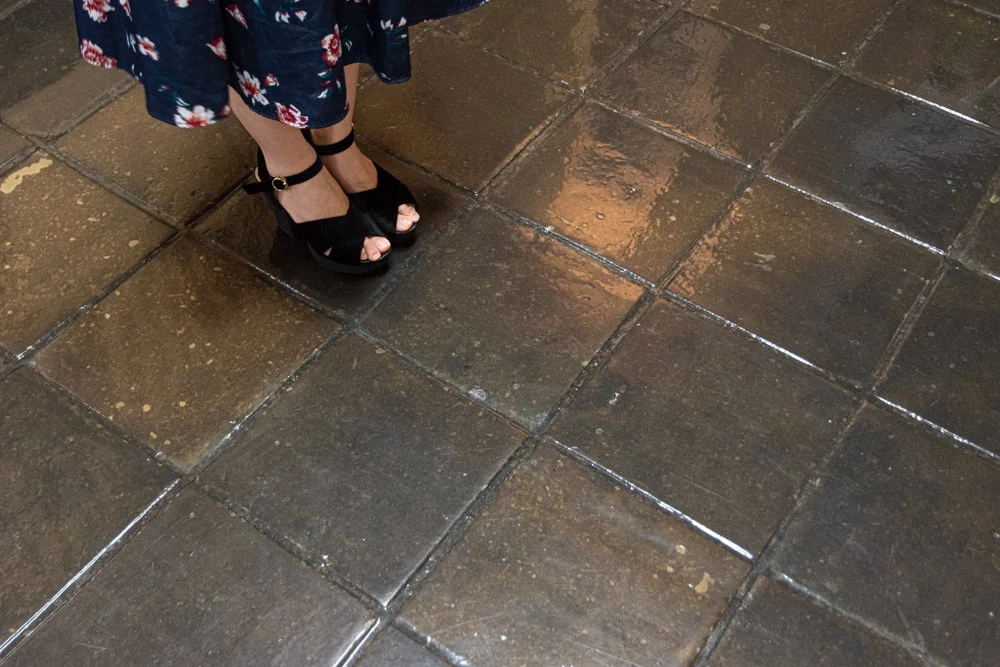
Since it is coated with a glaze and then fired, it has a glossy and black sheen. I felt it was "cool."
Distinctive Walls for Each Room
The interior walls take on different forms according to the artist.
The Hamada Shoji room has a lattice wooden frame, while the Bernard Leach room features clean white walls... The atmosphere changes with each room.

There was also a stained glass wall. This is a work by Kodani Shinzo, known for Kurashiki Glass.
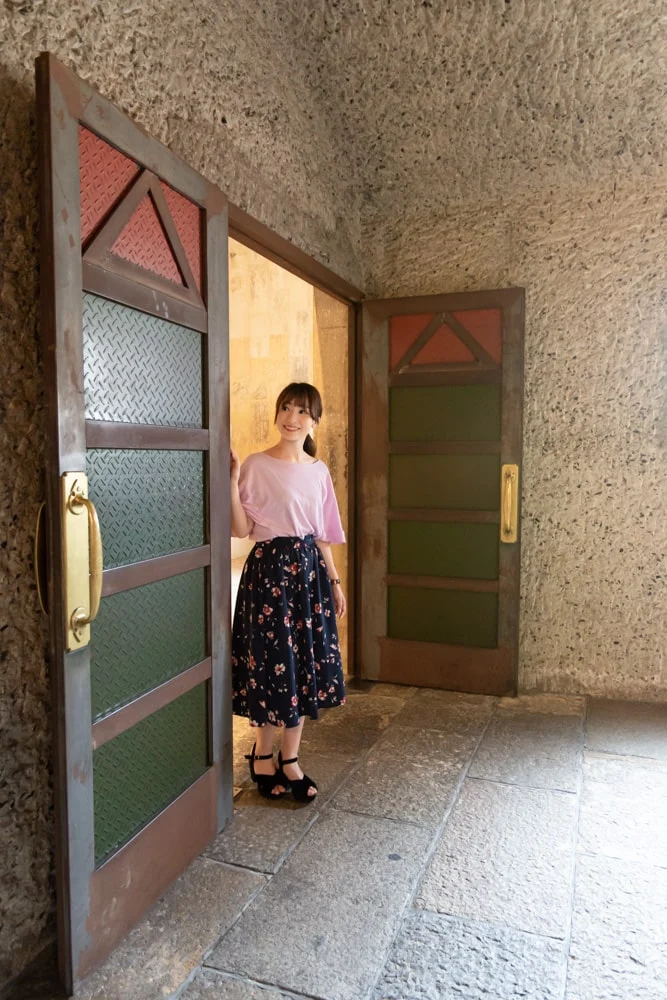
The door in front of the stone Buddha room is made of metal footboards used at construction sites. I felt that the unexpected material used by Serizawa Keisuke was wonderful.
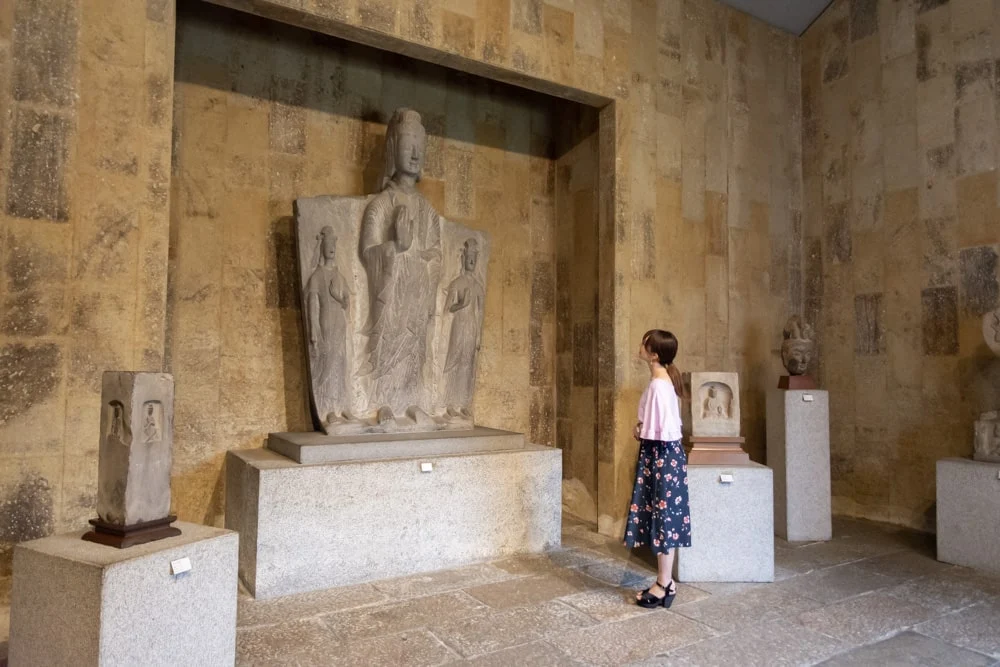
Part of the Oriental Gallery features walls made of vertically stacked stones. I have heard that this requires a much higher level of skill than stacking them horizontally.
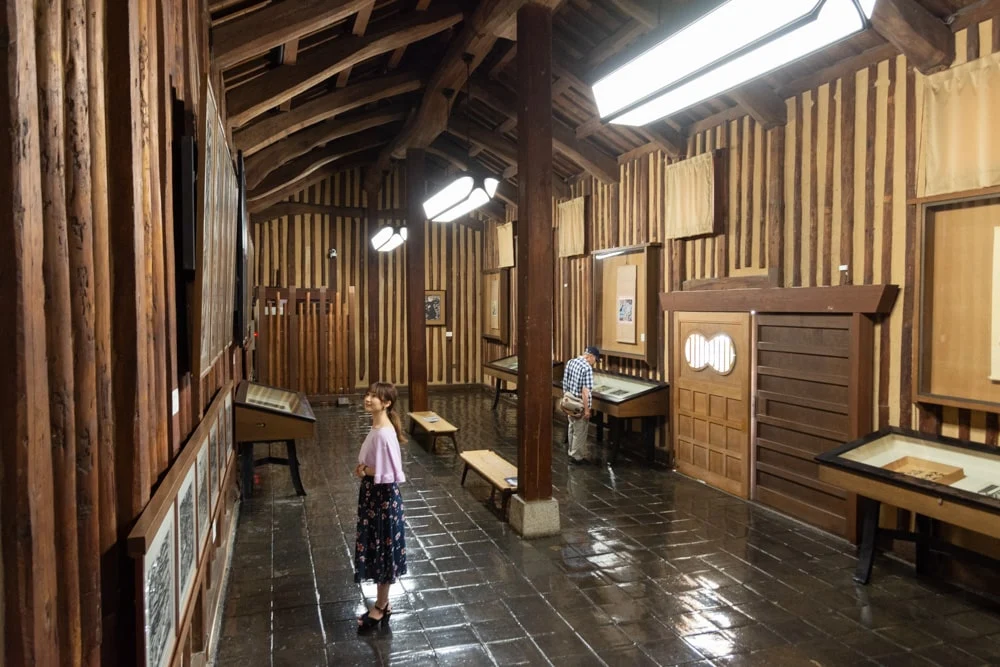
Among them, the Munehiko room is particularly impressive.
The logs embedded in the wall are called "nuzuri-ki," which are used in warehouses. They are made to prevent cargo from being in close contact with the wall, reducing friction and helping to prevent moisture from accumulating in the gaps.
A wall born for practical use harmonizes beautifully with the artwork, embodying the "beauty of utility" in folk crafts!
Munehiko referred to his prints as "ita-e" (板画). I believe that the wall made of nuzuri-ki was created out of respect for Munehiko, who produced works that utilized the characteristics of woodblock printing.
The windows also have distinctive shapes, which were lovely.
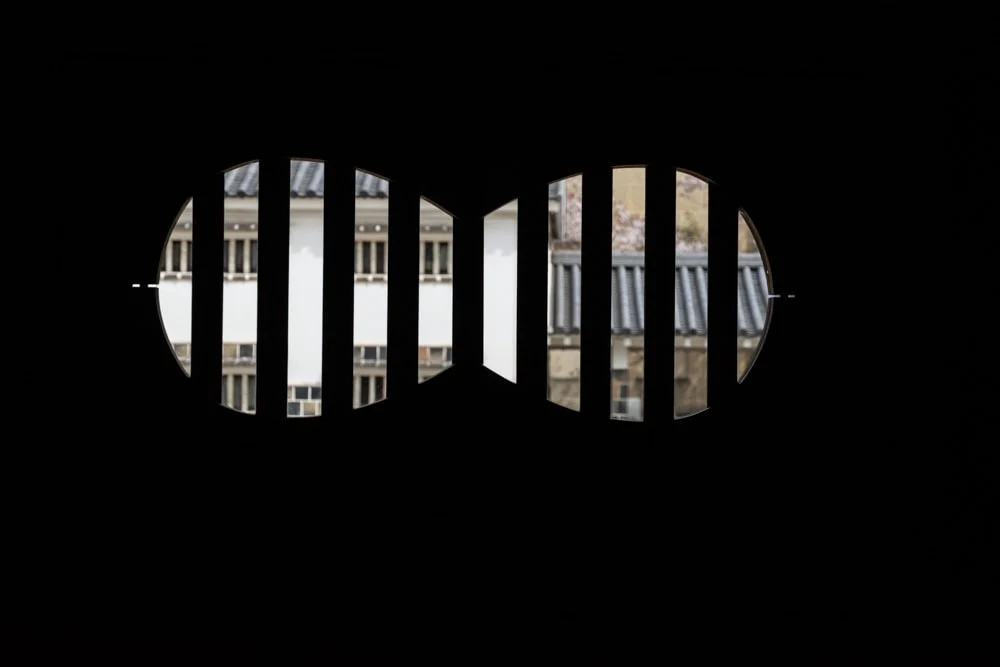
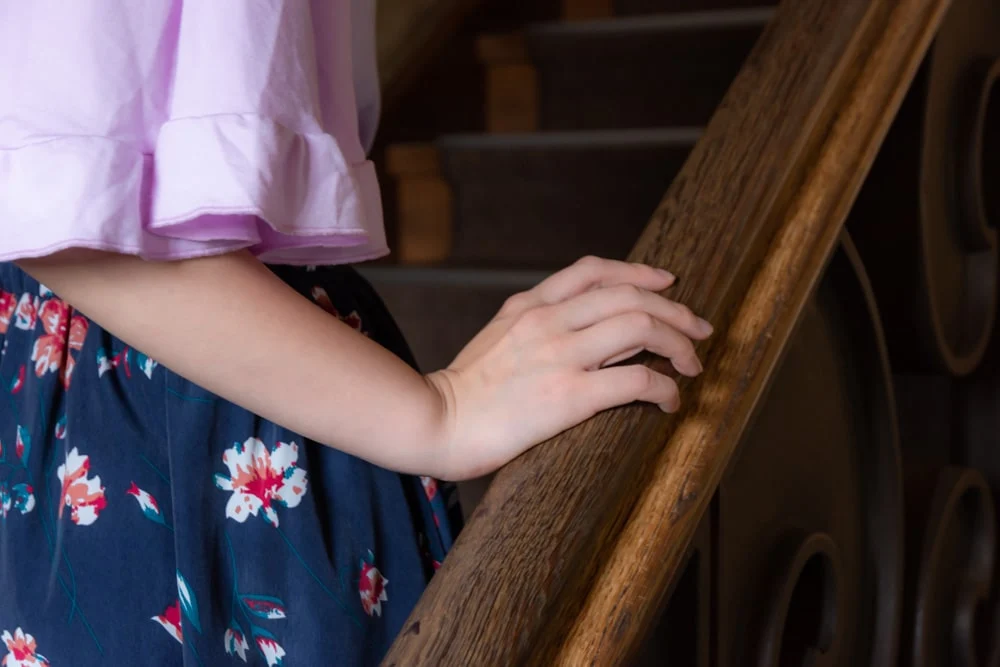
Handrails You Want to Touch to Feel the Difference
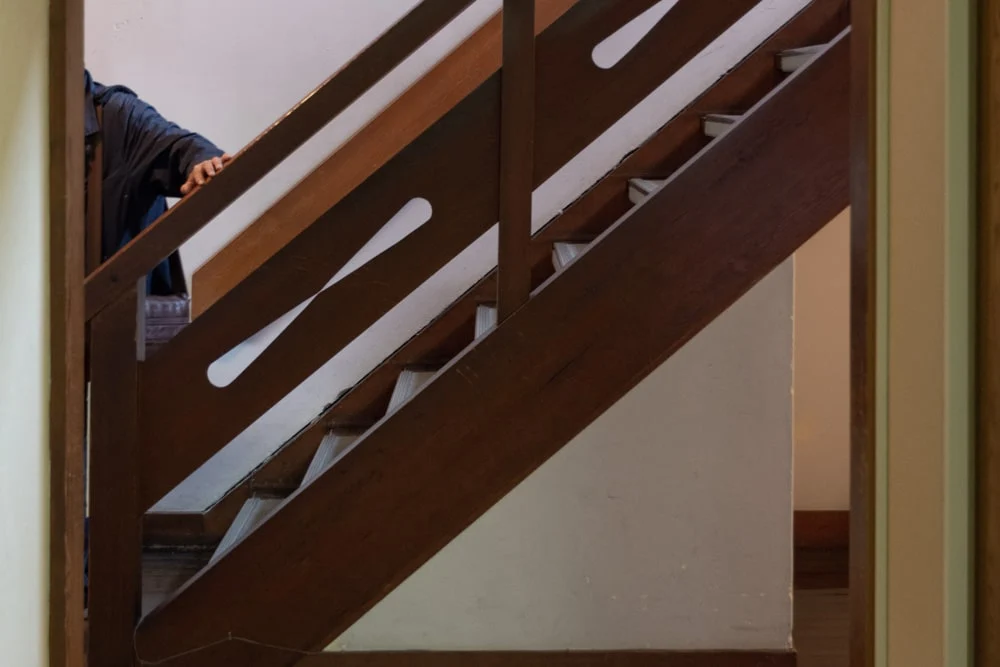
The handrails installed on the stairs inside the museum were also designed by Serizawa Keisuke.

This staircase and handrail are modeled after something. What do you think it is?
The answer is "escalator"!
When you touch it, the curvature feels like that of an escalator handrail.
Works that Reveal the Artist's Worldview
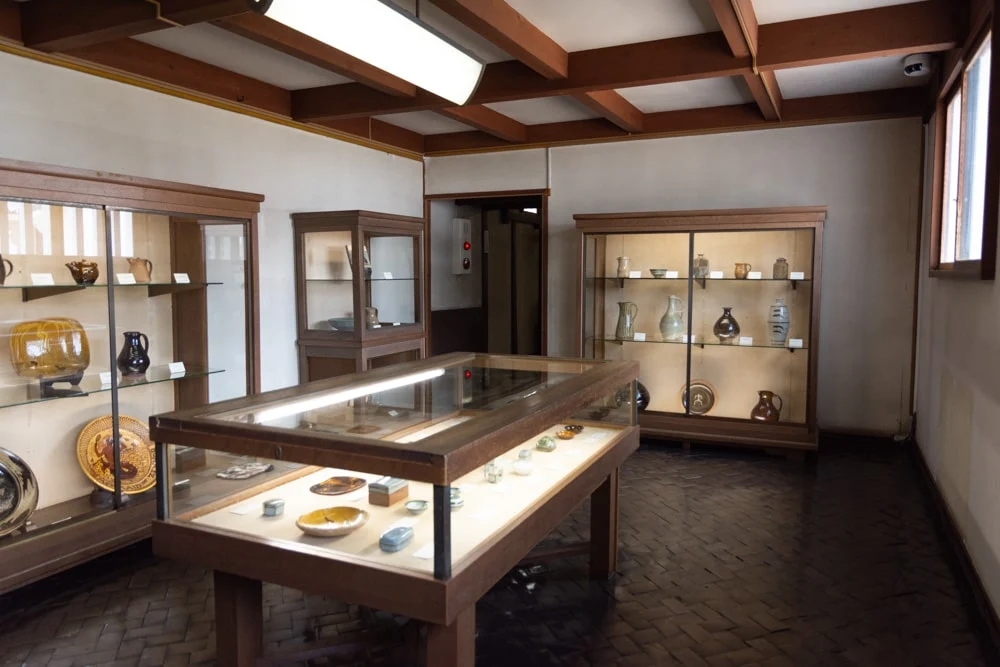
The Crafts Gallery has separate rooms for each artist.
Since many works are gathered, it is easy to compare the worldviews and characteristics, such as Hamada Shoji's strong and bold style, Bernard Leach's distinctive handles, and Tomimoto Kenkichi's delicate brushwork.
The Ohara family did not just collect works; they created the Crafts Gallery while supporting the folk craft movement and engaging with the artists.
Munehiko had a close relationship with the Ohara family and reportedly visited them almost every year. There are also prints created for the Ohara family, inspired by poems written by Ohara Magosaburo's wife, who was a poet.
When Viewing Crafts, Pay Attention to These Aspects
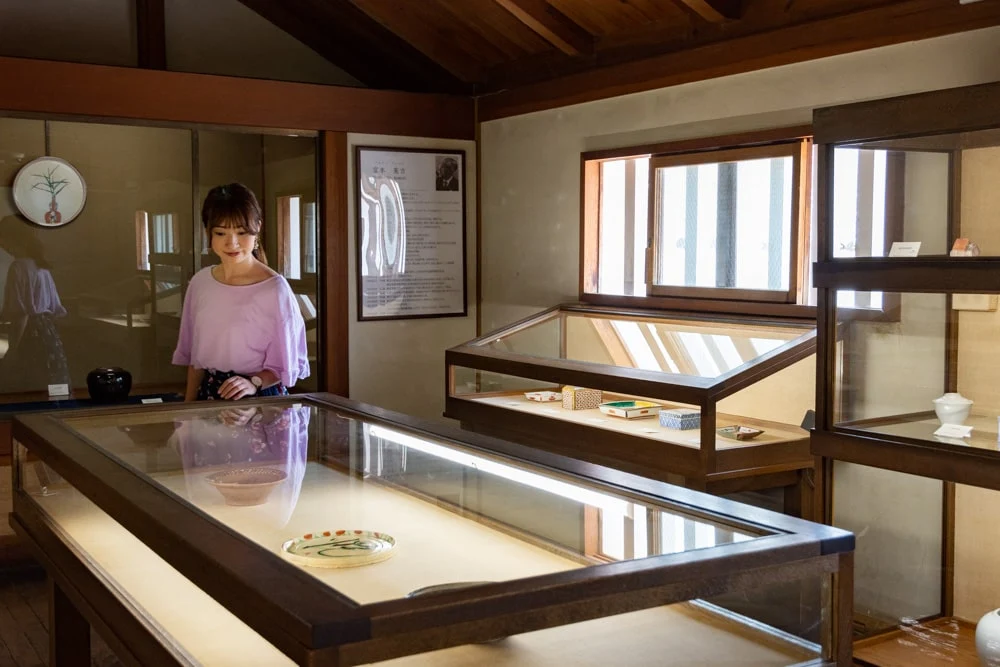
Many crafts are on display, but how should you look at them?
Of course, there is no right way to appreciate them.
However, to help those who might be struggling with "I don't know how to look at this," I received advice from Mr. Okazaki, a staff member at the Ohara Museum of Art.
Mr. Okazaki's recommendation is to "imagine the process while looking at them."
For example, when looking at ceramics, consider the following:
- How was the shape created?
(Was it thrown on a wheel? Pressed into a mold? Assembled from flat pieces?) - How was the color applied or painted?
- How was the glaze applied?
By contemplating these aspects, you may feel the artist's personality and dedication more deeply than when you simply glance at them.
In Conclusion
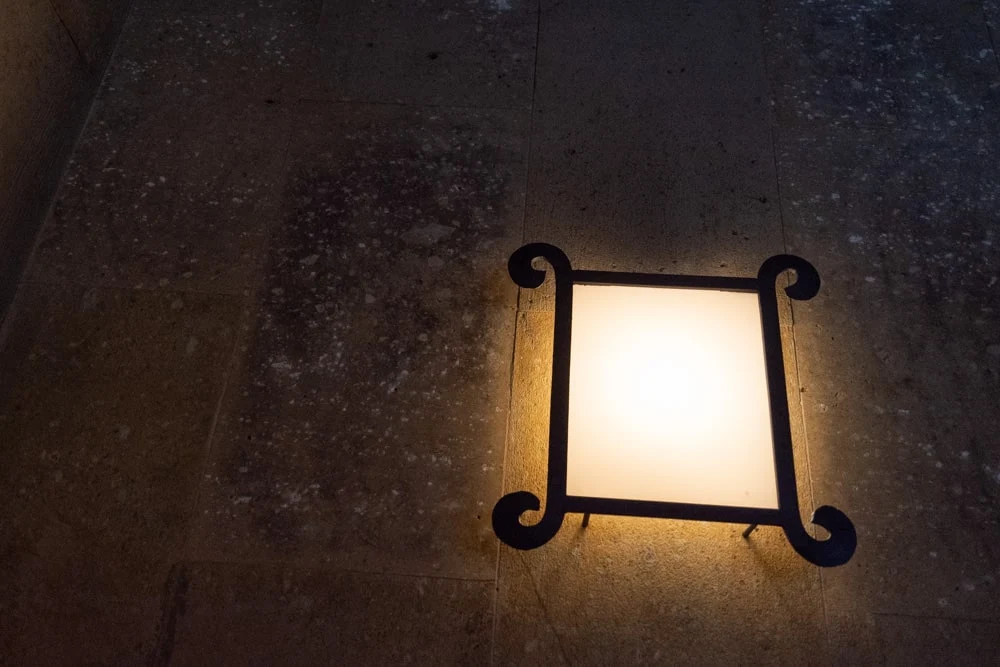
The Ohara Museum of Art Crafts and Oriental Gallery offers not only crafts and antique art but also the enjoyment of the building itself.
With interesting features at every turn, I felt excited with each step, wondering what the next room would be like.
With sound-emitting floors, walls that change dramatically from room to room, unique lighting, and handrails with unusual shapes, I encourage you to visit in person and experience Serizawa Keisuke's ingenuity with your eyes, ears, and hands.
And I was amazed by the wide range and richness of the Ohara Museum of Art's collection.
Both the main building and the branch, as well as the Crafts and Oriental Gallery, each have their own unique atmosphere, and the museum shop is also attractive.
I have always loved the Ohara Museum of Art, but through this coverage, I have become an even bigger fan.
Why not encounter art at the Ohara Museum of Art?
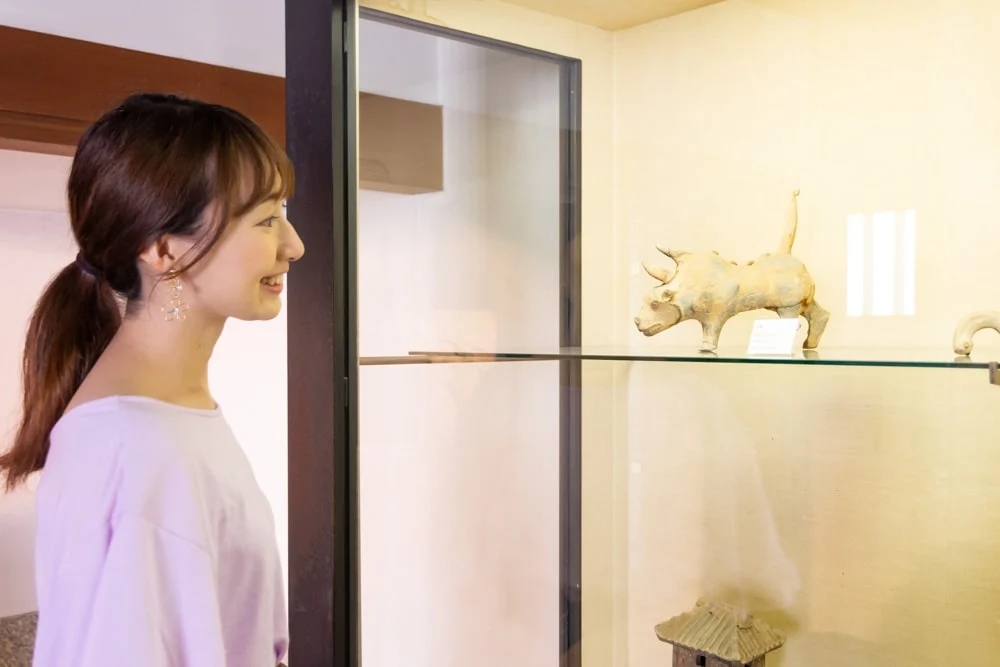
- Model: Isako
Articles about the Ohara Museum of Art
Data of Ohara Museum of Art
| Name | Ohara Museum of Art |
|---|---|
| Location | 1-1-15 Chuo, Kurashiki City, Okayama Prefecture |
| Contact | 086-422-0005 |
| Parking | None |
| Opening Hours | 【December to February】 9:00 AM - 3:00 PM (Last admission: 2:30 PM) 【March to November】 9:00 AM - 5:00 PM (Last admission: 4:30 PM) |
| Closed Days | Monday Open if it coincides with a public holiday or substitute holiday Winter closure and temporary closures may occur |
| Admission Fee (including tax) | 【General】 Adults: 2,000 yen High school, junior high, and elementary school students (under 18 years old): 500 yen |
| Payment Methods |
|
| Reservation | Available No reservation required for individuals |
| Smoking | Completely non-smoking |
| Restrooms | Western-style toilets, barrier-free toilets |
| Childcare | Nursing room, diaper changing sheet, stroller rental The nursing room is located in the Craft Museum Diaper changing sheets are available on the 2nd floor of the main building and in the Craft Museum |
| Barrier-Free | Wheelchair rental, ramps, barrier-free toilets, elevators |
| Website | Official Website of Ohara Museum of Art |