The Mizushima Industrial Complex, lined with oil refineries, steelworks, automobile plants, and other manufacturing facilities, has contributed to Japan’s industrialization and rapid economic growth.
As the Mizushima Industrial Complex developed, people gathered and the streets of Mizushima grew lively. In recent years, however, the population has aged and declined, and the area has come to show sad sights such as aging buildings and shuttered shopping streets.
Rintetsu Garden is a market event launched to revitalize Mizushima, which has been losing its former vibrancy.
Restaurants and businesses active in Mizushima and elsewhere in Okayama Prefecture have held market events beneath the elevated tracks of the Mizushima Rinkai Railway, seeking to create new attractions in Mizushima.
Ryosuke Tsuchiya, the executive committee chair of Rintetsu Garden, runs several businesses while also working to revitalize Mizushima.
We asked Tsuchiya about questions surrounding Rintetsu Garden, such as “Why beneath the elevated tracks?” and “Why work on community development?”
This interview introduces the appeal of Rintetsu Garden.
The information presented was current when this article was published in April 2022. Please note that it may differ from current information.
What is Rintetsu Garden?

Overview of Rintetsu Garden
Rintetsu Garden is a market event held beneath the elevated tracks around Sakae Station on the Mizushima Rinkai Railway.
The first Rintetsu Garden was held in September 2017, and it had been held 18 times by March 2022.
It is a night market event held in the evening, from before sunset into the night.
At the venue, beneath the elevated tracks around Sakae Station on the Mizushima Rinkai Railway and at Mizushima Sakaemachi Daiichi Park, booths are set up by restaurants and businesses active in Mizushima and elsewhere in Okayama Prefecture.
Starting in 2022, the roads around Sakae Station were designated as a pedestrian zone, making it easier to travel between the venue beneath the elevated tracks and the park venue.
For details about the event hours and venue, check the Rintetsu Garden 2022 website.

Rintetsu Garden’s Concept

People working in Mizushima started Rintetsu Garden to create an opportunity for people to gather in town, with the aim of revitalizing the Mizushima area, which has been losing its vitality due to an aging and declining population.
It also serves as a kind of social experiment, exploring Mizushima’s potential through trial and error with various initiatives.
It is a market event designed to share new attractions in Mizushima and show that “you can do stylish things like this in Mizushima, too.”
Ryosuke Tsuchiya, Representative of the Rintetsu Garden Executive Committee

Ryosuke Tsuchiya, representative of the Rintetsu Garden Executive Committee, not only oversees Rintetsu Garden but also works in web design and craft cola sales.
After graduating from a university in Kurashiki City, he worked as a freelance web designer while also pursuing community revitalization in Mizushima.
In 2021, he began producing and selling craft cola as a new business, under the concept of “cola made with a reverse-thinking approach by a man who doesn’t like cola.”
Through his various jobs, he contributes to community development in Okayama City and Kurashiki City.
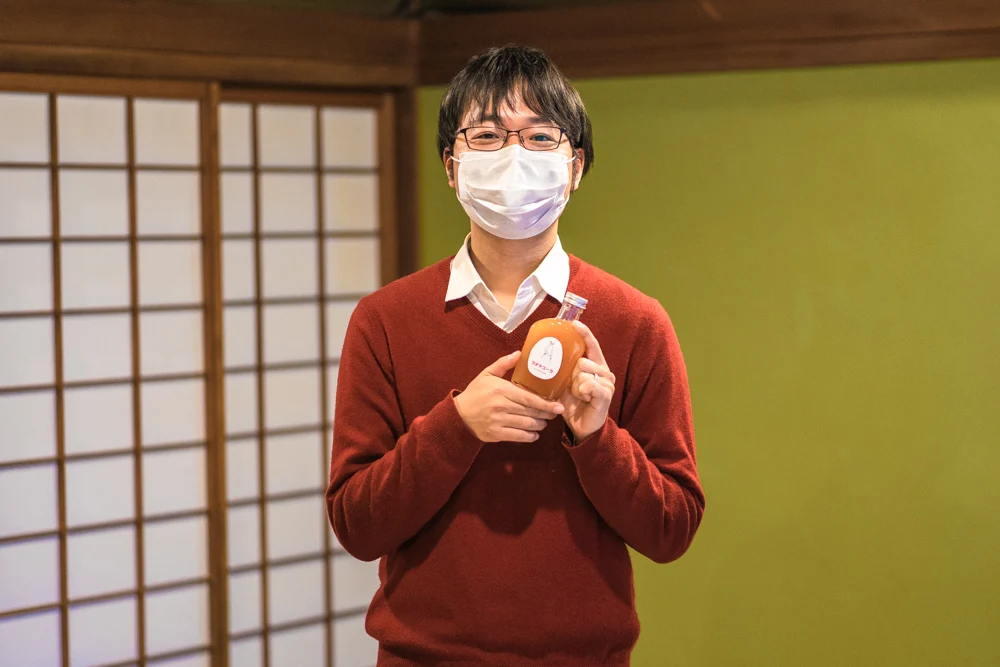
Interview with Ryosuke Tsuchiya

How Rintetsu Garden Began
Why beneath the elevated tracks?
Tsuchiya (hereafter, Tsuchiya)
The population of Mizushima is declining, and the area is experiencing a falling birthrate and an aging population. People say that the community’s continued existence is at risk.
Wanting to do something about a town that had lost its vibrancy, our first idea was to make use of the parks.
It’s easy to understand when you look at a map: Mizushima has parks everywhere, and a distinctive layout.
We thought of holding a market event, believing that using the parks as places where local people could gather would bring the town to life.
However, when we told the local government that we wanted to use a park, they turned us down, saying that it would be difficult to use it for an unprecedented event.
As we searched for a way to hold a market event, the Mizushima Rinkai Railway came to our aid.
We asked about using the space beneath the elevated tracks to make use of an unused space in town.
The first Rintetsu Garden was held beneath the elevated tracks near Sakae Station in September 2017.

What other initiatives did you try?
Tsuchiya
Another initiative to revitalize Mizushima was making use of vacant houses.
We visited vacant houses in Mizushima and discussed possible ways to use the properties.
We also launched the “Mizushima Salvage Conference,” inviting community-development experts active across Japan to discuss ways to energize Mizushima.
However, we struggled to find content that was distinctive to Mizushima and could stand alongside what other areas of Kurashiki City had to offer.
We concluded that if there was no appealing content, we needed to create it ourselves, and settled on a market event.

Could you tell us what it was like when you first started Rintetsu Garden?
Tsuchiya
The first Rintetsu Garden had three vendors and 50 visitors.
Even so, we kept working to find vendors, determined to keep going.
We reached out to everyone we had met up to that point, continuing to share our determination: “It’s a small market for now, but we’ll definitely grow it.”
As the events continued, the number of vendors and visitors grew.
There were about 100 visitors at the third event and about 500 at the fourth. Seeing that the numbers were steadily increasing, we became confident that Rintetsu Garden could help energize Mizushima.
Why hold it at night?
Tsuchiya
Before starting Rintetsu Garden, I walked around Mizushima and saw many places open at night, such as izakaya and bars.
That was probably because the town had grown alongside the development of the industrial complex.
I had heard that getting people to walk around town was important for bringing it to life, so we decided on the concept of a market where people can gather before going out for the evening.
We wanted Rintetsu Garden to bring people to Mizushima and then encourage them to head out into the streets of Mizushima at night.
However, it became more popular than we expected, and people started leaving satisfied after spending time at Rintetsu Garden.
It was a happy miscalculation, but we still needed a strategy.
Rintetsu Garden in 2022
Why did you make the roads pedestrian-only?
Tsuchiya
It originally started as a small market, but as the events continued, the venue beneath the elevated tracks became crowded with people.
After we began using the park near Sakae Station as a venue too, more people started crossing the road.
There was a fair amount of vehicle traffic on that road, so for the safety of visitors, we wanted to make it pedestrian-only.
After holding market events for several years, we had earned the local government’s trust, and in 2022 we made the road pedestrian-only.

What were your goals for Rintetsu Garden in 2022?
Tsuchiya
I think there are three immediate challenges.
The first is how to make use of the pedestrian zone.
At Rintetsu Garden in March 2022, we set up chairs and tables in the pedestrian zone, creating a space where people could enjoy food and music.
We’re still experimenting with how to stage it, but as we hold more events, I think we’ll get a clearer idea of what makes a comfortable space.
Over the course of 2022, I want to clarify how to create an atmosphere that makes Mizushima feel even more appealing.

The second is how to make use of the park.
The area beneath the elevated tracks was the main venue, but more and more people began gathering at the park venue as well.
We also hold events that make use of the park, such as workshops where children can run around and exercise.
On the other hand, because it was a night market, parts of the park were dark, and the atmosphere could feel lonely without music. There were also times when the organizers couldn’t do enough to create an inviting atmosphere in the park.
Our goal is to make the park a welcoming space where people can relax.

The third is finding people to help run the event.
Rintetsu Garden started from nothing in 2017 and grew into a large-scale market event.
I feel that to put even more effort into creating the atmosphere at Rintetsu Garden, we need people who share our passion and will help make it a success.
And for anyone who simply wants to work with us, I want to share freely the know-how we’ve developed through Rintetsu Garden.
I hope to work not only with people who feel attached to Mizushima, but also with those who want to apply what they’ve learned through Rintetsu Garden in other communities.

The Rintetsu Garden representative’s thoughts
What first got you involved with Mizushima?
Tsuchiya
I attended a university in Kurashiki City, and have worked as a freelance web designer, primarily in Kurashiki City.
I wanted to learn more about Kurashiki, and through a connection, I was invited to join a study group on revitalizing the Mizushima community.
At the study group, I learned about challenges such as the aging population in the Mizushima area and the decline of its shopping streets. But when I visited the town, I also discovered appealing places, including stylish bars and delicious izakaya.
I wanted to share the hidden appeal of Mizushima—the fact that people are doing great things there, even as the town is losing its vibrancy. That was what got me started.

Why have you kept it going?
Tsuchiya
I admired people who were active in community development, but thought it was a world apart from my own.
I thought that only exceptional people could create projects that attracted attention, and without realizing it, I had given up on myself.
However, at the first study group I attended, I learned that you can work on community revitalization alongside your main job.
From hearing about examples in other prefectures and overseas, I learned that few people make community revitalization their main job. Instead, civil servants and people who run their own shops work for the good of their towns.
I changed my thinking and decided to start small, even if it was just a little, without sacrificing my main job.
I think it was because we started small and built things up that we were able to grow the event into one that draws so many people.
What have you learned from having several jobs?
Tsuchiya
It’s fine to have more than one dream, and I don’t think you need to limit yourself to one job.
There’s no need to fit yourself into a mold by thinking, “I chose this major, so I have to do this,” or “This is my profession, so I have to do that.” You can pursue the things you love and want to do at the same time.
If I had focused on just one thing—being a web designer, representing Rintetsu Garden, or running Tsuchiya Cola—I probably wouldn’t have succeeded.
I think it was because I pursued them all at once that I was able to start small and grow them into something bigger.
I realized how important it is to step outside the mold and freely take on the things you want to do, without snuffing out small possibilities.

Why take on the challenge of community development?
Even a town that feels dull when you take a passive approach may reveal its wonderful side when you take action and get involved.
Tsuchiya discovered the appeal hidden in Mizushima.
And because he nurtured it with care, its appeal began to shine, drawing in many people.
The story of the market event that began beneath the elevated railway and gradually grew feels like a living embodiment of Tsuchiya’s words: “Start small and grow it into something bigger.”
Hearing the history of Rintetsu Garden made me feel as though I was being taught how to nurture a town.

Rintetsu Garden details
| Name | Rintetsu Garden |
|---|---|
| Dates | Friday, May 27, 2022, 4:00 p.m.–8:00 p.m. Friday, July 22, 2022, 4:00 p.m.–9:00 p.m. Friday, September 16, 2022, 4:00 p.m.–9:00 p.m. Friday, November 4, 2022, 4:00 p.m.–8:00 p.m. |
| Location | 12 Mizushima Higashisakaemachi, Kurashiki City, Okayama Prefecture |
| Website | Rintetsu Garden |



What would you like to know about Kurashiki?
Enter a word to search articles on this site