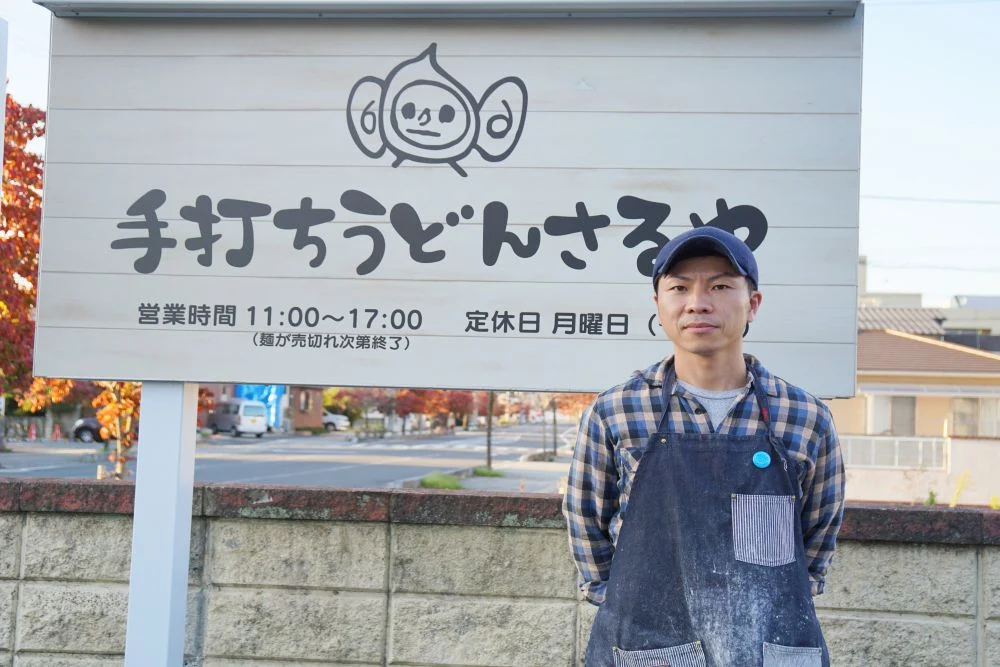
Interview with Shibata Yuki, owner of "Teuchi Udon Saruya"
This interview features content from the initial coverage conducted in October 2020.
Nine years of owning my own shop. The circumstances behind starting a udon shop
What inspired you to start a udon shop?
Shibata
When I was 20 years old (in 2001), there was a udon boom. I have always loved eating udon, so I went to Kagawa to eat Sanuki udon.
By chance, the person at the noodle-making shop I entered asked me, "Would you like to try stepping on the udon?"
It was shocking to step on the udon for the first time.
I thought, "So this is what udon in Kagawa is like. Udon is great, and it suits my nature."
When did you open your own shop?
Shibata
Exactly ten years later, when I was 30 years old (in 2011).
Actually, I didn't have a particular attachment to operating in Mabi. I spent 3 to 4 years looking around Kurashiki and Soja, and then I found a rental shop in Yada, Mabi-cho, and decided to open there.
About reopening after being affected by the July 2018 heavy rain
And after being affected by the July 2018 heavy rain, both your shop and home were damaged... Can you share what led you to think about reopening?
Shibata
After the disaster, I attended a briefing on group subsidies and had the opportunity to talk with other restaurant owners. We discussed various things there.
Of course, there was the option to quit the udon shop and do something completely different. However, I heard from various shop owners that they were planning to reopen.
I thought, "It would be a shame to just quit like this..."
For example, "Yakiniku Tenryu" started offering grilled meat bento boxes from a garage on their disaster-affected property.
Knowing that each of us was starting what we could do, I thought I had to be positive too.
First, I thought, let's start within what I can do.
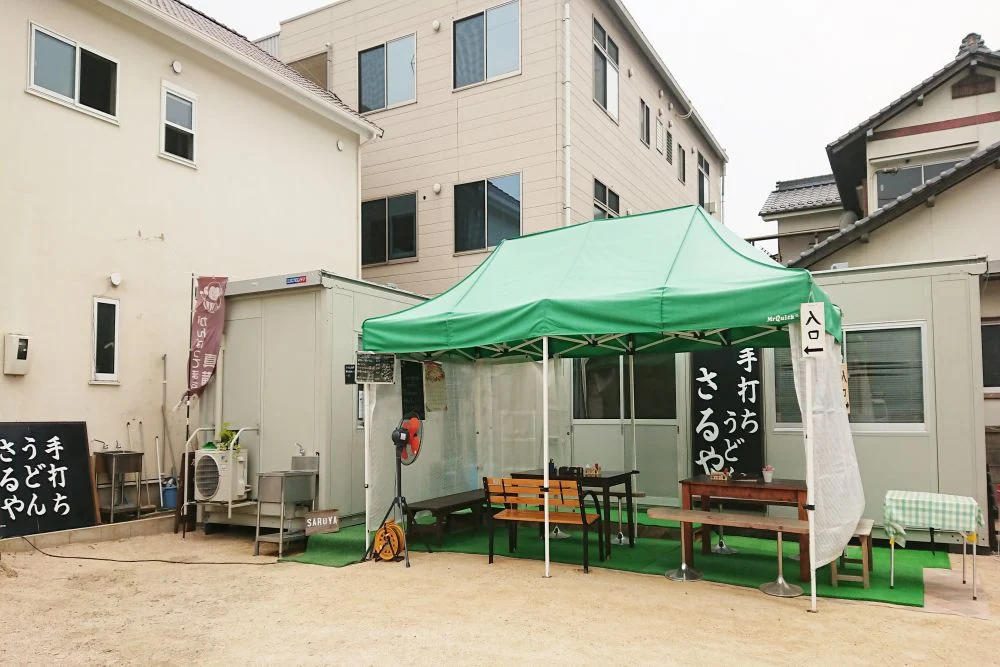
Due to issues with permits, I reopened as a temporary shop on my home property, which was more flexible. That was in September 2018.
Can you share some of the challenges and positives you experienced while operating the temporary shop?
Shibata
During the temporary shop period, I hardly made any profit due to the cost of sourcing noodles and the rent for the container house.
I felt sorry that it wasn't hand-made udon, but I think it was worth doing.
Customers were very happy.
Also, more people got to know about the shop through the temporary operation, which was a good thing.

Restarting in April 2020 at a new location
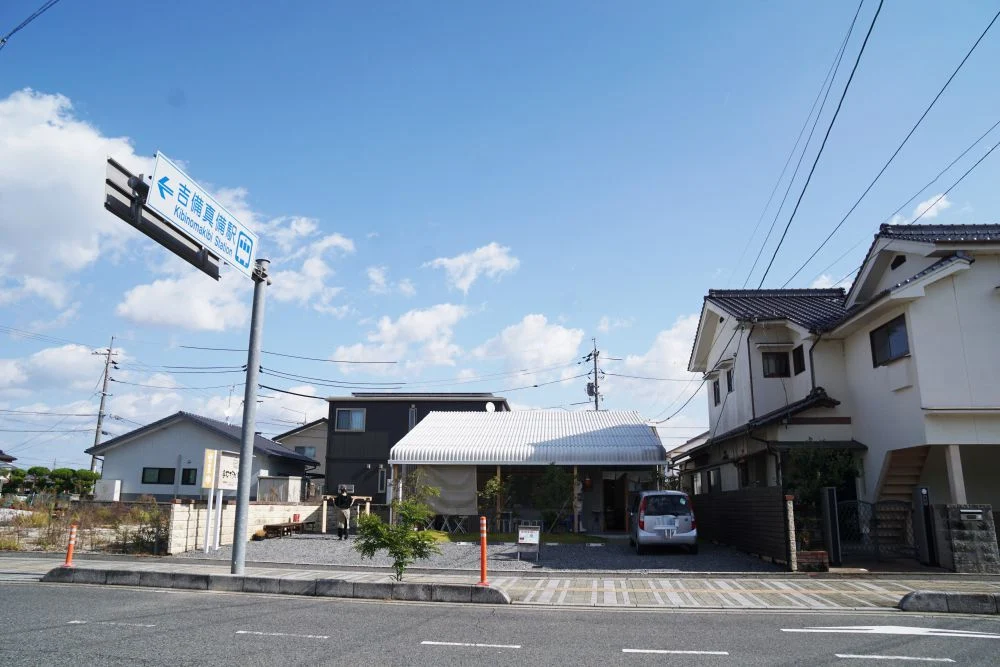
It's a great location, very close to Kibinomakibi Station.
Shibata
I was able to rent from a really nice person, and I was able to restart my business here.
By the way, a scone shop called "Kokomaru" opened on the first floor of Life Town Mabi in August 2020, and it has increased customers through synergy.
There is also " Pan Porte " nearby, and I hope we can work together to liven up the area around Kibinomakibi Station.
About Saruya's udon, aiming for a taste favored by customers
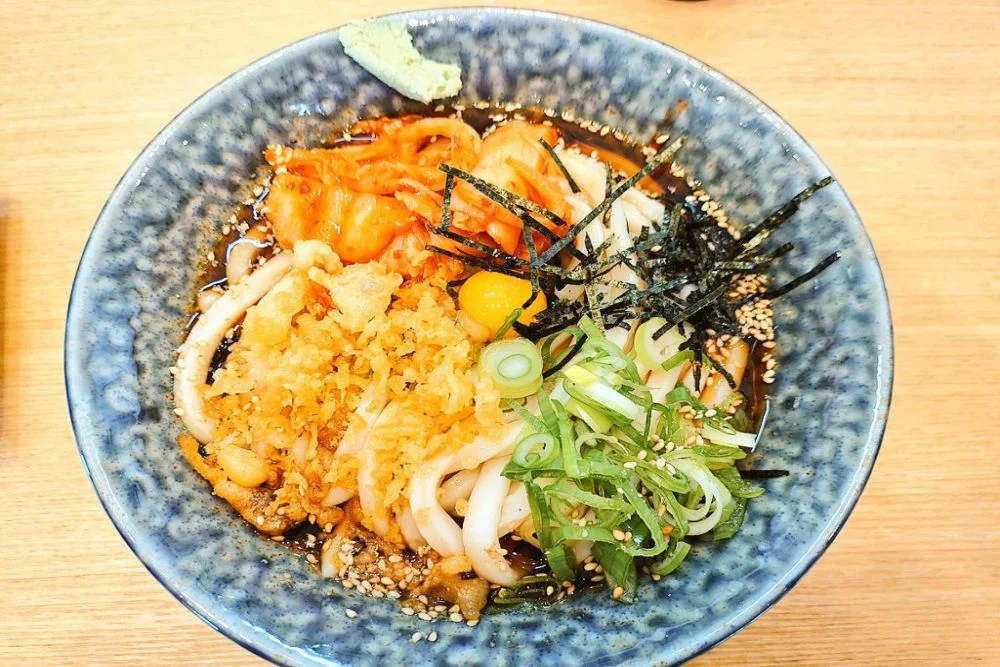
Can you tell us what you keep in mind when making udon?
Shibata
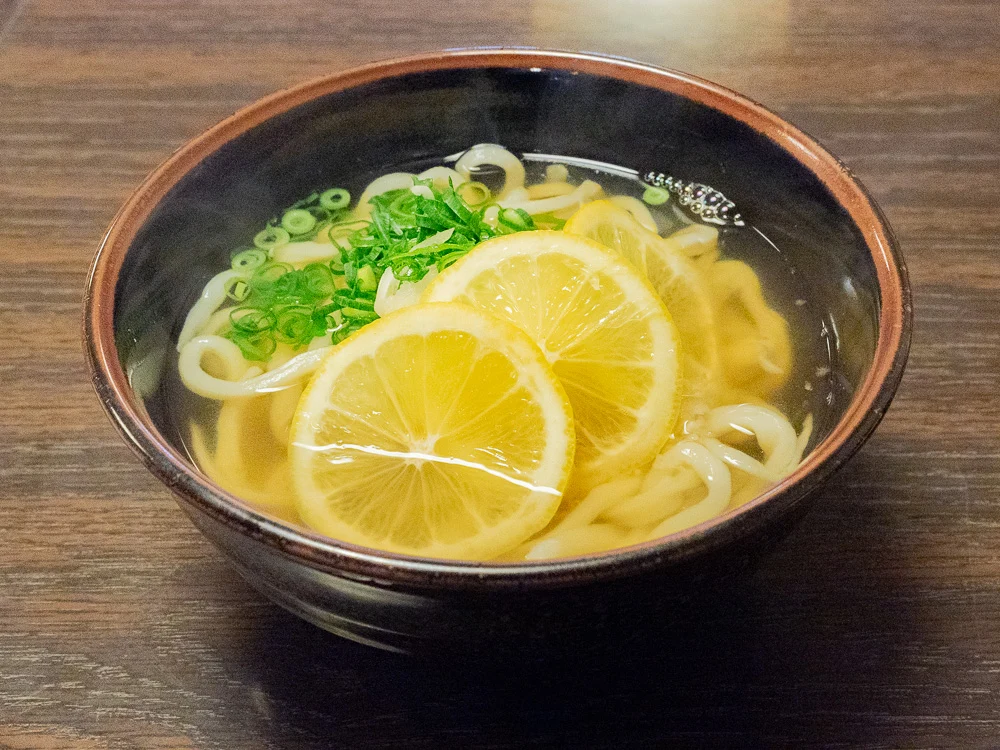
I pay particular attention to the soup for kake udon. The saltiness of the dashi is difficult. I make it while being careful with the use of salt.
I don't want it to be perceived as spicy, so I aim for a good balance.
I aim for a clean finish that meets the preferences of the customers who come.
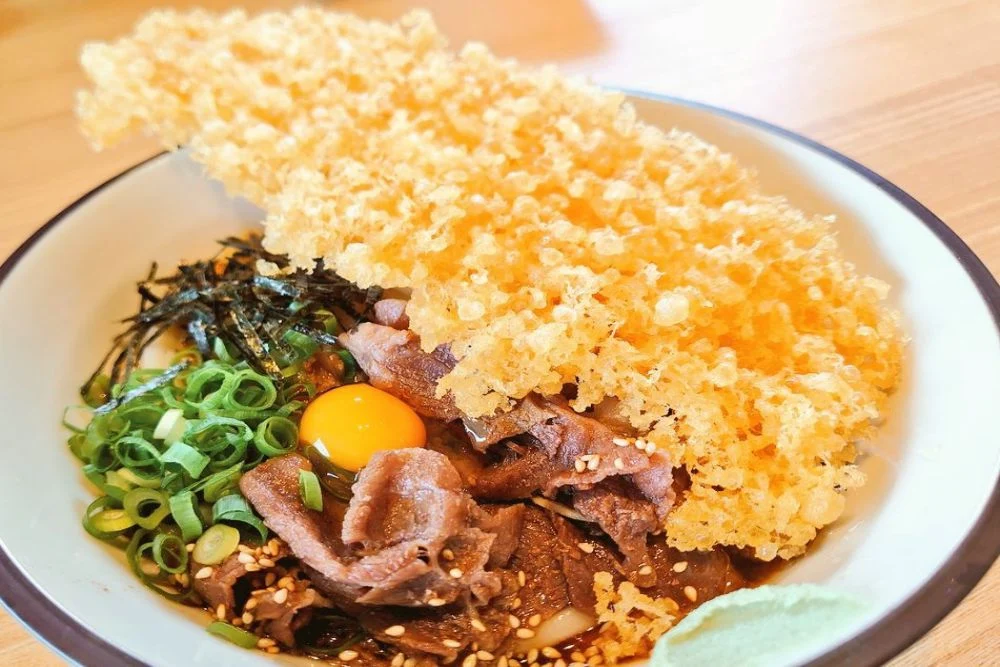
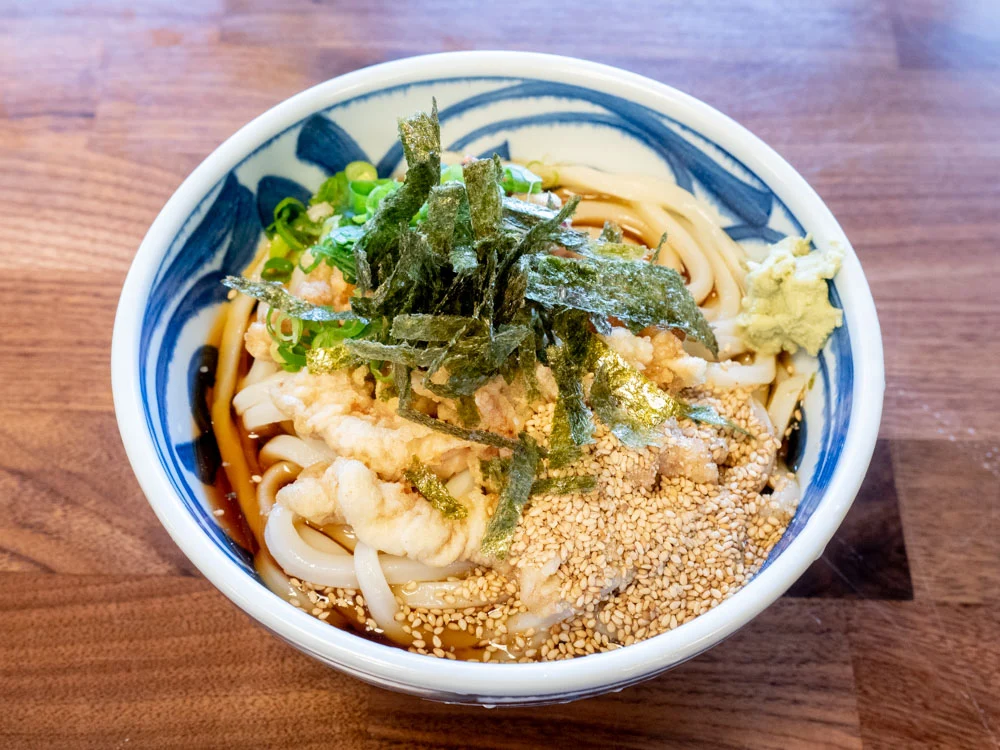
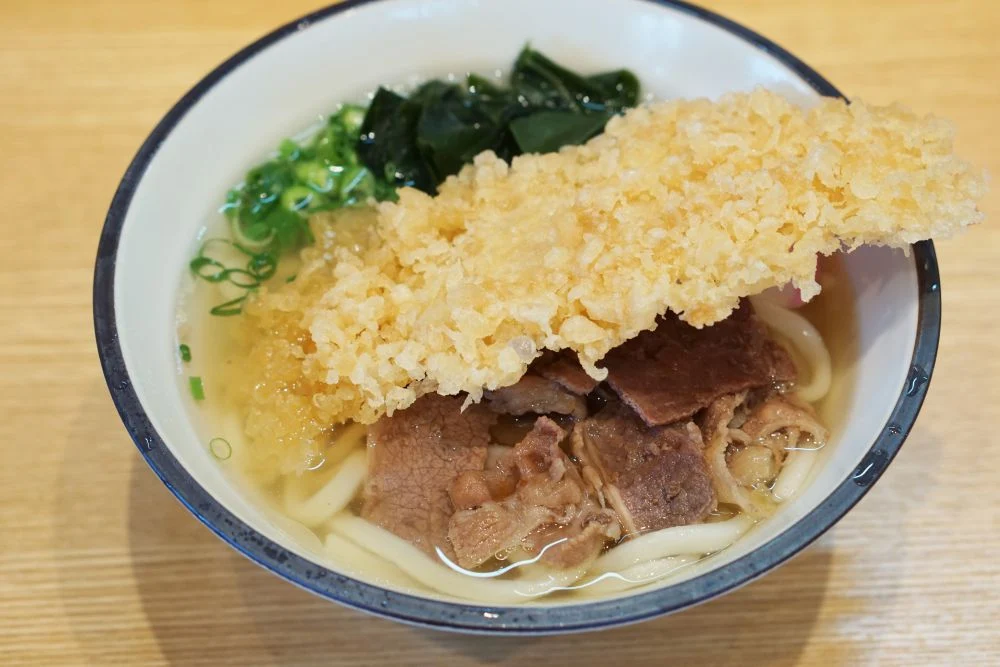
Also, when we think of Saruya, we can't forget the large shrimp tempura that fills the bowl.
Shibata
While taste is important, appearance is also important, so I use impactful batter for the shrimp tempura.
I add salt to the batter to make it delicious. I want customers to enjoy the batter as well.
In summer, bukkake udon is popular, while in winter, kitsune udon is often ordered.
During the self-restraint period of the COVID-19 pandemic in 2020, takeout udon was also popular.
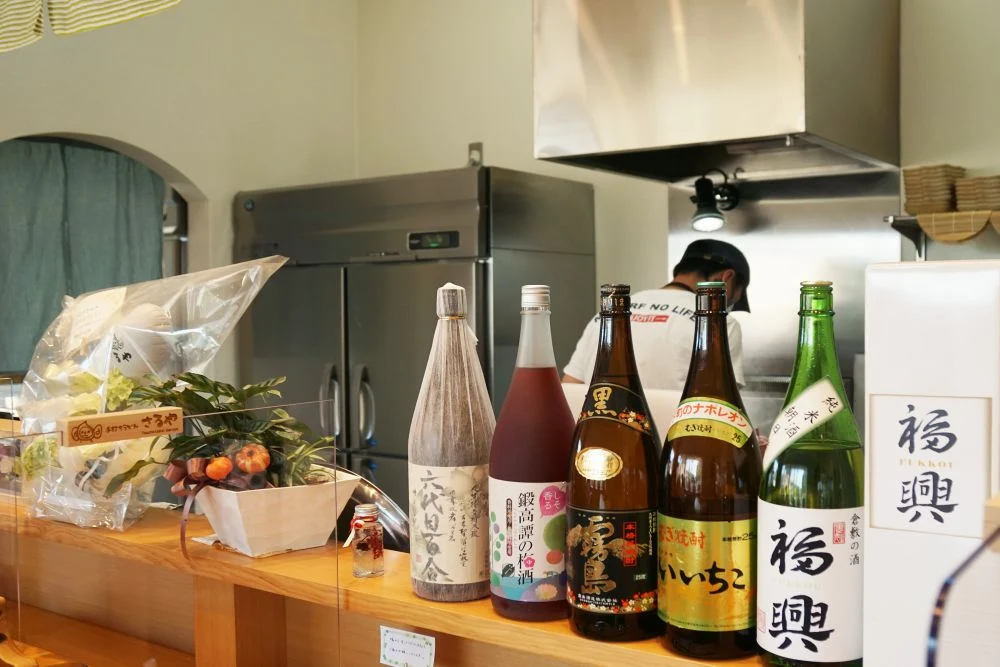
Have the thickness and other aspects of the noodles changed? Have you changed your production method?
Shibata
All the machines for making noodles were damaged, so I am now using new machines, which has changed the way I make them.
The taste of the soup has hardly changed, but I am still experimenting with the noodles.
Actually, I personally like firmer noodles. However, since many older customers come to Mabi, I thought it might be different, so I make the noodles easier to eat in terms of thickness and firmness.
I think everyone has their preferences, so it's difficult to please everyone, but I aim for a taste that 70% of people say is delicious.
2020, the year I reopened. My current feelings
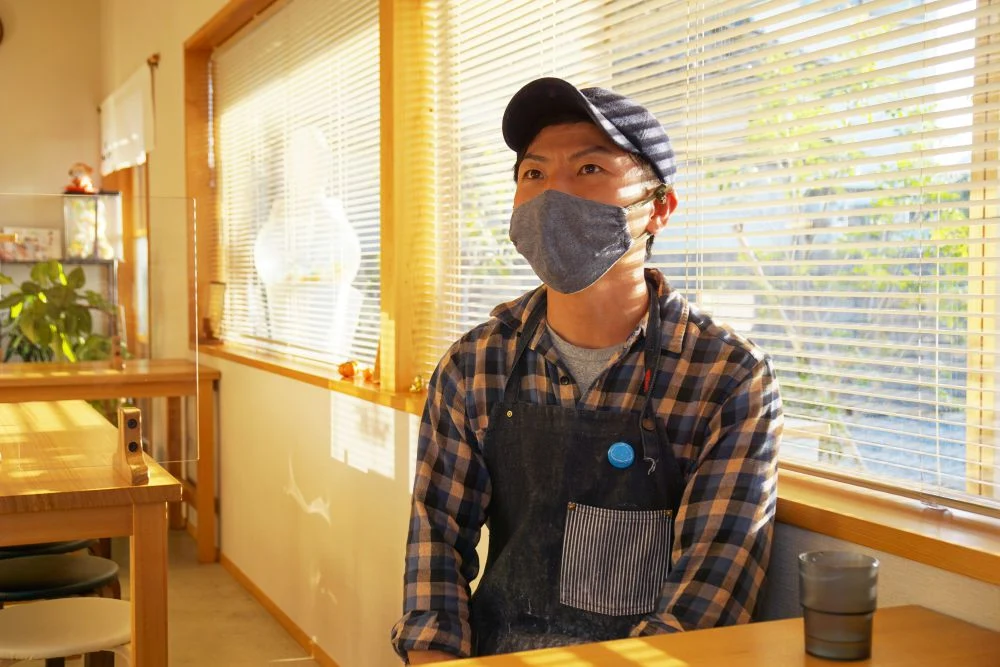
You reopened in April 2020, and as of October 2020, about six months have passed. How do you feel looking back now?
Shibata
It's hard to believe that I was able to come back this far... There were various options, but I don't think I made a mistake.
Since being affected by the July 2018 heavy rain, I haven't had a place to lean on emotionally.
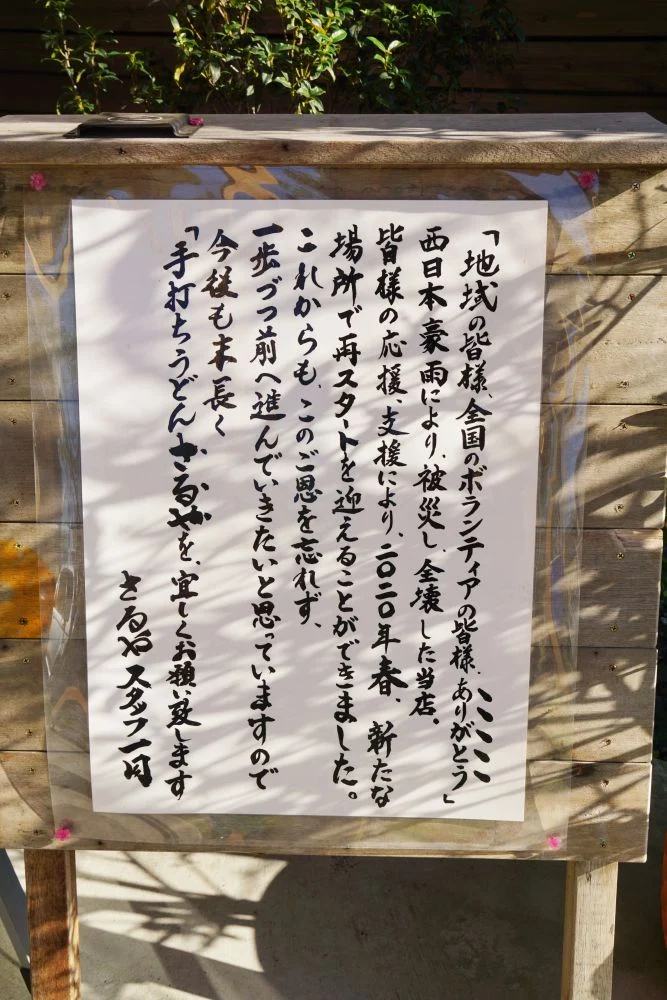
But since April 2020, I have finally been able to make my own noodles at my own shop and serve them.
I have developed a single core of making udon and bringing joy to customers. I feel like my lifestyle has finally returned, and I am living properly.
I am truly fulfilled now.
Future prospects
What are your thoughts on how you want to continue the shop in the future?
Shibata
I think if I operated at night, customers would come, but I shouldn't overdo it and risk my health, so I plan to continue operating within what I can do. As long as I can make a living, that's enough.
Perhaps in the future, my business style may change.
I don't think it suits my nature to increase various menus, so while there are certainly areas for improvement, I want to preserve the current taste.
If there is anything I can contribute to Mabi through udon, I would like to participate actively.
Conclusion
The udon from Saruya, which I used to eat regularly, has returned.
The revival of a store that I always used to visit in my everyday life is truly a delightful thing.
“To have customers eat what I made and say it’s delicious, that becomes my livelihood. I really feel glad to be running this shop,” said Mr. Shibata during the interview. His words were very impressive.
The dashi (broth) of the handmade udon from "Handmade Udon Saruya," provided by a dedicated owner, gently permeates both the stomach and the heart.
Why not try some delicious udon in Mabi, where reconstruction is progressing?
Data for Handmade Udon Saruya
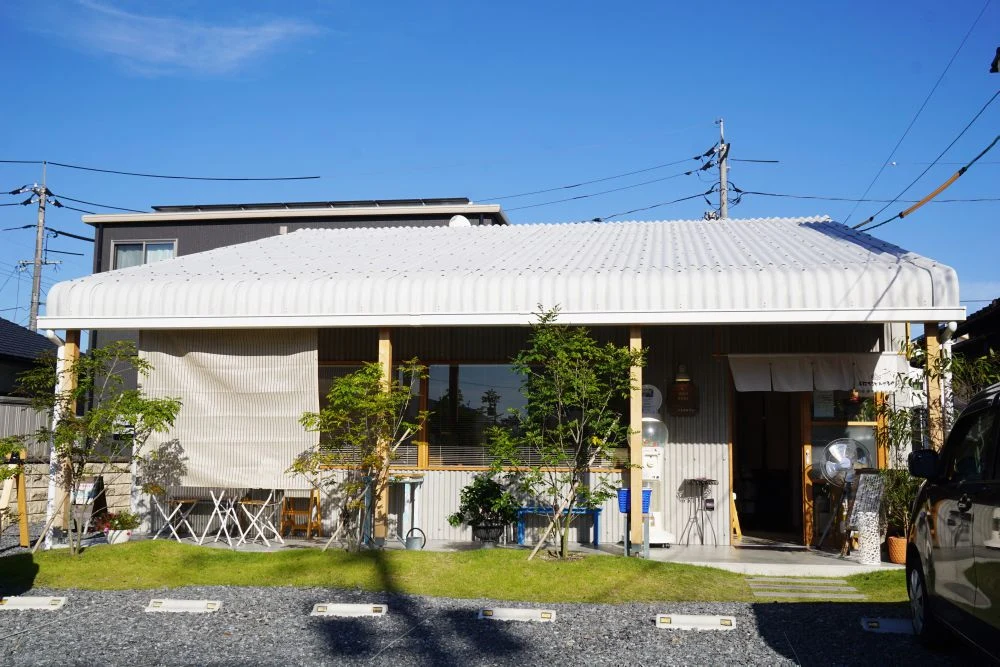
| Name | Handmade Udon Saruya |
|---|---|
| Address | 1117-44 Ayata, Mabi-cho, Kurashiki City, Okayama Prefecture |
| Contact | 086-697-1124 |
| Parking | Available |
| Business Hours | 11:00 AM - 5:00 PM (Ends when noodles are sold out) |
| Regular Holidays | Monday, irregular holidays |
| Payment Methods |
|
| Reservation | Not accepted |
| Seating | 30 seats Counter: 4 seats Table for 6: 3 tables |
| Smoking | Non-smoking (smoking allowed only in designated areas) |
| Toilet | Western-style toilet |
| Website | Saruya: Official Instagram |