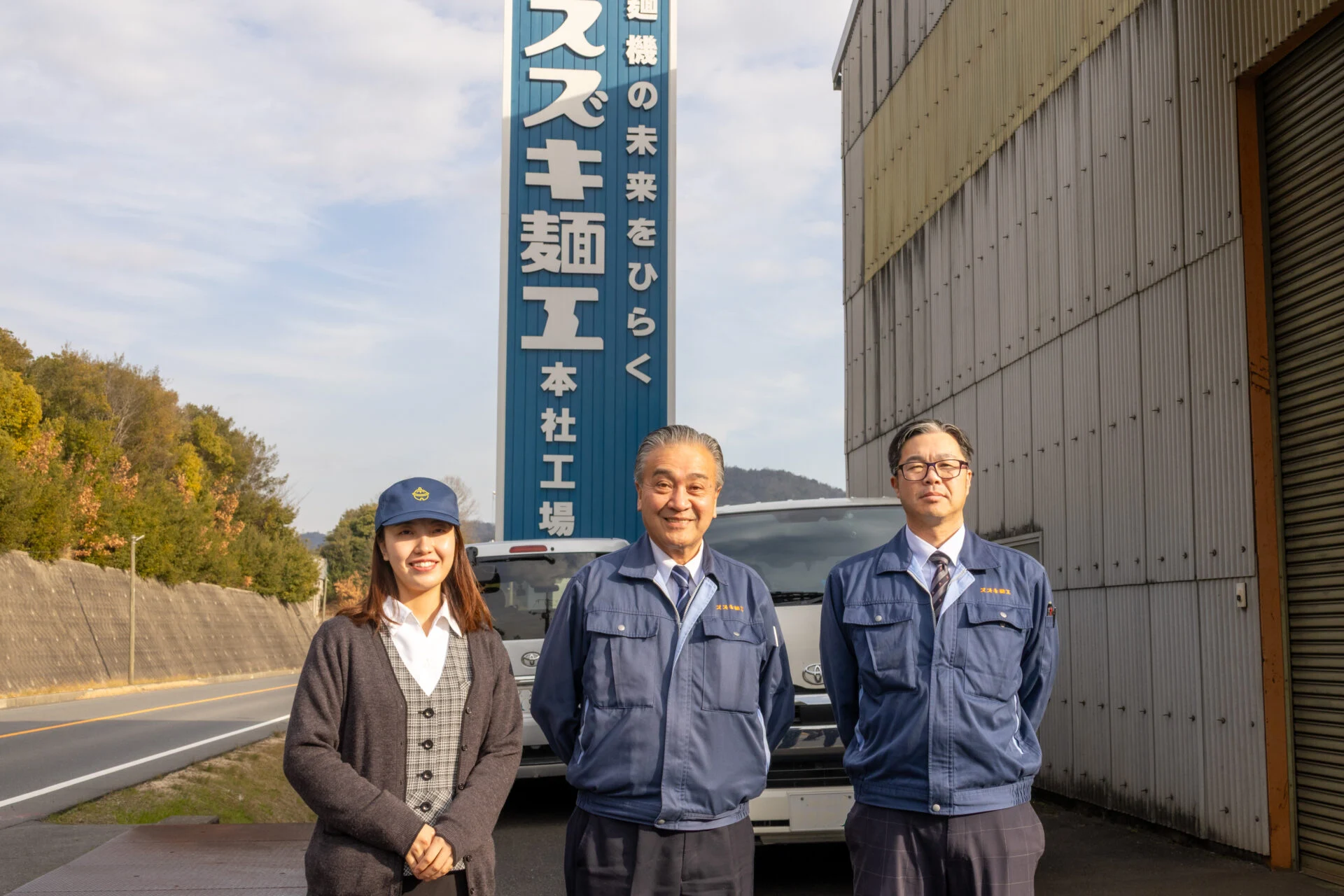
Interview with President Suzuki
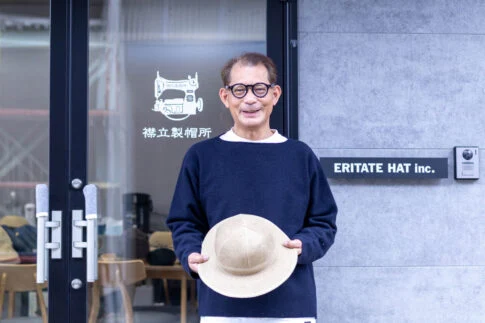
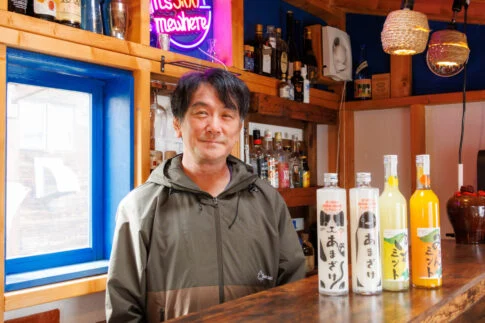
We interviewed President Yasuo Suzuki of Suzuki Noodle Manufacturing Co., Ltd. about the past and future of the company.
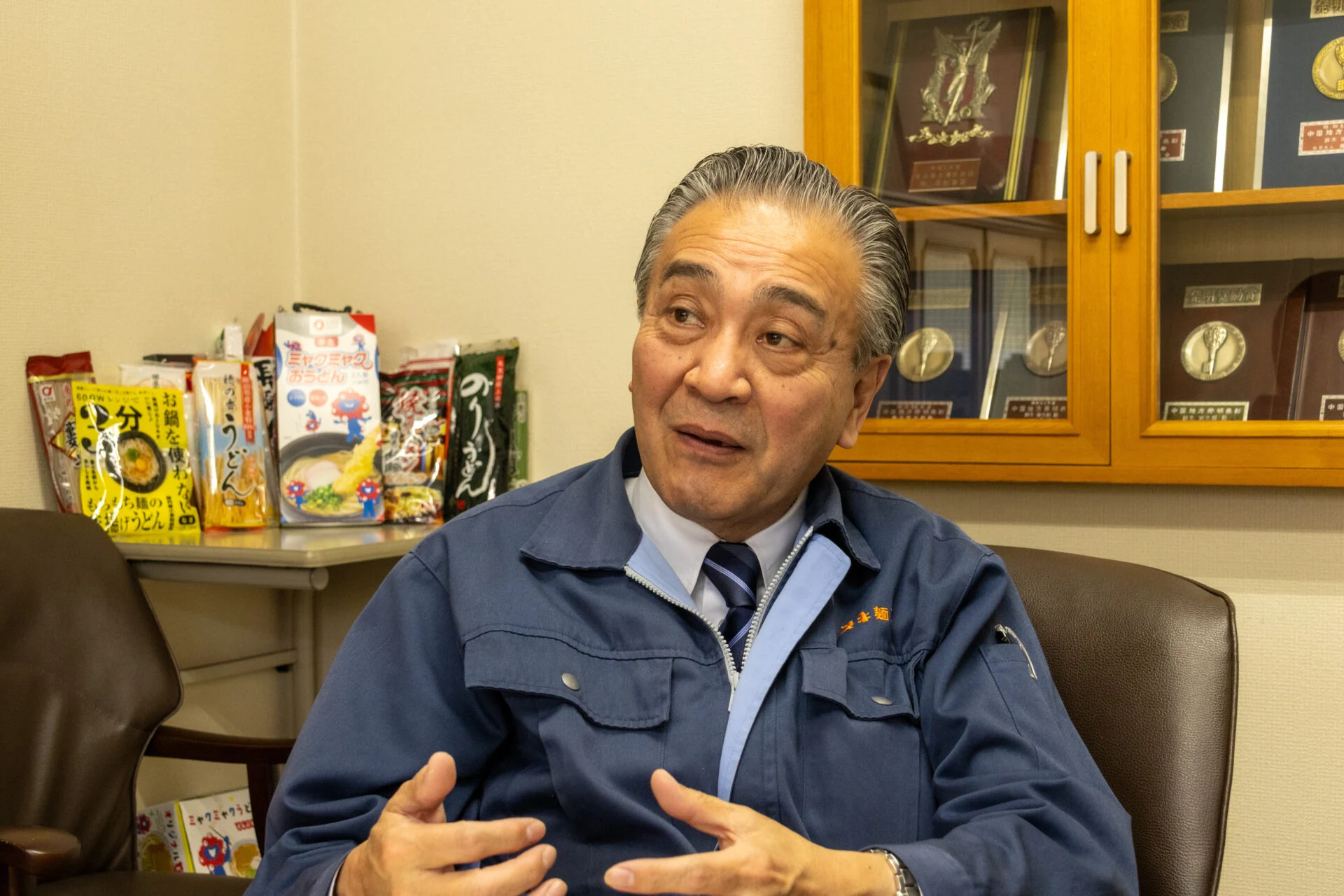
Please tell us about the "Miyadaiku Policy" mentioned in your management policy.
Suzuki (no honorifics)
When I became president around 2005, the company was facing a crisis of survival due to the previous reckless expansion and accumulation of contracts. In that context, this policy was established to steadily generate profits and ensure the company's survival.
Specifically, like a Miyadaiku (traditional carpenter) who repairs shrines and temples over several decades, I want to be a presence that is the first to be relied upon by customers in times of need, even if there is not frequent communication on a daily basis.
Furthermore, I aim to maintain high technical skills so that customers feel "it would be a problem if this company disappeared", which is why I call it the Miyadaiku Policy.
You place great importance on connections with your customers.
Suzuki
Recently, I visited customers in Shikoku and Hyogo Prefecture for New Year's greetings.
During that time, I brought a document summarizing "Information on the Noodle Industry Nationwide," created based on our internal newsletter, and discussed industry trends and concerns directly with them.
Customers are often busy with work from early morning until evening during peak seasons, so they appreciate receiving real-time information about the industry.
Additionally, we have been receiving more requests from customers using machinery from manufacturers that have gone out of business, asking if we can somehow repair them.
In response to such requests, our company takes a step forward with the spirit of "those who remain win, those who do it win," solving problems that other companies cannot handle and expanding new connections with our customers.
I heard that you have recently developed straw manufacturing equipment in addition to noodle-making machines.
Suzuki
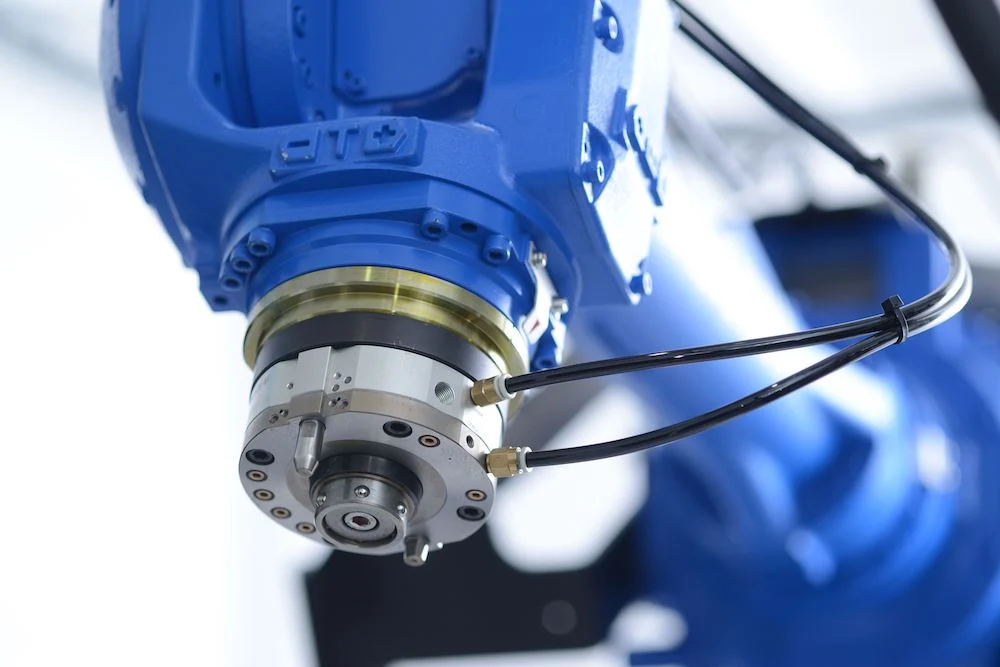
In 2017, we received a request from the straw manufacturer "Shibase Industry" in Asakuchi City to create a machine for manufacturing "sleeves" to protect medical catheters.
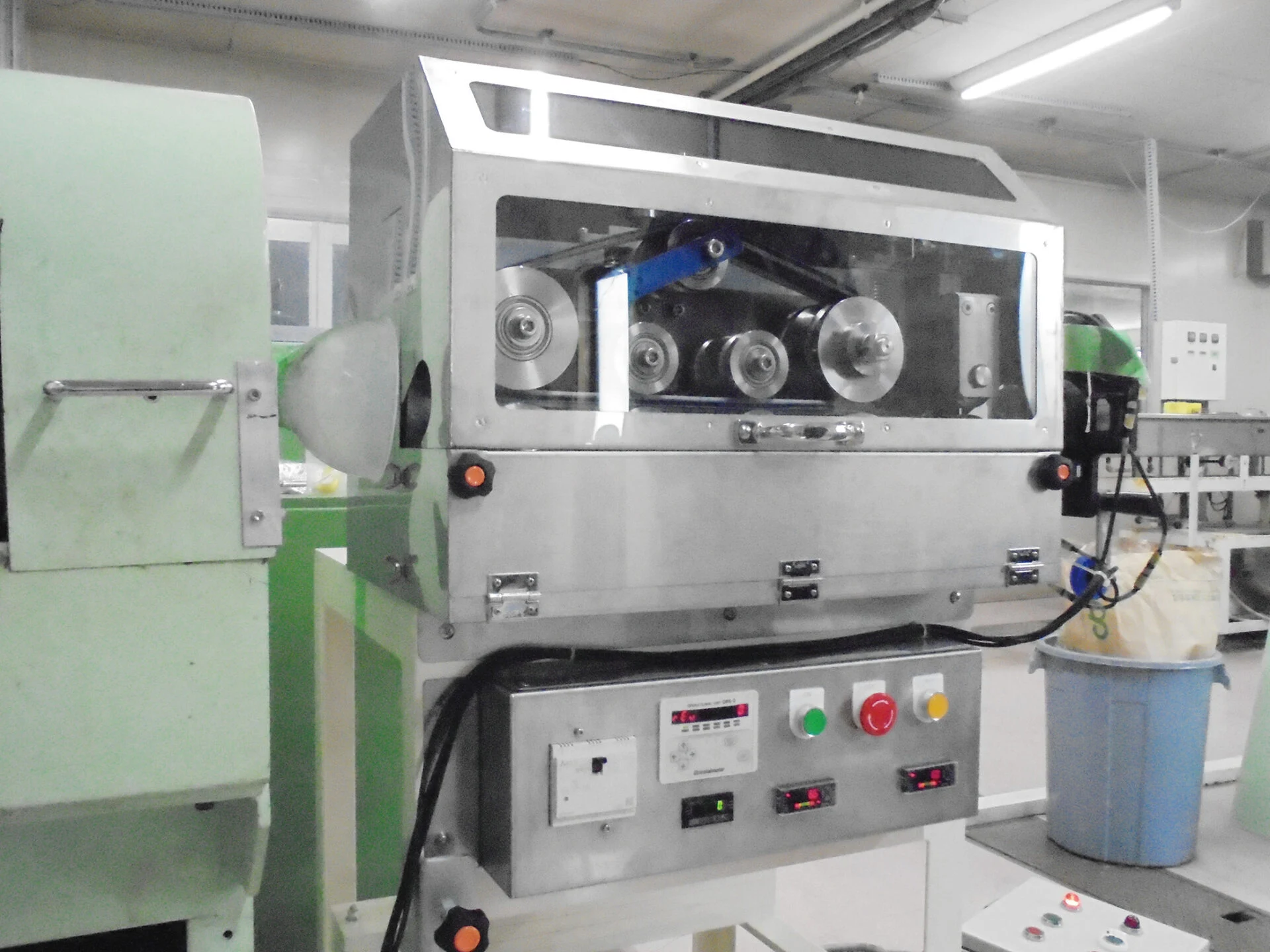
Since we had never made straw manufacturing equipment before, we communicated that we would take on the challenge, but there was a possibility we might not be able to do it before accepting the request.
The straw manufacturing equipment that was being used at the time was very old, and the manufacturer no longer existed. Of course, there were no drawings, so we started by borrowing the machine, disassembling it, measuring it, and creating drawings.
Additionally, since we were manufacturing medical devices, we needed to meet very high hygiene standards. This utilized our know-how as a manufacturer of food machinery.
Six months later, the first machine was completed and delivered. After making adjustments and modifications while actually using it, production was successfully put on track. Subsequently, we have received several repeat orders, for which we are very grateful.
I hear you have been involved with the National Astronomical Observatory for many years as well.
Suzuki
Since the establishment of the Okayama Astrophysical Observatory (now: Okayama Branch of the National Astronomical Observatory Hawaii Observatory) in 1960, I have been involved in infrastructure development for the observatory.
It is a great honor for a local company to have been involved as a supporter since the early days of the observatory, which has been the center of astronomical observation in Japan.
As times have changed and the organization managing the observatory has also changed, I would like to continue to serve as a supporter so that we can respond to even small problems.
I hear that you personally set the company guidelines every year.
Suzuki
At the end of the year, I create an original "four-character idiom" and present it in front of all employees at the beginning of the new year.
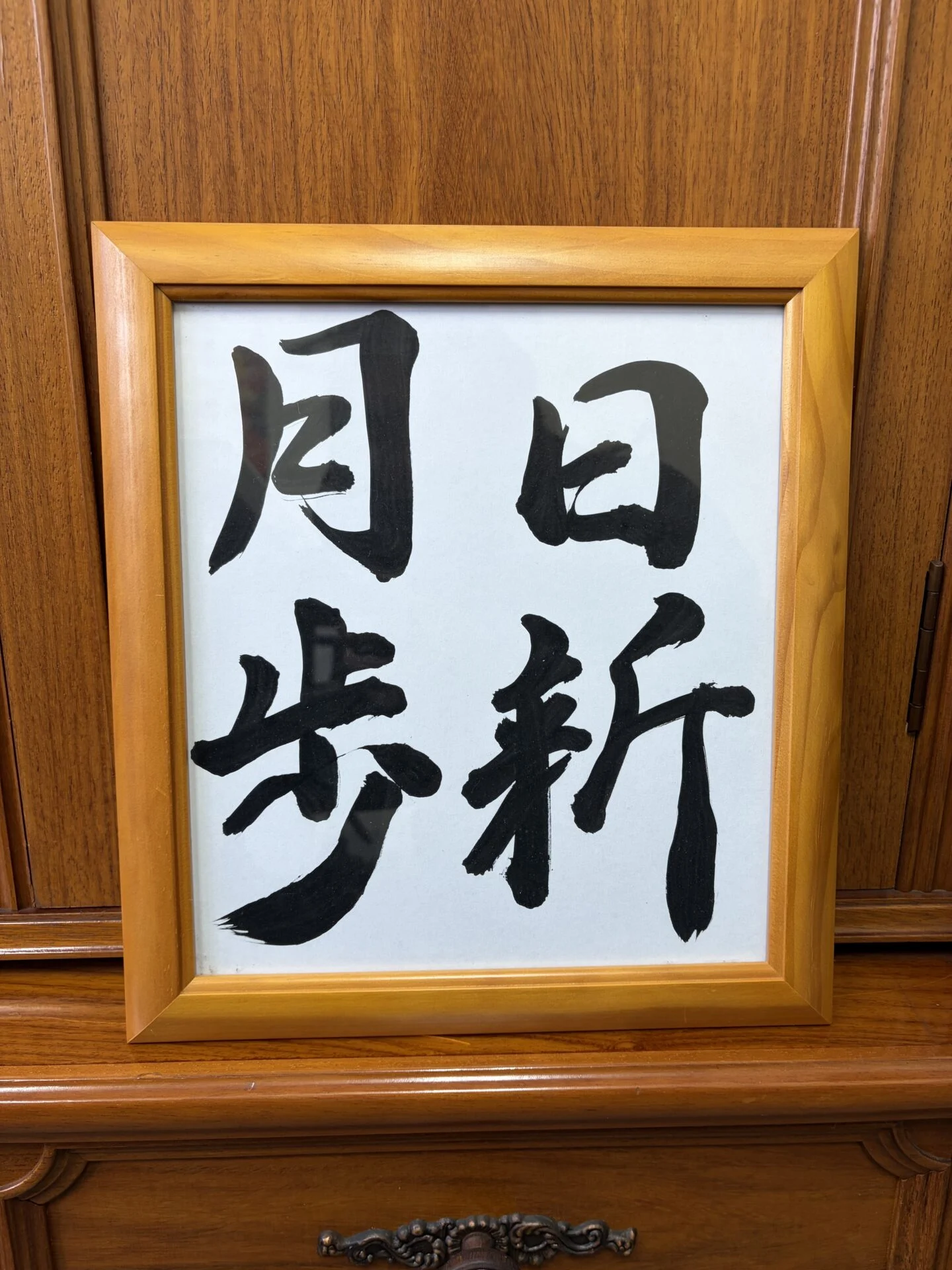
By the way, the company guideline for 2026 is "Nisshin Gekko."
Since we have significant work this year, I imbued this four-character idiom with the meaning of continuously challenging ourselves and progressing daily, growing and changing month by month.
Additionally, last year's (2025) company guideline was "Wind, Forest, Fire, Mountain," which signifies observing quietly without being shaken in a rapidly changing global society, acting swiftly when the opportunity arises, and moving forward vigorously. Since we have more young employees now, I chose a general four-character idiom instead of creating a new one.
I hear that as the representative director of the Okayama Prefecture Flour and Noodle Manufacturing Cooperative, you are also involved in improving the hand-stretched noodle manufacturing process.
Suzuki
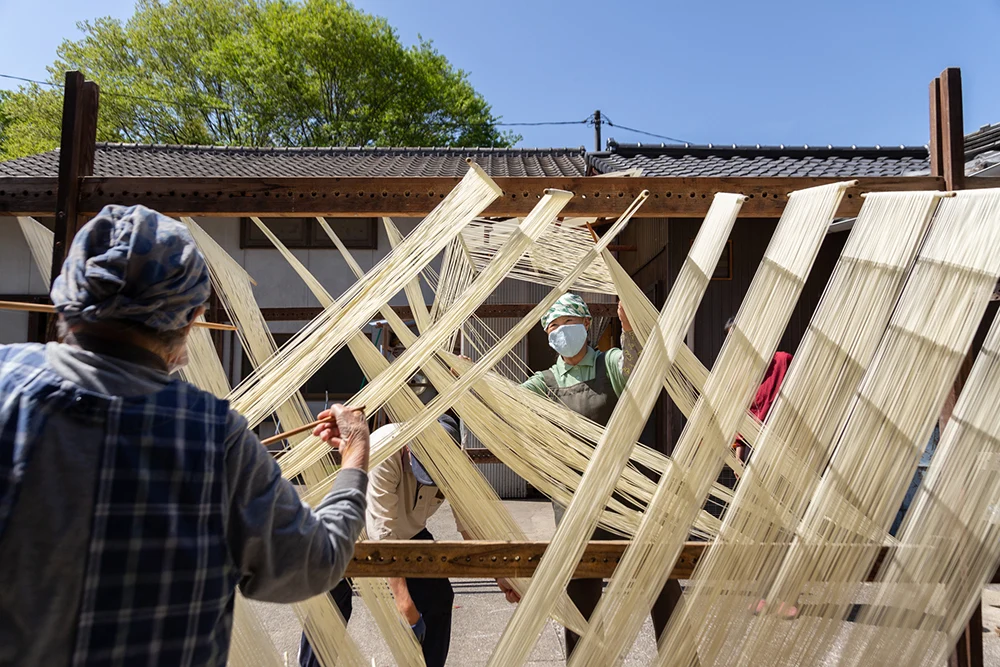
In response to the serious issues of a shortage of craftsmen for hand-stretched noodles and the aging of producers, we are working with industry organizations to communicate with the Ministry of Agriculture, Forestry and Fisheries to seek relaxation of manufacturing methods that are suitable for the times while preserving tradition.
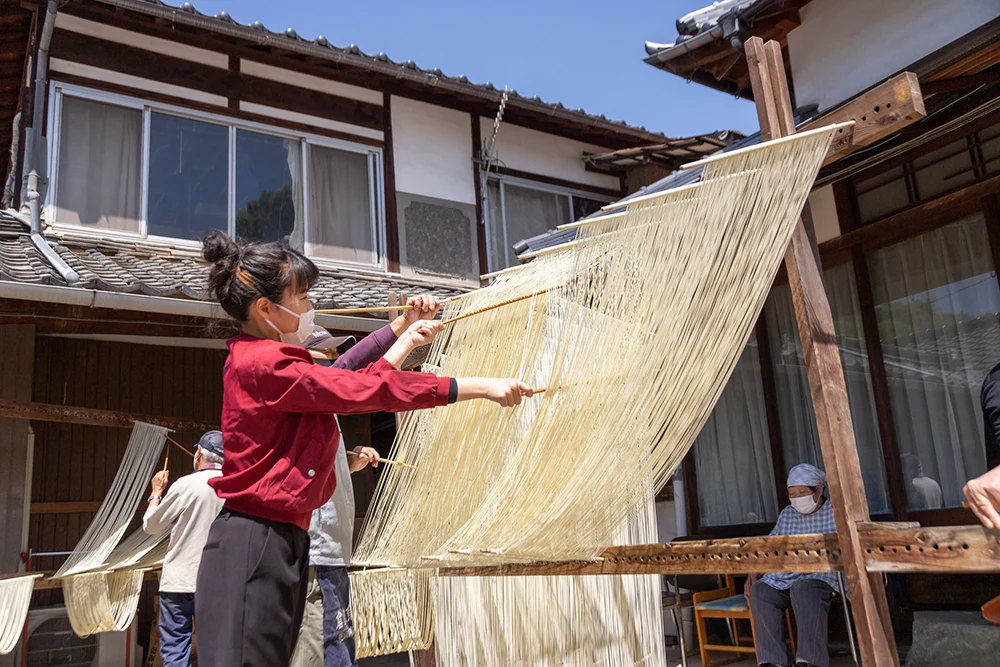
The manufacturing process for hand-stretched noodles is determined by JAS (Japanese Agricultural Standards), and performing all processes as prescribed is labor-intensive, taking from early morning until evening.
In this context, exploring and proposing areas where mechanization and automation can reduce time and labor is considered an urgent task to preserve the production area.
Last winter (2025), when I visited "Kawada Kenichi Noodle Factory," which is also a cooperative member, I saw a former employee of the Asakuchi City Hall training as a craftsman for hand-stretched noodles. Seeing such efforts makes me feel that as a cooperative, we want to support them while also creating a system that makes it easier to work.
Finally, please share a comment with our readers.
Suzuki
While it is said that the average lifespan of a business is 23 to 25 years, I am grateful that we have surpassed 100 years and are entering our 104th year, and I want to connect our business to the next era.
In April 2026, two new high school graduates will join our company. The transfer of skills from veterans to younger employees and the renewal of the organization will also be necessary. Moreover, I believe that manufacturing is the foundation of everything in Japan.
I hope that young people who will carry the future will learn the know-how of manufacturing at companies that actually produce products and grow. I would be happy if more people show interest in such paths.
Conclusion
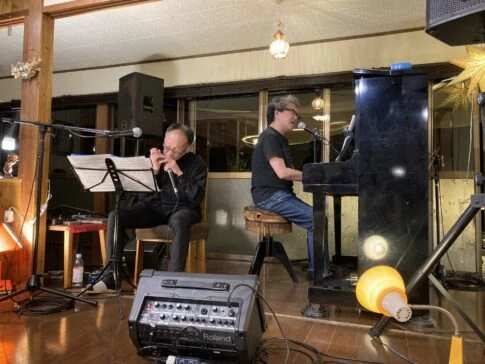
This interview was inspired by the author's observation of the unused double-hung Kakeba machine being used as an instrument in the work "Reverberations: Okayahachi Waterwheel," exhibited at the "Setouchi International Art Festival 2025" held in Shodoshima.
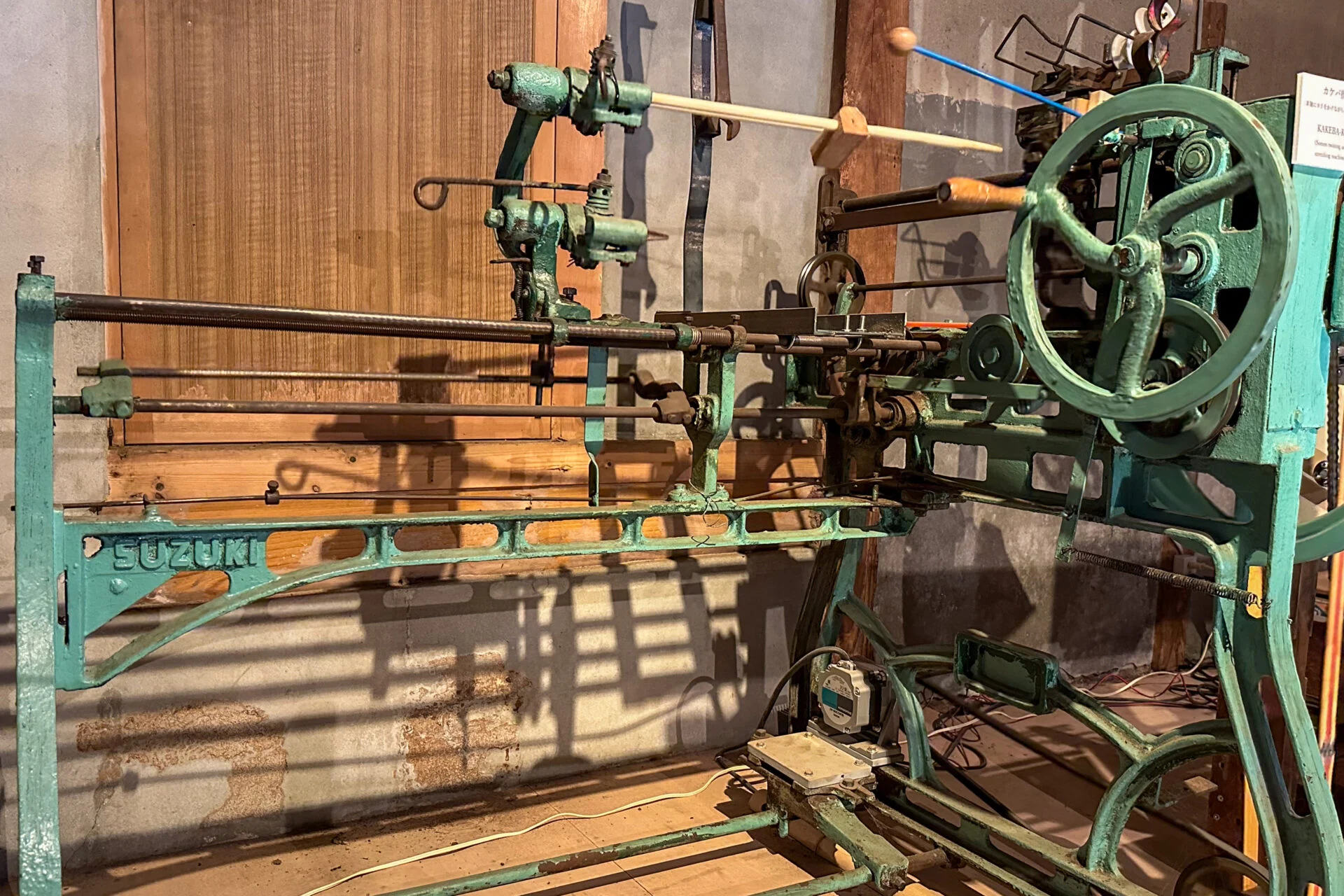
In Shodoshima, a traditional production area for hand-stretched somen noodles, many of Suzuki Noodle Manufacturing's machines are in use. However, President Suzuki mentioned that the issues faced by production areas, such as a lack of successors, are common nationwide.
Rooted in Asakuchi, a company that "opens the future of noodles and noodle machines," a 100-year enterprise.
We hope that they will continue to be a strong supporter of deliciousness on our dining tables for many years to come.
Data on Suzuki Noodle Manufacturing Co., Ltd.
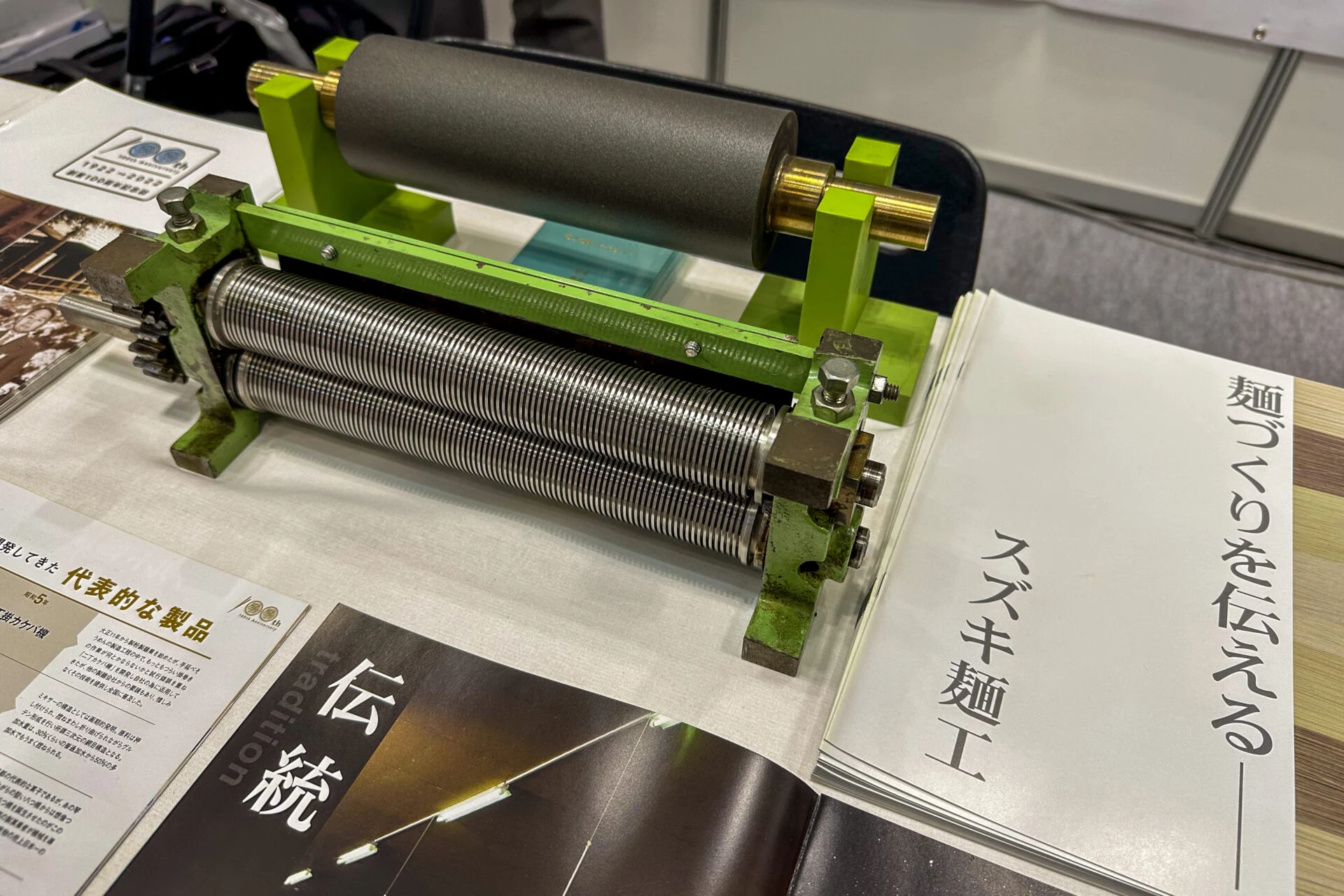
| Organization Name | Suzuki Noodle Manufacturing Co., Ltd. |
|---|---|
| Industry | Noodle machine manufacturing, noodle production |
| Representative Name | Yasuo Suzuki |
| Year Established | 1922 |
| Address | 509-1 Honjo, Kamogata-cho, Asakuchi City, Okayama Prefecture |
| Contact | 0865-44-2125 |
| Website | Suzuki Noodle Manufacturing Co., Ltd. |