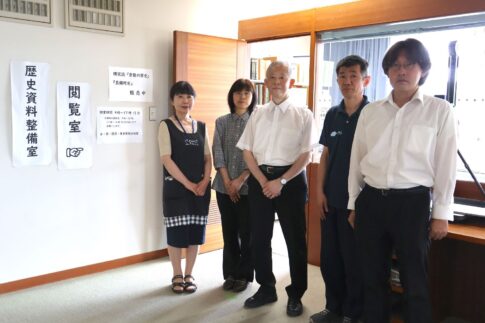
Takahashi River Shijuku aims to achieve SDGs in the Takahashi River basin and create human resources that can play a central role in regional activities.
From June 2021 to September 2021, Takahashi River Shijuku 2nd term was held, with about 30 lectures planned by instructors active in the Takahashi River basin.
On July 11, 2021 (Sunday), fieldwork and lectures were conducted at Fukiya Furusato Village in Takahashi City.
I will report on the lectures.
Overview of Takahashi River Shijuku
Takahashi River Shijuku is operated by the general incorporated association Takahashi River Basin School as a commissioned project by Kurashiki City, aiming to foster human resources that will support community development and sustainable regions through history, culture, industry, fieldwork, and more in the Takahashi River basin.
There are two types of courses available:
- "SDGs Exploration Course" which includes practical training and presentations
- "Auditor Course" where participants can attend optional lectures
The first term of Takahashi River Shijuku was held from November 2020 to February 2021, and the second term began in June 2021.
The opening ceremony was held on June 27, 2021 (Sunday), and about 30 lectures are scheduled until the completion ceremony on September 26, 2021 (Sunday).
The content of the lectures includes the following five types:
| Category | Content |
|---|---|
| SDGs Vision Edition | A course where participants can hear about the 2030 vision and current initiatives in the Takahashi River basin from instructors actively engaged in activities |
| Liberal Arts Edition | A course to gain knowledge about history, culture, and industry in the Takahashi River basin |
| Skills Edition | A course to acquire necessary skills and know-how for carrying out activities in the community, such as presentations, utilization of IT tools, and use of blogs and social media |
| Local SDGs Mission Edition | A workshop to redefine the 17 goals of SDGs as they relate to the Takahashi River basin and set objectives |
| Fieldwork | Experiential learning for community revitalization in the Takahashi River basin |
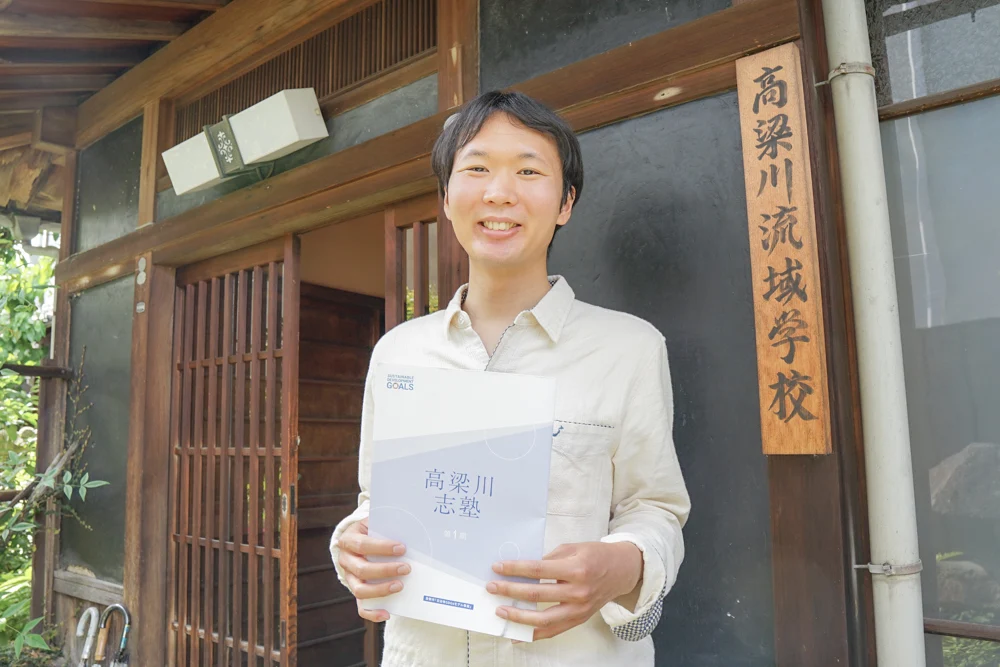
In the first term, there were three types: SDGs Vision Edition, Liberal Arts Edition, and Skills Edition, but from the second term, Local SDGs Mission Edition and Fieldwork have been newly added.
For those who want to know more details, let's check the special page of "Takahashi River Shijuku".
Fieldwork in Takahashi City
About Fukiya Furusato Village
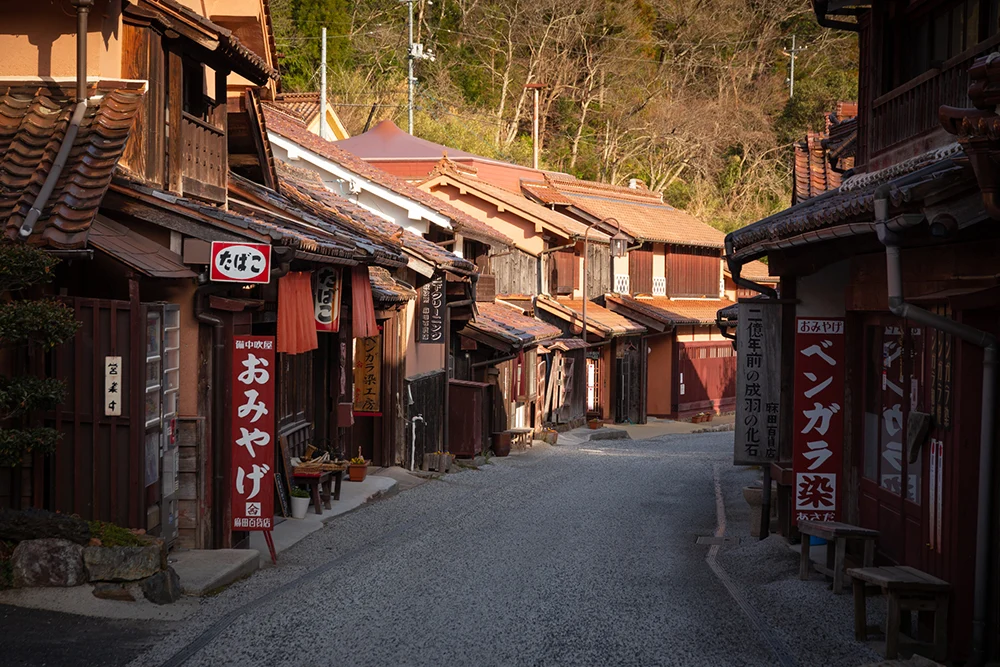
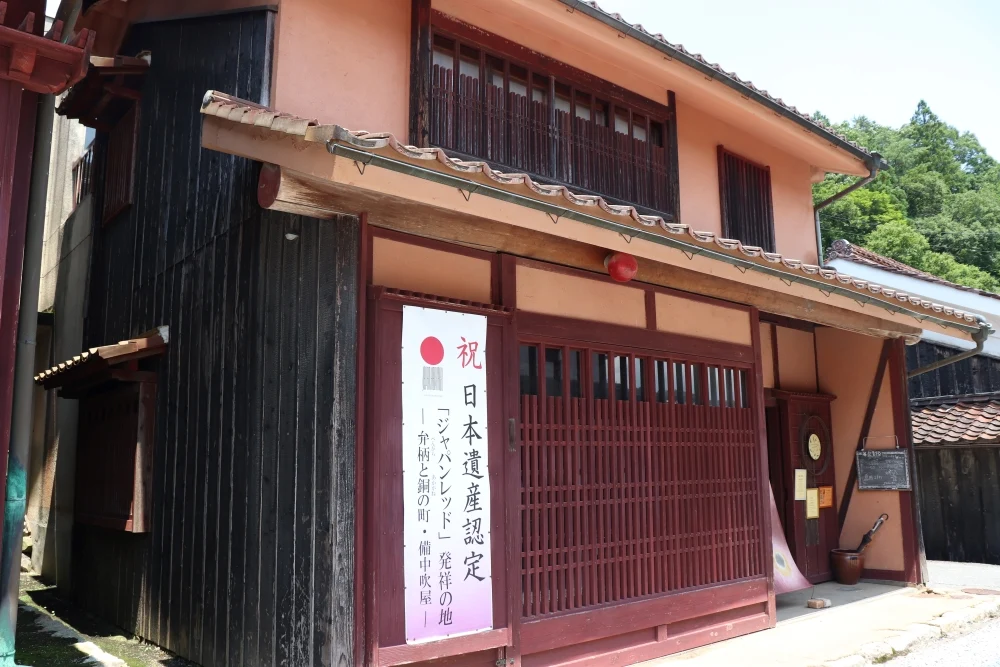
Fukiya Furusato Village was recognized as a Japan Heritage site on June 19, 2020 as the "Birthplace of 'Japan Red' - the town of bengara and copper (akagane) - Bitchu Fukiya."
Bengara is called "the oldest red in Japan" and is a pigment used as paint for shrines, temples, historical buildings, and crafts.
The townscape of Fukiya features a majority of buildings with a bengara-colored exterior and red copper-colored Sekishu tiles.
This is my second visit to Fukiya, and I was once again impressed by the striking red of the town.
Walking through the town of Fukiya
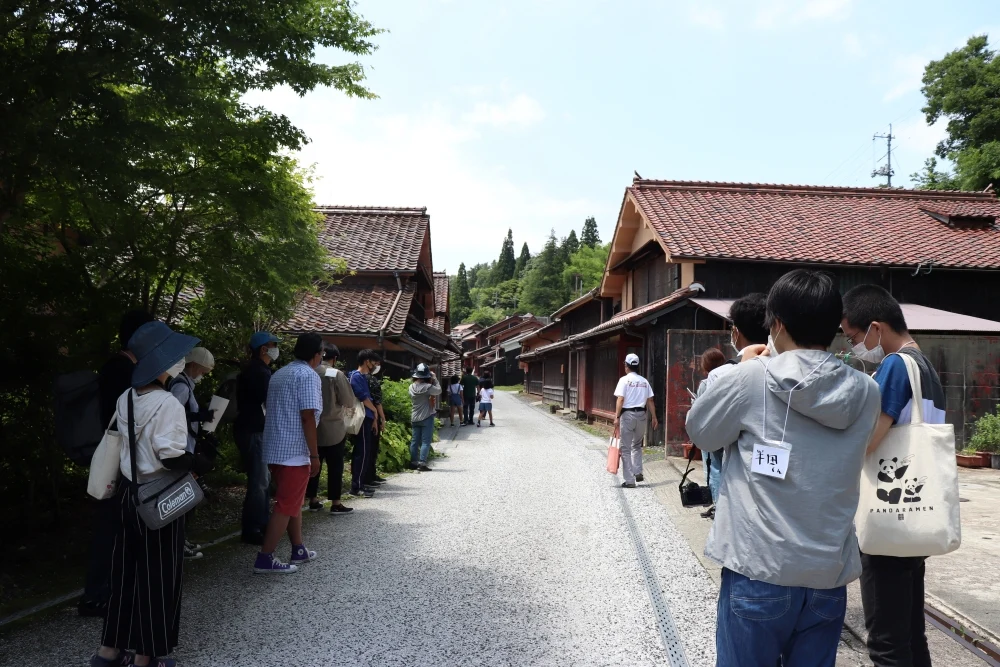
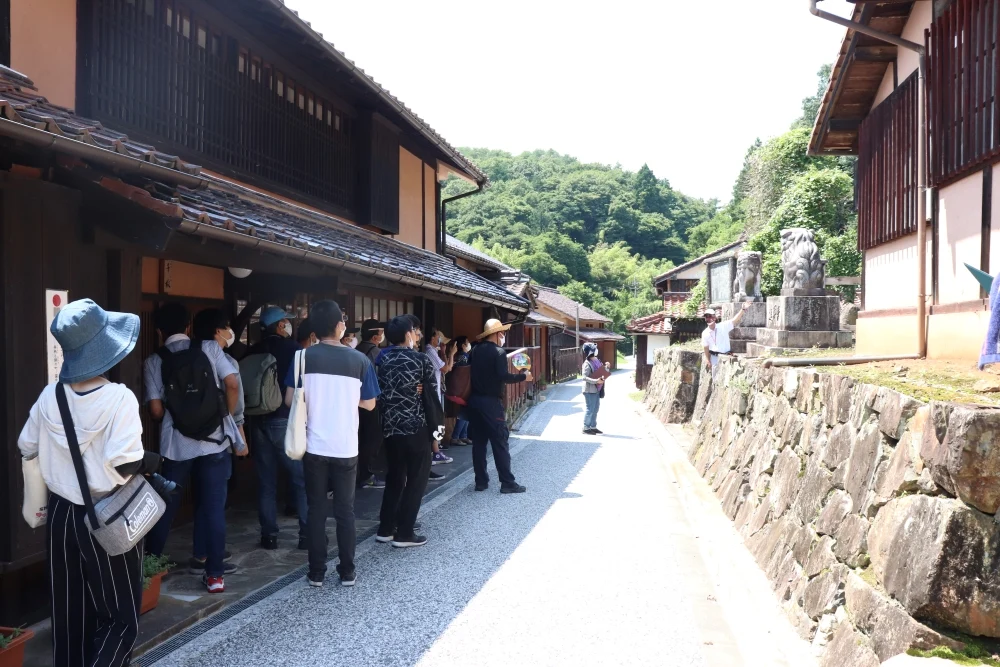
During the fieldwork, we first walked through the town of Fukiya, listening to stories about its history and buildings.
The tiles of Fukiya's buildings have slightly different colors on the left and right, which is said to be due to whether they have been repaired or not.
The tiles do not use bengara; they turn red due to the relationship between the raw red clay and the liquid used during processing.
Since I thought all the reds in Fukiya were colored with bengara, some participants were surprised to hear about the tiles.
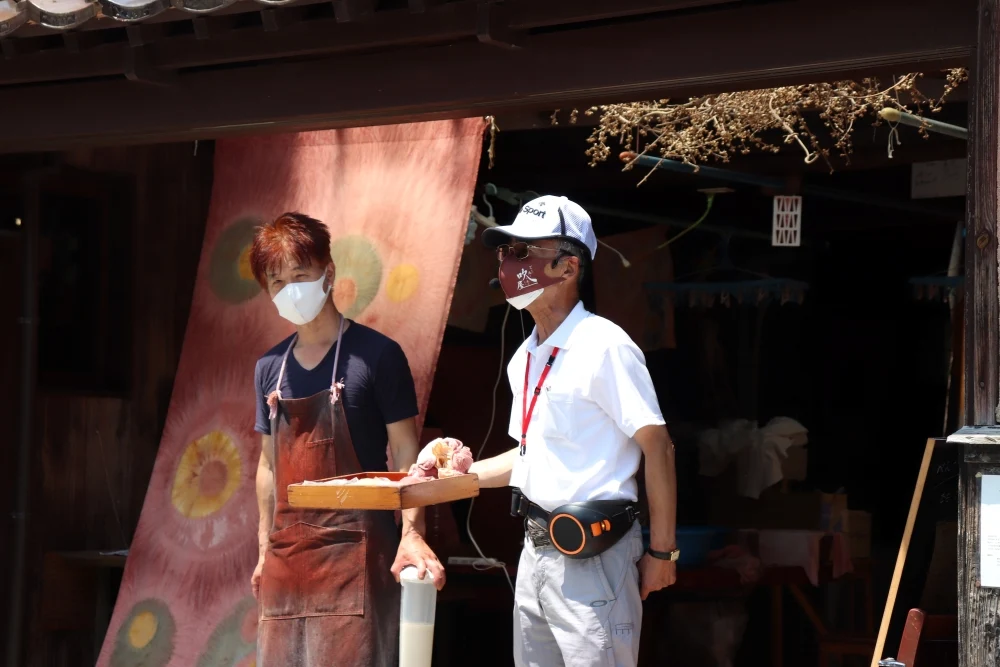
Additionally, the person from the bengara dyeing experience shop talked about how bengara dyeing is done.
Since the red of bengara is called "Japan Red," I thought that the color of bengara was only red, but pigments of other colors can also be obtained from the iron ore that is the raw material for bengara.
Bengara is derived from ore, so it is resistant to natural environments such as ultraviolet rays and hardly fades, which is why it is said that "the color remains even when things decay."
When red is applied to Imari ware, it was said that only Fukiya's bengara could produce a vivid red, which increased the brand power and trading price of Fukiya's bengara, leading to Fukiya thriving as the town of bengara.
Fukiya is a town that prospered through bengara, created by bengara merchants.
This history can be seen throughout the townscape.
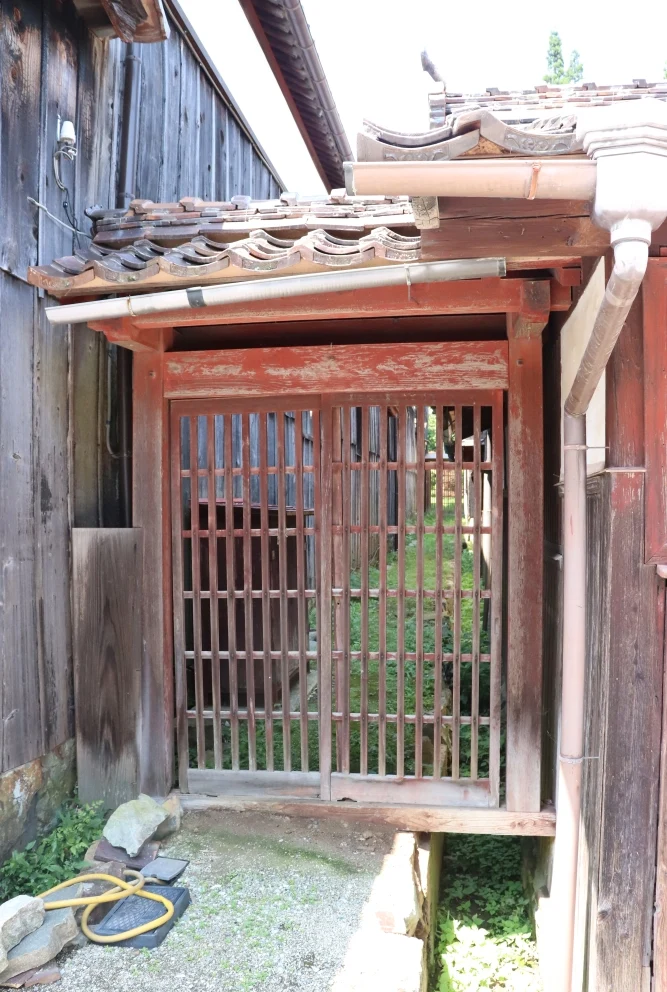
The buildings have narrow fronts and deep depths, resembling the structure of a merchant's house known as "unagi no nedoko," and there are rings for tying up cattle when wholesalers of rice and iron came.
Former Fukiya Elementary School Building
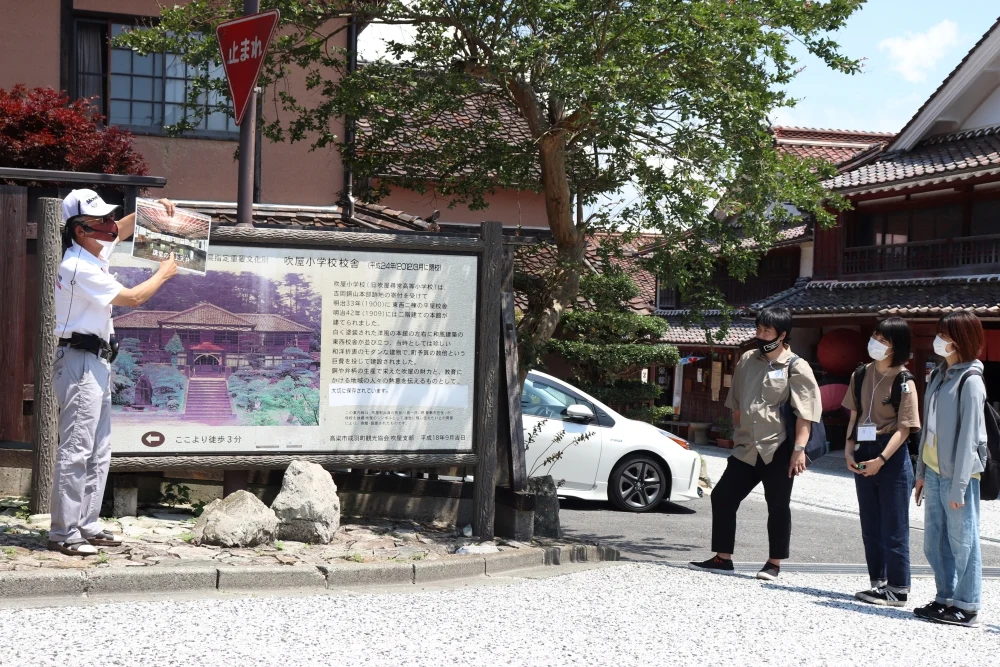
The former Fukiya Elementary School building was constructed in 1900 (Meiji 33) as a single-story building, and a two-story main building was built in 1909 (Meiji 42).
The building was designed by Egawa Saburohachi.
Fukiya Elementary School was in use as the oldest wooden school building until it closed in March 2012 (Heisei 24), and as of 2021 (Reiwa 3), construction for preservation and repair is underway.
The person who guided us during the town walk seemed to have attended Fukiya Elementary School and shared memories from their elementary school days along with photos.
Motoyama Shrine
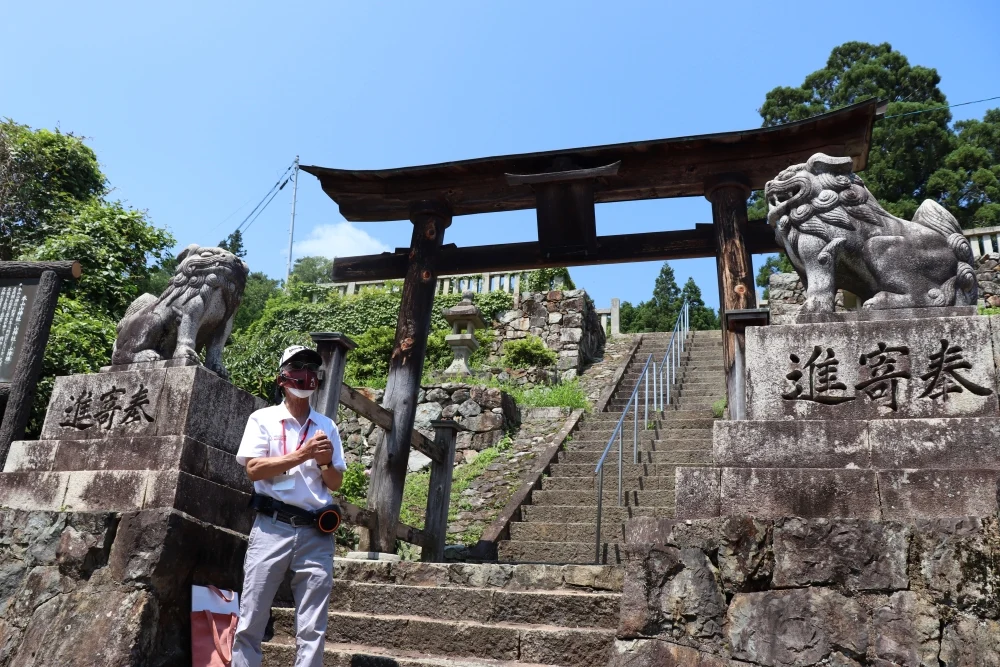
"This shrine's torii gate and tamagaki have a certain mark that you all know. Please try to find it."
Upon hearing this, each participant began to observe the torii gate closely, and voices of "I found it!" began to rise.
When I joined in the search, I found the Mitsubishi logo on the torii gate.
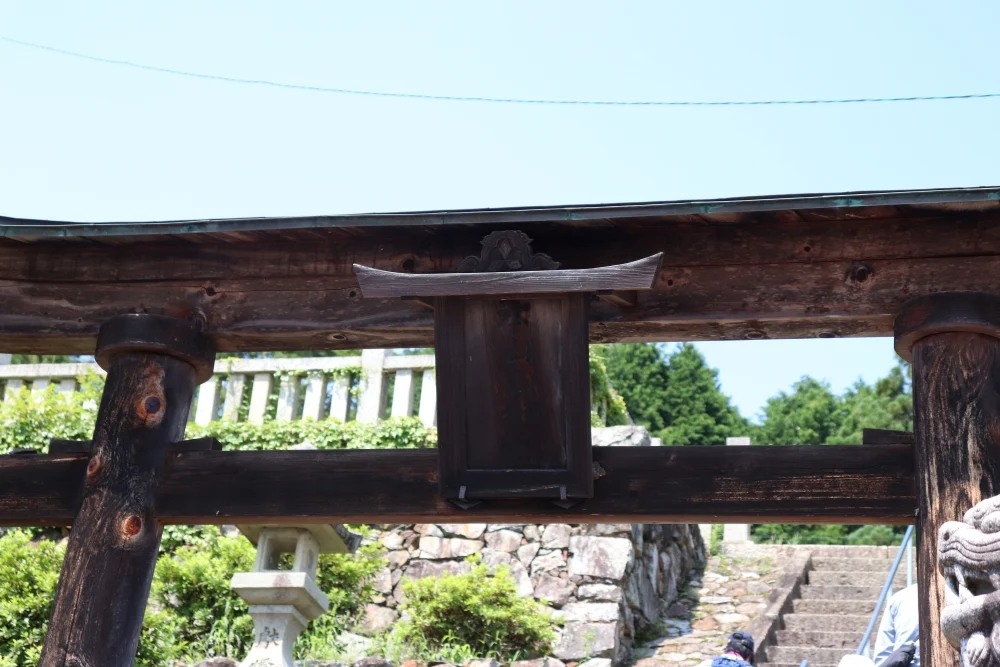
The torii gate and tamagaki of Motoyama Shrine were donated by Mitsubishi in the Meiji era.
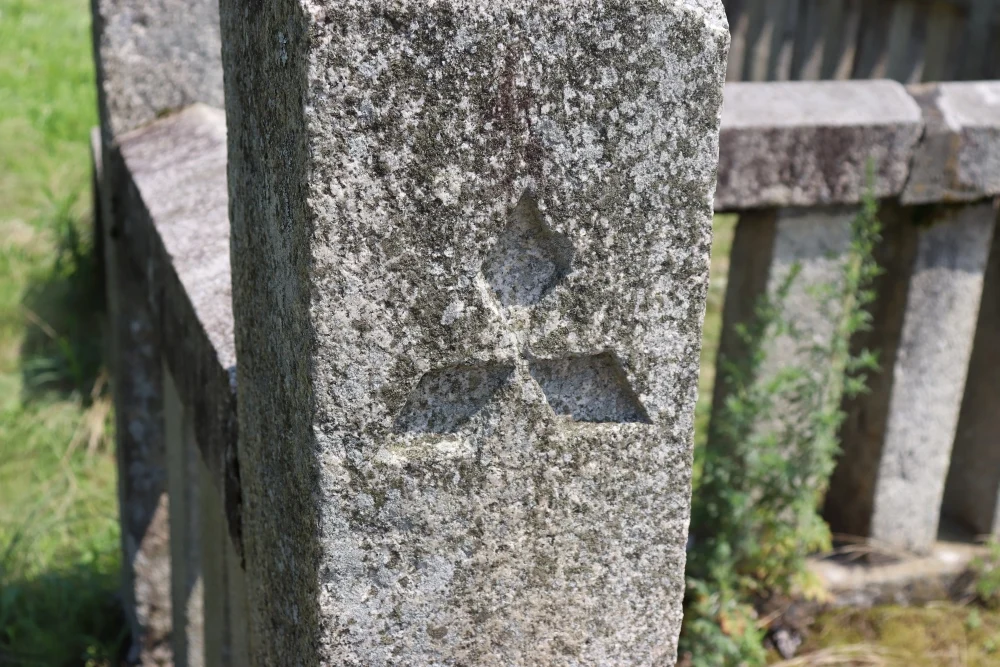
In the Meiji era, the founder of Mitsubishi, Iwasaki Yataro, was the first to volunteer to manage Fukiya, and it is said that Fukiya and Takashima Coal Mine were what made Mitsubishi great, as they shared with us.
Climbing the stairs, you can overlook the townscape of Fukiya.
Traditional House Renovation Workshop
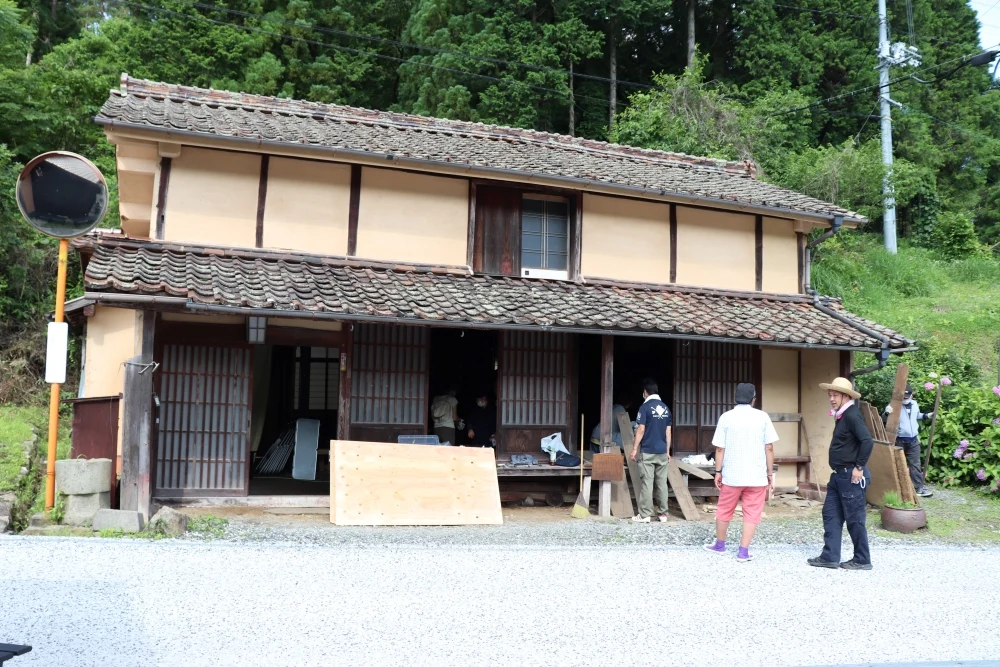
After walking around the town, we held a traditional house renovation workshop.
The renovation was done on a traditional house called "Fukiya Bokkeeya."
During the workshop, we experienced the renovation of the traditional house while mainly doing two types of work.
- Paint the wood under the eaves and secure the boards laid on top
- Lay new boards on top of the secured boards
For painting the wood under the eaves, we use a paint made by mixing bengara and persimmon tannin.
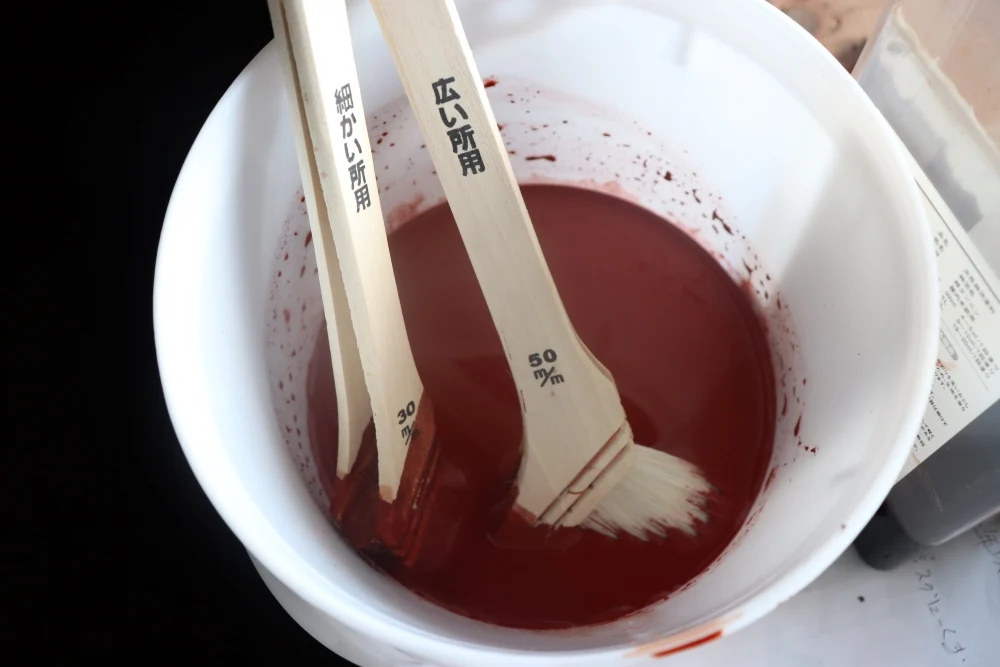
Bengara not only produces a beautiful red color but also serves to preserve and protect the painted wood from pests, making it very suitable for the wood under the eaves, which tends to retain moisture and attract insects.
In the narrow space under the eaves, we seriously proceed with the work in the heat.
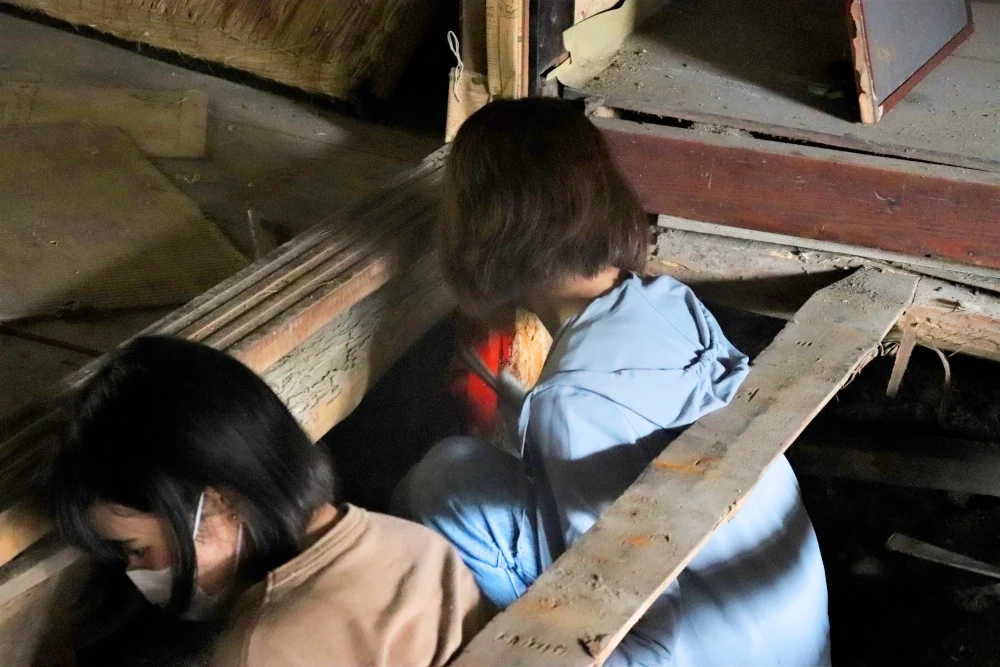
"The ease of painting varies depending on the type of wood; the more textured wood is probably older and harder to paint," said one of the participants.
Since bengara is a pigment derived from minerals, it tends to settle at the bottom even when mixed with persimmon tannin, so it is necessary to stir it well and add more persimmon tannin liquid while painting.
Participants check the amount of paint used and the progress of the work while cooperating to advance the renovation.
During breaks, it was very impressive to see participants showing each other the paint stains on their clothes.
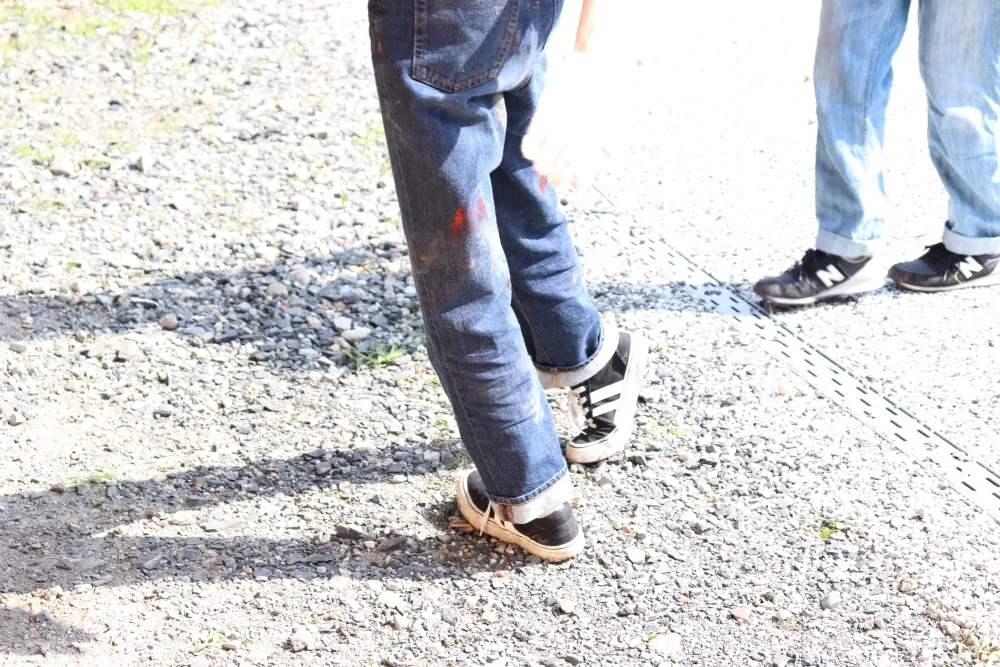
Once the paint is applied, the boards that were removed are fixed in place with nails.
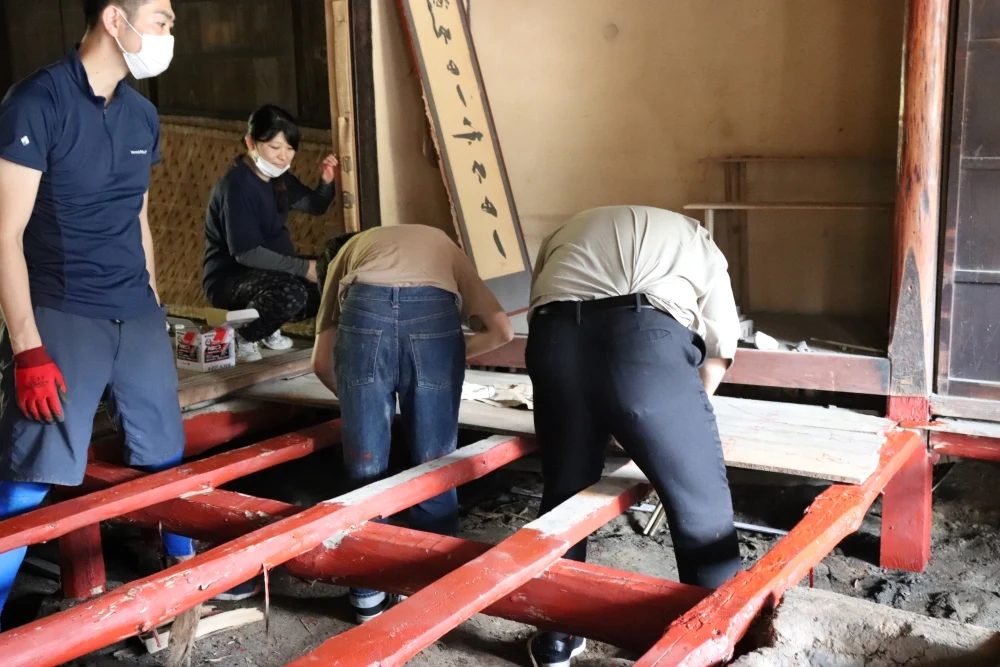
When fixing the boards, it is necessary to return them to their original state as much as possible, so the work was carried out carefully while observing both the building and the boards.
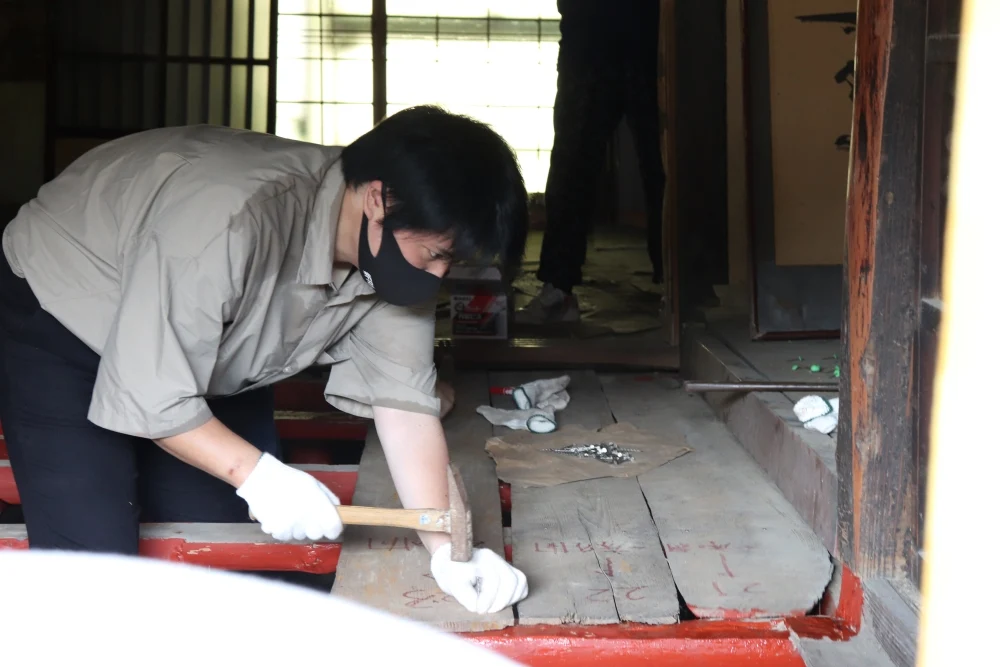
Furthermore, new boards are laid on top of that.
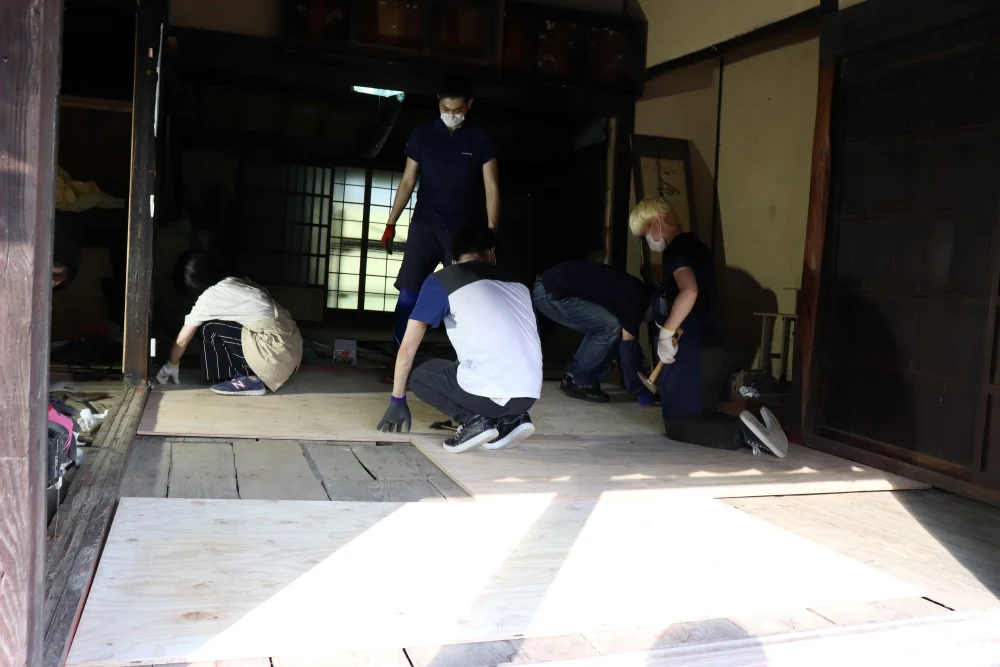
The size of the boards must match the size of the room, so they need to be cut to the required dimensions.
Even a few millimeters of deviation can prevent the boards from fitting properly, so care is necessary when cutting the boards.
Lecture "Fukiya Furusato Village Reiwa Industrial Revolution"
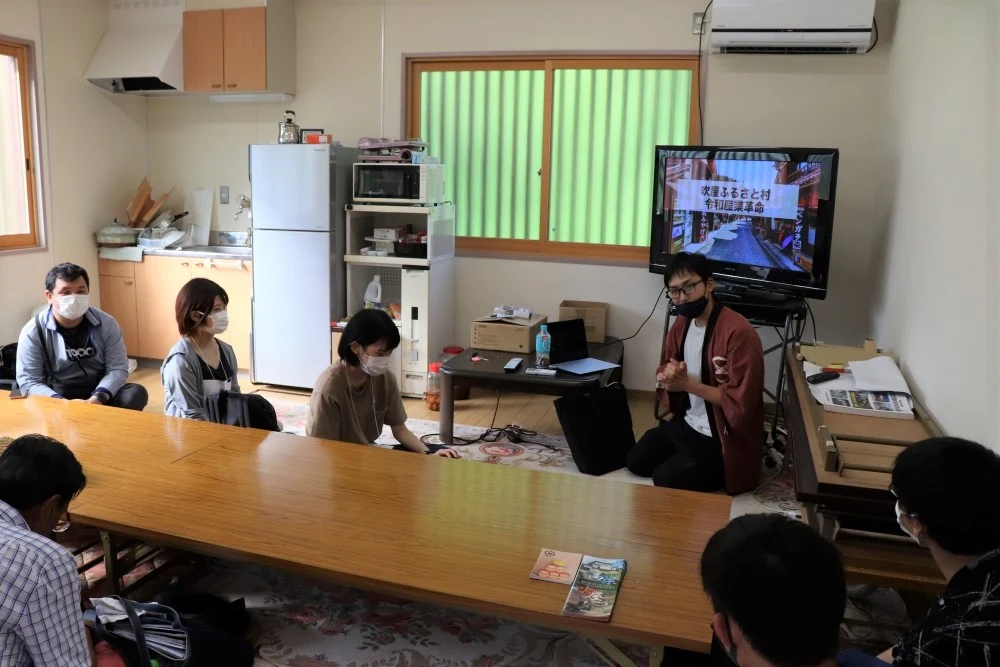
After the town walk and the traditional house renovation workshop, there was a lecture by Takuya Sato, a former community revitalization cooperation team member and now the owner of Sato Benishoten.
By looking at Fukiya from the perspectives of the past, present, and future, he explained what is happening in an easy-to-understand manner.
Fukiya thrived as a major production area for bengara during the Edo period, but with the advent of industrial bengara, the last bengara factory closed at the end of the Showa era.
It is being reborn as a tourist town as a furusato village.
At its peak, Fukiya had a population comparable to that of Kurashiki at the time, but currently, the aging rate exceeds 50 percent, the population is about 130, and one in two buildings is vacant.
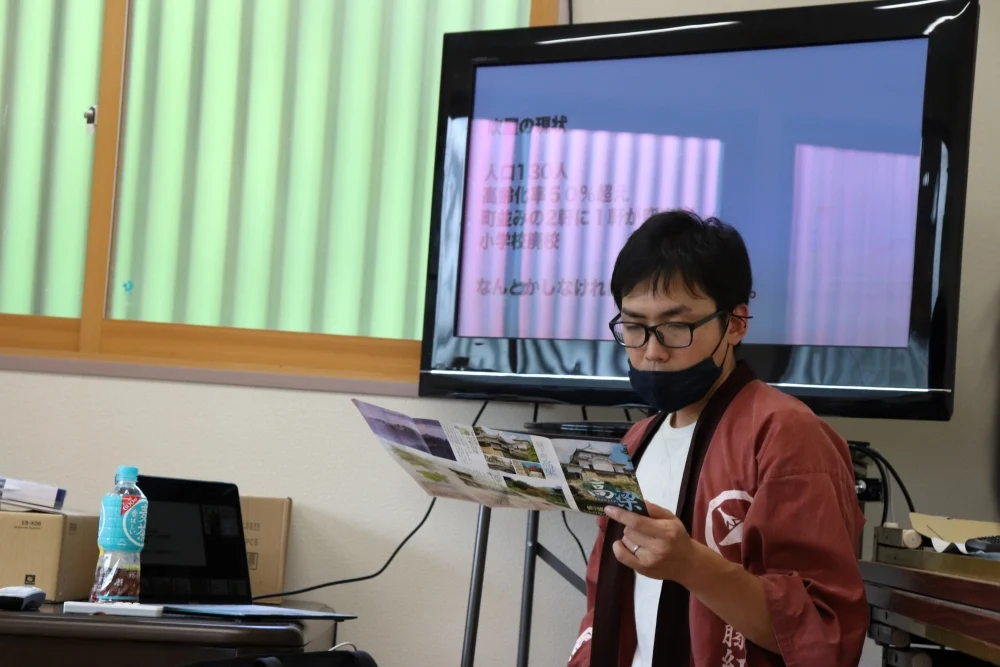
During his time as a cooperation team member, Sato not only worked on the production of the local specialty, the red daruma, but also organized events where everyone danced in the streets of Fukiya and provided events like taverns.
Sato mentioned that during his time in the cooperation team, he was focused on creating things that did not exist in Fukiya.
Creating things that do not exist cannot be done alone.
He stated that this was possible thanks to the support of key individuals and organizations in Fukiya.
The people in Fukiya are able to clearly distinguish between what they can do and what is difficult to execute alone, making it easier to create new things with newcomers to Fukiya.
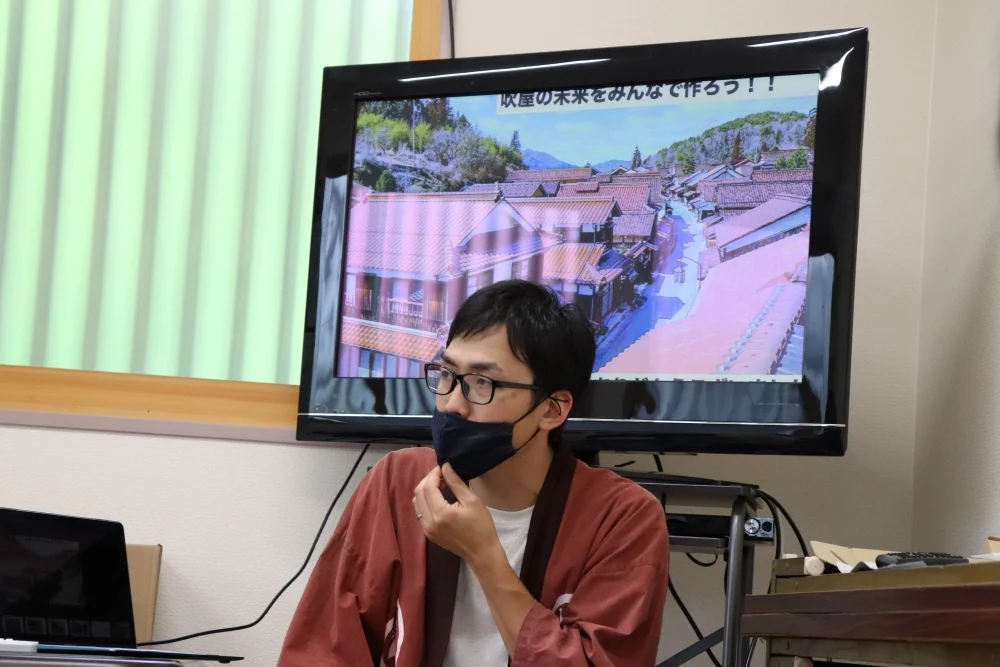
Next, he spoke about Fukiya's present and future under the title "Fukiya Furusato Village Reiwa Industrial Revolution".
In the nine years from when Sato was active as a community revitalization cooperation team member to the present, it is said that ten new stores have opened in Fukiya.
Fukiya is located deep in the mountains, and it does not receive as many visitors as other tourist spots, but Sato mentioned that the cases of shops opening and everyone enjoying themselves in a relaxed manner are interesting.
From the examples of five distinctive stores currently in Fukiya, he shared insights about Fukiya Furusato Village, and then discussed the opening of the former Fukiya Elementary School building in April 2022 and the utilization of Fukiya Bokkeeya, which was renovated during the workshop, as part of Fukiya's future development.
Conclusion
The Takahashi River Study Group, which usually conducts lectures centered around Kurashiki City, was able to conduct fieldwork by actually going to Fukiya for this lecture, which I believe allowed participants to feel closer to the Takahashi River basin.
As a graduate of the first term of the Takahashi River Study Group, I was able to experience not only attending lectures but also actually going to Takahashi City, which made me feel again that the Takahashi River basin is vast and that the upstream and downstream are connected.
It was a fulfilling fieldwork experience spent under the blue sky and among the red townscape.
Takahashi River Study Group Second Term Data
| Name | Takahashi River Study Group Second Term |
|---|---|
| Dates | Duration of the Takahashi River Study Group Second Term: June 27, 2021 - September 26, 2021 |
| Location | Within Takahashi City |
| Participation Fee (including tax) | For details, please check the Takahashi River Study Group website. 1. SDGs Exploration Course Participants General: 12,000 yen, Students: 8,000 yen (Participation in all programs on the day and archive viewing available) *Uniform fee regardless of whether attending in person or online 2. Auditors (attending only lectures) In-person attendance: 1,500 yen per session (limited number of participants) Online/Archive attendance: 500 yen per session *Participants will be provided with a page for viewing later. *Some courses may charge additional actual costs. *Some courses may be available for free public access. |
| Website | Takahashi River Study Group | Takahashi River Basin School |