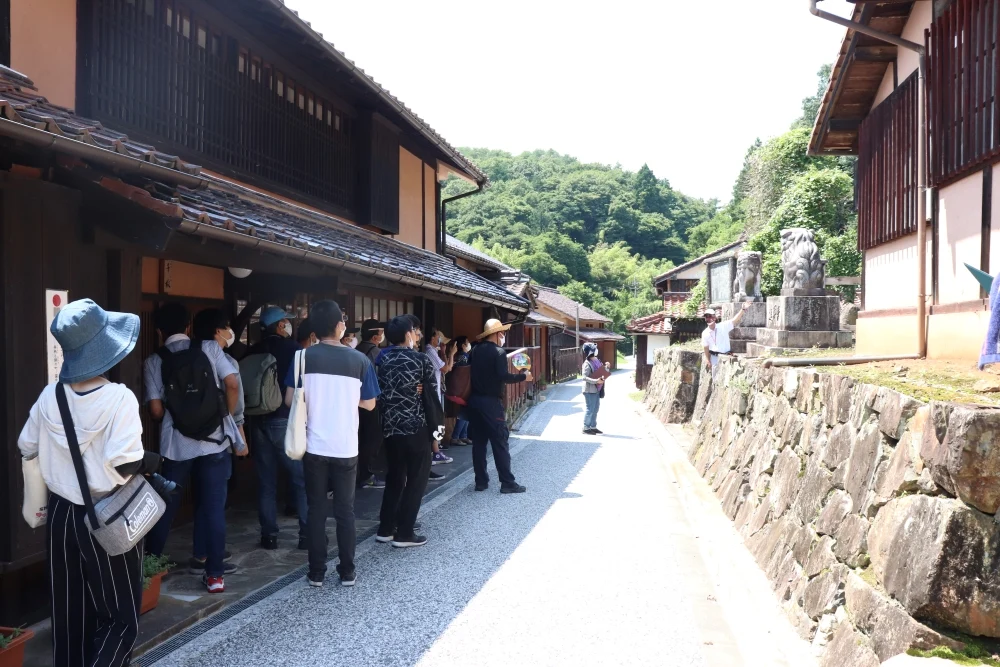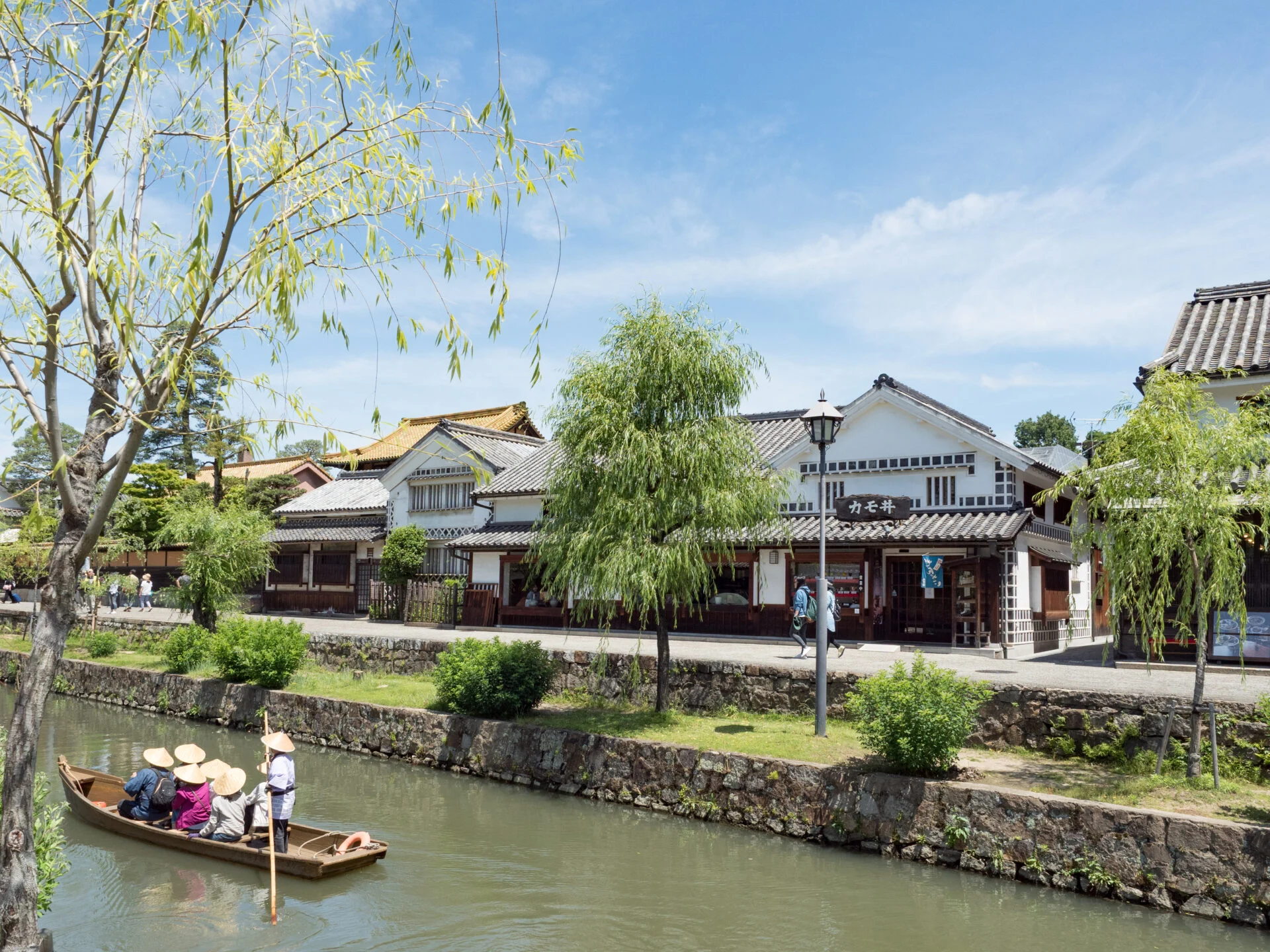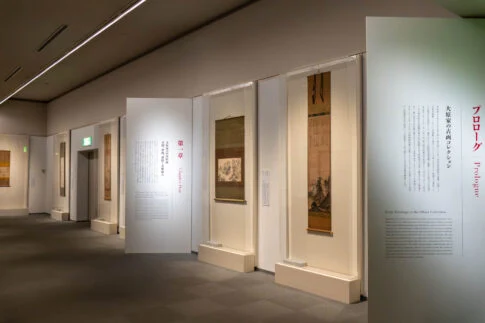
Takahashi River Shijuku is a school aimed at achieving the SDGs in the Takahashi River basin and creating human resources that can play a central role in regional activities.
From June 2021 to September 2021, Takahashi River Shijuku 2nd Term was held, featuring about 30 lectures by instructors active in the Takahashi River basin.
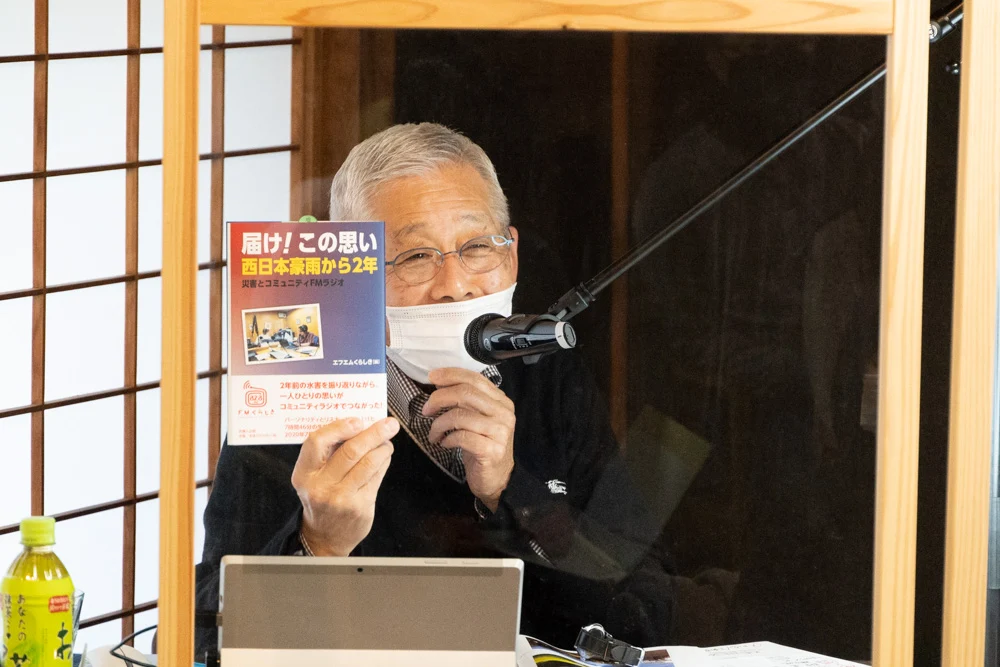
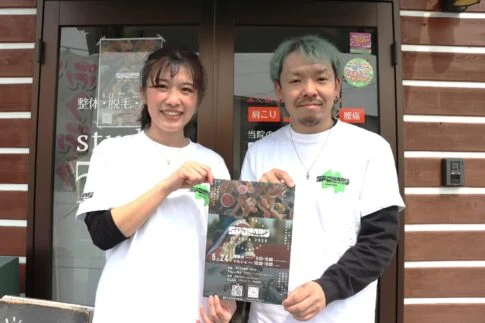
On September 19, 2021 (Sunday), Noritake Kanzaki, the principal of the Takahashi River basin school and a folklorist, took the stage.
I will report on the lecture.
Overview of Takahashi River Shijuku
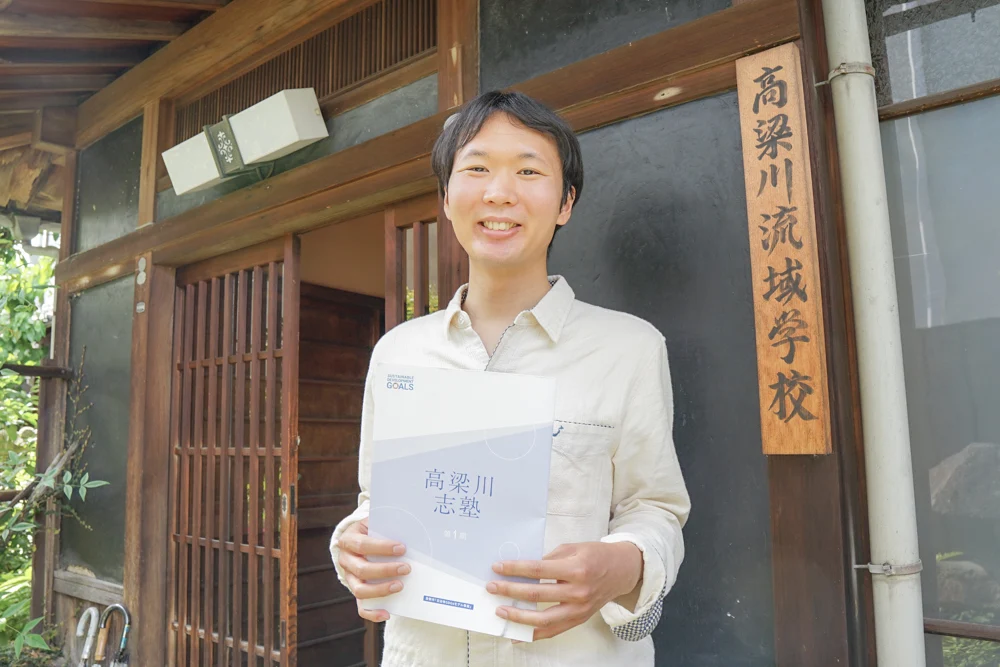
Takahashi River Shijuku is operated by the General Incorporated Association Takahashi River Basin School as a commissioned project by Kurashiki City, aiming to foster human resources that will contribute to community building and sustainable regions through history, culture, industry, and fieldwork in the Takahashi River basin.
The courses offered are as follows:
- “SDGs Exploration Course” which includes practical training and presentations
- “Auditor Course” where participants can take optional lectures
The first term of Takahashi River Shijuku was held from November 2020 to February 2021, and the second term began in June 2021.
The opening ceremony was held on June 27, 2021 (Sunday), and by the completion ceremony on September 26, 2021 (Sunday), about 30 lectures were conducted.
The content of the lectures includes the following five categories.
| Category | Content |
|---|---|
| SDGs Vision Edition | A course where participants can hear about the 2030 vision and current initiatives in the Takahashi River basin from instructors actively engaged in activities |
| Liberal Arts Edition | A course to gain knowledge about history, culture, and industry in the Takahashi River basin |
| Skills Edition | A course to acquire necessary skills and know-how for carrying out activities in the region, such as presentations, utilization of IT tools, and use of blogs and social media |
| Local SDGs Mission Edition | A workshop to redefine the 17 goals of the SDGs as they relate to the Takahashi River basin and set objectives |
| Fieldwork | Experiential learning for community revitalization in the Takahashi River basin |
In the first term, there were three types: SDGs Vision Edition, Liberal Arts Edition, and Skills Edition, but from the second term, Local SDGs Mission Edition and Fieldwork were newly added.
For those who want to know more details, let's check the special page for Takahashi River Shijuku.
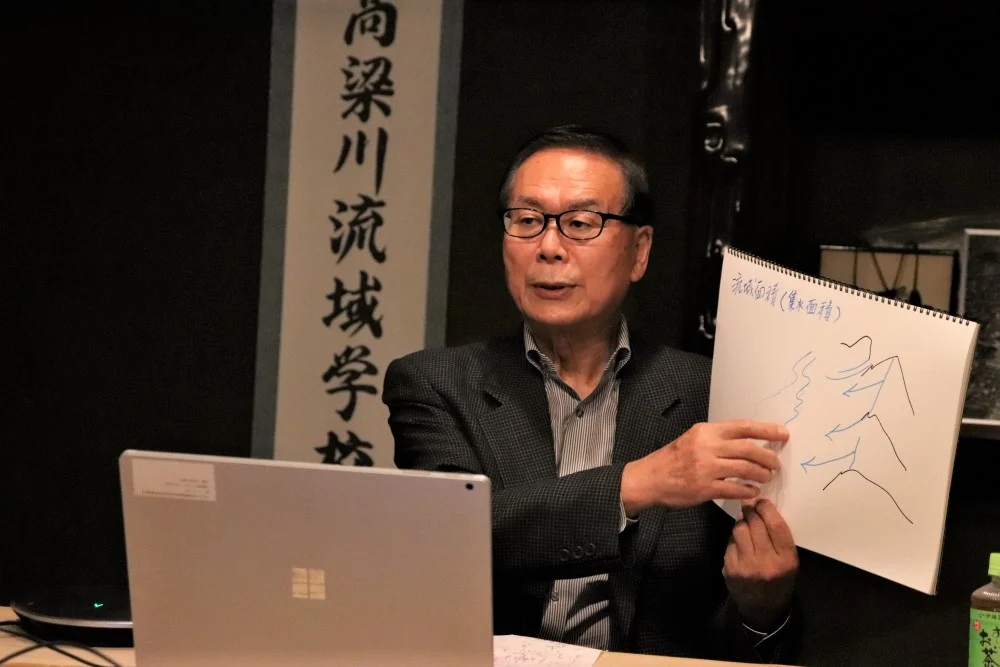
Characteristics and Sustainability of the Takahashi River Basin
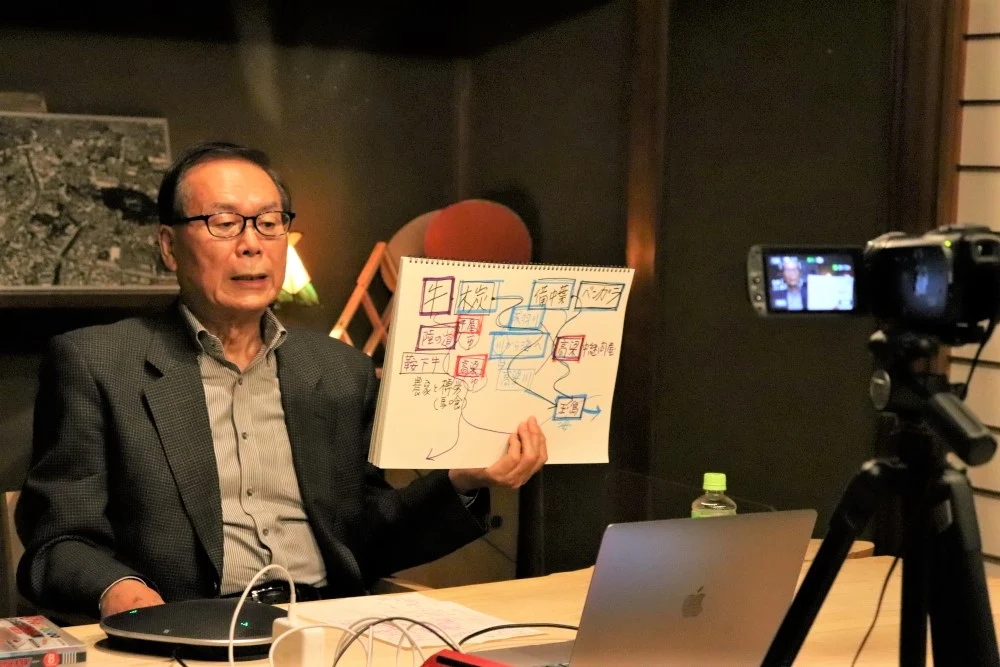
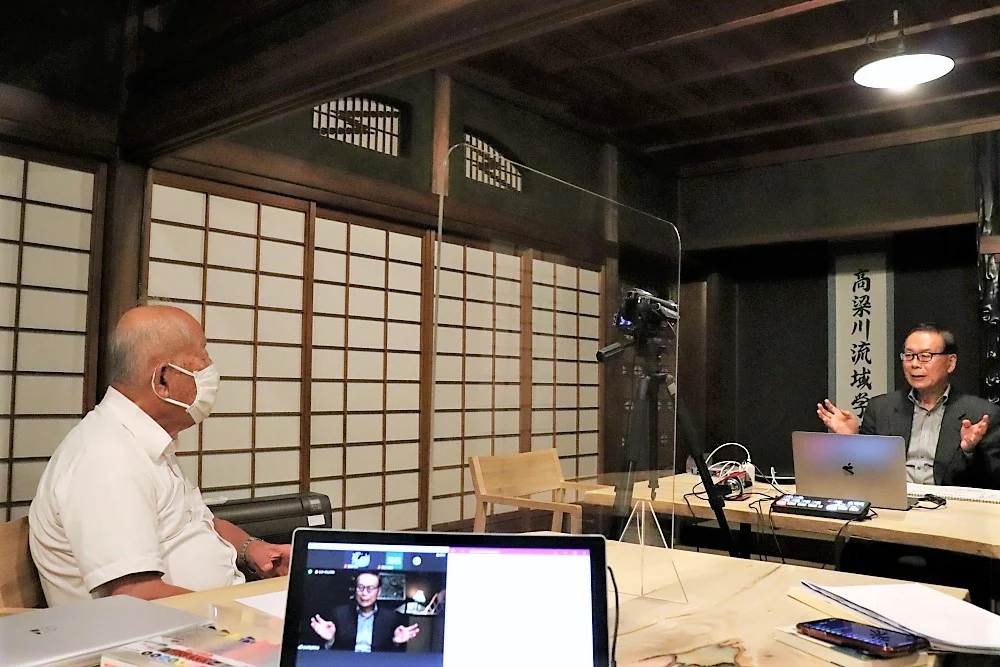
This lecture was held online and was broadcast from Bunbuku in Sumiyoshi-cho.
The lecture was attended not only by students of the second term of Takahashi River Shijuku but also by several graduates from the first term.
During the lecture, there were moments where participants exchanged their knowledge and thoughts using the chat function.

Bichu Region and the Three Major Rivers
When did the classification of the Bichu region begin?
Its origins date back to the Nara period.
When the Taiho Code was established, Bichu Province was created, and even now, over 1300 years later in 2021, the classification of Bichu is still in use.
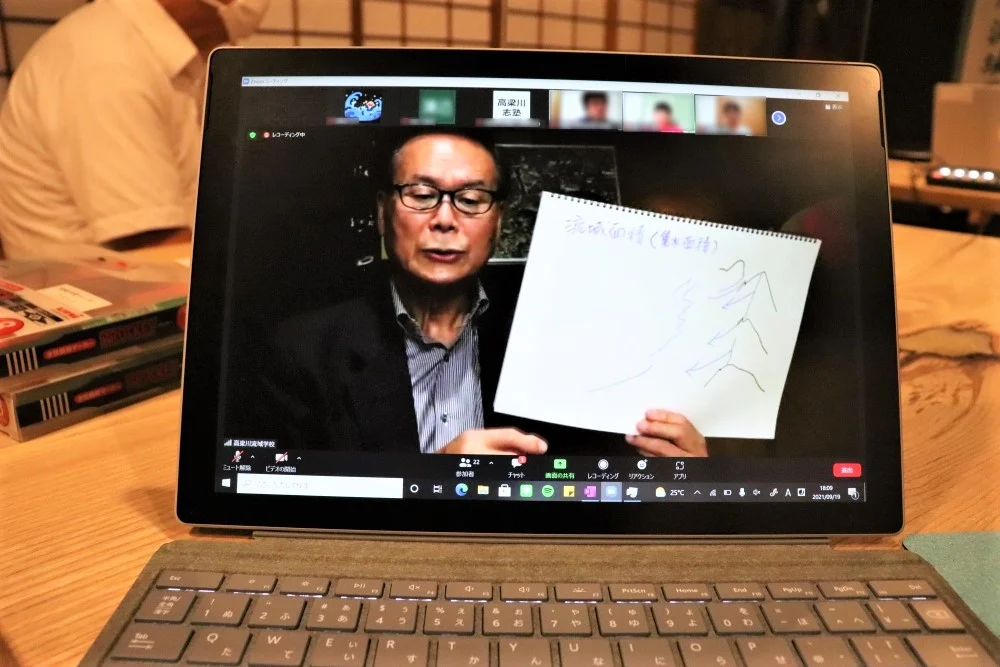
Moreover, rivers have not only the main stream but also many tributaries.
Among them, Takahashi River is a rare river in Japan that has branches like Naruwa River and Oda River, spreading across the entire Bichu region.
Kanzaki-sensei spoke about the characteristics of Takahashi River based on the basin area, total length, and number of tributaries compared to the three major rivers in Okayama Prefecture.
| Basin Area | Total Length | Number of Tributaries | |
|---|---|---|---|
| Takahashi River | Approximately 260,000 square kilometers | 117 kilometers | 84 |
| Asahi River | Approximately 200,000 square kilometers | 150 kilometers | 132 |
| Yoshii River | Approximately 200,000 square kilometers | 137 kilometers | 137 |
Takahashi River has a shorter total length and fewer tributaries compared to the other two rivers, but it has the largest basin area.
A wide basin area allows for the acquisition of water necessary for daily living, making life easier for people.
In deep mountainous areas, people must obtain necessary water by directly taking it from rocky mountains and valley streams or by digging wells to draw underground water.
However, the Bichu region has Takahashi River and its tributaries, making it difficult for water to run dry, allowing for easier living compared to other regions.
People's lives are sustained by the water flowing into the river, and the water flowing into Takahashi River supports our lives, said Kanzaki.
Additionally, river water is not only used as drinking water but can also be used for transportation.
The connection from the mountains to the river and from the river to the sea has been established in the Bichu region since ancient times.
In the Bichu region, it is rare for goods to come up from the sea to the river, and considering products, shipments are more frequent, so not many items come from other places.
This serves as proof that life within the region is stable and prosperous.
About Iron
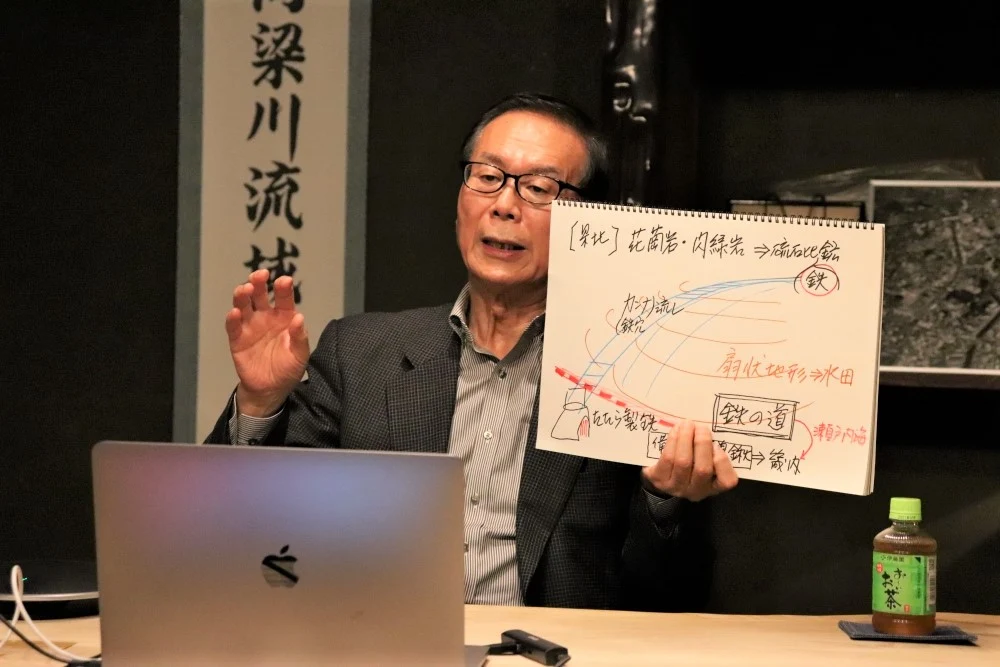
Before the Edo period, the famous iron production area was Izumo, but iron production was also conducted in Bichu.
While Izumo produced iron using the tatara method, in Bichu, traces of a method called iron pit casting (kannanagashi) have been discovered.
Literature from the Heian period in the Kinai region also contains terms like "Bichu sword" and "Azo hoe," indicating that the iron parts of these swords and hoes were produced in Bichu.
In Bichu, many grooves for iron pit casting have been carved, and since these grooves were artificially made, they spread wider downstream, gradually forming a fan-shaped landform over hundreds of years.
In the Niimi and Chiya regions, this fan-shaped landform is prominently observed.
In modern times, due to the development of residential areas, large-scale excavations are difficult, and it is unclear whether there was a "road of iron" for iron pit casting or if rivers were included in that road.
However, in any case, it is certain that Bichu swords existed in an earlier era than Bizen swords, as recorded in ancient literature indicating that iron production was not easy.
About Cattle
When it comes to famous cattle in the Bichu region, it is Chiyagyu Beef from Niimi City.
Chiyagyu Beef is the oldest beef in Japan as a meat-eating breed, and it was shipped to Edo and Kansai from the late Edo period to the Meiji period.
During the Edo to Meiji periods, cattle had a higher product value and better production efficiency than iron products.
Today, the image of cattle is strongly associated with food, but until the Edo period in western Japan, cattle were valued as labor for transporting goods and plowing fields.
In the Chugoku region, young cattle worked in the mountains, gradually moving away from the mountains as they aged, and older cattle worked in the plains.
The rice fields in the mountains are terraced and have many steps, and the soil is hard, requiring effort to cultivate.
Therefore, stronger and more capable young cattle worked in the mountains.
Cattle that worked in Chiya were slaughtered at the Chiya market as they aged, and then they worked in the Kibi Highlands.
After further aging, the cattle were slaughtered at the Takahashi market and moved down to the plains.
Records from the Edo period reveal that the way of making money in old Chiya shifted from iron production and iron pit casting to raising and shipping cattle.
Farmers borrowed cattle from brokers called bakuro at cattle markets and used them as labor for farming while raising them.
Kanzaki mentioned that when he was a child, cattle were raised everywhere, and they were replaced every few years.
About Sake
In the Bichu region, there are many sake breweries from Tamashima to Kamogata.
During the Edo period, sake produced in Bichu was transported to Nada, and it is said that 97 percent of Nada's sake was shipped to Edo.
Edo had a large population of young men, and in the mid-Edo period, there were about 1.8 million drinkers, meaning each person consumed about 40 bottles of sake.
Most of this was produced in Nada, and it was favored by young men in Edo as "sake from Nada" that was transported down from Nada.
At that time, sake was transported in barrels, and the ships that carried sake barrels to Edo were called barrel ships.
While Nada's sake was known for its good taste and called "sake from Nada," sake produced in the Kanto region was not very tasty, leading to the term "sake that doesn't go down," which is said to be the origin of the current term "kudaranai," according to Kanzaki.
The good-tasting sake from Nada included sake produced in Bichu that was transported to Nada.
It was impressive to hear that while Bichu's sake was not known by name, it was quietly increasing its share.
Tributaries of the Takahashi River
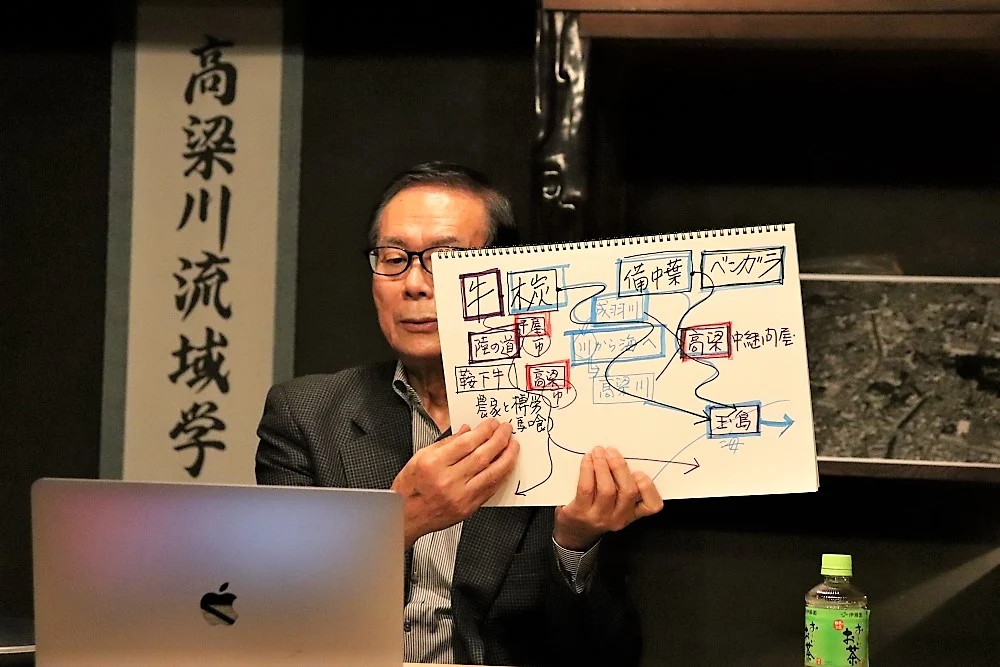
Among the tributaries of the Takahashi River, Naruwa River and Oda River are particularly large tributaries.
Kanzaki mentioned that compared to the tributaries of Asahi River and Yoshii River, which are also in Okayama Prefecture, these tributaries are many times larger and played a significant role in the Bichu region.
In particular, Naruwa River is an important river for logistics.
Before the railway was built, the only connection between the mountains and the sea was the river, and charcoal, bengara, and Bichu leaves produced around Takahashi City were transported down the Takahashi River via Naruwa River.
Additionally, Naruwa River has no steep valleys and a gentle flow, which allows for many waterwheels.
Waterwheels provided stable mechanical labor and were used to thresh brown rice into white rice.
In Bichu dialect, threshing is referred to as "fumu rice," which is said to originate from the use of waterwheels.
It can be traced that people and goods have been connected through rivers since ancient times, Kanzaki stated.
In the Bichu region, many goods moved, and along with that, beliefs wishing for prosperous business and abundant harvests emerged, leading to events such as rice planting festivals, autumn festivals, and mountain entry, as well as the establishment of shrines and temples.
During the lecture, we heard about the many Ebisu shrines in Takahashi City.
Ebisu is a deity worshipped by maritime people who fish at sea.
It was strange to find a shrine dedicated to a deity worshipped by maritime people in Takahashi City, which is far from the sea, but learning that it was established to wish for the sale of fish caught at sea in Takahashi City allowed me to touch upon the thoughts of merchants from that time.
Future of the Takahashi River Basin
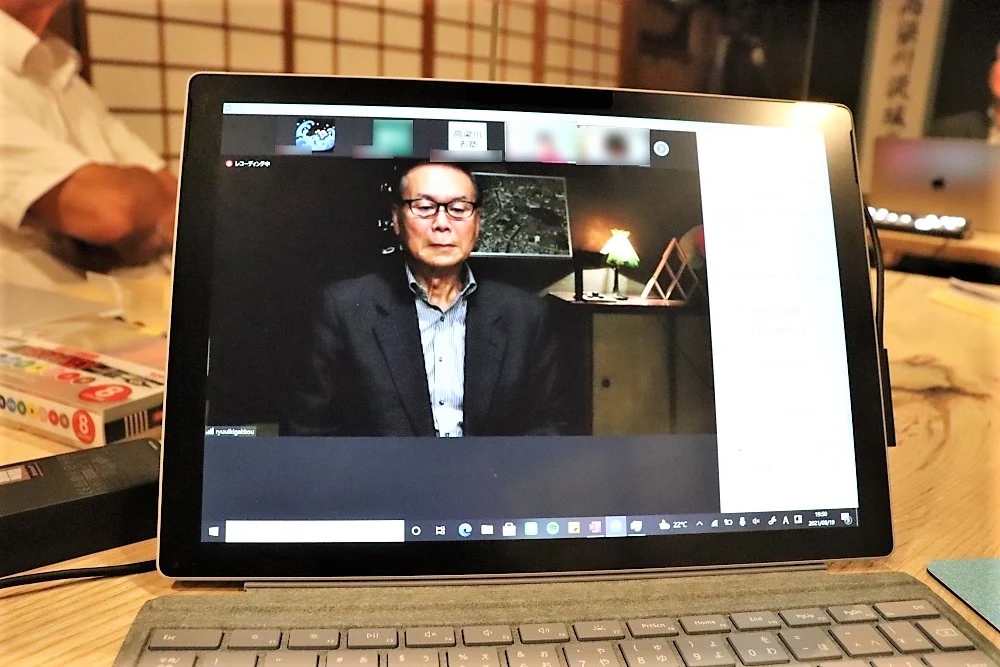
Mr. Kanzaki talks about how the Nariwa River, Oda River, and Takahashi River are historically very stable rivers.
For this reason, rivers have been used as routes connecting the mountains and the sea for a long time.
Looking through history, the rivers in Bichu have experienced few disasters, but due to the long periods of stability, there has been a tendency to become complacent about disasters, and in the past, there have been significant floods.
The Yamano River in Fukuyama City, Hiroshima Prefecture is the source of the Oda River and flows into the Takahashi River.
The river basin is much larger and more extensive than one might imagine.
We must once again reassess the scale of the river and the angle of its flow, and understand where the dangers of disasters may lie.
What will happen to the Takahashi River basin in the future, and how do we want it to be?
Considering this is a mission given to us.
Conclusion
Folklore studies are an academic discipline that researches the history of the development of the lives and cultures of common people through the investigation of customs and beliefs passed down in the community.
Until now, I felt that the lectures at the Takahashi River Study Group were mostly about understanding and thinking about the present and future of the Takahashi River basin, but I feel that my understanding has deepened by learning about the history of the people who lived in the Takahashi River basin.
This lecture allowed me to gain a deep understanding of the culture and history of the region, which is inseparable from considering the future of the Takahashi River basin and the Bichu region.
Takahashi River Study Group Phase 2 Data
| Name | Takahashi River Study Group Phase 2 |
|---|---|
| Dates | Duration of Takahashi River Study Group Phase 2: June 27, 2021 – September 26, 2021 |
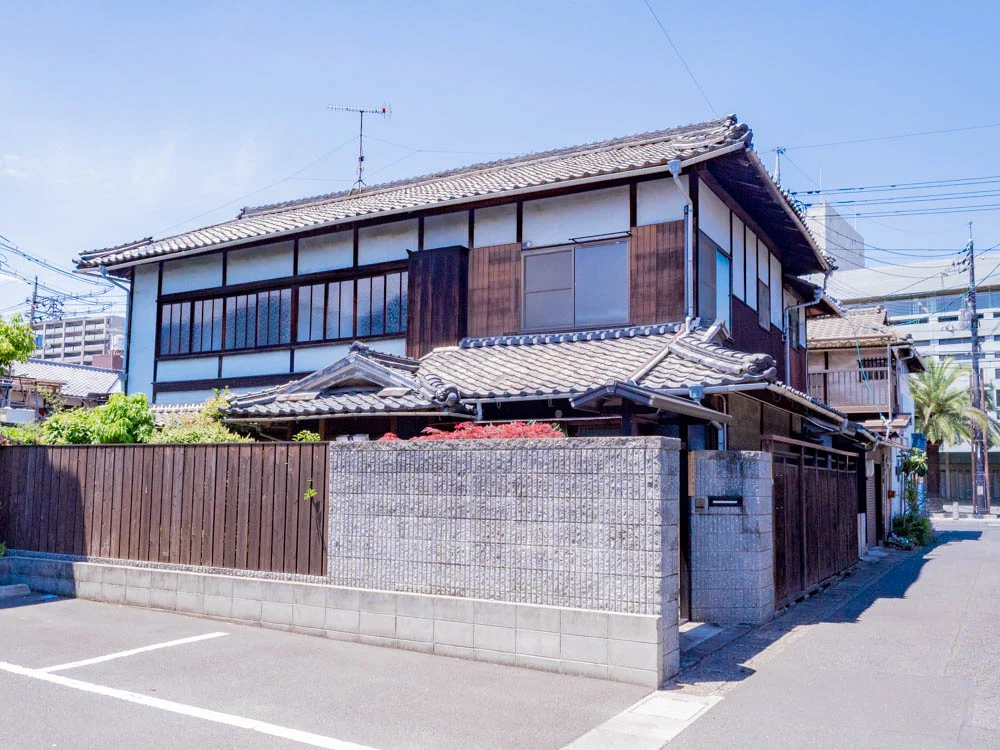
| Location | 2-13-3 Chuo, Kurashiki City |
| Participation Fee (including tax) | For details, please check the Takahashi River Study Group website. 1. SDGs Exploration Course Participants General: 12,000 yen, Students: 8,000 yen (Participation in all programs on the day and access to archived viewing available) *Uniform fee regardless of whether attending in person or online 2. Auditors (attending only lectures) In-person attendance: 1,500 yen per session (limited number of participants) Online/archived attendance: 500 yen per session *Pages will be provided later for participants only. *Depending on the course, additional actual costs may be charged. *Some courses may be available for free. |
| Website | Takahashi River Study Group | Takahashi River Basin School |