There is a system certified by the Agency for Cultural Affairs that organizes stories of historical buildings and townscapes in the region as unique local assets, known as "Japan Heritage".
The Japan Heritage stories certified in Kurashiki City are as follows:
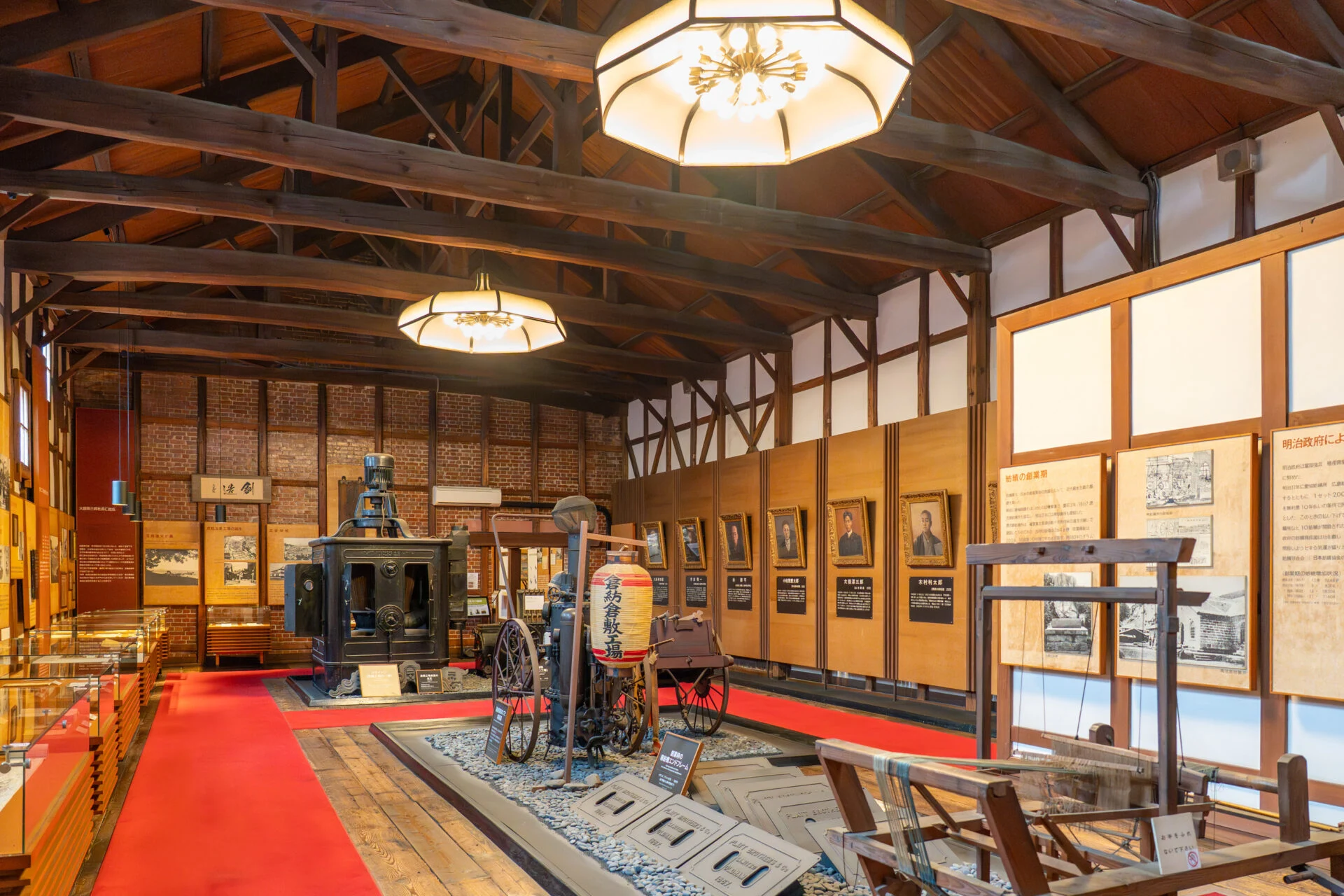
- A Kurashiki story beginning with a single cotton flower – A town of textiles woven with Japanese and Western elements
- A different world entwined with the dreams of men who overcame the stormy seas – The port of Kitamae ships and the shipowners' villages
- Okayama, Birthplace of the Legend of Momotaro – The story of demon-slaying inspired by the ancient heritage of Kibi
Furthermore, Japan Heritage includes cultural properties that constitute the stories (constituent cultural properties).
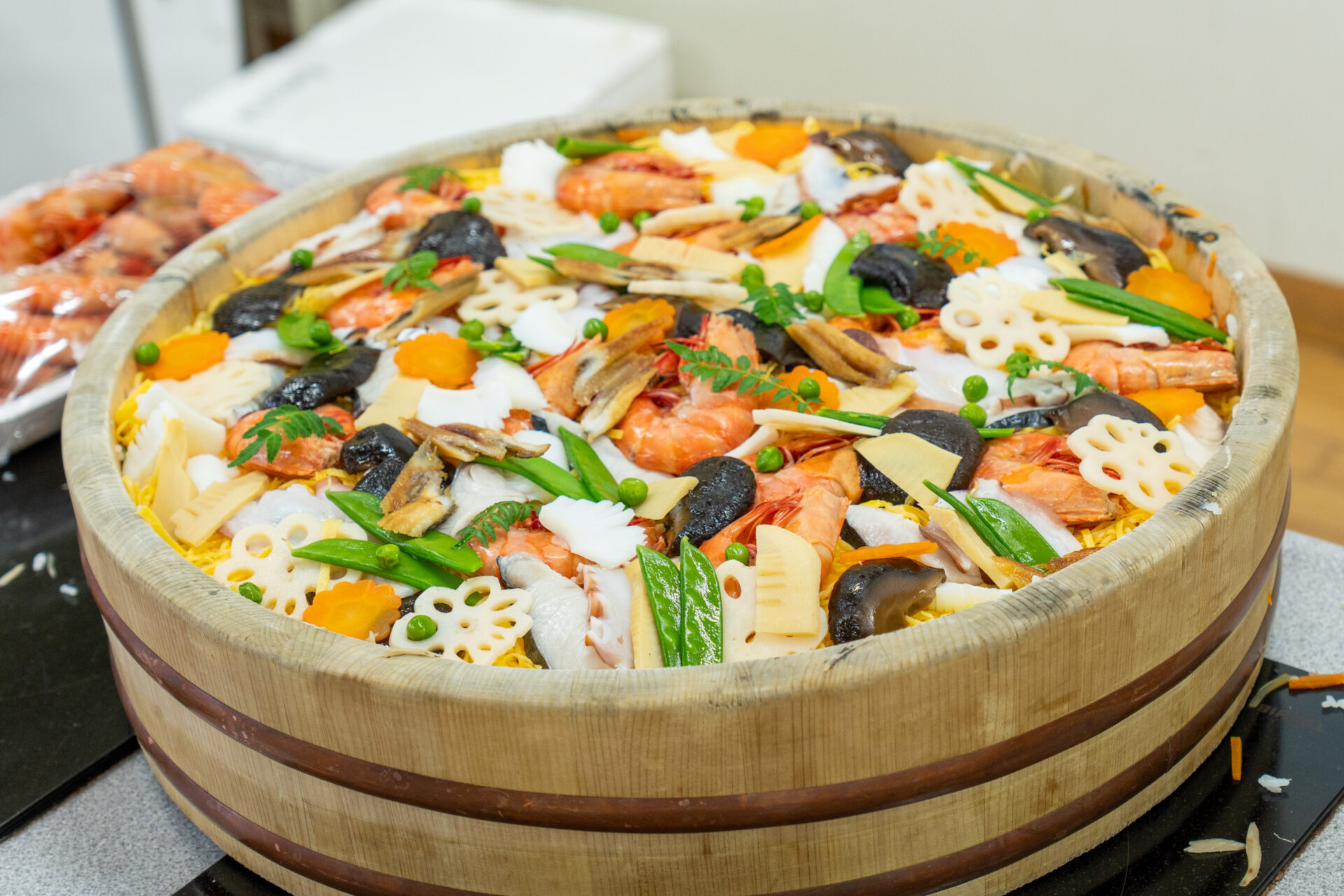
One of them is "barazushi," a colorful dish made with the rich seafood of the Seto Inland Sea and seasonal vegetables.
However, opportunities to eat "barazushi" at home have likely decreased. A "barazushi seminar" was held to learn about this dish, and I will report on the event.
What is "barazushi," a constituent cultural property of Kurashiki City's Japan Heritage?
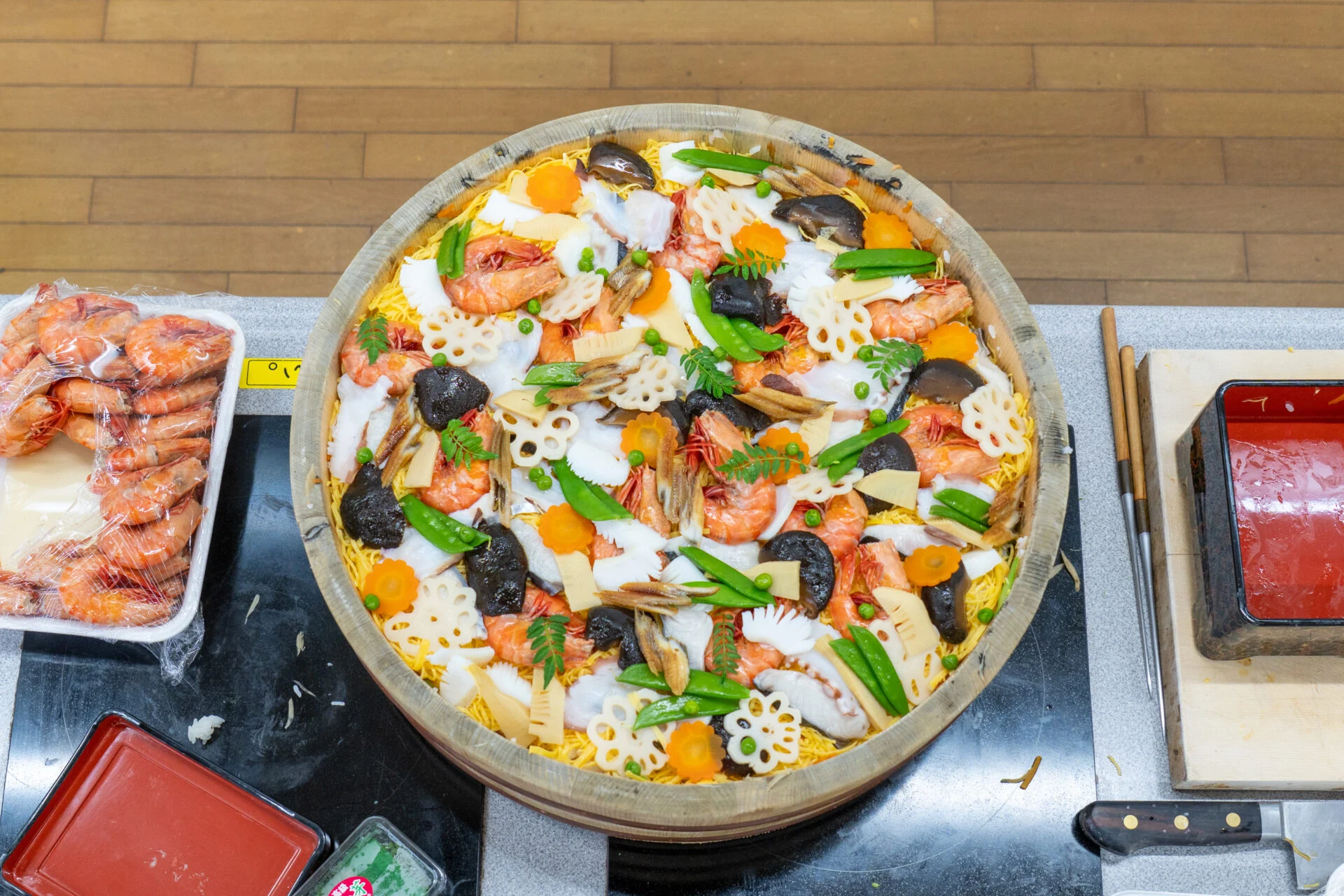
"Barazushi" is one of the constituent cultural properties included in the Japan Heritage story "A Kurashiki story beginning with a single cotton flower – A town of textiles woven with Japanese and Western elements".
Regarding "barazushi," official materials explain it as follows:
In Kurashiki's merchant houses, on festival days, they invited neighbors and acquaintances to their homes and served "barazushi," a colorful dish made with the rich seafood of the Seto Inland Sea and seasonal vegetables.
Source: Constituent cultural properties of "A Kurashiki story beginning with a single cotton flower – A town of textiles woven with Japanese and Western elements" (e-book version)
However, the author, who is 45 years old and from Kurashiki City, has almost no memory of eating "barazushi" at home. Rather, it is more of an image of something eaten at restaurants.
Contents of the "barazushi seminar"
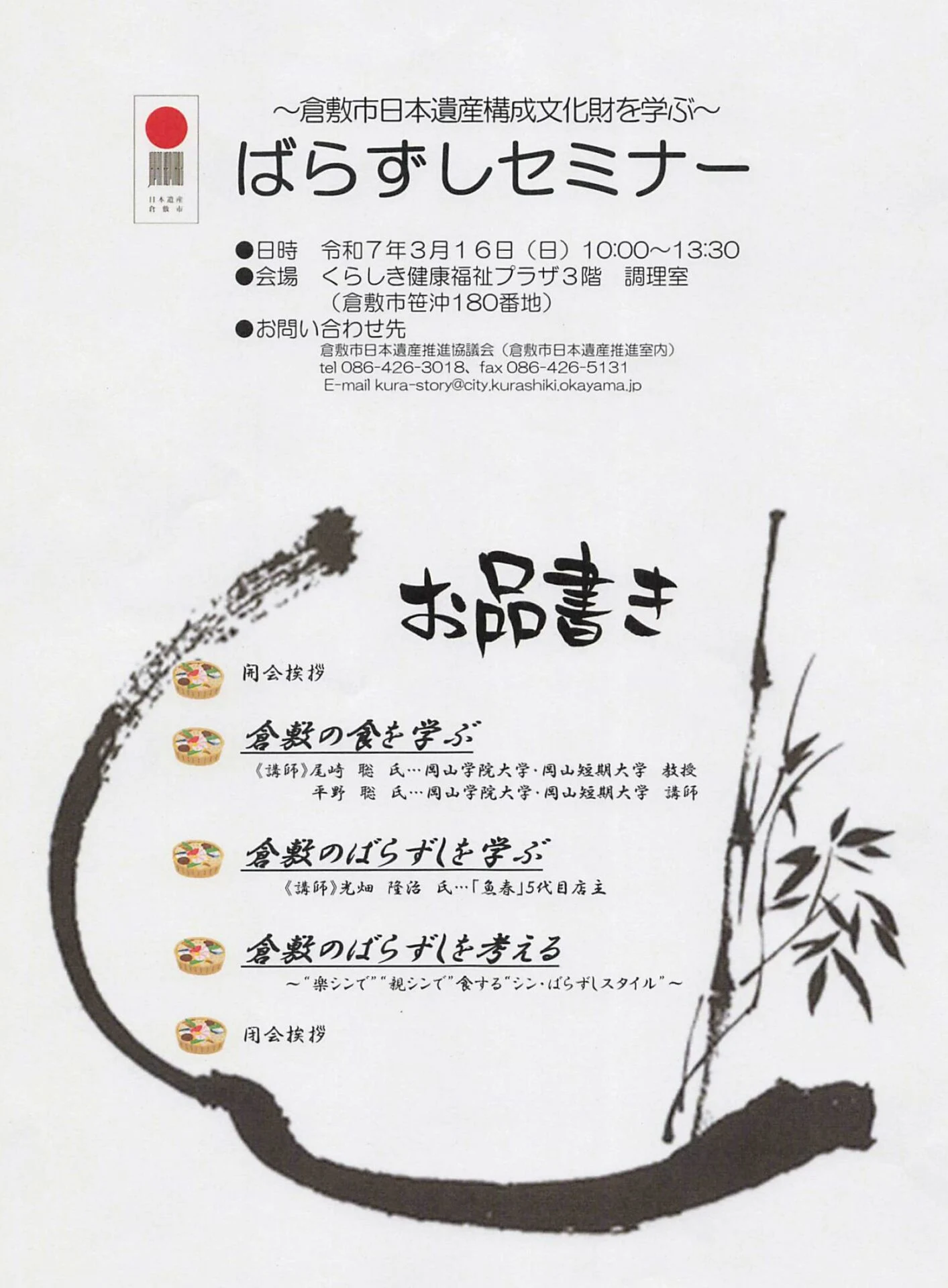
To learn about and taste such "barazushi," a "barazushi seminar" was held on March 16, 2025. It was organized by the "Kurashiki City Japan Heritage Promotion Office".
- Children from the Kurashiki Higashi Elementary School Children's Club Shirakabe Kids
- Students from Okayama Prefectural Kurashiki Commercial High School
- Students from Okayama Gakuin University
The participants were mainly young people.
Please check the following image for detailed content.
Opening remarks
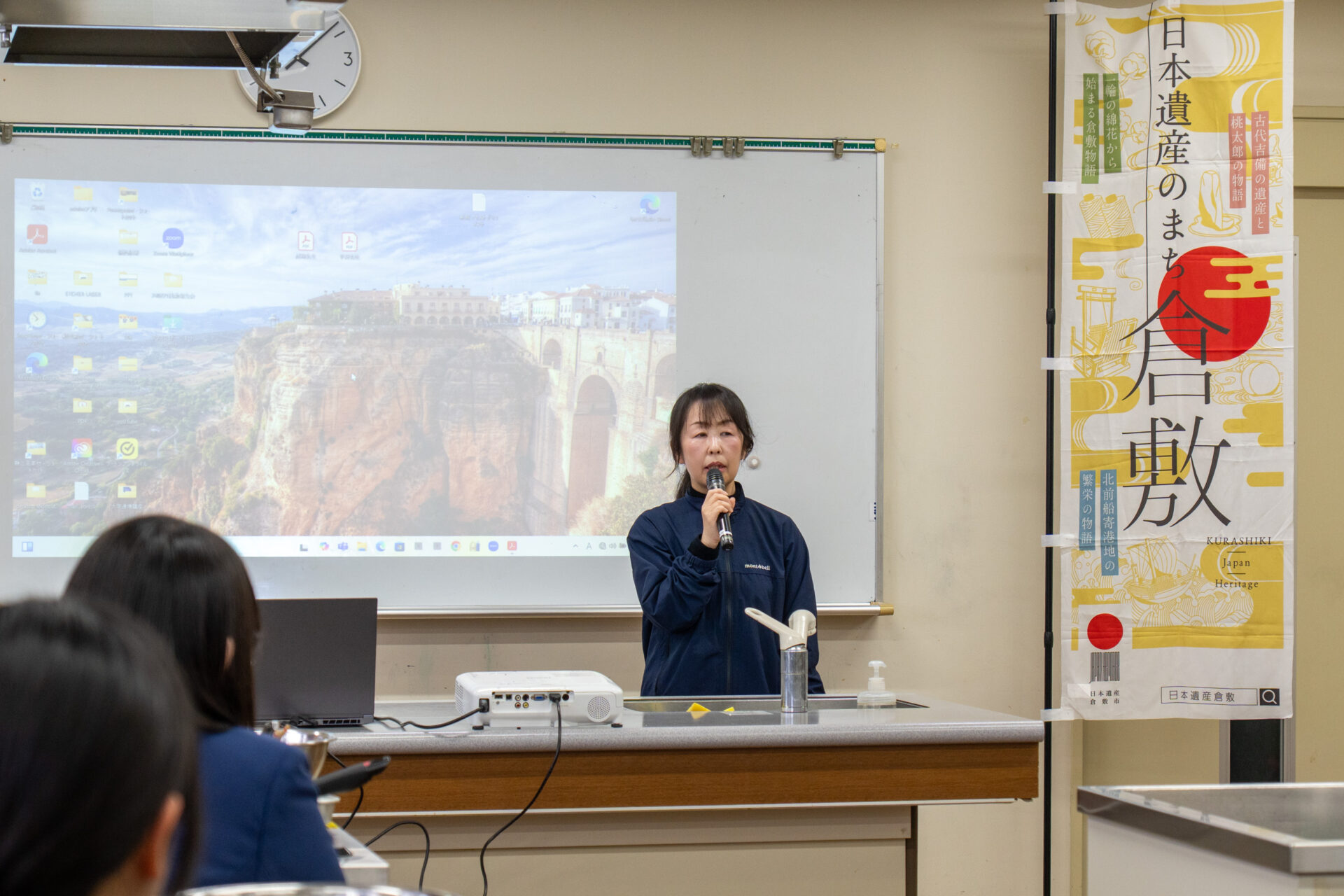
At the beginning, Junko Miyake, the head of the Kurashiki City Japan Heritage Promotion Office, gave the opening remarks.
In her speech, she introduced that Kurashiki City has three Japan Heritage stories and 41 constituent cultural properties. Miyake stated about the constituent cultural properties,
They serve as an opportunity to learn more about Kurashiki, and I hope you will become more familiar with Kurashiki through "barazushi" today.
She expressed.
Learning about Kurashiki's food
Satoshi Ozaki, a professor at Okayama Gakuin University and Okayama Junior College, and Satoshi Hirano, the lecturer, spoke about Kurashiki's food.
Explanation by Satoshi Ozaki (about history and ingredients)
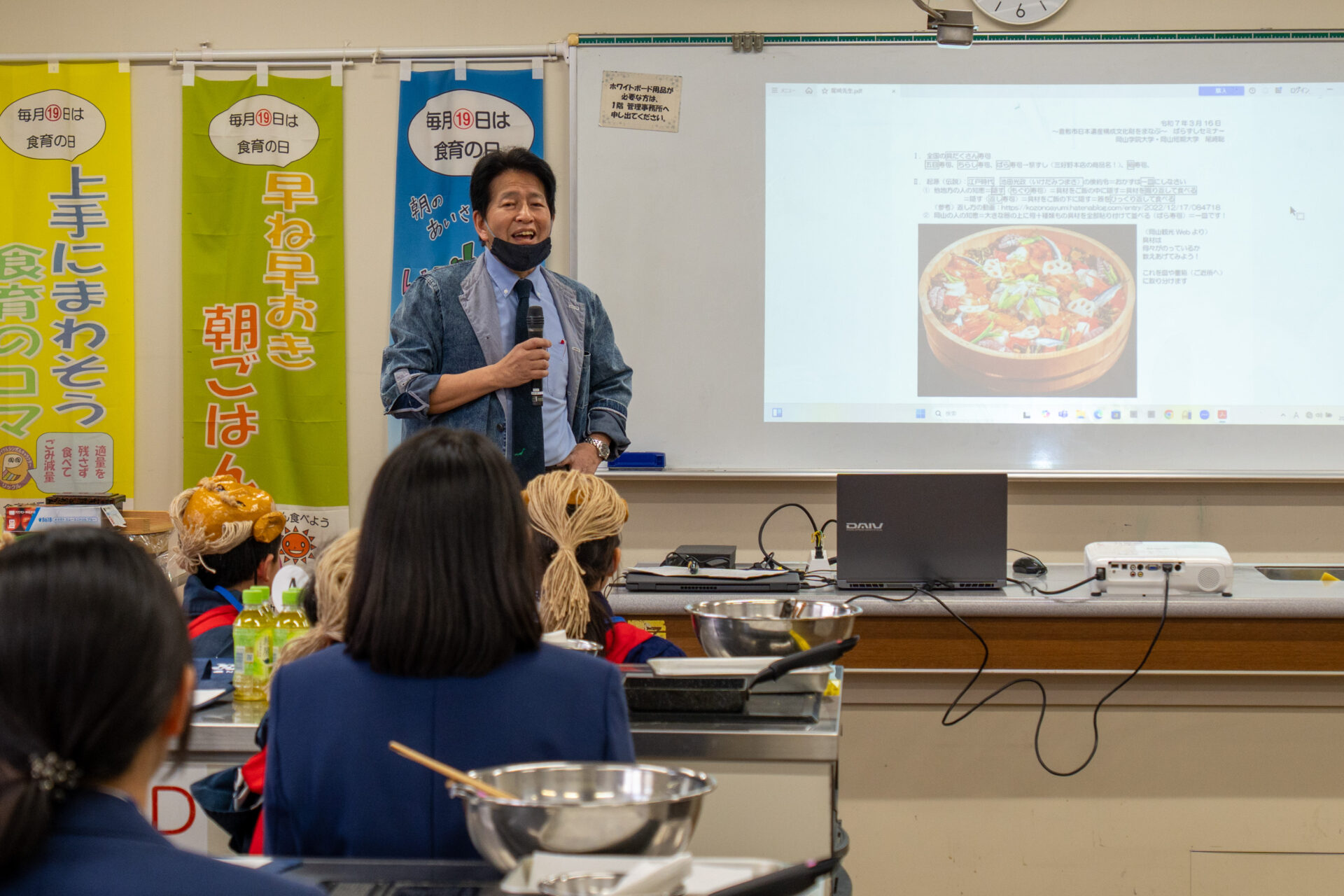
First, he introduced various types of "sushi" found across the country, such as gomoku sushi, chirashi sushi, barazushi, and hakozushi.
Among these, "barazushi" is a local dish of Okayama Prefecture, popular as a souvenir, especially the "Momotaro Matsuri-zushi" sold as a bento at Okayama Station.
However, since "Momotaro Matsuri-zushi" is a registered trademark of Miyoshino Co., Ltd. (No. 5839071), care must be taken when referring to it as "Matsuri-zushi."
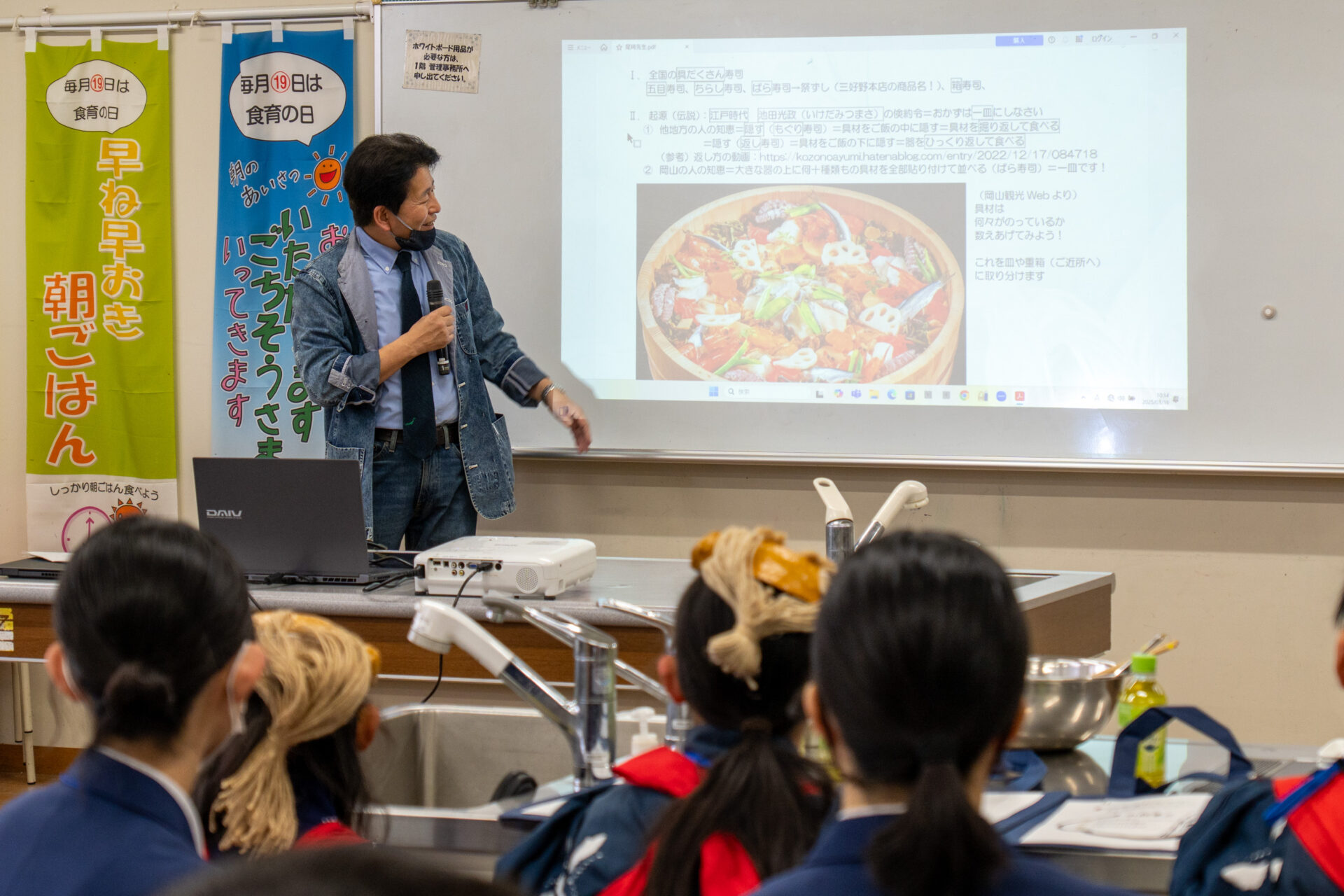
The origin of "barazushi" dates back to the Edo period. It is said to have originated when the lord of the Bizen Okayama domain, Ikeda Mitsumasa (1609–1682), enforced a frugality policy that stipulated "one soup and one dish," leading the populace to respond by serving "all kinds of ingredients piled together in a large dish."
After that, he explained the main ingredients.
Explanation by Satoshi Hirano (about nutritional value and local production for local consumption)
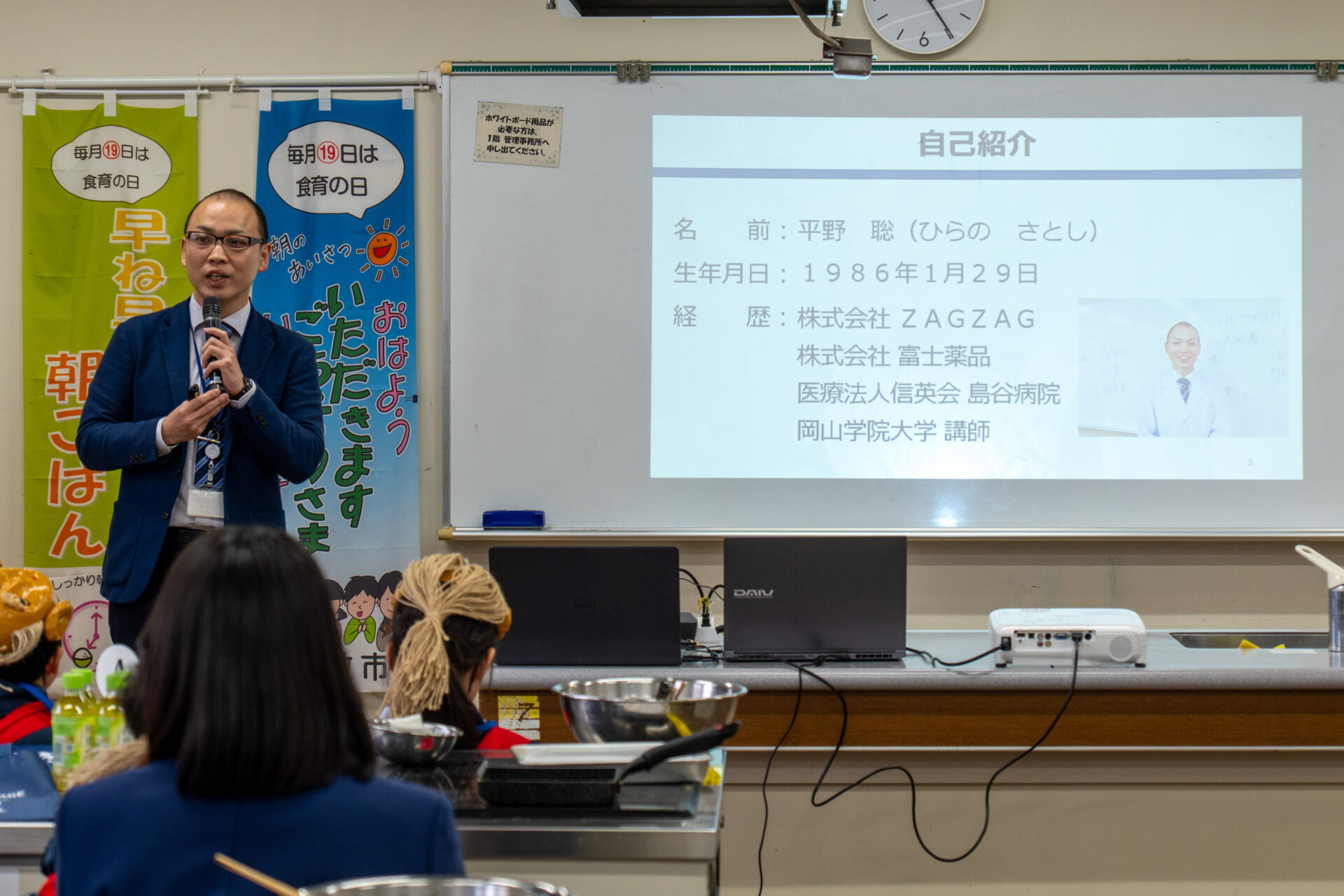
Next, Satoshi Hirano spoke about the nutritional value of "barazushi."
"Barazushi" is said to have a good balance from the perspective of the three-color food groups (which classify nutrients in food into three colors: red, yellow, and green).
Particularly, blue fish is difficult to consume in modern times, but it can be deliciously eaten when placed on sushi, which is an advantage.
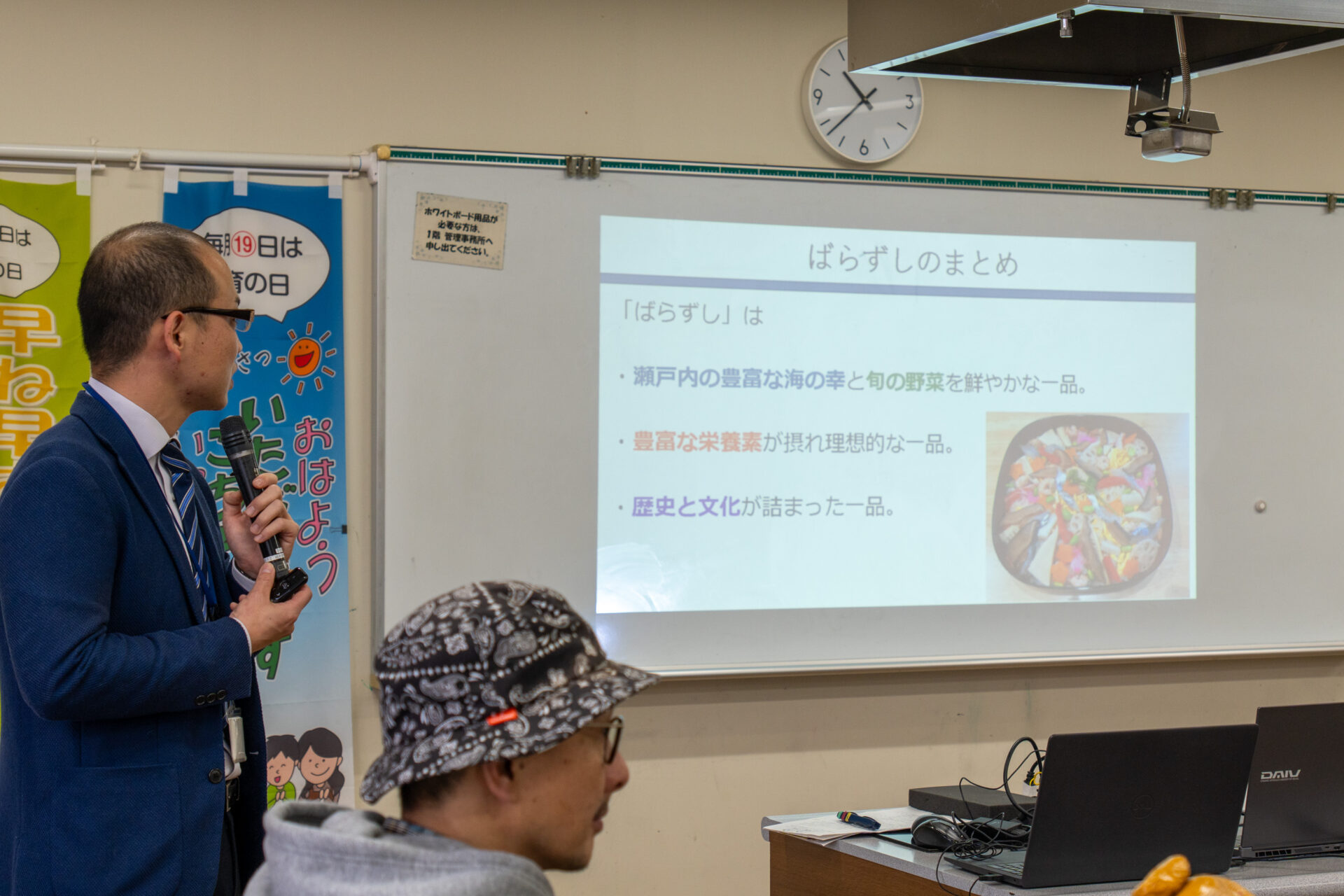
Additionally, from the perspective of local production for local consumption, "barazushi" incorporates seasonal ingredients from Kurashiki City, making it possible to prepare "barazushi" in any season.
Learning about Kurashiki's barazushi
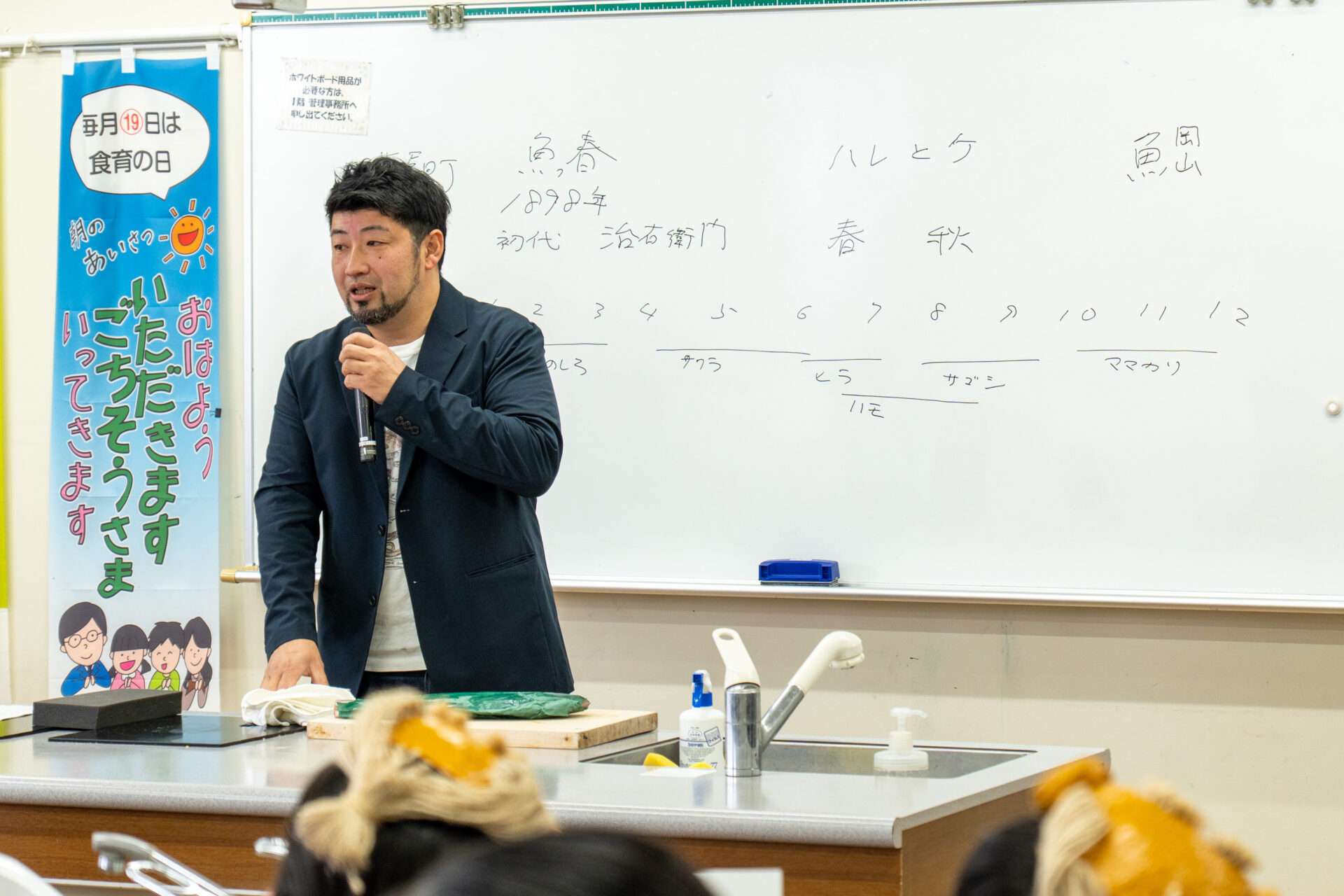
Now, the main event of the "barazushi seminar" begins.
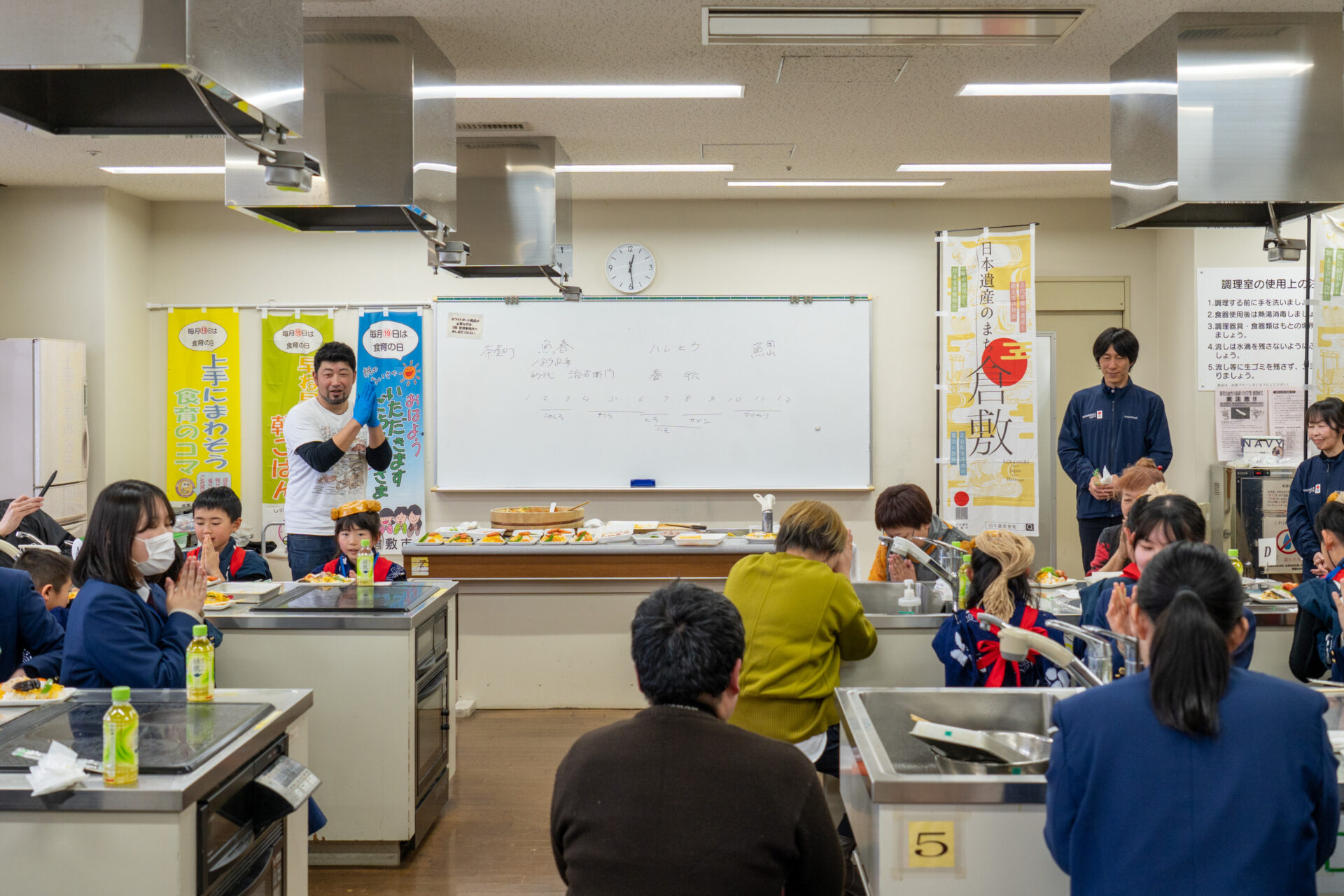
Takaharu Mitsuhata, the fifth-generation owner of the long-established fish shop "Uoshun" in Chayamachi, Kurashiki City, taught us how to make "Kurashiki's barazushi," including a demonstration. "Uoshun" was established in 1898.
First, Mitsuhata shared how he started talking about "barazushi."
Raised by his great-grandmother, Mitsuhata recalled that he mostly ate dishes like "simmered fish" when he was young. He realized that with the diversification of food in modern times, more people do not know how to eat fish, and that his childhood meals had become a form of "food education."
For this reason, he wanted to convey the goodness of fish more, and with the decrease in fish due to climate change, he began activities with the hope of valuing local fish more.
Next, he taught us about the differences between "barazushi" and "chirashi sushi."
The difference between the two can be simply described as the cooking method of the ingredients.
Chirashi sushi has "raw" ingredients on top, resembling sashimi. Barazushi has all the ingredients seasoned separately, with each ingredient cooked and flavored individually before being placed on top.
Additionally, "barazushi" mainly uses sawara (Spanish mackerel), but there is no strict rule that it must include this fish; whatever is available at the time can be used.
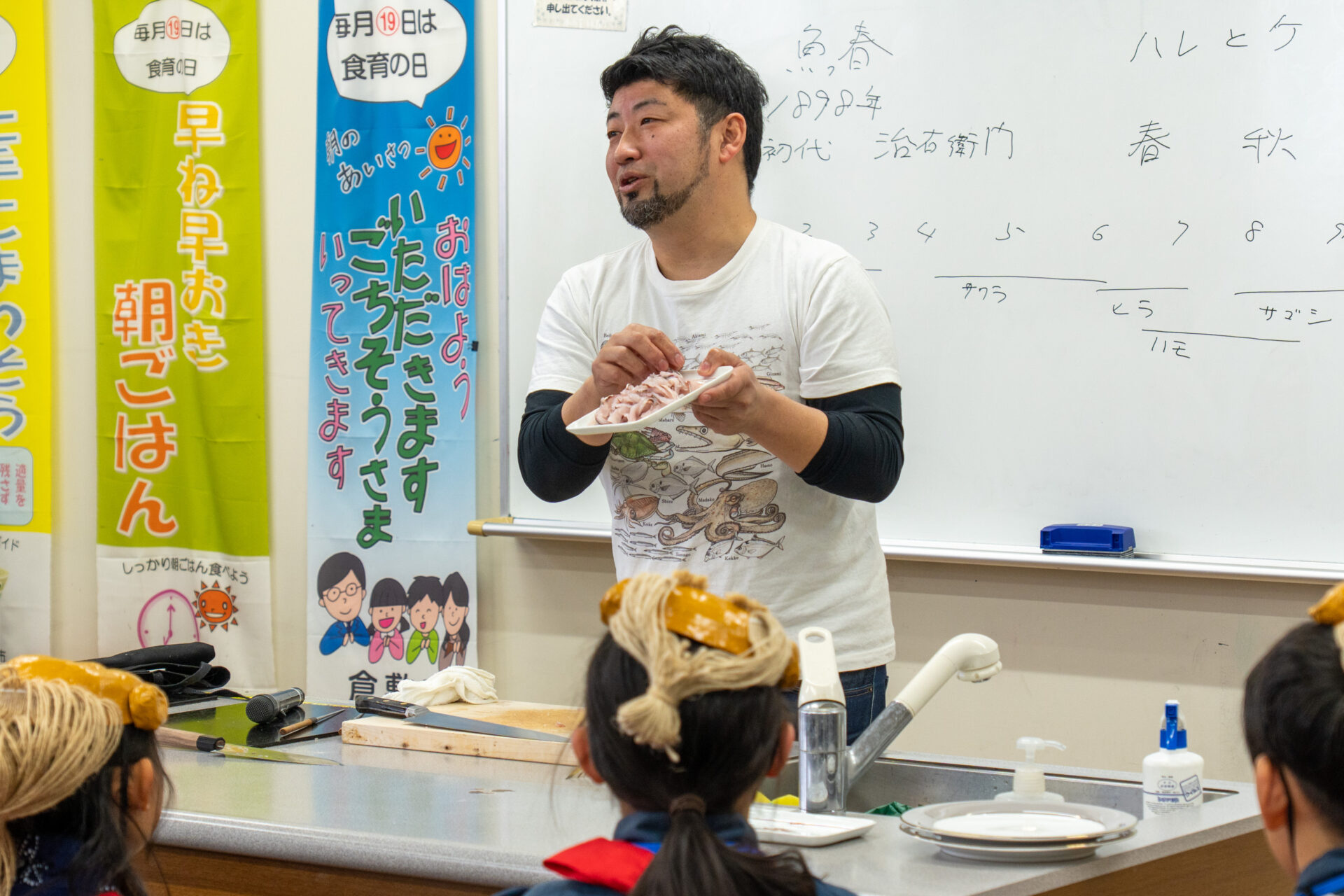
Besides sawara, there is a fish called "hira." This fish is caught nationwide but is mostly eaten only in Okayama. Therefore, it is said that the hiras caught nationwide gather in Okayama, and when fishermen from Osaka and Aichi catch hiras, they say, "Okayama has been caught."
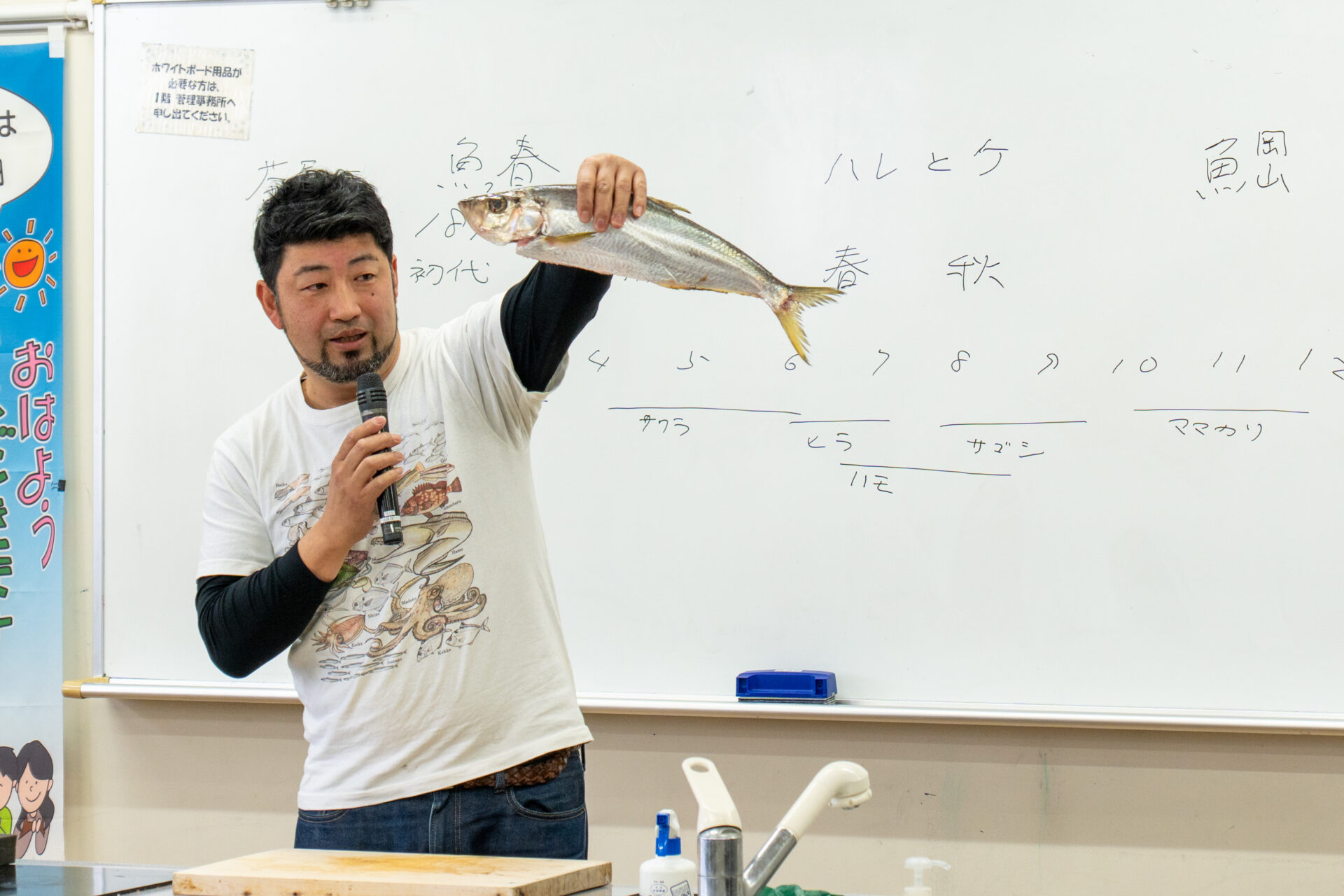
The reason is likely that it has many bones, and it is considered a "troublesome fish" because it requires deboning to eat. However, it is an essential fish for summer barazushi, and he believes that barazushi is the reason why hira is eaten in Okayama.
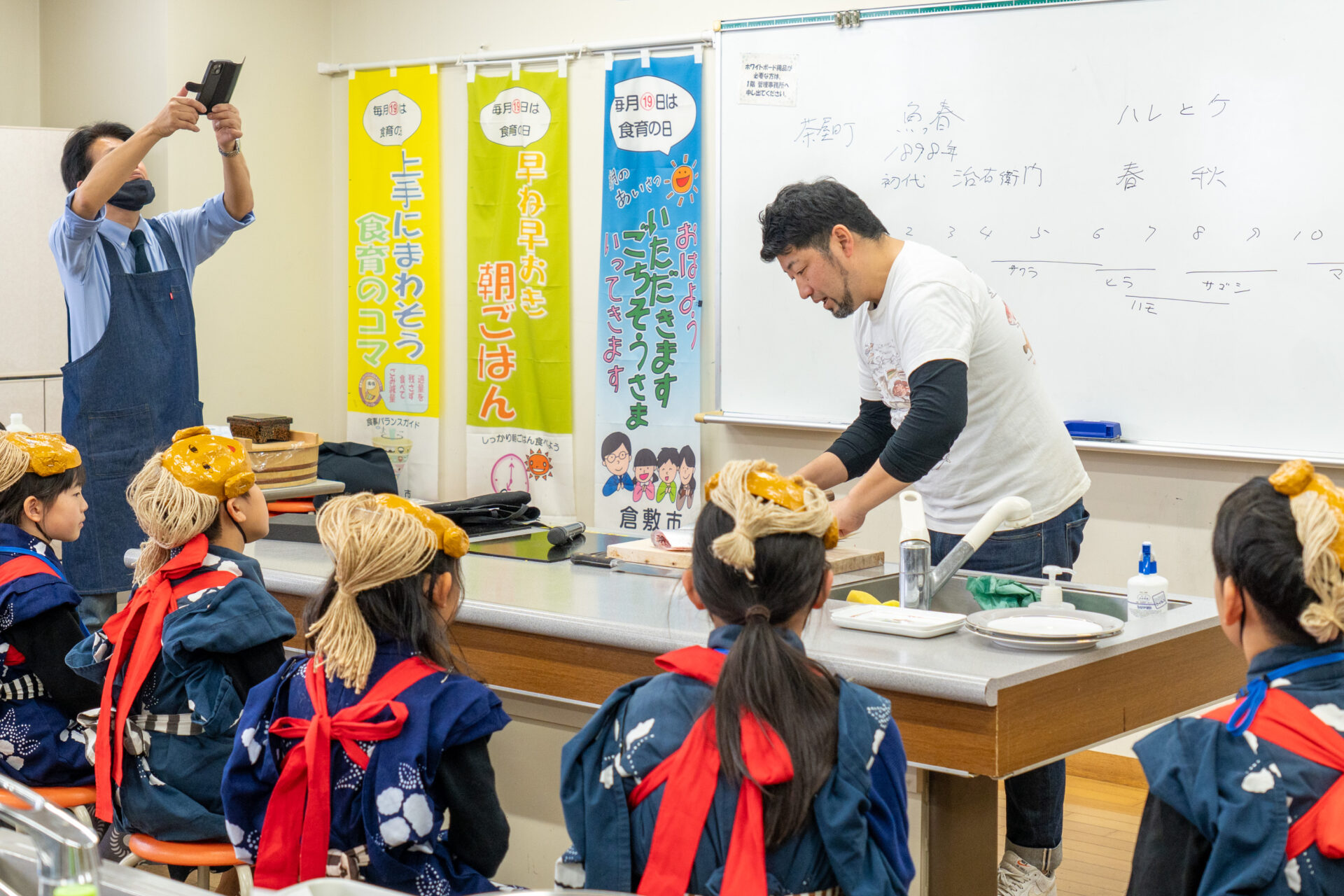
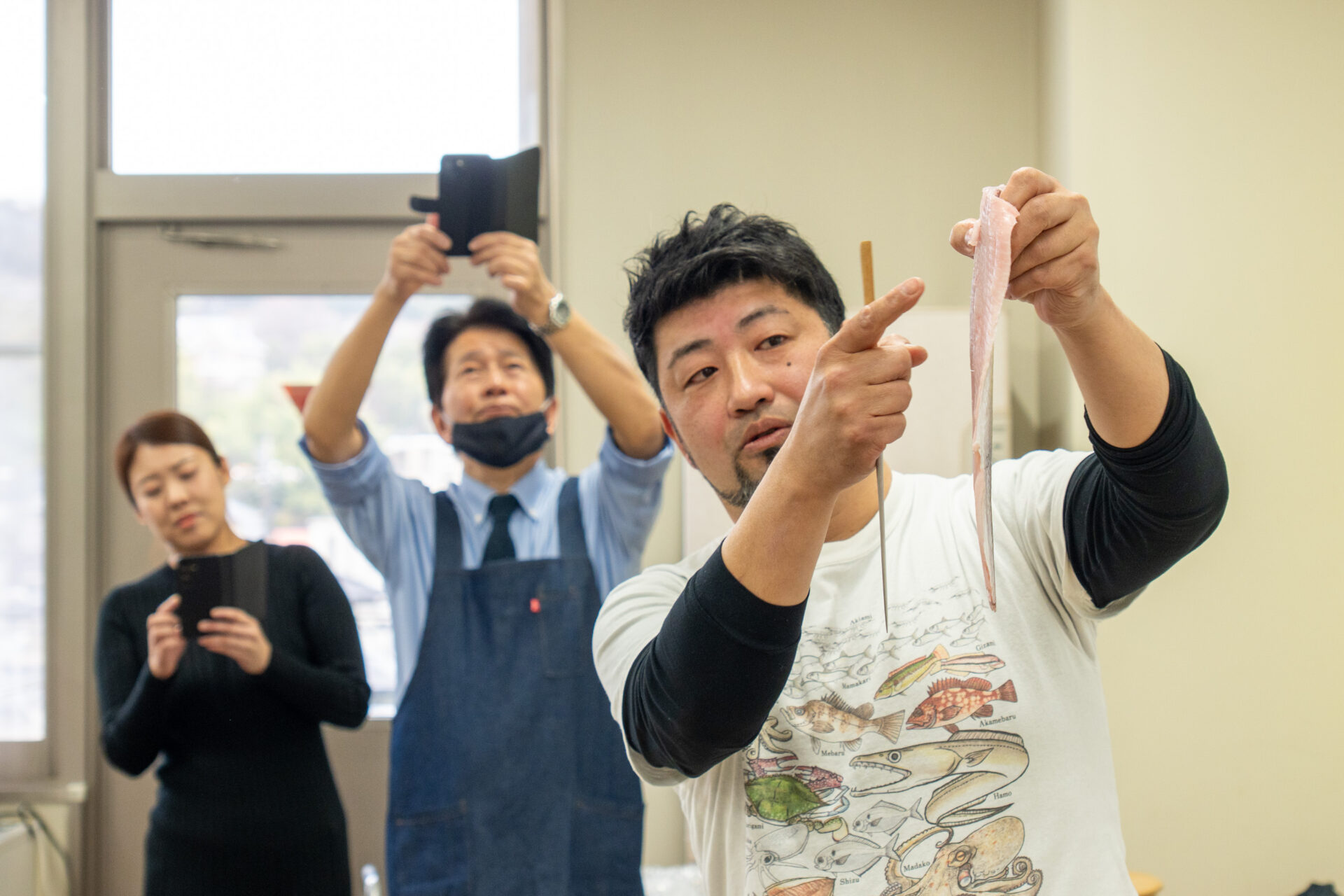
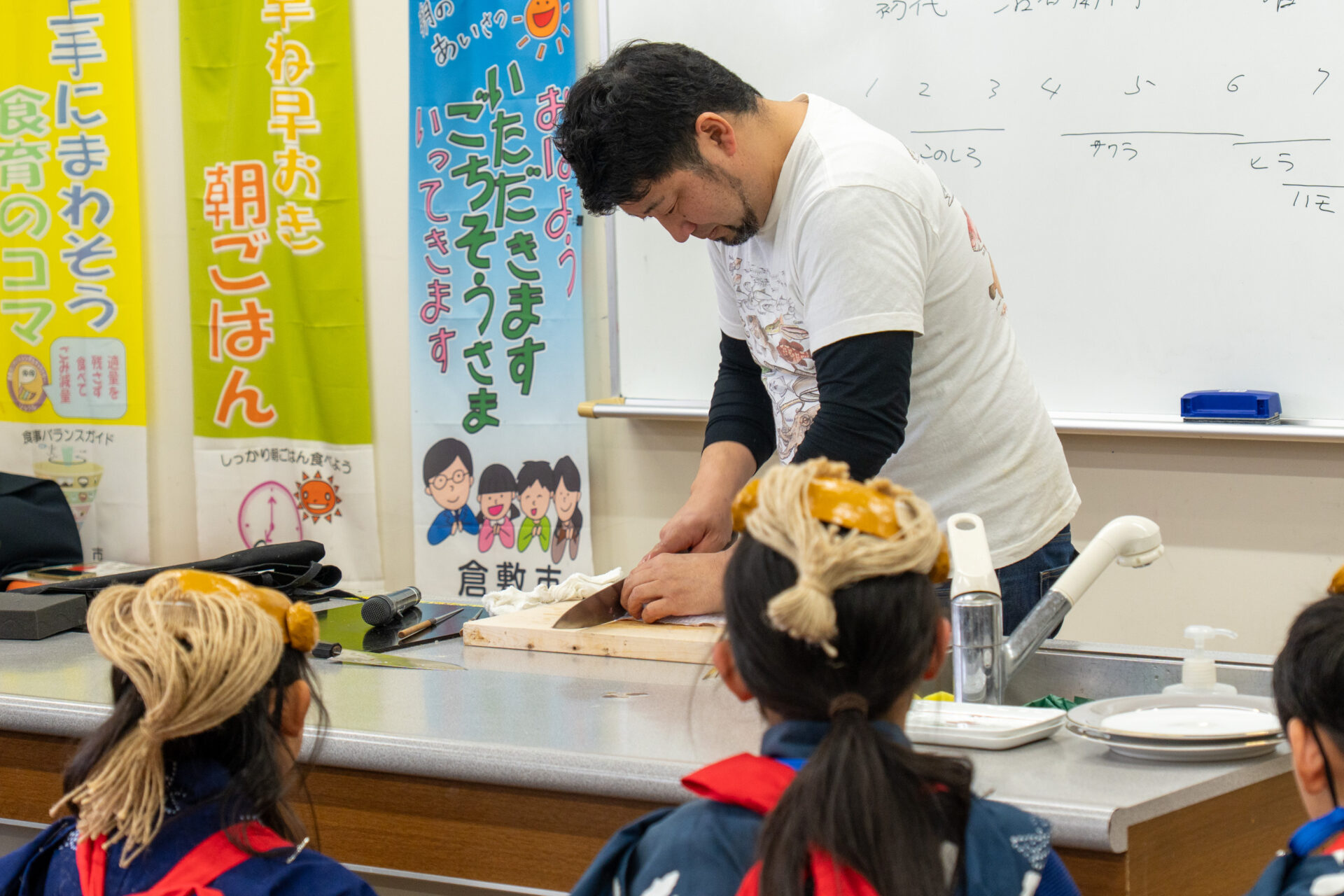
"The reason we need to cut the bones, I think you will understand if you listen to the sound of filleting," says Mr. Mitsuhata as he inserts the knife into the flatfish.
Observing the making of "Barazushi"
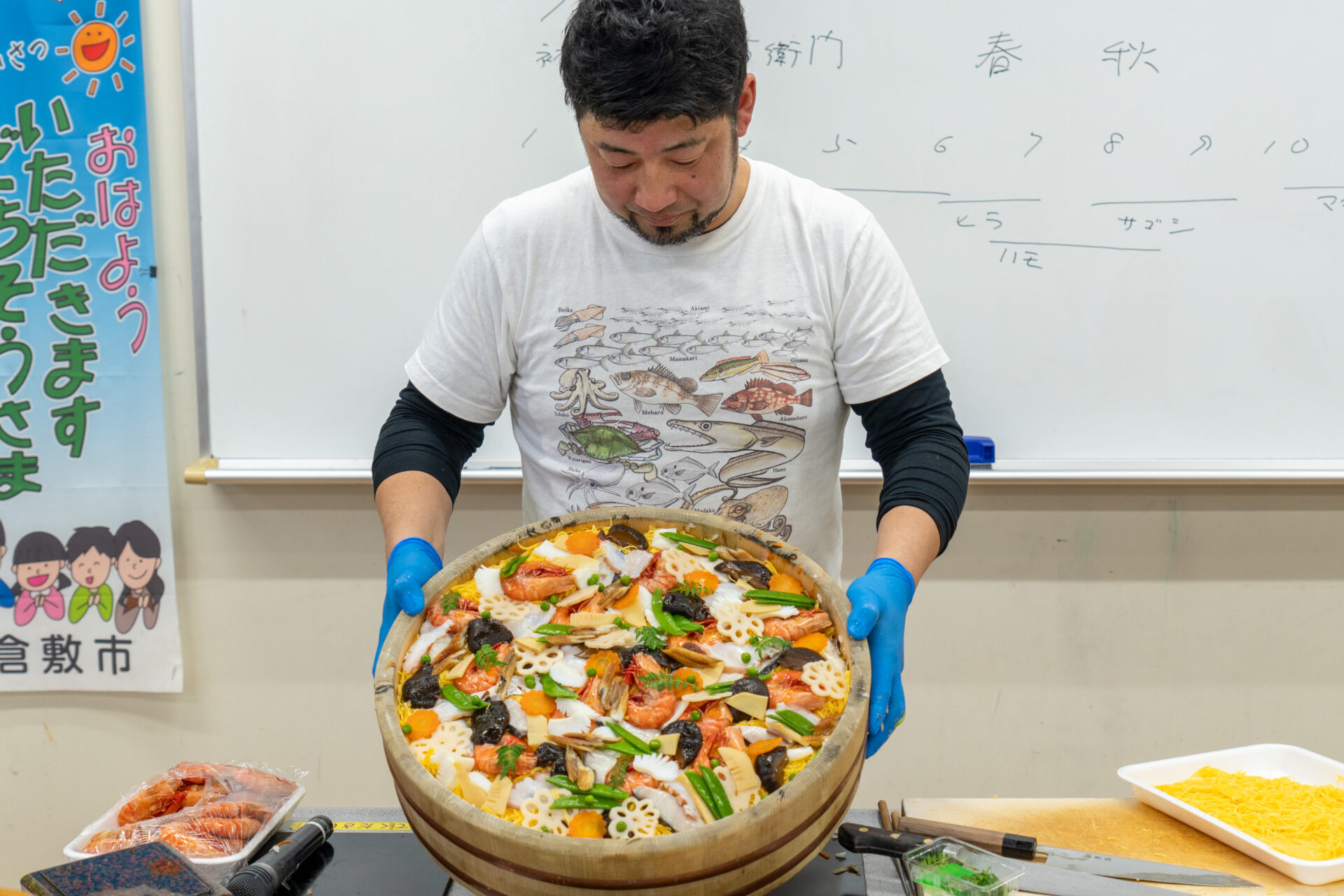
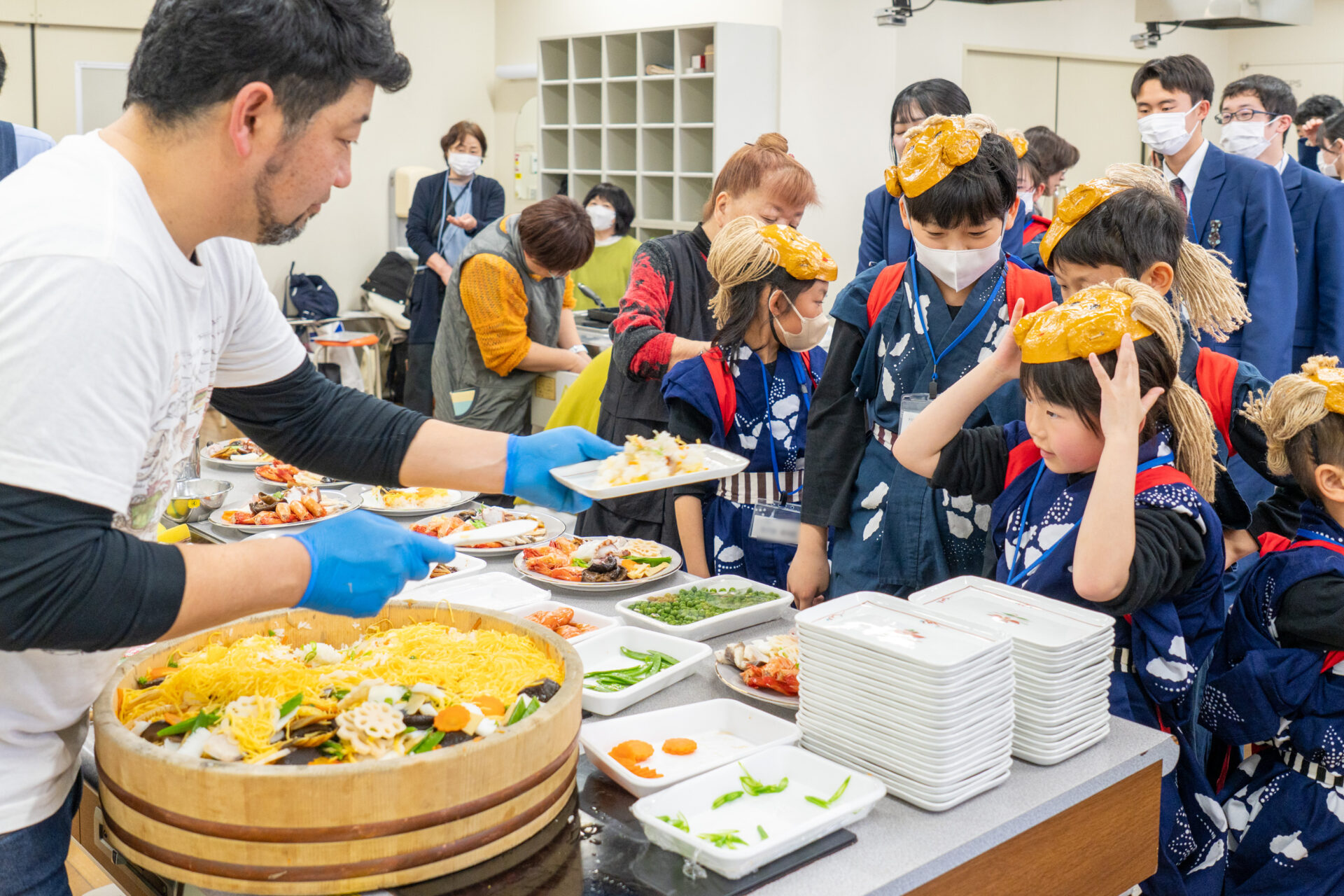
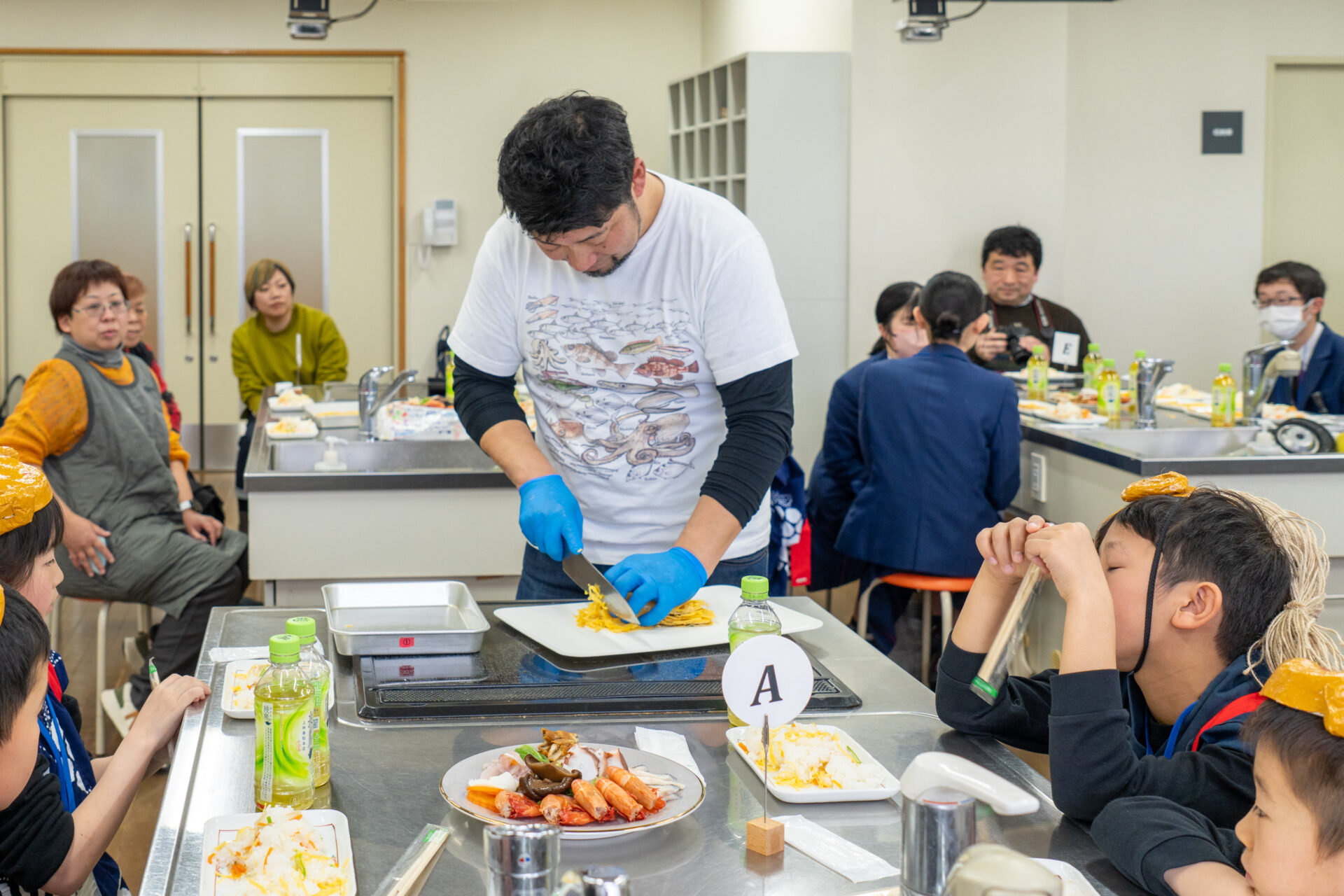
From here, Mr. Mitsuhata showcased the process of making "Barazushi."
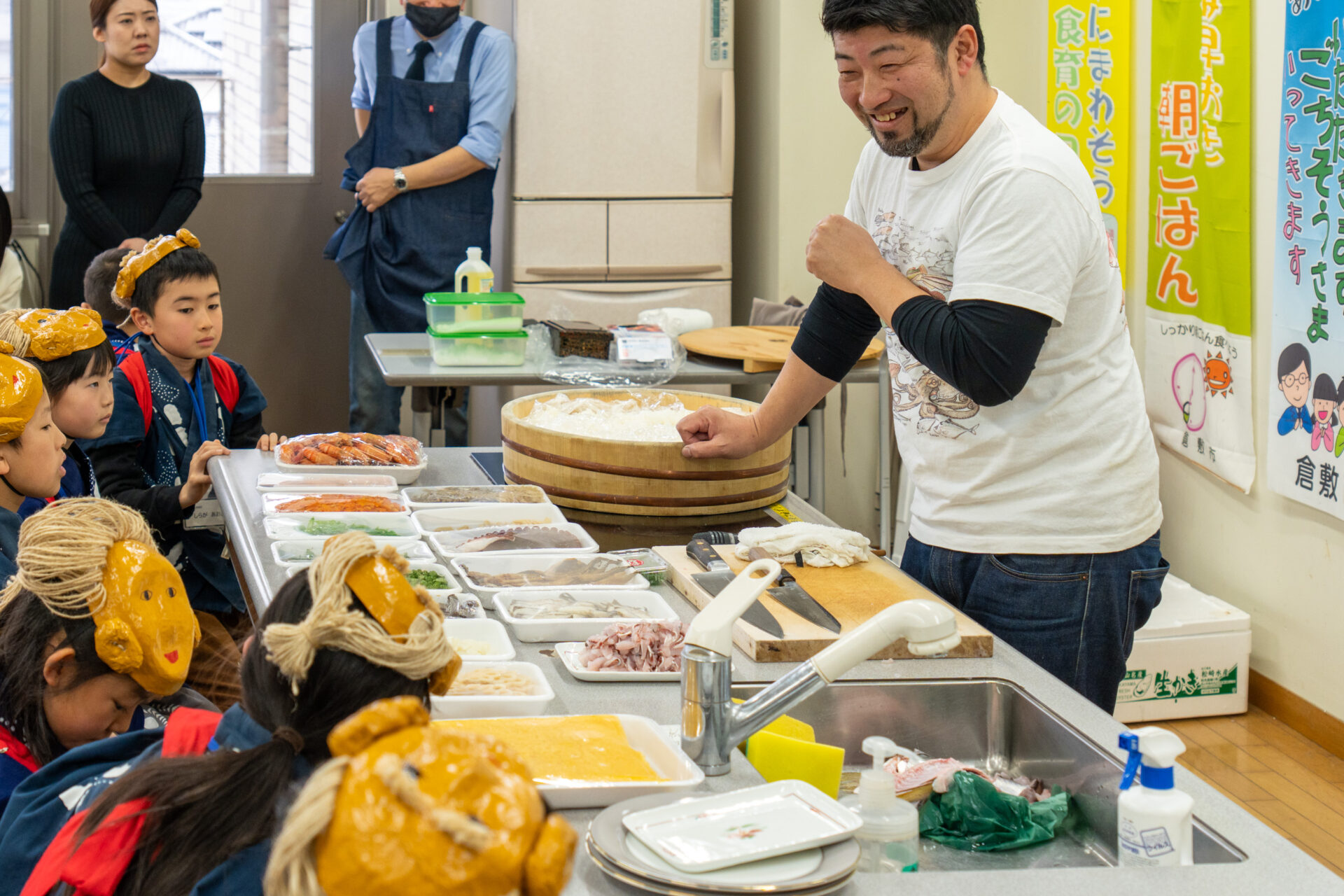
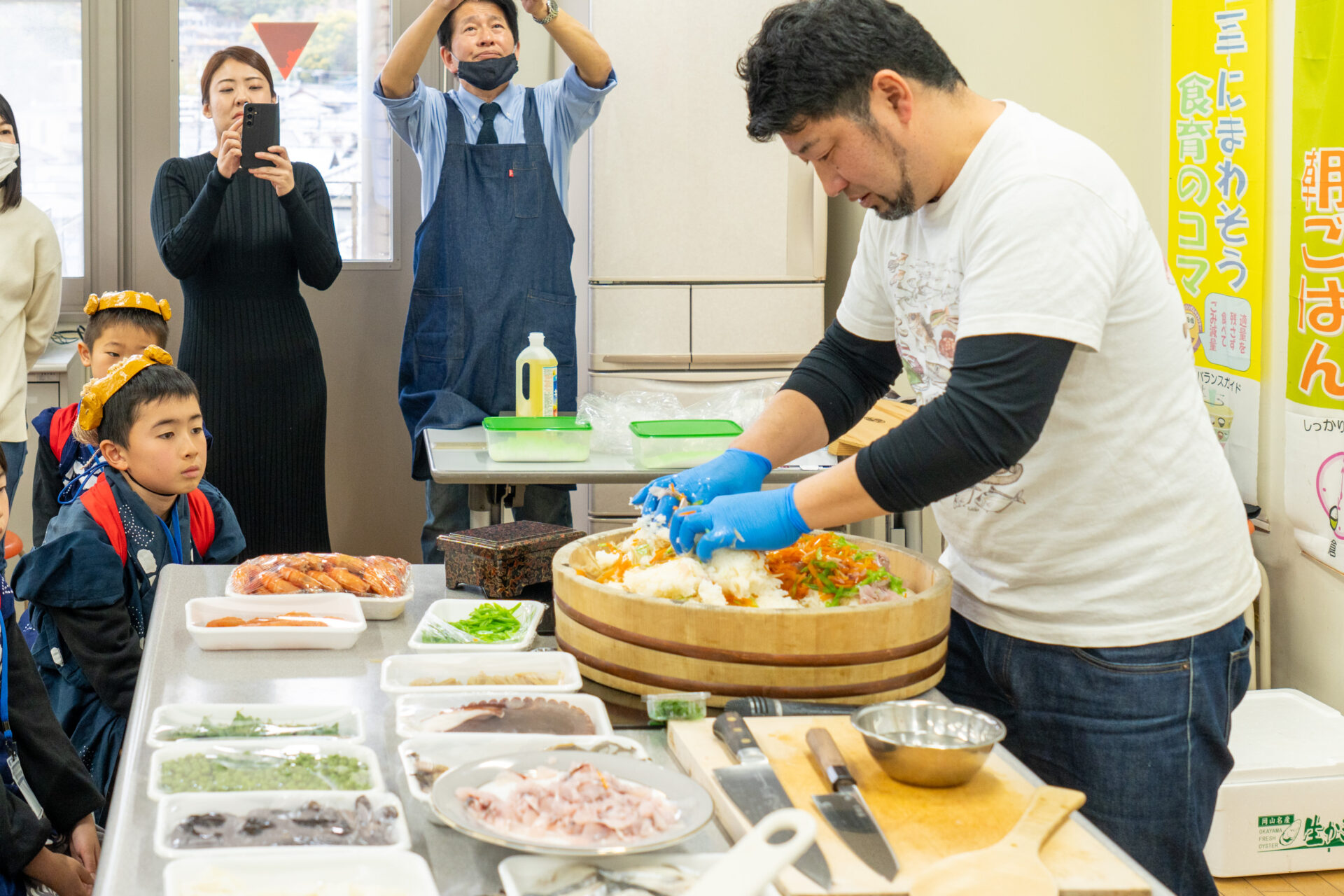
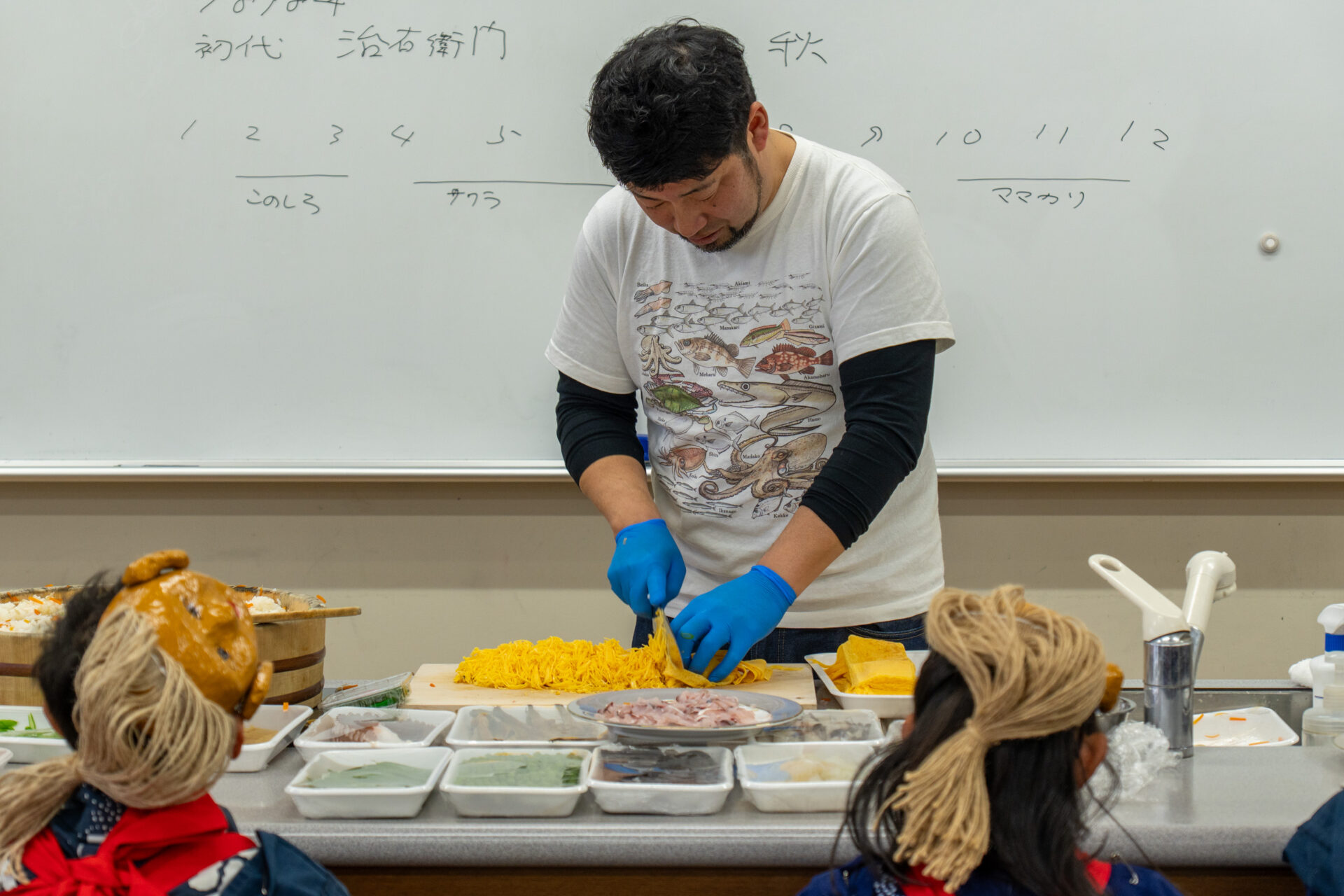
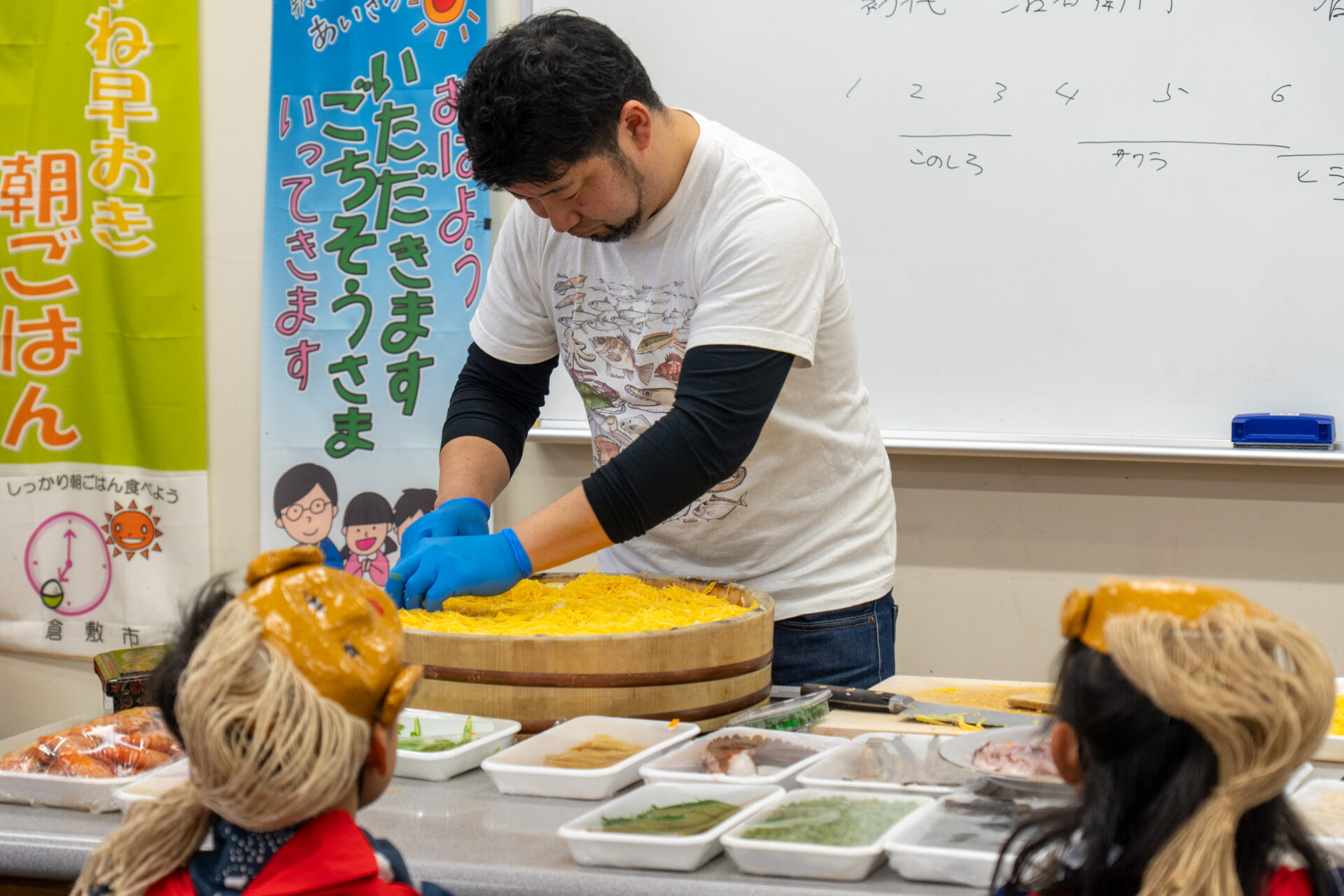
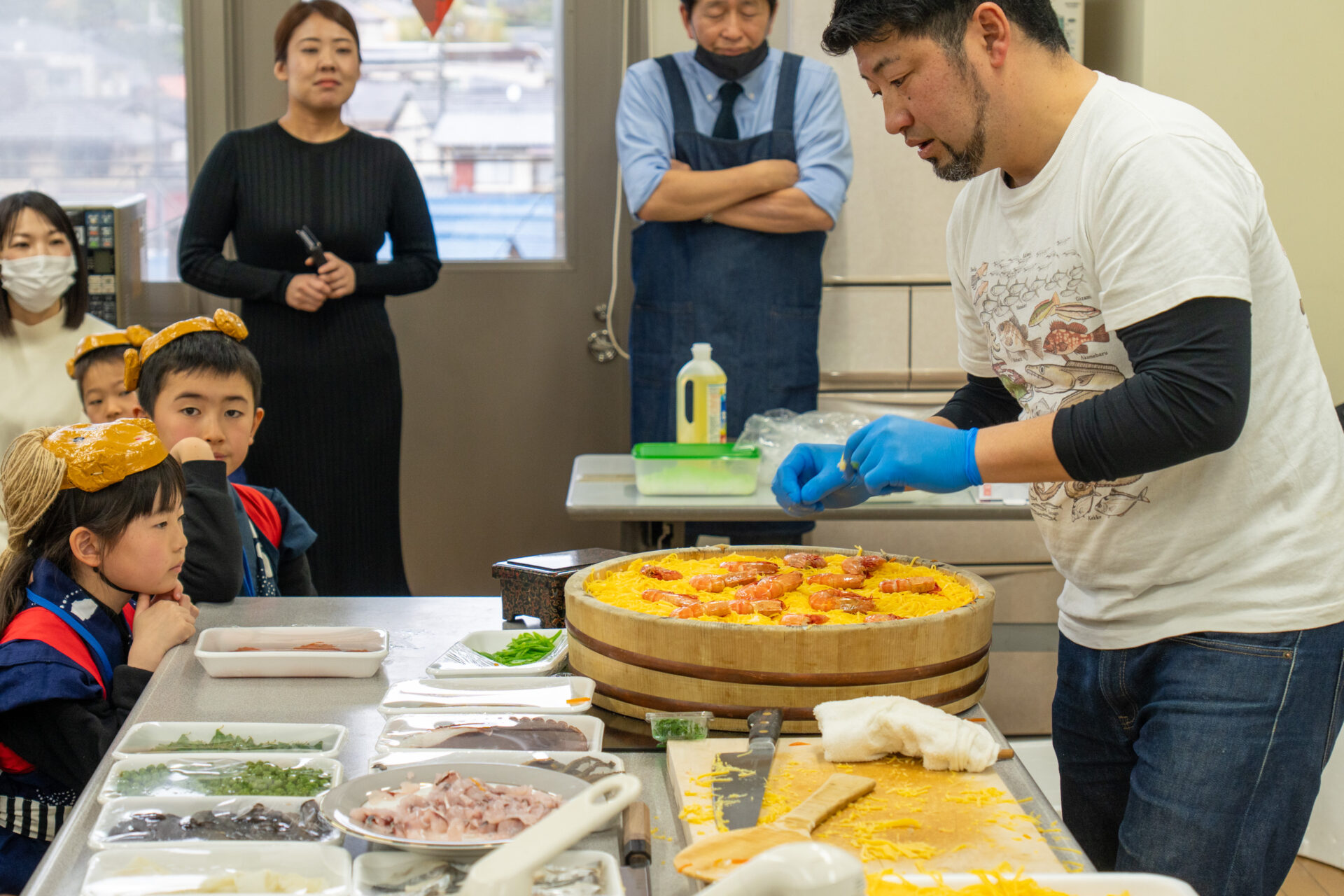
※On that day, 'Garaebi' was not available
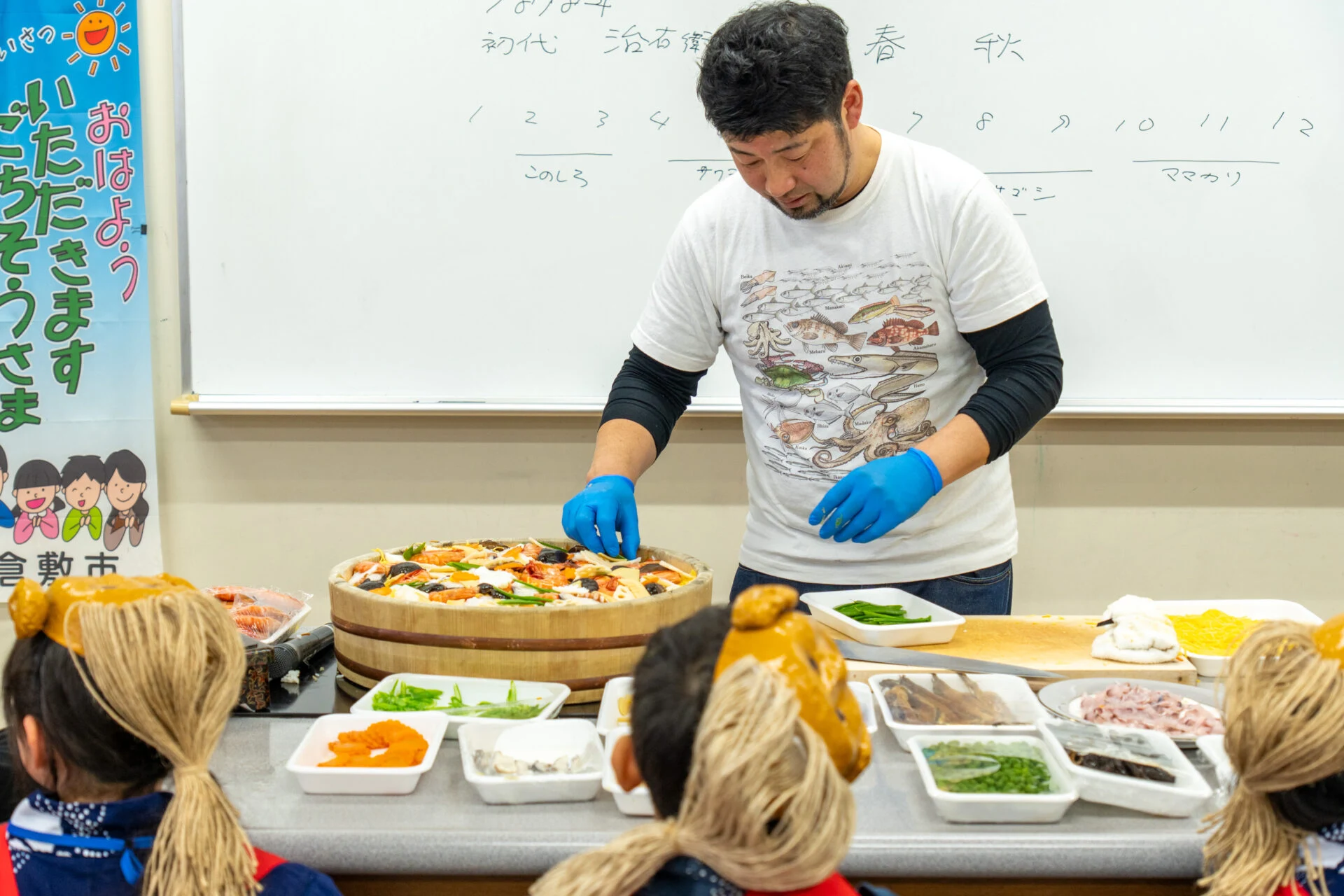
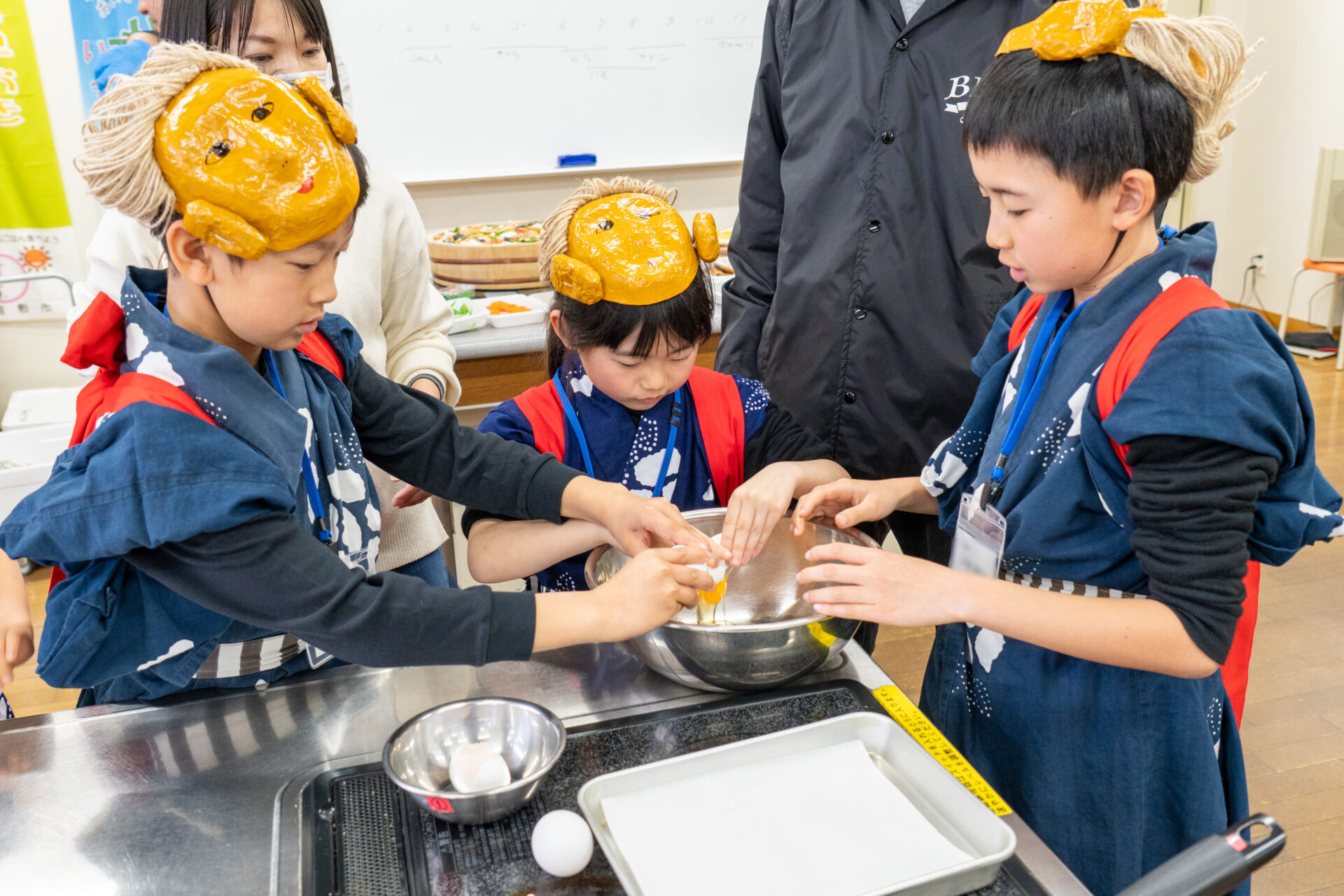
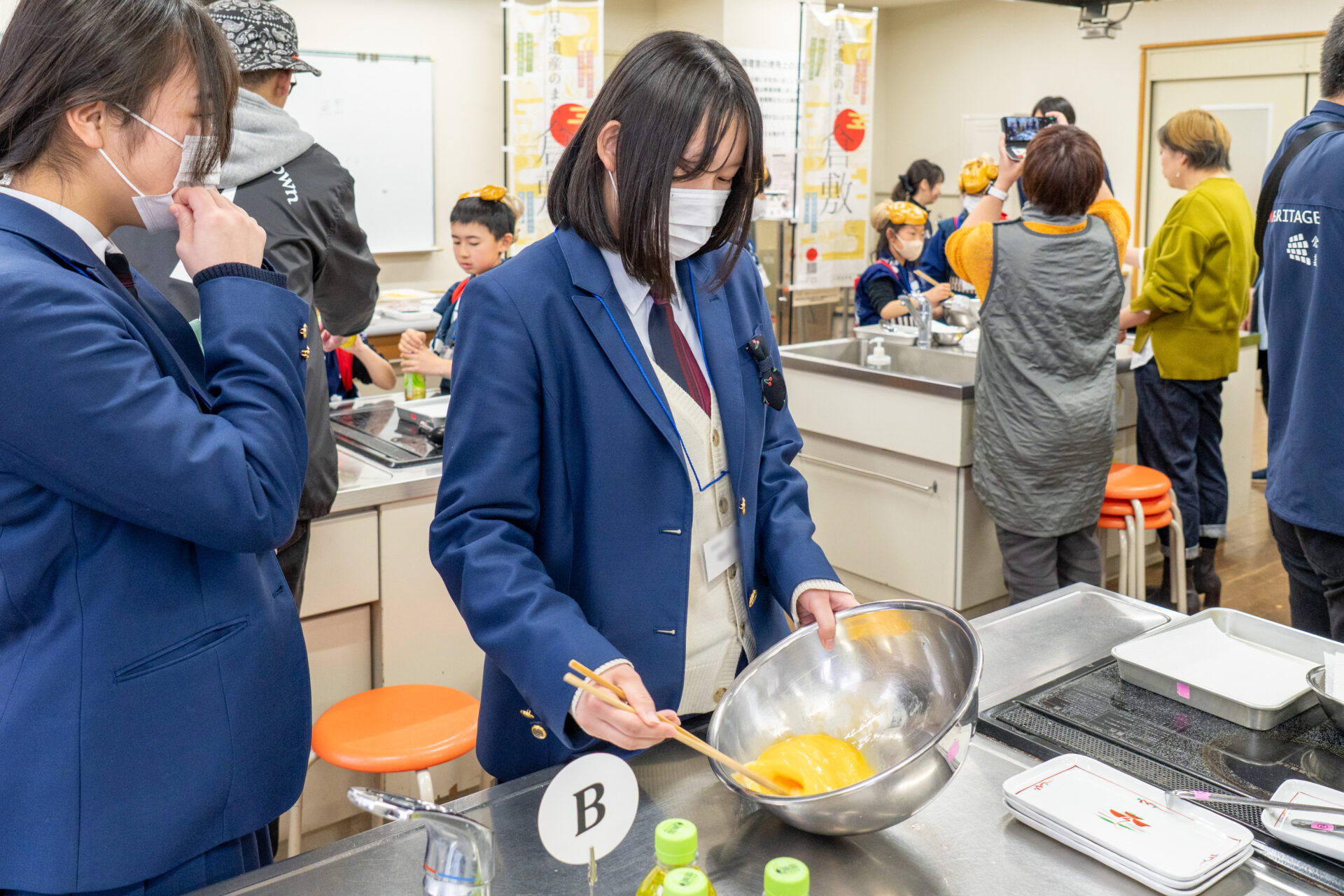
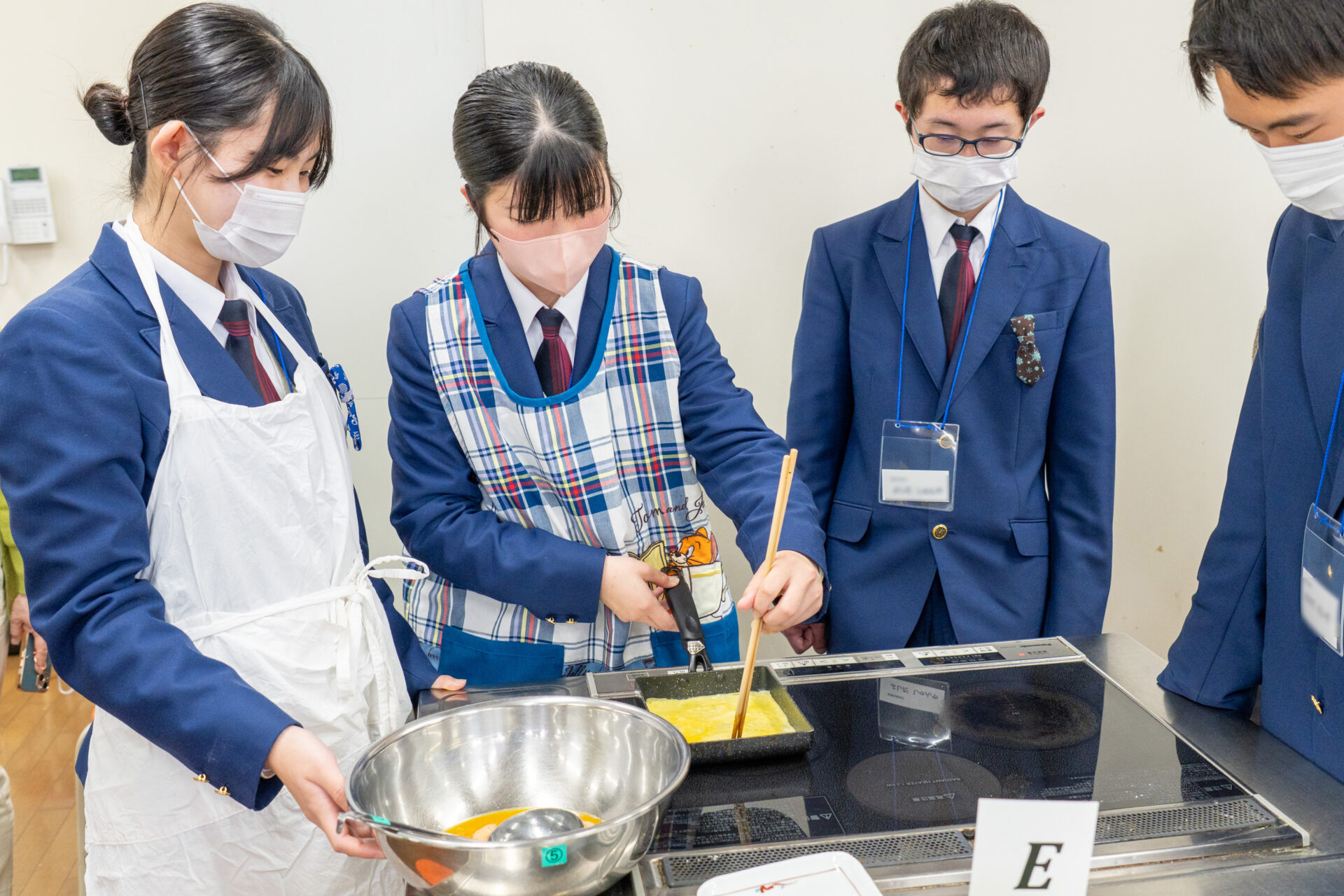
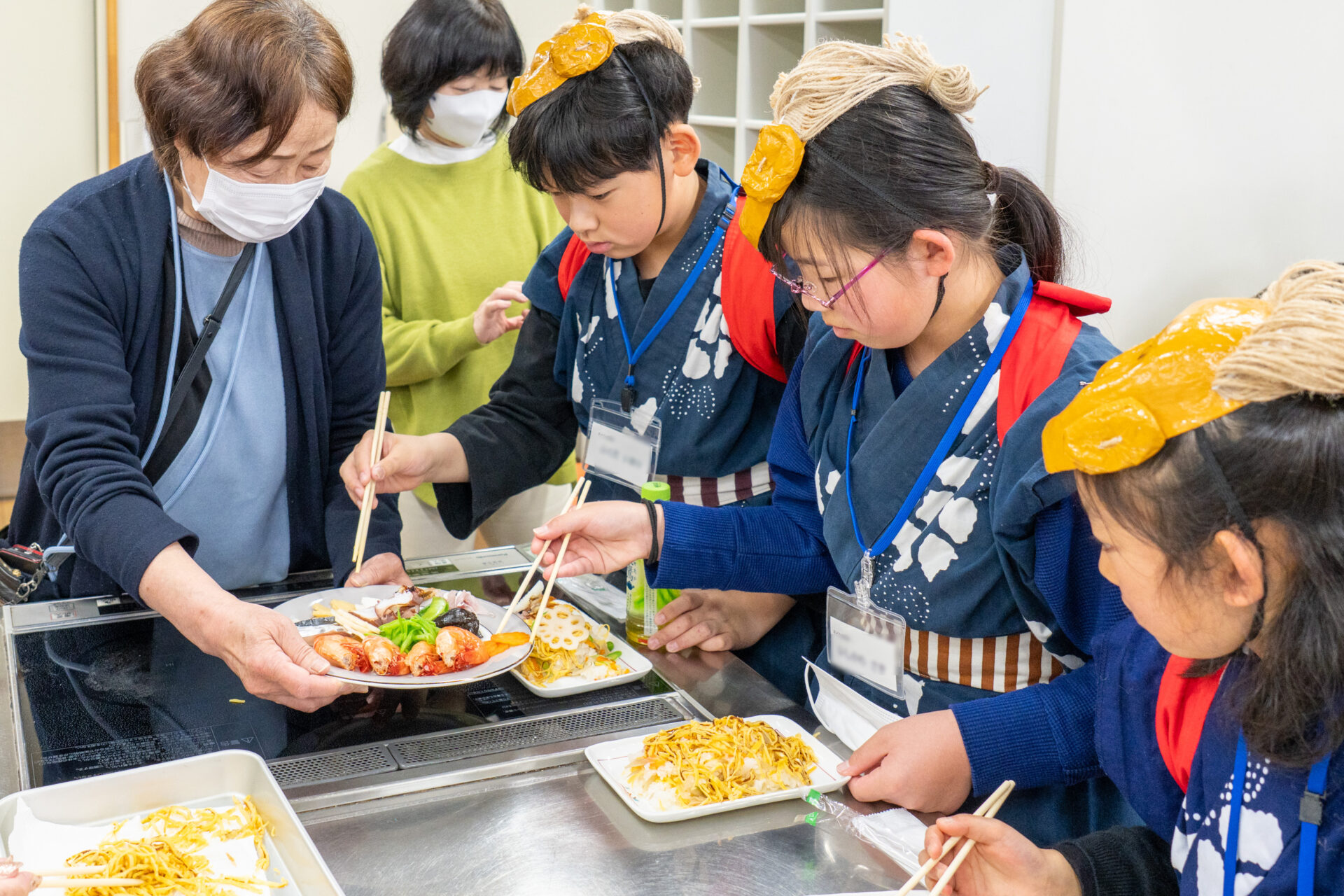
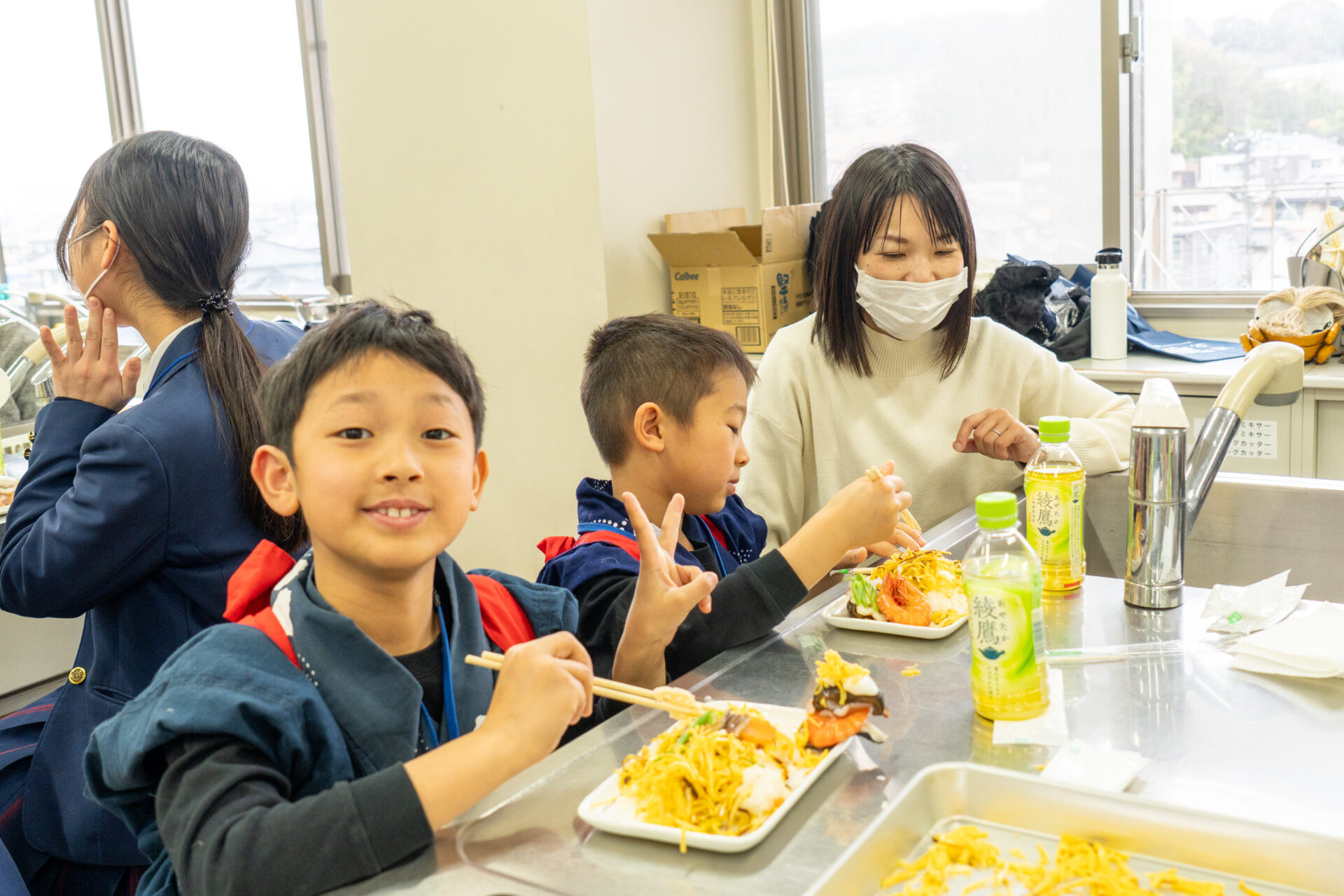
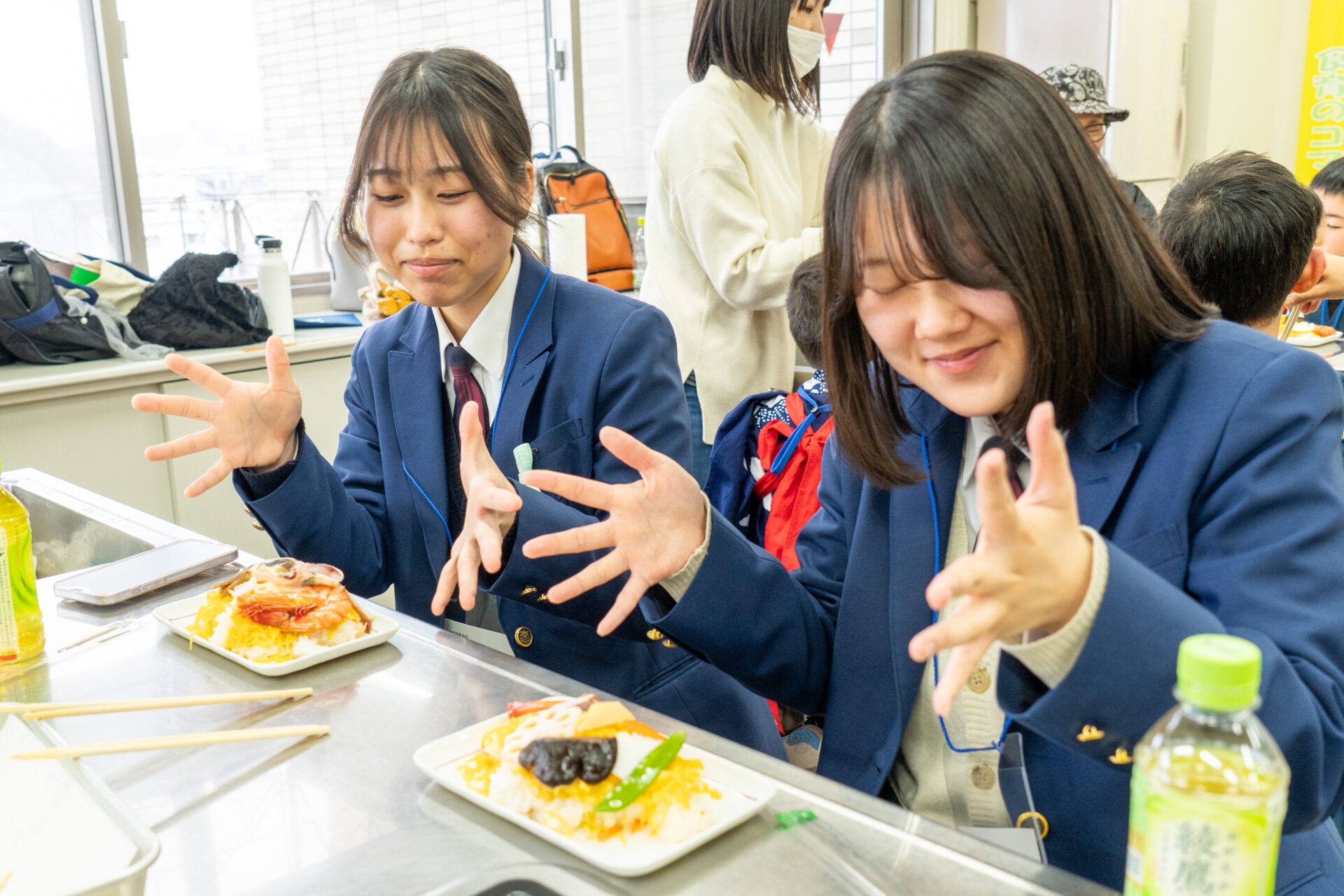
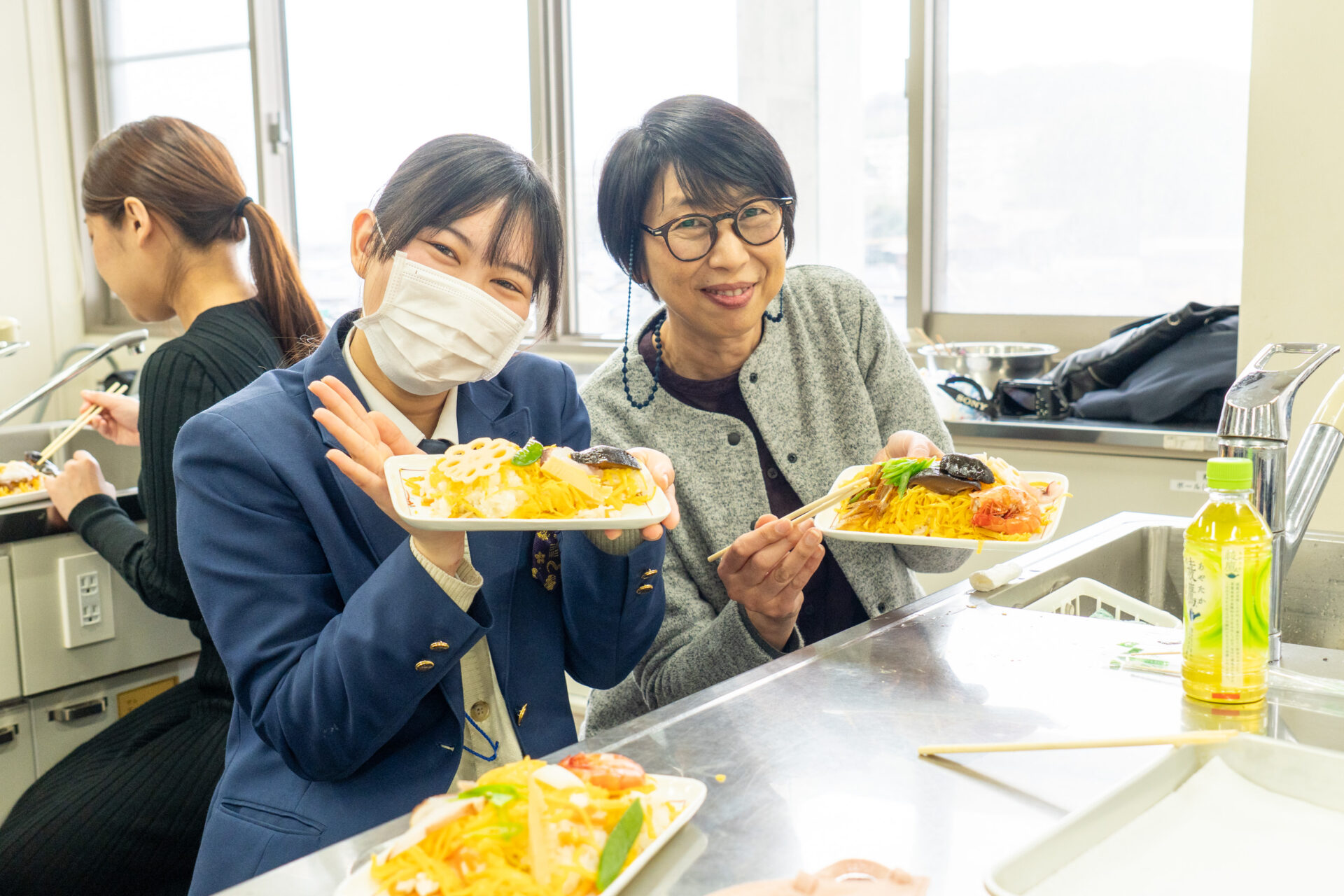
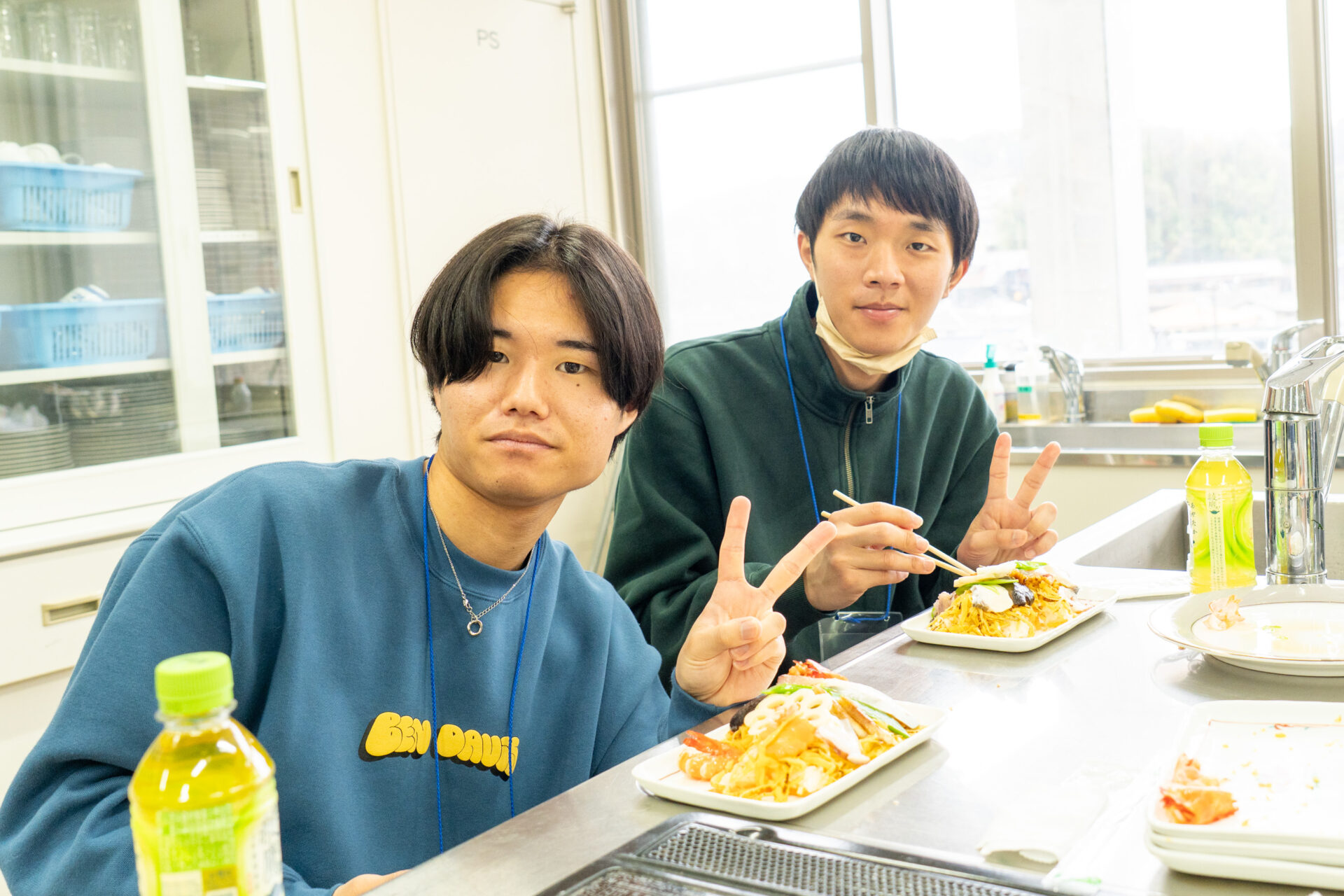
Making and Tasting
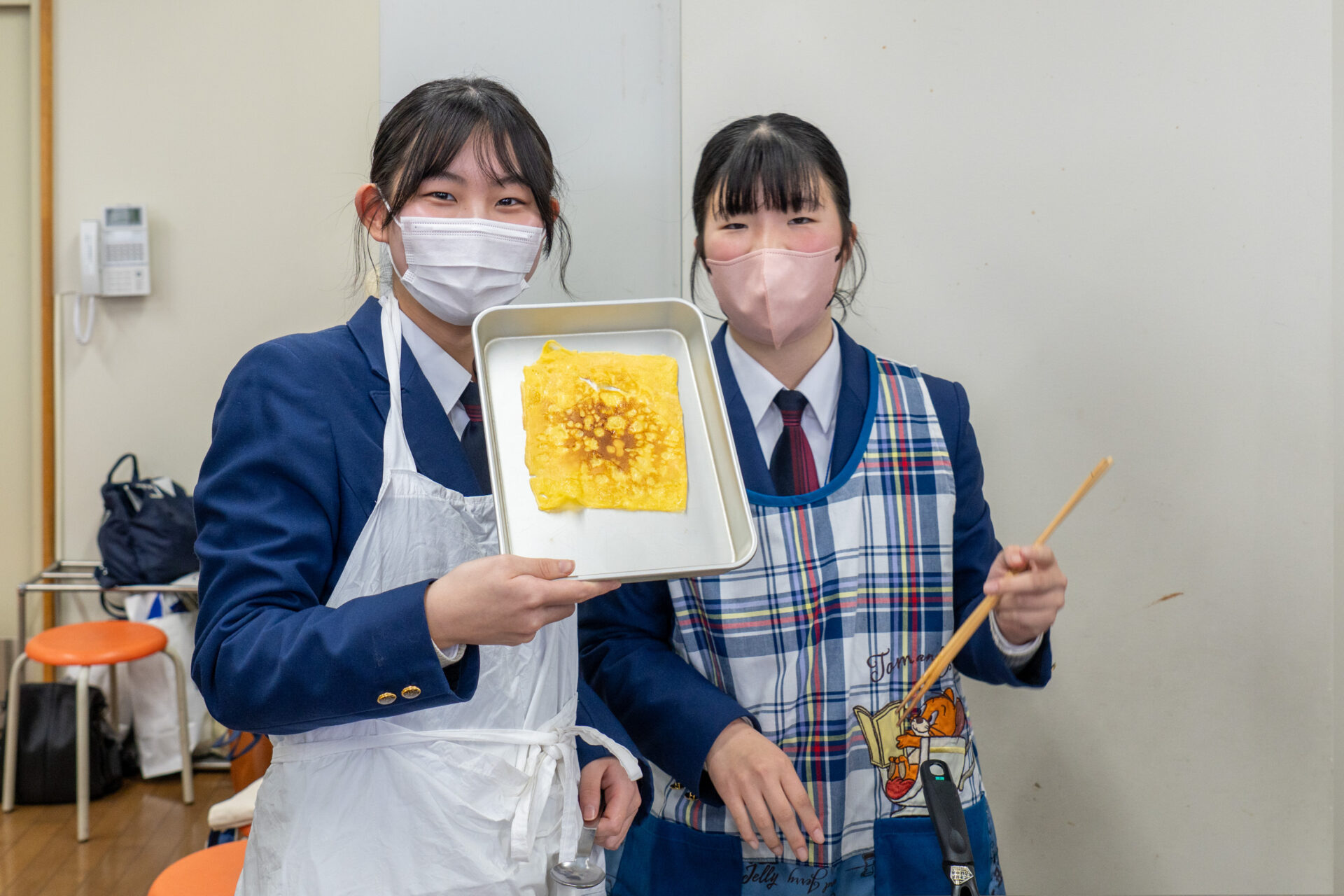
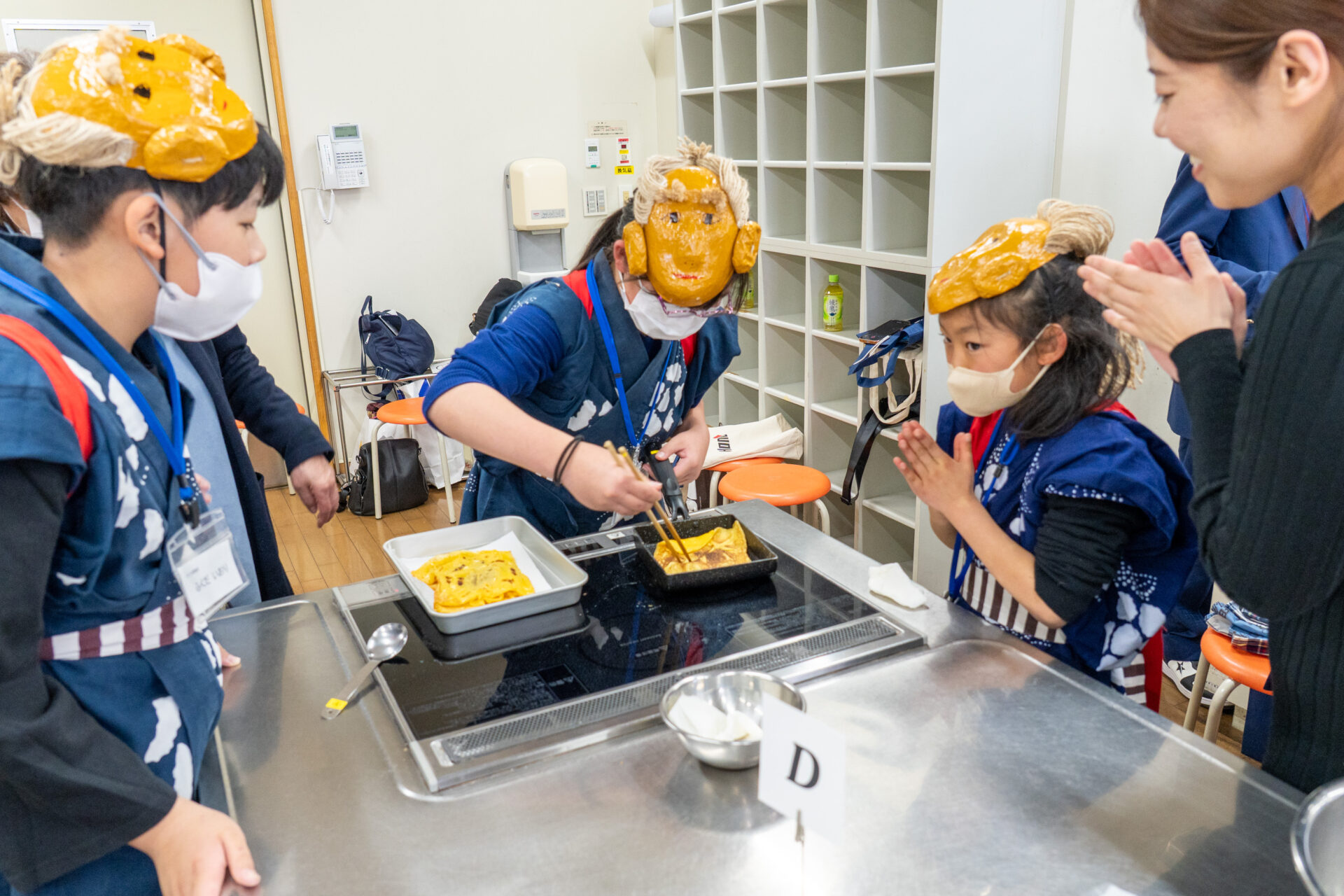
From here, participants will challenge themselves to make thin omelets.
Considering Barazushi in Kurashiki
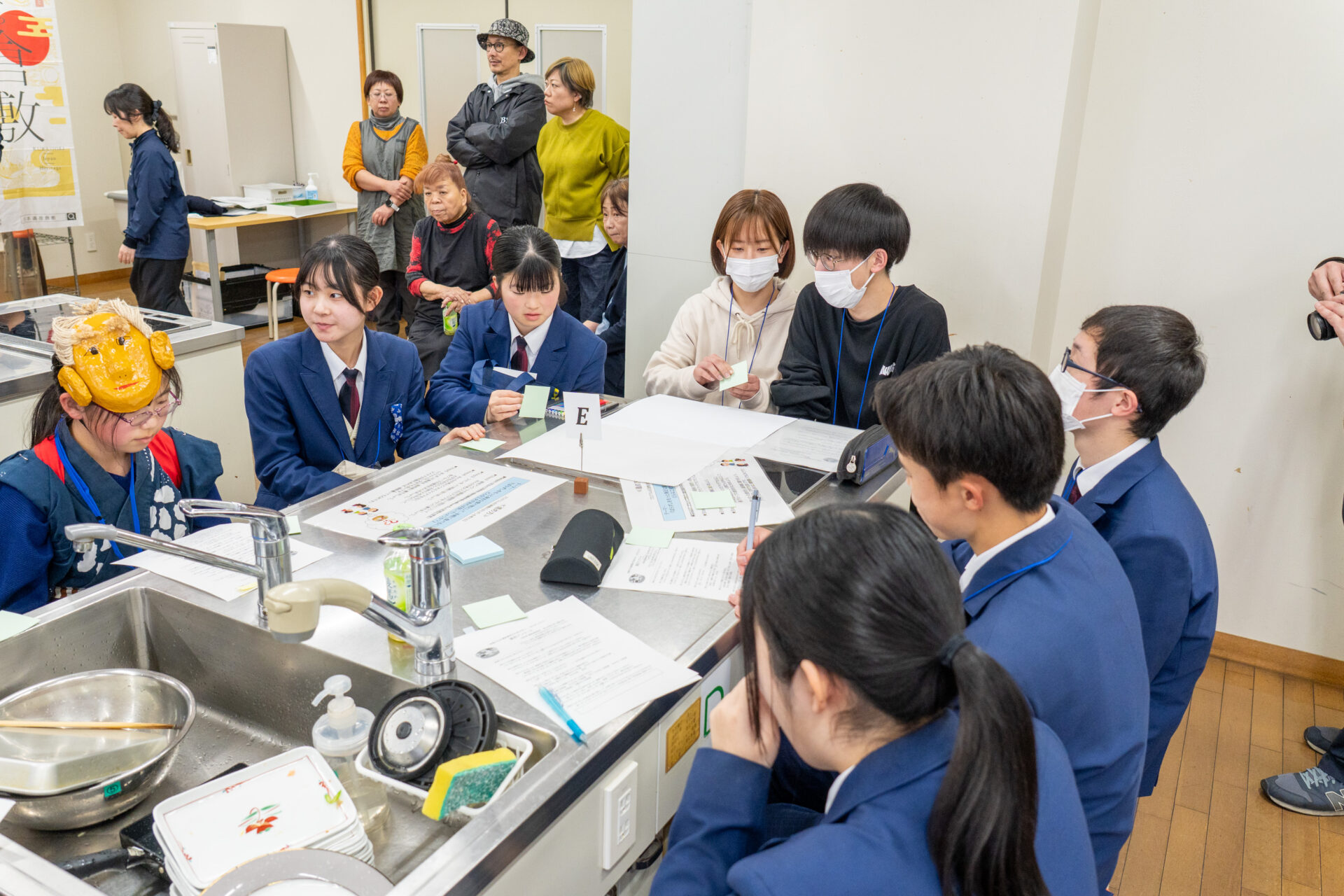
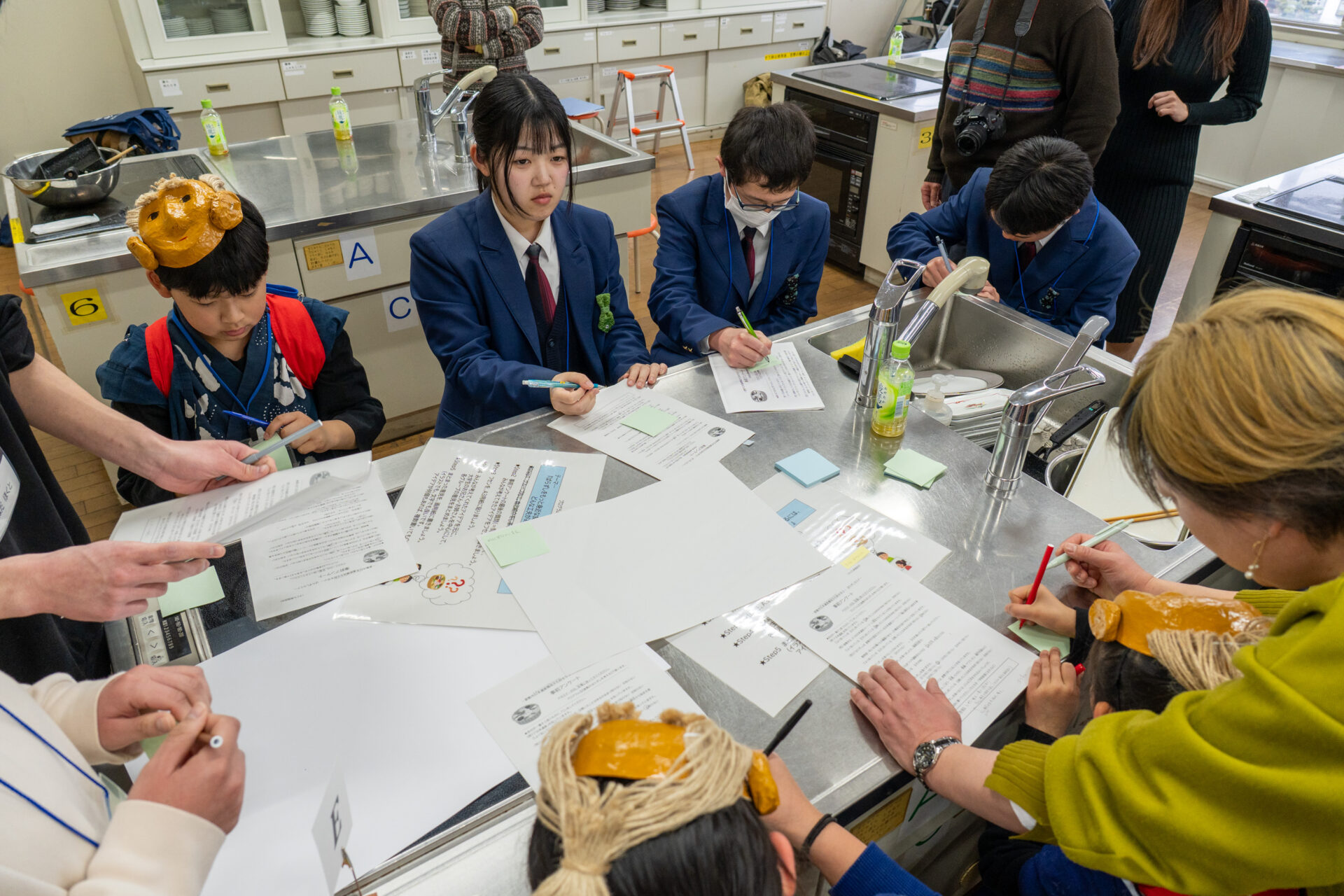
After getting full, it's time for the workshop.
What kind of ideas can make barazushi a more familiar and easy-to-eat food?
We will think about this theme in groups.
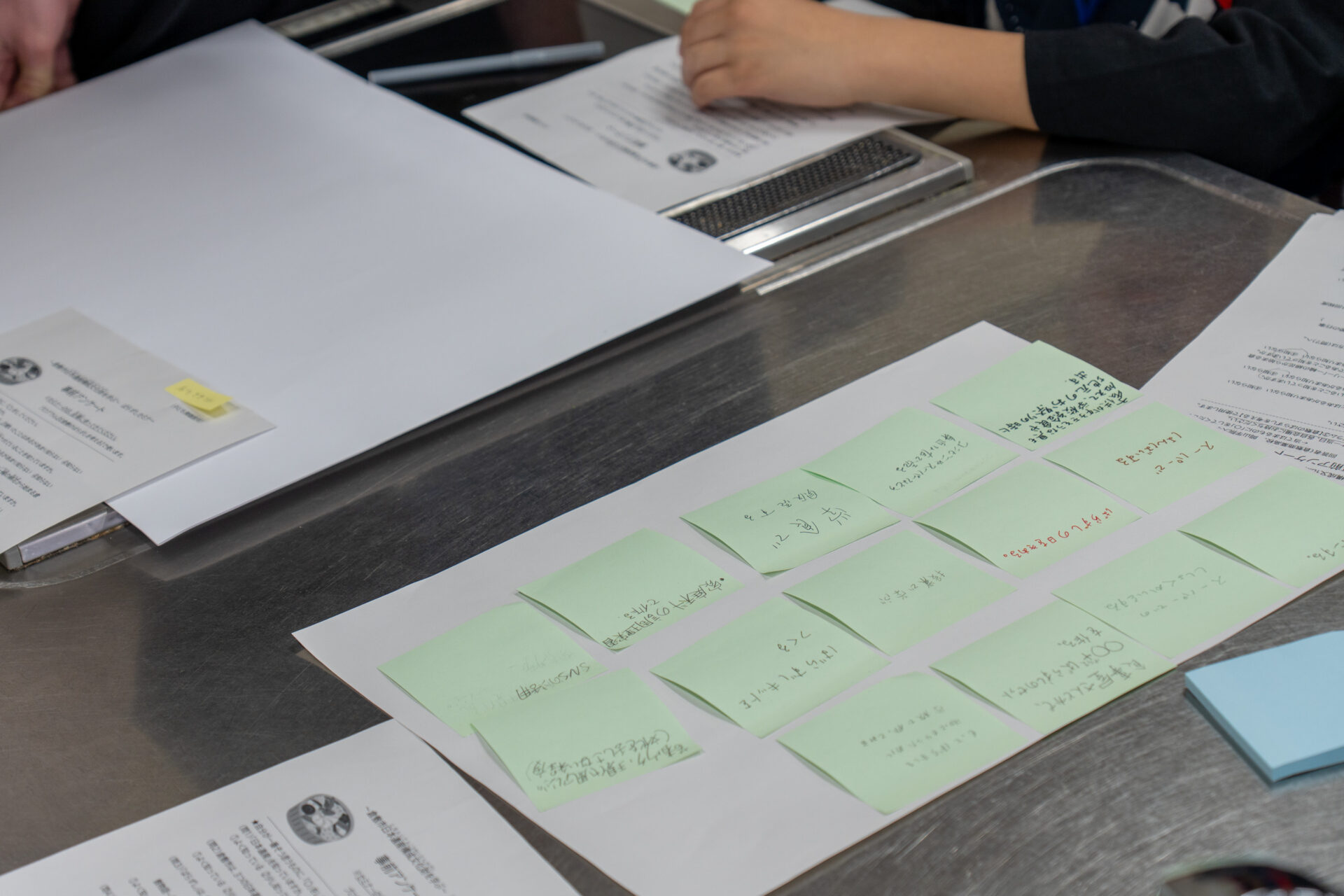
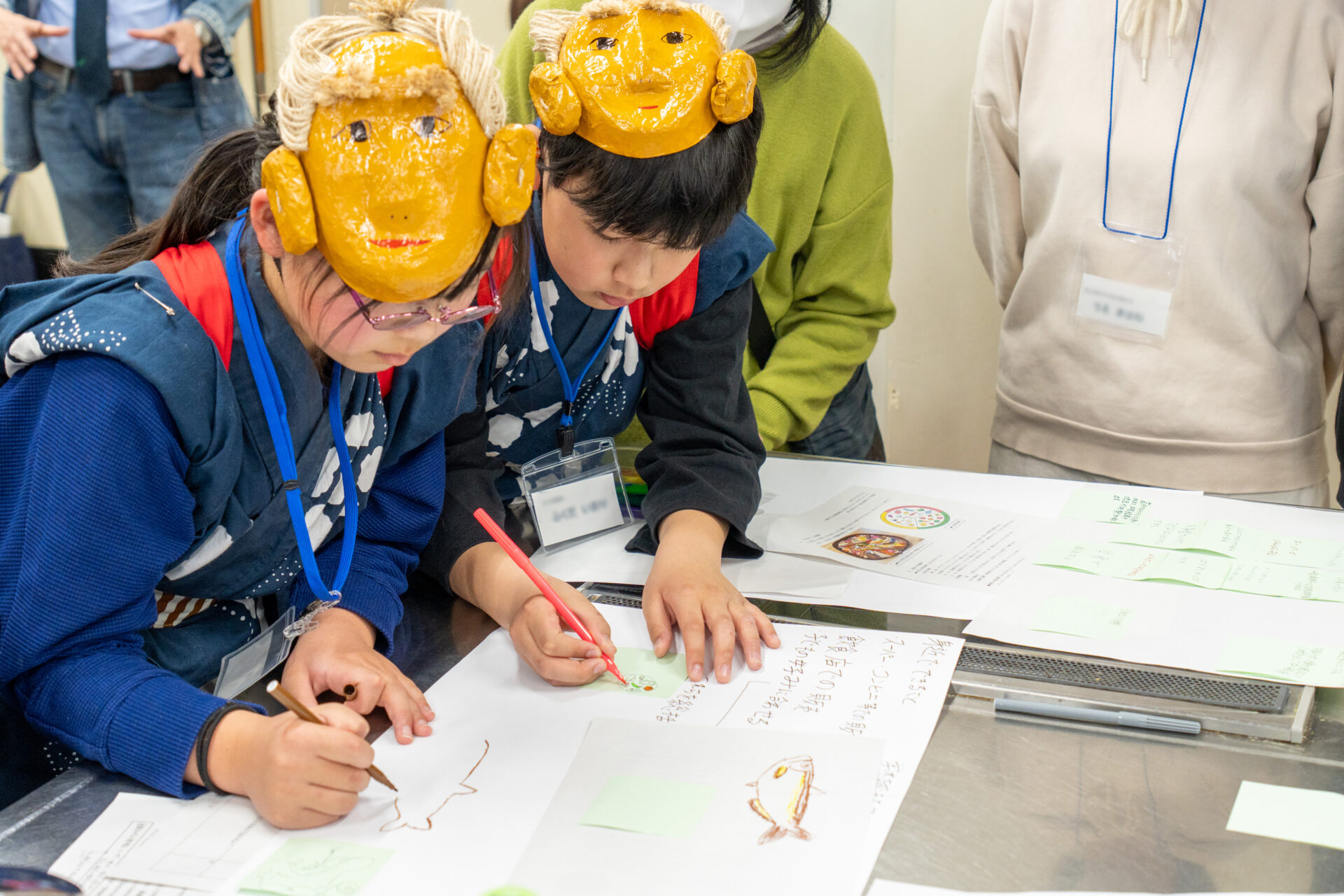
Finally, we presented the summarized opinions by group.
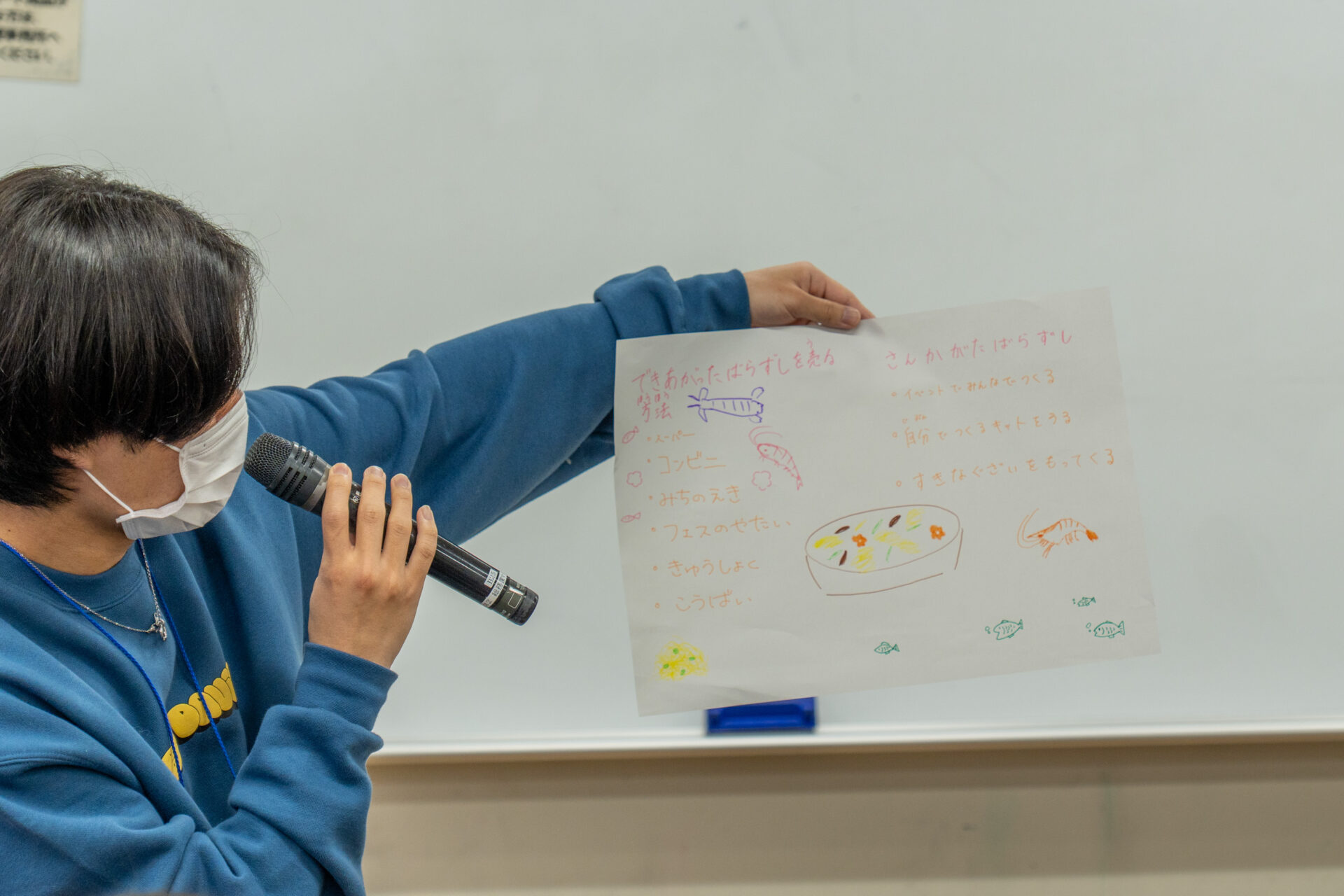
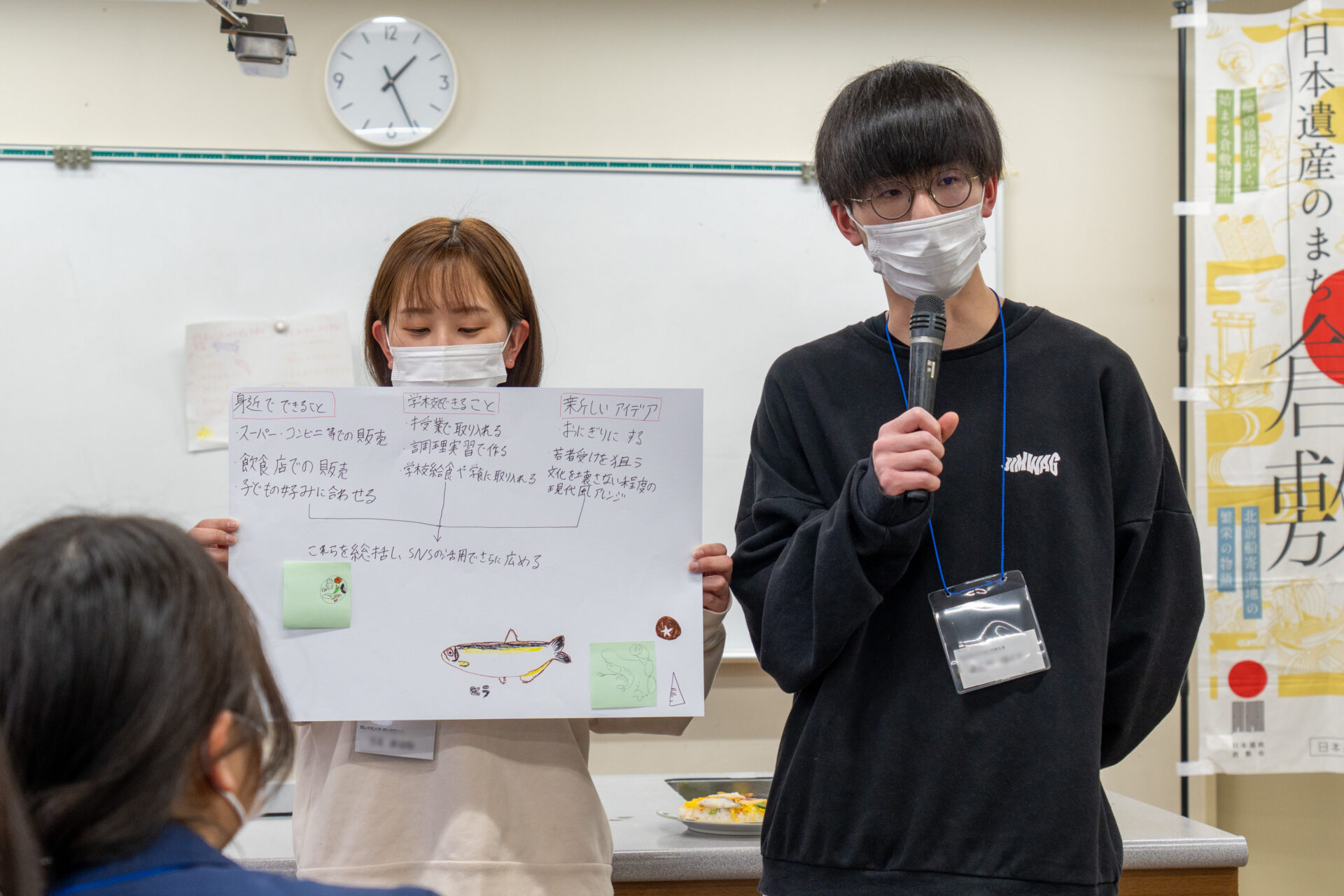
- Sell the completed "barazushi" at convenience stores and other places
- Bring your favorite ingredients and make it yourself
- Incorporate it into school lessons
- Propose new forms, such as making it into rice balls
Various opinions were raised, such as these.
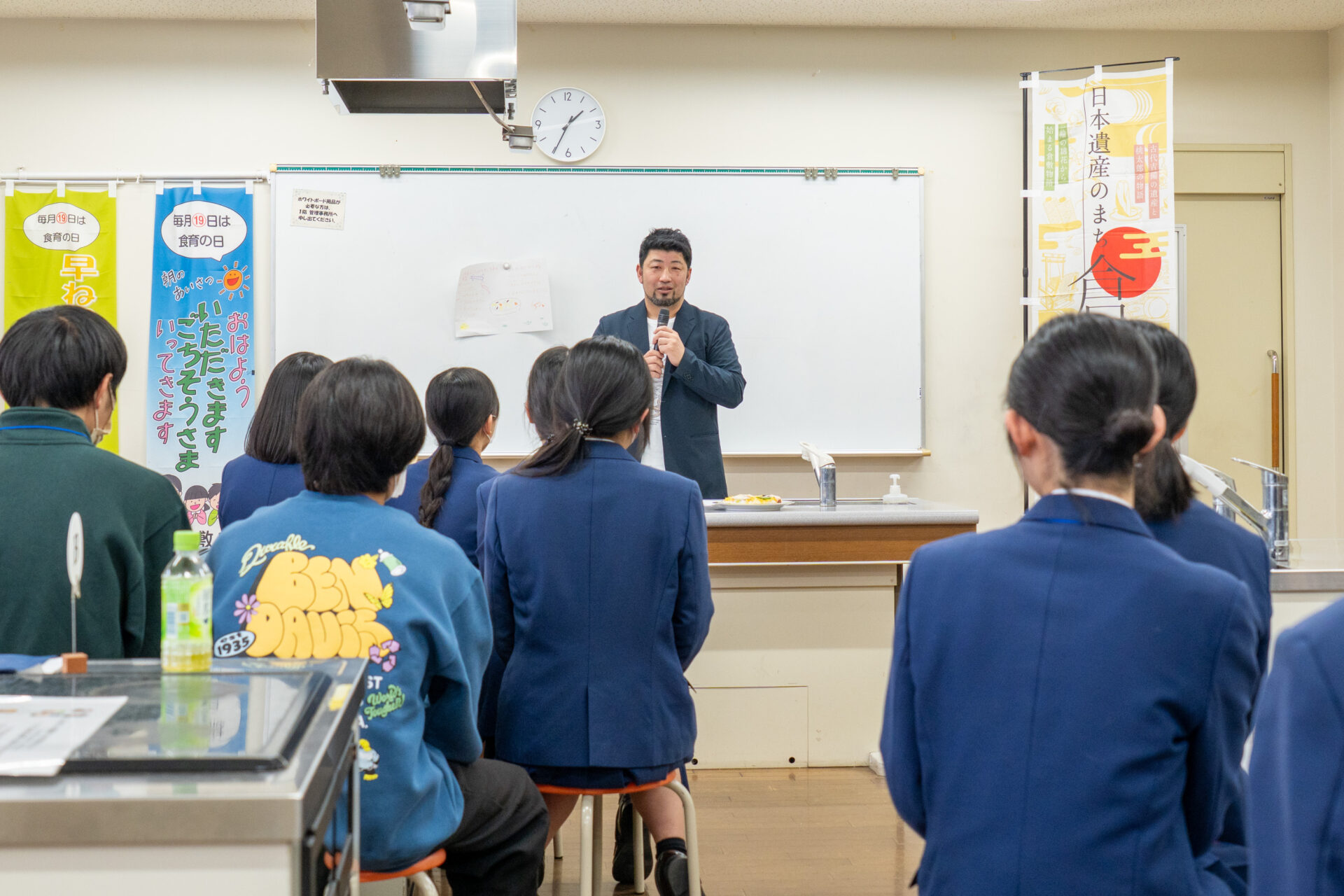
Due to some delays, we ended up rushing at the end, but we received closing remarks from Mr. Mitsuhata, and the "Barazushi Seminar," which lasted about four hours, concluded.
Conclusion
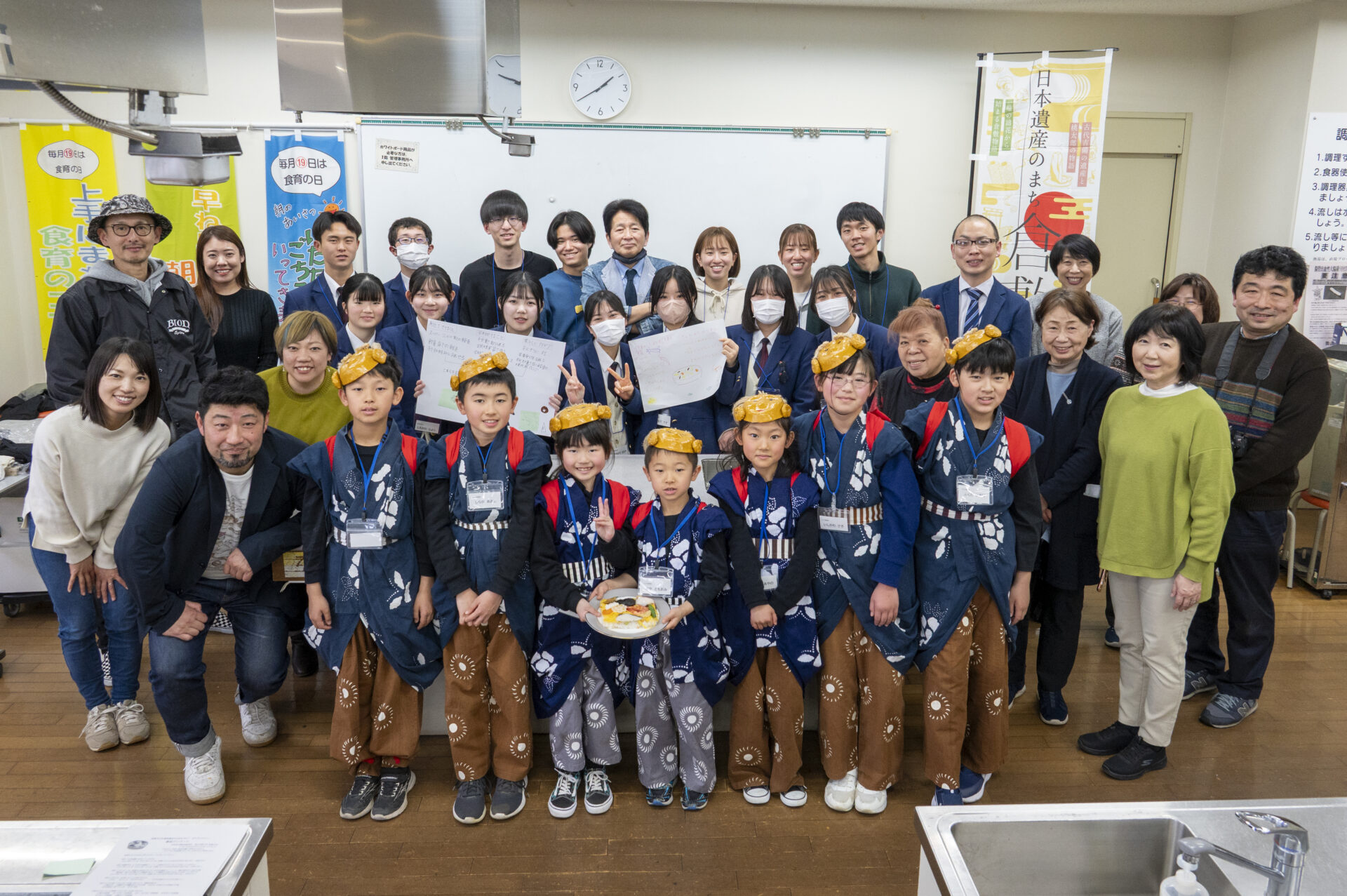
I only had a vague understanding of "Barazushi" as one of the local dishes.
By listening to the historical background and stories about the ingredients, my understanding deepened, and I feel it has become more familiar through the collective thoughts of many participants.
Japan Heritage stories include not only "buildings" like historical structures but also familiar items such as "food" as part of the cultural heritage. For this reason, I felt it was an initiative that many people could easily engage with.
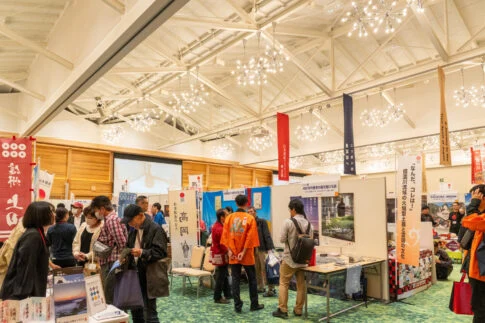
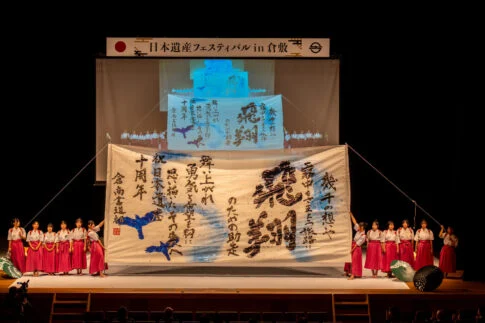
Furthermore, the "Japan Heritage Festival in Kurashiki" is scheduled to be held on October 25 and 26, 2025, making 2025 a Japan Heritage Year for Kurashiki City.
It seems that events related to Japan Heritage in Kurashiki City are also planned leading up to the day.
It would be a good opportunity to learn about Japan Heritage.
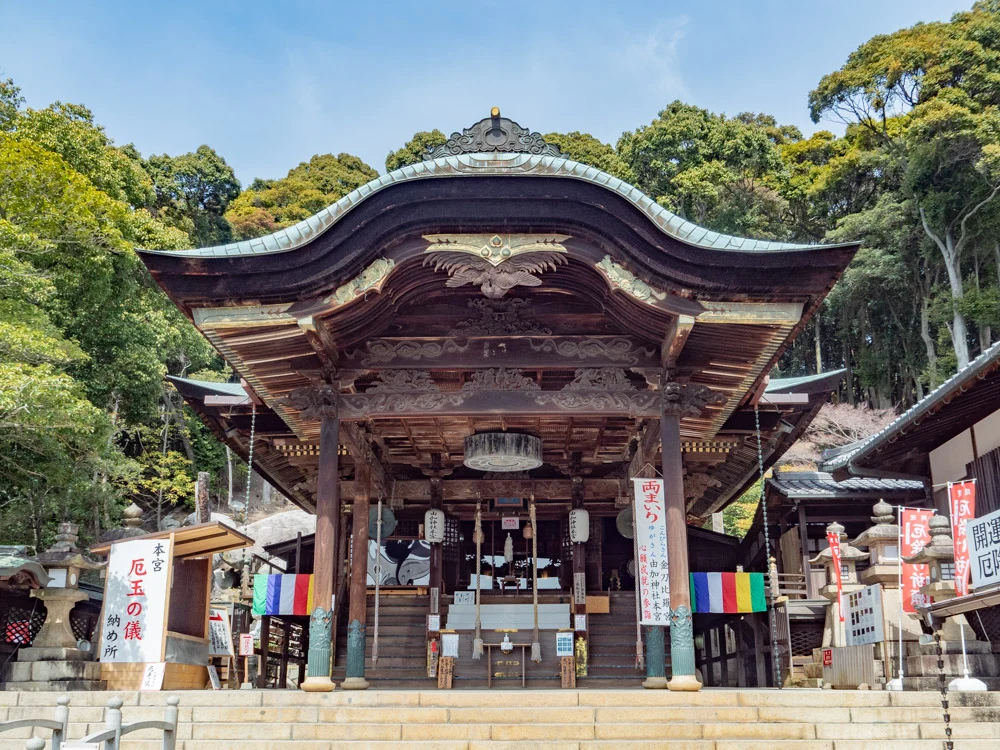
Articles about Japan Heritage in Kurashiki City
Barazushi Seminar Data
| Name | Barazushi Seminar |
|---|---|
| Date | March 16, 2025 10:00 AM - 1:30 PM |
| Location | Kurashiki Health and Welfare Plaza 3rd Floor Cooking Room |
| Participation Fee (including tax) | Free |
| Homepage | Japan Heritage Festival in Kurashiki |