Interview with Professor Moriyama Tomoki, creator of the Folding Screen with Red Carp
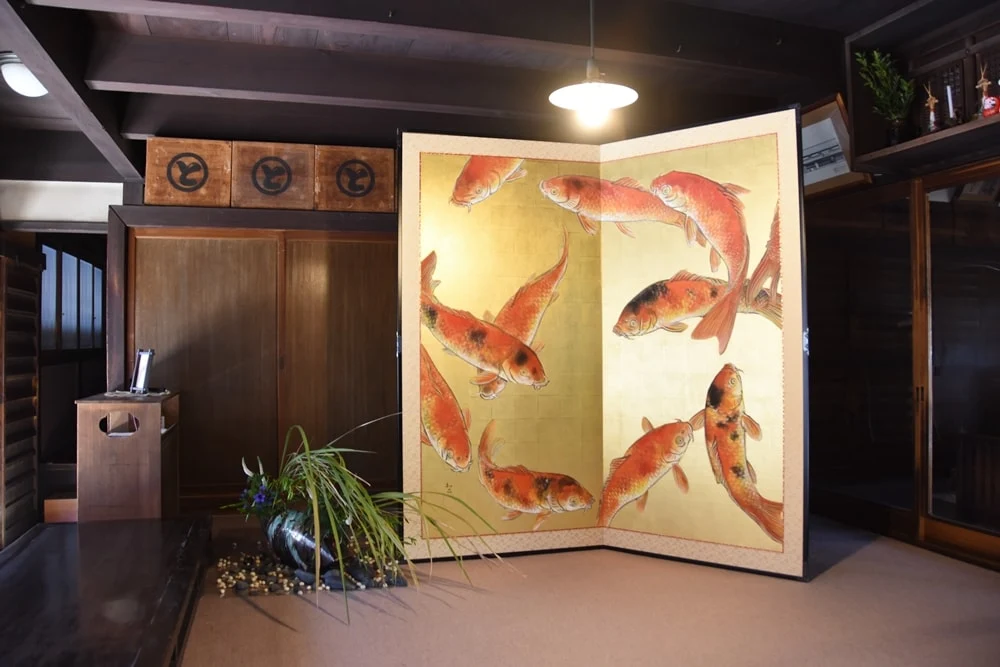
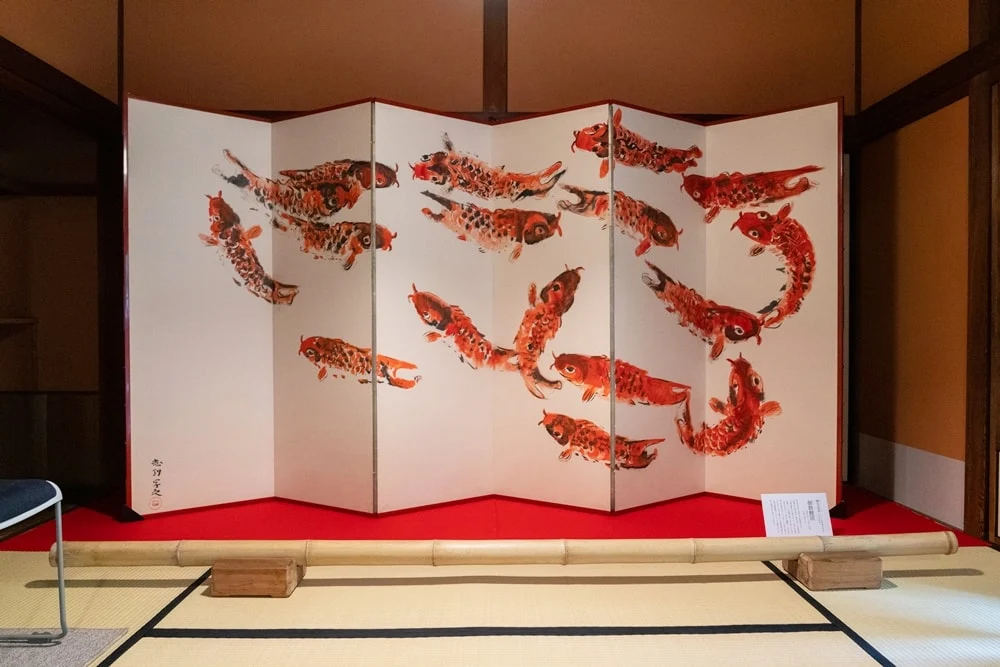
We were able to speak with Professor Moriyama of the Faculty of Arts at Kurashiki University of Science and the Arts, creator of the folding screen “Red Carp,” which was displayed at Hashimaya Kimono Shop. We spoke at Yume Kukan Hashimaya.
Professor Moriyama’s research focuses on defining the term “Japanese painting,” using as clues the materials, tools, techniques, subjects, and other elements used in classical paintings.
Japanese Painting That Makes Time an Ally
Why is Japanese painting your research theme?
Moriyama
I want to understand concretely what kind of paintings are meant by paintings named after a country—in this case, Japan.
For example, anyone can pick up drawing tools such as pencils and pens and start using them right away, quite easily.
But Japanese painting brushes are difficult to use well without training. The same goes for calligraphy.
Now that you mention it, that’s true.
Moriyama
In the West, when drawing a line, you simply draw one smooth, continuous stroke.
But classical Japanese painting is sometimes described as “continuing to make dots” or “drawing a line as if laying down ink.”
Do you know why?
…Why is that?
Moriyama
The paint is applied along the uneven surface of washi, connecting “dots” to draw a line.
The Folding Screen with Red Carp was painted in the same way.
It takes a long time to finish.
Moriyama
Today, we write emails on our smartphones and send them to people.
But not so long ago, people wrote love letters directly on paper with a pen or brush and sent them.
I think a love letter also conveys the feeling, “I spent a great deal of my limited time writing this for you.”
The same is true of Japanese painting: you could say that it finds joy in accumulating time.
Kurashiki University of Science and the Arts, Established in the Historic City of Kurashiki

Why did you have the students experience painting folding screens?
Moriyama
As has already been explained, the Kurashiki Byobu Festival was planned to bring more vibrancy to the city of Kurashiki.
▼Students’ active participation in events and festivals in the area where their university is located can be expected to:
- Help them feel closer to the community they are involved with
- Help them develop an attachment to it
▼For Kurashiki City, which invited the university to locate there, the expected benefits through the above include:
- Young people living in the community
- A positive image of life in the city
- The prospect of people settling there in the future
Students studying art create folding screens, the central theme of the festival.
Taking part by painting them is ideal for a university that is part of the community, and a setting where students can directly apply their area of expertise.
“Taking part in the Byobu Festival by painting folding screens”
This became part of the university’s comprehensive project course, the “Kurashiki Byobu Project.”
How Were the Folding Screens for the Festival Obtained?

Moriyama
Folding screens are very expensive to make from scratch.
At first, we planned to find old folding screens, have them donated, repair them, and then paint them.
However, we couldn’t gather any.
So, in the previous academic year (2017), we received help from two groups we had connected with.
- Members of the Okayama Prefecture Association of Interior Finishers and Mounting Specialists, who were involved in the project
at Tenjinyama Cultural Plaza - Shirakami Paper Shop, the only shop selling mounting materials in Okayama Prefecture
What is
- A project to recognize the current critical situation facing the continuation of mounting techniques and the production of materials such as washi, and to consider the future by bringing together young contemporary artists
- A project based on the idea of an “art ecosystem,” in which art is not created by artists alone, but exists through its relationship with society
With everyone’s cooperation, we decided to start by making the folding screens themselves from scratch.
As a result, this became a very valuable opportunity to:
- Experience traditional materials
- Experience traditional techniques
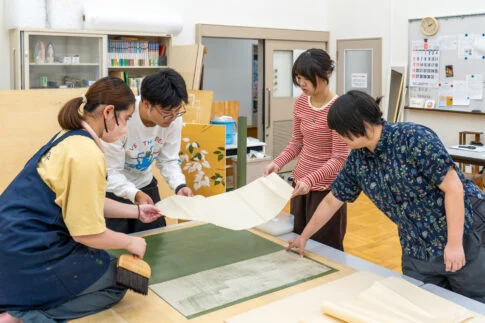
- Learn about folding screens and make one ourselves
You can learn about the “structure of folding screens” on Professor Moriyama’s website.
Reference: Structure of Folding Screens
You’d Want to Paint on a Folding Screen!!!
Moriyama
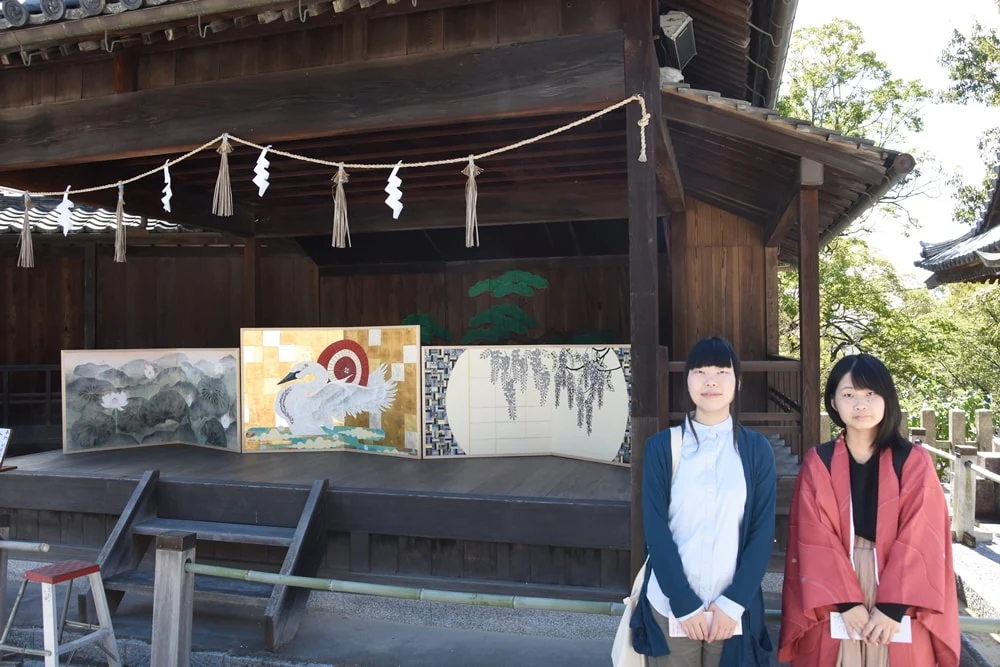
As someone who paints, I think that everyone must feel like painting on a folding screen.
I think the students wanted the freedom to each paint a screen on their own.
But most of the work ended up being done in groups.
In fact, many said, “I wanted to paint one by myself.”
Some also said they would like to paint one again if they had the chance.
- The tradition of folding screens
- Hands-on experience with the traditional format of folding screens
An opportunity like this is rare.
I don’t think students are the only ones who would like to try painting one if they had the opportunity.
After the Interview
In our lives today, we rarely get the chance to see or touch a folding screen.
And we probably won’t ever make one ourselves.
I realized that the students at Kurashiki University of Science and the Arts had a truly valuable experience.
I hope they will take part every year—not only in the 2018 Byobu Festival, but in 2019 and the years after that, too.
Articles about the Kurashiki Byobu Festival
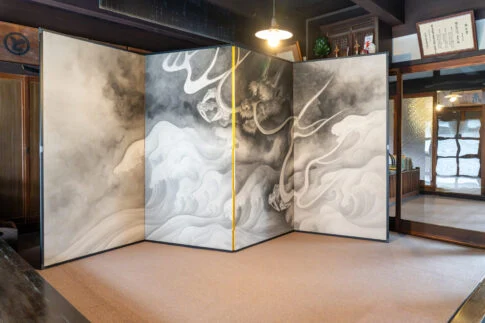
Kurashiki Byobu Festival details
| Name | Kurashiki Byobu Festival |
|---|---|
| Dates | October 20 (Sat) and 21 (Sun), 2018 [Ended] 10:00 a.m. to 5:00 p.m. *Held in conjunction with Achi Shrine’s autumn grand festival |
| Location | Honmachi and Higashimachi districts, and the area around the Bikan Historical Area, Kurashiki City |
| Admission (tax included) | Free |
| Website | Kurashiki Byobu Festival | Kurashiki Tourism WEB |

What would you like to know about Kurashiki?
Enter a word to search articles on this site