Interview with Hitomi Habagishi, third-generation owner of Miyoshi Tatami Shop
Hitomi Habagishi, owner of Miyoshi Tatami Shop, is one of the few women craftspeople in the tatami industry.
We asked Habagishi about her thoughts and the care she puts into her work.
How the business began

Please tell us about when Miyoshi Tatami Shop first opened.
Habagishi (name omitted hereafter)
My father originally worked as a tatami craftsman near Mizushima. He later went independent and started this shop in 1970.
When he opened the shop here, this area was surrounded by factories, and it was a time when many people, including people from outside the prefecture, were moving here. Houses, apartments, and company housing were being built one after another where there had once been nothing but rice fields.
In 1979, when I was 15, my father died of an illness, and my mother took over the shop as its second-generation owner. At the time, she apparently employed two main craftspeople and two or three day laborers.
I worked at a bank for about seven years, but left when I got married and became pregnant.
Around 1989, I considered working part-time, but thought it would be better to learn how to operate the machinery, so I began helping out at Miyoshi Tatami Shop.
In 2015, my mother said she wanted to close the shop because of her age, so I took over the business.
My mother now supports me.
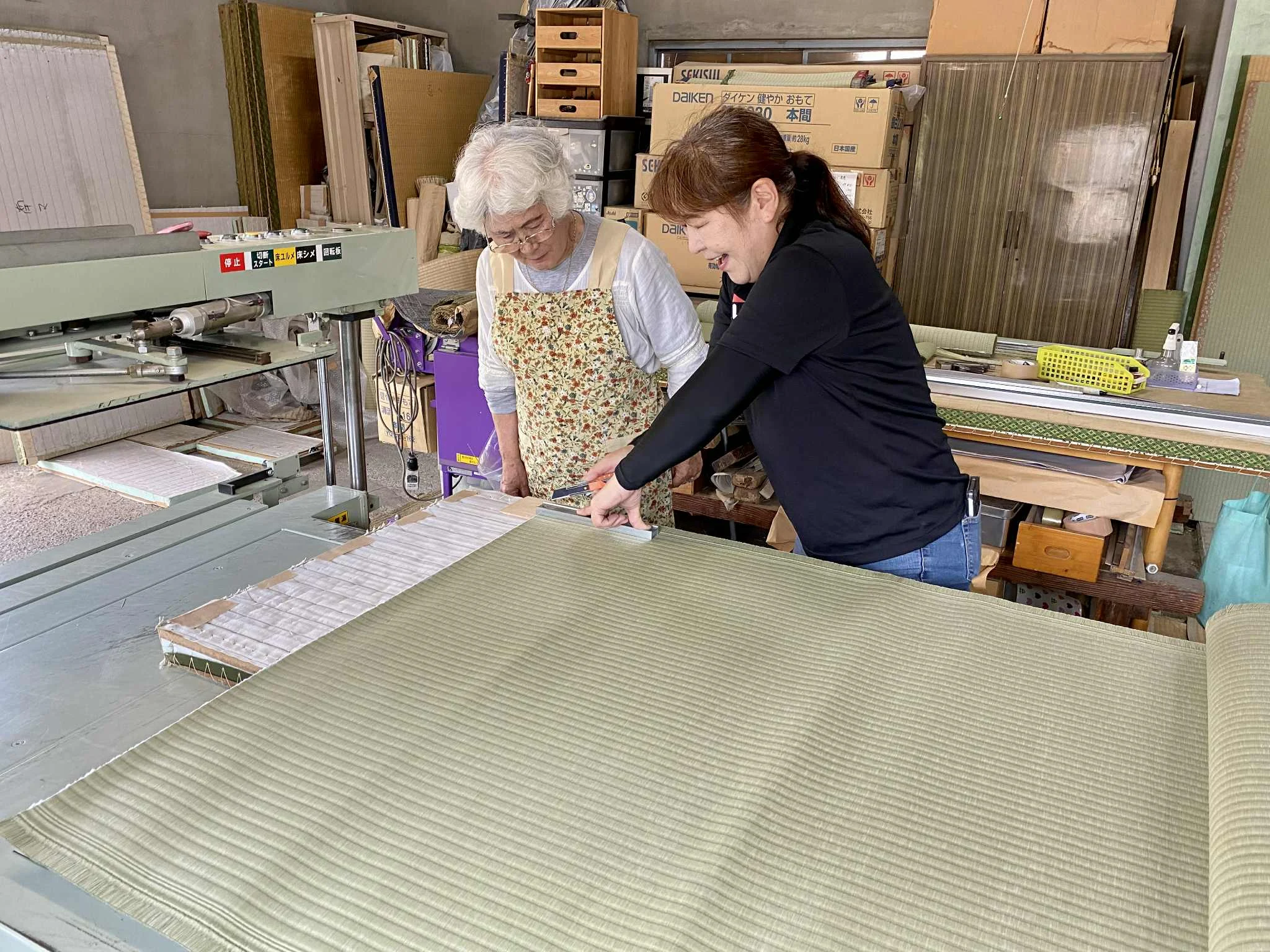
Two women working together

Is there anything you particularly value or keep in mind?
Habagishi
I try to keep in mind, “The customer comes first, and so does the work.”
Working with tatami is more physically demanding than people might imagine.
Tatami mats are heavy, so carrying and turning them over is hard work. Although the industry has many male craftspeople, my mother and I are the two women who do the work at our shop.
We strive to provide attentive service and advice from the customer’s perspective.

For example, when we bring tatami mats into a room, we often need to move large pieces of furniture or a Buddhist altar.
Some companies charge extra for this, but many of our customers are elderly, so we move their furniture free of charge, even if it takes time.
As for advice about tatami, when we visit homes where people have asked us about a problem, we have sometimes found that the floorboards or flooring beneath the tatami were damaged by pests such as termites.
In such cases, we explain the cause and share tips on caring for tatami. If the customer wishes, we can also introduce them to a carpenter we know.
We have continued to work this way, and perhaps these efforts have paid off: thanks to word of mouth, our business has grown, and we still receive a steady stream of requests.
Changes in demand for tatami

Have you noticed changes in demand for tatami compared with the past?
Habagishi
Today, tatami repairs, such as replacing the woven rush surface, account for 70% of our requests, while new mats make up about 30%. In my father’s day, the proportions were the other way around.
We have also been receiving more requests for borderless tatami. In addition to the traditional green mats made with rush, there are now mats in a wide range of colors, as well as mats made with washi paper.
There are more varieties than before, and more households are incorporating tatami as stylish interior decor.

Is there an episode that left a strong impression on you?
Habagishi
I was moved by the story of a customer who came to ask us about tatami.
She could never forget how her grandmother, who used to enjoy tea ceremonies, had said while she was alive that “the tatami is hard,” and she wanted to replace it with something a little softer.
It made me realize how deeply tatami is rooted in the hearts of Japanese people, and how people’s feelings are connected through their homes.
Compared with hardwood floors, tatami is safe for babies to crawl on, and if an older person falls, they are less likely to get hurt and any injuries are likely to be less severe.
When my son built a house, he made a four-and-a-half-mat tatami room, where he changed his child’s diapers and put them down for naps.

Preserving tatami culture
Could you tell us about your goals and plans for the future?
Habagishi
If tatami is not properly cared for, mold grows, and mites appear. This can even cause asthma. As a result, people sometimes say that tatami itself is bad.
As my mother often says, “Tatami is a living thing.”
Tatami can be used for a long time if it is properly cared for.
I want to continue working carefully, taking measures to prevent mold and pests and, when repairing tatami, wiping down even the unseen area beneath the woven rush surface.
I feel that more people are growing up without knowing tatami, and that tatami itself is becoming a rarity. Tatami is a traditional part of Japanese culture, and I want to preserve it for the future.
As a shop, we will also keep working through trial and error to offer products that meet the needs of our customers and the times, while keeping up with advances in technology.

Do you have a message for our readers?
Habagishi
If you have tatami that you have been using for many years, please consider replacing just the woven rush surface. It will not only look cleaner, but also improve hygiene.
We do not particularly set out to “make a lasting impression,” but we strive to work carefully and never cut corners, even on parts that cannot be seen.
Please feel free to contact us, even if you only have questions about materials or prices.
I hope you will remember that there are women tatami craftspeople who are preserving Japan’s traditional culture while also taking on new challenges, and think of Miyoshi Tatami Shop when you have questions about tatami.

From the Writer
This interview made us newly aware of how tatami, a traditional part of Japanese culture, is declining as lifestyles change. Perhaps in a few decades, tatami will be seen only in tatami museums, like a traditional artifact.
At Miyoshi Tatami Shop, we felt that the shop’s greatest appeal is not only its ability to offer new products that meet the needs of the times, but also the owner’s thoughtful nature and the care she puts into her work.
If you have any concerns or questions about tatami, please get in touch with Miyoshi Tatami Shop.
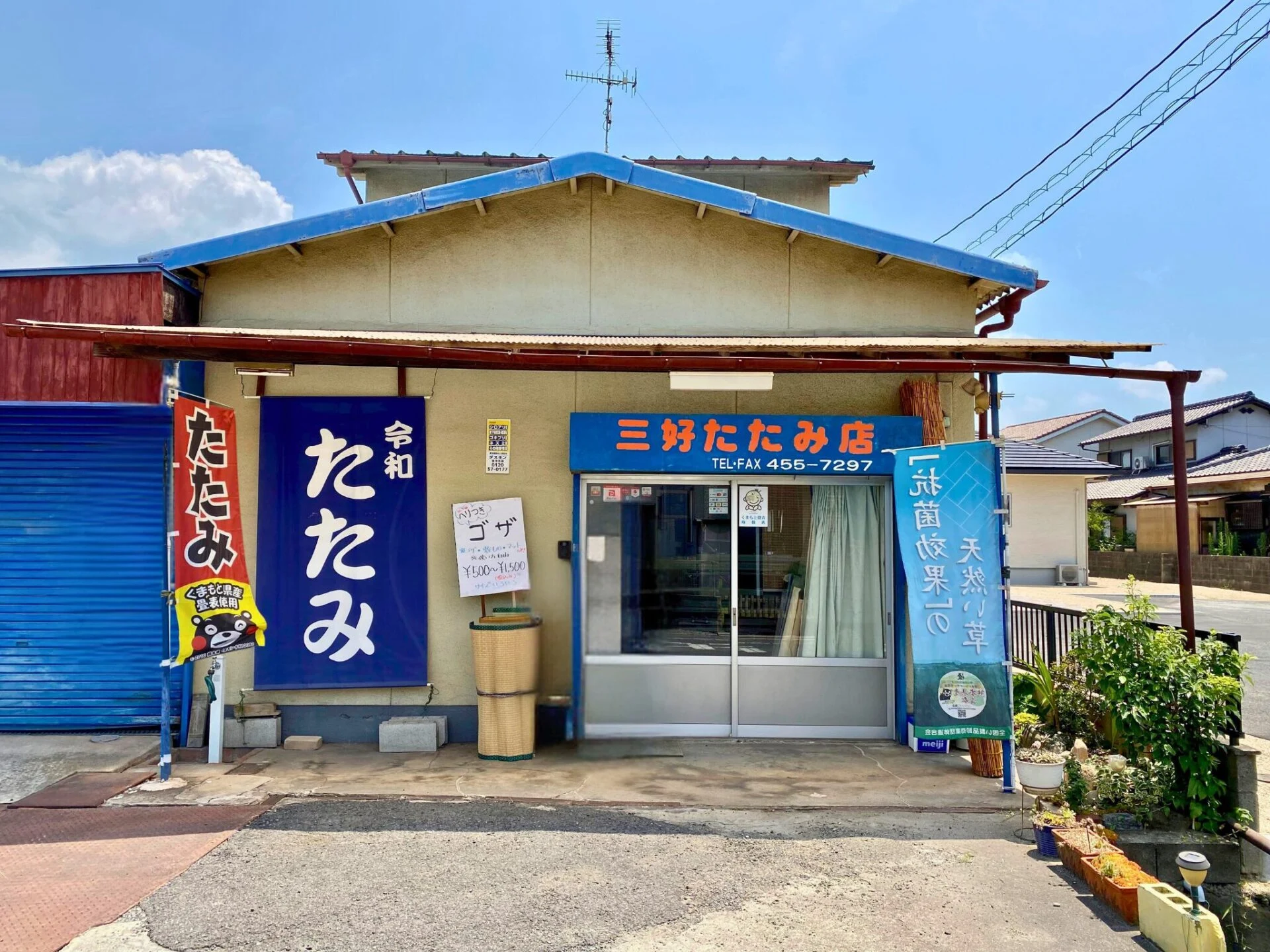
Miyoshi Tatami Shop Information
| Name | Miyoshi Tatami Shop |
|---|---|
| Address | 4-8-9 Nakase, Kurashiki City, Okayama Prefecture |
| Contact | 086-455-7297 |
| Website | Miyoshi Tatami Shop |




What would you like to know about Kurashiki?
Enter a search term to find articles on this site