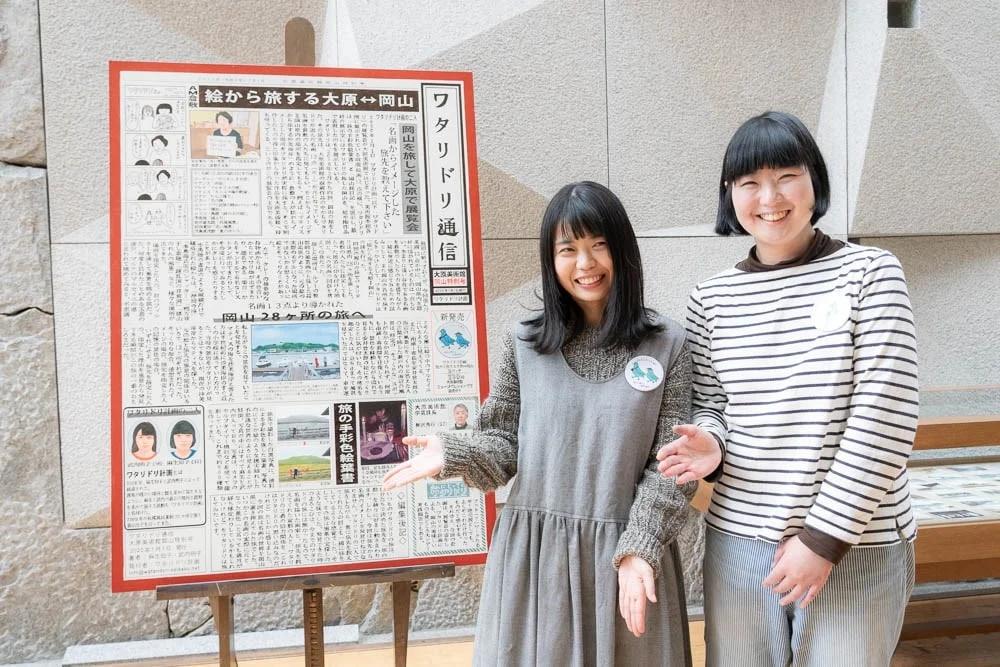
Interview with Tomoko Aso and Akiko Takeuchi
We spoke with Tomoko Aso and Akiko Takeuchi.

Why did you decide to travel around Japan?
Aso
Until I was a student, my world was limited to the Kanto area.
When I visited Takeuchi’s hometown of Kumamoto, the scenery was completely different. The things sold at supermarkets and even the trains were all different! I was amazed by that.
I wanted to see places outside the area where I lived.
Why did you travel, Takeuchi?
Takeuchi
Aso said, “Let’s travel,” so I said, “Sure.” (laughs)
At first, we planned to travel for about a year. The Wataridori Project didn’t start out as a project that had been carefully planned from the beginning.
Aso
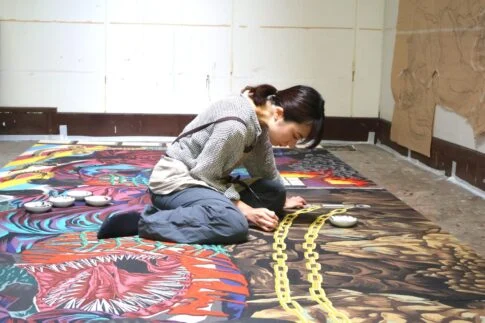
It began with the desire to travel, to paint while we were there if we were going to travel anyway, and to hold exhibitions in the places we visited.
What kinds of exhibitions have you held so far?
Aso
We’ve held exhibitions that “could only be done in that place.”
For example, at an art museum with tatami flooring, we made cushions dyed using the wax-resist technique that could be used to play sugoroku.
Takeuchi
We’ve also made karuta cards based on the local area.

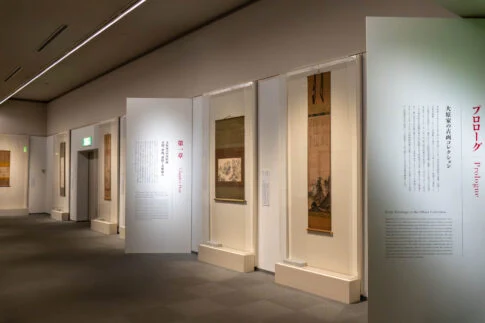
Why did the exhibition at the Ohara Museum of Art take the form of choosing travel destinations by looking at paintings?
Takeuchi
Because the Ohara Museum of Art has a wonderful collection.
We wondered if we could do something with these paintings, and decided to let people from Okayama choose our destinations.
Aso
Because the works at the Ohara Museum of Art are so prestigious, people might feel they are distant and inaccessible.
We thought that associating the paintings with places in Okayama might make them feel more familiar, or let people experience them in a different way than before.
We also hoped people might see places in a new way—for example, if someone told you that a familiar landscape was in southern France, you might somehow start to feel that way about it.

Are there any places you feel particularly attached to?
Aso
I’ve been supported by Yubi Kobo, an art space in Tamashima, Kurashiki City, and I love Tamashima—it feels like a second home.

It was fresh and fun to see familiar Tamashima as southern France or as Yasui Sotaro.

Was there anything unique to this project?
Takeuchi
Usually, the two of us decide where to travel, but this time it was interesting to have a vague destination filtered through the perspective of the person who suggested it.
It felt as if that person was traveling with us, too.
Aso
We could sense what was in that person’s mind.
Takeuchi
It was also fun to be taken to places we wouldn’t have gone to on our own.
We ate all kinds of things. We had Chiyagyu Beef and somen, and went strawberry picking.
Aso
We don’t usually go to restaurants that require reservations, but we had dinner at a lovely candlelit restaurant.
The suggestions we received made our trip richer.
Takeuchi
As I looked for scenery while putting myself in the painter’s shoes, I grew more attached to the masterpieces.

How have visitors responded to the exhibition?
Aso
I thought it might be hard to understand, but I’m surprised that quite a lot of people read the text and understand it.
Takeuchi
Some people said, “I realized I could look at it however I wanted.”
There’s no right or wrong in what you feel, because you’re free to feel whatever you like.
Aso
You can look at Lee Ufan and think of somen noodles.

How do you feel now that the exhibition has opened?
Takeuchi
I’m happy and moved.
Aso
I’m happy to be able to hold an exhibition alongside 13 painters.
Takeuchi
You don’t get an opportunity like this every day.

Compare the masterpieces with Okayama
We enjoyed the exhibition with a sense of excitement, as if we were traveling and wondering, “Where will we go next?”
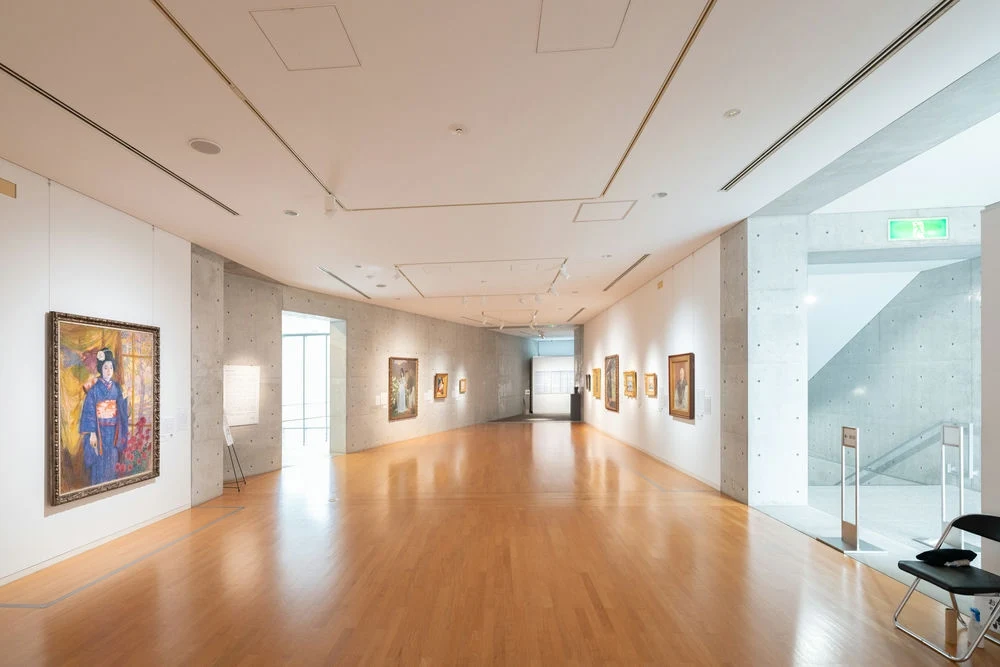
Twenty-eight places in Okayama visited through 13 masterpieces.
For people who know Okayama well, familiar scenery may look fresh, while those who don’t know the area well may find more places they want to visit.
We hope you’ll compare the masterpieces with Okayama with an open mind.
Articles about the Ohara Museum of Art
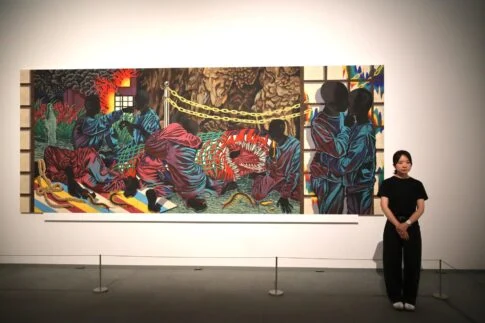
Ohara Museum of Art AM Kurashiki Vol. 16: Wataridori Project—Traveling from Paintings, Ohara ⇔ Okayama—Details
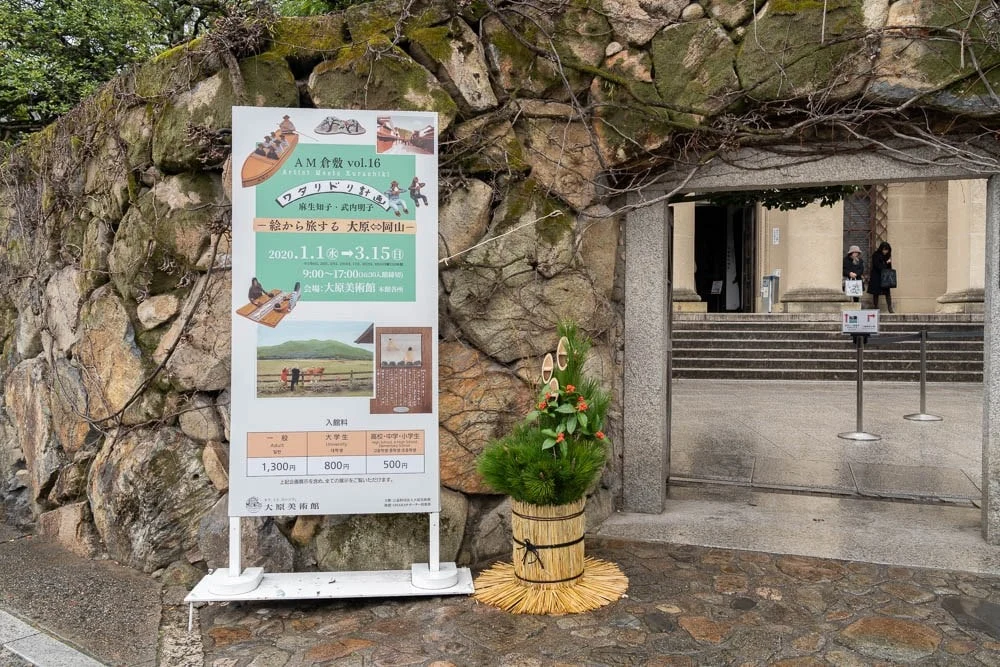
| Name | Ohara Museum of Art AM Kurashiki Vol. 16: Wataridori Project—Traveling from Paintings, Ohara ⇔ Okayama— |
|---|---|
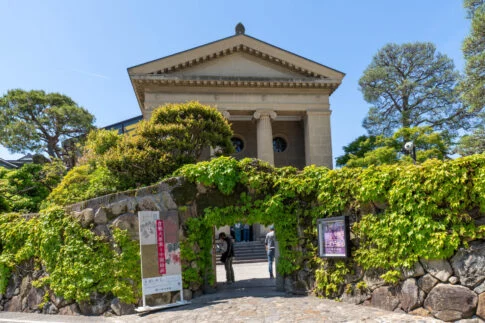
| Location | 1-1-15 Chuo, Kurashiki City, Okayama Prefecture |
| Contact | 086-422-0005 |
| Parking | None |
| Opening hours | January 1–March 15, 2020 (Wednesday–Sunday) 9:00 a.m.–5:00 p.m. (admission until 4:30 p.m.) |
| Closed | Closure days during the exhibition (all Mondays) January 6, 20, 27; February 3, 17; March 2, 9 |
| Admission (tax included) | Adults: ¥1,300 University students: ¥800 High school, junior high school, and elementary school students: ¥500 *Group rates available for groups of 20 or more |
| Payment methods |
|
| Reservations | Not available |
| Smoking | No smoking (smoking permitted only in designated areas) |
| Restrooms | Western-style toilets, Japanese-style toilets, accessible toilets |
| Childcare | Nursing room, diaper-changing tables, stroller rental The nursing room is in the Craft Museum Diaper-changing tables are on the second floor of the Main Building and in the Craft Museum |
| Accessibility | Ramps, accessible toilets, elevator, wheelchair rental |
| Website | AM Kurashiki Vol. 16: Wataridori Project—Traveling from Paintings, Ohara ⇔ Okayama— | Ohara Museum of Art |

What would you like to know about Kurashiki?
Enter a search term to find articles on this site