
Do you like ohagi (botamochi)?
You might associate it with the image of "offerings for the equinox," but it is a familiar item that can even be found in nearby supermarkets.
I love sweets, so whenever I see ohagi in a store, I can't help but pick it up.
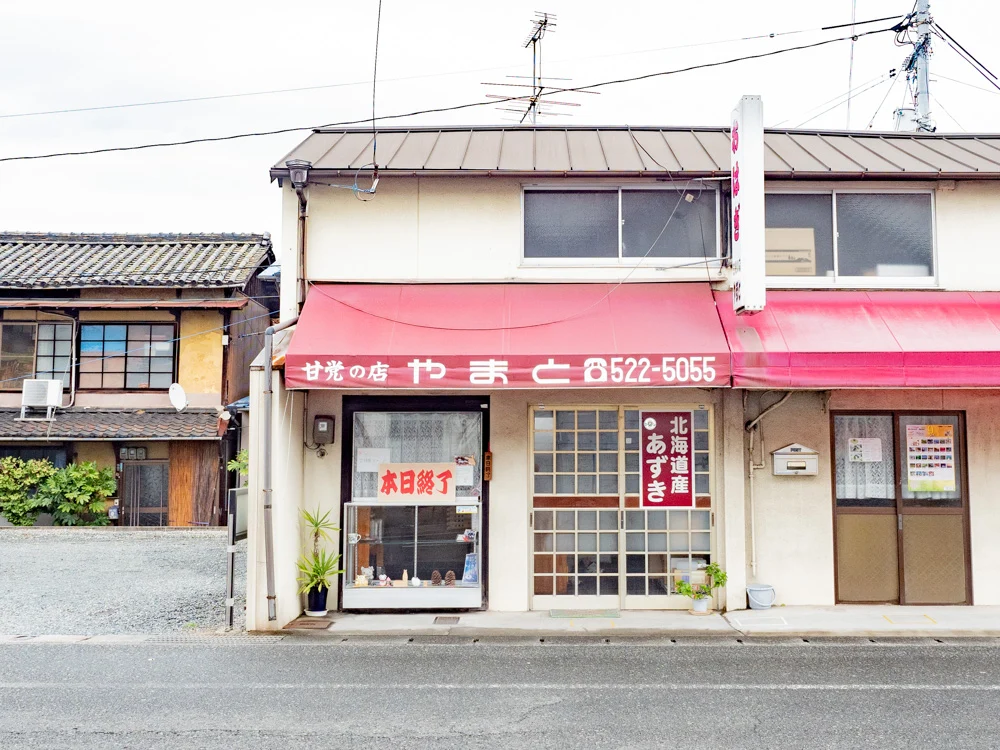
There is a store that is irresistible for sweet lovers and ohagi fans, located in the western part of Kurashiki City, in the Tamashima area.
Its name is Amanato no Mise Yamato (hereafter, Yamato).
The phrase "Amanato no Mise" at the beginning of the store name tells the story that it is a shop for sweet lovers.
Yamato is a long-established specialty store that has been making handmade ohagi for about 50 years.
Every day, there is a line in front of the store before it opens, and it often sells out in the morning, making it a popular shop.
Isn't it rare for a shop to have a line for ohagi?
When I hear that customers come from outside the prefecture or from quite far away, it makes me very curious.
I will introduce you to Yamato, a popular ohagi specialty store that sweet lovers should check out.
Yamato is a long-established ohagi specialty store founded in 1971
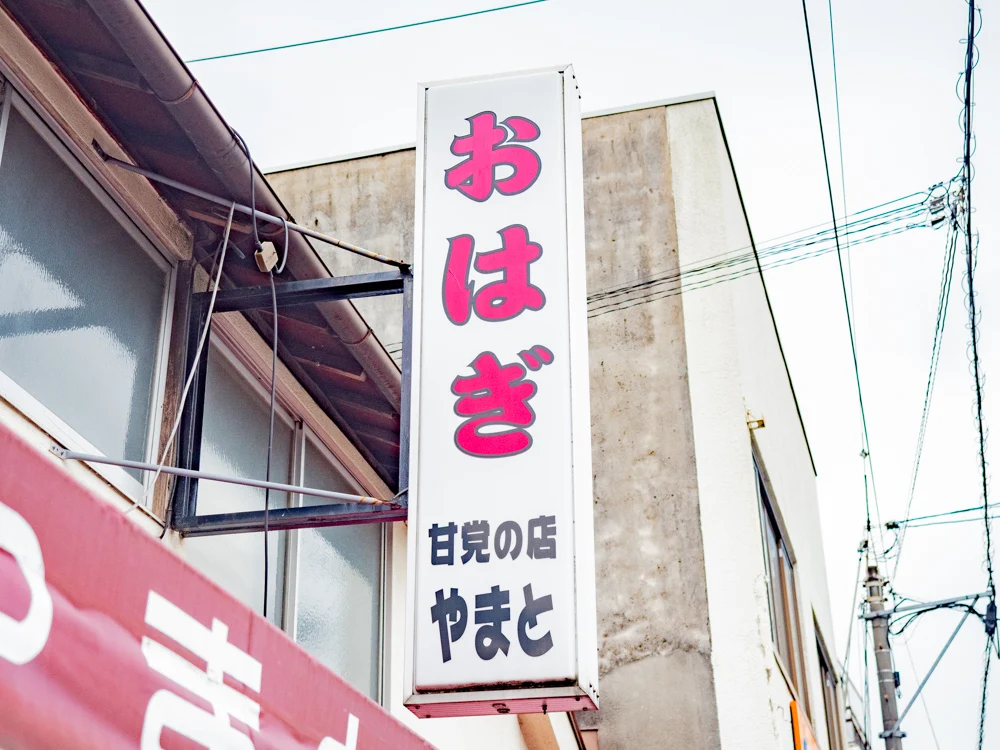
Yamato is a specialty store for ohagi.
The only product they handle is ohagi.
It was founded in 1971.
As of the time of the interview in 2020, it has a history of 49 years.
Yamato has been dedicated to ohagi for about 50 years.
Yamato is located in the central urban area of Tamashima.
Across from the store is Teshimaya, famous for its Tate sauce.
This area is also home to many popular shops, including Kimuraya, Chikuyama Bakery, Handmade Croquette Minamida Branch, Mizukawa Chinese Soba, and Takeda-ya.
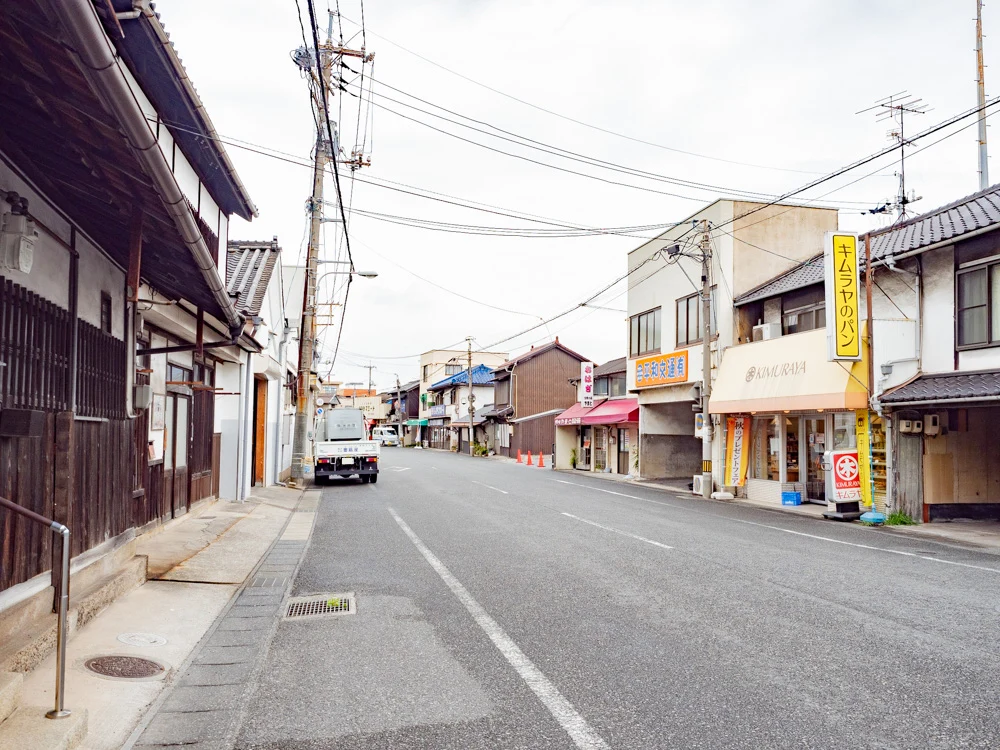
And, Yamato is one of the popular shops.
Many customers visit to seek out Yamato's ohagi.
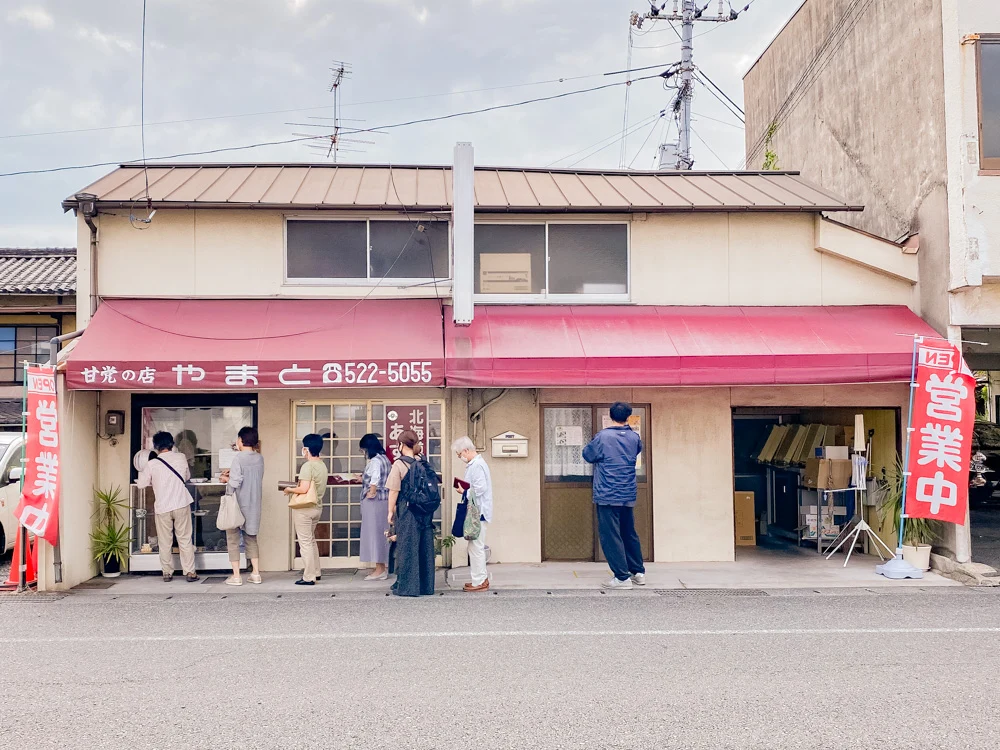
▼There is a line forming in front of the store even before it opens.
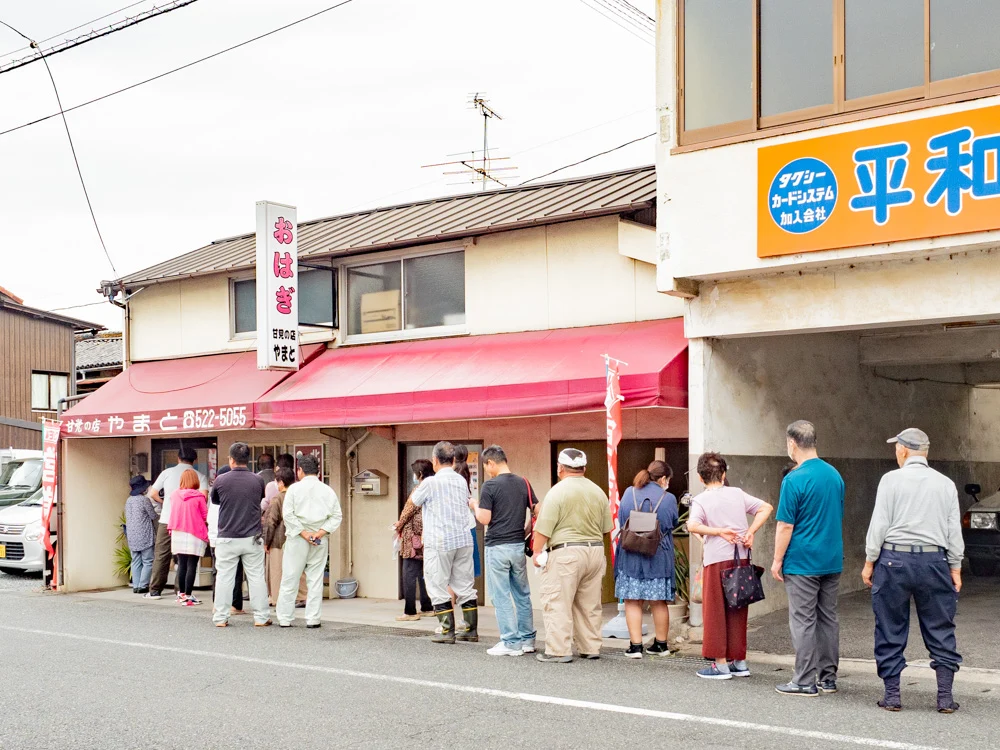
▼And it often sells out by noon.
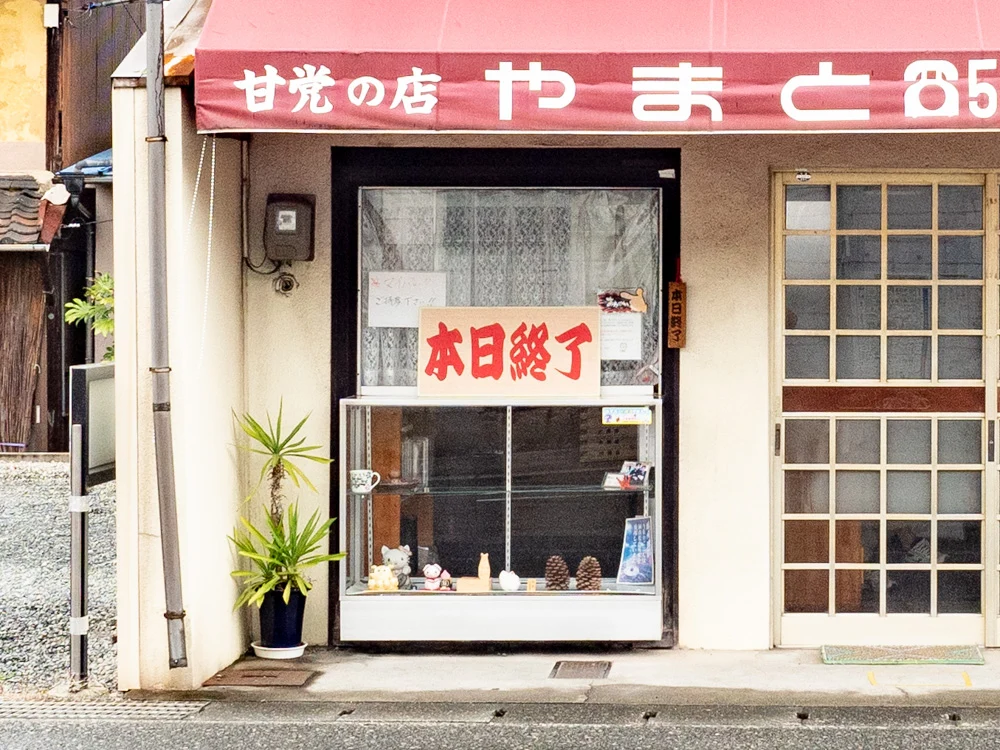
Ohagi is sold at the window on the left side of the store.
Even during the interview, ohagi was selling out rapidly one after another.
Some customers even purchase hundreds of pieces, which is surprising.
Ohagi cannot be reserved or held.
Ohagi is made by hand
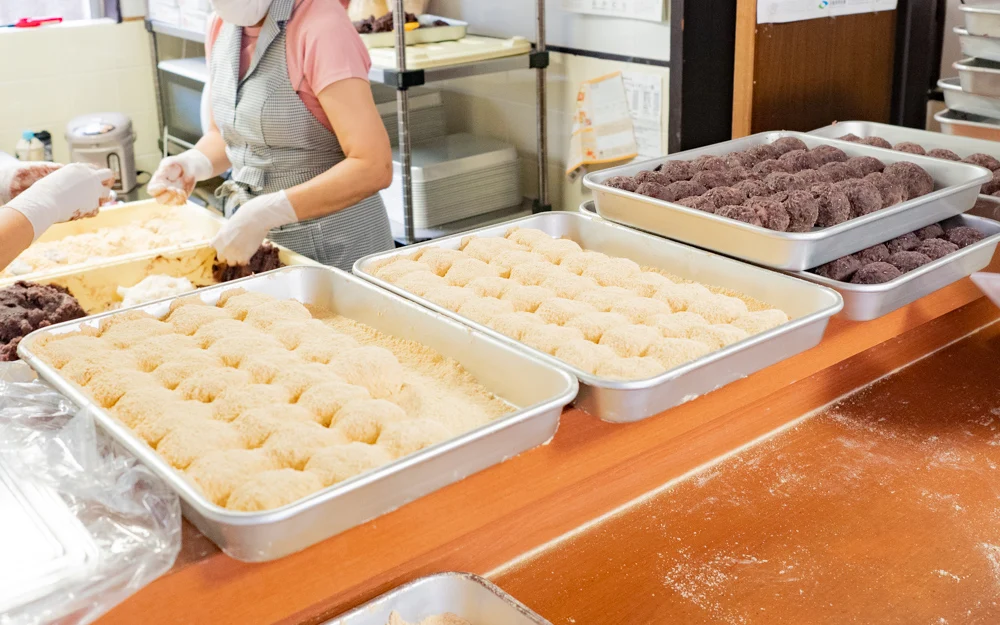
The process of making Yamato's ohagi is mainly done by hand.
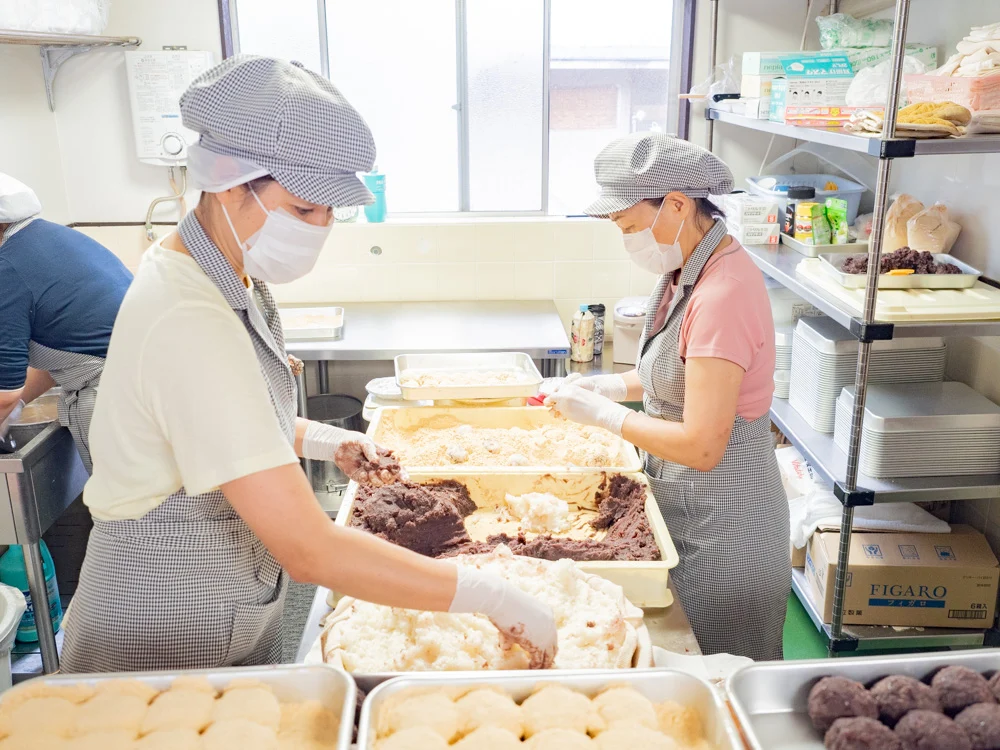
Therefore, there is a limit to the number of ohagi that can be made in a day.
Inside the store, the staff were quietly working.
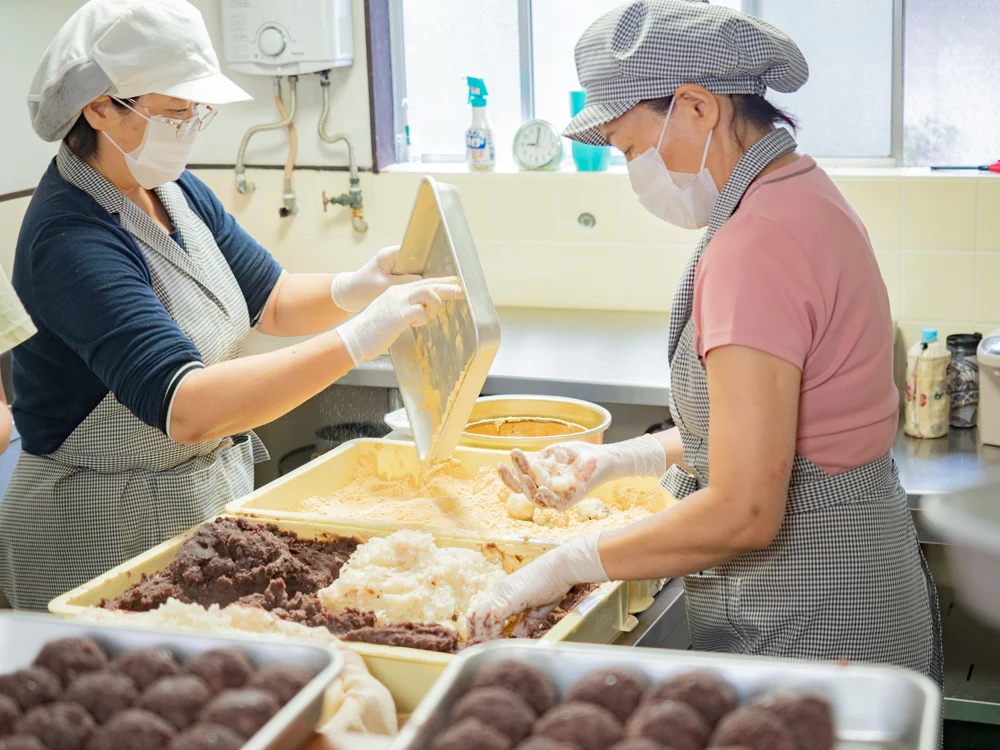
▼The ingredients for ohagi are glutinous rice and red beans.
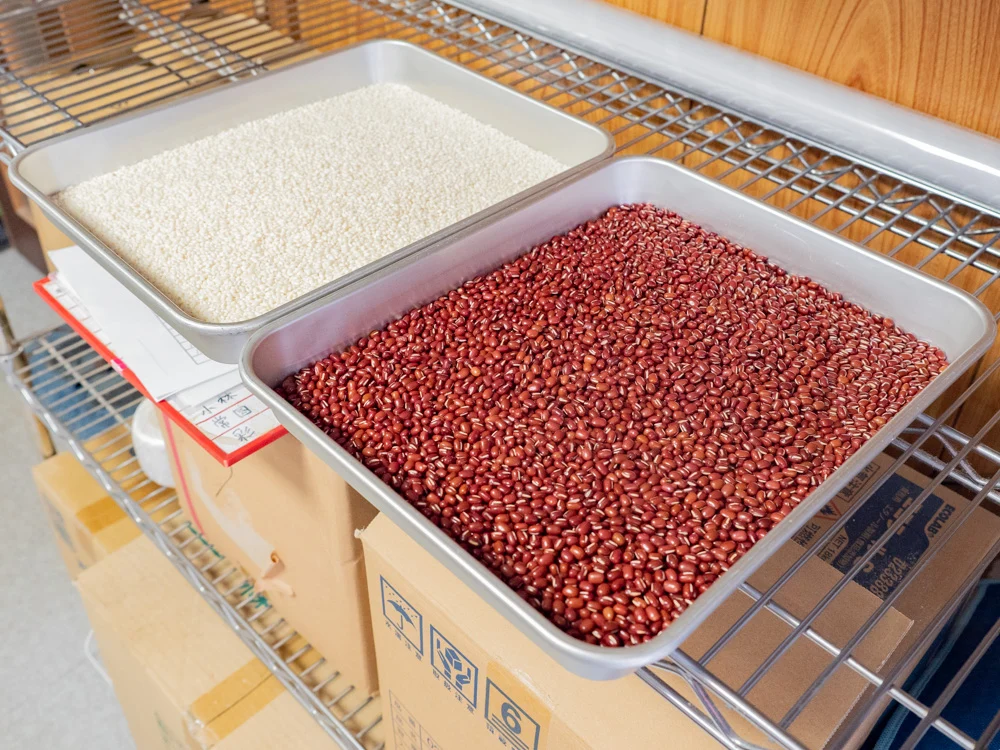
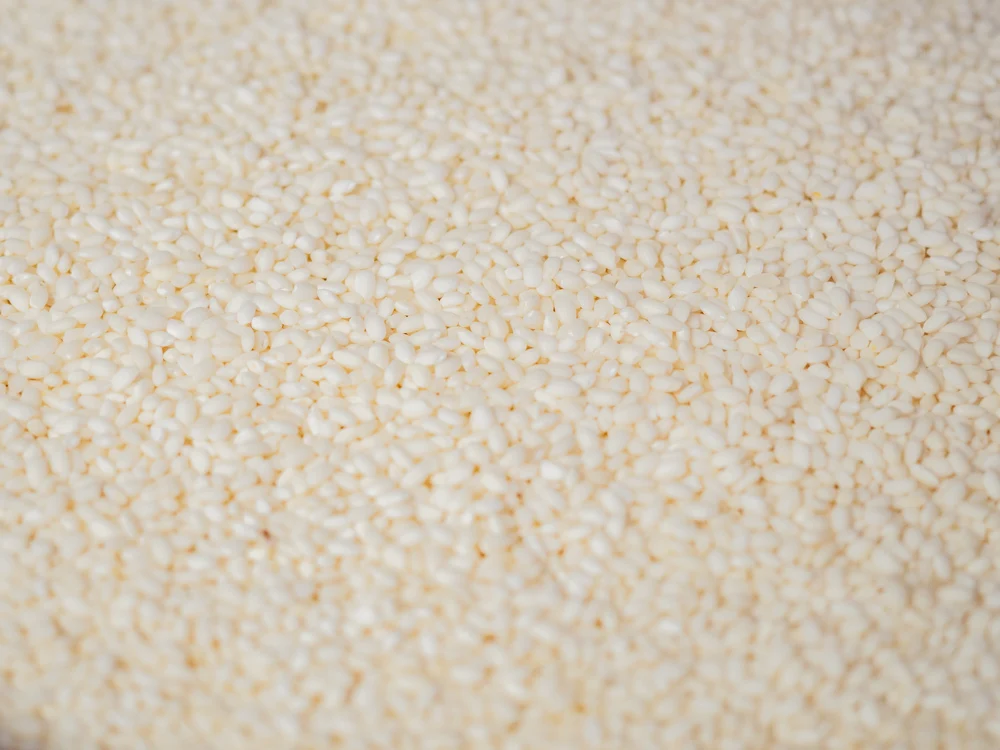
▼The glutinous rice is a blend centered around the Okayama Prefecture variety "Himeno."
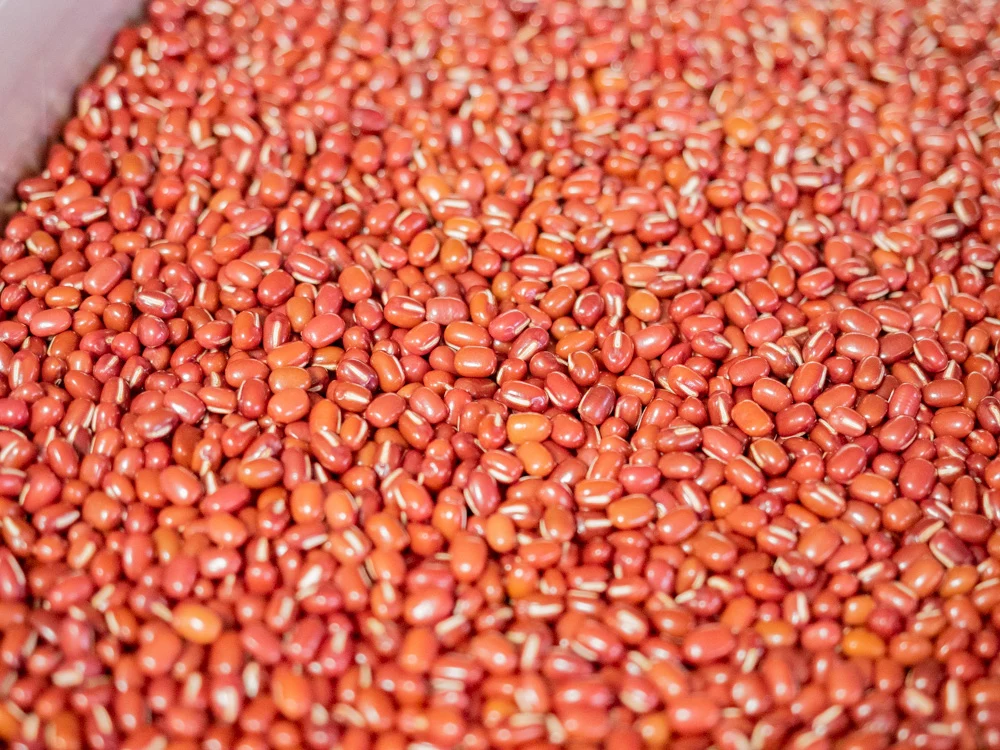
▼The red beans used are from Hokkaido.
In addition, the kinako is also domestically produced.
They start preparing around 3 a.m. every morning, steaming the glutinous rice and red beans.
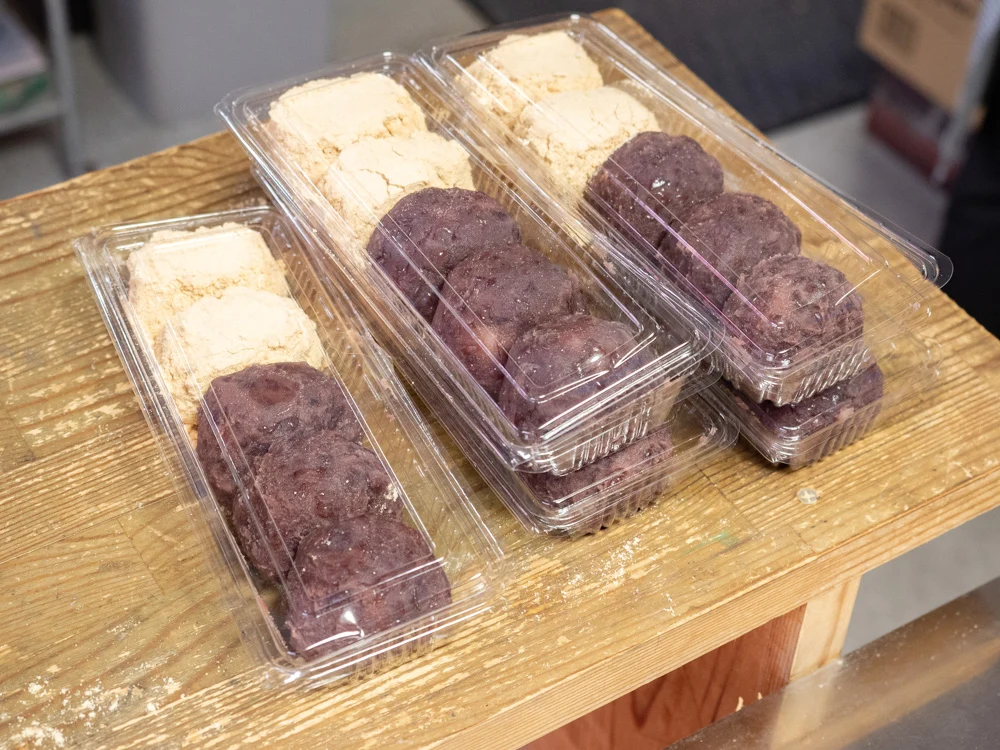
▼The process of packing the ordered ohagi is done with impressive skill.
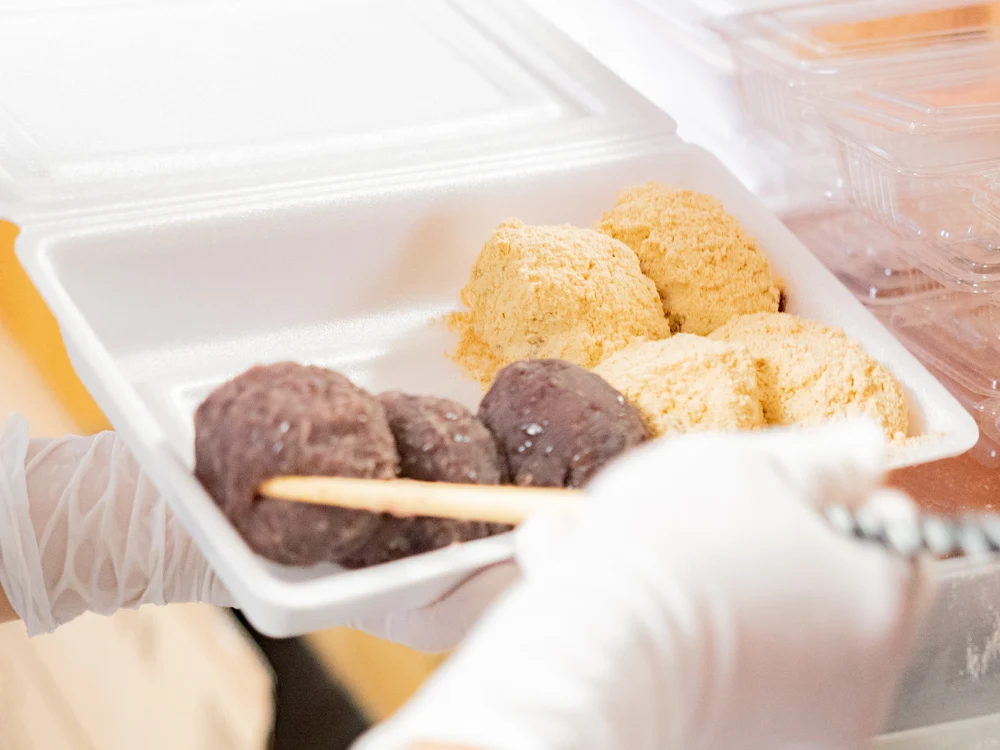
I was impressed by the excellent teamwork among the staff.
Ohagi is available in only two types: "anko" and "kinako"
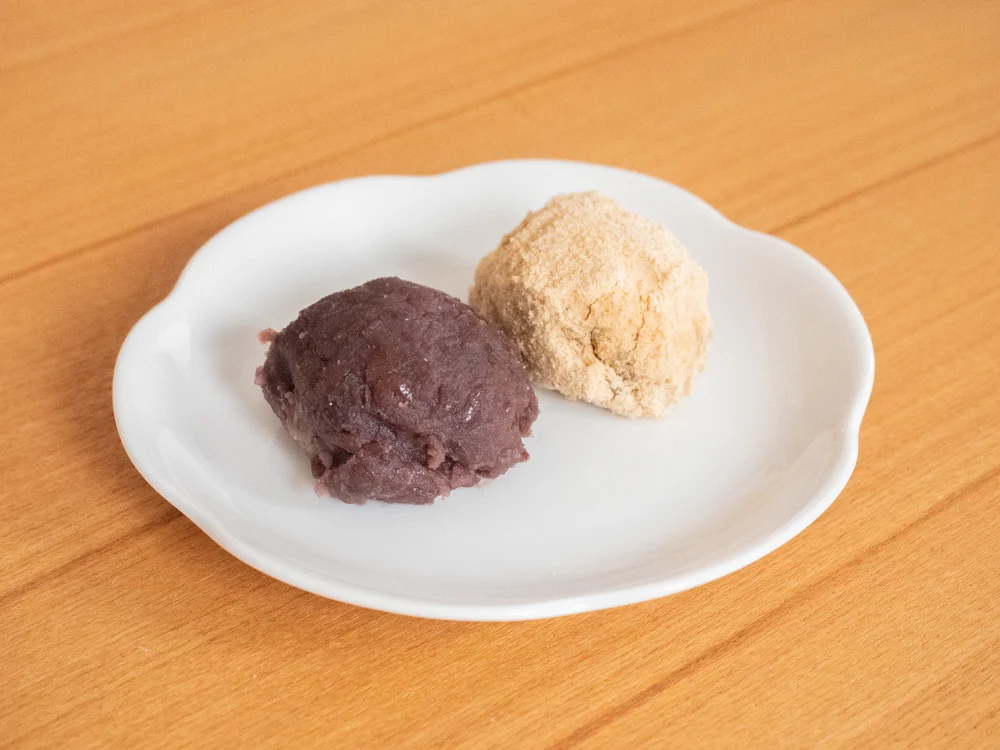
Information as of September 2020. Prices include tax.
When you think of ohagi, don't various types come to mind?
However, the ohagi handled by Yamato are available in only two types: anko and kinako.
Both are the quintessential types of ohagi.
Moreover, both anko and kinako are priced at just 70 yen (including tax) each.
You might end up buying a lot.
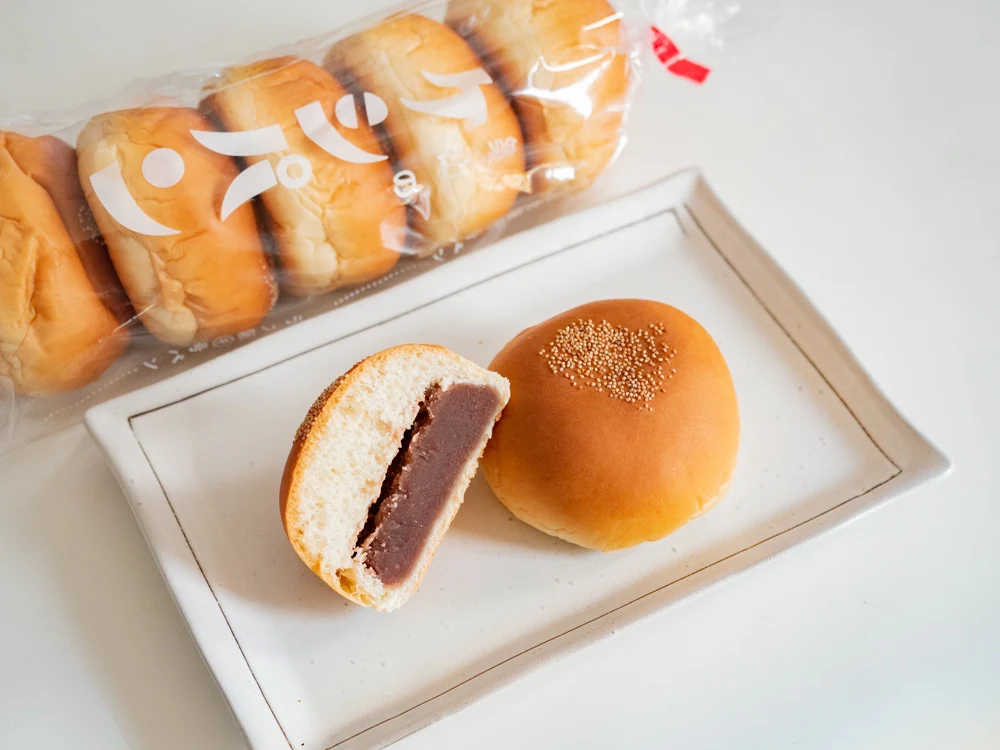
"Anko" has just the right sweetness with chunky red bean paste
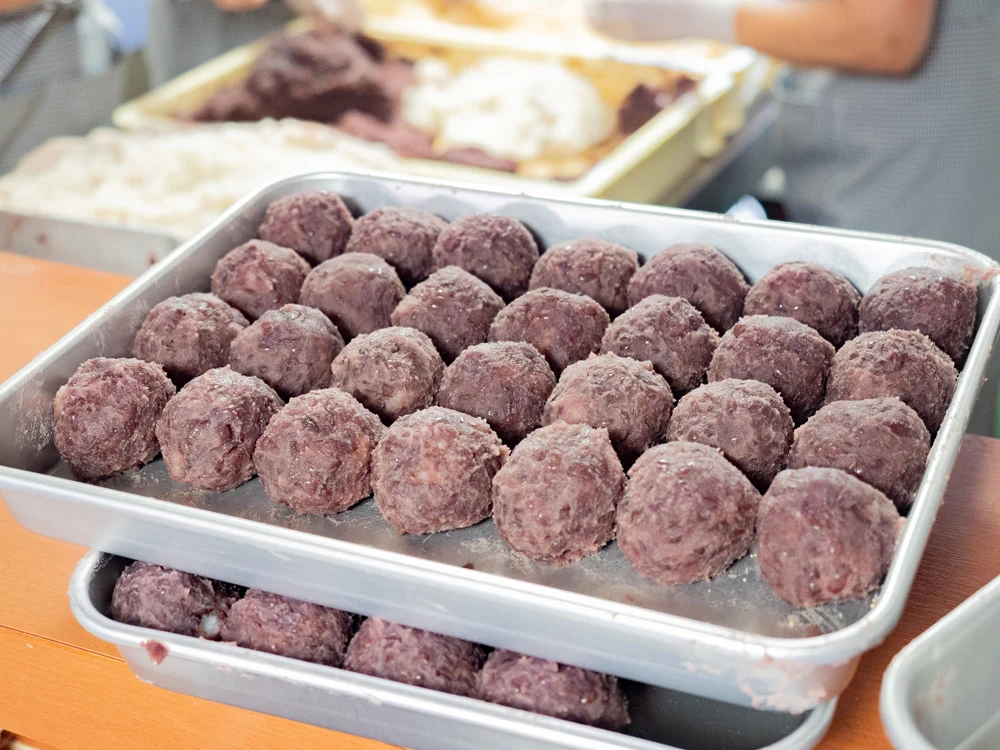
Yamato's ohagi is slightly smaller.
It's nice that the size is not too big, just about right.
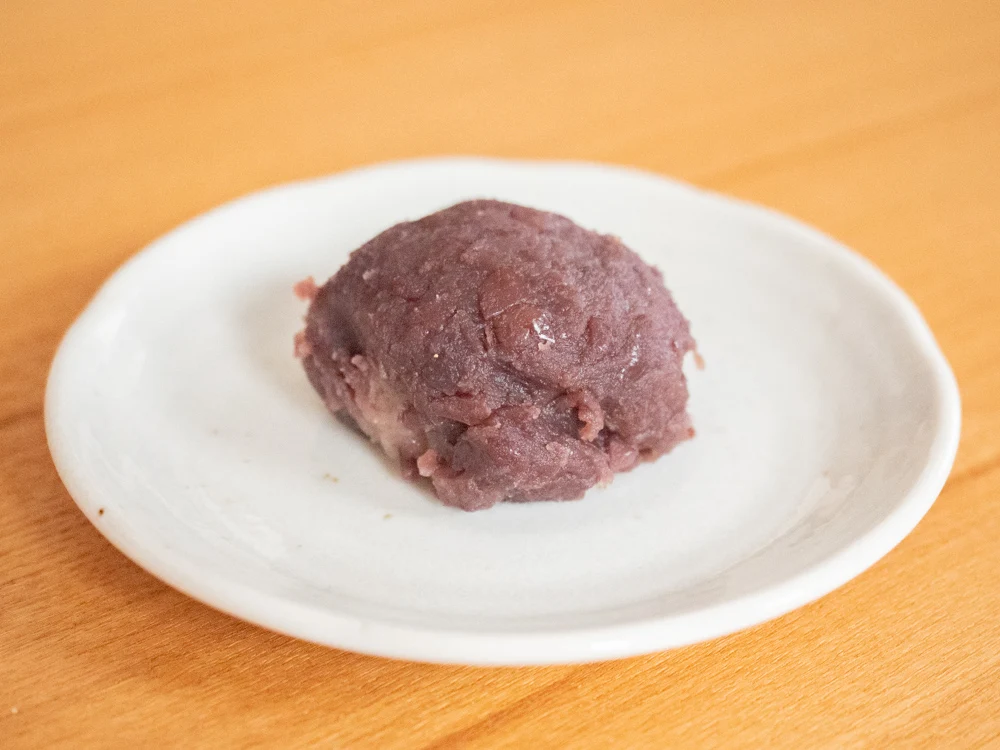
The red bean paste covering the surface is chunky red bean paste.
▼The sweet red bean paste is moist, with just the right amount of sweetness and a refined flavor.
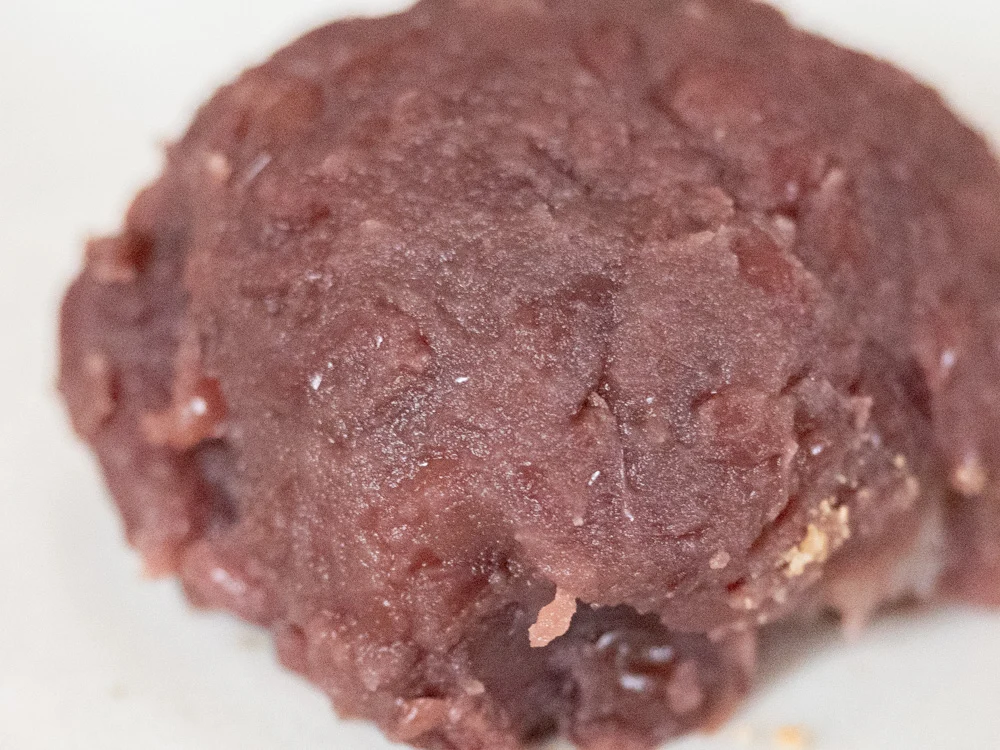
Not too sweet, yet with a solid sweetness that really hits the spot, it has a flavor characteristic of red bean paste.
The texture of the adzuki beans in the sweet red bean paste is just right, soft yet with a noticeable presence of the beans, creating an exquisite mouthfeel.
And you can also enjoy the flavor of the adzuki beans.
Under the sweet red bean paste, there is white mochi.
▼The mochi is half-mashed, with a moderate graininess and stickiness.
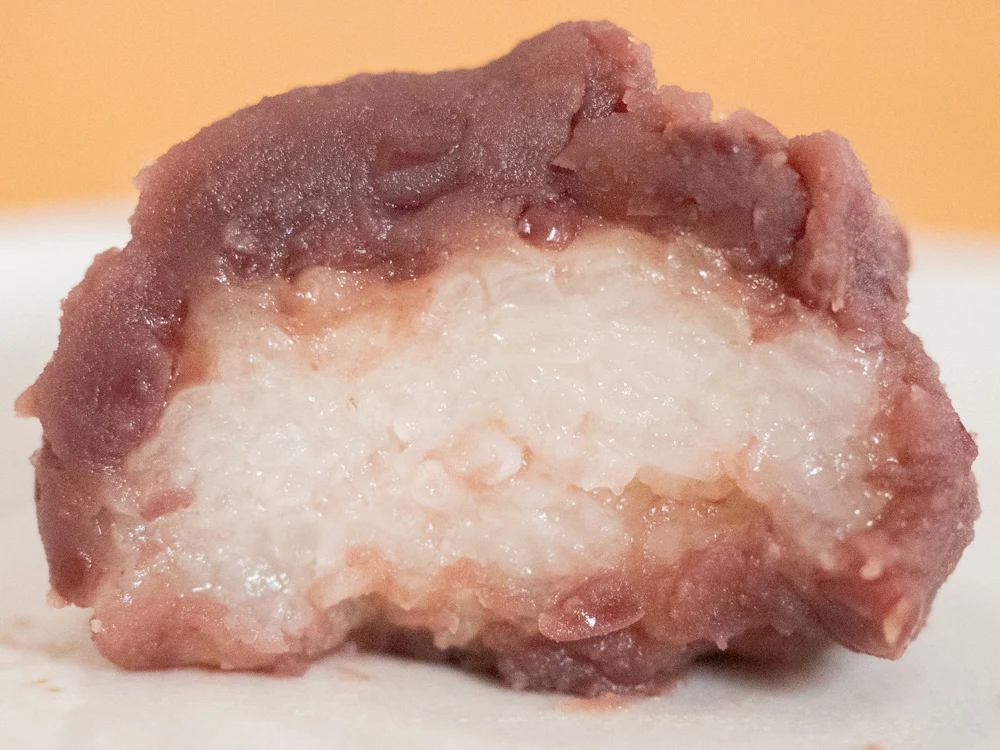
Half-mashed ohagi: a state where the grains of glutinous rice are left intact
After the sweetness of the sweet red bean paste, I felt the moist and chewy texture of the half-mashed mochi, along with a refreshing taste.
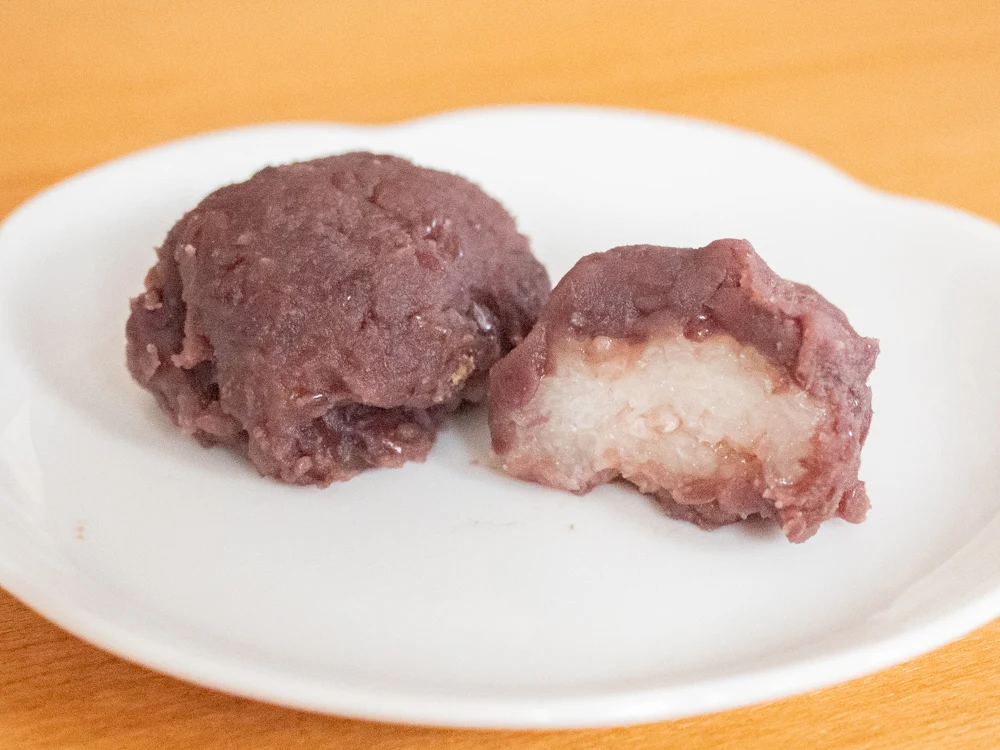
The harmony of the sweetness of the sweet red bean paste and the flavor of the mochi is exquisite.

"Anko" is popular among older people!
I thought that Yamato's "anko" ohagi is not too rich and easy to eat.
"Kinako" has sweet red bean paste inside
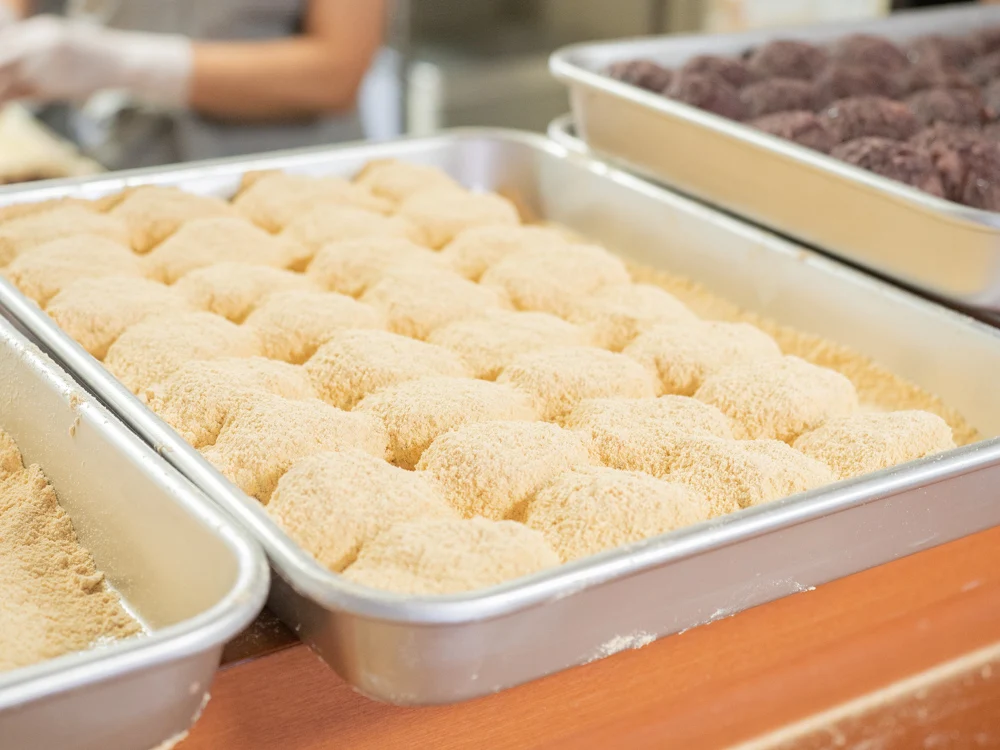
The size of the "kinako" is the same as that of the "anko".
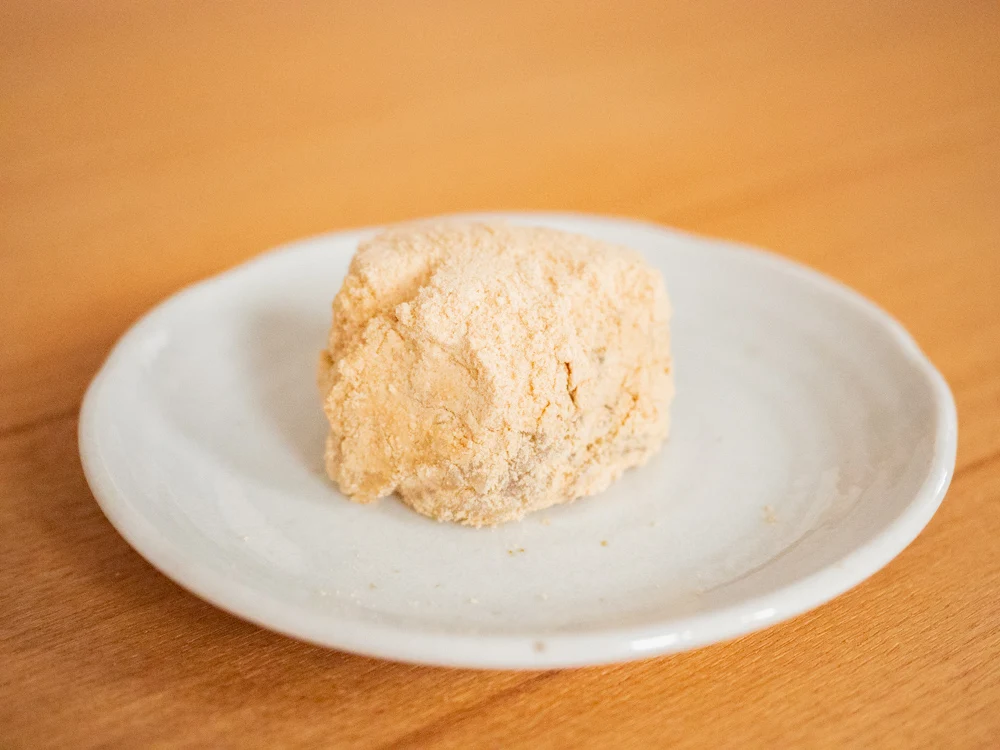
▼The surface is covered with a light yellow kinako.
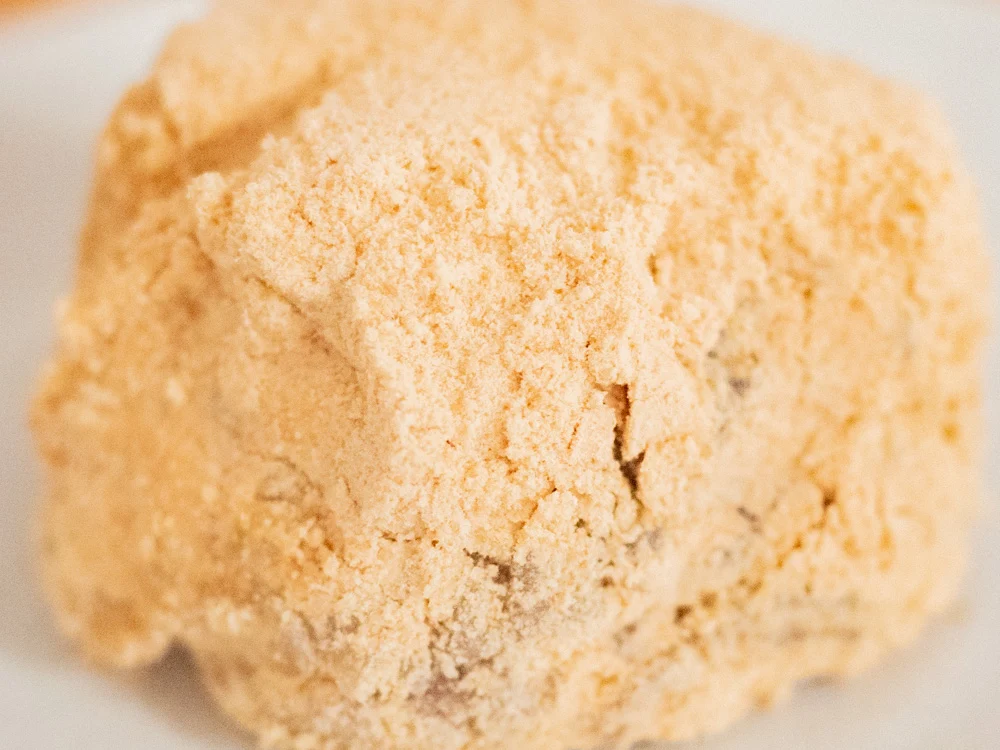
When you eat it, the ample kinako spreads fluffily in your mouth.
This kinako contains no sugar and is not sweet.
Therefore, you can enjoy the flavor of the kinako directly.
After the flavor of the kinako, you get to the mochi inside.
▼Inside the kinako mochi, there is, surprisingly, plenty of sweet red bean paste.
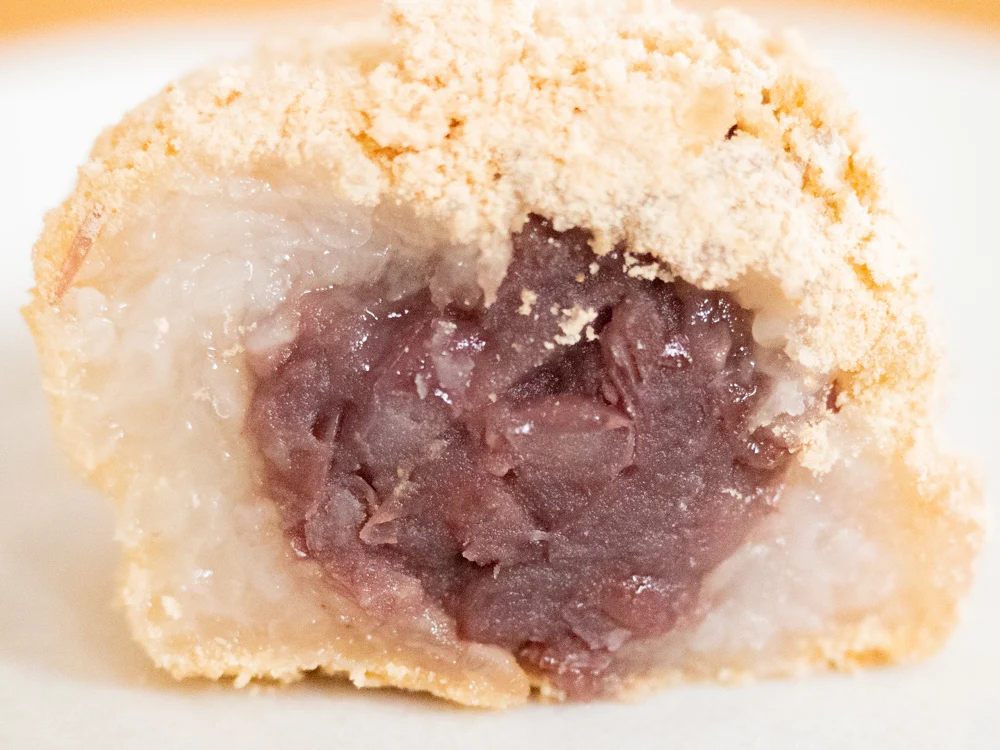
There was a difference in the mochi inside between the kinako and the anko.
The sweet red bean paste inside the kinako is the same as the sweet red bean paste used in the "anko".
When you eat the kinako ohagi, the flavors of the kinako, the texture and taste of the mochi, and the sweetness of the sweet red bean paste come together in a delightful harmony!
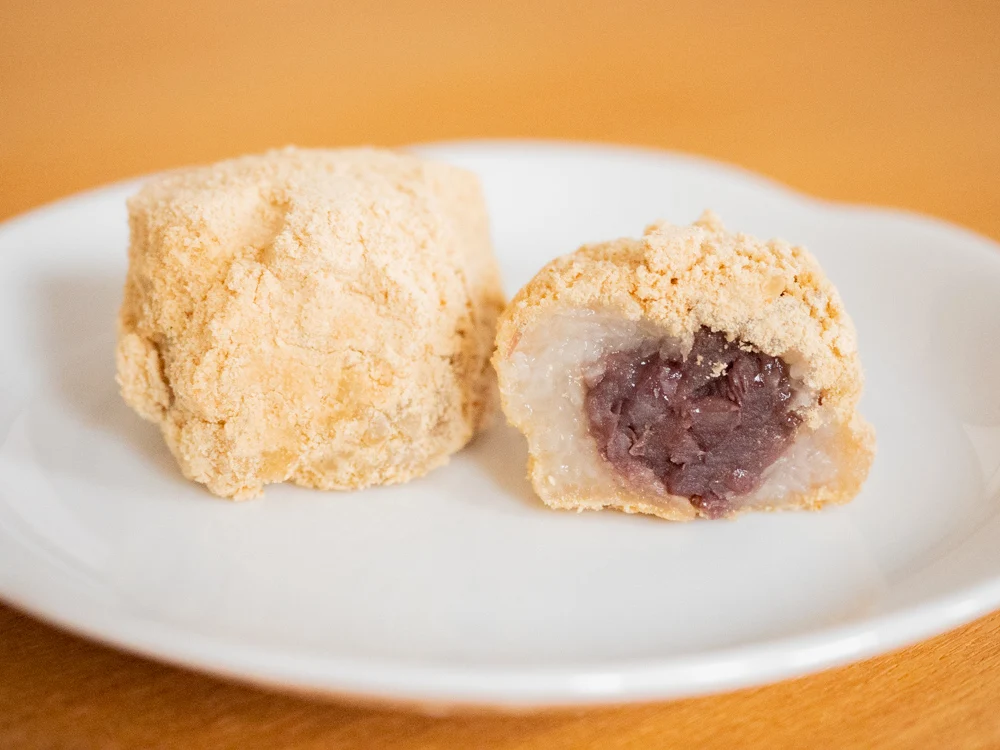
While "anko" is favored by older people, "kinako" is popular among younger people!
The kinako ohagi had a different deliciousness compared to the anko.
If I had to choose one, I would be quite torn and wouldn't be able to decide.
Yamato's ohagi, both anko and kinako, were so easy to eat and delicious that I found myself unconsciously popping the next one into my mouth after finishing the first.
For about 50 years, they have been making such delicious ohagi.
I interviewed the representative of the ohagi specialty store Yamato, Hirotani Masahiko.
Sweet Shop Yamato Data
| Name | Sweet Shop Yamato |
|---|---|
| Address | 1-8-14 Chuo-cho, Tamashima, Kurashiki City, Okayama Prefecture |
| Contact | 086-522-5055 |
| Parking | Available 7 cars |
| Business Hours | 9 AM - until sold out |
| Regular Holidays | Wednesday Closed on holidays as well |
| Payment Methods |
|
| Reservation Availability | No No reservations or holds |
| Seating | None |
| Smoking | Completely non-smoking |
| Restroom | No restroom |










The sweet red bean paste is, of course, homemade!