Japan Heritage Kurashiki Treasure Hunt: Answer Edition
Answer to Riddle 1
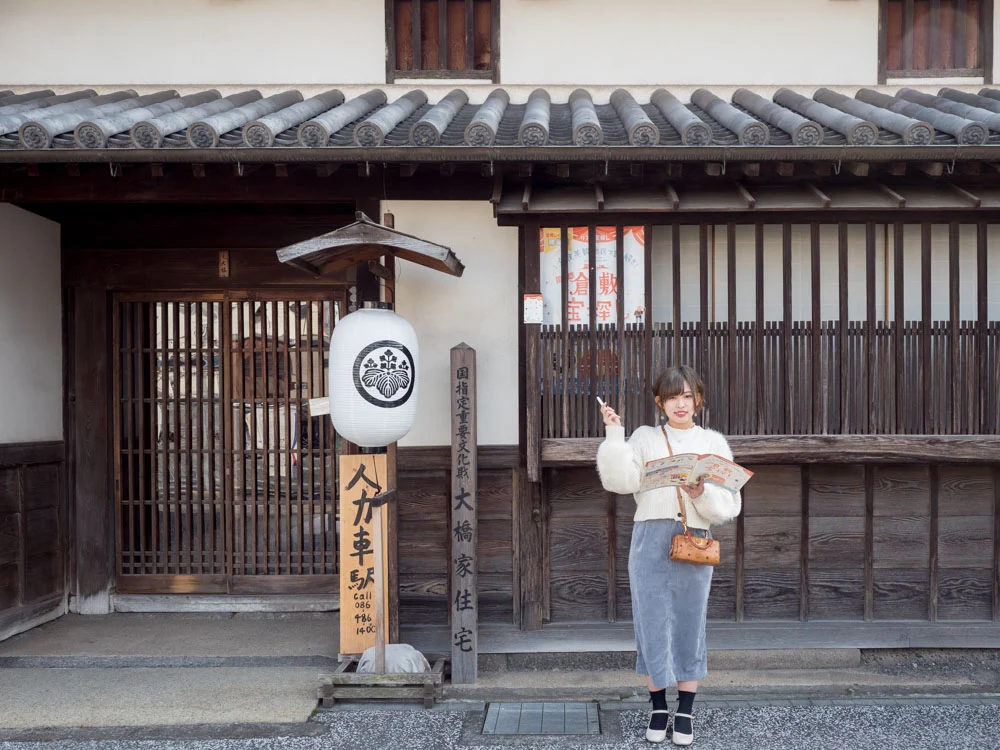
▼The answer to Riddle 1 was “Ohashi House.”
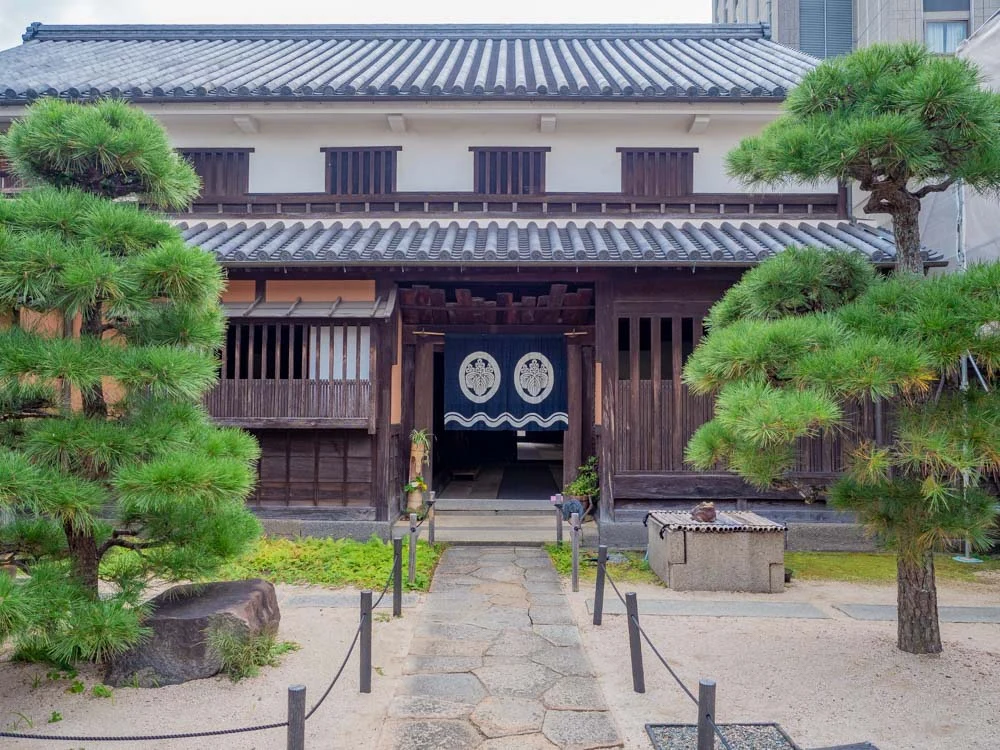
From the mid-Edo period onward, reclaimed land spread around the current center of Kurashiki, and the cultivation of cotton and rush grass became active.
As a result, the center of Kurashiki prospered through the trade and transportation of cotton and rush grass products, leading to the emergence of wealthy merchants and the construction of large residences.
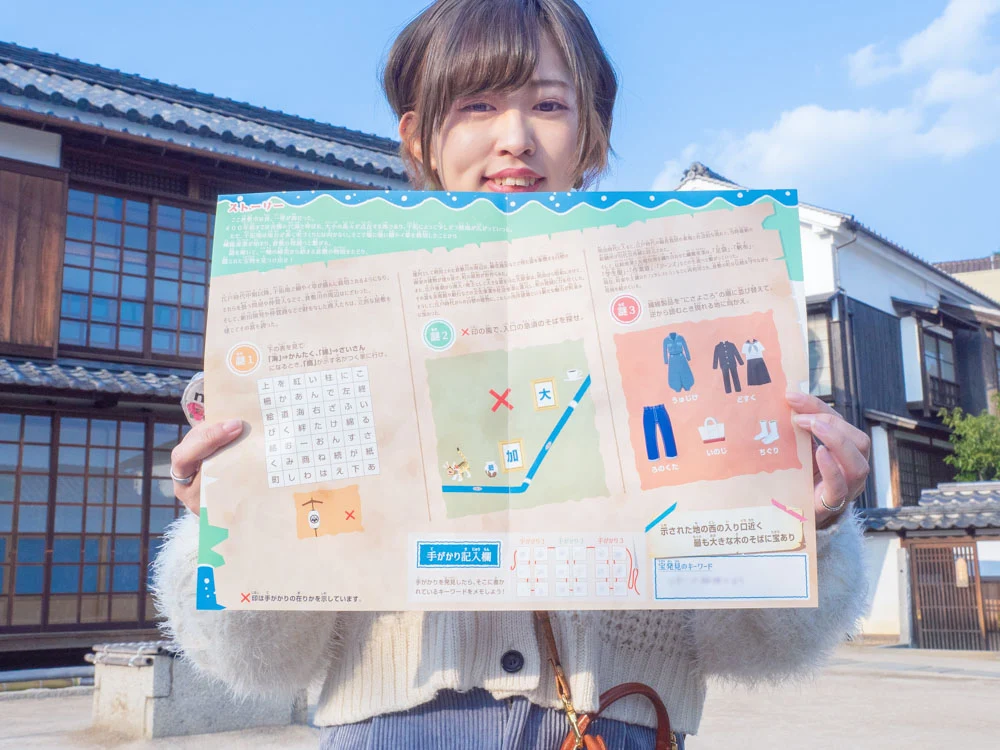
The problem of Riddle 1 is based on the above history, and by deciphering the letters arranged in the table using hints, you can find the four characters “Oohashi.”
It should be noted that the Ohashi family was a wealthy merchant that became a large landowner by developing new rice fields during the Edo period.
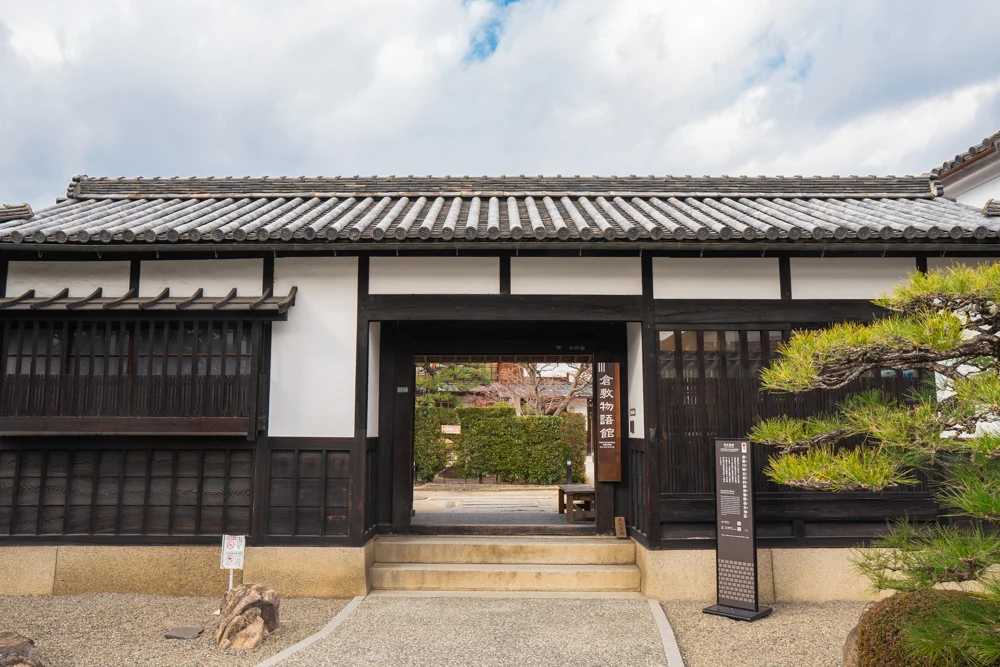
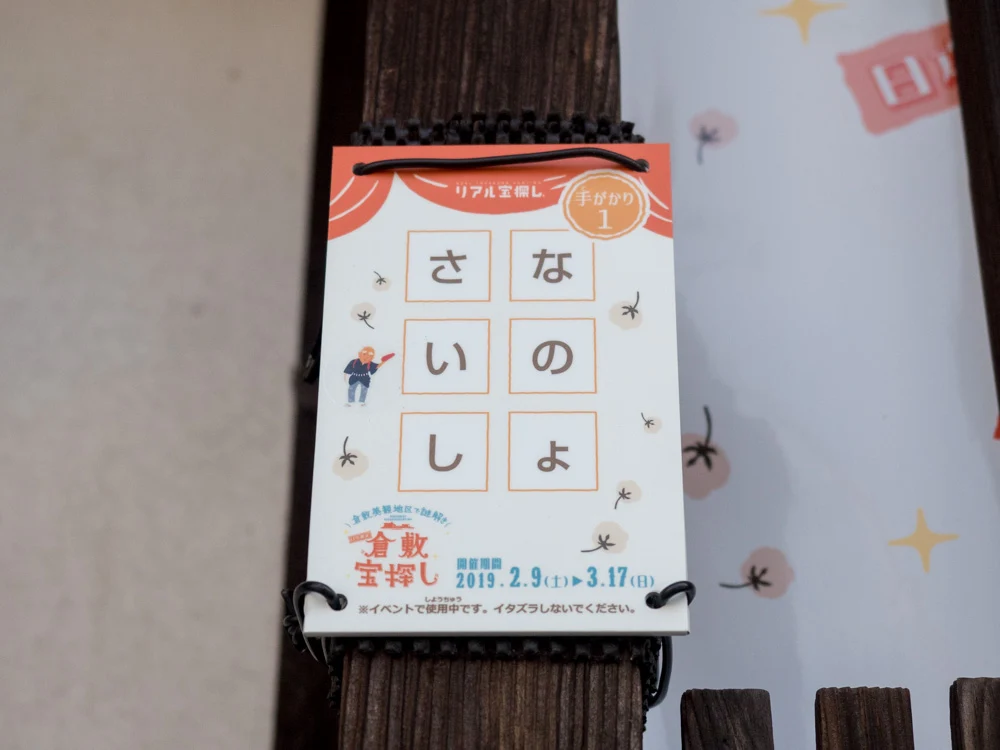
▼When you go to Ohashi House, there was a six-character clue at the upper right of the entrance.
▼The clue written was “the first letter.”
Answer to Riddle 2
▼The answer to Riddle 2 is “Shinkei-en Garden.”
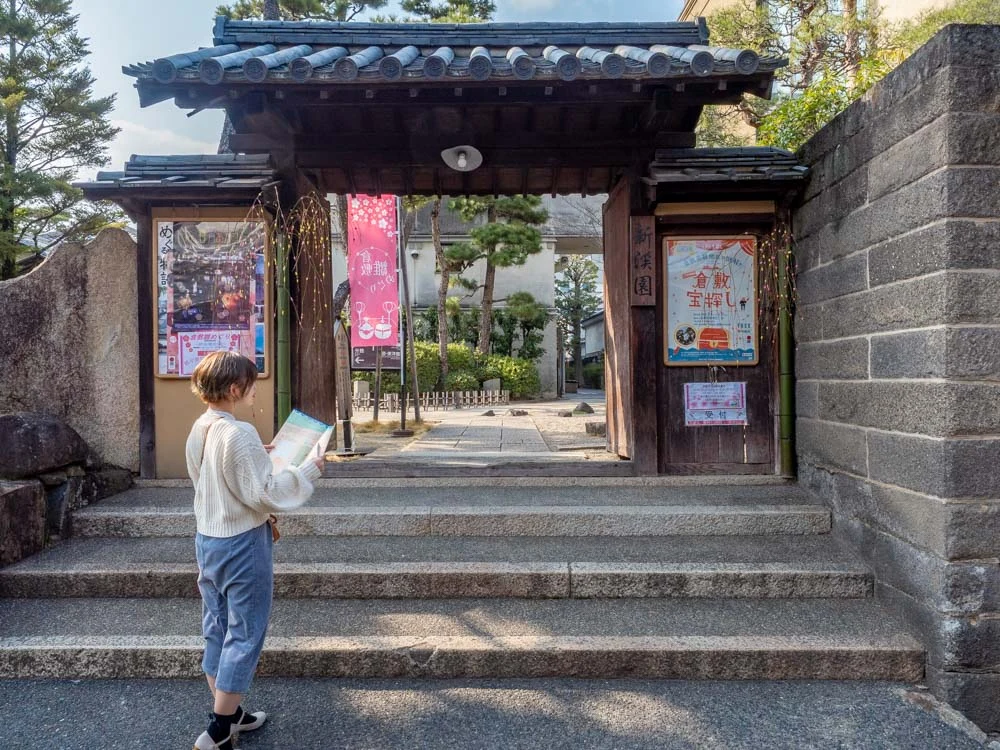
The Ohara family gained great wealth as merchants and landowners from the late Edo period.
From the Meiji to the Showa period, the Ohara family contributed to the town by returning their wealth through cultural projects such as the Ohara Museum of Art and social projects like banks, aiding in the development of Kurashiki.
The problem of Riddle 2 is based on this historical background.
In the illustration resembling a map, there are hints depicted.
An “X” mark was placed at the location of the answer.
Additionally, there was a direction stating, “At the location marked with an X, search near the entrance's teapot.”
By deciphering Riddle 2, you can find that the answer is Shinkei-en Garden.
To the right of the entrance of the building within Shinkei-en, there is a teapot-shaped basin.
▼There was a clue at the lower right of the sign next to the teapot-shaped basin.
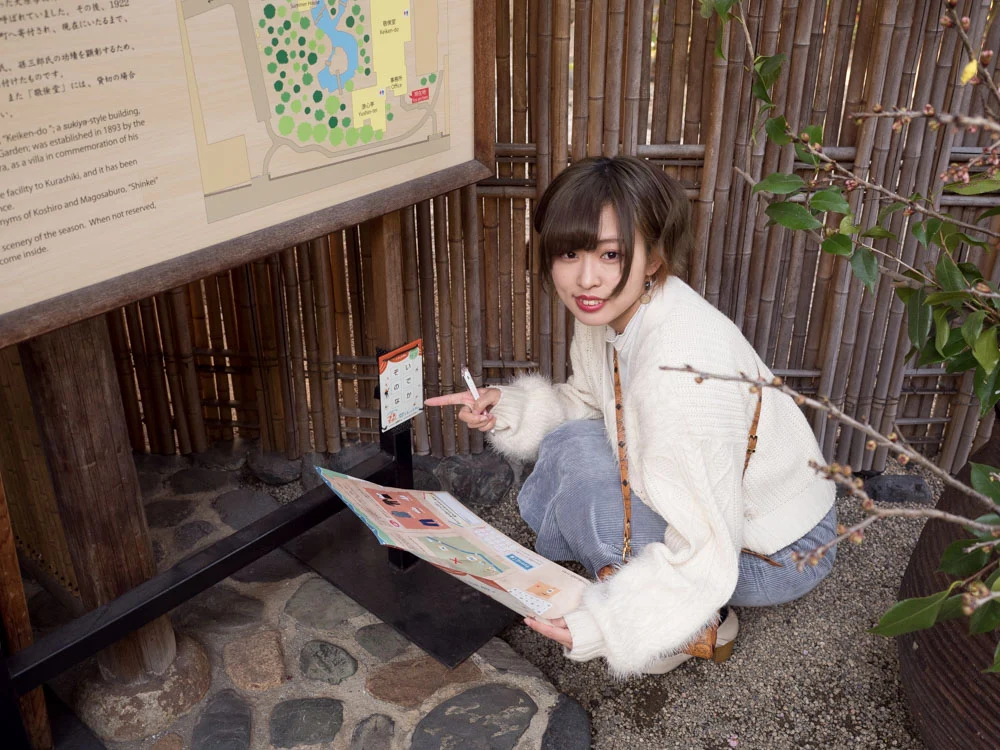
▼The clue written was “within that.”
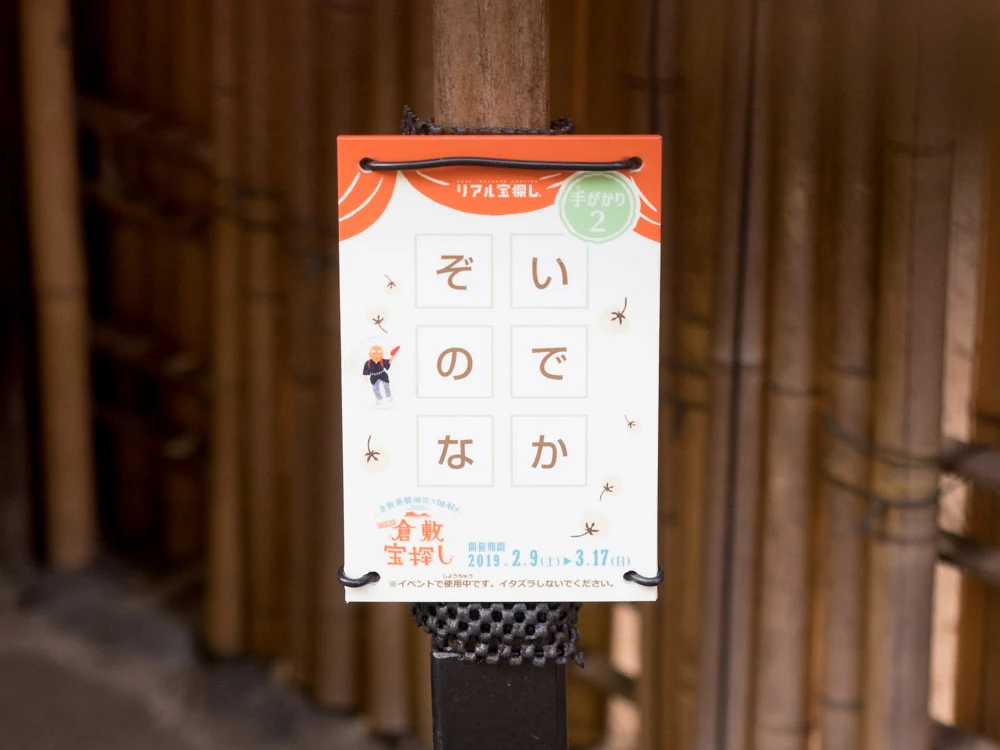
It should be noted that Shinkei-en Garden was built in 1893 by Mr. Ohara Koshiro, the first president of KURABO INDUSTRIES LTD., as a villa.
It is currently donated to Kurashiki City and can be viewed for free.
Answer to Riddle 3
▼The answer to Riddle 3 is “Kusudo House.”
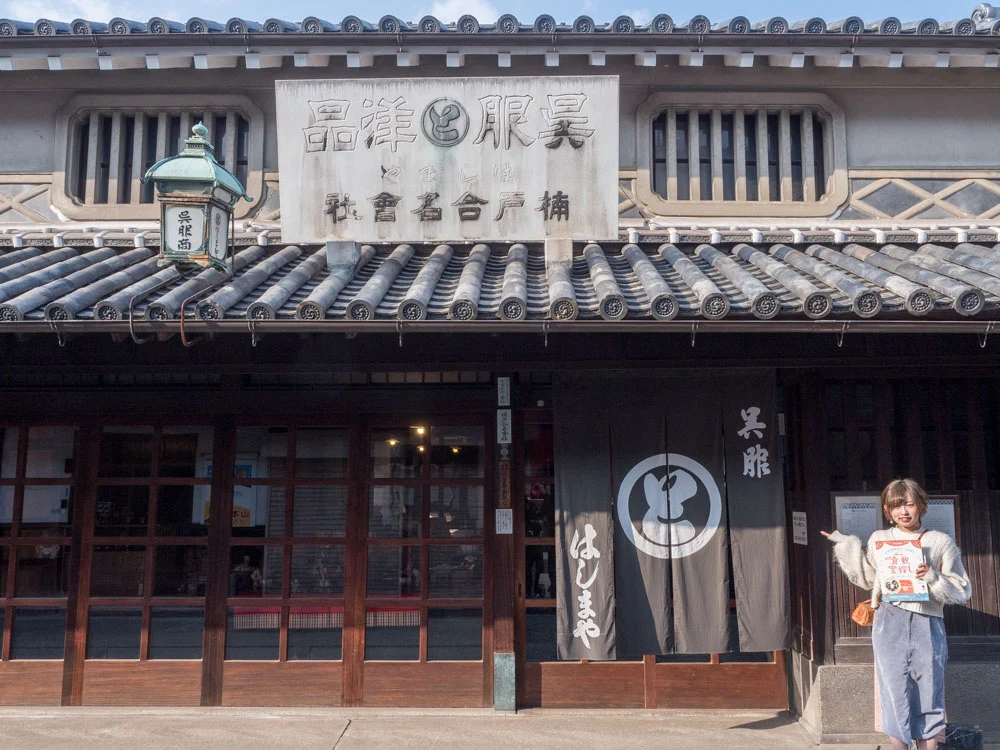
During the Meiji period, the area of Kurashiki, which prospered through cotton cultivation and the processing of cotton products, saw the combination of traditional industries and cutting-edge technology of the time, leading to a thriving textile industry.
It flourished with the production of tabi (split-toed socks), canvas, school uniforms, work clothes, and jeans, becoming rooted as a local industry.
Furthermore, on the site of the former Kurashiki magistrate's office from the Edo period, KURABO INDUSTRIES LTD. was established by the Ohara family.
The problem of Riddle 3 relates to the above history.
Illustrations of five types of textile products were drawn, with letters arranged below them.
Additionally, there was a hint stating that if you rearrange the letters in the order of “nisayogoro” and read them backward, you will find the answer.
By deciphering the problem, it becomes clear that it refers to “the entrance of the alley of Kusudo House.”
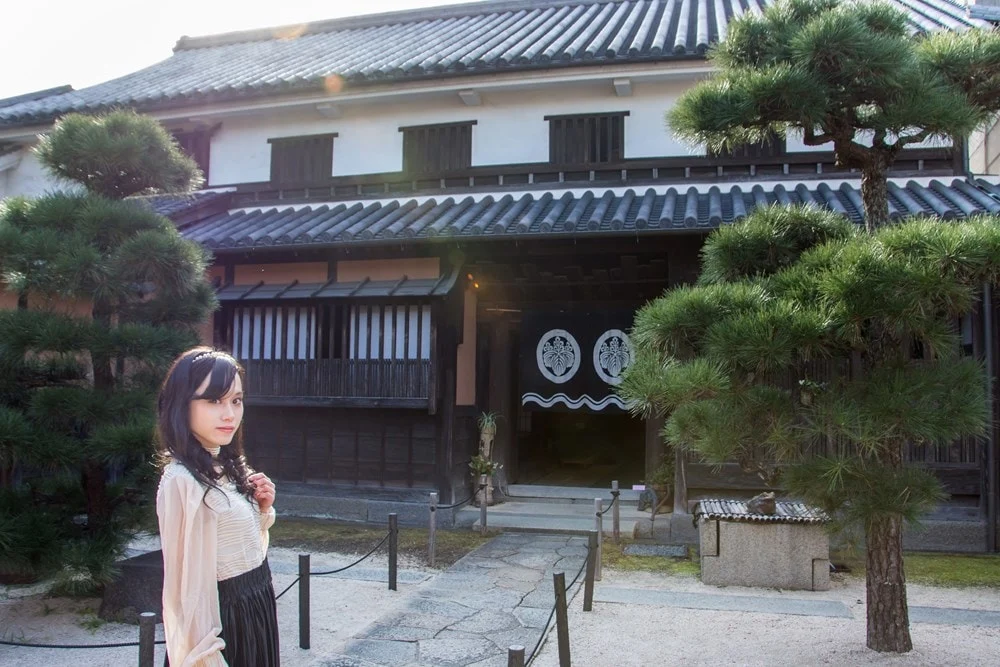
Kusudo House refers to the store and residence of “Hashimaya Gofukuten” located in Higashimachi.
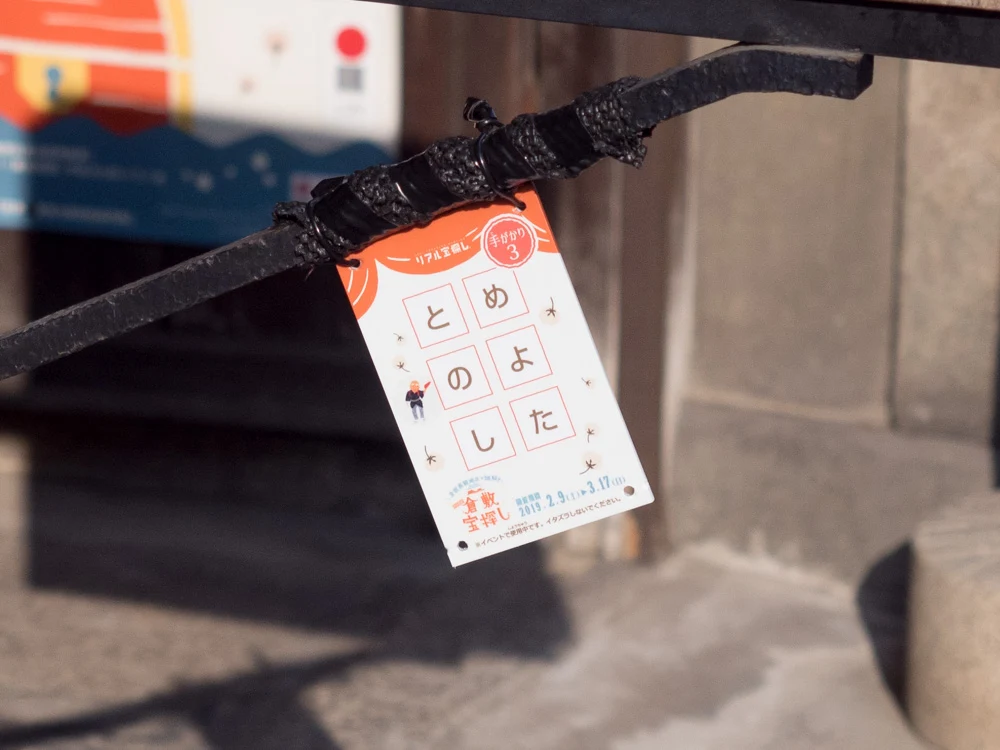
▼To the right of Hashimaya Gofukuten, there was a clue under the sign at the entrance of the alley.
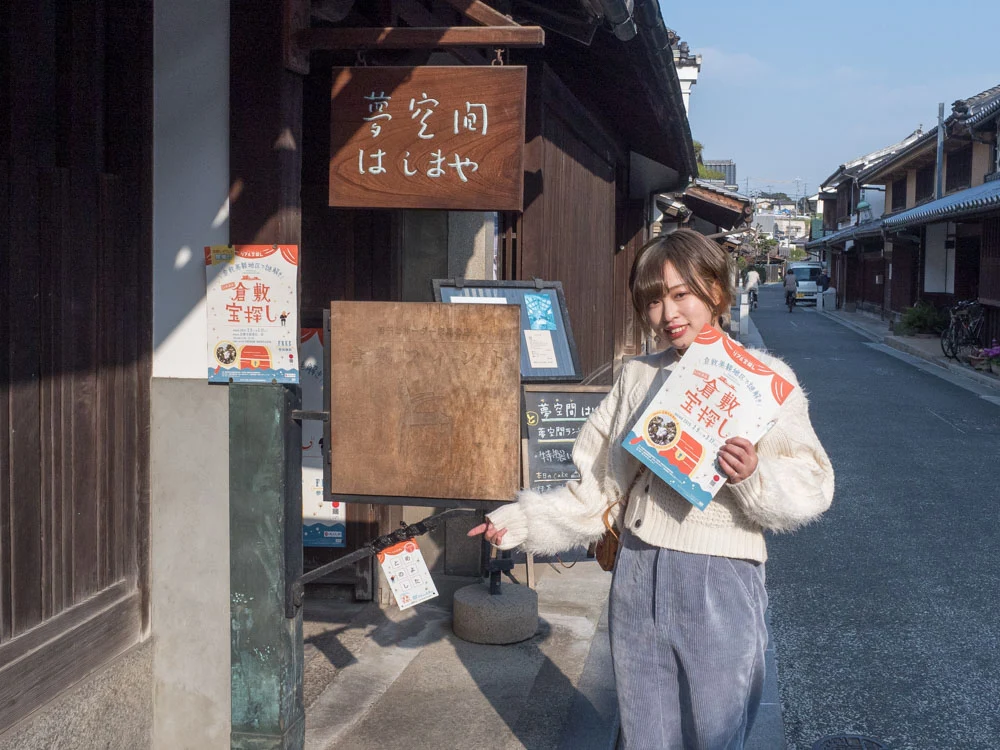
▼The clue written was “beneath the person.”
It should be noted that Hashimaya Gofukuten was founded in 1869 by Mr. Kusudo Tokuyoshi.
In 1996, the building was designated as a registered cultural property by the national government.
Additionally, the storehouse of the Kusudo family has been transformed into a café called “Yume Kukan Hashimaya.”
Final Destination and Treasure Discovery Keyword
Arranging the clues found at the answer locations of Riddles 1 to 3 in order gives “the first letter, within that, beneath the person.”
In other words, “Read beneath the thread of the first riddle.”
In the problem of Riddle 1, there were many letters arranged in a table.
If you arrange the letters below the kanji with the thread radical, it spells “aibiisukuea.”
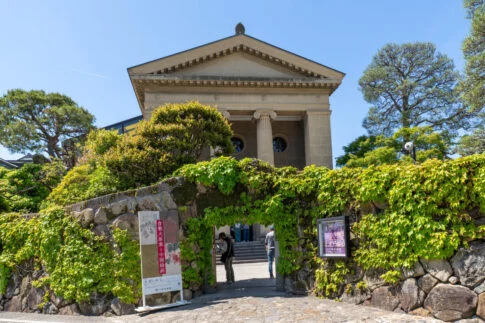
▼This refers to “Kurashiki Ivy Square.”
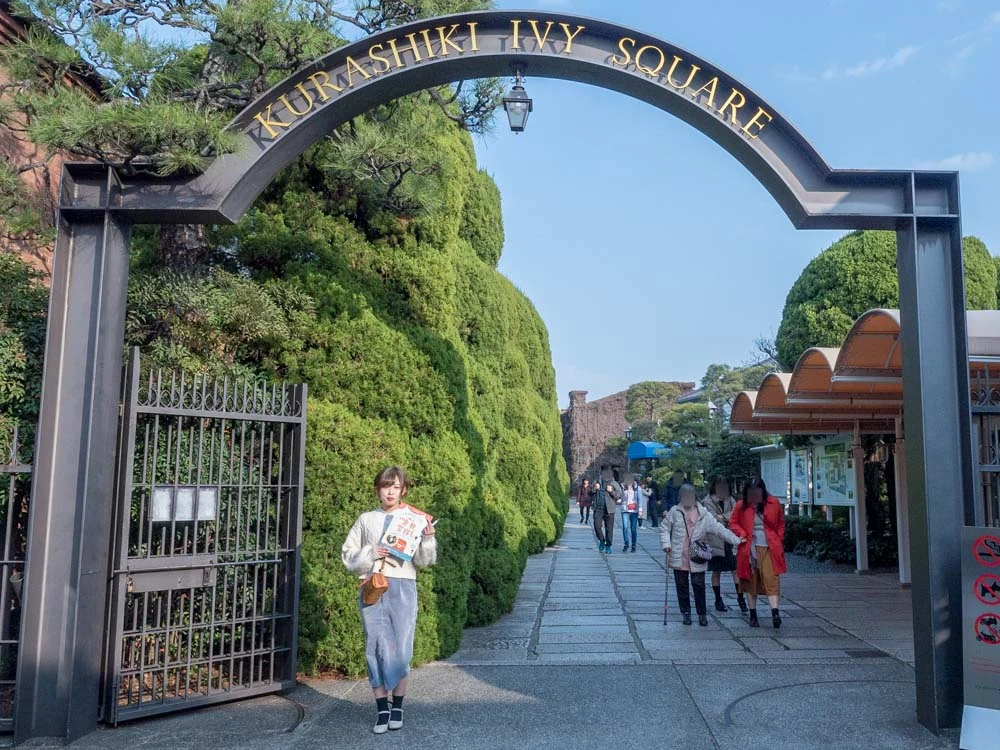
The problem also states that the treasure is located near the largest tree close to the west entrance of the place indicated by the arranged clues.
▼To the immediate west of the building of Ivy Square, there is a large tree south of the building with “Public Bar Akarenka.”
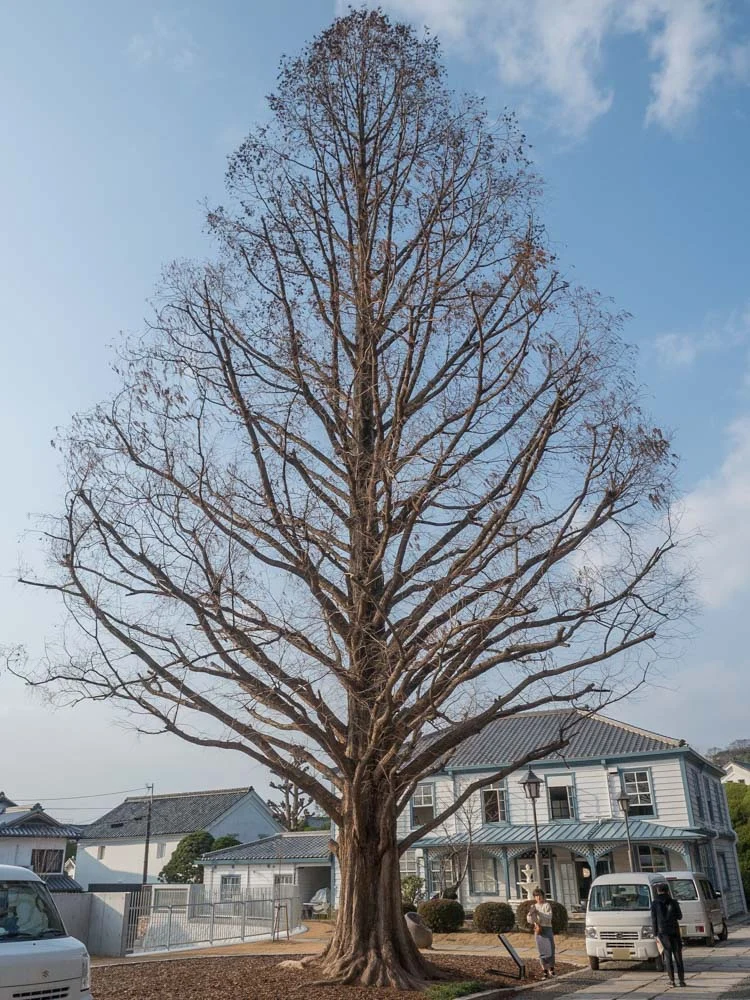
At the foot of this tree, there was a treasure box.
▼When you open the box, there is a treasure discovery keyword inside.
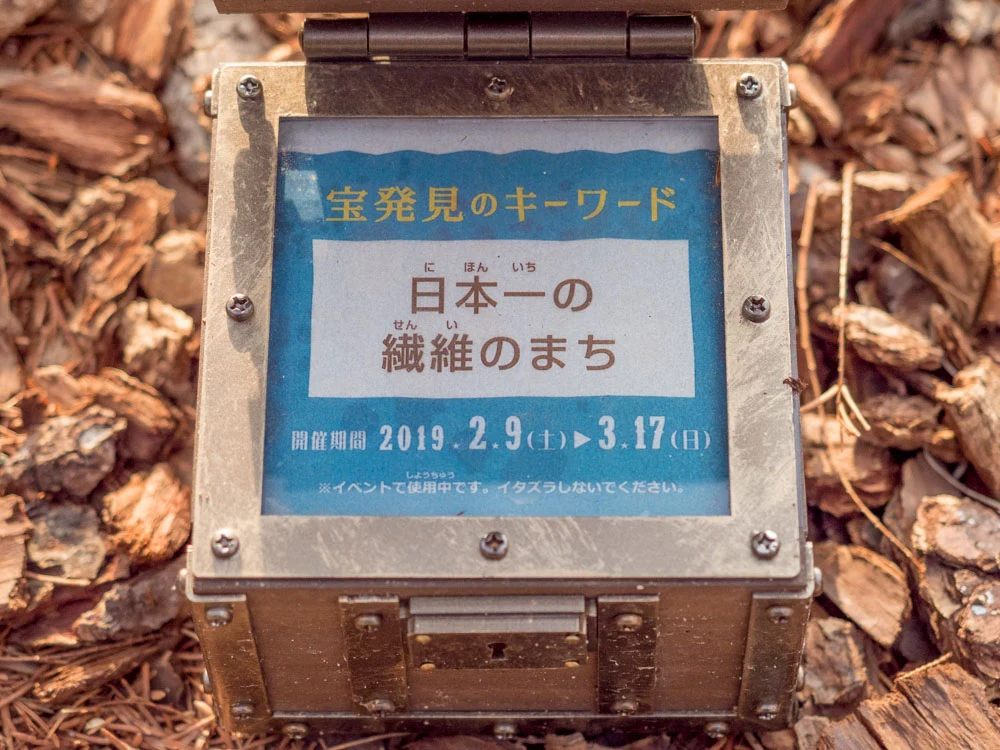
The treasure discovery keyword was “The best textile town in Japan.”
Conclusion
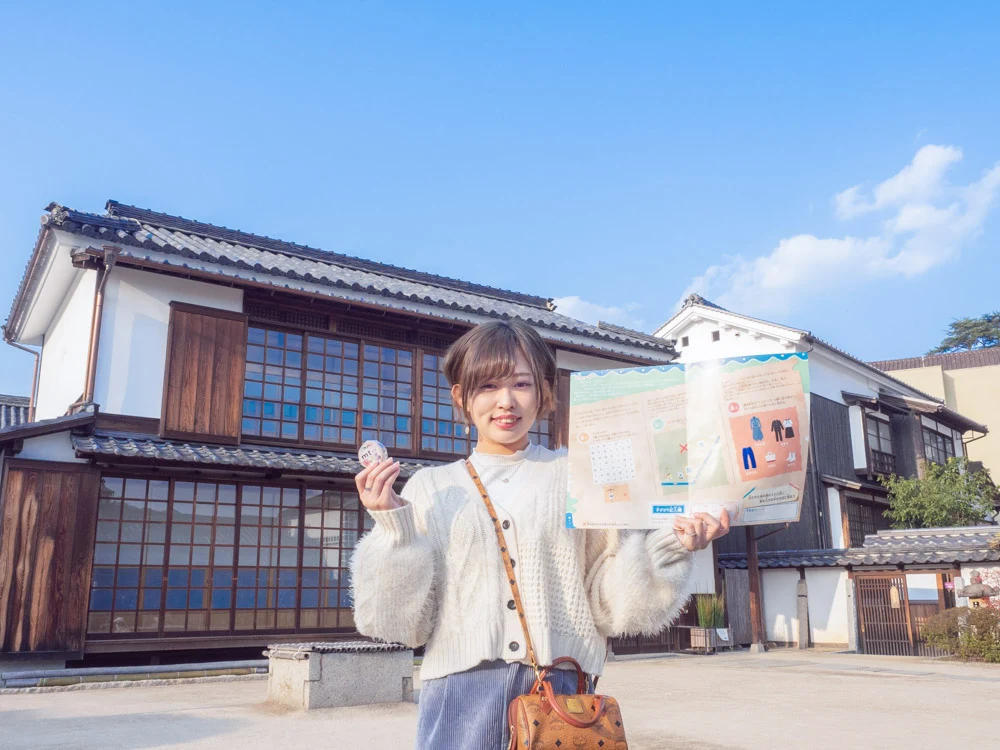
The riddle-solving event “Japan Heritage Kurashiki Treasure Hunt” was quite challenging.
However, while thinking through the clues, I was able to walk around the Bikan Historical Area.
Moreover, by asking the staff at shops and facilities when I was unsure, I was able to learn various information about Kurashiki beyond just the riddles, which is a benefit of participating in “Japan Heritage Kurashiki Treasure Hunt.”
Of course, through solving the riddles, I was able to learn about Kurashiki's history of prosperity in cotton and the textile industry.
Not only tourists but also local residents enjoyed it, with curious children among the participants.
Additionally, since it involves walking around, many elderly people also participated, which is beneficial for health.
If such events are held as a way to learn about Kurashiki or to explore the town, why not give it a try?
Articles on Japan Heritage in Kurashiki City
Data on the Japan Heritage Kurashiki Treasure Hunt
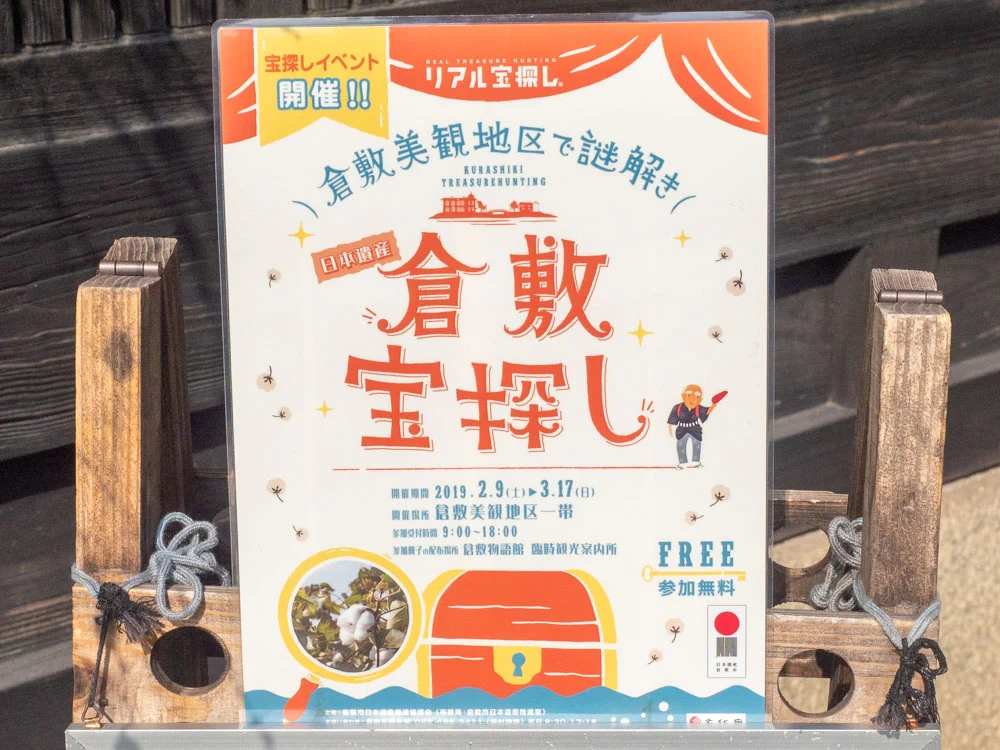
| Name | Japan Heritage Kurashiki Treasure Hunt |
|---|---|
| Date | February 9, 2019 (Saturday) to March 17, 2019 (Sunday) |
| Location | 2-23-19 Achi, Kurashiki City, Okayama Prefecture, Kurashiki City Kurashiki Monogatari-kan Temporary Tourist Information Center |
| Participation Fee (Tax Included) | Free |
| Website | Puzzle-solving event "Kurashiki Treasure Hunt" in the Bikan Historical Area - Kurashiki Tourism WEB |