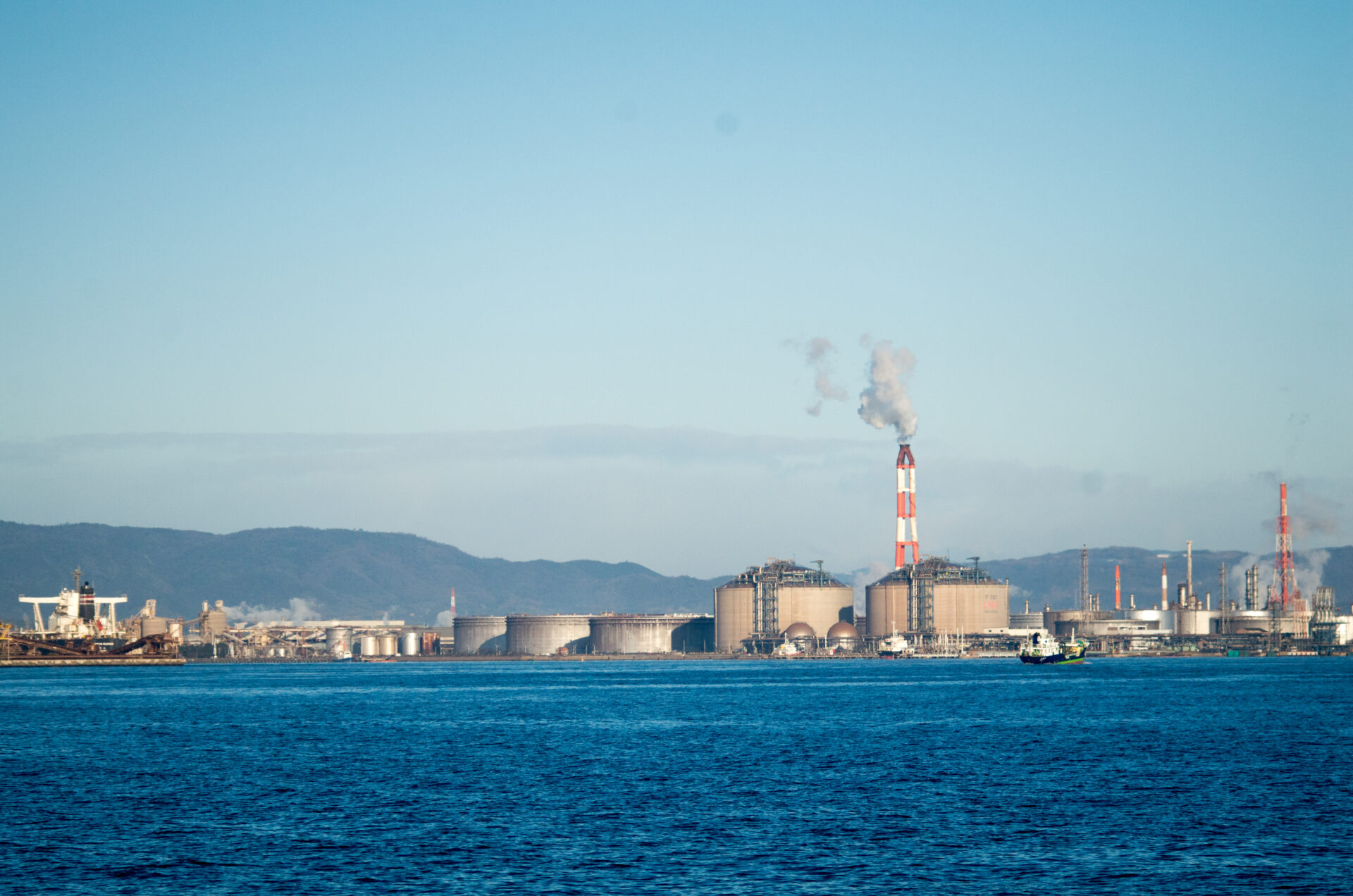
The Mitsubishi Oil Mizushima Oil Spill Incident is an incident where heavy oil leaked from a factory in the Mizushima Industrial Complex, spreading to the eastern half of the Seto Inland Sea and causing enormous damage to fisheries and other industries. A lecture was held in 2024, marking 50 years since the incident.
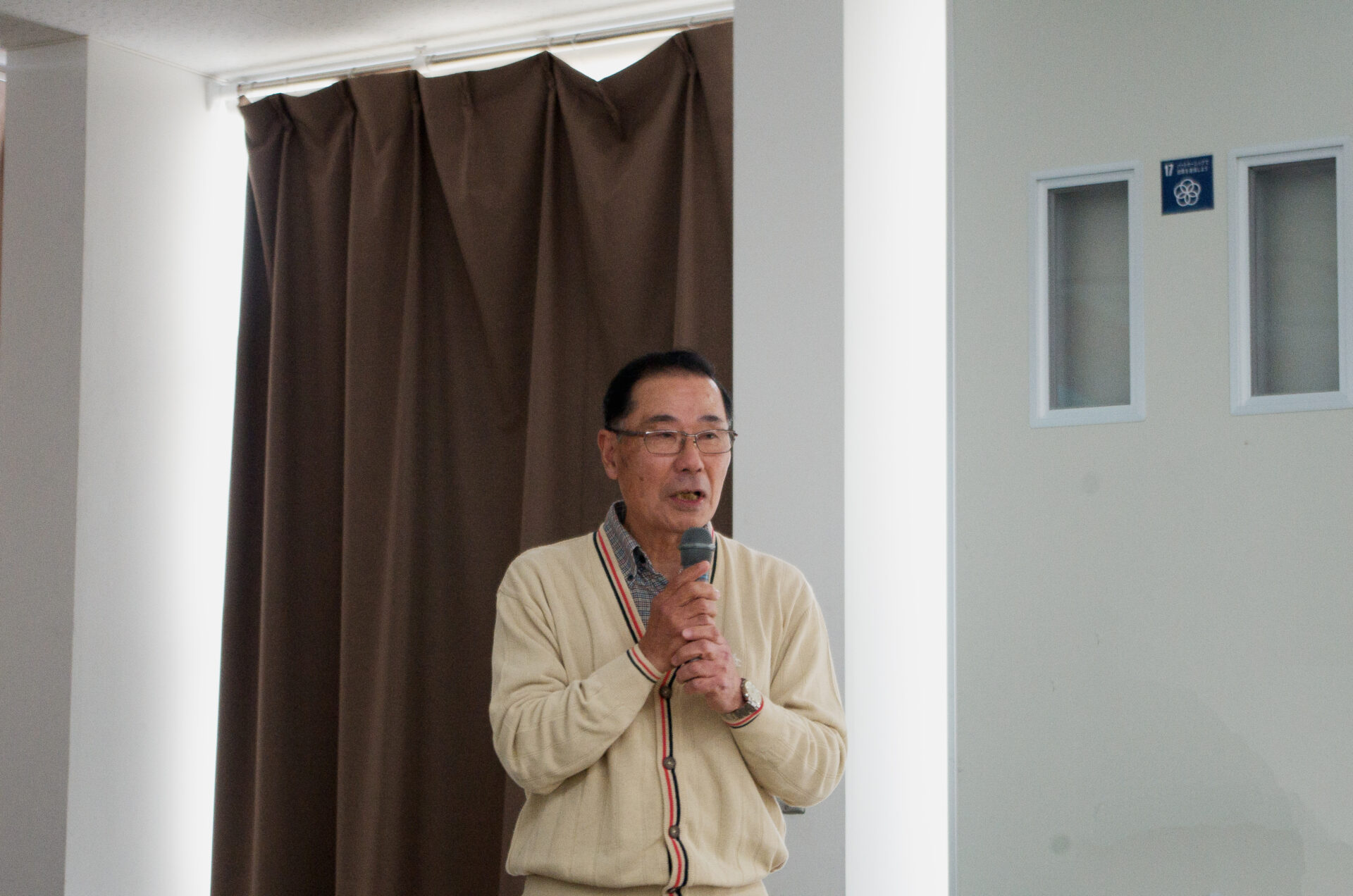
The lecturer, Furukawa Akira, is currently working as a lecturer at Kurashiki University of Science and the Arts (Crisis Management), representative director of Mizushima Park Management Lab., and president of the Mizushima Experiential Learning Consortium, focusing on the revitalization of Mizushima.
He transferred to Mizushima in June 2005.
Even after retirement, instead of returning to Yokohama City where his family is, he has continued activities to convey his experiences to the local community, including high school students, based in his hometown of Mizushima.
Furukawa's experience of four oil spill incidents, which he described as "coincidental," left a strong impression when he reflected that being involved in four oil spill incidents might have been "inevitable."
In addition to reflecting on the four incidents discussed in the lecture, I will introduce the "Mitsubishi Oil Mizushima Refinery Oil Spill Incident" as he recounted in a later interview.
What is the "Mitsubishi Oil Mizushima Refinery Oil Spill Incident"?
The Mitsubishi Oil Mizushima Refinery oil spill incident occurred in 1974, and in 2024, it marks 50 years since the incident.
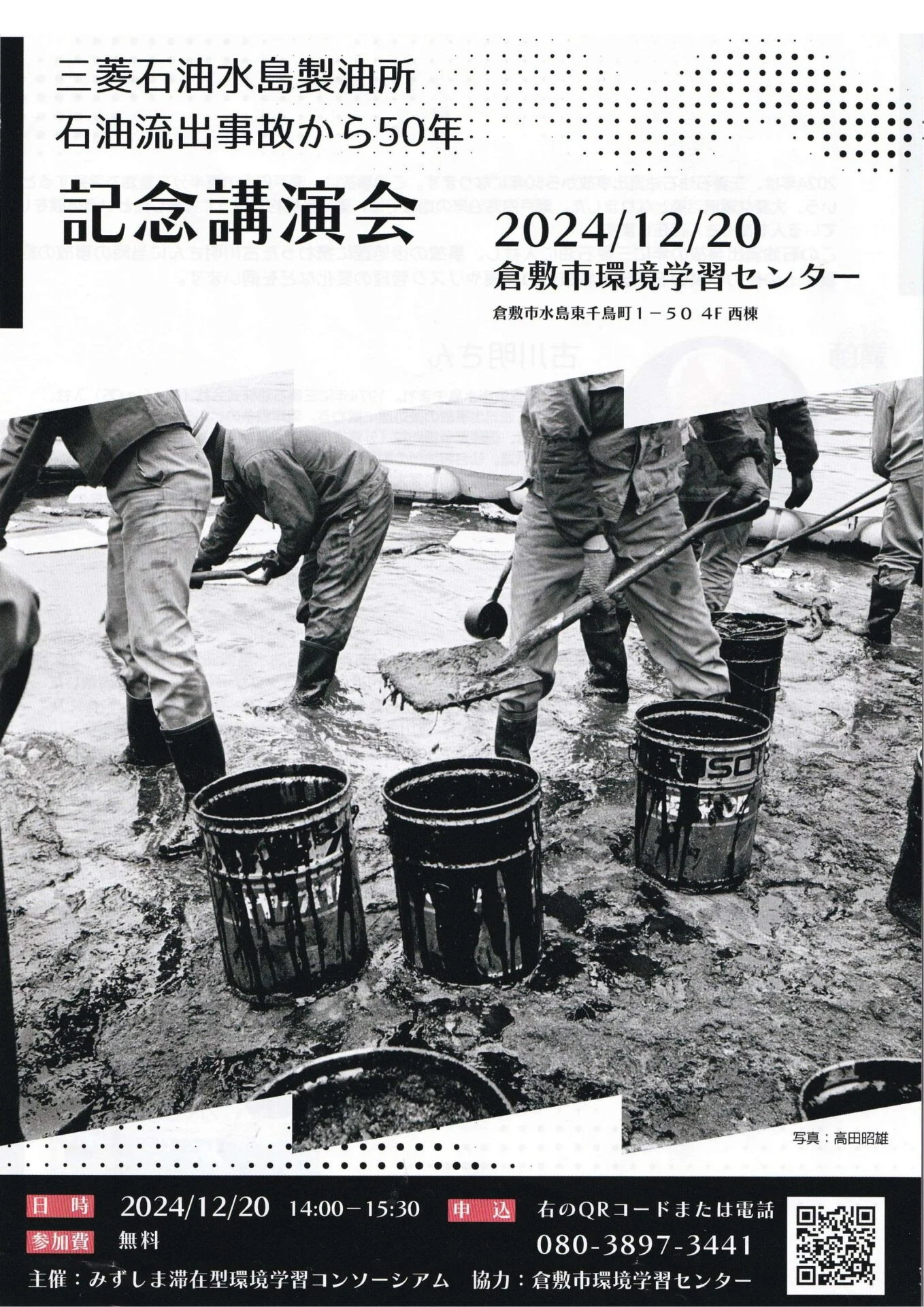
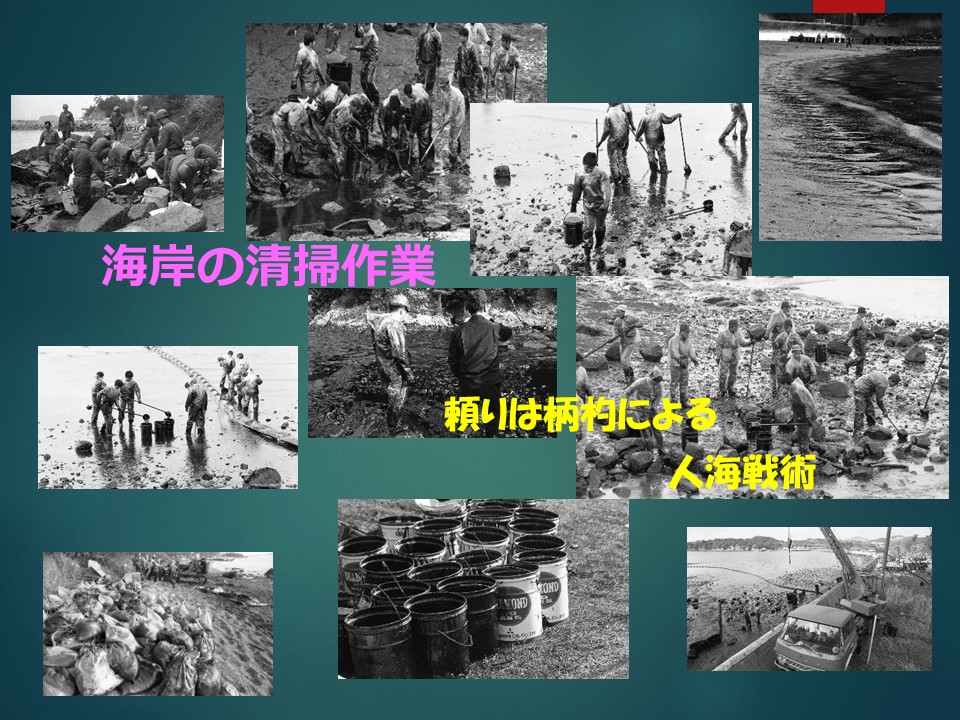
At that time, there were no effective heavy machinery available to remove the heavy oil along the coastline of the Seto Inland Sea, where the oil had spread extensively.
As a result, many people resorted to manual labor, scooping up the heavy oil with shovels and ladles, and transporting it in buckets, as shown in the photo of the flyer.
I will introduce the overview of the incident as indicated in the lecture flyer.
On December 18, 1974, around 8:40 PM, C heavy oil leaked from tank No. 270 of the Mitsubishi Oil Mizushima Refinery located in the Mizushima Industrial Complex in Kurashiki City. The vertical stairs attached next to the tank and the foundation concrete near the bottom plate destroyed the oil containment dike, causing some of the oil to flow over the dike and into the sea. The amount of leaked heavy oil was approximately 7,500 to 9,500 kL. The spill affected the waters off Kasaoka City to the west and extended to the Kii Channel to the east, contaminating the coastlines of Okayama, Kagawa, Tokushima, and Hyogo prefectures, causing enormous damage to fisheries and other industries. The oil spill incident that turned almost the eastern half of the Seto Inland Sea into a sea of oil vividly demonstrated the horrors of industrial complex disasters.
Source: Lecture flyer
About the speaker, Furukawa Akira
The speaker, Furukawa Akira, was born in October 1951 in Mizushima Tokiwacho, Kurashiki City.
He believed that energy is essential for Japan's growth and chose the petroleum department in university.
After graduating from the Department of Chemical Engineering at Kyoto University in March 1974, he joined Mitsubishi Oil Corporation (now ENEOS Corporation) in April 1974 and responded to the four oil spill incidents introduced in the lecture.
Additionally, from June 2005, he was assigned to his hometown of Mizushima (Shinmizu Marine Co., Ltd.), and after retiring in 2015, he continues various activities rooted in Mizushima, including conveying his real-life experiences at Kurashiki University of Science and the Arts.
For more details on Furukawa Akira's career, please see below.
| Date | Career |
|---|---|
| October 1951 | Born in Mizushima Tokiwacho, Kurashiki City |
| March 1974 | Graduated from the Department of Chemical Engineering, Kyoto University |
| April 1974 | Joined Mitsubishi Oil Corporation (now ENEOS Corporation) |
| October 1974 | Assigned to Tohoku Oil Sendai Refinery |
| January to April 1975 | Responded to the "Mizushima Heavy Oil Spill" in the Seto Inland Sea Dispatched from Tohoku Oil Sendai Refinery |
| June 1978 | Responded to the "Tohoku Oil Corporation Sendai Refinery Oil Spill Incident" due to the Miyagi Prefecture Offshore Earthquake |
| September 1984 | Assigned to Saudi Arabia (Jubail Industrial City) |
| August 1990 | Assigned to Mizushima Refinery |
| August 1990 | Kuwait invasion (the start of the Gulf War) |
| April 1991 | Responded to the "Oil Spill due to the Gulf War" As a member of the national international emergency rescue team, dispatched to Saudi Arabia |
| June 1991 | Assigned to headquarters |
| July 1997 | Responded to the "Diamond Grace Oil Spill Incident" |
| April 2000 | Laid the first tunnel at Mizushima Port |
| June 2005 | Assigned to Mizushima (Shinmizu Marine Co., Ltd.) |
| 2015 | Retired, currently Continuing activities to convey insights from real experiences at Kurashiki University of Science and the Arts. |
50 Years Since the Mitsubishi Oil Mizushima Refinery Oil Spill Incident: Commemorative Lecture
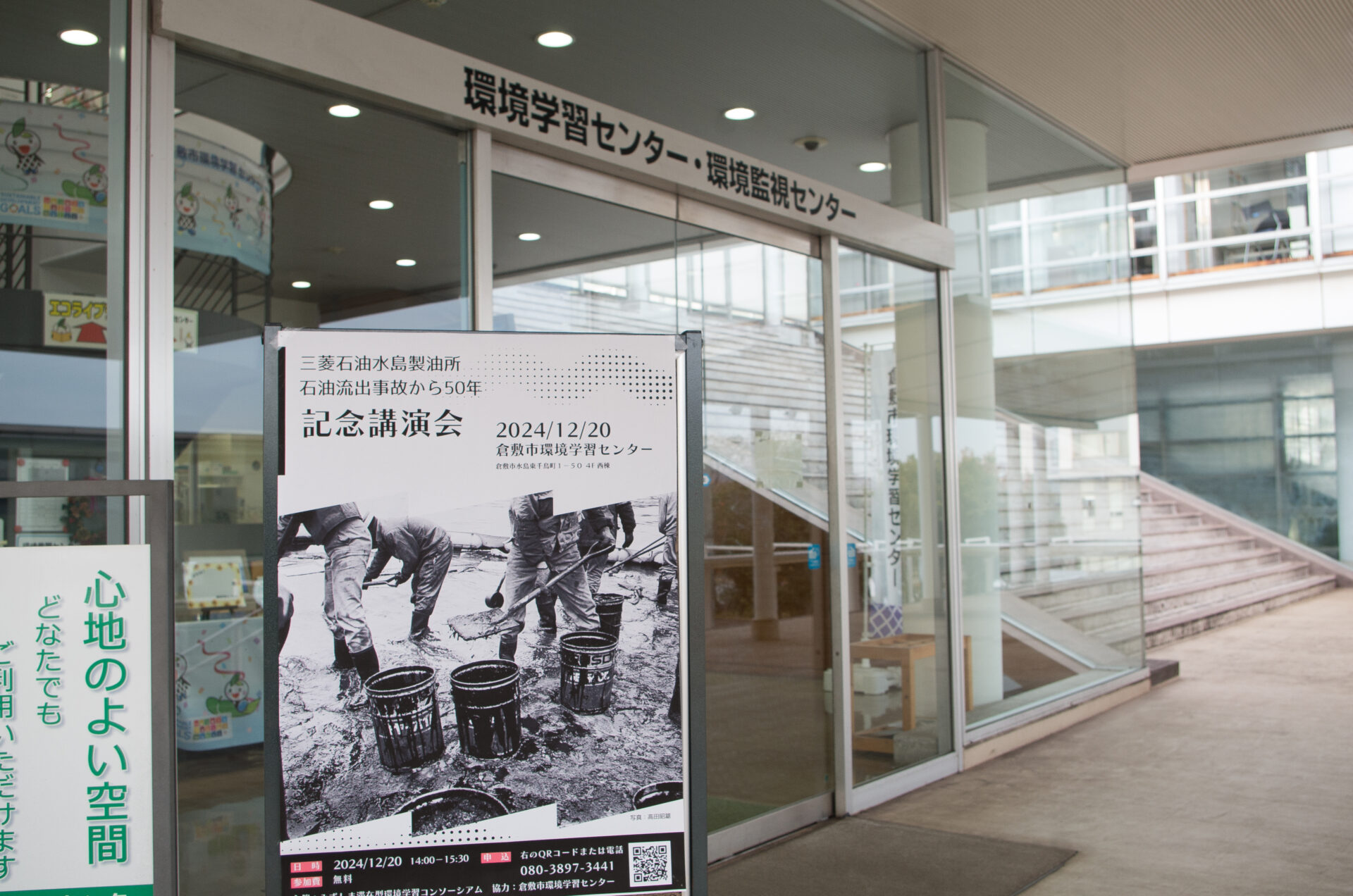
On December 20, 2024, a commemorative lecture was held at the Environmental Learning Center in Mizushima.
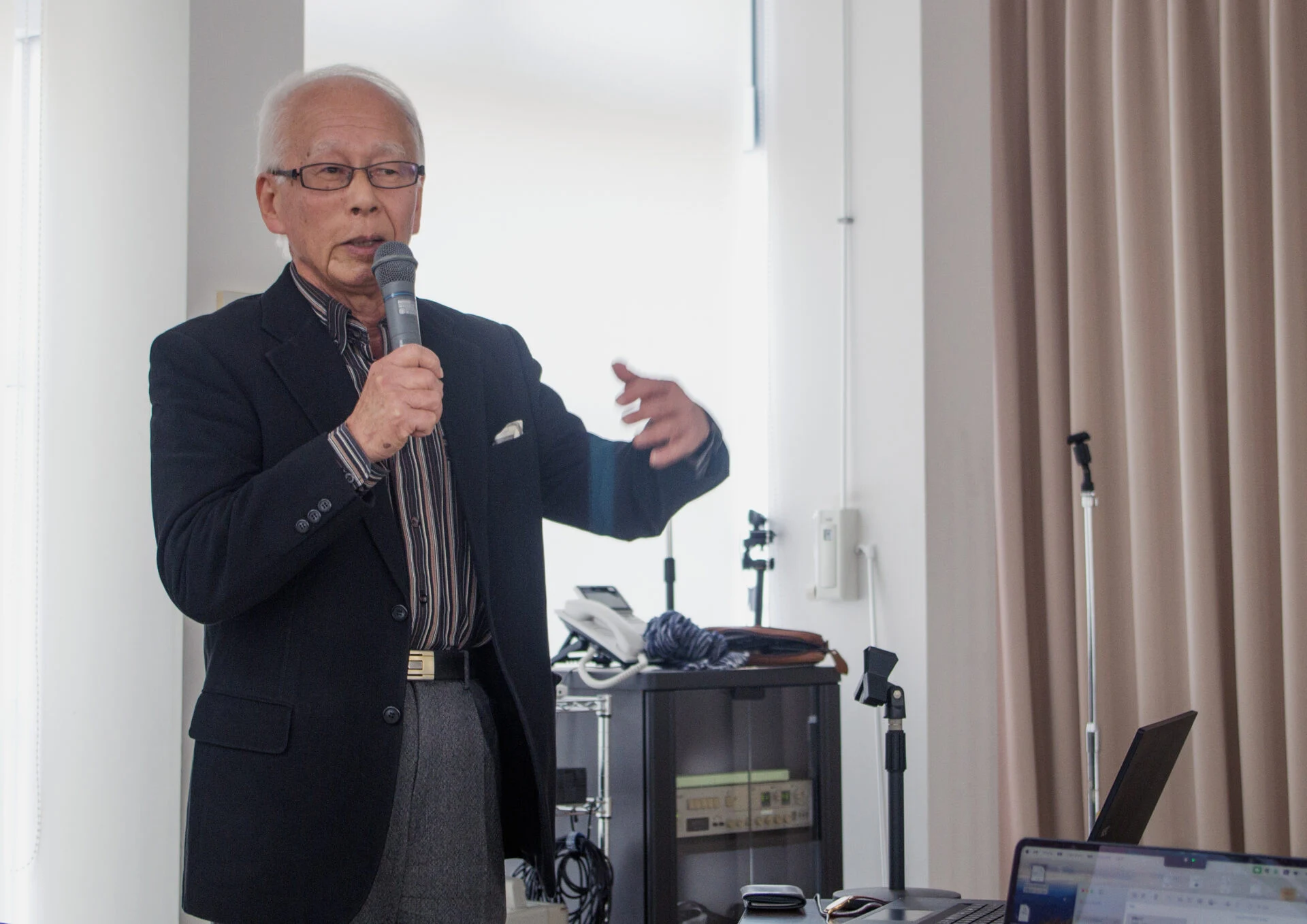
The lecture begins with greetings from Hayashi Miho, the secretary-general of the Mizushima Experiential Environmental Learning Consortium.
First, there was a lecture by Furukawa, followed by experiences shared by Furukawa's former colleagues, in a two-part structure.
The four spill incidents experienced by Furukawa and the lessons learned from each
I will introduce the outlines of each spill incident, Furukawa's role, and the lessons learned from each.
Mitsubishi Oil Mizushima Refinery Oil Spill Incident
- Heavy oil leaked from the Mizushima Refinery, spreading over a wide area in the eastern Seto Inland Sea (7,500 to 9,500 kL)
- Severe damage occurred to fisheries and nori (seaweed) cultivation areas (approximately 50 billion yen in damages)
Furukawa was in his first year of employment and collected oil from the Takamatsu and Sakaide sea areas (Ban no Su, Shami Island, Yashima, etc.).
In the Mitsubishi Oil Mizushima Refinery oil spill incident, he was required to respond immediately after joining the company, but instead of a sense of despair, he approached it with a sense of mission and the organizational strength of the entire company, which allowed them to complete the cleanup operations in about a year.
Due to unforeseen damage to the oil containment dike, strong west winds, and the high fluidity of the heavy oil, a chain of misfortunes led to the incident spreading over a wide area. However, it was fortunate that there were no human casualties and no fires.
Through negotiations with related organizations, he learned the importance of communication with local residents and the significance of apologies.
He also realized that one cannot do more than what is practiced during training in emergencies, highlighting the importance of regular training.
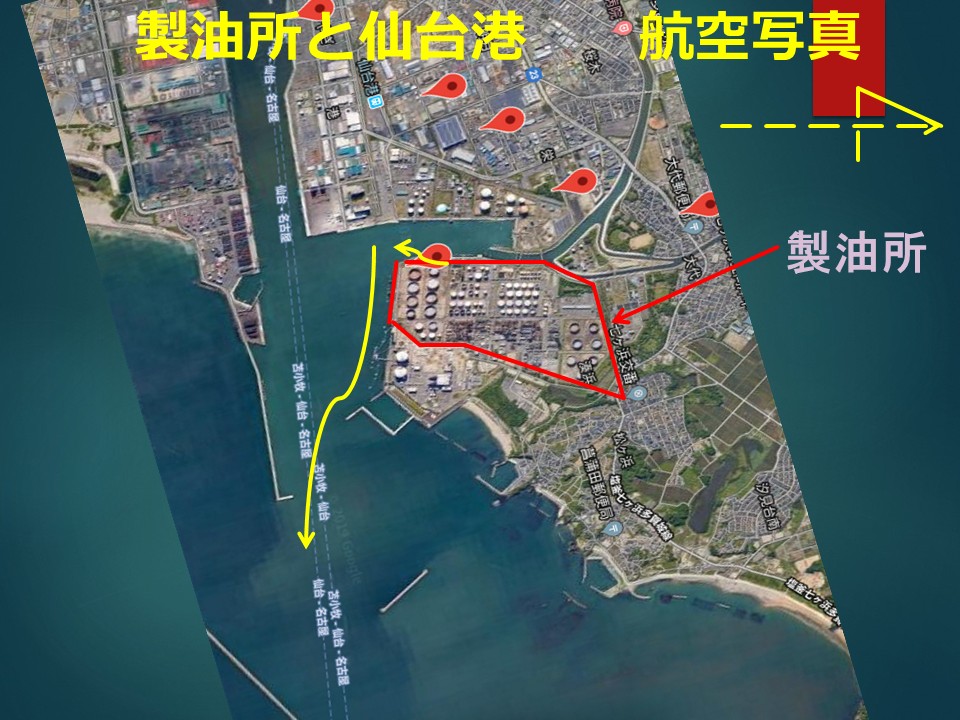
Tohoku Oil Corporation Sendai Refinery Oil Spill Incident
- Miyagi Prefecture Offshore Earthquake (Shindo 6) occurred
- Three oil tanks were damaged (approximately 70,000 kL leaked)
- Successful installation of oil fences to stop marine pollution
Furukawa was in his fourth year of employment and was a staff member in the production management department. He was engaged as a member of the response headquarters.
Utilizing the experience gained from the Mitsubishi Oil Mizushima Refinery oil spill incident, he was able to quickly procure "secondary oil containment dikes," gather and deploy oil fences from nearby companies as much as possible, and procure absorbent mats, ladles, buckets, and sticks early on, successfully stopping marine pollution.
Although all equipment was stopped for regular repairs, it was June, and the relatively high temperatures and the low fluidity of the heavy oil that did not solidify were also fortunate factors.
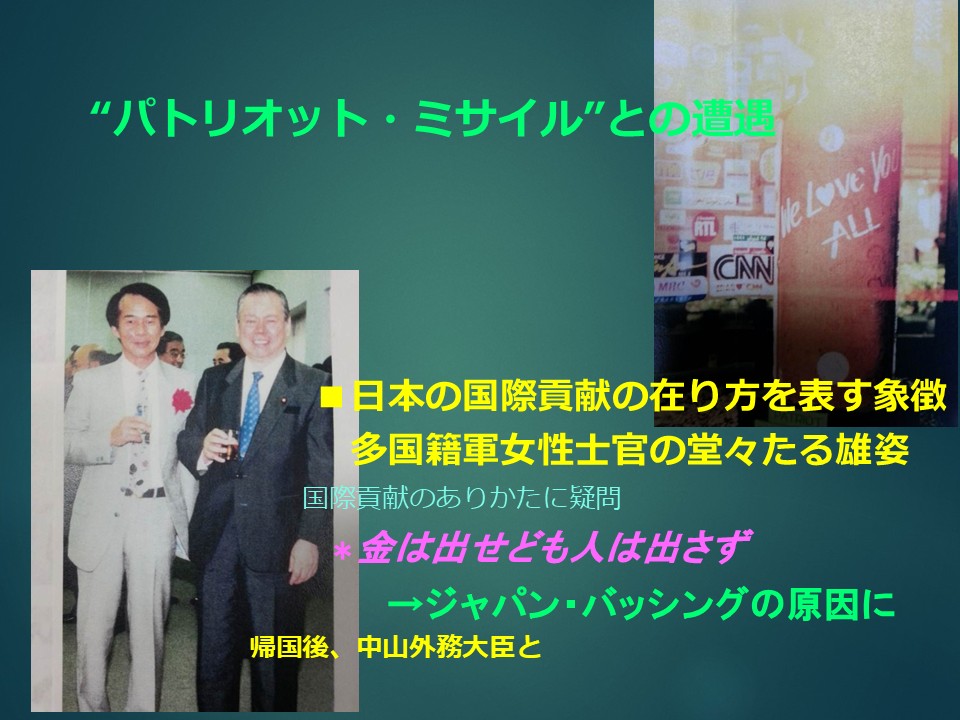
Oil Spill due to the Gulf War
- When Iraq invaded Kuwait, oil tanks were destroyed
- As a result, a large amount of oil flowed into the Persian Gulf
Furukawa was a member of the national international emergency rescue team, conducting on-site investigations, reporting to the Ministry of International Trade and Industry (now the Ministry of Economy, Trade and Industry), and attending meetings with MEPA (Meteorology and Environmental Protection Administration of Saudi Arabia at the time).
British, Dutch, and American forces achieved great results using their resources, but the algae that proliferated hindered oil recovery, and the equipment brought from Japan was not useful.
While harboring doubts about media reports that can be distorted by a single camera angle, he reflected on the nature of Japan's international contributions, which were mocked as "money can be provided, but not people," and it became an experience to reconsider Japan's presence in the international community.
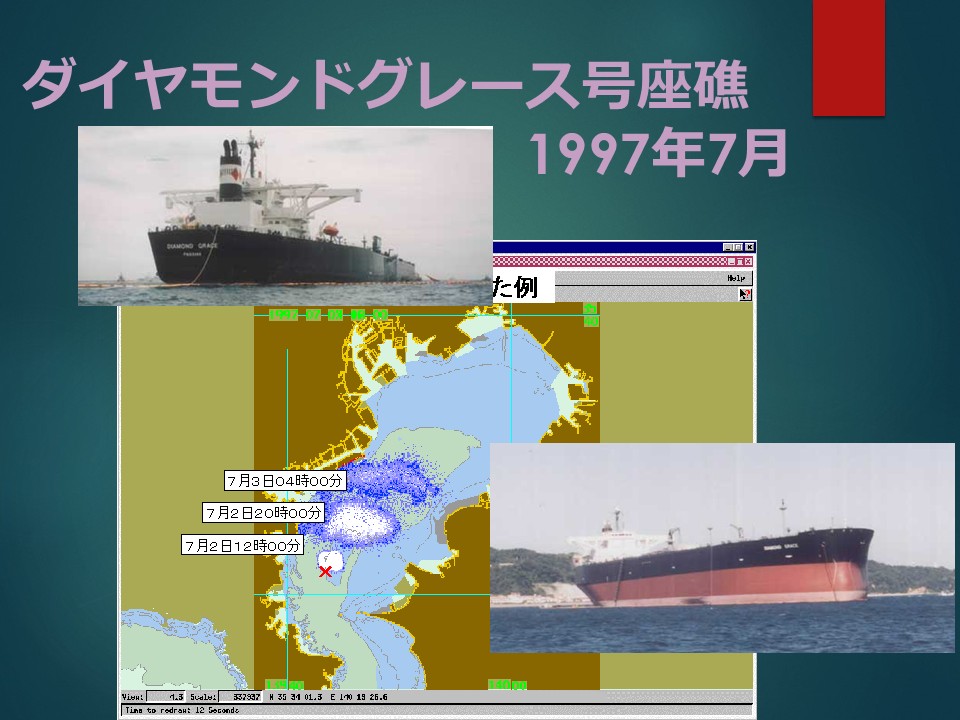
Diamond Grace Oil Spill Incident
- An oil tanker scheduled to dock at Kawasaki Refinery ran aground in the middle of Tokyo Bay
- Oil leaked (approximately several thousand kL)
Furukawa was engaged in production management as a manager.
There was also good fortune as the fire department and the coast guard were nearby, and cooperation with nearby large factories and related parties functioned well.
Utilizing his past experiences, he was able to predict the movement of oil based on sea conditions and listened to all information, fully utilizing his knowledge, resulting in the recovery of the leaked oil in a short time.
Summary of lessons learned
The insights Furukawa gained from his experiences in the four spill incidents are as follows. He repeatedly conveys these in university lectures and other settings.
- Utilizing past lessons and ensuring experiences are not forgotten (documenting and passing them on)
- Learning from the past (one cannot experience all disasters that have occurred in a short life)
- When an incident occurs, act with the worst-case scenario in mind (improving predictive abilities)
- One cannot do more than what is practiced during training
- The importance of leadership in emergencies
Additionally, when considering measures to prevent the recurrence of incidents, it is important to keep in mind the perspectives of those working within the organization (management, those in charge of the field, and those working on-site) to avoid bias in preventive measures, and to take a medium- to long-term perspective to nip potential dangers in the bud.
Experiences shared by Furukawa's colleagues
In this lecture, following Furukawa's presentation, experiences were shared by three of Furukawa's colleagues: Fujiwara Tetsuo, Inaba Takushi, and Iwanaga Takahisa, regarding the Mitsubishi Oil Mizushima Refinery oil spill incident.
The following are their words.
Fujiwara Tetsuo
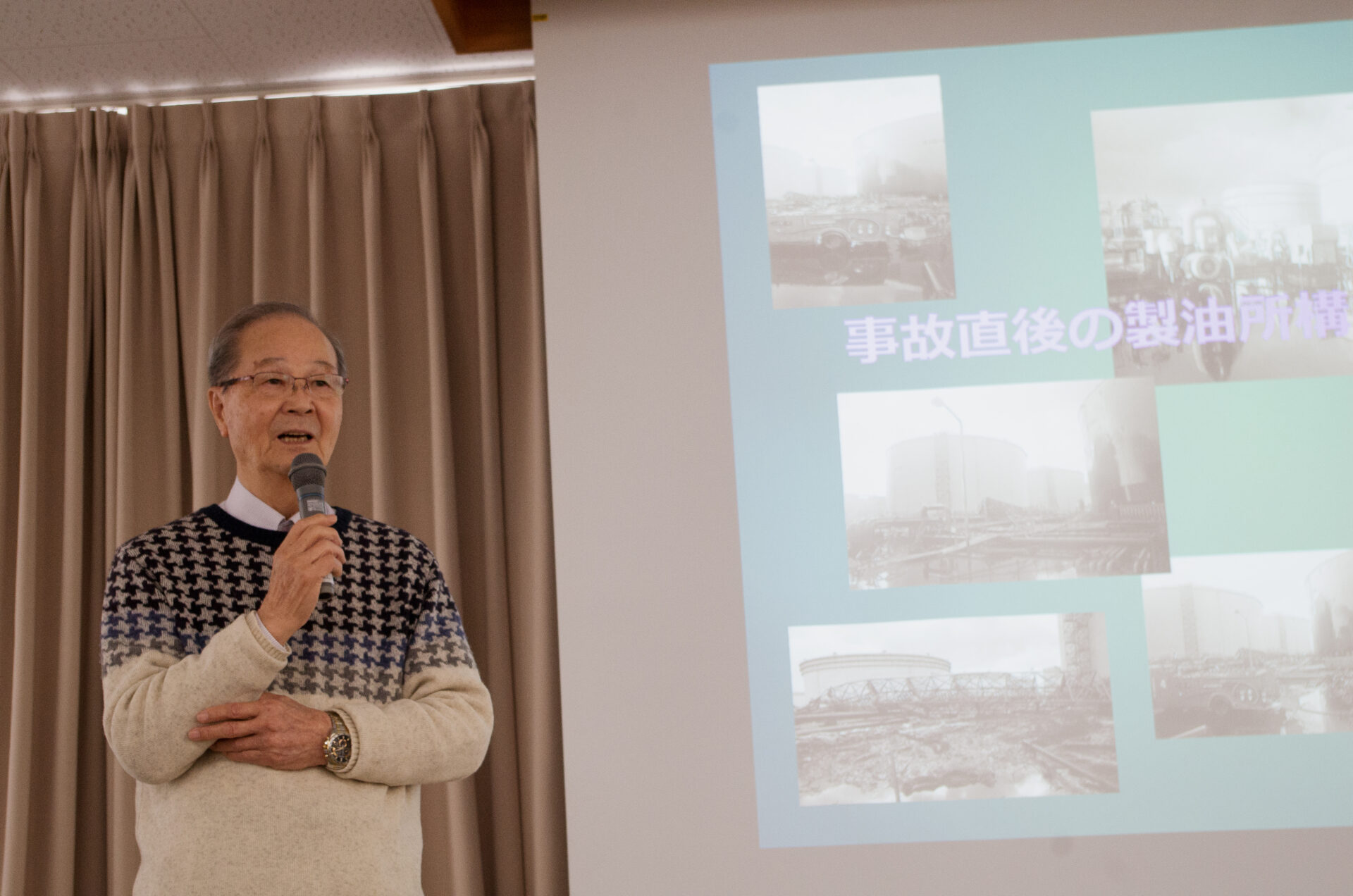
We formed groups of 7 to 9 people and responded to oil recovery on-site. I vividly remember being yelled at by locals during the recovery near the rock formation on Rokukuchijima.
I also recall the difficult daily tasks when we went to Shikoku and responded to oil recovery around Sakade, where we had no place to stay.
On Koyoshima, next to Yashima, I have fond memories of the islanders waiting for us by lighting a fire to warm our bodies, which had become cold from the oil recovery efforts.
Inaba Takushi
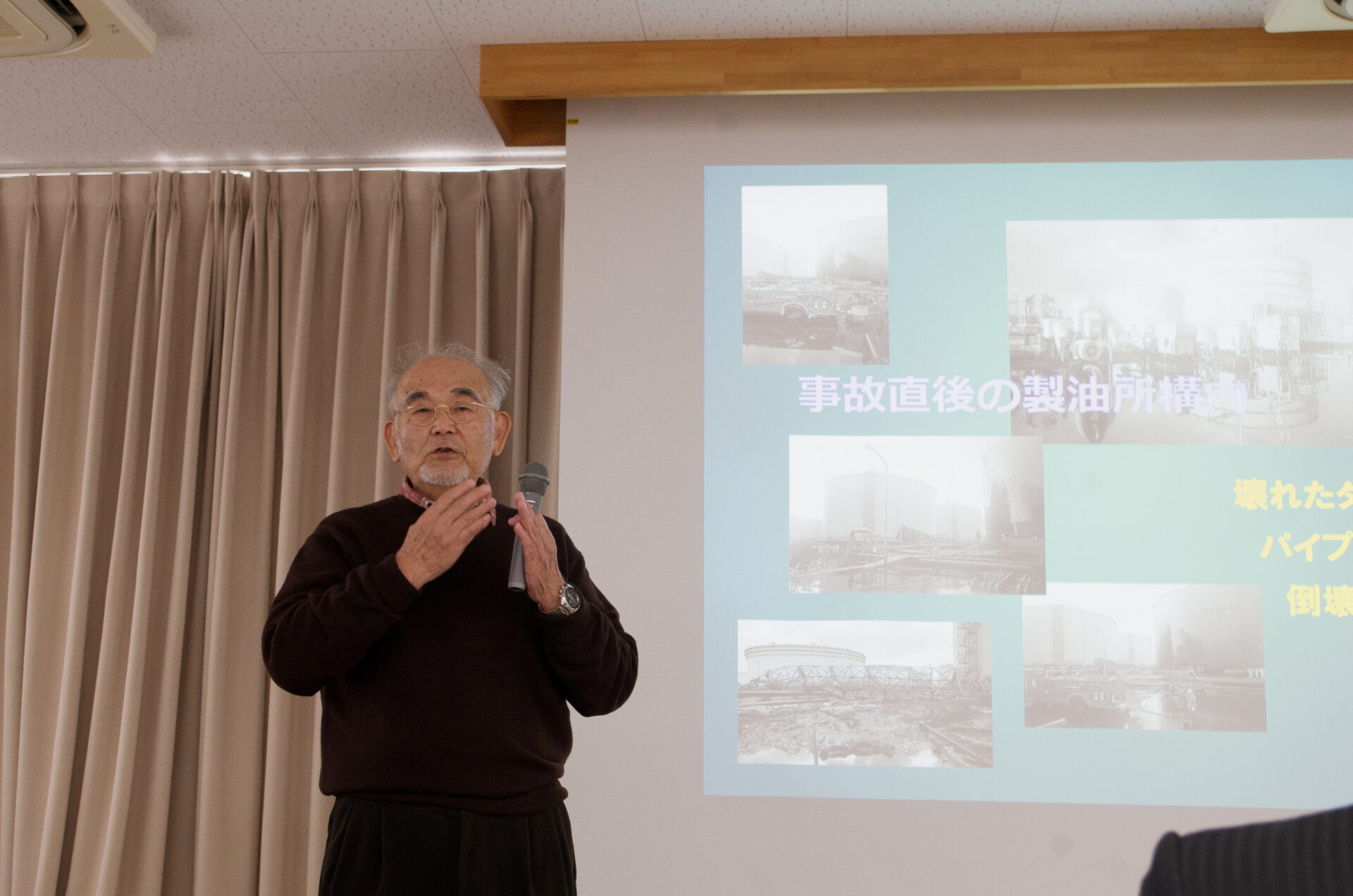
On the day of the accident, I was on night duty and heard a loud "boom" while inspecting the site. I learned about the oil leak from the emergency broadcast and ended up riding my bicycle through the oil to check the situation.
Even though I thought heavy oil was hard to ignite, I still remember the fear of wondering, "What would happen if it caught fire?" I rode my bicycle around until morning without knowing any details, and only when it got light did I finally understand what was happening.
After that, I went to Sakade, Takamatsu, Yashima, and Tokushima to respond to the accident.
Iwanaga Takahisa
Before the oil spill accident occurred, I thought that even if an accident happened, oil would not leak. I was nearby right after the accident happened, but I was very scared of the fire.
The response to the accident involved removing the oil surface and repeatedly wiping the oil off rocks with rags (commonly known as cloths).
At a tourist spot, there were concerns that the oil spill would reduce the number of visitors, so we were instructed to work discreetly, and we even worked early in the morning when there were no tourists.
Once the response to the accident settled down, I started activities as a company liaison, such as soccer schools and women's baseball, and public relations activities to help people understand the refinery, because I felt that engagement with the community and information sharing are important.
After hearing Mr. Furukawa's talk at a lecture, I wanted to learn more about the Mitsubishi Oil Mizushima Refinery oil spill accident, so I later went to talk to Mr. Furukawa again.
Data on the 50th Anniversary Lecture of the Mitsubishi Oil Mizushima Refinery Oil Spill Accident
| Name | Mitsubishi Oil Mizushima Refinery Oil Spill Accident 50th Anniversary Lecture |
|---|---|
| Date | December 20, 2024, 2:00 PM - 3:30 PM |
| Location | 1-50, Mizushima Higashi Chidori-cho, Kurashiki City, 4F West Building |