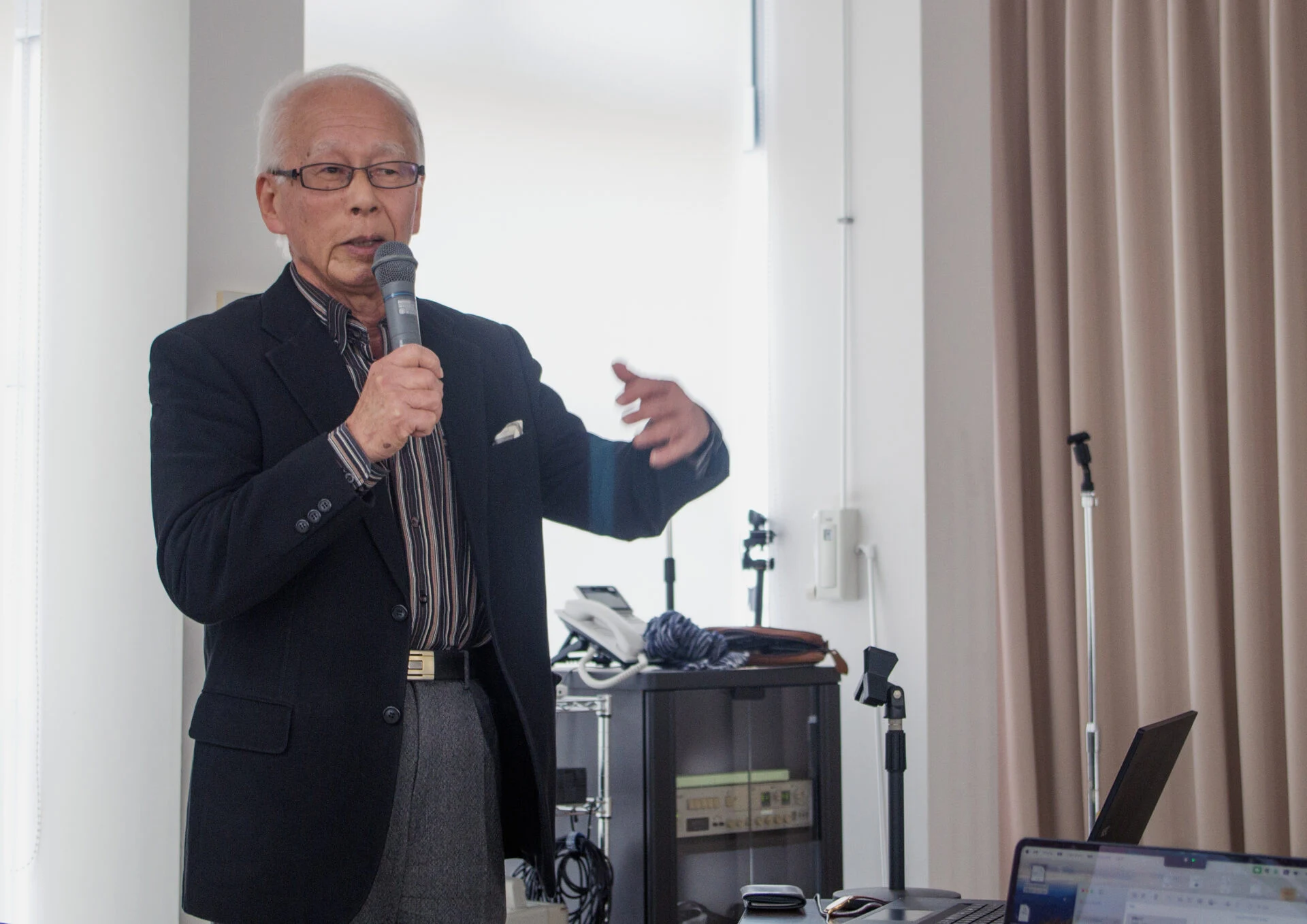
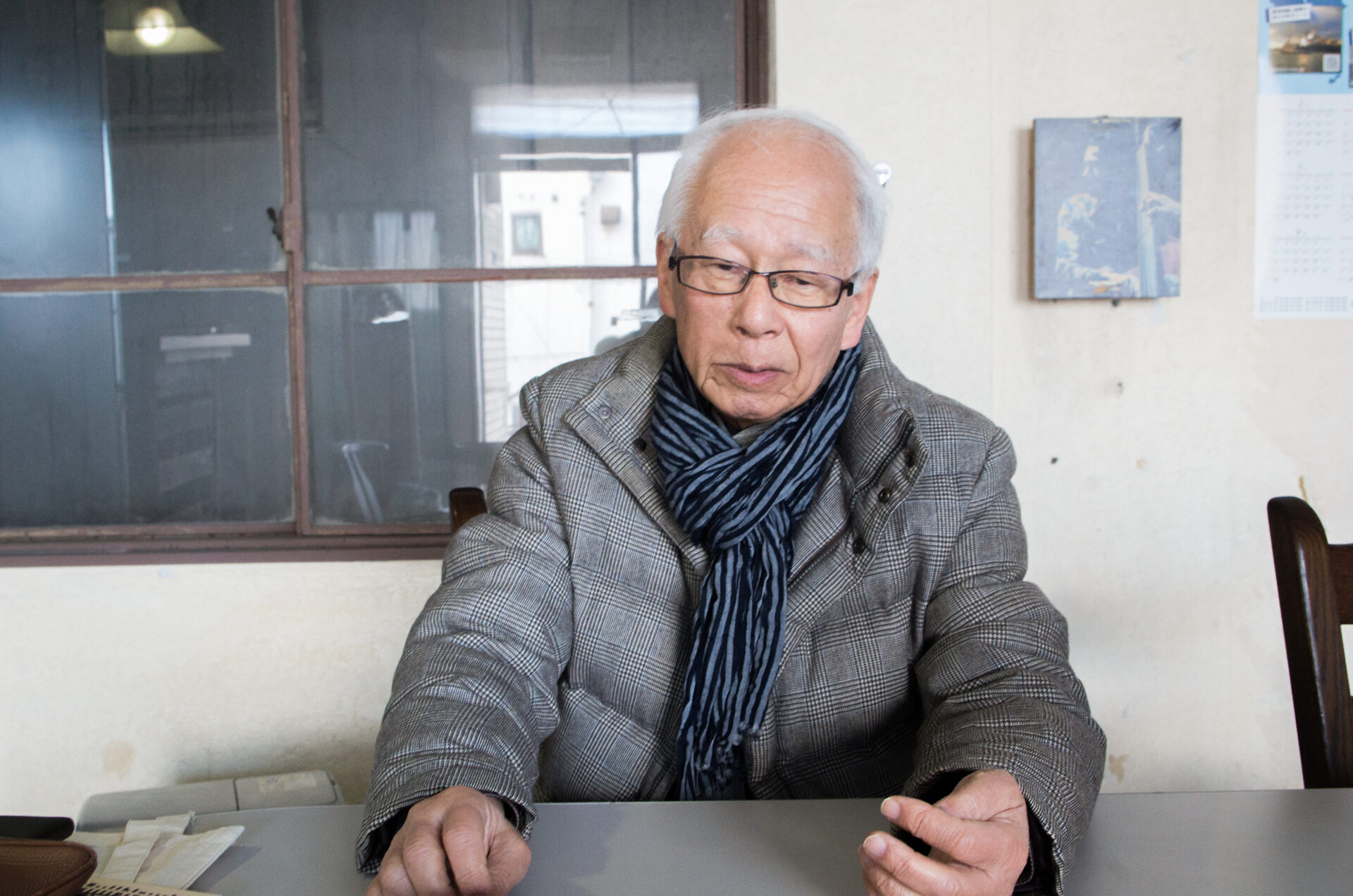
Interview with Furukawa Akira
Do you know what caused the accident?
Furukawa
The cause of the accident has been published in subsequent accident investigation reports, indicating that after the tank was installed, the foundation work for the attached vertical stairs was insufficient, leading to uneven settlement and the collapse of the stairs.
The collapsed stairs damaged the oil containment dike, resulting in a large amount of heavy oil spilling out.
What were you doing at the time of the accident?
Furukawa
I joined the company as a new employee in April 1974 and was assigned to the Tohoku Oil Sendai Refinery from October of the same year.
I learned about the accident the day after it occurred, and since I had no detailed information, I never imagined that the damage would extend to the eastern half of the Seto Inland Sea.
When the year 1975 began, a few days after the start of work, I was suddenly called by my supervisor, given a plane ticket to Takamatsu, and instructed to assist with on-site operations, flying to Shikoku and belonging to the Takamatsu headquarters.
What actions did you take after flying to Takamatsu?
Furukawa
I was assigned to a small team of five responsible for the Sakade area. The team consisted of a managerial staff member who was the leader, two experts from the logistics department at headquarters, a sales staff member who was a senior from university, and myself.
Our main tasks involved supporting those engaged in oil recovery and coastal cleanup in the areas of Banshu, Okoe, Shami, and Utazu around Sakade, as well as negotiating with related organizations such as fishing industry stakeholders.
Among these tasks, I mainly handled incoming phone calls from various sources and the procurement and delivery of oil recovery equipment such as absorbent mats, booms, and scoops.
In parallel, I also arranged and coordinated the pickup of oil-soaked absorbent mats and drums collected by local fishermen and residents.
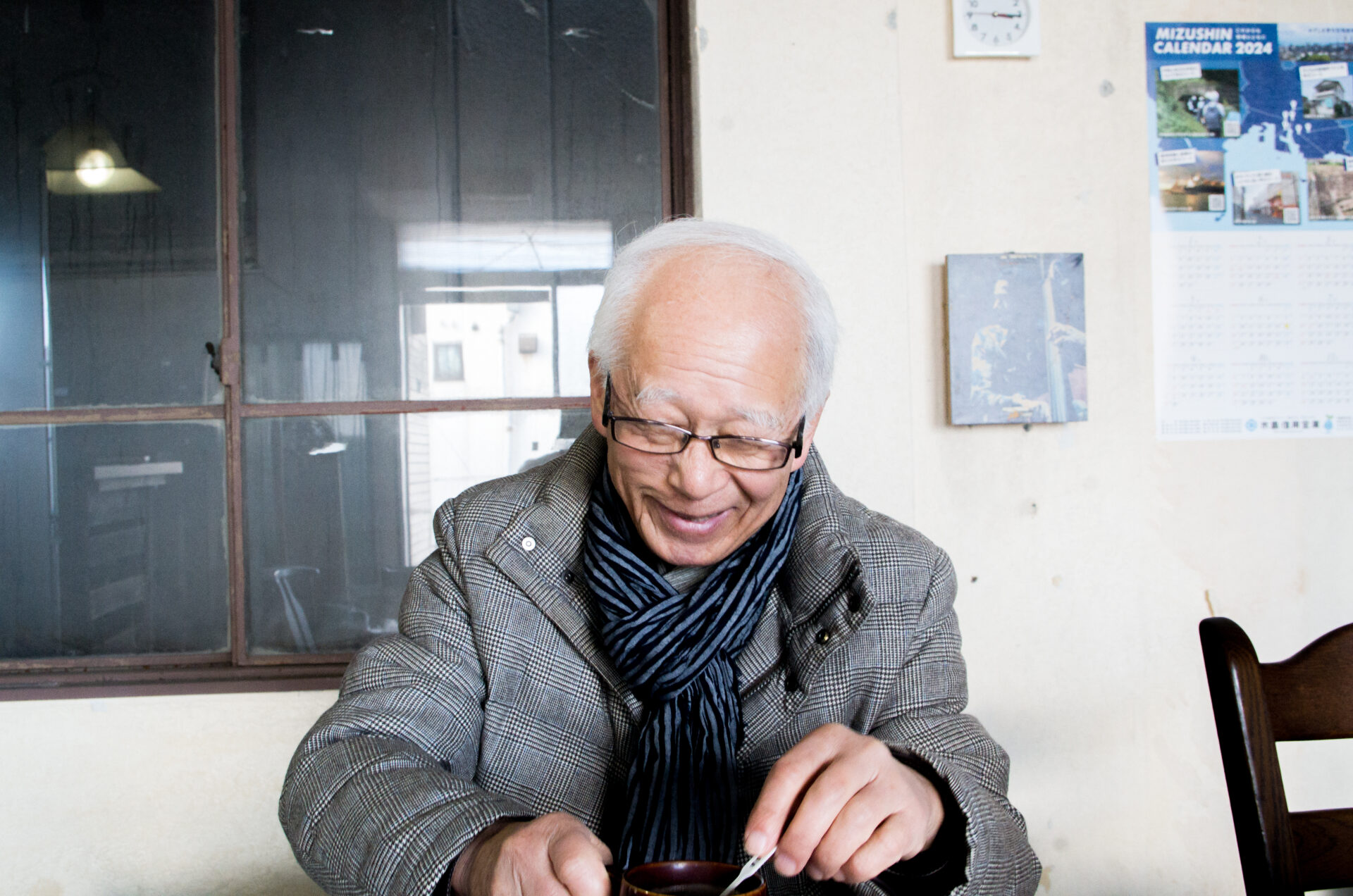
The fishing cooperatives and others must have been greatly affected as well.
Furukawa
For those in the fishing industry, the impact of the accident was directly linked to their livelihoods, and since they were engaged in oil recovery and coastal cleanup from morning till night, I believe they experienced pain that froze their hearts.
When I went to deliver equipment to a fishing cooperative in a certain area, I was suddenly presented with oil-soaked seafood and told to eat it. In a moment of panic, I picked up a shellfish from among them, threw it into my mouth, and deeply apologized in front of everyone.
Considering the position of those affected in the fishing cooperatives, I could only apologize profusely, and that kind of awkward daily life continued for about a month.
You mentioned "about a month," but did you feel any changes during that time?
Furukawa
For a while after being assigned, I was commuting back and forth between Takamatsu and Sakade, but after some time, I began to see smiles on the faces of the fishing industry stakeholders, and they started to offer kind words every time I visited.
A friend who joined the company at the same time told me, "A local woman brought us tea during the Obon festival. I have never tasted tea as delicious as that in my life. They were watching our diligent recovery efforts closely, and it gave me the courage to do my best again starting tomorrow."
(*I also spoke with Hayashi, who joined us later)
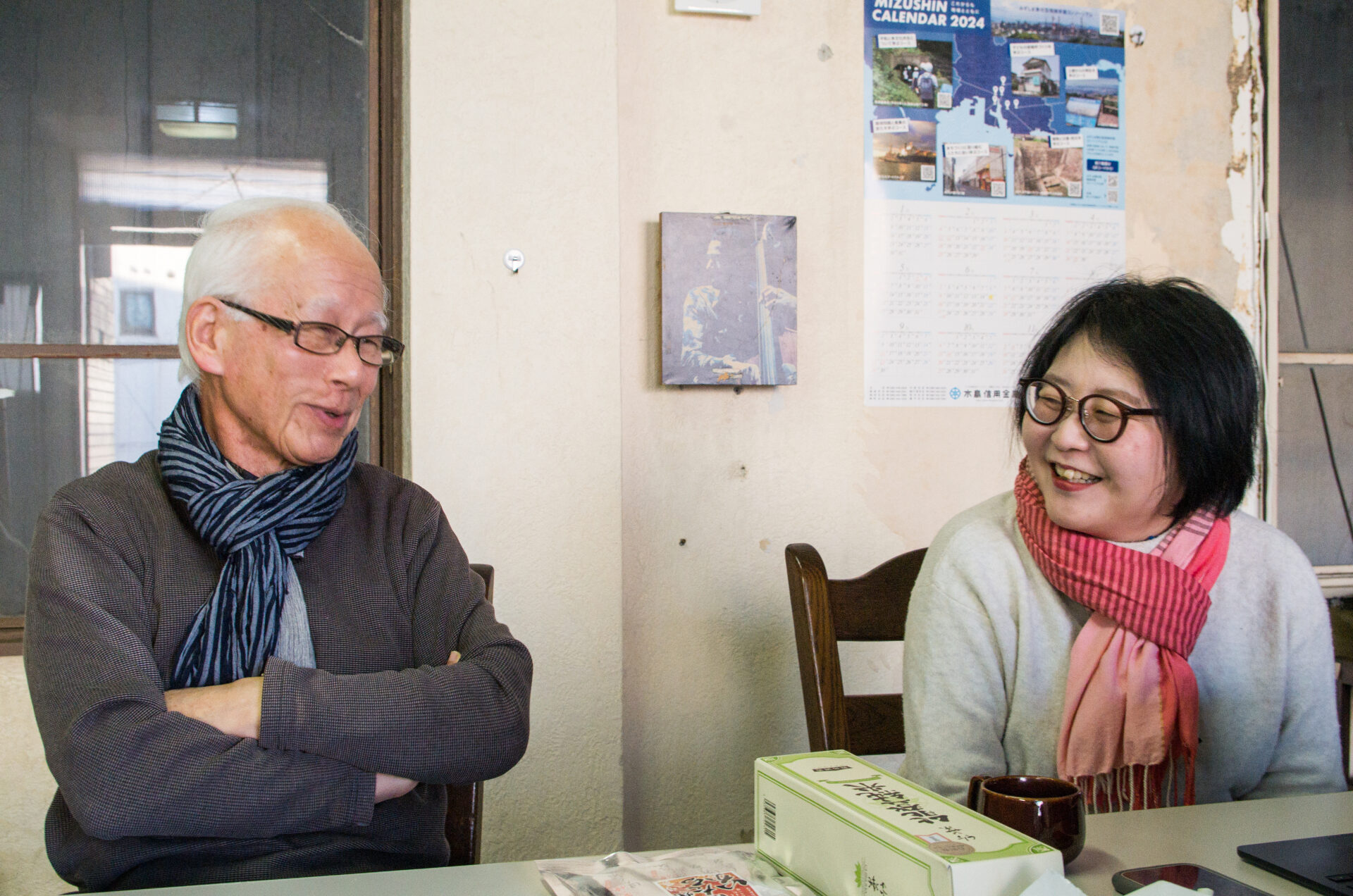
Is there a reason you intentionally added "commemorative lecture" to the title of this lecture?
Hayashi
Since there are many people, including those from the fishing cooperatives, who suffered losses due to the Mitsubishi Oil Mizushima Refinery oil spill accident, I considered whether it was appropriate to call it a commemorative lecture.
On the other hand, there are increasing numbers of people who do not even know about the Mitsubishi Oil Mizushima Refinery oil spill accident. Additionally, the number of people who have experienced cleaning up heavy oil with scoops is also decreasing, so I thought it was important to convey the tragic accident and prevent the memory from fading.
Therefore, on the 50th anniversary of the Mitsubishi Oil Mizushima Refinery oil spill accident, I wanted to make this commemorative lecture not just about the pessimistic memories but also as a starting point for continuing to convey the story.
The title of the lecture included "Coincidence that seems almost inevitable." It has been 50 years since the Mitsubishi Oil Mizushima Refinery oil spill accident.
Furukawa
Until now, I thought that my experiences dealing with the four major oil spill accidents were a series of "coincidences," but upon reconsideration, I feel that they were indeed "inevitable."
To utilize the lessons of the past, I believe it is important to prevent experiences from fading, to record and pass them on.
Additionally, there has been a tendency for colleagues at work to have many painful memories regarding the accident and to be reluctant to talk about them. It was good that, for this lecture, three people were willing to open up when I asked them.
Fifty years have passed since the accident, and the number of people who do not even know about it is increasing. We want to continue to convey our experiences so that this tragic accident is not forgotten.
Conclusion
As a result of this lecture, I researched and learned the following:
- The damage from the spilled oil amounted to 1.5 billion yen.
- Including damages to coastal fishermen, the cost of recovering the spilled oil, and long-term suspension of operations, the total damage reached approximately 50 billion yen.
- As a result of discussions between Mitsubishi Oil and two companies involved in the foundation work for the vertical stairs, agreements were made and implemented regarding the sharing of loss burdens and the repair of the tank.
I learned that the occurrence of the accident is not simply the responsibility of Mitsubishi Oil alone, but involved a chain of misfortunes that ultimately led to enormous damage.
It is essential to prevent such a tragic accident from happening again and, in the event of an accident, to utilize the knowledge gained to minimize damage as much as possible. I believe that the significance of this lecture being held 50 years later is important.
Furukawa's experiences, which seem to be more than mere coincidences, can also be viewed in the journal of the Hazardous Materials Safety Technology Association, "Safety & Tomorrow November 2024, Issue 217".
Please be sure to check it out.
Data from the 50th Anniversary Lecture on the Mitsubishi Oil Mizushima Refinery Oil Spill Accident
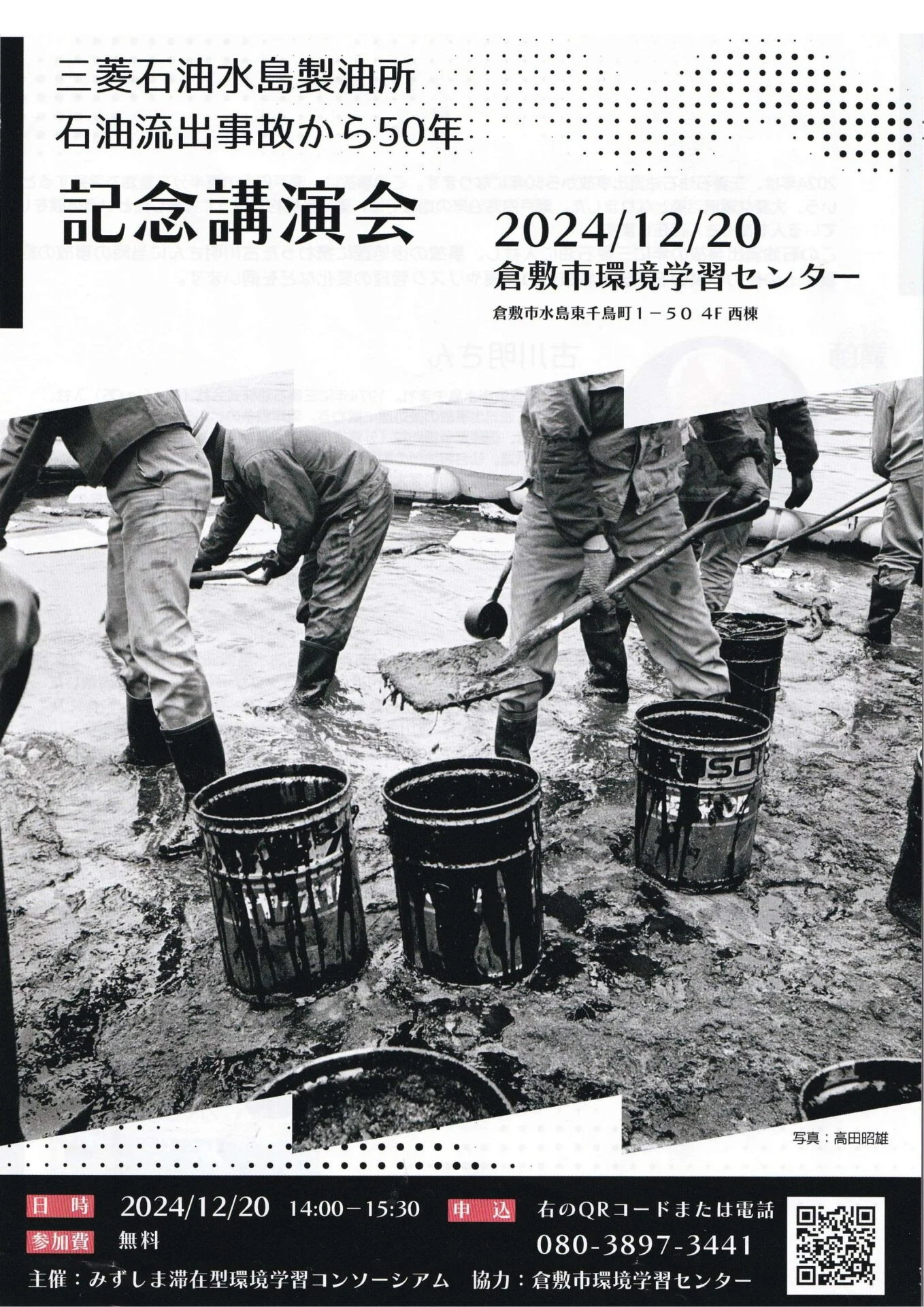
| Name | 50th Anniversary Lecture on the Mitsubishi Oil Mizushima Refinery Oil Spill Accident |
|---|---|
| Date | December 20, 2024, 2:00 PM - 3:30 PM |
| Location | 1-50 Higashichidori-cho, Mizushima, Kurashiki City, 4F West Building |