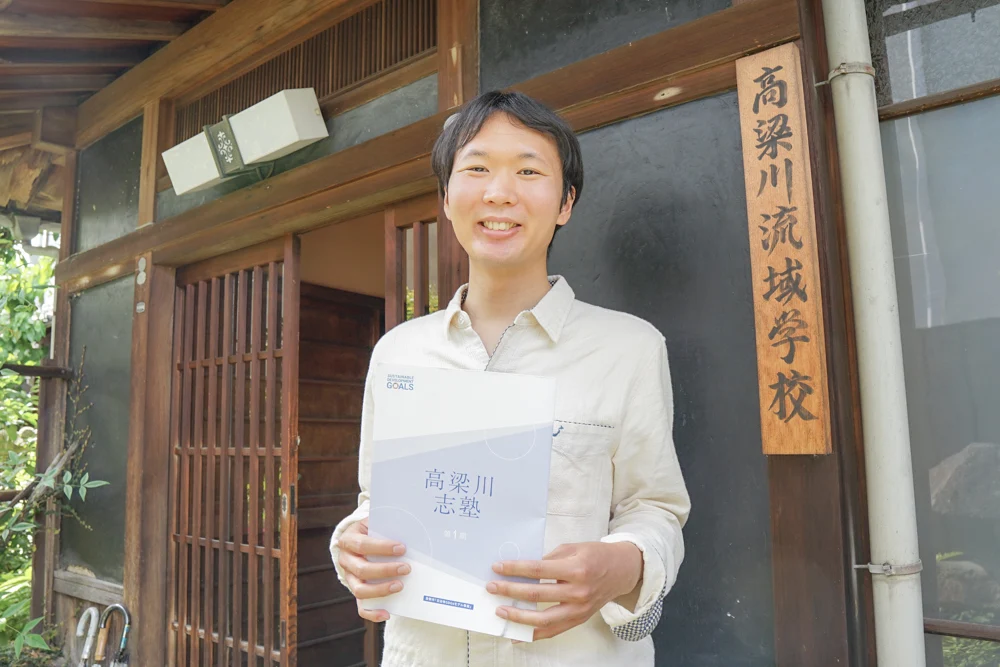
Takahashi River Shijuku aims to achieve the SDGs in the Takahashi River basin and is a school designed to create human resources capable of playing a central role in community activities.
From June 2021 to September 2021, Takahashi River Shijuku 2nd Term was held, with about 30 lectures planned by instructors active in the Takahashi River basin.
On August 1, 2021 (Sunday), a fieldwork event was conducted where students traveled to Niimi City, Okayama Prefecture.
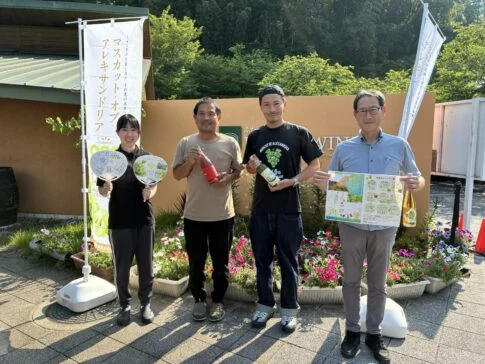
Mr. Akira Nonami, who is engaged in the cultivation of wine grapes and wine production, and Mr. Reihei Matsuda, who runs an amago (Japanese trout) farming business and a restaurant, introduced their activities on-site.
We observed the scenery of the source of the Takahashi River in Niimi City through projects undertaken by two former community revitalization cooperation team members from Niimi City.
Overview of Takahashi River Shijuku
Takahashi River Shijuku is operated by the general incorporated association Takahashi River Basin School as a commissioned project by Kurashiki City, aiming to foster human resources that will contribute to community development and sustainable regions through history, culture, industry, and fieldwork in the Takahashi River basin.
There are two types of courses available:
- “SDGs Exploration Course” which includes practical training and presentations
- “Auditor Course” where participants can attend optional lectures
The first term of Takahashi River Shijuku was held from November 2020 to February 2021, and the second term began in June 2021.
The opening ceremony was held on June 27, 2021 (Sunday), and about 30 lectures are scheduled to take place by the completion ceremony on September 26, 2021 (Sunday).
The content of the lectures includes the following five categories:
| Category | Content |
|---|---|
| SDGs Vision Edition | Lectures where participants can hear about the 2030 vision and current initiatives in the Takahashi River basin from instructors actively engaged in these activities |
| Liberal Arts Edition | Lectures to gain knowledge about history, culture, and industry in the Takahashi River basin |
| Skills Edition | Lectures to acquire necessary skills and know-how for carrying out activities in the community, such as presentations, utilization of IT tools, and use of blogs and social media |
| Local SDGs Mission Edition | Workshops to redefine the 17 goals of the SDGs as they relate to the Takahashi River basin and set objectives |
| Fieldwork | Experiential learning in community revitalization in the Takahashi River basin |
In the first term, there were three types: SDGs Vision Edition, Liberal Arts Edition, and Skills Edition, but from the second term, Local SDGs Mission Edition and Fieldwork have been newly added.
For those who want to know more details, let's check the special page for Takahashi River Shijuku.
Okayama Wine Valley
Instructor Mr. Akira Nonami's Background
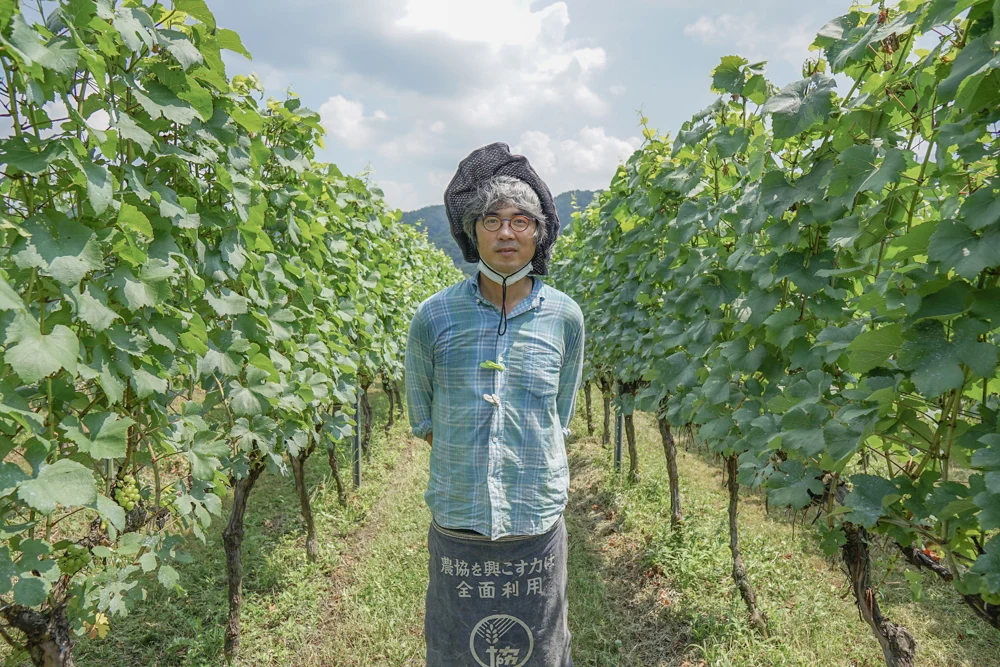
Mr. Nonami, the representative of Okayama Wine Valley, moved to Niimi City, Okayama Prefecture in 2014 as a community revitalization cooperation team member.
He is cultivating wine grapes by reclaiming abandoned farmland and utilizing the know-how of table grape cultivation that has been developed in Okayama Prefecture and the Niimi area.
In 2018, he established the winery Aratoyama Winery.
He plans to produce about 3,000 bottles of wine annually.
Details about Mr. Nonami's activities are summarized on the Okayama Wine Valley website and social media, so those interested should check it out.
Scenery of the Vineyard
Much of the terrain in Niimi City consists of a karst plateau made up of limestone.
Therefore, it is said to be rich in minerals and well-drained, making it suitable for grape cultivation.
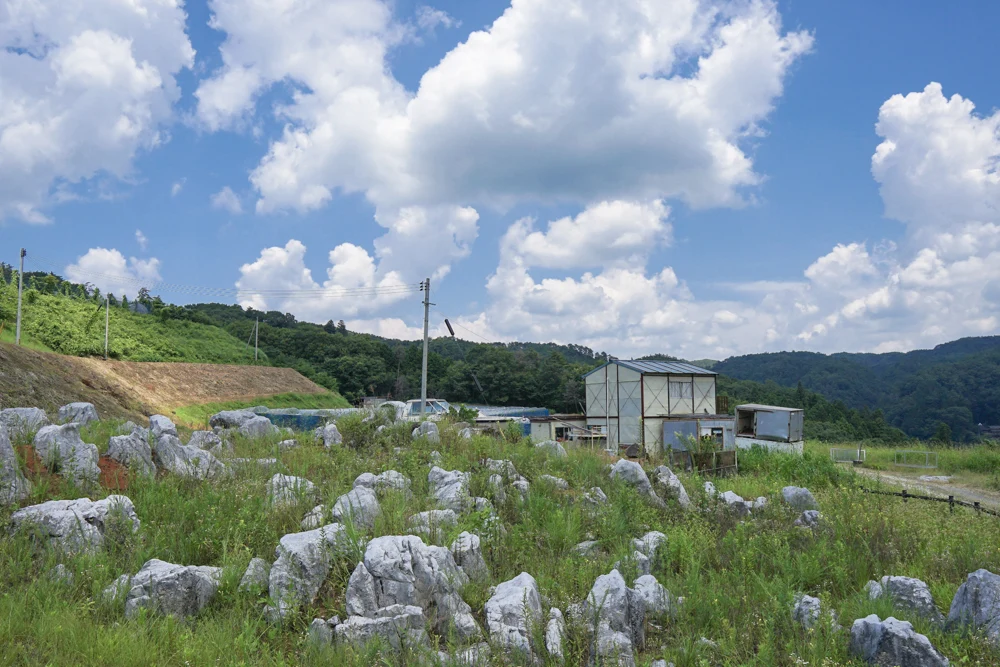
Near the vineyard, we could see the scenery where limestone is exposed.
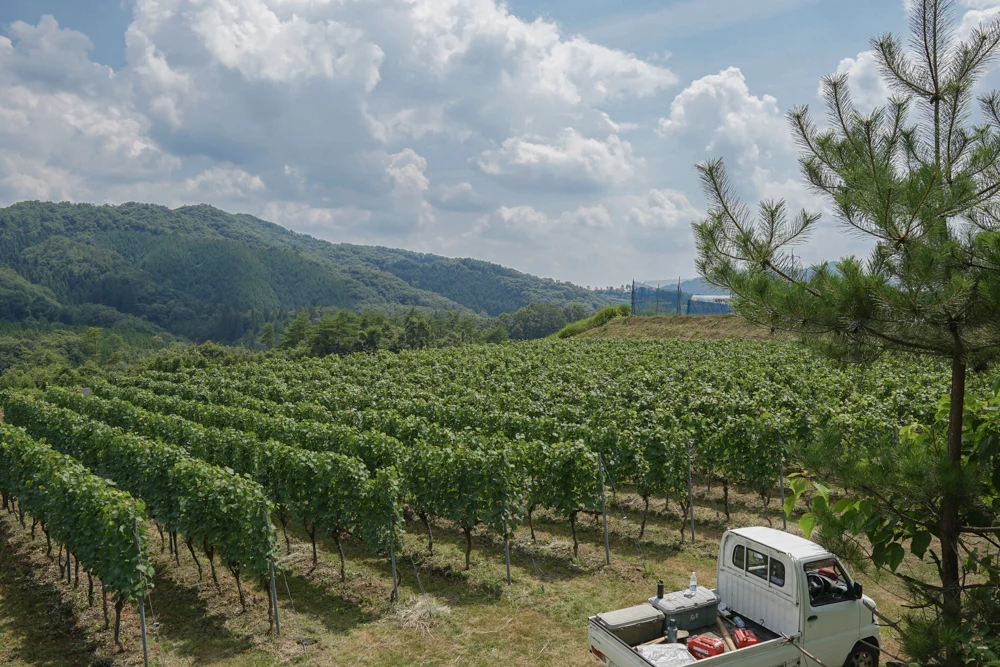
The presence of sharp valleys is also a characteristic.
The slopes are well-sunlit and allow the wind to pass through, creating an ideal environment for vineyards.
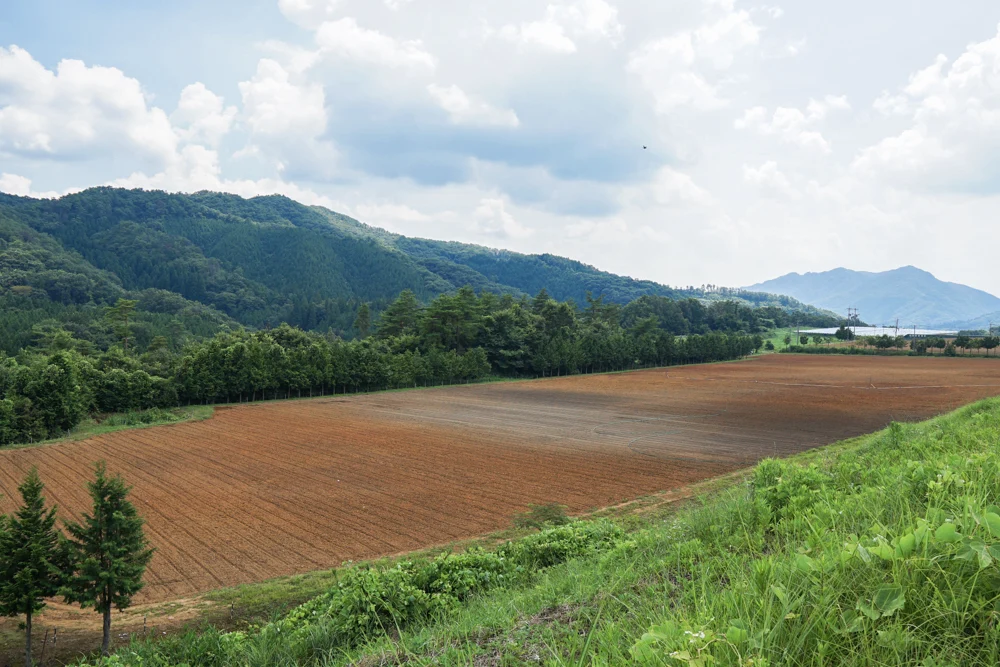
The surface is covered with terra rossa (red soil), which is a unique geological feature of Niimi.
In fact, we were able to see fields covered with red soil.
Agricultural Experience in the Vineyard
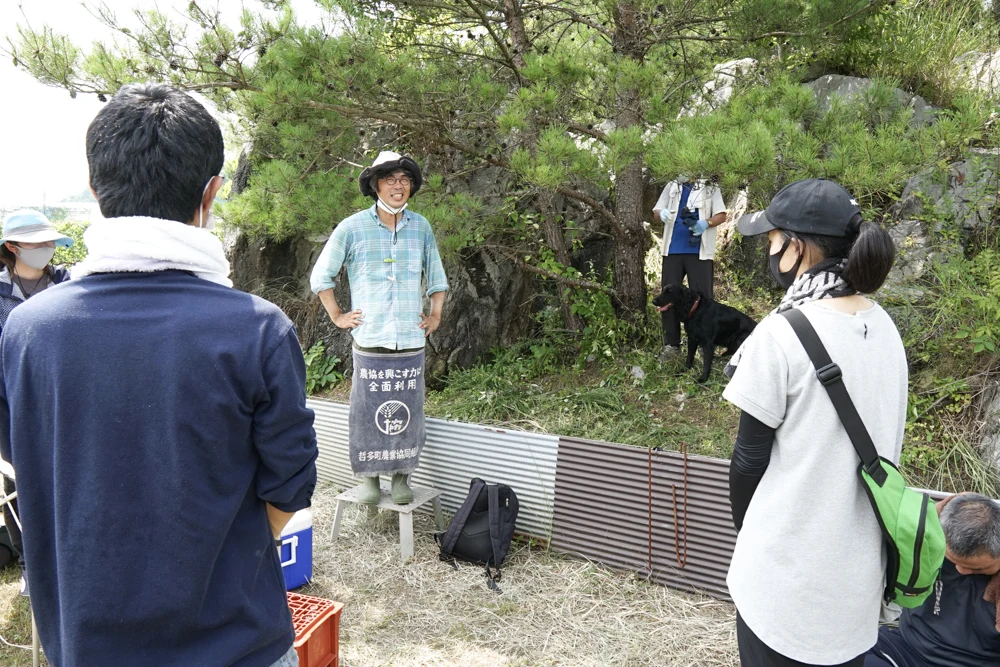
The fieldwork in Niimi City took place in early August 2021.
Since it was too early for grape harvesting, we carried out weeding.
It is a tedious and difficult task, but Mr. Nonami mentioned that it is important to lower humidity and protect the grapevines.
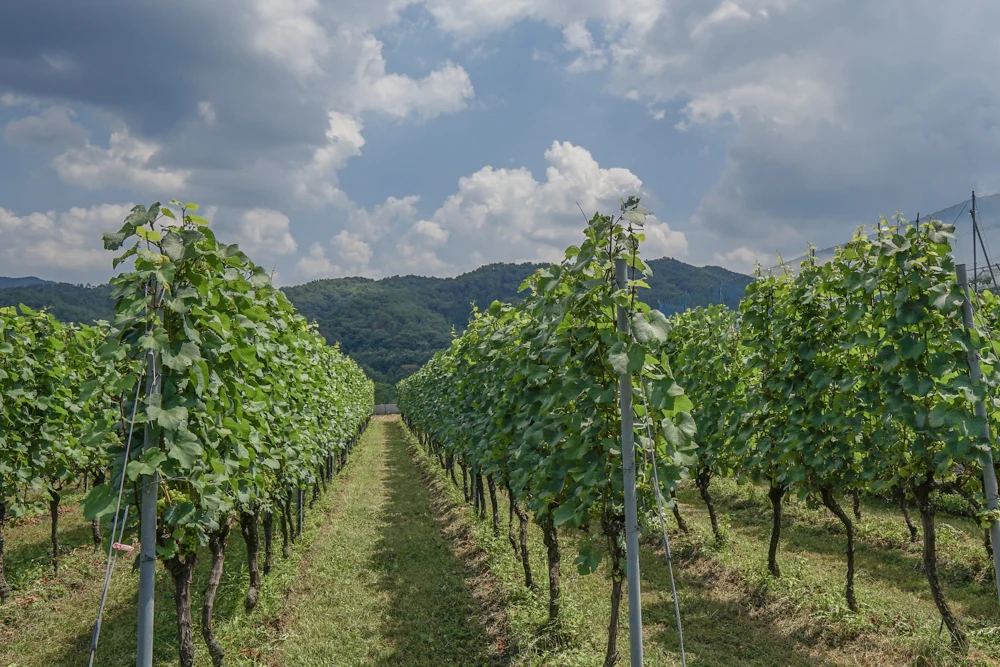
The grapevines were planted in straight lines, about 10 to 20 meters long, with approximately 30 rows in parallel.
▼We will start weeding.
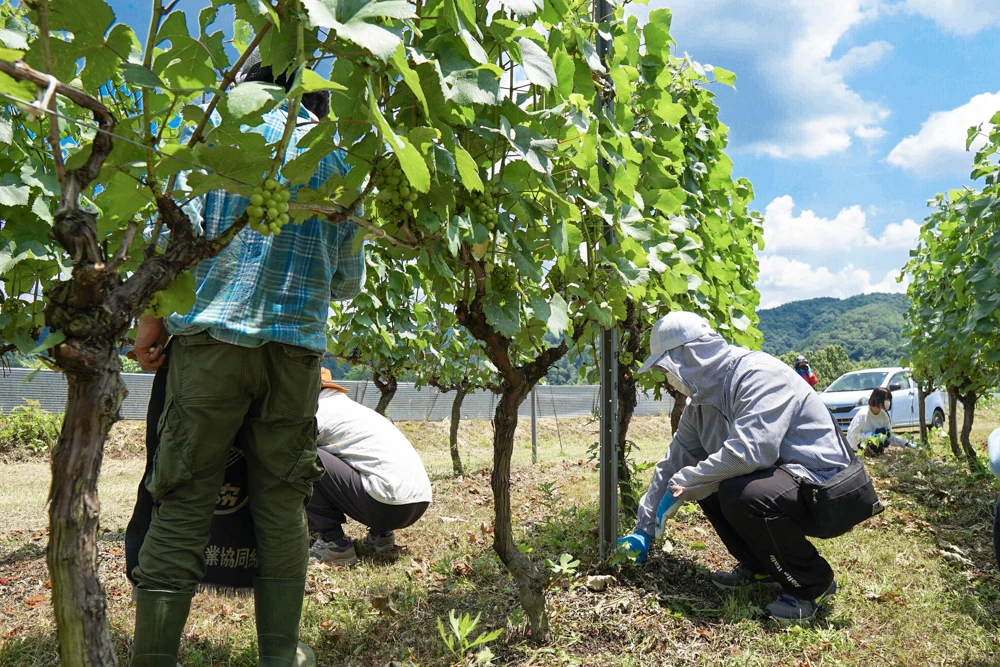
▼There were many weeds growing at the base of the grapevines that had not been cut by machines.
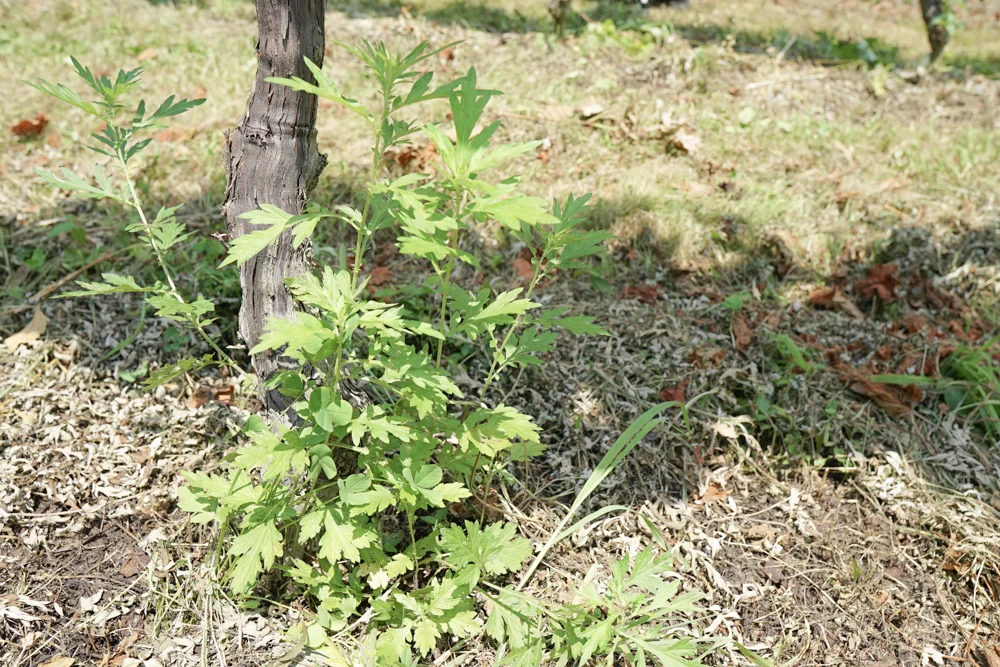
▼This is the condition of the grapevine trunks.
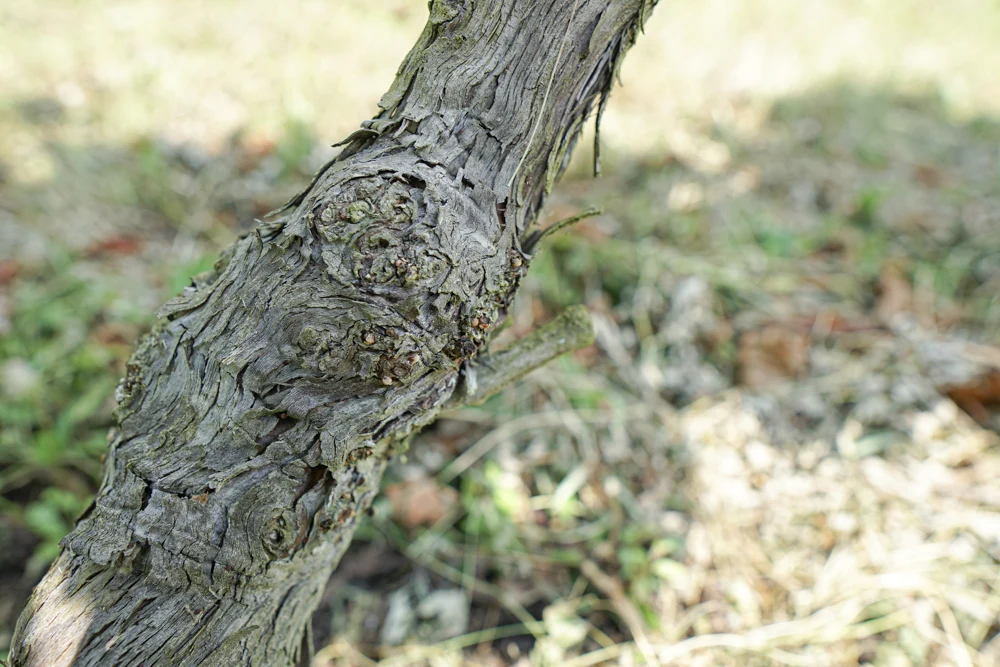
The pattern gave an impression of swirling spirals.
It was my first experience to closely observe the trunks of grapevines.
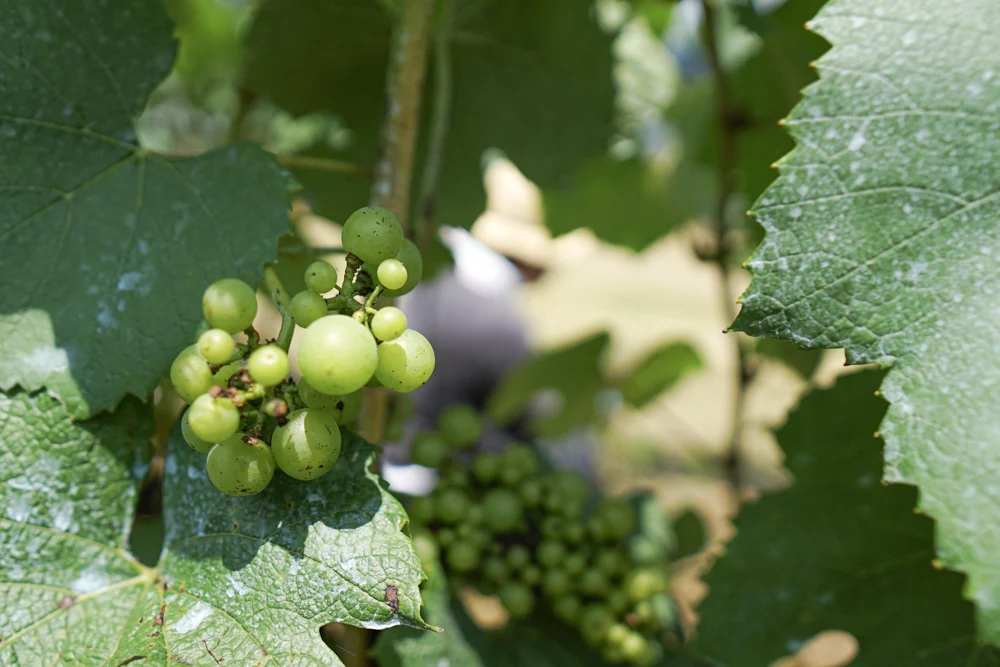
▼When I shifted my gaze to the branches, I found cute grape berries.
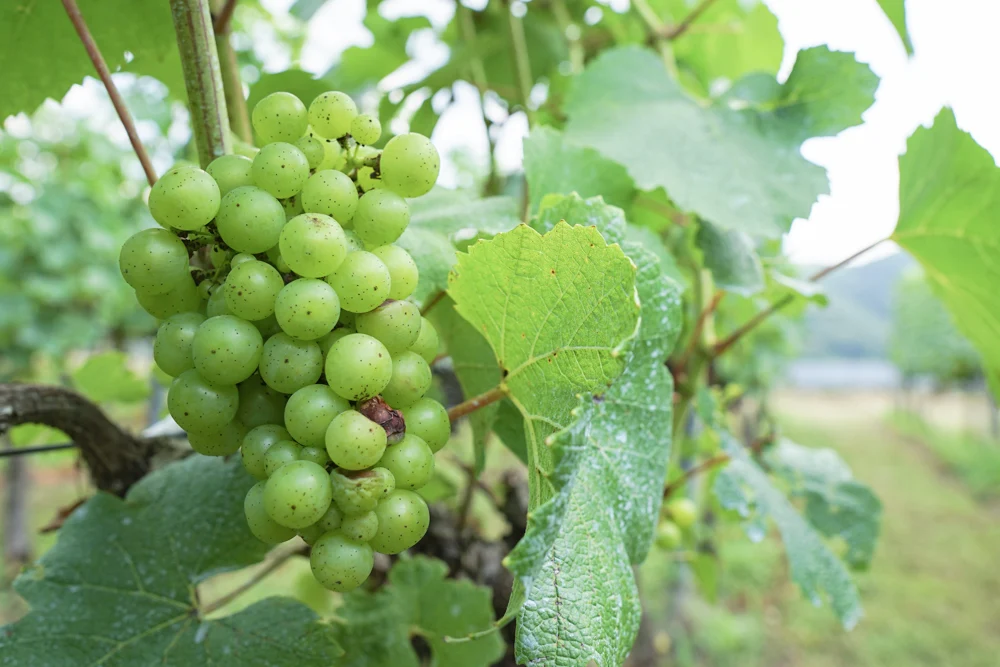
▼I also saw well-grown grape berries.
During the afternoon work in early August, I started sweating just from moving around a little.
Although we took breaks frequently while weeding, many participants seemed to show tired faces.
Mr. Nonami mentioned that he sometimes does weeding alone in a vineyard of about 60 ares.
Experiencing the hard work firsthand allows one to imagine the difficulties faced by those who make a living through agriculture.
Every time I drank water, I felt as if the moisture was being absorbed into my body, but I felt that experiencing the hardships is also the essence of fieldwork.
Aratoyama Winery
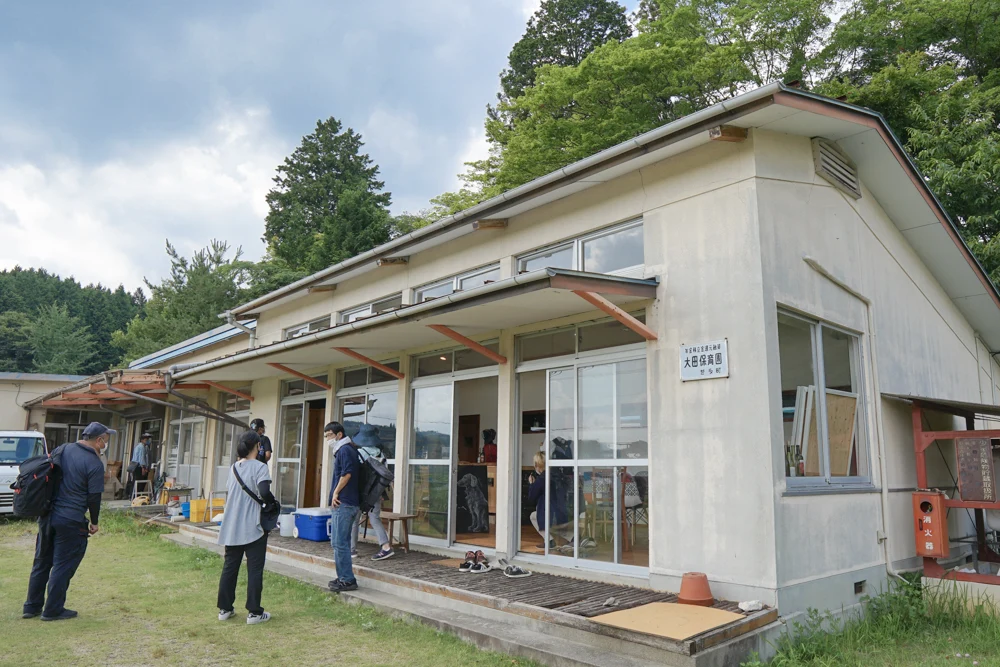
After weeding, we moved to the winery Aratoyama Winery and toured the facility.
It is a winery renovated from a kindergarten located at the foot of Aratoyama in Tetta-cho, Niimi City.
Cute exterior makes it difficult to realize it is a winery without an explanation.
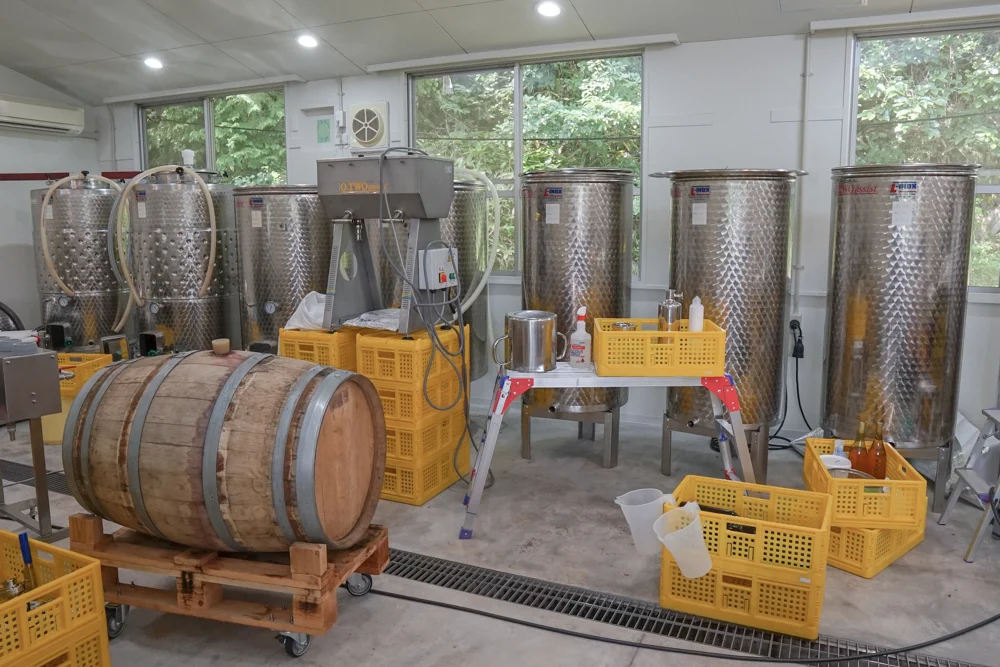
Inside the building, there are splendid brewing facilities.
To maximize the flavor of high-quality grapes nurtured by land suitable for grape cultivation, they strive for simple brewing.
In addition to the winery, there is also a sales area and an art space.
When visiting Aratoyama Winery, advance registration is required, so please check the website.
Amago Fish Farm
Instructor Matsuda Reihei's Background
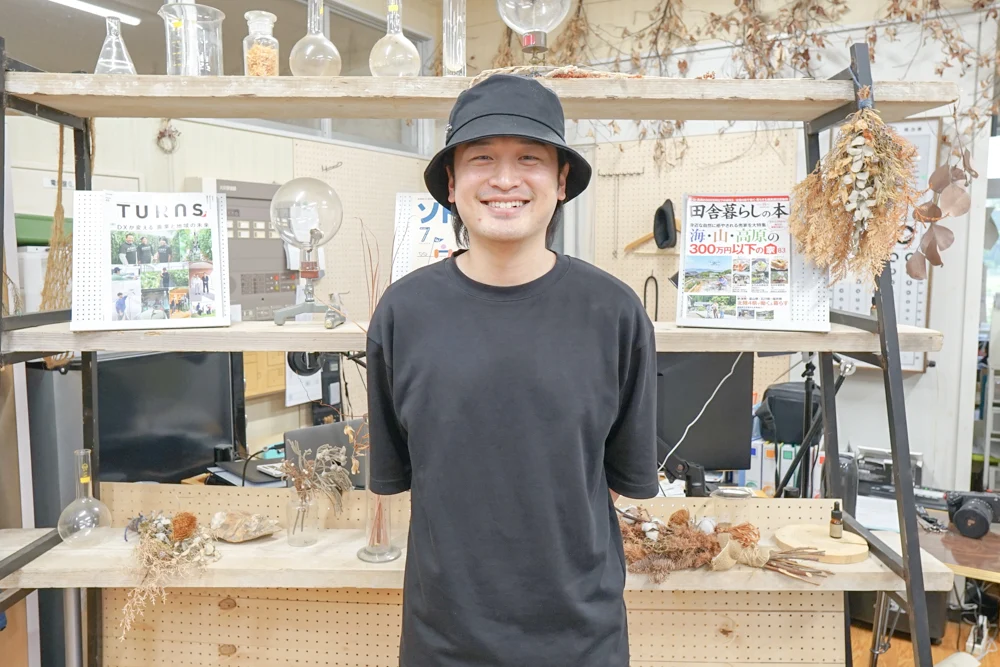
Matsuda-san moved from Fukuoka City, Fukuoka Prefecture to Niimi City, Okayama Prefecture in 2014 as a regional revitalization cooperation volunteer.
Since childhood, Matsuda-san had been thinking of living independently rather than being employed, and studied cooking and management at a restaurant while attending a correspondence high school.
He utilized the regional revitalization cooperation volunteer system to search for a business to become independent.
Wanting to act freely, he researched the recruitment of regional revitalization cooperation volunteers with the condition of being a first-term student and ended up in Niimi City, Okayama Prefecture.
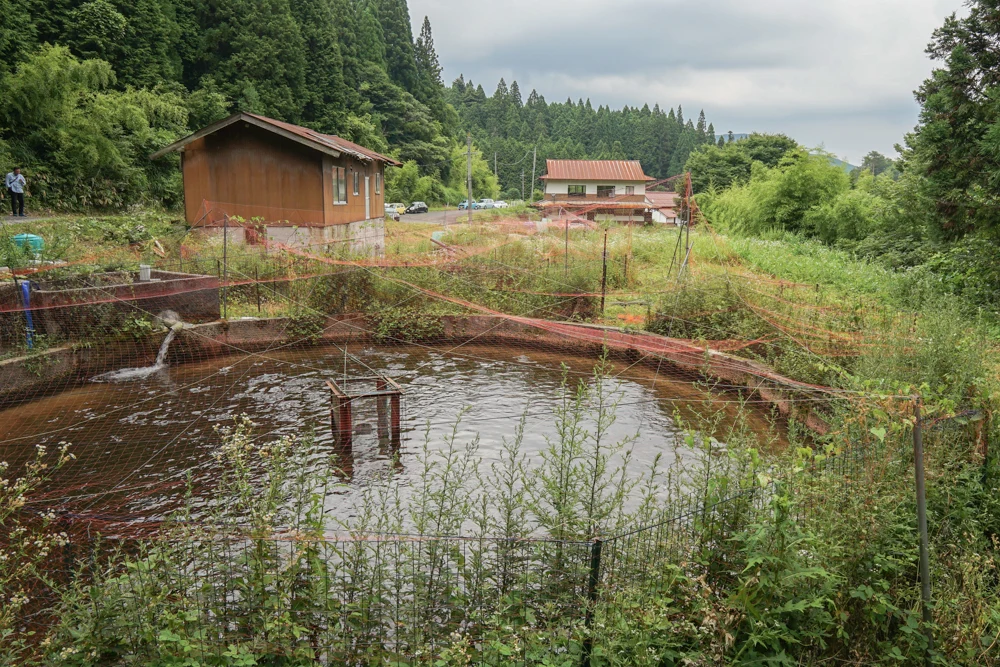
After being assigned as a regional revitalization cooperation volunteer, he started amago fish farming just one month later.
Currently, he also runs a restaurant café&bar naradewa (Café and Bar Naradewa) in Omote-machi 3-chome, Okayama City, serving dishes using amago, and lives in two locations: Niimi City and Okayama City.
Additionally, he has established a general incorporated association for forest thinning projects and an NPO for migration support, and has been involved in the management of many organizations.
Matsuda-san also serves as a lecturer in the Takahashi River Shijuku First Term, introducing his initiatives.
In the second term, he guided us through the amago fish farm and the former Aburano Elementary School, which has been renovated as a place for interaction among migrants.
Visit to the Amago Fish Farm
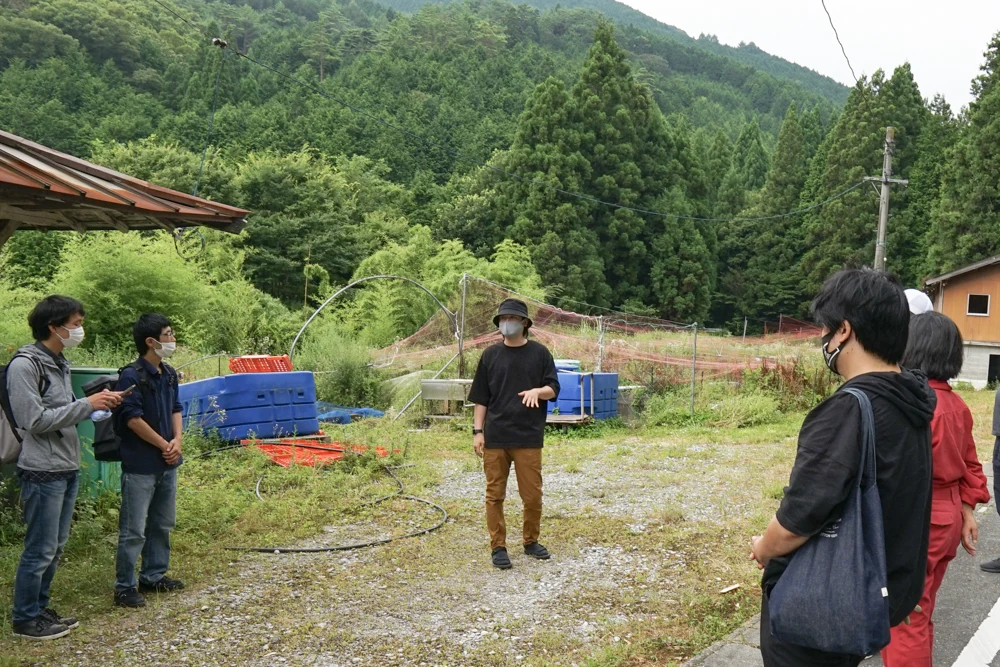
The amago fish farm operated by Matsuda-san is located at the northwest edge of Niimi City.
Crossing one mountain, you reach a place that is either Hiroshima Prefecture or Tottori Prefecture, which is also the northwest edge of Okayama Prefecture.
At an elevation of 650 meters, it is the uppermost stream of the Kamigawa Aburano area, so there are no houses or fields upstream of the amago fish farm.
The water is clean as it is not affected by domestic wastewater or pesticides, but it is a bit inconvenient for living as it is also a snowy area in winter.
However, being inconvenient does not mean it is hard to live, and he taught us that ultimately, once you get used to it, you can live anywhere.
It takes about 1 hour by car even from the center of Niimi City.
▼ The state of the amago fish farm.
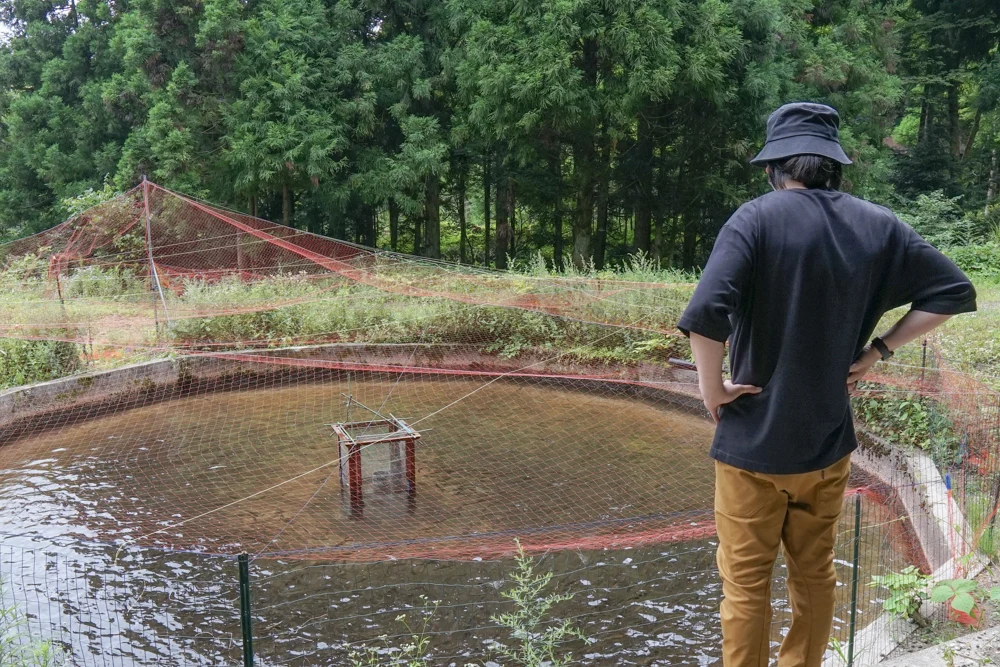
Matsuda-san utilized equipment that had been unused for about 15 years to restart the amago fish farm in 2014.
At that time, Matsuda-san had no knowledge of amago farming, so he studied through the internet and books.
In modern times, there is an abundance of information, so he mentioned that the burden of acquiring knowledge is not high.
For information that relies on connections with people, such as suppliers of fry, the local people have cooperated with him.
▼ The amago fish.
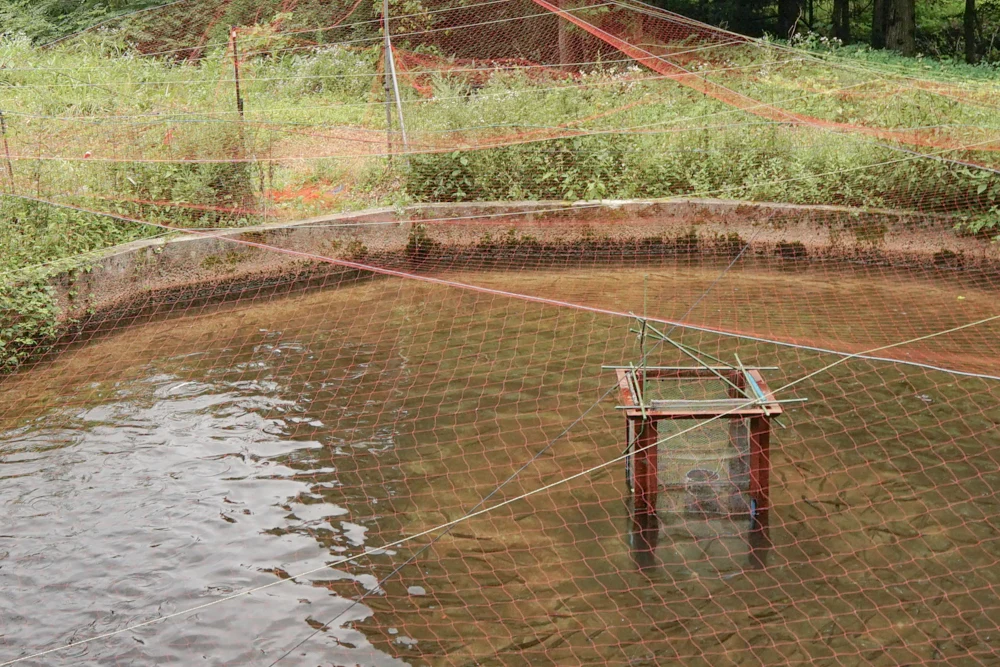
In this pond, there are amago that have been raised for about a year and a half since being purchased as fry.
In the adjacent pond, fry are being raised.
Since amago are carnivorous, it seems that smaller individuals can be eaten.
During the visit, there were 25,000 adult fish and 45,000 fry being farmed.
Visit to the Former Aburano Elementary School
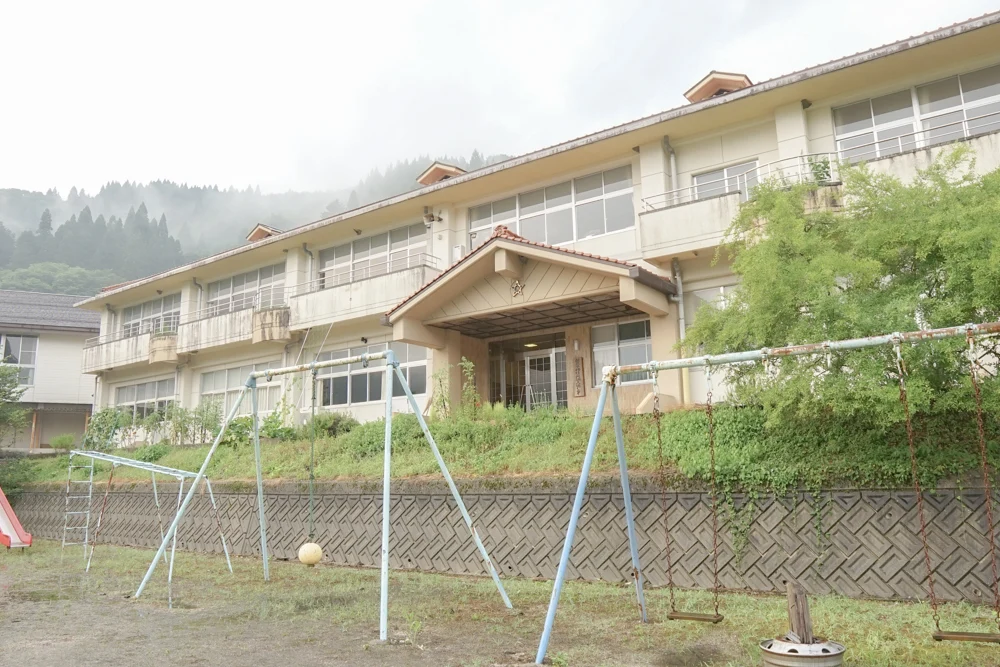
After visiting the amago fish farm, we were guided through the former Aburano Elementary School, which is now utilized as the Niimi City Migration Exchange Support Center.
It was built in 1991, and it was actually used as an elementary school for about 10 years.
Matsuda-san continues to collaborate with the government to utilize the closed school.
It has also become a hub for community interaction.
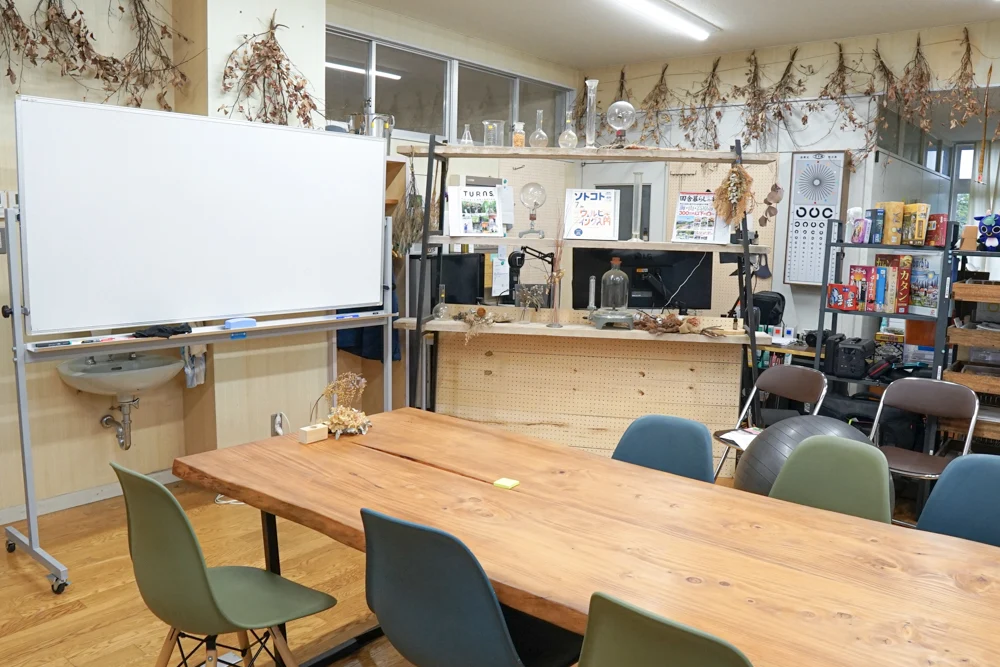
The interior does not feel like a school, with warm wooden furniture arranged throughout.
The tables are crafted by Saiki Yoshikazu, a woodworker and former regional revitalization cooperation volunteer from Niimi City.
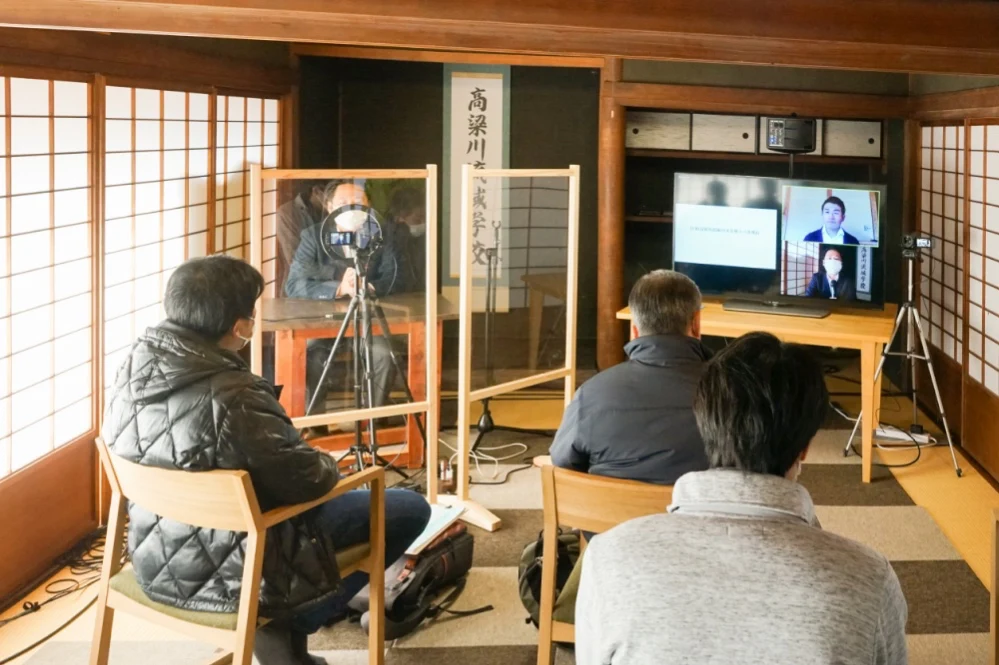
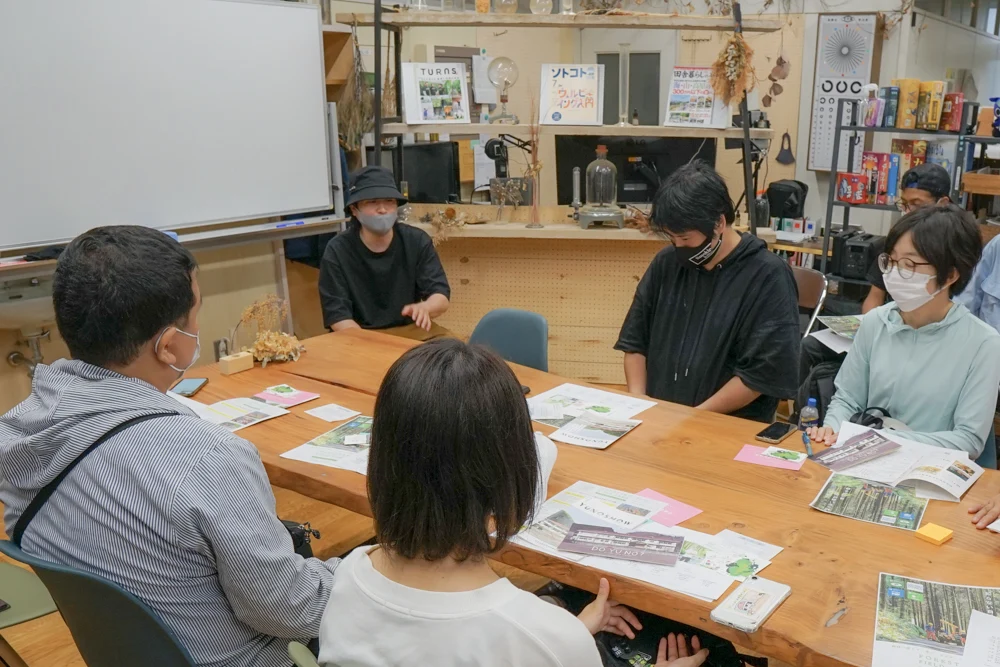
The final part of the fieldwork was a roundtable discussion between Matsuda-san and the participants.
We gained a lot of insights from Matsuda-san's thoughts on various projects, including amago farming, restaurant management, and forest thinning.
Visiting Niimi City, the Source of the Takahashi River
In geography class, we learned that grape cultivation is suitable in places with good sunlight and drainage.
When I actually visited the fields, I saw exposed limestone and grapevines lined up on the slope of the valley, just as I had learned.
The amago fish farm is located in a place that is inconvenient for living, at the uppermost stream of the village.
However, hearing that clean water flows in without being affected by human life made it feel like a precious place.
Both are environments created by nature that cannot be made by human hands.
In that environment, I felt that both grapes and amago are nurtured by borrowing the power of nature.
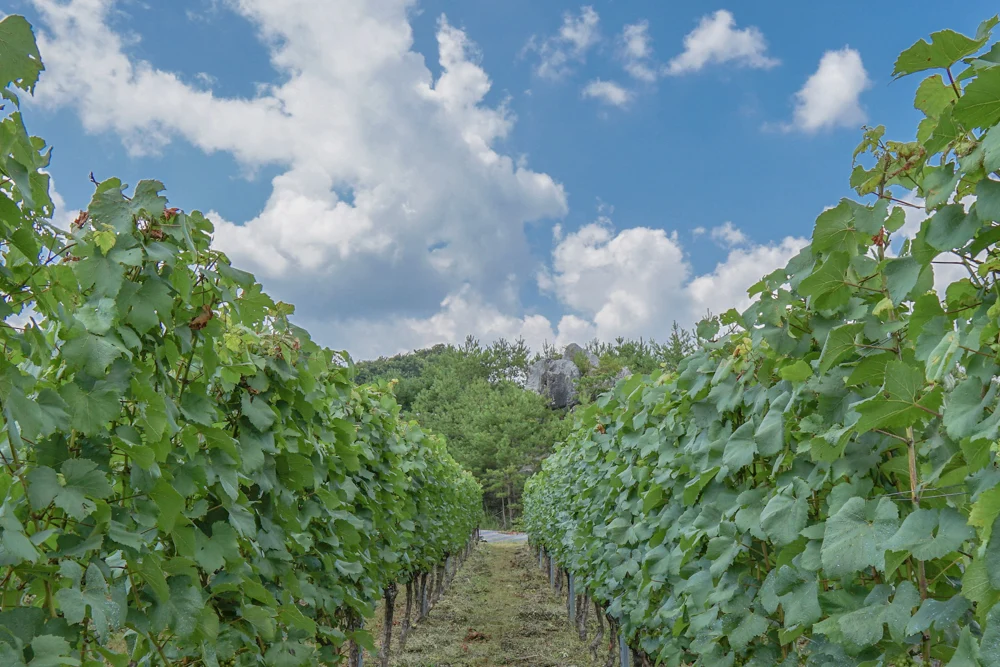
While feeling the blessings of nature, I also realized the harshness of nature and the difficulties of agriculture from weeding in early August.
The experience of weeding in the grape fields while sweating on my face will likely become an unforgettable memory.
The cumulonimbus clouds peeking through the grapevines are likely to become the most memorable scenery of the summer of 2021.
Takahashi River Shijuku Second Term Data
| Name | Takahashi River Shijuku Second Term |
|---|---|
| Dates | Duration of Takahashi River Shijuku Second Term: June 27, 2021 - September 26, 2021 |
| Location | Niimi City |
| Participation Fee (Tax Included) | For details, please check the Takahashi River Shijuku website. 1. SDGs Exploration Course Participants General: 12,000 yen, Students: 8,000 yen (Participation in all programs on the day and archive viewing available) *Uniform fee regardless of on-site or online participation 2. Auditors (Attending only lectures) On-site participation: 1,500 yen per session (limited number of participants) Online/Archive participation: 500 yen per session *Participants will be provided with a page that can only be viewed later. *Some courses may charge additional actual costs. *Some courses may be available for free public viewing. |
| Website | Takahashi River Shijuku | Takahashi River Basin School |