Regaining the Lost Vitality of the Bikan Historical Area and Preserving History and Culture
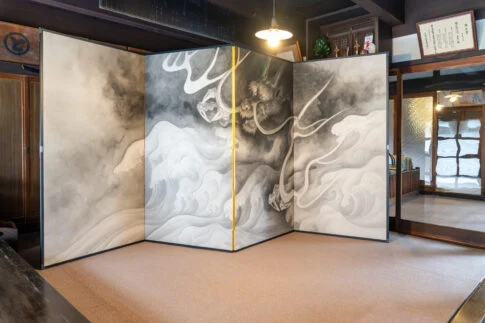
The custom of decorating folding screens ceased in the late Meiji period but has been revived in modern times.
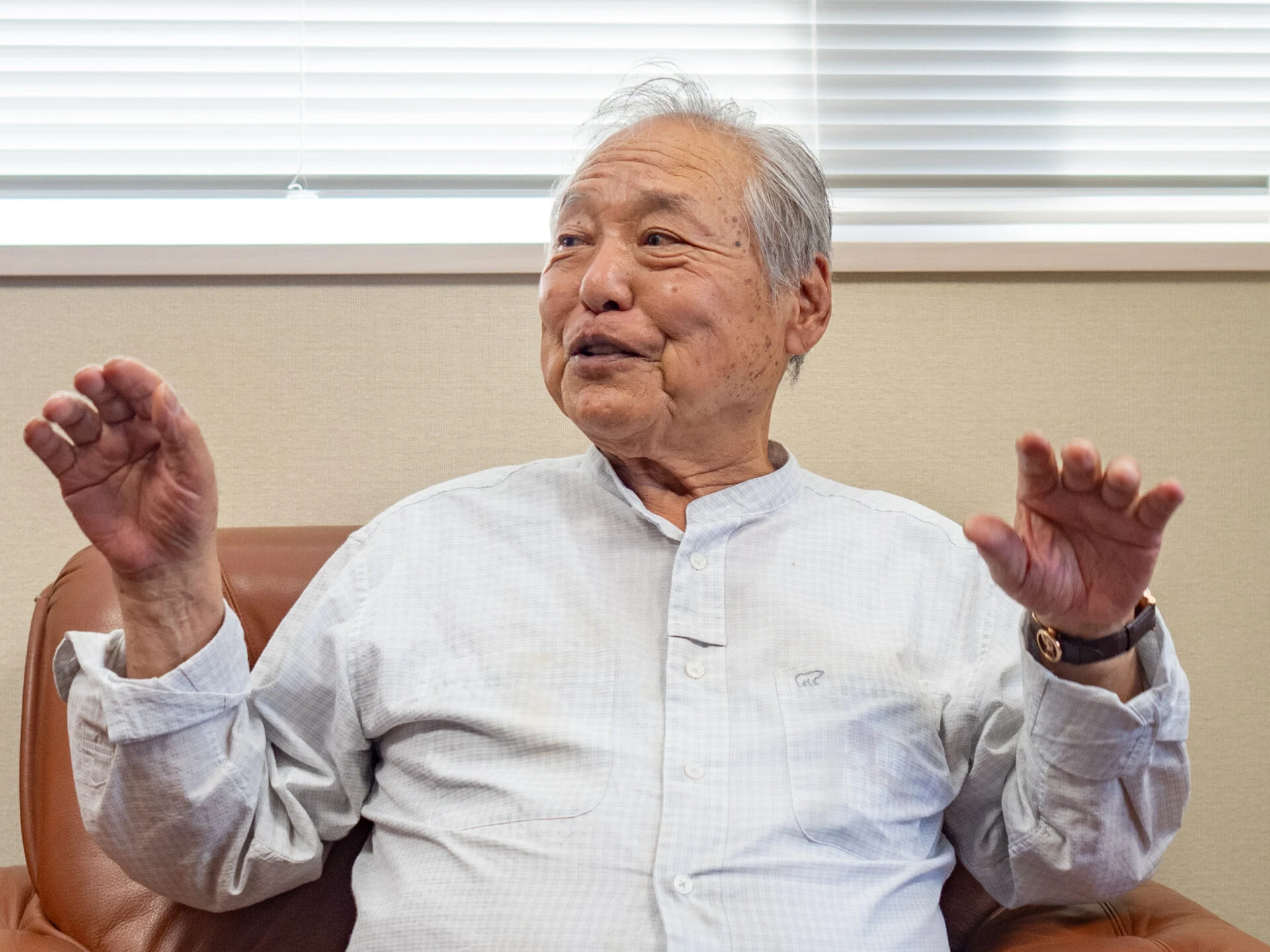
In fact, Mr. Soichiro Oka has been instrumental in the revival of the Byobu Festival.
I spoke with Mr. Oka about the background of this revival.
When was the custom of decorating folding screens revived?
Oka
The distant cause of the revival was when Kenichiro Ohara became the president of the Kurashiki Chamber of Commerce and Industry in 2001.
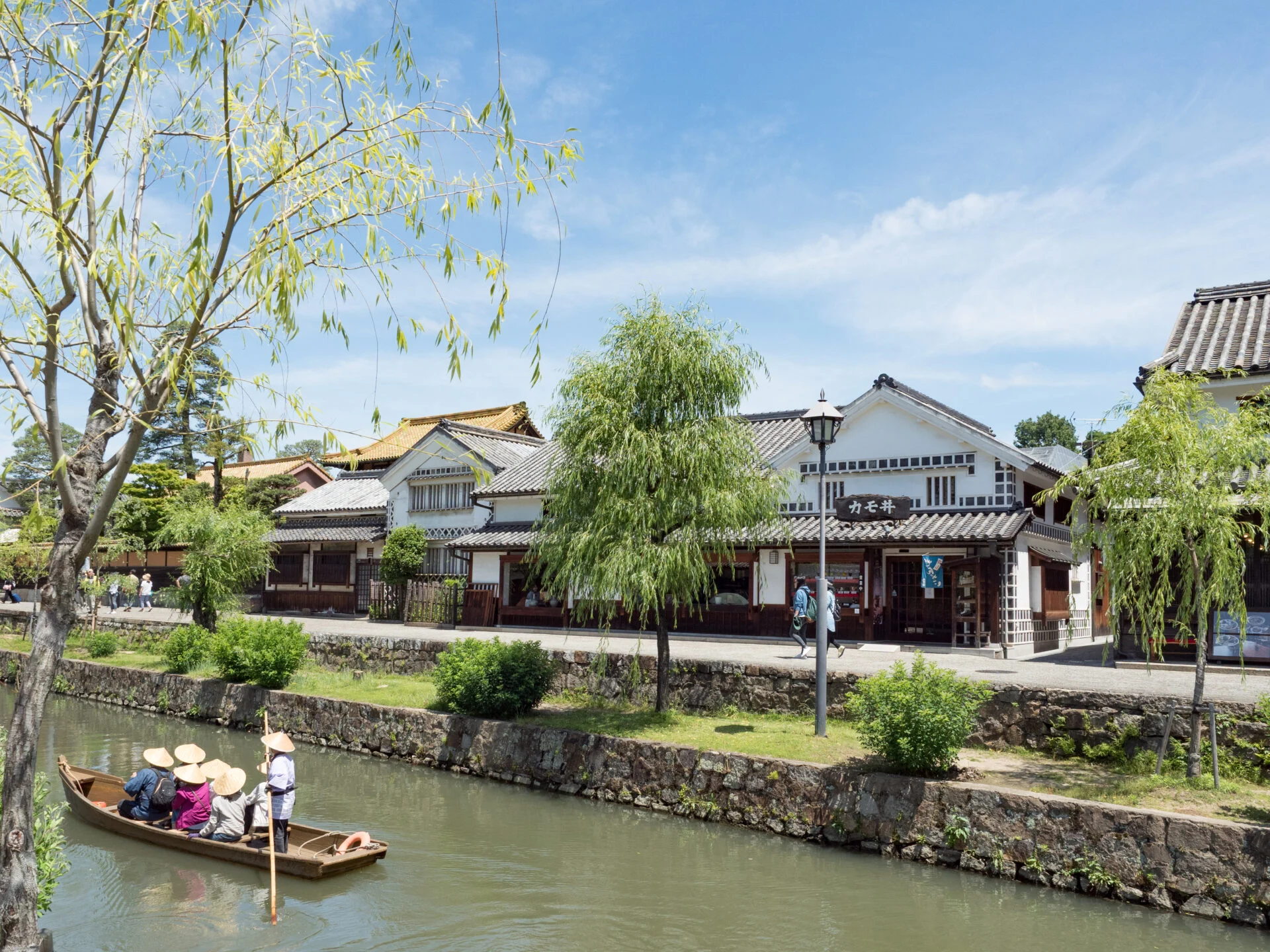
In the late Showa to early Heisei period (around the late 1980s), when the Seto-Ohashi Bridge was completed, the Bikan Historical Area was bustling with tourists, attracting about 5.2 to 5.4 million visitors annually.
However, due to the impact of the bubble economy collapse and other social conditions, by 2001, the number of visitors to the Bikan Historical Area had dropped to about 2.6 million, roughly half of the number during the Seto-Ohashi Bridge opening period.
Mr. Ohara wanted to restore the vitality of the historically rich Bikan Historical Area. Since Kurashiki has a diverse and active economy with industries such as manufacturing, commerce, and agriculture, the town would not decline even without tourism.
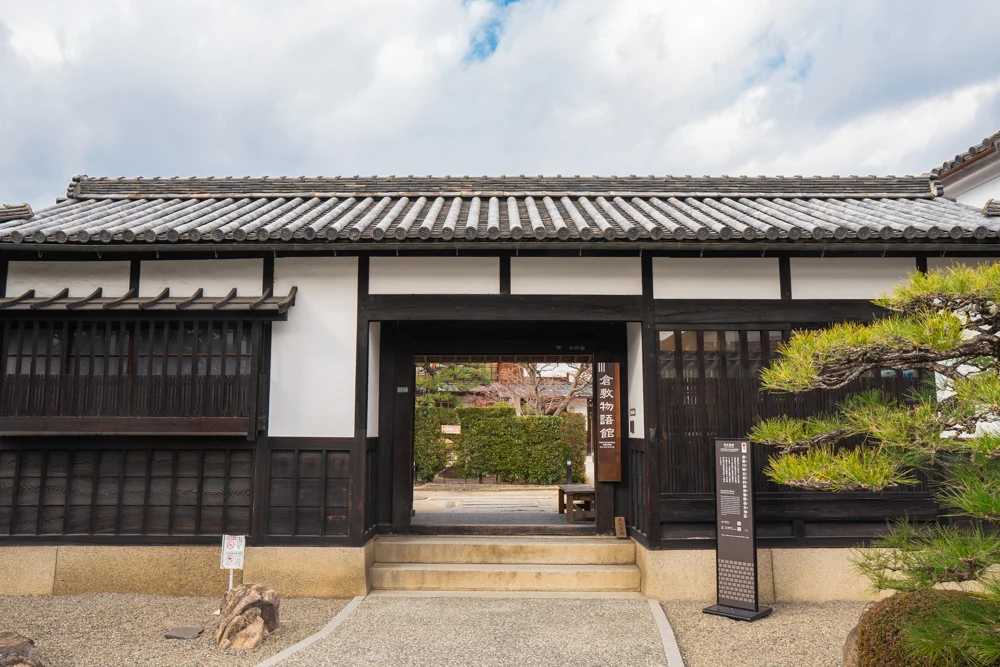
However, the Bikan Historical Area is a designated Important Traditional Building Preservation District, a town where history and culture remain.
Mr. Ohara felt a sense of crisis, believing that if the flow of people and vibrancy disappeared, such historical heritage and culture would also vanish. However, it was no longer an era where simply pouring money into attracting facilities would suffice.
Therefore, Mr. Ohara believed it was necessary to focus on the soft aspects, that is, on initiatives that would bring vibrancy to the town.
Thus, Mr. Ohara selected a few members from the Chamber of Commerce and began holding regular monthly meetings to discuss how to revitalize the Bikan Historical Area. I was one of those members.
Did other members also feel a sense of crisis about the decline of the Bikan Historical Area?
Oka
We locals did not often go into the Bikan Historical Area at that time. Most of us traveled by car, so even if we got close, we just passed by.
So, until Mr. Ohara mentioned it, we were not concerned about the current state of the Bikan Historical Area.
When we actually went there, we found that, except for a few places, there were very few shops still in business on Honmachi Street and Higashimachi Street.
Since these are townhouses, the storefronts are on the street side, and the back is residential. The stores were closed, and they were not renting out to others.
Even though people lived in the back residences, the aging population was advancing. Once we learned the current situation, we began to understand the sense of crisis regarding the Bikan Historical Area.
How did the idea to revive the Byobu Festival come about?
Oka
During our discussions, a comment from one of the members sparked the idea.
The comment was, "In the preservation district of Katsuyama (now Maniwa City), there is an event called 'Hina Meguri' where each townhouse displays hina dolls for the Hina Matsuri."
The suggestion was, "Since it is very lively, why not try something similar in Kurashiki?"
In response, I instinctively said, "While Katsuyama's Hina Meguri is wonderful, if Kurashiki does it, it would be a second-rate imitation, so it might be better not to do it."
Then I was asked, "What would not be a second-rate imitation?" I honestly had not thought deeply about it and just reacted, so I was quite flustered when it was rephrased.
In the next moment, what popped into my head was a custom of decorating folding screens from the Edo period that I had read about in a book.
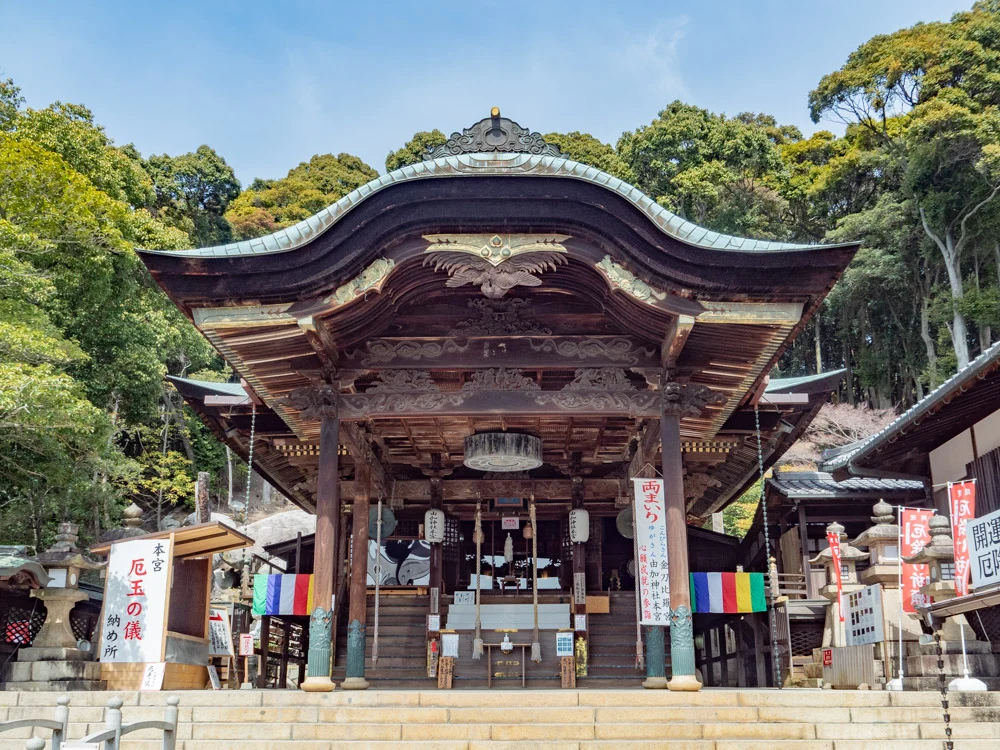
I then mentioned, "In the Edo period, during the festival at Achi Shrine, townhouses would decorate folding screens to show them to passersby."
However, no one knew about the custom of the Byobu Festival.
Later, when I looked it up, I found a book that described the Byobu Festival in the Kurashiki Suinkyo Preservation Society's publication 'Suinkyo', which indeed had a mention of the Byobu Festival.
Then, starting with Mr. Ohara, everyone in the group said, "Let's do it!" And Mr. Ohara appointed me as the person in charge of recreating the Byobu Festival.
However, since it was something I had come up with on a whim, I honestly had no confidence in whether we could actually revive the Byobu Festival.
Did the folding screens still exist?
Oka
I assumed that the folding screens were still around.
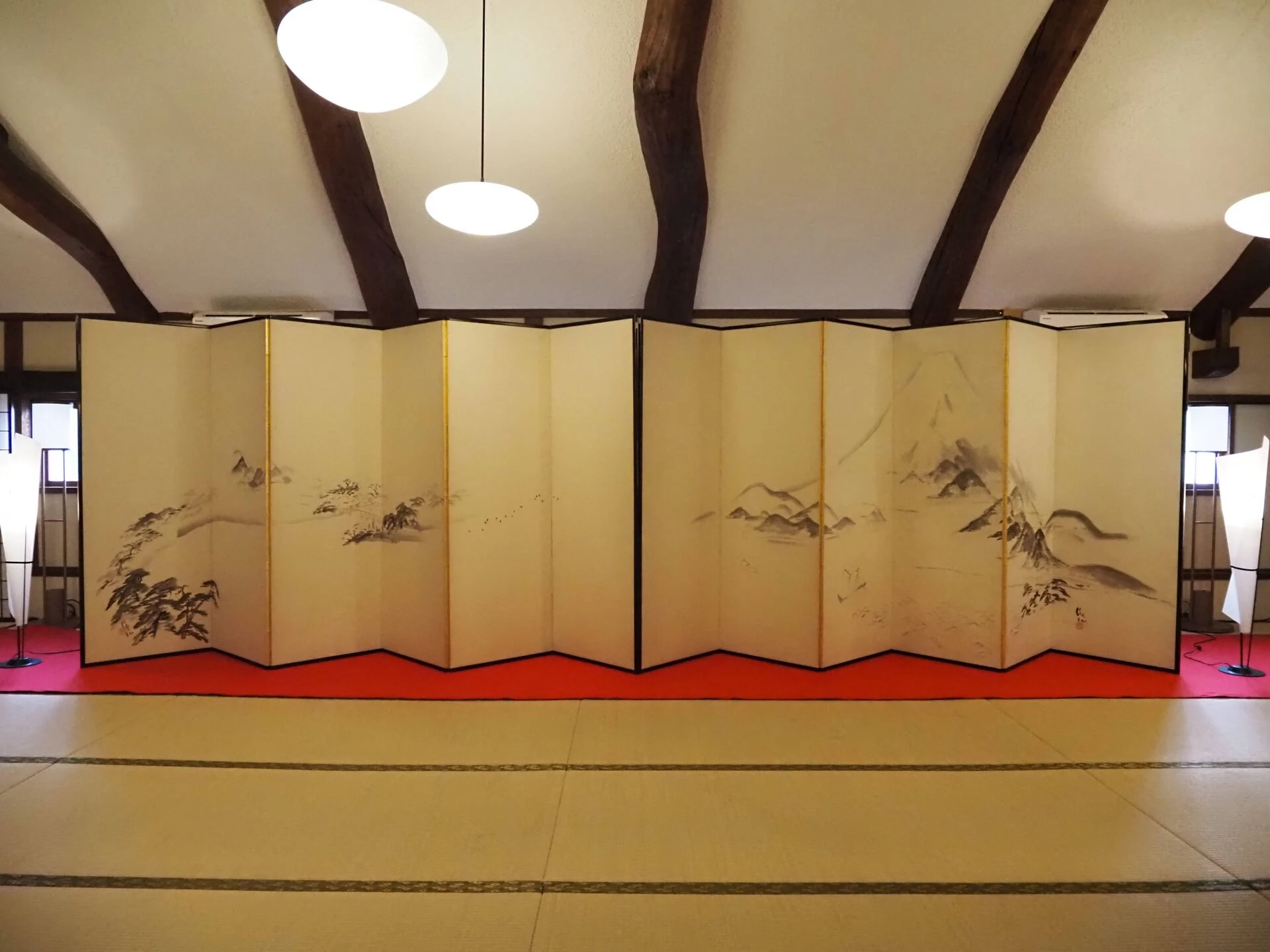
Folding screens are very large. Even if you wanted to take them out of the storehouse, just getting them out would be quite a task.
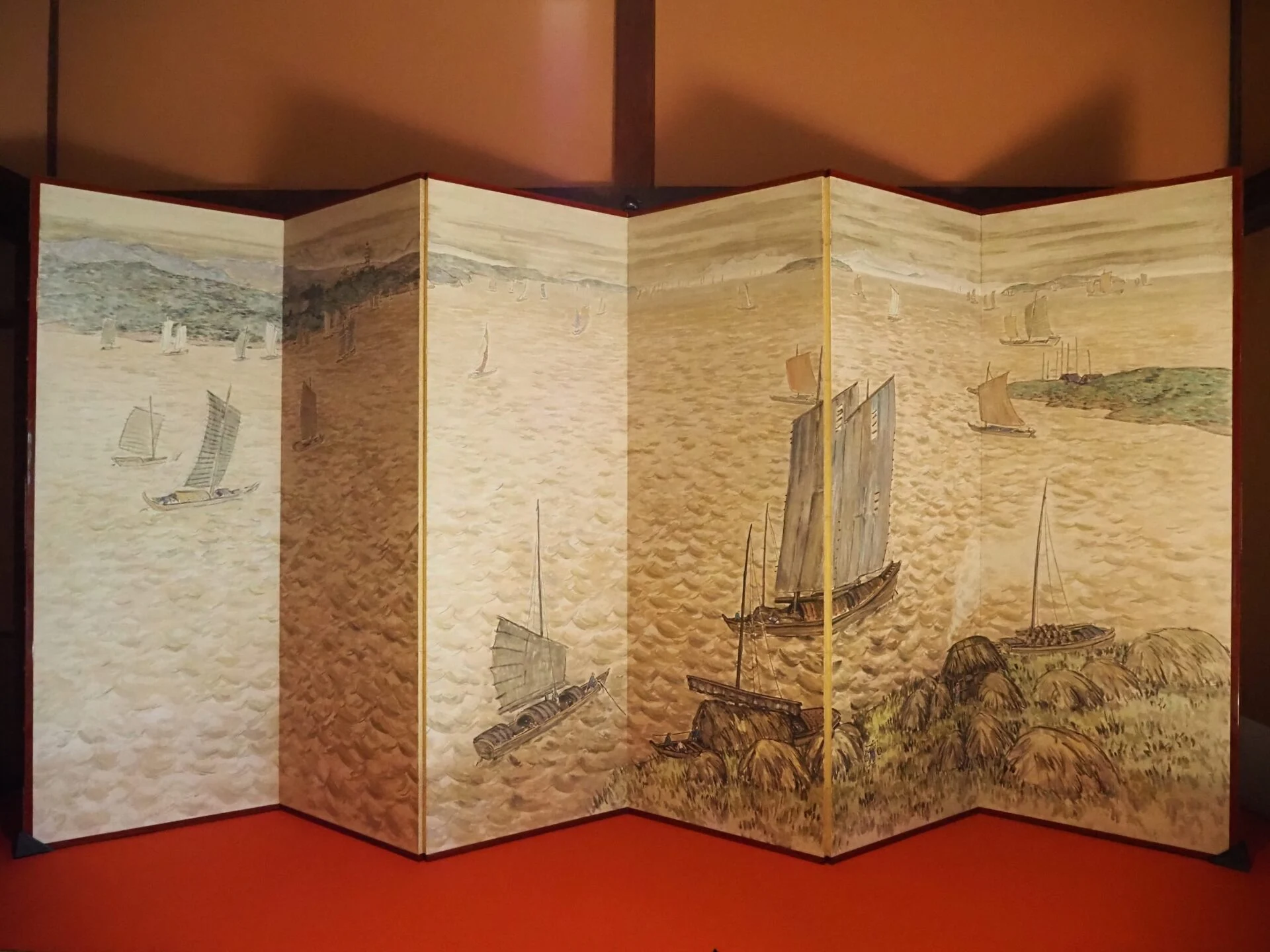
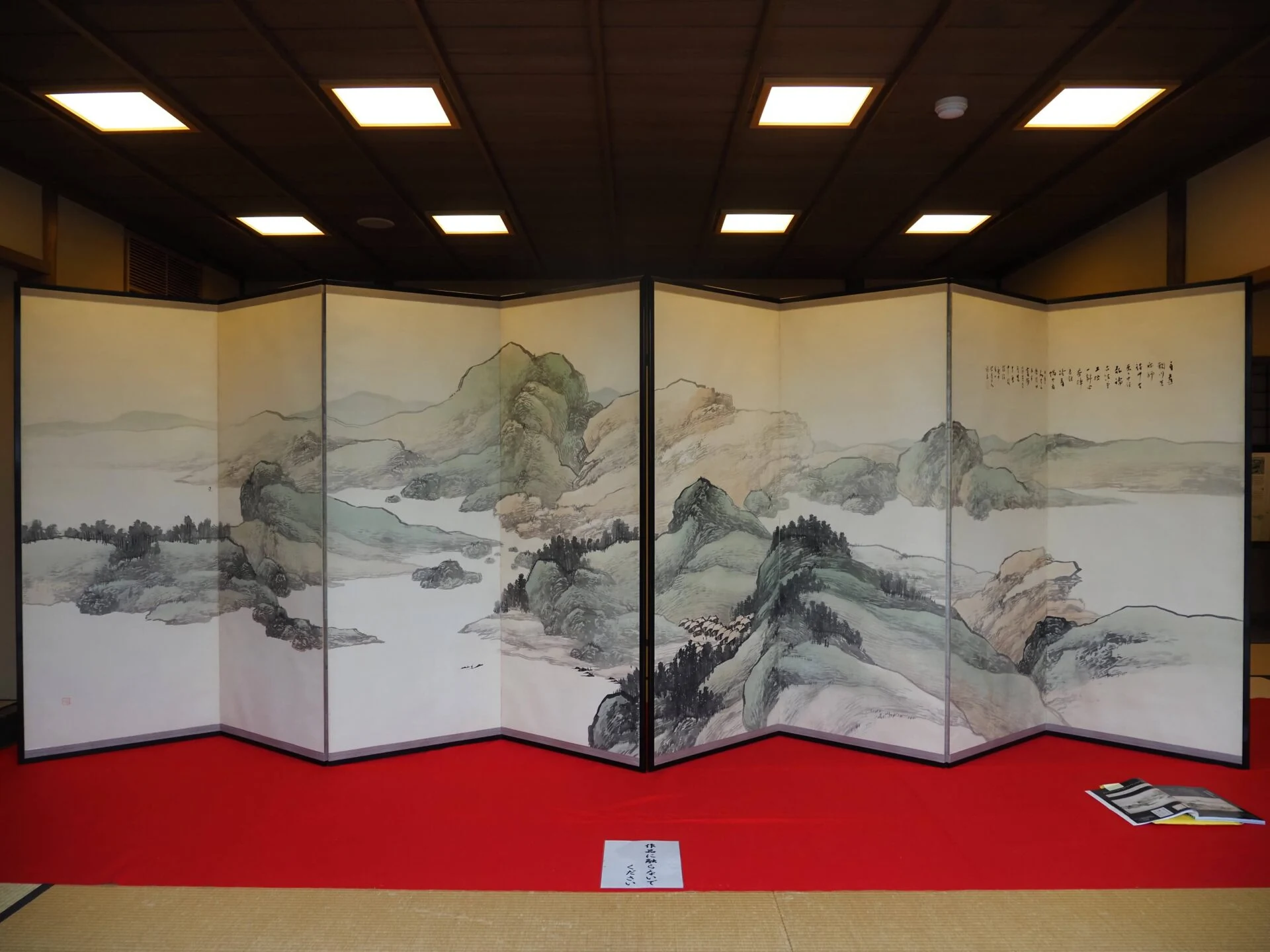
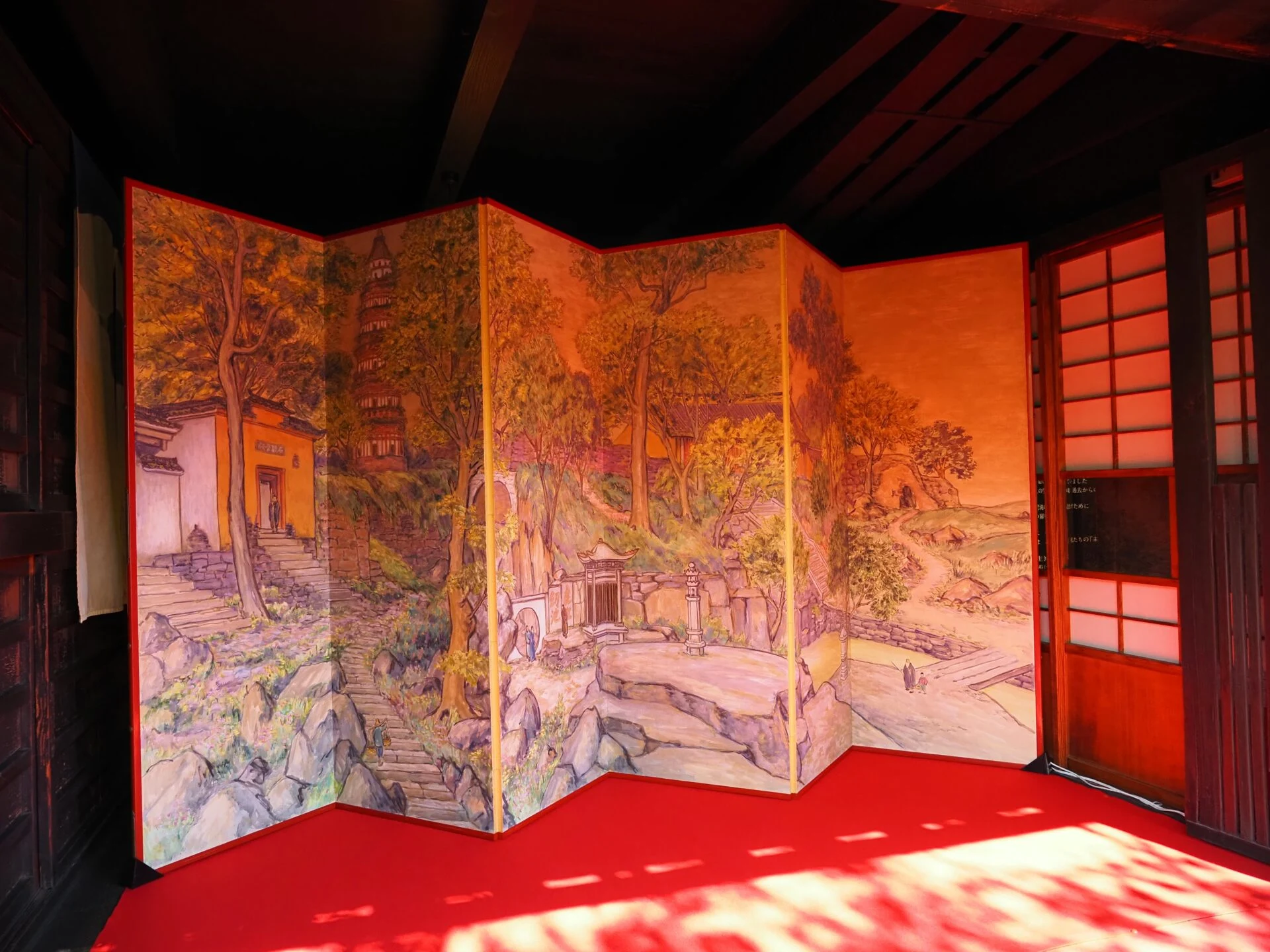
I asked a friend who has a family home in the Bikan Historical Area to check if there were any folding screens in the storehouse, and indeed, there were splendid folding screens preserved.
My friend's mother said, "I've been married for over 50 years, but I've never seen a folding screen, so we don't have one," yet there was a folding screen after all.
So, I thought that other houses likely still had folding screens as well.
How did you prepare for the revival of the Byobu Festival?
Oka
The Byobu Festival cannot be realized without the cooperation of the residents living in the Bikan Historical Area.
I visited each house to explain the situation and request their cooperation, but I received little understanding. As I mentioned earlier, the aging population was a factor.
Many declined, saying things like, "I want to live quietly, so it's better if there aren't more people," "More people will worsen the security," "I'm too old to take on any burdens," and "I don't want to cooperate for the sake of the tourism industry making profits."
So, I gathered the neighborhood association leaders and conveyed my thoughts about the Byobu Festival.
"I want to hold the Byobu Festival not for commercial promotion, but to preserve the history and culture of Kurashiki, which is designated as an Important Traditional Building Preservation District. I want many people to know the wonderfulness of Kurashiki through the Byobu Festival."
Then, the neighborhood association members said, "If you have that much passion, do as you like," and reluctantly agreed.
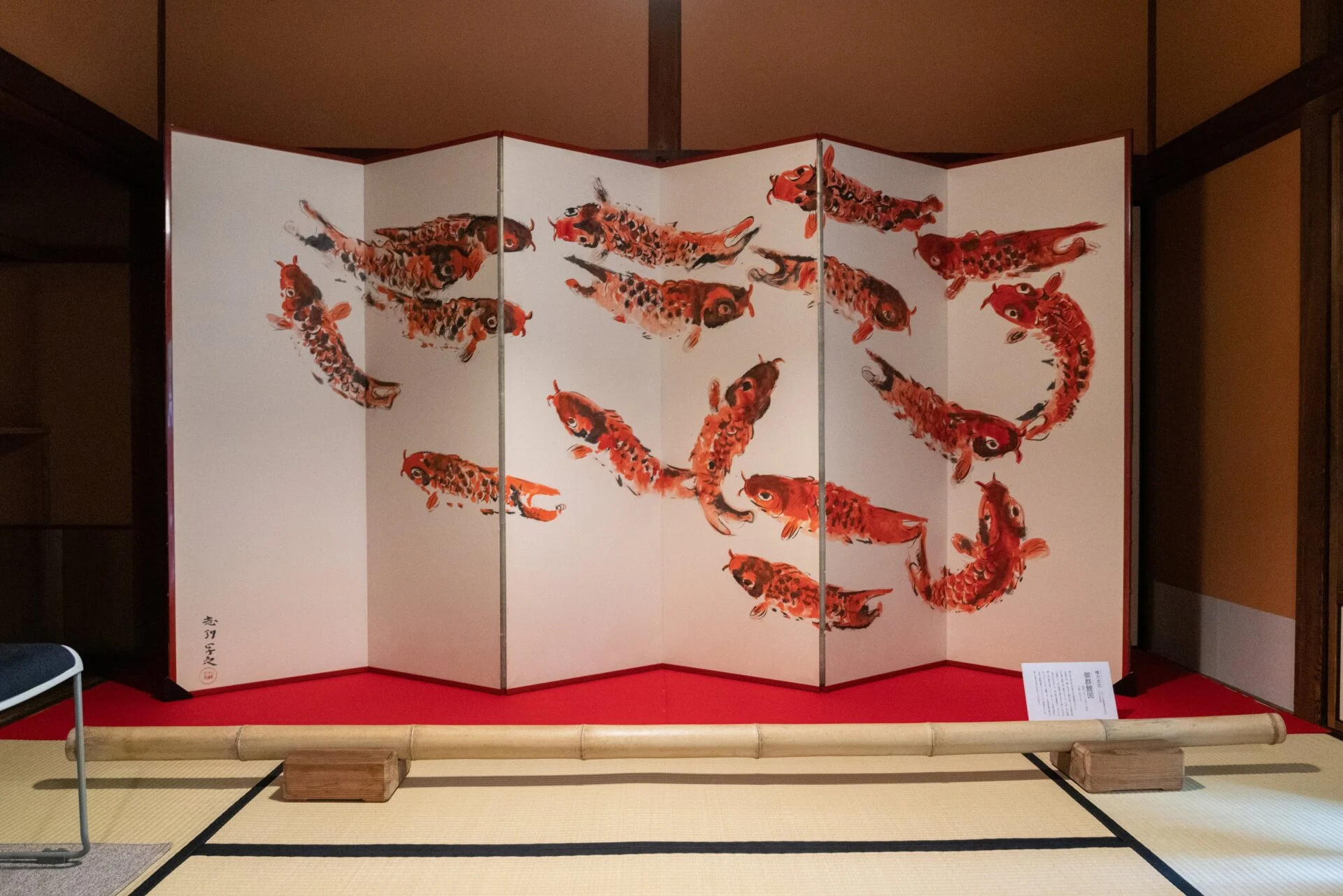
Thus, the town came together to prepare, and the revival of the Byobu Festival was realized during the autumn grand festival at Achi Shrine in 2002.
Initially, the neighborhood association members were quite passive in their support, but once the preparations for the Byobu Festival began, they became the most proactive.
This was a pleasant surprise. It is the original form for locals to enjoy voluntarily.
What was the response to the revived Byobu Festival?
Oka
The number of visitors in the revived year of 2002 was about 55,000. I was surprised by the turnout, which exceeded expectations. Additionally, 33 houses cooperated by displaying folding screens.
Before the event, the townspeople were worried that an increase in foot traffic would lead to noise and worsen security, but once it actually happened, they found it very enjoyable.
Classmates came by, and there were voices of joy at being able to meet after a long time.
We conducted a survey, and initially, many visitors were from the local area. There were also many visitors from the Hiroshima area.
Moreover, the current Byobu Festival, like the past ones, does not have direct involvement from Achi Shrine.
After the event, I received compliments from the shrine officials, saying, "The autumn festival was lively and fun for the entire community. There was a synergistic effect between the shrine and the town, and it was very exciting."
What has happened since then?
Oka
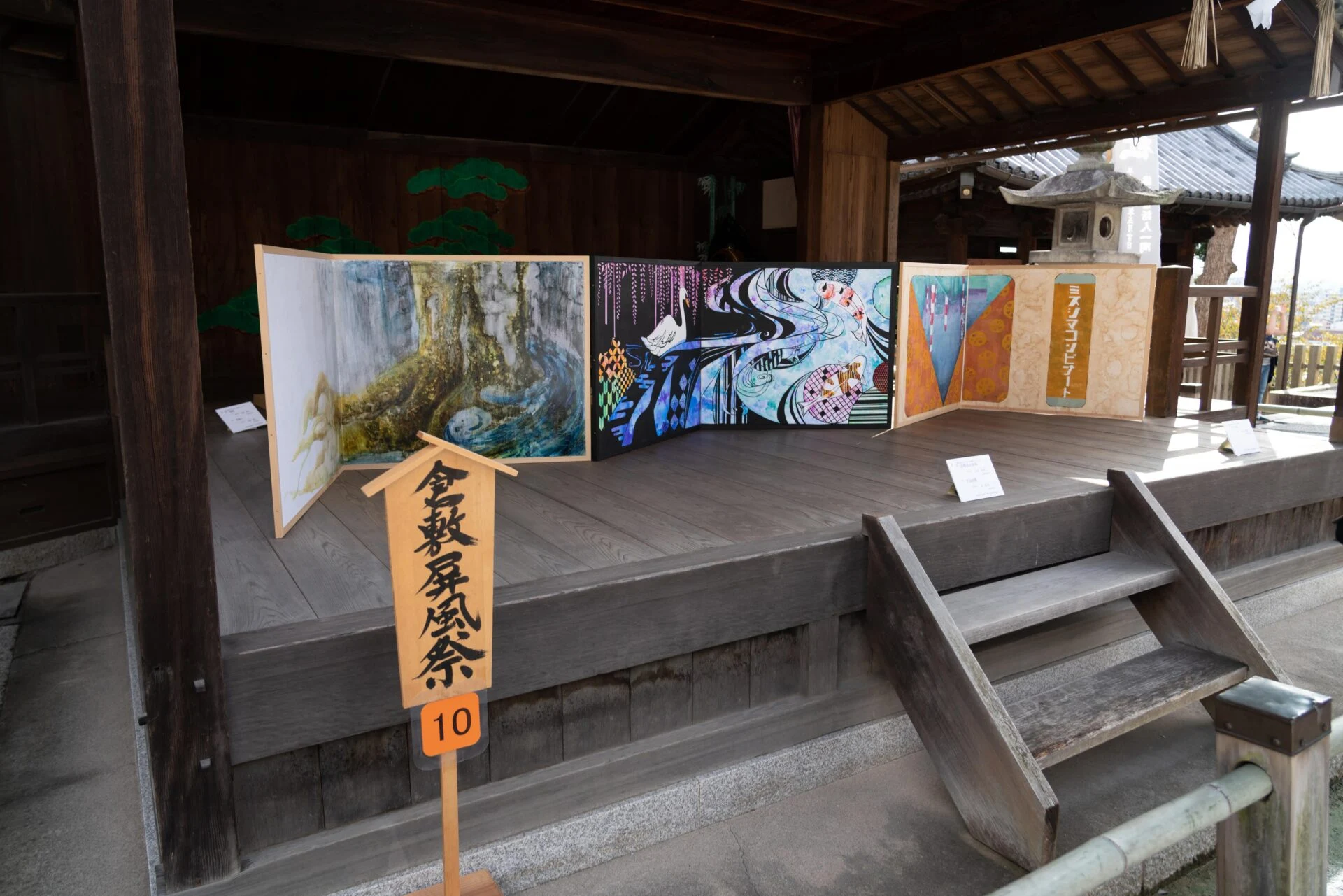
Since 2002, except for a two-year hiatus during the COVID-19 pandemic, the Byobu Festival has been held every year during the autumn grand festival at Achi Shrine.
The townspeople have since actively participated in the Byobu Festival, and it has become an annual enjoyment. It seems they find joy in thinking about what kind of ideas to come up with each year.
In the 2024 event, it was held over two days on Saturday and Sunday, with a total of about 50,000 visitors. Note that it rained on Saturday. A total of 35 houses displayed folding screens.