Interview with Yuko Ban, Curator of Kurashiki Archaeological Museum
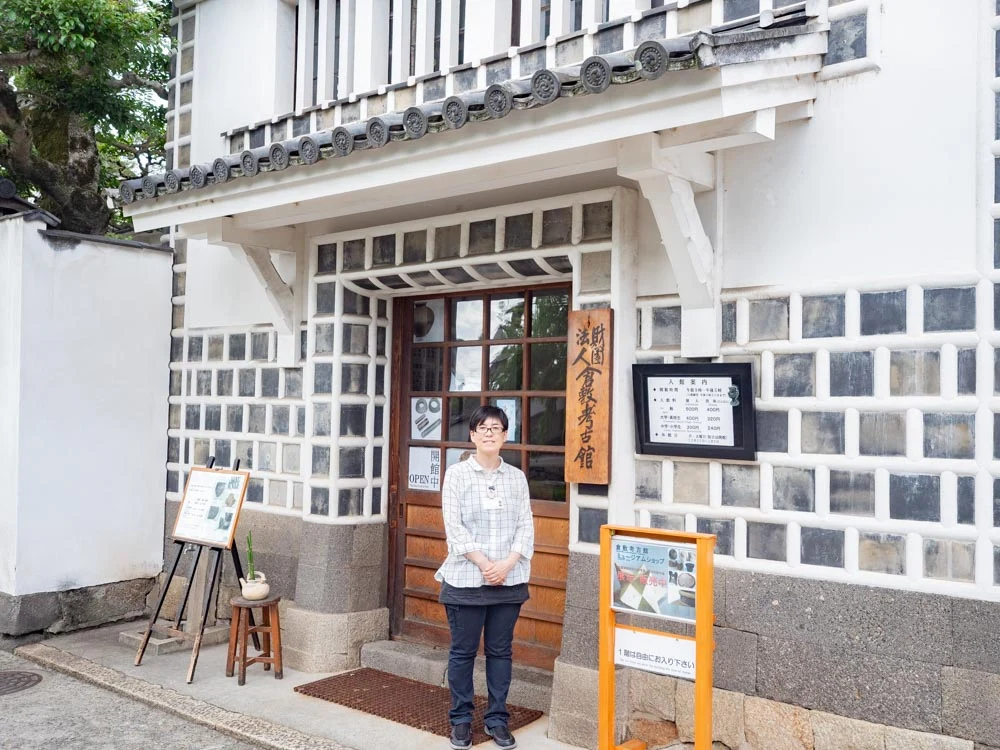
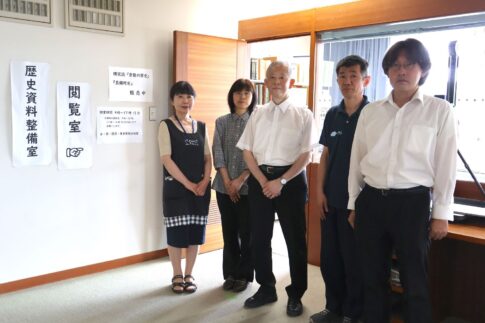
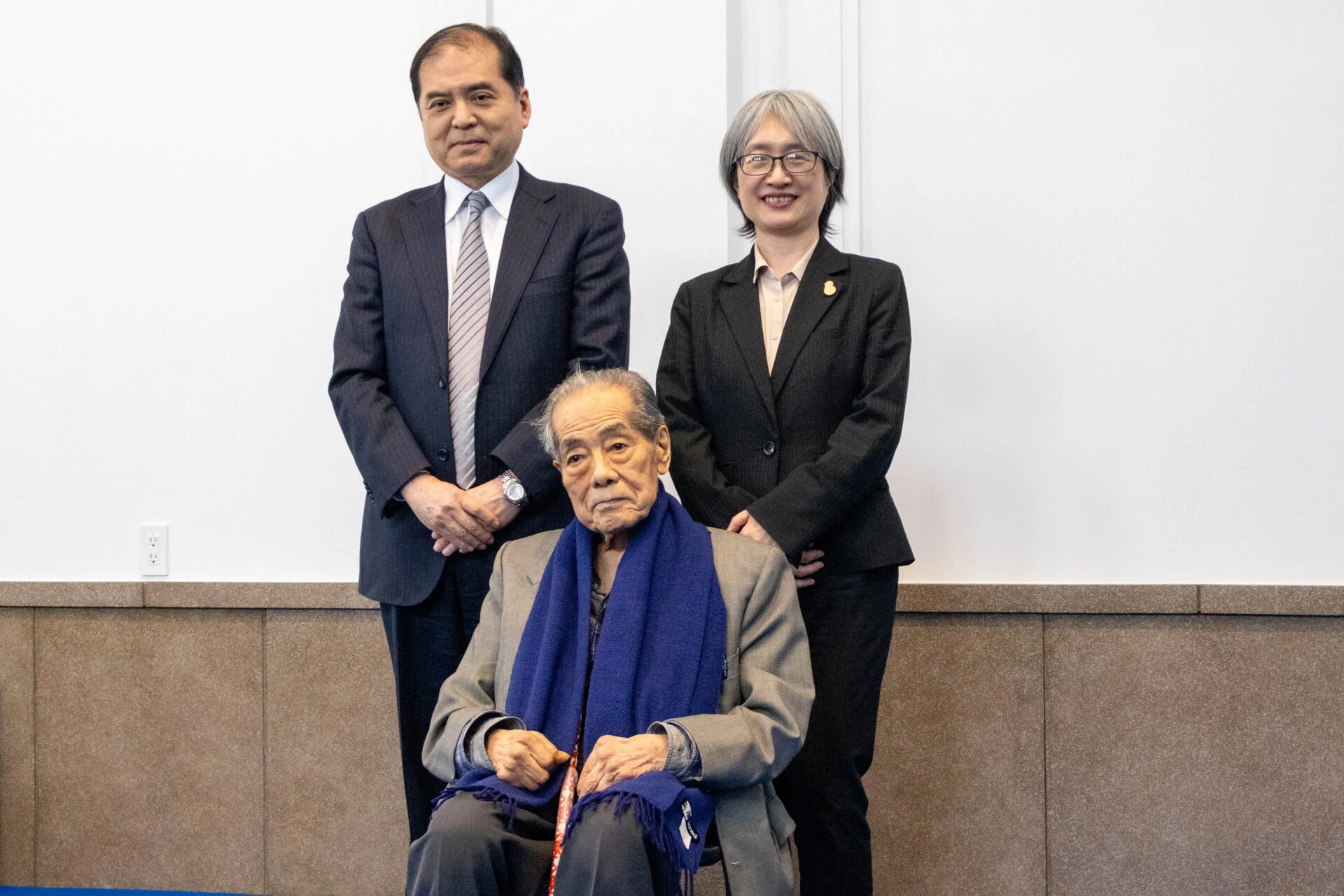
I spoke with Yuko Ban, the curator of Kurashiki Archaeological Museum.
This interview features content from the initial coverage conducted in August 2019.
Kurashiki Archaeological Museum has over 700 exhibits
Does Kurashiki Archaeological Museum also conduct excavations and surveys, in addition to exhibitions?
Ban
In the past, we conducted excavations and surveys, but currently, we focus on exhibitions.
When Kurashiki Archaeological Museum first opened, the system for local government excavations and surveys was not yet established.
Therefore, we received requests for excavations and surveys at our museum.
We also received requests from other prefectures.
Most of the items currently on display were excavated and surveyed by Kurashiki Archaeological Museum in the past.
The items excavated from other prefectures are also on display because our museum went to other prefectures for excavations and surveys.
Later, local governments and universities became able to conduct excavations and surveys of ruins, so our museum no longer conducts new excavations and surveys.
However, while organizing and researching past excavated items, there are sometimes new discoveries.
How many exhibits do you have?
Ban
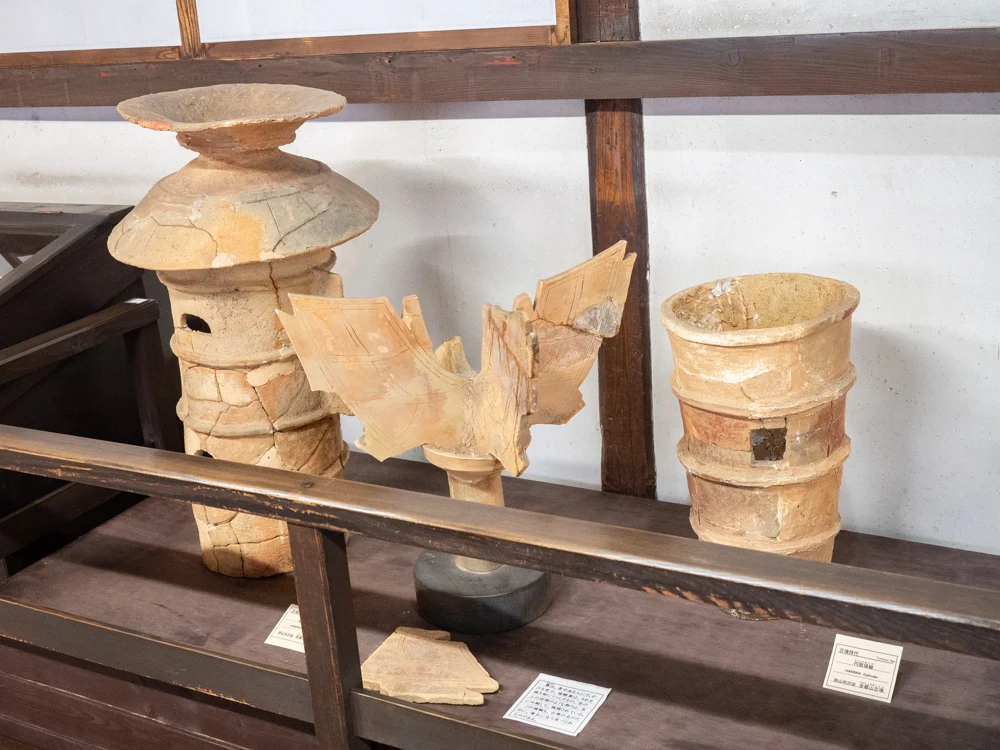
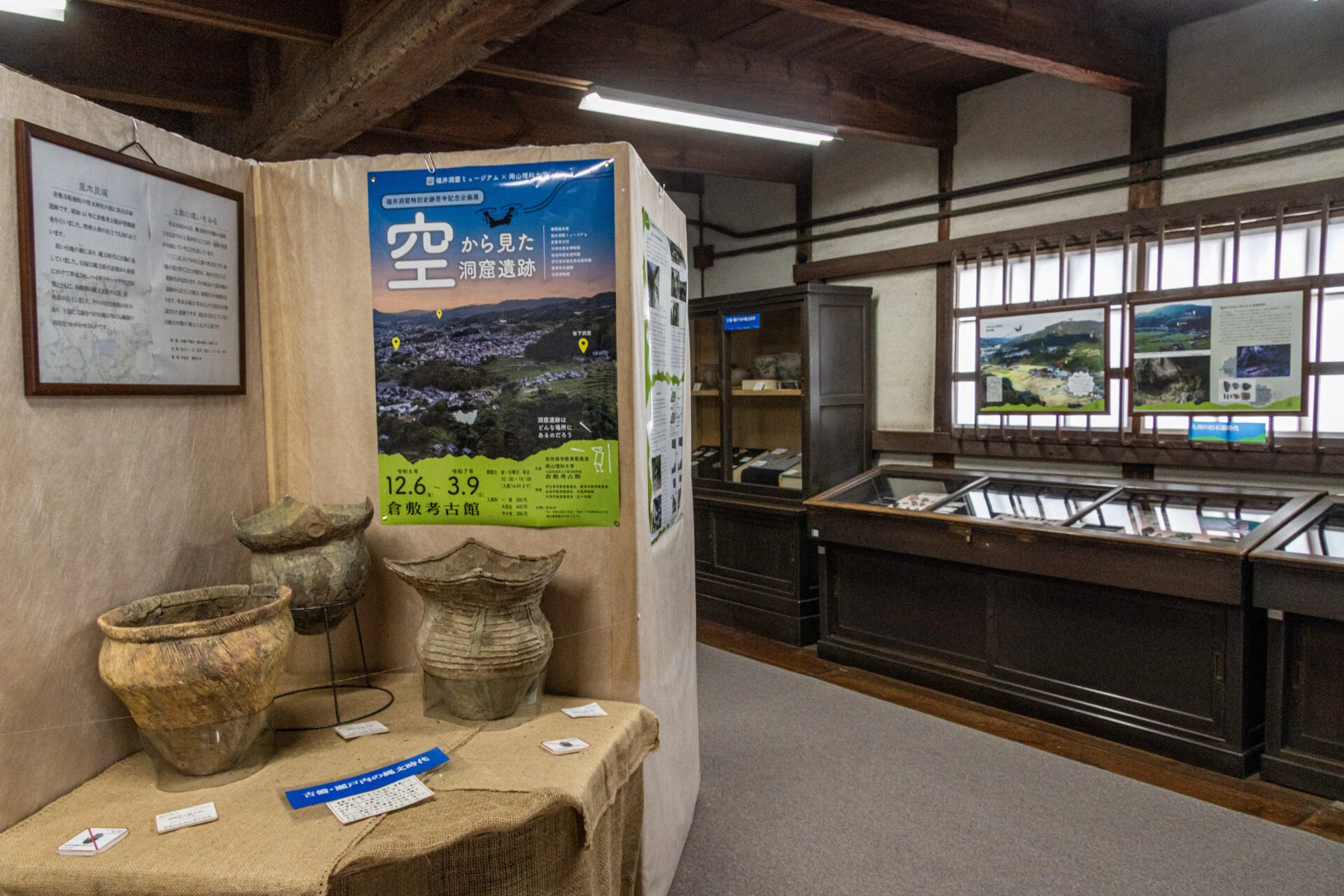
Currently, there are about 700 items on display at Kurashiki Archaeological Museum.
In addition to the displayed items, there are over 200 boxes of items.
Some of them are broken and have not yet been restored, but there are certainly a considerable number.
Is there really that many? Where are the items that are not on display?
Ban
We have a warehouse where they are stored.
Archaeological exhibits require imagining the historical context, so we want to support that
Are there any precautions you take when exhibiting?
Ban
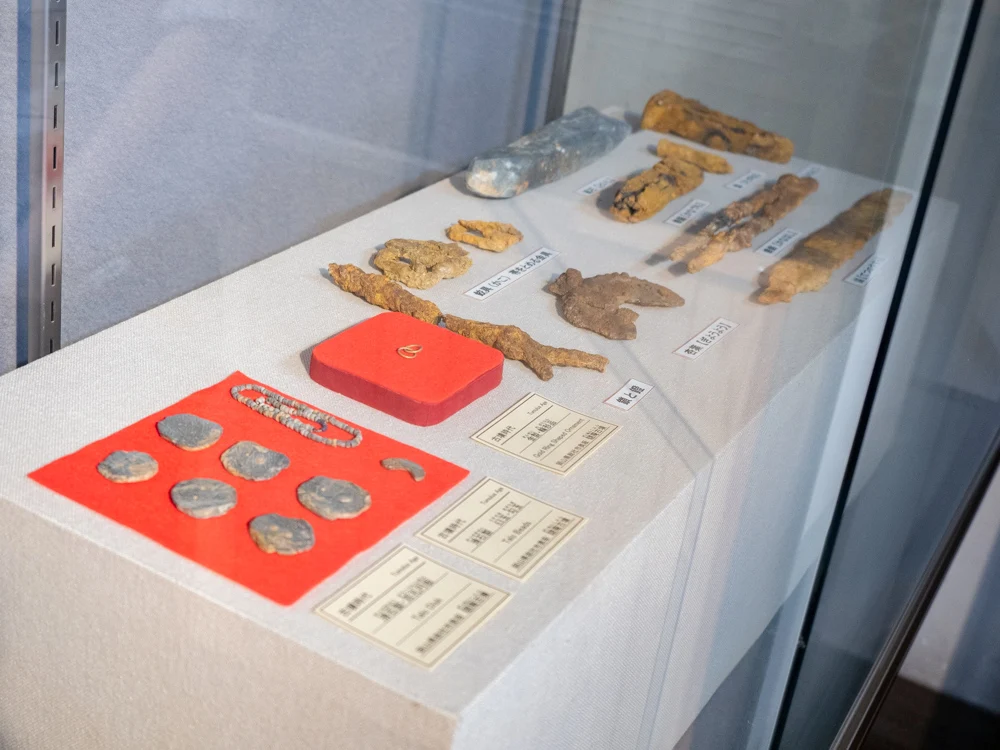
The explanatory texts for the current exhibits are intentionally written concisely.
If we try to explain in detail, it inevitably becomes filled with technical terms and becomes lengthy...
However, I think that currently, it might be too concise and hard to understand.
In the future, I am considering using illustrations and diagrams for supplementary explanations.
This way, it would be easier for children to understand, and adults could grasp the information at a glance.
Archaeological materials need to explain not only the information obtained from the exhibits but also the historical context and lifestyle of that time.
It is good to appreciate them like artworks, or to read the information as reference materials.
We want to support that.
Additionally, we occasionally change some of the permanent exhibits.
Highlights include the unique cultural special pedestal of Kibiji and the unique weights-shaped pottery of Setouchi
Are there any unique exhibits or features of Kibiji that cannot be seen in other regions?
Ban
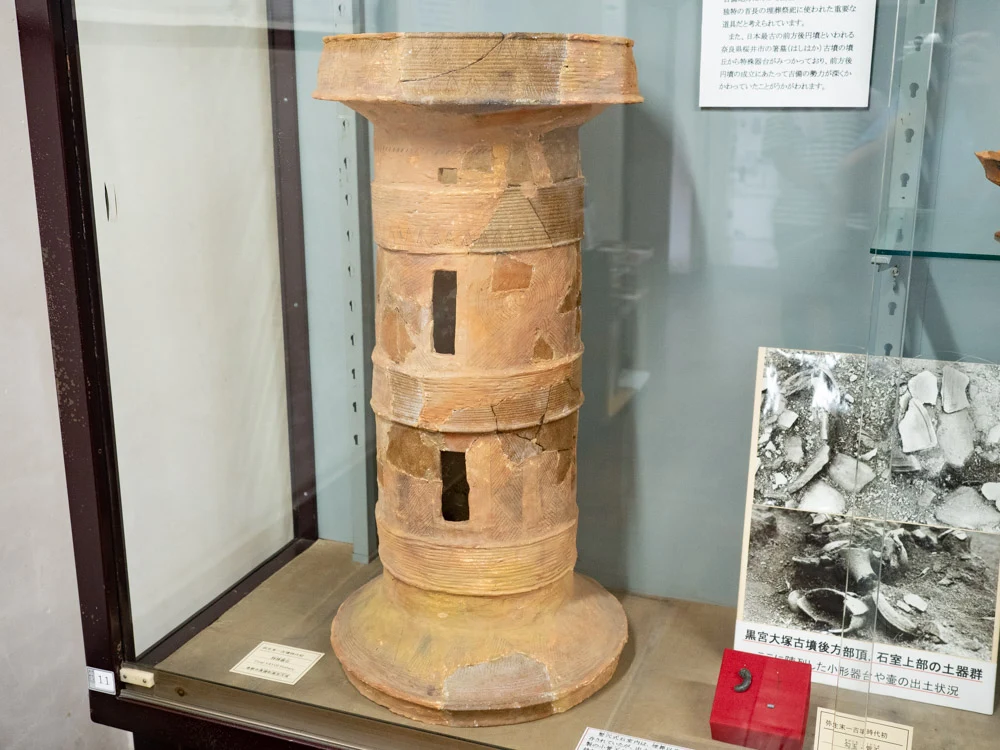
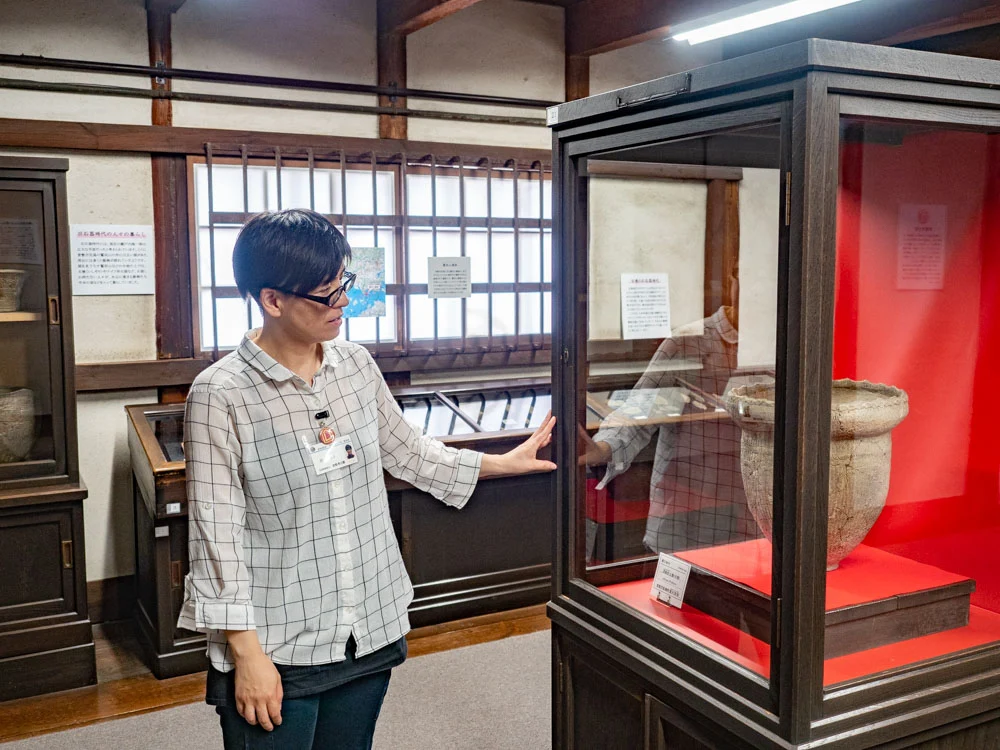
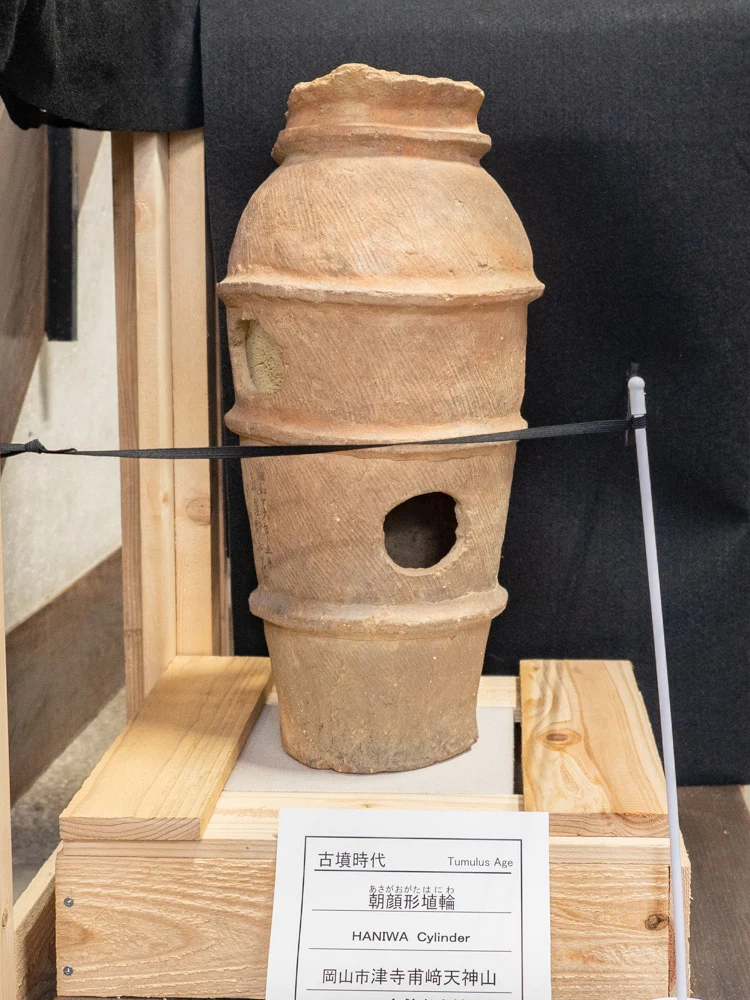
When it comes to unique items from Kibiji, the special pedestal is certainly one.
It is the origin of the haniwa.
Since haniwa are well-known from textbooks, I think it will resonate with many.
Additionally, the Mozu-Furuichi Kofun Group in Osaka has been designated as a World Heritage Site, and since haniwa and burial mounds are often paired, the special pedestal might be a noteworthy exhibit right now.
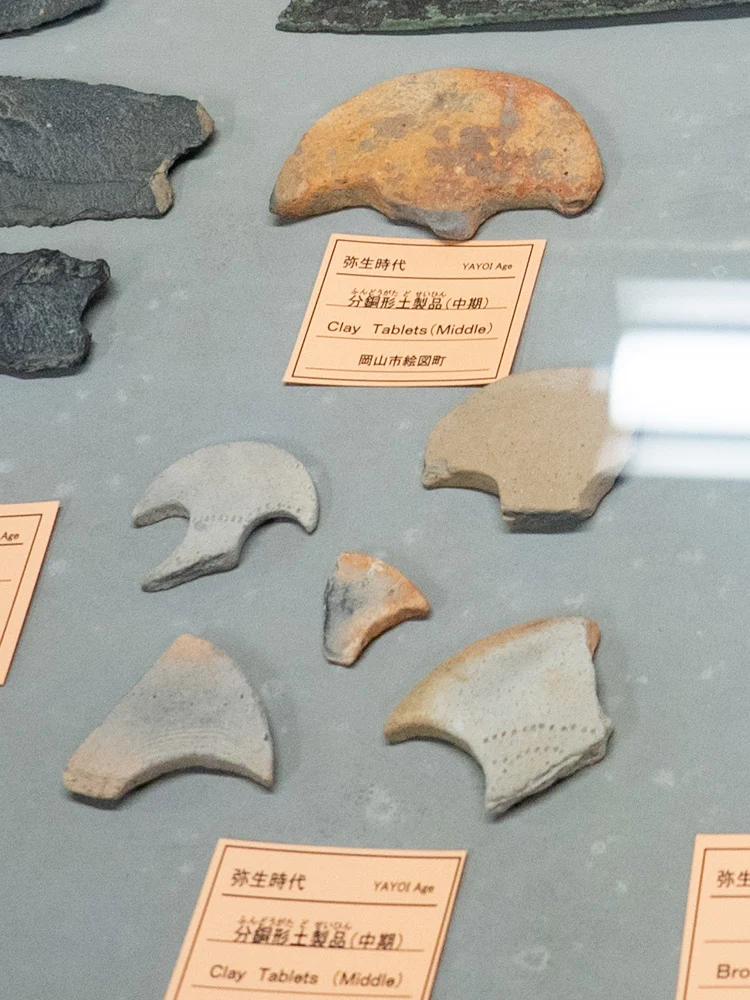
Additionally, while not unique to Kibiji, the weights-shaped pottery from the Yayoi period is also famous in the Setouchi region.
In Okayama Prefecture, particularly, many weights-shaped pottery items have been excavated.
I hope the experience of visiting Kurashiki Archaeological Museum leads to the preservation of ruins
Are there any future plans or ideas you have?
Ban
On August 24 and 25, 2019, we will hold a workshop for the first time on the first floor of Kurashiki Archaeological Museum.
As part of the "Children's Art Museum 2019" organized by Ohara Museum of Art, we will conduct a workshop on making bronze mirrors.
The content involves polishing the surface of bronze to create a mirror.
The bronze mirrors on display are old, so they don't look much like mirrors.
By actually polishing them, I think people will realize that ancient people had the technology to create such mirrors.
Additionally, I often hear from visitors, "I think I have seen many of these items in textbooks before."
That is a very important thing.
For example, there was a case where a heavy machinery operator discovered a bronze bell at a construction site on Awaji Island.
By chance, while working, the operator found the bronze bell and thought, "I feel like I've seen this in a textbook," and contacted the research institution, where it was revealed to be a very important excavated item.
It was a discovery that clarified how the bronze bell was used and sounded, which had only been speculation until then.
So I hope that the thought, "I remember seeing this at Kurashiki Archaeological Museum," can lead to the preservation of ruins and excavated items.
Conclusion
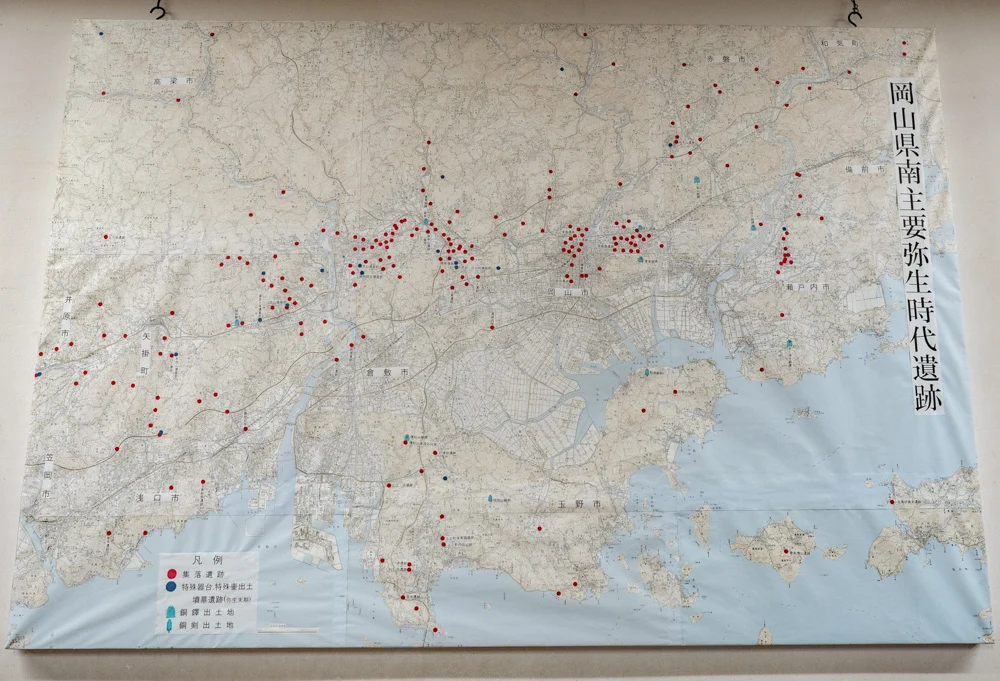
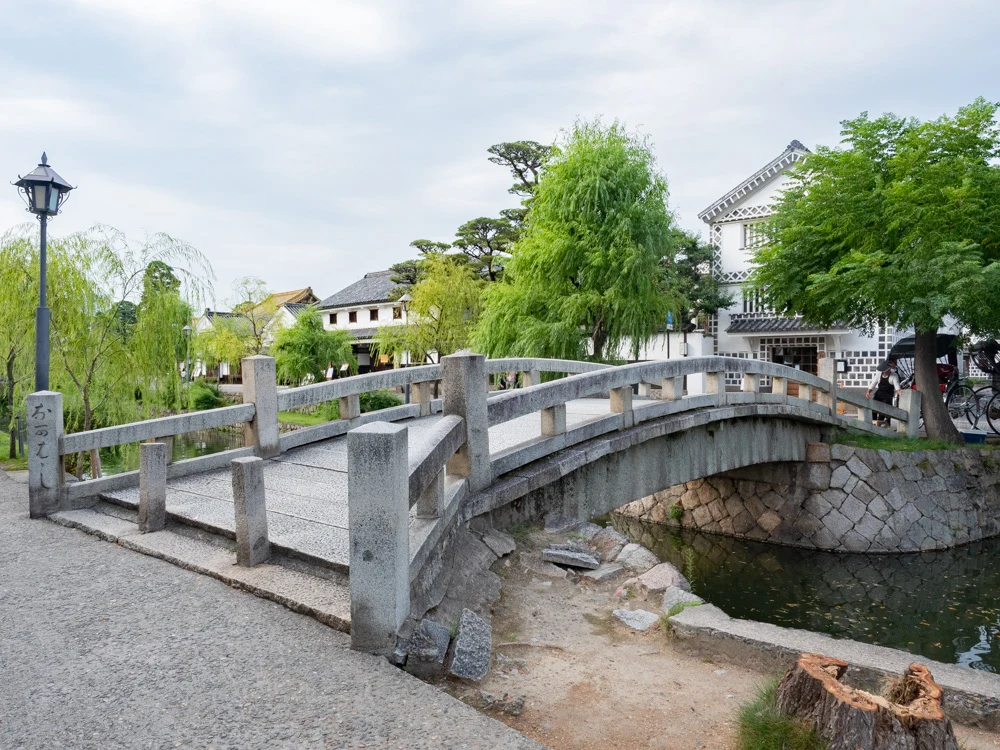
The Kurashiki plain was once a sea before the early Edo period, and the area around the Bikan Historical Area was an island.
Therefore, the only exhibit from the Bikan Historical Area displayed at Kurashiki Archaeological Museum is the Hashima Shell Mound.
However, to the north of Kurashiki City lies Kibiji, which was the center of the ancient Kibiji Province, and the northern parts of the city, such as Mabi and Sho, were part of it.
At Kurashiki Archaeological Museum, you can see valuable materials that reveal that the ancient Kibiji Province was one of the leading powers in the country, alongside Yamato and Izumo.
The fact that Kibiji is the origin of haniwa and that iron production was conducted early on are discoveries that are not easily learned without visiting the museum.
In the Reiwa era, with the Mozu-Furuichi Kofun Group being designated as a World Heritage Site, burial mounds and archaeology are gaining attention.
The haniwa that adorned the burial mounds, which are paired with keyhole-shaped mounds, originated in Kibiji.
The culture that originated in Kibiji is registered as part of the World Heritage Site,
and I hope it will receive attention.
Articles related to Kurashiki Archaeological Museum
Data of the Public Interest Incorporated Foundation Kurashiki Archaeological Museum
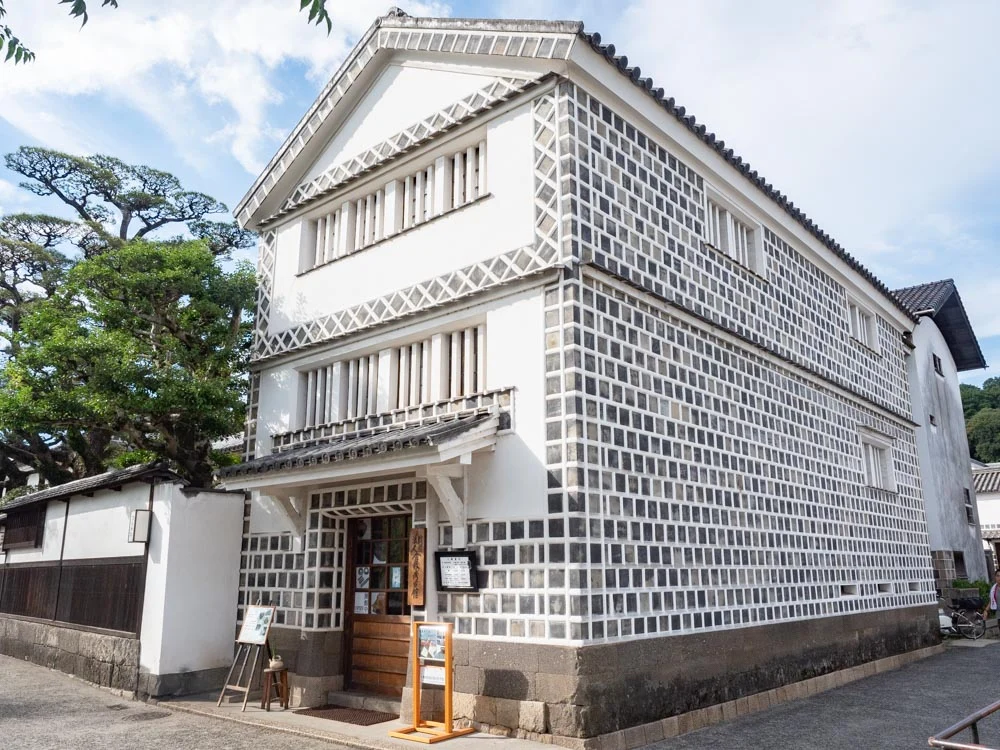
| Name | Public Interest Incorporated Foundation Kurashiki Archaeological Museum |
|---|---|
| Location | 1-3-13 Chuo, Kurashiki City |
| Contact | 086-422-1542 |
| Parking | None |
| Opening Hours | 9:00 AM - 5:00 PM (Admission accepted until 4:30 PM) |
| Closed Days | Monday, Tuesday If a holiday, open Closed during New Year holidays |
| Admission Fee (including tax) | General: 500 yen (Group: 400 yen) High school and university students: 400 yen (Group: 320 yen) Elementary and junior high school students: 300 yen (Group: 240 yen) Disabled persons: 240 yen Preschool children: Free * Groups are 20 or more * Admission fees for special exhibitions may vary * Disabled person rates require presentation of a disability certificate (applies to the individual and one caregiver) |
| Payment Method |
|
| Reservation | Available |
| Smoking | Completely non-smoking |
| Toilet | Western-style toilet |
| Website | Kurashiki Archaeological Museum |