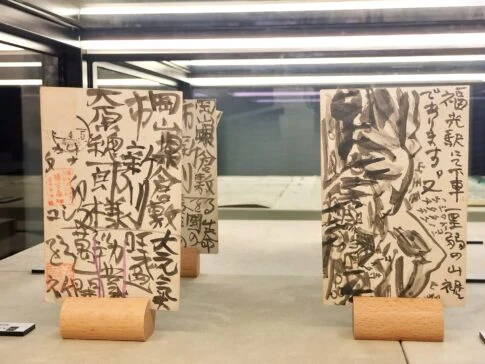
There are many letters that international students sent to Ohara Magosaburo, a Japanese businessman and social entrepreneur, from the late Meiji period through the Taisho period.
Some were requests to purchase paintings, while others explained the significance of purchasing a collection of classical medical texts.
It took as long as 30 to 40 days for letters sent by the international students to reach Ohara Magosaburo.
We will explore, through the students’ letters, the exchanges that took place over a period of time unimaginable in modern society.
What was the relationship between Ohara Magosaburo, who sent students to Europe and the United States to conduct research, study, and buy cutting-edge equipment and papers, and the students he dispatched?
We will introduce what was learned at the seminar and the keywords arrived at through discussion in the round study.
The information presented is as of the article’s publication in February 2023. Please note that it may differ from current information.
Overview of the 36th Kurashiki Mirai K-juku Special Exhibition, “A Collection of Letters Preserved by the Ohara Family —Letters from International Students in Europe and the United States”
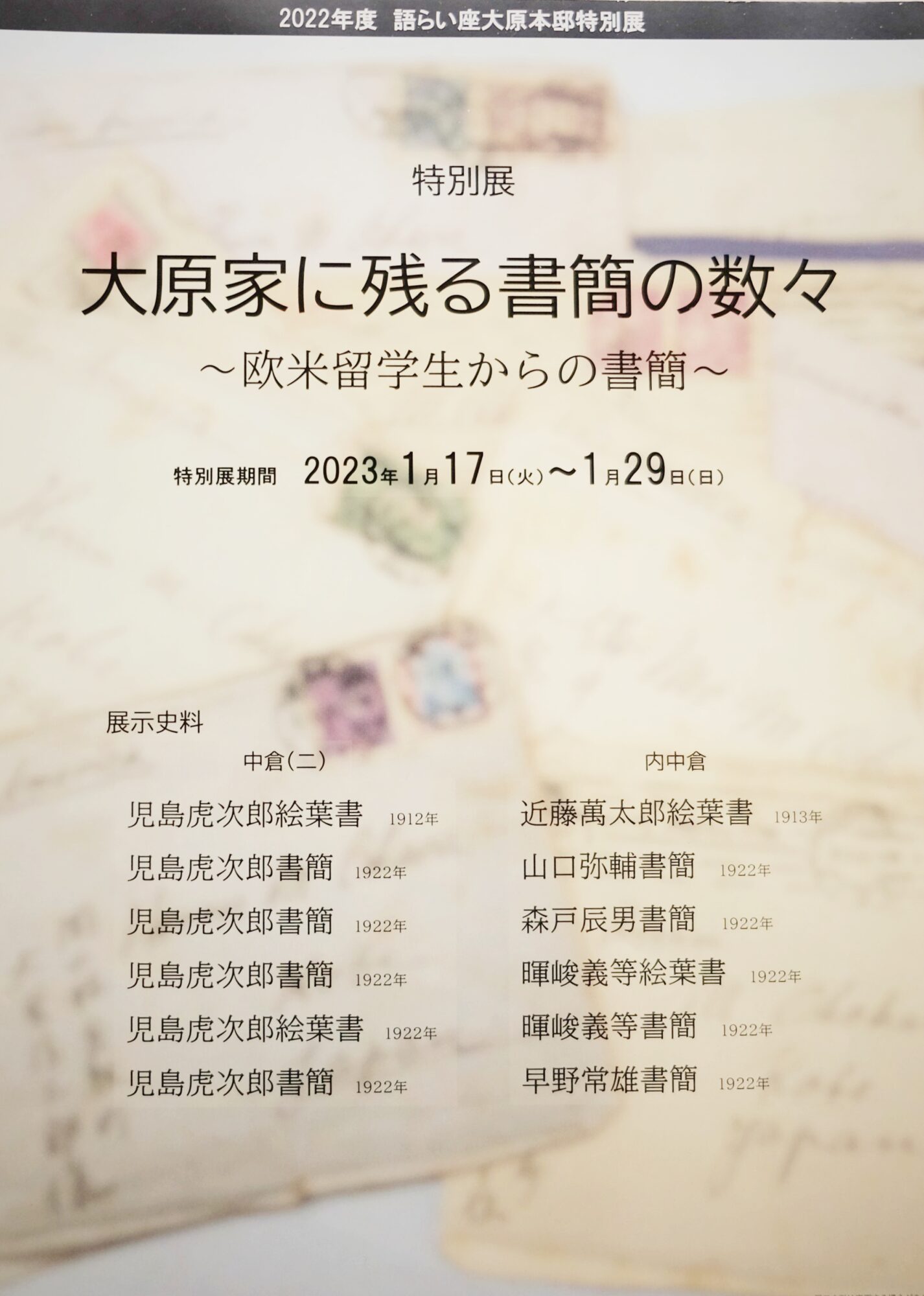
“Kurashiki Mirai K-juku” is a monthly seminar held at “Ohara House Katalyzer,” a nationally designated Important Cultural Property in the Bikan Historical Area.
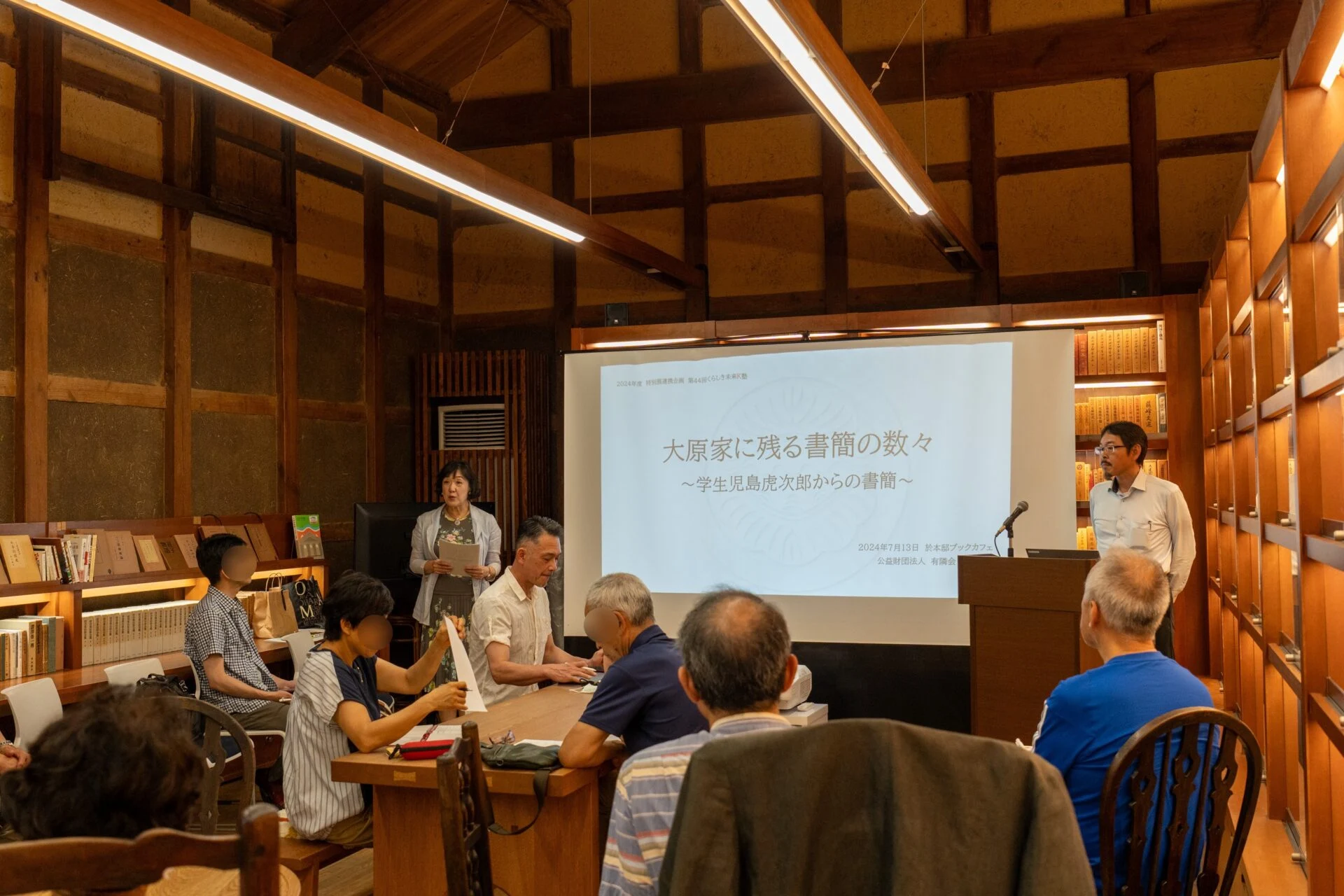
The 36th session was the special exhibition “A Collection of Letters Preserved by the Ohara Family: Letters from International Students in Europe and the United States.”
It was held at the Ohara House Book Cafe from 1 p.m. on Saturday, January 21, 2023.
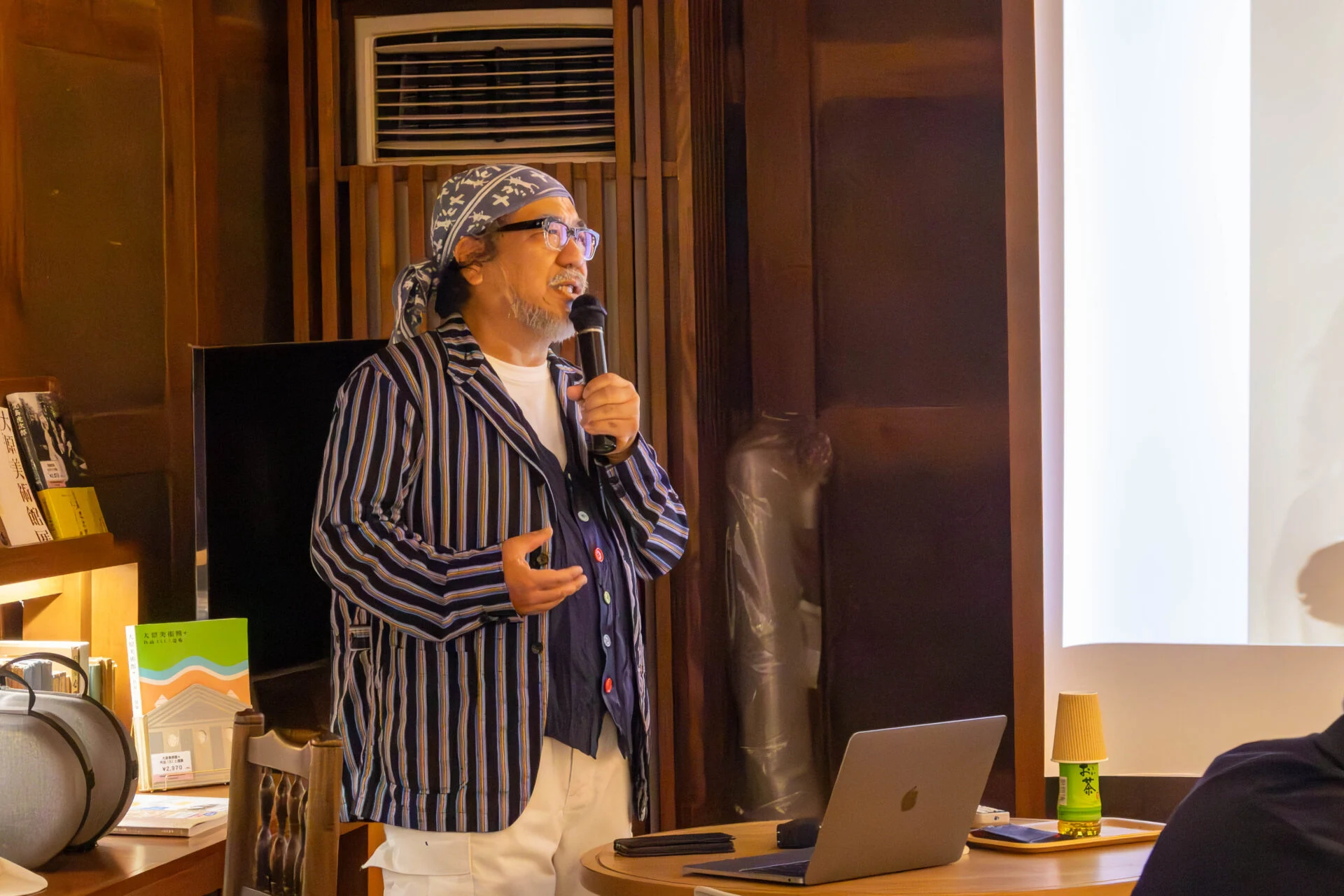
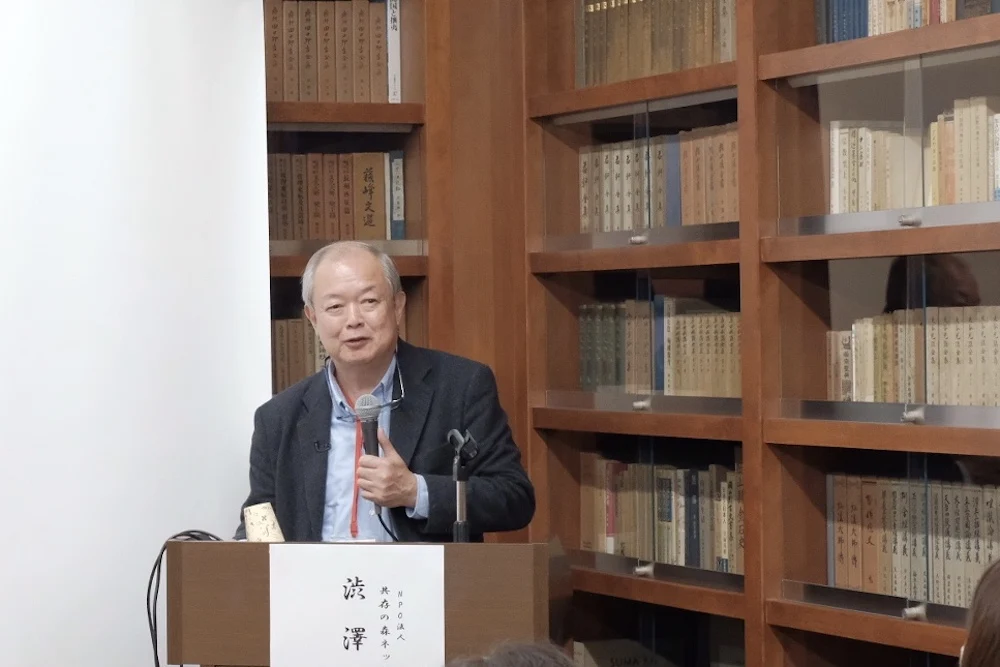
Hiroshi Mizushima, curator at Ohara House Katalyzer, served as the lecturer.
After the seminar, a round study was held by the F-cafe members.
The following three people provided support.
- Mayako Emori: Representative of Manabito, a general incorporated association
- Nao Kitaura: Kanko Manabonekt Co., Ltd.
- Saburo Harada: Associate Professor, Faculty of Education, Shitennoji University
Round study is a training method that creates a diverse space for conversation, with dialogue at its core.
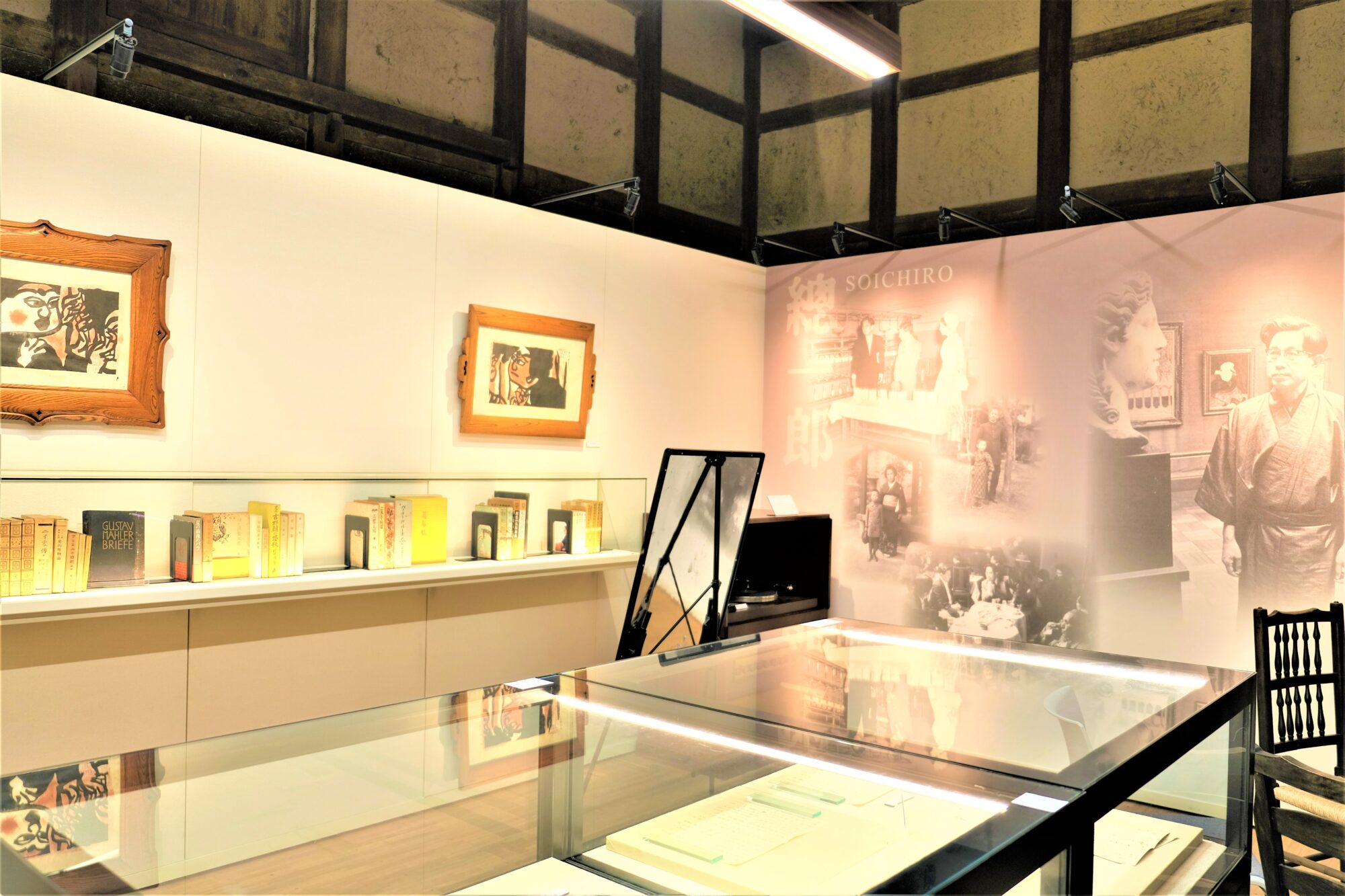
Letters from Kojima Torajiro
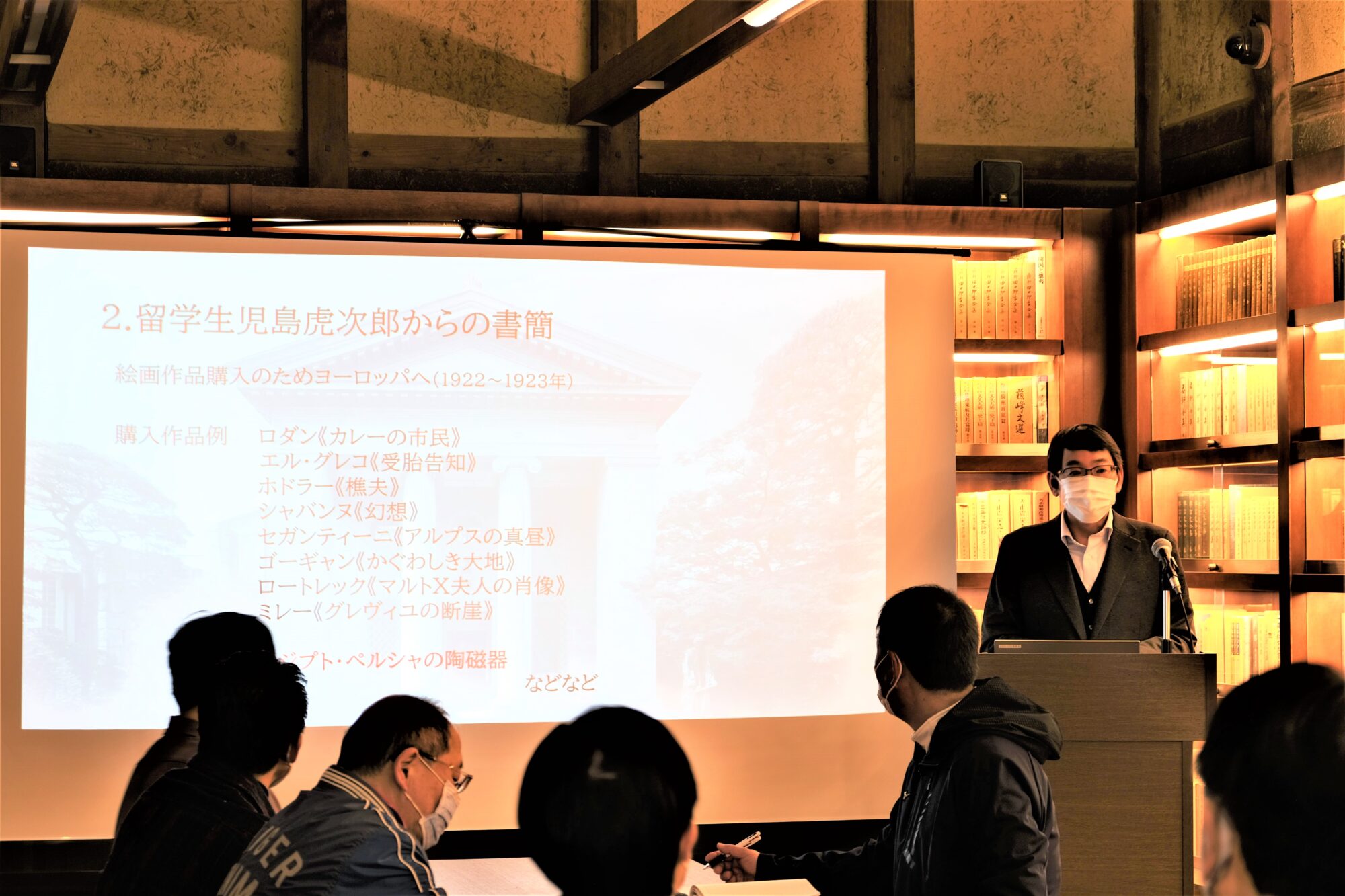
Western-style painter Kojima Torajiro was sent to Europe to further his artistic studies.
His third period of study abroad (1922–1923) was primarily for purchasing paintings.
During this trip, he purchased works of art representing the Ohara Museum of Art, including works by Rodin and El Greco’s “The Annunciation.”
Purchasing Egyptian and Persian ceramics
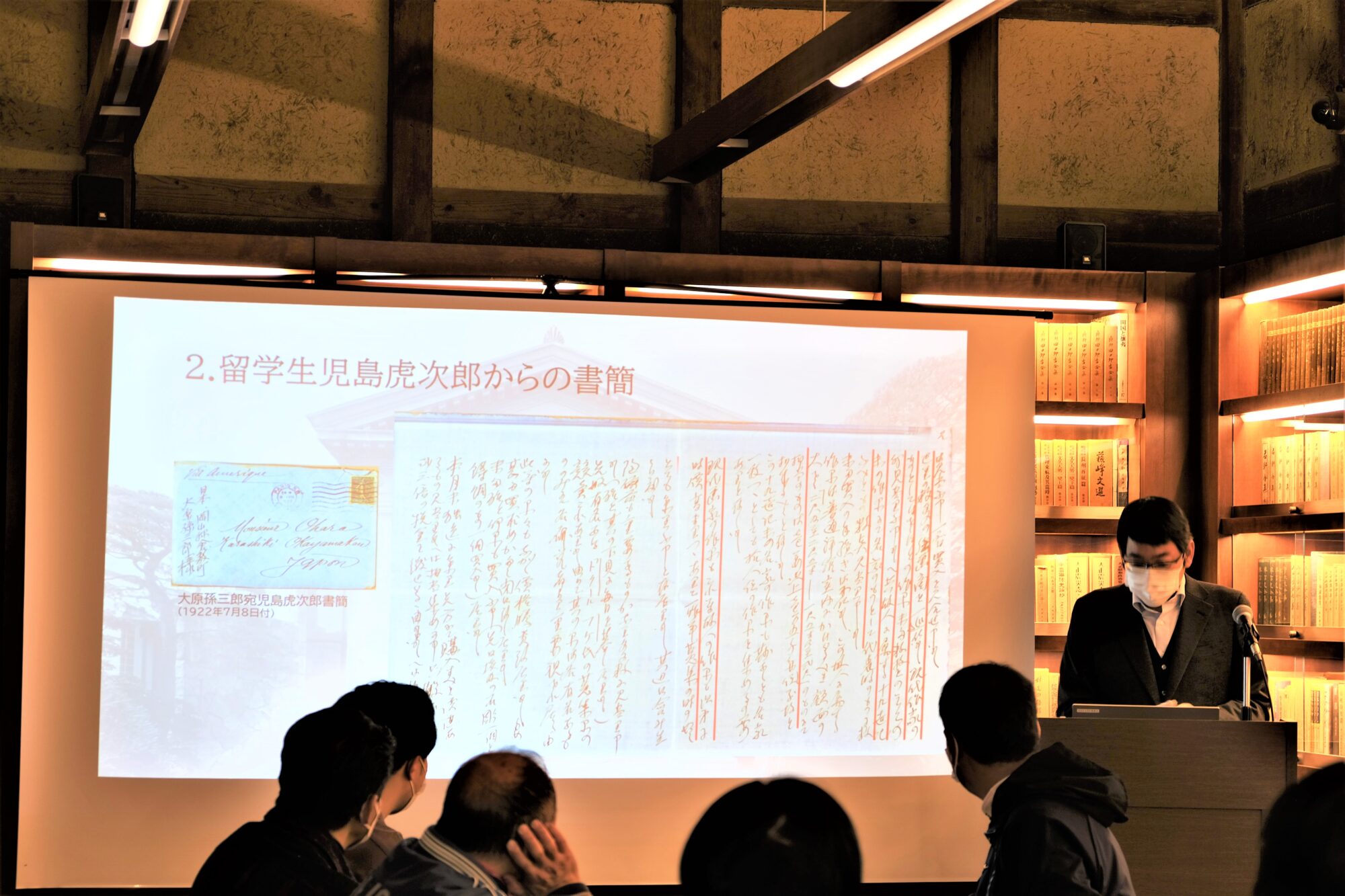
Kojima Torajiro reported from Paris, where he was studying, that he had found several representative works by contemporary artists and renowned masters.
At the time, these works cost between 10,000 and 15,000 yen, equivalent to about 100 million yen today.
He proposed to Ohara Magosaburo that they collect one work by each artist, for a total of 13 works by 13 artists.
Also, buying Egyptian and Persian ceramics was a major motivation for Kojima Torajiro.
He reported that he had bought several hundred ceramics (mostly fragments), of a quality comparable to those displayed at the Louvre and the British Museum, for 400 or 500 yen to 1,000 yen.
That would be about 4 to 5 million yen to 10 million yen today.
Purchasing Rodin’s works
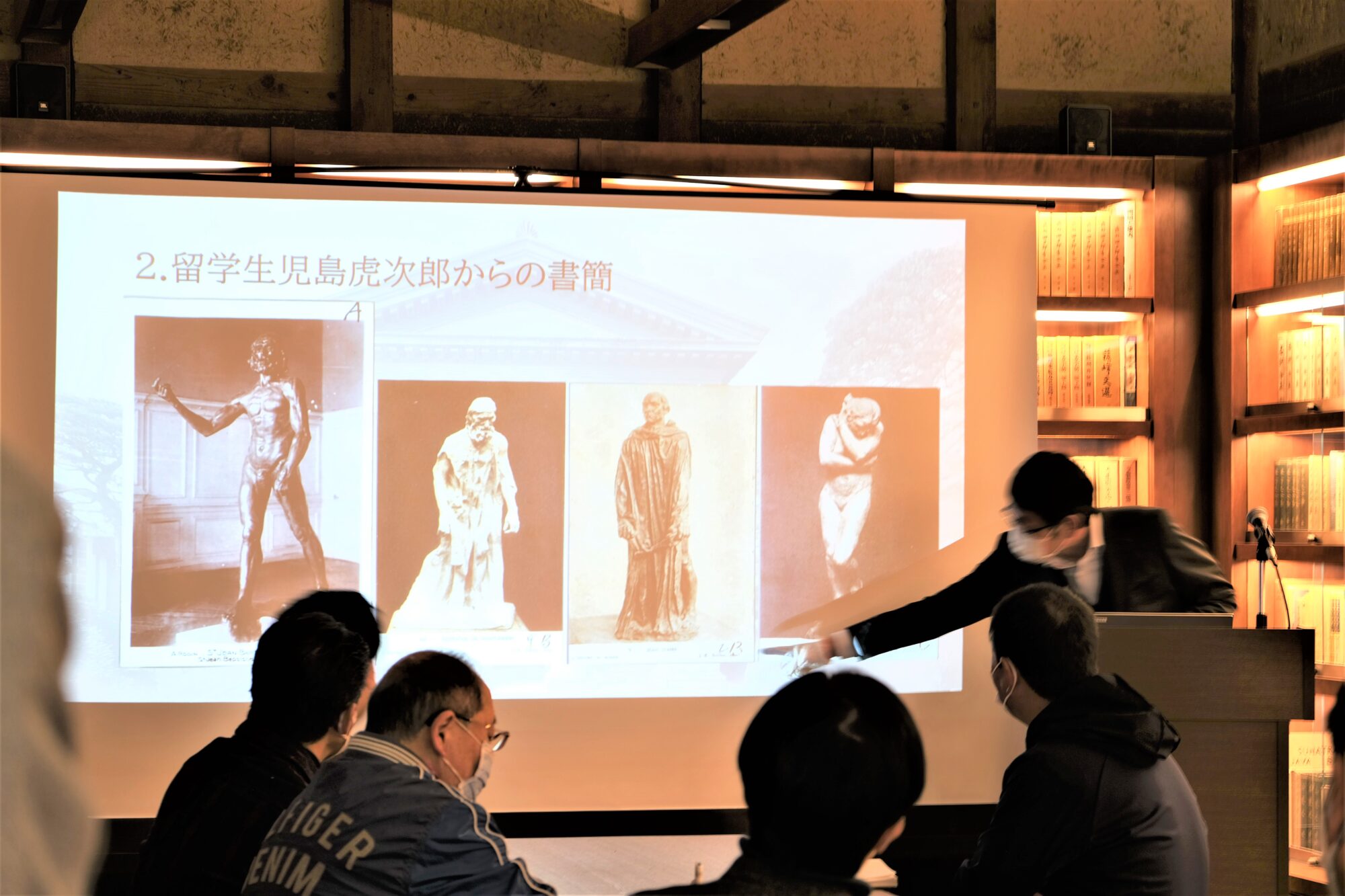
The letter requesting the purchase of Rodin’s works included photographs of four candidates.
Kojima Torajiro asked, “How many may I buy?”
At the time, Kojima Torajiro was planning to buy two sculptures and had already decided to purchase the nude male figure “St. John the Baptist,” shown at the far left of the image.
After corresponding with Ohara Magosaburo, he bought the nude male figure “St. John the Baptist” and the clothed male figure “The Burghers of Calais.”
Purchasing El Greco’s “The Annunciation”
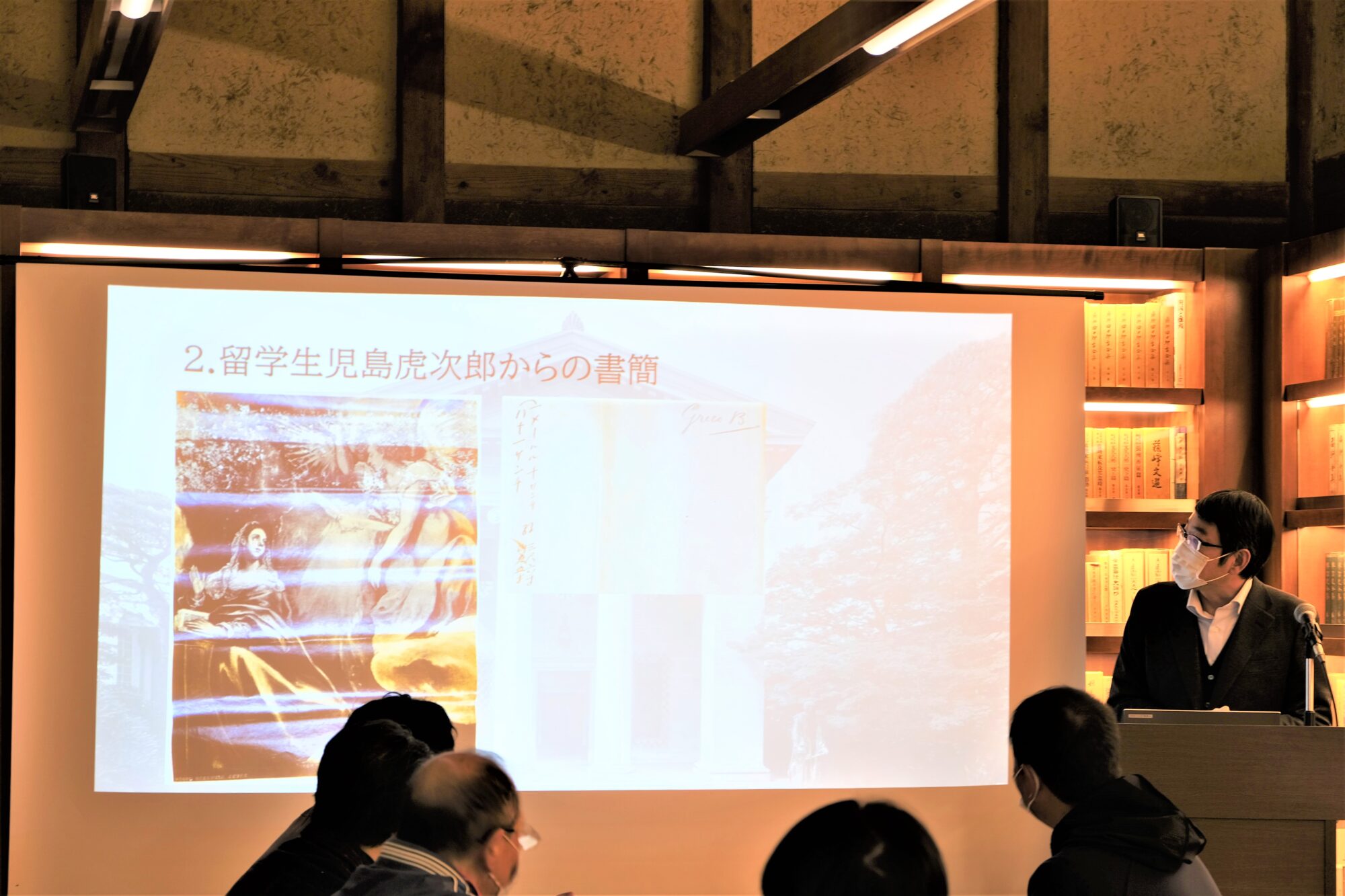
Kojima Torajiro also sent a photograph when considering the purchase of El Greco’s “The Annunciation.”
An El Greco painting is up for sale.
I’m sending you a photograph, so please decide whether to buy it.
The price was 175,000 francs. That was 30,000 yen in Japanese currency, or about 300 million yen today.
This time, Kojima Torajiro was truly torn.
If he gave up on the El Greco painting, he could buy several paintings by famous artists such as Chavannes and Gauguin.
After much deliberation, he decided to buy it.
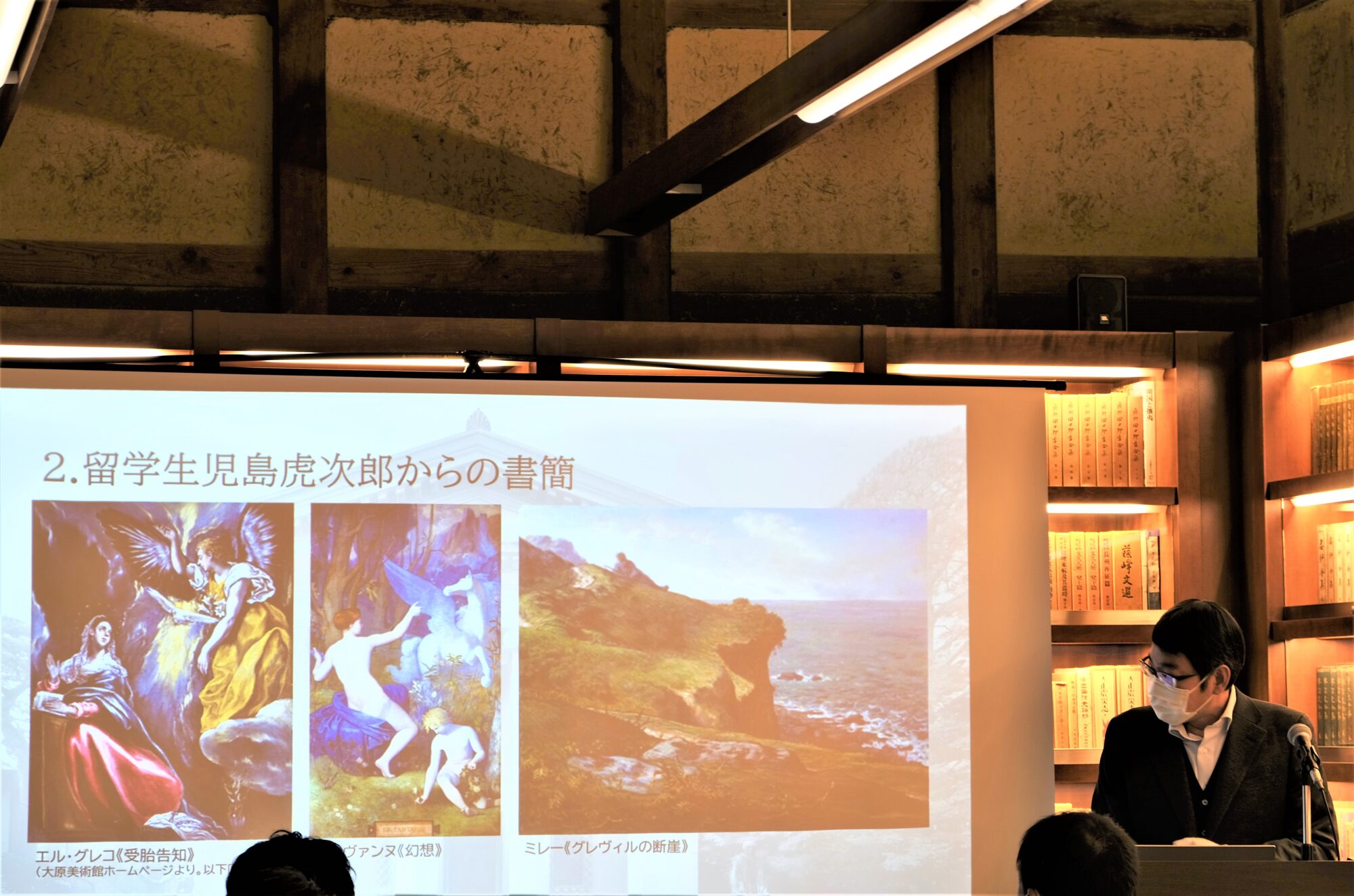
El Greco’s “The Annunciation” became a work Kojima Torajiro was satisfied with and proud of.
Chavannes’s “Fantasy” is an important work for understanding Chavannes’s life.
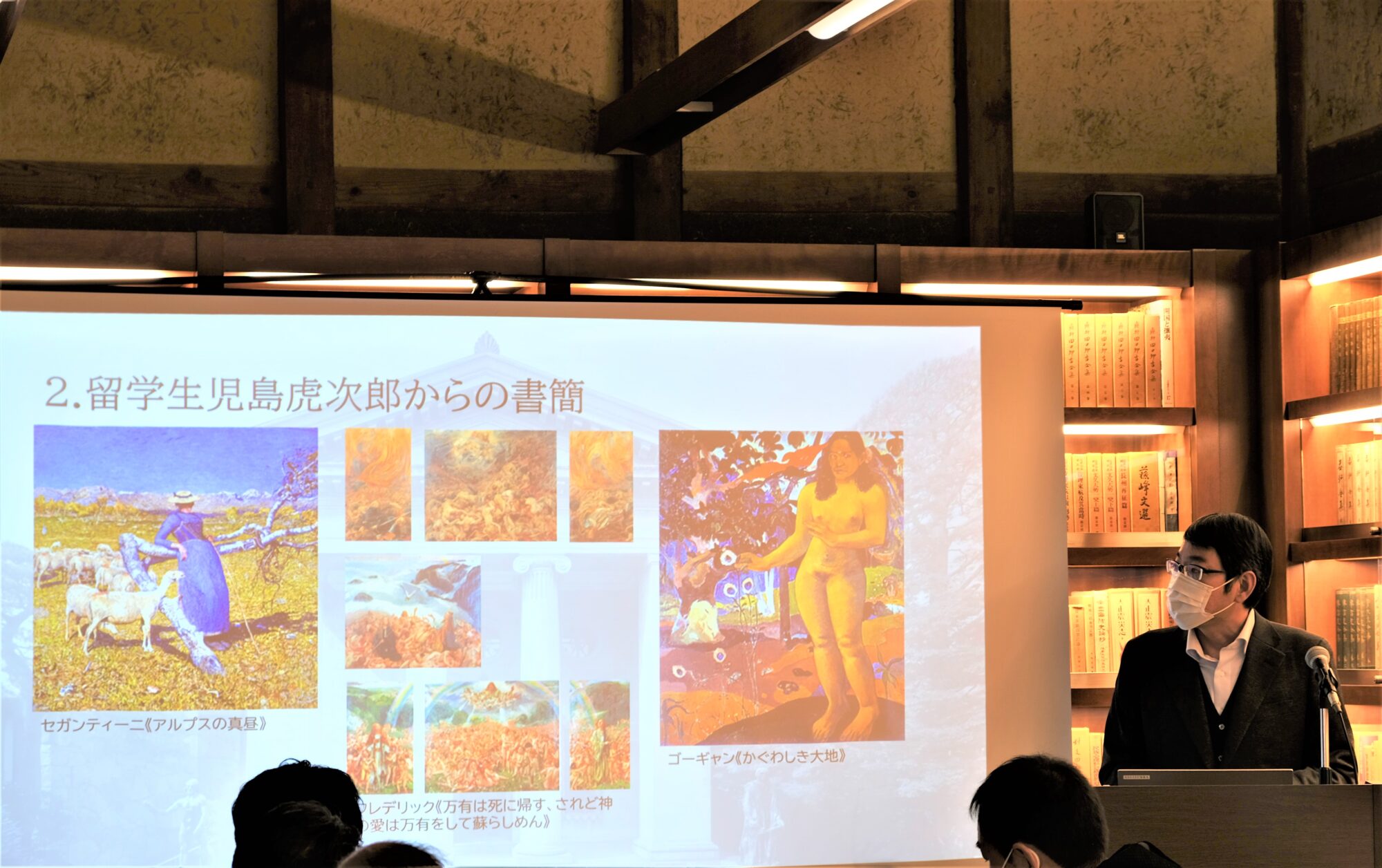
The paintings and artworks collected by Kojima Torajiro became signature works of the Ohara Museum of Art.
Letters from Teruoka Gito
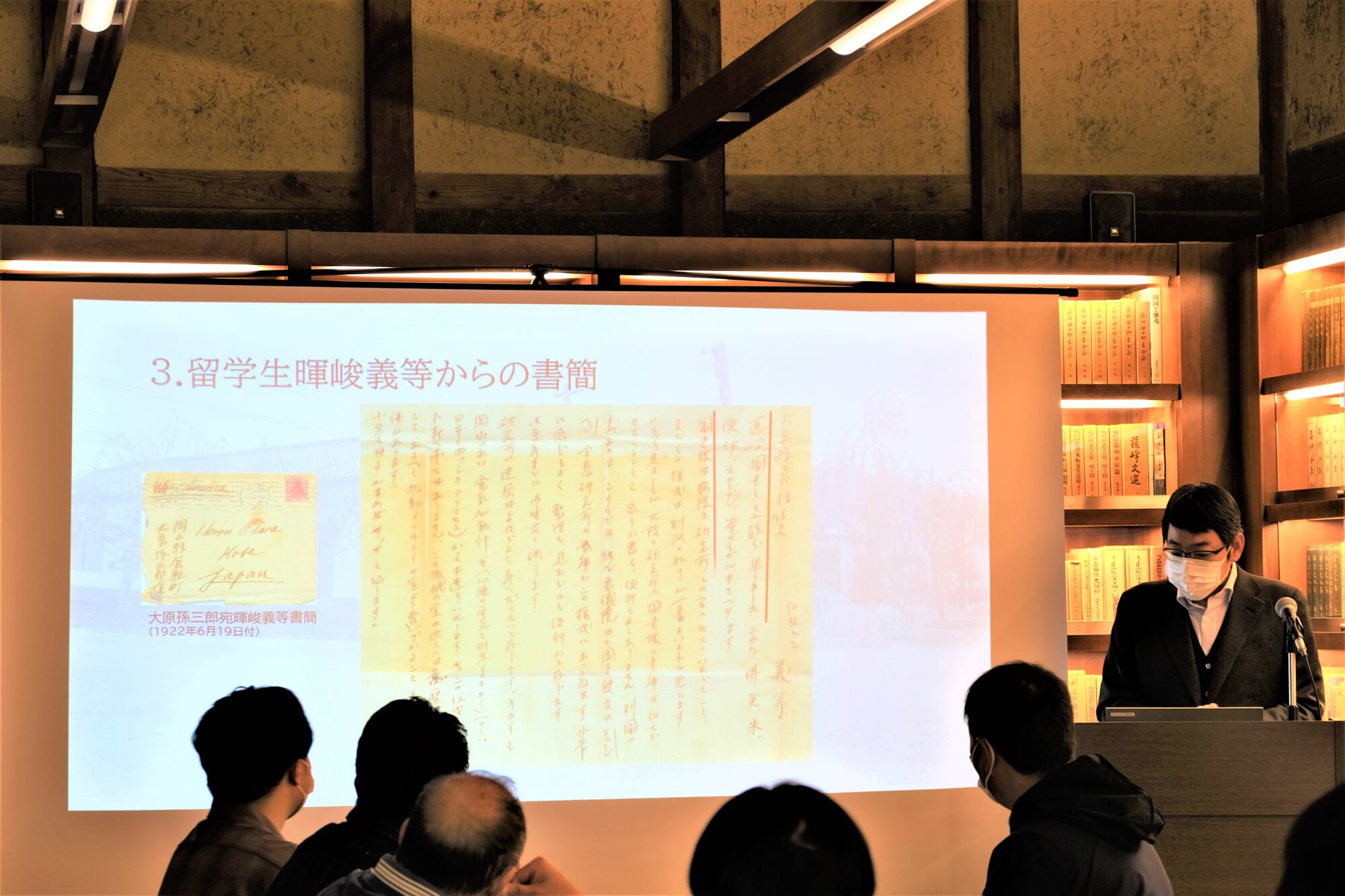
Teruoka Gito was director of the Kurashiki Institute for Labour Science and an occupational health researcher.
Teruoka Gito sent letters about Japan’s situation as seen from overseas.
They included the following points.
The Ohara Institute for Social Research and the Kurashiki Institute for Labour Science should be combined as the Ohara Institute, and everyone should work hard without sparing any effort.
Citizens need to support Mr. Ohara’s intentions and help Kurashiki develop.
Let us involve the citizens and make life better.
Bringing medical books home, never letting them out of his sight
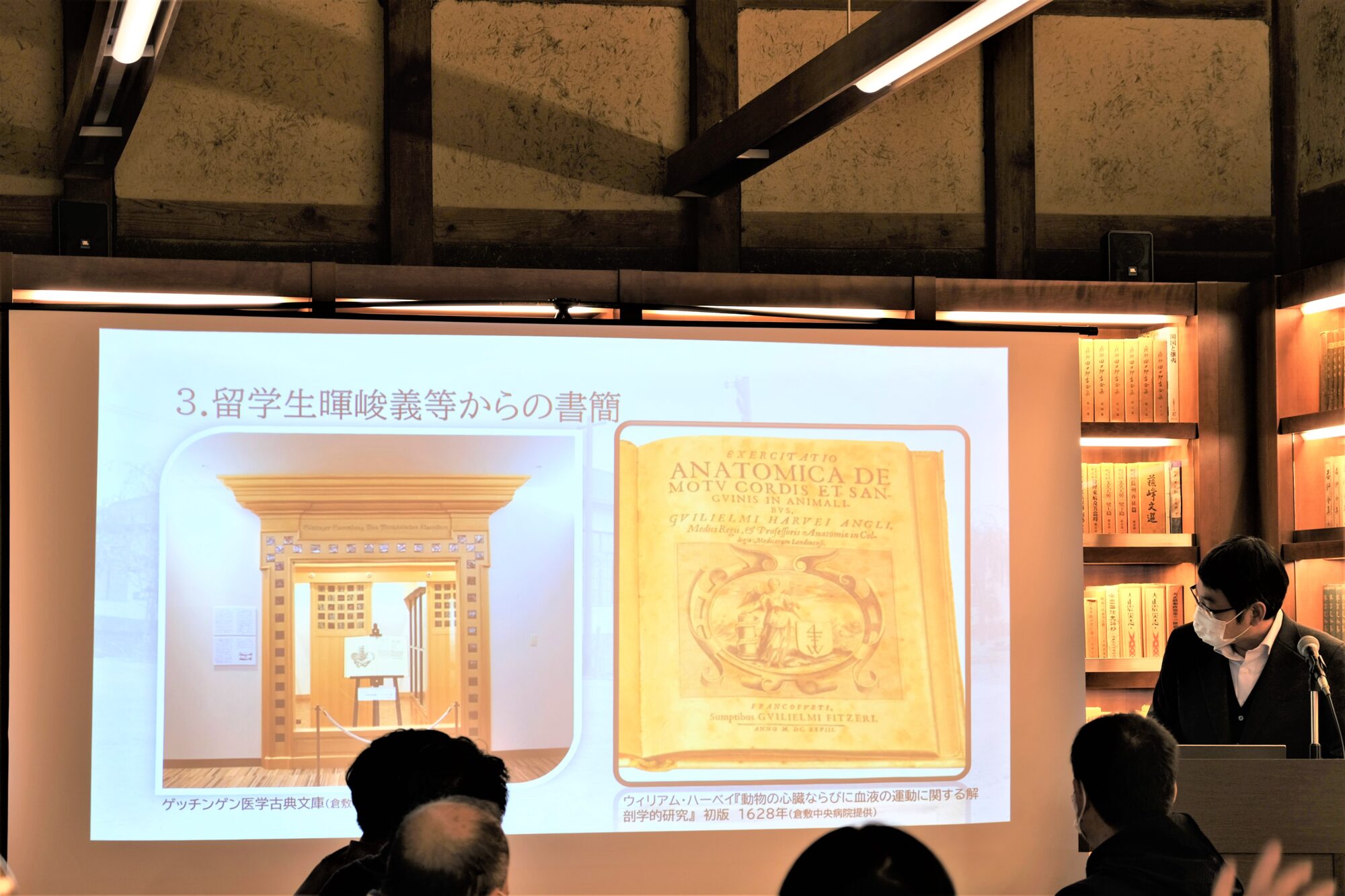
William Harvey’s “An Anatomical Study of the Motion of the Heart and Blood in Animals” is a book that scientifically proved that blood circulates through the human body.
Although Teruoka Yoshito purchased many collections of medical classics, this was the only book that he kept close to him at all times on his return.
After returning to Japan, he translated and published it himself.
Calling for the abolition of night work
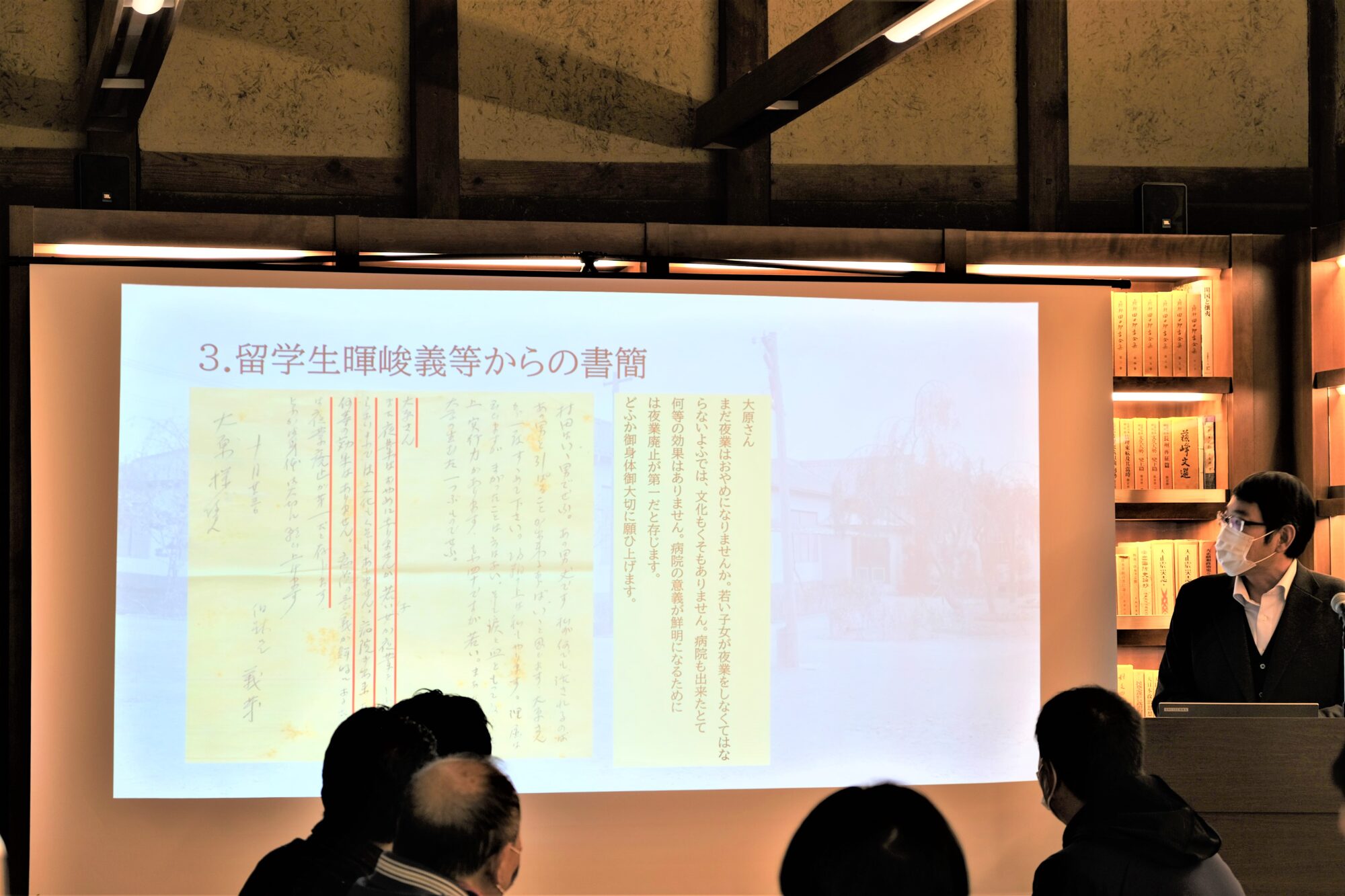
In language so harsh it is hard to believe he was addressing Ohara Magosaburo, who had looked after him, he called for the abolition of night work (night shifts).
If young women have to work at night, there is no culture or anything else.
The abolition of night work (night shifts) was itself an issue for KURABO INDUSTRIES LTD., whose president was Ohara Magosaburo, and for Japanese society as a whole, and Teruoka Yoshito wanted it abolished as soon as possible—without a moment’s delay.
The Kurashiki Institute for Labour Science was established by Ohara Magosaburo to improve working conditions.
This was a fitting appeal from its director, Teruoka Yoshito.
He also made a proposal that would benefit the business: why not send researchers from Kurabo to a textile research institute in Germany to study?
F-cafe Round Study
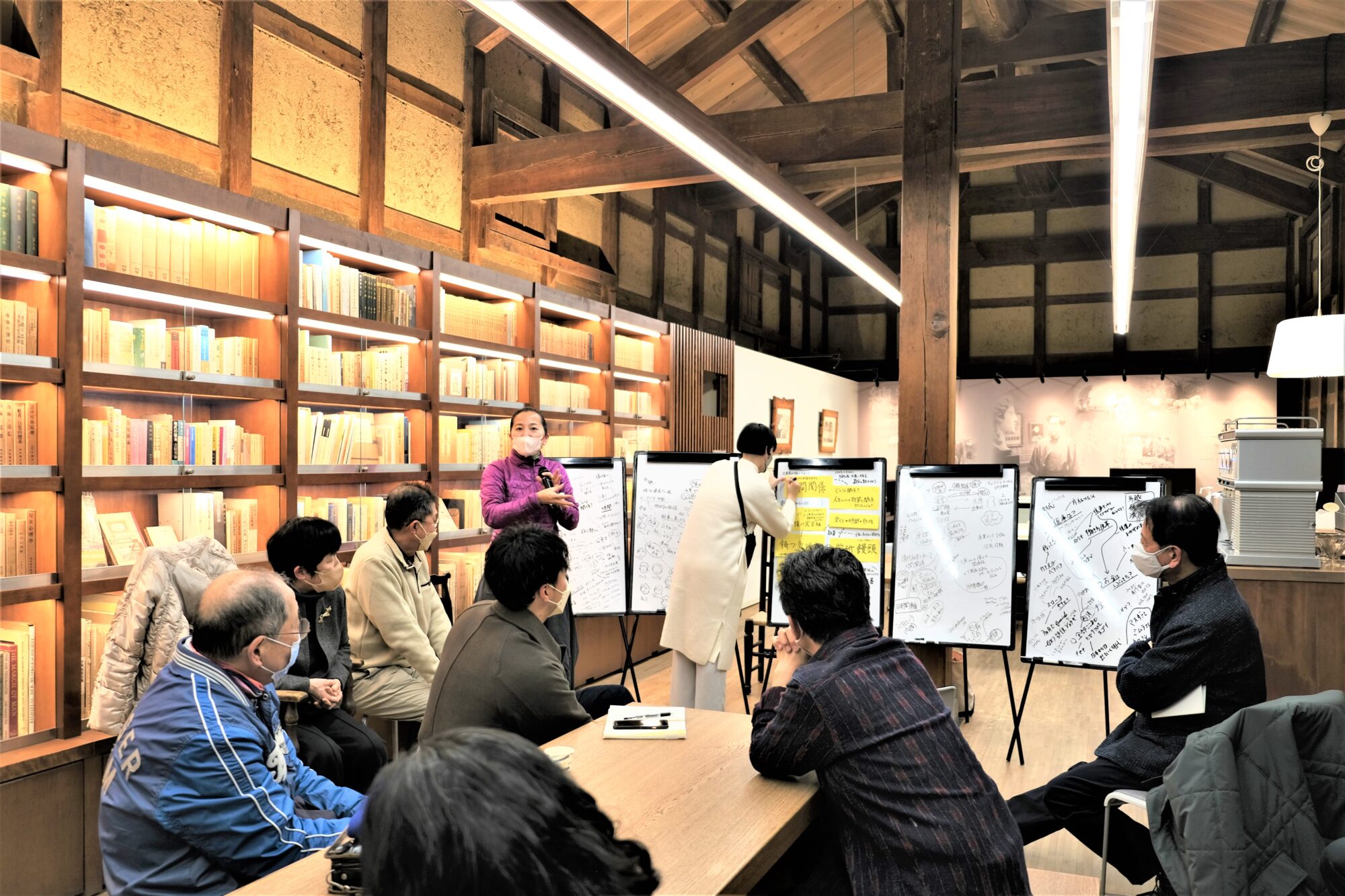
I took part in the Round Study after the seminar.
Three “islands” were set up in the venue. To avoid ending up with the same members, we moved from island to island and freely discussed our thoughts on the seminar.
First, we chose a topic.
The topic of the first “island” I joined was “The relationship between Ohara Magosaburo and the international students.”
Kojima Torajiro would casually ask for funds to purchase expensive paintings.
Teruoka Yoshito made a rather harsh remark to Ohara Magosaburo, who was paying his study-abroad and medical-book expenses: “You can’t have young women working at night and talk about culture!”
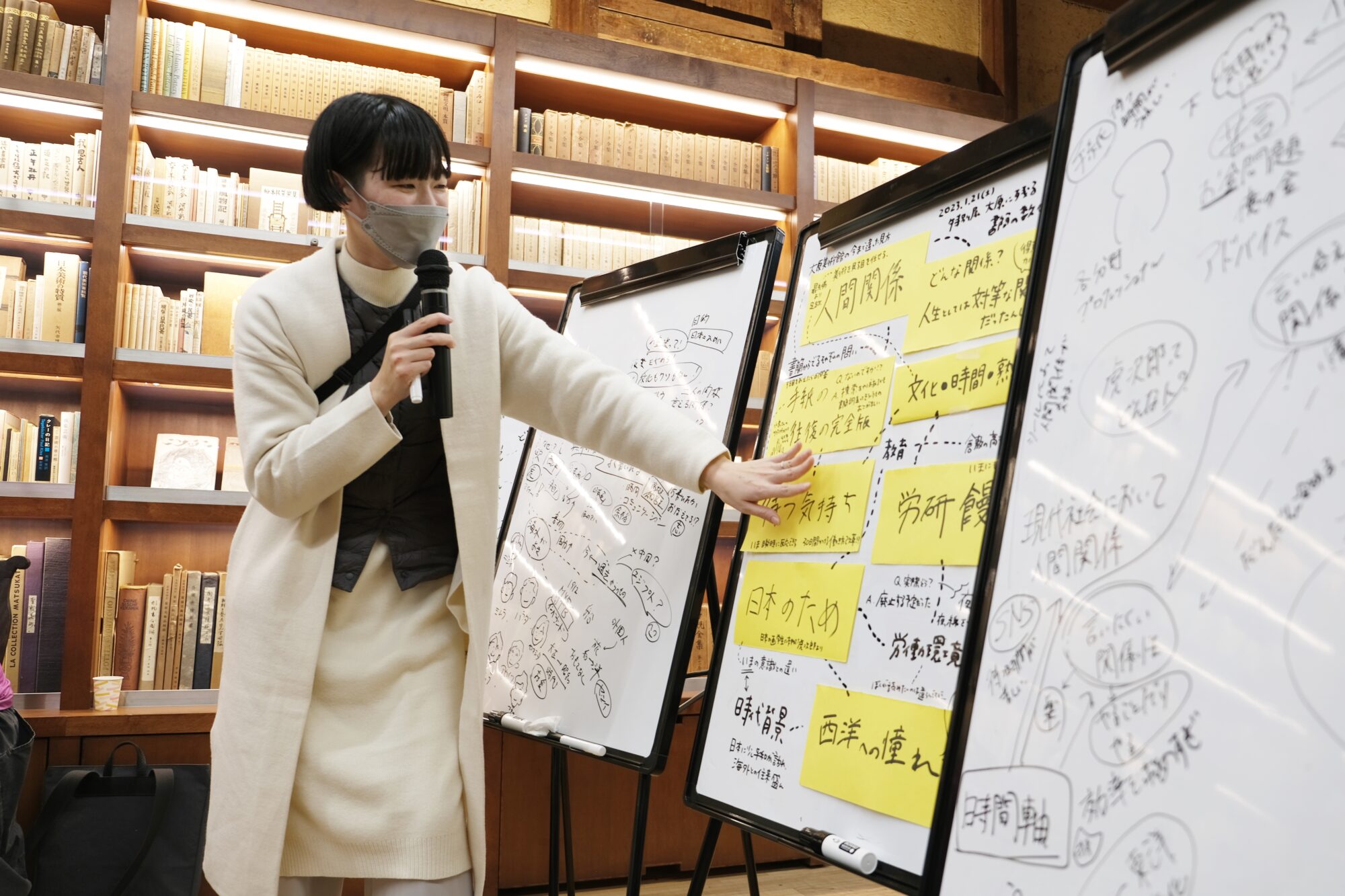
Neither of them held back when speaking to Ohara Magosaburo.
That was because Ohara Magosaburo was a leader who truly listened to what the international students had to say.
The letters sent by the international students took 30 to 40 days to reach Ohara Magosaburo.
During that time, did their passion fade?
The students pursued their convictions, conducted research, studied, and bought the latest equipment and papers.
Their passion never faded.
They were fired up about making Japan a better place.
The relationship between Ohara Magosaburo and the international students was one of equals in life
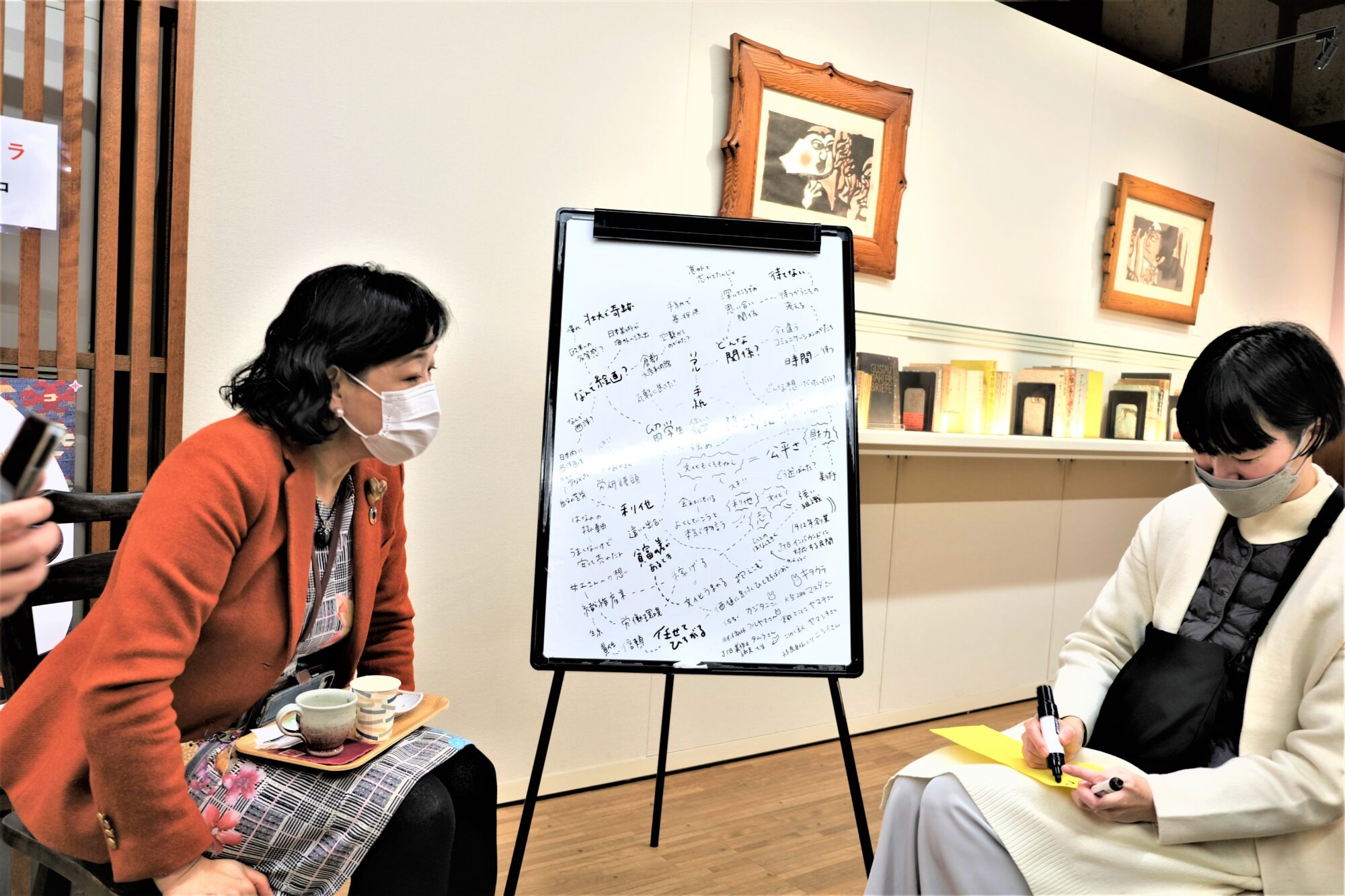
We moved between the “islands” in the venue and returned to our original island.
The words of people who had come over from the other “islands” had been added to the whiteboard.
We also added what we had discussed and heard on the other “islands.”
What keyword did we come up with for our original topic, “The relationship between Ohara Magosaburo and the international students”?
“Equals in life”
Ohara Magosaburo was a leader who listened to people, and trusted experts to take charge of fields he did not understand.
Kojima Torajiro handled paintings, while Teruoka Yoshito handled medical books.
Leaders who run successful businesses listen carefully to others, and people follow them.
And because people follow them, they accomplish great things.
A great achievement made possible through an exchange of letters that took more than a month.
The gradual maturation of culture over time.
Some things cannot be accomplished without taking time.
From the Writer
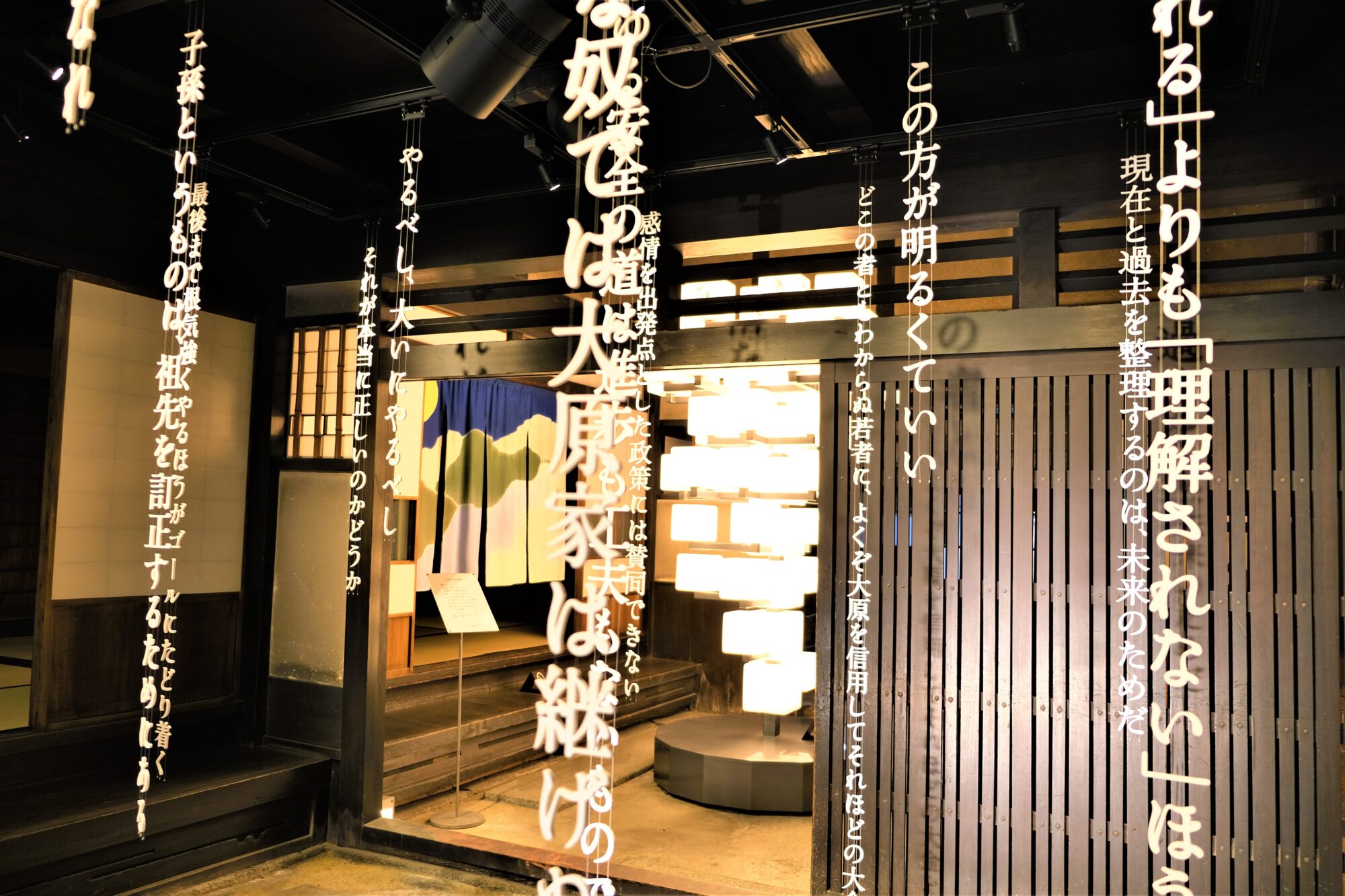
Through this seminar, I was able to explore the deeper history of the Bikan Historical Area.
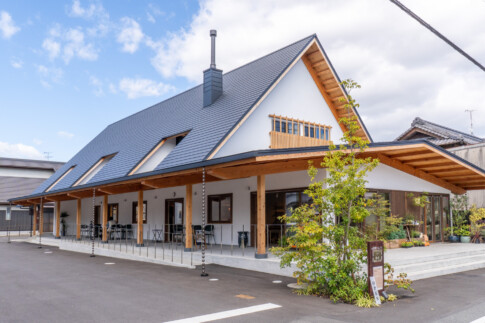
The space that is Ohara House Katalyzer.
Among the “Words raining down” in the doma just inside the entrance, you may find words that speak to you today.
Beyond the doma is a passage lined with storehouses.
Materials related to the Ohara family are on display.
The garden viewed from the detached reception room is also meticulously maintained, creating a tranquil atmosphere.
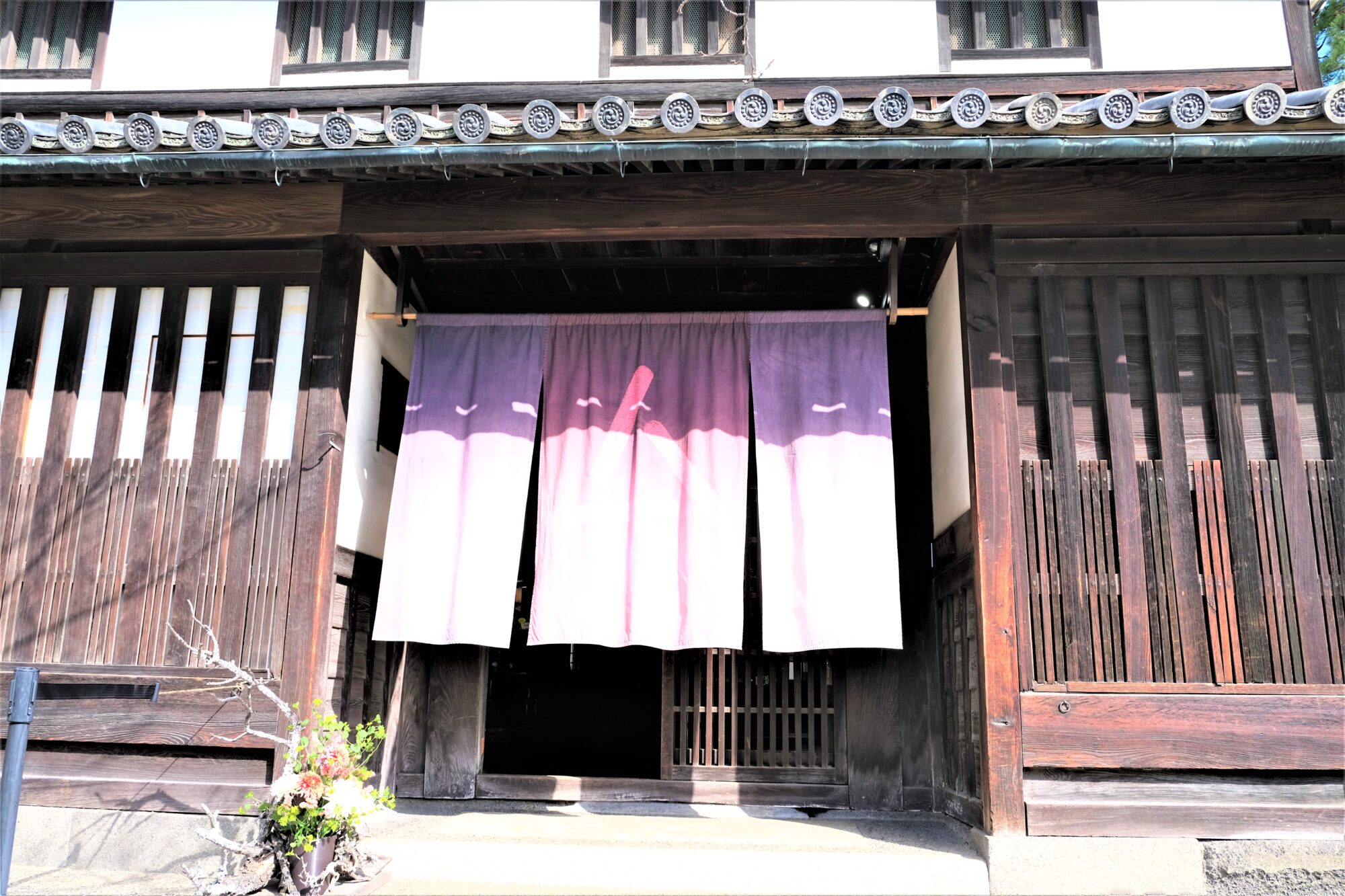
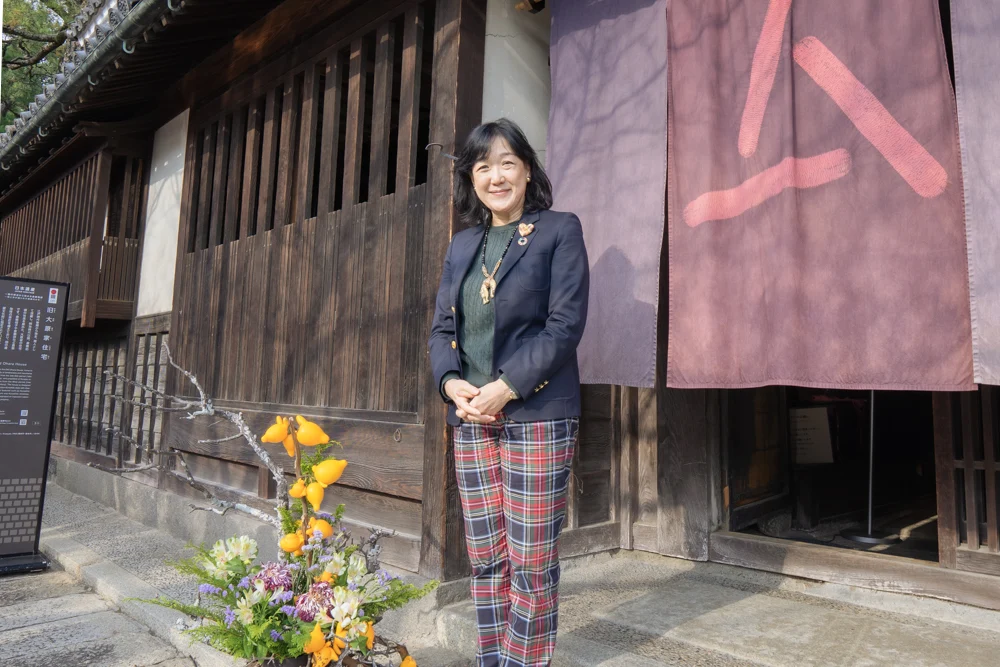
Passing through the noren, I found many surprises.
At the Ohara Museum of Art just ahead, paintings and ceramics collected by Kojima Torajiro are on display.
The letters from international student Kojima Torajiro at Ohara House and the artworks collected by Kojima Torajiro at the Ohara Museum of Art came together for me.
If I have the chance to visit the Ohara Museum of Art, I would like to admire El Greco, Rodin, and Egyptian ceramics while remembering the exchanges between Ohara Magosaburo and Kojima Torajiro.
There still seems to be so much I don’t know about the Bikan Historical Area.
Articles about Ohara House Katalyzer
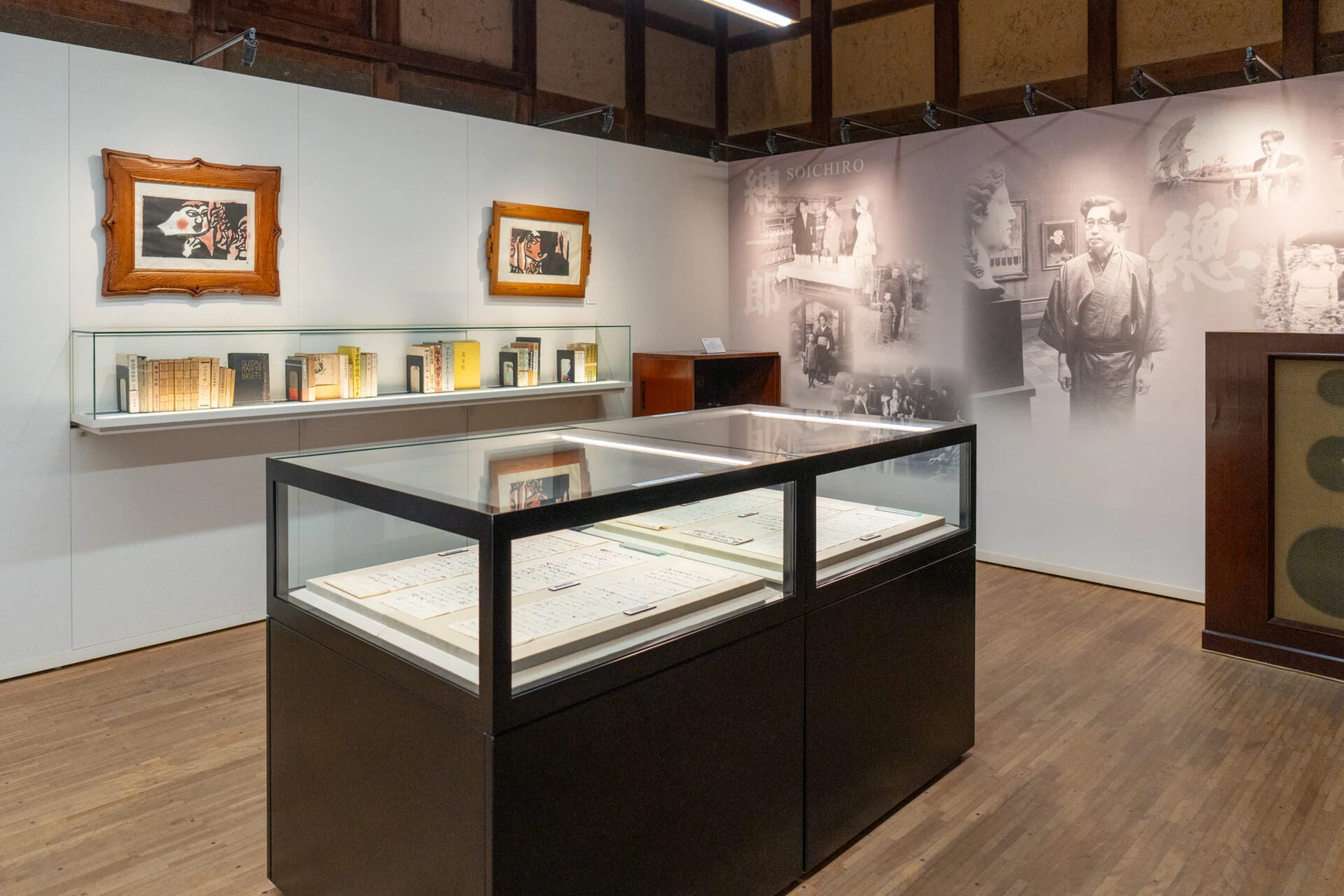
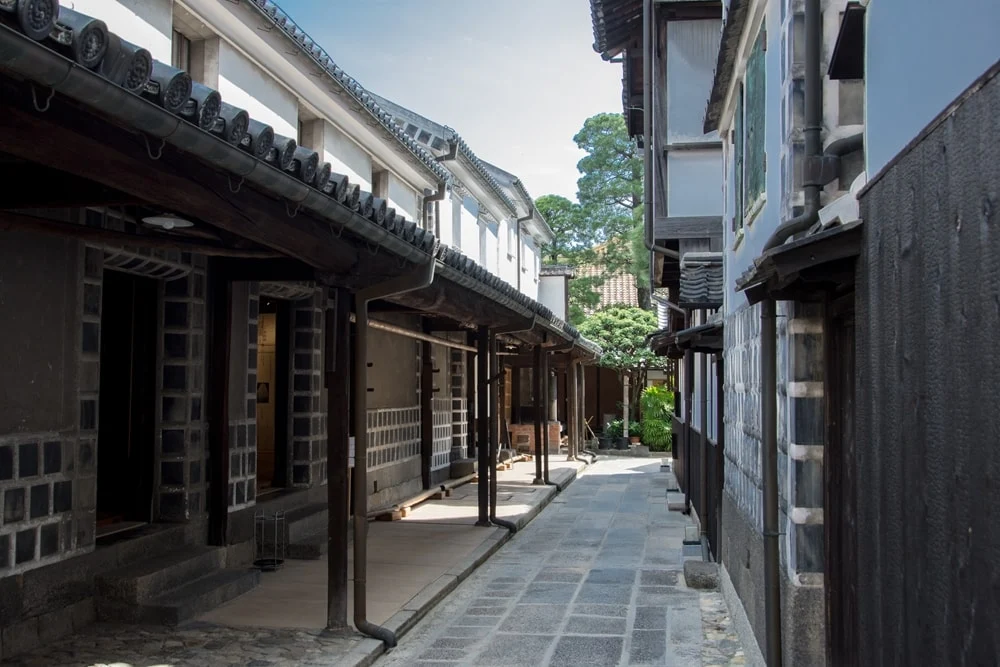
36th Kurashiki Mirai K-juku Ohara House Special Exhibition, “Letters Remaining in the Ohara Family Collection: Letters from Students Studying in Europe and America” Information

| Name | 36th Kurashiki Mirai K-juku Ohara House Special Exhibition, “Letters Remaining in the Ohara Family Collection: Letters from Students Studying in Europe and America” |
|---|---|
| Date | January 21, 2023, from 1:00 p.m. |
| Location | 1-2-1 Chuo, Kurashiki City |
| Website | Ohara House Katalyzer |

What would you like to know about Kurashiki?
Enter a search term to find articles on this site