Features and Highlights of Tamashima's Townscape
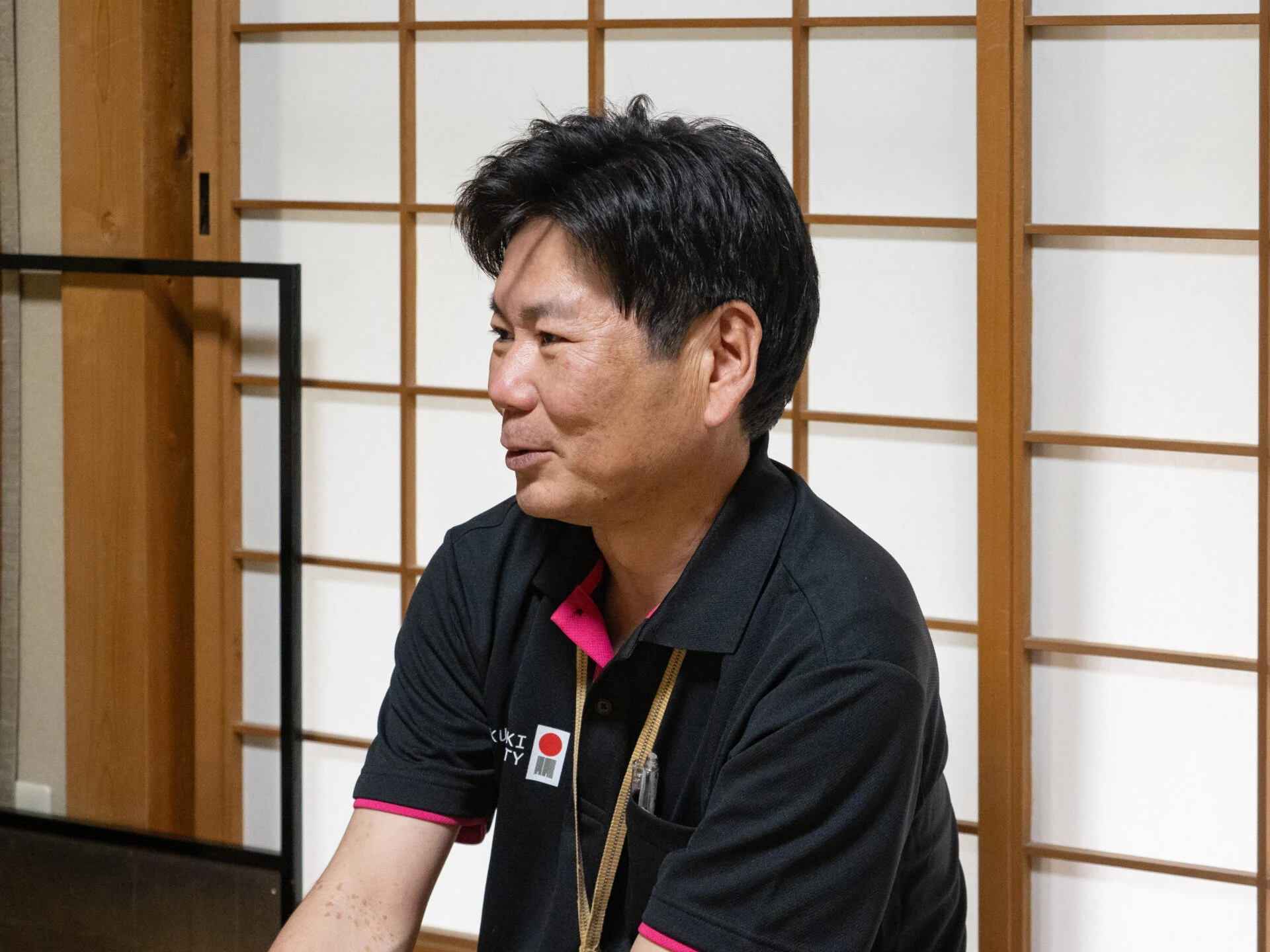
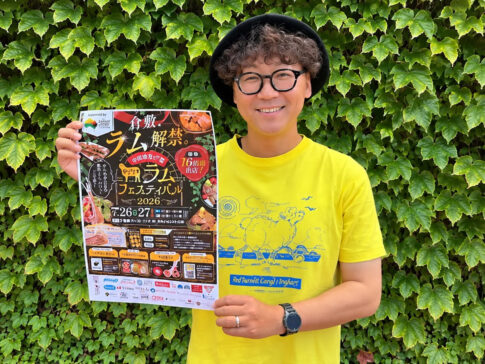
I spoke with Fujihara Noriyoshi, Chief of the Kurashiki City Japan Heritage Promotion Office, about the charm and highlights of Tamashima's townscape.
The Townscape of Tamashima Centered Around Haguro Shrine
First, could you tell us about the features of Tamashima's townscape?
Fujihara
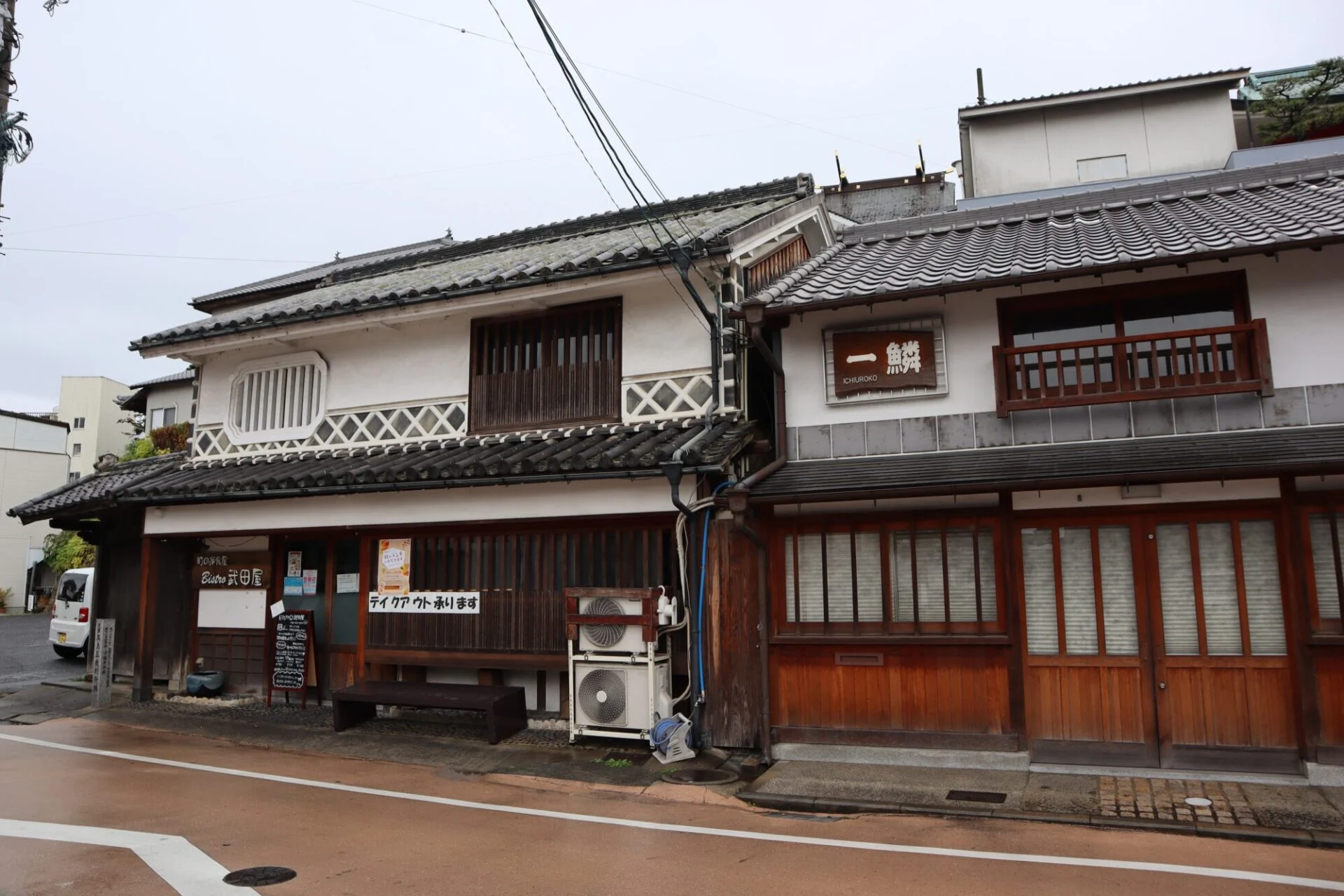
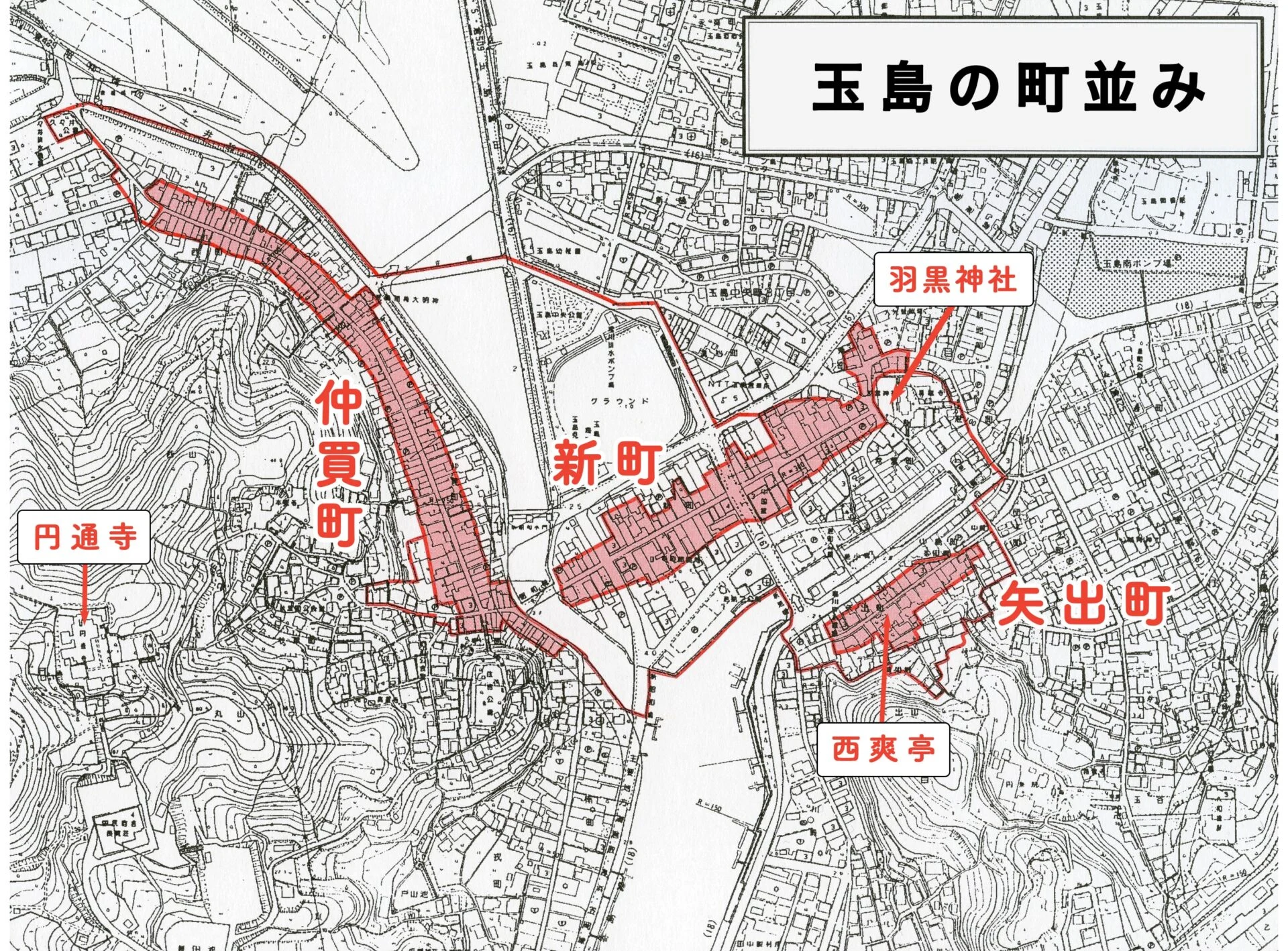
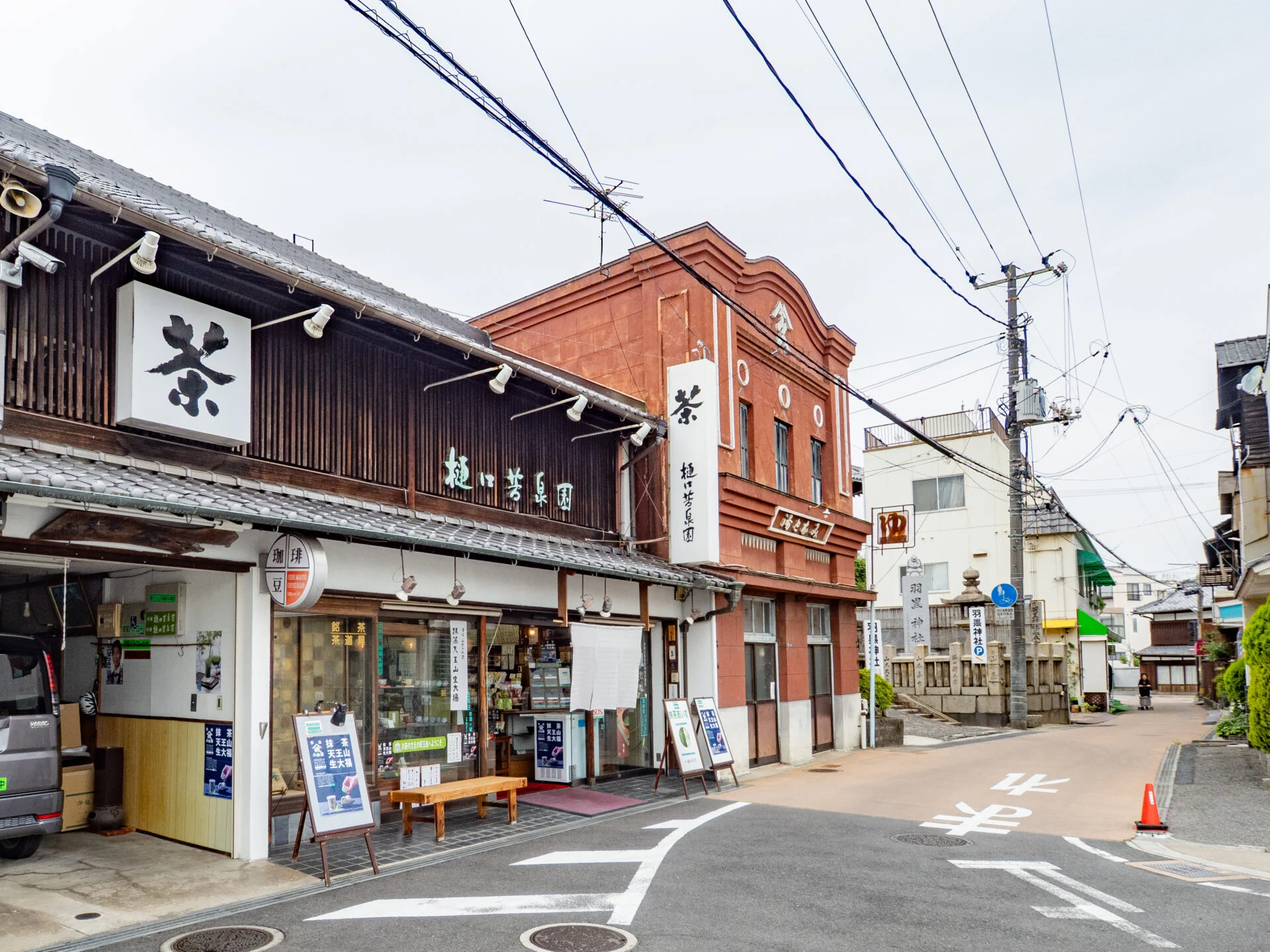
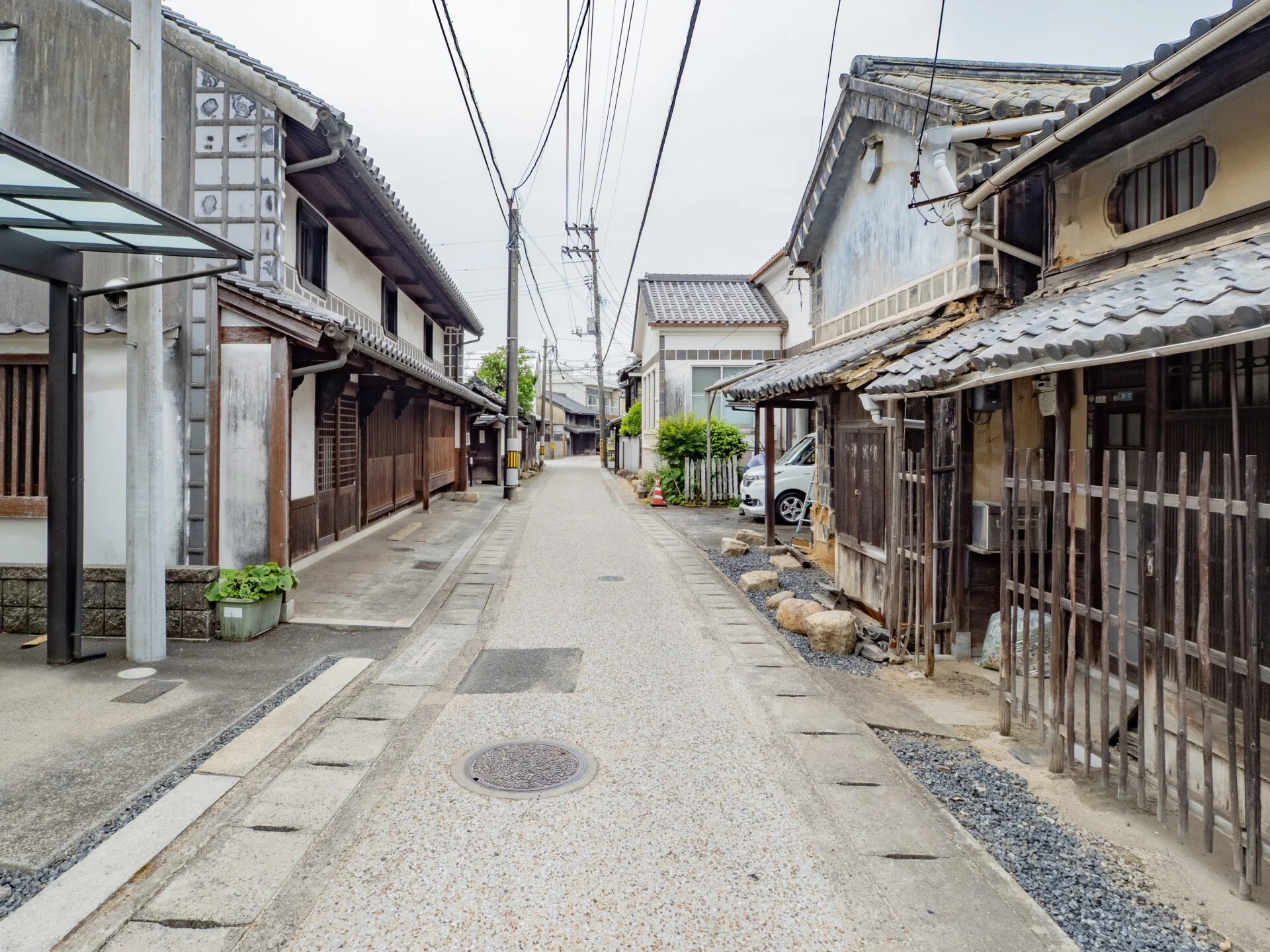
In the old port town of Tamashima, many old buildings can be seen in the three districts: Shinmachi, Nakagaito, and Yade-cho.
These are located radially around Haguro Shrine.
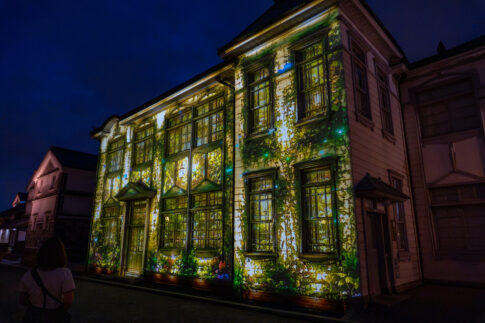
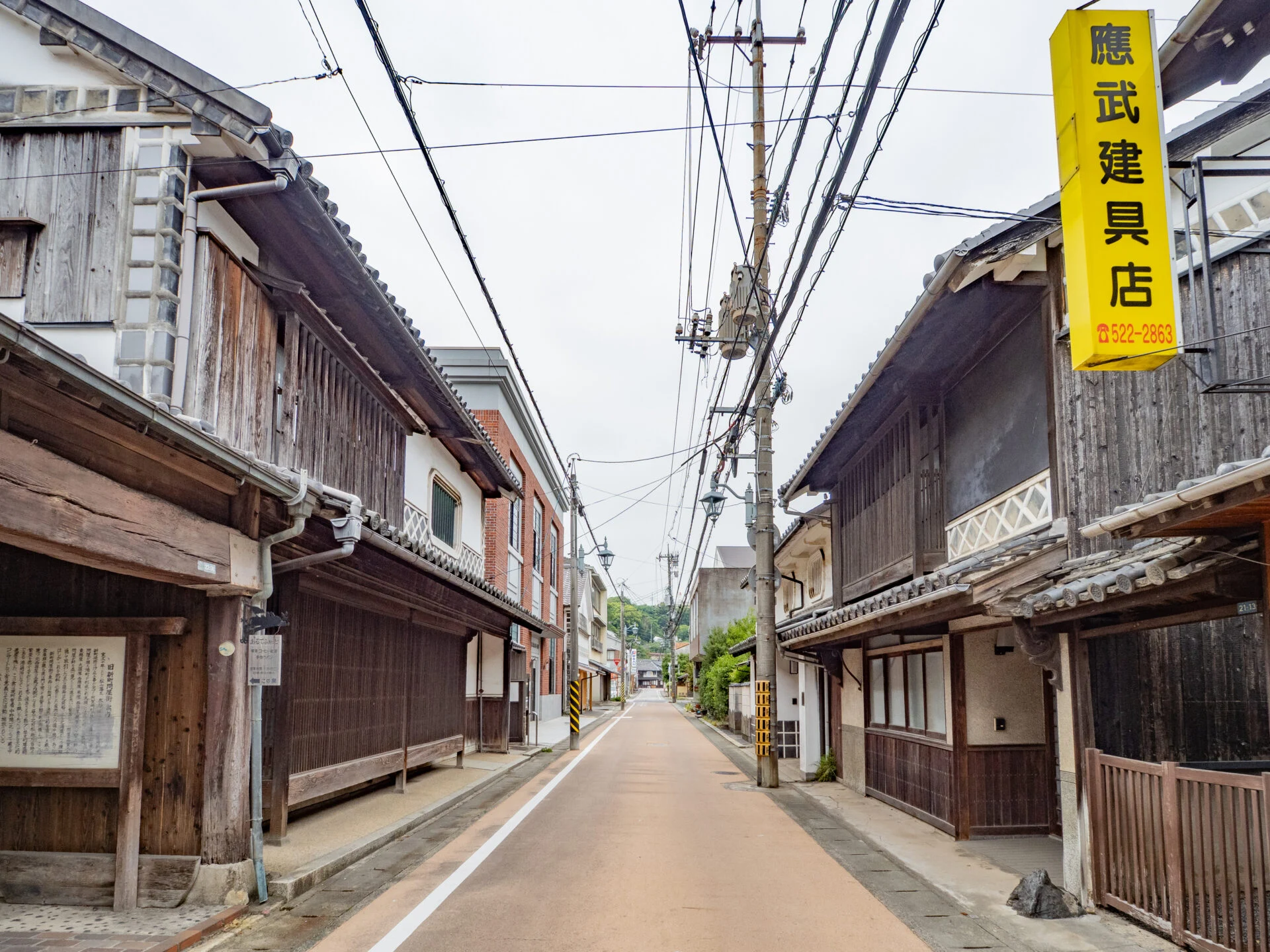
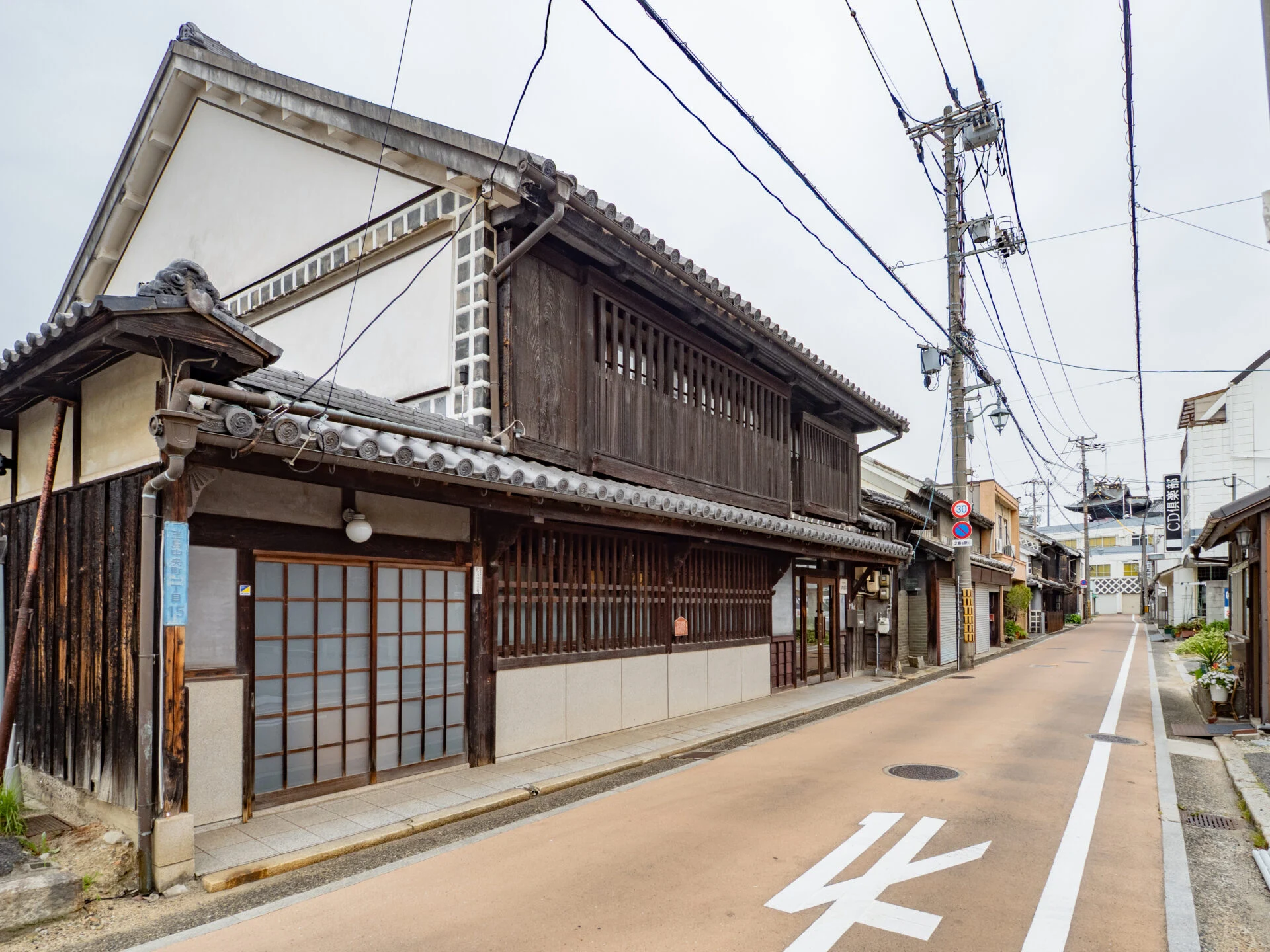
The historical buildings remaining in Tamashima's townscape are characterized by features such as mushikoma windows, latticework, and namako walls, along with traditional tile-roofed merchant houses and storehouses.
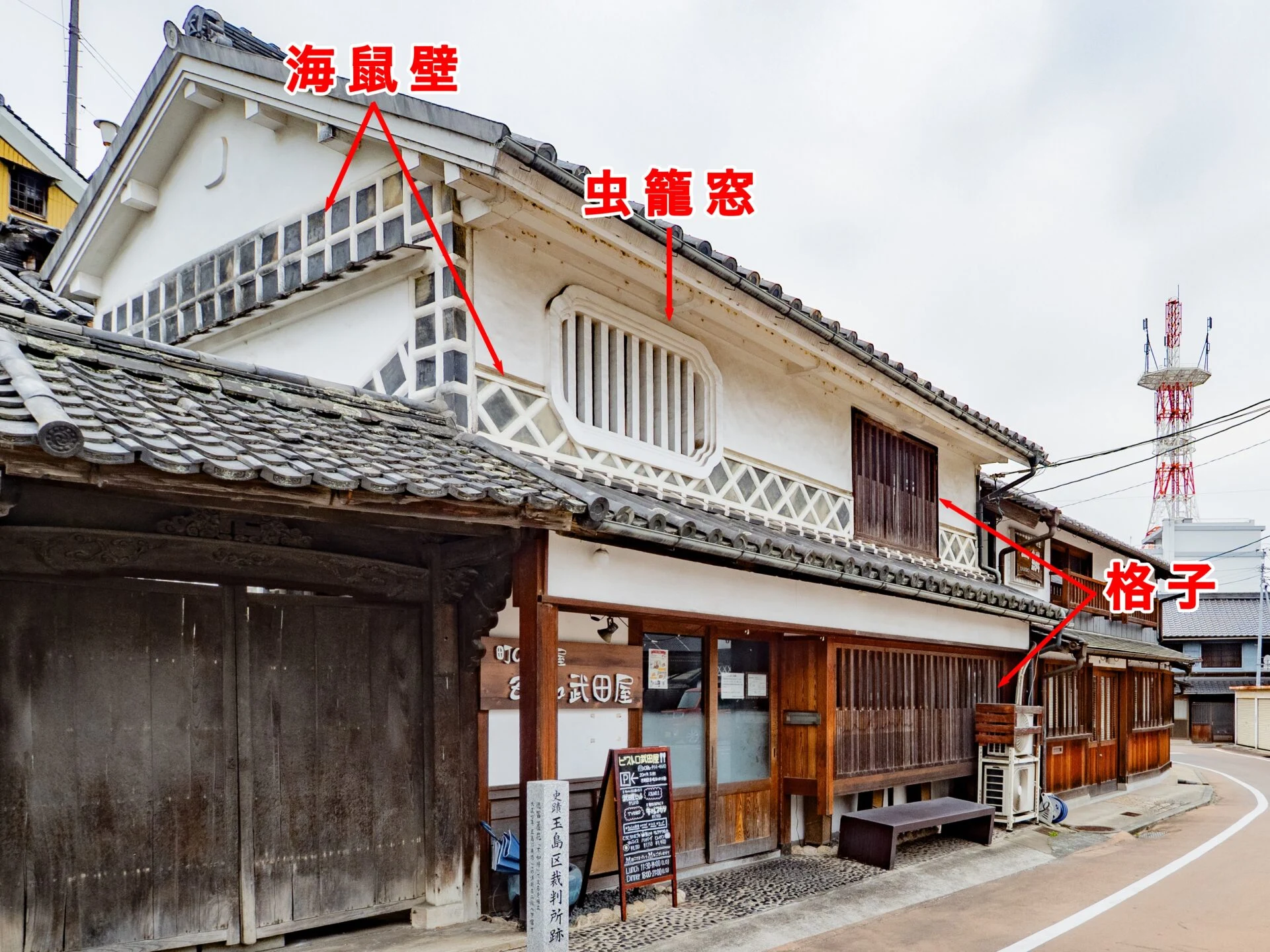
These features can be seen in the homes of wealthy individuals.
It shows that Tamashima prospered in commerce and produced many wealthy merchants.
The historical buildings are still used as residences or are in operation as businesses.
Please take a stroll through the town and feel the atmosphere of this port town, once called "the Naniwa of the West."
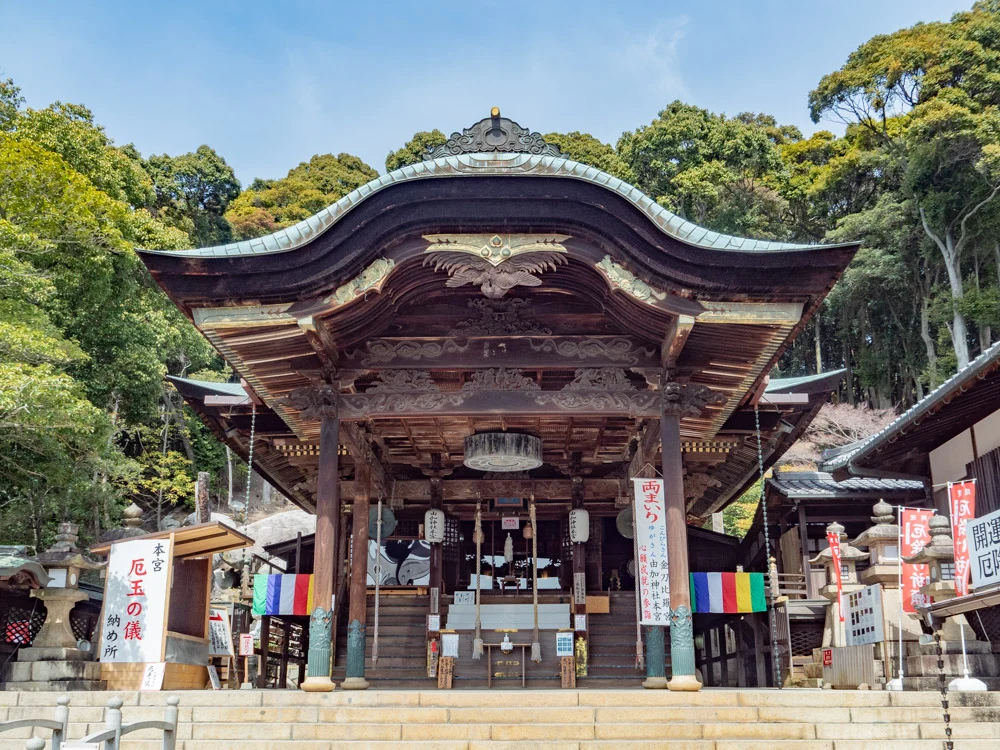
Tamashima's Guardian Deity: Haguro Shrine
What are your recommended spots in Tamashima, Fujihara-san?
Fujihara
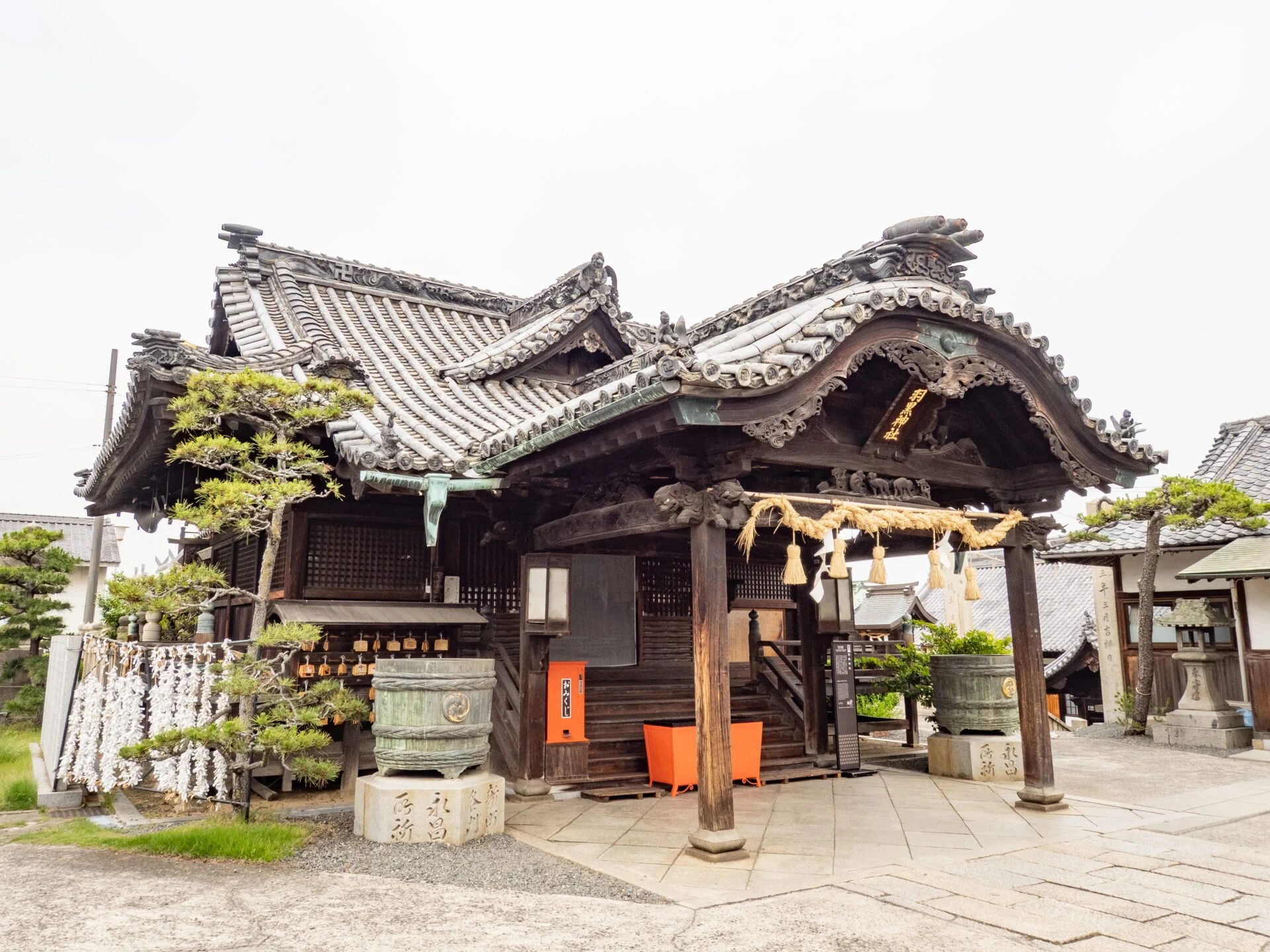
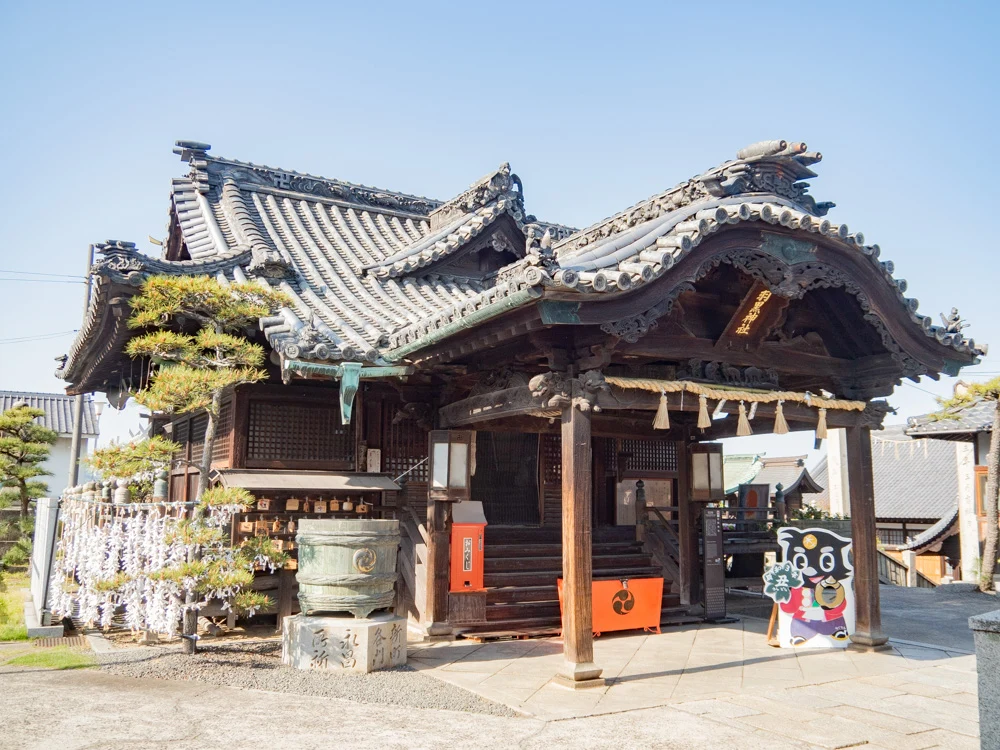
My recommendation is Haguro Shrine.
Haguro Mountain, where Haguro Shrine is located, is almost at the center of Tamashima's urban area.
Haguro Shrine was established when the Mizutani clan, the feudal lord of Bitchu Matsuyama, began land reclamation in the early Edo period, praying for the success of the reclamation project and the safety of the reclaimed land by enshrining a spirit from Ide Shrine (Iide Jinja) in Dewa Province (present-day Yamagata and Akita Prefectures), which is located on Mt. Haguro (in Tsuruoka City, Yamagata Prefecture).
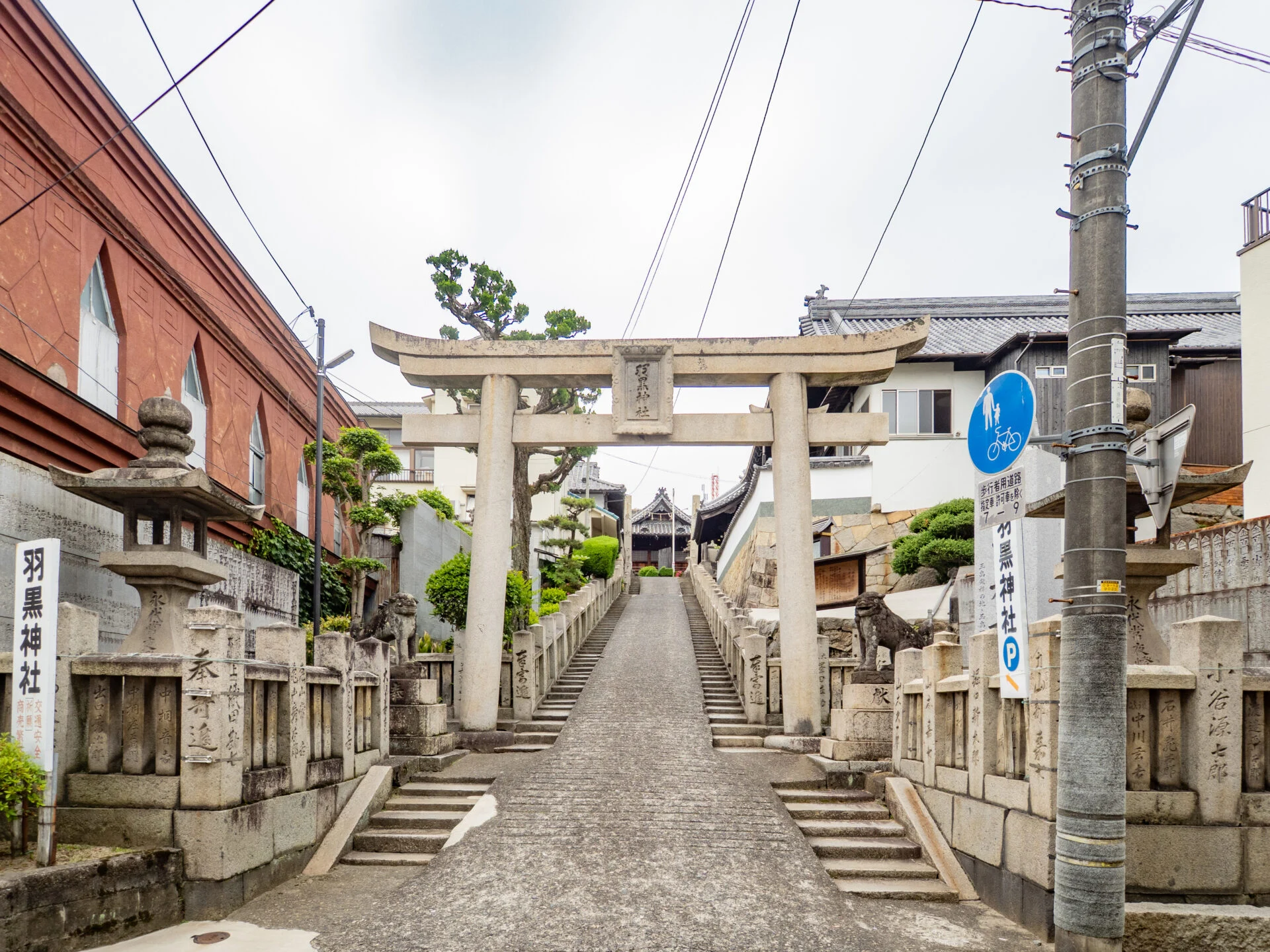
If you look closely at the shrine's decorations, you will find many intricate and unique details.
Additionally, names of people from distant places can also be seen on the tamagaki (fence) beyond those from around Tamashima.
This indicates that the area prospered through trade with the Kitamae-bune (northern-bound ships), leading to the emergence of many wealthy merchants.
Furthermore, since Haguro Mountain, where Haguro Shrine is located, was once an island, it was called Amida Island.
There is also a theory that it was referred to as "Tamashima."
In other words, the area where Haguro Shrine stands may be the origin of the name "Tamashima."
As a guardian deity of land reclamation and said to be the origin of the name "Tamashima," please make sure to visit the shrine during your stroll.
The Former Central Wholesale District of Tamashima Port: Around Shinmachi
I want to know about the area around Shinmachi.
Fujihara
Shinmachi is a town centered around a road that extends straight west from the western foot of Haguro Shrine.
This road is called Shinmachi Street.
From the western side of Haguro Shrine's precincts, you can overlook Shinmachi Street and the townscape of Shinmachi.
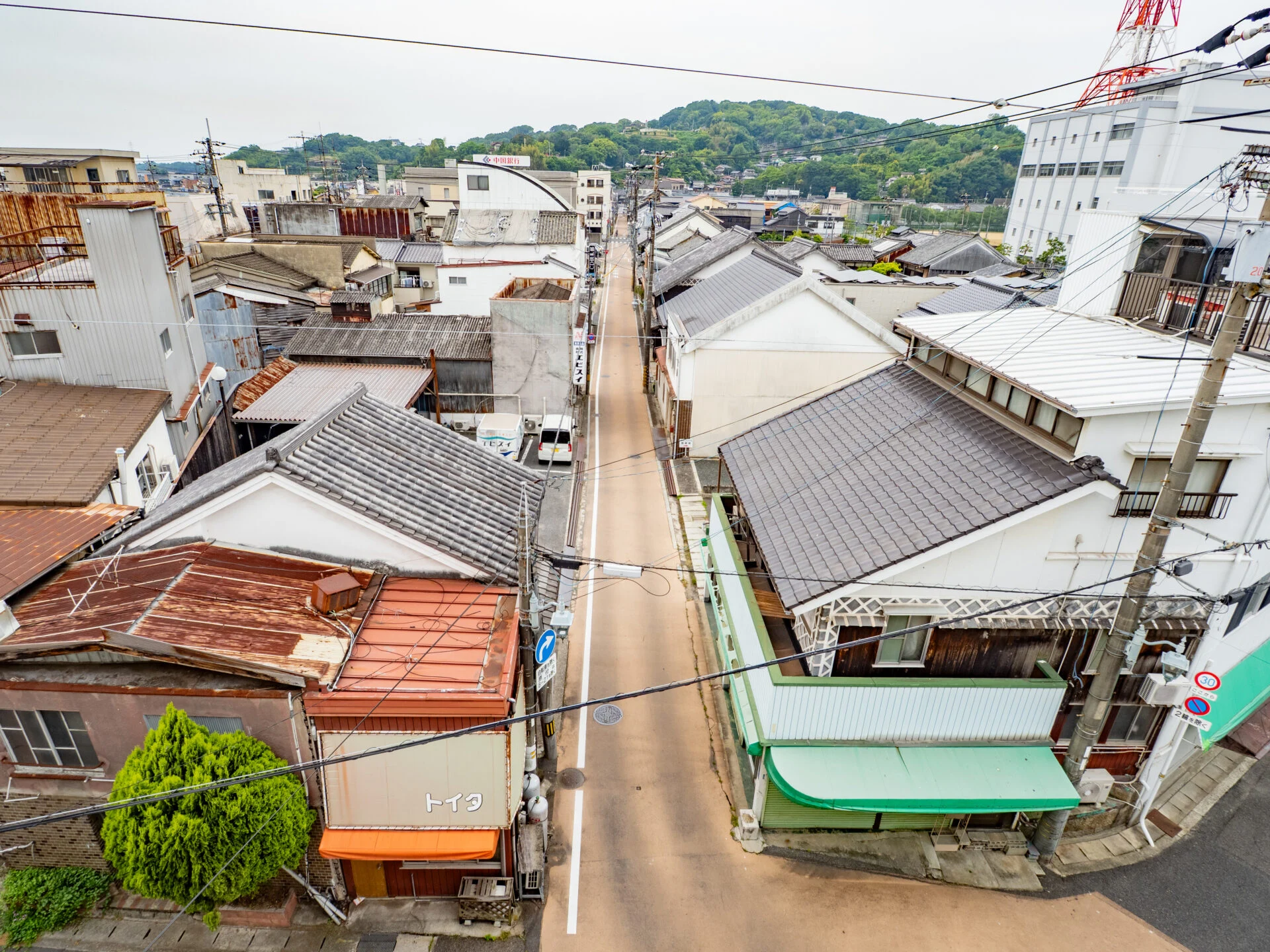
It is a landscape typical of Tamashima, so please take a look.
As you walk along Shinmachi Street, you will find the building that was the grain store "Wakaya," the birthplace of the female poet Yasuhara Tamaki, who was active during the late Edo to early Meiji periods.
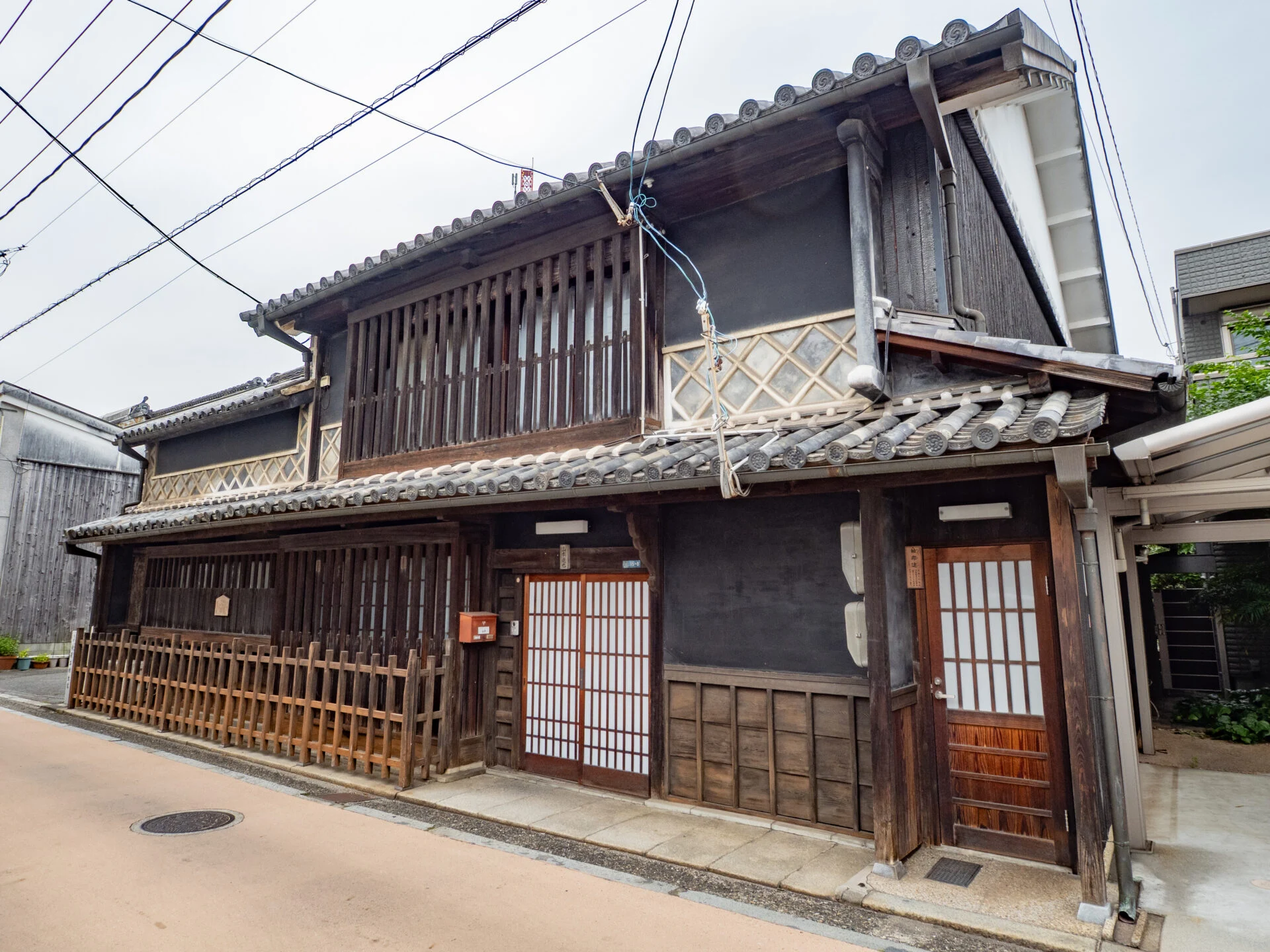
There is also the cotton store "Okuniya," which was the birthplace of the Confucian scholar Kawata Okko, who was active from the late Edo to early Meiji periods.
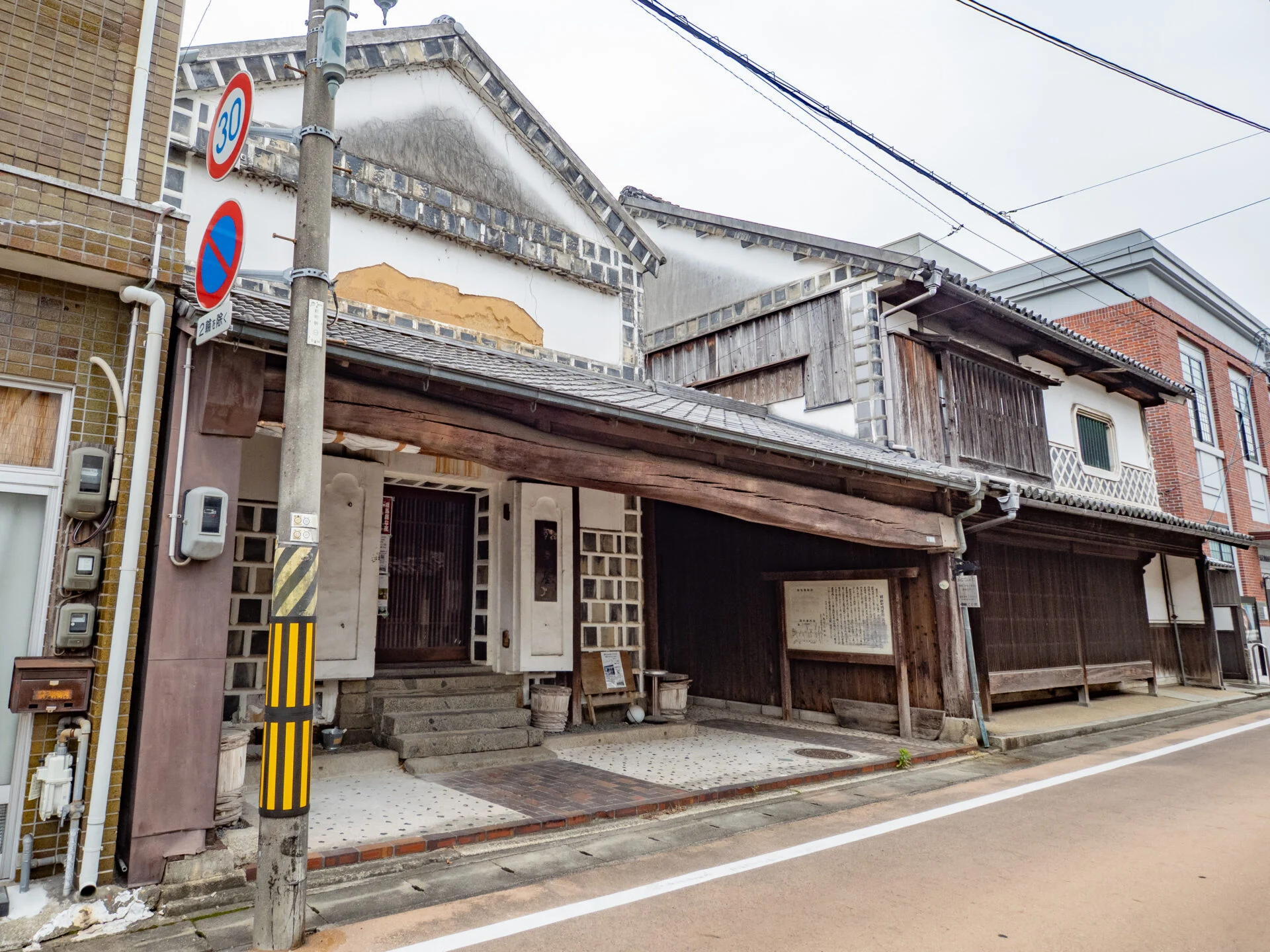
The site of the former shipping wholesaler "Saigokuya" still has a splendid storehouse along with the residence.
This storehouse is also used as a base for cultural activities such as concerts.
In addition, there are the ruins of the cotton wholesaler "Nishimotoya", the ruins of the kaisen-donya, the rice shop ruins, and the separate residence of the rice shop "Mukou Miyake-tei".
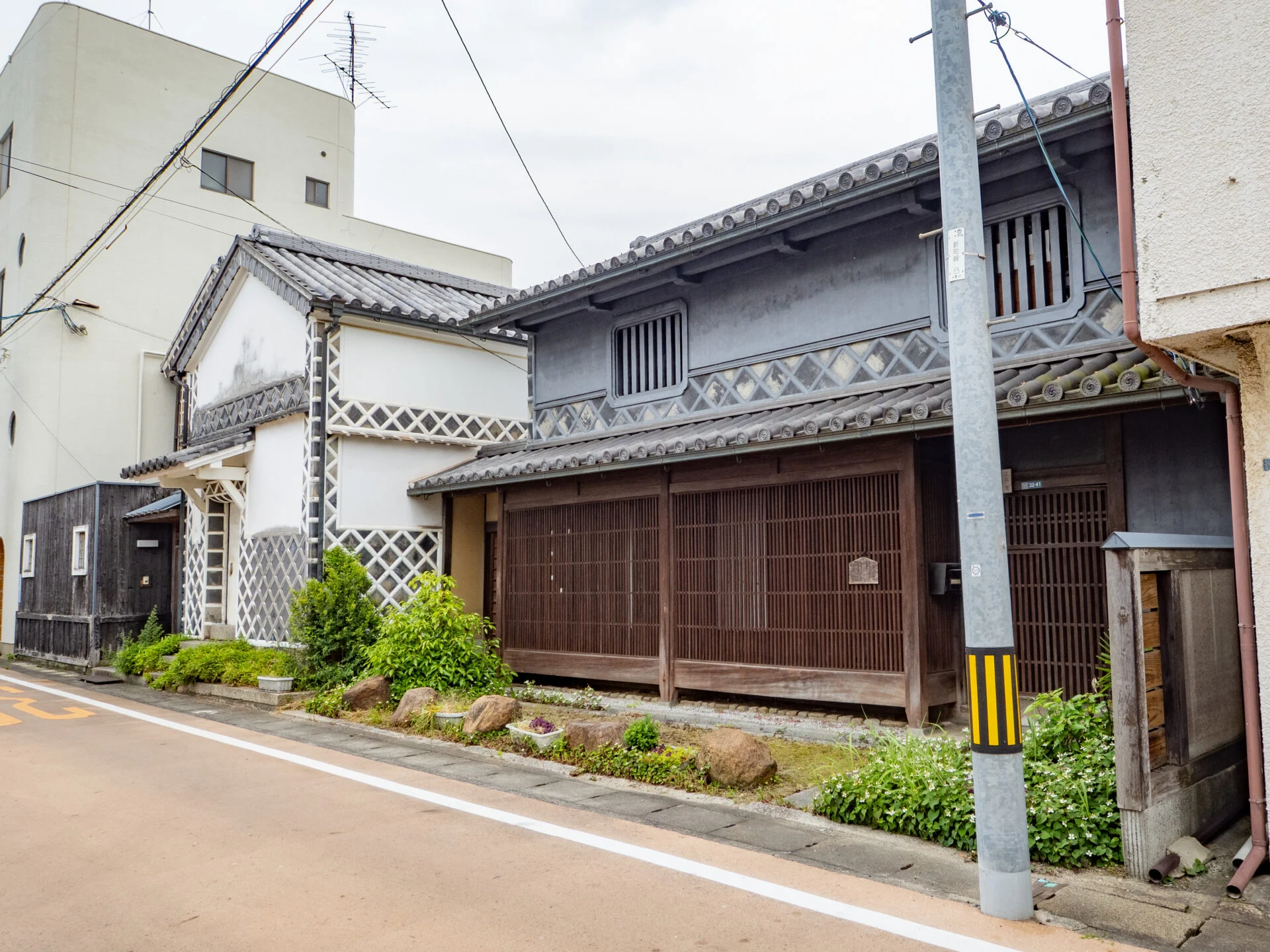
There are explanation boards, signboards, and stone pillars installed, so please use them as landmarks.
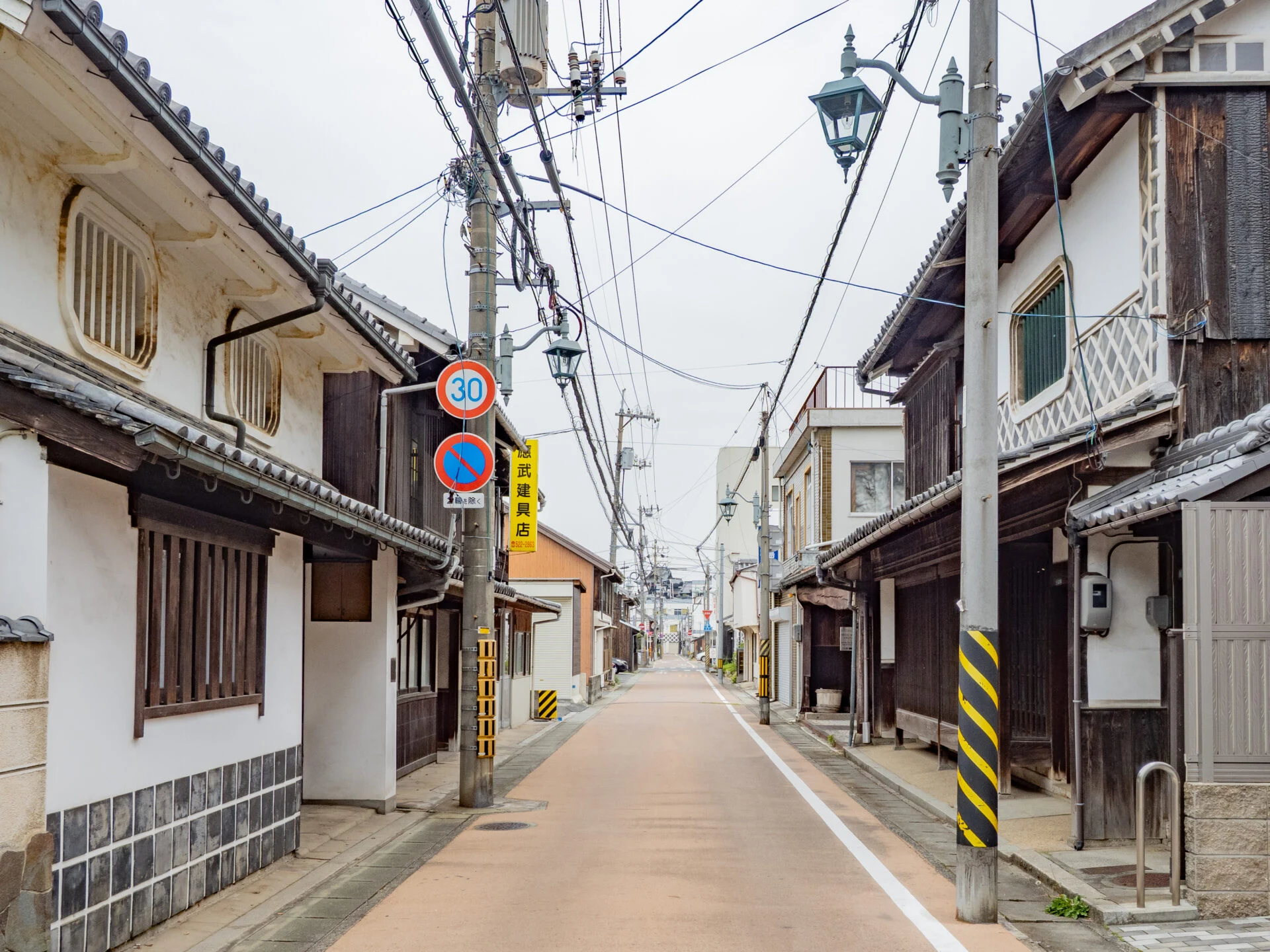
All of these retain the atmosphere of the Edo to Meiji periods.
Many active businesses and shops still exist around Nakabaitown
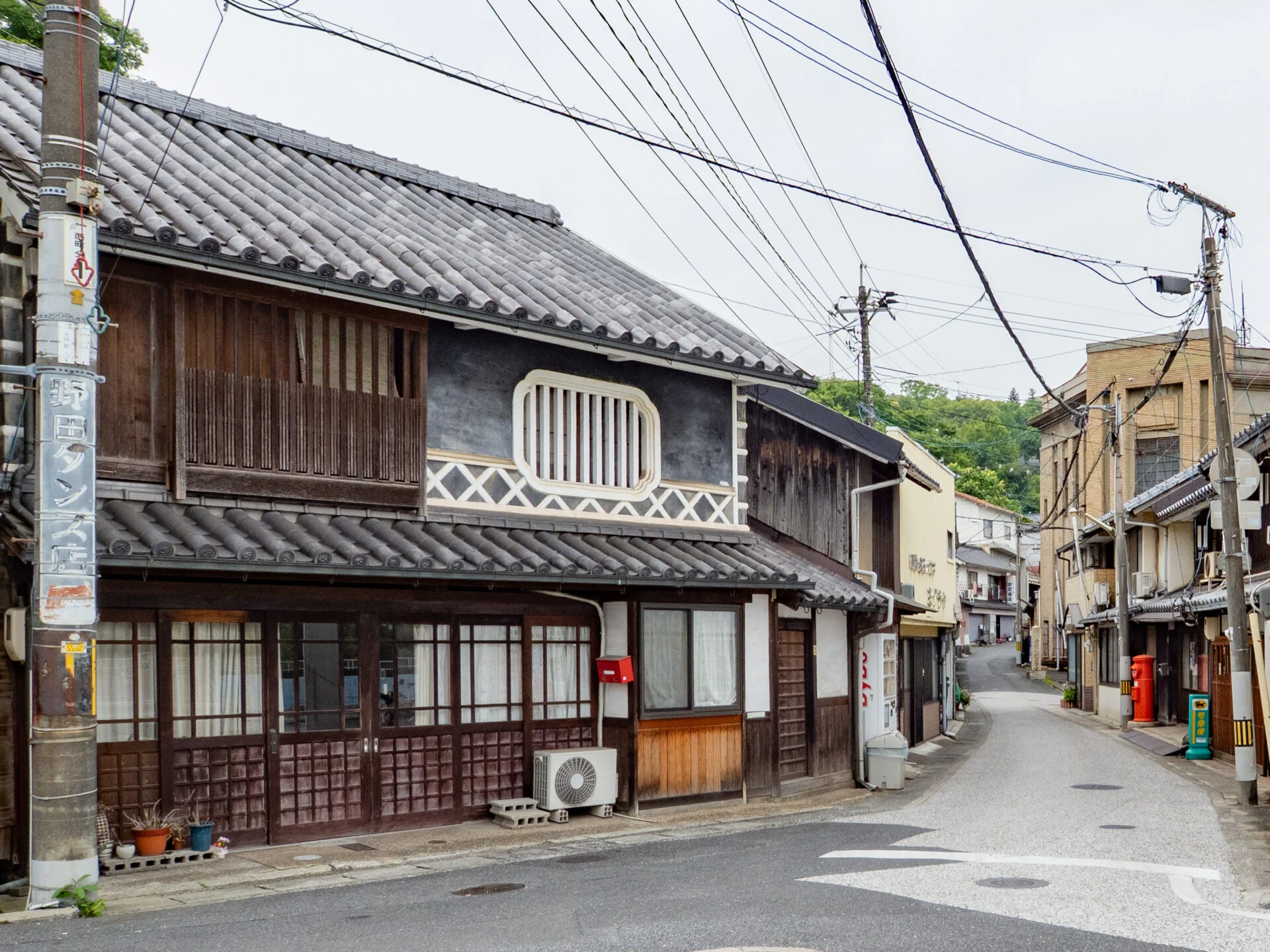
What kind of town is Nakabaitown?
Fujiwara
If you proceed to the western end of Shinmachi Street and cross the bridge, you will arrive at Nakabaitown.
Nakabaitown is said to have started when the middlemen established their shops there.
It is said that by the mid-Edo period, 593 merchants had moved to Nakabaitown.
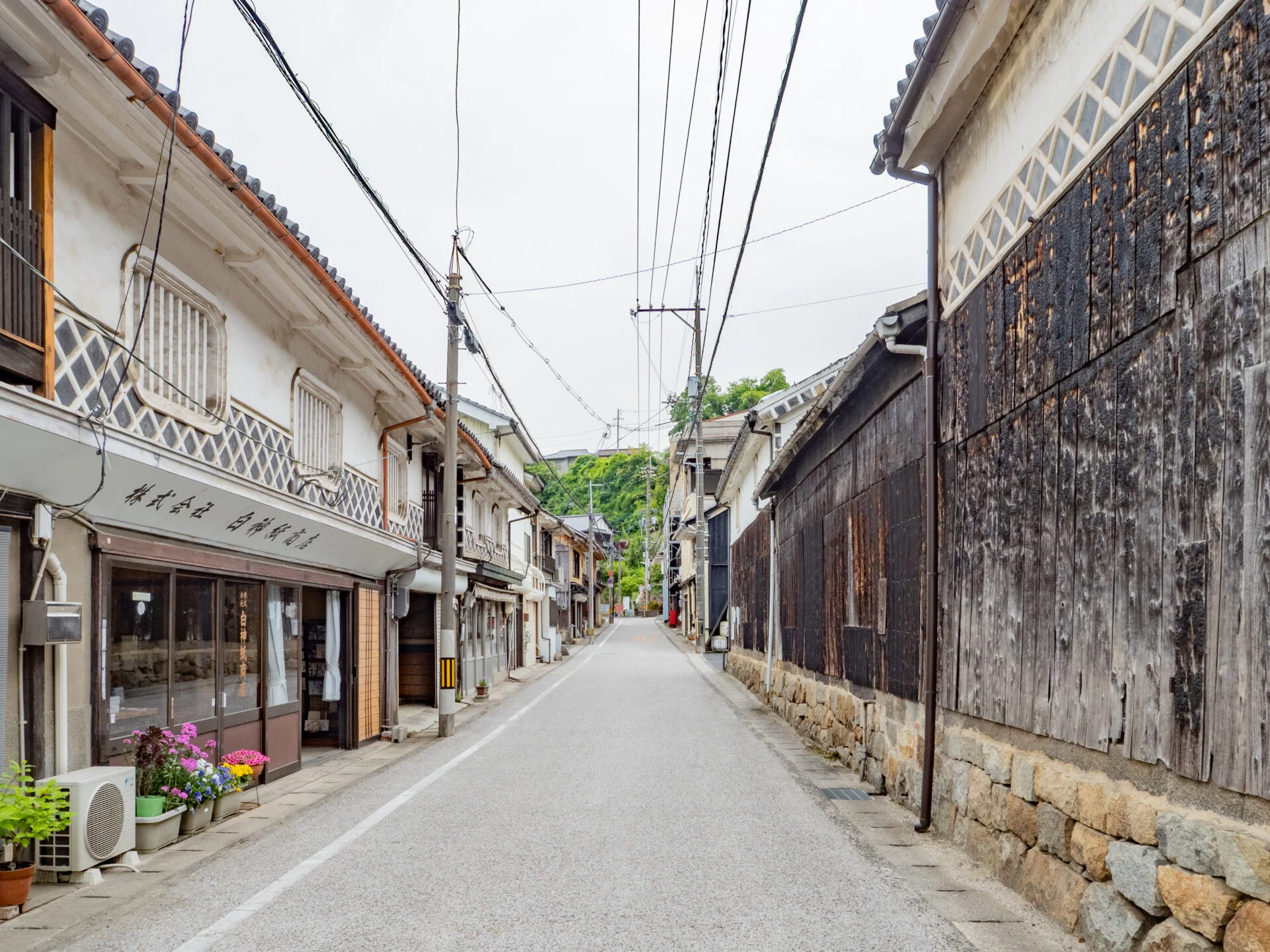
Currently, there are still buildings that convey the charm of the Edo, Meiji, and Taisho periods, and many shops and businesses are still in operation.
There are also many "kanban kenchiku" (signboard architecture) and Western-style buildings that were common during the Taisho period.
For example, the building of the former "Tamashima Shinkin Kumiai".
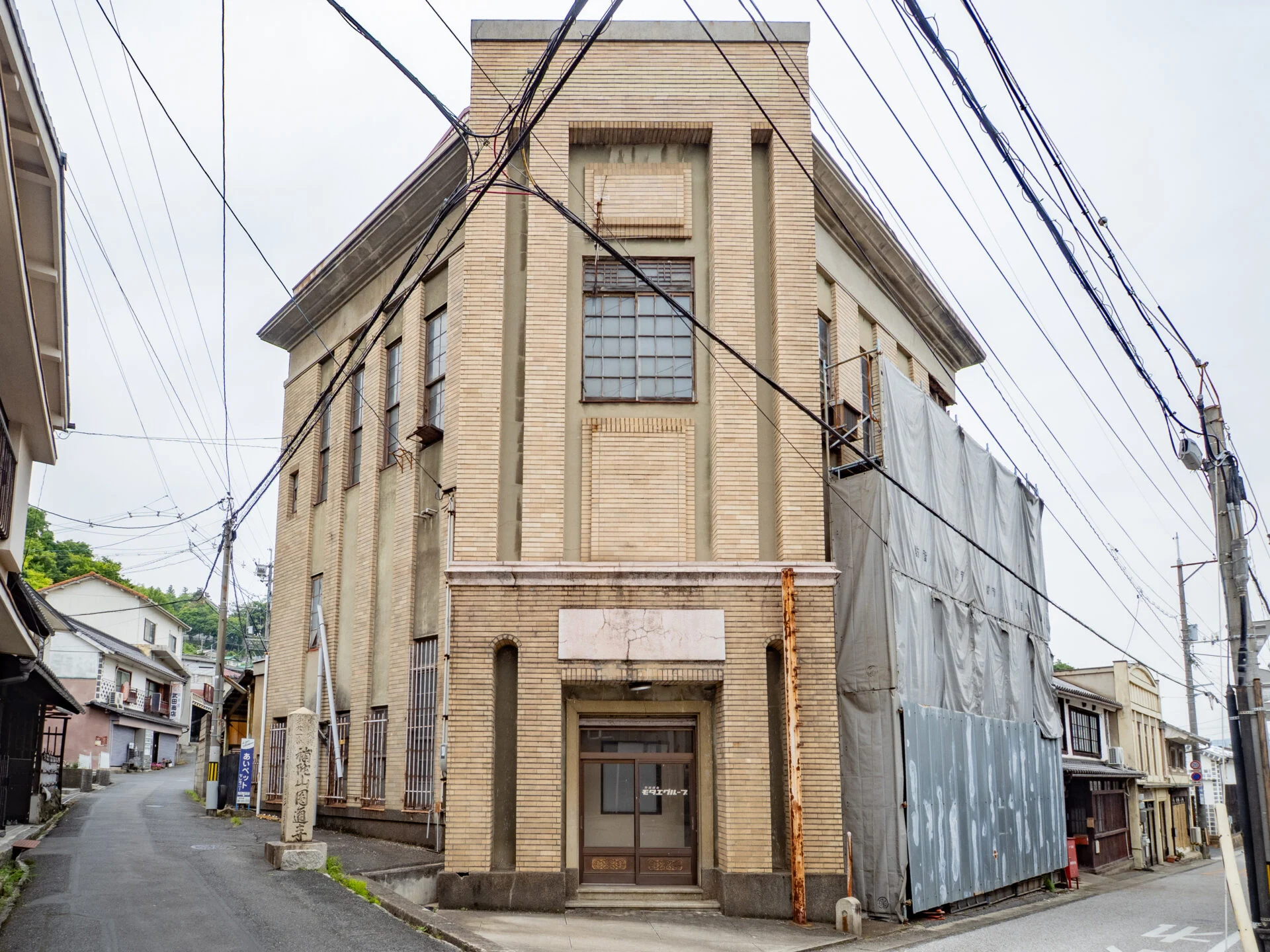
This is a modern-style Western building built in the early Showa period.
To the north of this is the "Tamashima Miso Soy Sauce Goshi Kaisha".
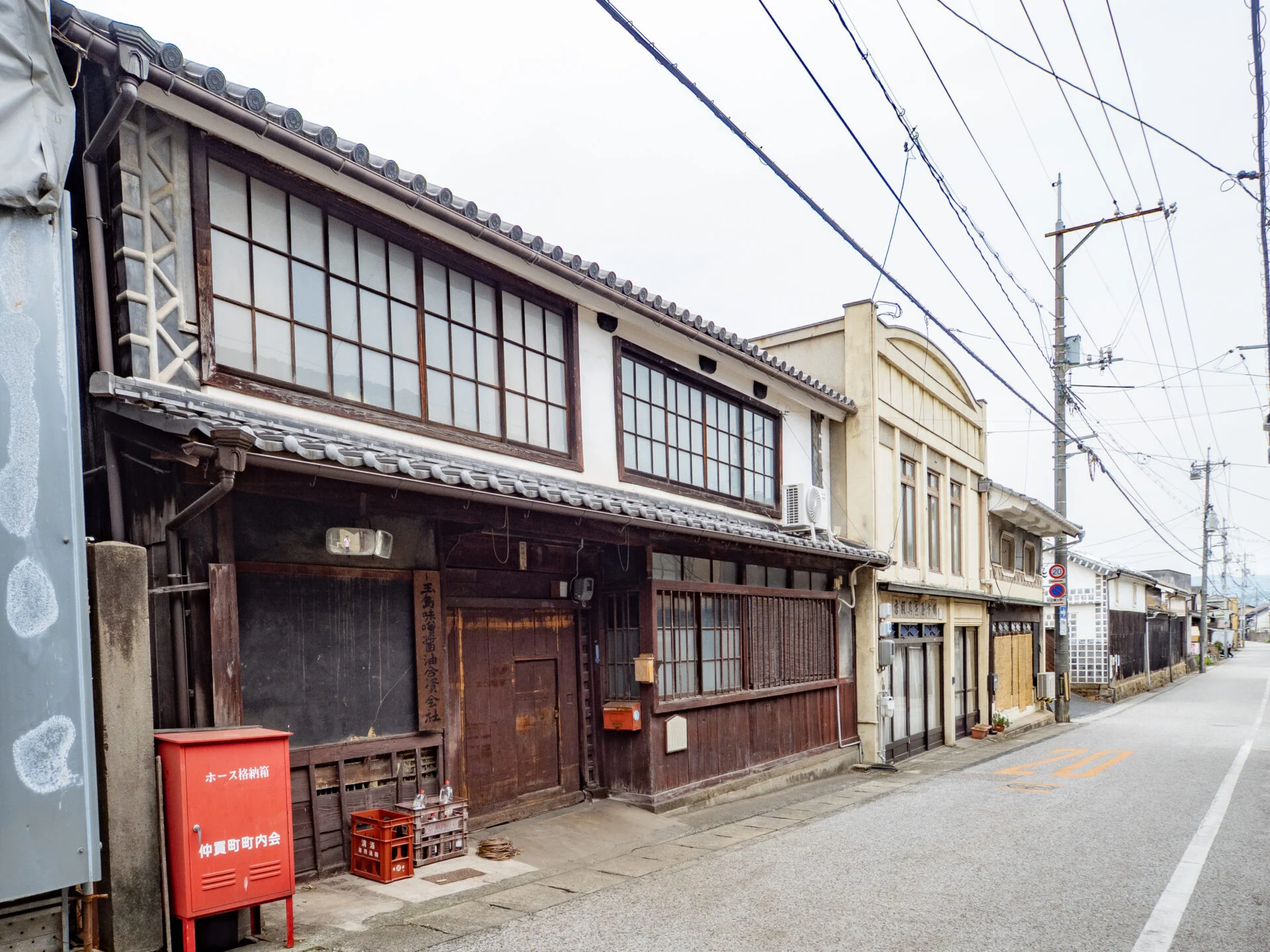
This was the former office of Agasaki Village during the Meiji period.
If you proceed a little further north, you will find the long-established sake brewery "Kikuchi Sake Brewing Co.,Ltd.".
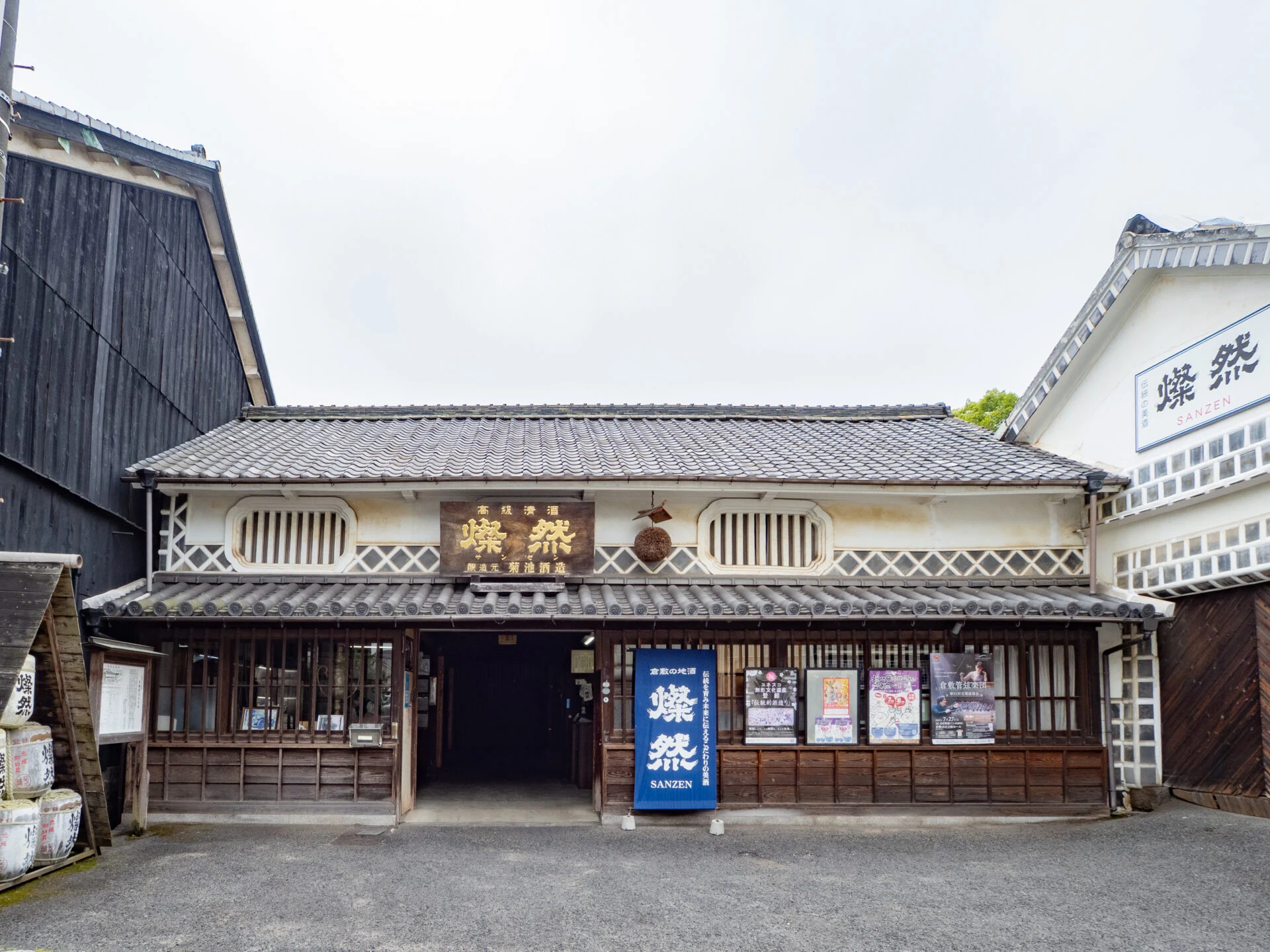
Kikuchi Sake Brewing Co.,Ltd. is known for its brand "Sanzen". How about taking some as a souvenir?
Additionally, Kikuchi Sake Brewing Co.,Ltd. is the birthplace of the national scholar and poet Kondo Banjou, who was active during the late Edo period.
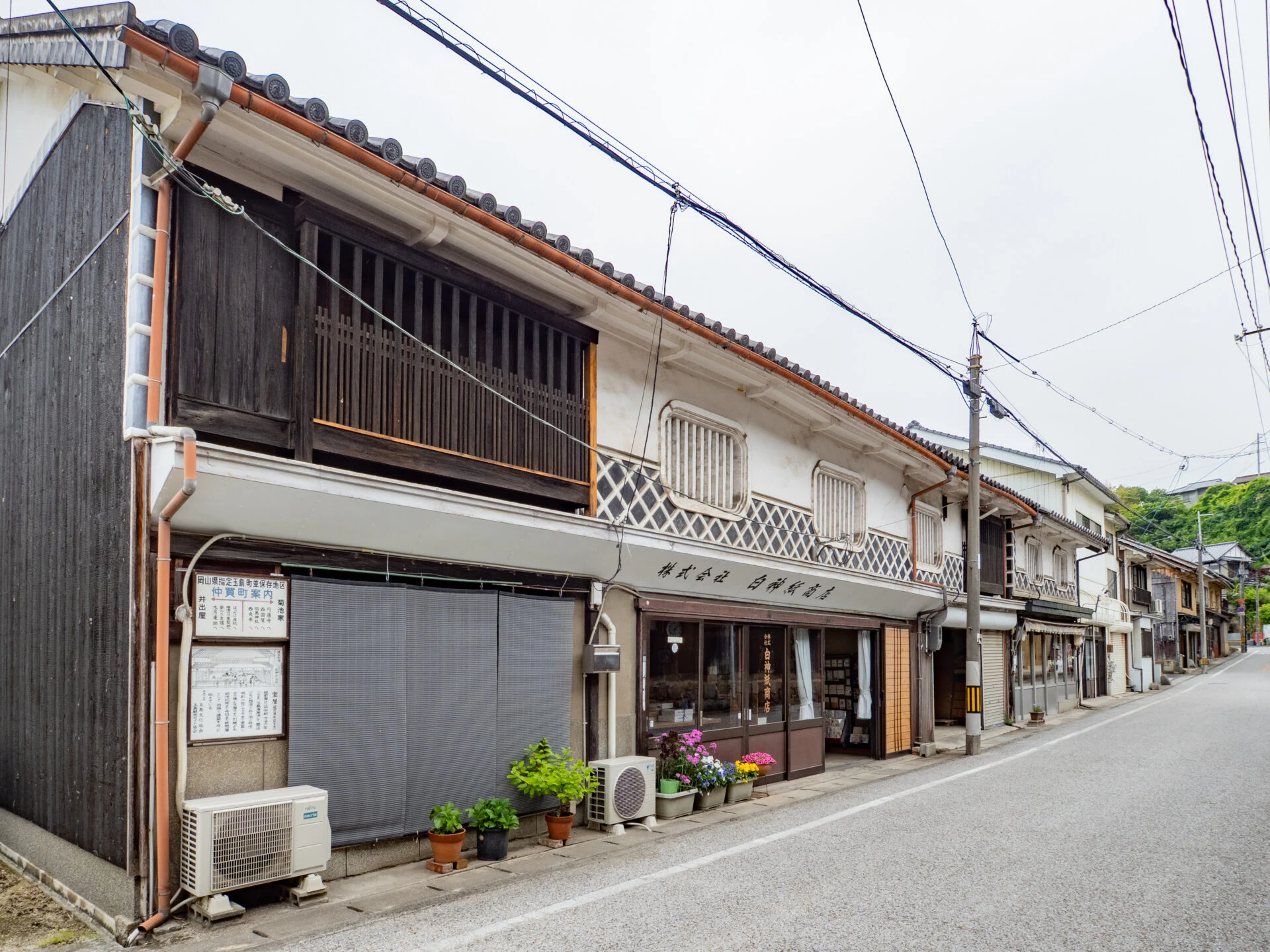
There are also other attractions such as the paper wholesaler "Shirakami Paper Store", the ruins of the kaisen-donya "Ideya", the visit site of the haiku poet Taneda Santoka, the site of the school of the Confucian scholar Yokomizo Kakuri from the late Edo period, and the ruins of the Bizen Domain residence "Echigoya".
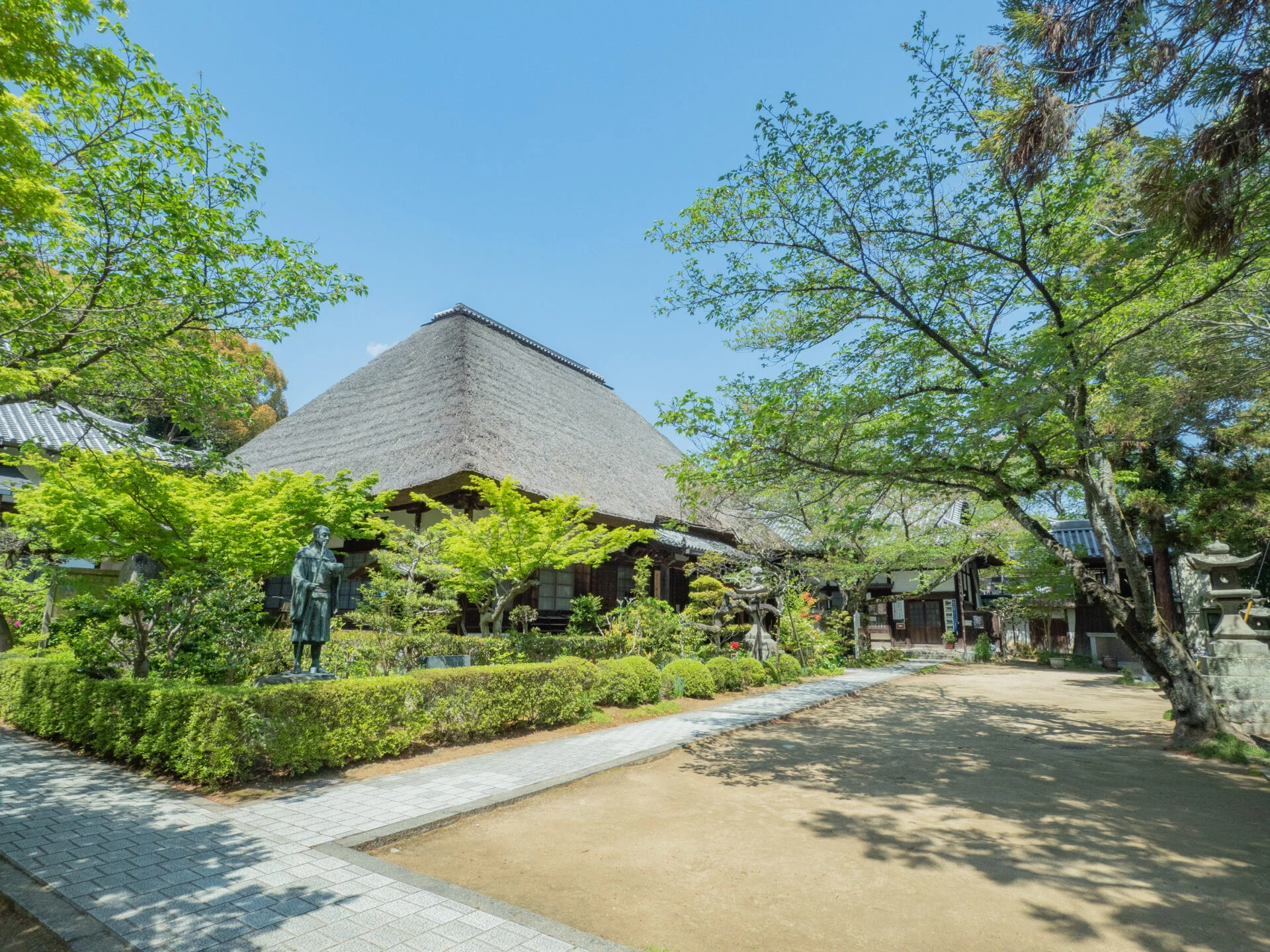
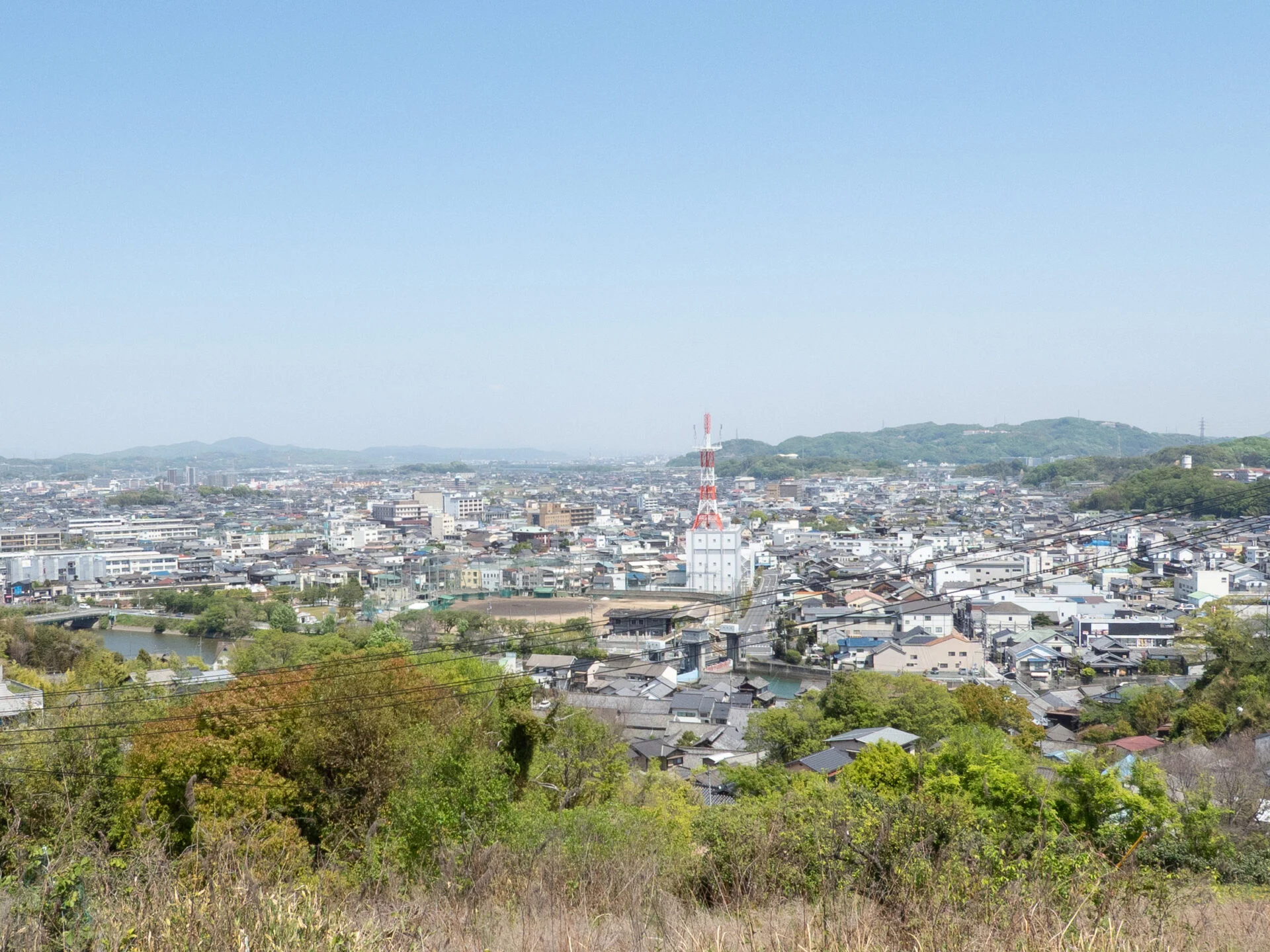
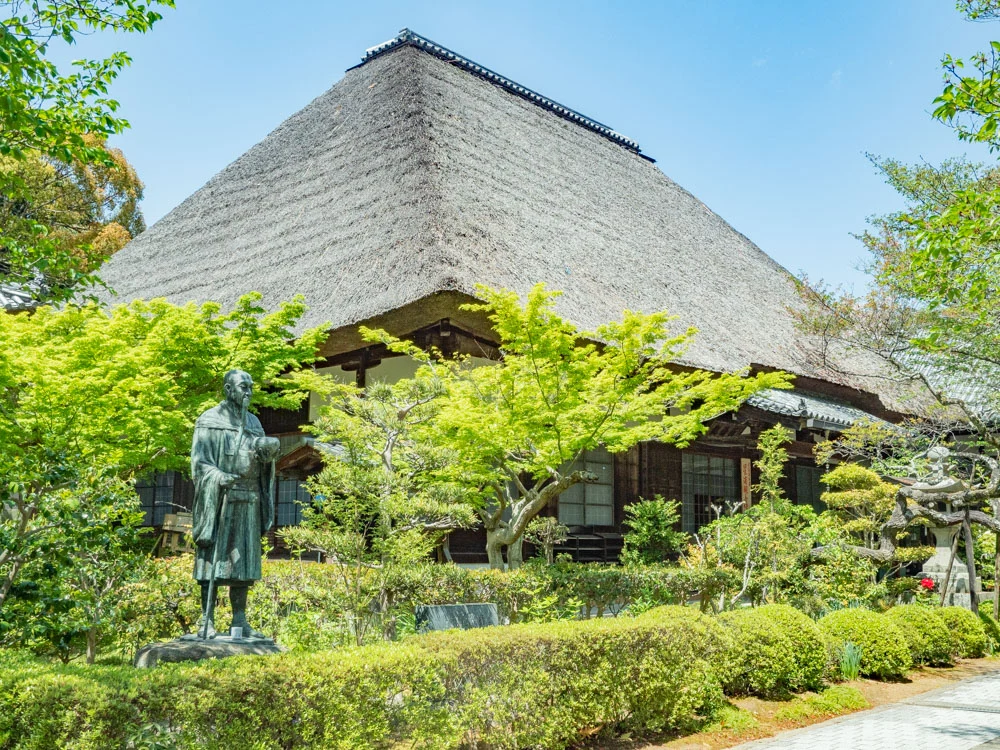
Also, I hope you will visit "Ensuiji", which is located on the mountain to the south of Nakabaitown.
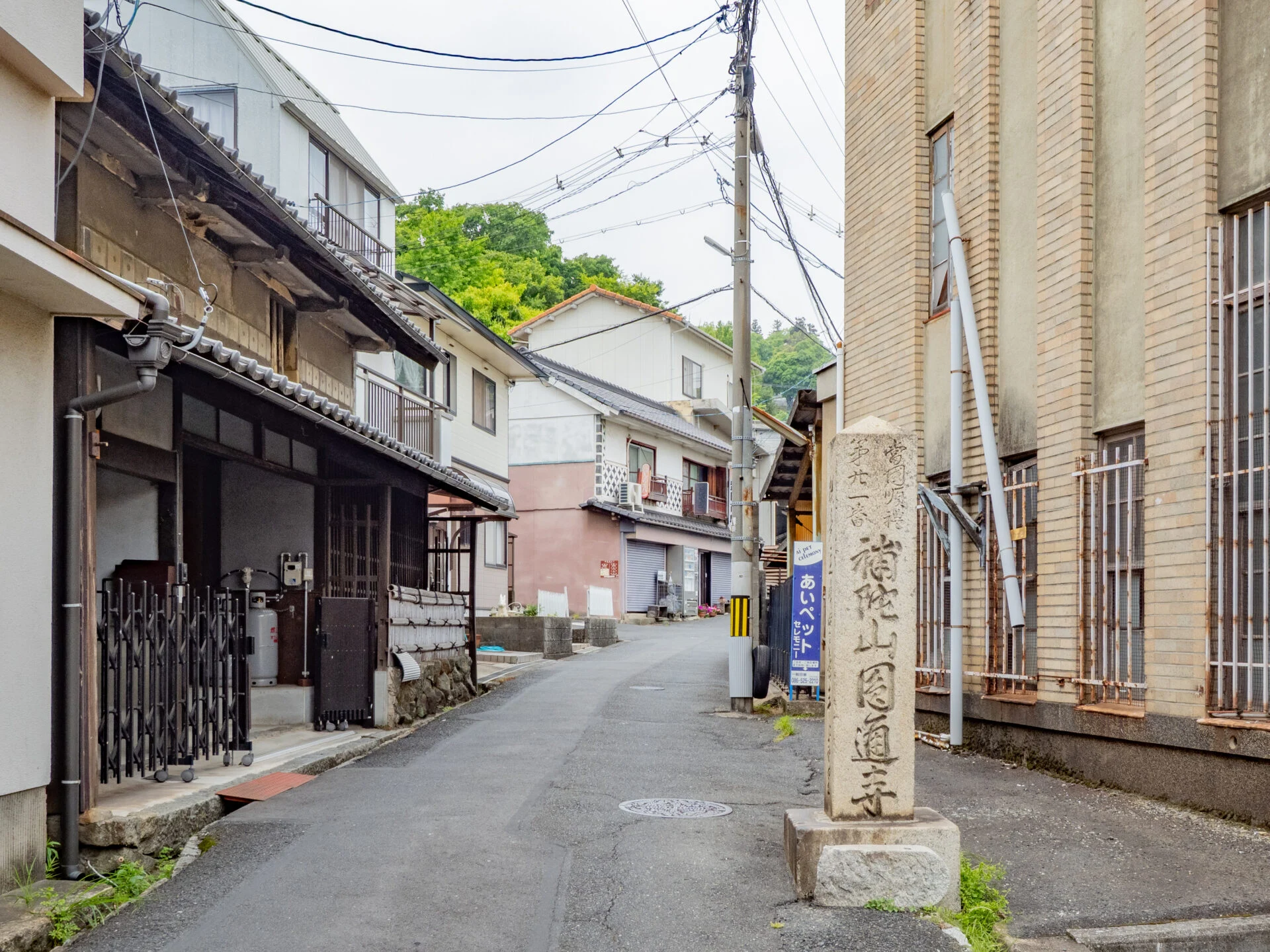
Ensuiji is known as the training ground of the famous monk Ryoukan.
From Ensuiji, you can overlook Tamashima, and the view is outstanding.
The area around Saiso-tei, a registered tangible cultural property
What kind of place is Yadacho?
Fujiwara
Yadacho is the town across the port bridge from the north side of Haguro Shrine.
It is said that there was a port here even before the land reclamation.
As a new town was established, the center of the port town gradually shifted to the new town.
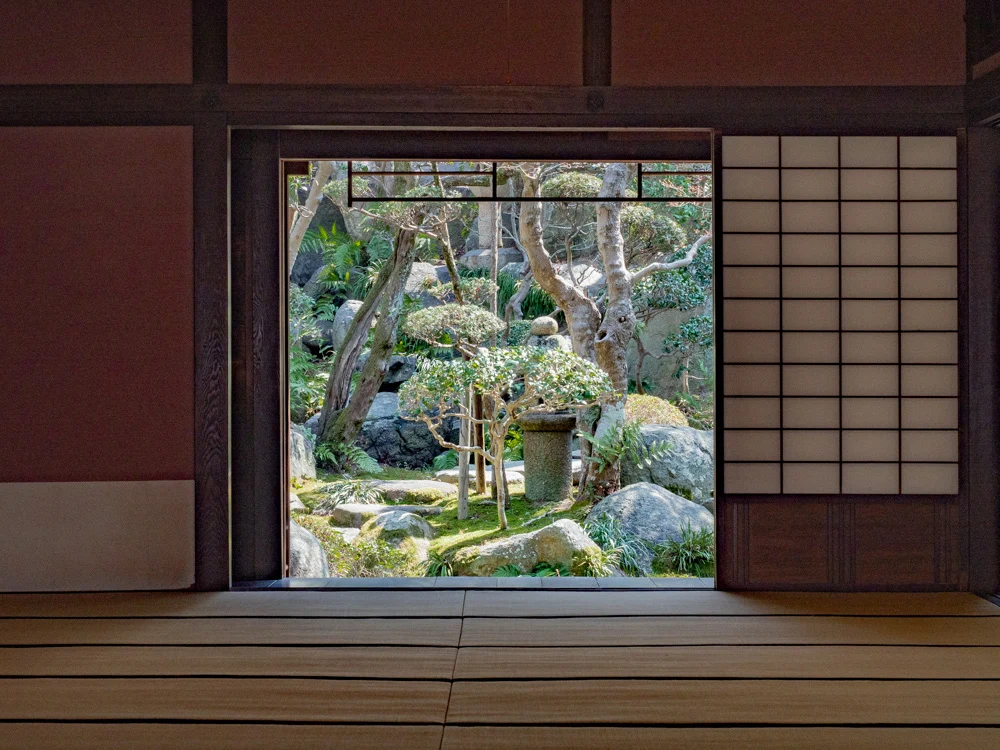
The biggest attraction in Yadacho is Saiso-tei.
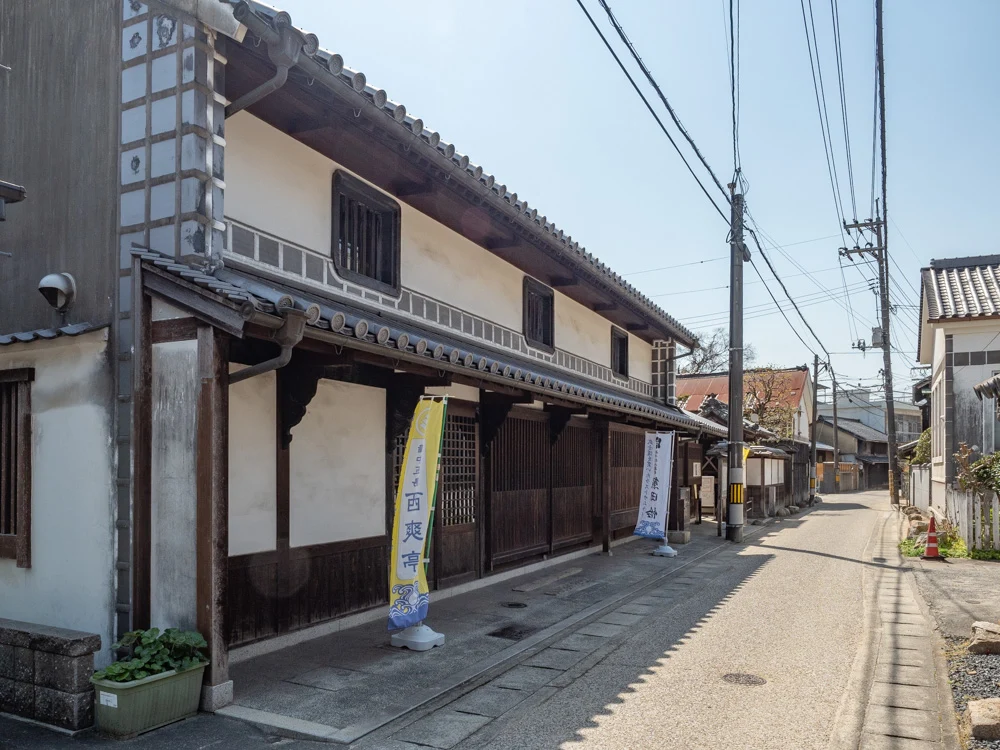
This is the residence of the wealthy merchant family Yunoki, who were ship brokers during the Edo period.
The Yunoki family served the lord of Bitchu Matsuyama and hosted the lord when he visited the Tamashima area.
Saiso-tei was the place where the lord stayed.
As a result, it features luxurious construction with meticulous attention to detail in its decorations. It also has a splendid garden.
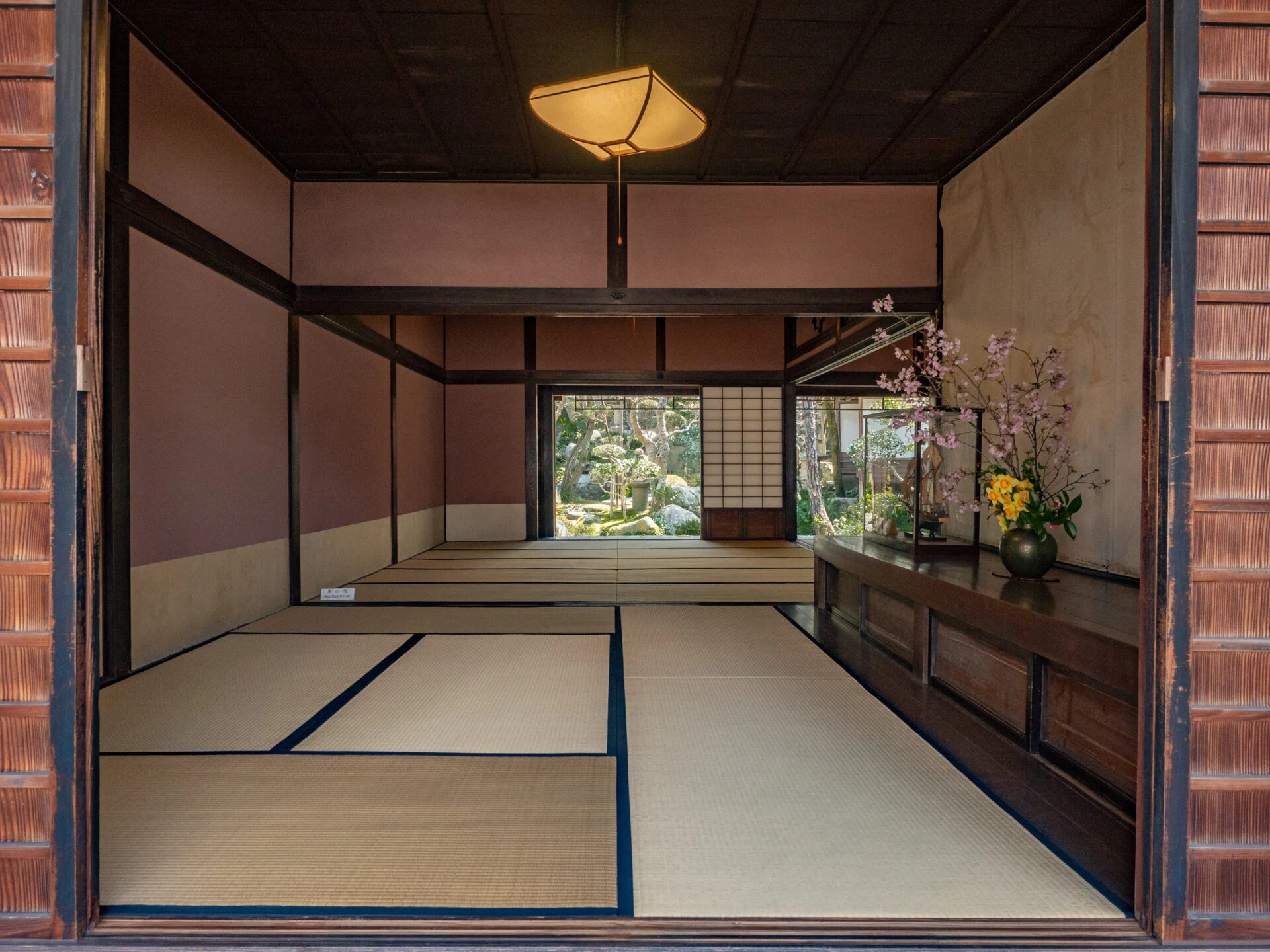
Additionally, during the turmoil of the late Edo period, Bitchu Matsuyama samurai Kumada Ataka prevented Tamashima from being embroiled in war by taking his own life.
The place where Kumada took his own life was Saiso-tei, and traces of the blood that splattered during his seppuku remain.
Saiso-tei is also a Registered Tangible Cultural Property.
Please make sure to visit.
Yadacho also features popular restaurants and shops.
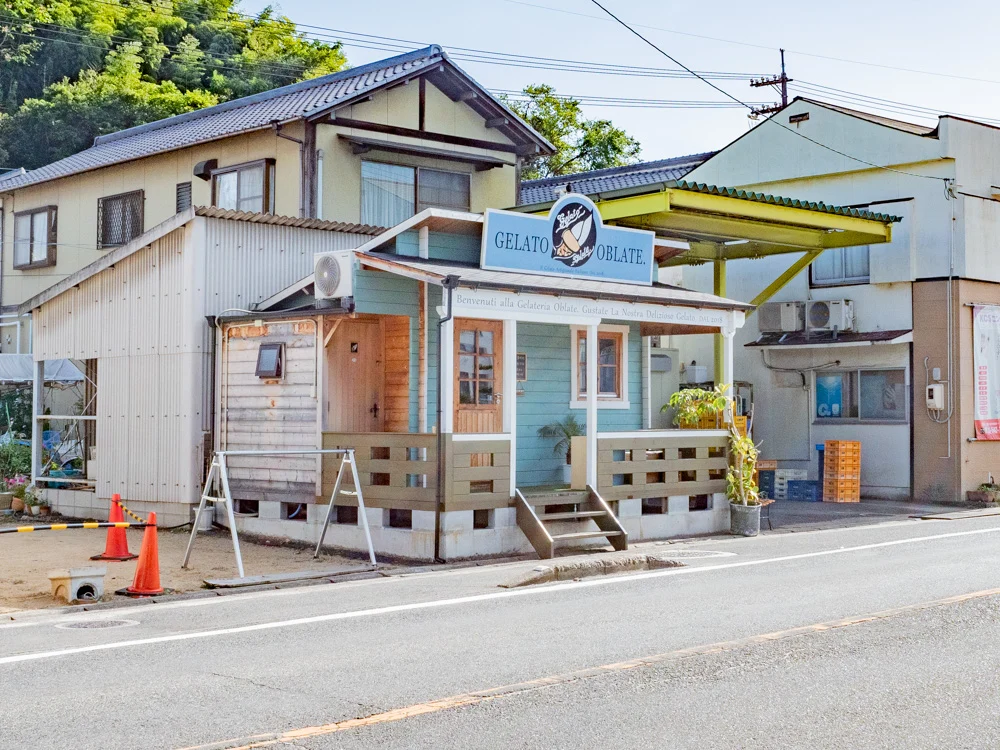
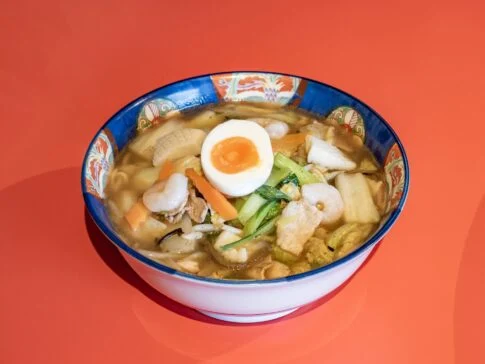
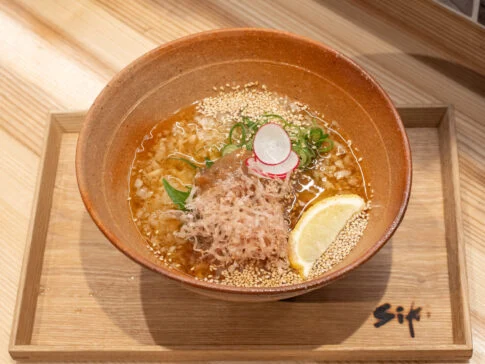
There are long-established shops for Imagawa-yaki (a type of cake), a shop where you can enjoy authentic gelato, a ramen shop utilizing a warehouse, and a long-established stationery and candy store.
Why not stop by during your stroll?