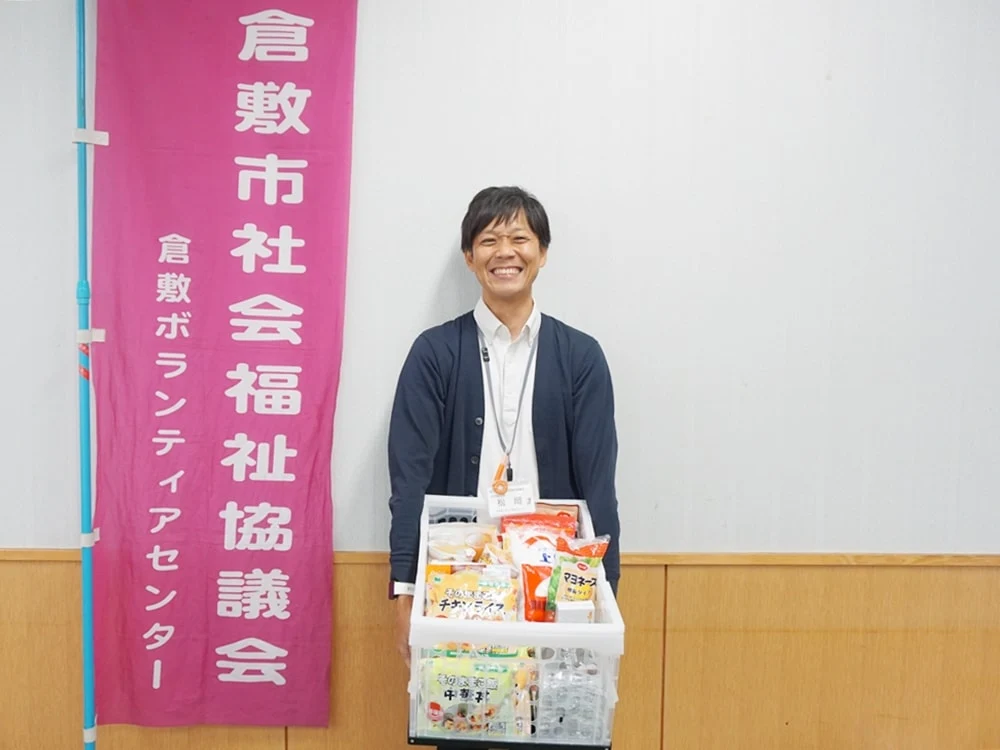
Interview with Matsumoto Takeshi
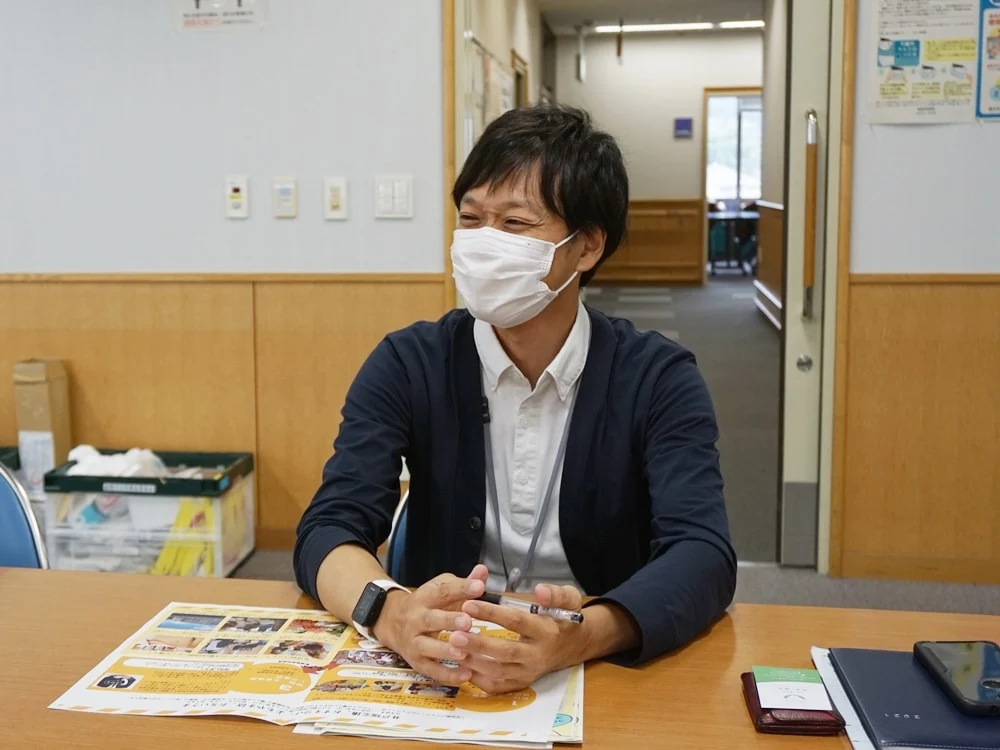
Please tell us about the start of the project and what prompted it.
Matsumoto (no honorifics)
It officially started in January 2021.
The trigger was primarily the prolonged outbreak of the novel coronavirus.
When local residents gather, they chat about various things, right? But as the pandemic drags on, people can't gather.
Actually, within those conversations, various local information is included.
But if they can't gather, they can't express even small troubles.
They end up bottling up their troubles, which gradually accumulates and worsens the situation.
By the time they come to consult with the government or the Social Welfare Council, the situation has become even more complicated.
In the pandemic, where large gatherings are not possible, we needed a system to discover local troubles and those in need, as well as to connect them with support organizations.
Born out of the pandemic is the "Kurashiki Gokinjo Pantry Project."
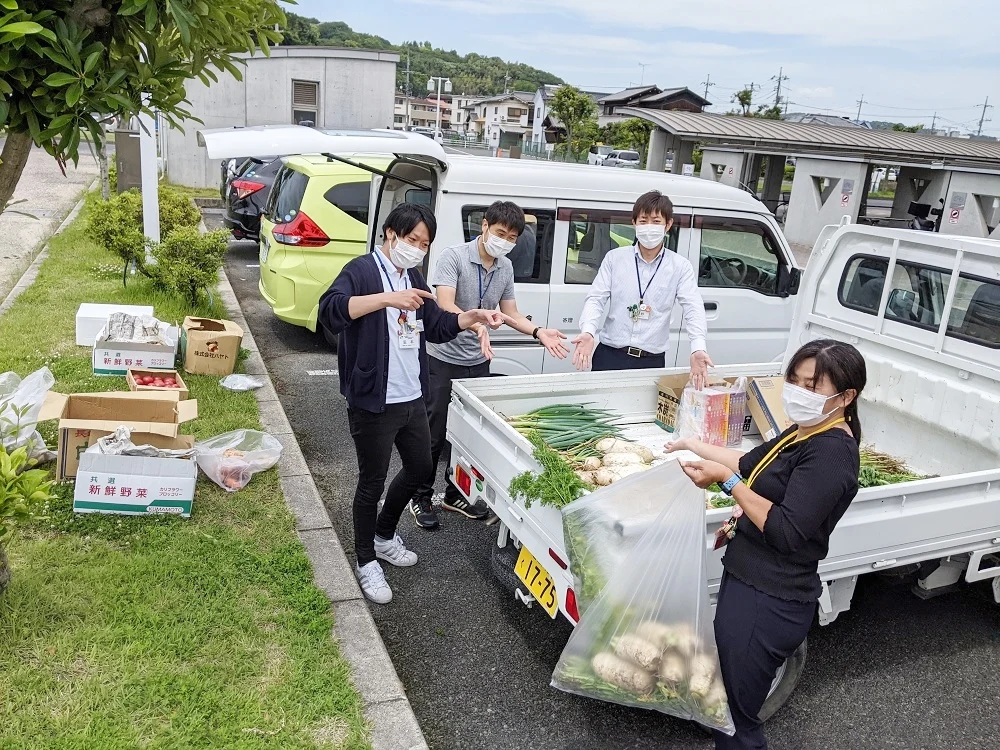
Additionally, the foundation of this project is the support for the disaster-affected areas from the heavy rain disaster in July 2018.
At that time, citizens of Kurashiki City and people from outside Okayama Prefecture thought, "This is not someone else's problem..." and looked for ways they could help.
While it was difficult to go to the site for volunteer activities, they delivered support supplies and various thoughts.
We, the life support coordinators, supported the "creation of spaces" and "establishment of systems" within the disaster-affected areas.
In that process, the support supplies were very helpful.
Since such a wide area was affected, those living in temporary housing came from various regions.
Therefore, initially, there were few opportunities for encounters, and they couldn't have conversations.
However, seeing the support supplies like food, clothing, and daily necessities made them think, "Ah, this is a relief," and it transformed into a feeling of "I can meet people and chat when I go to where the support supplies are distributed," which brought a sense of comfort.
In other words, we can create "opportunities for encounters" using support supplies as the "entrance."
The relationships that expand among residents are very important, and this realization also became a trigger for the birth of the "Kurashiki Gokinjo Pantry Project."
This is not a pantry project aimed at those in financial distress, is it?
Matsumoto
There is, of course, an aspect aimed at those in financial distress.
While it is important for the Gokinjo Pantry's activities to deliver food and other supplies to those in financial distress, it is also significant that the activities reach those in the preliminary stages, which I think is characteristic of the Social Welfare Council's approach.
This is because the Social Welfare Council has a life welfare loan system, and many people come to apply when they are in financial distress due to reduced work during the pandemic.
When I listened to various stories during the application process, it seemed that there were "small troubles" before they fell into distress.
If they had been connected to local "attention" or "consideration," or to support organizations at that stage, there might have been ways to support them.
I think there were situations where they fell into distress because they had no connections.
Activities Utilizing the Strengths of the Social Welfare Council
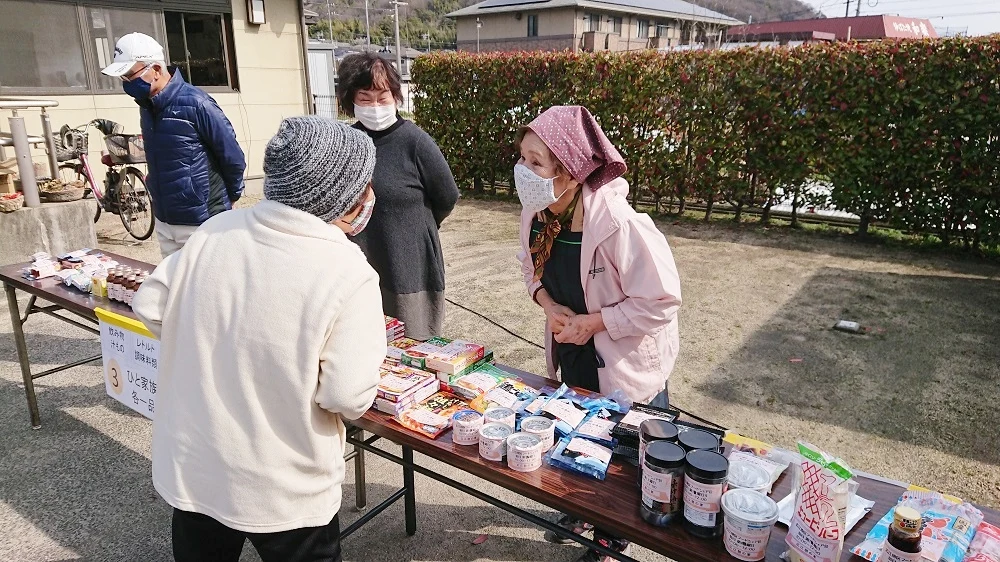
Is this an initiative that other organizations are also doing?
Matsumoto
This is a new initiative.
In Kurashiki City, food banks have been operated by NPOs and social welfare corporations for some time, but they were aimed at supporting people within their activity scope.
The Gokinjo Pantry supports by collaborating with volunteers, residents, and organizations in the community, characteristic of the Social Welfare Council, while "trusting the power of the residents."
This is an activity that utilizes the strengths of the Social Welfare Council.
What activities have you conducted so far?
Matsumoto
To carry out activities, we need to collect necessary food and daily necessities, so we broadly recruited food and daily necessities from individuals, organizations, and companies as a new mechanism for social participation.
For example, companies stockpile a lot of food in anticipation of disasters.
Due to expiration dates and other reasons, they sometimes replace their stockpiled items, and we received these as part of their social contribution.
For individuals, farmers or people growing vegetables personally find it difficult to "give the excess vegetables to those in need," but they can entrust them to the Gokinjo Pantry with a sensation of sharing.
Entrusting is also a form of social contribution, right?
As of September 2021, we have received donations from approximately 130 companies, organizations, and individuals.
Additionally, it is necessary to pack the donated food and daily necessities into "Gokinjo Pantry Boxes" and distribute them to various people in the community.
The Kurashiki City Social Welfare Council receives many donations daily, but there was a problem of not being able to store them all here due to the large quantity.
By having various people cooperate and placing "Gokinjo Pantry Boxes" in various locations, we can secure storage space.
We are allowed to place them in locations that have volunteered, and not only are they stored, but they are also utilized for the activities that are most needed in that area.
How to Become a Gokinjo Pantry Supporter
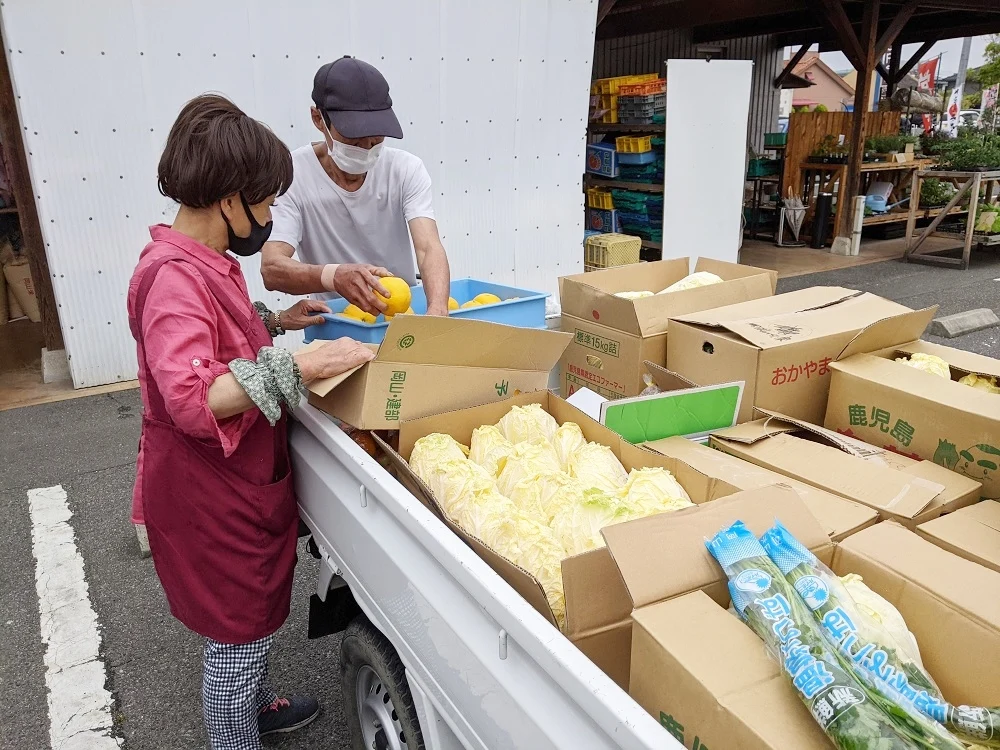
How can I become a Gokinjo Pantry supporter?
Matsumoto
If you contact the Kurashiki City Social Welfare Council, there are staff members responsible for each region, and we will hold a strategy meeting together to think about "what kind of system we should create."
Conversely, there are times when the Kurashiki City Social Welfare Council requests support.
Within the 63 elementary school districts in Kurashiki City, there are about 60 places where community issues are discussed.
Various volunteers, such as welfare commissioners and child-rearing support commissioners, participate in these discussions.
When we report on the progress of the Gokinjo Pantry during these discussions, if there are voices saying "I want to try it," we reach out to them.
As of September 2021, there are 56 locations for Gokinjo Pantry Boxes. By the way, at the time of the project's launch (January 2021), there were only about 4-5 locations.
There are still few places operating at the elementary school district level, and there are also smaller communities, such as "unit-based" or small gatherings like "friendly salon groups" that used to meet often.
Additionally, care facilities and facilities for people with disabilities are also part of the community and have volunteered to "continue to support the community."
Are there any established rules for starting?
Matsumoto
Basically, there are no rules for becoming a Gokinjo Pantry supporter.
However, there is one condition.
We ask that you include the staff of the Social Welfare Council in the strategy meetings.
By including them in the strategy meetings, we can provide information and assist in the community. We can also support the creation of a support network.
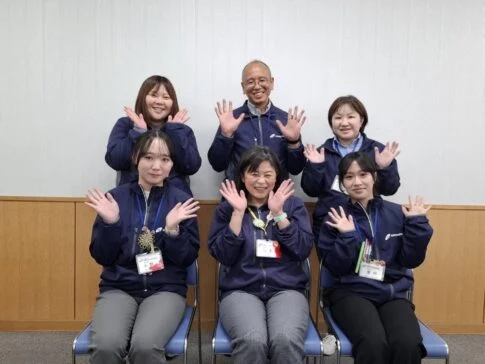
There are six life support coordinators, and they share and understand the information of the Gokinjo Pantry supporters in their respective areas.
If there are any troubles, we can refer to examples from other locations.
Who are the Users? Who is the Target?
What kind of people are utilizing this?
Matsumoto
Among the users, there are some who are in financial distress, but there are many who are not connected to the community.
These are what we call "socially isolated individuals."
Such individuals often do not receive information and have no one to consult about their troubles.
By using the Gokinjo Pantry, even if they are not in need of food, they may casually come by to chat and then leave.
Going to the Gokinjo Pantry can provide them with information and allow them to meet kind individuals, becoming a "place to belong."
The initial trigger was securing food, but by using it several times, they find "meaning in living in the community."
Was there any discussion about implementing a registration system for users?
Matsumoto
Among the users, there are some who do not want to convey their weaknesses or troubles to others.
By implementing a registration system, it can also protect "privacy," and there are considerations for using keys for entry into the pantry, which I think is also a form of support.
While obtaining food is important, it is also essential to not just be treated as "those in distress" in the community, but to "be accepted by someone," and by creating this relationship, it connects to "living in the community."
In Kurashiki City, we aimed for a situation where people "meet," "smile," and "share energy," and expand activities, characteristic of the Social Welfare Council.
However, among the 56 pantries, some are starting to consider implementing a registration system.
How to structure it can be freely decided by each location.

Can only Kurashiki City residents use the Gokinjo Pantry?
Matsumoto
The eligibility to use varies by location.
For example, if there is a Gokinjo Pantry Box location in the border area of Kurashiki City, it is okay if that location has a rule that "people from the neighboring city can also use it."
Also, the existing 60 locations are not always open; there are "food share events twice a month" or "let's open a children's cafeteria when food is gathered," but just because you live in the target area does not mean you can participate immediately.
First, if you think for some reason, "I want to use the Gokinjo Pantry," please contact the Social Welfare Council, and we will match you with each location.
Therefore, the information about the 60 locations is not publicly available.
It may take a little longer, but by receiving a consultation, the Social Welfare Council can also provide advice.
Do you have any future prospects?
Matsumoto
Rather than as the Kurashiki City Social Welfare Council, this is my prospect as a life regional support coordinator who is out in the community...
In just 10 months since the start of the project, the number of locations has increased to 60, which shows that there are many individuals who are interested in connecting within the community and have hopes of doing something.
Therefore, from now on, I want to set routes so that not only existing stakeholders but also various stakeholders can engage in activities like the Gokinjo Pantry.
By setting these routes, we can achieve early detection of troubles and establish networks with companies and organizations that have not been connected before.
In a society where declining birthrates and aging populations are being highlighted, what residents can do is limited.
The community includes individuals, companies, and organizations, so I want to expand activities while shaking hands with each as a member of the community.
Conclusion
Humans do not live alone.
When something goes wrong, we want to consult someone, right?
But there may be times when you don't know about your neighborhood or when you have no connections due to moving or job transfers.
In such cases, it is helpful to have a place where you can have a little chat while going to receive food and daily necessities.
The purpose is not just to receive supplies. It's perfectly fine to just go to chat.
The first step may require courage, but why not try using it without hesitation?
Surely, "kind busybodies" are waiting for you.
Articles about Kurashiki City Social Welfare Council
Data on the Kurashiki Gokinjo Pantry Project
| Organization Name | Kurashiki Gokinjo Pantry Project |
|---|---|
| Address | Contact: Kurashiki City Social Welfare Council | 180 Sasaochi, Kurashiki City, Okayama Prefecture, inside Kurashiki Health and Welfare Plaza |
| Contact Number | 086-434-3301 |
| Website | Kurashiki Gokinjo Pantry Project |