The hot summer has passed, and the season for strolling around town has arrived.
Autumn festivals have also returned in various places, and events are being held almost every week.
And when you think of autumn, you think of the arts.
Since October, an event recommended for architecture lovers has been held around the Bikan Historical Area.
This new style of architectural tour, “Kurashiki Architecture Tourism,” invites visitors to explore fascinating buildings such as “Ohara Museum of Art Main Building,” a symbol of the Bikan Historical Area, and “Kurashiki City Art Museum (formerly Kurashiki City Office),” designed by Kenzo Tange, a leading architect of the Showa era, while collecting “building cards.”
I headed out to check it out.
The information presented here is as of the article’s publication in November 2023. Please note that it may differ from current information.
What is “Kurashiki Architecture Tourism 2023”?
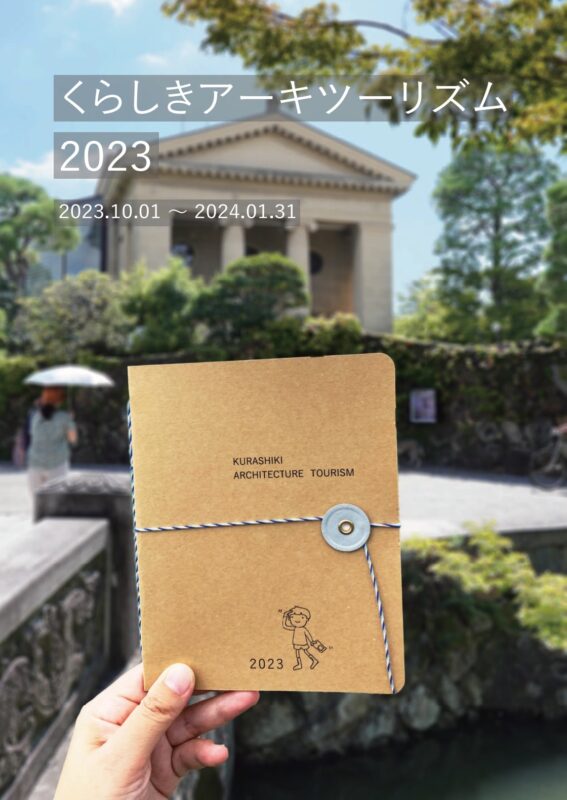
“Kurashiki Architecture Tourism 2023” is hosted by the “Art City Kurashiki” Executive Committee and is held around the Bikan Historical Area from October 1, 2023, to January 31, 2024.
You can get postcard-sized building cards at the following five locations.
- Ohara Museum of Art Main Building (baggage storage beside the admission ticket counter)
- Yurin-so Villa (at the reception of Ohara House Katalyzer, just west across the passageway)
- El Greco Cafe (counter inside the cafe)
- Kurashiki Church (beside the cafe entrance)
- Kurashiki City Art Museum (office on the third floor)
The collected “building cards” can be stored in an “Omoide File” (500 yen; limited to 500 copies).
“Omoide Files” are sold at the following locations.
- Kurashikikan Tourist Information Center
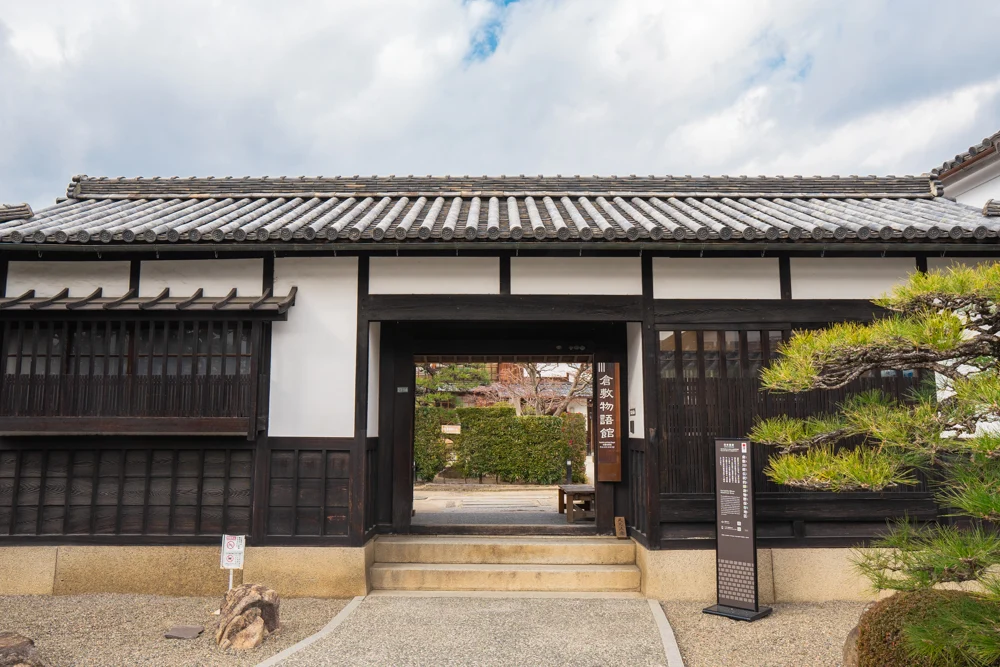
- Kurashiki City Kurashiki Monogatari-kan
- Tea Room Sharon (inside Kurashiki Church)
- Ohara Museum of Art Museum Shop
- El Greco Cafe
I went to see for myself
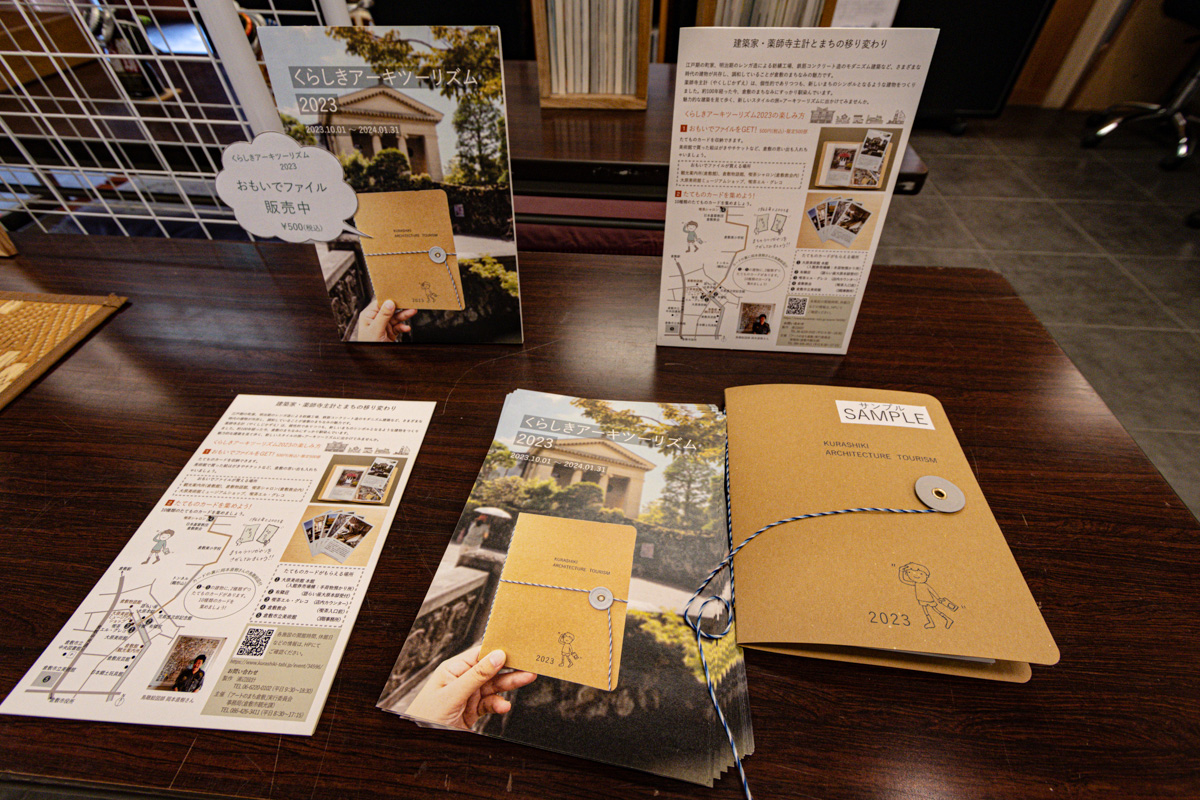
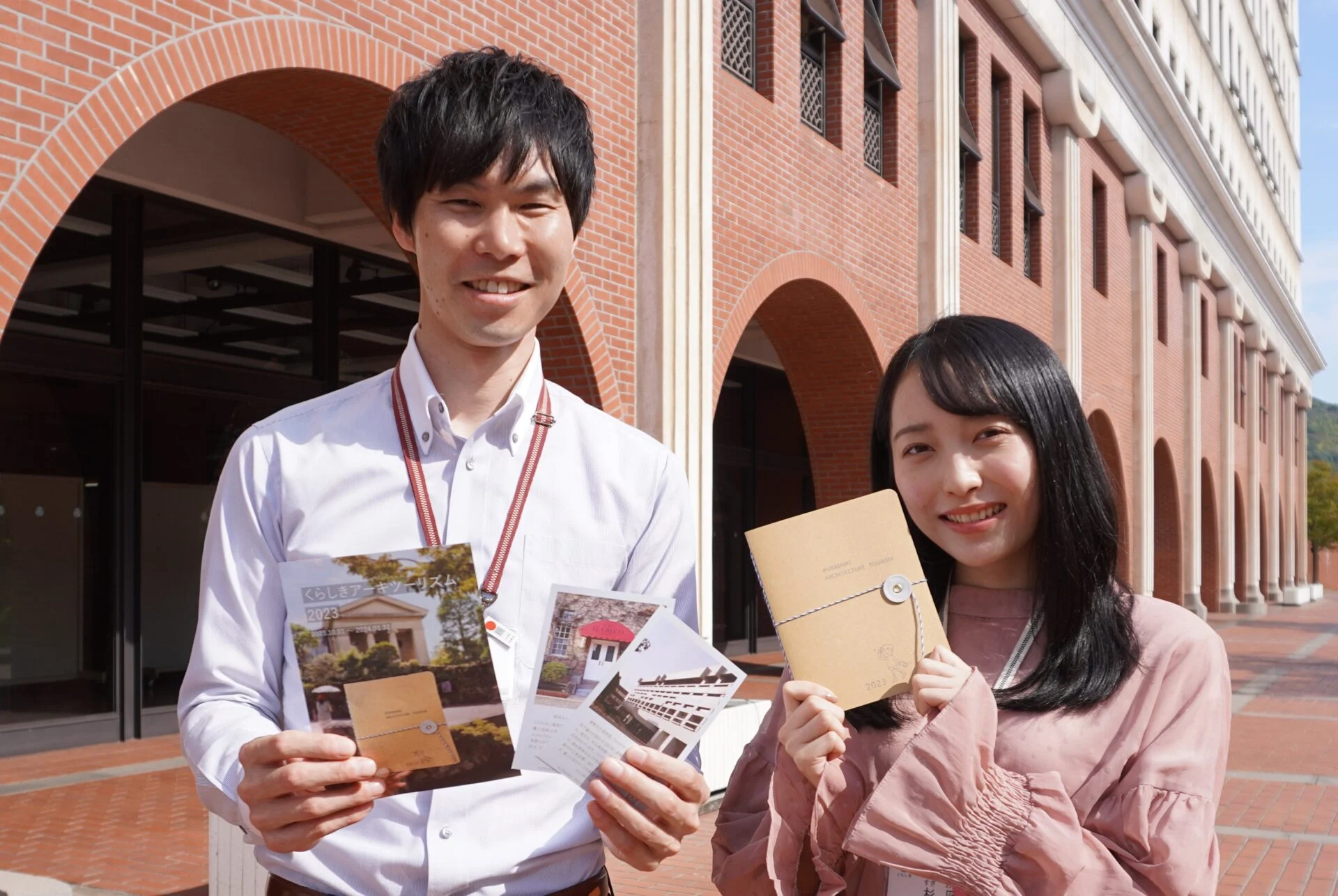
First, I got an “Omoide File.”
I bought mine at Kurashiki City Kurashiki Monogatari-kan.
With the leaflet in hand, let’s set off on our architectural tour.
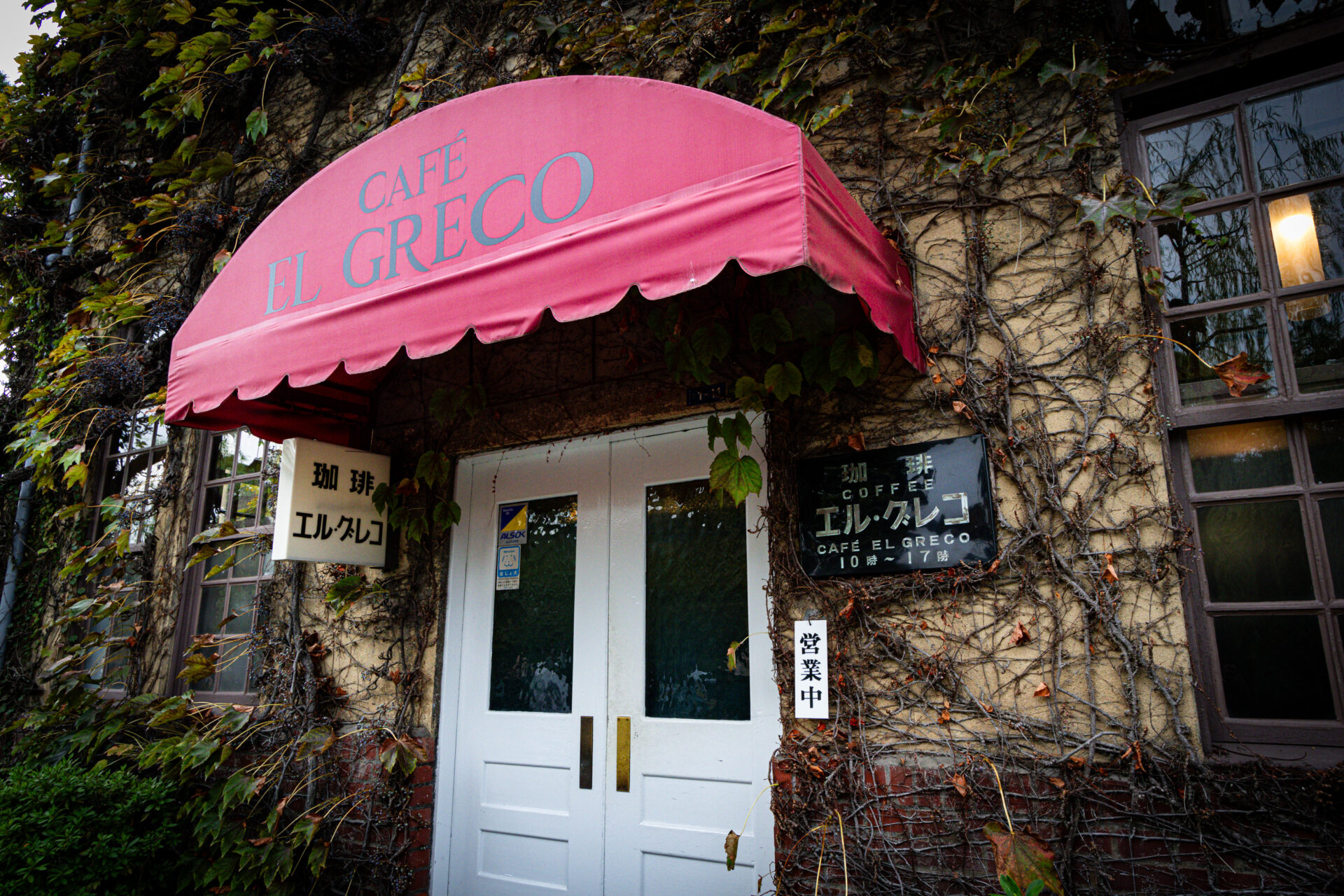
El Greco is a cafe located a short distance from Kurashiki City Kurashiki Monogatari-kan.
The building, originally an office, was converted into a cafe.
The cafe is named after the artist who painted “The Annunciation,” one of the signature works in the Ohara Museum of Art collection.
Although it is not part of the Ohara Museum of Art, it has continued to serve as a museum cafe since it opened, and was bustling with tourists on the day I visited.
Let’s continue on to Ohara Museum of Art.
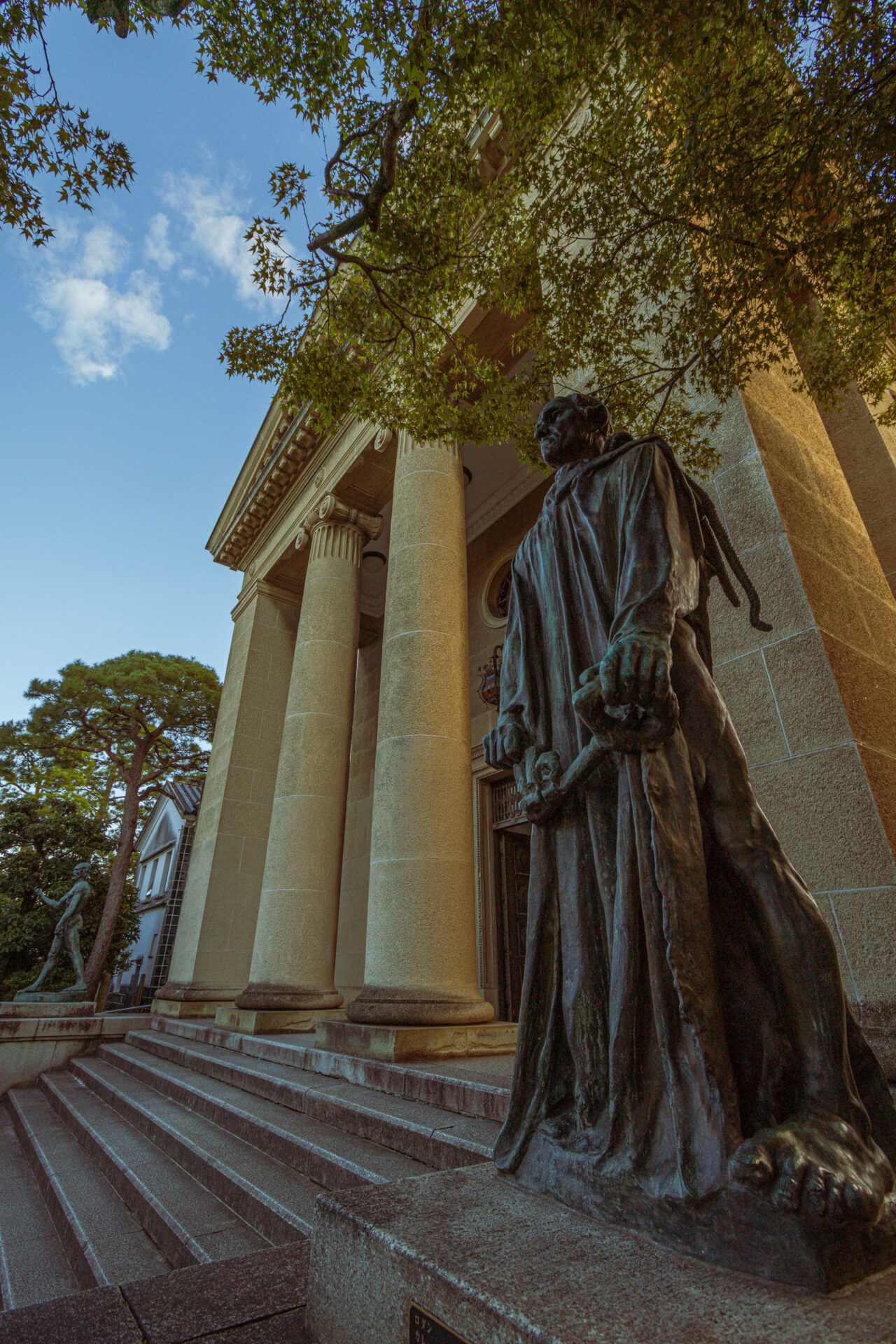
Established in 1930 by Ohara Magosaburo, this was Japan’s first full-scale museum to exhibit Western paintings and is one of Kurashiki’s leading tourist attractions.
I have visited this familiar place many times since childhood. The Roman-temple-like building designed by Yakushiji Kazue, harmonizing with the townscape of white-walled buildings, is, I believe, one of Kurashiki’s signature views.

Yurin-so Villa
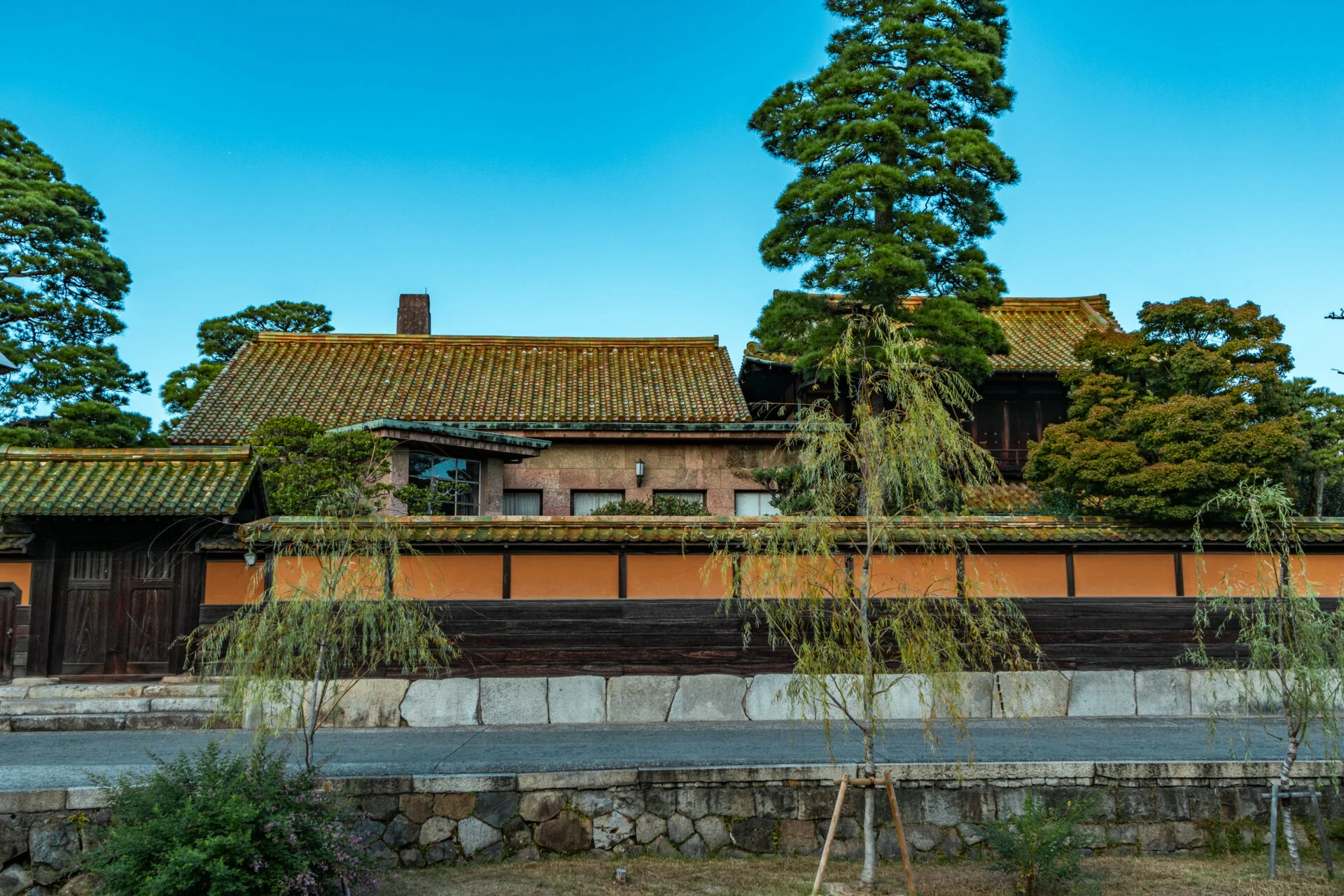
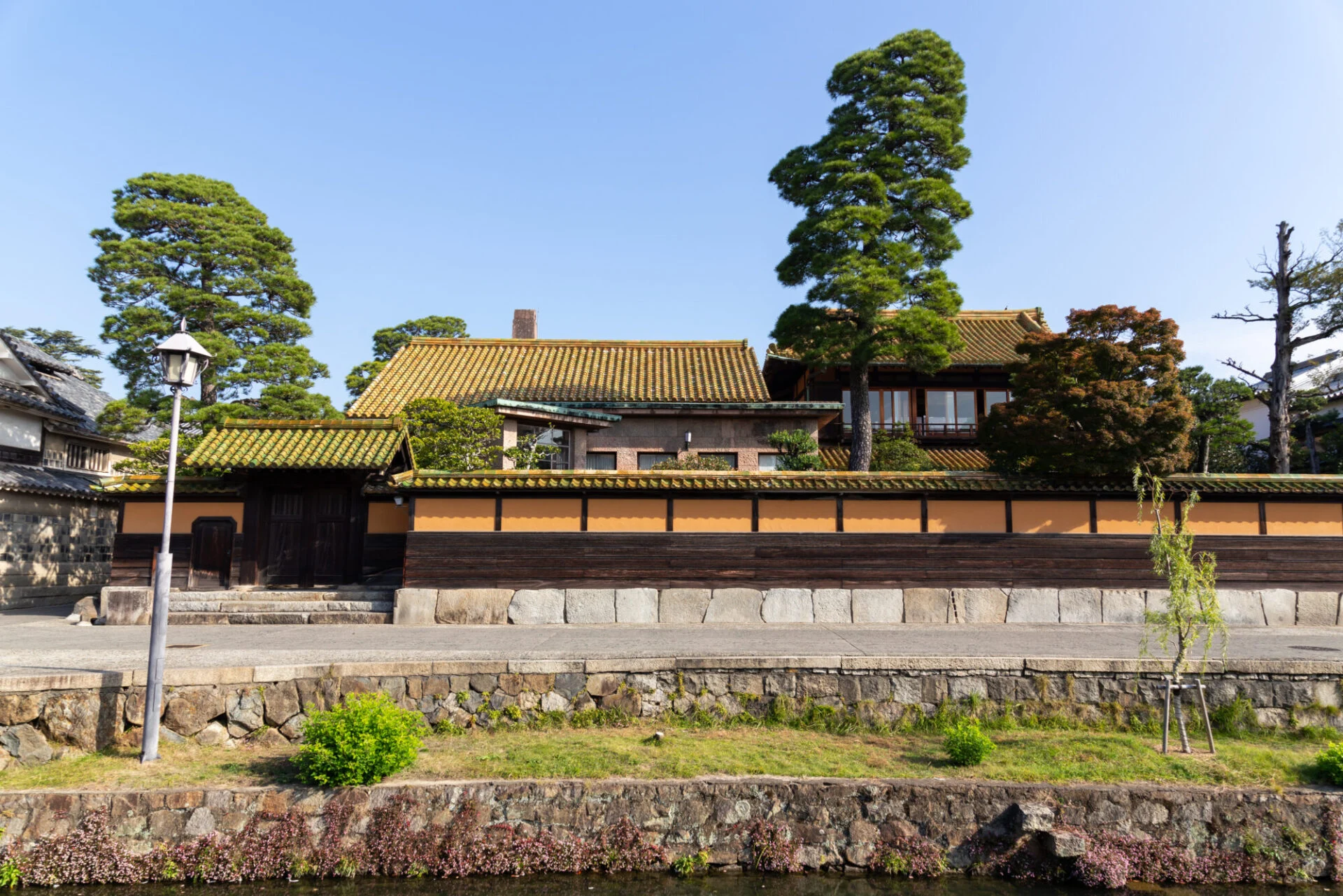
Built as a second residence for the Ohara family, this building is striking for its green roof tiles.
Like the Ohara Museum of Art Main Building, Yurin-so Villa was also designed by Yakushiji Kazue.
It is usually closed to the public, but is opened for special public viewing (Ohara Museum of Art special exhibitions) several times a year. I also visited in May 2023.
Despite blending Japanese, Western, and Chinese design elements, they harmonize without seeming out of place, showcasing the sensibility of architects of the time.
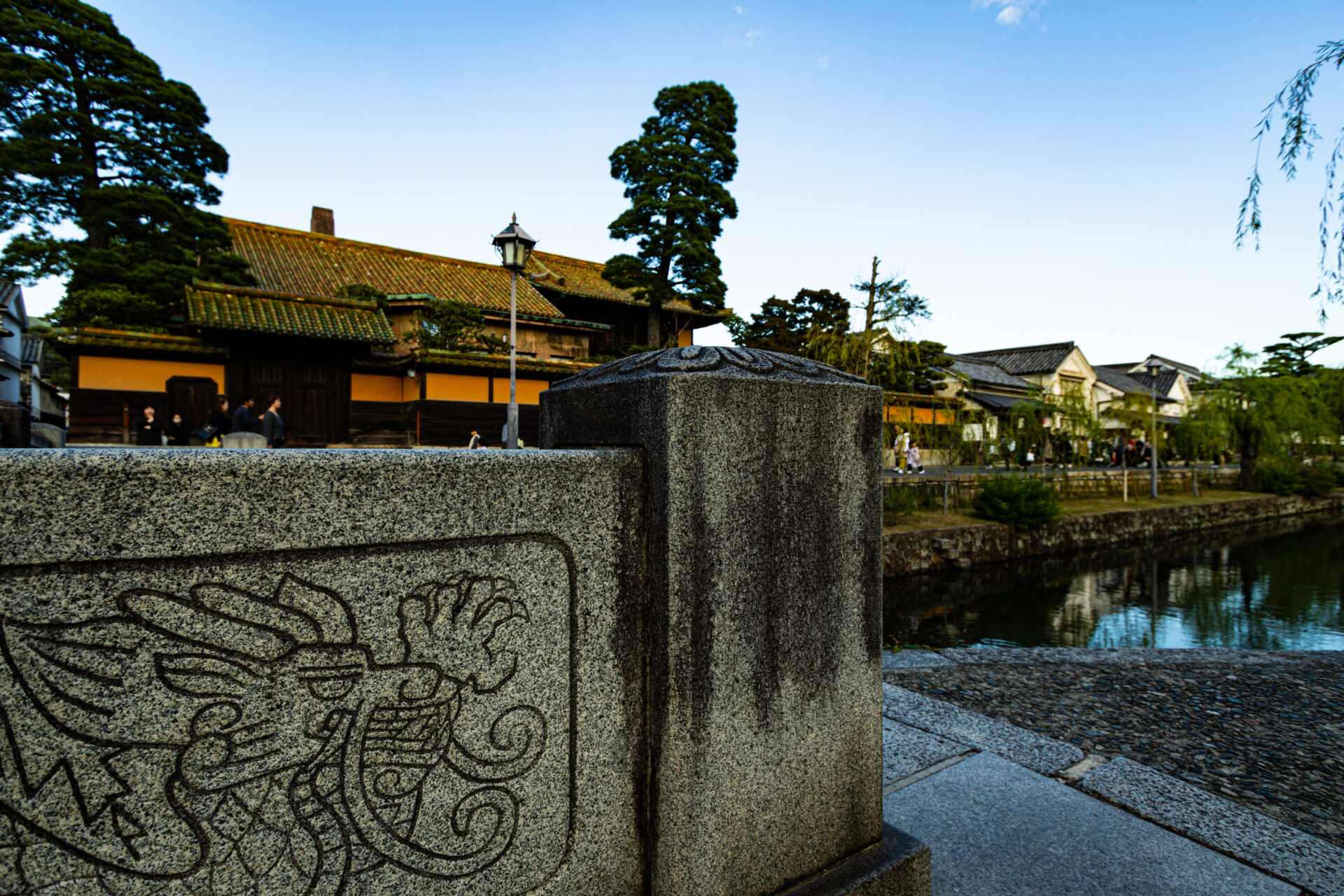
The “Imabashi Bridge” in the foreground was also designed by Yakushiji Kazue, and its dragon relief was designed by Kojima Torajiro.
Kurashiki Church
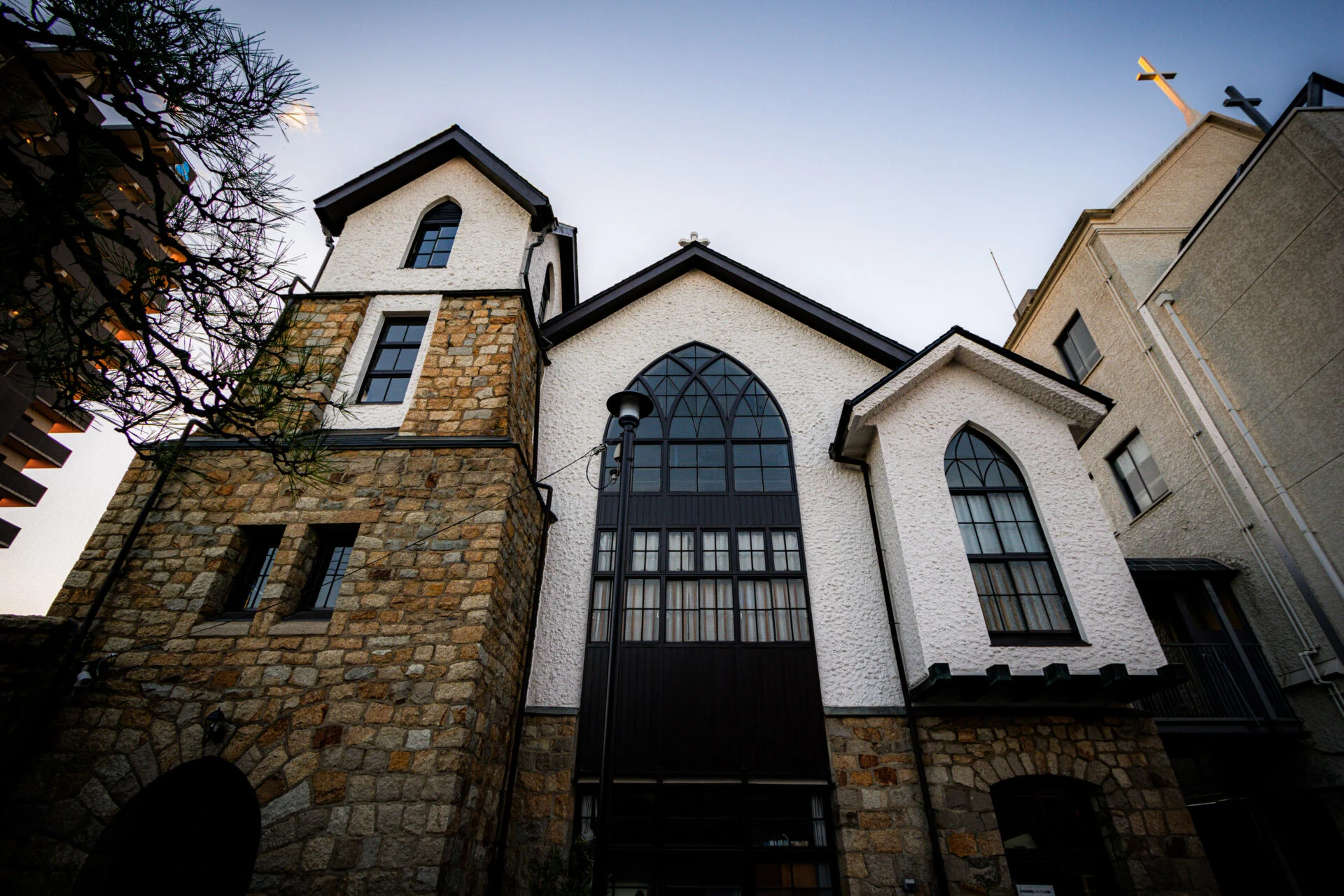
Kurashiki Church stands north of the Bikan Historical Area, a short distance away.
This imposing stone building was constructed in 1923, designed by Nishimura Isaku.
It was a building I had been curious about for some time, but this was my first time going inside.
It’s nice when events like this give you a reason to visit.
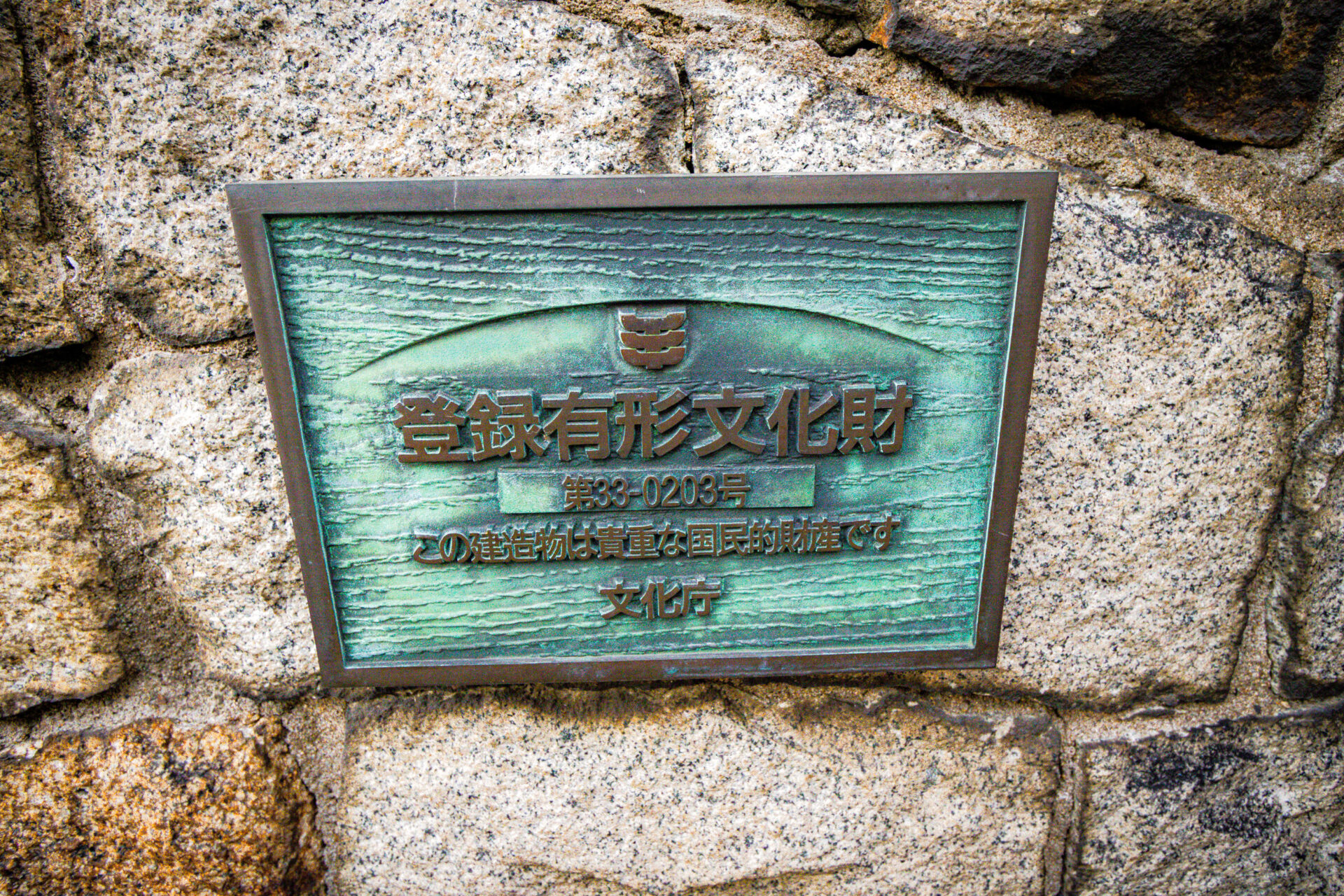
It is designated as a Registered Tangible Cultural Property.
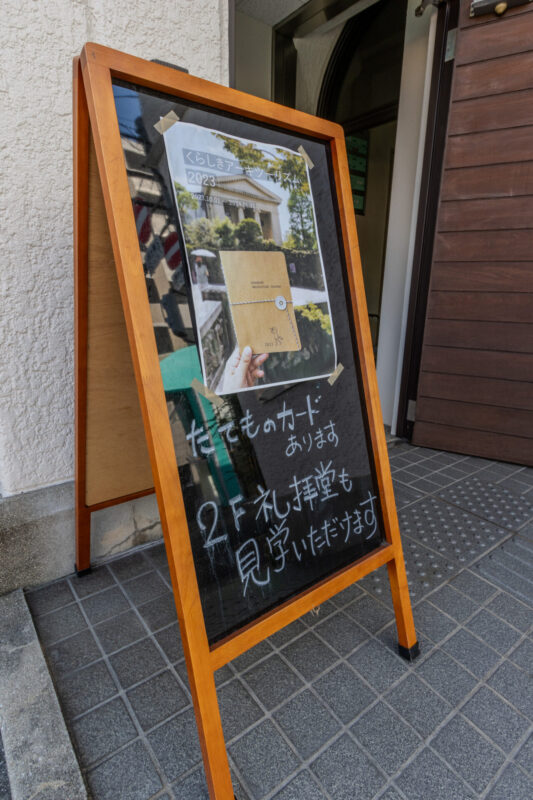
An information sign was set up at the entrance, making it easy to go in.
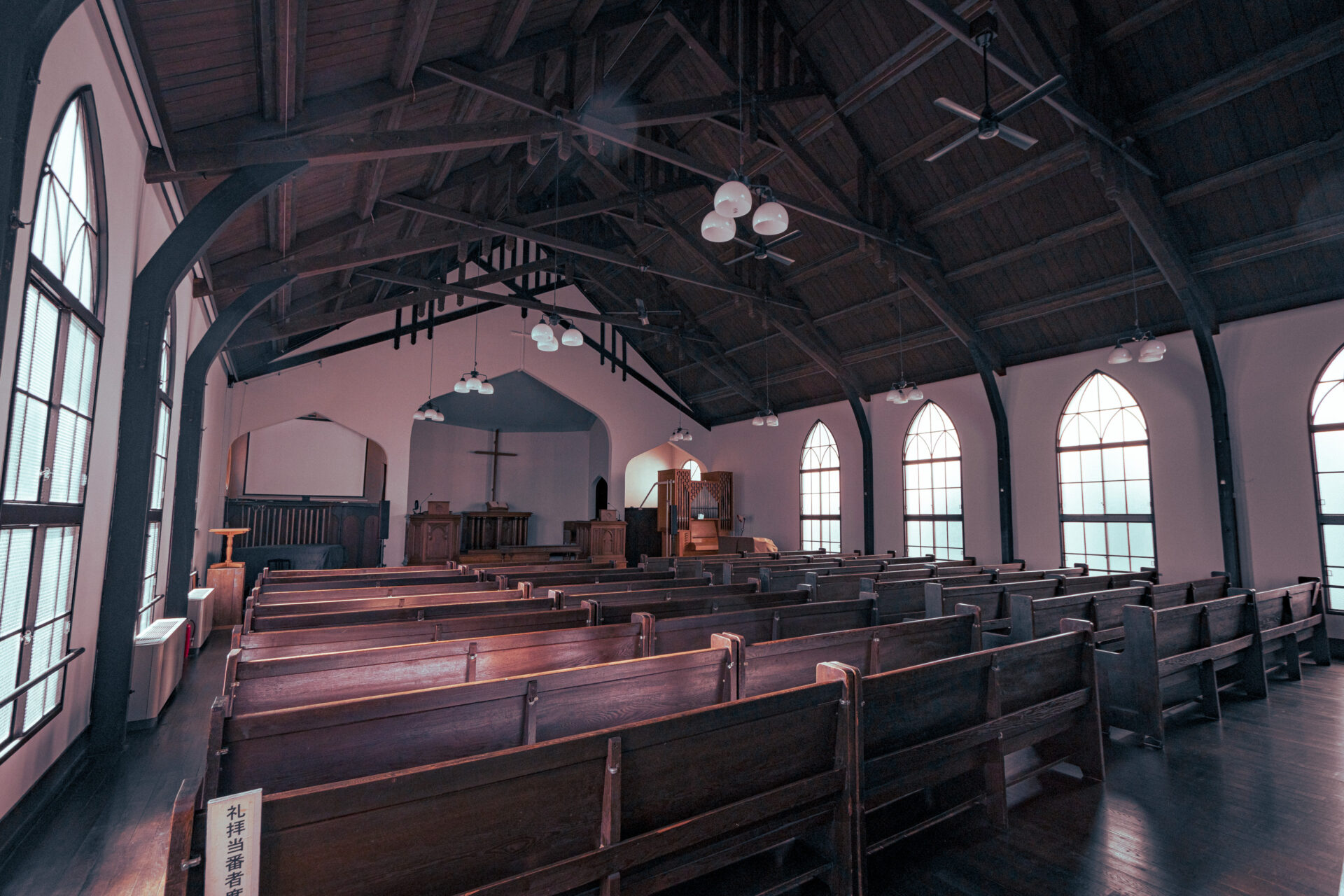
The interior of the chapel was characteristically simple and understated for a Protestant church, yet the warmth of the wood made it feel welcoming.
Kurashiki City Art Museum (formerly Kurashiki City Office building)
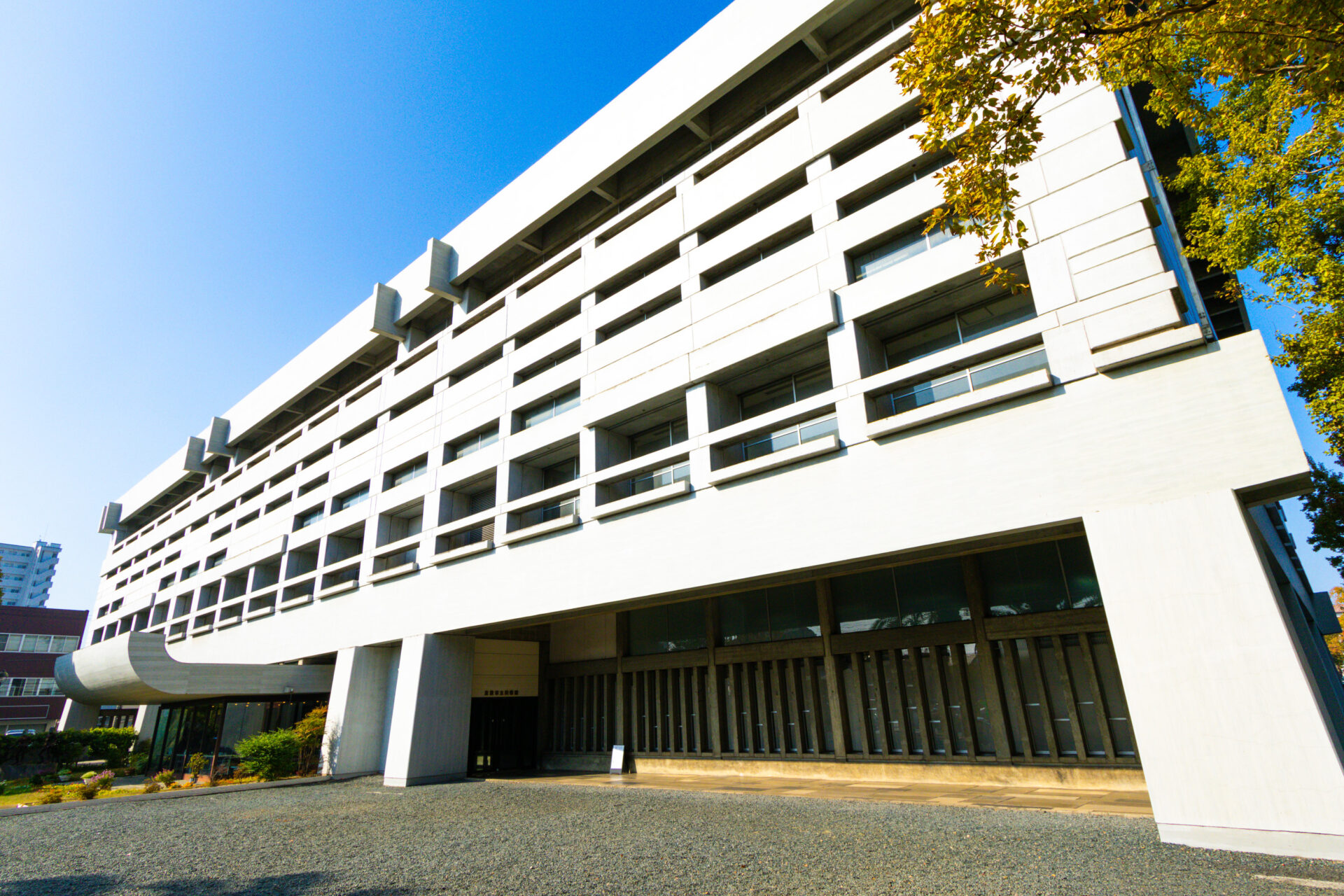
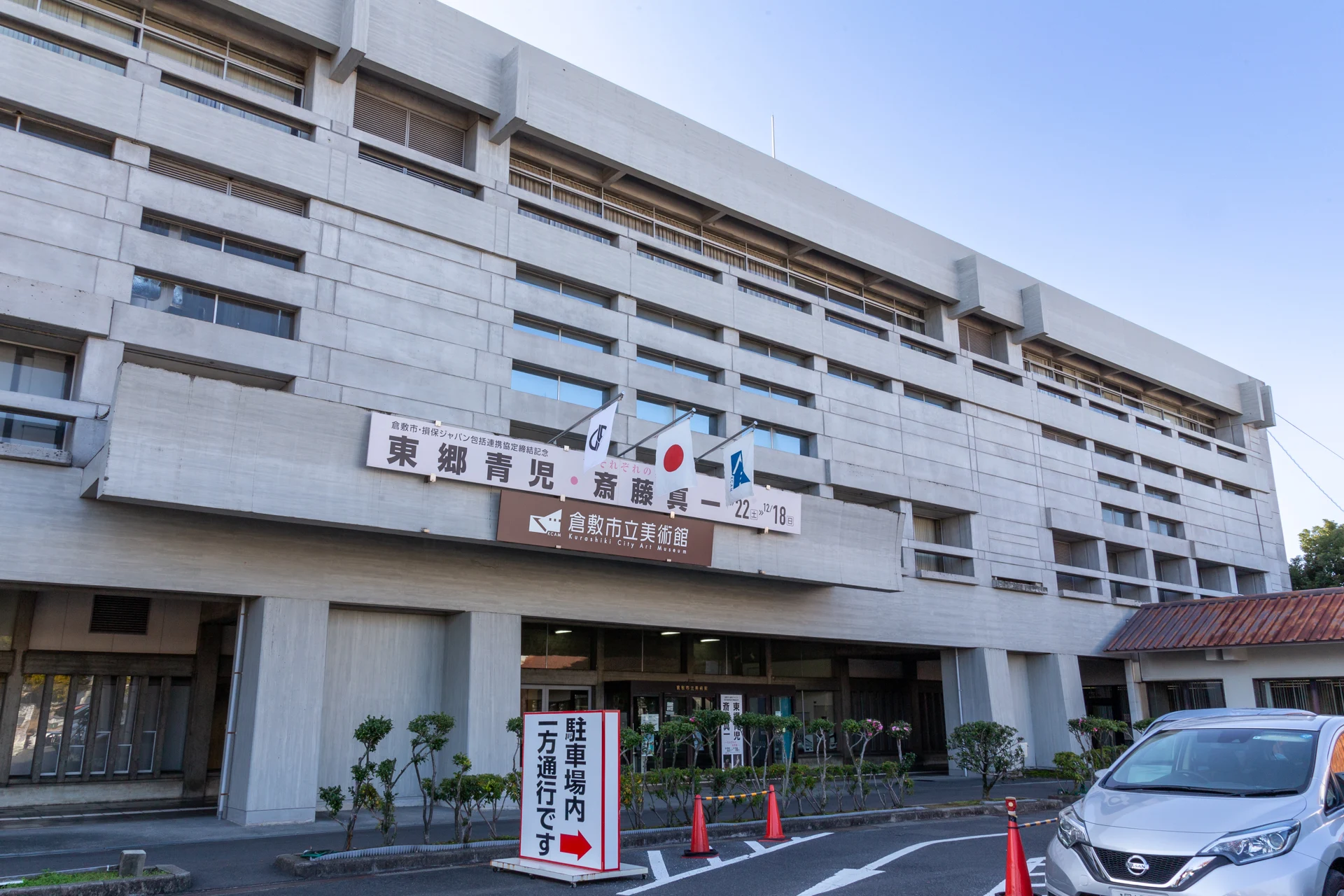
Kurashiki City Art Museum was built in 1960 as Kurashiki City Hall, but was renovated into an art museum in 1983 when the city office moved.
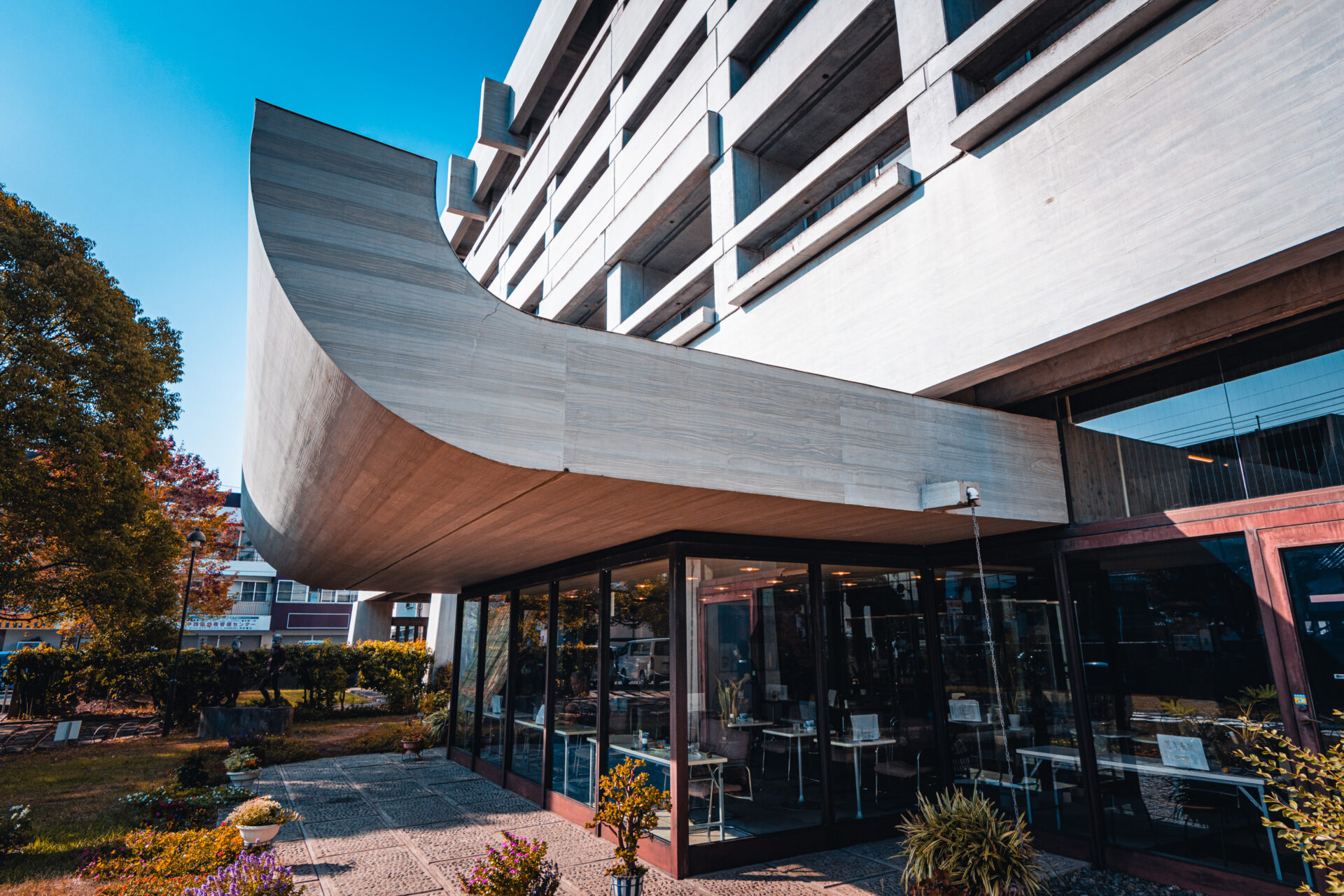
It was designed by Tange Kenzo, one of Japan’s leading architects. The area beneath the large eaves on the south side (the main entrance when it was city hall) is now used as a café space.
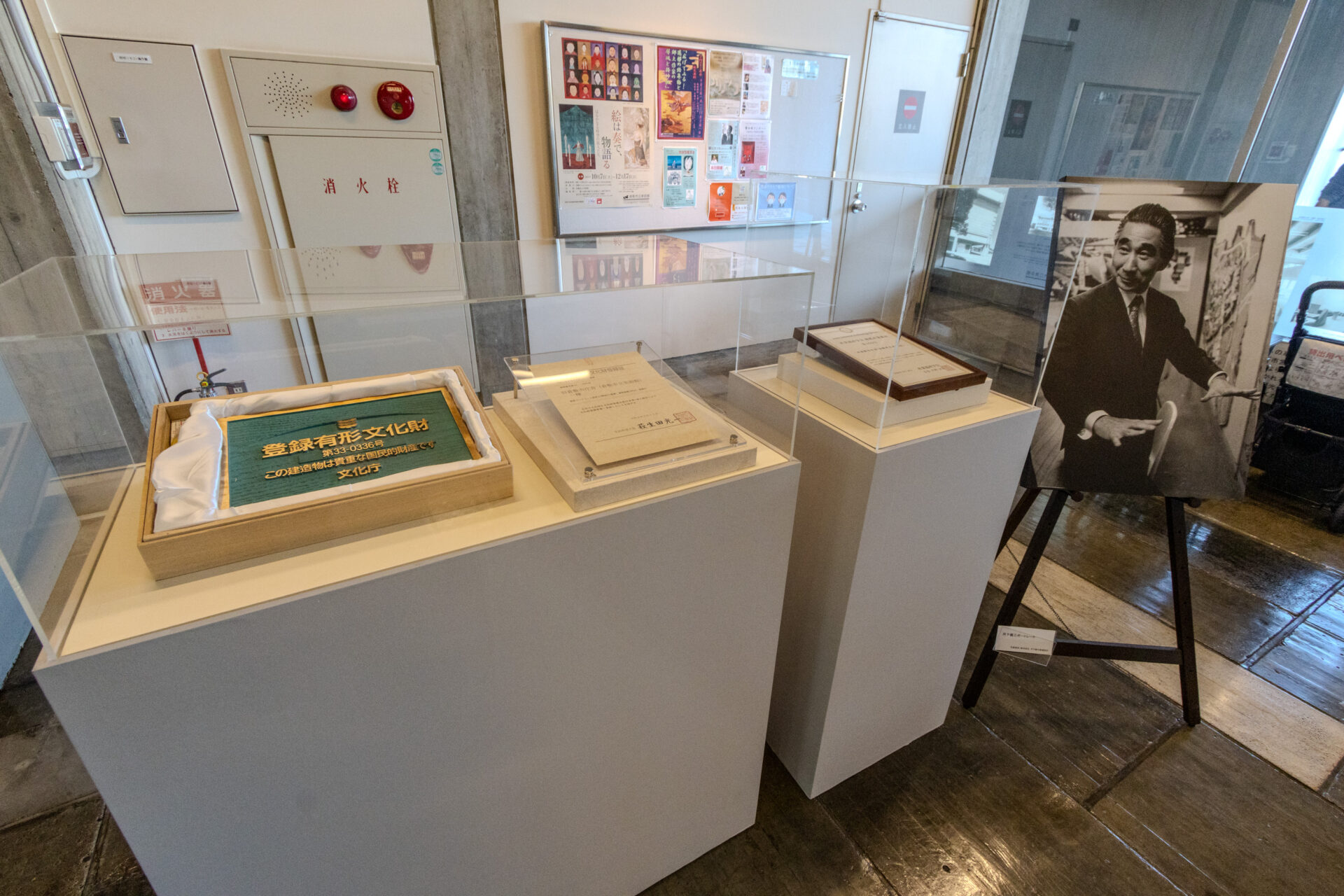
It was designated a National Registered Tangible Cultural Property in 2020.
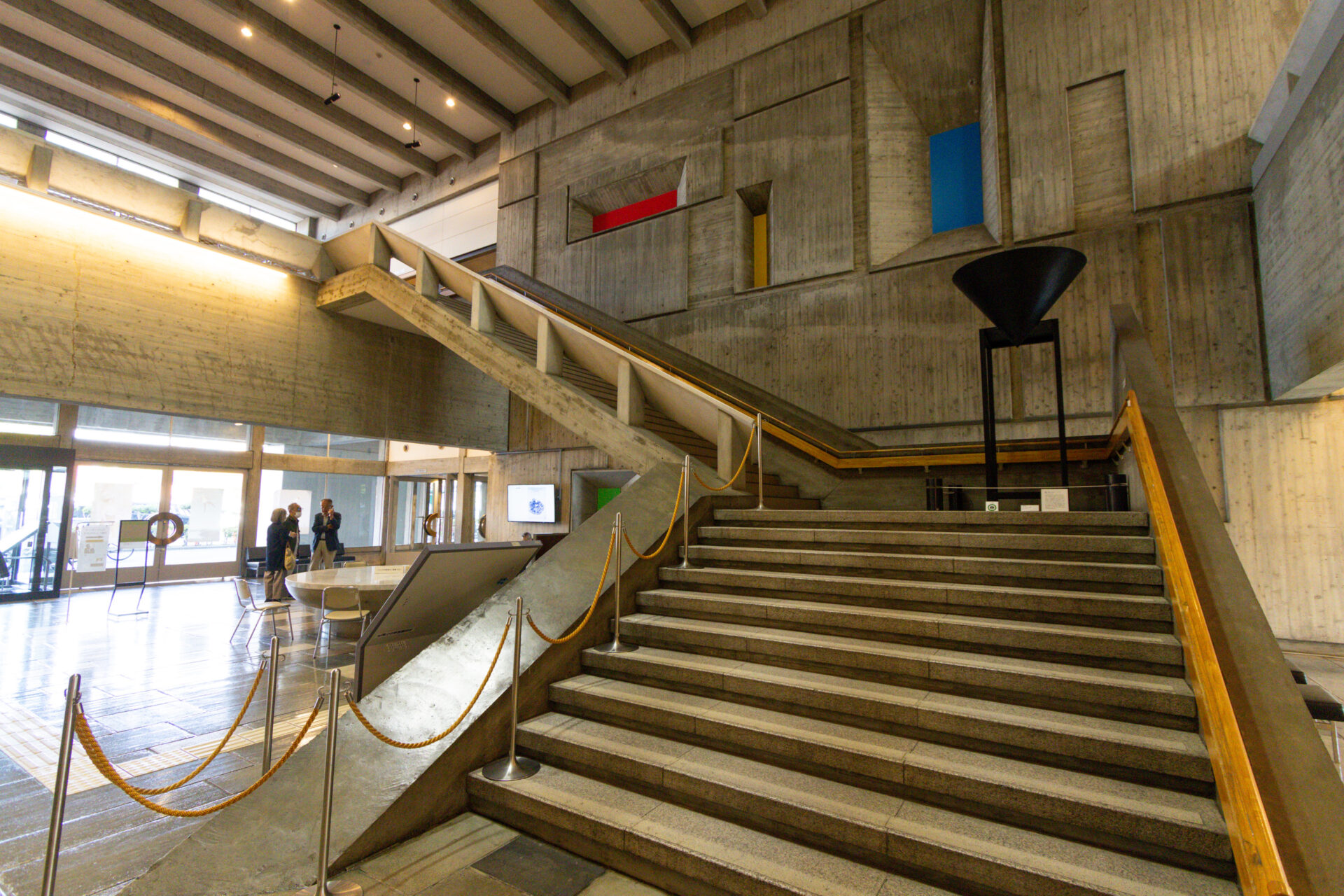
The entrance is very open and spacious. We understand that when the building was used as city hall, it also served as a public hall.
The venue was also used for the welcome reception at the G7 Kurashiki Labour and Employment Ministers’ Meeting held in May 2023. It feels as though the design philosophy of the time is still being carried forward.
From the Writer
Of all the places we visited this time, the most memorable was Kurashiki Church.
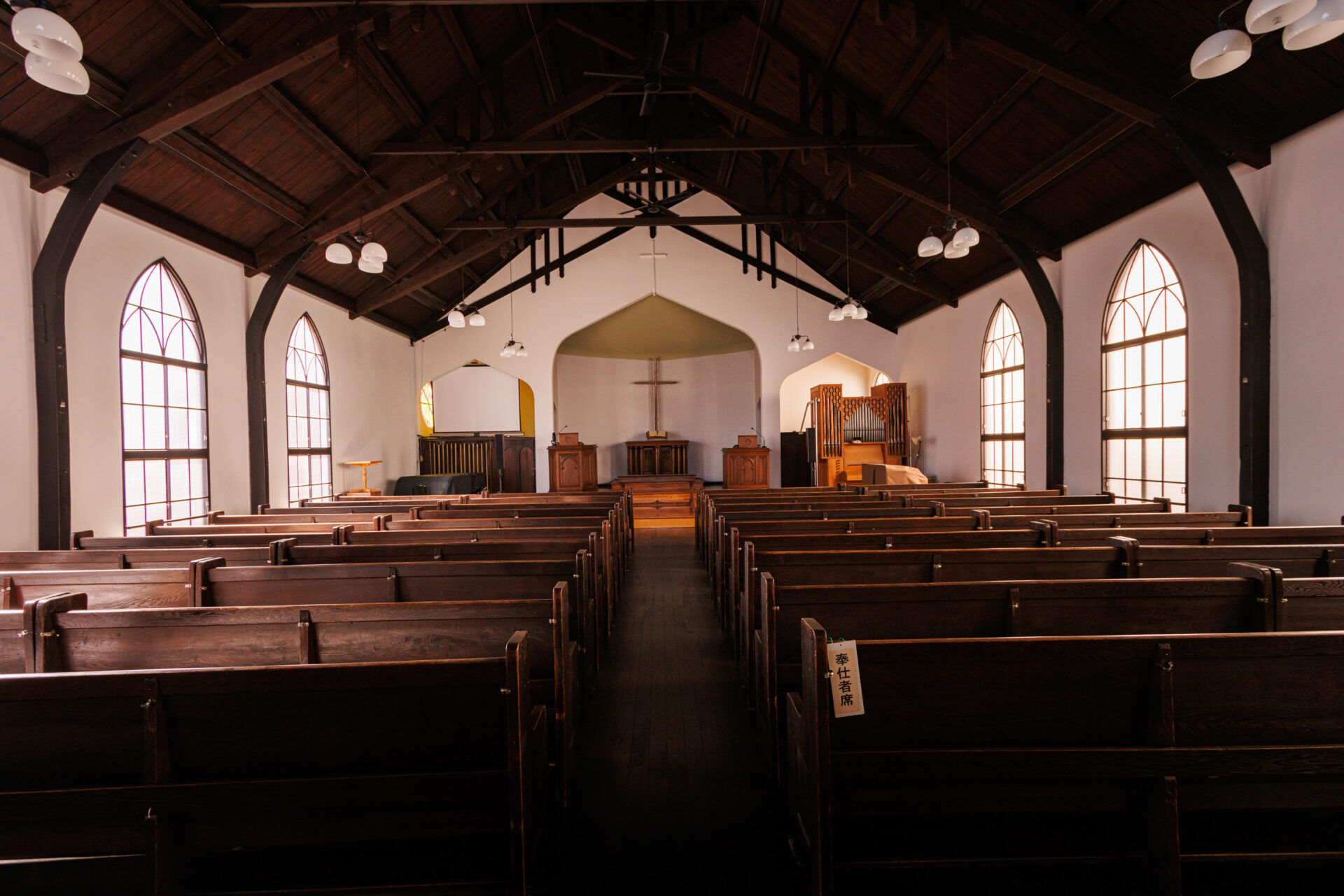
It was my first time inside a church, and an orchestra happened to be rehearsing at the time.
The piece they were playing was “A Town with an Ocean View” (from Kiki’s Delivery Service), and together with the atmosphere inside the church, it created an indescribably pleasant feeling.
You can get two architecture cards at each location, and the reverse of each features bird’s-eye-view maps from 1963 and 2005.
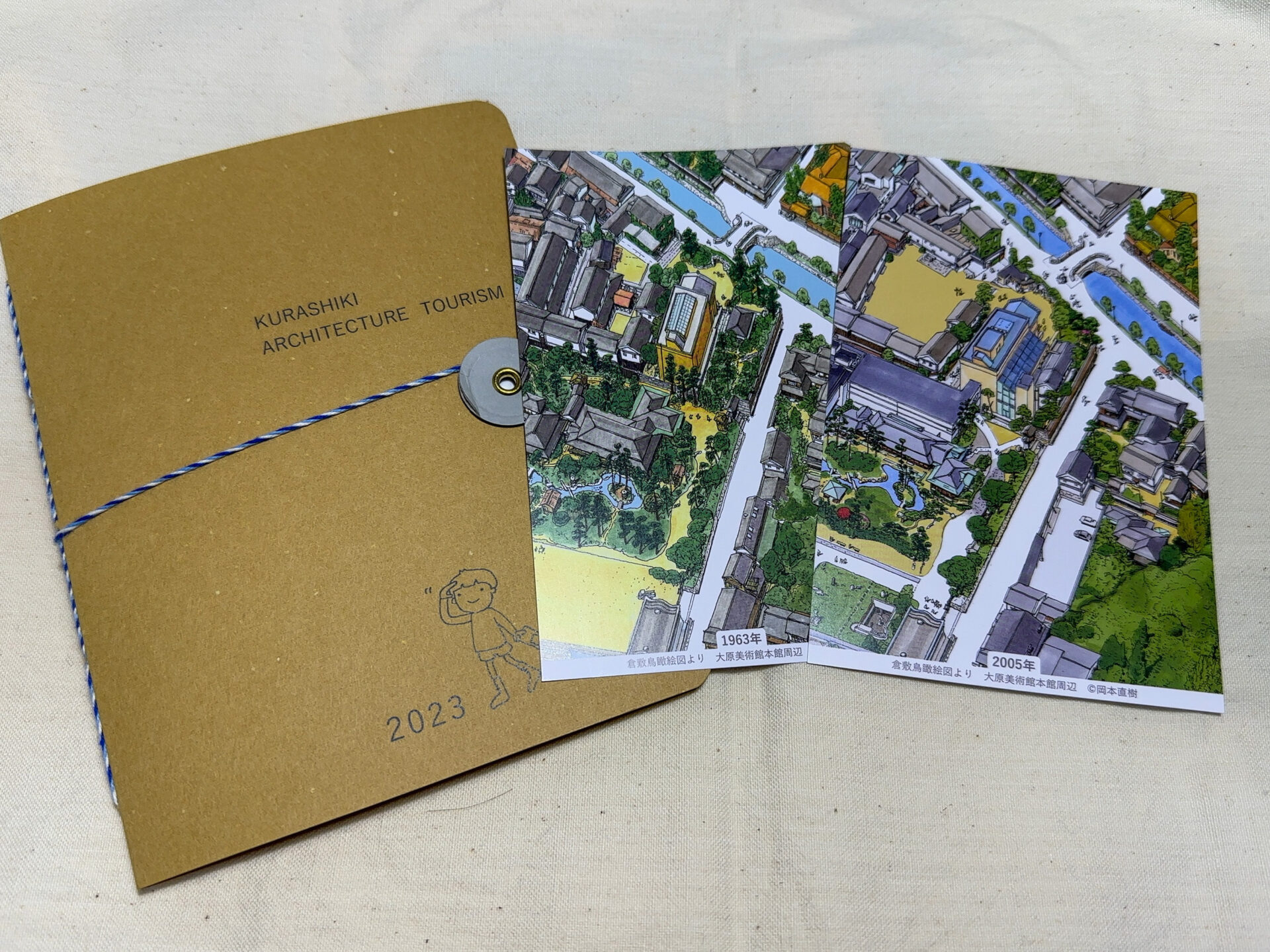
It’s also interesting to compare what the town looked like then with how it looks today.
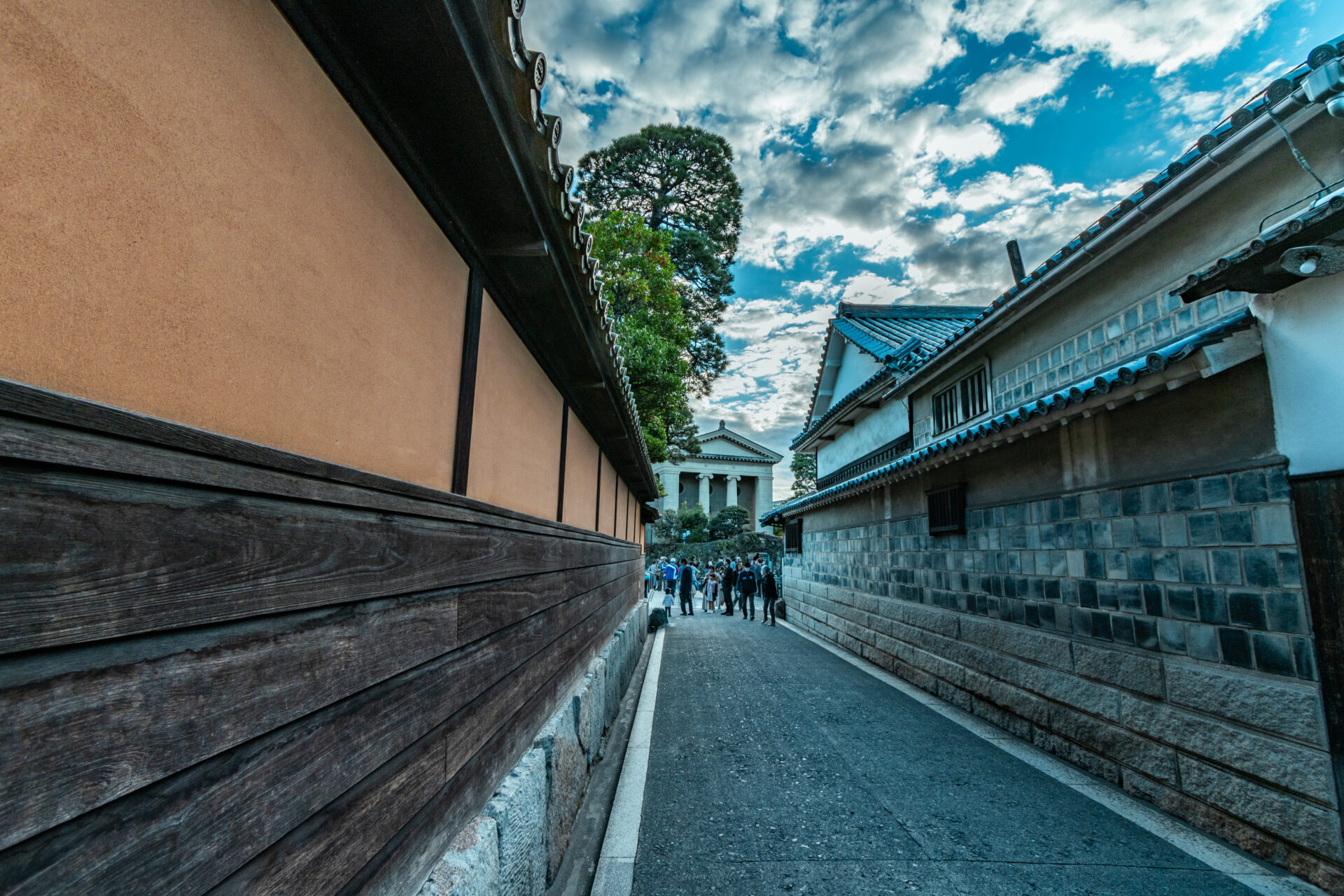
The area covers the Bikan Historical Area and its surroundings, so two or three hours is plenty of time to explore.
This event is recommended not only for those interested in architecture, but also for people who love Kurashiki’s streetscapes and repeat visitors looking to enjoy sightseeing from a slightly different perspective.
Kurashiki Architourism 2023 Information
| Name | Kurashiki Architourism 2023 |
|---|---|
| Dates | October 1, 2023–January 31, 2024 |
| Location | Around the Bikan Historical Area |
| Participation fee (tax included) | “Architecture cards” are distributed free of charge at each location, but admission fees are required to tour the interiors of the Ohara Museum of Art and Ohara House Katalyzer. |
| Website | Kurashiki Architourism 2023 |


What would you like to know about Kurashiki?
Enter a search term to find articles on this site