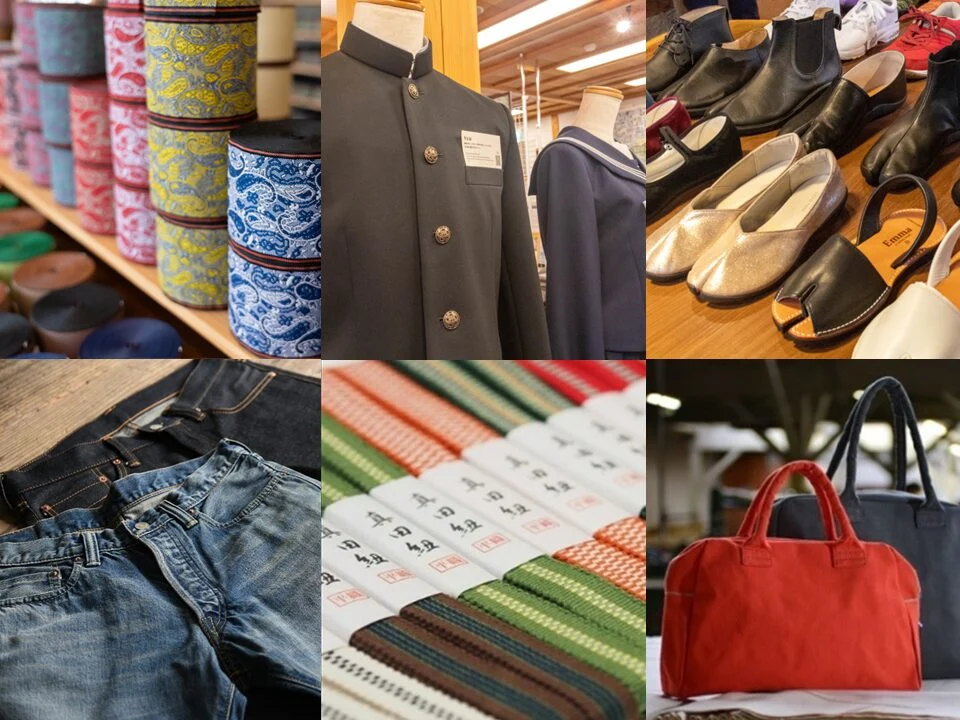
Kojima, a hub for textile-related companies, is a representative "town of textiles" in Kurashiki
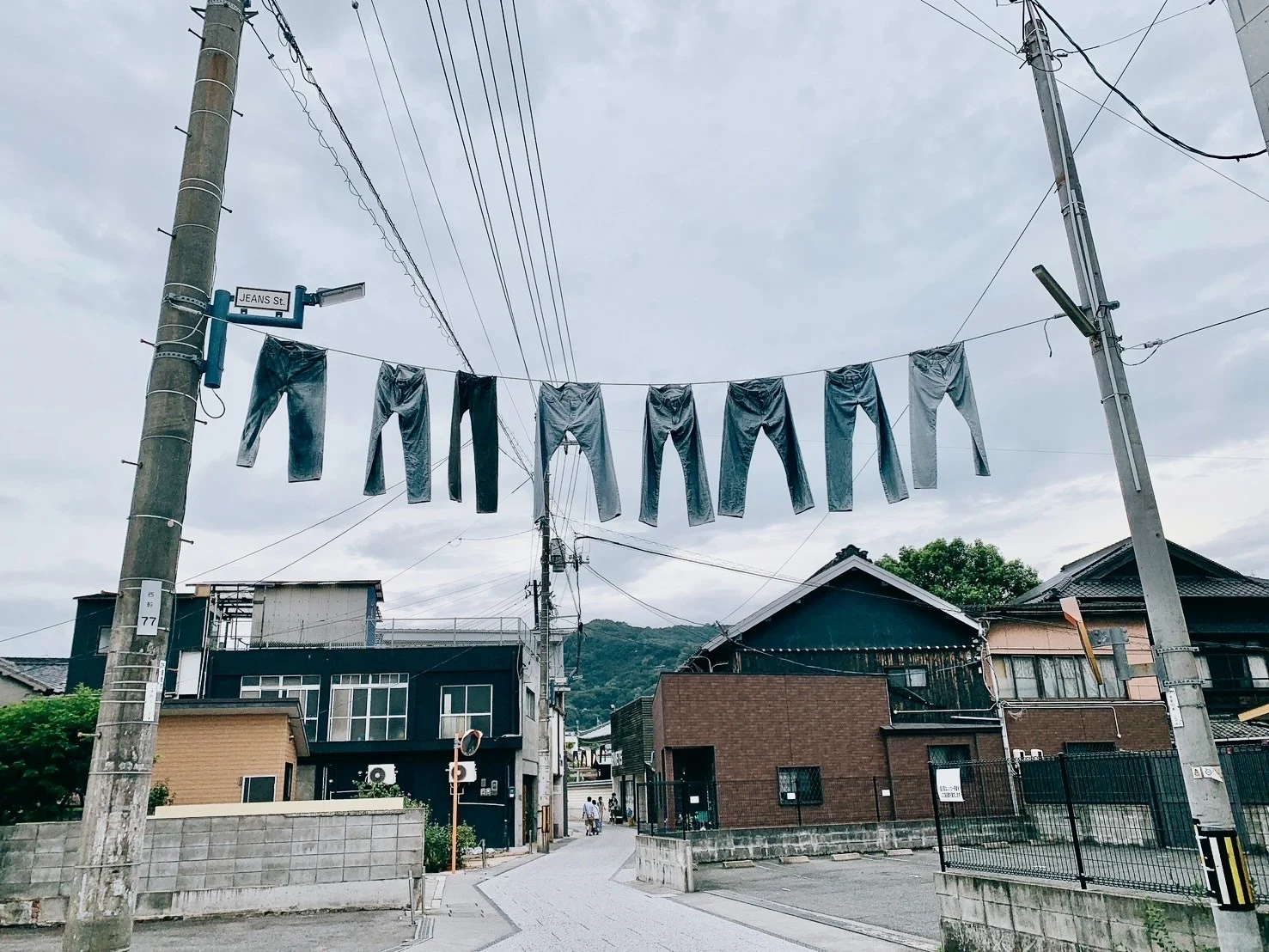
Kojima, known as the "town of textiles," captivates fans both domestically and internationally.
We will introduce a variety of textile products made in Kojima, along with the companies involved.
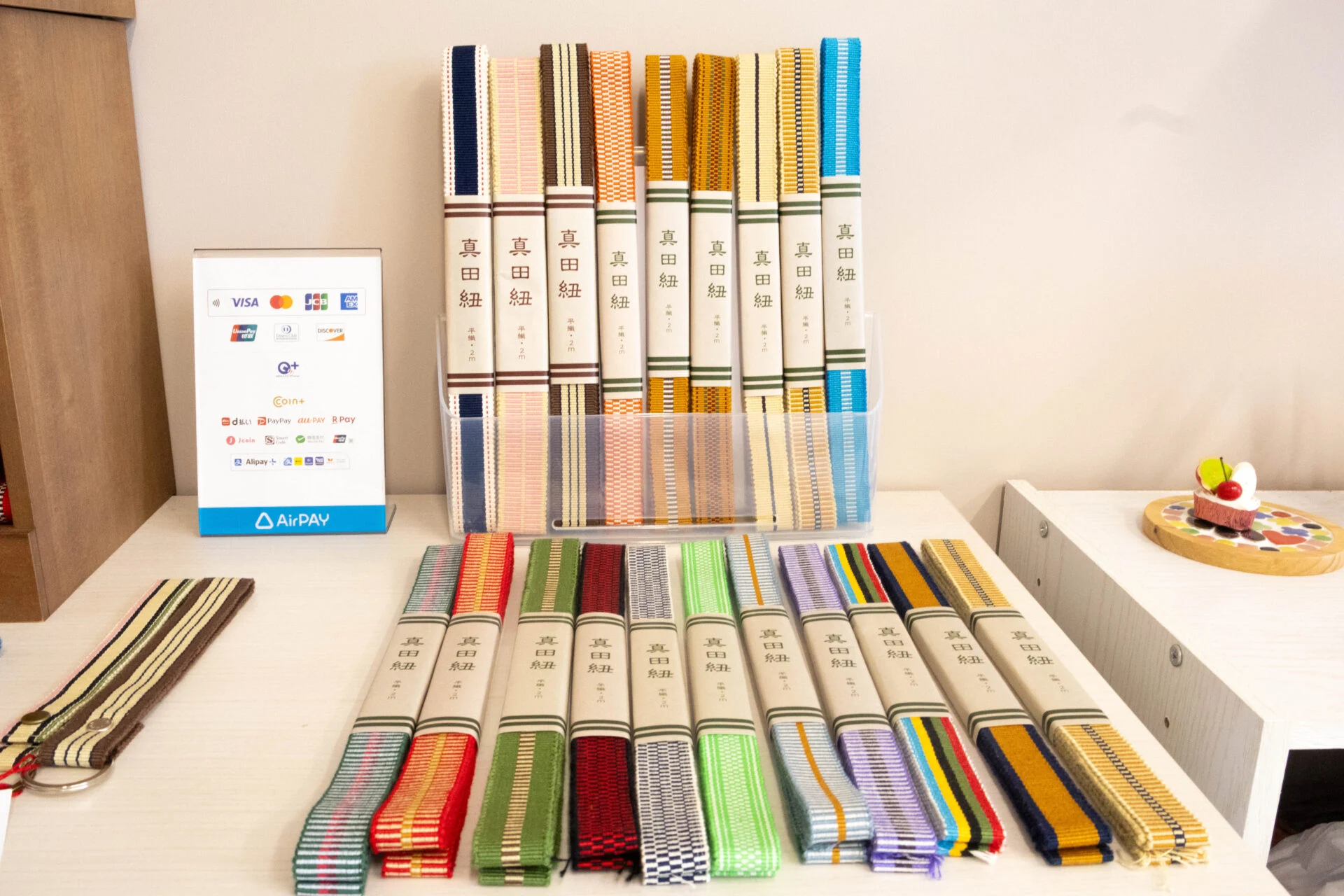
The oldest narrow woven fabric in Kojima, "Sanada-himo"
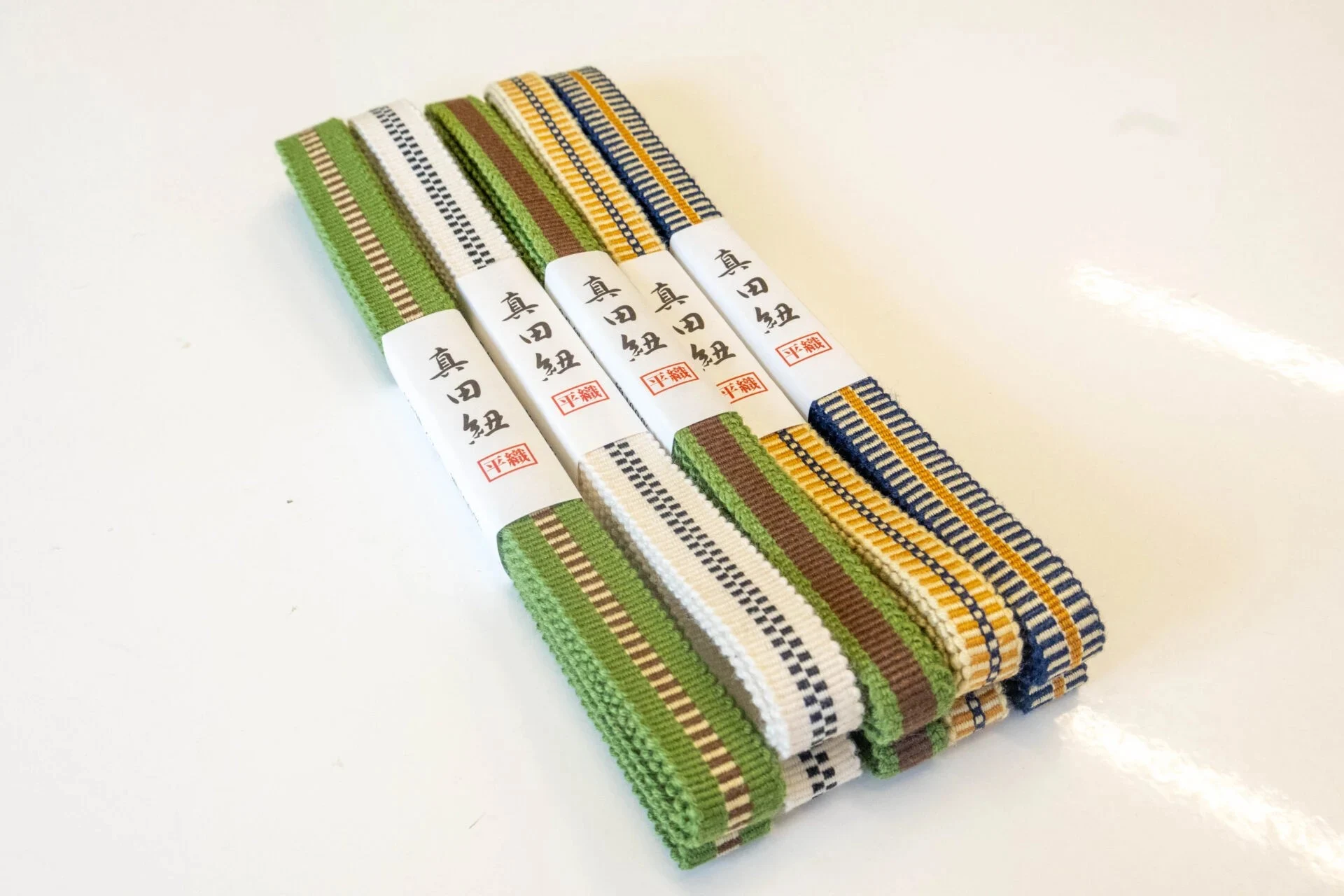
The oldest history among Kojima's textile products is held by Sanada-himo.
Sanada-himo is said to be the thinnest woven fabric in the world, characterized by its durability that does not stretch even when heavy objects are hung.
In the past, it was used as armor to connect samurai armor, as a cord for hanging swords, and as a non-slip material. It was also used among common people as a cord to bundle tea utensils and as an obi (sash) fastener.
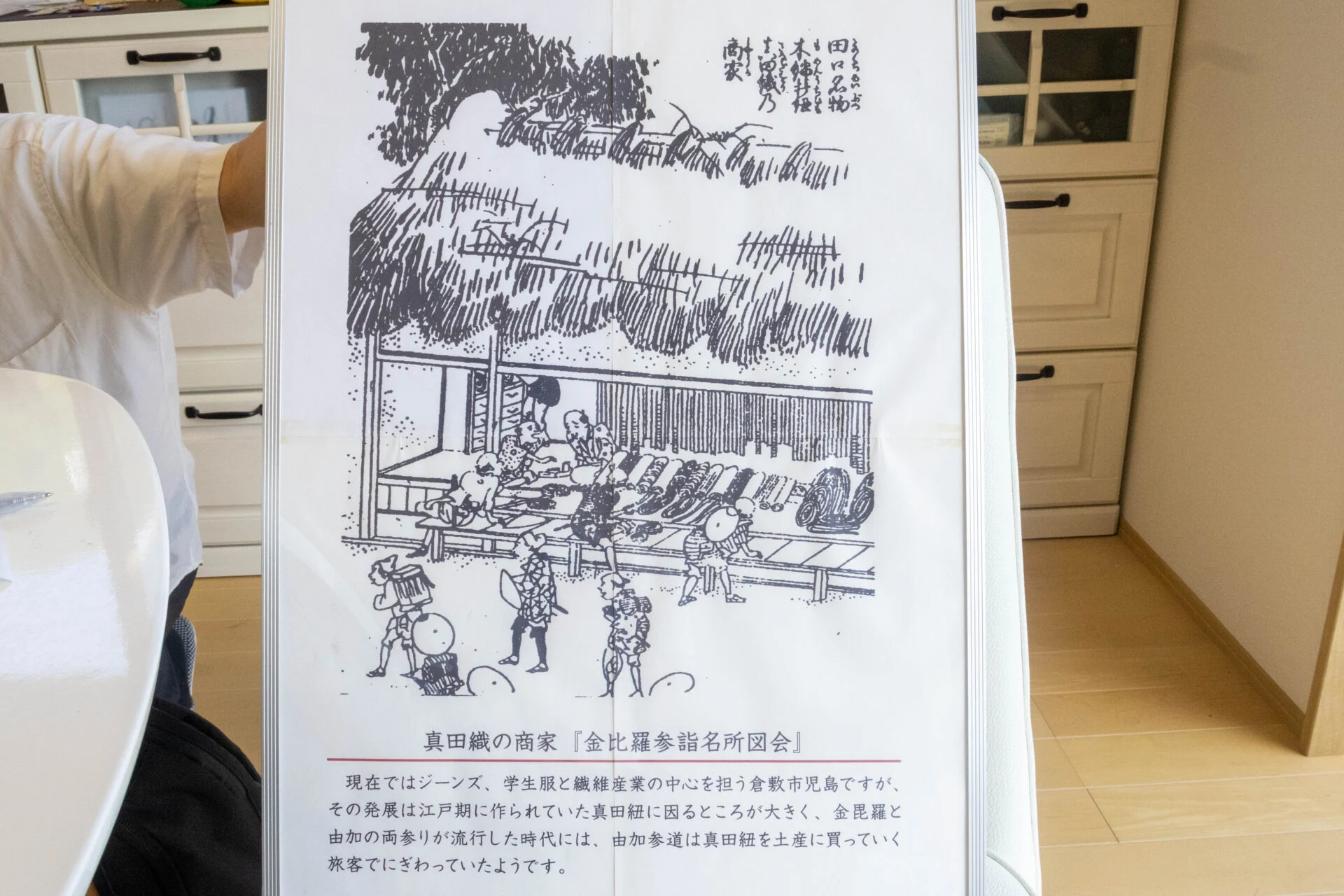
Records show that Sanada-himo was first made in 1789 in Tanoguchi Village.
Sanada-himo became popular as a souvenir for visiting both Konpira Mountain and Yuga Shrine Honmiya, laying the foundation for Kojima to become a town of textiles.
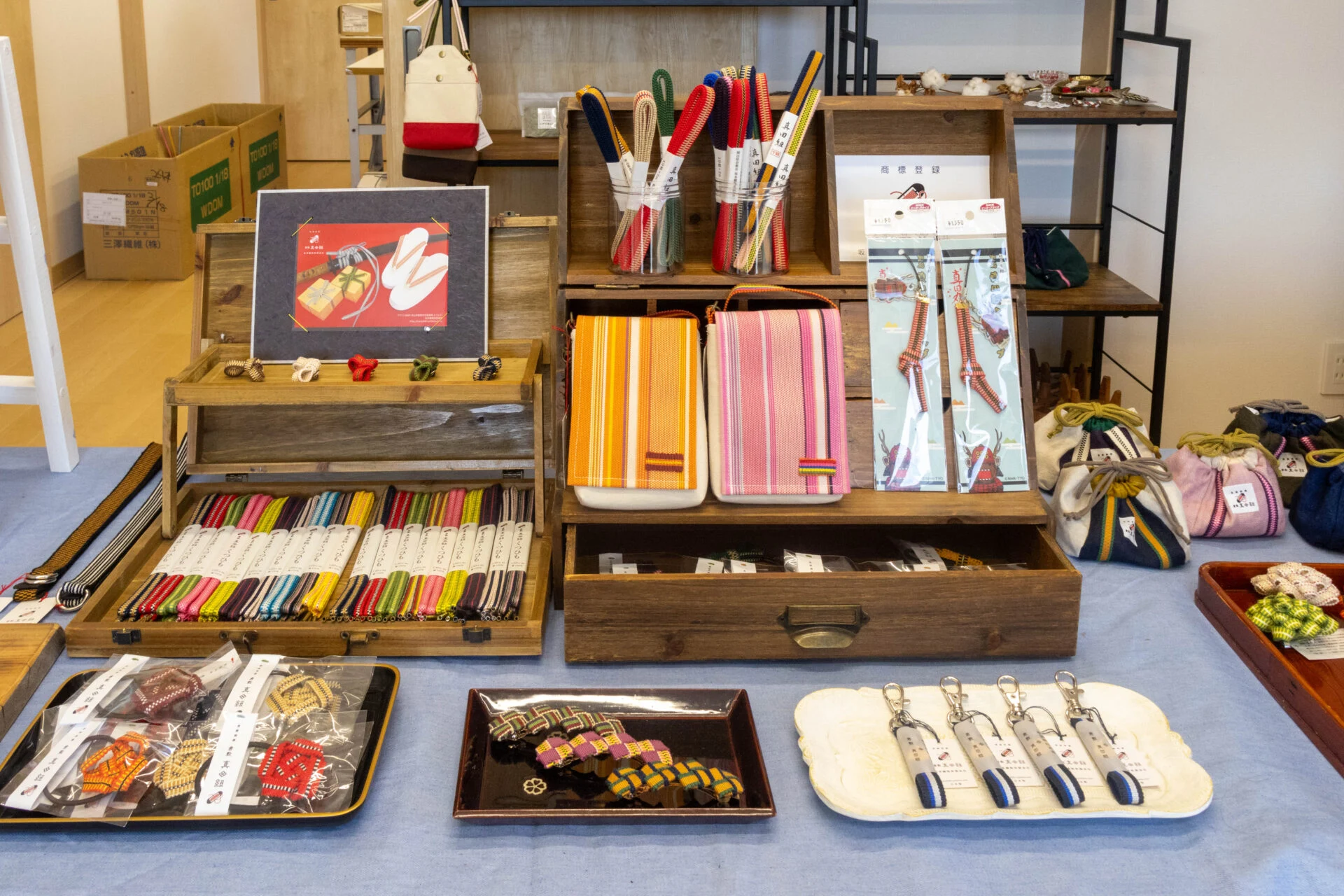
However, as time passed, the number of manufacturers producing Sanada-himo decreased, and as of 2025, only Sakamoto Orimono Co., Ltd. (hereinafter referred to as "Sakamoto Orimono") remains in production.
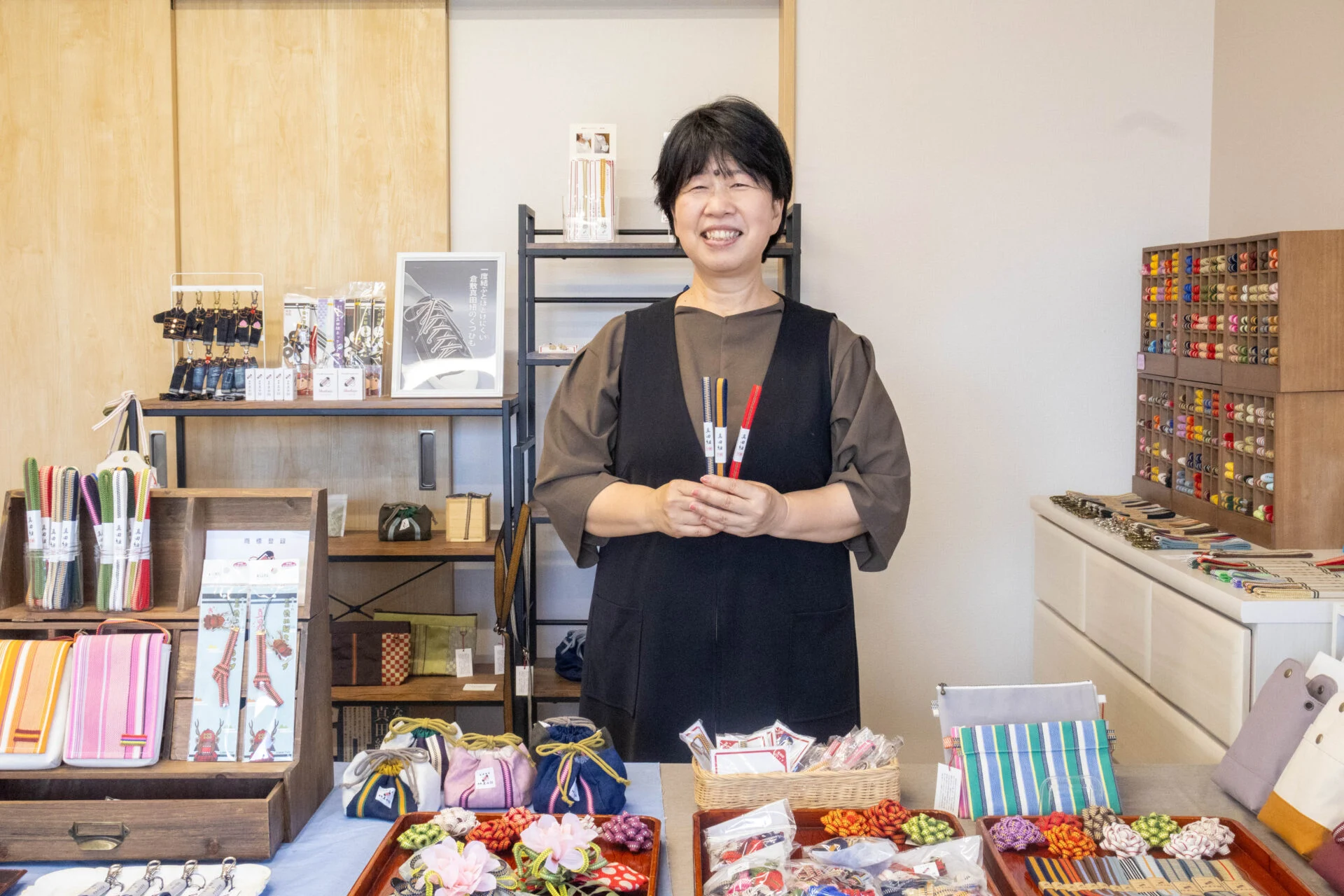
The production of Sanada-himo in Kojima nearly ceased due to a lack of successors, but the current managing director of Sakamoto Orimono, Sakamoto Sanae, has inherited the precious techniques and the necessary power looms for weaving Sanada-himo.
Sakamoto Orimono is focusing on producing small lots of original Sanada-himo and developing a variety of beautiful products to meet modern needs.
"Tatami-bari," the number one in domestic share, continues to evolve
The production of narrow woven fabrics, such as Sanada-himo, was particularly active in the Karagoto area of Kojima.
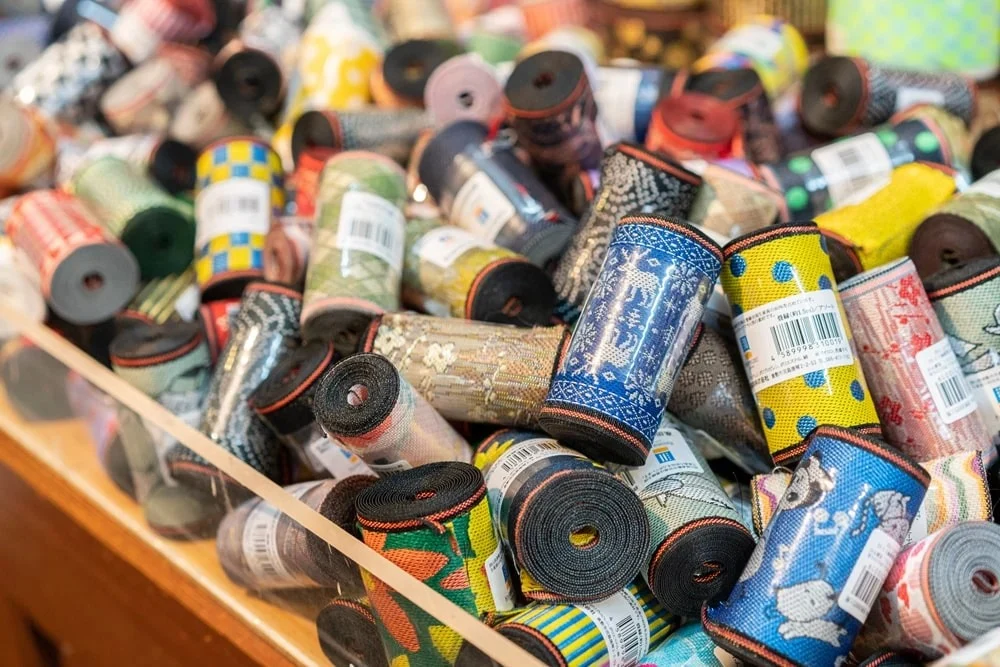
In addition to Sanada-himo, there is also tatami-bari (tatami edge). Tatami-bari is the fabric used on both ends of tatami mats, serving to protect the tatami and connect them together.
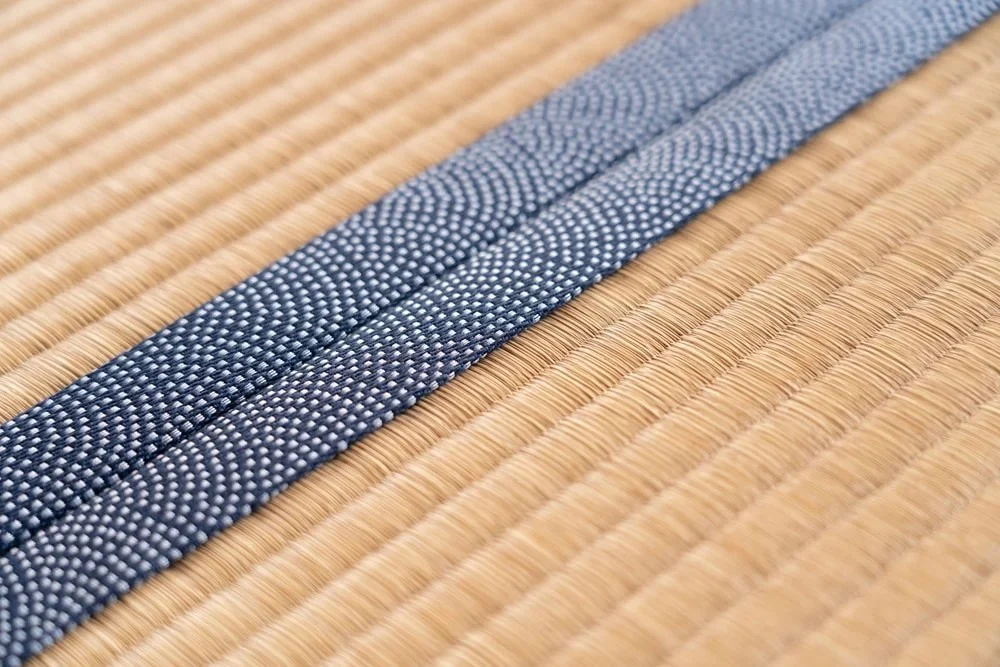
Tatami-bari itself has existed since the Nara period, but it began to be produced in Okayama during the Taisho period. The tatami-bari from Okayama is known for its high quality and has become one of the leading production areas in Japan.
Among them, Takada Orimono Co., Ltd. (hereinafter referred to as "Takada Orimono"), founded in 1892, currently holds a 40% share of the domestic tatami-bari market as of 2025.
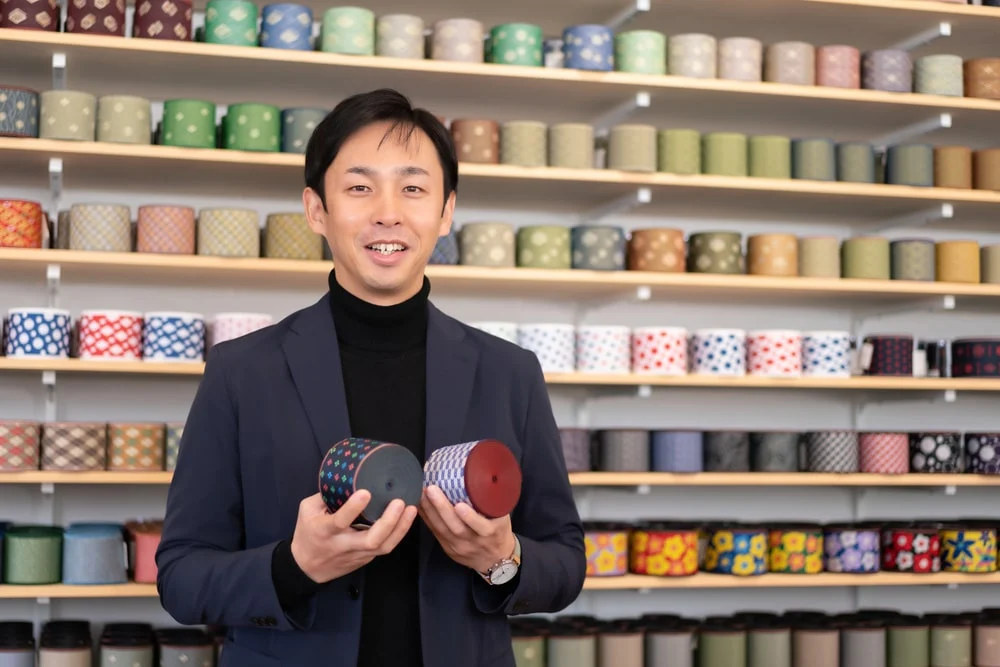
Takada Orimono originally produced Sanada-himo but started manufacturing tatami-bari in the early Showa period to adapt to changing times. Currently, their corporate vision is "from traditional culture to pop culture," and they offer not only traditional tatami-bari but also a variety of colorful and design-oriented tatami-bari.
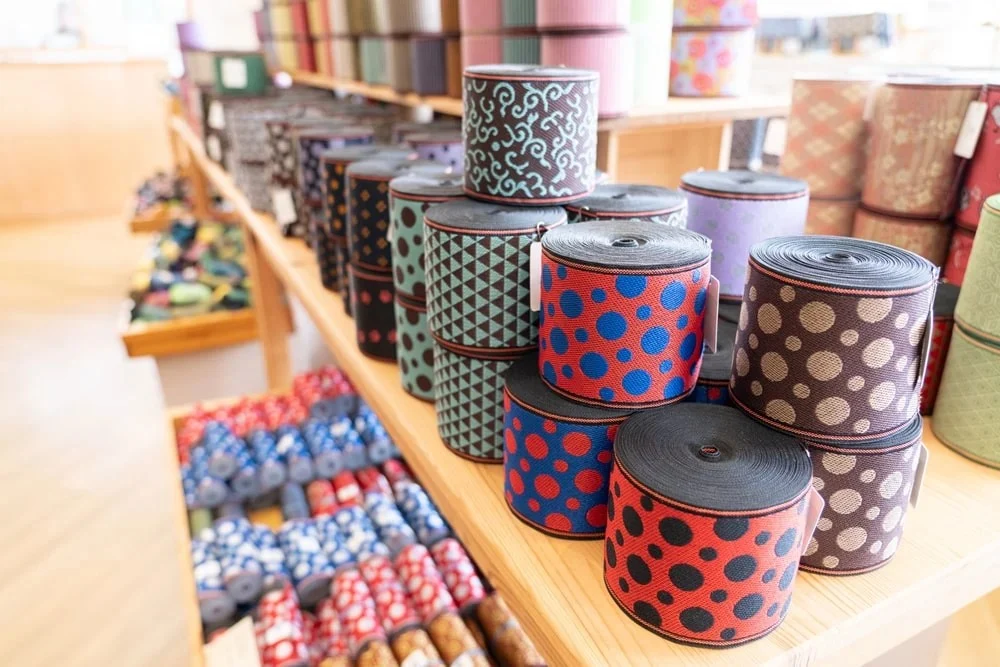
In 2014, a direct store called FLAT was opened to deliver tatami-bari directly to end users without going through tatami shops.
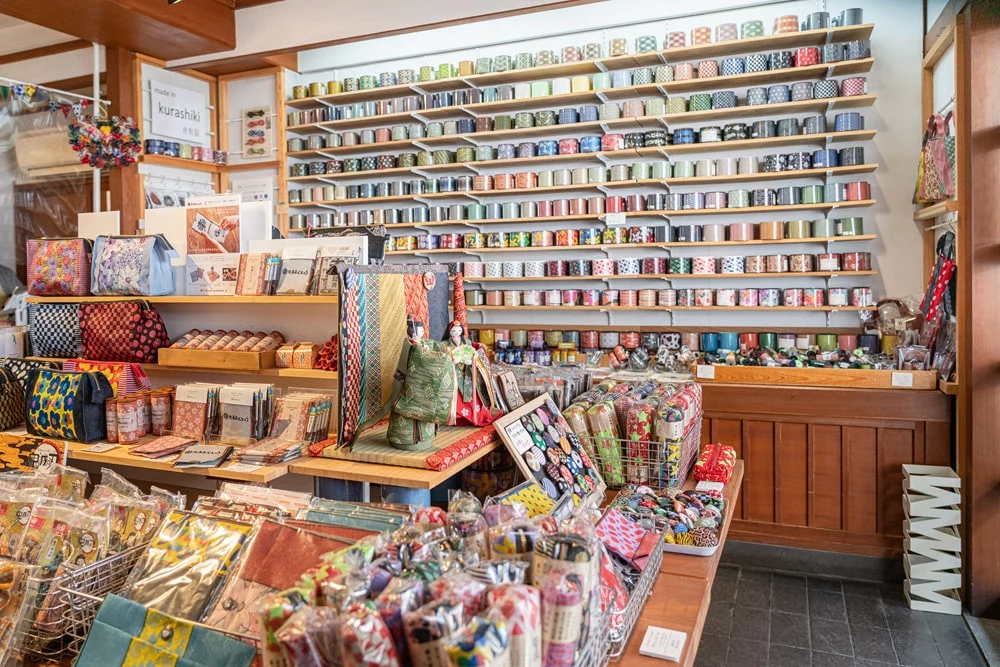
The representative director, Takada Naoshi, states, "In Kojima, where the textile industry is thriving, many people handled sewing machines, which has increased the value of tatami-bari as a handmade product."
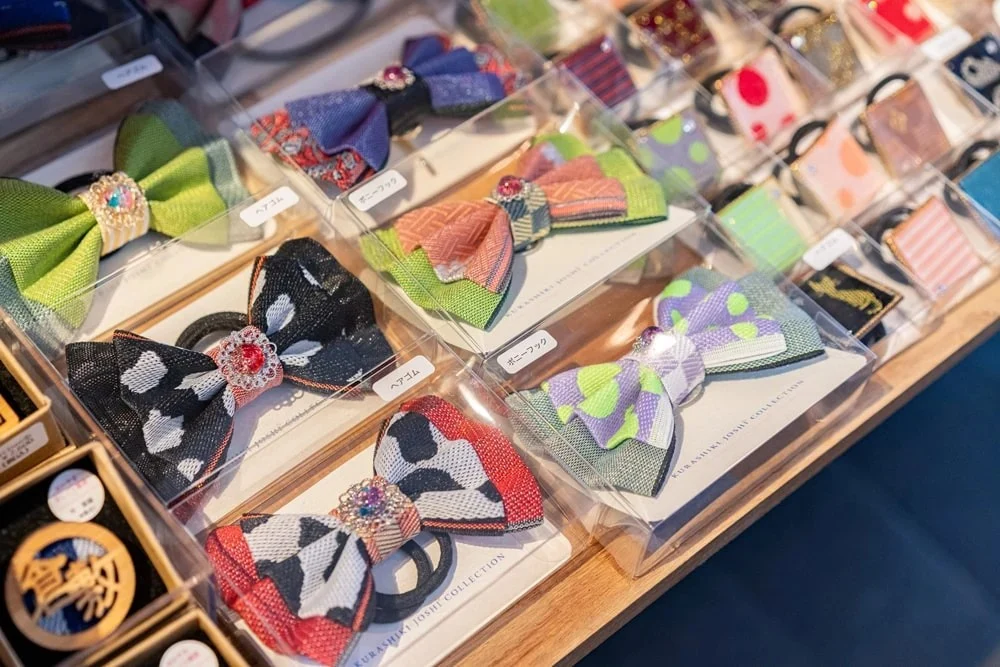
Currently, they are also collaborating with companies, conducting handmade workshops, and manufacturing tatami-bari for inbound tourism, delivering the charm of tatami-bari to new audiences.
As one of Japan's leading tatami-bari production areas, Takada Orimono is dedicated to enhancing the recognition and value of tatami-bari.
Sewing techniques for three-dimensional objects are refined with "tabi" and "school uniforms"
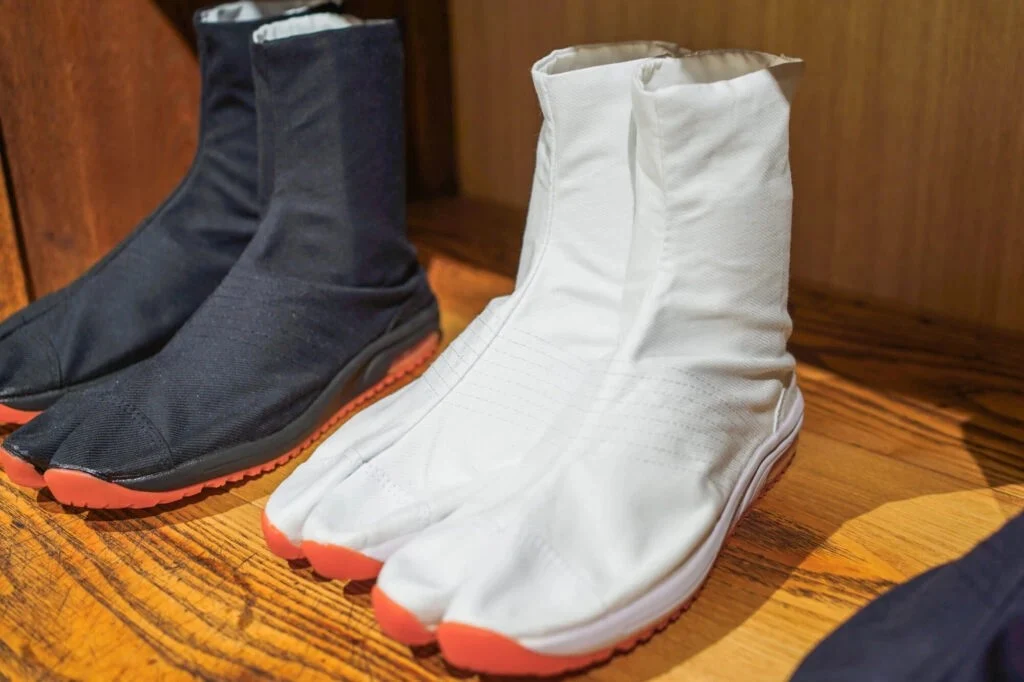
During the Taisho period, tabi also began to be produced in the inland areas.
In addition to Kojima, Chayamachi also became a production area for tabi, and the "sewn underground tabi" with rubber on the soles was developed.
The company that created underground tabi, Marugo Co., Ltd., has been producing tabi for over 100 years, based in Chayamachi.
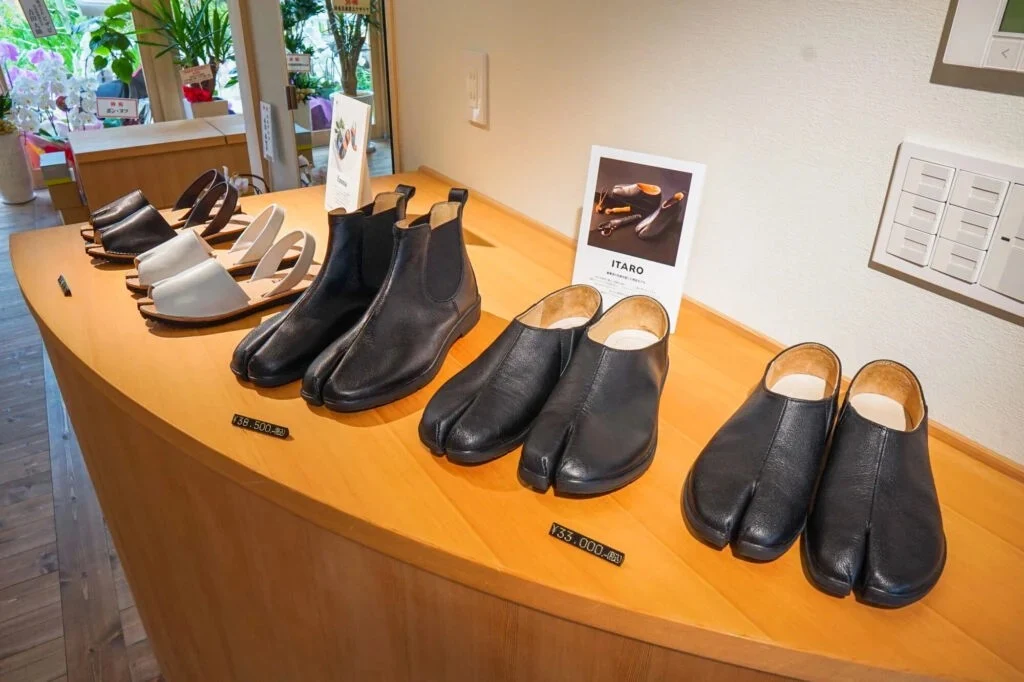

With the start of tabi production, many textile companies acquired sewing techniques for three-dimensional objects.
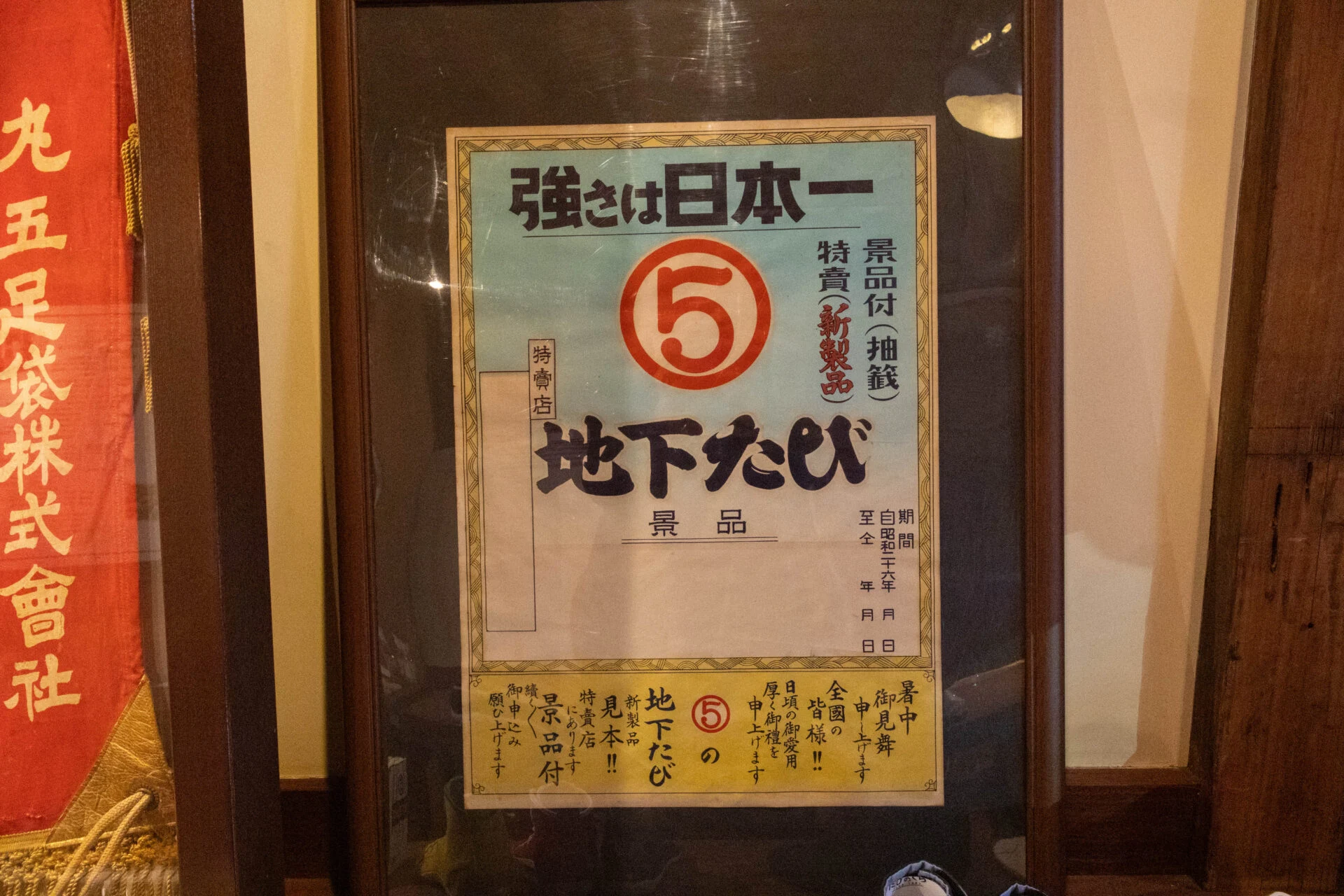
The Taisho era was a time of transition from traditional Japanese clothing to Western-style clothing.
The culture of wearing school uniforms was gradually introduced to Japan. As the demand for school uniforms expanded, the sewing techniques developed in the production of tabi (traditional split-toe socks) blossomed all at once.
Textile companies in Kojima, seeing the school uniform boom as a business opportunity, switched many of their operations to the manufacturing of school uniforms.
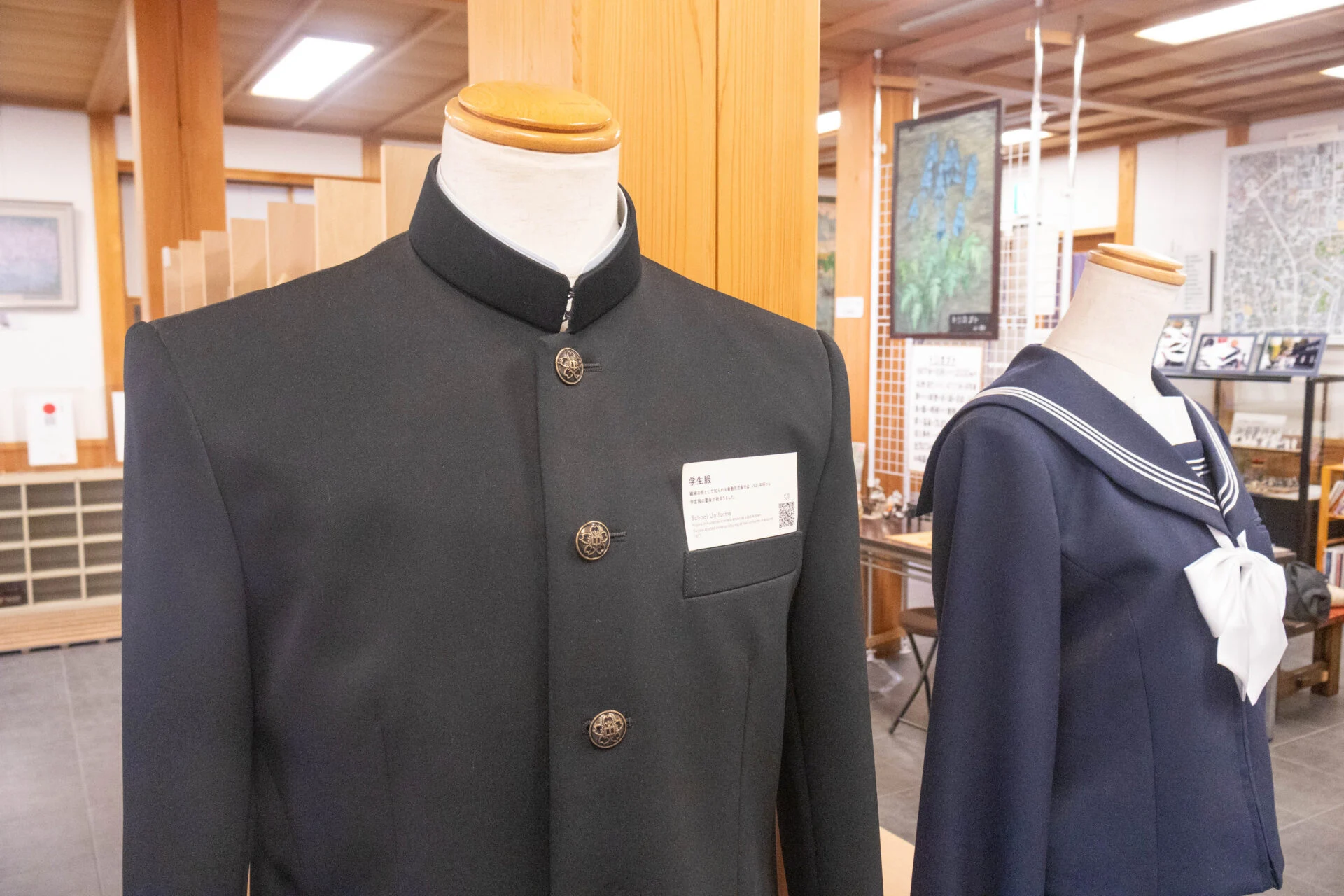
As the Showa era began, Kojima's school uniform production reached its peak. About 90% of school uniforms in the country were produced in Kojima, boasting an annual production volume of nearly 10 million garments.
After World War II, to the birthplace of "domestic jeans"
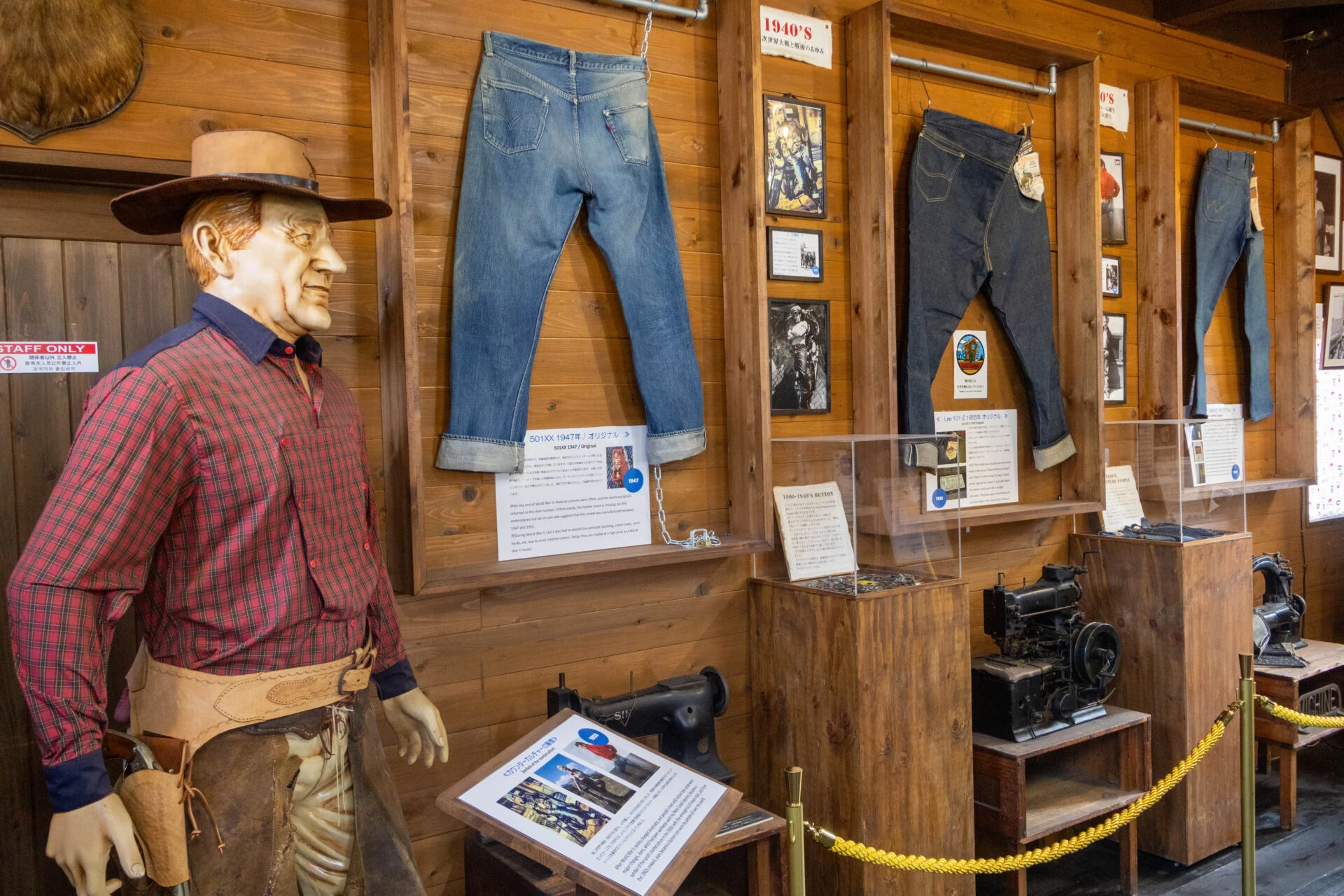
After World War II, triggered by the black market that was taking place in the Ameyoko shopping district in Ueno, Tokyo, used jeans from America began to enter Japan.
The first to find the jeans circulating in the black market was a salesman from Maruo Hifuku (now Big John Co., Ltd., hereinafter referred to as "Big John") who was making school uniforms in Kojima at the time.
With Big John taking the first step in manufacturing and selling jeans in Japan, Kojima's reputation as the "birthplace of domestic jeans" began to spread.
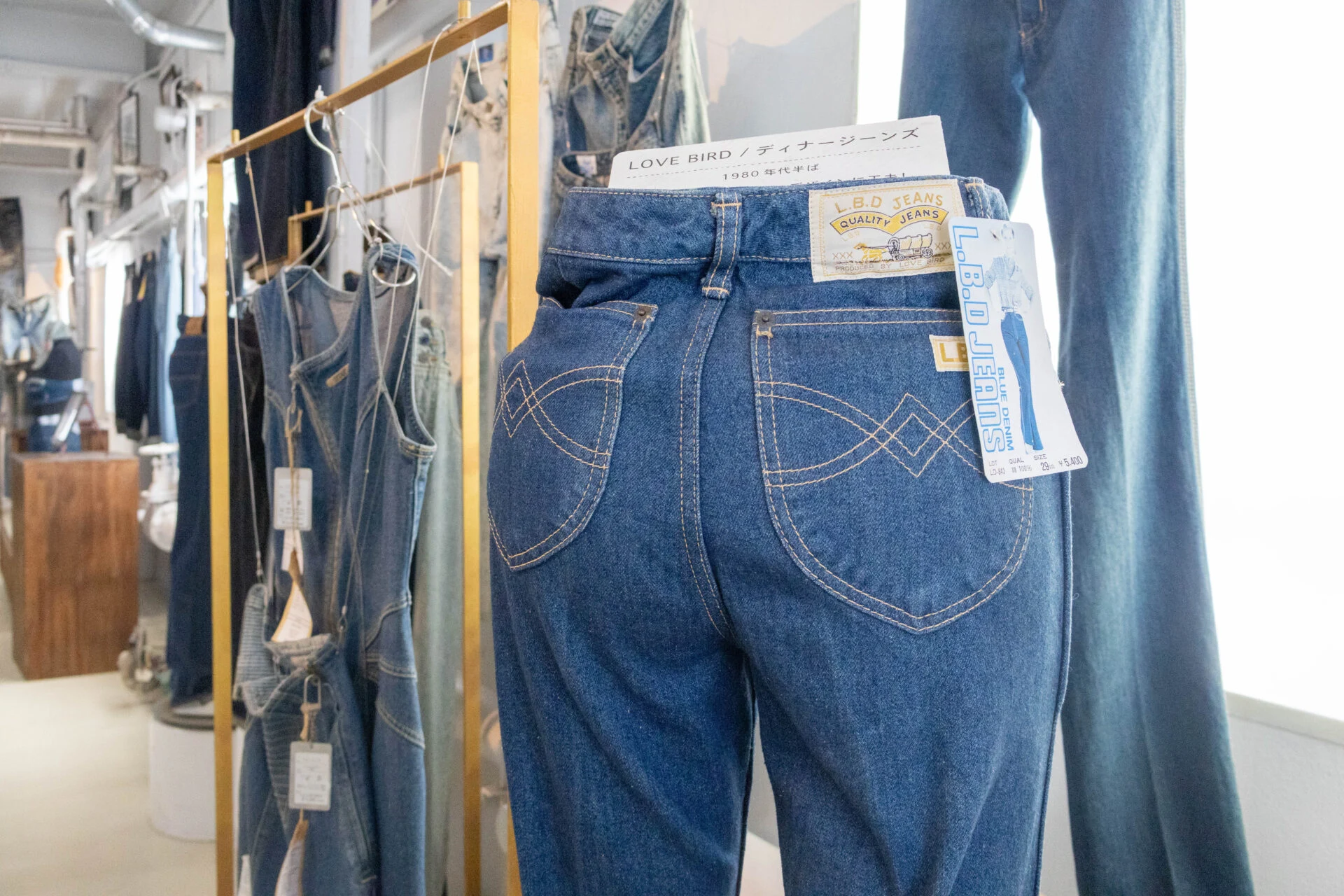
For companies that had been making school uniforms to start producing jeans, there were many challenges.
For example, because denim is a thick fabric, it was said that the sewing machines used for making school uniforms could not handle the needles. The people of Kojima began making jeans by improving the sewing machines, and developed into a leading production area for jeans in Japan.
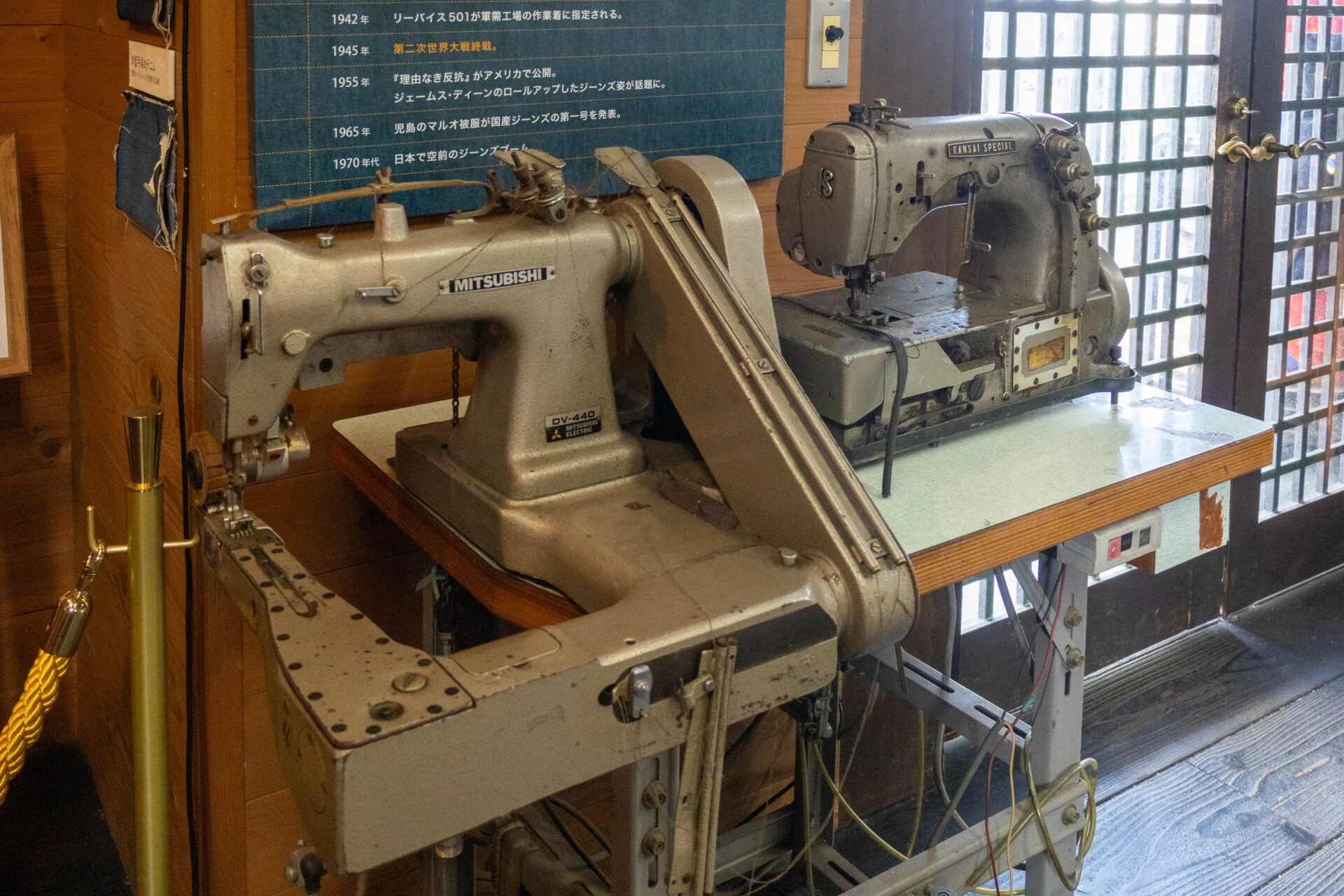
Additionally, with the expanding jeans industry, the number of businesses in Kojima, such as sewing machine manufacturers and those specializing in buttons and zippers, also increased.
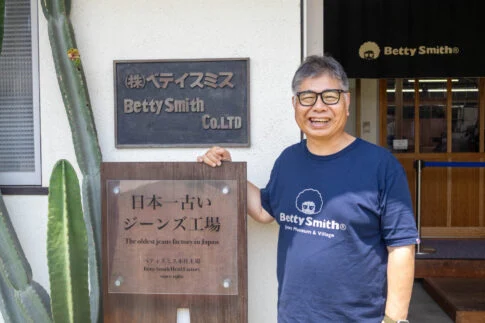
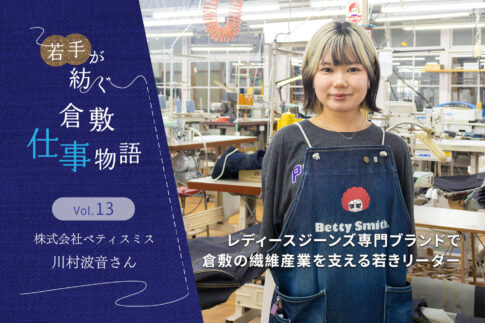
In 1970, Betty Smith Co., Ltd. was established as the first ladies' jeans brand in Japan, challenging the manufacturing and sales of jeans designed for women's comfort.
As of 2025, Betty Smith is not only engaged in jeans manufacturing but also contributes to local elementary schools' social studies field trips through the establishment of the Jeans Museum and proposes new ways to enjoy jeans through hands-on experiences.
They are also focusing on training human resources capable of supporting the textile industry, with many artisans holding the Textile Meister qualification working at Betty Smith.
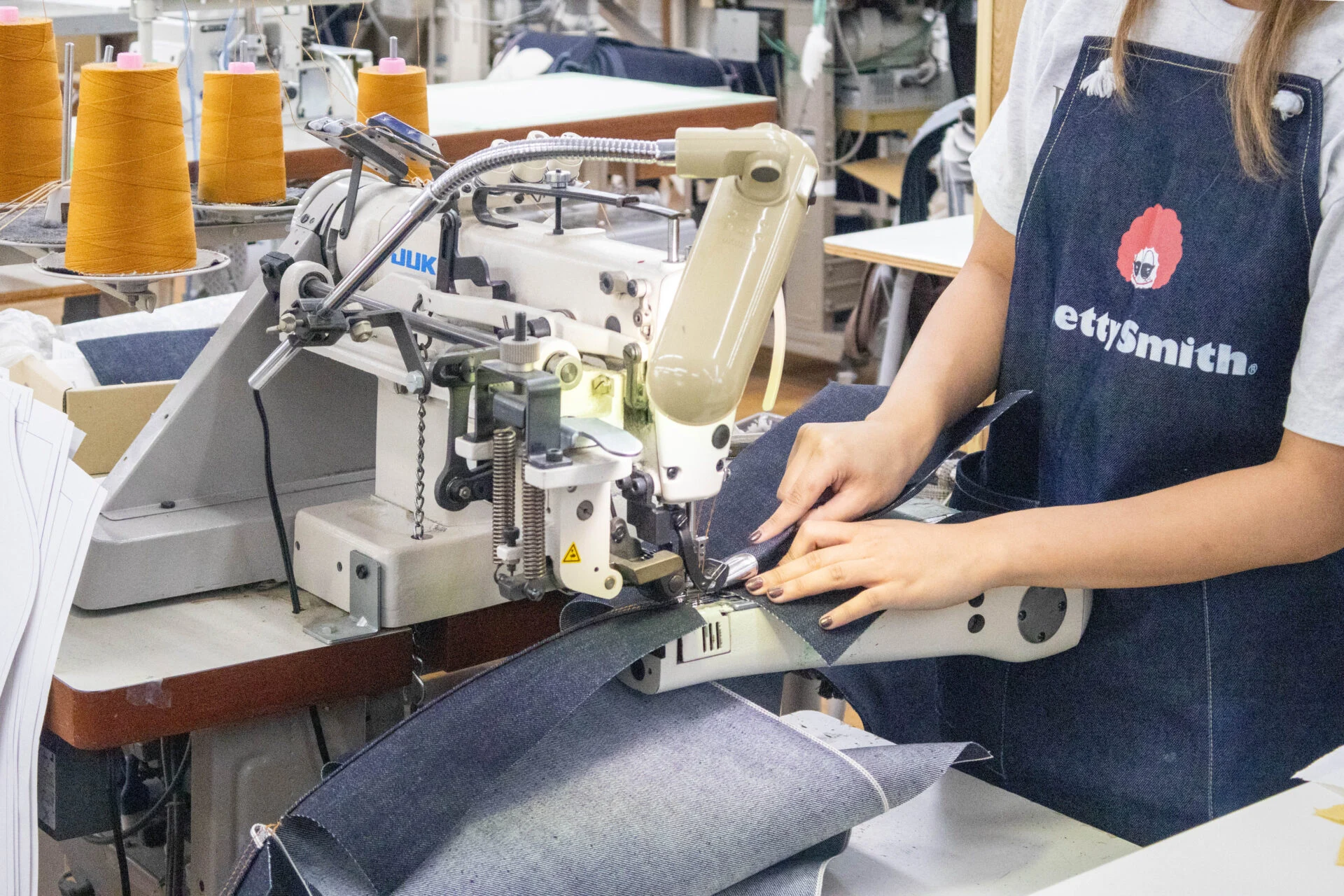
To ensure that Kojima continues to shine as a textile town, Betty Smith will continue to pursue new values in jeans.
In this way, many textile companies in Kojima are continuing their challenges to inherit the traditional culture and techniques of various textile products and pass them on to the next generation.